
Archive
Book Review: How to Say Babylon: A Memoir by Safiya Sinclair
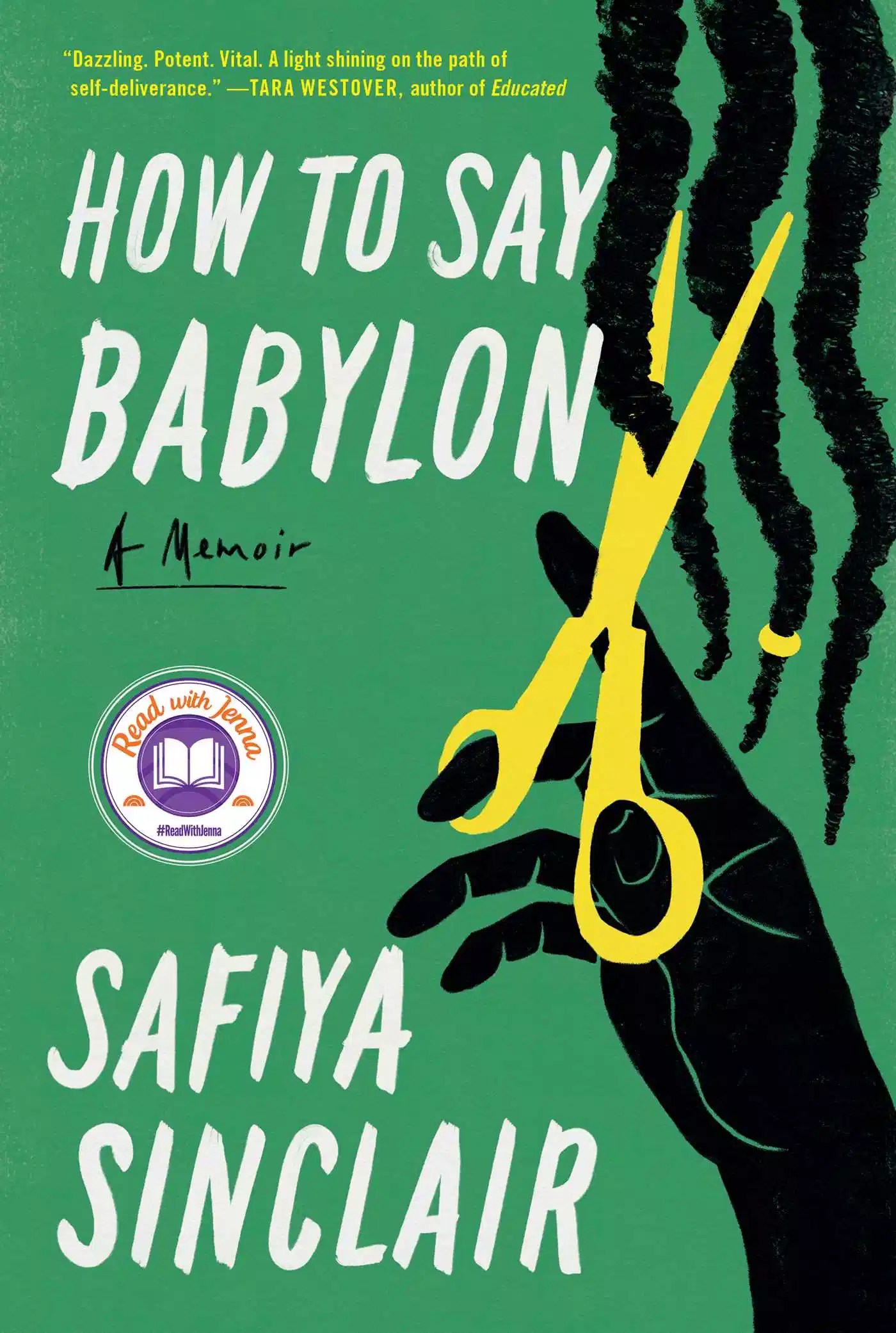
A poet recalls her childhood growing up as a minoritized Rastafarian in Jamaica with an abusive father.
Summary:
Throughout her childhood, Safiya Sinclair’s father, a volatile reggae musician and militant adherent to a strict sect of Rastafari, became obsessed with her purity, in particular, with the threat of what Rastas call Babylon, the immoral and corrupting influences of the Western world outside their home. He worried that womanhood would make Safiya and her sisters morally weak and impure, and believed a woman’s highest virtue was her obedience.
In an effort to keep Babylon outside the gate, he forbade almost everything. In place of pants, the women in her family were made to wear long skirts and dresses to cover their arms and legs, head wraps to cover their hair, no make-up, no jewelry, no opinions, no friends. Safiya’s mother, while loyal to her father, nonetheless gave Safiya and her siblings the gift of books, including poetry, to which Safiya latched on for dear life. And as Safiya watched her mother struggle voicelessly for years under housework and the rigidity of her father’s beliefs, she increasingly used her education as a sharp tool with which to find her voice and break free. Inevitably, with her rebellion comes clashes with her father, whose rage and paranoia explodes in increasing violence. As Safiya’s voice grows, lyrically and poetically, a collision course is set between them.
Review:
I picked this memoir up because I was interested in learning more about Rastafarianism. I was a religious studies minor in university, but Rastafarianism wasn’t something we’d touched on. The beginning of this book really delivered on educating me about the faith.
The memoir starts with a little introduction to Rastafarianism along with a brief history of Safiya’s father’s childhood and her mother’s childhood and what led each of them to convert to Rastafarianism. The religion sprang up in the 1930s as a faith of the most oppressed peoples in Jamaica. There is some disagreement as to whether Rastafarianism is a sect of Christianity or a separate faith entirely. Most Rastas believe that the Ethiopian Emperor Ras Tafari was the second coming of Christ. (In spite of him directly telling Rastas when he visited Jamaica that he was not Christ. Rastas felt that’s something Christ would say.) Just as with all faiths, there is a spectrum of beliefs and observances among Rastas. But there are three that are common.
First that the hair should not be cut, instead left in its natural state, leading them to dreadlocking it. Second, reggae as spiritual music. Third, smoking marijuana for spiritual experiences. Many Rastas are vegetarian, some are strict vegans. (Read more.) Something I found really beautiful was how Rastas adjust their speech, specifically how they will say “the I-and-I” as a reminder that God is indwelling in them. Safiya’s father will sometimes say “the I-man” to clarify when it was something limited to just him, and not him and God. The only thing I knew about Rastafarianism before I read this book was that it was common in Jamaica, so I learned a lot in an easy, beautiful way. The author didn’t just rely on her own childhood understanding of the faith but also interviewed Rasta elders and did some additional reading for the book. And it shows. To me, this was the strongest part of the book.
I thought when I picked this up it was a memoir of religion, but I think after reading it would be more accurate to say it was a memoir about an abusive father/daughter relationship that was at least a bit entwined with religion. So the focus was the abuse, not the religion. But it was necessary to understand the religion in order to understand some of where her father was coming from. Safiya’s father was on the more conservative end of the spectrum with regards to Rastafarianism. (He was also a reggae musician who kept running up against bad luck.) The family were strict vegans. He was more patriarchal and quite concerned about keeping his daughters safe from “Babylon” (the outside influence and dangers) in a way he wasn’t so much about his son.
But there are things that surprised me given the clear conservative lean of the family. The children all go to school. The daughters are encouraged to excel just as much as the son is. (The author even gets into an elite private school on scholarship, something that makes her parents very proud.) The children are allowed to continue living at home, even when they do things that go against the Rastafarian way. For example, the author models and cuts off her dreadlocks. I also was surprised to learn that Rastas were treated poorly in Jamaica while the author was growing up. She’s ridiculed due to being Rasta, and it wasn’t possible for her to pass as no one else seemed to have dreadlocks.
The abuse, though, is quite brutal. I was expecting from the book’s description emotional/spiritual abuse. Those do exist. But serious physical abuse does as well. One chapter titled “The Red Belt” made my chest ache to read. Any reader going into the book should be aware of this. I think some readers will relate to how Safiya deals with her father, and others will struggle to understand it.
The author is primarily a poet. Her work in poetry is what helped her achieve her goal of emigrating from Jamaica. Her poetic skills are evident in this book. I’m sure a reader who loves poetry will connect with this more than I did. I struggle to connect with poetry and so, even though I saw the beauty in the words, I struggled for them to move me. Similarly, while I always love to hear people talk about what they love doing, I didn’t connect with the author’s connection to poetry the way I would if I loved it similarly.
Overall, this is a book that will mean a lot to a reader who loves poetry and is able to read passages about physical and emotional abuse. Readers who like to root for someone to pivot into a life entirely different from how they grew up.
If you found this review helpful, please consider tipping me on ko-fi, checking out my digital items available in my ko-fi shop, buying one of my publications, using one of my referral/coupon codes, or signing up for my free microfiction monthly newsletter. Thank you for your support!
3 out of 5 stars
Length: 352 pages – average but on the longer side
Source: Library
Buy It (Amazon or Bookshop.org)
5 Short LGBT Book Club Books

So, you want to bring an LGBTQIA+ book to your book club. But Pride month is already upon us, so it needs to be short! Or maybe reading an LGBTQIA+ book will be a bit of a stretch for your group so you want to entice them into it by promising a short read.
Never fear, your friendly queer and bisexual book blogger has your back with 5 books all under 300 pages. Plus, I have discussion guides available for each and every one of them.
Let’s take a look at them from shortest to longest.

On a Grey Thread by Elsa Gidlow
Coming in at just 73 pages, this is also in the public domain – meaning everyone in your book club can read it on Archive.org for free. (They can also get it on Amazon or Bookshop.org if they prefer.)
Published in 1923, this poetry collection was the first in North American history to openly express lesbian desire. Both personal and political, Gidlow’s poems express the poet’s complex feelings as a young woman whose political ideology and sexual identity ran counter to the traditional values of her time. Whether or not this will work for your book club depends on everyone’s feelings about poetry. But it’s a nice, quick read with historical value.
Get the Discussion Guide
A beautifully graphic designed 2 page PDF that contains: 1 icebreaker, 9 discussion questions arranged from least to most challenging, 1 wrap-up question, and 3 read-a-like book suggestions.
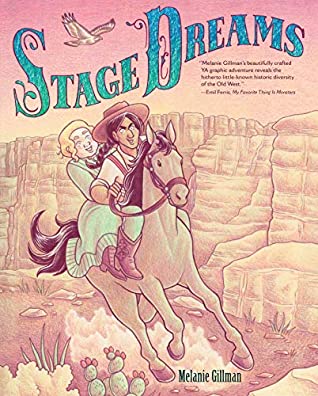
Stage Dreams by Melanie Gillman
While technically more pages than the poetry book with 104, this is a graphic novel, so it’s possible it’s actually an even quicker read. Get it on Amazon or Bookshop.org.
In this rollicking queer western adventure, acclaimed cartoonist Melanie Gillman (Stonewall Award Honor Book As the Crow Flies) puts readers in the saddle alongside Flor and Grace, a Latina outlaw and a trans runaway, as they team up to thwart a Confederate plot in the New Mexico Territory. When Flor—also known as the notorious Ghost Hawk—robs the stagecoach that Grace has used to escape her Georgia home, the first thing on her mind is ransom. But when the two get to talking about Flor’s plan to crash a Confederate gala and steal some crucial documents, Grace convinces Flor to let her join the heist.
Get the Discussion Guide
A beautifully graphic designed 2 page PDF that contains: 1 icebreaker, 9 discussion questions arranged from least to most challenging, 1 wrap-up question, and 3 read-a-like book suggestions.

Solo Dance by Lit Kotomi, translated by Arthur Reiji Morris
This 149 page read is more of a contemporary, literary selection, translated from its original Japanese. Get it on Amazon or Bookshop.org.
Cho Norie, twenty-seven and originally from Taiwan, is working an office job in Tokyo. While her colleagues worry about the economy, life-insurance policies, marriage, and children, she is forced to keep her unconventional life hidden—including her sexuality and the violent attack that prompted her move to Japan. There is also her unusual fascination with death: she knows from personal experience how devastating death can be, but for her it is also creative fuel. Solo Dance depicts the painful coming of age of a queer person in Taiwan and corporate Japan. This striking debut is an intimate and powerful account of a search for hope after trauma.
Get the Discussion Guide
A beautifully graphic designed 2 page PDF that contains: 1 icebreaker, 9 discussion questions arranged from least to most challenging, 1 wrap-up question, and 3 read-a-like book suggestions.

The Gilda Stories by Jewelle Gómez
If your book club likes the paranormal or urban fantasy genres, then this 252 page read should be right up their alley. Get it on Amazon or Bookshop.org.
A young Black girl escapes slavery in the 1850s United States. When she grows up, she is made into a vampire with her consent. We see her immortal life and her perspective of the US through an imagined 2050.
Get the Discussion Guide
A beautifully graphic designed 2 page PDF that contains: 1 icebreaker, 9 discussion questions arranged from least to most challenging, 1 wrap-up question, and 3 read-a-like book suggestions.

Coffee Will Make You Black by April Sinclair
At 256 pages, this will be a great fit for a book club that likes historic fiction set in the mid-20th century. Get it on Amazon or Bookshop.org.
Set on Chicago’s Southside in the mid-to-late 60s, following Jean “Stevie” Stevenson, a young Black woman growing up through the Civil Rights and Black Power movements. Stevie longs to fit in with the cool crowd. Fighting her mother every step of the way, she begins to experiment with talkin’ trash, “kicking butt,” and boys. With the assassination of Dr. King she gains a new political awareness, which makes her decide to wear her hair in a ‘fro instead of straightened, to refuse to use skin bleach, and to confront prejudice. She also finds herself questioning her sexuality. As readers follow Stevie’s at times harrowing, at times hilarious story, they will learn what it was like to be Black before Black was beautiful.
Get the Discussion Guide
A beautifully graphic designed 2 page PDF that contains: 1 icebreaker, 9 discussion questions arranged from least to most challenging, 1 wrap-up question, and 3 read-a-like book suggestions.
Bonus Suggestion:

Bloemetje: a speculative retelling of Hans Christian Andersen’s Thumbelina fairy tale by Amanda McNeil
Of course, I must also mention my own queer-inclusive retelling of Thumbelina, coming in at 121 pages. Available on Amazon.
A Dutch company known as The Bedrijf commences colonizing Venus via the construction of a dome filled with plants that convert its natural air into something breathable by humans. Since all workers are granted permission to bear a child, a woman and her spouse join the crew. But the woman soon discovers she is plagued with infertility. When her spouse illegally brings home a tulip from the garden, they discover a miniature baby inside who they name Bloemetje – little bloom. As the baby grows in mere days into a teenager, pushing her boundaries, she illuminates the true horrors of colonization and leads them all on a journey to decolonize.
If you’re interested in reading this for your book club, drop me a note at mcneil.author@gmail.com. I’d be happy to make a discussion guide and/or talk to your book club via Zoom or similar software.
Book Review: On a Grey Thread by Elsa Gidlow
Summary:
Published in 1923, this poetry collection was the first in North American history to openly express lesbian desire. Both personal and political, Gidlow’s poems express the poet’s complex feelings as a young woman whose political ideology and sexual identity ran counter to the traditional values of her time.
Review:
For Pride Month, I wanted to push myself a little by reading from a genre I read less often – poetry. I’ve also been striving to connect more with queer history, so I thought this groundbreaking collection was a great match.
The poems are collected into four sections – Youth, Grain and Grapes, Inner Chamber, and In Passing. If you are here for women loving women content…skip to the Inner Chamber section. Although, I am glad I read them all in order, because I do feel like they told a subtle overarching story.
The first poem in the collection beautifully explores the meaning of life and what makes us who we are via beads on a grey thread. Other poems consider the beauty of nature and sadness/loneliness (in a way that reminded me of 90s emo culture). In fact, I think what struck me the most when reading these was just how of the moment and today they felt, in spite of being written almost 100 years ago.
Since the entire collection is out of copyright, let me close my review by sharing my favorite in its entirety.
“Episode”
I have robbed the garrulous streets,
Thieved a fair girl from their blight,
I have stolen her for a sacrifice
That I shall make to this mysteried night.I have brought her, laughing,
To my quietly sinister garden.
For what will be done there
I ask no man’s pardon.I brush the rouge from her cheeks,
Clean the black kohl from the rims
Of her eyes; loose her hair;
Uncover the glimmering, shy limbs.I break wild roses, scatter them over her.
The thorns between us sing like love’s pain.
Her flesh, bitter and salt to my tongue,
I taste with endless kisses and taste again.At dawn I leave her
Asleep in my wakening garden
(For what was done there
I ask no man’s pardon.)
I hope this review entices you to read some (more) classic queer poetry.
If you found this review helpful, please consider tipping me on ko-fi, checking out my digital items available in my ko-fi shop, buying one of my publications, or using one of my referral/coupon codes. Thank you for your support!
4 out of 5 stars
Length: 73 pages – novella
Source: Archive.org
Buy It (Amazon or Bookshop.org)
Get the Reading Group / Book Club Discussion Guide
A beautifully graphic designed 2 page PDF that contains: 1 icebreaker, 9 discussion questions arranged from least to most challenging, 1 wrap-up question, and 3 read-a-like book suggestions
View a list of all my Discussion Guides.
April 2018 Book Reviews – Kushiel’s Avatar (#fantasy), Please Forgive Me (#romance), The Song of Hiawatha (#poetry), A River in Darkness (#memoir), The Spy Who Came In from the Cold (#espionage), Pennterra (#scifi)
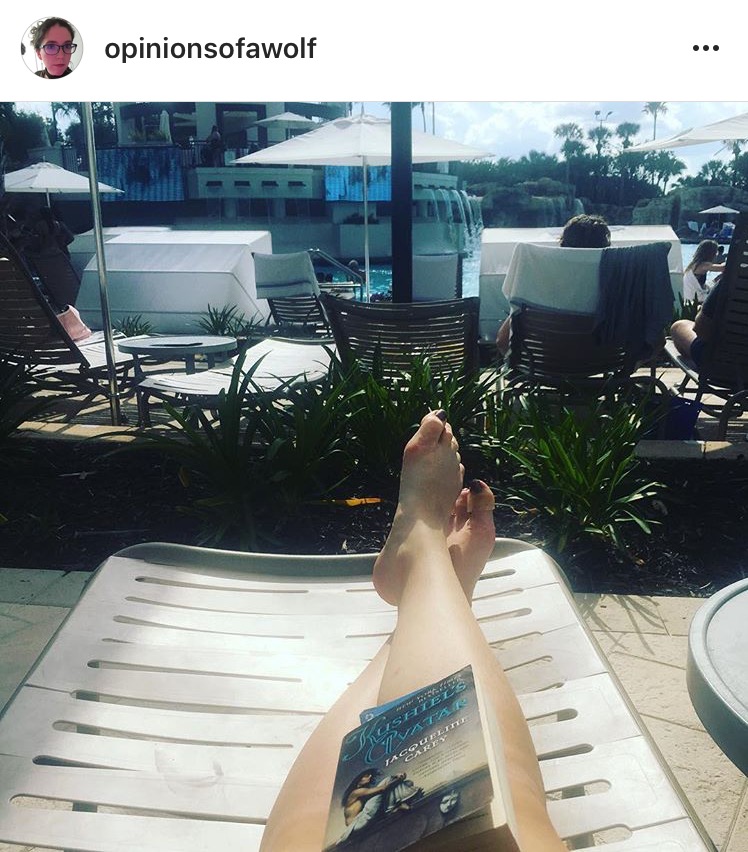
Reading poolside in Florida. For more shots check out my bookstagram.
Wow what a busy month! After only completing one book in March, in April I finished a walloping six! Let’s get right to it.
I read quite a bit of Kushiel’s Avatar by Jacqueline Carey while on a business trip to Orlando, Florida in April (um, where I got to wrestle an alligator YES THAT HAPPENED). Ahem, anyway, this fantasy chunkster finishes up Phedre’s Trilogy and it was the perfect companion for a business trip since I was definitely not going to find the time to finish it while on the trip so it could keep me company throughout. Anyway, if you’ve heard of the trilogy and have been intrigued by it, suffice to say that I found the conclusion to be an improvement on the second book but didn’t live up to the first. I appreciated the artistry of the ending but I personally wasn’t a fan of how Phedre’s life ended up, which I think soured it a bit for me. But not enough to not put the first book in the next trilogy in this world on my tbr list.
(4 out of 5 stars, buy it)
(Source: Paperbackswap? Maybe? I bought it somewhere)
Next I picked up Melissa Hill’s romance Please Forgive Me. This piece of modern Irish literature follows our heroine from Ireland to San Francisco where she tries to outrun her problems. I found the Irish interpretation of California (not least of which the idea of how the main character can just show up and work under the table and that’s fine) to be pretty hilarious. Three couples are ultimately presented where someone did something “wrong” but no one seems to think all of the running away is particularly wrong? This was one of those classic there would be no problems if everyone would just act like adults instead of impulsive children types of chick lit books. If you’re ok with that and the idea of an Irish take on California appeals to you, you may have found your next read.
(3 out of 5 stars, buy it)
(Source: Amazon)
Next something possessed me to finally get around to reading the copy of The Song of Hiawatha by Henry Wadsworth Longfellow which is I believe out of copyright and has been hanging out on my kindle forever. By “something possessed me” I mean like many other New England children I was forced to memorize (and PERFORM) “Paul Revere’s Ride” (read it in its full glory) and I was curious if the other Longfellow epic poem lives up to Paul Revere. Um. It does not. Here’s the thing. Longfellow’s style works great for a piece about a time very close to his own and his own people in a short form. It does not work great in a full length book based on his interviews with Native Peoples and his attempts at writing down the language. It basically consists of Hiawatha telling the different nations to stop warring and unite or they’d be over-run by white people. It felt a bit…victim blamey to me. Also then in the final chapter missionaries arrive, Hiawatha welcomes them, tells his people they have a very important message and to be nice to them, then sails off in what I think is a metaphor for his death. So Hiawatha is a hero for telling those silly Native nations to unite to fight off white people but also recognizing the salvation message. Okayyyyy. I kept reading it because I thought it must get better. It did not. Stick to Paul Revere’s Ride.
(2 out of 5 stars, buy it)
(Source: no idea anymore)
I received my next read free from Amazon thanks to the Kindle First program, and I feel like I caught it just at its popularity wave – Masaji Ishikawa’s memoir A River in Darkness: One Man’s Escape from North Korea. Masaji Ishikawa is half-Japanese and half-Korean. His Korean father moved the family to North Korea based on promises of a better life when he was 13 years old. Masaji’s life has been incredibly hard – not just in North Korea but also in Japan. When he was a child, he faced racism in Japan because he was half-Korean, and when he escaped back to Japan he faced many difficulties repatriating (for instance, they housed him in a half-house with recovering addicts, while that is a home, you can imagine it would be difficult to repatriate in such a situation). Masaji has lost so much family; it’s overwhelming. I think he’s brave for telling his story, and I encourage anyone interested in helping North Koreans to check out the well-rated charity Liberty in North Korea. While this story is incredibly important, to me personally the pacing was a bit off. Maybe it wasn’t in the original Japanese.
(4 out of 5 stars, buy it)
(Source: Amazon)
While I was reading these other books, I was also reading my audiobook The Spy Who Came In from the Cold by John le Carre. I picked this up because it’s supposed to be a classic involving the Berlin Wall. This is about a British spy and basically the whole book is the question of is he loyal to the West or not? The book begins and ends at the Berlin Wall. I found the beginning very engaging and the end was exciting, but the middle dragged. I’m glad I stuck with it for the end, though. Also there’s a love interest who is a librarian in this, which was exciting for me! Recommended if you like spy novels.
(4 out of 5 stars, buy it)
(Source: Audible)
I finished out the month with a 1987 female written scifi – Pennterra by Judith Moffet. Basically there’s an alien planet colonized by Quakers (because Earth is dying and spaceships of groups of people who have something in common are leaving Earth looking for places to live). Of course there’s an indigenous people who resemble large insects and communicate both vocally and through emotive telepathy. I’d read this book was an exploration on the power of pacifism for resolving conflict, BUT I didn’t find much pacifist negotiation. They just do what the locals tell them to do and obey the rules put upon them. That’s pacifist, sure, but is that negotiation? I thought the planet being alive in and of itself and resisting invaders was fascinating. I thought seeing how children who arrive on the planet at the age of 7 are different and able to adapt was fascinating. I did not think that human children going through puberty and proceeding to behave like the locals sexually in ways that involved the adult humans who never adapted to the planet themselves to be logical (beyond the gross factor). Basically the locals have sex with everyone who’s hit puberty. The human children who hit puberty do the same with adults who don’t feel the natural inclination to go native and so feel guilty about it. What this ultimately means is the author ends up equating bisexualty and polyamory with incest and bestiality. No scenes are particularly graphic but the idea is that it’s ok for the human kids to do it because that’s how the local planet works. But it’s…..not. And it was very uncomfortable for me to see these things being equated. That said that is a minor plotpoint that I was able to skip over easily enough and I was interested in how the planet was going to defend itself, and I found it hilarious how the planet ultimately defends itself. I just wish the author had had going native in the human adolescents to just be bisexuality and/or polyamory and stopped short of the rest. Because they are still HUMANS even if they’ve had to adapt to the environment.
(4 out of 5 stars, buy it)
(Source: Paperbackswap)
Phew, what a month! My total for the month of April 2018:
- 6 books
- 5 fiction; 1 nonfiction
- 3 female authors; 3 male authors
- 3 ebooks; 2 print books; 1 audiobook
If you found this helpful, please consider tipping me on ko-fi, checking out my digital items available in my ko-fi shop, buying one of my publications, or using one of my referral/coupon codes. Thank you for your support!
Book Review: Animal Rights Poetry: 25 Inspirational Animal Poems, Vol 1 by Jenny Moxham (Series, #1)
 Summary:
A collection of 25 poems focusing on a variety of animal rights issues by British animal rights activist Jenny Moxham.
Review:
I picked this up because one of the blogs I follow mentioned it was on sale (for 100% off), and I figured there had to be at least one poem in there that I would find inspirational. Of course, there was.
The poems are mostly written in rhyme, a vibe that feels very similar to Mother Goose style children’s poetry. Some of them worked better than others, but it’s certainly a fine style choice. It’s easier to remember rhymes than almost any other sort of poetry.
Personally, I preferred the poems that contained solid arguments to use when debating animal rights issues. My favorite, is this one:
FOOD FOR THOUGHT
I’ve often heard it said by folk
Who relish eating meat,
“The animals were put on Earth
For human beings to eat.”Well if God made them just for us,
Explain it, if you can,
Why they arrived one hundred million
Years ahead of man(location 95)
I was less of a fan of ones addressing particular events, because I think those would be less useful in more general animal rights work. I also was surprised by how many of the poems were about Christmas. Perhaps Christmas is a meatier affair in the UK, but in a book with only 25 poems, having five about one holiday felt like a bit much.
Overall, Moxham’s talent and passion do shine through, but a more varied and longer collection would have been more enjoyable. Recommended to those with an interest in memorable phrases to use in animal rights work.
3 out of 5 stars
Source: Amazon

Book Review: Cthulhurotica an anthology published by Dagan Books
 Summary:
This collection of short stories, art, and poetry pay homage to H. P. Lovecraft’s Cthulu mythos by adding an erotic twist. Lovecraft was notoriously up-tight about sex, yet his mythos inspires erotica. Stories, poetry, and art draw inspiration from everything from Nyarlathotep, to the Old Ones, to Cthulu himself. These works of art promise spine tingles of both horror and pleasure.
Review:
I knew the instant I saw the gorgeous cover and read the title of this book that I had to read it. I am completely taken with the Cthulu mythos and always felt the only thing it was missing was some raunchy sex. This collection definitely tastefully delivers on both. You won’t find pages and pages of sex, rather the sexual encounters occur as a key plot point to the various stories, rather like well-written sex scenes in romance novels. Only with tentacles. And gore.
Naturally as with any short story collection there are tales deliciously pulled off and others less so. Thankfully, most of the short stories fall into the previous category. Three in particular–“The Fishwives of Sean Brolly”, “The Assistant from Innsmouth”, and “The Summoned”–really rocked my world as they are not only deliciously entertaining, but also offer thoughtful commentary on gender roles and relationships. In fact this is what moves the collection from just a bit of fun to thought-provoking territory, and that is always the sign of a good story.
Further, I am quite pleased to point out that the collection is very GLBTQ friendly. Multiple stories feature non-heteronormative relationships, and the GLBTQ characters are as well-rounded as the straight ones. I offer my applause to Dagan Books for its choices of stories to include.
As far as the artwork, it is all beautiful and impressive. Enough so that I’m seriously considering acquiring a paper copy to keep kicking around my apartment. The pictures suck the viewer in in the tradition of the classic piece of tentacle erotic art “The Fisherman’s Wife.”
Overall, this is a highly entertaining read. Although some of the stories fall short of others in the collection, most of them offer up chills and delights in addition to social commentary. I highly recommend it to those fond of the Lovecraft universe as well as those with an interest in gender/sexuality.
4 out of 5 stars
Source: Amazon

Book Review: Eros and Psyche by Robert Bridges
 Summary:
This twelve section poem re-tells the mythological love story of Eros and Psyche with each section representing one month of the year. Psyche, a mortal, and Eros, a god, fall in love, but Eros’s goddess mother, Aphrodite, disapproves of her son loving a mortal. They therefore must face trials and tribulations to be together.
Review:
Since this re-telling of the Eros and Psyche myth was originally written in English, it is actually quite beautiful to read and/or listen to. The use of the twelve months to tell the story lends it a certain relaxing quality, even when the lovers are facing trials and tribulations.
The story itself is typical of a myth. Someone wants something. A god or goddess doesn’t want them to have it. They face trials and tribulations before besting or being accepted by the god/dess. Nothing new there. What is new is how prettily the tale is told.
It’s a short read, but it features some well-loved figures from mythology including Pan and Demeter. There’s a particularly fun gathering of the gods and goddesses toward the end that demonstrates the interaction and clash of personalities that the Greeks and Romans believed in.
Overall, this retelling is well-handled, and the poetry is beautiful. If you enjoy poetry or mythology, you will enjoy this read.
3 out of 5 stars
Source: Audiobooks app for the iPod, iPhone, and iPad

Reading Goals for 2010
I don’t want to over-plan my reading for 2010, but I do want to give it a loose structure and maybe broaden my horizons a bit. I also want to be practical about my reading, for instance the fact that I rarely have time to go to the library (erm, the public one, not the one I work at 5 days a week). Anywho, with that in mind, my loosely-defined goals for 2010 are:
- Read the books I bought for undergrad classes but didn’t have time to read then. Seeing as how my two majors are topics I actually like (History and English and American Literature), I actually do want to read these old “assignments.” Expect to see a bit of ancient literature, Chekhov, and noir.
- Read a bit more nonfiction in areas I want to be more educated in, preferably science. Seeing as how I work in a medical library, this should be pretty easy to pull off cheaply.
- Utilize Swaptree to get rid of books I weeded from my collection at the end of the year and in turn get books I want to read. Since I’m doing an exact 1:1 exchange, this should keep my book collection on the smaller side.
- Courtesy of a challenge from @shaindelr over on Twitter who gasped about my not having read any poetry in 2009–read one book of poetry. However, I’m not making any promises that it won’t be of the ancient variety. ;-)
- Finally, watching Japanese movies got me pretty into the stories their culture has to offer. That along with seeing some graphic novels in friends’ houses made me want to give the genre an official shot, so I’ll be reading at least 3 graphic novels/manga in 2010. I’m super-excited to read my first Battle Royale, which I wanted to read after seeing and loving the movie.
 Support my work with a tip or browse my shop for curated book club guides, how to guides, cross-stitch patterns, and more!


This work by Amanda Nevius is licensed under a Creative Commons Attribution-Noncommercial-No Derivative Works 3.0 United States License.
 Opinions of a Wolf