
Archive
Book Review: Annihilation by Jeff VanderMeer (Series, #1) (Audiobook narrated by Carolyn McCormick)
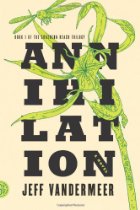 Summary:
Nobody quite knows what is wrong with Area X, but everyone has their speculations. It’s been cut off from the rest of the world for decades, and the government has kept precisely what is going on rather hush-hush. The government periodically sends teams in to investigate it. The narrator, a biologist, is part of Team 12. The team is entirely made up of women, based on a supposition that women are less badly effected in Area X than men. The biologist’s husband was part of Team 11. She is curious to know what happened to him but also entirely intrigued by the tunnel her team finds. She insists on calling it a tower. Through her mandatory journal, we slowly discover what may or may not be in Area X.
Review:
I picked this book up since it sounded like it would be a mix of scifi and Lovecraft style fantasy, plus it features an entirely female investigative group. Although it is an extremely interesting premise, the actual book does drag a bit.
The biologist narrates in a highly analytical way that is true to her character but also doesn’t lend itself to the building of very much tension. Since the biologist calmly narrates everything, the reader stays calm. She also, frankly, isn’t an interesting person due to this same tendency to view everything through an analytical lens. Imagine if Star Trek was 100% written by a Vulcan, and you can begin to imagine the level of ho-hum.
This narration style could have really worked if the language used was stunningly beautiful. While I think that’s probably what the author was going for, it largely missed for me. While the language was good, there was also nothing particularly special about it. I marked three passages that I enjoyed throughout the whole book. Looking back, two were extremely similar. The passage I found to be the most beautiful is:
That’s how the madness of the world tries to colonize you. From the outside in. Forcing you to live in its reality. (time 3:15:47)
While pretty, it’s not pretty enough to make up for the rather dull narrator.
Since the story has four women to work with, it probably would have worked better to bounce around between their four narratives. This also would have given the bonus of seeing the mysteries of Area X through multiple sets of eyes, enhancing the tension the mystery, while also giving the opportunity for a variety of narration styles.
The mystery of Area X is definitely intriguing and different from other Lovecraft style fantasies. In particular, the passage describing the terror of seeing the thing that cannot be described was particularly well-written. However, the passages describing the horror in Area X are mostly toward the end of the book and are not as well spaced-out as they could have been to help build the tension. The end of the book is definitely the most interesting and managed to heighten my interest enough that I was curious about the next book in the series.
Overall, this is a unique take on the idea of a scientific investigation of an area invaded by Lovecraft style, fantastical creatures. It features an entirely female investigative crew but unfortunately limits itself to only the narration of one overly analytical and dull biologist. Recommended to big fans of Lovecraft/fantastical invasion style fantasies. To those newly interested in the genre, I recommend checking out Bad Glass
3 out of 5 stars
Source: Audible

Book Review: The Red Church by Scott Nicholson (Series, #1)
 Summary:
The Red Church was the base of a new cult started by Wendell McFall in the 1860s. But when he took things too far and sacrificed a child, his congregation hung him from a tree. Nowadays, the children of the town view the Red Church as haunted…and so do some of the adults. When Wendell’s descendant, Archer, returns to his hometown from California, he brings the cult back with him in a new form. Archer claims he is the second son of God, and that Jesus was the first son who failed to deliver God’s true message. When he reclaims the Red Church and murders start occurring, half the town suspects Archer, while the other half falls under his spell.
Review:
This book was loaned to me by someone who really enjoyed the series. For most of the book, I felt that it was well-written horror but of a religious bent that isn’t for me. However, the ending doesn’t quite live up to the rest of the book.
At the beginning, the book feels like a horror story written by a Baptist person truly committed to their faith. The main antithesis to Archer’s cult is the Baptist church in town. At the core of the conflict are a married couple. The wife falls firmly under Archer’s spell while the husband stays true to the Baptist church. Their two small boys are caught in the middle. The most interesting parts of the story are when the third person narrator focuses in on these two boys, showing their crises of faith and the siren call of the cult, as well as the confusion engendered when their mother and father fight over religion. I could definitely see this reading as a richly crafted, frightening horror for someone who is Baptist, or at least Protestant, themselves. For the non-Christian or non-religious reader, however, the frequent mentions of Jesus, capitalizing pronouns referring to God, and attempts at creating horror at the mere idea of not following Jesus fail to aid in establishing the horror. They become something to skim past rather than part of the atmosphere of the book.
For most of the book, the basic plot of Archer versus the family and the sheriff and the crime scene detective flows nicely with just the right touch of horror. Toward the end of the book, just who Archer is and what precisely is going on becomes muddled. A lot of what happens with Archer and his church just doesn’t make a lick of sense. In spite of the religious leanings of the book, I was still engaged and wanting to solve the mystery of Archer. Instead, who he is and what the rules of the world are become increasingly muddled. The ending generally should clear things up, not leave things more confusing than they were before. That kind of confusing ending would be disappointing to anyone who read the book.
I also was disappointed by one particular aspect of the ending. A person who was abusive gets forgiven because forgiveness is what the Baptist church teaches. It bothers me when books brush off abuse as something just getting Jesus in your heart can fix. It’s misleading and dangerous to encourage people to think that way. Granted, this is a horror book, so it’s doubtful many children will be reading it, but that still doesn’t make it a good message.
The characters are interesting and widely varied. The children, particularly, are well-written. The scenes are well-envisioned and communicated. I never had any issues imagining any of the scenes vividly.
Overall, this is a well-written horror book that flounders a bit at the end. It is richly steeped in the Baptist faith. As such, I recommend it most highly to Protestant horror fans who don’t mind a bit of a confusing ending that doesn’t answer all the questions.
2 out of 5 stars
Source: Borrowed

Book Review: The Many-Colored Land by Julian May (Series, #1) (Audiobook narrated by Bernadette Dunne)
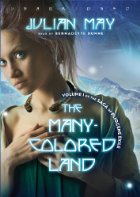 Summary:
In the future, the universe exists in a peace-loving era that allows many alien races and humans to co-exist. People are expected to act within the confines of acceptability and are offered various humane treatment options to help if their nature or nurture sends them the wrong way. But some people don’t want to conform and would rather live in the wild, warrior-like days of old. When a scientist discovers time travel but only to the pliocene era, these people think they have found their solution. There’s only one catch. The time travel only works to the past. For decades the misfits step into the time travel vortex, not knowing what is on the other side. The government approves the solution, since it seems kind and no time paradoxes have occurred. When the newest group steps through, they will discover just what really waits on the other side of exile.
Review:
I became aware of this book thanks to a review by fellow book blogger, Resistance Is Futile. Imagine my surprise when going through my wishlist to check for audiobooks, I discovered a brand-new audiobook production of it featuring the audiobook superstar Bernadette Dunne. This is a creative, action-packed book that truly encompasses both scifi and fantasy in a beautiful way.
Since this is the first book of the series, it takes a bit to set the plot up and get to know the characters. People are sent through the time travel portal in groups, so we get to know everyone in one group prior to going through the time portal so we can follow them all after they go through it. May spends the perfect amount of time familiarizing the reader with the future world, as well as the people who are choosing to leave it. Some readers might be sad to see the imaginative future world left behind for the pliocene era, but it quickly becomes evident that the pliocene is just as richly imagined, albeit different. The pliocene era is not as straight-forward as the exiles believed, and new problems quickly arise for them. It’s not the lawless paradise they were envisioning, and while dealing with the realities of it in an action-packed manner, they also must deal with themselves. Now that they realize there is no true escape to solitude or an imagined perfect past, they must address those aspects of themselves that led them to exile in the first place. These deeper emotional issues are the perfect balance to the other, action-oriented plot. I did feel that the book ends a bit abruptly. However, it is part of a series and clearly the cliff-hanger is intentional. I prefer series entries that tell one complete smaller story within the larger, overarching plot, but this is still a well-done cliff-hanger.
The characters offer up a wide variety of experiences and ethnic and sexual backgrounds, representative of all of humanity fairly well. One of the lead characters is a butch lesbian, another is an elderly Polish-American male expert in the pliocene era, another a nun, another a frat boy style space captain. This high level of diversity doesn’t seem pushed or false due to the nature of the self-selection of exiles. It makes sense a wide variety of humans would choose to go, although the statistics presented in the book establish that more whites and Asians than Africans and more men than women choose to go. Some of the characters get more time to develop and be presented in a three-dimensional nature than others but enough characters are three-dimensional that the reader is able to become emotionally invested in the situation. My one complaint was in prominently featuring a nun in a futuristic scifi, yet again. Statistics show that less and less people are choosing to become nuns or priests. Given that this is set so far in the future with such a different culture, a religious leader of a new or currently rising religion would feel much more thoughtfully predictive of the future.
Most engaging to me is how the book mixes scifi and fantasy. Without giving too much away, the book offers a plausible scientific explanation for human myths of supernatural creatures such as fairies, elves, and shapeshifters. The presence of the inspirations for these myths give a delightful, old world fantastical feel to the story, even while May offers up scientific explanations for all of it. This is not a mix I have seen in much scifi or fantasy, and I was surprised at how much I enjoyed it.
Overall, this is a delightful new take on time-travel that incorporates some fantasy elements into the scifi. Readers looking just for futuristic hard scifi might be disappointed at how much of the book takes place in the ancient past, but those who enjoy scifi and fantasy will delight at the mixing of the two.
4 out of 5 stars
Source: Audible

Book Review: Waiting For the Galactic Bus by Parke Godwin (Series, #1) (Bottom of TBR Pile Challenge)
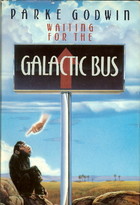 Summary:
When two brothers from an incorporeal alien species get left behind on a spring break visit to prehistoric Earth, they decide to put their, as yet uncertified, evolutionary development skills to work by prodding along the the evolutionary process on Earth. In doing so, they accidentally create a species with a spirit tied to a body for a certain amount of time that then is tied to the idea of an afterlife. They also manage to turn themselves into Earth’s spiritual mythology.
Review:
An ingenious take on the aliens made humans concept with two overlapping plots, a tongue-in-cheek take on world religions, and a wry wit.
This take on aliens made humans makes humans the result of the bumbling activities of aliens from a species that controls evolution in the universe. However, these aliens are currently uncertified, unsupervised, and basically the frat boys of outerspace. At least at first. Thus, instead of it all being some evil experimental conspiracy, the direction of life on Earth is much more of an accident of floundering fools. Granted, the fools grow and change over the time that they spend on Earth waiting for their ride back from spring break, but the fact remains that evolution on Earth is a result of the experiments of two aliens who are not yet fully trained. This is also used to explain the phenomenon of souls in bodies and then souls that have an afterlife. All other species have souls that can either choose to be in or not in a corporeal body. This is the result of the two aliens, Barion and Coyul, not staying within the rules of evolution.
We thus get to the other really creative part of the book. Since the souls are unfotunately tied to bodies that die, when the bodies die, the souls don’t know what to do or where to go, and so humanity creates the idea of the afterlife, with the two aliens serving as the rulers of the two options (again, created by humans). The aliens thus are kind of forced into the roles of God and Satan. The way afterlives go, though, is generally more the result of what the various humans think it will be or think they deserve. The aliens have mostly tried to stay out of the way, but when they hear rumblings that remind them on the beginning of the nightmare that was Nazi Europe in the American midwest, they decide to dive on in and try to fix it.
Clearly the plot and setting are extremely engaging and thought-provoking. I could truly talk about them for hours. They are creative and a vision of the world I enjoyed visiting. The characterization of the two aliens is a bit weak though. I mixed them up a lot, constantly forgetting who was God and who was Satan. I honestly can’t remember right now if Barion or Coyul plays Satan. I wish they had been characterized more clearly, as this would have strengthened the story.
Overall, this is a unique take on aliens creating humans, featuring a rollicking and thought-provoking plot. The characterization can be a bit weak but the action-packed plot and vibrant setting generally make up for it. Recommended to scifi or fantasy fans looking for an extraterrestrial take on mythology.
4 out of 5 stars
Source: PaperBackSwap

Book Review: The Shining by Stephen King (Series, #1) (Audiobook narrated by Campbell Scott)
 Summary:
Jack Torrance, a writer and schoolteacher, almost let his temper and alcoholism destroy himself and his family. But he’s joined AA and is determined to get his life, family, and career back on track. When he hears through a friend about a hotel in rural Colorado need of a winter caretaker, it seems like the perfect solution. Spend time in seclusion working on his new play and provide for his family simultaneously. But what Jack doesn’t know is that The Overlook Hotel has a sinister past, and his son, Danny, has a shine. Psychic abilities that make him very attractive to the sinister forces of the hotel.
Review:
The new release of Doctor Sleep

The characterization is the strongest here that I’ve seen in the King books I’ve read so far. All the characters are three-dimensional, but the Torrance family in particular are well-explored. Jack and Wendy (his wife) read so much like real people, because while both make some horrible mistakes, neither are truly bad. Neither had a good childhood or much help to overcome it, and both want so badly to have a good family and a good life but no clear idea on how to do so. Danny, a five-year-old, is handled well as well. He speaks appropriately for his age, not too advanced or childish. The use of a third person narrator helps the reader get to know Danny and his psychic abilities at a deeper level than his five-year-old vocabulary would otherwise allow for. This level of character development is true to a certain extent for the rest of the characters as well and is handled with true finesse.
The plot starts out strong and frightening on a true-to-life visceral level. The Torrance home life is not good, and that’s putting it lightly. Wendy feels she has nowhere to be but with her husband, due to her only relative being her abusive mother. Jack is terrified of turning into his father, who abused his wife and children, and yet he has broken Danny’s arm while drunk. And in the midst of this is Danny, a child with special needs. This was where I was the most engrossed in the story. Before the hotel is even a real factor.
The Overlook is the supernatural element of the story that is supposed to kick it up a notch into horror territory. It is never made entirely clear exactly what is up with the hotel but we do know: 1) there is a sinister force at work here 2) that sinister force is out to have people kill others or commit suicide and join their haunting party 3) for some reason, people with a shine are more attractive to this sinister force as someone to have on board 4) the sinister force extorts whatever weaknesses are present in the people in the hotel to get what it wants. So the sinister force very much wants Danny to be dead, as well as his father and mother, although they are sort of more like side dishes to the whole thing. The sinister force figures out the family dynamics and extorts them by kicking Jack’s anger and Wendy’s mistrust up a notch. It also gets Danny to wander off where he’s not supposed to go. But things don’t really get going until the sinister force possesses Jack. I get why this might freak some people out. The sinister force gets the people to do something they normally would never do. However, personally I found the parts where Jack’s own real shortcomings cause him to do something sinister, like breaking Danny’s arm, to be so much more frightening. Jack’s regret over his actions and fear of himself are much more frightening because what if you did something like that? Whereas a sinister force is easier to distance oneself from mentally. It’s gory and thrilling but it’s not terror-inducing evil. Perhaps if the things Jack does at the hotel were just things inside himself that the hotel allows to come out, it would still be truly terrorizing. But it is clearly established in the book that the sinister things Jack does in the hotel are due to his being possessed by the hotel. They are not him. This removes a certain amount of the terror from the book.
The audiobook narrator, Campbell Scott, did a good job bringing a unique voice to each character. His pacing and reading of the book was spot-on. However, the production quality of the reading didn’t match his acting. The entire recording was too quiet. I had to crank my headphones up all the way, and I still had trouble hearing the book when walking around the city, which is not normally a problem for me. In contrast, whenever Jack yells, it blew out my eardrums. Some better sound balance was definitely needed.
Overall, this is a thrilling read that begins with a terrifying focus on overcoming flaws and bad dynamics from the family you were raised in then switches to a less frightening focus on a sinister force within a hotel. It thus ends up being a thrilling read but not a terror-inducing one. Those seeking a thrilling tale with well-rounded main characters being threatened by the supernatural in the form of ghosts and/or possession will certainly enjoy it. Those who are less frightened by the supernatural might enjoy it less. I recommend picking up the print or ebook over the audiobook, due to sound quality.
4 out of 5 stars
Source: Audible
Book Review: Initiate by Tara Maya (Series, #1)
 Summary:
Dindi is about to undergo her people’s initiation test and ceremony that not only welcomes her to adulthood but also will determine whether or not she is a member of the Tavaedi. The Tavaedi are a mix of religious leader, healer, and warrior who cast magic spells by dancing. Since Dindi can see the pixies and other fae, she thinks she has a chance. But no one in her clan has ever successfully become a Tavaedi. Meanwhile, an exiled warrior, Kavio, is attempting to shed his old life and the haunting of his father’s wars and his mother’s powers. But he slowly discovers a deadly plot that brings him directly to Dindi’s initiation ceremony.
Review:
It takes something special for me to pick up either a YA or a fantasy book, and this one is both. But Jessica’s review over on The Bookworm Chronicles had me intrigued. A fantasy series based on Polynesian tales and traditions is unique in fantasy. Plus the idea of magic from dancing really appealed to the dancer in me (years of tap and jazz, also many lessons in ballroom, zumba, etc…). When I found out the first book in the series is free on the Kindle, I had to try it out, and I’m glad I did! I really enjoyed the book, and its presence highlights many of the strengths of indie publishing.
The world is richly imagined and well described. The tribes and clans have clearly defined and described cultures that vary from stable farming to warrior to cannibal. The structure of the societies make sense and are rich without being overly detailed. I particularly appreciated that this is a tribal culture fantasy without ever claiming to be the real or imagined history of any known to exist (or to have existed) tribe. It is inspired by Polynesian culture but it is still a fantasy, similar to how medieval fantasy is inspired by the real Middle Ages but never claims to be what happened. This lends itself to rich world building without ever venturing off into ridiculous “historical” fiction.
The plot slowly builds Dindi’s story and Kavio’s story, gradually bringing them together. This is good since Dindi is still young enough that she doesn’t see much of the intrigue going on around her. Dindi’s perspective shows us the day-to-day existence of people in this world, whereas Kavio shows us the higher-ranking intrigue. It didn’t bother me that Dindi starts out a bit innocent because it is clear she will grow in knowledge with time. Meanwhile, bringing in Kavio’s perspective helps establish the world for the reader. There were also enough smaller clashes and twists that I never felt that I knew precisely what was going to happen next.
Although the characters at first seem two-dimensional, they truly are not. Everyone is more than what immediately meets the eye, and I liked that this lesson occurs repeatedly. It’s a good thing to see in YA lit. Dindi is strong, kind, and talented, but she still has her flaws. She is good but she’s not perfect, which makes her a good main character. I also appreciate that what will clearly be a romance eventually between Kavio and Dindi starts out so slowly with longing glances from afar. It’s nice that Dindi and Kavio get a chance to be established as individuals prior to meeting each other, plus the slowly building romance is a nice change of pace for YA lit.
Sometimes the chapter transitions were a bit abrupt or left me a bit lost. With changing perspectives like this, it would be helpful if the chapter titles were a bit less artistic and gave a bit more setting. It’s nice that when perspective changes the cue of the character’s name is given, no matter where it happens, but a bit more than that would be nice at the chapter beginnings. Similarly in scene changes, the break is three pound signs. I think using a bunch of centered tildes or even a customized drawing, such as of pixies, would be nicer. At first when I saw these I thought there was some coding error in the ebook. There also are a few editing mistakes that should not have made it through the final edit, such as saying “suffercate” for suffocate (page 144). As an indie author myself, I know it is incredibly difficult to edit your own book, so I give a pass to minor typos and things like that. However, the entirely wrong word for what the author is trying to say should be fixed. There were few enough that I still enjoyed the book, but I hope that there are less in the future installments of the series.
Overall, this is a unique piece of YA fantasy set in a tribal world inspired by Polynesia. The romance is light and slow-building, and the focus is primarily on growing up and becoming an adult. A few minor formatting and editing issues detract from it being a perfect escape read, but it is still highly enjoyable. I intend to read more of the series, and I recommend it to fantasy and YA fans alike.
4 out of 5 stars
Source: Amazon
Buy It
Note: the Kindle edition is free

Book Review: Deeper than the Dead by Tami Hoag (Series, #1) (Bottom of TBR Pile Challenge)
 Summary:
When four children stumble upon the displayed body of a dead woman, they and their teacher are pulled into the investigation. But when this murder is connected to others, that makes it a potential serial killer, and that means the FBI wants to get involved. Quietly. Of course, it’s only 1985, the edge of modern forensics, so they must pursue their murderer with a combination of science and old-fashioned detective work.
Review:
I wish I could remember how this thriller made it into my TBR Pile. It’s a unique entry into the serial killer/forensics sector of the genre due to the time period Hoag chose to set it in. She states in her author’s introduction that she wanted to set her thriller in the 80s due to a personal nostalgia for the time but only after starting her research did she realize what an important time period it was for forensics. I think it’s yet another example of an author following her interests and getting a unique work out of it.
The plot alternates perspectives between the four children, their teacher, the older FBI agent on the case, and the killer (without revealing who the killer is), all in the third person. The changing perspectives help keep the plot complex and moving, as well as give us multiple plausible theories on who the killer is. That said. I was still able to predict the killer, and I honestly felt the killer to be a bit stereotypical.
The serial killings themselves are all of young women who either are currently at or have recently left the local halfway house. The murder/torture methods are sufficiently grotesque without going over the top. Fans of the genre will be satisfied.
The characters are a bit two-dimensional, particularly the older FBI agent, the young cop on the force, and all of the murder suspects. I also, frankly, didn’t appreciate the fact that an expert in the field calls one of the mothers a crazy borderline. She was presented as entirely the flat, evil representation of people with BPD that we problematically see in the media. This is why writing two-dimensional characters can be problematic. We only see the woman being overly dramatic and demanding. We never see her softer or redeeming qualities. I’d have less of a problem with this presentation of this woman with BPD in the book if it was a first person narration or a third person narration that maintained one perspective. Then it could be argued that this is that one character’s perception of the woman. But given that multiple perspectives are offered, presenting so many people in a two-dimensional way is rather inexcusable, and it’s irresponsible to write mental illness in this way. I’m not saying every character with a mental illness needs to be written in a positive light, but they should be written as three-dimensional human beings, not monsters (with, perhaps, the exception of sociopathy).
This is a book, then, with an interesting idea and fairly good plot but shaky characterization. Some people don’t mind that in their thrillers. I admit I speed-read, eager to find out who the killer was. But I also was bothered by the flatness of the characters. If you think this won’t bother you, then you will probably enjoy this book. Those with a mental illness should be warned that the representation of mental illness in the book could be upsetting or triggering.
3 out of 5 stars
Source: PaperBackSwap

Book Review: vN by Madeline Ashby (series, #1)
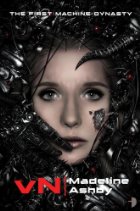 Summary:
Amy is 5 year old robot. An exact replica–iteration–of her mother, who is in a relationship with a human male. Her parents are restricting her food to raise her slowly at a human child’s pace instead of at a robot’s. But when her grandmother shows up to her kindergarten graduation and threatens her mother, things go haywire. It quickly becomes apparent that the failsafe that makes robots love humans innately and makes them incapable of withstanding seeing violence against humans has failed to activate in Amy. She finds herself full-grown and on the run from humans and her robot aunts alike as she struggles to figure out who she is and what her existence means to humanity.
Review:
Artificial Intelligence/Robot books tend to take a bit more to draw me in than say a zombie book. It’s really hard to do AI in a way that is simultaneously scientifically/culturally believable and unique. Frankly, I need a bit more believability in an AI book than in a zombie one, since AI is real science. Plus, the book should examine their cultural place in the world, and that needs to be believable. I am pleased to say that this book gets it mostly right. It’s enjoyable, scientifically minded, culturally thought-provoking, and examines a real life issue in the context of genre, which long-time readers of this blog know is something I highly enjoy.
The first thing that made me know this is a smart book is the source of the robots (called Von Neumanns after their creator). A fundamentalist group in the American South decided that the humans left behind after Jesus’ Second Coming should have someone to help them through the Tribulation, so they invented humanoid robots to be ready to help. Clearly, the Second Coming didn’t happen, and the fundamentalists ended up selling Von Neumanns, and the Von Neumanns wind up a part of the cultural backdrop, not to mention the porn industry. As a character says to Amy:
There are only two industries in this world that ever make any kind of progress: porn, and the military. And when they hop in bed together with crazy fundamentalists, we get things like you. (location 1944)
This is the most unique and engaging origin story for robots that I’ve seen, plus it makes sense and provides cultural commentary. The Von Neumanns originated as a religious experiment, were swiped by the military and the porn industry, and became a part of everyday life. It’s just an awesome origin story for the world that Amy is in.
The characters, including the robots, are three-dimensional. Everyone has complex motivations and the main characters definitely grow and progress with time. No one is presented as pure evil or good.
The plot is similarly complex. There’s a lot going on in Amy’s world, and none of it is predictable. What is the failsafe precisely and is it a good or a bad thing? Is it a natural progression that it doesn’t work in Amy? What about how Amy’s mother and grandmother reacted to the human world around them? Did they see accurate shortcomings or were they just malfunctioning? And what about how the various humans use the Von Neumann’s? For instance, pedophiles acquire Von Neumanns and keep them young by starving them. Is this a good, harmless thing since it protects human children or have robots evolved to be far more than just a machine? The world is complex and full of tough questions, and thus is challenging and unpredictable, making for an engaging read.
What I most enjoyed though was how the whole book presents the question of nature versus nurture in a genre setting. Are we our parents with no hope of improvement or escape? Or do we have more say in the matter than just our genetics or “programming”? Amy has a psychopathic grandmother and a mother who has made questionable choices. Does this mean that Amy is evil or malfunctioning or even capable of being something different from the rest of her family? All of these questions lead to some interesting stand-offs, one of which includes my favorite quote of the book:
An iteration isn’t a copy, Mother. It’s just the latest version. I’m your upgrade. That’s why I did what I did. Because I’m just better than you. (location 2581)
All that said, there were two things that kept this back from five stars for me. First, some of the writing style choices Ashby uses drew me out of the story a bit. They are periodically highly artistic in a way that didn’t jibe with the story for me. I get why she made those choices, but as a reader they aren’t ones that generally work for me. Second, one thing that really drew me out of the story is the fact that the robot’s boobs don’t move. This is mentioned at one point as being a way to tell if a woman is robot or not. This drew me out of the world very hard while I laughed uproariously. I’m sorry, but machines designed by men would simply not have hard plastic boobs. Their boobs would bounce, dammit. This would at least be in the top 10 list of robot requirements. It simply wasn’t a realistic design choice, and it pulled me out of the story to such an extent that it lost the believability for a bit for me.
Overall, this is a creatively written and complex scifi artificial intelligence story that examines not just what makes us human but also individuality and uniqueness separate from parents and family. Some of the more artistic writing choices and high levels of violence might not appeal to all audiences, but if you’re an AI or scifi lover with an interest in nature versus nurture and stories featuring strong female leads, you should definitely give this a go.
4 out of 5 stars
Source: NetGalley

Book Review: The Long Quiche Goodbye by Avery Aames (Series, #1) (Bottom of TBR Pile Challenge)
 Summary:
Charlotte Bessette is ecstatic that her slightly eccentric French grandfather and grandmother have handed over the running of their small town cheese shop to her and her cousin, Matt. She and Matt have redecorated the place for the 21st century and have added a wine annex. Everyone is excited for the grand re-opening but when their landlord turns up dead on their doorstep stabbed with one of their cheese knives and Charlotte’s grandmother standing over him, both the shop and the family are at risk.
Review:
Cozies are, by their very nature, absolutely ridiculous and difficult to explain. I generally default to an explanation like, “It’s murder! With arts and crafts and cooking! But not too much blood and no sex! And the titles are puns!” At this point the person I’m talking to generally looks at me like I’m nuts and wanders off. But even though the cozy genre is ridiculous and tough to explain, there are things that work for it and things that don’t. This book is definitely a cozy but it combines the cozy elements oddly, making it fall short of awesome into the decidedly meh category.
Most cozies have a moderately ridiculous plot involving a dead body being found and a woman ultimately amateur investigating the crime. The crime in this one was odd. A landlord who nobody likes is stabbed directly in front of the cheese shop on grand reopening night. Oh, and he’s stabbed with a cheese knife. Sometimes I think authors just don’t research and realize how hard it actually is to stab someone in the chest. A cheese knife wouldn’t cut it. (See what I did there?) So that had me rolling my eyes from the start. The ultimate whodunit was also a bit bizarre and had me scratching my head. It made some sense but it also sort of felt a bit like the author just chose whoever would be the most surprising as the killer, instead of really thinking through the logic and motivation. It’s also a bit problematic to have the murder victim be some sleaze everybody in town hates. This felt like a choice to give the mystery more easy suspects rather than, again, based on thinking through logic, motivation, and real crimes.
Then there’s the issue of the main character, Charlotte, who ultimately investigates. She doesn’t really have the get up and go gumption necessary for someone to start investigating something on her own. She’s….kind of snooty and prissy. A good cozy main character should be into her arts and crafts but also possess a lot of independent spirit and gumption. Charlotte is surrounded by people like that–her grandmother, her shop employee–but she herself isn’t like that at all. Yes, her grandmother is accused of a crime she didn’t commit and that’s a big impetus to do something, but it just feels out of character for Charlotte to do investigation. Similarly, Charlotte’s romantic interest felt forced and fake, which was awkward. In a genre where we get no sex scenes, the romance should be very well done, which it was there, but it wasn’t truly engaging.
The quirky characters in the town, besides Charlotte and her love interest, were interesting and just the right blend of quirks and reality to suit a cozy. Similarly, I was glad to see some cheese-heavy recipes in the back. I also thought the pun title was great and played in well to the mystery without giving too much away.
Personally, I think there are better, more engaging and funny cozy series out there to invest my time in. However, if you are a huge cozy fan and don’t mind the oddly snooty, timid main character and a slightly silly mystery plot, then you should give it a go. The cheese angle is certainly unique.
3 out of 5 stars
Source: PaperBackSwap

2012’s 5 Star Reads!
Last year I decided to dedicate a separate post from my annual reading stats post to the 5 star reads of the year. I not only thoroughly enjoyed assembling that post, but I also still go back to it for reference. It’s just useful and fun simultaneously! Plus it has the added bonus of giving an extra signal boost to the five star reads of the year.
Please note that if the 5 star went to a book in a graphic novel series, I am just listing the whole series. If it’s a non-graphic series, then the individual book is listed with a note about what series it is in. With no further ado, presenting Opinions of a Wolf’s 5 Star Reads for 2012!
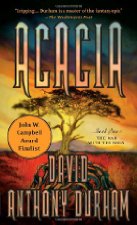
Acacia: The War with the Mein
By: David Anthony Durham
Publication Date: 2007
Publisher: Doubleday
Genre: Fantasy
Themes: the complexities of good and evil
Summary:
The Akarans have ruled the Known World for twenty-two generations, but the wrongfully exiled Meins have a bit of a problem with that. They enact a take-over plot whose first action is assassinating the king. Suddenly his four children are flung to different parts of the Known World in exile where they will need to come to terms with who they are, who the Mein are, and the wrongs past generations of Akarans committed in order to help the Known World make a change for the better.
Current Thoughts:
I have to catch myself whenever I start to say I don’t like high fantasy now, because I do like it. I like it when done right. When it questions patriarchy and race and tradition in the context of a fantastical world. I definitely feel like this book has cross-over potential, so I recommend it to anyone with an interest in multi-generational epics.
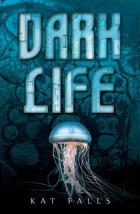
Dark Life
By: Kat Falls
Publication Date: 2010
Publisher: Scholastic Press
Genre: YA, Post-Apocalyptic, Scifi
Themes: ocean exploration, pioneering
Summary:
Ty was the first person born subsea. His family are settlers on the bottom of the ocean, a new venture after global warming caused the Rising of the seas. Ty loves his life subsea and hates Topside. One day while adventuring around in the dark level of subsea, he stumbles upon a submarine and a Topside girl looking for her long-lost older brother. Helping her challenges everything Ty believes in.
Current Thoughts:
I still sometimes think back to the delightfully creative underwater world that Falls presents in this book. This is a YA book that manages to avoid the painful tropes that a lot of them fall into, plus it has a great setting. I will definitely be reading the rest of the series.
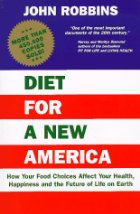
Diet for a New America
By: John Robbins
Publication Date: 1987
Publisher: Stillpoint Publishing
Genre: Nonfiction–Diet, Nonfiction–Environmentalism, Nonfiction–Science
Themes: health, responsible choices
Summary:
John Robbins was born into one of the most powerful corporations in America–Baskin-Robbins. A company based entirely on selling animal products. Yet he took it upon himself to investigate the reality of animals products and their impact on Americans, American land, and the world overall. This book summarizes his extensive research, including personal visits to factory farms.
Current Thoughts:
Although I already knew a lot of this information before reading this book, I believe that Robbins does an excellent job both of writing it out clearly and backing it up with respected, academic citations. It’s my go-to book to hand to people who want to know why I’m so against factory farming and what the scientific arguments in favor of vegetarianism are.

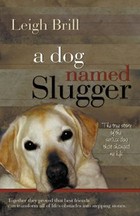
A Dog Named Slugger
By: Leigh Brill
Publication Date: 2010
Publisher: Bell Bridge Books
Genre: Nonfiction–Memoir
Themes: animal/human relationships, disability studies
Summary:
Leigh Brill recounts in her memoir her life before, during, and after her first service dog, Slugger, a golden retriever with a heart just as golden. Leigh had no idea her cerebral palsy could even possibly qualify her for a service dog until a similarly disabled fellow graduate student gave her some information. Her touching memoir tracks her journey, as well as the life of Slugger.
Current Thoughts:
My love for animals means that any book about relationships with them tends to top my list. This one stands out for its focus on issues for the disabled, and I believe that Brill’s love for her dog, both for his personality and how he helps her, really shine through. I’d recommend this to any animal lover or to those curious about life with a service animal.

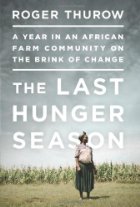
The Last Hunger Season: A Year in an African Farm Community on the Brink of Change
By: Roger Thurow
Publication Date: 2012
Publisher: PublicAffairs
Genre: Nonfiction–Social Justice
Themes: hunger, farming, global warming, putting a face onto the issues
Summary:
Smallholder farmers make up the majority of Kenya’s food production and yet they face multiple challenges from inefficient planting techniques to bad seed markets that lead to an annual wanjala–hunger season. One Acre Fund, an ngo, saw the gap and came in with a vision. Sell farmers high quality seeds and fertilizers on credit, delivered to their villages, on the condition they attend local farming classes. Roger Thurow follows four families as they try out becoming One Acre farmers.
Current Thoughts:
I credit this book with giving me perspective in the worldwide hunger and GMO debate, and of course with giving me that ever-useful reminder that in some ways I have been very lucky. What I tell people in order to get them to read this book is one of two things. Either read this book because it will show you the true face of hunger or read this book to understand why some GMOs are necessary. Most of all, I recommend it to anyone with an interest in the worldwide food debate.

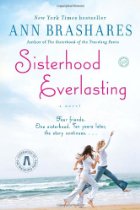
Sisterhood Everlasting
By: Ann Brashares
Publication Date: 2011
Publisher: Random House
Genre: Contemporary Fiction
Themes: the pain of growing up and maturing, changing relationships
Summary:
The Septembers are all 29 years old now and spread out all over the globe. Bee is expending her energy biking up and down the hills of San Francisco while Eric works as a lawyer. Carmen has a recurring role on a tv show filming in NYC and is engaged to Jones, an ABC producer. Lena teaches art at RISD and lives a quiet life in her studio apartment, except for the one day a week she practices Greek with an elderly woman. Tibby took off to Australia with Brian months ago, and everyone else is in limbo waiting for her to get back. They all feel a bit disconnected until Tibby sends Bee, Carmen, and Lena tickets to come to Greece for a reunion. What they find when they arrive is not what anyone expected.
Current Thoughts:
It’s unfortunately rare that a series grows up with the characters, but Sisterhood has. Although a lot of women’s fiction with similar themes frustrates me, this series works because I started reading it as a teenager when the women were teenagers. I understand where they’re coming from and am more willing to give them a chance. If you ever read any of the Sisterhood books but neglected to finish the series, definitely pick them back up. It’s worth it.
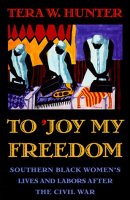
To ‘Joy My Freedom: Southern Black Women’s Lives and Labors after the Civil War
By: Tera W. Hunter
Publication Date: 1997
Publisher: Harvard University Press
Genre: Nonfiction–History
Themes: race, class, gender, Atlanta, domestic workers
Summary:
Hunter examines the lives of southern black women, particularly southern domestic workers, by narrowing her focus in on the development of the city of Atlanta after the Civil War. Since many ex-slaves moved to Atlanta and then migrated again north during the Great Migration decades later, this makes for an excellent focal point for the topic. By examining black women’s lives in Atlanta both in and out of their employer’s homes, she is able to dissect the roles of race, class, and gender in the elite’s attempts to maintain dominance in America.
Current Thoughts:
This book not only gave me the thought-provoking examination of the intersection of race, class, and gender, but it also gave me an awesome historical introduction to the city of Atlanta. I always think of this book whenever Atlanta comes up. It’s also a great example of readable, accessible nonfiction history writing.

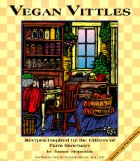
Vegan Vittles: Recipes Inspired by the Critters of Farm Sanctuary
By: Joanne Stepaniak
Publication Date: 1996
Publisher: Book Publishing Company (TN)
Genre: Nonfiction–Cookbook–Vegan
Themes: down-home cruelty-free cooking
Summary:
A farm sanctuary is a farm whose sole purpose is to save animals from farm factories and slaughter. The Farm Sanctuary in upstate New York was started in 1986. In this cookbook, one of the proprietors has gathered vegan recipes inspired by farm life. Think down-home cooking that is cruelty-free.
Current Thoughts:
The recipes I selected out of this cookbook have solidly entered my repertoire and are repeated hits with omnis and veg*ns alike! They are simple, easy, and adaptable. They also fill that comfort food niche I had honestly been missing. Highly recommended to anyone who loves comfort food.

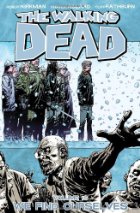
The Walking Dead
By: Robert Kirkman
Publication Date: 2010
Publisher: Image Comics
Genre: Graphic Novel–Horror
Themes: creation of a new society, living in fear, unjust wars, truthiness, self-protection, zombies, Georgia, survival
Summary:
When cop Rick wakes up from a coma brought on by a gun shot wound, he discovers a post-apocalyptic mess and zombies everywhere. He sets off for Atlanta in search of his wife, Lori, and son, Carl, and soon teams up with a rag-tag group of survivors camped just outside of Atlanta.
Current Thoughts:
I’m still working my way through this series, but it just progressively gets better and better. Although the beginning is cliche, it does not take Kirkman long to become unique, surprising, and thought-provoking. This now also features a spin-off, non-graphic, prequel series about the villain, The Governor. I consider these to all be the same series, in spite of different formats, and I’m finding that spin-off just as enjoyable.

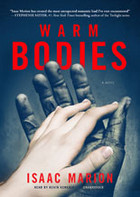
Warm Bodies
By: Isaac Marion
Publication Date: 2010
Publisher: Blackstone Audio
Genre: Post-Apocalyptic
Themes: hope, love
Summary:
R is a zombie, and he remembers nothing about his life before he was one–except that his name starts with the letter R. He and his group of the other living dead inhabit an old abandoned airport and are ruled by the bonies. They hunt the living not just for the food, but also for the memories that come from ingesting their brains. It’s like a drug. One day when he’s out on a hunt, R eats the brain of a young man who loves a young woman who is there, and R steps in to save her. It is there that an unlikely love story begins.
Current Thoughts:
This book reminds me that even a post-apocalyptic story can be hopeful. I also still look back on R’s unlikely love story with a warm heart and smile. I recommend it to those looking for an off-beat love story or a different take on zombies.
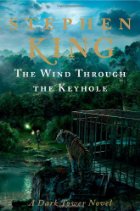
The Wind Through the Keyhole 
By: Stephen King
Publication Date: 2012
Publisher: Scribner
Genre: Fantasy, Horror
Themes: growing up, leaving aside childish things
Summary:
There’s a tale we have yet to hear about the ka-tet in the time between facing the man in the green castle and the wolves of the Calla. A time when the ka-tet hunkered down and learned a special billy-bumbler talent, an old tale of Gilead, and the first task Roland faced as a young gunslinger after the events at Mejis.
Current Thoughts:
The Dark Tower is just a series that is flat-out worth getting into a fan girling over. I could never ever perceive of reading and re-reading it as being a waste of time. I’ve also noticed that growing up is a recurring theme in King’s books, and apparently is one that I enjoy.
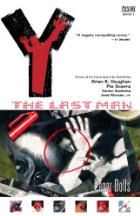
Y: The Last Man
By: Brian K. Vaughan
Publication Date: 2003
Publisher: Vertigo
Genre: Graphic Novel–Scifi–Post-apocalyptic
Themes: gender, gender norms, organization of society, Boston, United States, Israel, coming of age
Summary:
The world is changed overnight when all the men and boys in the world mysteriously drop dead. Factions quickly develop among the women between those who want the world to remain all female and those who would like to restore the former gender balance. One man is mysteriously left alive though–Yorick. A 20-something, underachieving magician with a girlfriend in Australia. He desperately wants to find her, but the US government and the man-hating Amazons have other ideas.
Current Thoughts:
Another series that I am currently in the middle of. It is also steadily improving from the first volume. It is colorfully illustrated, consistently funny, and thought-provoking.

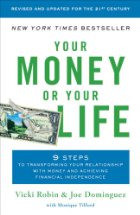
Your Money or Your Life: 9 Steps to Transforming Your Relationship with Money and Achieving Financial Independence: Revised and Updated for the 21st Century
By: Vicki Robin and Joe Dominguez
Publication Date: 2008
Publisher: Penguin Books
Genre: Nonfiction–Lifestyle
Themes: getting what you want out of life, debt slavery, finances
Summary:
Dominguez achieved Financial Independence at the ripe old age of 30 and proceeded to provide his method to friends who encouraged him to offer it as a class. He finally wrote a book, and this edition is revised and updated for modern times by his friend and fellow achiever of Financial Independence, Vicki Robin. Offering steps and mind-set changes, not magic formulas, they promise that if you follow the steps, you can be Financially Independent in 5 to 10 years, no matter how much debt you are currently in or how much money you make.
Current Thoughts:
This is definitely not a quick-fix book. It’s a realistic look at your finances and debt and ways to come out on top financially independent. Following the steps is time-consuming and, admittedly, difficult to do on a month-to-month basis, but even just reading the book and following the steps for a bit gave me more of a solid structure for my finances. I paid down a significant amount of my debt in 2012 and am hopeful to pay down even more in 2013. I’m not sure I’d have been so successful with that without this book. Plus it gives hope when you’re feeling buried in debt.

 Support my work with a tip or browse my shop for curated book club guides, how to guides, cross-stitch patterns, and more!


This work by Amanda Nevius is licensed under a Creative Commons Attribution-Noncommercial-No Derivative Works 3.0 United States License.
 Opinions of a Wolf