
Archive
Book Review: Succubus Heat by Richelle Mead (Series, #4) (Audiobook narrated by Elisabeth Rodgers)
 Summary:
Georgina Kincaid, Seattle’s best succubus, has been a foul mood ever since her break-up with author mortal, Seth Mortensen. Her demon boss, Jerome, has had enough of it and decides to outsource her to Vancouver for a job investigating a group of Canadian Satanists who are drawing the wrong type of attention to Hell. But when Jerome is kidnapped and all the Seattle area hellions lose their powers at the same time as the Satanists do a stunt in Seattle, Georgina starts to wonder if the Satanist group are more than just an annoyance. Maybe they’re part of some bigger plot. Oh, and also, she can now have sex with mortals without stealing any of their life force. Very interesting indeed.
Review:
A tight, intricate plot that links back to the previous books, steamy sex scenes, and an ever-expanding cast of diversely entertaining characters make this entry in the Georgina Kincaid series a delight.
Georgina’s whinyness after her break-up with Seth could get on the reader’s nerves if it wasn’t for the fact that her own friends and colleagues eventually call her out on it. Georgina is a well-rounded character with flaws, and being bad at break-ups is one of them. This book sees her go through the stages of a break-up in an interesting way, from rebounding to whining to anger to finally trying to come to terms with it and remain friends with Seth. The fact that Georgina then gets the ability to have sex with Seth without stealing his life force is a serious temptation. How she and Seth respond might rub some readers the wrong way, but Mead presents it in a very I understand how this could happen way. What happens makes sense within the context both of the story and of who Georgina and Seth are as characters. How they go on to deal with the consequences is also realistic. People don’t get away with things without consequences in Mead’s world, but they also aren’t perfect. Mead strikes the balance well.
The plot is complex and yet is a different problem from the previous books. Taking away powers and having the most powerful demon in Seattle gives the characters an interesting problem to address. Additionally, having Georgina travel to close-by Canada provides some great scenery changes, as well as some good laughs at the expense of the inept Satanist group.
The sex scenes range from brief one-offs with random men for feeding to unfulfilling sex with her bad-hearted rebound boyfriend to guilt-inducing passionate love-making with Seth. Some of the sex scenes are steamy, others a bit dull, and others heart-wrenching. It’s a realistic variety, although the reader does have to wait a while for the most passionate scenes.
One thing that bothered me a bit is that Georgina gets slut-shamed some for one of her brief hook-up choices. Yes, she makes the choice out of her heartbreak, but it’s her body her choice, and I don’t like that even a succubus, apparently, can get slut shamed. I also have to admit that I had figured out the final plot twist long before it happened, so although the plot is a bit complex, the big bad is predictable.
The overarching plot of the whole series, however, continues to grow in unexpected ways. I finished the book intrigued to continue on immediately to the next entry.
The audiobook narrator brings Georgina to life quite willingly, although she does pronounce a couple words, such as “panang,” rather oddly. However, she brings a perfect flow to the story. She also reads the sex scenes beautifully.
Overall, this is an engaging and rewarding entry in the series. Fans will welcome the new plot, variety of sex scenes, and growth of the overarching series plot.
4 out of 5 stars
Source: Audible

Previous Books in Series:
Succubus Blues
Succubus On Top
Succubus Dreams
Counts For:
Series Review: The MaddAddam Trilogy by Margaret Atwood
Introduction:
I post series reviews after completing reading an entire series of books. It gives me a chance to reflect on and analyze the series as a whole. These series reviews are designed to also be useful for people who: A) have read the series too and would like to read other thoughts on it or discuss it with others OR B) have not read the series yet but would like a full idea of what the series is like, including possible spoilers, prior to reading it themselves or buying it for another. Please be aware that series reviews necessarily contain some spoilers.
 Summary:
In the not-too-distant future, the heavily populated world is run by corporations instead of governments. The corps keep their workers and people in Compounds where they’ll be safe from the rampant crime in the rest of the world. Supposedly. Those who can’t get jobs at a corp must live in the pleeblands, essentially ghettoes. The pleeblands are haunted by painballers–people who fought their way out of prison in a gladiator-style competition and who are usually now addicted to drugs.
The world isn’t entirely humans and corps, though. There are also a whole slew of new GMO plants and animals, such as rakunks and pigoons. Children can buy bracelets with live fish inside them as wearable pets.
Jimmy works in a corp with Crake. Crake is a genius who the corp allows to create basically whatever he wants. They share a love interest in Oryx, who works with them, caring for the creations Crake makes. Toby lives in the pleeblands, working in fast food restaurants. She is being pursued by a violent stalker, who she is sure will kill her one day. Then she discovers God’s Gardeners, a vegetarian cult that lives on the rooftops of the city gardening, learning all the species of the planet, and preparing for the impending End Times. And the End Times come in the form of a virus released by Crake to destroy humanity and make room for the new breed of humans he has created in his lab–Crakers. Crakers are herbivorous, polyamorous, and turn blue when they are in heat. The pandemic wipes out almost everyone, but not quite. Jimmy is left to care for the Crakers, and Toby survives, reminiscing about how her life has gone. And there are some that Crake gave an immunity drug to. They gather together and attempt to survive, guide the Crakers, and ponder on how things turned out this way.
 Review:
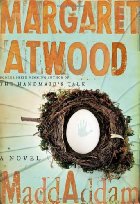
The future world Atwood creates in this series is inventive and engrossing. Unfortunately, many of the characters and some of the plot fail to fully engage the reader.
The future world, prior to the virus outbreak that destroys most human life, is incredibly imaginative and simultaneously realistic. It is by far the strength of the series. Atwood takes real modern day science and intelligently extrapolates how that combined with our evolving culture would affect life on Earth. The change from politicians and nations controlling the world to corporations doing so makes excellent sense. The types of animals those corps create are also logical both within that context and from a scientific perspective. For instance, the mo’hairs are sheep who have had their genetics modified so that their wool is instead human hair to makes wigs out of. How the world works makes sense and is slightly frightening at the same time. It’s a subtle dystopia.
The post-apocalyptic setting is slightly less creative. Only a few humans survive and quickly leave the cities to live in the countryside. Conveniently, at least half of the group of survivors are from the vegetarian cult, God’s Gardeners, who predicted the end times, and so are well prepared for living in the wild. This setting is much staler compared to the pre-apocalypse dystopia. It feels as if the characters are just sitting in a clearing in the woods chatting at each other. This would not be a problem if the characters were rich enough to sustain the plot when the creative world has disappeared. But most of them are not.
Atwood is known for writing richly imagined female characters in scifi settings. Unfortunately, this series is dominated by men, with the women mostly relegated to secondary roles, with the exception of Toby. Toby starts out strong, and the book focusing on her story (The Year of the Flood
 The plot is clearly meant to show us how the world could be destroyed and also how new life begins, complete with religious mythology. Some of the plot twists that go with this core of the plot work and others don’t. For the world destroying, the plot approaches it in two ways. There’s telling how the world ends from an outsider, underprivileged perspective of a woman who happens to survive. This aspect of the plot had enough twists and differences, such as Toby’s involvement in the God’s Gardeners cult, that it maintained interest. The plot also tells how the world ends from the perspective of a man caught in a hopeless hetero love triangle with a kind woman and an evil genius. This common trope takes no different plot twists or turns. It is entirely predictable and dull. A bit of a flop. The twists in the final third of the story, how the world begins and the last of the prior world fades out with a murmur, does nothing truly daring. Toby’s romance ends essentially as expected. Loose ends are tied up. And the Crakers take over with a new mythology given to them by a flawed human being. I’m sure this is meant to say something radical, and maybe someday to someone it will, but to the reader who has already read many thinly veiled take-downs of religion and where it comes from in scifi, it was rather ho-hum and long-winded. Particularly when compared to the much shorter and more richly written work by Atwood taking a similar anti-religion stance: The Handmaid’s Tale
Overall, this is a series with two-thirds of the plot set in a richly imagined and intelligently extrapolated subtle dystopia future. The basic plot of dystopia to apocalypse to post-apocalypse is told slightly non-linearally with some interesting poetic-style writing inserted in-between chapters. Most of the characters feel flat against the rich backdrop, although one female character at first stands out then slowly fades. Recommended to readers interested in a realistic near future dystopia who don’t mind a rather typical plot and two-dimensional characters will enjoy most of the series, although they may enjoy the first two books more than the third.
3.5 out of 5 stars
Source: PaperBackSwap, library, and Audible
Books in Series:
Oryx and Crake
The Year of the Flood
MaddAddam
Book Review: A Case of Conscience by James Blish (Series, #4)
 Summary:
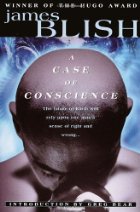
A new inhabited planet, Lithia, has been discovered, and an exploratory Earth crew of four is sent to determine how Earth will respond to the planet. Ruiz-Sanchez is a scientist and a member of this crew, but he’s also a Jesuit priest. Although he admires and respects the reptilian-humanoid inhabitants of Lithia, he soon decides that the socialist, perfectly co-existing society must be an illusion of Satan, so he advises against maintaining ties with the planet. The vote of the crew is a tie, however, so the UN must ultimately decide the fate. While they are awaiting the decision, Ruiz-Sanchez and the others must raise and guardian a Lithian child who is sent as a present to Earth. Soon, Ruiz-Sanchez starts having fears about just who the child might be.
Review:
This is the third book from the collection of 1950s American scifi classics from Netgalley, which I will review as a whole at a future date. I was surprised that a book that is fourth in its series was included in the collection. Upon investigation, I discovered that this series isn’t surrounding a certain set of events or characters but instead is multiple books around a similar theme. The theme for the series is each book deals with some aspect of the price of knowledge. So each book works as a standalone as well. There is also some disagreement as to precisely what book is what number in the series. I have chosen to use the number used by GoodReads. I had previously read a scifi book with a Jesuit priest scientist visiting a newly found planet (The Sparrow
Ruiz-Sanchez is a rather two-dimensional character who quickly turns into a bumbling priest trope. Very little attention is paid to his credentials as a scientist within the story, so instead of coming to know Ruiz-Sanchez the scientist, the man, and the priest, we only know him in his priest role. This prevents a connection or even a basic understanding of his rather bizarre concerns. Whereas in The Sparrow
The plot is fascinating, although it does jump around a lot. Essentially there’s the part on Lithia, which primarily consists of discourse between the scientists. Then there’s the development of the Lithian child into an adult who doesn’t fit anywhere, since he lacked the social training on Lithia and also is a reptilian humanoid on planet Earth. He then starts to incite rebellion among the youth. Meanwhile, Ruiz-Sanchez is told by the Pope that he committed an act of heresy and he must re-win favor by stopping the Anti-Christ aka the Lithian on Earth. All of the settings are fascinating, and the plot is certainly fast-paced. However, the plot is so far-fetched that it is difficult to properly suspend disbelief for it.
The settings are the strength of the book. Lithia is well-imagined, with uniqueness from Earth in everything from technology to how the Lithians handle child-rearing. The tech involves trees since they lack minerals, and the child-rearing is non-existent. The Lithians are simply birthed then allowed to develop on the planet, similar to turtles on Earth. Earth’s setting is interestingly imagined as well. The fear of nuclear weapons has driven humans to live underground for generations with only the elite living above ground, and the UN working hard to keep it that way. It’s a fun mix of alternate alien civilization and dystopia.
Essentially, the book has interesting world-building and what could be a promising plot that get derailed by two-dimensional characters and too many bizarre plot-twists and occurrences. It’s certainly an interesting read, particularly if you are interested in immersing yourself in this odd world Blish has created. However, readers should not expect to connect with the characters on an emotional level and should be prepared for a bizarre plot.
3 out of 5 stars
Source: Netgalley

Previous Books in Series:
Doctor Mirabilis
Black Easter
The Day After Judgement
The Devil’s Day


Series Review: The Monstrumologist Series by Rick Yancey
Introduction:
I post series reviews after completing reading an entire series of books. It gives me a chance to reflect on and analyze the series as a whole. These series reviews are designed to also be useful for people who: A) have read the series too and would like to read other thoughts on it or discuss it with others OR B) have not read the series yet but would like a full idea of what the series is like, including possible spoilers, prior to reading it themselves or buying it for another. Please be aware that series reviews necessarily contain some spoilers.
 Summary:
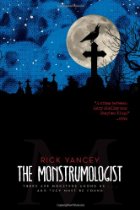
A nursing home contacts a researcher. An elderly man has passed away. He identified himself to them as Will Henry, but they can’t find any record of him or living relatives. He left behind four folios, telling what he claimed to be his life story. The first folio begins when his parents die in a fire, and he is left in the care of his father’s employer, Dr. Warthrop. In the 1800s. Over 100 years ago. And Dr. Warthrop is a Monstrumologist. He specializes in the study of aberrant biology, or monsters. And Will is now his apprentice. The first thing Dr. Warthrop tells Will is that Will Henry contracted a parasite from his father. Normally deadly, he is mysteriously a safe host. The parasite will make him abnormally long-living, and any contact that is too close will make him pass it along to another.
What follows over the course of the folios is the tale of the monsters Will Henry faced alongside and because of Dr. Warthrop. The anthropophagi–headless creatures with mouths in their stomachs. The wendigo–similar to a werewolf. The Typheus Magnificum–the Holy Grail of Monstrumology that may or may not exist. And finally the Titanoboa Cerrejonensis–a giant snake. There are these monsters, yes. But there are also the questionable choices and personalities of the various Monstrumologists, and the slowly unwinding monster inside a boy who has seen too much and been loved too little.
The question left for the researcher is how can Will Henry continue along an increasingly dark path when all signs indicate he eventually happily married his childhood sweetheart? And are these ramblings true or just the fairy tale of an elderly man?
Monsters and madness encircle Will Henry, Dr. Warthrop, the researcher, and the reader as the folios slowly reveal all.
 Review:
There is a lot going for this series that makes it unique and highly recommendable, particularly among its competitors in YA.
It’s horror based in the realms of science and the grotesque. Wanton blood and guts, serial killers, etc… won’t be found but it also doesn’t shy away from bits of the criminal underworld or real bodily danger. Will Henry loses a finger at one point. The monsters are real and frequently either eat people or turn people themselves into monsters. It combines to elicit horror in the reader in the tradition of Frankenstein. It’s perfect for readers who shy away from slashers or crime novels but still want a dash of terror.
In lieu of a romance, the relationship at the center of the series is between Will and his guardian, Dr. Warthrop. Yes, the series repeats the common YA trope of an orphan, thereby getting rid of the parents, but just because there are no parents doesn’t mean that there’s no guardian/young person conflict. In fact, I think that having the conflict be between Will and a, to him, incomprehensible older guardian allows for a more free exploration of the difficulties that can arise in this relationship. The fact that Dr. Warthrop is not his father means that Yancey is freer to quickly move into the mixed emotions and misunderstandings that can so easily happen in this type of relationship. Dr. Warthrop has many flaws as a guardian, but he does truly love and care for Will. Will at first feels lost and no connection with Dr. Warthrop, then he grows to love him in spite of his flaws, then he slowly starts to loathe him. Whether or not this loathing is warranted is left up to the reader to decide, and I do think that Yancey succeeds at making it a gray area that each reader will reach a different conclusion on. This relationship gets just as much, if not more, time as the monsters, and it’s one of the things that makes the series worth reading.
 Yancey isn’t afraid to not just use, but embrace poetic language and literary allusions. I was truly stunned at the beauty of the language when reading the first book, and that beauty continues throughout the series. It’s like reading an old, Gothic novel, setting the perfect tone for the world building. A YA reader who perhaps hadn’t previously experienced narration like this might after reading it be inclined to seek out similar writing, thus finding some classics. And even if they don’t, it’s a wonderful change of pace for YA.
Setting the story of Will and Dr. Warthrop in the context of the mystery of the modern elderly man, his folios, and the researcher looking into them lends an extra layer to the story that increases its complexity. The researcher is just as curious as the reader to find out more. He also provides some necessary historical facts and questions the veracity of some of Will Henry’s statements. Throughout the series, the researcher is wondering if this actually happened or if it’s all just the imaginings of an elderly man. The ultimate reveal still leaves this a bit of a mystery, letting the reader decide for themselves what they would prefer to be the answer.
The strength of the monsters varies throughout the series. Some are perfectly crafted, such as the anthropophagi. Others can be a bit less frightening or too predictable to be as engaging. This definitely lends to an uneven pace of suspense in the series and could be disappointing to a reader who is more invested in monsters than in the character development.
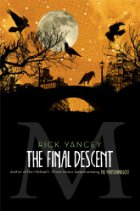 The ending. The ending must be discussed. *spoiler warning* Will Henry in the last book has turned into a dark, lawless, desperate character. He has been changed by what he has seen. His childhood sweetheart, Lily Bates, finds him frightening and lacking in morals. He blames Dr. Warthrop for all of his issues. While Dr. Warthrop definitely is at fault for not treating Will Henry like an adult and keeping him in the loop for his schemes, Dr. Warthrop also never taught Will to be so cold, desperate, or that it’s ok to wantonly kill. Will ultimately goes on an opiate and sex binge in a prostitution house. Dr. Warthrop finds him and pulls him out, in an attempt to save him. It is then that Willl finds out that the parasites he is infected with will spread with sexual intercourse and kill his partner in a truly grotesque manner, eating them from the inside out. Will gives up on Dr. Warthrop and all relationships and proceeds to travel the world aimlessly. The researcher ultimately discovers that Will later runs into Lily with her new husband. It is then that he reveals that Lily’s husband’s name was Will Henry, and he stole it as a pseudonym for these stories. So he never married Lily. Was never happy. He is now nameless. It’s an incredibly dark ending that leaves the researcher, and the reader, reeling. It was honestly a bit too hopeless for me. It felt as if Yancey was saying Will got sucked down into the monsters in his soul and could find no escape. I prefer to have a bit more hope in the world than that, particularly after spending four books with a character and growing to care for them. *end spoilers*
While I can still appreciate what Yancey was doing and what he was going for–a truly dark book–I feel that any potential readers or gift givers should be aware that it starts dark, gets darker, and there is no light at the end of the tunnel.
There is also a bit of a dearth of female characters in the series. In the two middle books, we get brief exposures to Dr. Warthrop’s old sweetheart and Lily Bates. That’s pretty much it. I’m ok with that, since much of the time is devoted to Will Henry and Dr. Warthrop. I also understand that the time period in which it is set definitely would not have had a female monstrumologist. I think Yancey tries to make up for this by having Lily be determined to be the first female monstrumologist, but I also think he steps back from this plotline in the final book, which disappointed me a bit. Essentially, be aware that if you’re looking for a strong female presence in the plot of your series, look elsewhere.
Overall, this is a unique series that deserves to be in any YA collection. It address young adult/guardian relationships in the rich wrapping of Gothic style horror narrated with a beautiful poetic language. Its historical setting and focus on the boy and his guardian doesn’t lend itself to a strong female presence in the series, although the female characters that do exist are good ones. Its darkness increases throughout the series, so don’t come into this expecting a happy ending. I’m pleased I took the time to read the entire series, and could see reading it again. Recommended to both YA fans looking for something different and Gothic horror fans who don’t normally do YA.
4.5 out of 5 stars
Source: Gift, Audible, and Amazon
Books in Series:
The Monstrumologist
The Curse of the Wendigo
The Isle of Blood
The Final Descent
Book Review: Alien in the Family by Gini Koch (Series, #3)
 Summary:
Kitty loves being engaged to Martini, her super-sexy alien fiancee from Alpha Centaurion. But she’s not super into the whole wedding planning thing. The issue gets pushed to the forefront, though, when Martini’s estranged extended family on AC announces their intent to visit and determine the worthiness of the marriage. It seems Martini is actually royalty. Meanwhile, some new aliens crop up, and they just so happen to be Amazonian terrorists. It’s an awful lot for the Super-Being Exterminator team to handle.
Review:
This is a hard review to write, because I *loved* the first two books in the series but this one left such a sour taste in my mouth, I won’t be continuing on.
The overarching plot is good. Yes, it’s a bit ridiculous that Martini is royalty, but anyone who’s read the first two books in the series should expect and embrace the ridiculousness at this point. The added twists from the AC homeworld make the wedding plot more interesting and unique. Every wedding is unique in its own way, but this gives Kitty and Martini’s wedding a decidedly paranormal romance flair. I didn’t find the Amazonian terrorist plot particularly necessary but it was well-done and kept the action moving.
The writing continues to be tongue-in-cheek dirty wit.
I hated having to be someplace on time, it took away so many potential orgasms. (page 40)
But the relationship between Martini and Kitty gave me reason to pause this time around. They continue to have excellent chemistry, which is fun to see. But there are two glaring issues in the relationship. Martini is overly jealous, in a cartoonish, immature way. He doesn’t get jealous in a way that is sexy. For instance, he doesn’t see men looking at Kitty and hold her hand to show they’re together. He actually growls. And yells. And clearly doesn’t trust Kitty. Of course, that lack of trust could be justified since Kitty repeatedly wonders if she’s choosing to marry the right man. Not just that, she thinks about whether she should marry any myriad of her guy friends and ex-lovers. Plus, she continues to flirt with just about anyone, in spite of Martini telling her it makes him uncomfortable. These are issues that should have been worked out prior to an engagement, and they don’t bode well for a future marriage. I wouldn’t mind the issues, but the couple are presented as the ideal couple. They aren’t presented as a couple who has some issues to add some realistic drama to the story. This is paranormal romance. The main romantic couple *should* be a bit idealized, but they aren’t.
A much, MUCH bigger issue to me though is how rape is handled in the book. This comes up in two different scenes. There is a scene where Kitty is fighting some bad guys and accidentally ends up in a room with a football team visiting Vegas. Half of the team makes a very overt attempt to gang rape her, but the other half of the team (plus an alien pet Kitty picks up early in the book) puts a stop to it. Then later the leader of the rapey half of the team comes to help fight the bad guys and apologizes, and Kitty recommends that they be added to the secret forces. She shrugs off the rape attempt as everyone makes mistakes and they apologized and essentially recommends they get hired to her company. I’m ok with a heroine narrowly escaping a rape attempt, as that could happen. I’m not ok with the heroine then shrugging it off, accepting an apology, basically saying that a rape attempt is just a mistake, and trying to help the career of the attempted rapist. What. The. Hell?!
In the second scene, Kitty is hanging out with her friend, Chuckie. Chuckie is, at this point in time, her boss. He’s also her almost life-long friend, she’s had sex with him in the past, he’s asked her to marry him before, and she’s periodically wondered throughout this book if maybe she should be marrying him instead of Martini. At the end of their conversation, they’re getting ready to go, and this happens:
He [Chuckie] took my [Kitty’s] shoulders and turned me around. “God, it’s as bad from the back. Really, go put on some clothes.”
“I don’t have a wrap, okay?”
“Find one. Before I rape you.” He gave me a gentle push toward the bedroom.
“Fine, fine.” (page 434)
So, Kitty’s friend: A) judges her clothing and deems it immodest B) orders her to change her outfit C) casually jokes about raping her D) victim blames rape victims with his comment implying clothing causes rape. And of course Kitty just takes this all in stride and doesn’t see anything at all inappropriate about what Chuckie says.
There is just far too much casual boys-will-be-boys acceptance of rape and rape culture in this book that supposedly features a strong female lead and *romance*. And a wedding! Paranormal romance fans deserve better. Men deserve to be treated as not mindless animals who will tackle anything in a sexy dress. Women deserve better than to be blamed for rapists’ behavior. Toss in the relationship issues between Martini and Kitty, while the relationship is treated by the book an ideal one, and no amount of sexy humor, wedding dresses, and aliens could save it for me. I’m very disappointed in the turn this series took. If you’re interested in the series, I would recommend reading the first two and stopping there.
2 out of 5 stars
Source: Amazon

Previous Books in Series:
Touched by an Alien
Alien Tango
Book Review: I, Robot by Isaac Asimov (Series, #0.1) (Bottom of TBR Pile Challenge)
 Summary:
This collection of short stories tells the history of the invention and gradual improvement of robots. The robots in this future must follow the 3 Laws of Robotics:
- A robot may not injure a human being or, through inaction, allow a human being to come to harm.
- A robot must obey the orders given to it by human beings, except where such orders would conflict with the First Law.
- A robot must protect its own existence as long as such protection does not conflict with the First or Second Law.
But following these laws doesn’t always have quite the outcome the inventors and managers of robots intended.
Review:
I wasn’t aware I, Robot

One thing I like about the world Asimov sets up is that unlike many scifi books featuring AI, the people in Asimov’s world are highly, intensely cautious of robots. They’re very concerned about robots taking jobs, killing humans, and even robbing humans of their autonomy. It sets up a conflict from the beginning and frankly presents the humans as just a bit more intelligent than in some AI scifi universes.
I was under the impression from pop culture that in I, Robot they think they’re protected by the Laws of Robotics but something happens so that the robots aren’t programmed with them any longer. That’s not what happens at all. What happens is much more complex. How the robots interpret the Laws and how the Laws work end up being much more complex and less straight-forward than the humans originally imagined, so much so that they have to have a robopsychologist to help them interpret what’s going on with the robots. This is really quite brilliant and is one of my favorite aspects of the book.
Unfortunately, the book can read a bit sexist sometimes, in spite of having a female protagonist through quite a bit of the book. (The robopsychologist is a woman). The book was first published in 1950, though, so when you think about the time period, the sexism is pretty minor, especially compared to having a female worldwide expert on robopsychology. The main time sexism comes up is when the leader of Europe is a woman and says some self-deprecating things about difficulty leading because she’s a woman. Yes, there is older scifi that avoids sexism pretty much entirely, but I am able to give this instance a bit of a pass considering the other strong portrayal of a woman in a leadership role. But be aware that at least one cringe-inducing sexist conversation does occur.
Overall, this piece of classic scifi stands the test of time extraordinarily well. Its film adaptations do not do it proper service at all. Come to this book expecting a collection of short stories exploring robopsychology, not an action flick about killer robots. Recommended to scifi fans.
4 out of 5 stars
Source: Harvard Books
Book Review: Initiate by Tara Maya (Series, #1)
 Summary:
Dindi is about to undergo her people’s initiation test and ceremony that not only welcomes her to adulthood but also will determine whether or not she is a member of the Tavaedi. The Tavaedi are a mix of religious leader, healer, and warrior who cast magic spells by dancing. Since Dindi can see the pixies and other fae, she thinks she has a chance. But no one in her clan has ever successfully become a Tavaedi. Meanwhile, an exiled warrior, Kavio, is attempting to shed his old life and the haunting of his father’s wars and his mother’s powers. But he slowly discovers a deadly plot that brings him directly to Dindi’s initiation ceremony.
Review:
It takes something special for me to pick up either a YA or a fantasy book, and this one is both. But Jessica’s review over on The Bookworm Chronicles had me intrigued. A fantasy series based on Polynesian tales and traditions is unique in fantasy. Plus the idea of magic from dancing really appealed to the dancer in me (years of tap and jazz, also many lessons in ballroom, zumba, etc…). When I found out the first book in the series is free on the Kindle, I had to try it out, and I’m glad I did! I really enjoyed the book, and its presence highlights many of the strengths of indie publishing.
The world is richly imagined and well described. The tribes and clans have clearly defined and described cultures that vary from stable farming to warrior to cannibal. The structure of the societies make sense and are rich without being overly detailed. I particularly appreciated that this is a tribal culture fantasy without ever claiming to be the real or imagined history of any known to exist (or to have existed) tribe. It is inspired by Polynesian culture but it is still a fantasy, similar to how medieval fantasy is inspired by the real Middle Ages but never claims to be what happened. This lends itself to rich world building without ever venturing off into ridiculous “historical” fiction.
The plot slowly builds Dindi’s story and Kavio’s story, gradually bringing them together. This is good since Dindi is still young enough that she doesn’t see much of the intrigue going on around her. Dindi’s perspective shows us the day-to-day existence of people in this world, whereas Kavio shows us the higher-ranking intrigue. It didn’t bother me that Dindi starts out a bit innocent because it is clear she will grow in knowledge with time. Meanwhile, bringing in Kavio’s perspective helps establish the world for the reader. There were also enough smaller clashes and twists that I never felt that I knew precisely what was going to happen next.
Although the characters at first seem two-dimensional, they truly are not. Everyone is more than what immediately meets the eye, and I liked that this lesson occurs repeatedly. It’s a good thing to see in YA lit. Dindi is strong, kind, and talented, but she still has her flaws. She is good but she’s not perfect, which makes her a good main character. I also appreciate that what will clearly be a romance eventually between Kavio and Dindi starts out so slowly with longing glances from afar. It’s nice that Dindi and Kavio get a chance to be established as individuals prior to meeting each other, plus the slowly building romance is a nice change of pace for YA lit.
Sometimes the chapter transitions were a bit abrupt or left me a bit lost. With changing perspectives like this, it would be helpful if the chapter titles were a bit less artistic and gave a bit more setting. It’s nice that when perspective changes the cue of the character’s name is given, no matter where it happens, but a bit more than that would be nice at the chapter beginnings. Similarly in scene changes, the break is three pound signs. I think using a bunch of centered tildes or even a customized drawing, such as of pixies, would be nicer. At first when I saw these I thought there was some coding error in the ebook. There also are a few editing mistakes that should not have made it through the final edit, such as saying “suffercate” for suffocate (page 144). As an indie author myself, I know it is incredibly difficult to edit your own book, so I give a pass to minor typos and things like that. However, the entirely wrong word for what the author is trying to say should be fixed. There were few enough that I still enjoyed the book, but I hope that there are less in the future installments of the series.
Overall, this is a unique piece of YA fantasy set in a tribal world inspired by Polynesia. The romance is light and slow-building, and the focus is primarily on growing up and becoming an adult. A few minor formatting and editing issues detract from it being a perfect escape read, but it is still highly enjoyable. I intend to read more of the series, and I recommend it to fantasy and YA fans alike.
4 out of 5 stars
Source: Amazon
Buy It
Note: the Kindle edition is free

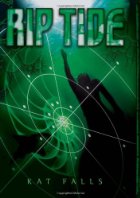
Book Review: Rip Tide by Kat Falls (Series, #2) (Audiobook narrated by Keith Nobbs)
 Summary:
Ty lives with his pioneer family subsea but he can’t convince his crush Gemma to leave Topside. Why is she so afraid of subsea? This was his biggest problem until his parents get kidnapped by surfs when they attempt to do a trade. Plus, Gemma wants to convince her fugitive brother to let her tag along with him. And townships keep disappearing, only to turn up later, chained up and anchored subsea with everyone dead inside. It’s a giant web of mysteries but do they intertwine at all?
Review:
I absolutely loved the first entry in this scifi series, which is unusual for me, since it’s YA. Not generally my genre. So I was excited to see the sequel available on Audible. It’s still an exciting adventure and interesting world but not quite as tightly and expertly constructed as last time.
Whereas Ty’s voice worked perfectly in the first book, in this one he reads a bit young. He went through a lot in the first entry, he should have presumably matured a bit more than he has. Similarly, Gemma hasn’t developed much since the first book either. I think these characters should have been given more space to grow more. Particularly in a YA series, it’s important to let the characters develop and mature at a more rapid rate. That’s the reality for teenagers after all.
Plot-wise, I honestly felt that there was a bit of a deus ex machina at work that also didn’t fully play into the rules of the world as originally set up. Still, though, the mystery is well-plotted and difficult to predict. It includes real danger without being too violent. It’s the perfect level of thriller for a YA reader who’s not so into the gore. On the other hand, I also found it frustrating that Ty’s parents aren’t around for most of the book. One of the things refreshing about the first one was that his parents were actually present and helpful without being too pushy or overshadowing. This time around, Falls went the more popular YA adventure route and just flat-out got rid of them for most of the book.
But the world Falls has built is still rich and unique, and she expanded upon it. We now get to see more of what the surf life is like, in addition to more of the shady side of things, such as the boxing/fighting rings. We also see some more of the government and law enforcement and have a better understanding of the world as a whole. It’s all richly imagined and drawn, right down to what styles of clothes different groups wear to what they eat. One detail I particularly enjoyed was that the surfs, a poor outcast lot, eat a lot of fish and blubber because it’s easy to catch, whereas Ty’s family eats a lot of vegetables because they grow them. Details like that really make a world.
The audiobook narrator, Keith Nobbs, read the whole thing a bit flat for my taste. He didn’t have as much enthusiasm and inflection as I thought was appropriate for a book about a subsea adventure starring two young teenagers! The production quality was high, he was easy to understand, but he didn’t really bring Ty to life. I’d recommend reading the print book over the audio, honestly.
Overall, then, the characters are a bit slow in their development and the plot feels a bit lazier than last time, but the characters are still well-rounded and the plot maintains an appropriate level of mystery. Toss in the richly imagined and describe post-apocalyptic and very wet world, and it’s well worth the read.
4 out of 5 stars
Source: Audible

 ,
, Book Review: iD by Madeline Ashby (Series, #2)
 Summary:
Javier is a vN. A self-replicating humanoid robot built by fundamentalist Christians to help humanity left behind after the rapture but then bought out and sold by a secular organization after the Christian company failed. He was living on an island run by his powerful vN girlfriend, Amy. Free from all humans and therefore free from the failsafe that makes him avoid harming them at all costs. He wants his failsafe-free girlfriend to free him from his own, but she refuses. So when a human shows up on the island and activates his failsafe, everything comes crashing down around him. Now he’s on a race to save Amy….and destroy his failsafe.
Review:
I was really excited for the second book in this series about ai written by a woman author. I love getting to see scifi topics like ai explored from a woman’s perspective. So I was a bit disappointed to have the story shift focus from a woman in the first book (Amy) to a man in the second (Javier).
Ripping Amy out from under us is an interesting choice. On the one hand, I appreciate series that switch perspectives like this because we get to see more of the world of the novel and gain a clearer understanding of it. On the other hand, part of why I liked the series to begin with was that we were seeing a powerful female robot for once. So I was skeptical about this choice at first. Ultimately, however, the perspective switch worked for me because it basically is following the hero’s sidekick when the hero is decommissioned. It’s still interesting to see the gender swap happening in the sidekick. It’s also interesting because although Javier is male, he’s also a robot with a failsafe, so he is more akin to an enslaved person than to a humanoid free male. It’s interesting but it saddens me that this perspective makes it seem like things like trading sex for travel are the only options for people in that situation. Sex is power, yes, but it’s not the only tool women have available to them. I’m not sure how I feel about the fact that the book seems to be saying that anyone in that situation, regardless of gender, would use these resources because they have to. I can see not having a lot of choices. And I can understand having to choose to do something you don’t morally want to do because the end result is so needed. But I would expect to see a lot of soul searching and thought process behind that choice because it is still a choice. Javier doesn’t seem to do much choosing or thinking, and I think that’s not a fair representation of what it actually is like to be a woman. We still have choices, and because it’s not always easy to do precisely what we want to do, what choice we make takes more thoughtfulness, if anything. There’s not always a good choice available. But there are always choices. I would like to have seen Javier doing more thinking and choosing between different difficult choices rather than seeing himself as having to do X to get to Z.
The world building is still strong in this book. Instead of being stuck on an island for the whole time, the events in the beginning of the book allow us to see much of the world, not just America, through the eyes of Javier. There is, unfortunately, quite a bit of confusion in the world at this time so it’s difficult to understand precisely what is going on or how the world got to this place. I believe this is just the situation that is typical of a second book in a series (or the third book in the trilogy), so I expect a lot of the confusion to clear up in the third book. If anything the mystery increased with this book, which is not a bad thing.
Overall, this book builds further on the world presented in vN through the eyes of Amy’s male sidekick, Javier. Some of the precise effects of the gender swapping and queering of gender in the robots isn’t as well thought-out as it could be but this does not detract from the interesting perspective on artificial intelligence presented by Ashby. Fans of the first book should hold out beyond the first couple of chapters and give Javier a chance as our guide through the world. The perspective he brings is still unique to the world of ai scifi.
4 out of 5 stars
Source: Netgalley

 ,
, Book Review: Mockingbird by Chuck Wendig (Series, #2)
 Summary:
Miriam hasn’t touched a person and seen a new death in months. She’s settled down in Jersey with Louis, and part of the deal is no touching. But her fingers are twitching for a vision, and quickly a regular afternoon turns into a horrifying one. Still. Louis suggests a way for her to use her gift for the good. Prove to a hypochondria that she isn’t dying. But this hypochondriac happens to work at a problem girls boarding school, and when Miriam touches one of the girls, all hell breaks loose.
Review:
I was so glad to jump back into Miriam’s gritty world that is so unique in urban fantasy, although at first I was surprised by how settled down she seemed to be. Thankfully, that quickly changes, and a disturbing, rollicking plot comes into play.
What makes this series is the characterization of Miriam. She is not a nice girl. And she’s not bad in some fake-ass way designed to appeal to a hormonal teenage boy. She doesn’t run around in tight leather pants proclaiming her badness while batting her eyes and tossing her hair. Miriam is dark and brutally honest. She has a delightfully foul mouth. She wears what she wants to wear whether or not people like it or it’s in fashion. She doesn’t care if she’s attractive. She can be bitingly mean. But she still works as a heroine because she truly has a good heart and is willing to inconvenience her entire life to help other people. Reading Miriam is deeply refreshing to me, as a woman reader. She’s allowed to be precisely who she is without any restraints of gender norms by the author. Here is just a sampling of Miriam’s voice in the book:
Home Again, Home Again, Fuckity-Fuck (location 259)
A tattoo is an expression of your inner self inked on your outer self. It’s some deeply spiritual shit. (location 2143)
The plot this time at first appears to be purely about who is killing young girls, but slowly it becomes apparent that we’re learning more about Fate or what I think of as the crazy birds that control Miriam’s life. It appears that Fate is displeased that Miriam fucked with it by saving Louis, and now it’s out to get her. Although this addresses some of the issues I had in the first book about how confusing Fate is and what exactly the rules for this universe are, I must admit, I still found a lot of the information revealed to be a bit fuzzy, albeit wonderfully creepy. The fantasy information was better than in the first book, but it was still a bit too at arm’s length. I don’t want to have to wait out the whole series to finally understand even one significant aspect of what is up with Miriam.
One plot issue to do with the murders bothered me. Spoiler ahead!
*spoilers* I have a very hard time believing that after being fooled once by the killer who can imitate other people’s voices like a mockingbird that Miriam would fall for it a second time. She’s smarter than that, and it felt like a very clunky plot device to me. *end spoilers*
That said, the mystery was dark, gritty, and nail-biting. A lot happened, and Miriam’s story definitely moved forward. There is a self-contained mystery within this book, but the overarching plot got more traction as well.
The writing continues to be a mix of beautiful and grotesque that would keep me coming back even if the characterization of Miriam wasn’t so strong. Wendig’s description powers are truly stellar.
Her mouth brimming with foulness the way a soup can bulges with botulism. (location 2460)
They invited her to move back home but she’s not going to do that, oh hell no, she’d much rather snap her tits in a bear-trap than go back to that hell. (location 1633)
She gets on her tippy-toes and kisses him. Long, slow, deep. The kind of kiss where you can feel little pieces of your soul trading places as mouths open and breath mingles. (location 3722)
How can you not read a book with writing like that?
Overall, fans of the first book in the Miriam Black series will not be disappointed by this entry. Everything that made the first book unique in the urban fantasy genre has returned with strength, particularly the writing style and the characterization of Miriam. The overarching plot moves forward at a pace fast enough to maintain interest, although not enough about the rules of the fantasy world is revealed. The self-contained plot is gritty, dark, and sufficiently mysterious, although one moment detracts from it a bit. Miriam and the writing more than make up for it, though. Wendig fans will not be disappointed.
4 out of 5 stars
Source: Gift

Previous Books in Series:
Blackbirds
 Support my work with a tip or browse my shop for curated book club guides, how to guides, cross-stitch patterns, and more!


This work by Amanda Nevius is licensed under a Creative Commons Attribution-Noncommercial-No Derivative Works 3.0 United States License.
 Opinions of a Wolf