
Archive
Book Review: The Dragon from Chicago: The Untold Story of an American Reporter in Nazi Germany by Pamela D. Toler

Discover the untold story of Sigrid Schultz, the fearless American journalist who exposed the rise of Nazi Germany—at a time when women were underrepresented in jouranlism.
Summary:
Schultz was the Chicago Tribune ‘s Berlin bureau chief and primary foreign correspondent for Central Europe from 1925 to January 1941, and one of the first reporters—male or female—to warn American readers of the growing dangers of Nazism.
Drawing on extensive archival research, Pamela D. Toler unearths the largely forgotten story of Schultz’s years spent courageously reporting the news from Berlin, from the revolts of 1919 through Nazi atrocities and air raids over Berlin in 1941. At a time when women reporters rarely wrote front page stories, Schultz pulled back the curtain on how the Nazis misreported the news to their own people, and how they attempted to control the foreign press through bribery and threats.
Review:
This wasn’t on my TBR or wishlist, but when I saw the cover and subtitle at the library, I had to pick it up. I love a troublemaking woman journalist trope—and this was that trope in real life, plus WWII! This nonfiction history book delivers, and in a reader-friendly way.
Despite its depth, this book reads almost as easily as fiction. The author takes care not to put words in the mouths of historical figures—every direct quote comes from letters, interviews, or official documents—yet the scenes are vivid and easy to follow. Each phase of Sigrid Schultz’s life gets just the right amount of attention, from her childhood in Chicago, to her teen years in Europe, to her time as a pioneering journalist. There’s even a well-developed chapter about her post-journalism years in Connecticut, which many historical biographies tend to gloss over.
When I review historical nonfiction, I like to share a few standout insights without giving away everything—so here’s what stuck with me the most.
Sigrid’s sense of identity was deeply American—despite living abroad from age 8 onward. She was so committed to her citizenship that she turned down a full-ride scholarship for singing because accepting it would have required her to renounce her U.S. citizenship.
Her personal life was shaped by loss. Sigrid lost her fiancé in WWI and her second great love to illness in the 1930s. It’s a stark reminder of how much death and grief defined the early 20th century. She didn’t choose to be an independent woman supporting herself and her mother—it was a necessity.
The 1916–1917 German food crisis led to absurd propaganda. Wartime shortages meant that Germans were forced to survive almost entirely on rutabagas. The government tried to spin it, dubbing them “Prussian Pineapples” and publishing recipes for rutabaga soups, casseroles, cakes, bread, coffee, and even beer (yes, rutabaga beer). (📖 page 17).
Although Sigrid’s reporting on the Nazis’ rise to power was the most gripping part of the book—especially during the 1936 Berlin Olympics, when the world was watching—what lingered with me was the story of her later years.
After WWII, Sigrid lost out on professional opportunities because she opposed the Allied occupation of Germany, believing that “any army of occupation is apt to be fascist in its tendencies”—regardless of the occupier’s intent. While I support people having strong ethical stances, her unwavering focus on this issue contributed to a series of choices that prevented her from adapting to the postwar world.
She struggled to transition from journalism to writing for magazines and books, finding it difficult to adjust her style. While the world moved on to focus on the Red Scare, she remained laser-focused on the rise of fascism, convinced it would resurface again. Her stubbornness and focus were, in many ways, her strengths—she even fought off eminent domain in Connecticut, keeping her home from being turned into a parking lot until her death. But they were also a hindrance. It’s real food for thought: when should we adapt, and when should we hold our ground? The balance between the two can shape an entire life.
The book primarily touches on diversity through Sigrid’s observations of the Jewish persecution during the rise of the Nazi regime. Unlike figures such as Corrie ten Boom or Oskar Schindler, she wasn’t someone routinely saving Jewish lives—but she did take small, meaningful actions when possible. One notable example: she convinced a friend to “buy” a Jewish man’s library, allowing him to falsely appear financially stable enough to get a green card—effectively saving his life.
She was also among the first reporters at the liberation of concentration camps and covered the Dachau war crimes trials. The book also explores the possibility that her mother was secretly Jewish, though it remains uncertain.
That said, the book is overwhelmingly told through a white woman’s lens, with little focus on wider global perspectives beyond Sigrid’s own.
Overall, this is an engaging, accessible read, written for popular audiences rather than academic historians. It offers fresh insights into WWII journalism, even for those already familiar with the era, and provides a fascinating look at a pioneering woman in media history. Recommended for readers interested in WWII, investigative journalism, and women’s history. For a more lighthearted take on trailblazing women in journalism, check out Eighty Days, the story of investigative journalist Nellie Bly’s race around the world.
If you found this review helpful, you might also enjoy my podcast, where I explore big ideas in books, storytelling, and craft. You can also support my work by tipping me on ko-fi, browsing my digital items available in my ko-fi shop, buying one of my publications, using one of my referral/coupon codes, or signing up for my free microfiction monthly newsletter. Thank you for supporting independent creators!
4 out of 5 stars
Length: 288 pages – average but on the shorter side
Source: Library
Buy It (Amazon or Bookshop.org)
Book Review: Slacks and Calluses: Our Summer in a Bomber Factory by Constance Bowman Reid & Clara Marie Allen

Explore the world of women working on airplane factory lines in this memoir with hand-drawn illustrations from 1944.
Summary:
In 1943 two spirited young teachers decided to do their part for the war effort by spending their summer vacation working the swing shift on a B-24 production line at a San Diego bomber plant. Welding torches and climbing into bomb bays, they learned to use tools that they had never seen before, live with aluminum shavings in their hair, and get along with supervisors and coworkers from all walks of life.
They also learned that wearing their factory slacks on the street caused men to treat them in a way for which their “dignified schoolteacher-hood” hadn’t prepared them. At times charming, hilarious, and incredibly perceptive, Slacks and Calluses brings into focus an overlooked part of the war effort, one that forever changed the way the women were viewed in America.
Review:
I knew the instant I flipped this book open it would be a new favorite. Two teacher friends set out to help the war effort in WWII in their summer off and document it. Constance was a writer, and Clara Marie (fondly called C.M. in the book) was an artist. The book maintains an upbeat tone throughout, in spite of being written prior to the authors having any knowledge of how the war would turn out.
This is an easy read. It feels like chatting with a friend about their unique summer. It starts off with a brief description of their friends’ reactions to their plan for their summer. It then goes through the process of signing up and their first day on the line. Subsequent chapters talk about specific issues. For example, the time the factory tried to make all the women employees fully cover their hair. Or what it was like to commute in pants. C and C.M. were surprised to find how differently they were treated in public in pants.
The characters are memorable, even with the authors doing due diligence to anonymize real people. In From the foremen to women colleagues to men colleagues to the folks they encounter on their commute. Everyone feels real. Some are of course more well-rounded than others. (The foremen or “Red Buttons” are particularly flat.) But this simply adds to the realness of the memoir. Isn’t that how we all encounter people in our lives? With some developing into full-fledged members of our lives and others staying two-dimensional background characters.
The illustrations are utterly charming and are throughout the book.

The authors reflect on things like the fact that while they will be returning to school in the fall, others will be working on factory lines throughout their life. They also consider the impact the war is having on gender roles in society, although not in academic language. They simply discuss things like how more women are wearing pants and how men treat them when they do. In general, though, the women try to keep the tone light.
Overall, this is a compelling primary document in memoir form of the women on the factory lines in WWII. It’s interesting they had the foresight to realize this was an important moment in history. Immediately writing the book and finding a publisher. They were published in 1944. Their factory work was just the year before in 1943. An easy gift for any WWII aficionado. Also, check out my other reviews of books dealing with WWII.
If you found this review helpful, please consider tipping me on ko-fi, checking out my digital items available in my ko-fi shop, buying one of my publications, using one of my referral/coupon codes, or signing up for my free microfiction monthly newsletter. Thank you for your support!
5 out of 5 stars
Length: 200 pages – average but on the shorter side
Source: Gift
Buy It (Amazon or Bookshop.org)
Book Review: Prisoners of the Castle: An Epic Story of Survival and Escape from Colditz, the Nazis’ Fortress Prison by Ben Macintyre

The true story of the Allied Prisoners of War in Colditz, a German fortress turned into a prison.
Summary:
During World War II, the German army used the towering Colditz Castle to hold the most defiant Allied prisoners. For four years, these prisoners of the castle tested its walls and its guards with ingenious escape attempts that would become legend.
Review:
This is a rare combination for historic nonfiction. Well-researched and engagingly written. As easy to read as a well-paced thriller. Yet chock-full of fascinating facts.
The book is organized into sub-sections chronologically by year. Each year then has however many chapters it needs to tell the story. This made it quite easy to keep track of what was going on. There are two insets of wonderful photographs, clearly labeled. This allows the reader to easily put a face to the name of the person being discussed at various points.
Here are just a few of my favorite things that I learned in reading this book.
- An Indian officer was a prisoner at Colditz – and Indian soldiers were prisoners of war in general. Indians fought in WWII on the British side. The Germans tried to get them to come over to their side by appealing to the desire to be free of British rule. This appeal worked for some but not for others.
- A real person inspired the character Q from James Bond. He was responsible for some very creative methods of getting supplies through to the Allied POWs. (For a read about spies in WWII, check out this other book review.)
- The demographic with the most successful escape attempts were the French.
- It’s not so much that officers had a duty to escape as that the Germans would treat them with the courtesy “due an officer” so it was safer for them to attempt escape than for enlisted soldiers to do so.
- The British had a fighter ace who was a double amputee. He was missing part of both legs. He was an excellent flyer but, by all accounts, a real jerk to other people.
- Class structure existed within POW camps. Officers were sent to Colditz with enlisted men who acted as their servants. These men were called orderlies. These men even had their escape attempts denied to continue serving the officers. In one case, a man was given the chance to go home with German consent, but his officer blocked it, insisting he couldn’t go home until the officer did.
My one complaint about the book is this. There were some POWs who the Germans called “Prominente.” They were men with prestigious ties in the West. (For example: a relative of Winston Churchill.) The Germans oversaw them much more closely as they thought they might be valuable as a bargaining ticket. When the Allies were approaching Colditz, these Prominente were sent deeper into German territory, along with their orderlies. Given how attentive to detail this book is, I found it jarring that the two Maori orderlies who accompanied the Prominente were left nameless in the book. (They were Ben McLean and Reginald Mitai.) There were also no details provided on if they escaped the war with their lives. This in spite of the book providing a very detailed run-down at the end of what happened to most of the named prisoners and Germans in the book.
Overall, this is a well-written and enjoyable read on a specific area of WWII. Anyone with an interest in the experience of Allied prisoners in WWII will enjoy this one.
If you found this review helpful, please consider tipping me on ko-fi, checking out my digital items available in my ko-fi shop, buying one of my publications, using one of my referral/coupon codes, or signing up for my free microfiction monthly newsletter. Thank you for your support!
4 out of 5 stars
Length: 368 pages – average but on the longer side
Source: Library
Buy It (Amazon or Bookshop.org)
Book Review: Hitler’s Forgotten Children by Ingrid von Oelhafen and Tim Tate

Summary:
Created by Heinrich Himmler, the Lebensborn program abducted as many as half a million children from across Europe. Through a process called Germanization, they were to become the next generation of the Aryan master race in the second phase of the Final Solution.
Ingrid is shocked to discover in high school that her parents are actually her foster parents and struggles, like many in post-war Germany, to get official documentation of who she is. When the Red Cross contacts her, she slowly starts to realize her connection to the Lebensborn program. Though the Nazis destroyed many Lebensborn records, Ingrid unearths rare documents, including Nuremberg trial testimony about her own abduction.
Review:
There can sometimes be this misconception that society immediately dealt with all of the fall-out of WWII. Germany does do an admirable job of directly confronting genocide and fascism. But, as this book demonstrates, not everything was in fact dealt with right away. There were intentions to, but other things like the Cold War got in the way. One of the things that got swept under the rug until the early 2000s (!!) was the Lebensborn program.
Ingrid speaks eloquently about the rumors in the 90s especially about an SS “breeding program.” I actually remember hearing these rumors. Ingrid does a good job of describing how she felt realizing she might have a connection to Lebensborn in the face of these rumors. In fact, there was no “breeding program” aspect to Lebensborn. At least, not in the way the rumor mill said it. Women were not kept in breeding houses with SS members sent to them. But women were encouraged to sleep with SS members, regardless of their own coupled or marital state, to make more Aryan babies for Hitler. Where Lebensborn came in was that if a pregnant woman and the father of the baby fit the Aryan bill sufficiently, she could come to Lebensborn to be cared for until her baby was born. Then she might keep the baby or she might give it to “suitable” foster parents, usually high-ranking officials.
But the actual war crime part of Lebensborn was the other aspect. The SS abducted children from largely Eastern European occupied territories, sending them to Lebensborn to be Germanized and given to foster parents. They literally would put out a call ordering all families to report with their children to a center, check them for “racially desirable” qualities, and then take the children that “had potential” for Germanization, returning the rest. They also used this as a punishment against resistance fighters, only they would abduct all of their children, sending the “undesirable” ones to work camps and the rest to Lebensborn. It’s this latter aspect of Lebensborn that Ingrid discovers her connection to.
The book begins with a scene of a child abduction and then switches to Ingrid’s memories of her early life immediately post-war and her discovery that she was a foster child. Then many decades are skipped because in reality Ingrid discovered nothing new about her childhood until she was an older woman starting to think about retirement. The earliest part of the book is quite engaging because her foster mother escapes from East to West Germany right before the Iron Curtain closes. The rest is engaging because, of course, we are alongside with Ingrid as she discovers the truth of her early life.
Ingrid’s early investigations in the early 2000s are hampered by intentional resistance and red tape. Even though on paper it should have been easy for her to get assistance going through the voluminous archives (the Nazis kept meticulous records of everything), she actually met foot dragging and even downright lies from those who should have been helping her. Essentially, some people didn’t want the truth of Lebensborn to get out. But Ingrid finds help along the way from those who want to see the truth come out and justice, what little is available at this point in time, done.
Ingrid is quite honest about her difficult feelings during all of this. She ultimately decides she’s not defined by her origins. While I absolutely agree that “the choices we make throughout our life” (page 267) are essential in defining us, I also think where we come from does as well. The two go hand-in-hand. It saddens me that she seems to need to distance herself from that, although I understand why it helps her to do so.
Overall, this is an engaging book that is a quick read. The pairing of the historical facts with the memoirs of an innocent person who discovers her connection to this program works well for the delivery of these facts. It helps the reader remember that these were real events impacting real people who were just starting to discover the truth of their early childhood in the early 2000s.
If you found this review helpful, please consider checking out my digital items available in my ko-fi shop, buying one of my publications, using one of my referral/coupon codes, or tipping me on ko-fi. Thank you for your support!
4 out of 5 stars
Length: 276 pages – average but on the shorter side
Source: purchased
Buy It (Amazon or Bookshop.org)
Book Review: Ceremony by Leslie Marmon Silko
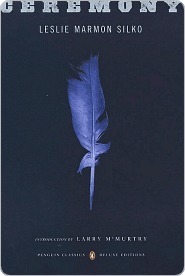
Summary:
Tayo, an Indigenous Laguna man, returns from being a prisoner of war of the Japanese in WWII without his cousin. Cousin is the technically accurate word, but since Tayo grew up in his cousin’s household after his mother left him there brother felt more accurate. Tayo is half-white and has always felt estranged, but this feeling is only heightened after the war. He is suffering from shell-shock and feels emptiness in the alcohol and violence the other veterans take solace in. When his grandmother sets him up with a ceremony with a shaman with unusual ways, things start to change.
Review:
He wanted to walk until he recognized himself again.
61% location
After years of reading many books about alcoholism – both its ravages and quitting it – I’ve started having to actively seek out the stories that are a bit less well-known. Now, this book is well-known in Indigenous lit circles, but I’ve only rarely heard it mentioned in quit lit circles. I was immediately intrigued both due to its Indigenous perspective (this is own voices by an Indigenous female author) and due to its age (first published in 1986). Told non-linearly and without chapters, this book was a challenge to me, but by the end I was swept into its storytelling methods and unquestionably moved.
He was not crazy; he had never been crazy. He had only seen and heard the world as it always was: no boundaries, only transitions through all distances and time.
95% location
This book is so beautiful in ways that are difficult to describe. Its perspective on why things are broken and how one man can potentially be healed (and maybe all of us can be healed if we just listen) was so meaningful to me. I’m glad I stepped out of my comfort zone to read it.
We all have been waiting for help a long time. But it never has been easy. The people must do it. You must do it.
51% location
I really enjoyed how clear this book makes it that any care for addiction delivered needs to be culturally competent to truly serve the person who needs help. It also does not shy away from the very specific pain of being an Indigenous person in the US, and how addiction both seeks to quell that pain and rebel against the oppressive society.
It’s rare for me to re-read a book, but I anticipate this being a book I re-read over the course of time. I expect each reading will reveal new things. For those who already know they enjoy this type of storytelling, I encourage you to pick this up. Its perspective on WWII’s impact on Indigenous peoples and alcoholism is wonderful. For those who don’t usually read this type of story, I encourage you to try out something new. Make the decision to just embrace this way of telling a story and dive right into it. Especially if you usually read quit lit or post-WWII fiction.
4 out of 5 stars
Length: 270 pages – average but on the shorter side
Source: Library
Buy It (Amazon or Bookshop.org)
If you found this review helpful, please consider tipping me on ko-fi, checking out my digital items available in my ko-fi shop, buying one of my publications, or using one of my referral/coupon codes. Thank you for your support!
Book Review: The Hiding Place by Corrie Ten Boom
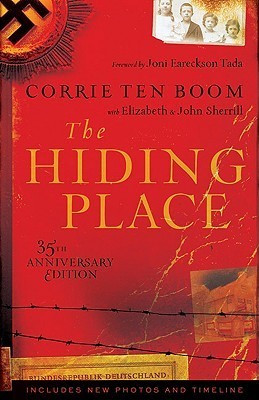 Summary:
Corrie Ten Boom and her family of watchmakers (she was the first licensed woman watchmaker in the Netherlands) are known for their work in the Dutch underground, both hiding Jewish people and doing organizing work for the underground. She and her sister Betsie did this work with their father. She and Betsie were in their 50s during this work. All three of them were ultimately arrested, and Corrie and Betsie were ultimately sent to the infamous Ravensbrück concentration camp. Corrie survived and started a home to help people refind their footing after the War.
Review:
This was one of my favorite books as a little girl. I had a fascination with WWII (still do) and was utterly enamored with Corrie. I distinctly remember that the paperback book I read was borrowed, but am uncertain if I borrowed it from my grandmother or from the church library. In any case, I decided it was high time I re-read this favored book as an adult and see if it withstood my now adult sensibilities. It certainly did.
The Ten Boom’s family commitment to not only do what is right but also to discern what that right thing might be is incredible. Corrie’s ability to be peaceful and not embittered after the War and everything she went through is also amazing. She is honest about who it was more difficult to forgive than others, and how she found the ability to. I believe any reader will be fascinated by the beginning of the book, which details how her family lived as watchmakers in Amsterdam, how they began hiding Jewish people, and how they came to largely run parts of the underground in Amsterdam. The sections about her capture and imprisonment are remarkable for their combination of honesty about the suffering combined with clear forgiveness and lack of bitterness for her captors.
When He [God] tells us to love our enemies, He gives, along with the command, the love itself. (86% into the digital edition”
Corrie also demonstrates a viewpoint of both the body and soul needing to be cared for in order for the human being to be completely well and whole. She notes both when a German captor is clearly well cared-for but wanting in soul care and when a prisoner is happy in the soul but wretched in the body, noting neither is as God intended.
Corrie’s commitment to peace is also seen following the war when she establishes and runs a home to help all people (no matter which side they were on) find their way again after the war. Truly an inspiration in peace work. It’s also inspiring that she didn’t find this labor until she was in her 50s. An indicator that our calling may not fully come until later in life.
5 out of 5 stars
Length: 273 pages – average but on the shorter side
Source: Library
Buy It (Amazon or Bookshop.org)
If you found this review helpful, please consider tipping me on ko-fi, checking out my digital items available in my ko-fi shop, buying one of my publications, or using one of my referral/coupon codes. Thank you for your support!
Book Review: Watership Down by Douglas Adams
 Summary:
When a rabbit low on the totem pole has a bad premonition, he and some friends run from their warren just before man intrudes wreaking havoc on their once-home. What follows is an adventure of evading predators and foes and looking for a new home.
Review:
Let me preface my review by saying that I know a lot of people either: A) love this book or B) find this book to be very traumatic. My experience was neither of these. The fact that this was not my experience does not negate yours. But neither does your love or traumatizing by this book mean that I felt the same way about it.
One of the risks of reading a book that is widely-known and loved (or remembered as traumatic) is that you have a pre-existing notion of just what that experience might mean for you. I came at this book with some trepidation and excitement because I absolutely love bunnies and I also love semi-realistic depictions of wild animals. Those that are accurate about scientific information but also personify them somewhat. I wound up being greatly disappointed because it gave me neither a world of bunnies to get lost in nor an experience of great trauma and drama. What I wanted was a highly emotional experience, and instead I got a bit of boredom and my main emotion being disappointment.
Let me start with what I think was well done. Adams clearly paid a lot of attention to the real science of how wild bunnies live and function, and I appreciated that. I also like the allusions to mythology. But there’s lots of reviews that talk about why they love this book, so let’s get down to why I didn’t.
1) I found it to be way too wordy.
I want cuteness and bunnies and plot not overly long descriptions of fields. This is a really thick book (my copy was 479 pages) and just…not that much actually happens. I don’t like to feel like a book is wasting my time, and I felt that a lot with this one. You could argue that it just felt long because I didn’t emotionally connect to it, but I think part of my lack of emotional connection was because of the lengthy descriptive passages.
2) I was expecting a great mythos of a story, and what I got was WWII with bunnies.
I love WWII. Do not get me wrong. I did an entire course for my History BA in just WWII. But I don’t think bunnies particularly pair well with WWII. A large overarching mythos? Sure. Basically the Battle of the Bulge with rabbits? Not so much. I don’t want my bunnies acting like British colonels and their optimistic soldiers, and I certainly don’t want an evil bunny who is basically Hitler coming into the story. (I mean…who makes the enemy another bunny who is basically Hitler? ? What? Why??)
3)It just isn’t all that tragic (sorry guys).
*spoiler warning*
I thought that basically the bunnies fight to survive all book and then all die at the end. Of the core group of rabbits, only ONE dies. There are many epic battles but just no true peril except for the warren that the rabbits leave at the beginning of the book. They are, true, pretty brutally killed by the farmer, but the problem is we never had a chance to get to know them, and we hear the story of the killing from someone who saw it. We don’t see it first-hand. It’s all very distanced and just not that tragic. This would obviously bother me less if I wasn’t expecting a tragedy from everyone saying how sad Watership Down is. But honestly to this day I don’t get why everyone is so sad. The rabbits get a new warren. They successfully find female bunnies and make more bunnies. One main character dies. That is it. I just. What. Why does this traumatize you people?
*end spoilers*
So, if you are a person who doesn’t mind WWII told through rabbits, quite long passages of description, and will welcome a tale lacking in great tragedies, you might have a better experience with the book than I did. Lord knows many people the world-over have loved it. But for those who come to it expecting to find a great tragedy or a fast-moving tale or warm and cuddly rabbits be warned that it’s not what you’ve heard about it.
If you found this review helpful, please consider tipping me on ko-fi, checking out my digital items available in my ko-fi shop, buying one of my publications, or using one of my referral/coupon codes. Thank you for your support!
3 out of 5 stars
Length: 479 pages – chunkster
Source: PaperBackSwap
Counts For:
Bottom of TBR Pile Challenge
Book Review: The Hornet’s Sting: The Amazing Untold Story Of Second World War Spy Thomas Sneum by Mark Ryan (Bottom of TBR Pile Challenge)
 Summary:
Thomas Sneum was a Danish Allied spy during World War II who was periodically suspected of being a double agent. Partially due to this suspicion and partially due to infighting between the two British spy agencies (SIS and SOE), he never got the attention or respect he deserved. Mark Ryan, the author, found out about him and set out to get to know him. Both personally and through research. Here he tells the true story of Tommy Sneum and sets the record straight once and for all.
Review:
I picked this book up during a kindle sale because I’m a big WWII buff and who doesn’t love real life spy stories? I thought it was a sure bet, but apparently even a true life spy story can be written in a dull manner.
It’s impossible to read the book without learning a lot. For instance, I had no idea that Britain had two different spy agencies that were battling each other for control of spying missions. This infighting between the SIS and the SOE led to lack of communication and lack of a solid spy front with one, unified plan. Similarly, I didn’t know it was common practice to take people who had escaped from behind Nazi lines, train them as spies, then re-drop them back in their home countries. I always thought the resistance movement just built up from the inside and then they contacted the Allies on the outside with information. How much more complex it was is really interesting. I also loved learning more about those from occupied countries who escaped and fought in other militaries against the Nazis. In spite of learning all of these new to me facts about WWII spying, the book manages to be dull. Ryan tends to wander off on side diatribes about the intricacies of red tape and paperwork instead of focusing in on the more action-oriented, interesting bits of the spying. He also spends a lot of time giving the full name of every single person even vaguely connected with Tommy and the spying, even if they really have no impact on the story. The book could really have used a bit more streamlining and focus to keep the energy up. Just because it’s nonfiction doesn’t mean it can, or should, meander.
Tommy Sneum is hard to root for. He’s not a likable guy. He abandons his wife and infant daughter to go be a spy. That could definitely be seen as valiant, however, he expresses consistent distate for his wife and a lack of concern or care for even knowing his daughter. He certainly comes across in the book as a guy just after adventure, not so much a man looking to protect his country or his family. Similarly, Tommy express arrogance when it comes to women, claiming that they essentially would go sleep with him at the drop of a hat or a snap of his fingers. He does not come across as seeing women as people but rather as recreational objects. One story that really demonstrates this is he tells the author that he had a threesome once, and he was upset that the women dared to pay attention to each other at all, rather than 100% to him. Sex is supposed to be about people giving to each other, not about one person being worshiped. His general attitude towards women gave me a squicky feeling throughout the book. Of course, most people are not all bad or good. Tommy is no exception. He expresses a real openness toward a male colleague who was known to be bi. He refuses to view all Germans as evil monsters and insists, to those high up in the British resistance no less, that most Germans are just caught up in Hitler’s war machine. Of course, these even-handed views are almost universally held of men.
Perhaps the most interesting part of the book is Ryan’s investigation into the accusations that Sneum was a double-agent. This part of the book isn’t really played up in the blurb, which I think is unfortunate. Ryan did a lot of investigative work and lays out all the details that he believes clears Sneum’s name. Seeing how Sneum and his methods were misunderstood by the British and also how having two different spy agencies working led to misunderstandings was truly fascinating, and I’m glad Ryan took the time to work at finding the truth.
Overall, this is a rather slow-paced work of historic nonfiction that focuses in on the red tape and organizational aspects of spying more than exciting adventures. It does good work in determining that Sneum was not a double agent in WWII. Sneum’s womanizing can be a bit tedious at times, although his even-handed perspective on the German people is good to see. Recommended to those interested in the organizational aspects of spying in WWII, including very minute details.
3 out of 5 stars
Source: Amazon
Buy It
Note: Apparently this book is no longer available on the kindle.

Book Review: Midnight in Peking: How the Murder of a Young Englishwoman Haunted the Last Days of Old China by Paul French
 Summary:
In 1937 the entire world is on the brink of war. In Peking, China, the Japanese invaders are encroaching. In the midst of this chaos the adopted daughter of British consulman is brutally murdered, her body found in the shadow of the Fox Tower, universally viewed with suspicion by the Pekingers as haunted by spirits. Due to the special circumstances, the murder investigation requires the presence of both a Chinese and a British investigator. They must race to find Pamela’s murderer before the Japanese engulf the city.
Review:
This true crime novel takes a bit to get things set up, but once they are, oh my how it sucks you in.
My fellow librarians will appreciate the backstory of how this true tale was discovered by French. In the Afterword he states that he was digging around in some archives and stumbled upon a box of evidence that Pamela’s father sent off to the government, which was never really looked at and just put away in storage and then into archives. It was through libraries that he even discovered this fascinating, intersectional true crime. I think that’s encouraging to any librarian who has ever spent hours making a finding aid for archives.
So just what makes this true crime more fascinating than others? Pamela was the adopted daughter of Werner, and her adoptive mother died at a young age. She had been away at boarding school in Tientsin and was home for the holidays. Because she was born in China but was also adopted by British consulman, there is an interesting assimilation into Chinese culture going on in her life that we don’t often see in Western novels. Peking itself featured the legations and white districts for multiple different white Western countries. This means that because Pamela was technically a British citizen murdered on Chinese ground both the Chinese and the British police force had to be involved and work together in the investigation. Officer Han and DCI Dennis certainly make for a unique investigation team. In addition, Pamela’s body was discovered in the shadow of the Fox Tower, and this led to speculation about fox spirits, which in Chinese tradition show up as wily women. Of course quickly the seedy underbelly of Peking is implicated, featuring a multicultural bunch of addicts, dope dealers, brothels, and more, and naturally some of the classy elite start to be implicated into that underworld as well. Add in the fact that the Japanese invasion was encroaching and toss in the first rumblings of Communism, and it makes for a story that is impossible to not find fascinating.
French unfurls the story well. He quotes only when it is fairly certain what was said, but summarizes scenes well. A clear picture of both Pamela and Peking are rendered fairly early in the novel. I also appreciate that he spent time at the end talking about what happened to all of the key players and discussing how all-encompassing the Japanese invasion were. I think what he handled best though was presenting people as individuals and not representative of their race or nation or even class. In a true crime as multicultural as this one, that is important. It’s also nice that in a story that could have easily turned into victim blaming, which happens so often when the victim is a young woman, he eloquently avoids any hint of that:
Pamela wasn’t perfect; she was making the same mistakes many girls do when experimenting with their independence, their newfound power on men. Her tragedy was to encounter the wrong men, at just the wrong moment. (location 2834)
I did, however, feel that the beginning was a bit lacking. It took a bit to truly get into the story. A faster pace or a more clear this is where we are going set-up would have been nice. At first it felt like the rather dull story of some poor little imperialist rich girl. But that’s not the story at all. The story is that of an adopted girl in a country where she just so happens to be the color of worldwide colonizers, but it is instead the story of a diverse group of people horrified by the brutal murder of a young woman by a diverse group of sick, twisted people. It would be nice if that was more clear from the beginning.
Overall, this is a well-told, historic true crime novel that manages to avoid victim blaming and also embrace multiculturalism. It will be of particular interest to anyone with a fascination for Chinese or WWII history.
4 out of 5 stars
Source: Netgalley

Book Review: Across the Table / Dancing on Sunday Afternoons by Linda Cardillo (Bottom of TBR Pile Challenge)
 Summary:
This book actually consists of two different books packaged together into one. They are both standalones, not in a series together.
Across the Table
Follow three generations of an Italian-American Boston family, starting with Rose, who marries a navy seaman right before WWII breaks out. The family ultimately buys a restaurant on Salem Street in the historic North End, and food and the family business both help keep the family together through trials and heart-aches.
Dancing on Sunday Afternoons
Cara goes to care for her grandmother, Giulia, who has fallen and broken her hip on a visit back to the old country of Italy. While visiting her, Giulia reveals to her the story of her first love who died when Cara’s father was just a baby.
Review:
This book made it onto my tbr pile because I found it on trash day on top of a neighbor’s recycling pile. It was one of those cases where obviously someone had given up actually packing for their move and was just chucking it all. The book was in pristine condition, so I yoinked it away (along with two others). Shocker: when I opened this to read it, I discovered that it’s signed by the author. I also didn’t realize until I started reading it that there’s actually two totally separate books in it. The cover only says the first title and mentions a bonus book in rather small type. So this one was full of surprises!
Across the Table
This story is based on the author’s family history, and you can honestly tell. It’s full of so much heart and reality. It’s not your typical romance or women’s fiction. The family felt entirely real, and you could understand why they made the choices they did, even if you wouldn’t have done the same thing. I found Rose by far to be the most interesting, but that’s not really a surprise. I’ve always had a thing for the 1940s, and her life in that decade was simultaneously unique and typical. She spent a couple of years before the war on a tropical island (whose name I cannot remember, I apologize) with her husband. It all felt very South Pacific, but she states that spending this time there gave her and her husband a solid base for the rest of their lives together. They had to really depend on each other. She also said that living there made her question the racism she was raised in and ultimately stop her racist thoughts and actions. They were never extreme, just that avoidance of people visibly different from you that you sometimes see. I also loved that the story is based to solidly in Boston. Cardillo obviously grew up here or visited family a lot here, since she understands simple things like how it takes an hour at least to get from the North End to Cambridge, or how different one side of the river is from the other. The family business and food aspects were also perfectly handled. Just enough to set the atmosphere but not so heavy-handed you wonder if the author forgot about the relationships at the heart of the story. There’s also a nice touch of an uncle/brother/son who is gay, and his Catholic family’s reaction to this is a positive, refreshing change. Perhaps even more so since the reader knows the story is based on a real family. Overall, I absolutely loved this book. It had everything I like in both historic and women’s fiction.
5 out of 5 stars
Dancing on Sunday Afternoons
In contrast, this book was far more tedious and full of cliches and….well basically everything that I don’t like about historic and women’s fiction. Giulia’s immigration story and her family are not particularly easy to empathize with. Her family is incredibly wealthy in Italy, and everyone worries more about appearances than about actually doing the right thing. Even Giulia’s rebellion of marrying the man she wants to marry isn’t all that admirable. She only does it ultimately with the family’s blessing, and her reaction when her husband dies is appalling. (This is not a spoiler. You learn in the first chapter that Giulia’s first husband died). I know that old families really could be like this, but I guess it made less sense being told this way since Giulia was telling the story to her modern granddaughter. I didn’t see any wisdom of age coming through in the telling. I know when my older family members tell me something from their youth, they also discuss what they learned from it. They try to impart some wisdom on me so I don’t make similar mistakes or so that I’m willing to take similar risks. Giulia’s story just doesn’t feel like an elderly person relating to a young family member. I suppose if you really love historic, clean romance novels, you might enjoy this one more than I did. Personally I need this genre to have something extra to really grab me.
3 out of 5 stars
Overall, then, I must average the two books out. I loved the first, but felt that I was not the target audience for the second. It is worth noting that the second was actually Cardillo’s first novel, so her second book was a big improvement. I’ll be keeping my eye on this author, particularly for more work set in Boston. As far as recommendations go, I recommend these books to fans of historic fiction with a focus on romance and women’s personal lives.
4 out of 5 stars
Source: recycling bin

 Support my work with a tip or browse my shop for curated book club guides, how to guides, cross-stitch patterns, and more!


This work by Amanda Nevius is licensed under a Creative Commons Attribution-Noncommercial-No Derivative Works 3.0 United States License.
 Opinions of a Wolf