
Archive
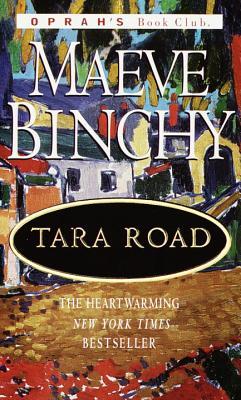
Book Review: Tara Road by Maeve Binchy
 Summary:
Ria lived on Tara Road in Dublin with her dashing husband, Danny, and their two children. She fully believed she was happily married, right up until the day Danny told her he was leaving her to be with his young, pregnant girlfriend. By a chance phone call, Ria meets Marilyn, a woman from New England unable to come to terms with her only son’s death and now separated from her husband. The two women exchange houses for the summer with extraordinary consequences, each learning that the other has a deep secret that can never be revealed.
Review:
Is “two women swap houses and their lives change” a subgenre of women’s fiction? Because I feel like it should be. I have a real soft spot for house swap stories, starting back when The Holiday came out (one of my favorite romcoms). I was excited to see one featuring both Ireland and New England (Connecticut, specifically), and I sensed that the drama would be pretty high in this story. I wasn’t disappointed.
I learned a lot about recent Irish history from this book. For instance, I had no idea that divorce wasn’t legal in Ireland until 1995! The whole culture, too, wasn’t just that divorce wasn’t legal but that young marriage was expected. This directly impacts Ria’s life and her decisions. Learning this recent Irish history through Ria’s eyes helped make it more real and reminds the reader that these cultural norms and laws have a real impact on real people.
The settings were beautifully rendered. From Tara Road to the home in Connecticut, I felt completely present in each. I could hear the noises and smell the cooking at Tara Road and feel the cool pool water in Connecticut. The rich settings helped me take the perhaps at times ridiculous plot with the grain of salt such a story warrants.
Many issues are covered without ever feeling like the book was written just to talk about them. Rather, the issues exist because they just happen to in real life so why wouldn’t they in this book. Among the issues: alcoholism, domestic violence, grief, infertility, and more that I can’t mention without being plot spoilery.
Still, though, in spite of the strong setting and interesting plot, I did feel that it ended a bit too abruptly. I felt as if I was left hanging, wondering what ultimately was going to happen with these women. Being left wanting more isn’t necessarily a bad thing but after investing so much into these two women, I would have enjoyed at least an epilogue.
Overall, a strong entry in women’s fiction. It’s a house swap story that stays unique with the house swap not being about romance but rather about dealing with personal issues and where you want your life to go.
If you found this review helpful, please consider tipping me on ko-fi, checking out my digital items available in my ko-fi shop, buying one of my publications, or using one of my referral/coupon codes. Thank you for your support!
4 out of 5 stars
Length: 648 pages – chunkster
Source: Library
Book Review: Try Not to Breathe by Holly Sedon
 Summary:
Amy Stevenson was the biggest news story of 1995. Only fifteen years old, Amy disappeared walking home from school one day and was found in a coma three days later. Her attacker was never identified and her angelic face was plastered across every paper and nightly news segment.
Fifteen years later, Amy lies in the hospital, surrounded by 90’s Britpop posters, forgotten by the world until reporter Alex Dale stumbles across her while researching a routine story on vegetative patients.
Remembering Amy’s story like it was yesterday, she feels compelled to solve the long-cold case.
The only problem is, Alex is just as lost as Amy—her alcoholism has cost her everything including her marriage and her professional reputation.
In the hopes that finding Amy’s attacker will be her own salvation as well, Alex embarks on a dangerous investigation, suspecting someone close to Amy
Review:
I devoured this book so quickly that I forgot to mark it read in GoodReads for a few weeks. It’s a thrilling read on a lot of levels. Amy’s questionably vegetative state would give anyone chills, as would how she wound up there. Even before full details of the attack are known, everyone knows it was pretty gruesome. Alex’s “functional” alcoholism also sends chills down the spine. She’s lost almost everything, but she still drinks enormous amounts of alcohol every day. The juxtaposition of the two women is what makes the psychological thriller so thrilling. They’re both being held paralyzed in a state by an illness and any one of us could fall to either of those states.
I know the average reader is probably most interested in the mystery aspect of the thriller–the whodunit. I will say in short that it’s a well-done mystery. I had my suspicions but exactly how things ultimately went down was still enough of a surprise that I was delighted, and I thought the resolution was well-done. What I was much more fascinated by though was Alex.
A “trouble-making journalist” or a detective who drinks too much is the norm of thrillers and noir but usually that is played up as something slightly dangerous but also sexy. Here there is nothing sexy about Alex’s alcoholism. She wets the bed every night. It at first seems this is because she drinks at least one glass of water per glass of alcohol to stave off hangovers but later it’s clear it’s from her body shutting down from her alcoholism. Alex is a great example of a “functional” alcoholic. She’s holding down a job (sort of, her alcoholism stole her dream career from her), she runs every day, she’s capable of looking into this mystery of Amy. But slowly other things are revealed that makes it ever clearer that no, she’s not homeless, but she is far from functional, unless by functional you simply mean she can sort of exist in human society. She is nowhere near what she could be because of the alcohol, and she’s lost almost everything (career, husband, and more). I really liked that the reader is both compelled to respect Alex’s smarts and tenacity as a reporter but also to feel empathy and horror at how much alcoholism is stealing from her. Even if the reader doesn’t have an interest in addictions, it still makes Alex a well-rounded character. She is more than just that smart journalist. There are whole worlds going on in her own life outside of her investigation.
Overall, if you’re looking for a thriller with a twisting plot that also turns some thriller/noir conventions on their head (not least of which the fact that both leads are women), then you should pick this book up.
If you found this review helpful, please consider tipping me on ko-fi, checking out my digital items available in my ko-fi shop, buying one of my publications, or using one of my referral/coupon codes. Thank you for your support!
4 out of 5 stars
Length: 368 pages – average but on the longer side
Source: Library
Counts For:
Mental Illness Advocacy (MIA) Reading Challenge
Specific illness –> Addictive Disorders
Trigger Warning/Content Note:
Contains discussions of rape and sexual assault.
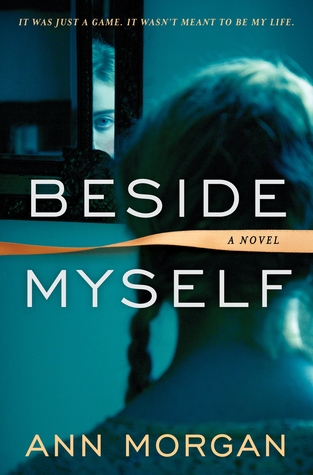
Book Review: Beside Myself by Ann Morgan
 Summary:
When Helen agrees to swap places with her identical twin sister Ellie at the age of six, she thinks it’ll be a short fun game. But then Ellie refuses to swap back. Forced into her new identity, Helen develops a host of behavioral problems, delinquency and chronic instability. With their lives diverging sharply, one twin headed for stardom and the other locked in a spiral of addiction and mental illness, how will the deception ever be uncovered?
Review:
This book is an amazing depiction of gaslighting. Gaslighting is an insidious form of abuse where the abuser insists to the abused that reality is not in fact reality, and the abused is crazy. (For more about gaslighting, see this great information from the National Domestic Violence Hotline). This book makes gaslighting completely real and understandable for anyone, whether they’ve gone through it themselves or not. It’s easy to see immediately how poor Helen gets slowly tortured and driven mad by everyone denying to her that she is who she says she is. The author takes care not to demonize Ellie though, since it’s abundantly clear part of why Ellie doesn’t want to switch back is because their mother has pre-decided which twin will be the good twin and which the bad, and she consequently treats Helen far better than she treats Ellie. Why wouldn’t she not want to switch back?
How this childhood trauma has wounded Helen becomes more clear over the course of the book. But it’s not just a plain recounting of they switched places then Helen went crazy. The book opens with Helen trying to rebuild her life from addiction and Ellie being in a coma from a car accident. Ellie’s husband reaches out to Helen in the hopes that hearing from her twin will bring her out of it, and slowly long-held secrets reveal themselves.
I thought the whole way through the book that it was slowly building to a certain ending. Then something else came at me out of left field and I was left breathless and aching for Helen. That’s not to say it’s a tragic ending, but it is a shocking one. One that left me with a very different “bad guy” than I thought I had the whole book.
It’s a stellar read, and one of those books that I wish I was able to read for the first time again. It’s that good. Recommended to lovers of psychological thrillers and/or twin swap afficionados.
If you found this review helpful, please consider tipping me on ko-fi, checking out my digital items available in my ko-fi shop, buying one of my publications, or using one of my referral/coupon codes. Thank you for your support!
5 out of 5 stars
Length: 315 pages – average but on the longer side
Source: Library
Book Review: Fever by Mary Beth Keane (Audiobook narrated by Candace Thaxton)
 Summary:
Have you ever heard of Typhoid Mary? The Irish-American cook in the early 1900s who was lambasted for spreading typhoid through her cooking. What many don’t know is that she was an asymptomatic carrier. This was the early ages of germ theory, and most didn’t realize you could pass on an illness without any symptoms. Captured and held against her will on North Brother Island, it’s easy to empathize with her plight. Until she’s released and begins cooking again.
Review:
I grew up hearing the cautionary tale of Typhoid Mary, who was mostly mentioned within hearing range in combination with an admonition to wash your hands. But some people (mainly other children) told tales of her purposefully infecting those she served. These sentences were spoken with a combination of fear and awe. On the one hand, how understandable at a time when worker’s rights were nearly completely absent and to be both a woman and Irish in America was not a good combination. On the other hand, how evil to poison people with such a heinous illness in their food. In any case, when this fictionalized account of Mary Mallon came up, I was immediately intrigued. Who was this woman anyway? It turns out, the mixture of awe and fear reflected in myself and other children was actually fairly accurate.
I’m going to speak first about the actual Mary Mallon and then about the writing of the book. If you’re looking for the perfect example of gray area and no easy answers mixed with unfair treatment based on gender and nation of origin, then hoo boy do you find one with Mary Mallon. The early 1900s was early germ theory, and honestly, when you think about it, germ theory sounds nuts if you don’t grow up with it. You can carry invisible creatures on your skin and in your saliva that can make other people but not yourself sick. Remember, people didn’t grow up knowing about germs. It was an entirely new theory. The status quo was don’t cook while you’re sick, and hygiene was abysmally low…basically everywhere. It’s easy to understand how Mary was accidentally spreading sickness and didn’t know it. It’s also easy to understand why she would have fought at being arrested (she did nothing malicious or wrong and was afraid of the police). Much as we may say now that she should have known enough to wash her hands frequently. Wellll, maybe not so much back then.
Public health officials said that they tried to reason with Mary, and she refused to stop cooking or believe that she was infecting others. This is why they quarantined her on North Brother Island. Some point to others (male, higher social status) who were found to be asymptomatic carriers who were not quarantined. True. But they also acknowledged the risk and agreed to stop doing whatever it was that was spreading the illness. Maybe Mary was more resistant because of the prejudice she was treated with from the beginning. Or maybe she really was too stubborn to be able to understand what a real risk she posed to others. Regardless, it is my opinion that no matter the extraneous social factors (being a laundress is more difficult than being a cook, people were overly harsh with her, etc…) Mary still knowingly cooked and infected people after she was released from North Brother Island. Yes, there were better ways public health officials could have handled the whole situation but that’s still an evil thing to do. So that’s the real story of Mary Mallon. Now, on to the fictional account (and here you’ll see why I bothered discussing the facts first).
At first Keane does a good job humanizing a person who has been extremely demonized in American pop culture. Time and effort is put into establishing Mary’s life and hopes. Effort is made into showing how she may not have noticed typhoid following her wherever she went. She emigrated from Ireland. She, to put it simply, saw a lot of shit. A lot of people got sick and died. That was just life. I also liked how the author showed the ways in which Mallon was contrarian to what was expected of women. She didn’t marry. She was opinionated and sometimes accused of not dressing femininely enough. But, unfortunately, that’s where my appreciation fo the author’s handling of Mallon ends.
The author found it necessary to give Mallon a live-in boyfriend with alcoholism who gets almost as much page time as herself. In a book that should be about Mary, he gets entirely too much time, and that hurts the plot. (There is seriously a whole section about him going to Minnesota that is entirely pointless). A lot of Mary’s decisions are blamed on this boyfriend. While I get it that shitty relationships can cause you to make shitty decisions, at a certain point accountability comes into play. No one held a gun to Mary’s head and made her cook or made her date this man (I couldn’t find any records to support this whole boyfriend with alcoholism, btw).
On a similar note, a lot of effort is made into blaming literally everyone but Mary for the situation. It’s society’s fault. It’s culture’s fault. It’s Dr. Soper’s fault. They should have rehabbed her with a new job that was more comparable to cooking than being a laundress. They should have had more empathy. Blah blah blah. Yes. In a perfect world they would have realized how backbreaking being a laundress is and trained her in something else. But, my god, in the early 1900s they released her and found her a job in another career field. That’s a lot for that time period! This is the early days of public health. The fact that anyone even considered finding her a new career is kind of amazing. And while I value and understand the impact society and culture and others have on the individual’s ability to make good and moral decisions, I still believe ultimately the individual is morally responsible. And at some point, Mary, with all of her knowledge of the fact that if she cooked there was a high probability someone would die, decided to go and cook anyway. And she didn’t cook just anywhere. She cooked at a maternity ward in a hospital. So the fact that the book spends a lot of time trying to remove all personal culpability from Mary bothered me a lot.
I’m still glad I read the book, but I sort of wish I’d just read the interesting articles and watched the PBS special about her instead. It would have taken less time and been just as factual.
If you found this review helpful, please consider tipping me on ko-fi, checking out my digital items available in my ko-fi shop, buying one of my publications, or using one of my referral/coupon codes. Thank you for your support!
Source: Audible
3 out of 5 stars
Length: 336 pages – average but on the longer side
Buy It (Amazon or Bookshop.org)
If you found this review helpful, please consider tipping me on ko-fi, checking out my digital items available in my ko-fi shop, buying one of my publications, or using one of my referral/coupon codes. Thank you for your support!
Book Review: Blackout: Remembering the Things I Drank to Forget by Sarah Hepola (Audiobook narrated by Sarah Hepola)
 Summary:
“It’s such a savage thing to lose your memory, but the crazy thing is, it doesn’t hurt one bit. A blackout doesn’t sting, or stab, or leave a scar when it robs you. Close your eyes and open them again. That’s what a blackout feels like.”
For years Sarah Hepola ignored her blackouts. She was a young woman with a successful writing career living in New York City. She was empowered, and part of embracing equality was drinking like one of the guys. But while littering her writing with references to drinking and laughing off her drunken escapades, she actually spent her daytimes cleaning up after her blackouts. Figuring out how she scraped up her knees or tracking down her purse. Eventually, she realized that drinking wasn’t making her the life of the party and one of the guys. It was stealing who she was, and it was time to get herself back.
Review:
I have a thing for addiction memoirs (and addiction documentaries….movies…tv shows…). But I have often found myself puzzled by the female drinking memoir. Often presented as a woman (usually a wife and mother) who appears to have it all and hides all of her drinking because women don’t drink. I’m sorry, but as a Millennial, that’s not the kind of drinking I’ve seen women in my generation partake in. Drinking was considered unladylike by generations even as recent as the one right before ours (that my brother is in). But in mine? What I often saw was women proving their coolness by keeping up with the guys. These women would never hide wine. They’d take shots and get praised for it. So when I saw this memoir talking about the impact on women of drinking like one of the guys; of how this equality of substance abuse is really impacting women, I had a sense it was going to be something good and insightful, and I was right.
Sarah Hepola shows the reader through a clear lens exactly how the different perceptions of women and alcohol impacted her drinking, and thus how they might impact other women. The book starts with some context of how young women are both encouraged by their peers to binge drink but then are also blamed by them when bad things happen to them when they are drunk. She then moves on to talking about her own childhood when she would steal sips of beer from open cans in the fridge, and how her parents never suspected she was sneaking beer because little girls wouldn’t do that. She then gradually brings us up through time and shows us how with drinking she was subconsciously trying to pursue both fitting in and equality. She drank to fit in and be cool in college. She drank with co-workers on her male-dominated first job to be one of the guys and get the same networking opportunities they got after work by going out for beers. She liked that it wasn’t necessarily feminine. She liked feeling strong and empowered.
By embracing something that is perceived of by the culture as hyper-masculine, like binge drinking, women are seeking to be taken seriously and viewed as equals. Women do this in other areas too. Just look at power suits or the short haircuts preferred by women in positions of power. Our culture devalues what is perceived of as feminine and elevates what is perceived of as masculine. There are many issues with this, which I can’t go into in a short book review, but what matters about this for women and alcohol is that women’s bodies just don’t biologically process alcohol the same way men’s bodies do. Sarah Hepola goes into this in quite some detail, but essentially, women get drunker faster on less alcohol than men do, which means women black out more easily, and blackouts are dangerous. They make anyone vulnerable, but they make women particularly vulnerable to things like date rape.
Sarah Hepola does a much more eloquent job in the book than I am doing here in the review of illuminating how gender and alcohol mix to make the modern alcoholic young woman. And the book doesn’t just detail the dramatics of her youthful drinking. She also goes into great detail about what it was like to stop. To find the empowerment of being completely in control again and not losing parts of herself and her life to blackouts. She talks about her sober life and how exciting it is, and she even talks about finding some spirituality. Most importantly to me, she discusses how women in western culture today are often told we are equal but are able to sense that things that are feminine are just not taken seriously. So they pursue the masculine to be taken more seriously and in some cases the masculine is simply not helpful. It is harmful. Sometimes, in cases like with binge drinking, it’s even more dangerous for women than for men. I believe the book offers some hope when Hepola talks about finding strength in her sober living and in her accomplishments at facing life as a single woman.
Those listening to the audiobook will be entranced by Hepola’s own voice telling the story. I couldn’t stop listening and listened every second I could. One of the more haunting moments of the audiobook is when toward the end Hepola introduces a tape recording she made as a teenager discussing a sexual encounter she had while drunk with a much older boy. Hearing the incredibly young voice of a woman already being drawn into the harmful world of addiction was heartbreaking to listen to and made me want to fix things, even though I wasn’t totally sure how.
This book left me realizing that the reality of women and alcohol has changed, and the cultural narrative needs to catch up with it. Women aren’t drinking in closets to dull their feminine mystique pain anymore. They’re drinking loud and proud because they want to be empowered and taken seriously and yes, even perceived of as cool. While we can talk about finding more positive ways of empowerment, I think it’s also important that we as a culture strive to stop putting innate positive value on the masculine and negative on the feminine. Things should be valued based on their impact on the world and not on the gender norm of who does it. And young women will stop feeling pressured to act like a man when men and women are equally valued. All of these things I am saying play into male drinking as well. If you think zero young men are binge drinking to be seen of as more of a man, you’re very wrong. We just see less of the immediate negative impact of male binge drinking because women black out so much more easily.
Hepola wrote a brave book that illuminates the issue of binge drinking among young women today. It’s both personal and with an eye to the culture as a whole, thinking beyond just the author herself. Readers will be haunted both by the voice of the young Sarah and by the thought of young women seeking to empower themselves actually making themselves more vulnerable. A key read for anyone who works with or cares about these younger generations of women.
If you found this review helpful, please consider tipping me on ko-fi, checking out my digital items available in my ko-fi shop, buying one of my publications, or using one of my referral/coupon codes. Thank you for your support!
5 out of 5 stars
Length: 230 pages – average but on the longer side
Source: Audible

Counts For:

Illness(es) featured: Addictive Disorders
Book Review: Sharp Objects by Gillian Flynn (Audiobook narrated by Ann Marie Lee)
 Summary:
Camille Preaker, journalist to a small Chicago newspaper, recently out of a mental institution after an in-patient stay to address her long-standing inclination to cut words into her body, has been asked by her boss to go to her hometown. Two little girls have been found murdered–with their teeth pulled out. Camille is not inclined to go home. She’s barely spoken to her distant, southern belle mother since moving out years ago and hardly knows her half-sister, 13-year-old Amma. But home she goes, staying with her mother, step-father, and half-sister to save money, drinking to cope as her demons haunt her, and investigating the murders that have shaken the small town of Wind Gap, Missouri.
Review:
This book hit my radar around the time there were all those articles judging Gillian Flynn for writing female characters who are bad/evil. I immediately was supportive of Gillian Flynn (bad women exist, hello) and interested in more of her writing. I started with Gone Girl so I could read it before seeing the movie, but Sharp Objects has been in my sightlines for a long time. The mere idea of an adult self-injurer going to her hometown and facing her demons was something I would want to read even without knowing how much I enjoy Gillian Flynn’s work. What I found was a tightly-written, fast-paced mystery with multiple complex characters and simultaneously breath-taking and heart-breaking lead.
I thought through most of the book that I knew the solution to the mystery. Whodunit. That didn’t bother me. I liked everything leading up to what I thought was going to be the ultimate reveal. The plot twists, though, surprising myself and characters in the book. While part of me likes the twist, part of me felt it was more cliche than the original ending that I thought I was getting. Ultimately, while I didn’t necessarily find the resolution satisfying, I did find it surprising and something to chew on. It will stick with me in a I’m thinking about it way like eating something unusual you’re not sure if you liked, rather than in an I remember feeling so pleasantly satisfied way, like how you might look back on Thanksgiving dinner.
The pacing in the book is superb. I read it in audiobook format, and I found myself using time to listen to it as rewards for accomplishing other things. I listened to it every chance I had because the pacing was so spot on. It never felt too quick-moving or too slow. Every scene felt like it had a reason for being there and kept me on the edge of my seat.
There is a lot of mental illness represented in this book, and that is wrapped up in the characters. I’ll talk first about the spoiler-free mental illnesses.
Camille is a self-injurer who has had a stay in a mental hospital where her roommate managed to commit suicide. Camille never names more of a diagnosis the doctors gave her than self-injurer. However, much of her behavior, including her self-injury, points to PTSD from her childhood. This includes the foreboding feeling she gets when returning to her hometown. How she feels driven to drink herself numb for dealing with certain triggering situations. Her impulse to inflict hurt on herself, etc… All of that said, the representation of Camille as a cutter is superb. This is an adult woman who still struggles with the impulse to cut. Who talks about how most people think of it as an adolescent problem. Camille manages to describe her urges to cut, what drives her to cut, without ever actually definitively saying what causes it. And this is great because we don’t actually know. Camille is nuanced. She is a woman who used to (still wants to) cut herself but that is not, not by a long-shot, all she is.
The book also secondarily depicts alcoholism and drunkenness as a self-medication technique. Camille drinks as a lesser evil compared to cutting when she needs to relieve her stress and discomfort from dealing with terrible situations. It shows how alcohol and cutting both can end up being used as coping mechanisms when no healthier ones are learned or taught. It also shows how stressors can impact sobriety and health.
Despite being both a self-injurer in recovery and a woman who abuses alcohol, Camille is depicted as a heroine. Her investigative journalism helps break the case open. She exhibits care and concern for her half-sister and loyalty to her boss and career. She is ultimately depicted as resilient in spite of her struggles, and I loved seeing that.
If you are interested in reading about other depictions of mental illness in the book, they are in the spoiler section below.
*spoilers*
It is ultimately revealed that Adora, Camille’s mother, suffers from Munchausen by Proxy (MBP). This MBP is what ultimately killed Camille’s other little sister, Marion. Camille escaped this same fate because her mother didn’t love her and thus also didn’t really enjoy caring for her or garnering attention through her in this way. What Adora does is unforgivable and certainly causes a visceral reaction in the reader. However, there are scenes that discuss things such as how Adora’s mother didn’t love her. The implication is that some of the mental illness in the family is learned or a reaction to poor environment. It manages to keep Adora human rather than monstrous.
Similarly, it is ultimately learned that Amma is a sociopath. Camille seems to be uncertain if this is just Amma’s nature or a reaction to Adora’s “mothering” or some combination of the two. I feel that not enough time is given to analyzing Amma, once Camille learns her true nature. This depiction, compared to the others in the book, is just much flatter due to the lesser amount of time Camille and other characters spend pondering Amma.
The book ends with Camille wondering if she is able to love in a healthy way or if she’s doomed to repeat her mother’s unhealthy, hurtful mothering. Essentially, she wonders if MBP is inherited or if she can escape that. Some time is spent discussing what made Camille more resilient than either of her sisters. I think this is some of the more valuable portion of the book, as it really highlights the nuances of some of the things we still just don’t have a solid answer to about mental illness. What makes some people more resilient, more able to overcome bad childhoods and genetic tendencies than others? What makes some people better able to cope with a mental illness than others? They are important questions, and I like that they are addressed.
*end spoilers*
There are some scenes that will bother some readers. While rape is never depicted, it is discussed, as well as the idea of what counts as rape, with one female character arguing that a woman who is intoxicated is still responsible for any sexual activity that occurs. The character saying this was a victim of rape while intoxicated herself, so readers should bare in mind that this reframing of a rape as not a rape is very normal for rape victims who have not fully addressed the rape yet. Additionally, at one point one character has consensual sex with a character who has just barely turned 18. Also an adult partakes of illegal drugs and alcohol with characters who are extremely underage. All of these scenes work within the book and are necessary for the plot, however.
Overall, this is a fast-paced mystery with a strong yet flawed female lead and an engaging and thought-provoking plot that presents many different nuances of mental illness. Recommended to those looking for a fast-moving book with a unique depiction of self-injury who do not mind the violence or gray moral areas innate in a mystery revolving around serial killing.
If you found this review helpful, please consider tipping me on ko-fi, checking out my digital items available in my ko-fi shop, buying one of my publications, or using one of my referral/coupon codes. Thank you for your support!
4 out of 5 stars
Length: 254 pages – average but on the shorter side
Source: Audible

Counts For:
Book Review: Maui Widow Waltz by JoAnn Bassett (Series, #1)
 Summary:
Maui wedding planner Pali Moon wouldn’t normally accept a last-minute request to plan a wedding when the groom is lost at sea, but the client wants to pay cash, and she is in debt up to her ears. Plus, the bride assures Pali that the groom’s best friend will stand in as his proxy if the groom hasn’t been found by the wedding date. What could possibly go wrong? Well, when a body washes up on shore….it turns out, a lot.
Review:
This would be a cozy mystery if it offered any type of recipes or patterns in the back, as it is, think of it as a light-hearted mystery with very little blood and some steamy kissing scenes. The story transports the reader to Hawaii with lovely described settings and keeps the reader there with an intriguing plot.
A wedding planner in Hawaii is just an interesting job to begin with. Plus, Pali has a bit of mystery to her. She admits from the very beginning that Pali isn’t her name, but the reader never finds out (in this entry in the series anyway) what her real name is. Why is she keeping it a secret? Plus, Pali’s friends (and enemies) are an interesting bunch. Her Native best friend who also runs the general store and officiates weddings is a breath of fresh air to the story. Her gay roommate may feel a bit expected at this point, but the author keeps him from verging too far into stereotype and gives of a hint of the three dimensions he could have in future installments. The bad guys may veer a bit toward caricature sometimes, but that lends the book part of its humor and lack of tension that is key to this type of mystery.
The mystery and plot consist of two main points of conflict. First, Pali is at risk of losing her business. Second, the missing groom and the bride’s family may not be precisely what they appear. This lends some realness to the character. She has more going on than this mystery that fell in her lap. It also gives her a reason for accepting a client who has a clear iffy feeling about them. That said, the will she or won’t she hold onto her business lacks some real tension, as it’s fairly clear that Pali will figure a way out of losing her business. With the missing groom conflict, while we know Pali will probably be safe, since she’s the main character, the rest of the characters are basically up for grabs for danger. This gives it just enough tension to stay interesting but not be stressful. Similarly, this plot was more well-written, with some unexpected yet believable twists. It also takes into consideration the local laws of Hawaii, so events stayed grounded in the real world.
The romance consists of two potential love interests. I am always a bit turned off when a main character has two people interested in them. It will never not feel a bit fake to me. However, the two potential love interests are handled in a balanced and modern way. Neither is the clear “right choice,” and readers could easily prefer one over the other while still liking the main character with either.
I also would like to mention that there is a good minor plot involving characters revealing that they are alcoholics who have been in recovery for a while. It’s good to see people with a mental illness that they have worked on and are actively managing in a positive way. I appreciate this diversity being included in this book.
Given all of these positives, why is it only an average read for me? There was nothing unexpected for this type of mystery. It is very similar to others I have read in the genre. Additionally, the main character can kind of rub me the wrong way sometimes. How she handles her love interests is not as up-front as it should be. It is also unclear as to how she managed to get herself into so much debt. It seems she might just be bad at balancing books but all for taking favors from friends. Similarly, she’s a white woman, albeit raised in Hawaii, but she goes by a Native name and never explains why, beyond the fact that she doesn’t like her own name. Add to this the fact that the romance didn’t really work for me, and this is why I consider this a rather average read. It may be more than average for you, if these factors I have named are not an issue for you.
Overall, this is a light-hearted mystery that transports the reader to the tropical island of Maui. Some readers may be a bit turned off by the main character or the romance secondary plot. Those who enjoy a non-tense mystery set in a tropical locale will most likely enjoy the read, however.
If you found this review helpful, please consider tipping me on ko-fi, checking out my digital items available in my ko-fi shop, buying one of my publications, or using one of my referral/coupon codes. Thank you for your support!
3 out of 5 stars
Length: 338 pages – average but on the longer side
Source: Amazon

Book Review: One Death at a Time by Thomas M. Hewlett (Series, #1)
 Summary:
Jack Strayhorn is a private eye and a member of Alcoholic’s Anonymous. Only, he’s not an alcoholic, he’s one of the vampires who meet in a secret vampire group that exists under the umbrella of AA to learn how to control their urges and feed on humans without killing them. He’s just returned to LA, his death site that he hasn’t been back to since he had to run in 1948 after becoming a vampire. When his current missing person case shows up dead next to a Fae politician, Jack gets dragged into a mixed-up underworld of Faes, werewolves, drugs, and a group of vampires determined to rule the world.
Review:
This is one of the twelve indie books I accepted to be reviewed on my blog in 2014 (complete list). I was immediately intrigued by the summary, due to its delightful urban fantasy/paranormal take on AA. The book delivers exactly what it promises, spiced with a noir writing style.
Jack Strayhorn is the perfect paranormal version of the noir-style hardboiled detective. He’s got a biting, snarky wit, a handsome presence, a sharp mind, and is a bit distant and mysterious. It’s just in this case he’s distant and mysterious because he’s a vampire. Making the private eye a vampire makes his character unique in noir, and, similarly, making the vampire a private eye with his focus primarily on crime solving and not paranormal politics gives the urban fantasy vampire a unique twist. Jack is presented as a complex character, one who we could not possibly get to know fully in just the first entry in the series. It’s easy to see how he will manage to carry the proposed 12 entries in the series.
Supporting Jack is a wide range of characters who accurately portray the diversity in a large town like LA, as well as the diversity one expects in a paranormal world. The characters are multiple races and classes. Whereas some urban fantasy books slowly reveal the presence of more and more paranormal races throughout the series, this book starts out with quite a few, and that is a nice change of pace. Most urban fantasy readers expect there to be more than just vampires, and the book meets the urban fantasy reader where they’re at. Even though the book has a large cast, the secondary characters never blend together. They are easily remembered, and the diversity probably helps with that.
I like the idea of vampires having an AA-like group, but I’m still not sure how I feel about this group existing as some secret under the umbrella of AA itself. The book even goes so far as to say the the founder of AA was a vampire himself, and used the human illness of alcoholism as a cover for the vampire group. I like and appreciate vampirism as a disease that some people just mysteriously have at birth as an analogy for alcoholism, but I feel that having it present in the same group as the real life AA groups dampens the realness of actual AA, weakening the analogy instead of strengthening it. I’ve seen books before have paranormal people get together in AA-style groups (zombies anonymous springs to mind), and in real life AA has spinoffs such as Narcotics Anonymous and Overeaters Anonymous. Prior to reading the book I thought maybe something might be added by having the vampires be a secret organization under AA, but after reading the book, I don’t think it did. I think the analogy would have been stronger if vampires spotted the similarities of their genetic vampirism with alcoholism and formed a “vampires anonymous” group, inspired by AA. Something about vampires creating AA themselves as a cover hits a bit of a sour note and weakens the analogy.
The plot is complex, with just enough twists and surprises. There were parts of the ending that I was unable to predict. The plot contained within the book was wrapped up sufficiently, and the overarching plot intending to cover the whole series was well-established and filled me with the desire to keep reading. Unfortunately, the second book isn’t out yet, so I will just have to wait!
Overall, this is a delightful mix of urban fantasy and noir and is a strong first entry for a new series. Some readers might dislike the paranormal take on Alcoholic’s Anonymous found within the book, but it is secondary to the mystery/noir plot and easy to gloss over if necessary. Recommended to urban fantasy readers looking to venture into noir or vice versa, as well as anyone who enjoys both urban fantasy and noir.
If you found this review helpful, please consider tipping me on ko-fi, checking out my digital items available in my ko-fi shop, buying one of my publications, or using one of my referral/coupon codes. Thank you for your support!
4 out of 5 stars
Length: 216 pages – average but on the shorter side
Source: kindle copy from author in exchange for my honest review

Book Review: Doctor Sleep by Stephen King (Series, #2) (Audiobook narrated by Will Patton)
 Summary:
Danny Torrance didn’t die in the Overlook Hotel but what happened there haunts him to this day. Not as much as the shining does though. His special mental powers that allow him to see the supernatural and read thoughts lead to him seeing some pretty nasty things, even after escaping the Overlook. He soon turns to drinking to escape the terror. But drinking solves nothing and just makes things worse. When he sees his childhood imaginary friend, Tony, in a small New Hampshire town, he turns to AA to try to turn his life around and learn to live with the shining.
Abra is a middle school girl nearby in New Hampshire with a powerful shine. She sees the murder of a little boy by a band of folks calling themselves the True Knot. They travel in campers and mobile homes, seeking out those who have the shine to kill them for it and inhale it. They call it steam. They’re not human. And they’re coming after Abra. Abra calls out to the only person she knows with a shine too, the man she’s talked to before by writing on his blackboard. Dan.
Review:
A sequel that takes the original entry’s theme on overcoming your family origin and ramps it up a notch, Doctor Sleep
The book begins with a brief visit to Danny as a kid who learns that the supernatural creatures exist in places other than the Overlook, and they are attracted to the shine. This lets the reader first get reacquainted with Danny as a child and also establishes that the supernatural are a potential problem everywhere. The book then jumps aggressively forward to Danny as a 20-something with a bad drinking problem. It’s an incredibly gritty series of scenes, and it works perfectly to make Dan a well-rounded character, instead of a perfect hero of the shine. It also reestablishes the theme from The Shining
The way Dan overcomes both his drinking and his temper, as well as how he learns to deal with his shine, is he joins Alcoholics Anonymous (AA). In contrast to his father who tried to quit drinking on his own, Dan attempts it in a group with accountability. This then shows how much easier it is to overcome a mental illness with community support. I appreciated seeing this. I will say, however, that some of the AA talk in the book can get a bit heavy-handed. Some chapter beginnings include quotes from the book of AA, and Dan can sometimes seem a bit obsessed with it when he relates almost everything to something he learned or heard there. AA definitely plays a vital role in many people’s recovery from addiction, and it’s wonderful to see that in a work of fiction. However, it would have been better for the reader to see the role of AA more than to hear quotes from AA so often.
The big bad in this book is a band of supernatural creatures who were once human and still look human. But they change somehow by taking steam and go on to live almost indefinitely. They can die from stupid accidents and sometimes randomly drop dead. The steam is acquired by torturing children who have the shine. The shine comes out of their bodies as steam when they are in pain. They call themselves The True Knot. This troop is a cartoonish group of evil people who try to look like a troop of retirees and some of their family traveling in a camper caravan. The leader of this group is Rose the Hat–a redheaded woman who wears a top hat at an impossibly jaunty angle. I was pleased to see Rose written quite clearly as a bisexual. Her sexuality is just an aspect of who she is, just like her red hair. Seeing a bi person as the big bad was a delight. Her bisexuality isn’t demonized. Her actions as a child killer and eater of steam are. She is a monster because of her choices, not because of who she is. I alternated between finding The True Knot frightening and too ridiculously cartoonish to be scary. I do think that was partially the point, though. You can’t discredit people who seem ridiculous as being harmless.
How Abra is found by The True Knot, and how she in turn finds Dan, makes sense within the world King has created. It doesn’t come until later in the book, though. There is quite a bit of backstory and build-up to get through first. The buildup is honestly so entertaining that it really didn’t hit me until after I finished the book how long it actually took to get to the main conflict. So it definitely works. Abra is a well-written middle school girl. King clearly did his research into what it’s like to be a middle schooler in today’s world. Additionally, the fact that Abra is so much older than Danny was in The Shining
There is one reveal later in the book in relation to Abra that made me cringe a bit, since it felt a bit cliche. It takes a bit of a leap of faith to believe, and I must admit it made me roll my eyes a bit. However, it is minor enough in the context of the overall story that it didn’t ruin my experience with the book. I just wish a less cliche choice had been made.
The audiobook narrator, Will Patton, does a phenomenal job. It was truly the best audiobook narration I’ve heard yet. Every single character in a very large cast has a completely different voice and style. I never once got lost in who was speaking or what was going on. More importantly to me, as a New England girl born and raised, is that he perfectly executes the wide range of New England accents present in the book. Particularly when he narrates the character, Billy, I thought I was hearing one of my older neighbors speak. I could listen to Will Patton read a grocery list and be entertained. Absolutely get the audiobook if you can.
Overall, this sequel to The Shining
4 out of 5 stars
Source: Audible

Previous Books in Series:
The Shining
Counts For:

Book Review: The Shining by Stephen King (Series, #1) (Audiobook narrated by Campbell Scott)
 Summary:
Jack Torrance, a writer and schoolteacher, almost let his temper and alcoholism destroy himself and his family. But he’s joined AA and is determined to get his life, family, and career back on track. When he hears through a friend about a hotel in rural Colorado need of a winter caretaker, it seems like the perfect solution. Spend time in seclusion working on his new play and provide for his family simultaneously. But what Jack doesn’t know is that The Overlook Hotel has a sinister past, and his son, Danny, has a shine. Psychic abilities that make him very attractive to the sinister forces of the hotel.
Review:
The new release of Doctor Sleep
The characterization is the strongest here that I’ve seen in the King books I’ve read so far. All the characters are three-dimensional, but the Torrance family in particular are well-explored. Jack and Wendy (his wife) read so much like real people, because while both make some horrible mistakes, neither are truly bad. Neither had a good childhood or much help to overcome it, and both want so badly to have a good family and a good life but no clear idea on how to do so. Danny, a five-year-old, is handled well as well. He speaks appropriately for his age, not too advanced or childish. The use of a third person narrator helps the reader get to know Danny and his psychic abilities at a deeper level than his five-year-old vocabulary would otherwise allow for. This level of character development is true to a certain extent for the rest of the characters as well and is handled with true finesse.
The plot starts out strong and frightening on a true-to-life visceral level. The Torrance home life is not good, and that’s putting it lightly. Wendy feels she has nowhere to be but with her husband, due to her only relative being her abusive mother. Jack is terrified of turning into his father, who abused his wife and children, and yet he has broken Danny’s arm while drunk. And in the midst of this is Danny, a child with special needs. This was where I was the most engrossed in the story. Before the hotel is even a real factor.
The Overlook is the supernatural element of the story that is supposed to kick it up a notch into horror territory. It is never made entirely clear exactly what is up with the hotel but we do know: 1) there is a sinister force at work here 2) that sinister force is out to have people kill others or commit suicide and join their haunting party 3) for some reason, people with a shine are more attractive to this sinister force as someone to have on board 4) the sinister force extorts whatever weaknesses are present in the people in the hotel to get what it wants. So the sinister force very much wants Danny to be dead, as well as his father and mother, although they are sort of more like side dishes to the whole thing. The sinister force figures out the family dynamics and extorts them by kicking Jack’s anger and Wendy’s mistrust up a notch. It also gets Danny to wander off where he’s not supposed to go. But things don’t really get going until the sinister force possesses Jack. I get why this might freak some people out. The sinister force gets the people to do something they normally would never do. However, personally I found the parts where Jack’s own real shortcomings cause him to do something sinister, like breaking Danny’s arm, to be so much more frightening. Jack’s regret over his actions and fear of himself are much more frightening because what if you did something like that? Whereas a sinister force is easier to distance oneself from mentally. It’s gory and thrilling but it’s not terror-inducing evil. Perhaps if the things Jack does at the hotel were just things inside himself that the hotel allows to come out, it would still be truly terrorizing. But it is clearly established in the book that the sinister things Jack does in the hotel are due to his being possessed by the hotel. They are not him. This removes a certain amount of the terror from the book.
The audiobook narrator, Campbell Scott, did a good job bringing a unique voice to each character. His pacing and reading of the book was spot-on. However, the production quality of the reading didn’t match his acting. The entire recording was too quiet. I had to crank my headphones up all the way, and I still had trouble hearing the book when walking around the city, which is not normally a problem for me. In contrast, whenever Jack yells, it blew out my eardrums. Some better sound balance was definitely needed.
Overall, this is a thrilling read that begins with a terrifying focus on overcoming flaws and bad dynamics from the family you were raised in then switches to a less frightening focus on a sinister force within a hotel. It thus ends up being a thrilling read but not a terror-inducing one. Those seeking a thrilling tale with well-rounded main characters being threatened by the supernatural in the form of ghosts and/or possession will certainly enjoy it. Those who are less frightened by the supernatural might enjoy it less. I recommend picking up the print or ebook over the audiobook, due to sound quality.
4 out of 5 stars
Source: Audible
 Support my work with a tip or browse my shop for curated book club guides, how to guides, cross-stitch patterns, and more!


This work by Amanda Nevius is licensed under a Creative Commons Attribution-Noncommercial-No Derivative Works 3.0 United States License.
 Opinions of a Wolf