
Archive
April 2017 Reads — #historic, #mystery, #horror, #urbanfantasy

An bookstagram shot from while I was reading Moloka’i. For more check out opinionsofawolf.
I read so many books in April (7!) that I had to look back to postulate why. My husband took me on a surprise trip which means I had a bunch of airplane time, so I think that might have been part of it. In the future, when I’m doing these wrap-ups on time, I’ll know exactly why.
Anyway, April was kind of all over the place in terms of genre, as you can see from the title.
I started off the month with Moloka’i by Alan Brennert, a print book that had been languishing on my tbr shelf for a while. It’s about a Hawaiian girl who gets sent to a leper colony in the late 1800s. We follow her life in this prison forced upon her through no fault of her own. Through this book I learned that leprosy is better called Hansen’s Disease and while I knew about the exploitation of Hawaii, it was interesting to see it through this new lens. It also called into question a lot of medical and public health ethics that tend to come up with something like quarantine. A sad but powerful read.
(4 out of 5 stars, buy it)
(source: paperbackswap)
I next picked up a Harlequin romance mystery that was given to me Wanted Woman by B. J. Daniels. It involves a woman running from false charges on a motorcycle. It was interesting to see the motorcycle bad boy flipped on its head a bit but the book left me feeling kind of meh. I didn’t hate it but I had a hard time even remembering what it was about to write this.
(3 out of 5 stars, buy it)
(source: gift)
Next I picked up another historic fiction (although this time wrapped up with contemporary fiction) — Orphan Train by Christina Baker Kline. I had a phase when I was a little girl of being very into the concept of the orphan trains. For those who don’t know, orphan children from the east coast were put on trains and sent west with the idea that they’d be more able to find homes among the farmers. While some found homes and true families, others of course were only “adopted” to be cheap farmhands. This book has a modern day teenage girl in the foster system doing community service with an elderly lady who it turns out was on the orphan trains. It shows how orphan and foster children are currently and have been mishandled. I liked the beginning of this one quite a bit but found the ending to be disappointing (“cop-out” is the exact phrase I wrote in my initial thoughts.)
(3 out of 5 stars, buy it)
(source: paperbackswap)
Next I changed pace and picked up a monster horror — The Colony by A. J. Colucci. In this case the monster is ant colonies that man has tampered with to create a superweapon that of course gets accidentally unleashed on New York City. Mayhem ensues! This is another one that started out good but was ruined by the ending for me.
(3 out of 5 stars, buy it)
(source: library)
I was so excited for the fourth Miriam Black book to come out that I actually pre-ordered the kindle version. Miriam Black is an urban fantasy series by Chuck Wendig whose lead character can see people’s deaths if she touches them and also has an odd relationship with birds (mainly, that she can kind of send her soul out into a flock of them). I used to love this series. Really love. I’m not sure if I’ve changed or the series has changed. I’d have to go back and re-read the previous entries to know for sure, and I’m not much of a re-reader so I doubt that’ll happen. What I do know is I used to find Miriam gritty and real and this time in Thunderbird I found her annoying and immature. I particularly was not fond of her repeated “nic fits,” in which she brushed off responsibility for her behavior. I also didn’t like the big bad this time, finding them to be boring and unlikely foe for Miriam. I also thought the book sometimes came across as preachy. I know an author’s viewpoint will always come into a book but it shouldn’t do so in an out-of-character way, which happens a few times in this book. Even if this wasn’t the case, though, I found this book to be mostly filler getting ready for the next book in the series, and that always annoys me. So I was disappointed but I’m choosing to believe it’s just that I changed and it’s time for the series and me to part ways.
(3 out of 5 stars, buy it)
(source: purchased)
I next picked up a chick lit, which I reviewed in haiku form here.
I finished up the month with another horror, this one by Richard Matheson. Hell House isn’t what he’s best known for but I was curious about it as a classic of the haunted house genre. This book features investigators going to Belasco House to see once and for all if it’s haunted. I thought it had some frightening moments and enjoyed its stance that it took science and spirituality together to accomplish things but man did it have some stuff that just didn’t age well (and honestly was probably not too great even when it was first published in 1971). For instance, one of the horrors of the house is that a woman’s long-buried same-sex attraction is brought to the surface. This is treated with the same horror as molestation or rape in the book. This is obviously problematic. It also has a Native American character who does not have a well-rounded representation. I’d also give the trigger warning that there are grotesque sex scenes and disfigurings of religious figurines (albeit by evil characters).
(3 out of 5 stars, buy it)
(source: purchased)
My total for the month of April 2017:
- 7 books
- 7 fiction; 0 nonfiction
- 4 female authors; 3 male authors
- 3 ebooks; 3 print books; 1 audiobook
If you found this helpful, please consider tipping me on ko-fi, checking out my digital items available in my ko-fi shop, buying one of my publications, or using one of my referral/coupon codes. Thank you for your support!
March 2017 Reads – #cozy, #thriller

March was a tough reading month for me. I had a lot of mediocre or disappointing reads. There was a memoir that left me feeling meh (haiku review here) and a deeply disappointing audiobook that was supposed to be a comedic take on the apocalypse (haiku review here).
That audiobook was followed by the Japanese thriller Out by Natsuo Kirino. It follows a woman in an abusive marriage who kills her abuser and how her work colleagues help her cover it up. (None of this is spoilers. It’s revealed very early on). I really enjoyed it right up until the end where it took a turn into a place that left me extremely uncomfortable with its near-pornographic depiction of a rape scene. That combined with certain characters’ reactions to it made me feel betrayed and like I’d wasted my time reading it. It felt like it changed tone totally right at the end.
(2 out of 5 stars, buy it)
The saving grace of the month was a cozy mystery called Kneading to Die by Liz Mugavero, the first in her Pawsitively Organic series about a New York City businesswoman who moves to Connecticut to start an organic pet treats business. She’s a main character you love to hate in a town full of people you love to hate with a mystery that held my attention and made me giggle. It was just the right light read I needed. I could see picking up the next book the next time I’m in that kind of mood.
(4 out of 5 stars, buy it)
My total for the month of March 2017:
- 4 books
- 3 fiction; 1 nonfiction
- 3 female authors; 1 male author
- 0 ebooks; 2 print books; 2 audiobooks
If you found this helpful, please consider tipping me on ko-fi, checking out my digital items available in my ko-fi shop, buying one of my publications, or using one of my referral/coupon codes. Thank you for your support!
February 2017 Reads – #romance, #scifi, #thriller
 You may have noticed (if I have any constant readers left) that things have been awfully quiet around here. I seem to be in a phase where I’m longer so interested in writing in-depth book reviews (although I’m still reading voraciously). Writing reviews has been starting to feel like an unwelcome chore rather than a joy. But I do still love the online book reading community. It can be a challenge to find fellow voracious readers, and this helps me connect with you. So what to do? I tried out the haiku reviews. Those were fun but also too time-consuming for my average week. So I’m going to try this out. Summarizing my month of reading once a month. This will also free me up to do occasional posts of other varieties if I want to. Thoughts on book trends, summaries of new sewing projects, news of my gardens (both productive and succulent), and more. If I feel like it. I hope you’ll enjoy the monthly summaries and find some good reads for yourself through them. Also in light of wanting to keep things simpler around here, I’ve decided to only feature the cover of my favorite read of the month. Maybe one day I’ll return to my more in-depth reviews.
As you can tell from the title, I’m very far behind in my book reviews. My oldest month was the month of February! So you’ll have a few of these in a row while I catch up, and then we should be onto a monthly schedule.
I started off February devouring a romance, which seems appropriate enough for Valentine’s Day month. Stay Until We Break by Mercy Brown is the second in her new adult series about a punk rock band in the 90s. This one centers around Sonia, the band’s business manager. She’s the type of character I usually struggle with empathizing with (a poor little rich girl) but it worked for me anyway. I think I just really enjoy the setting and I find it a real hoot that the 90s count as historic fiction now.
(4 out of 5 stars; buy it)
Next I tackled the scifi classic Who Goes There? by John W. Campbell Jr. It’s the scifi novel that inspired the movie classic The Thing. It centers around a team of Antarctic researchers, and, of course, things go awry. I read it with the intention of watching the movie, but I basically found it to be a less interesting Alien vs. Predator so I never got around to watching the movie. I did listen to this on audiobook format, though, and I found the narrator to be so good that it bumped up my enjoyment a bit.
(4 out of 5 star; buy it)
I wrapped up the month with another audiobook (I can’t remember at this point why I was reading so many audiobooks) in the form of a Scandinavian thriller: Unwanted by Kristina Olsson. As is the case with many thrillers, this centers around a mismatched investigative team looking into the mysterious disappearance of a child. The narration was mysteriously accented (I know it’s in translation. You don’t have to drive that point home by having the narrator have a thick accent….) but I found it deliciously spine-tingling, nonetheless.
(4 out of 5 stars; buy it)
(I also read five other books at the beginning of February, but I’ve previously reviewed them here).
My total for the month of February 2017:
- 8 books
- 7 fiction; 1 nonfiction
- 5 female authors; 3 male authors
- 3 ebooks; 2 print books; 3 audiobooks
If you found this helpful, please consider tipping me on ko-fi, checking out my digital items available in my ko-fi shop, buying one of my publications, or using one of my referral/coupon codes. Thank you for your support!
Book Review: An Accident of Stars by Foz Meadows (Series, #1)
 Summary:
When Saffron Coulter stumbles through a hole in reality, she finds herself trapped in Kena, a magical realm on the brink of civil war.
There, her fate becomes intertwined with that of three very different women: Zech, the fast-thinking acolyte of a cunning, powerful exile; Viya, the spoiled, runaway consort of the empire-building ruler, Vex Leoden; and Gwen, an Earth-born worldwalker whose greatest regret is putting Leoden on the throne. But Leoden has allies, too, chief among them the Vex’Mara Kadeja, a dangerous ex-priestess who shares his dreams of conquest.
Pursued by Leoden and aided by the Shavaktiin, a secretive order of storytellers and mystics, the rebels flee to Veksh, a neighboring matriarchy ruled by the fearsome Council of Queens. Saffron is out of her world and out of her depth, but the further she travels, the more she finds herself bound to her friends with ties of blood and magic.
Can one girl – an accidental worldwalker – really be the key to saving Kena? Or will she just die trying?
Review:
A fantasy written from a queer, female perspective that explores race and social justice featuring the common trope of multiple parallel worlds.
The basic plot is an intertwining of two common to fantasy: 1) there’s multiple parallel worlds 2) political intrigue warring societies etc… These are both done to a level I appreciate. They make sense without overwhelming me with world building and pages of explanations of how a society that doesn’t really exist works.
Both of these basic plots are used to explore queer viewpoints, feminism, and race, all through the lens of social justice. How much you’ll enjoy this lens depends upon the reader. I think the queer part is fairly well-done with a broad representation including: bisexual (by name!), lesbian, trans*, and polyamory. I’m not big on polyamory plots but I thought its inclusion in a parallel world made sense and was clearly not written from a perspective intended to purely titillate, rather, the emotional aspects of these relationships was explored. I do think the explorations of race lacked some of the subtlety present in the explorations of queerness. The white Australian girl being thrust into a parallel world where the majority race is black who is guided by another “worldwalker” who similarly fell through but decided to stay because she’s black and this world is better than Thatcher’s England struck me as a bit heavy-handed and overly simplistic. I’m also not sure how I felt about the black character being put into a secondary role as guide. I kept finding myself thinking how I would have preferred to have read her story. (You quickly find out she stayed in the world, gained some power, joined a polyamorous marriage, had a child, and more! What an interesting life!)
All of that said, I don’t often enjoy traditional style non-urban fantasy, and this one did keep me reading and interested. It’s fun to read a book about political intrigue and multiple worlds dominated by women, touched by dragons, and with no male gaze. I doubt I will seek out the second entry in the series, though, because I feel I’ve already got everything out of the story I’m going to get.
If you found this review helpful, please consider tipping me on ko-fi, checking out my digital items available in my ko-fi shop, buying one of my publications, or using one of my referral/coupon codes. Thank you for your support!
4 out of 5 stars
Length: 494 pages – chunkster
Source: NetGalley
Book Review: Dinosaur Tales by Ray Bradbury
 Summary:
Dinosaur Tales is a Magnificent Collection of Famous Tales by RAY BRADBURY, One of America’s Best-Loved and Best-Selling Authors. In This Elegantly Designed and Illustrated Book, Bradbury Presents All of His Dinosaur Stories in One Volume! “I have an idea that Bradbury’s work would have given Edgar Allan Poe a peculiar satisfaction to have written them himself.” -Somerset Maugham
Review:
Ray Bradbury clearly loves dinosaurs. This collection of short stories just about dinosaurs was obviously a labor of love. The introduction to the book where Bradbury discusses at length his deep love of dinosaurs and complete disbelief that anyone could possibly not love them is one of the best parts of the book and totally sets the tone. Heck, I love dinosaurs myself but even I found his tone infectious and sent my own love soaring higher than I thought possible.
The collection consists of 5 short stories and a poem. The short stories range from a little boy who wants to be a dinosaur when he grows up to a time-traveling business that obviously goes awry to a lonely sea monster who mistakes a lighthouse for a friend. They alternate between hilarity and bitter-sweet, all touched with pure Americana. In news that surprises no one, the poem was my least favorite but I didn’t hate it (and that’s strong praise for a poem). All of the stories (and poem) are lovingly illustrated by a team of illustrators, with each one receiving its own unique style. It’s definitely a book that I think is well worth owning in print, and it’s taken up residence on my shelf as a reminder that I don’t always dislike short stories. They’ve just gotta be the right ones.
Recommended to dinosaur fans, and to quote Bradbury, who doesn’t love dinosaurs?
If you found this review helpful, please consider tipping me on ko-fi, checking out my digital items available in my ko-fi shop, buying one of my publications, or using one of my referral/coupon codes. Thank you for your support!
4 out of 5 stars
Length: 146 pages – novella
Source: Gift
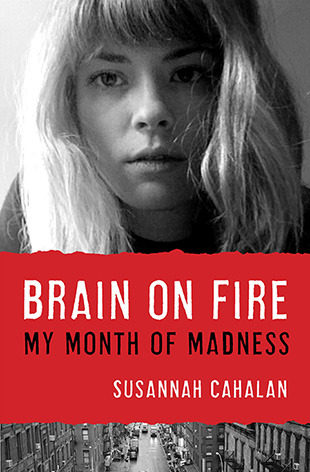
Book Review: Brain on Fire: My Month of Madness by Susannah Cahalan
 Summary:
When twenty-four-year-old Susannah Cahalan woke up alone in a hospital room, strapped to her bed and unable to move or speak, she had no memory of how she’d gotten there. Days earlier, she had been on the threshold of a new, adult life: at the beginning of her first serious relationship and a promising career at a major New York newspaper. Now she was labeled violent, psychotic, a flight risk. What happened?
Review:
Written by a journalist, the reader soon discovers this memoir is a survivor’s tale of brain encephalitis. Divided into three parts, the first establishes Susannah’s life when she came down with the illness and the first appearance of symptoms. The second covers the time period of her illness that she actually can’t remember, and features her own investigative journalism into what happened during that time. The third part covers the first part of her recovery time in the first year or so after she recovers her memory.
The first two thirds of the book are quite strong for different reasons. In the first third, Susannah recalls with such clarity the feeling of is this really happening or am I losing my mind? Specifically, the first thing that happens is she’s sure she has bed bugs but other people (including the exterminator) see no evidence of them. To this day, no one knows if Susannah really had bed bugs or if hallucinating them was a first symptom of her illness.
The second third of the book highlights her skills as an investigative journalist. Since she herself doesn’t remember the worst of her sickness immediately prior to or during her hospitalization, she is able to take an impartial distance to the whole situation and report on how her divorced parents put aside their differences to care for her together, as well as look at how the medical system both cared for her but also almost missed her critical diagnosis. Susannah recognizes how lucky she was to have people on her side advocating with the hospital for her, as well as to be in a city with such high-quality and cutting edge medical care.
The last third where she talks about her years of recovery and her life now was the weakest. The level of insight and analysis found in the first two parts was absent. While Susannah clearly empathizes with those with mental illness, there’s a clear sense that she thinks that all mental illness is just an illness making you look mental and not actually maybe a different way of interacting with the world. A different kind of normal you’re just born with. I think Susannah fails to take into consideration what if she was just born seeing colors more brightly and seeing the walls breathe? What if that was just always her normal? That’s the reality for many with a mental illness, and she kind of just glosses over that and comes down on the it’s all just a physical illness side. I’m more of a believer that it’s ok for there to be different ways to be “normal” and maybe society should stop shoving us all into the same shaped peghole. While it’s true that situations like Susannah’s where your whole personality changes overnight are devastating, that’s not how all mental illness presents, and I think she misses that in her quest to find and diagnose those with a brain inflammation misdiagnosed.
Overall, this is an intensely readable book that leaves you questioning what is truly madness and what is just abnormality? And what makes us who we are? If a person is unable to remember what they are doing, does that mean they’re behaving as themselves authentically or as quite the opposite?
If you found this review helpful, please consider tipping me on ko-fi, checking out my digital items available in my ko-fi shop, buying one of my publications, or using one of my referral/coupon codes. Thank you for your support!
4 out of 5 stars
Length: 250 pages – average but on the shorter side
Source: ARC from publisher in exchange for my honest review
Book Review: He, She and It by Marge Piercy
 Summary:
In the middle of the twenty-first century, life as we know it has changed for all time. Shira Shipman’s marriage has broken up, and her young son has been taken from her by the corporation that runs her zone, so she has returned to Tikva, the Jewish free town where she grew up. There, she is welcomed by Malkah, the brilliant grandmother who raised her, and meets an extraordinary man who is not a man at all, but a unique cyborg implanted with intelligence, emotions–and the ability to kill….
Review:
I picked this up because of how incredibly moved I was by Woman on the Edge of Time (review) by the same author. While I found this interesting and unique, it didn’t move me in quite the same way. I imagine it would probably move a reader more if they are Jewish or a mother.
The book is richly steeped in Jewish culture and history. All of Earth is either a slum or run by corporations in basically corporate states except for a few free towns which manage to exist due to their value in trade. Tikva is one of these, and it’s made clear this is partially so because the founders were concerned about maintaining Jewish culture in a world being overcome by just a few corporations. The corporation Shira works at before returning to Tikva judges her in her performance reviews for staying too attached to her home culture, including things like naming her son a traditionally Jewish name. So there is this very interesting thread about how minority cultures can maintain themselves in the face of economic threat and assimilation. When Shira gets a divorce, the corporation grants majority custody to her ex-husband and ultimately essentially full custody when he is sent to work off-world. Overcome with grief, Shira moves home to Tikva. Here we learn that Shira’s grandmother Malkah raised her and see how differently her own mother approaches motherhood than Shira does. This is one of the key threads of the book.
The other key thread is personhood and what makes us human. One of the residents of Tikva has succeeded in making an illegal cyborg. There are periodic chapters where Malkah is telling him the story of the Jewish myth of the Golem (a human-like beast made of clay to protect the Jewish people from persecution. More info). Very clear lines are drawn between the golem and the modern-day cyborg, who was made to protect Tikva and keep it free. Of course people start to have mixed feelings about the cyborg and asking not just what makes him human but also if he can be Jewish? (He himself identifies as Jewish and attends synagogue). I particularly enjoyed that Malkah isn’t just the story teller to the cyborb but she’s also one of the most important and most intelligent programmers in Tikva. The programmers essentially are what keep Tikva free, and an elderly woman is one of the most important ones.
Even though it’s a topic I’ve read a lot in scifi, I always enjoy the exploration of what makes us human and at what point does intelligent technology gain personhood, and the way it was explored here was different from what I’ve seen elsewhere. In particular, I thought the not just female but female Jewish lens was new and great. But I will admit that I had trouble relating to Shira and her struggle with motherhood and types of motherhood. I think motherhood can sometimes be overly thought about and held up on a pedestal in our culture and in feminism too. While mothers who choose to mother differently are acknowledged in the book, women who choose not to mother are not. It’s as if mothering is a natural part of womanhood, and that was not something I felt I could connect to in the book.
Overall, though, this was a wonderfully different take on the scifi exploration of cyborgs and artificial intelligence. Recommended to scifi readers, but particularly to those seeking a Jewish lens or an exploration of motherhood in addition to cyborgs.
If you found this review helpful, please consider tipping me on ko-fi, checking out my digital items available in my ko-fi shop, buying one of my publications, or using one of my referral/coupon codes. Thank you for your support!
4 out of 5 stars
Length: 448 pages – average but on the longer side
Source: Paperbackswap
Buy It (Amazon or Bookshop.org)
Book Review: Mambo in Chinatown by Jean Kwok (Audiobook narrated by Angela Lin)
 Summary:
Twenty-two-year-old Charlie Wong grew up in New York’s Chinatown, the older daughter of a Beijing ballerina and a noodle maker. Though an ABC (America-born Chinese), Charlie’s entire world has been limited to this small area. Now grown, she lives in the same tiny apartment with her widower father and her eleven-year-old sister, and works—miserably—as a dishwasher.
But when she lands a job as a receptionist at a ballroom dance studio, Charlie gains access to a world she hardly knew existed, and everything she once took to be certain turns upside down. Gradually, at the dance studio, awkward Charlie’s natural talents begin to emerge. With them, her perspective, expectations, and sense of self are transformed—something she must take great pains to hide from her father and his suspicion of all things Western. As Charlie blossoms, though, her sister becomes chronically ill. As Pa insists on treating his ailing child exclusively with Eastern practices to no avail, Charlie is forced to try to reconcile her two selves and her two worlds—Eastern and Western, old world and new—to rescue her little sister without sacrificing her newfound confidence and identity.
Review:
There is so much that is wonderful about this book. The incredibly depicted settings of both Chinatown and ballroom dancing. The finely nuanced and richly complicated relationships. The new adult struggles of finding and being true to yourself while still relating to your family of birth. You don’t have to be first-generation American to relate to Charlie’s struggles to reconcile her childhood world with the world she knows now. In some ways I found this to be a Chinese-American version of Dirty Dancing, and that’s a big complement since Dirty Dancing is one of my favorite movies. I also particularly enjoyed seeing a single father realistically deal with his two daughters. He sometimes does wonderfully and sometimes fails them, and their fights are realistic and full of honesty.
If you’re curious about the audiobook version, Angela Lin does an incredible job. Every single character has their own voice and her accents are full of nothing but realism and respect. It was like a well-produced radio program.The praise this book is getting is well-deserved, and if you want to immerse yourself in Chinatown, dance, and new adult issues, you don’t even need to read my review further. Just go get yourself a copy. But I do need to talk about what didn’t work for me.
*spoilers*
Charlie is dyslexic, and her father never allowed her school to officially diagnose and treat her, which led her to have poor grades and struggle with many typical entry level white collar jobs such as being an administrative assistant. Lisa in contrast is an excellent student who works after school at their uncle’s Traditional Chinese Medicine (TCM) clinic. Partway through the book, Lisa starts to have nightmares and wet the bed. She’s also been selected to apply for entry and scholarship to a highly selective private school, though, so Charlie thinks it’s probably related to that. I think the vast majority of readers will be able to quickly figure out that Lisa is being molested at the clinic. There are just way too many hints. Lisa doesn’t want to go to the clinic anymore after being good-natured about it. She starts getting jealous of Charlie whereas before she only wished for good things for her sister. And honestly bed wetting and nightmares are extremely typical symptoms of molestation.
But I don’t dislike this plot because of how obvious it was to me. I also fully acknowledge these terrible things can and do happen in otherwise average families, and I’m not against these stories being told. However, I do think it was a poor fit for the tone otherwise of the book. It felt like the idea was that there wouldn’t be enough conflict between Charlie and her family without this extra problem. Like Charlie wouldn’t have been at all worried about her sister or about leaving her family behind somehow without this other problem. I think that’s underestimating Charlie and underestimating how hard it can be to grow and change and become different from your family of origin. The rest of the book is so full of beauty and energy, whether it’s in Chinatown or in the ballroom dance rooms. Then this plot comes in and it just feels like it doesn’t belong. While I feel incredible empathy for people in Lisa’s situation, I came to resent her presence in the story because she felt kind of like olives being stuffed into a delicious lasagna. It’s not that olives are bad; it’s just that they don’t belong. I think that these were really two separate stories, and they should have been told separately.
*end spoilers*
In spite of these feelings about the dual plots, I still really enjoyed the read and would happily read another book by Kwok in the future. I also think this is a great example of a new adult read that’s mostly about the emotional experiences of your early 20s. Recommended to anyone looking to get immersed in Chinatown and ballroom.
If you found this review helpful, please consider tipping me on ko-fi, checking out my digital items available in my ko-fi shop, buying one of my publications, or using one of my referral/coupon codes. Thank you for your support!
4 out of 5 stars
Length: 384 pages – average but on the longer side
Source: Audible
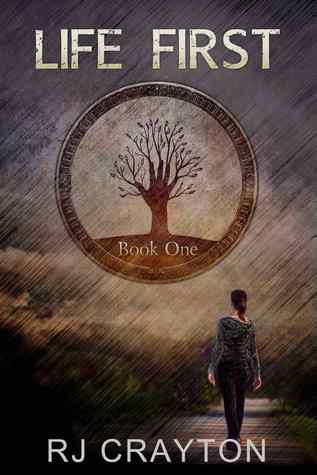
Book Review and Giveaway: Life First by R.J. Crayton (Series, #1)
 Summary:
Strong-willed Kelsey Reed must escape tonight or tomorrow her government will take her kidney and give it to someone else.
In this future forged by survivors of pandemics that wiped out 80 percent of the world’s population, life is valued above all else. The government of “Life First” requires the mentally ill to be sterilized, outlaws abortions and sentences to death those who refuse to donate an organ when told.
Determined not to give up her kidney, Kelsey enlists the help of her boyfriend Luke and a dodgy doctor to escape. The trio must disable the tracking chip in her arm for her to flee undetected. If they fail, Kelsey will be stripped of everything.
Review:
I have a confession to make. I was supposed to review this in 2016 but somehow my review copy never made it onto my Kindle or my 2016 ARCs folder. It was only when I was cross-posting to last year’s Accepted ARCs post that I saw it listed and wondered what had happened to it. Apparently it got hung up somehow in the cloud instead of ever delivering to my kindle. My apologies to the author for the delay but I must say the timing of reading it was rather impeccable. With new threats to the bodily autonomy of women coming in 2017 I found the dystopian future to be even more haunting than I might have in 2016.
Set in a near-future where the population was decimated by plagues and environmental issues leading to starvation, the title alludes to a new movement and indeed, rule of law, in the United States. In a landmark case, a woman who after the population decimation chose to have an abortion is prosecuted in court. Her defense is that you wouldn’t force someone to donate blood or a body part to save another person’s life so why should you force a woman to bring a fetus to term? The court agrees that it is a logical fallacy but instead of protecting abortion chooses to make it the law to donate body parts and blood when needed. (There are other impacts too, such as everyone must take statistics classes and decide whether or not to risk their life to save another’s based on the statistical likelihood of success). Everyone is given a life monitoring chip and is registered in a database and bodily matches found so they may be called in when needed. The main character is called in as a kidney donor, but she’s afraid to donate since one of her best friends became paralyzed as a result of her donor surgery.
Those who disagree with this policy have seceded to their own country in what used to be Florida. Kelsey and her boyfriend Luke plan her escape there but of course, not everything goes as planned. There are a lot of twists and turns that bring forth more moral issues that I can’t really get into without spoiling the book for others. Suffice to say, I work as a medical librarian, and I found the medical ethics issues raised on top of the bodily autonomy ones to be quite well-put and thought-provoking.
I must give a quick trigger warning that there is a graphic attempted rape in the book, which was definitely disturbing and not possible to simply skip over, as it was a key plot point and lasted for a while. However, I do think that it suited the book and the issues being raised and was not out-of-place. Essentially, if you’re disturbed by the attempted rape and not by the rest of the book then I have some questions for you about your ethical lines.
Overall, this was an engaging read that left me immediately curious about the next entry in the series. Twists and turns took it places I wasn’t anticipating it going and I encountered more medical ethics issues than I thought I would in the read. Highly recommended, particularly to those who have enjoyed other women’s issues dystopian futures such as The Handmaid’s Tale.
4 out of 5 stars
Length: 262 pages – average but on the shorter side
Source: kindle copy from author in exchange for honest review
Giveaway!
This giveaway is now over. Congrats to our winner!
There was 1 entry via blog comment, so she is our winner. Congrats to Amanda McNeill!
Thanks to the generosity of the author, one lucky Opinions of a Wolf reader can win a copy of this ebook.
How to Enter:
- Leave a comment on this post stating why bodily autonomy matters to you.
- Copy/paste the following and tweet it from your public twitter. Retweets do not count:
Enter to win LIFE FIRST by @RJCrayton, hosted by @McNeilAuthor http://buff.ly/2kgFf4F #scifi #womenauthors #giveaway - Repost the Instagram giveaway announcement and tag my Instagram.
- Tag one of your friends on the Instagram giveaway announcement.
Each option gets you one entry. Multiple tweets/Instagram posts do not count as multiple entries.
Who Can Enter: International
Contest Ends: February 23rd at midnight
Disclaimer: The winner will have their book sent to them by the author. The blogger is not responsible for sending the book. Void where prohibited by law.
Book Review: Run by Kody Keplinger
 Summary:
Bo Dickinson is a girl with a wild reputation, a deadbeat dad, and a mama who’s not exactly sober most of the time. Everyone in town knows the Dickinsons are a bad lot, but Bo doesn’t care what anyone thinks.
Agnes Atwood has never gone on a date, never even stayed out past ten, and never broken any of her parents’ overbearing rules. Rules that are meant to protect their legally blind daughter—protect her from what, Agnes isn’t quite sure.
Despite everything, Bo and Agnes become best friends. And it’s the sort of friendship that runs truer and deeper than anything else.
So when Bo shows up in the middle of the night, with police sirens wailing in the distance, desperate to get out of town, Agnes doesn’t hesitate to take off with her. But running away and not getting caught will require stealing a car, tracking down Bo’s dad, staying ahead of the authorities, and—worst of all—confronting some ugly secrets.
Review:
This book would have wound up as a Disappointing Reads Haiku except that I actually didn’t have high expectations for it going in. The description didn’t appeal to me that much, and I had a feeling I might feel lukewarm about it. So why did I read it? I heard one of the two girls was bisexual, and hurting as I am for bisexual literature (it’s hard to find just from book descriptions), I’m willing to give most of it a shot if it sounds even moderately appealing. I do like stories of unlikely friendships and representation of less than ideal parenting situations (the realistic kind, not the fantasy kind of conveniently dead parents). I also liked the representation of not just bisexuality but also someone who is legally blind. I found the writing to be clunky, though, and the ultimate plotline to be a bit puzzling, rather than moving.
Agnes is written better than Bo. The depictions of her over-protective parents, what it is to be legally blind but not 100% blind, how others treat her, particularly in her church as an angel and not as a regular person, these were all great. The author is herself legally blind, and you can really tell. I’ve read many books about blind characters by people who were not themselves blind and the depiction was nowhere near as realistic as in this book. I think it speaks a lot to why own voices literature matters.
This realism doesn’t come through in Bo though. Bo reads like a two-dimensional caricature with the quick correction that oh hey I know I’ll make her bisexual but not a slut and that makes her seem sensitively written. Bo whose family is known in the small town as the trouble-makers, the no-goods. Bo with rumors spread about her and no-good drug-addict mom. Bo who, unlike Agnes, doesn’t speak mainstream English but mostly just in the sense that she says “ain’t” a lot. Bo who’s terrified of foster care so runs when her mom is arrested again. What bothers me the most about Bo (this may be a minor spoiler) is the book seems to think it gives her a happy ending. Like everything is ok now. But it’s clearly not. Speaking as a bisexual woman who had a less than ideal living situation in rural America in her teens, nothing about Bo strikes me as realistic. She reads as fake. She sounds fake. Some of her actions themselves are realistic but there’s no soul behind them. It might not have stuck out so badly if Agnes hadn’t been so well-written or perhaps if I wasn’t able to relate to well to who Bo was supposed to be.
One of the lines that I think demonstrates this problem that I couldn’t stop re-reading is below. It should have made me happy because Bo actually says the word “bisexual.” (Very rare in literature). But I was just irritated at how fake it all sounded.
“So … you’re all right with it, then? Me being … bisexual, I guess? I ain’t never used that word before, but … you’re all right with it?” (loc 2359)
It bothers me on two levels. First, rural people don’t just decorate their sentences with ain’t’s and double negatives. There’s more nuance to the accent than that and also Agnes and her average blue collar parents would have the same accent as Bo (they don’t). Second, I’ve never in my life heard a bisexual person speak about themselves this way, and I certainly never have. The number of times Bo asks Agnes if she’s “ok with it” (this is not the first time) is unrealistic. You know as soon as you come out if someone is “ok with it” or not and you deal and react to that. You don’t just keep wondering. You know. No amount of inexperience coming out would make you not know.
If Bo had been written as powerfully as Agnes, this would be a very different review, but since that’s not the case I have to say my dislike of the representation of Bo paired with my like of the representation of Agnes left this an average read for me, and it certainly won’t be a piece of bi literature I’ll go around recommending.
If you found this review helpful, please consider tipping me on ko-fi, checking out my digital items available in my ko-fi shop, buying one of my publications, or using one of my referral/coupon codes. Thank you for your support!
3 out of 5 stars
Length: 288 pages – average but on the shorter side
Source: Library
 Support my work with a tip or browse my shop for curated book club guides, how to guides, cross-stitch patterns, and more!


This work by Amanda Nevius is licensed under a Creative Commons Attribution-Noncommercial-No Derivative Works 3.0 United States License.
 Opinions of a Wolf