
Archive
Book Review: Initiate by Tara Maya (Series, #1)
 Summary:
Dindi is about to undergo her people’s initiation test and ceremony that not only welcomes her to adulthood but also will determine whether or not she is a member of the Tavaedi. The Tavaedi are a mix of religious leader, healer, and warrior who cast magic spells by dancing. Since Dindi can see the pixies and other fae, she thinks she has a chance. But no one in her clan has ever successfully become a Tavaedi. Meanwhile, an exiled warrior, Kavio, is attempting to shed his old life and the haunting of his father’s wars and his mother’s powers. But he slowly discovers a deadly plot that brings him directly to Dindi’s initiation ceremony.
Review:
It takes something special for me to pick up either a YA or a fantasy book, and this one is both. But Jessica’s review over on The Bookworm Chronicles had me intrigued. A fantasy series based on Polynesian tales and traditions is unique in fantasy. Plus the idea of magic from dancing really appealed to the dancer in me (years of tap and jazz, also many lessons in ballroom, zumba, etc…). When I found out the first book in the series is free on the Kindle, I had to try it out, and I’m glad I did! I really enjoyed the book, and its presence highlights many of the strengths of indie publishing.
The world is richly imagined and well described. The tribes and clans have clearly defined and described cultures that vary from stable farming to warrior to cannibal. The structure of the societies make sense and are rich without being overly detailed. I particularly appreciated that this is a tribal culture fantasy without ever claiming to be the real or imagined history of any known to exist (or to have existed) tribe. It is inspired by Polynesian culture but it is still a fantasy, similar to how medieval fantasy is inspired by the real Middle Ages but never claims to be what happened. This lends itself to rich world building without ever venturing off into ridiculous “historical” fiction.
The plot slowly builds Dindi’s story and Kavio’s story, gradually bringing them together. This is good since Dindi is still young enough that she doesn’t see much of the intrigue going on around her. Dindi’s perspective shows us the day-to-day existence of people in this world, whereas Kavio shows us the higher-ranking intrigue. It didn’t bother me that Dindi starts out a bit innocent because it is clear she will grow in knowledge with time. Meanwhile, bringing in Kavio’s perspective helps establish the world for the reader. There were also enough smaller clashes and twists that I never felt that I knew precisely what was going to happen next.
Although the characters at first seem two-dimensional, they truly are not. Everyone is more than what immediately meets the eye, and I liked that this lesson occurs repeatedly. It’s a good thing to see in YA lit. Dindi is strong, kind, and talented, but she still has her flaws. She is good but she’s not perfect, which makes her a good main character. I also appreciate that what will clearly be a romance eventually between Kavio and Dindi starts out so slowly with longing glances from afar. It’s nice that Dindi and Kavio get a chance to be established as individuals prior to meeting each other, plus the slowly building romance is a nice change of pace for YA lit.
Sometimes the chapter transitions were a bit abrupt or left me a bit lost. With changing perspectives like this, it would be helpful if the chapter titles were a bit less artistic and gave a bit more setting. It’s nice that when perspective changes the cue of the character’s name is given, no matter where it happens, but a bit more than that would be nice at the chapter beginnings. Similarly in scene changes, the break is three pound signs. I think using a bunch of centered tildes or even a customized drawing, such as of pixies, would be nicer. At first when I saw these I thought there was some coding error in the ebook. There also are a few editing mistakes that should not have made it through the final edit, such as saying “suffercate” for suffocate (page 144). As an indie author myself, I know it is incredibly difficult to edit your own book, so I give a pass to minor typos and things like that. However, the entirely wrong word for what the author is trying to say should be fixed. There were few enough that I still enjoyed the book, but I hope that there are less in the future installments of the series.
Overall, this is a unique piece of YA fantasy set in a tribal world inspired by Polynesia. The romance is light and slow-building, and the focus is primarily on growing up and becoming an adult. A few minor formatting and editing issues detract from it being a perfect escape read, but it is still highly enjoyable. I intend to read more of the series, and I recommend it to fantasy and YA fans alike.
4 out of 5 stars
Source: Amazon
Buy It
Note: the Kindle edition is free

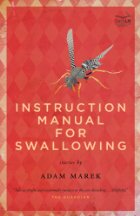
Book Review: Instruction Manual for Swallowing by Adam Marek
 Summary:
A collection of fourteen short stories taking one ordinary experience and inserting an extraordinary fantastical, scifi, or bizarro instance into the situation, seeing how the main character reacts.
Review:
A mixed collection, containing both 2 star and 5 star stories, although most stick right around the 3 star mark. The stories veer between scifi and fantasy, although both have some bizarro element in them.
Where Marek excels is when he takes a little talked-about male experience and utilizes the unique qualities of genre fiction to explore it. The only 5 star story in the collection, “Boiling the Toad” explores a male victim of domestic violence. It does this in a powerful way without demonizing all women. The story starts as “my life is so bizarre” but eventually becomes all too real. It’s interesting to note that this is also the opposite of many stories in the collection. Many start ordinary and turn bizarre. Starting bizarre and turning ordinary worked much better. Similarly, “Testicular Cancer vs. The Behemoth” explores male feelings about a cancer that is only possible to get if you have testicles. Marek fairly eloquently presents the main character as attempting to defend his perceived manhood by trying to protect his girlfriend from a Godzilla-like monster attacking the city. These stories are interesting, and I enjoyed exploring them.
Where the collection fails and flounders, though, is when the main character is self-centered and perceives of women as objects or only existing for his pleasure. It’s incredibly difficult to feel any empathy for a character who wants to cheat on his wife but ends up failing because of a mysterious puking illness he gets at the sushi restaurant (Sushi Plate Epiphany) or to care about a man who calls his pregnant wife a monster and tries to cheat on her while she’s still carrying his children (Belly Full of Rain). A lot of these stories incited an eye-roll and “boohoo it’s so horrible to be a man” sarcastic response from me, which I seriously doubt was what the author was going for.
Then there are the stories that simple don’t seem to have any point or make any sense. They seem to just be getting going when Marek stops them abruptly. Or they do seem to be at their end but there is just no point. Both “the Forty-Litre Monkey” and “Jumping Jennifer” have a great set-up of a mystery but that mystery is never addressed. They stop too soon. “Instruction Manual for Swallowing” and “The Thorn” are highly fantastical yet the conflict isn’t set up enough so as to be interesting.
Marek’s writing style varies widely between the perfect tone for bizarro genre fiction and being overly pretentious for his genre. For instance he writes sentences like this:
Being in the room felt like being suffocated in an armpit. (location 55)
But also pretentiously calls a college quad a “quadrangle” (“Jumping Jennifer”).
Overall then this is a widely varied collection of bizarro short fiction. Some of the stories offer wonderful insight into male issues while others wallow annoyingly in the minds of terrible men who only think they have a problem, while still others set up a fantastic world but are ultimately boring due to lack of conflict. If you are intrigued by any of the stories mentioned, I would advise getting a copy from the library since they will be quickly read, and you can return it when done. Definitely feel free to skip around in this collection.
3.5 out of 5 stars
Source: Netgalley

Book Review: The Isle of Blood by Rick Yancey (Audiobook narrated by Steven Boyer) (Series, #3)
 Summary:
Will Henry states that this is a story that Dr. Warthrop did not want told…and proceeds to tell it anyway. When a British man shows up with a package being delivered under duress, Dr. Warthrop is ecstatic to realize it is the nest of the Magnificum–the holy grail of monstrumology. Dr. Warthrop decides to leave Will Henry in New York while he pursues this beast. But when his monstrumologist companion returns claiming that Warthrop is dead, Will Henry and two fellow monstrumologists travel to Europe to track him–or his body–down.
Review:
Not as engaging or thought-provoking as the first two books in the series, I can only hope that this third entry is suffering from the common penultimate book malady where the book which must set everything up for the finale of the series can sometimes drag.
There are two problems in this entry that make it fail to be as engaging or thrilling as the first two books. First, Will Henry is left behind in New York for a significant portion of the novel. We are thus left with a whiny teenager bemoaning Warthrop’s choice to be responsible for once and keep him out of danger. We also are left with very little action for far too large a portion of the book. The second issue is perhaps a bit of a spoiler but suffice to say that the monster is disappointing and its disappointment is easily predicted. If we had a lot of action with a disappointing monster, that’s still engaging. If we had less excitement with a surprising, phenomenal monster, that’s still thrilling. The combination of the two, though, prevents this thriller from being as thrilling and engaging as it should be.
Of course there are other elements that still worked, which is why I kept reading it. Yancey’s writing is, as ever, beautiful to read (or listen to) and contains much depth.
“So many times we express our fear as anger…, and now I think I wasn’t angry at all, but afraid. Terribly, terribly afraid.”
The settings are unique, and the characters are strong and leap off of the pages. Will Henry becomes more fully fleshed-out in this entry as we start to see his descent into a love affair with monstrumology. We also get to see Warthrop at what he himself perceives of as his lowest point. It’s a dark bit of characterization but it works very well for the story Yancey is telling.
Overall, I was a bit disappointed, purely because the first two entries in the series were so phenomenal. The third book is still a very good book. Fans might be a bit disappointed, depending on how attached they are to the unique thriller aspect of the series, but the characters and writing still make this well worth the time. Fans will remain in eager anticipation of the final entry in the series.
4 out of 5 stars
Source: Audible

Previous Books in Series
The Monstrumologist
The Curse of the Wendigo
Book Review: Oddkins: A Fable for All Ages by Dean Koontz
 Summary:
Isaac Bodkins is a magical toymaker. He makes toys that actually come alive and seek out children who need them the most, such as children who have lost a parent or who are facing abuse. When he dies before he has a chance to tell his chosen heir about her purpose, evil has a chance to take over again. His toys, the Oddkins, must set out to tell her before evil manages to land its own new evil toymaker that would create living toys to torture children. Evil sends out his evil toys in an attempt to stop the Oddkins on their dangerous cross-town mission.
Review:
The person who loaned me this book told me it was marketed as a fable for all ages but really might be a bit too scary for the youngest among us. Person also knew that I love me some fables, not to mention talking animals or toys, so I was excited to get into this book. Alas, it wasn’t ultimately my style, but it is a well-written book I could see working for a lot of people.
The plot is a quest where each member of the questing group gets at least one chance to shine. Although I was fairly certain that good would ultimately triumph over evil, I still was left worried for the main characters periodically, and I also was unable to predict the details of the triumph. Since the toymaker lived in the countryside outside of the city, the quest consists of time in both the country and the city. This kept situations varied and engaging.
Since this is a fable and most of the characters are in fact magical toys, they are not what one would describe as three-dimensional. However, their two dimensions work for the story. For instance, the teddy bear leader of the good toys is brave and strong and true but he also has to work at being brave. He is not just naturally brave. Similarly, although the two potential inheritors of toymaking are good and evil, they both get background information given to them. The evil one was in prison and only takes pleasure from causing others pain. The good one ran a toy store and was recently widowed and looking for something more in her life.
So why didn’t I love it? Well, some things said were just too clearly religious for me. There’s a lot of talk of afterlife, and the evil toys are driven by who is clearly Satan. There are also times where the good toys stop and make statements to each other that are clearly the author preaching to the reader through them. For instance
God’s world is full of magic, isn’t it? Not just the secret kind of magic of which we’re a part, but the simple magic of everyday life-magic. (location 1358)
Given that this happens rather frequently and given that the evil is clearly represented to be Satan, I just found the whole book to be a bit too heavy-handed in the religion department for me. A reader who does follow Christianity might not be bothered, but even then, the preachiness within a book isn’t for everyone.
Overall this is a well-written fable that is engaging and unique. It is a bit heavy-handed in its presentation of various religious beliefs for this reader, but other readers who enjoy that in their literature will probably enjoy this book.
3 out of 5 stars
Source: Borrowed

Book Review: Dagon by Fred Chappell (Bottom of TBR Pile Challenge)
 Summary:
Peter doesn’t know much about his father’s side of the family as his mother left him when he was little. Now, a married pastor, he returns to his father’s parents’ house, a recent inheritance. Slowly he discovers the cultist history of his family and begins his descent into madness.
Review:
There aren’t that many books in the Lovecraft mythos, so when I spot one, I almost always add it to my wishlist and pick it up if I spot it. (I’m a big fan of the mythos, and my current work in progress is set in it). I spotted this one during one of Better World Books’ periodic sales and got it for just a couple of dollars. The problem with the world of Lovecraftian horror is this. The mythos is great, but a lot of the books/movies set in it are a swing and a miss. Which is sad for me as a reader, because I know that this is an author with the same funky interest as me, so I want it to work. I want it to work very much. It just doesn’t always. This, unfortunately, falls solidly in the swing and a miss category for me.
The germ of the story is a great idea. An ostensibly mainstream “good” man following his roots and falling into a dark god worshiping cult. Brilliant. The execution is weak, however. The cover of my copy of the book claims that it is a “novel of blinding terror.” This is just not the case. In some ways I feel that Chappell just tried too hard. The entire first chapter is meant to set the scene with extremely heavy-handed gothic language, but it is just painful to read. The first chapter describes one room of the house. Excessive energy is spent trying to make even the throw pillows seem malicious. It is too over-the-top and becomes laughable. Thankfully, the next chapter abandons the excessive language, but it is still never scary. It is titillating at a couple of points. Engaging as well. But never terrifying.
Part of the problem is that the book fails to build suspense from beginning to end. It builds up in part one to a singular event, but then immediately crashes back down to a period in part two in which Peter lies around in a depressed funk. While this might be realistic, it does nothing to build the suspense. The suspense thus must start all over again. This may be acceptable in a long work (and even then I’m dubious), but in such a short book it’s just jarring and ruins the suspense.
I also found the ultimate payoff to be a bit disappointing. While we find out one or two things about Peter’s family, we don’t get enough details to truly experience shock or horror. Similarly, the ultimate final descent of Peter was a bit disappointing. He doesn’t engage in any agency or become a committed cultist. A lot of cult things are done to him, but he doesn’t really have the descent into madness promised. He is tortured and made into a slave and has the mental and emotional breakdown such experiences could make someone experience, but he himself doesn’t turn into a raving Dagonite, for instance.
That said, there are some things that worked in the book. As stated previously, the germ of the idea is great. Peter’s nemesis/mentor, the tenant farmer family’s daughter, is delightfully powerful and sinister. A couple of scenes were a great mix of titillation and horror, and the final climax was definitely a surprise.
Overall, then, it’s a book that tries to be a terrifying, gothic horror, but instead is a titillating grotesque bit of southern literature. Fans of the Lovecraftian mythos will appreciate it for this, although the Lovecraftian elements themselves are sparse and a bit disappointing. Recommended for big fans of grotesque, fantastical horror who don’t mind it leaning a bit more toward the grotesque than the scary side of horror.
3 out of 5 stars
Source: Better World Books

Book Review: Braided by Elora Bishop (Series)
 Summary:
A lesbian retelling of Rapunzel. Gray, a witch’s daughter, visits Zelda every day. The witch switched Gray’s fate into Zelda, so now Zelda is the one entwined with the spirit of the tree that the people worship. She must live on the platform and every day lower her hair for people to tie ribbons and prayers into. Gray feels horrible guilt over their switched fates, but she’s also falling in love with Zelda.
Review:
I’m a sucker for fairy tale retellings, although I can be fairly picky about whether or not I like them. But Rapunzel is a tale that is not redone often enough, in my opinion, and the fact that it was a lesbian version made me jump at this novella.
It’s nice that the retelling doesn’t just change the genders of the main romantic pairing and leave it at that. In the original version, a married couple steal from a witch’s garden and in payment they must give her their unborn child who she then locks up into a tower. She would let her long hair down for her witch/mother to use as a ladder to get into the tower. A prince years later hears her singing in the tower and helps her escape. In this retelling, the people worship a tree. When the tree starts to die they tie its spirit into a person. That person lives on a platform in the tree and the people pray to him/her. When the person dies, the fate to be tied to the tree randomly chooses a baby by putting a tree pattern on their chest. This fate is supposed to be Gray’s, but her mother somehow acquires another baby, Zelda, and with magic cuts the fate out and ties it to her instead. Gray knows this and at first visits Zelda out of guilt but eventually falls in love with her. This version, surprisingly, is actually a lot more fantastical and magical. There is even a quest within an alternate dimension/dream world. I enjoyed the increase in the otherworldly feel, and I liked that it lent the twist of a parent trying to protect her child rather than a mother smothering her child.
The writing has an earthy, magical quality to it. It’s definitely language that is looking to be pretty, and it mostly succeeds. The romance between Zelda and Gray is sweet and very YA. Their passion revolves entirely around kissing and holding. I like that it gives a soul and connection to the romance without ignoring the physical aspect. It’s the perfect balance for this type of story.
While I enjoyed reading the story, I must admit it wasn’t my ideal retelling of Rapunzel. I didn’t like the religious aspect that was drawn into it, and I did feel that Zelda falling for Gray was a bit fast, particularly given the fate switching aspect of the story. I was also disappointed to see that in spite of all the other changes in the story, the Rapunzel character is still blonde. I’m not sure why no one ever seems to change this when retelling Rapunzel.
Overall, this is a fun retelling of Rapunzel, particularly if you’re looking for a non-heteronormative slant or enjoy a more magical feel. Note that this is part of a series entitled Sappho’s Fables
4 out of 5 stars
Source: Amazon

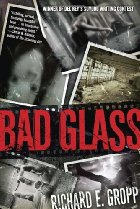
Book Review: Bad Glass by Richard E. Gropp
 Summary:
Something strange is happening in Spokane, and the US military has taken control of the city, closing it and its happenings to the press. Dean sees this as the perfect opportunity to break into photography before he graduates from college and is forced into giving up on his artistic dreams to work a regular 9 to 5 job. So he sneaks into Spokane, where he meets an intriguing young woman and her rag-tag household of survivors, and quickly starts to see the inexplicable things that are going on inside the city.
Review:
Dark fantasy is one of my favored genres, but unfortunately not a ton comes out in it in any given year. So when I saw this title available on NetGalley, I just had to snatch it up. I’m glad I did, because it’s a truly enjoyable read.
The basic plot uses a trope of dark fantasy–a creative outsider comes to a town where bizarre things supposedly happen then starts to document them happening. The twist here is that the creative type is a photographer, so the art form being used is photography. This was an incredibly refreshing way to approach the topic. Each chapter opens with a description of a shot that Dean will get at some point in that chapter. It’s fascinating foreshadowing, and also Gropp shows real talent in describing photographs of both the fantastical and more ordinary varieties. The descriptions also talk about more technical aspects of photography, and these show up within the story too (such as lighting and shutter speed). Describing instead of showing the photographs was a choice that I at first was not certain of but I ultimately appreciated. By not reproducing the photographs, Gropp leaves quite a bit of the mystery up to the reader and doesn’t spoil whatever images the reader has already established within her own mind. But the descriptions are also so well-done that the impact of seeing one brief moment in this surreal world is still rendered. It’s a unique and well-done choice, and I’d recommend this read to people based on that creative storytelling aspect alone.
It’s also great to see a story centering primarily around 20-somethings. Often literature tends to stick to YA (teens) or jump right over those of us who are in that truly young adult phase of our lives and into 30-somethings. Although the primary focus of the story is what precisely is happening in Spokane, conflicts frequently faced by 20-somethings come up within this framework–what to do for a career, do you give up on your dreams and settle down into a cubicle or not, when and with whom should you settle down, should you settle down at all, when should you respect your parents and their experience and when should you stand up to them, etc… Long-time followers know that one reason I enjoy genre literature is it addresses these real life issues within the context of the fantastic, and the good ones do it integrated and in a thought-provoking manner. This book achieves that.
The main character also is bisexual, while being primarily interested in a woman. It was so awesome to get to see a bi male main character and have it be presented as just a part of who he is and not a big deal at all. Although there is certainly a need and a place for the coming out tales and stories where the character’s sexuality is a central issue, it is also nice to see queer characters where that is just one aspect of who they are and is not dwelled upon much. It is just a part of who Dean is.
As for the central plot–what is happening in Spokane–I admit that I hoped for slightly more answers than we ultimately get. Readers looking for nicely tied up endings or even a hint at an answer will be left wanting. I enjoy an ambiguous ending, but I also felt that perhaps the plot could have been a bit clearer. In particular, without giving anything away, I felt that the scenes revolving around the hospital while powerful left me feeling a bit like perhaps even the author doesn’t really know what’s going on in Spokane. Perhaps that is the point, but it did leave me feeling that the plot was not as up to par as the world building and characterization.
Overall, this is a wonderful addition to the dark fantasy genre. Gropp gives us a unique main character and also utilizes writing about photography in a creative manner. I highly recommend it to fans of dark fantasy, particularly 20-somethings and those with an interest in photography.
4 out of 5 stars
Source: NetGalley

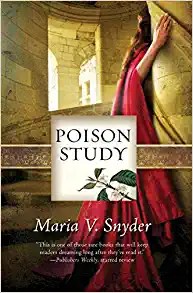
Book Review: Poison Study by Maria V. Snyder (Series, #1) (Bottom of TBR Pile Challenge)
Summary:
Yelena is on death row for killing a man in the military state of Ixia but on the day of her execution she faces a choice. Become the Commander’s food taster and face possible death by poison every day or be hanged as planned. Being a smart person, Yelena chooses the former. Now that she has admittance to the inner circle of the military state, she quickly comes to see that not everything is quite as it seems….not even her own personal history or her heart.
Review:
*sighs* You guys. I have got to stop letting people convince me to pick up books using the phrase, “I know you don’t like [blank] but!” That is how this book wound up on my tbr pile. “I know you don’t like fantasy, but!” and also “I know you don’t like YA, but!” oh and “I know you don’t like romance in YA, but!” A reader knows her own taste. And I don’t like any of those. I still came at it with hope, though, since I did like one fantasy book I read this year (Acacia). There’s a big difference in how they wound up on my pile though. I chose Acacia myself because its reviews intrigued me. Poison Study was foisted upon me by well-meaning friends. So, don’t get my review wrong. This book isn’t bad. It’s just what I would call average YA fantasy. Nothing made it stand-out to me, and it felt very predictable.
The world of Ixia felt similar to basically every other fantasy world I’ve seen drawn out, including ones friends and I wrote up in highschool. Everyone has to wear a color-coded uniform that makes them easily identifiable. There are vague similarities to the middle ages (like Rennaisance-style fairs). There are people in absolute control. There is magic and magicians who are either revered or loathed. There are all the things that are moderately similar to our world but are called something slightly different like how fall is “the cooling season.” Some readers really like this stuff. I just never have. I need something really unique in the fantasy world to grab me, like how in the Fairies of Dreamdark series the characters are tinkerbell-sized sprites in the woods who ride crows. That is fun and unique. This is just….average.
Yelena’s history, I’m sorry, is totally predictable. I knew why she had killed Reyad long before we ever find out. I suspected early on how she truly came to be at General Brazell’s castle. I didn’t know the exact reason he had for collecting these people, but I got the gist.
And now I’m going to say something that I think might piss some readers off, but it’s just true. What the hell is it with YA romance and exploitative, abusive douchebags? This may be a bit of a spoiler, but I think any astute reader can predict it from the first chapter who the love interest is, but consider yourself warned that it’s about to be discussed. Yelena’s love interest is Valek, the dude who is the Commander’s right-hand man and also who offers her the poison taster position and trains her for it. He manipulates her throughout the book, something that Yelena herself is completely aware of. There are three things that he does that are just flat-out abusive. First, he tricks her into thinking that she must come to see him every two days for an antidote or die a horrible death of poisoning. (Controlling much?) Second, he sets her up in a false situation that she thinks is entirely real to test her loyalty to him. (Manipulative and obsessive much?) Finally, and this is a bit of a spoiler, even after professing his love for her, he asserts that he would kill her if the Commander verbally ordered it because his first loyalty is to him. What the WHAT?! Even the scene wherein he professes his love for Yelena he does it in such a way that even she states that he makes her sound like a poison. There’s a healthy start to a relationship. *eye-roll* All of this would be ok if Yelena ultimately rejects him, asserting she deserves better. But she doesn’t. No. She instead has happy fun sex times with him in the woods when she’s in the midst of having to run away because Valek’s Commander has an order out to kill her. This is not the right message to be sending YA readers, and yet it’s the message YA authors persist in writing. I could go into a whole diatribe on the ethics of positively depicting abusive relationships in literature, especially in YA literature, but that should be its own post. Suffice to say, whereas the rest of the book just felt average to me, the romance soured the whole book. It is disappointing.
Ultimately then, the book is an average piece of YA fantasy that I am sure will appeal to fantasy fans. I would recommend it to them, but I feel that I cannot given the positively depicted unhealthy romantic relationship the main character engages in.
2 out of 5 stars
Source: PaperBackSwap

Book Review: The Bound Soul by Joseph Robert Lewis (Series, #3)
 Summary:
The group from the first two Halcyon adventures are resting up in Marrakesh, albeit in their own separate mini-groups, when a mysterious assailant with a fiery sword shows up and manages to kill Don Lorenzo. Immediately bent upon revenge, Qhora takes Mirari and an old enemy with an interest in the famous seireiken (flaming swords) on a new airship piloted by Taziri on a chase not just to avenge the Don’s death but also to free his soul from the aetherium.
Review:
I discovered the hidden gem in the steampunk world that is Joseph Robert Lewis’s indie series The Other Earth back when he offered me the first copy in the series for review. The series consists of two trilogies and a set of companion novels. He sent me one of the trilogies for review, and I picked up the fourth book in the series (first in the second trilogy) on one of his frequent 100% off coupon code/giveaway days he has on his site (which you should definitely follow if you’re into the series and want a chance to flesh it out without buying them all at once). All of which is to say, I clearly am a fan of the series. I would certainly hope so. I can’t imagine reading a series beyond book 1 or 2 if you didn’t like it.
In any case, I’ve come to expect two things from Lewis’s writing that make me enjoy it so much: strong world-building and editing and creative stereotype-defining characters. Alas, these weren’t quite so strong in this entry. I think perhaps the book suffers from the classic third book in the trilogy problem that is seen in many many trilogies. Don’t get me wrong, I still enjoyed it. I simply found the earlier books to be better.
Part of what I enjoyed about the earlier books was the unique marriages going on, particularly Qhora and Lorenzo’s. They had just finished sorting out their differences, so killing off Enzo felt a bit like an odd choice to me. While I enjoyed the plot of the seireikens and discovering more of the East in this reimagining of the world, I wish that we hadn’t lost the unique pairing of a religious, pacifistish Caucasian man with a fiery, independent Incan woman. I know characters die, but it still took that unique aspect out of the book that I had so enjoyed. In fact, we now verged a bit too close to stereotype, what with a terrorist-style Aegyptian and a revenge-seeking Native.
Similarly, I don’t feel that Aegypt was as creatively built as the other alternate history areas of Marrakesh and Espani. Espani keeps some semblance of its Catholicism with its more conservative culture and following the “three-faced god,” but it still is creative with its vastly different climate of ice and culture that creates. In contrast, Aegypt is still a desert. It is full of undesirables and criminal culture from everywhere. People wear what appears to be the same clothing as one would expect in Egypt today, and women are still oppressed. If we’re imagining an alternate vision of Earth, why couldn’t we have a progressive Middle East? Maybe one where the women wear scarves for a practical reason (such as to keep dust out of their hair) but hold positions of power within the culture and city. That’s the sort of thing I was expecting from Lewis, so I was a bit disappointed to see such a stereotypical portrayal of the Middle East. Remember. This is an alternate history series. The whole idea is how things might be different if a few aspects of history were changed, such as weather and disease transmission. He’s not tied to reality, which leaves room for a lot more creativity than is seen in this reimagining of Egypt.
In contrast, the fantastical and scientific concepts are still strong. The idea of the seireiken–a sword made from aetherium that steals the soul of those it touches–is a great addition to the world Lewis has built. Similarly, Taziri’s new airship is yet again surprising, in spite of seeing two airships from her before. Another element of fantasy enters that I won’t reveal, because that would ruin the surprise and flair, but that I felt fit in well with the world and was a nice touch. Similarly, the fight scenes are well-written with neither too much description nor too little. Also, although more new characters are added, it never feels overwhelming or hard to keep track of them. Readers with an interest in having differently abled people represented will be pleased to know that one of these new characters is a well-written Little Person.
One other thought, I have to say that I was disappointed in this cover. Qhora does not look like a Native Incan woman to me. She struck me as Caucasian. In fact, it wasn’t until I was reading the book and realized that Turi (the eagle) only rests on Qhora’s arm that I realized this woman is supposed to be her. (Google Image Search “Incan woman” to see what I mean).
Overall then, although this book is not as impressive or thought-provoking as the first two in the series, it still tells an engaging story with lots of action. I’m hopeful that Lewis’s ability demonstrated in the first two books to see multiple possibilities for various cultures and peoples will return to its previous strength in the next books in the series.
3.5 out of 5 stars
Source: Kindle copy from author in exchange for my honest review

Previous Books in Series:
The Burning Sky
The Broken Sword
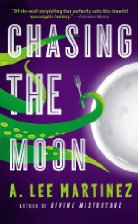
Book Review: Chasing the Moon by A. Lee Martinez (Audiobook narrated by Khristine Hvam)
 Summary:
Diana doesn’t have much going for her–a bad job and perpetual unwanted singledom, plus she’s been sleeping on friend’s couches since losing her apartment. So when a room in a building with a quirky landlord shows up, she grabs it instantly. Only to discover that a monster called Vom the Hungry is in her closet waiting for her to let him out, at which point he will probably eat her. In fact, the whole building is oddly connected to other dimensions full of monsters, creatures, mayhem, and madness….not to mention tentacles.
Review:
I obviously had to read this book. The cover has tentacles on it, and it’s clearly a Lovecraftverse story. These are both basically automatic must reads in Amanda-land.
The storyline is fairly straight-forward as far as the Lovecraftverse goes. There’s a place where the lines between dimensions and reality fade and threaten mere humans with madness. The monsters that Diana meets within her own apartment are fairly creative. There’s Vom the Hungry who is pretty endearing, there’s the hedgehog looking guy (whose name I can’t remember and can’t look up because: audiobook) who spawns copies of himself when he’s upset, and of course there’s the giant floating eye with tentacles who tries very hard to be prim and proper. They’re creative and funny.
The foes–the cult of the moon god–are not so creative. They’re your typical moon-loving shapeshifters, and the moon god even has three forms just like a certain other god of a religion we’re all familiar with. Compared to the creativity of the apartment and the apartment’s monsters, it just doesn’t feel like a worthy foe.
Similarly, although I liked Diana and the world she’s living in, she has basically no backstory. I have a hard time believing she’d have such an easy time mostly abandoning her friends and family from her time prior to the apartment. I can believe she’s not afraid and can handle the horrors, but it’d be nice if we got at least a toss-up to the concept of her having a family or even a mention of estrangement from them, if that’s the case. That doesn’t happen, so I was left feeling that Diana is very two-dimensional.
Given these elements, I’m sure I would have skimmed through it very quickly in print and probably missed the humor that it does contain, except that I read the audiobook. The audiobook narrated by Khristine Hvam. And she is an incredibly talented voice actor.
Every single character had their own entirely unique voice, and the voices perfectly matched the character, even an eyeless faceless omnivorous Vom the Hungry. Hvam is just….just so amazing to listen to! I kept listening more to just hear her perform than due to a true vested interest in the story. In fact, I looked up her voice actor page on Audible after just to maybe get another one of her books. She mostly narrates scifi/fantasy, unfortunately mostly YA, which we all know I don’t like. But I will be keeping my eye out for more of her adult work. She is just so amazingly talented.
So, overall then, the story itself rates 3 stars, but the narration rates 5, so my rating must average those two out. Be aware, though, that I recommend Khristine Hvam over the book, but if you are intrigued by the book and don’t mind a lack of backstory or average villains, then I recommend picking the audiobook for twice the fun.
4 out of 5 stars
Source: Audible

 Support my work with a tip or browse my shop for curated book club guides, how to guides, cross-stitch patterns, and more!


This work by Amanda Nevius is licensed under a Creative Commons Attribution-Noncommercial-No Derivative Works 3.0 United States License.
 Opinions of a Wolf