
Archive
Book Review: Gone by Bryan Alaspa
 Summary:
A newly formed company’s owners decide that what the small group of employees need is a bonding camping trip. Bear isn’t a fan of camping, but he agrees to go along anyway. When the site is more rural than he was anticipating, he starts to question his decision. When they wake up the first morning and find one member of the party missing, he’s sure he made a mistake coming camping. On each successive morning, another camper is gone. Who is taking them and why?
Review:
I picked this up, along with seven other books, during Smashwords’ 2012 Summer/Winter Sale. I’ve always enjoyed the classic horror trope of we-all-go-to-the-woods-and-shit-gets-real, so I was intrigued to see what Alaspa did with it. There’s enough different in the plot to keep you reading, in spite of some awkward sentence-level writing.
People disappearing from their tents and leaving their clothes behind, one per night, is a nice subtle change to what one generally sees in the everyone in the woods story. Usually people get eaten by zombies or axe murdered or something obvious. A simple disappearance was different enough that I was genuinely curious as to what was causing these odd disappearances. Added into this are the methods used by whoever is doing the abducting to keep the campers in their campsite. They try to paddle away but the currents mysteriously change. They try to walk away through the woods but the trees attack them, etc… These methods worked within the context of the supernatural seeming disappearances. I also liked that their supernatural experimenters make it impossible for them to get hurt, so they are forced to wait their turn. It all felt a bit like a subtly done allegory for animals in a slaughterhouse, and it kept me reading and engaged.
The only element of the plot that didn’t work for me is that the first person to disappear from the group is also the only person of color in the group. Having the Latino guy be the first one to disappear is so stereotypical and B-movie that I actually cringed. Let poor Carlos be at least the second one to disappear. Or, heck, make him be one of the last ones standing. Getting to play with the regular tropes of whatever genre you write in is one of the benefits of indie writing, so use that to your advantage.
Unfortunately, some of the writing style on the sentence level isn’t up to the same level as the intricate plot. There is quite a bit of telling instead of showing. Not enough trusting the reader to get it. There are some awkward and puzzling sentences in the book as well:
The ground was wet and my hands were damp when I put my hands on it. (loc 616)
The hand turned into fingers and slammed the lids of my eyes closed. (loc 2809)
Additionally, I started counting the number of errors that were clearly not typos, and I got over 30. I fully expect some errors to get through, they tend to even in traditionally published works, but I find anything over 5 to 10 to be excessive and feel more like a first draft than a fully done, ready to publish work.
On the other hand, there are portions of the sentence-level writing that are eloquent and beautiful to read. Particularly, any instance where characters are having sex is quite well-written, and I would be interested to read work from Alaspa focused more on romance or erotica.
When she touched the part of me that was hard and eager I nearly exploded. (loc 1828)
Overall, this book contains a strong horror/thriller plot that will keep the reader engaged in spite of some awkward sentence-level writing and a few too many textual errors. I recommend it to horror readers who are intrigued by the plot and don’t mind these short-comings.
3 out of 5 stars
Source: Smashwords

Book Review: The Shining by Stephen King (Series, #1) (Audiobook narrated by Campbell Scott)
 Summary:
Jack Torrance, a writer and schoolteacher, almost let his temper and alcoholism destroy himself and his family. But he’s joined AA and is determined to get his life, family, and career back on track. When he hears through a friend about a hotel in rural Colorado need of a winter caretaker, it seems like the perfect solution. Spend time in seclusion working on his new play and provide for his family simultaneously. But what Jack doesn’t know is that The Overlook Hotel has a sinister past, and his son, Danny, has a shine. Psychic abilities that make him very attractive to the sinister forces of the hotel.
Review:
The new release of Doctor Sleep

The characterization is the strongest here that I’ve seen in the King books I’ve read so far. All the characters are three-dimensional, but the Torrance family in particular are well-explored. Jack and Wendy (his wife) read so much like real people, because while both make some horrible mistakes, neither are truly bad. Neither had a good childhood or much help to overcome it, and both want so badly to have a good family and a good life but no clear idea on how to do so. Danny, a five-year-old, is handled well as well. He speaks appropriately for his age, not too advanced or childish. The use of a third person narrator helps the reader get to know Danny and his psychic abilities at a deeper level than his five-year-old vocabulary would otherwise allow for. This level of character development is true to a certain extent for the rest of the characters as well and is handled with true finesse.
The plot starts out strong and frightening on a true-to-life visceral level. The Torrance home life is not good, and that’s putting it lightly. Wendy feels she has nowhere to be but with her husband, due to her only relative being her abusive mother. Jack is terrified of turning into his father, who abused his wife and children, and yet he has broken Danny’s arm while drunk. And in the midst of this is Danny, a child with special needs. This was where I was the most engrossed in the story. Before the hotel is even a real factor.
The Overlook is the supernatural element of the story that is supposed to kick it up a notch into horror territory. It is never made entirely clear exactly what is up with the hotel but we do know: 1) there is a sinister force at work here 2) that sinister force is out to have people kill others or commit suicide and join their haunting party 3) for some reason, people with a shine are more attractive to this sinister force as someone to have on board 4) the sinister force extorts whatever weaknesses are present in the people in the hotel to get what it wants. So the sinister force very much wants Danny to be dead, as well as his father and mother, although they are sort of more like side dishes to the whole thing. The sinister force figures out the family dynamics and extorts them by kicking Jack’s anger and Wendy’s mistrust up a notch. It also gets Danny to wander off where he’s not supposed to go. But things don’t really get going until the sinister force possesses Jack. I get why this might freak some people out. The sinister force gets the people to do something they normally would never do. However, personally I found the parts where Jack’s own real shortcomings cause him to do something sinister, like breaking Danny’s arm, to be so much more frightening. Jack’s regret over his actions and fear of himself are much more frightening because what if you did something like that? Whereas a sinister force is easier to distance oneself from mentally. It’s gory and thrilling but it’s not terror-inducing evil. Perhaps if the things Jack does at the hotel were just things inside himself that the hotel allows to come out, it would still be truly terrorizing. But it is clearly established in the book that the sinister things Jack does in the hotel are due to his being possessed by the hotel. They are not him. This removes a certain amount of the terror from the book.
The audiobook narrator, Campbell Scott, did a good job bringing a unique voice to each character. His pacing and reading of the book was spot-on. However, the production quality of the reading didn’t match his acting. The entire recording was too quiet. I had to crank my headphones up all the way, and I still had trouble hearing the book when walking around the city, which is not normally a problem for me. In contrast, whenever Jack yells, it blew out my eardrums. Some better sound balance was definitely needed.
Overall, this is a thrilling read that begins with a terrifying focus on overcoming flaws and bad dynamics from the family you were raised in then switches to a less frightening focus on a sinister force within a hotel. It thus ends up being a thrilling read but not a terror-inducing one. Those seeking a thrilling tale with well-rounded main characters being threatened by the supernatural in the form of ghosts and/or possession will certainly enjoy it. Those who are less frightened by the supernatural might enjoy it less. I recommend picking up the print or ebook over the audiobook, due to sound quality.
4 out of 5 stars
Source: Audible
Series Review: The Monstrumologist Series by Rick Yancey
Introduction:
I post series reviews after completing reading an entire series of books. It gives me a chance to reflect on and analyze the series as a whole. These series reviews are designed to also be useful for people who: A) have read the series too and would like to read other thoughts on it or discuss it with others OR B) have not read the series yet but would like a full idea of what the series is like, including possible spoilers, prior to reading it themselves or buying it for another. Please be aware that series reviews necessarily contain some spoilers.
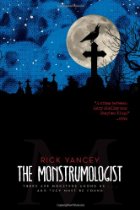 Summary:
A nursing home contacts a researcher. An elderly man has passed away. He identified himself to them as Will Henry, but they can’t find any record of him or living relatives. He left behind four folios, telling what he claimed to be his life story. The first folio begins when his parents die in a fire, and he is left in the care of his father’s employer, Dr. Warthrop. In the 1800s. Over 100 years ago. And Dr. Warthrop is a Monstrumologist. He specializes in the study of aberrant biology, or monsters. And Will is now his apprentice. The first thing Dr. Warthrop tells Will is that Will Henry contracted a parasite from his father. Normally deadly, he is mysteriously a safe host. The parasite will make him abnormally long-living, and any contact that is too close will make him pass it along to another.
What follows over the course of the folios is the tale of the monsters Will Henry faced alongside and because of Dr. Warthrop. The anthropophagi–headless creatures with mouths in their stomachs. The wendigo–similar to a werewolf. The Typheus Magnificum–the Holy Grail of Monstrumology that may or may not exist. And finally the Titanoboa Cerrejonensis–a giant snake. There are these monsters, yes. But there are also the questionable choices and personalities of the various Monstrumologists, and the slowly unwinding monster inside a boy who has seen too much and been loved too little.
The question left for the researcher is how can Will Henry continue along an increasingly dark path when all signs indicate he eventually happily married his childhood sweetheart? And are these ramblings true or just the fairy tale of an elderly man?
Monsters and madness encircle Will Henry, Dr. Warthrop, the researcher, and the reader as the folios slowly reveal all.
 Review:
There is a lot going for this series that makes it unique and highly recommendable, particularly among its competitors in YA.
It’s horror based in the realms of science and the grotesque. Wanton blood and guts, serial killers, etc… won’t be found but it also doesn’t shy away from bits of the criminal underworld or real bodily danger. Will Henry loses a finger at one point. The monsters are real and frequently either eat people or turn people themselves into monsters. It combines to elicit horror in the reader in the tradition of Frankenstein. It’s perfect for readers who shy away from slashers or crime novels but still want a dash of terror.
In lieu of a romance, the relationship at the center of the series is between Will and his guardian, Dr. Warthrop. Yes, the series repeats the common YA trope of an orphan, thereby getting rid of the parents, but just because there are no parents doesn’t mean that there’s no guardian/young person conflict. In fact, I think that having the conflict be between Will and a, to him, incomprehensible older guardian allows for a more free exploration of the difficulties that can arise in this relationship. The fact that Dr. Warthrop is not his father means that Yancey is freer to quickly move into the mixed emotions and misunderstandings that can so easily happen in this type of relationship. Dr. Warthrop has many flaws as a guardian, but he does truly love and care for Will. Will at first feels lost and no connection with Dr. Warthrop, then he grows to love him in spite of his flaws, then he slowly starts to loathe him. Whether or not this loathing is warranted is left up to the reader to decide, and I do think that Yancey succeeds at making it a gray area that each reader will reach a different conclusion on. This relationship gets just as much, if not more, time as the monsters, and it’s one of the things that makes the series worth reading.
 Yancey isn’t afraid to not just use, but embrace poetic language and literary allusions. I was truly stunned at the beauty of the language when reading the first book, and that beauty continues throughout the series. It’s like reading an old, Gothic novel, setting the perfect tone for the world building. A YA reader who perhaps hadn’t previously experienced narration like this might after reading it be inclined to seek out similar writing, thus finding some classics. And even if they don’t, it’s a wonderful change of pace for YA.
Setting the story of Will and Dr. Warthrop in the context of the mystery of the modern elderly man, his folios, and the researcher looking into them lends an extra layer to the story that increases its complexity. The researcher is just as curious as the reader to find out more. He also provides some necessary historical facts and questions the veracity of some of Will Henry’s statements. Throughout the series, the researcher is wondering if this actually happened or if it’s all just the imaginings of an elderly man. The ultimate reveal still leaves this a bit of a mystery, letting the reader decide for themselves what they would prefer to be the answer.
The strength of the monsters varies throughout the series. Some are perfectly crafted, such as the anthropophagi. Others can be a bit less frightening or too predictable to be as engaging. This definitely lends to an uneven pace of suspense in the series and could be disappointing to a reader who is more invested in monsters than in the character development.
 The ending. The ending must be discussed. *spoiler warning* Will Henry in the last book has turned into a dark, lawless, desperate character. He has been changed by what he has seen. His childhood sweetheart, Lily Bates, finds him frightening and lacking in morals. He blames Dr. Warthrop for all of his issues. While Dr. Warthrop definitely is at fault for not treating Will Henry like an adult and keeping him in the loop for his schemes, Dr. Warthrop also never taught Will to be so cold, desperate, or that it’s ok to wantonly kill. Will ultimately goes on an opiate and sex binge in a prostitution house. Dr. Warthrop finds him and pulls him out, in an attempt to save him. It is then that Willl finds out that the parasites he is infected with will spread with sexual intercourse and kill his partner in a truly grotesque manner, eating them from the inside out. Will gives up on Dr. Warthrop and all relationships and proceeds to travel the world aimlessly. The researcher ultimately discovers that Will later runs into Lily with her new husband. It is then that he reveals that Lily’s husband’s name was Will Henry, and he stole it as a pseudonym for these stories. So he never married Lily. Was never happy. He is now nameless. It’s an incredibly dark ending that leaves the researcher, and the reader, reeling. It was honestly a bit too hopeless for me. It felt as if Yancey was saying Will got sucked down into the monsters in his soul and could find no escape. I prefer to have a bit more hope in the world than that, particularly after spending four books with a character and growing to care for them. *end spoilers*
While I can still appreciate what Yancey was doing and what he was going for–a truly dark book–I feel that any potential readers or gift givers should be aware that it starts dark, gets darker, and there is no light at the end of the tunnel.
There is also a bit of a dearth of female characters in the series. In the two middle books, we get brief exposures to Dr. Warthrop’s old sweetheart and Lily Bates. That’s pretty much it. I’m ok with that, since much of the time is devoted to Will Henry and Dr. Warthrop. I also understand that the time period in which it is set definitely would not have had a female monstrumologist. I think Yancey tries to make up for this by having Lily be determined to be the first female monstrumologist, but I also think he steps back from this plotline in the final book, which disappointed me a bit. Essentially, be aware that if you’re looking for a strong female presence in the plot of your series, look elsewhere.
Overall, this is a unique series that deserves to be in any YA collection. It address young adult/guardian relationships in the rich wrapping of Gothic style horror narrated with a beautiful poetic language. Its historical setting and focus on the boy and his guardian doesn’t lend itself to a strong female presence in the series, although the female characters that do exist are good ones. Its darkness increases throughout the series, so don’t come into this expecting a happy ending. I’m pleased I took the time to read the entire series, and could see reading it again. Recommended to both YA fans looking for something different and Gothic horror fans who don’t normally do YA.
4.5 out of 5 stars
Source: Gift, Audible, and Amazon
Books in Series:
The Monstrumologist
The Curse of the Wendigo
The Isle of Blood
The Final Descent
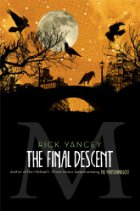
Book Review: The Final Descent by Rick Yancey (Series, #4)
Summary:
The man investigating the folios found with an elderly man who claimed to be over a hundred years old and named Will Henry has reached the final folio containing what this elderly man claimed to have been his life story. The final folio is discombobulated and poetic, and so the investigator arranges it for us to read following the style of Dante’s Inferno. And what a story it tells.
Will Henry is now a bitter, cold teenager still serving Dr. Warthrop. When a man shows up at the door claiming to have a previously thought extinct monstrous snake’s egg for sale, Will Henry takes the acquisition into his own hands. When they bring the egg to New York City for the annual meeting of Monstrumologists, Dr. Warthrop begins to question Will Henry’s loyalty, and Will Henry increasingly ignores all advice, going off on his own bloody ideas. What direction will Will Henry’s and Dr. Warthrop’s lives ultimately take?
Review:
There were hints throughout the Monstrumologist series that it was going to continually descend to a dark place. But I must admit I was slightly fooled by the idea put forth multiple times that Will Henry at least for part of his life is happily married. I thought there would be a glimmer of hope in the ending. Boy was I wrong. This is an incredibly dark book, and a series ending that surprised me. While still a strong read, it didn’t hold all the all-encompassing power and grotesque beauty I found in the first two entries in the series.
Yancey takes the poetic language found in the first three books and kicks it up a notch with the inclusion of the Dante-styled method for dividing the book into sections. Beyond that, the language itself becomes increasingly poetic. One line that is repeated a few times throughout the book is:
Time is a line. But we are circles. (page 4)
I found both the structure and the language interesting and gorgeous, and I really appreciate their inclusion in YA literature. I can imagine that many of the younger readers of the book might never have read Dante and seeing this structure in this book might spur them on to check it out. One thing that I’ve enjoyed throughout the series is that Yancey doesn’t shy away from challenging YA readers, and I’m glad to see that continued here.
The monster in this story is delightfully terrifying. An egg that hatches a snake that eats its prey from the inside out? There’s nothing not terrifying about that. Plus the monster is revealed early on, a nice change of pace from The Isle of Blood
The plot is quite complex, and yet also makes sense when various aspects of it are revealed. It also manages to still be fresh, even though The Curse of the Wendigo
The book spends a lot of time wondering both what makes a monster and if madness can be avoided or escaped. The first is a question addressed earlier in the series, and I think Yancey deals with it eloquently. The second takes quite a dark turn in this book, and I was left feeling empty, hopeless, and saddened.
Madness is a wholly human malady borne in a brain too evolved—or not quite evolved enough—to bear the awful burden of its own existence. (page 170)
It’s certainly valid to view madness as an inescapable pariah for some. I suppose I just have more hope for the world than that. That’s what left me disappointed with the ending. I wanted more hope. Other readers might be less bothered by the tragic end.
Overall, this is a strong final entry in the acclaimed Monstrumologist series. The poetic language is beefed up with a Dante style structure, and the plot is complex, following the ultimate impact on Will Henry of growing up as Dr. Warthrop’s apprentice in Monstrumology. Some readers may be disappointed or overly saddened by the ending lacking a glimmer of hope but others will enjoy its incredibly dark turn. Readers of the previous three books should not miss this one.
4 out of 5 stars
Source: Amazon
Previous Books in Series:
The Monstrumologist
The Curse of the Wendigo
The Isle of Blood
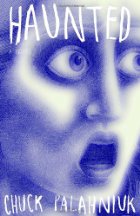
Book Review: Haunted by Chuck Palahniuk (Bottom of TBR Pile Challenge)
 Summary:
A bunch of people sign up, individually, for a writer’s retreat. Telling no one where they’re going, they vow to write the next great American novel. They wind up locked away in the opposite of the lap of luxury, however. Trapped in a dusty old theater, they quickly become focused on an entirely different type of story. What happens to these writers is interspersed with poetry about each person and short stories written by each of them while locked in the retreat.
Review:
I am a huge Palahniuk fan. Fight Club
I struggle with short story collections. I like them to be all connected somehow, even if it’s just by theme, so at first I really liked the idea of a collection of short stories written by people at a writer’s retreat. It’s a good idea, but it’s not executed very well. The short stories are awesome! The connecting bits of narrative aren’t so much. Basically, the writers decide that they should spin what happens at the retreat to be as horrible as possible to help get a movie deal out of it after the fact. So they focus on twisting the facts and committing atrocities against themselves and each other to make for a better story. I totally got what is being said about writers procrastinating by making drama in their own lives instead of actually writing. I liked that part. But there also wasn’t enough realness in the connecting bits to keep me interested. I found myself dreading them whereas I really enjoyed the short stories, which made for an uneven reading experience.
One of the short stories contained in this collection is Palahniuk’s famous “Guts.” The one that makes people faint. (Palahniuk has made it available online for free here). This was definitely the best short story in the collection, and I can see why it became so famous. It also sets the tone for a lot of the stories in the collection. There’s one with people randomly getting smashed in a city. There’s also one about the possible origins of the Sasquatch myth. My second favorite after “Guts” was actually about an inn near a hot springs in the mountains. That one grossed me out *almost* as much as “Guts,” and also had something deeper to say, I think. All of this is to say that if you read and enjoyed “Guts,” you’ll like the short stories in this collection. They’re gross, horrifying, and stick with you.
Overall, it’s an interesting idea for unifying a short story collection. Ultimately, though, I would have liked it better as a straight-up short story collection, maybe even including the writer’s retreat as a short story by itself. This fact might make me rate the book lower, but the inclusion of so many high quality short stories keeps the book itself rating highly. Grab this if you’ve read and enjoyed “Guts.”
3.5 out of 5 stars
Source: Brookline Booksmith

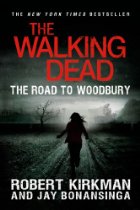
Book Review: The Walking Dead: The Road To Woodbury by Robert Kirkman and Jay Bonansinga (Series, #2) (Audiobook narrated by Fred Berman)
 Summary:
Lilly Caul’s father shoved her into a bus escaping town just as the doors were closing. They closed on him and zombies ate him while she watched. Haunted by the feeling that everyone caring for her puts their own lives in danger, she’s struggling to survive among a rag-tag group of survivors, including her high school friend, Megan. Slowly her small group of friendly survivors, headed by a big strong black man, Josh Lee, who has feelings for her, breaks off from the main group and find their way to Woodbury. There, the sinister side of the town gradually reveals itself.
Review:
My understanding of this print companion series to the graphic novel one was that it was going to follow the life of the villain The Governor. The first book told the backstory of The Governor and brought him to Woodbury, so I was expecting a book showing how he came to rule the town with an iron fist. Instead this entry covers the backstory of Lilly Caul, and how she comes to Woodbury. Although it’s always fun to visit this post-apocalyptic land that Kirman and Bonansinga have created, this entry just didn’t have the energy and appeal of the first book in the series.
I have to admit, although I recognized the name Lilly Caul, I couldn’t for the life of me remember who she was at first, so I spent quite a bit of time scratching my brain trying to figure out why we were following her around. I finally remembered that she’s one of the gang of Woodbury folks who go head-to-head with Rick Grimes’s gang in the graphic novels. A check of the wiki reminded me that she’s the one who shoots and kills Lori and Judith. Eh, this explains why I have no strong feelings about her. I hated Lori and felt nothing about Judith, so I certainly didn’t view her as a memorable villain. I now get it that the series is trying to show how all of Woodbury happened, not just the tale of The Governor. But the thing is that if you could tell the story of a compelling figure like The Governor why talk about the girl next door? It made for a boring book. There is nothing extraordinary about Lilly. She’s just a cowardly girl trying to survive an apocalypse, and she does it by leeching on to people who care for her but she seems to be lacking the ability to truly care about anyone besides herself. She also spends a lot of time slut shaming her “best friend” Megan, which pissed me off to no end. So we have a woman playing with people’s hearts for protection but simultaneously judging Megan for sleeping with people for protection. Yuck. Given all of these aspects of her character, I also found it really unbelievable that she would *spoiler warning* lead a rebellion against The Governor. *end spoilers*
When we finally do get to Woodbury, The Governor is already in charge, although he has yet to call himself The Governor. We do get to see what led to the establishment of the gladiator-style arena with the zombies, and we also see more reasons as to why the town folk trust and respect him. But we see all of this through Lilly, Megan, and Bob’s eyes. I honestly wanted to know more of the inner workings of The Governor, so I found this third person perspective disappointing.
There’s nothing new or ground-breaking in the horror. There is one massive swarm of zombies that is clearly supposed to be terrifying, but it did nothing for me. Maybe I’m just getting acclimated to this world, but neither the characters nor the level of horror increased the intensity enough for me.
That said, even though I didn’t enjoy which characters were focused on or how the plot was constructed, we do learn more about the world of Woodbury, and the post-apocalyptic world in general. We learn how and why the gladiator ring started, how The Governor won people over, and more about how the weather impacted the survivors on that particular winter. Long-time fans will find value in reading this book, even though it is by no means a thrilling or thought-provoking entry in the series. Skim it quickly to get the important bits and move on. For that reason, I would recommend the print over the audio, in spite of Berman’s talent as a narrator. He was better than the book he was given.
3 out of 5 stars
Source: Audible

Previous Books in Series
The Walking Dead: Rise of the Governor
Book Review: The Curse of the Wendigo by Rick Yancey (Audiobook narrated by Steven Boyer) (Series, #2)
Summary:
Will Henry, 12 year old orphan and assistant to renowned Monstrumologist, Pellinore Warthrop, is shocked to find a refined woman on Warthrop’s doorstep. She is the wife of Warthrop’s best friend who has now gone missing in rural Canada while looking for the elusive wendigo (aka werewolf). Warthrop insists that there is no such thing as a wendigo, but he agrees to go looking for his missing friend anyway, even if he believes his mission was ridiculous and an affront to monstrumology’s reputation.
Review:
I can’t believe it took me this long to get to the sequel of one of my rare 5 star reads, The Monstrumologist
Yancey does something brave for a second book in the series. Instead of following the formula that worked so well in the first book and basically doing a monster-of-the-week-in-our-town method like Buffy and so many other urban fantasies, he changes things up. There is a monster, yes, but it is entirely different from the first one. This is a monster that might not even exist, unlike the anthropophagi in the first book who are almost immediately clearly real. Additionally, Warthrop and Will must travel away from New England to go looking for the trouble. It does not come to them. Another good plot twist is that the story does not entirely take place in Canada. It moves to New York City. Thus we get both the dangers of the wilderness and the dangers of the city in one book. These plot choices mean that what makes this series a series is the characters, not the fantastical nature of their world. By the end of the book I was thinking of the series in terms of the relationship between Will and Warthrop, not in the context of what nasty beast we might meet next. It thus does what great genre fiction should do. It looks at a real life issue and dresses it up with some genre fun. And the issues addressed here are big ones. What is love and what should we be willing to sacrifice for it? Is it more loving to stay with someone at all costs or to let them go to protect them? At what point do you give up on someone?
The horror certainly felt more grotesque this time around, although it’s possible I just wasn’t remembering the anthropophagi that well. This is a bloody book full of horrible things. Precisely what I expect out of my genre. There’s not much more to say about the horror than keep it up, Yancey. Also that this might not be for you if blood and guts and profanity are not your thing. But they *are* mine and, oh, how well they are done here.
Just as with the first book, the language Yancey uses is beautiful. It’s rich, eloquent, visual, and decadent. It’s a word-lover’s book. An example:
But love has more than one face. And the yellow eye is not the only eye. There can be no desolation without abundance. And the voice of the beast is not the only voice that rides upon the high wind….It is always there. Like the hunger that can’t be satisfied, though the tiniest sip is more satisfying than the most sumptuous of feasts.
Stunning.
The characterization here remains strong for Will and grows much stronger for Warthrop. Will grows and changes as a 12 year old in this time period in his particular situation would be expected to. With Warthrop, though, we get a much clearer backstory and motivations for his actions. In the first book we came to know Will. In this one we come to know Warthrop, although Will is not left without any development. It’s a good balance. I also enjoyed the addition of two female characters, who I thought were well-written, particularly Lily, the budding young feminist determined to be the world’s first female monstrumologist. She is truly three-dimensional in spite of her rather limited screen-time compared to Will.
The pacing doesn’t build steadily from beginning to end. It rather builds to a first climax, comes back down and builds again to a second climax. This makes sense, particularly in a werewolf book, but I must admit it felt a bit odd in the moment. It almost felt like reading two books in one until it all came together in the end. In fact, this is one of those books that gets better the more you look back on the story as a whole. Be prepared to enjoy it more in retrospect that in the first reading.
The audiobook narrator, Boyer, has a tough book to work with. There are a wide range of characters of multiple nationalities to act out (Canadian, German, French, New York, Massachusetts, etc…). Additionally, at least three different languages are spoken (English, French, and German). I’m not fluent in anything but English, but I did take German in university, and I can say that his German accent is at least passable. He also does an excellent job creating a unique voice for each character. I only rarely got lost, and that was generally due to rapid-fire conversation where each character only had a word or two. I must say, though, that he does mispronounce a few words, which detracts from Yancey’s gorgeous writing. I blame the audiobook director for this, though. S/he should have realized and corrected this. Overall, though, the mispronounced words are only in a couple of locations and do not deeply affect the reading of the book.
Overall this is an excellent follow-up to a remarkable first book in the series. It brings to the table that which made the first so powerful: YA horror with rich language set in a historic time period. But it also changes things up enough to avoid falling into the monster-of-the-week trap. The entries in the series are part of a larger story, and that can be seen. Fans of the first book should pick up the second book asap.
5 out of 5 stars
Source: Audible

Previous Books in Series
The Monstrumologist
Book Review: Dagon by Fred Chappell (Bottom of TBR Pile Challenge)
 Summary:
Peter doesn’t know much about his father’s side of the family as his mother left him when he was little. Now, a married pastor, he returns to his father’s parents’ house, a recent inheritance. Slowly he discovers the cultist history of his family and begins his descent into madness.
Review:
There aren’t that many books in the Lovecraft mythos, so when I spot one, I almost always add it to my wishlist and pick it up if I spot it. (I’m a big fan of the mythos, and my current work in progress is set in it). I spotted this one during one of Better World Books’ periodic sales and got it for just a couple of dollars. The problem with the world of Lovecraftian horror is this. The mythos is great, but a lot of the books/movies set in it are a swing and a miss. Which is sad for me as a reader, because I know that this is an author with the same funky interest as me, so I want it to work. I want it to work very much. It just doesn’t always. This, unfortunately, falls solidly in the swing and a miss category for me.
The germ of the story is a great idea. An ostensibly mainstream “good” man following his roots and falling into a dark god worshiping cult. Brilliant. The execution is weak, however. The cover of my copy of the book claims that it is a “novel of blinding terror.” This is just not the case. In some ways I feel that Chappell just tried too hard. The entire first chapter is meant to set the scene with extremely heavy-handed gothic language, but it is just painful to read. The first chapter describes one room of the house. Excessive energy is spent trying to make even the throw pillows seem malicious. It is too over-the-top and becomes laughable. Thankfully, the next chapter abandons the excessive language, but it is still never scary. It is titillating at a couple of points. Engaging as well. But never terrifying.
Part of the problem is that the book fails to build suspense from beginning to end. It builds up in part one to a singular event, but then immediately crashes back down to a period in part two in which Peter lies around in a depressed funk. While this might be realistic, it does nothing to build the suspense. The suspense thus must start all over again. This may be acceptable in a long work (and even then I’m dubious), but in such a short book it’s just jarring and ruins the suspense.
I also found the ultimate payoff to be a bit disappointing. While we find out one or two things about Peter’s family, we don’t get enough details to truly experience shock or horror. Similarly, the ultimate final descent of Peter was a bit disappointing. He doesn’t engage in any agency or become a committed cultist. A lot of cult things are done to him, but he doesn’t really have the descent into madness promised. He is tortured and made into a slave and has the mental and emotional breakdown such experiences could make someone experience, but he himself doesn’t turn into a raving Dagonite, for instance.
That said, there are some things that worked in the book. As stated previously, the germ of the idea is great. Peter’s nemesis/mentor, the tenant farmer family’s daughter, is delightfully powerful and sinister. A couple of scenes were a great mix of titillation and horror, and the final climax was definitely a surprise.
Overall, then, it’s a book that tries to be a terrifying, gothic horror, but instead is a titillating grotesque bit of southern literature. Fans of the Lovecraftian mythos will appreciate it for this, although the Lovecraftian elements themselves are sparse and a bit disappointing. Recommended for big fans of grotesque, fantastical horror who don’t mind it leaning a bit more toward the grotesque than the scary side of horror.
3 out of 5 stars
Source: Better World Books

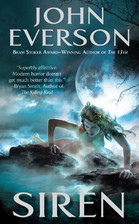
Book Review: Siren by John Everson
 Summary:
Evan walks the seacoast of his small town every night reliving the horror of watching his son drown. But one night he hears a beautiful song and discovers a perfectly naked, perfectly beautiful woman attached to it. As he begins an affair, willfully oblivious to anything about the woman beyond her beauty, he fails to realize he is falling for the siren of Delilah.
Review:
I picked this up during one of the monthly kindle book sales on a whim, and am I glad I did! This book was simultaneously terrifying and electrifying. The flip-flop between fear and titillation was a truly delightful reading experience, and it came with a well thought-out plotline and delicious settings to boot.
Evan is not a likeable guy. In fact, Ligeia, the Siren, is more likable than he is, and she routinely rips people’s throats out with just her teeth. But disliking Evan works for the story. It lets the reader invest in Ligeia and see her side of things. There are ways in which she is a monster, yes, but there are also ways in which she is quite human. Having a deeply flawed male “victim” to her charms allows the reader to see the monster in us all.
Both the horror and the sex scenes are adeptly written. The sex scenes are titillating without being too much, and, similarly, the horrific scenes are grotesque without going too far. The presence of both in the story makes for an ever-changing, exciting read. Similarly, the plot is complex without being overly so and managed to keep me guessing. It also strikes the balance quite well.
I also really enjoyed the light commentary on hunting and eating another species. It provides a depth to the story beyond simply lust leading one astray.
Kind of puts a whole new spin on fishing, doesn’t it? Here you men are always out there reeling in the fish, and here’s a half-fish woman who’s reeling in the men. (page 146)
Of course, there is also commentary on cheating and the other woman. There has to be, since Ligeia is Evan’s mistress. I must admit that that basic plot can sometimes upset me, so I do think it distracted me a bit from enjoying the book as much as I would have otherwise. On a similar note, the ending is not quite what I would have hoped for, although it did make sense in the context of the story.
Overall, this is an interesting mix of horror and erotica that is fast-paced and enjoyable. Those sensitive to cheating as a plot device or explicit deaths may want to exercise caution. Recommended to those who would enjoy their horror and erotica together.
4 out of 5 stars
Source: Amazon

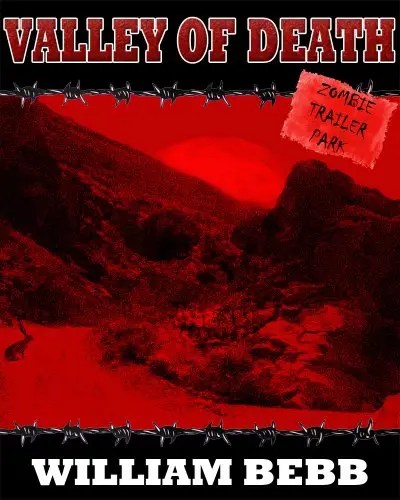
Book Review: Valley of Death, Zombie Trailer Park by William Bebb
Summary:
When Josey arrives a secluded trailer park near Albuquerque to empty their septic tank, it soon becomes apparent that not all is right in the park. In fact, most of the residents have turned to zombies. As Josey’s fight for survival goes on, we meet a quirky cast of survivors, bystanders, perpetrators–and zombies: illegal immigrants who call the valley home, their exploitative factory boss, a WWII veteran and grandpa, his young grandson, a paraplegic Vietnam Vet, a boa constrictor, bicycling missionaries, and many more. Will anyone survive the valley of death?
Review:
I have finally found the exception to my don’t-take-book-recommendations-from-other-people rule: my daddy. My dad texted me and told me he was reading a book about a zombie trailer park and asked if I’d like to borrow it when he was done. I couldn’t turn that down, so he sent his kindle loan to me as soon as he was finished reading it. I knew within the first few pages that my dad had picked a winner. That really shouldn’t surprise me, because, well, it’s my dad, and we’re very similar, but I had been burned a few times with book recommendations recently. Anyway. On to the review!
Bebb’s book is a fresh, engaging take on a zombie outbreak. The origin is a factory error, which is decidedly different from the more usual government experimentation or voodoo approach. It’s great commentary on the exploitative practices of factories, not to mention the exploitation of illegal immigrants, without ever being too heavy-handed or preachy. The zombies are a mix of the rage virus and traditional undead. Before dying they are inexplicably full of rage and will eat almost anything but also when they die they reanimate. It’s a cool mix, and I enjoyed it.
The cast of characters is incredibly imaginative, diverse, and even-handed. People are truly just people (or zombies) regardless of age, gender, or ethnicity. And, really, how many books can say they have a WWII vet, a sewer truck worker, a mechanically talented Latina, a wheelchair-bound obese meth chef, a loyal dog, bicycling missionaries, and a pot-growing paraplegic Vietnam Vet. I mean, really. And none of them are two-dimensional caricatures either. They are all well-rounded and presented with thought and humanity. I also never had that problem I sometimes have in books where you can’t tell the different characters apart. Everyone was entirely unique and easy to remember.
The plot is complex. I honestly did not know how it was going to end, and it maintains a fast pace throughout. I was never bored and was never entirely certain what was going to happen next. That’s coming from a big zombie fan, so I do think that’s saying something significant about the uniqueness of the engaging plot.
What really makes the book, though, is the sprinkling of humor throughout. This type of humor won’t match everyone, but it certainly works for me. I described it to my dad as “Patrick F. McManus with zombies,” but if you don’t get that reference, it’s hard to describe the humor. So, here are a couple of quotes from the book to demonstrate it.
Your average one armed pot growing hermit who just murdered two men might be thinking about a variety of things. (location 2592)
Crazy cop fuckers done bit off my titty! (location 5423)
That second one….oh man. I laugh every time I see it.
So with all this love, why not five stars? Well, much to Bebb’s chagrin, I’m sure, there aren’t enough commas. (His author’s intro states that previous reviews said there were too many and now people will probably think there are too few. Sorry to confirm that suspicion, Bebb!) Compound sentences tend to run on and on with no commas or semi-colons, which can be a bit frustrating to read. Also, the book isn’t quite properly formatted for the kindle. Its display varies from section to section. Similarly, while some sections are clearly divided by a dividing line (such as with tildes “~~~~”), others just have a big gap, which is not what one should use for ebooks. With the variety of ereaders, it’s important to use something besides space as a signal that the reader has entered a new section, since the space can display drastically differently on different readers. It’s best to use something like the tildes between sections. Using empty space is a holdover from print that doesn’t work. Bebb did use the tilde line in some sections, but not all, so there’s also a bit of a consistency problem.
Overall, though, the formatting and comma issues did not distract me from the wonderfully unique and humorous zombie trailer park story. I’m so glad my dad discovered this indie author and passed his work on to me, and I look forward to reading more of it in the future. Highly recommended to all zombie fans, provided you like the type of humor outlined above.
If you found this review helpful, please consider tipping me on ko-fi, checking out my digital items available in my ko-fi shop, buying one of my publications, or using one of my referral/coupon codes. Thank you for your support!
4 out of 5 stars
Length: 363 pages – average but on the longer side
Source: Borrowed
Buy It (Amazon. Not available on Bookshop.org.)
ETA: Had a delightful email convo with the author, and we determined that I read an older version of the book. The current one available should have mostly cleared up editing/layout concerns.
 Support my work with a tip or browse my shop for curated book club guides, how to guides, cross-stitch patterns, and more!


This work by Amanda Nevius is licensed under a Creative Commons Attribution-Noncommercial-No Derivative Works 3.0 United States License.
 Opinions of a Wolf