
Archive
Book Review: Soul Surfer: A True Story of Faith, Family, and Fighting to Get Back on the Board by Bethany Hamilton
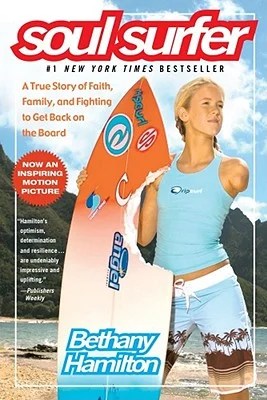
A powerful disability memoir about faith, resilience, and healing after a shark attack.
Summary:
They say Bethany Hamilton has saltwater in her veins. How else could one explain the passion that drives her to surf? How else could one explain that nothing—not even the loss of her arm—could come between her and the waves? That Halloween morning in Kauai, Hawaii, Bethany responded to the shark’s stealth attack with the calm of a girl with God on her side. Pushing pain and panic aside, she began to paddle with one arm, focusing on a single thought: “Get to the beach….” And when the first thing Bethany wanted to know after surgery was “When can I surf again?” it became clear that her spirit and determination were part of a greater story—a tale of courage and faith that this soft-spoken girl would come to share with the world.
Soul Surfer is a moving account of Bethany’s life as a young surfer, her recovery after the attack, the adjustments she’s made to her unique surfing style, her unprecedented bid for a top showing in the World Surfing Championships, and, most fundamentally, her belief in God. It is a story of girl power and spiritual grit that shows the body is no more essential to surfing—perhaps even less so—than the soul.
Review:
In many of the circles I’m in, “recovery” means recovery from addiction. But it can also mean recovery from trauma—and for many of us (studies suggest around 75%), those things are intertwined. That’s part of why memoirs about recovering from trauma resonate so deeply with me. I’m especially drawn to the ones that focus not on the traumatic event itself, but on the response to it—the healing, the resilience, the rebuilding. This is that kind of memoir.
I remember when the news broke in 2003: a teenage surfer in Hawaii had lost her arm to a shark attack. I was in high school myself, and even though I lived in Vermont (far from any waves), I immediately felt heartbroken for her, losing not just a limb, but the ability to pursue something she loved. Years later, when I learned Bethany was not only surfing again but competing professionally, I was stunned—and moved.
Bethany knows that readers will come to her story expecting to read about the shark attack, and she doesn’t shy away from it. But she also doesn’t sensationalize it. It’s described early in the book with striking clarity and calm. There’s no melodrama—just presence, perspective, and truth. It’s a credit to both her and her editorial team that this tone is preserved. Her calm focus in the water (“Get to the beach…”) is echoed in how she writes.
What carries Bethany through, more than anything, is her deep faith. She was a girl of faith before the attack, during recovery, and continues to lean on her faith throughout her life. Her story isn’t preachy, but it is grounded in that spiritual strength. Her family, too—supportive parents and brothers—play a major role, along with a strong friend group that surrounds her in the aftermath.
One of my favorite moments in the book is her description of working with a blind therapist during her recovery. That peer connection—being guided by someone who also lives with a disability—felt powerful and familiar. Coming from the world of recovery, I saw that moment as a type of peer support. Rather than being told how to heal by someone without shared experience, Bethany was supported by someone who understood. It’s a powerful reminder of why peer-based healing matters.
Bethany also takes care to honor Hawaiian culture. As a white surfer growing up in Hawaii, she shares what she’s learned about the Indigenous roots of surfing, respectfully credits Hawaiian words and traditions, and speaks with admiration about her Hawaiian coach. This kind of cultural awareness—especially in faith-based memoirs—is both rare and welcome.
Later in the memoir, she explores what it was like to become famous almost overnight. From media appearances to a Hollywood movie adaptation, Bethany shares the highs and lows with honesty—including awkward encounters with strangers and challenging public questions.
I listened to the audiobook, which includes a charming guitar riff at the end of each chapter—a small touch that added to the overall tone and kept me engaged.
Overall, this is an uplifting, engaging memoir of trauma, recovery, and spiritual grit. It doesn’t just tell the story of a shark attack. It tells how we can recover. If you’re interested in memoirs, faith-based stories of resilience, or narratives about disability and healing, this one’s worth the read.
If you found this review helpful, please consider tipping me on ko-fi, checking out my digital items in my ko-fi shop, buying one of my publications, using one of my referral or coupon codes, signing up for my free microfiction monthly newsletter, or tuning into my podcast. Thank you for your support!
4 out of 5 stars
Length: 222 pages – average but on the shorter side
Source: Library
Buy It (Amazon or Bookshop.org)
Book Review: How Far the Light Reaches: A Life in Ten Sea Creatures by Sabrina Imbler

A powerful blend of memoir and marine biology exploring environmentalism, queer theory, and biracial identity through the lens of deep-sea creatures and personal reflection.
Summary:
A queer, mixed race writer working in a largely white, male field, science and conservation journalist Sabrina Imbler has always been drawn to the mystery of life in the sea, and particularly to creatures living in hostile or remote environments. Each essay in their debut collection profiles one such creature: the mother octopus who starves herself while watching over her eggs, the Chinese sturgeon whose migration route has been decimated by pollution and dams, the bizarre Bobbitt worm (named after Lorena), and other uncanny creatures lurking in the deep ocean, far below where the light reaches. Imbler discovers that some of the most radical models of family, community, and care can be found in the sea, from gelatinous chains that are both individual organisms and colonies of clones to deep-sea crabs that have no need for the sun, nourished instead by the chemicals and heat throbbing from the core of the Earth. Exploring themes of adaptation, survival, sexuality, and care, and weaving the wonders of marine biology with stories of their own family, relationships, and coming of age, How Far the Light Reaches is a book that invites us to envision wilder, grander, and more abundant possibilities for the way we live.
Review:
A queer memoir intertwined with fascinating ocean facts? Yes, please! This is a beautifully written exploration where each chapter examines a unique sea creature and, surprisingly, connects it to the author’s own life.
I learned so much about marine biology in an easily digestible way, and here are three of my favorite facts:
- Octopuses die after spawning and starve themselves while incubating their eggs.
- Hydrothermal vents come and go across the ocean floor, creating temporary ecosystems.
- Selps, a type of jellyfish, move together, but at different speeds.
What really stood out to me, though, was Sabrina Imbler’s introspective and self-aware reflections on their life. As a white person, I was moved by how candid they were about their experiences of being biracial. I appreciated how they expressed that being mixed-race is an identity that doesn’t need to be “resolved”—“I am Chinese. I am white.” This honest exploration of their mixed-race identity resonated with me far more than their exploration of queerness, which, while meaningful, didn’t linger as strongly in my memory. If you’re drawn to memoirs that delve deeper into queer identity, check out my review of A Queer and Pleasant Danger.)
Please be aware that this book addresses the sensitive topics of racism, environmental injustice, and animal abuse. Sabrina also explores an instance of sexual violence they experienced as a youth, reflecting on how it shifted from being a “joke” to something they realized was deeply troubling.
I listened to the audiobook version, narrated by Sabrina themselves, which was stellar. Their narration felt like listening to a close friend, making the experience even more immersive.
Overall, this is an incredibly moving and educational memoir. It’s a unique blend of personal reflection and marine biology, offering readers a fresh way to explore the world. Highly recommended for those interested in memoirs with a scientific twist and a deep dive into the complexities of identity.e of the author’s favorite subjects – marine biology. Recommended to those interested in a unique storytelling method in a memoir, as well as those with a personal interest in marine biology.
If you found this review helpful, please consider tipping me on ko-fi, checking out my digital items available in my ko-fi shop, buying one of my publications, using one of my referral/coupon codes, or signing up for my free microfiction monthly newsletter. Thank you for your support!
5 out of 5 stars
Length: 263 pages – average but on the shorter side
Source: Library
Buy It (Amazon or Bookshop.org)
Book Review: How to Say Babylon: A Memoir by Safiya Sinclair
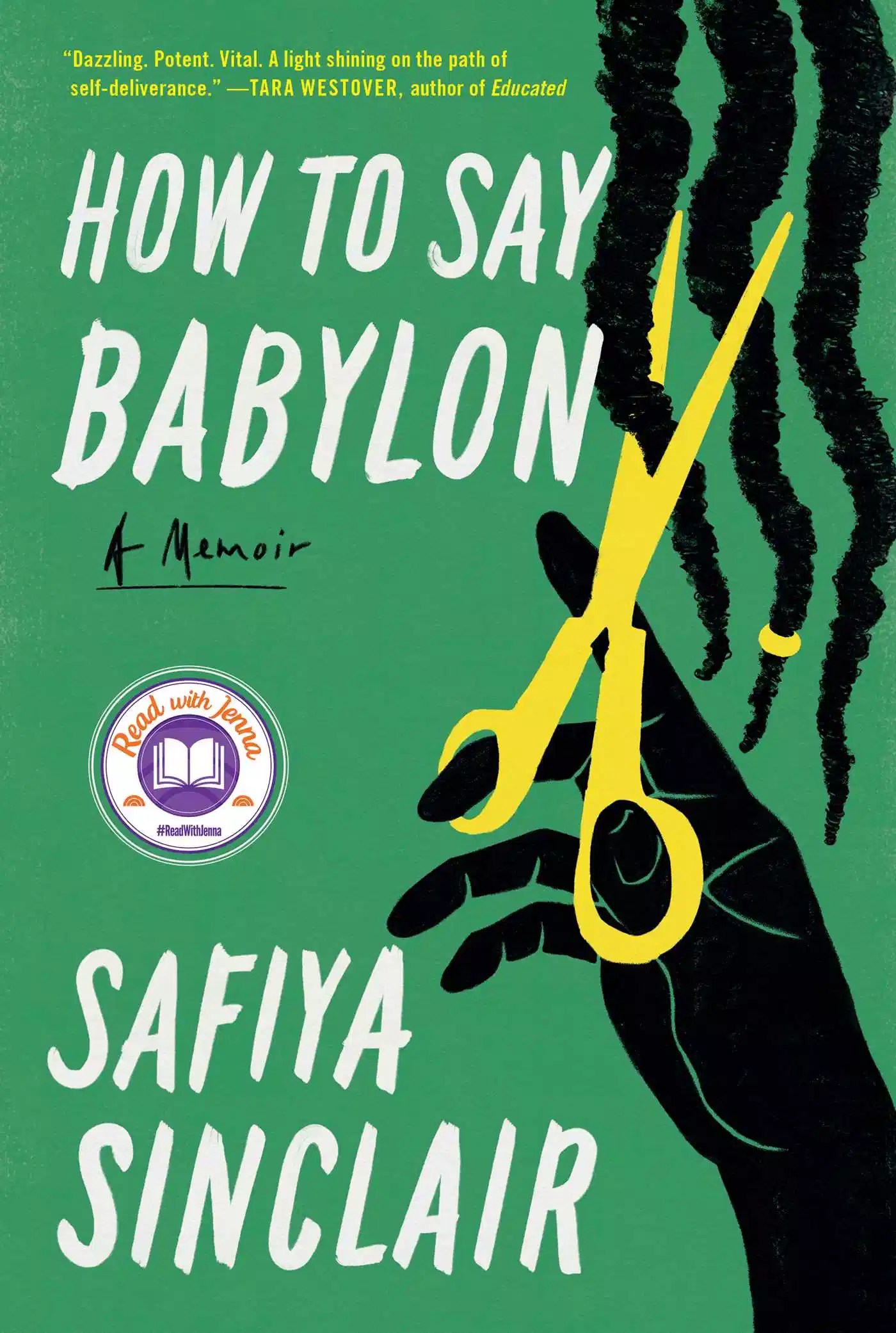
A poet recalls her childhood growing up as a minoritized Rastafarian in Jamaica with an abusive father.
Summary:
Throughout her childhood, Safiya Sinclair’s father, a volatile reggae musician and militant adherent to a strict sect of Rastafari, became obsessed with her purity, in particular, with the threat of what Rastas call Babylon, the immoral and corrupting influences of the Western world outside their home. He worried that womanhood would make Safiya and her sisters morally weak and impure, and believed a woman’s highest virtue was her obedience.
In an effort to keep Babylon outside the gate, he forbade almost everything. In place of pants, the women in her family were made to wear long skirts and dresses to cover their arms and legs, head wraps to cover their hair, no make-up, no jewelry, no opinions, no friends. Safiya’s mother, while loyal to her father, nonetheless gave Safiya and her siblings the gift of books, including poetry, to which Safiya latched on for dear life. And as Safiya watched her mother struggle voicelessly for years under housework and the rigidity of her father’s beliefs, she increasingly used her education as a sharp tool with which to find her voice and break free. Inevitably, with her rebellion comes clashes with her father, whose rage and paranoia explodes in increasing violence. As Safiya’s voice grows, lyrically and poetically, a collision course is set between them.
Review:
I picked this memoir up because I was interested in learning more about Rastafarianism. I was a religious studies minor in university, but Rastafarianism wasn’t something we’d touched on. The beginning of this book really delivered on educating me about the faith.
The memoir starts with a little introduction to Rastafarianism along with a brief history of Safiya’s father’s childhood and her mother’s childhood and what led each of them to convert to Rastafarianism. The religion sprang up in the 1930s as a faith of the most oppressed peoples in Jamaica. There is some disagreement as to whether Rastafarianism is a sect of Christianity or a separate faith entirely. Most Rastas believe that the Ethiopian Emperor Ras Tafari was the second coming of Christ. (In spite of him directly telling Rastas when he visited Jamaica that he was not Christ. Rastas felt that’s something Christ would say.) Just as with all faiths, there is a spectrum of beliefs and observances among Rastas. But there are three that are common.
First that the hair should not be cut, instead left in its natural state, leading them to dreadlocking it. Second, reggae as spiritual music. Third, smoking marijuana for spiritual experiences. Many Rastas are vegetarian, some are strict vegans. (Read more.) Something I found really beautiful was how Rastas adjust their speech, specifically how they will say “the I-and-I” as a reminder that God is indwelling in them. Safiya’s father will sometimes say “the I-man” to clarify when it was something limited to just him, and not him and God. The only thing I knew about Rastafarianism before I read this book was that it was common in Jamaica, so I learned a lot in an easy, beautiful way. The author didn’t just rely on her own childhood understanding of the faith but also interviewed Rasta elders and did some additional reading for the book. And it shows. To me, this was the strongest part of the book.
I thought when I picked this up it was a memoir of religion, but I think after reading it would be more accurate to say it was a memoir about an abusive father/daughter relationship that was at least a bit entwined with religion. So the focus was the abuse, not the religion. But it was necessary to understand the religion in order to understand some of where her father was coming from. Safiya’s father was on the more conservative end of the spectrum with regards to Rastafarianism. (He was also a reggae musician who kept running up against bad luck.) The family were strict vegans. He was more patriarchal and quite concerned about keeping his daughters safe from “Babylon” (the outside influence and dangers) in a way he wasn’t so much about his son.
But there are things that surprised me given the clear conservative lean of the family. The children all go to school. The daughters are encouraged to excel just as much as the son is. (The author even gets into an elite private school on scholarship, something that makes her parents very proud.) The children are allowed to continue living at home, even when they do things that go against the Rastafarian way. For example, the author models and cuts off her dreadlocks. I also was surprised to learn that Rastas were treated poorly in Jamaica while the author was growing up. She’s ridiculed due to being Rasta, and it wasn’t possible for her to pass as no one else seemed to have dreadlocks.
The abuse, though, is quite brutal. I was expecting from the book’s description emotional/spiritual abuse. Those do exist. But serious physical abuse does as well. One chapter titled “The Red Belt” made my chest ache to read. Any reader going into the book should be aware of this. I think some readers will relate to how Safiya deals with her father, and others will struggle to understand it.
The author is primarily a poet. Her work in poetry is what helped her achieve her goal of emigrating from Jamaica. Her poetic skills are evident in this book. I’m sure a reader who loves poetry will connect with this more than I did. I struggle to connect with poetry and so, even though I saw the beauty in the words, I struggled for them to move me. Similarly, while I always love to hear people talk about what they love doing, I didn’t connect with the author’s connection to poetry the way I would if I loved it similarly.
Overall, this is a book that will mean a lot to a reader who loves poetry and is able to read passages about physical and emotional abuse. Readers who like to root for someone to pivot into a life entirely different from how they grew up.
If you found this review helpful, please consider tipping me on ko-fi, checking out my digital items available in my ko-fi shop, buying one of my publications, using one of my referral/coupon codes, or signing up for my free microfiction monthly newsletter. Thank you for your support!
3 out of 5 stars
Length: 352 pages – average but on the longer side
Source: Library
Buy It (Amazon or Bookshop.org)
Book Review: The Woman in Me by Britney Spears

Two years after her conservatorship ended, pop star Britney Spears tells her story.
Summary:
In June 2021, the whole world was listening as Britney Spears spoke in open court. The impact of sharing her voice—her truth—was undeniable, and it changed the course of her life and the lives of countless others. The Woman in Me reveals for the first time her incredible journey—and the strength at the core of one of the greatest performers in pop music history.
Written with remarkable candor and humor, Spears’s groundbreaking book illuminates the enduring power of music and love—and the importance of a woman telling her own story, on her own terms, at last.
Review:
I think it’s important you know what sort of perspective you’re getting in my review. So let me be clear: I am a Britney Spears fan. From the moment I heard the first four notes of …Baby One More Time’s mp3 playing through the tinny speakers on my family’s pc when I was 13 years old, I was enamored – and I hadn’t even seen the music video yet! (And I didn’t for a while.) When I did finally start seeing Britney and not just hearing her, it got even better. Her fashion sense was, to me, spot on. I wanted nothing more than to wear those jeans and bare my midriff like her. (Although, I did not have the body confidence to do so.) Her eyeliner, her music videos, her sound.
Britney’s music was a perpetual backdrop to my rough teens and twenties. I laughed when Oops! I Did It Again mentioned the necklace in The Titanic. I got teary-eyed singing Lucky in my bedroom. I played I’m a Slave 4 U both because I liked it and because it drove my mother insane. I was terrified of snakes, and Britney DANCED with one while performing. I was a closeted bisexual, and when she kissed Madonna, I lost my mind. When she had kids, I was in college. I didn’t understand why she was so excited to be a mom, but I loved that she knew what she wanted so much. Blackout dropped my senior year, and I belted out Piece of Me on study breaks. I listened to Womanizer to make myself feel better when I was lonely in grad school Circus is still on my #GirlBoss playlist I listen to to help hype myself up when I’m doing something that feels scary in my various careers. (I’m on my second.)
When her conservatorship started, I didn’t understand what it meant. I thought she had trouble with her finances, and someone was helping her out. My husband took me to see her at her Vegas residency. I was so excited I threw up in our hotel room right before the show. I feel badly now knowing what she was going through (I did not know then), but I am here to tell you she still put on a phenomenal show for us fans in spite of all that.
When the #FreeBritney movement really started to take off, and I came to understand what a conservatorship actually meant, I joined in calling for her to be freed. I explained to anyone who would listen what was wrong with a conservatorship. And I believe this for anyone, not just for Britney. No one deserves to have their adult agency taken away, regardless of their mental abilities and/or mental health. Anything else is just ableist.
Anyway, that is who is reviewing this memoir for you. A fan who loves Britney for who she is.
The ghostwriters did a very good job of leaving Britney’s voice clearly in-tact throughout the book. It sounds like her. The story is told mostly chronologically from her childhood forward, although there is sometimes some jumping back and forth in some places. If you have read Britney’s Instagram captions, then you have some idea of the general tone of the book. But it has been edited so it is clearer than those. (And with less run-on sentences, and no emojis except in the Afterword.)
What stood out to me the most about the book was these things. First, Britney expresses that being put in the conservatorship caused her to regress sometimes. Essentially, treating her like a child made her act like a child. This is excellent insight, and a reason to not inflict conservatorships on people of any ability level. Everyone deserves to be treated with respect and like an adult. (I’d argue children deserve to be treated with more agency than they are, but that’s another topic for another blog post.) Second, Britney is of the opinion that what happened to her would never happen to a male pop star. How she was infantilized and not allowed space to be weird and creative was largely because she was a woman. Third, Britney feels part of why what happened to her did was because she tries so hard to be a “nice girl” that people end up walking all over her. She talks a bit about Madonna and how, “she demanded power, and so she got power.” (page 101) But that’s not part of Britney’s nature.
Fourth, Justin Timberlake broke up with her via text message then used the break-up to make her into the bad guy and spur on his solo career. Reminder to those who maybe weren’t around at that time – cell phones at that time didn’t let you write long messages. A break-up in a text message would have been necessarily character-limited. It makes it even worse. It seems that Britney was well and truly heart-broken and betrayed and society really piled on her on top of it. I didn’t realize that the paparazzi laws have changed since the early 2000s. I obviously wasn’t a celebrity but I remember how it was. You could see the paparazzi swarming celebrities constantly even in their own photos and videos. I used to wonder how they could stand it. (The answer is: a lot of them couldn’t.) The media was also incredibly cruel. I still have the internalized messages from just being a young woman at that time – and I wasn’t their target.
The magazines seemed to love nothing more than a photo they could run with the headline “Britney Spears got HUGE! Look, she’s not wearing makeup!” As if those two things were some kind of a sin–as if gaining weight was something unkind I’d done to them personally, a betrayal.”
The book makes it abundantly clear that the instigators of the conservatorship were her family. They swept in, claiming to be worried about her but actually wanting to control her. At the beginning of the book, she talks about her family history. How her father’s dad was abusive to him. This same grandfather also locked away her grandmother as “crazy” and left to rot there. The same thing her father tried to do to her. The intergenerational trauma gave me chills.
Ok, so why four stars instead of five? There were a few places where I wanted more. Not about any of her traumas. She has every right to only tell as much as she wants to tell. But some of the business stuff. I wanted to know more. I loved how she told us about what it was like to shoot her first music video and to dance with the snake at the awards show. I wanted more of that. What was it like to kiss Madonna? Why did she? (She says it was her idea, that they didn’t rehearse that way, but not much else.) I wish the ghost writers had nudged her a bit more to put more of those types of anecdotes in the book. Or when they came up to say more. (She says she threw a party with Natalie Portman but essentially nothing about what the party was like.) I wanted to know more about this part of Britney. Her successes, not just her traumas.
A question I was asked when I was seen reading the book was if I think Britney is really mentally unwell. My answer is this: this is a book written by a traumatized person. Britney was traumatized by her family, by the media, by various romantic partners, by the conservatorship. I don’t want to diagnose anyone. But I will say that trauma often leads to C-PTSD. And C-PTSD can often be misdiagnosed as other mental health conditions. So I hope people will keep these things in mind when looking at Britney and give her some grace. I do also think Britney is a simple, trusting person. Those type of people often end up being taken advantage of.
I’m assuming most fans have either already read the book or are (im)patiently waiting for their copy. If you’re on the fence, to you I say, this book is worth the read to explore intergenerational trauma and to dive down into late 90s/early 2000s culture. To be reminded (or learn) how misogynistic it was, even to women who were succeeding by its own rules.
If you found this review helpful, please consider tipping me on ko-fi, checking out my digital items available in my ko-fi shop, buying one of my publications, using one of my referral/coupon codes, or signing up for my free microfiction monthly newsletter. Thank you for your support!
4 out of 5 stars
Length: 288 pages – average but on the shorter side
Source: Library
Buy It (Amazon or Bookshop.org)
Book Review: Elvis and Me by Priscilla Beaulieu Presley and Sandra Harmon

The King of Rock and Roll’s first (and only) wife’s controversial memoir of their time together.
Summary:
Decades after his death, millions of fans continue to worship Elvis the legend. But very few knew him as Elvis the man. Here in her own words, Priscilla Presley tells the story of their love, revealing the details of their first meeting, their marriage, their affairs, their divorce, and the unbreakable bond that has remained long after his tragic death.
Review:
I picked up my library system’s only copy of this book in preparation for the A24 movie coming out this fall directed by Sofia Coppola. I am absolutely dying to see the movie, and I thought I should have read the memoir first. Now, this memoir is pretty controversial, especially in the Elvis fan crowd (who I count myself among.) So my review will be in three parts. First looking at the book as a memoir compared to other memoirs. Second, my thoughts on certain aspects of Elvis and Priscilla as she presents them in the book. Third, looking at the controversies.
As a memoir, this starts out very strong with Priscilla finding out about Elvis’s death, then we immediately get a flashback to when she met him in Germany. The first two-thirds of the book are engaging and engrossing. I could barely put it down. It was an easy read that made me want to know more. I also felt in this portion of the book that Priscilla was giving a fairly even hand to both herself and to Elvis. She was being relatively straightforward about everyone’s strengths and shortcomings. Unlike modern memoirs, which often eschew using dialogue with direct quotes, this is written more like a story with snippets of dialogue sprinkled throughout. This made it more readable but also less believable, because who really remembers exactly what people said decades ago? And I don’t believe that something being a pinnacle moment in your life makes it more likely for you to remember the exact words. I don’t remember my wedding vows I wrote without going to reread them.
The strengths present in the first two-thirds of the memoir are lacking in the last third. Priscilla glosses over big moments in the marriage without much reflection or insight. For example, the first time she has an affair, she essentially just says…then I had an affair. I don’t need the details of the sexual aspect of the affair, but some reflection as to what was the first touch that crossed the line, what made her willing to take the risk to have an affair (especially given how whole-heartedly she’d committed herself to the quest to be Mrs. Presley), etc… There are large swathes of time also that are communicated in just a few sentences. Perhaps distance and time was needed to be able to fully process everything that had happened. Perhaps she should have waited until more time had passed to allow for more meaningful reflection on these years. In any case, the last third of the book almost reads like a different book than the first two-thirds. Or like a different pair of authors wrote it.
Second, here are some things that were newly revealed to me in this read as an Elvis fan that I didn’t know before and that some research confirms seem to be accepted as true. Elvis talked a form of baby talk in his intimate relationships. (This has been confirmed by other women he was romantically involved with). Priscilla says this was similar to how Elvis spoke with his mother Gladys. I’m sure a lot of people speak in a special way with their significant other (look at how “bae” has entered the lexicon). I guess I’m just surprised that these women were willing to talk about it. I also learned that Priscilla suggested that Elvis burn his philosophy books after the Colonel ordered him to back off on it. Elvis acquiesced and did so. Earlier, he had told Priscilla that his soul mate would be interested in the things that interested him, even though she had no interest in the philosophy books at all. Both of these situations show how emotionally immature the two of them were in dealing with each other. Instead of building a healthy relationship built on two separate individuals who mutually respect each other, they each had strong expectations of how the other would behave. Priscilla didn’t want Elvis the spiritual guru. She wanted Elvis the rock star. Elvis didn’t want Priscilla to have a life of her own in addition to her life with him. He wanted her to be a side-kick at his beck-and-call.
Of course, the relationship started off on the wrong foot. Which leads me right into the controversies. I knew going into this that Priscilla was 14 and Elvis 24 when they met and began their relationship. Some fans think this is no big deal. Others think Elvis groomed Priscilla. Certainly passages in the book sound very much like grooming.
When we met, I had just turned fourteen. The first six months I spent with him were filled with tenderness and affection. Blinded by love, I saw none of his faults or weaknesses. He was to become the passion of my life. He taught me everything: how to dress, how to walk, how to apply makeup and wear my hair, how to behave, how to return love–his way. Over the years he became my father, husband, and very nearly God.
page 15
I find the folks who defend Elvis by talking about how they think Priscilla manipulated her way into being Mrs. Presley to be honestly abhorrent. She was ten years his junior and just 14 years old when they met. Even if we imagine that Priscilla was a super-fan hoping to be Mrs. Presley, as the adult in the situation who was also mega-famous and rich, he had all the power. Did Elvis really feel a true connection with Priscilla (that he should have ignored as she wasn’t an adult yet), or did he just identify a teenager he could partially raise into being exactly the type of wife he wanted? No one will ever know that for sure. Only Elvis knows. But I think it’s absolutely clear that the way in which the relationship started made it impossible for them to have a healthy marriage.
Some people say that Priscilla lies throughout the book. The main source of these accusations seems to be from Suzanne Finstad’s book Child Bride. She says she has recordings of interviews with Priscilla in which she admits to exaggerating in her memoir, but these tapes have not been released so no one can verify this. Priscilla won a defamation lawsuit against Currie Grant for his claims in this book but, interestingly, never sued Suzanne Finstad or the publisher. I haven’t read this book but I do think if the author has interviews with Priscilla backing up what the book says it would be interesting for her to release them.
At the end of the day, this memoir is an engaging read that further highlights aspects of Elvis that other biographies and memoirs I’ve read agree on. He kept a completely flipped schedule (up at night and asleep in the day) facilitated by downers and uppers. He had a short temper and yet was a consummate professional and a gentleman when he was working. He was almost always surrounded by his entourage. He never got over the death of his mother. The Colonel controlled his career in such a way that he didn’t get to pursue the artistic work he wanted to, and yet, he also allowed the Colonel to control these things because he was afraid of what would happen if he lost the fame and the ability to make the money. All in all an interesting entry in the mosaic that makes up outsider perspectives on what Elvis was like, a man who left behind no journals and very few letters.
If you found this review helpful, please consider tipping me on ko-fi, checking out my digital items available in my ko-fi shop, buying one of my publications, or using one of my referral/coupon codes. Thank you for your support!
4 out of 5 stars
Length: 320 pages – average but on the longer side
Source: Library
Buy It (Amazon or Bookshop.org)
Book Review: Appalachian Zen by Steve Kanji Ruhl

A memoir written throughout one man’s life looking back on his childhood in the Appalachian region of Pennsylvania and following his journey to becoming a Zen Buddhist minister in Massachusetts.
Summary:
Edgy, lyrical, and lovingly rendered, this book recounts how a kid from a Pennsylvania mill-town trailer park grew up—surrounded by backwoods farms and amid grief, violence, and passionate yearning—to become something a Buddhist minister teaching Zen. Throughout the book, Ruhl engages Buddhist themes of awakening and the death of the self by confronting the lives and deaths, including two by suicide, of his loved ones. This provocative memoir tells how it feels to practice Zen, and to move toward a life of hard-won forgiveness, healing, and freedom.
Review:
As a woman who grew up in the hills of Vermont, I’ve felt an affinity for other hill folk throughout my life, but especially ones who struggled with the local culture and left looking for something else. The title of this book drew me in instantly when I saw it on my library’s new book shelf, and I brought it home after quickly verifying it was, indeed, about both Appalachia and Zen Buddhism.
I’ve read a lot of memoirs and a lot of Buddhist books in my day. But I’ve never read a book that’s both. I’ve also never read a memoir that was written over decades. That’s something that fascinated me about this memoir – Ruhl actually wrote large section of it while he was living through those moments. Of course, some parts, like looking back on his childhood, were written in retrospect, but others were written in the moment. Thus, Ruhl’s own voice and perspective changes over the course of the memoir in ways I found fascinating. Perhaps the most noticeable to me was how he moved from exoticizing Japan a bit when he first visited to beautifully articulating why that needs to be avoided as an American Zen practitioner later in the book.
Ruhl beautifully articulates what it feels like to grow up rural white poor, how that culture is beautiful and painful simultaneously, and, similarly, how it is both a relief and an ache to leave and live elsewhere. I thought this book would pair nicely with reading Limbo: Blue Collar Roots, White Collar Dreams (review). As part of his training, Ruhl went back to Pennsylvania to bring Zen to these hills. I was so excited about this part of the book because I find the idea of Buddhist ministry to the rural parts of the US like where I grew up so fascinating. But unfortunately the book had very little to say about it. That disappointed me. I wanted to know more about how he felt going back, what it was like to be back as a forming Zen minister, and how people in the area responded to Zen. It seemed to me that he was quite motivated to go back and do this work and then after his training he, instead, returned to Massachusetts. I realize that even memoirists get to hold parts of themselves and their journey private. But in a book called Appalachian Zen, I felt like it wasn’t unreasonable of me as a reader to expect more clarity about what happened here. Even if something simple and straightforward was said like…I realized that type of ministry wasn’t for me.
In contrast the author is exquisitely honest when discussing the suicides of two women he loved dearly – his sister and a close friend (former girlfriend). This part of the book moved me so much, I could only read it a few pages at a time. The author reveals the full spectrum of grief, including guilt, and even includes some excerpts from his ex-girlfriend’s journals, which she mailed to him just before she committed suicide. This is one of the most raw and honest accountings of being bereaved for someone lost in that way. But do be aware the methods of suicide are described (although not in graphic detail).
Ruhl describes participating in trainings with both the Zen Peacemakers, and the Zen Mountain Monastery, along with some other organizations. His trainings with the Zen Peacemakers included taking on being unhoused for a few days and traveling to Dachau to confront the Holocaust. His time with the Zen Mountain Monastery seems to have been more traditionally Zen. You can read more about Ruhl’s current work on his website.
Overall, this is a unique and emotional memoir written throughout the author’s life. The reader should be prepared for some areas to be explored more in-depth than others and open to aspects of Zen Buddhist thought being incorporated throughout.
If you found this review helpful, please consider tipping me on ko-fi, checking out my digital items available in my ko-fi shop, buying one of my publications, or using one of my referral/coupon codes. Thank you for your support!
4 out of 5 stars
Length: 356 pages – average but on the longer side
Source: Library
Buy It (Amazon or Bookshop.org)
Publication Announcement: Nonfiction “These Boots Were Made for Who?”

I am thrilled to announce the publication of my first nonfiction piece in Just Femme & Dandy – a biannual literary arts magazine on fashion for and by queer trans, two-spirit, non-binary, and intersex people.
This magazine is free to read in two different formats.
- digital magazine version (looks like a print magazine) – find me on page 105
- html/accessible version
Here’s a blurb about my piece.
“These Boots Were Made for Who?” explores how my favorite pair of thrifted boots helped me develop my queer, bisexual fashion sense and sustained me throughout the pandemic.
Please be sure to check out my Publications Page for my other work.
Book Review: Race Across Alaska: The First Woman to Win the Iditarod Tells Her Story by Libby Riddles and Tim Jones

Summary:
Libby Riddles wanted an adventure. At the age of 16 she left home for the snowy frontiers of Alaska, the Last Frontier. There, her love of animals drew her to the sport of sled dog racing. When she entered the Iditarod in 1985, the famous marathon from Anchorage to Nome, she was just another Iditarod Nobody. Twelve hundred miles later, having conquered blizzards, extreme cold, and exhaustion, she and her dogs crossed the final stretch of sea ice, miles ahead of the nearest competitor… and suddenly she realized: I will be the first woman to win the Iditarod. This is the story of a courageous woman and her heroic dogs. This is the story of Libby Riddles’s adventure.
Review:
First published in 1988, this book drips with the freshness of an event recently lived. Both in the assumption that everyone reading this knows at least some things about Libby and in the clarity with which she remembers the events. In fact, Libby was actually featured in Vogue magazine after winning the Iditarod, so the novelty of being the first woman to win meant it reached out further to the general population than it might have otherwise. Reading it in 2022 without previously having given much thought to women in the Iditarod made it feel like a fun, time-travel adventure.
Each chapter is one day of the Iditarod, and the book jumps right in with day 1. There’s no prologue or introduction to Libby. It’s just day one of the race. Each chapter also shows which part of the trail Libby completed that day, gives a note on the weather (highs, lows, and wind speed), and a brief summary of what that day was like for her. Throughout the book there are asides explaining various aspects of the Iditarod and mushing, everything from what clothes mushers wear and why to the history of the event. I found these very helpful. I just wish there’d been one introducing me to Libby too.
I expected the Iditarod to be a story of loneliness and individual perseverance. Instead, I learned that the race involves a lot of people, includes seeing people more than you might think, and is a meaningful event to various towns and villages along the trail. In retrospect I should have realized this. But the Iditarod is discussed as such a survivalist event that it never crossed my mind. Especially at the beginning of the race, the mushers are quite close to each other, and even sometimes travel in groups if they have a similar pace. Villages, towns, and even just individual homes are checkpoints throughout that the mushers must check in to. The locals open up their homes to the mushers, even giving over their beds for them to get an hour or two of shut-eye. At one point, Libby sleeps in a bed with two other mushers briefly. It’s really not the individual experience I was expecting! This sort of help is allowed only if it’s offered to all mushers equally, so when a person chooses to open up their home and feed and clothe people, they’re really offering it up.
Each checkpoint also has at least one veterinarian available to check in on the dogs. Dogsled racing is largely about the dog teams, after all. Many mushers actually breed their own sled dogs. Libby’s dogs were half hers and half her partner Joe’s. Throughout the book, we get to know her dogs a bit and see how much care she gives to them. Libby also won the award given by the vets to the musher who took best care of their dogs, an interesting accomplishment for the person who also won the whole thing that year.
This isn’t to say that mushers are never alone or reliant only on themselves and their dogs. As the race goes on, they get more spread out from each other. At one point, Libby must camp out on her sled in the middle of a blizzard completely alone. Also the further in front you are, the less clear the trail is, and the easier it is to get lost. So winning is also about having the fortitude to go ahead of everyone else.
I enjoyed how I learned about the Iditarod without ever feeling like it was a textbook. The learning happened naturally as I followed Libby on her route and rooted for her inevitable win I knew was coming. You can see some footage of Libby in the 1985 Iditarod and her induction moment into the Alaska Sports Hall of Fame here. If you have little ones in your life, you might like to get Libby’s children’s book about her historic Iditarod win. The adult memoir is a fun and educational read for anyone interested in the tale.
4 out of 5 stars
Length: 244 pages – average but on the shorter side
Source: PaperBackSwap
Buy It (Amazon or Bookshop.org)
If you found this review helpful, please consider tipping me on ko-fi, checking out my digital items available in my ko-fi shop, buying one of my publications, or using one of my referral/coupon codes. Thank you for your support!
Book Review: Made in China: A Memoir of Love and Labor by Anna Qu

Summary:
When Anna Qu was in high school, she had her guidance counselor call child protective services because her mother was making her work without pay in the family sweatshop. Her memoir uses this moment as the way into telling her life story. Of what happens when a family member is seemingly randomly selected as the one to ostracize.
Review:
I was immediately intrigued by this book because I thought – wow, what kind of mother brings her child to the US only to turn around and force her to work in a sweatshop? I could wrap my head around a mother owning and running a sweatshop. I could even imagine having your child work in a sweatshop in a different cultural context (due to need, due to cultural expectations, etc…). But the usual immigration story is a desire for your child to have a better life than your own. How does that compute if your own life is owning the sweatshop? I had to find out.
Anna’s mother immigrated to the US from China, leaving her in the care of her grandparents. She felt loved, but that changed when she joined her mother, new stepfather, and two new half-siblings in the US. An early warning sign of what is to come is seen at her arrival party thrown to celebrate her family’s ability to bring her over from China. How that party went awry and how the relationship with her mother started to fall apart is one of the most painful and eloquent scenes in the book.
Of course because this is a memoir we never get to know Anna’s mother’s motivations. But we do see some of her perspective revealed through the case worker, case documents, and what Anna’s grandmother had to say about it. A strength of this book is how the author is able to explore her mother’s own trauma without excusing her actions.
I was a ghost haunting a family that wanted nothing to do with me, and the loneliness left a tightness in my chest.
location 392
But Anna’s family wasn’t the only one to other her. Society did as well. Classmates perceived her as different and distanced themselves from her. When she went away to college, she did so without any familial support and found nothing at college was set up for people like her. She struggled to find places to stay on winter breaks, had to advocate to be declared independent from her family so she could get financial aid, and more. Thus we see the pain of noninclusive societies. How societal inclusion is even more important for people being denied by their own families.
The author also examines the two-pronged issue of sweatshop labor and workaholism. She views this as having started out as a necessity to make it in the US that then became a way of being. Although the author acknowledges the exploitation of her own experience, she takes the time to point out how much worse it is for other people. For example, undocumented workers with no legal recourse.
Thus, the book explores what makes family, society, and workplaces abuse some and not others. It provides no easy answers but is a memorable call for greater inclusivity and empathy. Recommended for readers of memoirs with an interest in intergenerational trauma and/or immigration and labor issues.
4 out of 5 stars
Length: 224 pages – average but on the shorter side
Source: Netgalley
Buy It (Amazon or Bookshop.org)
If you found this review helpful, please consider tipping me on ko-fi, checking out my digital items available in my ko-fi shop, buying one of my publications, or using one of my referral/coupon codes. Thank you for your support!
Book Review: Homesick: Why I Live in a Shed by Catrina Davies
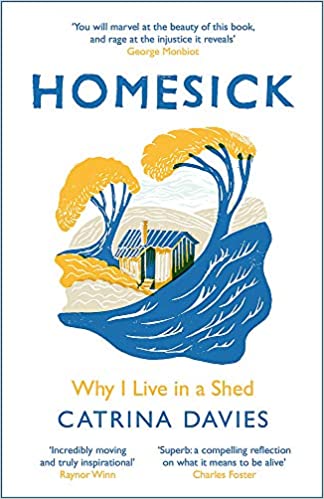
Summary:
Catrina was 31 and very tired of never quite being sure if she could even make the rent on her box-room in a home she shared with four adult roommates (plus one child). With the cost of housing in the UK, she knew the odds were stacked against her to both be able to afford better housing and to have time for her artistic pursuits. So she decided to opt out by taking up residence in her father’s abandoned shed in Cornwall. She doesn’t have a toilet but she does have time to surf, write, and make music. This memoir both chronicles her decision and beginnings in the shed, as well as gives deep consideration to the housing crisis, consumerism, and finding the time to truly live.
Review:
I was immediately intrigued by the name of this book. It’s not why I live in a tiny house. It very explicitly calls it a shed. When I saw this was set in the UK, I was even more intrigued. As an American, my pre-existing understanding was that the UK has a robust system for caring for the poor, thinking specifically of the dole and council housing. It seemed to me that this must have been a choice to live in a shed, and I wanted to know more about this counter-cultural choice. This is indeed a beautiful counter-cultural memoir that surprised me by illuminating how much I didn’t know about the realities of the UK’s housing situation currently.
Catrina artfully weaves in both facts about housing in the UK and her own thoughts on modern culture within the story of her moving to and setting up the shed. (I would call it her first year in the shed, but the author’s note is that she actually condensed several years into one to make it more of a story). For example, while she asks her father for permission to live in his old small business’s shed, we find out that the shed is not zoned for housing, so, while she has the owner’s permission, what she is doing is still technically illegal. I also learned a lot about lords and how much of her area of Cornwall is actually owned by a lord with a castle on an island who will randomly make decisions like to charge for parking when previously people just parked for free to enjoy the ocean. Obviously a lord has no need for this money. I am still jarred by the idea of an actual lord running most of the show in a town. This is just one of the many examples of the inequities that remain in the UK that I had not previously known about.
When not discussing housing, Catrina explores gardening, surfing, making music, and writing. She discusses how living in the shed rent-free enables her to take low-paying jobs that leave her with enough time and energy to enjoy these pursuits. Living in the shed puts her closer to nature, and she becomes a bit obsessed with Walden (as a New Englander, I really wanted to enlighten her about how Walden Pond isn’t all it’s cracked up to be and how many moneyed connections, including in his own family, Thoreau actually had, partially thanks to having graduated from Harvard). While this may seem like a digression, it actually leads me quite smoothly into my main critique of the book, which is that I do wish the author demonstrated a bit more insight into her own privilege. She only can live in the shed because her father bought and paid for it. There is intergenerational assistance and provision here, even if she doesn’t recognize it as such. I’m not saying that it’s the same thing as having a trust fund handed to you, but it’s also not the same thing as her friends who squat in sheds of their own making on public land. Similarly, she, for example, showers at the homes of the people who she gardens for (often with their permission, but not always). She couldn’t take these moments of comfort she loves so much if those people hadn’t bought into the housing game. She may feel she’s opted out of society, but has she really?
Those who enjoy memoir as a way to gain insight into a different type of life than their own will not be disappointed by this book. This book made me think about what I am doing in my life because I want to versus what I am doing just because my culture pointed me here, and I appreciate that. I also enjoyed getting to vicariously surf in Cornwall.
4 out of 5 stars
Length: 256 pages – average but on the shorter side
Source: Purchased
Buy It (Amazon, this book is not available on Bookshop.org)
Get the Reading Group / Book Club Discussion Guide
A beautifully graphic designed 2 page PDF that contains: 1 icebreaker, 9 discussion questions arranged from least to most challenging, 1 wrap-up question, 3 read-a-like book suggestions
View a list of all my Discussion Guides.
If you found this review helpful, please consider tipping me on ko-fi, checking out my digital items available in my ko-fi shop, buying one of my publications, or using one of my referral/coupon codes. Thank you for your support!
 Support my work with a tip or browse my shop for curated book club guides, how to guides, cross-stitch patterns, and more!


This work by Amanda Nevius is licensed under a Creative Commons Attribution-Noncommercial-No Derivative Works 3.0 United States License.
 Opinions of a Wolf