
Archive
Book Review: Good Girls Don’t Die by Christina Henry

Three different women find themselves living out scenarios that seem weirdly like the plots of popular books – only real people start being murdered.
Summary:
Celia wakes up in a house that’s supposed to be hers. There’s a little girl who claims to be her daughter and a man who claims to be her husband, but Celia knows this family—and this life—is not hers…
Allie is supposed to be on a fun weekend trip—but then her friend’s boyfriend unexpectedly invites the group to a remote cabin in the woods. No one else believes Allie, but she is sure that something about this trip is very, very wrong…
Maggie just wants to be home with her daughter, but she’s in a dangerous situation and she doesn’t know who put her there or why. She’ll have to fight with everything she has to survive…
Three women. Three stories. Only one way out. This captivating novel will keep readers guessing until the very end.
Review:
I loved the idea for this book. Waking up and finding yourself living in the plot of your favorite type of story but then it turns all too real and sinister? Amazing! But the execution of the idea didn’t work out for me.
Each of the three women’s plots shows a real understanding of each genre they’re representing – cozy mystery, horror, and YA dystopia. There is some diversity in the book, although it doesn’t show up until the third scenario. Celia is white, and the cozy mystery town she’s in seems to be entirely other white people. Allie is white and so are the other four college students she goes to the cabin with. Maggie is Latina, and she allies herself with a Black woman. It does make sense for the cozy mystery town to be lacking in diversity, especially if Celia had commented on it. This also would have allowed for some meta commenting on lack of diversity in cozies (although that has been improving in recent years.) Allie’s story felt the most cookie-cutter to me – right down to Allie having large breasts and hating them because men like them. There is such a surge of interest right now in Black horror and Indigenous horror stories, that this would have been a wonderful opportunity to explore that genre and bring some more diversity into the overall story.
Although the cover promised twists and surprises, I wasn’t surprised once by the plot in the book. I knew exactly where it was going from the first chapter. The only thing I didn’t know was how it was going to wrap everything up and, honestly, the ending was the most disappointing part of the book to me. While I’m sure some readers will enjoy it and find it cathartic, I found it to be too simple and little heavy-handed. (Speaking of heavy-handed, while I’m totally fine with a book having a message and even characters speaking that message out loud, the same message happens multiple times in this book in a way that I found to be a bit much.)
As someone who works in addiction and recovery, I found the depiction of a character’s ex who is addicted to cocaine to be very two-dimensional and insensitive to those who struggle with addiction. It is of course very difficult to be the family member of someone who struggles with addiction. But even a passing mention of “I know not everyone who uses cocaine ends up abusing their wife” or “I wish he would get clean so his daughter could know the real him” or “drugs didn’t make him an asshole – he just was one all along” would have been nice.
In a nutshell, this was an absolutely wonderful idea for a book with engagingly written scenes. But it fell apart for me in the overarching plot. Also, given the overall messaging of the book, it was a bit glaring that it didn’t have a more diverse set of three stories within the story. Recommended for genre readers who like the idea of seeing someone forced to live out a genre plot.
If you found this review helpful, please consider tipping me on ko-fi, checking out my digital items available in my ko-fi shop, buying one of my publications, using one of my referral/coupon codes, or signing up for my free microfiction monthly newsletter. Thank you for your support!
3 out of 5 stars
Length: 320 pages – average but on the longer side
Source: Library
Buy It (Amazon or Bookshop.org)
Book Review: The Villa by Rachel Hawkins

When Emily’s on-again off-again best friend (who also just so happens to be a power of positive thinking influencer) invites her to spend the summer at an Italian villa, she’s surprised to discover it’s the same villa famous for a murder in the 1970s.
Summary:
As kids, Emily and Chess were inseparable. But by their 30s, their bond has been strained by the demands of their adult lives. So when Chess suggests a girls trip to Italy, Emily jumps at the chance to reconnect with her best friend.
Villa Aestas in Orvieto is a high-end holiday home now, but in 1974, it was known as Villa Rosato, and rented for the summer by a notorious rock star, Noel Gordon. In an attempt to reignite his creative spark, Noel invites up-and-coming musician, Pierce Sheldon to join him, as well as Pierce’s girlfriend, Mari, and her stepsister, Lara. But he also sets in motion a chain of events that leads to Mari writing one of the greatest horror novels of all time, Lara composing a platinum album––and ends in Pierce’s brutal murder.
As Emily digs into the villa’s complicated history, she begins to think there might be more to the story of that fateful summer in 1974. That perhaps Pierce’s murder wasn’t just a tale of sex, drugs, and rock & roll gone wrong, but that something more sinister might have occurred––and that there might be clues hidden in the now-iconic works that Mari and Lara left behind.
Yet the closer that Emily gets to the truth, the more tension she feels developing between her and Chess. As secrets from the past come to light, equally dangerous betrayals from the present also emerge––and it begins to look like the villa will claim another victim before the summer ends.
Review:
Told in both the 1970s and the present, this thriller highlights the similarities and differences of fame and near-fame for women.
The present-day perspective is that of Emily, a moderately successful cozy author going through a nasty divorce. While she’s able to make a living entirely off her writing, her success pales in comparison to her sometimes best friend Chess. Chess has a positivity influencer brand that includes publishing power of positive thinking style books (think The Secret merged with Girl, Wash Your Face.) The 1970s perspective is that of Mari, the girlfriend of one of the musicians who stayed at the villa in the 1970s. Both she and her stepsister found fame after the murder. Mari in the form of a horror book. Her stepsister in the form of an insanely popular singer/songwriter album.
The book’s central premise is that the men in these women’s lives are holding them back from finding their own artistic expression, fame, and success. The question is, are the women’s reactions justified? Put another way, are the women using self-defense (of their art) to an appropriate level given the threat? Another secondary question is can two women ever really fully support each other’s art or is someone always getting the short end of the stick?
The book isn’t heavy-handed in exploring these questions. Indeed, I was primarily wrapped up in the two mysteries going on. The first being who committed the initial murder in the villa in the 1970s. The second being why has Emily been suffering from a mysterious medical condition and does Chess have ulterior motives to having invited her to the villa? That’s a lot of mystery for one quick thriller, and it works.
I was impressed at the amount of backstory and extra information the author had to consider in putting together the two timelines. We have snippets of Mari’s book, a horror best seller by a woman in the 1970s that rivaled The Shining (my review) in this imaginary version of the 1970s. There are excerpts from that book in this one that the author had to write in a completely different tone and manner than her own writing and in a way that would make sense for the 70s. There’s also snippets of Chess’s brand, basic characters and plot for Emily’s cozy series, an excerpt from a podcast episode about the murder, Mari’s writing about her summer at the villa, and lines from her stepsister’s songs from her most famous album. That’s a lot of different voices and moving parts to keep straight, and the author does a great job of that. I found myself wishing there was more found items in the book, like another podcast episode or something. That’s not a critique. I enjoyed it so much I wanted more.
There were two things that I didn’t love about the book. These are both spoilers, so consider yourself warned! First, Emily’s illness is repeatedly brushed off by doctors as in her head. This is very frustrating and relatable for anyone who’s dealt with a mystery illness. However, by the end of the book it’s revealed that the illness is indeed psychosomatic. Even talking to her husband on the phone makes Emily sick. So the stress of being with him has been making her ill. I found this to be a really disappointing depiction. Yes, chronic illness can improve when a stressor is removed. But that wasn’t the situation in this book. Emily was only sick because of being so stressed out about her marriage. Once that’s removed, she’s better. A disappointing perspective to see in the book. Second, Chess and Emily decide to kill Emily’s soon-to-be-ex-husband since he’s dragging Emily to court for partial rights to her cozy series and threatening to do that for anything else she writes, as well as is blackmailing Chess. That’s a fine twist that makes sense. The issue is, the book shows them inviting him to visit them in the villa and reveals that he drowned and that the local police ruled it an accidental drowning. But it doesn’t show us how Emily and Chess did it. Nor is it really believable that they would be cleared so quickly in the death given the nasty divorce proceedings Emily was current undergoing. She would obviously have been a serious suspect, not brushed off so easily as one. Unless they did something with the murder that made it impossible to suspect her at all. But, again, this isn’t shown in the book. It was a short book with very little time dedicated to this murder, and I think it would have benefited from that.
Overall, in spite of two plot points I either didn’t appreciate for chronic illness representation issues or felt didn’t make much plot sense, I still enjoyed the read. It was a unique merging of a period piece thriller and a modern thriller featuring an influencer and female friendship. Recommended to thriller readers looking for a book rich in female characters who also enjoy the arts and the 1970s.
If you found this review helpful, please consider tipping me on ko-fi, checking out my digital items available in my ko-fi shop, buying one of my publications, using one of my referral/coupon codes, or signing up for my free microfiction monthly newsletter. Thank you for your support!
4 out of 5 stars
Length: 279 pages – average but on the shorter side
Source: NetGalley
Buy It (Amazon or Bookshop.org)
Book Review: The Woman in Cabin 10 by Ruth Ware
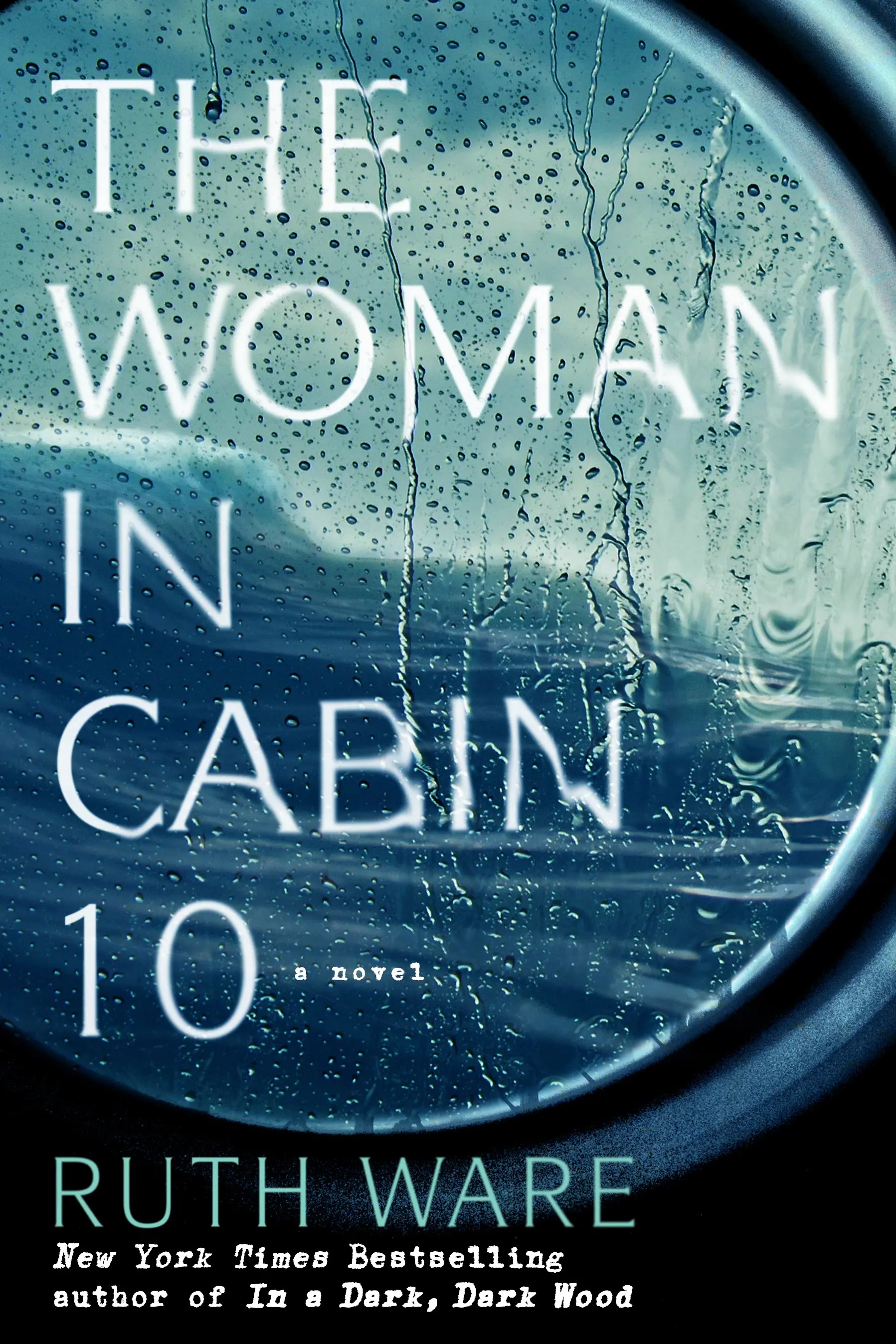
A travel journalist borrows a mascara from the woman in the cabin next-door to hers, but then the entire luxury cruise denies there ever was a woman staying there.
Summary:
Lo Blacklock, a journalist who writes for a travel magazine, has just been given the assignment of a lifetime: a week on a luxury cruise with only a handful of cabins. The sky is clear, the waters calm, and the veneered, select guests jovial as the exclusive cruise ship, the Aurora, begins her voyage in the picturesque North Sea. At first, Lo’s stay is nothing but pleasant: the cabins are plush, the dinner parties are sparkling, and the guests are elegant. But as the week wears on, frigid winds whip the deck, gray skies fall, and Lo witnesses what she can only describe as a dark and terrifying nightmare: a woman being thrown overboard. The problem? All passengers remain accounted for—and so, the ship sails on as if nothing has happened, despite Lo’s desperate attempts to convey that something (or someone) has gone terribly, terribly wrong…
Review:
This is my sixth Ruth Ware book (two reviewed on the blog), and I generally enjoy them quite a bit, but this one was my least liked so far. Just like all of her books, the plot is sound and deliciously twisty. But I absolutely could not stand the main character.
We first meet Lo when she’s going through a break-in in her flat (first chapter stuff, not a spoiler). I think this is both supposed to make the reader empathize with Lo and later serve as an explanation for why she over-identifies with the mysterious woman in Cabin 10. Lo’s response to the break-in besides the logical things like changing her locks, is to drink a lot of alcohol and then wander over to her boyfriend’s flat in the middle of the night when she thinks he’s out of town. Then when he startles her by arriving home to his own flat, she (half-asleep) knocks out one of his teeth with a lamp. Then after he tells her he gave up a job to stay in the same city as her, she gets mad at him and starts a fight with him. Within twelve hours of knocking out his tooth. Maybe I’m just a little bit sensitive to tooth loss since I’ve been dealing for months with replacing a tooth lost to trauma. But I’m not sure how I’m supposed to like this woman after this set-up. It gets even worse when we later find out she’s on anti-anxiety medication that’s not supposed to be mixed with alcohol. Like. This woman is bumbling around like a bumper car in a pottery shop. So while I was curious about the missing woman in cabin 10, and the twists in that part of the story kept me reading, I couldn’t have cared less if Lo lived or died. Which is definitely not how I was supposed to feel given what a very real threat her life later comes under.
I liked the setting of a small luxury cruise ship on the North Sea. I could really see the ship in my mind, and it felt very much like a locked room Agatha Christie style story with the limited number of guests and crew to suspect. Perhaps we were supposed to think that Lo might be wrong about there being a woman in cabin 10, but I was quite confident from the beginning and the title of the book that she was a reliable (albeit terrible) narrator. There is a very slow literal locked room about two-thirds of the way in. I almost gave up at that part, but I’m glad I persisted because the twists were unexpected, and the scenery for the final confrontations was spectacular.
Overall, if you either think the plot makes the annoying main character worthwhile or, perhaps, you find her less annoying than I do, this is a fun, quick thriller read.
If you found this review helpful, please consider tipping me on ko-fi, checking out my digital items available in my ko-fi shop, buying one of my publications, or using one of my referral/coupon codes. Thank you for your support!
3 out of 5 stars
Length: 340 pages – average but on the longer side
Source: Found in free pile
Buy It (Amazon or Bookshop.org)
Book Review: The Only One Left by Riley Sager

A Gothic chiller about a young caregiver assigned to work for a woman accused of a Lizzie Borden-like massacre decades earlier.
Summary:
Now reduced to a schoolyard chant, the Hope family murders shocked the Maine coast one bloody night in 1929. While most people assume seventeen-year-old Lenora was responsible, the police were never able to prove it. Other than her denial after the killings, she has never spoken publicly about that night, nor has she set foot outside Hope’s End, the cliffside mansion where the massacre occurred.
It’s now 1983, and home-health aide Kit McDeere arrives at a decaying Hope’s End to care for Lenora after her previous nurse fled in the middle of the night. In her seventies and confined to a wheelchair, Lenora was rendered mute by a series of strokes and can only communicate with Kit by tapping out sentences on an old typewriter. One night, Lenora uses it to make a tantalizing offer—I want to tell you everything.
As Kit helps Lenora write about the events leading to the Hope family massacre, it becomes clear there’s more to the tale than people know. But when new details about her predecessor’s departure come to light, Kit starts to suspect Lenora might not be telling the complete truth—and that the seemingly harmless woman in her care could be far more dangerous than she first thought.
Review:
I’m from New England so grew up with the Lizzie Borden jump-rope rhyme, and I’m a long-time fan of Riley Sager’s works. So I put myself on the hold list for this at my library as soon as the title was announced. Sager’s works play with thriller tropes. This one is more of a loose play. Ever since the original murders people have debated whether or not she was actually the murderer. So that’s what is at play here – how we treat others when the evidence points toward them but not conclusively enough for a sentencing.
For the majority of the book, I thought I had the murderer figured out, and not too many twists happened. the majority of the twists come in a giant pile right at the end. That said, I was partially right about what I thought from the beginning. I wasn’t 100% there, but I was partially there. I wanted to be slightly more surprised than I was. Although the pile of twists at the end did increase my satisfaction regardless.
The 1983 setting was a little weakly done. It felt more like a plot device to avoid the inconvenience of cell phones and characters texting each other than a true love letter to the 1980s. The 1980s was like sprinkles on top instead of what the story was built upon. I also personally didn’t understand why Kit was so afraid of a bed-bound elderly woman. Even assuming she had committed three murders decades ago. A murderer who has been bed-bound for decades and is now elderly is nothing to be afraid of. So the fear factor was lower for me.
One thing that annoyed me was the murder jump-rope rhyme in the book. The cadence was off, making it impossible to actually chant properly for a jump-rope game. This is easily seen in the first two lines. The Lizzie Borden one is this:
Lizzie Borden took an axe
Gave her mother forty whacks
Each line is precisely 7 syllables long, plus the accents come every other syllable and in both lines the strong syllable comes first.
LIZzie BORden TOOK an AXE
GAVE her MOTHer FORty WHACKS
In contrast, this is the first two lines of the jump-rope rhyme written for this book:
At seventeen Lenora Hope
Hung her sister with a rope
The first line is 8 syllables, and the second one is 7. The second one’s accents work, but the first line’s don’t.
at SEVenTEEN leNORa HOPE
HUNG her SISter WITH a ROPE
It just simply doesn’t work as a jump-rope rhyme because jump-rope rhymes start with a strong syllable, and the lines are the same length as each other. They’re meant for keeping rhythm for the jumpers and the turners. Children on a schoolyard would have changed it to make it work, even if it meant changing a detail to be inaccurate. For example:
SIXteen OLD leNORa HOPE
HUNG her SISter WITH a ROPE
This makes it even more like the Lizzie Borden rhyme, in fact, because that one is slightly inaccurate for the sake of the rhyme scheme. It was Lizzie’s stepmother who was killed, not her mother.
In any case, the rhyme is repeated a lot in the book, and always at least the first line, and it made me cringe every time it came up.
The thriller itself was still quite enjoyable anyway but it would have jumped up to remarkable with this issue fixed and a more thoroughly shocking twist. A fun new read from a popular thriller author.
If you found this review helpful, please consider tipping me on ko-fi, checking out my digital items available in my ko-fi shop, buying one of my publications, or using one of my referral/coupon codes. Thank you for your support!
4 out of 5 stars
Length: 385 pages – average but on the longer side
Source: Library
Buy It (Amazon or Bookshop.org)
Book Review: Jaws by Peter Benchley
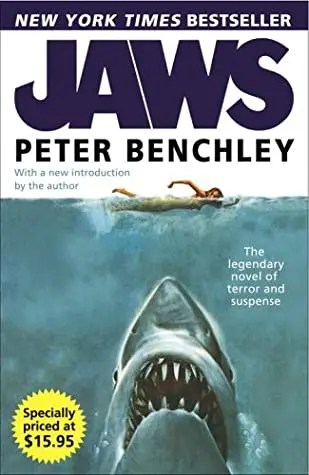
Get ready for shark week with this 1970s classic!
Summary:
A great white shark starts terrorizing a coastal town just as the money-making summer season begins. The classic, blockbuster thriller of man-eating terror that inspired the Steven Spielberg movie and made millions of beachgoers afraid to go into the water. Experience the thrill of helpless horror again—or for the first time!
Review:
As a New England girl born and raised, I can’t tell you how many times I’ve watched Jaws the movie. Everything about it is just so *chef’s kiss* perfectly small New England beach town. (The movie is set on Long Island, New York, but was filmed on Martha’s Vineyard, Massachusetts, and, let me tell you, everything about it reads New England to me.) Plus, my cat absolutely adores watching Jaws. She’s obsessed with that shark. With summer rolling around once again, I decided it was high time I read the book. The book is almost always better than the movie, right? Well, in this case, that almost really comes into play. (Spoilers ahead for both the movie and the book. If you haven’t seen this classic yet, please go watch it then come back to the book review.)
The book starts off strong with a close omniscient perspective of the shark getting ready to eat the drunk lady swimming in the ocean. The book could easily sway into anthropomorphizing territory, imagining the viciousness of the shark. But it consistently describes a creature whose instinct is to feed. What, exactly, made it come in to Amity and stick around is a mystery that is never solved. This first scene is one of the strongest in the book. But I have to admit I was hearing the absolutely classic movie soundtrack in my head while I was reading it, and we all know how essential that is at building suspense. So I’m not sure it’s safe to say I felt engaged purely because of the book.
But it didn’t take too long for the book to showcase itself as…worse than the movie. When we meet Sheriff Brody, he mentions a problem they had the previous summer where a Black gardener sexually assaulted six white women, none of whom would press charges. The only point of this from a narrative perspective is to demonstrate how the police department will keep things under wraps in order to protect the summer season. But it’s a hatefully racist way to establish this, narratively. Even if I charitably imagine that this is supposed to be pointing out the racial divide in Amity that is later even clearer in the book, there are better ways to do that than to play into this horribly racist myth of the serial Black assaulter of white women.
There are two other plot points in the book that weren’t in the movie at all. First, there’s that Brody’s wife cheats on him with Hooper because she feels some weird Feminine Mystique style ennui about her life as a housewife at a lower social class than she was before she got married. (We only see the sex in flashbacks she has about it and how strange and scary Hooper was). There is a large scene where she has lunch with Hooper first and talks about her sexual fantasies. Kind of slows down the pace of the suspense from the shark attacks.
The other additional plot point is that the mayor of the town is mixed up with the mafia because he had to take out a loan from a loan shark (har har) to pay his wife’s cancer treatment medical bills. (What on earth do other countries with nationalized health care do to justify characters taking out unwise loans? This is such a common plot device…but I digress.) The mafia wants the beaches to be kept open. This is a big motivator for why the mayor keeps insisting on it. But I don’t think this motivator is necessary. The economic pressure and need of a tourist town to keep their main tourist attraction open is more than enough motivation. Anyone who has any familiarity with a town that depends on seasonal tourism gets that. Spielberg was right to cut this from the movie. This also brings about a scene I found much more disturbing than any shark attack, which is that the mafia kills Brody’s son’s cat in front of his son, and then Brody takes the dead cat and throws it in the mayor’s face.
The final act where Quint, the old-time fisherman, takes Brody and Hooper out on his boat to hunt the shark is overall pretty good. There’s some nice tension between the three of them, and Quint really has to eat his words about the shark not being intelligent. It does not end with the 70s style bang of the movie. But I kind of liked the simplicity of the ending, leaving Brody to swim to shore and deal with the aftermath on his own without any reader audience.
I’ve seen some lists of the differences between the book and the movie with mistakes and inaccuracies on them, so I do want to clear up a couple of things. Brody is afraid of the water in the book. This is well-established; I’m not sure how people missed that. Mrs. Kintner does slap Brody in the book when she confronts him about the shark killing her son.
The version of the book I read also had an introduction by the author where we find out that he was, basically, a “summer person” himself – from a wealthy family and a legacy graduate of Harvard (his father also went to Harvard). His father was a novelist, and because of that connection, Benchley got an agent before he even had a book written. By Benchley’s own recollection, he sold the idea for Jaws and then they told him he needed to write the book, and the screenplay was sold before the book was even written. He took a first shot at the script, and Spielberg told him to throw out a lot of the stuff that I mentioned in my review as things I didn’t like. Moral of the story being privileged dude sold an admittedly solid idea based on the idea alone to someone else who directed it into it being a classic.
Overall, it was interesting to read the book behind the movie, but I also now have the perfect answer for the next time someone asks me, “When is the movie ever better than the book?”
If you found this review helpful, please consider tipping me on ko-fi, checking out my digital items available in my ko-fi shop, buying one of my publications, or using one of my referral/coupon codes. Thank you for your support!
3 out of 5 stars
Length: 320 pages – average but on the longer side
Source: Library
Buy It (Amazon or Bookshop.org)
Get the Book Club Discussion Guide
A beautifully graphic designed 2 page PDF that contains: 1 icebreaker, 9 discussion questions arranged from least to most challenging, 1 wrap-up question, and 3 read-a-like book suggestions
View a list of all my Book Club Guides.
Book Review: Zero Days by Ruth Ware
A new widow puts her professional penetration testing skills to work to discover who really killed her husband when she realizes she’s being framed for the crime.
Summary:
Hired by companies to break into buildings and hack security systems, Jack and her husband, Gabe, are the best penetration specialists in the business. But after a routine assignment goes horribly wrong, Jack arrives home to find her husband dead. To add to her horror, the police are closing in on their suspect—her.
Suddenly on the run and quickly running out of options, Jack must decide who she can trust as she circles closer to the real killer in this unputdownable and heart-pounding mystery.
Review:
Ruth Ware, often called the modern day Agatha Christie, drops a new thriller just in time for summer. This one features the fascinating world of penetration testers. What is a penetration tester, you ask? Someone companies hire to test their security. You may have heard of an “ethical hacker.” This is the same thing. Although, in the case of the book, the testing of security systems includes their physical systems. The title even alludes to a cybersecurity thing.
Jack, a talented reformed pickpocket, does the physical security testing, and Gabe, her husband, does the ethical hacking. The book opens with them working on a job, which provides delightful action sequences before the inciting incident of his murder. When she comes home and finds him dead, she gets sucked into a wave of grief that makes her oblivious to the warning signs she’s being framed. These are clear to the reader, and to her sister as well, which was a nice touch. Soon, Jack is on the run, with the dual goal of clearing her name and identifying her husband’s killer to bring him/them to justice.
The pacing of this thriller is solid. I was engrossed and wanted to find out what happened. Making Jack a penetration tester gives valid reasons for her skills at evading the police while also investigating the murder. She’s also easy to like and root for. The scenes of her evading the pervasive panopticon in London reminded me of a favorite book of mine, The Traveler (review). Those were among my favorite.
Two plot choices annoyed me. They’re spoilers, so consider yourself warned.
Gabe’s best friend kissing Jack felt out of character for both of them. I think it was supposed to be a clue to the reader not to trust him, but I already didn’t trust him. It was obvious from Jack saying that her sister didn’t use emojis like that on the phone that he set up for the two of them that this meant it was him on the phone. It was unnecessary and made it difficult for me to get over and like Jack again. I know sometimes grieving widows reach out in this way, and it’s not my place to judge, but it felt like a plot device more than a character choice. The other thing I disliked was that Jack is surprise pregnant at the end. Jack was suicidally depressed before she found out she was pregnant as she felt totally alone without her husband. (Even though her sister was very much involved the whole time, even getting arrested to help her.) In any case, the pregnancy being what it takes to snap Jack out of depression because now she has someone to live for really rubbed me the wrong way. Why couldn’t Jack have figured out that she should live and live well because that’s what we’re meant to do to the best of our abilities? Also, children don’t replace the spouse who passed away. That person is still gone. I get it that people feel like a legacy lives on in children, but to just snap out of suicidally depressed grief over a pregnancy doesn’t mean she properly processed her grief in any way, shape, or form. She’s now just living for the child in the way that she, apparently, was just living for Gabe before.
Overall, this is a fun, quick thriller perfect for a summer read.
If you found this review helpful, please consider tipping me on ko-fi, checking out my digital items available in my ko-fi shop, buying one of my publications, or using one of my referral/coupon codes. Thank you for your support!
4 out of 5 stars
Length: 368 pages – average but on the longer side
Source: NetGalley
Buy It (Amazon or Bookshop.org)
Book Review: Killing Me by Michelle Gagnon
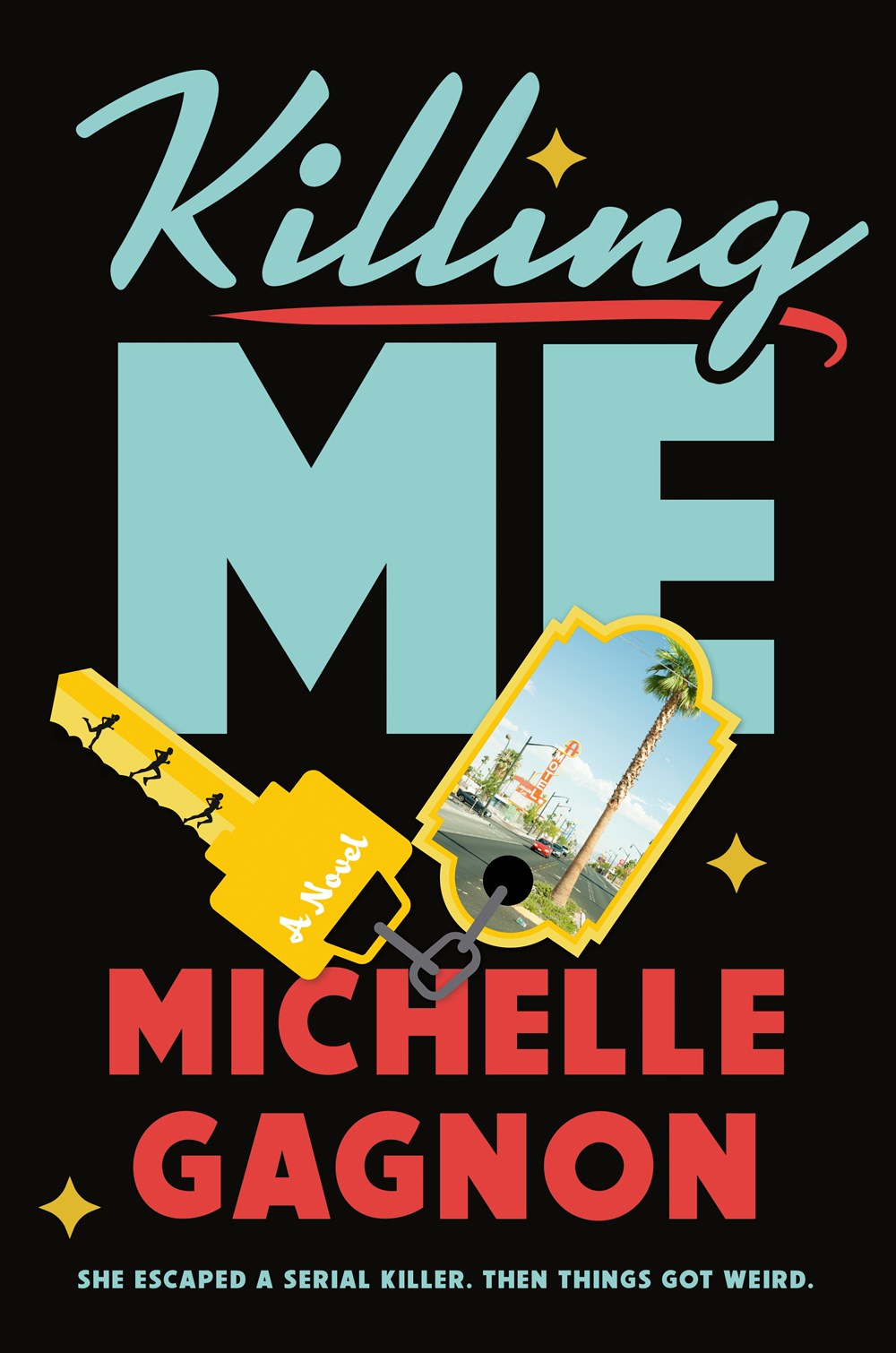
A laugh out loud thriller about women out-smarting a serial killer.
Summary:
Amber Jamison cannot believe she’s about to become the latest victim of a serial killer-she’s savvy and street smart, so when she gets pushed into, of all things, a white windowless van, she’s more angry than afraid. Things get even weirder when she’s miraculously saved by a mysterious woman…who promptly disappears. Who was she? And why is she hunting serial killers?
Review:
When I saw this on NetGalley, I was intrigued by the Final Girls-esque vibe – the women who would be the killer’s victims turning on him. I was skeptical I would find it humorous because, honestly, my funny bone is a little particular. But I actually found myself chortling on page one.
If you’re the type of person with an internal dialogue of self-deprecating humor about bizarre situations you find yourself in, then you’ll probably enjoy the sense of humor in this book. Regardless, you’ll be able to tell quickly if it’s for you or not, because the humor comes so quickly in the book, and that style is what’s present throughout the rest.
This is primarily told in the first person from Amber’s perspective, and she’s dry, acerbic, self-deprecating, but also whip-smart. (There are a few third person chapters that let us see things Amber doesn’t know about.) Amber is simultaneously problematic (she’s a con artist) and easy to root for. She’s richly three-dimensional. The main secondary characters are also rich and well-imagined. It would have been so easy to see a caricature of a sex worker, seedy motel owner, an Evangelical roommate, etc… yet they all are allowed to be more than what they might seem to be at first.
The Las Vegas setting rang very true to me. It depicted both the tourist bits and the seedier local areas quite well. I especially loved the run-down yet beloved film noir stylized motel as compared to the one recently made over to appeal to Gen Z and Millennials. That had me chortling.
I also really appreciated that this is a book whose main character is a lesbian but the plot has absolutely nothing to do with her being a lesbian. You could have almost the exact same book with a heterosexual main character. It’s just Amber so happens to like women. I like having this type of representation. It doesn’t always have to be about the difficulties of coming out or a romance to feature queer people.
The mystery itself was decent. The plot was certainly unique compared to other thrillers I’ve read, and I did not guess the ending. There was one twist that annoyed me only because it was solely a twist because Amber held something back from the reader. But I was willing to forgive it because she sort of breaks the fourth wall and acknowledges that she did it…which was funny.
I hope there’s a sequel, because I think there’s a lot left to explore with Amber, and she has a very interesting set-up at the end of the book.
Overall, I really recommend this to thriller lovers looking for something different. The humor and the plot really deliver.
If you found this review helpful, please consider tipping me on ko-fi, checking out my digital items available in my ko-fi shop, buying one of my publications, or using one of my referral/coupon codes. Thank you for your support!
4 out of 5 stars
Length: 336 pages – average but on the longer side
Source: NetGalley
Buy It (Amazon or Bookshop.org)
Book Review: Daisy Darker by Alice Feeney
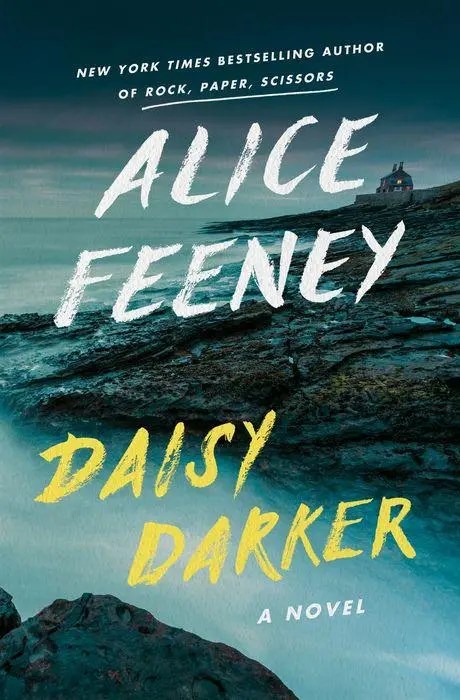
When Daisy and her family go to her grandmother’s island home for her 80th birthday, they’re surprised when the family members start dropping dead, one an hour. Who has it in for the Darker family?
Summary:
After years of avoiding each other, Daisy Darker’s entire family is assembling for Nana’s 80th birthday party in Nana’s crumbling gothic house on a tiny tidal island. Finally back together one last time, when the tide comes in, they will be cut off from the rest of the world for eight hours.
The family arrives, each of them harboring secrets. Then at the stroke of midnight, as a storm rages, Nana is found dead. And an hour later, the next family member follows…
Trapped on an island where someone is killing them one by one, the Darkers must reckon with their present mystery as well as their past secrets, before the tide comes in and all is revealed.
Review:
*This review is going to contain many spoilers for the twists in Daisy Darker. If you do not wish to be spoiled, please click away!*
This book is a send-up to the Agatha Christie classic And Then There Were None without the ties to the hideously racist children’s counting rhyme and minstrel song (note that link reveals the original racist language used in Agatha Christie’s). The similarities are clear: people are invited to an island where they then start dying off one by one. But if you are familiar with that book then one of the big plot twists in this one will not be a plot twist to you – the majority of the people invited to this island are responsible either for murder or for covering it up. Rather than using a pre-existing nursery rhyme, this book uses a brand-new poem written in the style of a nursery rhyme to predict the deaths of the characters. Another similarity includes the use of a red herring to deflect suspicion from the real person (or in this case, people) orchestrating the deaths. A big difference here, though, is that this a family drama. It’s not seemingly disconnected strangers. They are a family with…problems.
This is what I thought the twist was going to be: it was Conor’s dad who had faked his own death previously to get away from the Darker family. So I really wasn’t expecting the simultaneous reveal of Trixie holding the smoking gun while telling Aunt Daisy that she’s a ghost. I felt like I’d been Sixth Sensed all over again. Then the backstory of how Daisy was killed is revealed, and I realized…this book is And Then There Were None crossed with The Sixth Sense crossed with I Know What You Did Last Summer.
I’ve been wrestling with why I felt, as I said in my immediate quick GoodReads review, bamboozled by this book. I went back and checked a few key scenes to make sure it was possible for Daisy to have been a ghostly presence. For example: the reading of the will. But she inherited something! I thought. No, Nana just mentioned donating to some of Daisy’s favorite charities. So, in all the scenes I thought of, it was possible for Daisy to be a ghost. This was well done narratively. So why did I feel so bamboozled? I think for me it came down to this: this is told in the first-person from Daisy’s perspective, and it all hangs on her not remembering she’s a ghost. (This is a lot like The Sixth Sense). We’re supposed to believe she doesn’t remember she’s a ghost because the level of trauma from how she died is too hard to bare so she blocks it out, and she’s always been isolated so it’s not strange to her that people don’t talk to her or notice her. Ok, fine, but where does she live? She thinks she’s an adult who pops over to take care of Trixie routinely when she’s not volunteering in an elder care facility. Where is she when she’s not with Trixie? Does she just drop off the face of the planet? Wouldn’t she realize she never goes home? That she has nowhere to call home whatsoever?
The other thing is that the character of Conor I feel acts incredibly out of character for who he’s been presented to be the night of the I Know What You Did Last Summer incident. He has been shown to be a kind boy who is madly in love with Rose. But he sleeps with Lily then convinces everyone to throw Daisy into the ocean to save his future. Whereas Rose going along with what everyone else suggested without protesting too much and Lily being fine with it made sense to me because they both bullied their little sister, Conor being the instigator did not. For me, I needed more evidence of the fact he would be capable of such a thing from the very many home movies the crew watched over the course of the night. He was in them, but there was no sign of this selfish, mean, self-preservation streak whatsoever. In fact, the only time he sort of lied was when he didn’t want to admit to Nancy that he got beat up at school because he got into a fistfight trying to defend Lily’s honor. (This also further demonstrates how strange it is that he slept with Lily that same night.)
My other issue is that I get the vibe we’re supposed to like Nana, but I don’t. In fact, I think she has far more culpability than the narrative wants us to feel. She’s the matriarch of this atrocious family. She absolutely favored one of the Darker girls over the others. I think we’re supposed to think that’s fair and justified since Nancy favored Rose and Lily over Daisy but that’s not how it works. Two wrongs don’t make a right. Favoring one child over others creates a hateful environment for them all. The bullying of Daisy from Rose and Lily, and Daisy’s secret attacks back at them could have been worked on if any one adult stepped in and tried to do so. Nana knew what was going on and didn’t do anything about it. She just allowed Daisy to get her revenge. I do get it that part of the point of the book is this is a terrible family but I also think we’re supposed to see Nana in a positive light. But the terribleness must have started somewhere. Similarly, even though I felt sympathy for Daisy in flashbacks, in the moment (when I thought she was a grown-up and not a ghost), she seemed overwrought, dramatic, and annoyed me. I’m also confused about what she thinks she did wrong to Conor that warrants her needing to apologize.
Overall, I found this book to be a good thriller. I think it could have moved into great thriller territory with characters acting more within character (or better explained out of character behavior) and a ghost who knows she’s a ghost. In all honesty, I could have really gotten behind a story where Daisy shows up on Halloween night when the space between worlds is thin and watches as her family starts to drop dead while discovering her niece can speak to her. I don’t think the extra twist of finding out she’s a ghost was actually necessary.
If you found this review helpful, please consider tipping me on ko-fi, checking out my digital items available in my ko-fi shop, buying one of my publications, or using one of my referral/coupon codes. Thank you for your support!
3 out of 5 stars
Length: 352 pages – average but on the longer side
Source: Library
Buy It (Amazon or Bookshop.org)
Book Review: The Golden Couple by Greer Hendricks and Sarah Pekkanen

Avery may have lost her professional therapist license, but her career is much better as a consultant who isn’t held to any of the pesky rules like “don’t tell a client what to do” and “don’t spy on clients.” At least until a couple going through what seems to be a classic case of infidelity walks through her door…
Summary:
Wealthy Washington suburbanites Marissa and Matthew Bishop seem to have it all—until Marissa is unfaithful. She wants to repair things for the sake of their eight-year-old son and because she loves her husband. Enter Avery Chambers.
Avery is a therapist who lost her professional license. Still, it doesn’t stop her from counseling those in crisis, though they have to adhere to her 10 sessions full of unorthodox methods. And the Bishops are desperate.
When they glide through Avery’s door and Marissa reveals her infidelity, all three are set on a collision course. Because the biggest secrets in the room are still hidden, and it’s no longer simply a marriage that’s in danger.
Review:
I was on the waitlist for the digital copy of this forever at the library but then I stumbled upon it on the physical “Lucky Day” shelf. At my library, a few limited copies of popular books become “Lucky Day” books, They can’t be put on hold, and they only check out for two weeks. The theory is you “get lucky” by coming across them on the “Lucky Day” shelf. This just tells you how popular a Hendricks/Pekkanen thriller is.
I didn’t read the summary before reading the book. I’m such a fan, I knew I wanted to read it regardless of what it was about. Personally, I’m usually not about a book that shows much empathy at all for infidelity. Although it certainly is an expected trope in thrillers, I personally am less ok with it when presented as something to overcome together in a marriage.. While I’m still not on Marissa’s side – I feel like this is a case of two terrible people with a sweet kid – I loved Avery. She held the book together for me.
The story is told in chapters alternating between Avery and Marissa. Interestingly, Avery is first person point of view, and Marissa is third person. This helped because Marissa isn’t super likeable so the distance was good. It also helped keep some secrets hidden. There’s also a fun subplot involving someone coming after Avery for doing an honorable thing. So while some readers might feel she overstepped with her clients in the situation that led to her losing her license, she’s redeemed by this other subplot.
There are just enough twists. I had my suspicions about just what the something extra going on with the married couple was, but I didn’t figure out the final twist until just before it happened. So there were enough clues but also sufficient red herrings to make it enjoyable.
While this wasn’t my favorite Hendricks/Pekkanen read (that honor goes to The Wife Between Us, review, which I found to be incredibly imaginative), it was still a fun thriller that I was motivated to get to the end of. Other readers more able to relate to Marissa might find it more immersive than I did.
If you found this review helpful, please consider tipping me on ko-fi, checking out my digital items available in my ko-fi shop, buying one of my publications, or using one of my referral/coupon codes. Thank you for your support!
4 out of 5 stars
Length: 329 pages – average but on the longer side
Source: Library
Buy It (Amazon or Bookshop.org)
Book Review: The It Girl by Ruth Ware

Summary:
April Clarke-Cliveden was the first person Hannah Jones met at Oxford.
Vivacious, bright, occasionally vicious, and the ultimate It girl, she quickly pulled Hannah into her dazzling orbit. Together, they developed a group of devoted and inseparable friends—Will, Hugh, Ryan, and Emily—during their first term. By the end of the second, April was dead.
Now, a decade later, Hannah and Will are expecting their first child, and the man convicted of killing April, former Oxford porter John Neville, has died in prison. Relieved to have finally put the past behind her, Hannah’s world is rocked when a young journalist comes knocking and presents new evidence that Neville may have been innocent. As Hannah reconnects with old friends and delves deeper into the mystery of April’s death, she realizes that the friends she thought she knew all have something to hide…
Review:
I’ve read about half of Ruth Ware’s books and enjoyed them all, so I was excited and surprised when the publisher approved me for a review copy of her newest book on NetGalley. Most of her other books I’ve read part of the thrill is the characters’ tie to a place – like a ski chalet or weekend hen do rental. This one, though, the thrills come from everyone’s tie to an event that happened a decade ago – the death of April Clarke-Cliveden.
To me, the most important part of a thriller is that at least one of the twists (preferably the last one) both surprises me but also strikes me as fair. In other words, that it’s not only a twist because the writer withheld something from the reader that other characters we closely follow know. The twist must also not have been immediately possible for the main character to figure out. This book definitely ticks that criterion. Although, I thought I’d guessed the twist about 18% of the way into the book, I was definitely wrong. I hadn’t guessed the twist even moments before it happened. And I didn’t feel cheated because the twist did make sense. So if a surprising twist that makes sense if what you’re after, this read is for you.
Now, I will say, I nearly wore my eyes out rolling them at the main character Hannah. She just struck me as quite emotionally/psychologically weak and easily influenced. I don’t need to love a main character to enjoy a read, though, so I wasn’t bothered. Something about Hannah that some readers may enjoy, partially because it’s unusual in a thriller, is that she’s about six months pregnant for the meat of the story. I’ve never been pregnant myself, so I can’t say how necessarily realistic the portrayal is, but it did make for some different and interesting scenes.
The only thing that does bother me, which is why this is four stars, is I just do not understand why Hannah ever considered April her “best friend” or why she’s still so enamored with her years later. From the first moment we meet her when Hannah does on move-in day at Oxford, I was like…man this girl is the WORST. Did I know people like her in college? Sure. Did I befriend them? No. Am I aware of someone who had a roommate like her? Yes. Did she befriend her? No, they just hung out in separate groups and lived their separate lives. But I will say, Hannah is characterized as weak and easily swayed, so, in a way, it makes sense she’s friends with her. But I never felt sympathy for Hannah about any of it.
Overall, this was a fun thriller. For me it took a little bit to pick up speed, but once it did, I was definitely motivated to find out the final twist.
If you found this review helpful, please consider tipping me on ko-fi, checking out my digital items available in my ko-fi shop, buying one of my publications, or using one of my referral/coupon codes. Thank you for your support!
4 out of 5 stars
Length: 432 pages – average but on the longer side
Source: NetGalley
Buy It (Amazon or Bookshop.org)
 Support my work with a tip or browse my shop for curated book club guides, how to guides, cross-stitch patterns, and more!


This work by Amanda Nevius is licensed under a Creative Commons Attribution-Noncommercial-No Derivative Works 3.0 United States License.
 Opinions of a Wolf