
Archive
Book Review: The Curse of the Wendigo by Rick Yancey (Audiobook narrated by Steven Boyer) (Series, #2)
 Summary:
Will Henry, 12 year old orphan and assistant to renowned Monstrumologist, Pellinore Warthrop, is shocked to find a refined woman on Warthrop’s doorstep. She is the wife of Warthrop’s best friend who has now gone missing in rural Canada while looking for the elusive wendigo (aka werewolf). Warthrop insists that there is no such thing as a wendigo, but he agrees to go looking for his missing friend anyway, even if he believes his mission was ridiculous and an affront to monstrumology’s reputation.
Review:
I can’t believe it took me this long to get to the sequel of one of my rare 5 star reads, The Monstrumologist
Yancey does something brave for a second book in the series. Instead of following the formula that worked so well in the first book and basically doing a monster-of-the-week-in-our-town method like Buffy and so many other urban fantasies, he changes things up. There is a monster, yes, but it is entirely different from the first one. This is a monster that might not even exist, unlike the anthropophagi in the first book who are almost immediately clearly real. Additionally, Warthrop and Will must travel away from New England to go looking for the trouble. It does not come to them. Another good plot twist is that the story does not entirely take place in Canada. It moves to New York City. Thus we get both the dangers of the wilderness and the dangers of the city in one book. These plot choices mean that what makes this series a series is the characters, not the fantastical nature of their world. By the end of the book I was thinking of the series in terms of the relationship between Will and Warthrop, not in the context of what nasty beast we might meet next. It thus does what great genre fiction should do. It looks at a real life issue and dresses it up with some genre fun. And the issues addressed here are big ones. What is love and what should we be willing to sacrifice for it? Is it more loving to stay with someone at all costs or to let them go to protect them? At what point do you give up on someone?
The horror certainly felt more grotesque this time around, although it’s possible I just wasn’t remembering the anthropophagi that well. This is a bloody book full of horrible things. Precisely what I expect out of my genre. There’s not much more to say about the horror than keep it up, Yancey. Also that this might not be for you if blood and guts and profanity are not your thing. But they *are* mine and, oh, how well they are done here.
Just as with the first book, the language Yancey uses is beautiful. It’s rich, eloquent, visual, and decadent. It’s a word-lover’s book. An example:
But love has more than one face. And the yellow eye is not the only eye. There can be no desolation without abundance. And the voice of the beast is not the only voice that rides upon the high wind….It is always there. Like the hunger that can’t be satisfied, though the tiniest sip is more satisfying than the most sumptuous of feasts.
Stunning.
The characterization here remains strong for Will and grows much stronger for Warthrop. Will grows and changes as a 12 year old in this time period in his particular situation would be expected to. With Warthrop, though, we get a much clearer backstory and motivations for his actions. In the first book we came to know Will. In this one we come to know Warthrop, although Will is not left without any development. It’s a good balance. I also enjoyed the addition of two female characters, who I thought were well-written, particularly Lily, the budding young feminist determined to be the world’s first female monstrumologist. She is truly three-dimensional in spite of her rather limited screen-time compared to Will.
The pacing doesn’t build steadily from beginning to end. It rather builds to a first climax, comes back down and builds again to a second climax. This makes sense, particularly in a werewolf book, but I must admit it felt a bit odd in the moment. It almost felt like reading two books in one until it all came together in the end. In fact, this is one of those books that gets better the more you look back on the story as a whole. Be prepared to enjoy it more in retrospect that in the first reading.
The audiobook narrator, Boyer, has a tough book to work with. There are a wide range of characters of multiple nationalities to act out (Canadian, German, French, New York, Massachusetts, etc…). Additionally, at least three different languages are spoken (English, French, and German). I’m not fluent in anything but English, but I did take German in university, and I can say that his German accent is at least passable. He also does an excellent job creating a unique voice for each character. I only rarely got lost, and that was generally due to rapid-fire conversation where each character only had a word or two. I must say, though, that he does mispronounce a few words, which detracts from Yancey’s gorgeous writing. I blame the audiobook director for this, though. S/he should have realized and corrected this. Overall, though, the mispronounced words are only in a couple of locations and do not deeply affect the reading of the book.
Overall this is an excellent follow-up to a remarkable first book in the series. It brings to the table that which made the first so powerful: YA horror with rich language set in a historic time period. But it also changes things up enough to avoid falling into the monster-of-the-week trap. The entries in the series are part of a larger story, and that can be seen. Fans of the first book should pick up the second book asap.
5 out of 5 stars
Source: Audible

Previous Books in Series
The Monstrumologist
Series Review: The John Cleaver Series by Dan Wells
Introduction:
I post series reviews after completing reading an entire series of books. It gives me a chance to reflect on and analyze the series as a whole. These series reviews are designed to also be useful for people who: A) have read the series too and would like to read other thoughts on it or discuss it with others OR B) have not read the series yet but would like a full idea of what the series is like, including possible spoilers, prior to reading it themselves or buying it for another. Please be aware that series reviews necessarily contain some spoilers.
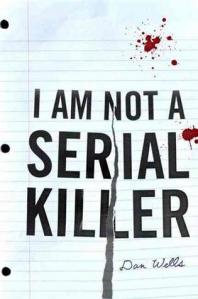 Summary:
Fifteen-year-old John Wayne Cleaver is not a serial killer. At least not yet. John’s therapist believes he has Antisocial Personality Disorder, commonly known as sociopathy, although he can’t legally deliver the official diagnosis until he’s 18 years old. But both his therapist and himself hope John can learn to control his illness in the meantime. An illness John refers to as Mr. Monster. This becomes more difficult as a serial killer shows up in his town. John starts to wonder if he can harness Mr. Monster to find and kill the killer. A killer he soon learns is supernatural and ultimately faces. The demons continue coming to his town, and John feels his grasp on control and an ability to function in average society slipping. Are there really more and more demons coming to his town? Or is it just his sociopathy getting the better of him?
Review:
This trilogy starts with an incredible bang, but makes a slow trajectory downward to end on a whimper.
The first book is incredible. It bashes ableism on its head by featuring a main character who is a teenager struggling with a mental illness, and not an easy one to identify with either. People with APD lack empathy, which can make it difficult to empathize with them in return. Wells carefully crafts a realistic yet sympathetic teenager with APD. His struggles to defeat his mental illness and be a functioning member of society are great to see in a novel period, let alone in a YA one. On top of this, we have a single mother running a business with the help of her just graduated high school daughter and part-time help of her teenage son. It’s the perfect mix of non-traditional and yet not off the wall family to have as a backdrop for John. We have all this, then, with a thriller plot that starts with the hint of a serial killer then deliciously builds to the revelation that the killer is a demon. This fantasy element fits perfectly in with what is hot in YA right now, giving an interesting, unique main character an appealing wrapping.
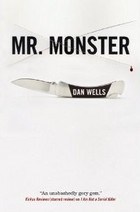 I was stoked after reading this and had high hopes for the trilogy. The middle book maintains some of the elements that made the first book amazing but missed on others. On the plus side, John is still who he was in the first book, although with more confidence. He tries to date, and his family has their own struggles. Although the thriller pacing is less deftly done, it still works in the context of this book, particularly since the middle book of a trilogy is traditionally setting things up for the last hurrah of the final book. Plus this book manages to accomplish two things. It has John learning more about himself and his mental illness and it shows him learning more about demons. It ends on a powerful note with him inviting one of the demon’s friends to Clayton County to face off with him. He’s tired of waiting for things to come to him and is ready to go on the offensive. Thus, although this book wasn’t as strong as the first, I had high hopes that it was setting us up for a powerful final book in the trilogy.
Things really fall apart in the final book, which is what makes the trilogy taken as a whole disappointing. Everything is building toward the final book. Toward what John ultimately learns and what he ultimately becomes. Unfortunately the answers to both of those questions are a major let-down after the unique and albeism-smashing features of the first two books. In the climactic scene, John’s mother sacrifices herself to save her son. When he loses her, he realizes that he is feeling feelings. He’s feeling the pain of losing her. When he realizes this, the lightbulb goes off in his head that he stopped feeling feelings when his father abandoned them. It was just him trying to deal with his broken family. I shit you not. And then he decides he has been healed by his mother’s death. His mother’s sacrifice opens him up to letting himself feel things again. What. The Fuck.
 First of all, going numb after being badly emotionally hurt is a real thing. But it’s not a real thing that would be mistaken by a therapist as Antisocial Personality Disorder. And being numb doesn’t mean a person starts daydreaming about killing everyone around him and the girls he has crushes on in particular. Numb is not the same as lacking empathy, and it honestly doesn’t even take a therapist to see that. Numb looks and feels different from sociopathy. They are not the same thing and simply could not be mistaken for each other. If we decide that perhaps Wells didn’t mean to imply that John was simply numb and didn’t have sociopathy, then we can only read this as saying that John’s father abandoning the family *caused* his son’s sociopathy and that his mother’s sacrifice cured it. I’m sorry, but your dad running off does not give people Antisocial Personality Disorder, and it certainly isn’t cured in the span of 10 minutes by someone sacrificing their life for yours. (By the way, does anyone see the heavy-handed religious symbolism in that? Because it is definitely there). The cause, as with many mental illnesses, is officially unknown but is believed to be a combination of genetics and severe environmental factors such as child abuse (source). Since John is not abused, then we can only assume that in his case his APD is genetic. It is utterly ridiculous to present the matter as his APD being caused by something as simple as a parent leaving. Similarly, there is no cure for APD. People do not get magically better overnight. It can be managed so a person may have a healthy, normal life, but it does not just disappear. The symptoms do sometimes become less severe on their own in a person’s 40s (according to the DSM-IV-TR), but John is not 40, and he doesn’t suddenly get better thanks to aging. The whole climax of the series turns the series from being about a person with a mental illness learning to function and do positive things into a story about how a father abandoning his family destroyed them and almost ruined his son for life. The former is unique and powerful. The latter is heavy-handed and preachy. Plus that whole dynamic belittles mental illness and makes it out to be just overcoming a bad part of your life, rather than the very real illness that people deal with every day.
So what we have here is a trilogy that starts as one thing and ends as another. It starts as a thriller with a unique main character demonstrating dealing with mental illness in an engaging, realistic manner. It ends with a thriller that quickly goes from spine-tingling to heavy-handed and preachy. It is unfortunate that this preachiness also gets the facts about a mental illness wrong and presents these false ideas to a YA audience in such an attractive, fantastical thriller wrapping. Ultimately the writing is good but the last book in the trilogy takes a nose-dive when it comes to facts and the realities of having and living with a mental illness. Thankfully, one can read the first or first two books in the trilogy without reading it all. There are not major cliffhangers that compel the reader to continue on, and the first two books stand on their own well enough. I’m disappointed that the series as a whole is not something I can recommend whole-heartedly. I’m disappointed that after starting out so strong, Wells went so far astray. That doesn’t change the quality of the first two books, though, so I still recommend them. But only if you’re capable of leaving a series partly unread.
3 out of 5 stars
Source: PaperBackSwap, Audible
Books in Series:
I Am Not A Serial Killer
Mr. Monster 
I Don’t Want to Kill You
Book Review: I Don’t Want to Kill You by Dan Wells (Audiobook narrated by Kirby Heyborne) (Series, #3)
Summary:
Teenaged John Cleaver had his sociopathy under control but when his town was plagued with two different demons, he had to let it loose a bit to fight them. He invited the demon Nobody to come face off with him, but he and those around him are left wondering if Nobody is real or if John’s sociopathy has just gone out of control. Meanwhile the teenage girls of the town are committing suicide left and right, and John can’t help but wonder why he’s ever tried to save anybody.
Review:
This is one of only a few YA series that I’ve enjoyed reading. The paranormal/youth aspect are almost like a Dexter lite, which is enjoyable. I must say, though, that I was disappointed by the ultimate ending to the series. However, since I write up series review posts every time I finish a series, I’ll leave my analysis of the series as a whole to that post, which will be coming up next. For right now, let’s look at the final book on its own merit.
The plot this time around was disappointingly full of obvious red herrings. I knew within the first chapter where Nobody was hiding, and it was kind of ridiculous that talented, intelligent John was missing it. Similarly, I found the serial killer who John identified as who he could end up being if he made the wrong choices to be a bit heavy-handed. John was already well aware of the risks of his sociopathy from the very first book. It felt a bit unnecessary to make this such a strong plot point. It came across as preachy, which is something that this series had avoided so far. Similarly, John goes to see a priest at one point in his investigations, and his conversations with him felt a bit too heavy-handed, almost like the (known religious) Wells was preaching at the readers through the priest. Authors are allowed their opinions and perspectives, but preachiness is never good writing. Perspective and opinion should be shown eloquently through the plot and characters.
Speaking of characterization, John was still strongly written, but his mother and sister were another story. They felt less like they were doing what was logical and more like they were doing what needed to be done to move the plot forward. On the other hand, I really enjoyed John’s new girlfriend. She was well-rounded and realistic. Plus she was fit while being curvy, which I think is a great thing to see in a book.
In spite of the slightly obvious plot, I still was engaged to get to the end. Even though I knew whether or not there was a demon and who the killer was, I still deeply wanted to see how John would handle it. The audiobook narrator, Kirby Heyborne, helped with this momentum. His narration was just the right amount of tension while still remaining in a teenager’s voice. Be warned, though, that there is some yelling in the book, so the volume does spike considerably at a few points in the narration. You may want to keep the volume a bit lower than usual to accommodate this.
Unfortunately, where the plot ultimately ended up was deeply disappointing to me. It was not at all a satisfying ending, and from a mental illness advocacy perspective, I actually found it distressing. Whereas John’s sociopathy previously was handled with a lot of scientific understanding, I found the ending of this book to be completely out of touch with real sociopathy. While it wasn’t offensive per se, it drastically oversimplifies sociopathy, both its treatment and its causes, which is just as bad as demonizing it. I will address this issue more fully in the series review, but suffice to say that I found the ending to this book’s individual mystery and the series as a whole to be disappointing, particularly given the potential of the book.
Overall, then, this is an average book that wraps up an above average series. If you are someone who is fine with stopping things partway through, I’d recommend just stopping with the previous book in the series, Mr. Monster. But if you are interested in the overall perspective, this book is still an engaging read that doesn’t drag. It just might disappoint you.
3.5 out of 5 stars
Source: Audible
Previous Books in Series
I Am Not A Serial Killer
Mr. Monster
Counts For:

Book Review: Braided by Elora Bishop (Series)
 Summary:
A lesbian retelling of Rapunzel. Gray, a witch’s daughter, visits Zelda every day. The witch switched Gray’s fate into Zelda, so now Zelda is the one entwined with the spirit of the tree that the people worship. She must live on the platform and every day lower her hair for people to tie ribbons and prayers into. Gray feels horrible guilt over their switched fates, but she’s also falling in love with Zelda.
Review:
I’m a sucker for fairy tale retellings, although I can be fairly picky about whether or not I like them. But Rapunzel is a tale that is not redone often enough, in my opinion, and the fact that it was a lesbian version made me jump at this novella.
It’s nice that the retelling doesn’t just change the genders of the main romantic pairing and leave it at that. In the original version, a married couple steal from a witch’s garden and in payment they must give her their unborn child who she then locks up into a tower. She would let her long hair down for her witch/mother to use as a ladder to get into the tower. A prince years later hears her singing in the tower and helps her escape. In this retelling, the people worship a tree. When the tree starts to die they tie its spirit into a person. That person lives on a platform in the tree and the people pray to him/her. When the person dies, the fate to be tied to the tree randomly chooses a baby by putting a tree pattern on their chest. This fate is supposed to be Gray’s, but her mother somehow acquires another baby, Zelda, and with magic cuts the fate out and ties it to her instead. Gray knows this and at first visits Zelda out of guilt but eventually falls in love with her. This version, surprisingly, is actually a lot more fantastical and magical. There is even a quest within an alternate dimension/dream world. I enjoyed the increase in the otherworldly feel, and I liked that it lent the twist of a parent trying to protect her child rather than a mother smothering her child.
The writing has an earthy, magical quality to it. It’s definitely language that is looking to be pretty, and it mostly succeeds. The romance between Zelda and Gray is sweet and very YA. Their passion revolves entirely around kissing and holding. I like that it gives a soul and connection to the romance without ignoring the physical aspect. It’s the perfect balance for this type of story.
While I enjoyed reading the story, I must admit it wasn’t my ideal retelling of Rapunzel. I didn’t like the religious aspect that was drawn into it, and I did feel that Zelda falling for Gray was a bit fast, particularly given the fate switching aspect of the story. I was also disappointed to see that in spite of all the other changes in the story, the Rapunzel character is still blonde. I’m not sure why no one ever seems to change this when retelling Rapunzel.
Overall, this is a fun retelling of Rapunzel, particularly if you’re looking for a non-heteronormative slant or enjoy a more magical feel. Note that this is part of a series entitled Sappho’s Fables
4 out of 5 stars
Source: Amazon

Book Review: Above Ground by A. M. Harte (Series, #1)
 Summary:
Lilith Grey has spent her entire life living below ground–among the lucky descendants of the humans who escaped there before catching the virus that turned the rest of humanity into monsters from fairy tales. But one day Lilith and her friend Emma get temporary vaccines and go above ground to a tourist theater to view these vampires and shapeshifters in person. When everything goes horribly wrong, Lilith finds herself whisked away from the carnage on the back of a werewolf. Can she ever get back below ground?
Review:
I was hesitant to accept a YA book for review, since the genre is not one I tend to enjoy. But I had previously read and thoroughly enjoyed a book by this indie author, so I decided to give it a go. Her other work, Hungry For You
The basic concept is intriguing. Many post-apocalyptic stories feature humans living in bomb shelters or other similar underground enclosures but not for the reasons put forth in this novel. This unique twist is what I’ve come to expect from Harte’s writing, and it definitely was the part of the story that kept me reading. Seeing how the mutated humans lived above ground versus how the non-mutated lived below ground was intriguing and interesting. I wish more time had been spent building this world and less on the emotions of the main character (not to mention her friend, Emma, and the werewolf, Silver). The scifi explanations for the fantastical creatures was also engaging, but again not enough time was spent on it. Similarly, while the typical werewolves and vampires exist among the infected above ground, there are also the more unique such as the ewtes who mutated to live in the water but can walk on the ground with water tanks. Actually, I could have easily spent an entire book among the ewtes. They were far more interesting than our stereotypical main character Lilith. The world and minor characters are what kept me reading….not the plot or main characters.
The initial plot set-up is painfully stereotypical. Clueless teenage girls wind up in danger. Two men save them. One is an angst-ridden werewolf. The other is a mysterious, handsome intelligent fella. The girls protest they can care for themselves but the reader can see they can’t really. The main teenage girl feels inexplicably pulled to the werewolf angst man. The werewolf angst man feels drawn to the teenage girl and angsts about it. And on we go. The last few pages of plot, thankfully, didn’t take the typical turn, but honestly the pay-off was incredibly minor compared to the rest of the stereotypical YA plot. Even just making it a teenage boy from below ground saved by a female werewolf would have been a change enough to make me more interested. I also was disappointed to see no depth or examination of the human condition here, which I saw in Harte’s previous work. I was excited to see what depth she could bring to YA but she didn’t even bring an empowered female main character to the genre. Quite disappointing.
Ignoring my own quips with the plot and main characters, the book simply does not read like a solid first entry in a series. It gives the reader mere tastes of what we want to know from a first book in a series, like who the DEI are and why everyone is afraid of them, while lingering on things like how the main character craves the werewolf. That is fine if it was a paranormal romance, but it feels more like it is meant to be a post-apocalyptic/dystopian style novel. A clearer world needs to be established and characters more fully fleshed-out if they are to hold up a whole series. There has to be a clear world and a three-dimensional main character set up before the danger if the reader is to feel any connection or caring at all. As it is, I mostly just wanted to wander off and follow the ewtes.
Overall, then, this is definitely a book for YA fans only. It’s the basic plot from YA with a twist set in a unique future world that was fun to visit. YA fans will have to try it out for themselves to determine how much they will enjoy that visit.
3 out of 5 stars
Source: Kindle copy received from author in exchange for my honest review

Giveaway! The author is running a giveaway along with her month long blog tour. Check out the rafflecopter for details!
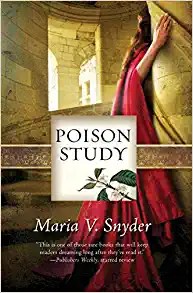
Book Review: Poison Study by Maria V. Snyder (Series, #1) (Bottom of TBR Pile Challenge)
Summary:
Yelena is on death row for killing a man in the military state of Ixia but on the day of her execution she faces a choice. Become the Commander’s food taster and face possible death by poison every day or be hanged as planned. Being a smart person, Yelena chooses the former. Now that she has admittance to the inner circle of the military state, she quickly comes to see that not everything is quite as it seems….not even her own personal history or her heart.
Review:
*sighs* You guys. I have got to stop letting people convince me to pick up books using the phrase, “I know you don’t like [blank] but!” That is how this book wound up on my tbr pile. “I know you don’t like fantasy, but!” and also “I know you don’t like YA, but!” oh and “I know you don’t like romance in YA, but!” A reader knows her own taste. And I don’t like any of those. I still came at it with hope, though, since I did like one fantasy book I read this year (Acacia). There’s a big difference in how they wound up on my pile though. I chose Acacia myself because its reviews intrigued me. Poison Study was foisted upon me by well-meaning friends. So, don’t get my review wrong. This book isn’t bad. It’s just what I would call average YA fantasy. Nothing made it stand-out to me, and it felt very predictable.
The world of Ixia felt similar to basically every other fantasy world I’ve seen drawn out, including ones friends and I wrote up in highschool. Everyone has to wear a color-coded uniform that makes them easily identifiable. There are vague similarities to the middle ages (like Rennaisance-style fairs). There are people in absolute control. There is magic and magicians who are either revered or loathed. There are all the things that are moderately similar to our world but are called something slightly different like how fall is “the cooling season.” Some readers really like this stuff. I just never have. I need something really unique in the fantasy world to grab me, like how in the Fairies of Dreamdark series the characters are tinkerbell-sized sprites in the woods who ride crows. That is fun and unique. This is just….average.
Yelena’s history, I’m sorry, is totally predictable. I knew why she had killed Reyad long before we ever find out. I suspected early on how she truly came to be at General Brazell’s castle. I didn’t know the exact reason he had for collecting these people, but I got the gist.
And now I’m going to say something that I think might piss some readers off, but it’s just true. What the hell is it with YA romance and exploitative, abusive douchebags? This may be a bit of a spoiler, but I think any astute reader can predict it from the first chapter who the love interest is, but consider yourself warned that it’s about to be discussed. Yelena’s love interest is Valek, the dude who is the Commander’s right-hand man and also who offers her the poison taster position and trains her for it. He manipulates her throughout the book, something that Yelena herself is completely aware of. There are three things that he does that are just flat-out abusive. First, he tricks her into thinking that she must come to see him every two days for an antidote or die a horrible death of poisoning. (Controlling much?) Second, he sets her up in a false situation that she thinks is entirely real to test her loyalty to him. (Manipulative and obsessive much?) Finally, and this is a bit of a spoiler, even after professing his love for her, he asserts that he would kill her if the Commander verbally ordered it because his first loyalty is to him. What the WHAT?! Even the scene wherein he professes his love for Yelena he does it in such a way that even she states that he makes her sound like a poison. There’s a healthy start to a relationship. *eye-roll* All of this would be ok if Yelena ultimately rejects him, asserting she deserves better. But she doesn’t. No. She instead has happy fun sex times with him in the woods when she’s in the midst of having to run away because Valek’s Commander has an order out to kill her. This is not the right message to be sending YA readers, and yet it’s the message YA authors persist in writing. I could go into a whole diatribe on the ethics of positively depicting abusive relationships in literature, especially in YA literature, but that should be its own post. Suffice to say, whereas the rest of the book just felt average to me, the romance soured the whole book. It is disappointing.
Ultimately then, the book is an average piece of YA fantasy that I am sure will appeal to fantasy fans. I would recommend it to them, but I feel that I cannot given the positively depicted unhealthy romantic relationship the main character engages in.
2 out of 5 stars
Source: PaperBackSwap

Book Review: Dark Life by Kat Falls (Series, #1) (Bottom of TBR Pile Challenge)
 Summary:
Ty was the first person born subsea. His family are settlers on the bottom of the ocean, a new venture after global warming caused the Rising of the seas. Ty loves his life subsea and hates Topside. One day while adventuring around in the dark level of subsea, he stumbles upon a submarine and a Topside girl looking for her long-lost older brother. Helping her challenges everything Ty believes in.
Review:
This is one of those rare YA books that gives me renewed hope for the genre. There are no stupid love triangles. The adults are intelligent and good parents. There are bigger worries than who you’re taking to prom. There’s adventure but no gratuitous violence. Romance but in a healthy way. Basically, it’s everything you’d hope for in a YA book. I’d gladly hand this to any teen or preteen looking for a good read and feel happy in doing so too.
The post-apocalyptic setting is unique, intelligent, well thought-out, and supported by science. Creating a new American frontier under the ocean is delightful, and Falls draws on the American pioneer experience in cute, tongue-in-cheek ways. For instance, the settler kids call their parents “Ma” and “Pa.” They earn their acres by successfully farming them for 5 years (a common time-frame in the old west). Plus, the world is different beyond subsea as well, reflecting drastic changes that would occur with such a huge change in the world. There are people called “floaters” who live in houseboats. Those who still live on land live in huge skyscrapers, and everyone sends their kids to boarding schools. Perhaps most interestingly is the fact that ever since the falling of the land into the ocean the US has been under “emergency law.” A harrowing possibility to any astute YA reader today.
Ty and Gemma are adventurous and intelligent yet still flawed in their own ways. Gemma can be too impulsive, Ty too cautious. This is naturally part of what makes them a good potential couple. They balance each other. Similarly, Ty’s parents are smart and caring, yet still capable of being wrong sometimes, even though well-intentioned. They’re an example of the type of parent we hope most kids will have. In contrast, Gemma is an orphan with an evil boarding school mistress to provide an adult for kid to hate.
The plot is deliciously complex and for once I actually did not guess the ending. It left me surprised and happy simultaneously. Falls does not take the easy way, but she also doesn’t use any lame deus ex machinas.
I feel my review is not doing this book justice. Suffice to say it is a richly complex world she has created, filled with characters that are worthy of being looked up to but with interesting scifi elements to keep the interest level high. I found myself never wanting to leave the subsea world and sort of wishing living subsea was an option in real life.
Overall, I recommend this to fans of YA scifi, but also to anyone with a curiosity about what it might be like to live on the bottom of the ocean as a new pioneer.
5 out of 5 stars
Source: PaperBackSwap

Book Review: Z for Zachariah by Robert C. O’Brien (Bottom of TBR Pile Challenge)
 Summary:
Sixteen-year-old Anne Burden has been living alone in her family’s farming valley ever since nuclear war left everything around the edges dead. She’s created a quiet, calm life for herself and the animals left alive until one day she sees smoke on the horizon. A man enters the valley in a radiation-proof suit. At first Anne is cautious but then happy to no longer be alone. Soon, however, the man’s sinister side starts to show.
Review:
This is a complex, thought-provoking with a surprise ending that is a bit….off-putting.
Anne Burden is a surprisingly pulled together gal for someone who just lost everyone and everything she knew to nuclear holocaust. She has a surprising amount of faith and is accepting of her fate. Her buddhist-like nature is admirable, but does seem a touch unrealistic.
There are many complexities in the plot that have no easy answers and keep the reader thinking. Is the man a bad guy or has the radiation poisoning simply addled his brains? Is it best to stay put where you are temporarily safe or take a risk and seek out other survivors? What things are ok to do to survive and what things are not? These deep questions, questions that have nothing to do with the school dance or which boy to choose are refreshing to see in YA. Putting the main character into extreme situations allows O’Brien to bring up more serious life questions. Although I don’t always agree with Anne’s decisions, I do respect her thought process.
The ending came kind of out of left field for me, and I am still dissatisfied with it. Anne’s decision to run instead of to stay and fight is an odd choice for a YA book. In fact the book reads very pacifistic, almost dangerously so. Running is not always an option. Sometimes you have to stand and fight. Hold your ground. Similarly, I do not believe the man would have given Anne any genuine tips on which direction to go out of sudden remorse. It seems out of character and done simply to give a more eloquent couple of closing paragraphs.
Thus, the book is a fast-paced read with important life questions. The main character makes some questionable decisions, though, and I am not entirely comfortable with the ultimate message it contains. I recommend it to fans of YA or post-apocalyptic fiction capable of taking the message with a grain of salt.
4 out of 5 stars
Source: PaperBackSwap

Book Review: A Crack in the Line by Michael Lawrence (Series, #1) (Bottom of TBR Pile Challenge)
 Summary:
Alaric lives in the crumbling Withern Rise house with his widowed father. Nothing has been the same since his mother’s death in a train accident two years ago. Now his dad is off helping his girlfriend get ready to move in with them, and his crazy Aunt Liney is there to keep an eye on him. Miserable, he touches a carving his mother made of the house from wood from the family tree years ago and finds himself transported to a parallel universe where a girl, Naia, is living his life–only with their mother still alive.
Review:
This may be one of those YA books that only someone in the midst of teen angst can truly appreciate, or perhaps an adult with a strong fear of losing their mother.
Alaric is an angsty teen, perhaps with good reason, but he’s annoying nonetheless. Thankfully, his Aunt Liney is present, and she is a breath of fresh air. The long-suffering, quirky aunt who was almost aborted and does not exist in the alternate reality is clearly important, but we never find out why. Probably this is key later in the trilogy, but I doubt I’ll struggle through simply to find out just how she’s a key factor. I also must admit that I find the obvious pro-life slant in Aunt Liney’s storyline annoying.
Although Alaric’s motivation for coming to and continually returning to the Naia’s parallel universe is clear, her motivations are not. Her world seems quite ideal, and Alaric is an unwelcome intrusion into it. She does not seem to possess a naturally curious or quizzical nature. This leaves half of the plot, Naia’s part in it, unclear.
The parallel worlds are interesting, but not nearly as creative as, say, Stephen King’s. The differences are all incredibly minor, based off of decisions and chances playing out in two different scenarios. A baby could be a boy or a girl. A mother could live or die. A sister could be aborted or kept. Yet how Lawrence draws the line on what counts as a chance or a decision is very unclear. Is every single choice and instance a decision? That would make the universes go on forever, which just seems highly illogical and improbable. I simply could not sustain my disbelief quite enough to get into it.
All of that said, I could see a teenager enjoying this story. Particularly one upset with his parents or wishing his life was minutely different in some way. I thus recommend it to a teen into fantasy and the concept of parallel universes.
3 out of 5 stars
Source: PaperBackSwap

Book Review: The Flight of the Silver Vixen by Annalinde Matichei (series, #1)
 Summary:
Somewhere in outer space is an alien race consisting entirely of females. It’s not that the men are missing; they never existed. This race is known as intermorph, and those like our own are schizomorph. A teenage hover bike gang steals a space craft and finds themselves on a troubled intermorph planet where they must band together and fight as warriors against demons, internal enemies, and a neighboring aggressive schizomorph race.
Review:
This book reads distinctly like what would happen if you gave a bunch of ten year old girls the ability to record their imaginary playtime into a book and try to sell it. Everything from the dialogue to the plot screams, “A bunch of ten year old girls who like being girls but still think boys have cooties wrote this one day playing in their back yard.”
The writing is really bad. Clear characterization is almost non-existent. I was still uncertain as to who exactly various people were at the end of the book. The dialogue reads as so fake that it makes you cringe. It’s full of made-up words and ways of speaking that aren’t explained at all until a glossary at the end of the book. For example, the intermorphs don’t swear, but they do exclaim “g’doinking” when upset. See what I mean about ten year old girls? If I was, for instance, a middle school English teacher, I could see some merit in the writing and would encourage the young person to continue. This, however, is not a middle school English class. This is supposed to be a well-written, well-realized, novel. It is not.
Then there is the whole entire concept in and of itself. A race of just women absolutely can be a creative way to explore gender and sexuality, and I’ve seen it done well by famous feminist scifi authors. This is not done well, however. The intermorphs are all either brunettes or blondes with the brunettes fulfilling the traditional male role, and the blondes fulfilling the traditional female role. Everything about how they interact is a carbon copy of a traditional patriarchy. Just because both genders have vaginas doesn’t make how the brunettes treat the blondes less offensive. I also was incredibly disturbed at how the female main characters talked about the male schizomorphs. They referred to them as “it” and as animals. Even beards on men were degraded and feared. It’s the first time I’ve seen a book somehow manage to be both misogynistic and misandrist. This in and of itself is enough to warrant one star from me, even if the writing was good. This is not a healthy way to perceive men, women, gender, or sexuality.
I absolutely cannot recommend a piece of bad writing full of unhealthy perceptions of gender and sexuality to anyone. My hope is that the author is still quite young and with time will grow to more mature opinions, as well as more mature writing.
1 out of 5 stars
Source: Kindle copy received from author in exchange for my honest review

 Support my work with a tip or browse my shop for curated book club guides, how to guides, cross-stitch patterns, and more!


This work by Amanda Nevius is licensed under a Creative Commons Attribution-Noncommercial-No Derivative Works 3.0 United States License.
 Opinions of a Wolf