
Archive
Book Review and Giveaway: A Harvest of Ripe Figs by Shira Glassman (Series, #3)
 Summary:
Esther of the Singing Hands is Perach’s Sweetheart, a young and beautiful musician with a Girl Next Door image. When her violin is stolen after a concert in the capital city, she doesn’t expect the queen herself to show up, intent upon solving the mystery. But Queen Shulamit — lesbian, intellectual, and mother of the six-month-old crown princess — loves to play detective. With the help of her legendary bodyguard Rivka and her dragon, and with the support of her partner Aviva the Chef, Shulamit turns her mind toward the solution — which she quickly begins to suspect involves the use of illegal magic that could threaten the safety of her citizens.
Review:
When this was submitted to me as a possible review copy for 2016, I was immediately intrigued by a queer fantasy cozy. Often LGBTQ books can land too much in the “issues” genre or the romance genre. This is a place where indie books excel. Traditional publishing can be a bit hesitant to offer up any other genre with queer people at the center, but indie books know that there is a demand for this. LGBTQ people read all genres, why shouldn’t our books represent that? After I read this book I wanted to advertise it from the rooftops for precisely that audience — LGBTQ people who just want to see themselves represented in their favorite genre of literature.
If you’ve ever wanted a cozy fantasy series where the main characters just so happen to be queer, this is the series for you. And don’t worry about reading out of order if you happen to start with this one. In traditional cozy fashion, each tale is perfectly capable of standing on its own, and you can read them in whatever order you like.
The one thing I would say for cozy readers is while most of this book is traditionally cozy (not too violent of a mystery, a lovely town you’d love to visit) the sex in it is more explicit than what is traditionally found in a cozy. Rather than fading to black we get some light (very light) sex scenes. I enjoyed these scenes but readers who don’t expect that in a cozy should be aware.
In addition to there being multiple queer characters, not to just one, (lesbian, bisexual, gender nonconforming, trans), feminism is also a natural part of the read. Women are in positions of power without giving up their femininity or other life choices, such as having a baby. Sometimes Shulamit, the queen, can verge into a bit preachy, but I felt that was acceptable since she is a queen, after all, and rulers have a tendency to be preachy.
In addition to the diverse cast with a strong female presence, this fantasy land is centered around Judaism and what I believe to be a Middle Eastern inspired area. It’s a non-medieval Europe fantasy, and we all know how hard those are to find. While I am not Jewish myself, I have close friends who are, and I know how hard it can be for them at times to feel that their culture isn’t represented in fictional universes. I think having a kingdom that is undoubtedly Jewish would be something many of them would enjoy. A fantasy world where shops need to close up by sunset on Friday, for instance.
The mystery was probably my favorite part of the book. I truly wasn’t 100% certain who’d done it throughout the book, and I thought that it was both a crime of serious nature with an important time frame for solving it without being bloody.
While I enjoyed visiting the world Glassman has imagined what I thought most while reading this was how much I wanted to help get it out to the audience whose hearts would thrill to see themselves represented in the genres they enjoy most. If you’re a queer and/or Jewish reader who wants representation in fantasy and/or cozies, you must try out this series.
If you found this review helpful, please consider tipping me on ko-fi, checking out my digital items available in my ko-fi shop, buying one of my publications, or using one of my referral/coupon codes. Thank you for your support!
4 out of 5 stars
Source: Kindle copy from author in exchange for my honest review
Length: 228 pages – average but on the shorter side
Giveaway!
This giveaway is now over. Congrats to our winner!
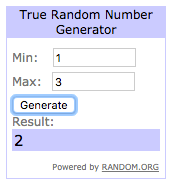
There were 3 entries, 1 via twitter and 2 via comments. Twitter entries were collected into the sheet first, followed by blog comments, in order. Random.org selected entry 2 as the winner, and the second entry on the sheet was dialmformara. Congrats!
Thanks to the generosity of the author, one lucky Opinions of a Wolf reader can win a copy of this ebook.
How to Enter:
- Leave a comment on this post stating what genre you would like to see more representation in of LGBTQ or other minority groups.
- Copy/paste the following and tweet it from your public twitter. Retweets do not count:
Enter to win A HARVEST OF RIPE FIGS by @ShiraGlassman, hosted by @McNeilAuthor http://buff.ly/2g09G9V #ff #cozy #giveaway #fantasy - Repost the Instagram giveaway announcement and tag my Instagram.
- Tag three of your friends on the Instagram giveaway announcement.
Each options gets you one entry. Multiple tweets/Instagram posts do not count as multiple entries.
Who Can Enter: International
Contest Ends: December 11th at midnight
Disclaimer: The winner will have their book sent to them by the author. The blogger is not responsible for sending the book. Void where prohibited by law.
Book Review: Rymellan 3: The Triad by Sarah Ettritch (Series, #3)
 Summary:
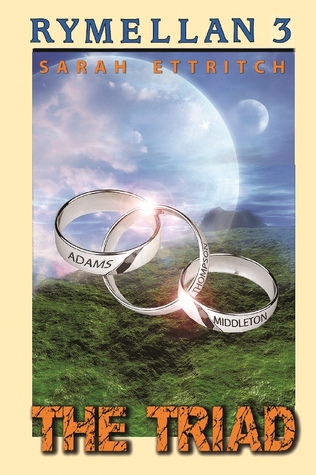
Lesley and Mo’s relationship is tested when Mo develops feelings for Jayne and the arrangement the triad struck in Rymellan 2 comes to an end. The three women know they must adapt to the inevitable changes for the triad to thrive, but the triad’s shifting dynamics would challenge the strongest of Rymellans—and does.
Review:
The second book in this series ended on such a cliffhanger that I picked up the third right away. At the time, I wasn’t sure if there would be more in the series or if this would be it. Since then, I discovered another book that has published but I don’t think I’ll be picking it up. The third book left me feeling a bit strung along with questions and no answers for too long for me to keep going.
So Lesley and Mo who we the readers presumed to be soul mates from book one find out in book two that the all-powerful government matchmakers have determined that they actually have a third soul mate and will be formed into a triad. This whole book strikes me as very similar to a real world monogamous couple where one of them falls in love with a third and them trying to make the move into polyamory. Say what you will about the government matchmaking them but their arrangement was to essentially be a couple with a live-in friend and roommate who they consult on household things. The plan was never for anyone to fall in love. But of course (because they’re Chosens) first one then eventually the other does fall in love with Jane. Thus, in spite of the government aspect, it still is essentially the same as a real world couple making the move to polyamory.
Why am I bothering to explain this? Because a lot of the book is dealing with the angst of a couple deciding to become poly. That is a plot point that will either work or not work for a lot of readers. I’m not sure how I feel about a series that starts out as being so strongly a romance between two moving into a poly romance. I’m sure many poly readers would say that’s how they themselves discovered polyamory and enjoyed it. But for me I was expecting one style of story which I really enjoy (lovers having to overcome many things to be together) and instead I got another that I feel very meh about personally (a couple choosing to open things up to polyamory). I guess what I’m saying is I think it might be difficult for the audience for this series to find it because the poly aspect is a surprising plot twist.
The other big change in this book over the others in the series was that the sinisterness of where the society they live in really hangs over this book, and what makes it extra eerie is they don’t seem to realize just how sinister it is. In a book with romance at the center, it’s an odd feeling to have.
While I’m glad to have seen where Lesley and Mo end up, this read to me as a bit of a lukewarm tragedy that didn’t realize it is one. I’d have preferred an obvious happy ever after or a truly dramatic tragedy. However, readers simply looking for a couple that turns into a romantic trio in a scifi backdrop that’s not explained will eat up this series, and I do recommend it to those readers.
If you found this review helpful, please consider tipping me on ko-fi, checking out my digital items available in my ko-fi shop, buying one of my publications, or using one of my referral/coupon codes. Thank you for your support!
3 out of 5 stars
Length: 278 pages – average but on the shorter side
Source: Amazon
Previous Books in Series:
Rymellan 1: Disobedience Means Death, review
Rymellan 2: Shattered Lives, review
Book Review: Rymellan 2: Shattered Lives by Sarah Ettritch (Series, #2)
 Summary:
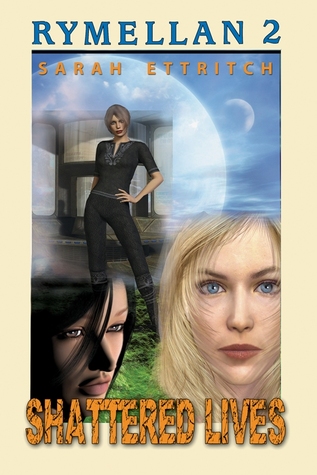
Mo and Lesley, girlfriends since they were teenagers, have spent the last two years apart awaiting their Chosen papers. Meanwhile they both continue to pursue their careers. Mo as a pilot and Lesley as a member of the Interior, ensuring Rymellans continue to follow the Way. When their Chosen papers finally arrive, they think the uncertainty is finally over. But what they reveal is just another form of it.
Review:
I enjoyed the first book in this series so much that I picked up the second immediately. The first book ends on a cliffhanger, and I just had to find out what happened with Mo and Lesley next. Would they be each other’s Chosen? Would they defy the Way to be together? Was a giant revolt coming? The answer was definitely not what I was expecting, and it certainly keeps the series unique.
While I continued to be deeply invested in Lesley and Mo’s relationship (on pause as it was during much of the book), I was disappointed to find that this book doesn’t explore deeper into any of the questions I had in the first book. I feel that the second book, particularly with its context of Lesley and Mo waiting for papers and both of them in adult jobs with more power and access to information, lends itself perfectly to explaining more about Rymel. Yet this exploration and information reveal never happens.
My questions in the first book revolving around where Rymel comes from, why it’s so not diverse, and the origin of the Way were only added onto. Who is this enemy Rymel is always preparing for? What about the bisexuals? If Rymellans aren’t actually related to us (Earth humans) at all, that’s fine. They might just only have monosexual identities. But if they are related to us, the lack of the Chosen Way dealing with bisexual/pansexual attractions is frustrating. For that matter, what about trans* people and gender non-conforming people? How exactly are children handled in the same-sex couples? People keep mentioning same-sex female couples having daughters but no one talks about how. And what about same-sex male couples? It’s such a fascinating world, and I found myself like a thirsty person a desert wanting to know more about it and how it works.
The plot goes a direction I really was not expecting. That’s not a bad thing. It surprised me and kept me engaged. There are two aspects of the plot that were unexpected. One isn’t a spoiler so I’ll talk about that first. It’s fairly clear early on in this book that Mo and Lesley aren’t the rebelling sort. They’re going to kowtow to this dystopian regime, and they believe that’s the right thing to do. It’s a different perspective to get. Usually there’s rebellion. But that doesn’t always work out for people in the real world. A lot of people choose to live their lives in safety obeying the state to stay safe, and it’s interesting to see that reflected in literature.
*spoiler*
The Chosen Council puts Mo and Lesley together, but in a Triad. A third person, Jane, is Joined with them. Triads historically haven’t succeeded, and they are extremely rare. But they do exist because sometimes the perfect match actually goes three ways. The Triad is extra complicated because Jane’s parents were famous for committing a Chosen crime (they committed adultery). They were killed and Jane was orphaned young due to this fact. Many Rymellans believe the apple won’t fall far from the tree, so Mo and Lesley being matched with her is controversial. On top of that, there’s an allowance where if two of the three believe the third will cause the Triad to commit a Chosen violation then they can say so and have the third member killed before the Joining Ceremony. That puts interesting added pressure on the group. None of this was a plot I was expecting, but also the acknowledgment of non-monogamous people was something I could see a lot of readers enjoying seeing represented in literature. Plus, it’s a good conflict to add!
*end spoiler*
Ultimately, I was still happy I read this because I was desperate to find out what happened to Lesley and Mo (and continued to be at the end of this book), but I was disappointed not to find out more about Rymel and its history here. Readers primarily interested in the romance who don’t mind the world-building being pushed to the side a bit will most enjoy the direction this series is going.
If you found this review helpful, please consider tipping me on ko-fi, checking out my digital items available in my ko-fi shop, buying one of my publications, or using one of my referral/coupon codes. Thank you for your support!
3 out of 5 stars
Length: 368 pages – average but on the longer side
Source: Amazon
Previous Books in Series:
Rymellan 1: Disobedience Means Death, review
Book Review and Giveaway: Rymellan 1: Disobedience Means Death by Sarah Ettritch
 Summary:
Lesley and Mo can’t imagine life without each other. If it were up to them, they’d settle down, raise daughters, and lead happy, fulfilled lives. But they live on the planet Rymel, in a strict society that selects life-mates for its citizens and executes those who violate their life-bonds. Girlfriends since their teens, Lesley and Mo know they should break up but can’t let each other go. They dread the day the state summons them to meet their selected mates.
Review:
This type of book is exactly the reason I collect review requests year-round from indie authors and publishers and then select a few to review the next year. It gives me a bookstore style shelf of indie books to browse through, letting me find unique books that i might otherwise have missed. This read like feel-good chick lit, only set on another planet in a strict society with a female/female main romance, and the ending left me clamoring for the next book in the series.
One thing that really stuck out to me in the book was that the central issue coming between Mo and Lesley isn’t that their (let’s face it, totalitarian) culture is against same-sex relationships. Same-sex relationships are endorsed and seem to have been part of the culture for quite some time. Potentially forever. No, what is coming between our main couple has nothing to do with homophobia, but instead everything to do with marriages arranged by the state. It’s not that Mo and Lesley can’t be with a woman. It’s that they can’t be with a woman the state hasn’t chosen for them. While plots about homophobia keeping people in love apart are valuable and needed, we also need plots like this that have nothing to do with the sexual orientation. People in same-sex relationships deserve to see themselves in a crazy scifi world where their problems come from the scifi world and not their orientation.
The book starts with Lesley and Mo in high school and falling in love. In their culture, at the age of 18 people receive notification of whether or not they are a Chosen. When they get older (sometime in their 20s….I can’t recall the precise age), from a certain age onward they could receive their Chosen Papers at any point. So basically, everyone expects Lesley and Mo to break up at that age or sooner to be fully prepared for their Chosen. Obeying this law is just one of several ways in which Rymellans follow The Way. The Way is supposed to protect Rymellan culture and make the society the strongest it can be. There isn’t just pressure to conform to The Way. Those that don’t, as the subtitle of the book suggests, will be executed. This is a totalitarian regime after all.
Beyond the relationship and world set up, I also liked how the book follows Lesley and Mo through their young adult choosing of career paths. This transition from high school to career preparation felt very new adult in a good way. Plus, Lesley and Mo both end up choosing career paths that I feel aren’t often represented in literature, and I liked seeing that career path both shown and respected.
Throughout the book I felt compelled to keep reading for two reasons. I was really rooting for Lesley and Mo to be together, and I wanted to know more about this society. Why is The Way such a thing? Will they end up fighting it? What is the big enemy that Rymel is so afraid of and lives constantly preparing for fighting? Are Rymellans related to people from Earth? Are they humanoid aliens?
Readers should be aware that this is what would be considered a clean romance. The feelings the characters have for each other are central and no sex is shown, although it is assumed that people have it and kissing is seen.
Part of these questions were driven by a lack of racial and cultural diversity in the book. I can’t recall there ever being a non-white character or a non-European last name. It made me wonder if this planet was colonized by a small group of white Europeans exclusively, and if so, why? The lack of diversity on such a large planet and in locations with what one would presume is a cross-section of Rymellans did bother me but I also assumed that there was a world-building answer for it. Additionally, the Rymellan culture struck me as so evil and awful that of course the lack of diversity would later come up as one of the many awful things that The Way had enforced, and I eagerly anticipated (in an oh gosh that’s going to be an awful scene way) seeing the answer to this question.
Of course, the book ended with no answers to these questions, which didn’t surprise me since it’s the first in the series. In fact, I would say it ends on a cliffhanger and left with me with even more questions, but of course I then just felt compelled to immediately pick up the next book in the series.
Readers looking for a female/female clean romance with a scifi setting and something keeping the characters apart that isn’t homophobia should pick up a copy right away. If there was some way to send out a bat signal to precisely that demographic, I would, because I know people looking for that often struggle to find it in among the many options of f/f books. So, if that at all describes you, pick up the book! And if it describes the reading preferences of a friend, tell them about it. I’m sure they’d be grateful to you. And the author.
If you found this review helpful, please consider tipping me on ko-fi, checking out my digital items available in my ko-fi shop, buying one of my publications, or using one of my referral/coupon codes. Thank you for your support!
4 out of 5 stars
Length: 392 pages – average but on the longer side
Source: Kindle copy from author in exchange for my honest review
Giveaway!
This giveaway is now over. Congrats to our winner!
There were 3 entries, all via twitter. Random.org selected entry 1 as the winner, and the first to tweet the giveaway was @helenadamop. Congrats to Helen!


Thanks to the generosity of the author, one lucky Opinions of a Wolf reader can win a copy of this ebook.
How to Enter:
- Leave a comment on this post stating if you would trust Rymel to pick a spouse for you.
- Copy/paste the following and tweet it from your public twitter. Retweets do not count:
Enter to win RYMELLAN 1 by @SarahEttritch, hosted by @McNeilAuthor http://buff.ly/1rnSyjP #ff #scifi #romance #lesfic
The blog comment gets you one entry. Each tweet gets you one entry. You may tweet once per day.
Who Can Enter: International
Contest Ends: May 18th at midnight
Disclaimer: The winner will have their book sent to them by the author. The blogger is not responsible for sending the book. Void where prohibited by law.
Book Review: If You Could Be Mine by Sara Farizan (Audiobook narrated by Negin Farsad)
 Summary:
Seventeen-year-old Sahar wants three things in life: 1) to become a doctor 2) for her widowed father to come out of his depression and be the Baba she once knew 3) to marry her best friend Nasrin. The problem is, she lives in Iran, and she and Nasrin could be imprisoned and beaten for just their stolen kisses in private, let alone if they tried to marry each other. When Nasrin’s parents announce that they’ve arranged a marriage for her to a well-to-do doctor, Sahar is heartbroken. Nasrin thinks they can continue on as they have been, but Sahar wants to love her exclusively, and she is determined to find a way.
Review:
This book was all the rage on GLBTQ book blogs a couple of years ago, and it’s been on my tbr pile ever since. When I saw it on Audible and heard a clip of the narration, I knew it was time to read it. I found an interesting, unique piece of YA.
First, let me say, if you at all enjoy audiobooks and have the chance to listen to this rather than read it in print, please do so. Farsad’s narration adds so much to the book. From her light Persian accent to her unique voice for each character to her perfect pronunciation of Persian words and Iranian place names, her narration made the reading of the book much more immersive than it would have been if I had read it in print. Plus, at just over 5 hours, you can read it very quickly. I finished my copy in under a week, thanks to commutes and runs.
Let’s start with the things in this book that really worked well for me. First, I really appreciated seeing a teenage girl’s relationship with her single father at the forefront. It’s difficult to find a YA book talking much about a girl’s relationship with her father, let alone a single father. The book pushes beyond even this though and addresses how a parent’s depression affects a teen. Part of why Sahar is so desperate and attached to Nasrin (bare in mind, they are only 17), is that her mother died and her father fell into a depression. He is there every day but it doesn’t feel like he is. At one point, Sahar skips school and says that her baba will not even notice. And he doesn’t. Until the school calls him directly. Her father’s depression is situational, not genetic or chemical, but it still affects him and their relationship, and I thought this and its resolution was well depicted.
The depiction of a non-western culture and issue in a book marketed to western teens is well-handled. Iran is not demonized. The good and bad sides of the country are depicted (and of course there are good and bad sides of every country). Teens who may not personally know someone from the Middle East will benefit greatly from seeing things like the fact that even Sahar’s mild father will sneak a bootleg copy of a DVD to watch but also will be intrigued by and appreciate elements of Iranian culture such as the well-protected oasis-like back yards. Farizan also does a good job establishing things like recent wars in Iran, how the current political situation came to be, etc… without infodumping.
While I sometimes found myself rolling my eyes at the level of emotion Sahar was showing, it was to the appropriate level for a teenager. Also, other people in Sahar’s life clearly see that she is acting like a teenager and attempt to lovingly and understandingly speak with her about what is going on.
Before I move into speaking about what didn’t work for me, I’d like to talk about the trans content. It’s no plot spoiler that Sahar seeks to keep Nasrin to herself by pursuing a sex reassignment (I am not calling it a gender confirming surgery because for her it is not). This is in the official book blurb, just not mine. Essentially, in Iran (and this is still true), having same-sex attractions is haram/forbidden but being transgender is not. The state will even pay for having the treatment and is known for pushing people with same-sex attraction to get a sex reassignment. Sahar meets Parveen, a transwoman, at her cousin’s party, and this plants the idea in her head that she could marry Nasrin if she gets the surgery. Now, I’m not a transperson, but I do think that the author does a good job depicting real trans people and contrasting that with Sahar’s rather adolescent idea to get to be with Nasrin. Sahar tells Parveen she thinks she’s trans, and Parveen brings her to a support group where most of the people are actually trans, except one woman, who we later find out was forced to get the sex change. Thus, both the genuine trans experience and the forced sex change experience are depicted in the book. Iran is lauded for its support of trans people (there is even one passage talking about how trans people have to pay for their own surgeries in the US unlike in Iran) but also it is clearly shown how harmful it is for the state to demonize same-sex attractions. Additionally, the trans characters do talk about how while the surgery is supported by the state, culturally they still face discrimination from some of their families, when dating, and when looking for jobs.
So what didn’t work for me? I get it that Sahar and Nasrin are adolescents, but I just could not get the appeal of Nasrin to Sahar. I felt I would have been much more empathetic to the whole situation if Nasrin hadn’t been so selfish and annoying. To be fair, multiple characters point out Nasrin’s selfishness to Sahar, and Sahar even at one point questions why she’s willing to risk so much for Nasrin. There is one scene that I believe is supposed to redeem Nasrin of her bad behavior, but I still struggled to like her or feel empathy for her. It bothers me that Sahar never tells her father about her sexual orientation, in spite of him being depicted as quite modern and understanding. I also felt that the ending didn’t push things far enough, compared to beginning of the book. I wanted more from and for Sahar. Perhaps the ending is more realistic, but it did disappoint me.
Overall, this is a unique piece of YA showing the GLBTQ experience in a non-western culture that will elicit both an understanding of a non-western culture and empathy for other life situations and experiences from YA readers. Readers will identify with Sahar’s genuine adolescent voice, which will draw them into the perhaps quite foreign-feeling situation.
If you found this review helpful, please consider tipping me on ko-fi, checking out my digital items available in my ko-fi shop, buying one of my publications, or using one of my referral/coupon codes. Thank you for your support!
4 out of 5 stars
Length: 256 pages – average but on the shorter side
Source: Audible
Book Review: Maplecroft by Cherie Priest (Series, #1)
 Summary:
“Lizzie Borden took an axe; gave her mother forty whacks….”
Any New Englander knows the nursery rhyme based on the true crime story of Mr. and Mrs. Borden who were murdered with an axe in 1892. In spite of being tried and acquitted for the murders, their daughter (in the case of Mrs. Borden, step-daughter), was widely believed to actually be responsible for the murders. In this book, she definitely was, but maybe not for the reasons you might think.
A darkness is trying to take over Fall River, Massachusetts, and Lizzie and her ailing sister Emma are all that might stand between the town and oblivion, with Lizzie’s parents being the first casualties in the battle.
Review:
I grew up chanting the nursery rhyme about Lizzie Borden the first half of which is quoted above (this perhaps says an awful lot about New Englanders, but I digress), and I also love tales from the Lovecraft universe, which also originated in New England. When I heard about this book that mashed up the two, I put it on my wishlist. Lo and behold, my future sister-in-law, who had never even seen my wishlist, bought it for me for Christmas last year. I thought this would be the perfect read for the fantasy challenge, and although it was a bit different than what I was expecting, I still enjoyed the mix of Lovecraft and women’s history that Priest has woven and am eagerly anticipating reading the sequel.
The story is told through a combination of first person accounts from Lizzie, Emma, and Nance, diary-style entries by their neighbor doctor, letters, police and fire reports, and first person ramblings of a professor from Miskatonic University (another Lovecraft element). Some readers may be put off by the combination of first person perspectives, but I’ve always enjoyed this style, particularly when it includes things like letters and police reports. I felt that it was one of the strengths of the book, and I also particularly enjoyed getting to see both Emma’s and Lizzie’s perspectives, as well as that of Lizzie’s lover, Nance.
The Lovecraft mash-up basically is that some sort of Dark One in the deep is out to turn everyone on the seacoast either into worshippers or victims or literally turn them into monstrous ones who live in the deep. Emma and Lizzie’s parents were among the first to begin succumbing to this infection and that is why Lizzie had to kill them. Lizzie and Emma now are conducting research, trying to figure out how to prevent the Dark One from actually rising up. This is all extremely Lovecraftian, including the fact that some of these developments don’t make a ton of sense, but things just don’t make sense in the dark fantasy world of Lovecraft, so I was ok with that. Readers new to the world of Lovecraft might be a bit more frustrated by how inexplicable most things to do with the Dark Ones and the deep are, however.
I particularly enjoyed how Priest explores how societal and cultural norms of 1890s New England affects women’s lives. Emma could be a scientist now that women are being accepted into colleges, but she chooses to instead write her scientific papers under a male pseudonym because she believes she would never garner respect otherwise. Lizzie and Nance are in love and must hide it, although Lizzie often feels why should she bother when she is already disgraced after the trial. The clashes between Lizzie and Emma regarding both her affair with Nance and the fact that Lizzie believes in trying out magical and fantastical defenses against the Dark One whereas Emma believes purely in science are interesting reading. They are two very different people who are thrust together both by virtue of being siblings and by the fact that as women in the 1890s their lives are limited.
On the other hand, in spite of liking the characters of the neighbor doctor and the Miskatonic professor and enjoying the exploration of Lizzie’s and Emma’s relationship and getting to see some of Emma’s character, I couldn’t help but feel that Lizzie didn’t get a chance to be enough in this book. Lizzie Borden is such a looming large figure in local history, even on the book cover she presents as a bad-ass in a period skirt holding a bloody axe. In contrast in the book she spends a lot of time dealing with her annoying sister. Similarly, I’m not a fan of the fact that Lizzie does very little of rescuing herself in this book, which is, I believe, if the historic Lizzie really did kill her parents, what she actually did in real life. To me Lizzie has always been a woman who said fucking enough and took an axe and dealt violently and finally with her problems. Whereas in the book, she starts off off-screen that way (we don’t actually see her kill her parents) and she sort of tapers off. Much as I enjoyed seeing her messed up relationship with Emma, I couldn’t help but feel it would have ended more powerfully if she’d said fucking enough and whacked Emma through the skull for being such an insufferable bitch and in the way all the time. This was my main issue with the book.
My second, more minor, issue is that I felt the plot takes too long to build up to actual horrifying events and/or murders. The first murders, as I mentioned before, happened off-screen. The beginning of the book then is a build-up of a lot of tension with not much actual gore or murder occurring. I should mention that I was watching “The Lizzie Borden Chronicles” on tv at the same time as I was reading this book. In that show, Lizzie kills at least one person an episode. Now, some of that gets over the top, but it does get the idea of the pacing one would expect from this type of story right. More mayhem. More murder. More danger. More often.
On a positive note, the scenes between Lizzie and Nance are beautifully done, and while I was frustrated to see Lizzie turn a bit into a lovesick fool, I was very glad it was happening with Nance. Their relationship and dynamic jumped off the page and really brightened up the book for me.
The set-up at the end of the book for the sequel is well-done, although I’m uncertain how the series can proceed forward so far removed from the actual historical event, I am excited to read it and see what happens.
Overall, this Lovecraft fantastical take on the Lizzie Borden of history and what led to the murders of her parents hits just the right note for Lovecraft fans. Readers who are new to the dark fantasy world of Lovecraft may be a bit surprised by the slow burn of the horror and how much of it winds up not making much sense, but those readers who can embrace this style of dark fantasy will enjoy it. Those looking for a bad-ass Lizzie should be aware that this Lizzie only acts when absolutely necessary and then with restraint, and they should perhaps tune into the made for tv movie Lizzie Borden Took An Ax instead. Recommended to fans of Lovecraft who are interested in getting some local history woven in to the New England settings they are familiar with from the Lovecraft universe.
If you found this review helpful, please consider tipping me on ko-fi, checking out my digital items available in my ko-fi shop, buying one of my publications, or using one of my referral/coupon codes. Thank you for your support!
4 out of 5 stars
Length: 435 pages – average but on the longer side
Source: Gift

Counts For:

Book Review: The Haunting of Hill House by Shirley Jackson (Audiobook narrated by Bernadette Dunne)
 Summary:
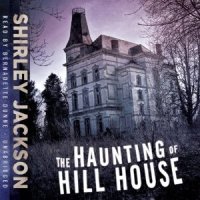
Dr. Montague is a scholar of the occult, and he invites three other people to stay with him in Hill House, which is notorious for being haunted. There’s jovial Theodora, timid Eleanor, and the future heir of the house, Luke. What starts as a light-hearted adventure quickly turns sinister in this horror classic.
Review:
I actually started reading this audiobook way back in September for the Readers Imbibing Peril challenge. It’s only 7.5 hours long, so I thought it’d be a quick read. I think the fact that it wasn’t demonstrates quite well how not drawn into the story I was. This is a classic haunted house tale that perhaps might not work for the modern reader, depending on how much horror they generally imbibe.
This is going to be a quick review because I honestly don’t have too much to say about the book. Four people arrive at a house. Things appear normal, except one of them, Eleanor, clearly is a bit more emotionally unstable than the rest. She is, for instance, shocked that anyone is interested in her or asks her questions. She also has trouble with her own identity, such as knowing for sure what she likes to eat. Odd things start to happen in the house, and because Eleanor is odd, the others aren’t sure if it’s the house doing them or Eleanor herself. Eleanor becomes overly attached to Theodora. Drama ensues.
None of the house horror scenes really got to me, because frankly I’ve seen worse in plenty of other horror I read. I do love the genre. The parts that actually disturbed me were when the others in the household were inexplicably cruel to Eleanor. That dynamic of an odd woman randomly tossed in with strangers who proceed to be mean to her in a highschoolish way held my interest more than the house did. People and their cruelty are so much more frightening than a haunted house. I understand that the book is sort of leaving it up to the reader to wonder if the house or the people really drive Eleanor crazy, but frankly I think the ending removes all question on this point.
Similarly, there are definitely some undertones in the Theodora/Eleanor relationship that indicates they might possibly have had a fling early on and then Theodora abruptly distances herself from Eleanor when she gets too clingy. None of this is said outright, however it is heavily implied that Theodora’s roommate back home is her lover who she had a quarrel with, and she and Eleanor establish a close bond early on in the book. The problem is this all stays subtext and is never brought out in the open of the book. I get it that this book was published in 1959 so it probably had to stay subtext and was most likely shocking to a reader in the 50s. But to me, a modern reader, it felt like the book kept almost getting interesting and then backing off from it. The combination of the former issue and this one meant that I was left feeling unengaged and uninterested. Basically, I feel that the book didn’t go quite far enough to be shocking, horrifying, or titillating.
The audiobook narration by Bernadette Dunne was excellent as always, and the main reason I kept listening rather than just picking up a copy of the book and speed reading it. I love listening to her voice.
Overall, this classic was boundary pushing when it was first published but it might not come across that way to a modern reader. Readers who read a lot of modern horror might find this book a bit too tame for their tastes. Those interested in the early works of the genre will still enjoy the read, as will modern readers looking for horror lite. Readers looking for the rumored LGBTQIA+ content in this book will most likely be disappointed by the subtlety of it, although those interested in early representation in literature will still find it interesting.
If you found this review helpful, please consider tipping me on ko-fi, checking out my digital items available in my ko-fi shop, buying one of my publications, or using one of my referral/coupon codes. Thank you for your support!
3 out of 5 stars
Length: 182 pages – average but on the shorter side
Source: Audible

Book Review: The Cormorant by Chuck Wendig (Series, #3)
 Summary:
Miriam Black is on her own once again after sending her truck driver boyfriend to the curb. She’s taken to periodically messing with fate by killing the killers she sees in her visions of the deaths of the people she touches. When she gets an offer on Craigslist to read someone’s future death in Florida, it comes at a time when she can’t pass it up, as a recently homeless person. She heads to Florida figuring she might also tackle the demon of her relationship with her mother. Two birds, one stone. But Florida ends up being much more than a quick job and a quick visit.
Review:
I snatch up a new Miriam Black book the first chance I get because I so love the prose style of the books (I’m uncertain if Wendig’s other books read similarly, as I haven’t read any), and I also love Miriam as a character very much (I would definitely run the other way if I spotted her on the street at night). This third entry in the series didn’t disappoint, although I periodically wondered if Miriam’s bad-assness would be sacrificed for character growth.
The urban fantasy world of Miriam Black continues to be slowly fleshed out in this book. We meet a couple more characters with supernatural abilities, not exactly Miriam’s but similar in that they function in the mind. We also start to understand what might cause such a thing to happen. And how Wendig presents this information is beautifully crafted. It is a part of the story, a wonderful example of showing not telling.
Miriam doesn’t just cause chaos and get away with it, and this book fairly clearly exists to show us that Miriam is not invincible, even if she may sometimes seem it in earlier books. She’s a tough broad with a mental gift brutally acquired, and she’s trying to figure out how to function and do the right thing in this incredibly fucked up situation where she is battling unknown forces, particularly fate.
The plot forces Miriam to confront two bad specters from her past: an ex lover and her mother. I was fine with confronting the ex lover, and how it went down made sense. I was incredibly wary of her confrontations with her mother. Her mother was established as a fundamentalist abusive ball of shit in the previous books, and I was deeply concerned that Wendig was going to try to either make it seem like it was all in Miriam’s head or offer redemption for her. And the plot does sometimes dance on the edge of doing one or the other of these. But the way Miriam reacts to her mother in their confrontations help keep it grounded and realistic that not all mothers are great people. In one confrontation she tells her mother,
Don’t act surprised that I have this cyanide cocktail in my heart. Like they say on that old dumb-ass drug commercial: I learned it by watching you. (loc 1824)
On the other hand, an awful lot of the plot revolves around Miriam saving her mother from her untimely death at the hands of a kidnapper. I just have a hard time believing, especially given the vitriol Miriam has felt for her mother this entire time, that she would actually care that much if her mother dies. I get it that Miriam might very much not want the kidnapper to get away with it, because she hates him and he’s fucking with her, but I don’t think Miriam would actually get misty-eyed at the thought of her mother’s untimely demise. It felt forced instead of being Miriam. That said, the plot does manage to stick to its guns enough that Miriam comes out of the situation still seeming like her cyanide-filled self, so I can’t fault it too much for veering that close to the edge.
I would be amiss not to mention the fact that his book establishes the fact that Miriam is bisexual. Of course, she refuses to use the term herself, and I’m fairly certain no one actually ever calls her bi. Normally a bi character refusing to call herself bi would drive me batty, but Miriam refusing labels fits 100% into her character. She doesn’t see the need to label who she fucks and other characters’ attempts to figure her out are met with disgust on her part but that’s how she feels about everything about herself. Yes, I wish more functional non-cyanide cocktail hearted characters were bi, but I also am pretty darn happy that a character I enjoy so much is bi. Plus, scenes of Miriam banging a woman were an unexpected utter delight.
The plot does a great job of being both a single book conflict and something that ultimately propels the overarching plot forward, which is exactly what one hopes for from a series book.
The writing style maintains its gritty sharpness that the series has enjoyed from the beginning. Both the narration and the conversations are a pleasure to read. Passages like those listed below are peppered throughout the book, accosting the reader with the knowledge that we are in Miriam’s world now.
Meetings are like black holes: they eat up the hours, they suck in the light, they gorge on his productivity. (loc 92)
I’m a certified bad-ass indestructible bitch. The sun tries to burn me, I’ll kick him in his fiery balls. I don’t need no stinking suntan lotion. (loc 2787)
Overall, this book brings most things readers have come to expect from a Miriam Black book. A gritty female main character with hard-hitting prose and a plot with a touch of the fantastic and grotesque. Some fans might be a bit disappointed by the direction Miriam’s relationship with her mother goes, but all readers will be pumped by the ending and eagerly anticipating the next entry. Recommended that fans of the first two books pick this one asap.
If you found this review helpful, please consider tipping me on ko-fi, checking out my digital items available in my ko-fi shop, buying one of my publications, or using one of my referral/coupon codes. Thank you for your support!
4 out of 5 stars
Length: 384 pages – average but on the longer side
Source: Gift

Previous Books in Series:
Blackbirds, review
Mockingbird
Book Review: The Drowning Girl by Caitlin R. Kiernan (Audiobook narrated by Suzy Jackson)
 Summary:
India Morgan Phelps, Imp to her friends, is sure that there were two different Eva Cannings who came into her life and changed her world. And one of them was a mermaid (or perhaps a siren?) and the other was a werewolf. But Imp’s ex-girlfriend, Abalyn, insists that no, there was only ever one Eva Canning, and she definitely wasn’t a mermaid or a werewolf. Dr. Ogilvy wants Imp to figure out for herself what actually happened. But that’s awfully hard when you have schizophrenia.
Review:
I’d heard that this book was a chilling mystery featuring queer characters and mental illness. When I discovered it on Audible with an appealing-sounding narrator, I knew what I was listening to next. This book is an engaging mystery that also eloquently captures the experience of having a mental illness that makes you question yourself and what you know while simultaneously giving a realistic glance into the queer community.
Imp is an unreliable first person narrator, and she fully admits this from the beginning. She calls herself a madwoman who was the daughter of a madwoman who was a daughter of a madwoman too. Mental illness runs in her family. She states that she will try not to lie, but it’s hard to know for sure when she’s lying. This is due to her schizophrenia. Imp is writing down the story of what she remembers happening in journal style on her typewriter because she is trying to figure out the mystery of what exactly happened for herself. The reader is just along for this ride. And it’s a haunting, terrifying ride. Not because of what Imp remembers happening with Eva Canning but because of being inside the mind of a person suffering from such a difficult mental illness. Experiencing what it is to not be able to trust your own memories, to not be sure what is real and is not real, is simultaneously terrifying and heart-breaking.
Imp’s schizophrenia, plus some comorbid anxiety and OCD, and how she experiences and deals with them, lead to some stunningly beautiful passages. This is particularly well seen in one portion of the book where she is more symptomatic than usual (for reasons which are spoilers, so I will leave them out):
All our thoughts are mustard seeds. Oh many days now. Many days. Many days of mustard seeds, India Phelps, daughter of madwomen, granddaughter, who doesn’t want to say a word and ergo can’t stop talking. Here is a sad sad tale, woebegone story of the girl who stopped for the two strangers who would not could not could not would not stop for me. She. She who is me. And I creep around the edges of my own life. Afraid to screw off the mayonnaise lid and spill the mustard seeds. (Part 2, loc 55:35)
The thing that’s great about the writing in the book is that it shows both the beauty and pain of mental illness. Imp’s brain is simultaneously beautiful for its artistic abilities and insight and a horrible burden in the ways that her mental illness tortures her and makes it difficult for her to live a “normal” life. This is something many people with mental illness experience but find it hard to express. It’s why many people with mental illness struggle with drug adherence. They like the ability to function in day-to-day society and pass as normal but they miss being who they are in their own minds. Kiernan eloquently demonstrates this struggle and shows the beauty and pain of mental illness.
Dr. Ogilvy and the pills she prescribes are my beeswax and the ropes that hold me fast to the main mast, just as my insanity has always been my siren. (Part 1, loc 4:08:48)
There is a lot of queer representation in the book, largely because Kiernan is clearly not just writing in a token queer character. Imp is a lesbian, and her world is the world of a real-to-life lesbian. She is not the only lesbian surrounded by straight people. People who are part of the queer community, in multiple different aspects, are a part of Imp’s life. Her girlfriend for part of the book is Abalyn, who is transwoman and has slept with both men and women both before and after her transition. She never identifies her sexuality in the book, but she states she now prefers women because the men tend to not be as interested in her now that she has had bottom surgery. The conversation where she talks about this with Imp is so realistic that I was stunned. I’m not sure I’ve ever seen a conversation about both transitioning and the complicated aspects of dating for trans people that was this realistic outside of a memoir. Eva Canning is bisexual. It’s difficult to talk about Eva Canning in-depth without spoilers, so, suffice to say, Eva is out as bisexual and she is also promiscuous. However, her promiscuity is not presented in a biphobic way. Bisexual people exist on the full spectrum from abstinent to monogamous to poly to promiscuous. What makes writing a bisexual character as promiscuous biphobic is whether the promiscuity is presented as the direct result of being bi, and Kiernan definitely does not write Eva this way. Kiernan handles all of the queer characters in a realistic way that supports their three-dimensionality, as well as prevents any queerphobia.
The plot is a difficult one to follow, largely due to Imp’s schizophrenia and her attempts at figuring out exactly what happened. The convoluted plot works to both develop Imp’s character and bring out the mystery in the first two-thirds of the book. The final third, though, takes an odd turn. Imp is trying to figure out what she herself believes actually happened, and it becomes clear that what she ultimately believes happened will be a mix of reality and her schizophrenic visions. That’s not just acceptable, it’s beautiful. However, it’s hard to follow what exactly Imp chooses to believe. I started to lose the thread of what Imp believes happens right around the chapter where multiple long siren songs are recounted. It doesn’t feel like Imp is slowly figuring things out for herself and has made a story that gives her some stability in her life. Instead it feels like she is still too symptomatic to truly function. I never expected clear answers to the mystery but I did at least expect that it would be clear what Imp herself believes happened. The lack of this removed the gut-wrenching power found in the first two-thirds of the book.
The audiobook narration by Suzy Jackson is truly stellar. There are parts of Imp’s journal that must truly have been exceedingly difficult to turn into audio form, but Jackson makes them easy to understand in audio form and also keeps the flow of the story going. Her voice is perfect for Imp. She is not infantilized nor aged beyond her years. She sounds like the 20-something woman she is. I’m honestly not sure the story would have the same power reading it in print. Hearing Imp’s voice through Jackson was so incredibly moving.
Overall, this book takes the traditional mystery and changes it from something external to something internal. The mystery of what really happened exists due to Imp’s schizophrenia, which makes it a unique read for any mystery fan. Further, Imp’s mental illness is presented eloquently through her beautiful first-person narration, and multiple queer characters are present and written realistically. Recommended to mystery fans looking for something different, those seeking to understand what it is like to have a mental illness, and those looking to read a powerful book featuring queer characters whose queerness is just an aspect of who they are and not the entire point of the story.
If you found this review helpful, please consider tipping me on ko-fi, checking out my digital items available in my ko-fi shop, buying one of my publications, or using one of my referral/coupon codes. Thank you for your support!
4 out of 5 stars
Length: 332 pages – average but on the longer side
Source: Audible

Counts For:

Book Review: The Many-Colored Land by Julian May (Series, #1) (Audiobook narrated by Bernadette Dunne)
 Summary:
In the future, the universe exists in a peace-loving era that allows many alien races and humans to co-exist. People are expected to act within the confines of acceptability and are offered various humane treatment options to help if their nature or nurture sends them the wrong way. But some people don’t want to conform and would rather live in the wild, warrior-like days of old. When a scientist discovers time travel but only to the pliocene era, these people think they have found their solution. There’s only one catch. The time travel only works to the past. For decades the misfits step into the time travel vortex, not knowing what is on the other side. The government approves the solution, since it seems kind and no time paradoxes have occurred. When the newest group steps through, they will discover just what really waits on the other side of exile.
Review:
I became aware of this book thanks to a review by fellow book blogger, Resistance Is Futile. Imagine my surprise when going through my wishlist to check for audiobooks, I discovered a brand-new audiobook production of it featuring the audiobook superstar Bernadette Dunne. This is a creative, action-packed book that truly encompasses both scifi and fantasy in a beautiful way.
Since this is the first book of the series, it takes a bit to set the plot up and get to know the characters. People are sent through the time travel portal in groups, so we get to know everyone in one group prior to going through the time portal so we can follow them all after they go through it. May spends the perfect amount of time familiarizing the reader with the future world, as well as the people who are choosing to leave it. Some readers might be sad to see the imaginative future world left behind for the pliocene era, but it quickly becomes evident that the pliocene is just as richly imagined, albeit different. The pliocene era is not as straight-forward as the exiles believed, and new problems quickly arise for them. It’s not the lawless paradise they were envisioning, and while dealing with the realities of it in an action-packed manner, they also must deal with themselves. Now that they realize there is no true escape to solitude or an imagined perfect past, they must address those aspects of themselves that led them to exile in the first place. These deeper emotional issues are the perfect balance to the other, action-oriented plot. I did feel that the book ends a bit abruptly. However, it is part of a series and clearly the cliff-hanger is intentional. I prefer series entries that tell one complete smaller story within the larger, overarching plot, but this is still a well-done cliff-hanger.
The characters offer up a wide variety of experiences and ethnic and sexual backgrounds, representative of all of humanity fairly well. One of the lead characters is a butch lesbian, another is an elderly Polish-American male expert in the pliocene era, another a nun, another a frat boy style space captain. This high level of diversity doesn’t seem pushed or false due to the nature of the self-selection of exiles. It makes sense a wide variety of humans would choose to go, although the statistics presented in the book establish that more whites and Asians than Africans and more men than women choose to go. Some of the characters get more time to develop and be presented in a three-dimensional nature than others but enough characters are three-dimensional that the reader is able to become emotionally invested in the situation. My one complaint was in prominently featuring a nun in a futuristic scifi, yet again. Statistics show that less and less people are choosing to become nuns or priests. Given that this is set so far in the future with such a different culture, a religious leader of a new or currently rising religion would feel much more thoughtfully predictive of the future.
Most engaging to me is how the book mixes scifi and fantasy. Without giving too much away, the book offers a plausible scientific explanation for human myths of supernatural creatures such as fairies, elves, and shapeshifters. The presence of the inspirations for these myths give a delightful, old world fantastical feel to the story, even while May offers up scientific explanations for all of it. This is not a mix I have seen in much scifi or fantasy, and I was surprised at how much I enjoyed it.
Overall, this is a delightful new take on time-travel that incorporates some fantasy elements into the scifi. Readers looking just for futuristic hard scifi might be disappointed at how much of the book takes place in the ancient past, but those who enjoy scifi and fantasy will delight at the mixing of the two.
4 out of 5 stars
Source: Audible

 Support my work with a tip or browse my shop for curated book club guides, how to guides, cross-stitch patterns, and more!


This work by Amanda Nevius is licensed under a Creative Commons Attribution-Noncommercial-No Derivative Works 3.0 United States License.
 Opinions of a Wolf