
Book Review: It Ain’t Me, Babe by Tillie Cole (Series, #1)
 Summary:
River “Styx” Nash was born into the Hades Hangmen motorcycle club. He always knew he was set to inherit running it, in spite of his speech impediment, but he never expected to be running it at the young age of twenty-six. When a young woman shows up at their doorstep, bleeding and unconscious, he’s reminded of a girl he met at a fence in the woods when he was a boy….a girl who has haunted him ever since.
Salome grew up under Prophet David’s rule in the commune that’s the only home she’s ever known. When her sister dies, she finds the strength to run and somehow ends up in the arms of the man who was once a boy she met at the fence of the commune.
Review:
I’m being a bit charitable with my rating of this read because the juxtaposition of commune and motorcycle club (gang) is one I haven’t seen before, and I do think it’s interesting. Additionally, I do realize that these types of romances are basically fantasy so I try to cut them some leeway. That said, this book is not executed as well as it could have been for its genre. There are some jarring elements that take the reader out of the read, thus leading it to be less enjoyable.
First, it’s poorly edited. There are many clear mistakes such as saying things like “gotta to.” It reads like a first copy, not a final draft. Better editing would have really helped this book.
Second, you have to imagine that the reader who might pick up a romance featuring motorcycles might know a thing or two about them. While everything else surrounding the motorcycles can be pure fantasy, the motorcycles themselves should function like the real world (unless it’s scifi). Motorcycles, though, are treated in the book as basically cars with two wheels, and anyone who’s ridden one can tell you that’s not so, and a motorcycle gang definitely would know better than to treat them that way. One glaring instance of being unrealistic about bikes is when Salome first rides on one. The book sets it up that she has no idea what a motorcycle is. She’s never seen one before, she has zero idea how they work. In spite of this, the only riding instruction she’s given is to “hold on.” Even someone giving the most bare of instructions to a new passenger will tell them to follow the lead of the rider — to lean when they lean and not to counter-lean against the rider. This is basic safety and even a motorcycle gang would give those basic instructions because a passenger who is startled could easily cause the bike to crash and riders love their bikes. Similarly, in spite of Salome not knowing anything about motorcycles, she puts on the helmet with zero instructions. I have never seen anyone who’s never worn a motorcycle helmet before be able to put it on with zero instructions. The strap is complicated and almost always takes guidance. Additionally, we are to believe Salome is riding with someone who cares about her, yet he doesn’t check on her helmet at all. This is not something a rider who cares about his passenger would ever do.
The final thing I found jarring was descriptions of the abuse in the cult. I fully expected there to be cult abuse, but there are repeated flashbacks to the rape of 8 year olds whose legs are being held apart by bear traps. I personally find it extremely difficult to get into a romance that repeatedly flashes back to the graphic underage and violent rape of the main character. It made the book feel like it was at war with itself. Did it want to be a contemporary book about the horrors of cults or did it want to be a romance? You can be both, but that is a difficult book to write, and it’s important to either put all of the abuse in one area of the book (usually where the heroine informs the hero about it) or to make the abuse more minimal (ie maybe the heroine grew up in a cult that restricted her knowledge and movement but that didn’t rape her physically).
Ultimately, while I appreciate the interesting combination of main characters (leader of a motorcycle club and escapee from a cult), I found the execution to not live up to the unique premise. Primarily recommended to those interested in the fantasy of motorcycles with little personal knowledge of them. They will be more able to get fully into the fantasy.
If you found this review helpful, please consider tipping me on ko-fi, checking out my digital items available in my ko-fi shop, buying one of my publications, or using one of my referral/coupon codes. Thank you for your support!
3 out of 5 stars
Length: 466 pages – chunkster
Source: Library

Book Review: The Reason I Jump: The Inner Voice of a Thirteen-Year-Old Boy with Autism by Naoki Higashada
 Summary:
Born in 1992 and diagnosed with Autism at the age of 5, Naoki uses an alphabet board to painstakingly write. In this book, he addresses answers to common questions neurotypicals have about people with Autism, such as “Why do you line up your toy cars and blocks?” and “Why don’t you make eye contact when you’re talking?” Mixed in with answers to these questions are short stories that Naoki has written, squashing the myth that those with Autism lack imagination.
Review:
I read this for Katie of Doing Dewey’s Nonfiction Book Club back in April, which was also Autism Awareness Month. I don’t often have the time to do group reads, but this book appealed to me and was short, would count for the Mental Illness Advocacy Reading Challenge I host, and I was able to get a digital copy from the Boston Public Library. I read this in one day in just my morning and evening commutes. It’s a short but mind-opening work.
For those who don’t know, Autism is a spectrum disorder. This basically means that Autism can severely or minorly impact how a person with it functions with the world (and everything in-between). Someone who is high functioning may mostly just strike others as a bit odd, whereas those most severely impacted are unable to communicate at all. You may read more about Autism here.
Naoki’s Autism is more severe. He is mostly unable to speak but he has learned how to communicate by pointing to an alphabet board with an assistant who writes down what he points at. Since Autism is so individualized, bare in mind when reading this book that his answers might not necessarily apply to everyone with Autism. That said, Naoki generally answers the questions with the word we, not I. My suspicion is this may be due to cultural reasons. Naoki is Japanese, which is generally a less individualized culture than our own. Additionally, his words have been filtered through a translator. It’s important, I believe, for a reader to keep all of these things in mind when reading this book.
This is a short book and an easy read, so I won’t say too much beyond the two biggest takeaways I had. First, I think in general people often wonder if people with Autism are similar to neurotypicals inside or are completely foreign. I think Naoki’s book smashes that question with a sledgehammer. It left me with the distinct impression that people with Autism are extremely similar to neurotypicals, but their signals from their bodies interfere with their ability to interact with the world. But Naoki puts this better than me.
It’s as if we’re remote-controlling a faulty robot. (page 16)
My second takeaway was that we should never make assumptions about anyone with Autism. The biggest example of this is that it is generally assumed people with Autism do not have an imagination. (I’ve even seen having an imagination being used as a way to rule out some people as having high functioning Autism). But Naoki, who very clearly has Autism, also very clearly has a bright imagination. His own short stories are inter-mixed throughout the book. They struck me as things any 13-year-old might write. That may sound simple, but that’s a big deal for a person who others might assume is “abnormal” for 13 with “no imagination.”
I do wish that the person interviewing Naoki had asked a wider variety of questions. Some of the questions can get a bit repetitive, and I wondered why they didn’t ask something deeper. Instead of continually asking things like why do you do this or why do you do that ask more about what he enjoys. What his hopes and dreams are. Does he think there’s a god. Things like that.
Overall, though, I highly recommend this book to anyone who is curious about what it’s like to have Autism, as well as to those who do or may come into contact with someone with Autism.
If you found this review helpful, please consider tipping me on ko-fi, checking out my digital items available in my ko-fi shop, buying one of my publications, or using one of my referral/coupon codes. Thank you for your support!
4 out of 5 stars
Length: 135 pages – short nonfiction
Source: Library
Counts For:
Mental Illness Advocacy Reading Challenge
Book Review: Rymellan 3: The Triad by Sarah Ettritch (Series, #3)
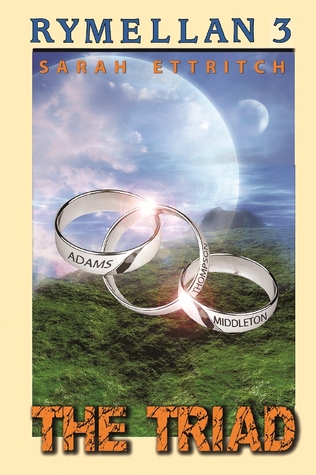 Summary:
Lesley and Mo’s relationship is tested when Mo develops feelings for Jayne and the arrangement the triad struck in Rymellan 2 comes to an end. The three women know they must adapt to the inevitable changes for the triad to thrive, but the triad’s shifting dynamics would challenge the strongest of Rymellans—and does.
Review:
The second book in this series ended on such a cliffhanger that I picked up the third right away. At the time, I wasn’t sure if there would be more in the series or if this would be it. Since then, I discovered another book that has published but I don’t think I’ll be picking it up. The third book left me feeling a bit strung along with questions and no answers for too long for me to keep going.
So Lesley and Mo who we the readers presumed to be soul mates from book one find out in book two that the all-powerful government matchmakers have determined that they actually have a third soul mate and will be formed into a triad. This whole book strikes me as very similar to a real world monogamous couple where one of them falls in love with a third and them trying to make the move into polyamory. Say what you will about the government matchmaking them but their arrangement was to essentially be a couple with a live-in friend and roommate who they consult on household things. The plan was never for anyone to fall in love. But of course (because they’re Chosens) first one then eventually the other does fall in love with Jane. Thus, in spite of the government aspect, it still is essentially the same as a real world couple making the move to polyamory.
Why am I bothering to explain this? Because a lot of the book is dealing with the angst of a couple deciding to become poly. That is a plot point that will either work or not work for a lot of readers. I’m not sure how I feel about a series that starts out as being so strongly a romance between two moving into a poly romance. I’m sure many poly readers would say that’s how they themselves discovered polyamory and enjoyed it. But for me I was expecting one style of story which I really enjoy (lovers having to overcome many things to be together) and instead I got another that I feel very meh about personally (a couple choosing to open things up to polyamory). I guess what I’m saying is I think it might be difficult for the audience for this series to find it because the poly aspect is a surprising plot twist.
The other big change in this book over the others in the series was that the sinisterness of where the society they live in really hangs over this book, and what makes it extra eerie is they don’t seem to realize just how sinister it is. In a book with romance at the center, it’s an odd feeling to have.
While I’m glad to have seen where Lesley and Mo end up, this read to me as a bit of a lukewarm tragedy that didn’t realize it is one. I’d have preferred an obvious happy ever after or a truly dramatic tragedy. However, readers simply looking for a couple that turns into a romantic trio in a scifi backdrop that’s not explained will eat up this series, and I do recommend it to those readers.
If you found this review helpful, please consider tipping me on ko-fi, checking out my digital items available in my ko-fi shop, buying one of my publications, or using one of my referral/coupon codes. Thank you for your support!
3 out of 5 stars
Length: 278 pages – average but on the shorter side
Source: Amazon
Previous Books in Series:
Rymellan 1: Disobedience Means Death, review
Rymellan 2: Shattered Lives, review
Book Review: The Bees by Laline Paull (Audiobook narrated by Orlagh Cassidy)
 Summary:
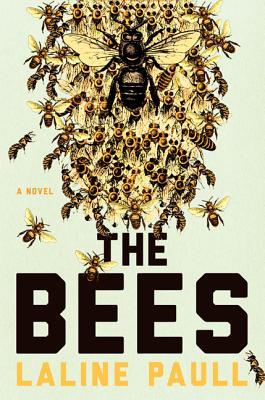
Born into the lowest class of her society, Flora 717 is a sanitation bee, only fit to clean her orchard hive. Living to accept, obey and serve, she is prepared to sacrifice everything for her beloved holy mother, the Queen. Yet Flora has talents that are not typical of her kin. And while mutant bees are usually instantly destroyed, Flora is reassigned to feed the newborns, before becoming a forager, collecting pollen on the wing. Then she finds her way into the Queen’s inner sanctum, where she discovers secrets both sublime and ominous. Enemies roam everywhere, from the fearsome fertility police to the high priestesses who jealously guard the Hive Mind. But Flora cannot help but break the most sacred law of all, and her instinct to serve is overshadowed by a desire, as overwhelming as it is forbidden.
Review:
I like books that mix scientific accuracy with a touch of personification of animals, or in this case, insects. I was expecting it to be weird, because it’s about insects, but oh boy was this book weird.
For some reason, I find the title to be hilarious. I just kept walking around saying to myself, “the bees, The Bees, THE BEES.” You may think that sounds ridiculous (and it does, and I am, indeed, a ridiculous person) but this book really closely matches that experience.
I applaud the author all the research she clearly must have done. I think it only makes logical sense that she invented a religion for the bees to follow that revolves around worshiping the queen. The horrifying dystopianesque rigid structure of bee life also makes sense based on what we scientifically know about them. All of that said, it was still deeply odd to read. Priestesses and chanting and drones and evil invading wasps. It struck me as a cartoon that took itself very very seriously. I would have preferred if it perhaps took itself a bit less seriously. Like (I’m aging myself here) SimAnt.


In any case, the book does take itself very seriously, most likely due to the very real and serious fact that bees are dying out, and reasons for this are reflected in the story, as the colony faces many challenges to staying alive. While I was able to take some of these threats quite seriously, like flowers not blooming at the right time, others were written in such a ridiculous way that I just couldn’t. For example, a giant evil cell phone tower that makes the bees lose their way when they’re out flying. It’s practically personified as a giant evil ominous entity, and I found myself laughing when I knew actually this is really a problem for bees. The book is basically caught in this uncanny valley that both prevented me from being moved by it and from finding it completely humorous. It’s a book that I think needed to sway a bit more in one direction or the other.
I was still at least 4 star enjoying it though until the end. I found the end just so deeply depressing and unnecessarily so (the point was made, no need to go so extreme) that I was left frustrated. I think, having read the ending, that perhaps the author didn’t realize that she was at times veering into ludicrous humor, and she maybe intended the whole book to be a Very Serious Read, when it simply was not.
Overall, then, if you’re a reader who is able to take some ludicrousness seriously, you will most likely enjoy the book more and get more emotional depth out of it than I did.
Now, if only there was a SimBees…..
If you found this review helpful, please consider tipping me on ko-fi, checking out my digital items available in my ko-fi shop, buying one of my publications, or using one of my referral/coupon codes. Thank you for your support!
3 out of 5 stars
Length: 340 pages – average but on the longer side
Source: Audible
Book Review: Flex by Ferrett Steinmetz (Series, #1)
 Summary:
‘Mancy (magic) is illegal in this parallel world where people find their obsessions turn into magical powers. Paul Tsabo has spent his life fighting to keep ‘mancers off the street and instead brainwashed into a military force. See, the universe hates magic, and if you use it too much, it will retaliate. By doing things like destroying Europe. So the brainwashing is safer. The only problem is that Paul has found himself obsessed with bureaucracy and has developed into a bureaucromancer. A series of unfortunate events leads him into agreeing to make Flex–magic distilled into crystal form for the non-magical to get high on. Paul has officially turned into what he once hunted.
Review:
This is a pretty cool concept. It sounds like it’ll be Breaking Bad: Urban Fantasy Style. Unfortunately, a lack of world building and a lack of focus in the plot made the book fall flat.
Let’s start with what I liked. The concept of how magic comes to be is pretty neat. I like the social commentary that magic is outlawed and the only magical people are the ones with an abnormal level of obsession with things. Using the urban fantasy magic element really highlights how different can be both beautiful and dangerous.
A key part of the plot revolves around Paul, who is recently divorced, and his wife trying to figure out how to co-parent. Paul is a majorly invested father. He doesn’t just walk away after the divorce. That’s nice to see. Also, it’s an inter-racial family. Paul is white, his ex-wife is black, and their daughter is obviously bi-racial.
Romance is really not a part of this plot. I thought at first it might be when a new character is introduced but it actually turns out that she’s introduced to develop a friendship with Paul. How often do we get to see genuine friendships between men and women in literature? Not often.
Unfortunately these positives were hurt by other aspects of the book. The worst is that the book reads like it’s one book for the first half then completely changes course halfway through. Essentially, the first half of the book is about drugs and is basically Breaking Bad. The second half of the book that plot is totally dropped and instead the characters are pursuing a Big Bad Buffy the Vampire Slayer style. It’s jarring and makes it feel like you’re reading a draft rather than a final version of the book. Plus, the book is heavily marketed as the drug book, when in fact the drugs are just dropped in the middle of the book, which is disappointing if that’s what you were reading the book for.
The world also isn’t built enough. For instance, we know Europe disappeared but we don’t know precisely how or when. This is a parallel universe to our own. You’d think that something like Europe disappearing would lead to some major changes in the world, but no. It reads like New York City is precisely like how it is in our world just with added ‘mancers. This is illogical. It can’t be both ways. It can’t both be a world with major changes like no more Europe but also simultaneously exactly like our own.
The book reads like the author has an agenda that comes through too clearly at times. How much that will bother the reader will depend upon if the reader agrees with the agenda or not, I’d imagine. I didn’t so it bugged me more than it might bother others. I also felt that some of the descriptive writing was weak or lazy, leading to a two-dimensionality that veers dangerously toward being offensive.
Overall, this is a good idea that was poorly executed. There are some individually cool scenes, particularly if you like seeing an interplay between our world, magic, and videogames. Recommended, then, to readers who seek out scenes like that and don’t mind the other weaknesses laid out in this review.
If you found this review helpful, please consider tipping me on ko-fi, checking out my digital items available in my ko-fi shop, buying one of my publications, or using one of my referral/coupon codes. Thank you for your support!
3 out of 5 stars
Length: 429 pages – average but on the longer side
Source: Netgalley
New Release Friday: Hell Holes: Demons on the Dalton by Donald Firesmith (#apocalyptic #paranormal #fantasy)
I know Opinions of a Wolf readers love a strong female lead (I do too!), so when Don contacted me about his new release, I was excited to feature it. Take it away, Don!

Blurb:
When huge holes mysteriously formed in Alaska’s North Slope, a research team went to discover their cause. But when an army of invading demons erupted out of these hell holes, only two scientists and Aileen, the team’s secretive photographer, survived. Now in this exciting second book in the Hell Holes series, they must flee south along 350 miles of the Dalton Highway, one of the world’s most treacherous roads. Aileen, a member of an ancient order charged with defending humanity from Hell, must save the two scientists, but who will save her?
Genre: apocalyptic paranormal fantasy
What makes this book unique in its genre?
The book is strongly grounded in reality and based on real life locations, which helps to make the fantasy elements (e.g., magic and invading demons) more believable. For example, in addition to the book’s beta readers and two editors, its military aspects were based on the inputs of three military advisors and a tour of the relevant parts of Eielson AFB including the Wing Commander’s conference room. Another interesting aspect is that each of the three books in the trilogy is written from the first person viewpoint of a different major character.
Could you tell us more about some of your research? It sounds like you did a lot!
I very much like to ground my science fiction in science fact, and that also carries over to my fantasy books. This book was largely driven by the flight of the three survivors of the first book (Hell Holes 1: What Lurks Below) down the Dalton Highway as they are chased by the invading demon horde. In addition to driving part of this dangerous road in real life, I have also “driven” it using Google Maps street view, and major locations along the way were often used to drive the plot to its logical conclusion.
Buy It on Amazon (print or ebook).
Buy It on Smashwords (ebook).
Coupon Code:
But wait! Now through June 30th, get the ebook for free (that’s 100% off you guys) using the coupon code HE54A on Smashwords. Get it here.
Thanks so much for being featured here on Opinions of a Wolf, Don!
Would you be interested in being featured on New Release Friday? Find out how here.
New Release Friday is a sponsored post but I only feature books on New Release Friday that I believe would interest readers of this blog. Book reviews are never sponsored. Find out more about the sponsored post policy here.
Book Review: Rymellan 2: Shattered Lives by Sarah Ettritch (Series, #2)
 Summary:
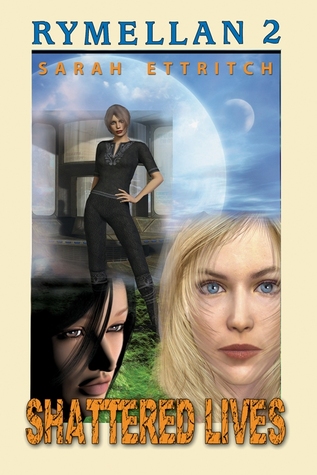
Mo and Lesley, girlfriends since they were teenagers, have spent the last two years apart awaiting their Chosen papers. Meanwhile they both continue to pursue their careers. Mo as a pilot and Lesley as a member of the Interior, ensuring Rymellans continue to follow the Way. When their Chosen papers finally arrive, they think the uncertainty is finally over. But what they reveal is just another form of it.
Review:
I enjoyed the first book in this series so much that I picked up the second immediately. The first book ends on a cliffhanger, and I just had to find out what happened with Mo and Lesley next. Would they be each other’s Chosen? Would they defy the Way to be together? Was a giant revolt coming? The answer was definitely not what I was expecting, and it certainly keeps the series unique.
While I continued to be deeply invested in Lesley and Mo’s relationship (on pause as it was during much of the book), I was disappointed to find that this book doesn’t explore deeper into any of the questions I had in the first book. I feel that the second book, particularly with its context of Lesley and Mo waiting for papers and both of them in adult jobs with more power and access to information, lends itself perfectly to explaining more about Rymel. Yet this exploration and information reveal never happens.
My questions in the first book revolving around where Rymel comes from, why it’s so not diverse, and the origin of the Way were only added onto. Who is this enemy Rymel is always preparing for? What about the bisexuals? If Rymellans aren’t actually related to us (Earth humans) at all, that’s fine. They might just only have monosexual identities. But if they are related to us, the lack of the Chosen Way dealing with bisexual/pansexual attractions is frustrating. For that matter, what about trans* people and gender non-conforming people? How exactly are children handled in the same-sex couples? People keep mentioning same-sex female couples having daughters but no one talks about how. And what about same-sex male couples? It’s such a fascinating world, and I found myself like a thirsty person a desert wanting to know more about it and how it works.
The plot goes a direction I really was not expecting. That’s not a bad thing. It surprised me and kept me engaged. There are two aspects of the plot that were unexpected. One isn’t a spoiler so I’ll talk about that first. It’s fairly clear early on in this book that Mo and Lesley aren’t the rebelling sort. They’re going to kowtow to this dystopian regime, and they believe that’s the right thing to do. It’s a different perspective to get. Usually there’s rebellion. But that doesn’t always work out for people in the real world. A lot of people choose to live their lives in safety obeying the state to stay safe, and it’s interesting to see that reflected in literature.
*spoiler*
The Chosen Council puts Mo and Lesley together, but in a Triad. A third person, Jane, is Joined with them. Triads historically haven’t succeeded, and they are extremely rare. But they do exist because sometimes the perfect match actually goes three ways. The Triad is extra complicated because Jane’s parents were famous for committing a Chosen crime (they committed adultery). They were killed and Jane was orphaned young due to this fact. Many Rymellans believe the apple won’t fall far from the tree, so Mo and Lesley being matched with her is controversial. On top of that, there’s an allowance where if two of the three believe the third will cause the Triad to commit a Chosen violation then they can say so and have the third member killed before the Joining Ceremony. That puts interesting added pressure on the group. None of this was a plot I was expecting, but also the acknowledgment of non-monogamous people was something I could see a lot of readers enjoying seeing represented in literature. Plus, it’s a good conflict to add!
*end spoiler*
Ultimately, I was still happy I read this because I was desperate to find out what happened to Lesley and Mo (and continued to be at the end of this book), but I was disappointed not to find out more about Rymel and its history here. Readers primarily interested in the romance who don’t mind the world-building being pushed to the side a bit will most enjoy the direction this series is going.
If you found this review helpful, please consider tipping me on ko-fi, checking out my digital items available in my ko-fi shop, buying one of my publications, or using one of my referral/coupon codes. Thank you for your support!
3 out of 5 stars
Length: 368 pages – average but on the longer side
Source: Amazon
Previous Books in Series:
Rymellan 1: Disobedience Means Death, review
Book Review: American Jezebel: The Uncommon Life of Anne Hutchinson, the Woman Who Defied the Puritans by Eve LaPlante
 Summary:
Anne Hutchinson, a forty-six- year-old midwife who was pregnant with her sixteenth child, stood before forty male judges of the Massachusetts General Court, charged with heresy and sedition. In a time when women could not vote, hold public office, or teach outside the home, the charismatic Hutchinson wielded remarkable political power. Her unconventional ideas had attracted a following of prominent citizens eager for social reform. Hutchinson defended herself brilliantly, but the judges, faced with a perceived threat to public order, banished her for behaving in a manner “not comely for [her] sex.”
Review:
I love US History. I have a degree in it, and I particularly enjoy reading about women in US History. I remembered studying a bit about Anne Hutchinson in some of my coursework, so when I saw this book going more in-depth into her life in a used book basement, I picked it up. I ultimately was disappointed to find a book that somehow managed to make reading about a woman with such an interesting life boring.
Anne Hutchinson was what I like to think of as a quiet rebel. She did things like hide the birth of a grotesquely malformed stillborn so that the mother wouldn’t be judged by the community as somehow entangled with Satan or being punished by God. She led Bible studies/prayer meetings in her home, and these groups she led didn’t consist of just women. Men sought her out for advice and knowledge in these groups in a culture where women were only supposed to advise other women. Most fascinating to me was the dynamic between her and her husband. He clearly loved her and gave her basically the reins over their lives. He was known as a quiet person and happily stepped back and let her make the noise. When she was banished, instead of complaining, he just packed up and moved with her to Rhode Island. It’s not that I think that’s the ideal marriage but I do think it went directly against the gender norms of the time, and they were both brave for being true to themselves and what worked best for their own relationship.
However, the writing in this book somehow managed to take such an interesting woman and bore me to tears. I dreaded picking up this book. I eagerly anticipated when the author would quote primary texts because they were exponentially more interesting than her own. The other issue I had with the book was that the author is a descendant of Hutchinson and clearly lets this bias her own perception of Hutchinson the historic situation. On top of this, there’s a lot of talk about genealogy (far too much for my taste), and sections read like someone writing a family history for their own family, not for public consumption. I understand being interested in someone you are descended from, but who you are descended from doesn’t automatically make you a cooler person. People who are proud of themselves because of who they happen to be descended from infuriate me to no end. Do something worthy of being proud of yourself. Don’t rest on your ancestor’s laurels.
Overall, while the historic facts are accurate and Anne Hutchinson herself is an interesting historical figure who deserves to be talked about, the writing of this book is boring and it is colored by the author’s obsession with being descended from Hutchinson. Readers interested in Hutchinson should consider looking elsewhere, perhaps starting with Unafraid: A Life of Anne Hutchinson, which is available in its entirety thanks to Hathi Trust Digital Library.
If you found this review helpful, please consider tipping me on ko-fi, checking out my digital items available in my ko-fi shop, buying one of my publications, or using one of my referral/coupon codes. Thank you for your support!
3 out of 5 stars
Length: 312 pages – average but on the longer side
Source: Brookline Booksmith
Buy It (Amazon or Bookshop.org)
Counts For:
Bottom of TBR Pile Challenge
Book Review: Dark Places by Gillian Flynn (Audiobook narrated by Rebecca Lowman, Cassandra Campbell, Mark Deakins, and Robertson Dean)
 Summary:
Libby Day testified that her brother murdered her mother and sisters as part of a Satanic cult ritual when she was just 7 years old. Twenty-five years later, running out of money, she agrees to help a group known as The Kill Club investigate the murder. Their members disagree on how actually killed her mother and sisters, and with her connections they think she can help them crack the case. Libby is sure her brother Ben did it, but money is money, and it sure beats a regular job.
Review:
This is my third Gillian Flynn novel, and I must admit it was the one I liked least. I was actually suspicious it was a first novel, as it had that feel–a lot of what works in her other novels is present but it’s less well-executed. However, it actually was published after Sharp Objects (review), so who knows what happened here. Regardless, while I found the mystery intriguing and I definitely listened to the audiobook every chance I got, the plot is not as tightly told nor is the central mystery as believable as it is in her other works.
What worked the best for me was Libby, a childhood survivor of a gruesome murder, as some sort of modern day noiresque private investigator. A woman PI with a personal connection to the murders was just delicious to read. I’d love to see more of that in literature. I also liked seeing a thriller that included a queer person (her aunt is a lesbian) without that being used as a way of othering someone strange or being attached to a perpetrator. Her aunt is a bystander in every sense of the word. She is never a suspect, she provides Libby with a home environment after the murders, and her sexual orientation is just a part of who she is, not a plot point. I also liked the changing perspectives among Libby present, Libby past, her mother, and her brother. I thought it added to the mystery since seeing these other perspectives did not immediately reveal precisely what was going on. I also thought it made it harder to judge her mother than it might be if the reader hadn’t had her perspective.
However, this was the first time that I was both sure who the perpetrator was quite early in a Flynn novel and also that I was disappointed by who the murderer is. I thought there was nothing creative or exciting about it, and honestly it kind of bugged me a little bit. There is also one trope that shows up here that bothered me. It could be a bit spoilery (not too bad) so skip the next paragraph if you’re concerned about that.
*spoilers*
Libby at the end of the book ends up in a scenario that is very similar to the first murders that she survived. It’s basically a trauma survivor finding that all their fears were right by improbably having almost the same scenario happen a second time. I think it was supposed to be scary, but it just irritated me.
*end spoilers*
I also must say that I felt the whole Satanic scare thing was very dated. Yes, I get it that was a huge thing in the 80s and this is a story about murders that happened 25 years ago but something about it just made the whole book feel dated to me. I couldn’t get into it partly because I was certain that the book would ultimately reveal Satanism had nothing to do with it, since that’s just the way that plot point always goes. I suppose you could sum up most of my issues with this book as the plot was too predictable to be much fun.
Overall, if you’re a big Gillian Flynn fan and just want to experience some thrills, this book will provide some of them with the dash of strong female characters you’ve come to expect. However, do expect to be a bit disappointed by a more predictable plot and twist that isn’t all that twisty.
If you found this review helpful, please consider tipping me on ko-fi, checking out my digital items available in my ko-fi shop, buying one of my publications, or using one of my referral/coupon codes. Thank you for your support!
3 out of 5 stars
Length: 349 pages – average but on the longer side
Source: Audible
Book Review: Bellwether by Connie Willis
 Summary:
Sandra Foster studies fads and their meanings for the HiTek corporation. Bennet O’Reilly works with monkey group behavior and chaos theory for the same company. When the two are thrust together due to a misdelivered package and a run of seemingly bad luck, they find a joint project in a flock of sheep.
Review:
This was given to me eons ago because of how much I love To Say Nothing of the Dog (review) by Connie Willis. This book has a similar sense of humor that definitely kept me entertained but the plot and backstory that ties it all together didn’t hit quite the same loved it nerve with me.
I loved seeing a book set in the mountain range area of the country (Colorado to be precise). I feel like this doesn’t happen often enough in books. I also found there was a real nostalgia quality to the book because it was first published in 1996 and set in its own time-period, so the whole thing just screamed 90s nostalgia to me. This played in well to Sandra’s fad studies. It gave the book a good reason to notice and talk about the fads, and this held up well over time. What originally was a “oh look at this silly thing people are doing right now” became “hey remember when West Coast coffee was first a thing?” I also really appreciated that a social science was featured at the core of a scifi book. Not just that but a scientist of a science deemed more important and sciencey (chaos theory) ends up working with her and respecting her research and its methods. Super cool.
While I thought the research study was cool, I wasn’t as huge of a fan of the competition to receive the grant of a lifetime plot. I appreciated Sandra working to save her job, but the big grant loomed overhead from the very beginning like a deus ex machina. Sandra’s disdain for her coworkers wanting to ban smoking from the building as a fad really didn’t translate well over time. This wasn’t a fad; it was a public health policy, and it rubbed me wrong every time Sandra implied it was like the whole are eggs good or bad for you debate. Second-hand smoke is just bad for you, and unlike a coworker eating an egg, it can actually impact your health if you’re around it. I’m sure it was funnier in the 90s but it didn’t work so well now, and it honestly made me dislike Sandra a bit.
Overall, scifi fans looking for a humorous plot with a female lead, an unusual focus on the social sciences with a dash of 1990s nostalgia will enjoy this book.
If you found this review helpful, please consider tipping me on ko-fi, checking out my digital items available in my ko-fi shop, buying one of my publications, or using one of my referral/coupon codes. Thank you for your support!
4 out of 5 stars
Length: 248 pages – average but on the shorter side
Source: Gift
Counts For:
Bottom of TBR Pile Challenge
 Support my work with a tip or browse my shop for curated book club guides, how to guides, cross-stitch patterns, and more!

This work by Amanda Nevius is licensed under a Creative Commons Attribution-Noncommercial-No Derivative Works 3.0 United States License.

