
Book Review: My Body Is Not a Prayer Request: Disability Justice in the Church by Amy Kenny

A disabled Christian woman shares her experiences with ableism in the church and offers solutions and actionable steps for fostering disability justice and inclusion.
Summary:
Much of the church has forgotten that we worship a disabled God whose wounds survived resurrection, says Amy Kenny. It is time for the church to start treating disabled people as full members of the body of Christ who have much more to offer than a miraculous cure narrative and to learn from their embodied experiences. Written by a disabled Christian, this book shows that the church is missing out on the prophetic witness and blessing of disability. Kenny reflects on her experiences inside the church to expose unintentional ableism and cast a new vision for Christian communities to engage disability justice. She shows that until we cultivate church spaces where people with disabilities can fully belong, flourish, and lead, we are not valuing the diverse members of the body of Christ. Offering a unique blend of personal storytelling, fresh and compelling writing, biblical exegesis, and practical application, this book invites listeners to participate in disability justice and create a more inclusive community in church and parachurch spaces. Engaging content such as reflection questions and top-ten lists are included.
Review:
Intertwining memoir, Biblical commentary, and disability justice scholarship, the author explores disability within the US American Christian church.I picked this book up as research for the second book in my closed-door paranormal romance series, which uses werewolfism as a metaphor for disability (look for it this year!). You can grab the first book on Amazon, Bookshop.org, or other retailers, or request an advanced copy of the sequel.
The book is organized into ten chapters—seven of which start with the title “disability” and three with “disabled.” Each chapter begins with a memoir vignette and delves into the theme of the chapter. One chapter I particularly resonated with is “Disability Blessings.” It opens with the author singing a pop song during a medical procedure, before discussing the societal pressure to “fix” disabled bodies rather than support them. She then brings the conversation to the Bible, exploring the story of Jacob, who becomes disabled after wrestling with God. This disability, Kenny argues, is a sign of blessing, not something to be eradicated.
Faith, then looks like wrestling–all night long–and emerging with a healing limp….I treasure this image, because it allows me to envision my limp as part of my healing instead of something that must be cured or killed off in hopes of inspiring nondisabled people. (page 51)
She ends each chapter with bullet-point listed calls to action for disability justice. For example, in this chapter, the reader is invited to re-explore disability narratives in the Bible and view them through a lens of celebrating disabled people. After this, she features a “top ten” list of things people have actually said to her as a disabled person with each chapter on a theme. The theme of this chapter is “I know how you feel,” with the message being, of course, no one really knows how anyone else actually feels to live in their body.
The themes of the rest of the chapters are curatives, discrimination, doubters, justice, mosquitoes, lessons, disabled foundations, disabled God, and disabled church. The most controversial seems to be that of disabled God, but I found it rather inspiring. For example, the resurrected Christ, God incarnate, has the marks of the nails on his hands and a hole in his side. He invites Thomas to touch these places. Jesus was not resurrected with a “perfect” body, so why is there so much pressure on disabled Christians to “faith their way” to one?
Sometimes the author’s writing challenged me, but I viewed it as an invitation to sit with the discomfort. Why was what the author was saying making me uncomfortable? Was it really how she was saying it or was it just an entirely new perspective being brought to me? For example, I didn’t like that she didn’t disclose exactly what condition she has. But I sat with that and wondered why I felt the right to know?
As someone who is writing about disability through metaphor myself, this book encouraged me to consider my character viewing his werewolfism as a blessing, not a curse. Of course, there is nuance to this. For example, Kenny points out that of course she would prefer to not be in pain. But it’s possible to both dislike the negatives of a disability while also seeing the blessings that come with it. This is a perspective I’m striving to bring to my own book.
Overall, this is an interesting mix of memoir, Christian exegesis, and disability justice. Recommended to Christian readers looking to become better disability justice advocates and disability justice advocates looking to understand the Christian perspective.
If you found this review helpful, please consider tipping me on ko-fi, checking out my digital items available in my ko-fi shop, buying one of my publications, using one of my referral/coupon codes, or signing up for my free microfiction monthly newsletter. Thank you for your support!
4 out of 5 stars
Length: 208 pages – average but on the shorter side
Source: Library
Buy It (Amazon or Bookshop.org)
Book Review: Monsterland: Encounters with UFOS, Bigfoot, and Orange Orbs by Ronny Le Blanc

Explore the Bigfoot sightings, UFO encounters, and mysterious phenomena of Leominster, Massachusetts—dubbed ‘Monsterland’—through the eyes of author and researcher Ronny Le Blanc.
Summary:
There is an area known to the locals of Leominster, Massachusetts as MONSTERLAND. There are sightings of UFOS, Bigfoot and Orange Orbs. They have been coming and going for years. But where are they coming from? Why are they here? It seems that the state of Massachusetts has had a long history of sightings and encounters with these mysterious entities and they are occurring in the present day. Could all of these events somehow be connected? What is so special about Leominster that they have plagued the area for so long? Author and Researcher Ronny Le Blanc of Leominster thinks that he might have the answers to some of these questions. But the answers received lead to a whole new understanding of the unknown…. Welcome to MONSTERLAND.
Review:
Believe it or not, I picked up Monsterland as research for the second book in my paranormal romance series (Get the first book here). Paranormal romance thrives on supernatural creatures, and I wanted to infuse more local flavor by diving into the biggest tall tales of the area. Ronny Le Blanc is something of a local celebrity here in Massachusetts. While reading this at a coffee shop, people literally pointed and said, “Is that Monsterland?!” with wide eyes. I don’t share Ronny’s true believer status, but I do approach these topics with an open mind.
Ronny grew up in Leominster and opens the book with his own childhood encounter with Bigfoot in the Leominster State Forest. This personal connection sets a relatable tone and serves as a thread he frequently returns to. From there, he dives into local legends, including those rooted in the histories of the Nipmuc – the people Indigenous to the area.
One of the most interesting parts of the book is Ronny’s breakdown of commonalities in Bigfoot sightings. He highlights recurring details: the eerie silence of wildlife right before a sighting, tracks appearing and vanishing mysteriously (sometimes even under rocks), and witnesses reporting immobilization, intense fear, and disorientation. According to Ronny, these phenomena are a defense mechanism of Bigfoot—which, he argues, explains the lack of high-quality footage. (Although he also talks about a Canadian man who’s allegedly been consistently communicating with Bigfeet on YouTube.)
The book takes a turn into the mysterious world of orange orbs. Admittedly, these chapters dragged for me, but they’re crucial to Ronny’s overarching theory: Bigfoot are not mere animals—they’re aliens or interdimensional beings. The orange orbs, he believes, represent an intermediary phase of Bigfoot, explaining the disappearing footprints. He also connects this idea to Choctaw and Yaqui cultural beliefs about spirit beings and orbs.
At one point, Ronny recounts speaking aloud to Bigfoot, asking for proof in the form of a marble—and later finding one inexplicably placed in the middle of his home.
My favorite chapters were the tighter, more focused ones. Some of the longer sections could have benefited from more editing to maintain pacing and clarity. That said, there’s something undeniably special about reading folklore rooted in places I know so well. Ronny does an excellent job drawing connections between stories and theories.
However, I noticed a slight anti-yeti bias—Ronny briefly mentions them as the “least intelligent” of Bigfoot species and then essentially drops the subject. I also think the book would have been stronger with an Indigenous co-author for the chapters exploring Native folklore.
Overall, this is an enjoyable read for both cryptid enthusiasts and open-minded skeptics. Ronny’s storytelling style is engaging, and the included photos add a nice visual layer to the experience. If you’re curious about Massachusetts’s Bigfoot sightings, UFO lore, and the unique believer culture of Leominster, this one’s worth picking up.
If you found this review helpful, please consider tipping me on ko-fi, checking out my digital items available in my ko-fi shop, buying one of my publications, using one of my referral/coupon codes, or signing up for my free microfiction monthly newsletter. Thank you for your support!
4 out of 5 stars
Length: 275 pages – average but on the shorter side
Source: Library
Buy It (Amazon or Bookshop.org)
Book Review: Model Home by Rivers Solomon

When Ezri’s parents die under mysterious circumstances, they return to their Texan childhood home—possibly haunted—in a gated community where their family is the only Black family.
Summary:
The three Maxwell siblings keep their distance from the lily-white gated enclave outside Dallas where they grew up. When their family moved there, they were the only Black family in the neighborhood. The neighbors acted nice enough, but right away bad things, scary things—the strange and the unexplainable—began to happen in their house. Maybe it was some cosmic trial, a demonic rite of passage into the upper-middle class. Whatever it was, the Maxwells, steered by their formidable mother, stayed put, unwilling to abandon their home, terrors and trauma be damned.
As adults, the siblings could finally get away from the horrors of home, leaving their parents all alone in the house. But when news of their parents’ death arrives, Ezri is forced to return to Texas with their sisters, Eve and Emanuelle, to reckon with their family’s past and present, and to find out what happened while they were away. It was not a “natural” death for their parents . . . but was it supernatural?
Review:
I’ve read most of Rivers Solomon’s books—they’re auto-reads for me at this point. I love their unique perspective and creative twists on speculative fiction. Solomon’s books always challenge me, so even though haunted house stories aren’t my favorite subgenre, I picked it up—and I’m glad I did. This turned out to be a queer psychological thriller that was hard to put down, keeping me up late reading.
The mystery starts early, with Ezri receiving texts from “mom,” but they suspect it’s the “other mother”—the ghost that haunted the family home in a gated community when they were children. It doesn’t take long before Ezri and discovers their parents dead in the backyard in what initially seems like a murder-suicide—but the siblings suspect it’s something far more complicated.
I appreciated how Solomon depicted the family dynamics under stress—three siblings thrown together for an unexpectedly long visit during a family tragedy. It’s the messy, real stuff of love and tension between people who care about each other but don’t always get along perfectly in a pressure cooker situation. The haunting also impacted each sibling differently, not just because of their age but due to the way their parents parented them, shaped by birth order.
I can’t discuss the most shocking part of the book without spoiling the twist. Suffice it to say, it was dark, gritty, and far less supernatural than anything else I’ve read by Solomon. That’s what made it so powerful—it felt so close to being like other psychological thrillers I’ve read but conveyed something profoundly different. It was deeply rooted in the Black experience in America, and it left me almost breathless.
Along with being a story about a Black family, Ezri is nonbinary, and both they and their child have diabetes. I really appreciated how Ezri’s gender identity was never an issue for their family—even when they were a child. This was refreshing and grounded in a sense of acceptance and love.
Please note that this book includes an explicit sex scene that is consensual. It also discusses predation on a minor and child sexual abuse (CSA).
Due to these sensitive topics, this was not a five-star read for me. While the book was beautifully written, I reserve five-star ratings for books I feel personally connected to. Books with such content usually don’t end up in my favorites category. (Grown by Tiffany D. Jackson was a big exception for me.)
Overall, this is a unique take on both the haunted house and psychological thriller genres. It offers a scathingly insightful analysis of being Black in America, while giving voice to a nonbinary sibling. Highly recommended for readers looking for a Black perspective on the haunted American house.
If you found this review helpful, please consider tipping me on ko-fi, checking out my digital items available in my ko-fi shop, buying one of my publications, using one of my referral/coupon codes, or signing up for my free microfiction monthly newsletter. Thank you for your support!
4 out of 5 stars
Length: 304 pages – average but on the longer side
Source: Library
Buy It (Amazon or Bookshop.org)
Book Review: How Far the Light Reaches: A Life in Ten Sea Creatures by Sabrina Imbler

A powerful blend of memoir and marine biology exploring environmentalism, queer theory, and biracial identity through the lens of deep-sea creatures and personal reflection.
Summary:
A queer, mixed race writer working in a largely white, male field, science and conservation journalist Sabrina Imbler has always been drawn to the mystery of life in the sea, and particularly to creatures living in hostile or remote environments. Each essay in their debut collection profiles one such creature: the mother octopus who starves herself while watching over her eggs, the Chinese sturgeon whose migration route has been decimated by pollution and dams, the bizarre Bobbitt worm (named after Lorena), and other uncanny creatures lurking in the deep ocean, far below where the light reaches. Imbler discovers that some of the most radical models of family, community, and care can be found in the sea, from gelatinous chains that are both individual organisms and colonies of clones to deep-sea crabs that have no need for the sun, nourished instead by the chemicals and heat throbbing from the core of the Earth. Exploring themes of adaptation, survival, sexuality, and care, and weaving the wonders of marine biology with stories of their own family, relationships, and coming of age, How Far the Light Reaches is a book that invites us to envision wilder, grander, and more abundant possibilities for the way we live.
Review:
A queer memoir intertwined with fascinating ocean facts? Yes, please! This is a beautifully written exploration where each chapter examines a unique sea creature and, surprisingly, connects it to the author’s own life.
I learned so much about marine biology in an easily digestible way, and here are three of my favorite facts:
- Octopuses die after spawning and starve themselves while incubating their eggs.
- Hydrothermal vents come and go across the ocean floor, creating temporary ecosystems.
- Selps, a type of jellyfish, move together, but at different speeds.
What really stood out to me, though, was Sabrina Imbler’s introspective and self-aware reflections on their life. As a white person, I was moved by how candid they were about their experiences of being biracial. I appreciated how they expressed that being mixed-race is an identity that doesn’t need to be “resolved”—“I am Chinese. I am white.” This honest exploration of their mixed-race identity resonated with me far more than their exploration of queerness, which, while meaningful, didn’t linger as strongly in my memory. If you’re drawn to memoirs that delve deeper into queer identity, check out my review of A Queer and Pleasant Danger.)
Please be aware that this book addresses the sensitive topics of racism, environmental injustice, and animal abuse. Sabrina also explores an instance of sexual violence they experienced as a youth, reflecting on how it shifted from being a “joke” to something they realized was deeply troubling.
I listened to the audiobook version, narrated by Sabrina themselves, which was stellar. Their narration felt like listening to a close friend, making the experience even more immersive.
Overall, this is an incredibly moving and educational memoir. It’s a unique blend of personal reflection and marine biology, offering readers a fresh way to explore the world. Highly recommended for those interested in memoirs with a scientific twist and a deep dive into the complexities of identity.e of the author’s favorite subjects – marine biology. Recommended to those interested in a unique storytelling method in a memoir, as well as those with a personal interest in marine biology.
If you found this review helpful, please consider tipping me on ko-fi, checking out my digital items available in my ko-fi shop, buying one of my publications, using one of my referral/coupon codes, or signing up for my free microfiction monthly newsletter. Thank you for your support!
5 out of 5 stars
Length: 263 pages – average but on the shorter side
Source: Library
Buy It (Amazon or Bookshop.org)
Book Review: Darling Girls by Sally Hepworth

When bones are discovered beneath their childhood home, three adult, Australian foster sisters are forced to confront their past as key witnesses—or prime suspects—in a dark family secret.
Summary:
For as long as they can remember, Jessica, Norah, and Alicia have been told how lucky they are. As young girls they were rescued from family tragedies and raised by a loving foster mother, Miss Fairchild, on an idyllic farming estate and given an elusive second chance at a happy family life.
But their childhood wasn’t the fairy tale everyone thinks it was. Miss Fairchild had rules. Miss Fairchild could be unpredictable. And Miss Fairchild was never, ever to be crossed. In a moment of desperation, the three broke away from Miss Fairchild and thought they were free. Even though they never saw her again, she was always somewhere in the shadows of their minds. When a body is discovered under the home they grew up in, the foster sisters find themselves thrust into the spotlight as key witnesses. Or are they prime suspects?
Review:
I’ve read most of Sally Hepworth’s books and enjoyed them, so I was excited to receive a review copy of her newest release.
The story features three narrators, each alternating between the present and their childhood. While that could be confusing, it’s actually well-executed, with the shifts between timelines feeling seamless. The timing of these shifts works well, never feeling contrived for the sake of holding back secrets for a twist.
And those twists? They’re big, and one in particular made me gasp out loud. While they were surprising, they made perfect sense, leaving me thinking, “I should have seen that coming.” That said, I did feel a bit frustrated by the final twist. I’m starting to tire of a specific depiction of women that seems to be a recurring theme in psychological thrillers, and this book doesn’t escape that trope.
In terms of representation, there’s a lack of racial or ethnic diversity. However, the book does feature one bisexual sister pursuing a relationship with a woman, and one sister dealing with substance use issues, while another has anger management struggles. I found the portrayal of foster care and the foster system is both realistic and sensitive, and especially appreciated learning that Hepworth conducted research with adults raised in the foster system. As someone who works in addiction and recovery, I found the representation of substance use disorder to be authentic and tasteful.
Overall, this is a gripping psychological thriller set in Australia, with enough twists and intriguing characters to keep you turning the pages. While readers may not relate to all of the characters, the juicy plot is sure to keep them engaged. Recommended for fans of psychological thrillers.
If you found this review helpful, please consider tipping me on ko-fi, checking out my digital items available in my ko-fi shop, buying one of my publications, using one of my referral/coupon codes, or signing up for my free microfiction monthly newsletter. Thank you for your support!
4 out of 5 stars
Length: 359 pages – average but on the longer side
Source: NetGalley
Buy It (Amazon or Bookshop.org)
Book Review: A Botanical Daughter by Noah Medlock
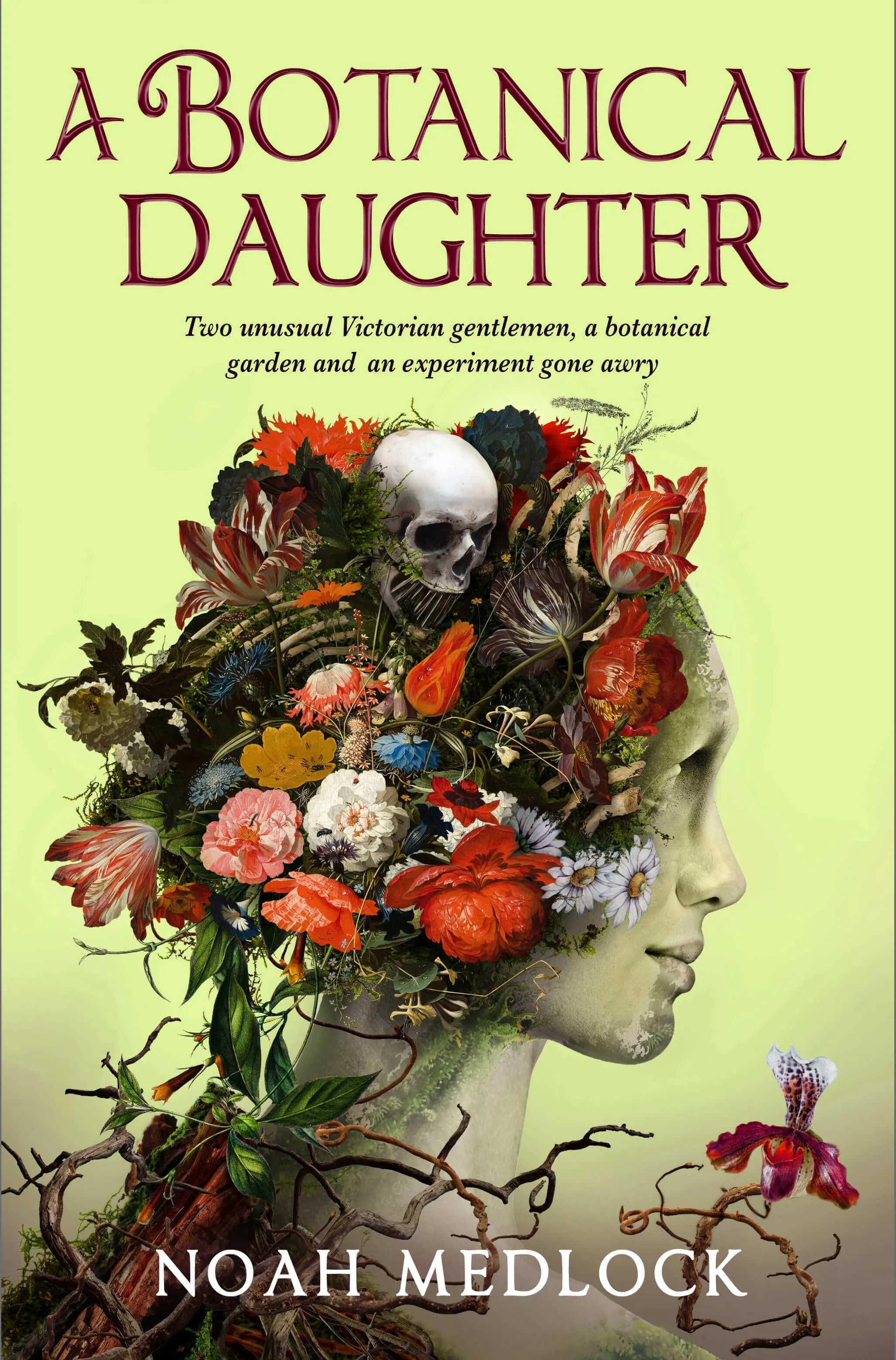
Imagine Frankenstein’s monster as a woman made of plants, with two gay dads and a woman love interest.
Summary:
It is an unusual thing, to live in a botanical garden. But Simon and Gregor are an unusual pair of gentlemen. Hidden away in their glass sanctuary from the disapproving tattle of Victorian London, they are free to follow their own interests without interference. For Simon, this means long hours in the dark basement workshop, working his taxidermical art. Gregor’s business is exotic plants – lucrative, but harmless enough. Until his latest acquisition, a strange fungus which shows signs of intellect beyond any plant he’s seen, inspires him to attempt a masterwork: true intelligent life from plant matter.
Driven by the glory he’ll earn from the Royal Horticultural Society for such an achievement, Gregor ignores the flaws in his plan: that intelligence cannot be controlled; that plants cannot be reasoned with; and that the only way his plant-beast will flourish is if he uses a recently deceased corpse for the substrate.
The experiment – or Chloe, as she is named – outstrips even Gregor’s expectations, entangling their strange household. But as Gregor’s experiment flourishes, he wilts under the cost of keeping it hidden from jealous eyes. The mycelium grows apace in this sultry greenhouse. But who is cultivating whom?
Review:
I absolutely loved the concept behind this retelling. It offers a biopunk take on Frankenstein with a blend of Victorian elements that’s both intriguing and thought-provoking.
As a gardener (and botanical garden member), I found the descriptions of the greenhouse and botanical garden both realistic and captivating. It was charming to see the couple living inside the greenhouse—who hasn’t daydreamed about that as a gardener? The contrast between the m/m and w/w relationships was also a standout, especially since neither would have been accepted in the historical time period.
However, the writing style didn’t suit my tastes. It was much too flowery (pun intended!) for what I typically enjoy reading. In fairness, I’m not particularly fond of Victorian literature, which this retelling modernizes while maintaining that tone. I struggled to connect with the two main characters and never quite understood their motivations. Though I’m a queer person and this is queer literature, I found myself disagreeing with the book’s overarching themes—it’s okay for queer people to have differing perspectives, and this is where I do.
Diversity is limited to sexuality. There is no diversity of race, ethnicity, or ability.
There are several violent scenes, including on-screen blood splatter, which is fairly graphic. There’s also a lengthy, explicit description of the w/w relationship, which was too intense for my taste, so I skimmed that section.
Overall, this is a unique take on Frankenstein with queer characters and a botanical twist. If you’re intrigued by the premise, I recommend reading the first few pages to see if the writing style resonates with you. Just be aware of the graphic violence and intimate chapter.
If you found this review helpful, please consider tipping me on ko-fi, checking out my digital items available in my ko-fi shop, buying one of my publications, using one of my referral/coupon codes, or signing up for my free microfiction monthly newsletter. Thank you for your support!
3 out of 5 stars
Length: 384 pages – average but on the longer side
Source: NetGalley
Buy It (Amazon or Bookshop.org)
Publication Announcement: Scifi: “The Crooked Tree of Algrüsti”
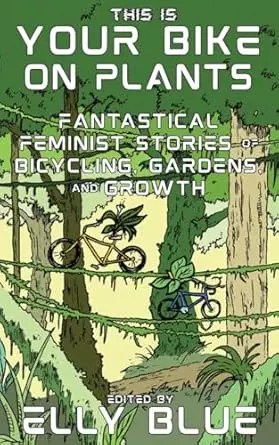
I’m thrilled to announce the publication of my scifi short story “The Crooked Tree of Algrüsti” in the anthology This Is Your Bike on Plants: Fantastical Feminist Stories of Bicycling, Gardens, and Growth—edited by Elly Blue and published by Microcosm Press. You can grab a copy on Amazon, directly from the publisher, or at many other bookstores.
About the collection:
The revolution will be green, growing, and non-motorized.
When you plant the seeds of bicycle revolution, you never know what the future will grow. These 12 stories form a splendid garden of potential futures, from the speculative to the surreal—all powered by bicycles, grounded in feminism, and blossoming with creativity.
In these pages you’ll find activist trees, magical flowers, feminist fairy tales, climate parables, photosynthesizing human-bicycle cyborgs, revolutionary elves, dazzling space gardens, green witchcraft, and more to delight your imagination. Lovers of cli-fi, solarpunk, hopepunk, and feminist bicycle science fiction will all find something to love here. You’ll never see the streets, or plants, around you the same way again.
About my story:
Celosia moved to the frigid planet of Algrüsti to escape the omnipresence of plants and their sentient relatives, the Morts. But when her new friend unexpectedly leaves the planet, Celosia is left in charge of an unanticipated botanical garden—and must confront her past in the process.
My story touches on themes of friendship, grief, addiction, and recovery—all with a love for plants and music.
I’m so proud to be part of this collection, and I hope you’ll check it out! Please also visit my Publications Page for more of my work.
Thank you so much for your support!
Book Review: Welcome to Forever by Nathan Tavares
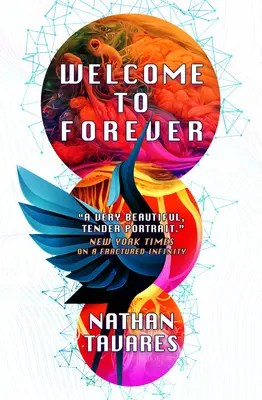
Two men trapped in looping artificial realities, always find each other—maybe even save the world.
Summary:
Fox is a memory editor – one of the best – gifted with the skill to create real life in the digital world. When he wakes up in Field of Reeds Center for Memory Reconstruction with no idea how he got there, the therapists tell him he was a victim in a terrorist bombing by Khadija Banks, the pioneer of memory editing technology turned revolutionary. A bombing which shredded the memory archives of all its victims, including his husband Gabe.
Thrust into reconstructions of his memories exploded from the fragments that survived the blast, Fox tries to rebuild his life, his marriage and himself. But he quickly realises his world is changing, unreliable, and echoing around itself over and over.
As he unearths endless cycles of meeting Gabe, falling in love and breaking up, Fox digs deep into his past, his time in the refugee nation of Aaru, and the exact nature of his relationship with Khadija. Because, in a world tearing itself apart to forget all its sadness, saving the man he loves might be the key to saving us all.
Review:
This book is one to read if you’re after gorgeous writing. The prose is immersive, with sentences that invite you to sink into them and reflect.
The character of Fox is rich in complexity. Each chapter peels back another layer of his personality, revealing depth and nuance. However, Gabe doesn’t receive the same level of development. While this is understandable—since we spend far more time in Fox’s mind than we do with Gabe in the present—it still makes their dynamic feel uneven.
Each chapter and memory journey felt like its own vignette. I found myself struggling with the overarching story, as so much time was spent on each memory that, by the end, I found myself asking, “What was the set-up again?” The book’s pacing, which focuses heavily on memory, made it hard for me to connect with the main plot.
At first, I felt the ending was spot on, but then the “Coda Excisions”—a chapter after the final one—left me confused. For me, it diminished the emotional impact of the conclusion.
Diversity is a standout feature of this book. The primary relationship is m/m, and there’s a secondary wlw relationship. All three of the main characters are people of color, and one speaks with a stutter, adding further nuance to the representation.
In terms of content:
- There’s some swearing.
- Intimacy is handled artistically—focused more on emotions than explicit details.
- One character experiences childhood exploitation, and it’s treated with the appropriate weight and sensitivity.
- Both main characters are orphaned.
- There are a few intense scenes: a bomb threat, a natural disaster resembling a hurricane, and a workplace shooting.
Overall, if you’re less concerned with plot structure and more interested in the emotional journey and immersive writing, this book may resonate with you. I recommend reading the first few chapters to see if the style suits you, and then deciding whether to continue.
If you found this review helpful, please consider tipping me on ko-fi, checking out my digital items available in my ko-fi shop, buying one of my publications, using one of my referral/coupon codes, or signing up for my free microfiction monthly newsletter. Thank you for your support!
3 out of 5 stars
Length: 435 pages – average but on the longer side
Source: NetGalley
Buy It (Amazon or Bookshop.org)
Book Review: One Perfect Couple by Ruth Ware

A scientist and her boyfriend join a tropical reality tv show, only to find themselves battling for survival as the deserted island game turns deadly.
Summary:
Lyla is in a bit of a rut. Her post-doctoral research has fizzled out, she’s pretty sure they won’t extend her contract, and things with her boyfriend, Nico, an aspiring actor, aren’t going great. When the opportunity arises for Nico to join the cast of a new reality TV show, The Perfect Couple, she decides to try out with him. A whirlwind audition process later, Lyla find herself whisked off to a tropical paradise with Nico, boating through the Indian Ocean towards Ever After Island, where the two of them will compete against four other couples—Bayer and Angel, Dan and Santana, Joel and Romi, and Conor and Zana—in order to win a cash prize.
But not long after they arrive on the deserted island, things start to go wrong. After the first challenge leaves everyone rattled and angry, an overnight storm takes matters from bad to worse. Cut off from the mainland by miles of ocean, deprived of their phones, and unable to contact the crew that brought them there, the group must band together for survival. As tensions run high and fresh water runs low, Lyla finds that this game show is all too real—and the stakes are life or death.
Review:
I’m already a big fan of Ruth Ware’s, but when I heard her 2024 release was a locked-room mystery set in a reality tv show on a tropical island, I was sold. (Technically, I put it on my wishlist, and it was sold to my siblings-in-law who got it for me as a gift.) This did not disappoint.
Last year’s release featured a woman in a stereotypically male job, and so does this one. It was quite fun to see a postdoctoral researcher in a psychological thriller, let alone a woman doing it. I loved the play on gender roles of Lyla being the brain of the couple and her boyfriend being the beauty. How Lyla agrees to be on the show is believable also. There’s a nice variety of characters, both the couples cast for the show, and the folks working on it. You can tell that Ware did her homework with regards to how reality tv is run behind-the-scenes. It comes across as real, right down to what should be making the contestants suspicious.
My favorite representation in this book was the secondary character with Type 1 Diabetes. Again, this is very realistic. (Ware acknowledges advisors/sensitivity readers she had for Type 1 Diabetes in the afterword.) The impact of her illness on her predicament is realistic. But she’s also simply herself. She’s not some inspirational heroine nor is she someone with no agency simply to be saved.
The mystery is solid. I definitely didn’t guess at the final twist before it happened. All the twists felt reasonable and realistic, especially within the world of reality tv. I wish that we’d had a bit more closure at the end.
Overall, this novel is recommended for fans of psychological thrillers. It offers a unique blend of reality TV drama, relationship dynamics, and environmental challenges.
If you found this review helpful, please consider tipping me on ko-fi, checking out my digital items available in my ko-fi shop, buying one of my publications, using one of my referral/coupon codes, or signing up for my free microfiction monthly newsletter. Thank you for your support!
4 out of 5 stars
Length: 385 pages – average but on the longer side
Source: Gift
Buy It (Amazon or Bookshop.org)
Book Review: Wildwood Chronicles Trilogy by Colin Meloy

When crows steal Prue’s little brother, she and her friend Curtis find that the Impassable Wilderness bordering Portland, Oregon, isn’t quite so Impassable after all.
Summary:
Prue and her friend Curtis uncover a secret world in the midst of violent upheaval—a world full of warring creatures, peaceable mystics, and powerful figures with the darkest intentions. And what begins as a rescue mission becomes something much greater as the two friends find themselves entwined in a struggle for the very freedom of this wilderness. A wilderness the locals call Wildwood.
Review:
A middle grade fantasy trilogy by the lead singer of my favorite band, The Decemberists. Gorgeously illustrated by his wife, Carson Ellis. If you’ve ever read The Chronicles of Narnia, this is like that except replace the Christianity with environmentalism and new age spirituality.
My favorite part of this trilogy was the various talking birds. All the animals in the Impassable Wilderness can talk, but Meloy’s love of birds really comes through. (As a fan of his songs, this didn’t surprise me at all.) The dapper outfits all the animals wear are also just too cute. It’s a trilogy with maps, and I do always love a good map to go with a story. I appreciate very much that the hero of the story is a girl with Curtis playing the sidekick.
There are really two enemies in the plot. A civil war style conflict inside the Impassable Wilderness, and the looming threat of capitalism from outside the Impassable Wilderness. I liked the idea of the latter more than the former, but the execution felt a bit too silly to me. For example, the big bad capitalists are all named the Titans of Industry (capitalized like that). One of them uses child labor in the form of orphans collected directly from Portland. It felt quite Victorian for something where the rest of the world outside of the Impassable Wilderness is quite modern.
The books are incredibly long, hitting chunkster length even for adult books. Each is over 500 pages (the last clocking in at 580.) I certainly read some long books when I was a kid, so I don’t begrudge them that per se. I do think it’s a tough sell when even the first book is super long. Regardless, I don’t think that the length is justified by the plot. While the first book is just about paced right, the latter two are not. There’s a lot of pages spent on not a lot going on. The middle book especially suffers horribly from middle book syndrome.
I liked the world, the Impassable Wilderness residents, and the illustrations. I felt the plot lacked depth, and the pacing was too slow for my taste, especially for such long books. I also found the ending to be a let-down.
Overall, this could be a good match for a reader who has a hankering for a through a secret door fantasy. Especially for the reader who loves talking animals and doesn’t mind a slower pace.
If you found this review helpful, please consider tipping me on ko-fi, checking out my digital items available in my ko-fi shop, buying one of my publications, using one of my referral/coupon codes, or signing up for my free microfiction monthly newsletter. Thank you for your support!
3 out of 5 stars
Books in Series:
Wildwood, 4 stars, length 541 pages – chunkster
Under Wildwood, 3 stars, length 559 pages – chunkster
Wildwood Imperium, 3 stars, length 580 pages – chunkster
Source: Gift
Buy It (Amazon or Bookshop.org)
 Support my work with a tip or browse my shop for curated book club guides, how to guides, cross-stitch patterns, and more!


This work by Amanda Nevius is licensed under a Creative Commons Attribution-Noncommercial-No Derivative Works 3.0 United States License.
 Opinions of a Wolf