
Archive
Book Review: Witchcraft for Wayward Girls by Grady Hendrix
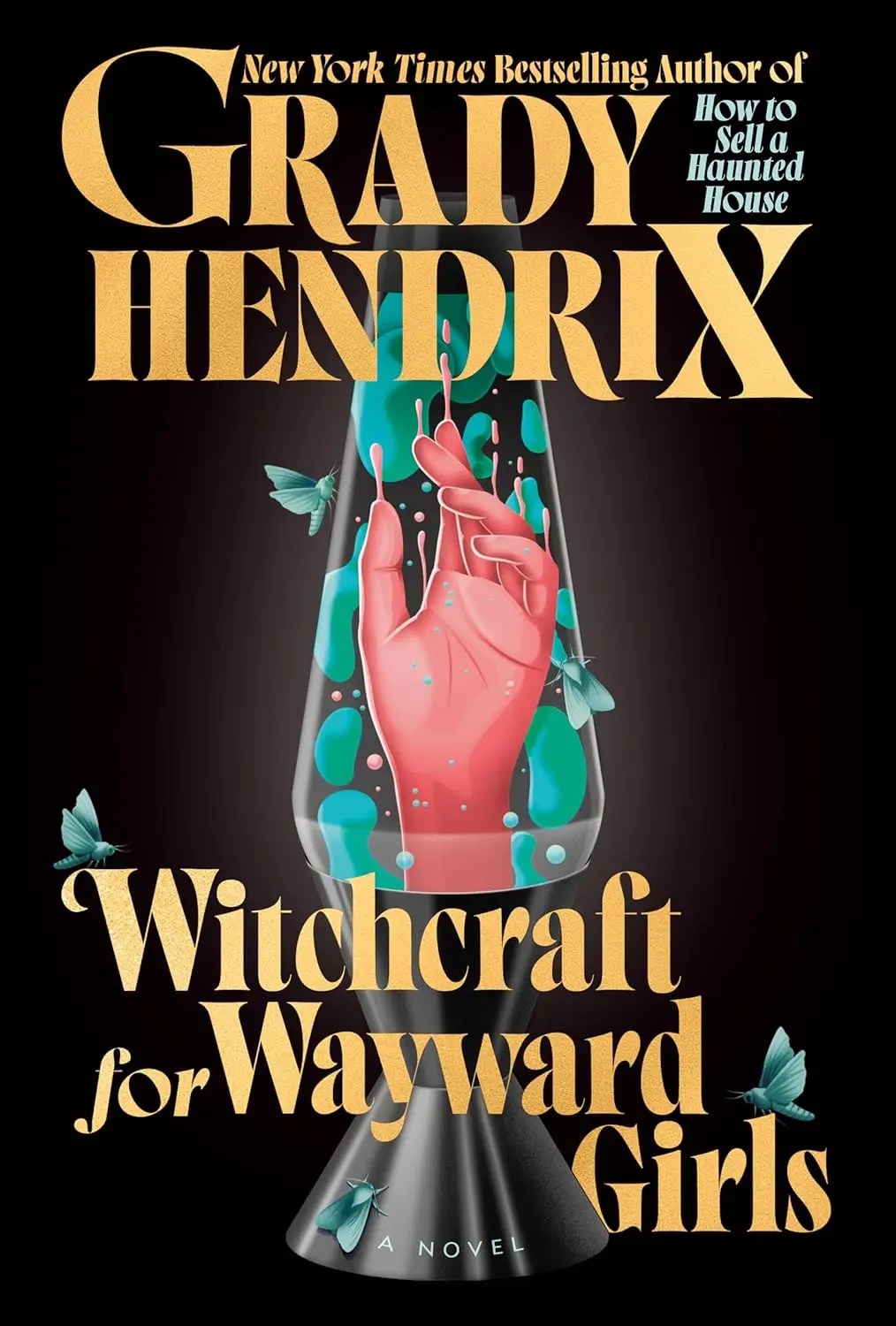
A chilling blend of historical fiction and supernatural horror, this novel explores what happens when pregnant teenage girls—hidden away in a 1970s home for wayward girls—discover the dark power of witchcraft.
Summary:
They call them wayward girls. Loose girls. Girls who grew up too fast. And they’re sent to the Wellwood Home in St. Augustine, Florida, where unwed mothers are hidden by their families to have their babies in secret, give them up for adoption, and most important of all, to forget any of it ever happened.
Fifteen-year-old Fern arrives at the home in the sweltering summer of 1970, pregnant, terrified and alone. Under the watchful eye of the stern Miss Wellwood, she meets a dozen other girls in the same predicament. There’s Rose, a hippie who insists she’s going to find a way to keep her baby and escape to a commune. And Zinnia, a budding musician who knows she’s going to go home and marry her baby’s father. And Holly, a wisp of a girl, barely fourteen, mute and pregnant by no-one-knows-who.
Everything the girls eat, every moment of their waking day, and everything they’re allowed to talk about is strictly controlled by adults who claim they know what’s best for them. Then Fern meets a librarian who gives her an occult book about witchcraft, and power is in the hands of the girls for the first time in their lives. But power can destroy as easily as it creates, and it’s never given freely. There’s always a price to be paid…and it’s usually paid in blood.
Review:
I had previously read Grady Hendrix’s My Best Friend’s Exorcism and remembered liking it more than I actually did. When I revisited my review, I realized I had enjoyed the concept far more than the execution—and unfortunately, that’s exactly how I feel about this book as well.
One thing I didn’t realize before picking this up is that Hendrix is a male author. I read My Best Friend’s Exorcism digitally, so it wasn’t until I saw the author photo on my library copy that it became obvious. Now, that’s not to say men can’t or shouldn’t write about women’s issues—but in my experience, if a book is expressly about women’s experiences (such as pregnancy and abortion), I tend to dislike it when it’s written by a man. Hendrix acknowledges this in a note, explaining that his inspiration came from a family member’s experience as a wayward girl, and I appreciate the personal connection as well as the research he put in. That said, I still struggled with the execution. In retrospect, this also explains issues I had with My Best Friend’s Exorcism—especially the queer-baiting between the two best friends. The way their relationship was written didn’t quite reflect how best girlfriends interact. I now wonder if Hendrix was inserting subtext without realizing it. But I digress—back to this book.
This is a long book, and it takes quite a while before the supernatural horror elements appear. When they do, they feel sporadic—as if the book can’t quite decide whether it wants to be historical fiction or horror. According to the author’s note, an earlier version was pure historical fiction, and it shows. The witchcraft elements feel both tacked-on and underwhelming, lacking the impact they seem to be aiming for. The spellcasting scenes, in particular, drag on too long—the book repeatedly emphasizes how rituals are tedious, repetitive, and boring, and then actually makes the reader sit through them in full dialogue.
The novel also struggles with whether the witches are heroes or villains. At first, they seem to empower the girls in a feminist, girl-power way, but later, they’re positioned as the main threat. I can see the poetic logic in showing that these girls had no real options, but at the same time, a novel like this needs a stronger thematic core—a sense of hope, justice, or at least a clear vision for a better future. On the plus side, I never knew what would happen next or how it would wrap up. Even when I felt frustrated, I kept reading simply because I needed to know how it all ended.
While the book does include a Black teen girl at the home, the handling of race and racism felt superficial at best. The only acknowledgment of racism in 1970s Florida is a scene where the home’s director initially wants to separate the Black girl from the others, only for a hippie character to protest and swap rooms with her. That’s it. This felt wildly unrealistic for the time period.
Beyond this, there are three other Black characters: the cook, the maid (her sister), and a driver. While these are historically accurate roles, the cook is a blatant magical negro trope, complete with a sassy personality and a role that exists entirely to serve and clean up after the white girls. I cringed. A lot. The white characters take advantage of her kindness without any acknowledgment of how their actions impact her life. I also disliked how Black characters’ skin tones were described.
Readers should be aware that this book includes:
- Graphic descriptions of self-injury related to spellcasting.
- Traumatic childbirth.
- Forced institutionalization & adoption.
- Emotional abuse.
- Mentions of CSA & child abuse (off-page).
- A spellcasting scene with explicit Christian blasphemy. (Expected for witches, but I do think it could have achieved the same effect without spelling out the blasphemy.)
Ultimately, this is historical fiction with horror elements rather than a true horror novel. It would have benefited from stronger thematic direction and a more nuanced approach to diversity, avoiding the Magical Negro trope. The book understands that these wayward homes were a problem, but it doesn’t seem to take a stance on what should have been done differently. It sends mixed messages about abortion, single teen motherhood, and autonomy—leaving it feeling murky rather than impactful. Recommended for readers who enjoy historical fiction with a touch of horror—and who don’t mind waiting for the horror to arrive. For those interested in the real history behind these homes, The Girls Who Went Away is a must-read.
If you found this review helpful, please consider tipping me on ko-fi, checking out my digital items available in my ko-fi shop, buying one of my publications, using one of my referral/coupon codes, or signing up for my free microfiction monthly newsletter. Thank you for your support!
3 out of 5 stars
Length: 482 pages – chunkster
Source: Library
Buy It (Amazon or Bookshop.org)
Book Review: The Woman in Me by Britney Spears

Two years after her conservatorship ended, pop star Britney Spears tells her story.
Summary:
In June 2021, the whole world was listening as Britney Spears spoke in open court. The impact of sharing her voice—her truth—was undeniable, and it changed the course of her life and the lives of countless others. The Woman in Me reveals for the first time her incredible journey—and the strength at the core of one of the greatest performers in pop music history.
Written with remarkable candor and humor, Spears’s groundbreaking book illuminates the enduring power of music and love—and the importance of a woman telling her own story, on her own terms, at last.
Review:
I think it’s important you know what sort of perspective you’re getting in my review. So let me be clear: I am a Britney Spears fan. From the moment I heard the first four notes of …Baby One More Time’s mp3 playing through the tinny speakers on my family’s pc when I was 13 years old, I was enamored – and I hadn’t even seen the music video yet! (And I didn’t for a while.) When I did finally start seeing Britney and not just hearing her, it got even better. Her fashion sense was, to me, spot on. I wanted nothing more than to wear those jeans and bare my midriff like her. (Although, I did not have the body confidence to do so.) Her eyeliner, her music videos, her sound.
Britney’s music was a perpetual backdrop to my rough teens and twenties. I laughed when Oops! I Did It Again mentioned the necklace in The Titanic. I got teary-eyed singing Lucky in my bedroom. I played I’m a Slave 4 U both because I liked it and because it drove my mother insane. I was terrified of snakes, and Britney DANCED with one while performing. I was a closeted bisexual, and when she kissed Madonna, I lost my mind. When she had kids, I was in college. I didn’t understand why she was so excited to be a mom, but I loved that she knew what she wanted so much. Blackout dropped my senior year, and I belted out Piece of Me on study breaks. I listened to Womanizer to make myself feel better when I was lonely in grad school Circus is still on my #GirlBoss playlist I listen to to help hype myself up when I’m doing something that feels scary in my various careers. (I’m on my second.)
When her conservatorship started, I didn’t understand what it meant. I thought she had trouble with her finances, and someone was helping her out. My husband took me to see her at her Vegas residency. I was so excited I threw up in our hotel room right before the show. I feel badly now knowing what she was going through (I did not know then), but I am here to tell you she still put on a phenomenal show for us fans in spite of all that.
When the #FreeBritney movement really started to take off, and I came to understand what a conservatorship actually meant, I joined in calling for her to be freed. I explained to anyone who would listen what was wrong with a conservatorship. And I believe this for anyone, not just for Britney. No one deserves to have their adult agency taken away, regardless of their mental abilities and/or mental health. Anything else is just ableist.
Anyway, that is who is reviewing this memoir for you. A fan who loves Britney for who she is.
The ghostwriters did a very good job of leaving Britney’s voice clearly in-tact throughout the book. It sounds like her. The story is told mostly chronologically from her childhood forward, although there is sometimes some jumping back and forth in some places. If you have read Britney’s Instagram captions, then you have some idea of the general tone of the book. But it has been edited so it is clearer than those. (And with less run-on sentences, and no emojis except in the Afterword.)
What stood out to me the most about the book was these things. First, Britney expresses that being put in the conservatorship caused her to regress sometimes. Essentially, treating her like a child made her act like a child. This is excellent insight, and a reason to not inflict conservatorships on people of any ability level. Everyone deserves to be treated with respect and like an adult. (I’d argue children deserve to be treated with more agency than they are, but that’s another topic for another blog post.) Second, Britney is of the opinion that what happened to her would never happen to a male pop star. How she was infantilized and not allowed space to be weird and creative was largely because she was a woman. Third, Britney feels part of why what happened to her did was because she tries so hard to be a “nice girl” that people end up walking all over her. She talks a bit about Madonna and how, “she demanded power, and so she got power.” (page 101) But that’s not part of Britney’s nature.
Fourth, Justin Timberlake broke up with her via text message then used the break-up to make her into the bad guy and spur on his solo career. Reminder to those who maybe weren’t around at that time – cell phones at that time didn’t let you write long messages. A break-up in a text message would have been necessarily character-limited. It makes it even worse. It seems that Britney was well and truly heart-broken and betrayed and society really piled on her on top of it. I didn’t realize that the paparazzi laws have changed since the early 2000s. I obviously wasn’t a celebrity but I remember how it was. You could see the paparazzi swarming celebrities constantly even in their own photos and videos. I used to wonder how they could stand it. (The answer is: a lot of them couldn’t.) The media was also incredibly cruel. I still have the internalized messages from just being a young woman at that time – and I wasn’t their target.
The magazines seemed to love nothing more than a photo they could run with the headline “Britney Spears got HUGE! Look, she’s not wearing makeup!” As if those two things were some kind of a sin–as if gaining weight was something unkind I’d done to them personally, a betrayal.”
The book makes it abundantly clear that the instigators of the conservatorship were her family. They swept in, claiming to be worried about her but actually wanting to control her. At the beginning of the book, she talks about her family history. How her father’s dad was abusive to him. This same grandfather also locked away her grandmother as “crazy” and left to rot there. The same thing her father tried to do to her. The intergenerational trauma gave me chills.
Ok, so why four stars instead of five? There were a few places where I wanted more. Not about any of her traumas. She has every right to only tell as much as she wants to tell. But some of the business stuff. I wanted to know more. I loved how she told us about what it was like to shoot her first music video and to dance with the snake at the awards show. I wanted more of that. What was it like to kiss Madonna? Why did she? (She says it was her idea, that they didn’t rehearse that way, but not much else.) I wish the ghost writers had nudged her a bit more to put more of those types of anecdotes in the book. Or when they came up to say more. (She says she threw a party with Natalie Portman but essentially nothing about what the party was like.) I wanted to know more about this part of Britney. Her successes, not just her traumas.
A question I was asked when I was seen reading the book was if I think Britney is really mentally unwell. My answer is this: this is a book written by a traumatized person. Britney was traumatized by her family, by the media, by various romantic partners, by the conservatorship. I don’t want to diagnose anyone. But I will say that trauma often leads to C-PTSD. And C-PTSD can often be misdiagnosed as other mental health conditions. So I hope people will keep these things in mind when looking at Britney and give her some grace. I do also think Britney is a simple, trusting person. Those type of people often end up being taken advantage of.
I’m assuming most fans have either already read the book or are (im)patiently waiting for their copy. If you’re on the fence, to you I say, this book is worth the read to explore intergenerational trauma and to dive down into late 90s/early 2000s culture. To be reminded (or learn) how misogynistic it was, even to women who were succeeding by its own rules.
If you found this review helpful, please consider tipping me on ko-fi, checking out my digital items available in my ko-fi shop, buying one of my publications, using one of my referral/coupon codes, or signing up for my free microfiction monthly newsletter. Thank you for your support!
4 out of 5 stars
Length: 288 pages – average but on the shorter side
Source: Library
Buy It (Amazon or Bookshop.org)
Book Review: A Dowry of Blood by S.T. Gibson

Summary:
You saved my life when I was on the brink of death, and I became your vampire bride. But we’ve lived many centuries past those days in Romania. I think your way of loving might be more than I can bear.
Review:
I picked this up because I heard that in spite of the husband/wife part of the summary that there’s a significant sapphic subplot. I’m not sure I’d call it significant so much as being one of the three parts of the book.
It’s written as a letter from the vampire bride Constanta to her vampire husband. In the first part, we learn how Constanta became a vampire and her early years with him. In the second, he adds a second wife, Magdalena. But this is true polyamory in that everyone sleeps with everyone. In the third part, he adds a husband, Alexi. Again, everyone has sex with everyone, although this is not the amicable threesome (and sometimes twosomes in both combinations) it once was. It’s clear that while the sire is fine with Magdalena and Alexi sleeping together, he’s less ok with Constanta and Alexi.
But what is the plot of the book? It’s basically Constanta realizing over time just how cruel her husband is and trying to decide if she should try to escape. The most unique part of this was the second part where Magdalena and Constanta both feel an immediate attraction to each other and then proceed to form a romantic bond as their husband perpetually abandons them for his research. I don’t say this just because it’s sapphic but rather because I think polyamory as opposed to polygamy has less representation in literature. Not that either have a lot.
I want to be clear this is not erotica. If it wasn’t for all the vampire feeding blood, I’d say it could probably pull off a PG13 rating for the sexual content. A lot occurs off-screen or is only vaguely described. There’s really only one scene that I think might warrant an R rating for the sex. This in fact is not a story about sex but one about many centuries of abuse and how the persons being victimized finally break free. The thing is…I was here for romance. And I wouldn’t say that’s what this is.
The language is overwrought in a self-aware way. Constanta is old world. These are her words. She sounds like an 1800s teenager who takes everything far too seriously and has some hilarious turns of phrase. I’m sure some readers would read this as gorgeous as opposed to silly. When I say overwrought 1800s language, I’m sure you can tell how well that will work for you.
While the book engaged me enough to finish it, here wasn’t enough unique about it to make me rate it above average. I wanted more of what makes this vampire bride different and less of the usual tropes. But if you’re a person who loves Old Europe style vampires and wants a dash of f/f love and polyamory in there, then this will likely work quite well for you.
If you found this review helpful, please consider tipping me on ko-fi, checking out my digital items available in my ko-fi shop, buying one of my publications, or using one of my referral/coupon codes. Thank you for your support!
3 out of 5 stars
Length: 248 pages – average but on the shorter side
Source: Library
Buy It (Amazon or Bookshop.org)
Counts For:

Book Review: Made in China: A Memoir of Love and Labor by Anna Qu

Summary:
When Anna Qu was in high school, she had her guidance counselor call child protective services because her mother was making her work without pay in the family sweatshop. Her memoir uses this moment as the way into telling her life story. Of what happens when a family member is seemingly randomly selected as the one to ostracize.
Review:
I was immediately intrigued by this book because I thought – wow, what kind of mother brings her child to the US only to turn around and force her to work in a sweatshop? I could wrap my head around a mother owning and running a sweatshop. I could even imagine having your child work in a sweatshop in a different cultural context (due to need, due to cultural expectations, etc…). But the usual immigration story is a desire for your child to have a better life than your own. How does that compute if your own life is owning the sweatshop? I had to find out.
Anna’s mother immigrated to the US from China, leaving her in the care of her grandparents. She felt loved, but that changed when she joined her mother, new stepfather, and two new half-siblings in the US. An early warning sign of what is to come is seen at her arrival party thrown to celebrate her family’s ability to bring her over from China. How that party went awry and how the relationship with her mother started to fall apart is one of the most painful and eloquent scenes in the book.
Of course because this is a memoir we never get to know Anna’s mother’s motivations. But we do see some of her perspective revealed through the case worker, case documents, and what Anna’s grandmother had to say about it. A strength of this book is how the author is able to explore her mother’s own trauma without excusing her actions.
I was a ghost haunting a family that wanted nothing to do with me, and the loneliness left a tightness in my chest.
location 392
But Anna’s family wasn’t the only one to other her. Society did as well. Classmates perceived her as different and distanced themselves from her. When she went away to college, she did so without any familial support and found nothing at college was set up for people like her. She struggled to find places to stay on winter breaks, had to advocate to be declared independent from her family so she could get financial aid, and more. Thus we see the pain of noninclusive societies. How societal inclusion is even more important for people being denied by their own families.
The author also examines the two-pronged issue of sweatshop labor and workaholism. She views this as having started out as a necessity to make it in the US that then became a way of being. Although the author acknowledges the exploitation of her own experience, she takes the time to point out how much worse it is for other people. For example, undocumented workers with no legal recourse.
Thus, the book explores what makes family, society, and workplaces abuse some and not others. It provides no easy answers but is a memorable call for greater inclusivity and empathy. Recommended for readers of memoirs with an interest in intergenerational trauma and/or immigration and labor issues.
4 out of 5 stars
Length: 224 pages – average but on the shorter side
Source: Netgalley
Buy It (Amazon or Bookshop.org)
If you found this review helpful, please consider tipping me on ko-fi, checking out my digital items available in my ko-fi shop, buying one of my publications, or using one of my referral/coupon codes. Thank you for your support!
Book Review: Grown by Tiffany D. Jackson
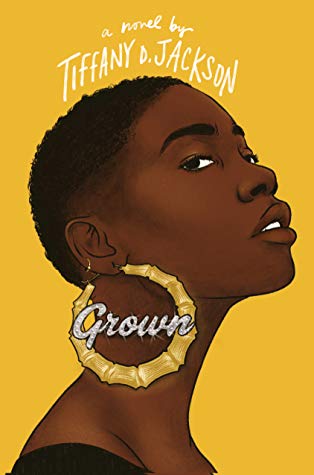
Summary:
17-year-old Enchanted Jones has been making it work at her new highschool in the suburbs where she’s the only Black girl. She has a good reputation on the swim team, and she takes care of her little siblings after school while her mom and dad work to afford their kids’ private schooling and their new house. But what Enchanted really wants to do is sing – an idea her parents aren’t too fond of. When she goes to a reality tv show audition, she meets R&B singer Korey Fields. He takes a shine to her, but that might not be the good thing she thinks it is.
Review:
I read this book in less than 24 hours because I simply could not stop thinking about Enchanted and needed to find out what happened in her world. This book both manages to be about important issues but also doesn’t feel like it’s an “issues” book. It’s Enchanted’s story, and that happens to involve today’s issues because today’s issues are real.
This book is about a lot of things, but many of the things it’s about come right back around to how society treats Black girls. How we treat them like they are grown up, when they are still children. This book beautifully depicts how truly adolescent Enchanted is – something that many of our adolescents are not allowed to be but Black girls especially. Enchanted is interested in boys and has feelings about them but she also loves Disney movie night with her little siblings. She has big dreams of stardom but she also just misses seeing her grandmother and swimming with her in the ocean. She has typical adolescent breakthrough moments of realizing what you saw and thought was beautiful as a child might actually be something else. This book asks us to believe girls, but to believe Black girls especially, because so many others will just look at them and say “oh they knew what they were doing, they were grown.”
The book is also about how wealthy abusers groom girls and take advantage of their wealth and power to separate girls from their families. The abuse depicted in this book is realistic and depicts emotional, sexual, and physical abuse and could be a trigger, so please do note that. That said, the author depicts just enough abuse for us to know what’s going on, but it never feels gratuitous or unnecessary.
While this is YA, it has important content for adults too, especially if you regularly come into contact with adolescents. Highly recommended.
5 out of 5 stars
Length: 384 pages – average but on the longer side
Source: Library
Buy It (Amazon or Bookshop.org)
If you found this review helpful, please consider tipping me on ko-fi, checking out my digital items available in my ko-fi shop, buying one of my publications, or using one of my referral/coupon codes. Thank you for your support!
Book Review: It Ain’t Me, Babe by Tillie Cole (Series, #1)
 Summary:
River “Styx” Nash was born into the Hades Hangmen motorcycle club. He always knew he was set to inherit running it, in spite of his speech impediment, but he never expected to be running it at the young age of twenty-six. When a young woman shows up at their doorstep, bleeding and unconscious, he’s reminded of a girl he met at a fence in the woods when he was a boy….a girl who has haunted him ever since.
Salome grew up under Prophet David’s rule in the commune that’s the only home she’s ever known. When her sister dies, she finds the strength to run and somehow ends up in the arms of the man who was once a boy she met at the fence of the commune.
Review:
I’m being a bit charitable with my rating of this read because the juxtaposition of commune and motorcycle club (gang) is one I haven’t seen before, and I do think it’s interesting. Additionally, I do realize that these types of romances are basically fantasy so I try to cut them some leeway. That said, this book is not executed as well as it could have been for its genre. There are some jarring elements that take the reader out of the read, thus leading it to be less enjoyable.
First, it’s poorly edited. There are many clear mistakes such as saying things like “gotta to.” It reads like a first copy, not a final draft. Better editing would have really helped this book.
Second, you have to imagine that the reader who might pick up a romance featuring motorcycles might know a thing or two about them. While everything else surrounding the motorcycles can be pure fantasy, the motorcycles themselves should function like the real world (unless it’s scifi). Motorcycles, though, are treated in the book as basically cars with two wheels, and anyone who’s ridden one can tell you that’s not so, and a motorcycle gang definitely would know better than to treat them that way. One glaring instance of being unrealistic about bikes is when Salome first rides on one. The book sets it up that she has no idea what a motorcycle is. She’s never seen one before, she has zero idea how they work. In spite of this, the only riding instruction she’s given is to “hold on.” Even someone giving the most bare of instructions to a new passenger will tell them to follow the lead of the rider — to lean when they lean and not to counter-lean against the rider. This is basic safety and even a motorcycle gang would give those basic instructions because a passenger who is startled could easily cause the bike to crash and riders love their bikes. Similarly, in spite of Salome not knowing anything about motorcycles, she puts on the helmet with zero instructions. I have never seen anyone who’s never worn a motorcycle helmet before be able to put it on with zero instructions. The strap is complicated and almost always takes guidance. Additionally, we are to believe Salome is riding with someone who cares about her, yet he doesn’t check on her helmet at all. This is not something a rider who cares about his passenger would ever do.
The final thing I found jarring was descriptions of the abuse in the cult. I fully expected there to be cult abuse, but there are repeated flashbacks to the rape of 8 year olds whose legs are being held apart by bear traps. I personally find it extremely difficult to get into a romance that repeatedly flashes back to the graphic underage and violent rape of the main character. It made the book feel like it was at war with itself. Did it want to be a contemporary book about the horrors of cults or did it want to be a romance? You can be both, but that is a difficult book to write, and it’s important to either put all of the abuse in one area of the book (usually where the heroine informs the hero about it) or to make the abuse more minimal (ie maybe the heroine grew up in a cult that restricted her knowledge and movement but that didn’t rape her physically).
Ultimately, while I appreciate the interesting combination of main characters (leader of a motorcycle club and escapee from a cult), I found the execution to not live up to the unique premise. Primarily recommended to those interested in the fantasy of motorcycles with little personal knowledge of them. They will be more able to get fully into the fantasy.
If you found this review helpful, please consider tipping me on ko-fi, checking out my digital items available in my ko-fi shop, buying one of my publications, or using one of my referral/coupon codes. Thank you for your support!
3 out of 5 stars
Length: 466 pages – chunkster
Source: Library

On Josh and Anna Duggar and the Fundamentalist Christian Culture of Forgiving Molesters and Abusers
I don’t often write non book reviews anymore, but something has come into the news that hits close to my heart and my own personal experience, and I felt it necessary to put my perspective out there.
Probably most people by now have heard that Josh Duggar of the famous Quiverfull family the Duggars has admitted that he molested young girls when he was a teenager (source). Perhaps what may be more shocking to most people is the knowledge that his wife, Anna, knew about this before they were married and married him anyway and is having children with him. (They currently have three young children, with a fourth on the way).
If you read Anna’s and Josh’s official statements, you will notice a theme among them.
Anna says, “He continued to do what he was taught. [I know] who Josh really is – someone who had gone down a wrong path and had humbled himself before God and those whom he had offended. Someone who had received the help needed to change the direction of his life and do what is right.” source, bold emphasis added by me.
Josh says, “I would do anything to go back to those teen years and take different actions. I sought forgiveness from those I had wronged and asked Christ to forgive me and come into my life. In my life today, I am so very thankful for God’s grace, mercy and redemption.” source, bold emphasis added by me.
In the fundamentalist Christian community, there is this idea that only those who were not truly saved are capable of abuse or molestation. I know this, because I was raised in a fundamentalist Christian community and heard this rhetoric over and over again. If Christianity was a ladder with fundamentalism at the top and the most liberal church you can think of at the bottom, my church growing up was one rung below the Quiverfulls. (If you are not familiar with what Quiverfull is, I highly recommend reading this expose on it).
Even in my slightly less fundamentalist fundamentalist Christian community growing up this idea existed. If someone has molested or abused people, they are clearly not saved, because no one with Jesus living in their heart would be capable of such heinous acts. Thus, if a person who has committed these acts “comes to Jesus” aka gets saved aka simply states that they now have faith in Jesus, the community believes that they are now incapable of molesting or abusing anyone. What this means is that all a molester or abuser has to do when caught is state how truly sorry they are, that they have seen their wrongs, that they have asked Christ to come into their lives and save them, that they have now repented and are turning 180 degrees from what they were.
You can see this same rhetoric in what Anna and Josh say above. While I seriously doubt that Josh is actually the changed person he claims to be (once a molester, always a molester, in my opinion), I do believe that his wife, Anna, truly believes that it’s ok to have children with him, because Josh is different now. He’s got Jesus. He didn’t have Jesus before, and that was bad, but he does now, so it’s ok. You can see how these ideas would lead to the harboring of abusers and molesters within the community. The molester and/or abuser knows exactly what rhetoric to say to get out of it. EVEN IF they had previously claimed they were saved, they can simply state that they thought they had been saved, but they must not have truly been one with Jesus or Satan wouldn’t have been able to entice them to commit these heinous acts. It’s irrelevant if the molester actually believes this or not, they simply know the rhetoric to say to get a clean slate in the community. While forgiveness is admirable, there are just situations and circumstances where that forgiveness should not go hand-in-hand with trusting the person to be around vulnerable people or with not punishing them at all or holding them accountable at all.
I personally know of at least two scenarios in my own community I grew up in where similar abusers and/or molesters have been given a free pass to be around children because they have “repented and come to Jesus now” so they “couldn’t possibly be capable of it anymore.” This culture fundamentalist Christianity has of sweeping these situations under the rug and protecting the abusers and molesters simply because they have come to Jesus is inexcusable. Yet it is so deeply ingrained in the culture, that I doubt it will ever change. So why am I bothering to write this? I want anyone who comes into contact with people from that community to be aware of the fact that just because they claim someone is a man of God or an upstanding citizen or a woman after God’s own heart that that does NOT mean that they have done nothing heinous in their past. They may have, and the community may even know of it and still speak of them that way. If you are in contact with children from this community please listen to what they say closely. If they say something like “so-and-so used to be very bad but then they came to Jesus so it’s ok now,” that is most likely a situation that warrants closer attention. These children need us to pay attention and try to protect them because God knows their own community will not.
Book Review: Will I Ever Be Good Enough?: Healing the Daughters of Narcissistic Mothers by Karyl McBride
 Summary:
A guidebook for adult women raised by a mother with Narcissistic Personality Disorder (NPD). Dr. McBride is a therapist with many years of experience treating daughters of NPD mothers and also with treating people with NPD. Additionally, she herself is the daughter of a woman with NPD. The book is divided into three sections to help the daughters of mothers with NPD to heal and take charge of their lives. The first section “Recognizing the Problem,” explains what maternal NPD looks like. The second section, “How Narcissistic Mothering Affects Your Entire Life,” explains the impact NPD mothers have on their daughters, both as children and as adults. The third section, “Ending the Legacy” is all about healing from the NPD mothering and breaking the cycle of Narcissism. Dr. McBride offers clinical examples from her practice as well as detailed, clearly explained exercises to aid with healing.
Review:
It’s not easy to find a book addressing healing from abuse that manages to walk the fine line of understanding for all involved and absolute condemnation of the abusive actions and that simultaneously encourages agency and healing without making the survivor become stuck in a victim’s mentality. Dr. McBride strikes this balance eloquently.
The three sections of the book work perfectly for guiding the reader through understanding precisely what happened in her childhood, how it impacts her adulthood, and how to regain agency of herself and her life. NPD is not a mental illness that is well-understood or recognized. The first section thus must explain NPD and how NPD leads to abusive mothering without demonizing the mother suffering from NPD. It is incredibly difficult not to demonize people with NPD. People with NPD tend to be self-centered, manipulative, and resistant to treatment. McBride manages to simultaneously describe the person with NPD in a sympathetic light and condemn their behavior. This section also serves to provide an aha moment for the reader. It will immediately be clear if your mother has/had NPD or not, and if she does/did, it will shine a light on the daughter’s childhood, proving she is not crazy or ungrateful. Some of the signs of a mother with NPD include: the mother demanding praise for everything she’s ever done for the daughter, a lack of compassion or empathy for the daughter, approval for who the mother wants the daughter to be instead of who she is, the mother perceives of the daughter as a threat, the mother is jealous of the daughter for various reasons, the mother is overly critical or judgmental, the mother uses the daughter as a scapegoat for her bad feelings, the mother treats the daughter like a friend, no boundaries or privacy, the mother involves the daughter prematurely in the adult world, and more.
This section also explains why the book is only about daughters of mothers with NPD and not for her sons as well.
A mother, however, is her daughter’s primary role model for developing as an individual, lover, wife, mother, and friend, and aspects of maternal narcissism tend to damage daughters in particularly insidious ways. Because the mother-daughter dynamic is distinctive, the daughter of a narcissistic mother faces unique struggles that her brothers don’t share….A narcissistic mother sees her daughter, more than her son, as a reflection and extension of herself rather than as a separate person with her own identity. She puts pressure on her daughter to act and react to the world and her surroundings in the exact manner that Mom would, rather than in a way that feels right for the daughter. (6-7)
The next section looks at what impact being raised by a mother with NPD has on the daughter’s adult life. McBride factually explains where some of the daughter’s less healthy behaviors and thought processes may come from without falling into the trap many childhood healing books fall into of repeatedly directing negative energy toward the parent. Some of the issues that may be present in an adult daughter raised by a mother with NPD include: high-achieving or self-sabotaging or waffling between the two, difficulty understanding and processing feelings, inappropriate love relationships that are dependent or codependent or giving up on relationships entirely, fear of becoming a mother herself, unconsciously mimicking her mother’s parenting with her own children or doing the exact opposite of what her mother did.
The final section is all about the daughter healing, overcoming, and taking agency for herself. McBride encourages therapy, but also offers at-home tips and exercises for those who cannot afford it. An example of one of these is the “internal mother” exercise. This exercise involves many steps, but it essentially seeks to replace the internal negative messages the daughter has from her own mother with more positive messages that are the type the daughter wanted from her real mother. The daughter grieves the mother she never got to have and learns to parent herself. Much of the work in this section involves grieving the mother and childhood the daughter never got to have, accepting it for what it is, giving herself the encouragement and mothering she needs, learning to set boundaries, and the daughter coming to be in charge of her own life. The exercises are not simple and may seem a bit overwhelming to the reader at first, but they do serve to mimic the real therapy process, encouraging introspection, journaling, grieving, and behavioral changes.
One thing I really appreciate about McBride’s approach is how she handles the adult relationship between daughter and mother. She 100% encourages the daughter to make the choice that is right for her own emotional health and that simultaneously does not expect miracles from her mother. Since most people with NPD don’t receive successful treatment, McBride carefully admonishes the daughter to base her decision based on her mother’s proven behavior. She encourages setting clear boundaries, and individuating oneself from mother. But she also acknowledges that having a relationship at all with a mother with severe NPD might not be possible.
We have to acknowledge that a narcissistic mother may be too toxic to be around. In many situations, daughters have to make the choice to disconnect completely from their mothers because the toxicity damages their emotional well-being. While others around you may not understand it, this is a decision that you get to make for your own mental health. (184)
Refusing to give one-size-fits-all advice on the relationship between a narcissistic mother and her adult daughter is just one example of the many positives of this book. McBride offers insight, advice, and isn’t afraid to say what might be painful to hear. She has done an excellent job putting the therapy process into book format, as much as possible.
Overall, this book tackles an incredibly difficult topic in an even-handed, clear manner. Its focus on just daughters of mothers with NPD allows Dr. McBride to give targeted examples and advice to the reader. It never excuses the mother’s behavior, firmly condemning it, but still exhibits compassion for the mother suffering from NPD. Any woman who thinks she may have been raised by a woman with NPD should read this book and see if any of it rings true for her. Additionally recommended to anyone interested in how NPD impacts parenting and the next generation.
5 out of 5 stars
Source: Amazon

Counts For:

Book Review: The Stoning of Soraya M.: A Story of Injustice in Iran by Freidoune Sahebjam (Bottom of TBR Pile Challenge)
Summary:
Sahebjam, a French-Iranian journalist, was traveling through Iran in the 1980s when he had to stop in a small village. An elderly woman, Zahra, asked him for tea so she could tell him the story of what happened to her niece, Soraya, mere weeks before. Sahebjam grants narrative to her tale to get the story of injustice out.
Soraya was a typical rural Iranian woman. Married to a villager at a young age. Her husband, Ghorban-Ali, became less and less invested in his family and more and more likely to beat them. He also became increasingly interested in young women in the city. When a criminal posing as a mullah comes to town, Ghorban-Ali sees the perfect opportunity to be rid of his wife without any costs of divorce. He, the mullah, and an easily swayed widower friend corroborate to falsely accuse Soraya of adultery and sentence her to death by stoning.
Review:
Things can easily go awry when the powers of justice are held in the hands of a select few. A lot rests on whether or not those few are good people. This book tells that tale, and it tells it movingly, regardless of whether or not all the facts of the story are precisely correct. The biggest facts are accurate, and that is what matters.
Sahebjam is a French-Iranian journalist. He thus has both the perspective of insider and outsider, which is the ideal one for a story like this. He understands the people and the village but he also knows how to present and explain things to the non-Iranian reader. Sahebjam clearly and honestly states from the beginning that he got this tale from one eyewitness. Some might argue that this story thus isn’t researched well enough or thoroughly vetted. It is indeed one eyewitness account passed through an author (and for English speakers, a translator). But the core of the injustice is verifiable: the handling of adultery in Islam. Combine this with religion and state being one and the same, and it’s easy to see how if this story didn’t indeed already happen how it could easily come to be.
The first half of the book introduces us to Sahebjam, Zahra (the aunt), and Soraya, as well as the organization of the small town and the adultery laws as followed by fundamentalist Islam. Sahebjam does a good job introducing all the people and explaining the context of the injustice without overwhelming the reader with info dumping.
Essentially, in Islam, when it comes to adultery, the woman has to do all the proving.
When a man accuses his wife [of adultery], she has to prove her innocence [in Islam]. This is the law. On the other hand, if a woman makes an accusation against her husband, she has to produce proof. (location 1079)
If the woman is wealthy, she can pay off the mullah (think of it as paying a penance in Catholicism). But:
In most cases the woman [accused of adultery in Iran] is poor—which means she is a virtual slave to her husband. She has no rights, except for the meager right to remain silent. All the husband needs to win his case of infidelity is two eyewitnesses, who are generally friends and accomplices. As for the accused woman, she has to prove her innocence and that is impossible: no one will come to her aid; no one will bear witness on her behalf. (location 129)
Regardless of whether or not Soraya was a real person (and I do believe she was), these are problematic laws that leave the door wide open for abuse by a few corrupt people. This book demonstrates that danger eloquently.
Sahebjam clearly made a choice to make the tale flow better by giving it some narrative qualities. He inserts dialogue he clearly wasn’t there to hear, and he even talks about what was going on inside people’s heads. I didn’t like that he did the latter, especially. I understand dialogue can help make a nonfiction book flow a bit, and I’m ok with that. But claiming to know what was going on inside people’s minds turned me off the narrative a bit. It leaves the door open for criticism of a story that needs to be taken seriously, and I wish he had made other narrative choices.
At first, it is easy to be irritated by Soraya’s choice to remain silent when accused. She gives up so quickly, one wonder why she never advocates for herself. But in retrospect, it’s a clear, yet subtle, depiction of what can happen to a victim of abuse over time. Eventually their spirit is just beaten out of them. Soraya demonstrates what happens when abused people are left to deal with the abuse and abuser on their own.
Overall, this book highlights the inequality innate is Muslim adultery laws, as well as the dangers of leaving justice to the hands of a few. The narrative structure doesn’t precisely suit a nonfiction account of an event, but the bones at the core of the injustice are still verifiably true. Readers who prefer a dry, precise nonfiction might not be able to look past the narrative structure. Those who can will find a moving tale of how easy it is for injustice to take over a community.
4 out of 5 stars
Source: Amazon

Book Review: The Sum of My Parts: A Survivor’s Story of Dissociative Identity Disorder by Olga Trujillo, JD
 Summary:
Olga was a young, successful lawyer in DC when she suddenly started having inexplicable panic attacks and episodes of blank stares or rapidly moving eyes. She sees a psychiatrist and is diagnosed with a moderate case on DID. On the spectrum, she has multiple parts but not exclusive personalities and still has a central core. These parts have kept the memories of her extraordinarily violent, abusive childhood from her consciousness thereby allowing her to function, but just barely. In her memoir, Olga tells what she has now remembered of her childhood and how she has now discovered she managed to function and be surprisingly resilient. She then delves into her long-term therapy and how she has come together into mostly one part and usually no longer dissociates.
Review:
I always find memoirs by those with DID or dissociation completely fascinating. Even just the ability to write the book and explain the disorder from the insider’s perspective is a remarkable achievement. I previously read When Rabbit Howls
Olga offers up a very precise trigger warning of which chapters could be dangerous for fellow trauma survivors. That said, I found her reporting of what occurred to her to be respectful of herself as a person. She never shirks from what happened to her, but is sure to couch it in concise, clinical language. I respect this decision on her part, and again believe it will make her book more accessible to a wider audience. People can see the results of the trauma without finding themselves witnesses to the trauma itself.
The book right up through about halfway through her therapy is clear and detailed, but then starts to feel rushed and more vague. Perhaps this is out of respect for the people currently in her life, but personally I wanted to know more. For instance, how was she able to make a drastic move from DC to the middle of the country without upsetting her healing process? How do the phone sessions with her therapist work? I think many advocates of those with mental illness would appreciate more detail on how she is able to have a healthy, happy relationship now, especially since we witness the dissolution of her first marriage. Similarly, I wanted to know more about her coming out process. She states that she knew at 12 she was a lesbian, but pretty much leaves it at that. I’m sure it was easier to embrace her sexuality the more integrated her parts became, but I am still interested in the process. She was so brave recounting her early life that I wonder at the exclusion of these details.
Overall this is a well-written memoir of both childhood abuse, therapy for DID, and living with DID. Olga is an inspirational person, overcoming so much to achieve both acclaim in her career and a happy home life. I recommend it to a wide range of people from those interested in the immigrant experience to those interested in living with a mental illness.
4 out of 5 stars
Length: 258 pages – average but on the shorter side
Source: NetGalley
Buy It (Amazon or Bookshop.org)
If you found this review helpful, please consider tipping me on ko-fi, checking out my digital items available in my ko-fi shop, buying one of my publications, or using one of my referral/coupon codes. Thank you for your support!
 Support my work with a tip or browse my shop for curated book club guides, how to guides, cross-stitch patterns, and more!


This work by Amanda Nevius is licensed under a Creative Commons Attribution-Noncommercial-No Derivative Works 3.0 United States License.
 Opinions of a Wolf