
Archive
Book Review: Witchcraft for Wayward Girls by Grady Hendrix
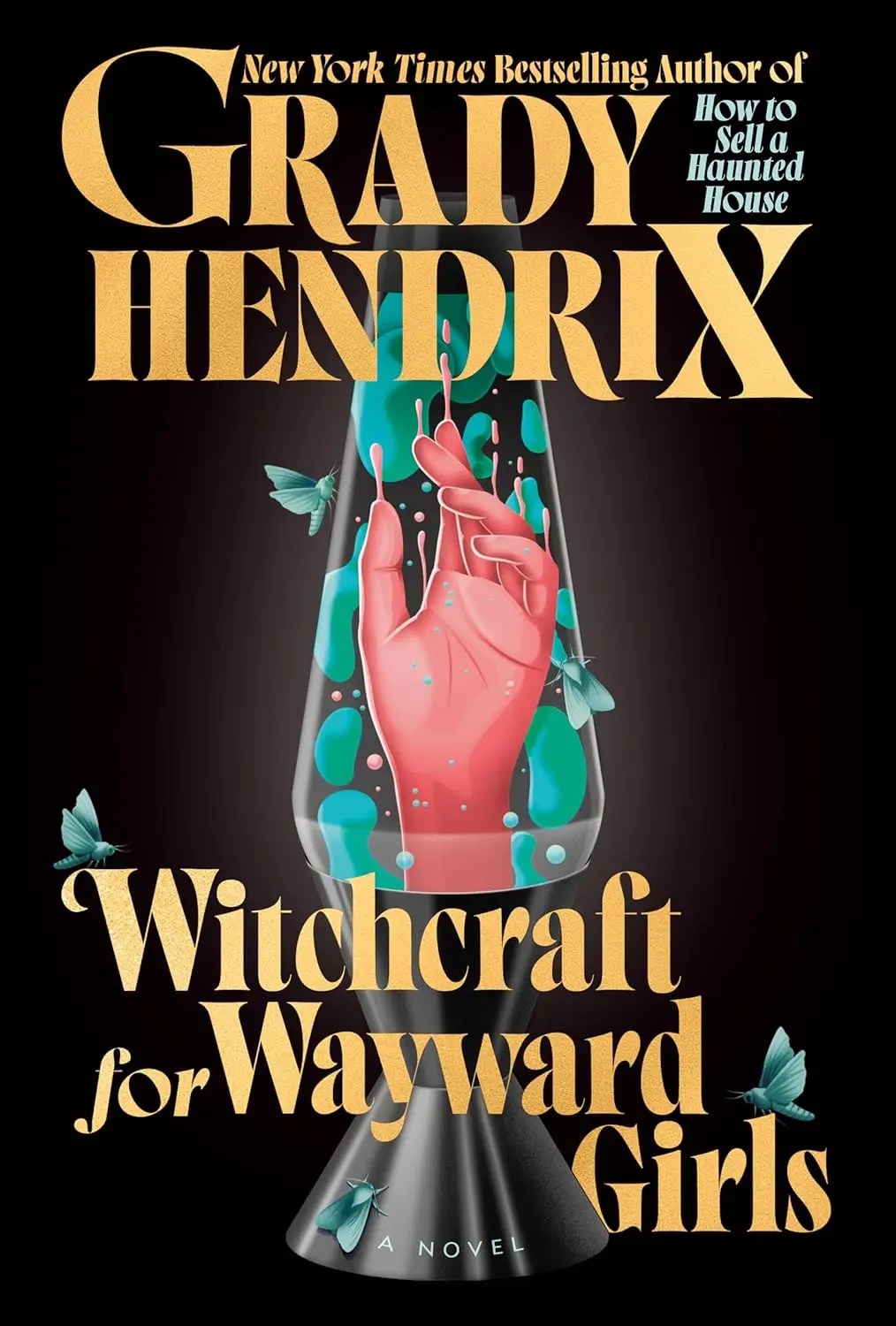
A chilling blend of historical fiction and supernatural horror, this novel explores what happens when pregnant teenage girls—hidden away in a 1970s home for wayward girls—discover the dark power of witchcraft.
Summary:
They call them wayward girls. Loose girls. Girls who grew up too fast. And they’re sent to the Wellwood Home in St. Augustine, Florida, where unwed mothers are hidden by their families to have their babies in secret, give them up for adoption, and most important of all, to forget any of it ever happened.
Fifteen-year-old Fern arrives at the home in the sweltering summer of 1970, pregnant, terrified and alone. Under the watchful eye of the stern Miss Wellwood, she meets a dozen other girls in the same predicament. There’s Rose, a hippie who insists she’s going to find a way to keep her baby and escape to a commune. And Zinnia, a budding musician who knows she’s going to go home and marry her baby’s father. And Holly, a wisp of a girl, barely fourteen, mute and pregnant by no-one-knows-who.
Everything the girls eat, every moment of their waking day, and everything they’re allowed to talk about is strictly controlled by adults who claim they know what’s best for them. Then Fern meets a librarian who gives her an occult book about witchcraft, and power is in the hands of the girls for the first time in their lives. But power can destroy as easily as it creates, and it’s never given freely. There’s always a price to be paid…and it’s usually paid in blood.
Review:
I had previously read Grady Hendrix’s My Best Friend’s Exorcism and remembered liking it more than I actually did. When I revisited my review, I realized I had enjoyed the concept far more than the execution—and unfortunately, that’s exactly how I feel about this book as well.
One thing I didn’t realize before picking this up is that Hendrix is a male author. I read My Best Friend’s Exorcism digitally, so it wasn’t until I saw the author photo on my library copy that it became obvious. Now, that’s not to say men can’t or shouldn’t write about women’s issues—but in my experience, if a book is expressly about women’s experiences (such as pregnancy and abortion), I tend to dislike it when it’s written by a man. Hendrix acknowledges this in a note, explaining that his inspiration came from a family member’s experience as a wayward girl, and I appreciate the personal connection as well as the research he put in. That said, I still struggled with the execution. In retrospect, this also explains issues I had with My Best Friend’s Exorcism—especially the queer-baiting between the two best friends. The way their relationship was written didn’t quite reflect how best girlfriends interact. I now wonder if Hendrix was inserting subtext without realizing it. But I digress—back to this book.
This is a long book, and it takes quite a while before the supernatural horror elements appear. When they do, they feel sporadic—as if the book can’t quite decide whether it wants to be historical fiction or horror. According to the author’s note, an earlier version was pure historical fiction, and it shows. The witchcraft elements feel both tacked-on and underwhelming, lacking the impact they seem to be aiming for. The spellcasting scenes, in particular, drag on too long—the book repeatedly emphasizes how rituals are tedious, repetitive, and boring, and then actually makes the reader sit through them in full dialogue.
The novel also struggles with whether the witches are heroes or villains. At first, they seem to empower the girls in a feminist, girl-power way, but later, they’re positioned as the main threat. I can see the poetic logic in showing that these girls had no real options, but at the same time, a novel like this needs a stronger thematic core—a sense of hope, justice, or at least a clear vision for a better future. On the plus side, I never knew what would happen next or how it would wrap up. Even when I felt frustrated, I kept reading simply because I needed to know how it all ended.
While the book does include a Black teen girl at the home, the handling of race and racism felt superficial at best. The only acknowledgment of racism in 1970s Florida is a scene where the home’s director initially wants to separate the Black girl from the others, only for a hippie character to protest and swap rooms with her. That’s it. This felt wildly unrealistic for the time period.
Beyond this, there are three other Black characters: the cook, the maid (her sister), and a driver. While these are historically accurate roles, the cook is a blatant magical negro trope, complete with a sassy personality and a role that exists entirely to serve and clean up after the white girls. I cringed. A lot. The white characters take advantage of her kindness without any acknowledgment of how their actions impact her life. I also disliked how Black characters’ skin tones were described.
Readers should be aware that this book includes:
- Graphic descriptions of self-injury related to spellcasting.
- Traumatic childbirth.
- Forced institutionalization & adoption.
- Emotional abuse.
- Mentions of CSA & child abuse (off-page).
- A spellcasting scene with explicit Christian blasphemy. (Expected for witches, but I do think it could have achieved the same effect without spelling out the blasphemy.)
Ultimately, this is historical fiction with horror elements rather than a true horror novel. It would have benefited from stronger thematic direction and a more nuanced approach to diversity, avoiding the Magical Negro trope. The book understands that these wayward homes were a problem, but it doesn’t seem to take a stance on what should have been done differently. It sends mixed messages about abortion, single teen motherhood, and autonomy—leaving it feeling murky rather than impactful. Recommended for readers who enjoy historical fiction with a touch of horror—and who don’t mind waiting for the horror to arrive. For those interested in the real history behind these homes, The Girls Who Went Away is a must-read.
If you found this review helpful, please consider tipping me on ko-fi, checking out my digital items available in my ko-fi shop, buying one of my publications, using one of my referral/coupon codes, or signing up for my free microfiction monthly newsletter. Thank you for your support!
3 out of 5 stars
Length: 482 pages – chunkster
Source: Library
Buy It (Amazon or Bookshop.org)
Book Review: The Witch’s Lens by Luanne G. Smith
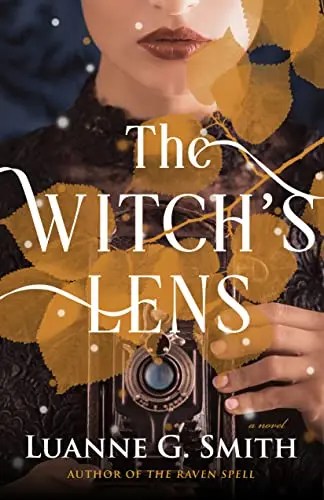
A witch finds herself recruited to WWI’s eastern front to fight a scourge of zombies.
Summary:
With her husband off fighting at World War I’s eastern front, Petra Kurková embraces her fleeting freedom, roaming the city at night with her camera. A born witch, she’s discovered that she can capture the souls of the dead on film. Her supernatural skills don’t go unnoticed by the enigmatic Josef Svoboda. He’s recruiting a team of sorcerers to infiltrate the front lines, where the bloodshed of combat has resurrected foul creatures. Petra’s unique abilities will be needed against the most dangerous enemies of all—those ever present, undead, and unseen.
Deep in the cursed Carpathian Mountains, the ragtag team meets with an emissary of an ancient organization founded to maintain balance between worlds. Photographing the escalating horrors is beyond anything Petra imagined. So are the secrets among her fellow witches. But Petra can’t turn back. Not before she discovers her husband’s fate and the myriad ways her magic is manifesting. To defeat an occult foe, Petra must release the power she’s been concealing for so long, or risk damning a war-torn world to ashes.
Review:
I came into this book expecting a lot of WWI with a dash of witches but it ended up being the other way around.
If it wasn’t for the book’s blurb mentioning WWI and one passing mention of the Archduke’s assassination, it would be possible to read this book and think the entire war was a fantasy. This becomes increasingly so as the book progresses. Perhaps I missed something but at first it sounds like the humans are fighting and unaware of any supernatural folks participating in the war pushing it one way or the other. Then later it seems like everyone knows about witches. So which is it?
The book starts slowly, showing Petra living on her own, lonely and bored, going out at night to take photos since she’s discovered the dead show up in them. I was intrigued by this and wondering why Petra can only see the dead in her photos, but the why is never revealed. The camera is useful to the plot but not in the way you would imagine from what we know it can do.
The zombies in the book are the fast type. (See more zombie recommendations from me.) They can move at superhuman speeds. An interesting unique take is that zombies can continue to exist among the living until they’re called upon by another power to act like a zombie. They’re basically Trojan horses among the soldiers.
There is some light romance in the book. Personally, it didn’t work for me because we see Petra starting to long for a man who isn’t her husband. That’s just not a plot point I personally enjoy. The romance is hinted at in the book. There is not even a kiss. I suspect it will get stronger in the sequel. Those who want to read for the romance should know this is a very slow burn.
If we ignore the confusing aspects of whether or not everyone in the world knows about the witches, the plot does escalate in a way that mostly make sense and things come to a head with quite a bit of action. But there is an element of “the chosen one,” which I find dull. Especially in a book about WWI. I wanted to see everyone coming together with unique strengths. Not one overpowered person.
Overall, this book wasn’t a match for me. I wanted a lot more WWI than was in it. Recommended to those interested in a witch’s war with a dash of light, slow-burn romance.
If you found this review helpful, please consider tipping me on ko-fi, checking out my digital items available in my ko-fi shop, buying one of my publications, using one of my referral/coupon codes, or signing up for my free microfiction monthly newsletter. Thank you for your support!
3 out of 5 stars
Length: 255 pages – average but on the shorter side
Source: Library
Buy It (Amazon or Bookshop.org)
Two 1980s Horse Girl Books Face Off
Will The Horse that Came to Breakfast or Maggies Wish win?
I’m doing something a little bit different this week. I’ve been going through my bookshelves to determine what to keep and get rid of. If it’s a book I don’t really remember very well, I’m re-reading it to help decide. As a person born in the 1980s, I just so happened to have two middle grade horse girl books first published in the 1980s on the shelf. I didn’t remember anything about them. So I re-read both of them. Each re-read took about an hour. Let’s get into it.

First up we have The Horse that Came to Breakfast by Marilyn D. Anderson, first published in 1987. I picked this one up first because how could I not with that title? I was intrigued! The first sentence didn’t exactly draw me in because it referred to their home as a “house trailer.” I grew up with friends who lived in trailer parks, and my dad lived in one in the last few years of his life. I’ve never heard anyone call them a “house trailer.” The only thing I can think, based on the strong horse presence in the rest of the book, was the author mainly thought of horse trailers when she heard the word trailer and so thought she needed to differentiate. But really it’s the other way around. Trailer (where people live) and horse trailer (what you use to move horses).
Anyway, the basic plot of this book is that this little girl really wants a horse but her parents just got divorced, her dad is now completely out of the picture, her mom had to move them to a trailer, and money is very tight. But one day (in literally the first page of the book) a horse shows up in their yard. It’s a miracle! But her mom points out this horse must have an owner and makes her look for it. It turns out the horse is from a struggling horse riding instruction place. The little girl ends up collecting cans on the side of the road to pay for lessons on the horse. There’s a mean girl who shouldn’t get to ride the horse. The horse’s life is in danger. The little girl has to save him. Etc…
While I was skeptical of this book at first, it really did draw me in. In spite of certain aspects being dated (like how often this little girl was completely unsupervised and doing things like collecting cans along the side of the road or performing chores for random strangers she just met), the overall plot was thoughtful and heartwarming. There was no judgment of her mother for the divorce or the current financial situation, but it also empathically depicted how difficult it can be for kids to adjust to new life situations. It also highlighted caring for your neighbors and building a sense of community. Plus, there’s a happy ending for the girl and the horse. What more can you ask for?

Next up is Maggie’s Wish, first published in 1984. I’ll be honest. I didn’t notice until right now that the author is the same as for The Horse that Came to Breakfast! It felt like two totally different people wrote these books.
The basic plot of this one is that Maggie lives on a working farm with her mom and dad. She’s been asking for a pony to no avail. But one day her dad says the farm is getting something she’s going to really enjoy. She thinks it’s going to be a pony but it turns out to be two large draft horses for working the farm. The dad thinks this will be more fun than tractors. Maggie is disappointed but grows to love the draft horses only for her dad to sell them and ultimately buy her a pony.
The overall message of this book was bizarre. I’m still not sure what it was. Only when you learn to love the disappointing thing will you get what you really wanted? Don’t worry, when your father makes one poor financial decision he’ll continue to make them meaning you’ll ultimately get your pony one day? The family in this have a not great dynamic. The mother is kind of constantly making fun of the father. Of course, it’s a little hard to blame her for being frustrated when he really is making poor financial decisions with the family business without consulting her (his business partner) at all first. But those conversations should be had away from the daughter and not through passive-aggressive comments. I’m also having a hard time understanding how a farmer in 1984 could possibly think using two draft horses would be better than using a tractor. There’s also a scene where the dad spanks his daughter and her cousins (not his own kids) for running off unsupervised and almost getting hurt when he sends the dog to find them who then spooks a cow who almost runs them over. If you know you have a farm with cows who are spooked by dogs and you’re not sure where the children are, why would you send a dog after them? I understand spanking had a different cultural understanding in the 1980s but it’s hard to sympathize with the dad here when he was at least partially responsible for the whole near death experience.
The winner is…..
The Horse that Came to Breakfast! This is the one I decided to keep. Maggie’s Wish went to the local Little Free Library.
This is a great example of how one author can grow and change over time. Anderson’s characters acted with much more logic, even when making mistakes, in her later book. The overall plot was also more complex with elements I didn’t get into for the sake of space here. The message was clear and sound, backed up by memorable characters and intertwining plots. Maybe if the first book you pick up by an author is from early in their career, consider picking up one of the later books just to see.
Somewhat infuriatingly, I will note when I went to get the purchase links, Maggie’s Wish is available both digitally and as new printings. But The Horse that Came to Breakfast is only available as used vintage copies. Why? Why?
If you found this review helpful, please consider tipping me on ko-fi, checking out my digital items available in my ko-fi shop, buying one of my publications, using one of my referral/coupon codes, or signing up for my free microfiction monthly newsletter. Thank you for your support!
Length The Horse that Came to Breakfast: 96 pages – novella/short nonfiction
Length Maggie’s Wish: 96 pages – novella/short nonfiction
Buy The Horse that Came to Breakfast (Amazon, not available on Bookshop.org)
Buy Maggie’s Wish (Amazon or Bookshop.org)
Source: I’ve owned both books since childhood.
Book Review: In the Lives of Puppets by T.J. Klune
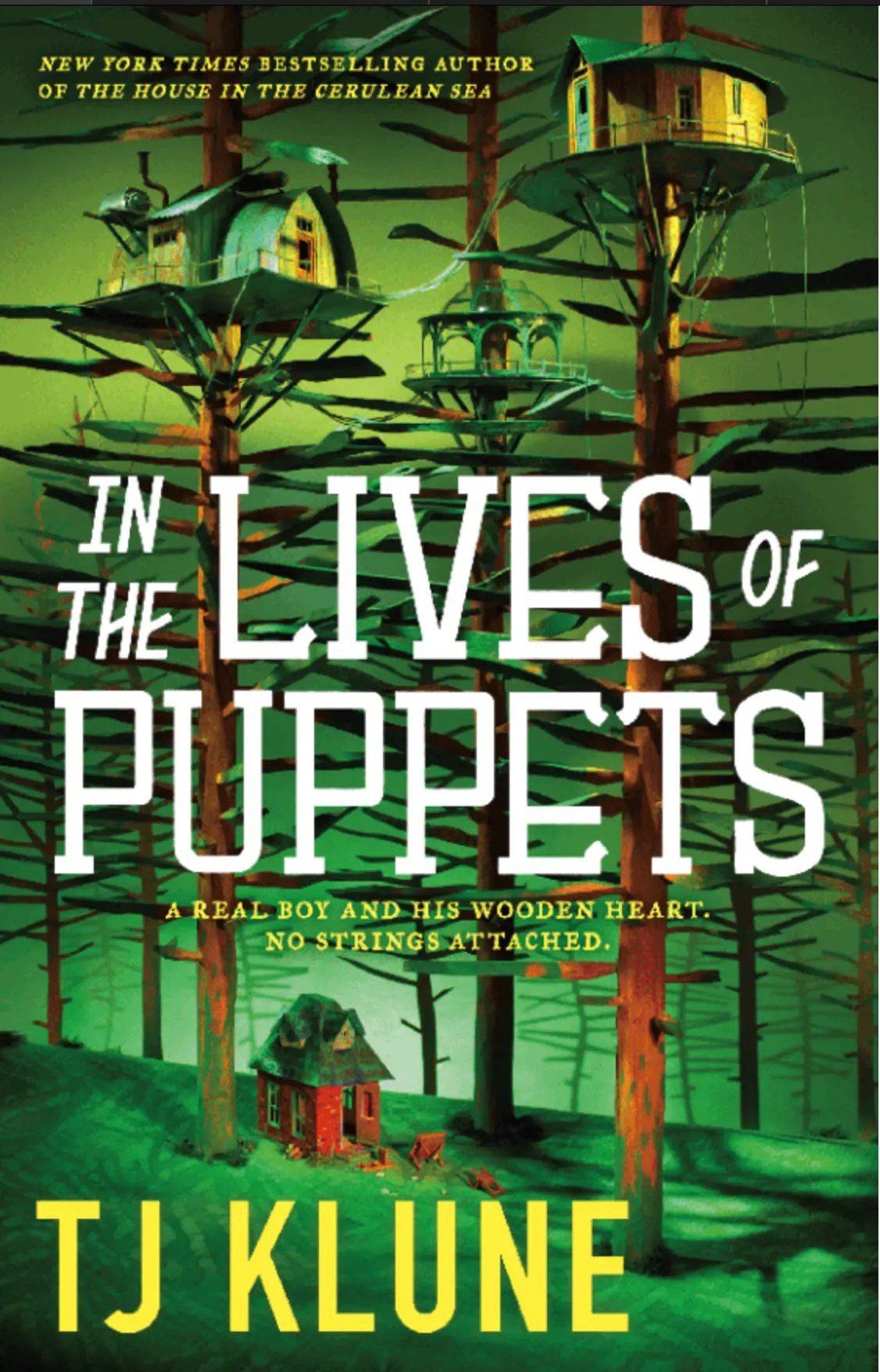
A science fantasy reimagining of Pinocchio where Pinocchio is a “real boy” surrounded by robots (puppets) with a m/m (or, rather, male, male robot) romance added in.
Summary:
In a strange little home built into the branches of a grove of trees, live three robots–fatherly inventor android Giovanni Lawson, a pleasantly sadistic nurse machine, and a small vacuum desperate for love and attention. Victor Lawson, a human, lives there too. They’re a family, hidden and safe.
The day Vic salvages and repairs an unfamiliar android labelled “HAP,” he learns of a shared dark past between Hap and Gio-a past spent hunting humans.
When Hap unwittingly alerts robots from Gio’s former life to their whereabouts, the family is no longer hidden and safe. Gio is captured and taken back to his old laboratory in the City of Electric Dreams. So together, the rest of Vic’s assembled family must journey across an unforgiving and otherworldly country to rescue Gio from decommission, or worse, reprogramming.
Along the way to save Gio, amid conflicted feelings of betrayal and affection for Hap, Vic must decide for himself: Can he accept love with strings attached?
Review:
This is a loving and detailed send-up to Pinocchio. I hadn’t seen the movie in years, and it still stirred up memories for me. When I went to look up the original book version’s plot to compare to this retelling, I found even more details I hadn’t realized or remembered. It’s obvious the author loves Pinocchio, and if you do too, I’m expecting you’ll likely love this retelling. For me, the problem is, I was so excited about a new T.J. Klune book that I sort of…forgot I don’t like Pinocchio. (“Don’t like” is a gentle remembrance. In fact, the movie absolutely terrified me as a child.) Even so, I found myself able to appreciate this loving rendition of the story.
I absolutely adored the character of Rambo – the tiny robot vacuum who’s clearly supposed to be a later generation of roombas. As always, I liked the narrative style the author uses – it reads as sing-songy in my head and feels like someone telling me a fairy tale, which is perfect for this book. I liked the wide variety of robots inhabiting the world, and I really enjoyed the robot substitute for the traveling circus character. I also appreciated that this isn’t an exact retelling of Pinocchio. The story is sometimes restrained, with simple allusions to the original. For example, Victor is never turned into a donkey, but he does stay the night in a hotel like room that is decorated with donkeys at about the right point in the story.
I appreciated the flipping of Pinocchio (Victor in this telling) as being human with his father being a “puppet” (a robot). But I felt like the ending really lets that inversion down, not taking it to its full and complete conclusion. I think there’s supposed to be humor in this book, but it wasn’t funny to me. You will know within the first few chapters if it’s tickling your funny bone or not.
I also found myself unable to root for anyone in this book, save for the small, innocent Rambo. Everyone else has something so wrong with them that it soured me to like them. The one I can talk about without spoilers, as the episode happens in the first chapter, is Nurse Ratched. She is a robot companion of Victor’s who was designed to nurse humans. She’s described as sociopathic, in a way that I think is supposed to read as comedic. As in, she acts like she enjoys inflicting pain but doesn’t really. Yet in the first chapter she chases down a squirrel (off-screen) and kills it by rolling over it again and again. I almost stopped reading the book, I was so horrified. But it was an advanced copy, so I decided to give it another chance. She never does anything like this ever again, but it is actually not uncommon for characters in this book to have something they have done in the past that is truly horrific that is brushed off as their programming. I’m all for plots where characters have to overcome their own tendency toward being bad, and redemption and forgiveness are both very important. But I need for that not to be the plot for almost every single character. It, at the very least, is distressing to read about.
The romance did not move me, which was surprising given what strong feelings I had for the couple in The House in the Cerulean Sea! I also have complicated feelings about how the book depicts what freedom means, how robots pursue freedom, the offerings of the “freedom fighter” character, etc… This, in fact, is a reflection of how I feel the overarching messages tended to get muddled. The only message that I felt was clear and consistent was “be brave!” but no clear reason as to why was ever given. To borrow from an American fairy tale – the overarching story needed a heart. I think, perhaps, the romance was supposed to be the heart, but it didn’t work as one for me.
This is also an incredibly sad book. It’s not uplifting in the slightest. There’s nothing wrong with sad books, but it is a departure from the author’s other books, and so I think the warning is warranted.
Overall, this is an imaginative and loving retelling of Pinocchio that should appeal to fans of that fairy tale. Readers should be aware that the darkness of the original story remains in this retelling.
If you found this review helpful, please consider tipping me on ko-fi, checking out my digital items available in my ko-fi shop, buying one of my publications, or using one of my referral/coupon codes. Thank you for your support!
3 out of 5 stars
Length: 432 pages – average but on the longer side
Source: NetGalley
Buy It (Amazon or Bookshop.org)
Book Review: The Trauma of Caste: A Dalit Feminist Meditation on Survivorship, Healing, and Abolition by Thenmozhi Soundararajan

Indian people are born into a specific, unchangeable caste. People of the lowest caste – Dalits – suffer discrimination and injustice. Here a Dalit feminist Buddhist author explores how Dalits can survive and heal from this trauma and allies can work toward justice.
Summary:
“Dalit” is the name that we chose for ourselves when Brahminism declared us “untouchable.” Dalit means broken. Broken by suffering. Broken by caste: the world’s oldest, longest-running dominator system…yet although “Dalit” means broken, it also means resilient.
Despite its ban more than 70 years ago, caste is thriving. Every 15 minutes, a crime is perpetrated against a Dalit person. The average age of death for Dalit women is just 39. And the wreckages of caste are replicated here in the U.S., too—erupting online with rape and death threats, showing up at work, and forcing countless Dalits to live in fear of being outed.
Dalit American activist Thenmozhi Soundararajan puts forth a call to awaken and act, not just for readers in South Asia, but all around the world. She ties Dalit oppression to fights for liberation among Black, Indigenous, Latinx, femme, and Queer communities, examining caste from a feminist, abolitionist, and Dalit Buddhist perspective—and laying bare the grief, trauma, rage, and stolen futures enacted by Brahminical social structures on the caste-oppressed.
Review:
I read and enjoyed Radical Dharma. It is a Black Buddhist exploration of systemic racial injustice against Black folks. It also uses Buddhist thought to progress toward liberation. The publisher recommended this book to readers of Radical Dharma, and I could tell from the title alone the parallels. Indian society oppresses Dalit peoples in very similar ways to how US American society oppresses Black folks. For example, they were both the source of enslaved labor in the 1800s. The author, a Dalit American woman, offers a very personal exploration of what it is to be a part of the Dalit diaspora. She also explores how her Buddhist belief system helps her navigate her trauma and advocate for societal change.
The author divides the book into four sections she calls mediations – The Existence of Caste, The Source of Caste, From Wounds to Liberation, and The End of Caste. There are also two appendixes that I found so meaningful I think they’re better thought of as part of the main book. The first explores Dalit social justice activists throughout time like B.R. Ambedkar and Phoolan Devi. The second is healing meditations for those truamatized by caste.
If you have ever heard of an “untouchable” caste this book makes it clear that this is not the name that members of this caste chooses for themselves. Many choose the name “Dalit” instead. Some choose other names, but Dalit is the most common.
Dalit means broken. Broken by suffering. Broken by caste.
loc 268
Another way of referring to those traumatized by caste is casteoppressed.
There is some controversy on exactly where caste came from. The author makes it clear she believes it came from the traditional faith of Hinduism. Caste was then weaponized by British colonizers to further divide those they colonized and make it easier to maintain dominance over them. However, the author acknowledges some people believe otherwise. I myself am not a scholar in this area. But however it began, caste is intermingled with Hinduism and Indian society across the diaspora. A person born into a lower caste is told they deserve to be at the lowest level of society because of sins they committed in a past life. That all of their suffering is their own fault, and they don’t deserve to rise out of it. The message also is that those in higher castes deserve to be there. Any suffering they put on those of lower castes is simply what those of the lower caste “deserve.” If you are at all familiar with the history of racism in the US, then it is immediately quite clear how damaging these societal beliefs are. It is also clear why they need to be overcome.
The pain and suffering for Dalit peoples is not of the past – it is now. The author offers sobering statistics (with references). They include:
- 54% of Dalit children are undernourished (loc 500)
- 83 of every 1,000 Dalit children die before their first birthday (loc 500)
- more than 67% of Dalit women have experienced sexual violence (loc 509)
- the average age of death for a Dalit woman is 39 (loc 509)
- 45% of Dalits do not know how to read and write (loc 3327)
- 48% of villages deny Dalits access to water (loc 3330)
The author explores how we can all begin to fight for freedom, justice, and equality. She talks about how important it is for oppressed people to be able to begin to imagine being free as the first step. She also speaks to allies about being aware that a move toward equality might feel like discomfort to us. She also speaks about the importance of supporting the experiences of the oppressed. Being cautious and mindful in our words and deeds is a message we all can benefit from.
An area that could have been improved on is where the author speaks about other religions in India and Dalit participation in them. While the section on Islam is well-written, making it clear how caste is not a part of Islam but can end up being enacted upon Dalit Muslims anyway, the same clarity is not brought to the section on Christianity. It makes it sound like social justice is a focus of only specifically Dalit led Christian sects. The section ignores other sects that follow similar mores and even the Bible verse Galatians 3:28 “…ye are all one in Christ Jesus.” Similarly, Judaism is skipped over, but Dalit Jewish people do exist. I wished these had been explored more. I appreciate that the author is careful to encourage and support Dalits in whatever faith they choose – including remaining Hindu. But I would have liked either a more even-handed representation of other faiths or a purely Buddhist perspective.
I empathize very much with the author’s concerns about modern-day genocides. It is absolutely correct that society at large is not taking these atrocities seriously the way we should. But the author mentions that we went to war in WWII over the Holocaust. That’s inaccurate. Nations went to war to protect their own nations. While the Holocaust was taken seriously after the fact, it’s not why nations went to war. Indeed, most nations turned away Jewish refugees at the time. What we are seeing with the general ignoring of current genocidal atrocities is sadly a repeat of how nations reacted in the past. We haven’t learned what we should have from the horrors of the Holocaust.
Overall, this is an eye-opening book about caste-based oppression throughout the South Asian diaspora. It offers healing for the casteoppressed and asks us all to become allies in the work to liberate these people. It is a meaningful introduction to this liberating labor for both casteoppressed people and allies.
If you found this review helpful, please consider tipping me on ko-fi, checking out my digital items available in my ko-fi shop, buying one of my publications, or using one of my referral/coupon codes. Thank you for your support!
4 out of 5 stars
Length: 256 pages – average but on the shorter side
Source: NetGalley
Buy It (Amazon or Bookshop.org)
Book Review: Good Eggs by Rebecca Hardiman

Summary:
When Kevin Gogarty’s irrepressible eighty-three-year-old mother, Millie, is caught shoplifting yet again, he has no choice but to hire a caretaker to keep an eye on her. Kevin, recently unemployed, is already at his wits’ end tending to a full house while his wife travels to exotic locales for work, leaving him solo with his sulky, misbehaved teenaged daughter, Aideen, whose troubles escalate when she befriends the campus rebel at her new boarding school.
Into the Gogarty fray steps Sylvia, Millie’s upbeat American home aide, who appears at first to be their saving grace—until she catapults the Gogarty clan into their greatest crisis yet.
Review:
This crossed my radar as a “feel good” read, and I do think it fits that bill, although I could see it potentially not being feel good to some readers.
This is told in third person from three different perspectives – Aideen, Millie, and Kevin. All three are flawed characters. Aideen is easily swayed by those around her, being drawn into other people’s shenanigans. She also has a hot temper and feels very overshadowed by her twin sister. This is even more easy to empathize with when one sees how Kevin treats her. (He really does treat her differently than the other three children).
Millie shoplifts. It isn’t treated by any of the characters in the book as kleptomania but rather as “attention seeking” behavior. She’s also very reticent to admit to needing help and very much doesn’t want to end up in an old folk’s home – something she’s convinced Kevin has planned for her. Overall, I find Millie very sympathetic.
Kevin is having a midlife crisis spurned on by his chosen career field changing so much that it feels to him as if it is vanishing. (His job certainly has). Do I have sympathy for him wondering how his life and career ended up like this? Yes. Do I have sympathy for him immediately pivoting to considering an affair while his wife is working hard at the only income in the family? No. Do I think he’s at the core of most of the family’s problems? Yes.
But that’s what I think works so well in the book. The problem isn’t that Kevin doesn’t have a job. The problem is that Kevin isn’t living up to his very important other familial roles. As a parent equally to all his children. As a loving spouse to his wife in the time she has outside of work. And as a child to his mother who’s lonely after his father’s death and very afraid of how old age is going to turn out for her now. He starts to develop an understanding of all of these women’s perspectives over the course of the book, but it’s subtle. And that’s what I like about it. The book is really just a – hey here’s a few months in this family’s life – picture. It just so happens that those few months change Kevin for the better, and thus change the whole family for the better too. Put another way, it’s a book about a house with a bad foundation and what happens everywhere else and then, oh look, how much better it is when the foundation is fixed.
So to me it was a feel good book. I do think some readers might be so bothered by Kevin’s mistakes and Millie’s trials that they lose the good overall vibes of the book. But if you’re ok with a flawed family then this is in general a feel good read.
If you found this review helpful, please consider tipping me on ko-fi, checking out my digital items available in my ko-fi shop, buying one of my publications, or using one of my referral/coupon codes. Thank you for your support!
4 out of 5 stars
Length: 336 pages – average but on the longer side
Source: Library
Buy It (Amazon or Bookshop.org)
Book Review: The Places That Scare You: A Guide to Fearlessness in Difficult Times by Pema Chödrön

Summary:
In this book, Pema provides the tools to deal with the problems and difficulties that life throws our way, so that we may let our circumstances soften us and make us kinder, rather than making us increasingly resentful and afraid. This wisdom is always available to us, she teaches, but we usually block it with habitual patterns rooted in fear. Beyond that fear lies a state of openheartedness and tenderness. This book teaches us how to awaken our basic goodness and connect with others, to accept ourselves and others complete with faults and imperfections, and to stay in the present moment by seeing through the strategies of ego that cause us to resist life as it is.
Review:
The majority of this book suggests that fearlessness can be accomplished via mindfulness and various types of meditation. This may be true. I’m certainly not an expert meditator. Although it is something I have been working at for many years. But it was disappointing to me how much of this book was essentially – meditate and be mindful, and you will become fearless. It’s not that it might not work; it’s that I wanted more.
Some of the more that I was wanting did come up a couple of places in the book. The first was in a story of a couple who live in a gated community. They eventually become so afraid of what is outside the gates, that they basically stop living. They get so caught up in the what if’s that they don’t live. I liked how this showed that walls can be of our own making, and being fearless is a daily practice. You don’t just suddenly wake up one day walled in, rather you build that wall gradually day by day. The older I get, the more I appreciate the value of one small step a day.
I also appreciated the introduction to the idea of training in the three difficulties. This was a new a concept to me. I’ll just post the quote, since I doubt I could explain it any clearer than it is in the book.
[It] gives us instruction on how to practice, how to interrupt our habitual reactions. The three difficulties are (1) acknowledging our neurosis as neurosis, (2) doing something different, and (3) aspiring to continue practicing this way.
29%
This reminded me of the wisdom of early sobriety. Becoming sober is largely about changing negative habits into good ones. We acknowledge what isn’t working, commit to do it differently, and practice doing that every day. I liked the idea of applying that to anything I wanted to be braver at. I also like that it has a name. The three difficulties.
If you are new to meditation, the instruction in the book is good. It’s largely focused on metta (loving-kindness) meditation and tonglen (taking and sending). Metta is one of the first types of meditation I learned, and it definitely helps me when I’m in a bad mood. I’m not personally sure that it makes me braver, though. Although, who knows, maybe I would have been much more fearful these last years without it.
Overall, this is an interesting book and a quick read. It was not what I was expecting, but also had its moments of value. Recommended more so to those who are new to meditation and mindfulness.
3 out of 5 stars
Length: 187 pages – average but on the shorter side
Source: Library
Buy It (Amazon or Bookshop.org)
If you found this review helpful, please consider tipping me on ko-fi, checking out my digital items available in my ko-fi shop, buying one of my publications, or using one of my referral/coupon codes. Thank you for your support!
Book Review: The Younger Wife by Sally Hepworth
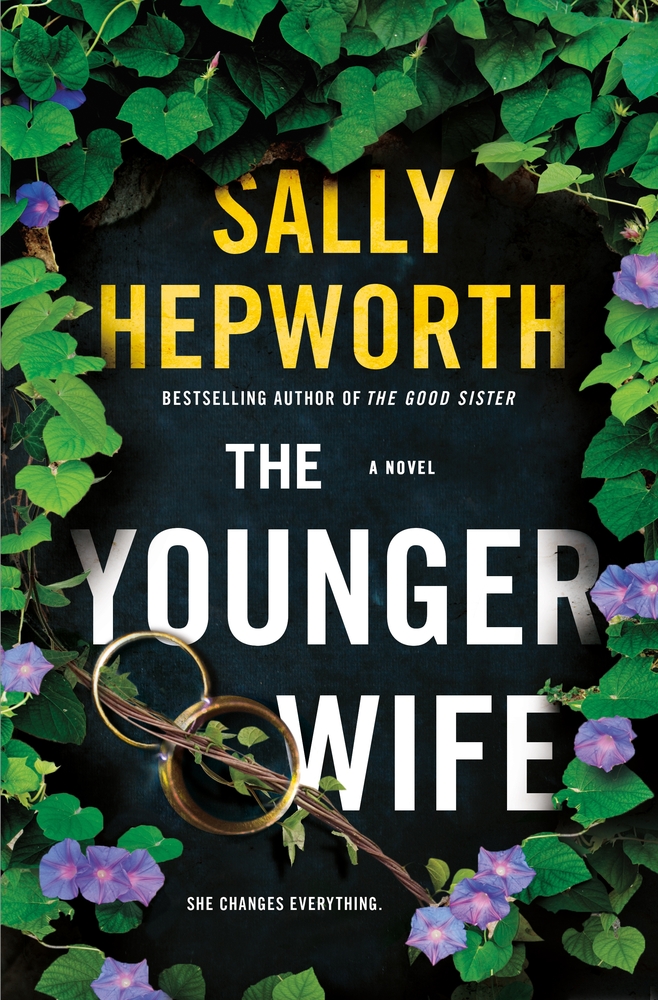
Summary:
Tully and Rachel Aston look upon their father’s fiancée, Heather, as nothing but an interloper. Heather is younger than both of them. Clearly, she’s after their heart surgeon father’s money. They understand why he might want to date, given that their mother is in a care home due to rapidly advancing early onset Alzheimer’s, but it feels disrespectful that he’s going to divorce her to marry another. Meanwhile, they’re each struggling with a secret. Plus, Heather has secrets of her own. Will getting to the truth unleash the most dangerous impulses in all of them?
Review:
I have a soft spot for Australian psychological thrillers. This is the fourth Sally Hepworth one I’ve read. It ranks near but not quite at the top among her works for me. (My favorite being The Mother-in-Law). It’s pretty obvious early on that Heather is not the big bad, so then the main mystery remains – who is? And of course, what is Rachel’s secret? And when will everyone find out Tully’s secret?
We find out almost immediately that Tully struggles with kleptomania and that Rachel used to date but suddenly abruptly stopped. So the main issues surrounding the two sisters is when will others find out about Tully’s uncontrollable shoplifting and what exactly made Rachel stop dating. I thought the former was handled better than the latter. Tully seeks out therapy and her problems don’t disappear overnight. Rachel meets a nice guy and with him is able to overcome her trauma. That frustrated me a bit. Especially since Rachel is set up as being so strong. One can be strong and also find help in therapy. Or even in a support group structure. It shouldn’t all be on the significant other to help someone heal. So it was a little bit hit and miss for me with the two sisters.
I thought the main mystery of what was actually going on in the weird triangle of the dad, Heather, and the mom was quite well done. I especially appreciated the handling of Alzheimer’s. I do think this book falls prey to the old idea of alcoholism – that one can only have an alcohol problem if one is at rock bottom. Beating a spouse or getting delirium tremens (the shakes) when going too long without it. There are definitely characters in this book who display problems with alcohol, but the narration brushes off the idea that they might have a problem.
The structure starts with a bang – at the wedding, someone is injured, and we don’t know who. The wedding is put on hold, the police are called. We then flash back to Heather meeting the daughters and build back up to the wedding. This is a multiple point of view book. Rachel, Tully, Heather, even the mother get a turn narrating.
This book confronts the problem looming for a lot of new contemporary fiction – do we or do we not acknowledge the pandemic? This strikes a gentle balance of what to do. The characters talk about not shaking hands anymore, one character had a big career setback due to lockdowns, and another character’s marriage is a bit impacted by the work-from-home situation. No major details are mentioned (for example, masks are never discussed, no deaths from the pandemic are mentioned). I envisioned it as happening in 2021 or early 2022. Post lockdowns but not far flung future. I thought it worked fairly well.
Without any spoilers, let’s discuss the kind of gray ending. While it seems to be open to interpretation, for me it demonstrated how even when an abuser is gone, the impacts of the abuse continue. It shows how the voice of the abuser can live on in the mind(s) of the abused. Gaslighting from beyond the grave, but not in a supernatural sense.
Overall, this was a fun read with a different enough plot to keep me engaged. It was a little bit of a mixed bag, which is what kept me from loving it. I put content warnings in for this book over on Storygraph if you’re interested in those. I did wish I’d had them myself.
4 out of 5 stars
Length: 352 pages – average but on the longer side
Source: NetGalley
Buy It (Amazon or Bookshop.org)
If you found this review helpful, please consider tipping me on ko-fi, checking out my digital items available in my ko-fi shop, buying one of my publications, or using one of my referral/coupon codes. Thank you for your support!
Book Review: The Only Good Indians by Stephen Graham Jones

Summary:
Seamlessly blending classic horror and a dramatic narrative with sharp social commentary, The Only Good Indians follows four American Indian men after a disturbing event from their youth puts them in a desperate struggle for their lives. Tracked by an entity bent on revenge, these childhood friends are helpless as the culture and traditions they left behind catch up to them in a violent, vengeful way.
Review:
This book really kept me on the edge of my seat. I never knew what was going to happen next. I kept glancing at my Libby app (I listened to the audiobook) to check how much was left, because I felt certain the only remaining plot was about to wrap up without much left to say. But then a whole new twist would occur, and I’d find myself with an entirely different situation to choose sides in.
The author is Blackfoot Native American, and so this is an own voices book about these four Blackfoot men in Montana. My father and brother lived in Montana for a few years, and I visited them there, and I found myself smiling at how rapidly and well the scenes were set in Great Falls. In spite of the surrounding fantastical element of – is there or is there not a mythical creature after these young men – everything read as authentic and real.
Something I worried about slightly going into a horror, because I always worry about this going into horror books, was about what level of violence might be seen against women. Although women are not entirely safe from the mystical creature, it felt to me like a flip-flop of what is normally seen in horror. With men being the ones more likely to fall victim than women. I couldn’t articulate exactly why I felt this way, but I felt a respect toward women in the book. This is reflected in the author’s note at the end, where he notes his deep love and respect for Native women. I especially liked the character Denorah – the daughter of one of the men who wants to make it good.
Although who and how the horror happens was a refreshing change, this is definitely a gory horror read. This mystical creature has no empathy for anyone, including dogs. This is no fault of the author. That’s what’s expected of horror. I think a few years ago I would have given this five stars, in fact. But personally I’m finding myself less able to handle gore than I once was. So keep that in mind as you go into it.
There’s also a strong connecting subplot regarding basketball. A lot of characters play it, and some important scenes happen on the court. Now, I simply am not interested in basketball. Ok, it goes beyond a lack of interest. I detest the sound of basketballs being dribbled and actively stay away from basketball courts if I can. So for me those scenes detracted from the book, because I had to pay attention to them because important plot points were occurring. But it was basketball. That said, I think a reader who loves basketball would be super into this book for this reason. It’s not a basketball book per se but it’s a book with characters who love the game and have important moments on the court.
Overall, this is a delightful addition to the horror genre that showcases all that makes own voices books so great. It brings fresh plots and perspectives, a fantastical mystical creature, but is still grounded in a realistic today. Particularly recommended to readers who don’t mind gore and love basketball.
4 out of 5 stars
Length: 336 pages – average but on the longer side
Source: Library
Buy It (Amazon or Bookshop.org)
If you found this review helpful, please consider tipping me on ko-fi, checking out my digital items available in my ko-fi shop, buying one of my publications, or using one of my referral/coupon codes. Thank you for your support!
Book Review: Tales of the City by Armistead Maupin (Series, #1)

Summary:
San Francisco, 1976. A naïve young secretary, fresh out of Cleveland, tumbles headlong into a brave new world of laundromat Lotharios, pot-growing landladies, cut throat debutantes, and Jockey Shorts dance contests. The saga that ensues is manic, romantic, tawdry, touching, and outrageous
Review:
This was first published as a novel in 1978, although it was published prior to that as a serialized story in a San Francisco newspaper. It is considered a classic of LGBTQIA+ literature. The first tv show miniseries based upon it that premiered in 1994 had a same-sex kiss made history and was also protested (source). The Netflix reboot/update in 2019 brought fresh attention to it, and I thought it was high-time I read the classic.
It’s clear that some restraints were placed upon Maupin, either by the newspaper or simply the culture of the time. Our window into the queer world in San Francisco is given to us by Mary Ann Singleton – a single cis straight woman who comes from Cleveland for a visit and decides to stay. She’s invited into Barbary Lane and declared one of us, although why exactly she’s considered part of the found family is not resolved in the first book.
The book is definitely a product of the 1970s. 1970s fashion and freewheeling culture are everywhere. Lack of acceptance of queer people is a real threat and concern, and the AIDS crisis had not yet hit. It’s an interesting snapshot of a very particular point in time.
While characters are quite loose about who they will sleep with, there’s also a lack of diversity in the cast of main characters that’s jarring. Especially for a story set in a city that’s so diverse. Particularly noticeable to me was how the Asian-American characters are all peripheral, even with this being San Francisco. I don’t think this lack of diversity is a product of its time – there were other very forward-thinking works of fiction at the same time as this. This lack of diversity is something to keep in mind when approaching the book.
There are also two plot twists that revolve around race, and I don’t think either is handled with particular grace. The race of someone’s lover is identified by pointing to a yellow flower. This is obviously offensive. While it seems to me that the character who does this is someone we’re supposed to think badly of, on the other hand, it seemed to me that this was supposed to be a funny moment. And it definitely was not. In the other case, a character reveals that they believe that the only way to become a successful model is to be Black. It is unclear what the other character they are speaking to thinks of that. I think this instance may be intentionally leaving it up to the reader to decide what they think, but it’s also a strange plot point in a book that’s mostly about hookups and very little about careers.
This reminded me very much of other books and tv shows that have dramatic, gasp-inducing storylines with large casts of characters whose lives intertwine and overlap in mysterious ways. Think Jane the Virgin or Desperate Housewives just with fewer identical twins and less murder (so far…..) and more queer characters. If you like that type of storytelling, then you’ll likely find this hilarious and engaging. If you don’t, then you probably won’t.
I personally found it to be a rapid read with an engaging storyline and funny chapter titles. I wished it had been more forward-thinking and intersectional, but I also respect that the mere depiction of queer people in a soap opera like story was quite groundbreaking. I appreciate it for what it is, and it was a fun, quick read.
4 out of 5 stars
Length: 386 pages – average but on the longer side
Source: Library
Buy It (Amazon or Bookshop.org)
Get the Reading Group / Book Club Discussion Guide
A beautifully graphic designed 2 page PDF that contains: 1 icebreaker, 9 discussion questions arranged from least to most challenging, 1 wrap-up question, and 3 read-a-like book suggestions
View a list of all my Discussion Guides.
If you found this review helpful, please consider tipping me on ko-fi, checking out my digital items available in my ko-fi shop, buying one of my publications, or using one of my referral/coupon codes. Thank you for your support!
 Support my work with a tip or browse my shop for curated book club guides, how to guides, cross-stitch patterns, and more!


This work by Amanda Nevius is licensed under a Creative Commons Attribution-Noncommercial-No Derivative Works 3.0 United States License.
 Opinions of a Wolf