
Archive
Book Review: Race Across Alaska: The First Woman to Win the Iditarod Tells Her Story by Libby Riddles and Tim Jones

Summary:
Libby Riddles wanted an adventure. At the age of 16 she left home for the snowy frontiers of Alaska, the Last Frontier. There, her love of animals drew her to the sport of sled dog racing. When she entered the Iditarod in 1985, the famous marathon from Anchorage to Nome, she was just another Iditarod Nobody. Twelve hundred miles later, having conquered blizzards, extreme cold, and exhaustion, she and her dogs crossed the final stretch of sea ice, miles ahead of the nearest competitor… and suddenly she realized: I will be the first woman to win the Iditarod. This is the story of a courageous woman and her heroic dogs. This is the story of Libby Riddles’s adventure.
Review:
First published in 1988, this book drips with the freshness of an event recently lived. Both in the assumption that everyone reading this knows at least some things about Libby and in the clarity with which she remembers the events. In fact, Libby was actually featured in Vogue magazine after winning the Iditarod, so the novelty of being the first woman to win meant it reached out further to the general population than it might have otherwise. Reading it in 2022 without previously having given much thought to women in the Iditarod made it feel like a fun, time-travel adventure.
Each chapter is one day of the Iditarod, and the book jumps right in with day 1. There’s no prologue or introduction to Libby. It’s just day one of the race. Each chapter also shows which part of the trail Libby completed that day, gives a note on the weather (highs, lows, and wind speed), and a brief summary of what that day was like for her. Throughout the book there are asides explaining various aspects of the Iditarod and mushing, everything from what clothes mushers wear and why to the history of the event. I found these very helpful. I just wish there’d been one introducing me to Libby too.
I expected the Iditarod to be a story of loneliness and individual perseverance. Instead, I learned that the race involves a lot of people, includes seeing people more than you might think, and is a meaningful event to various towns and villages along the trail. In retrospect I should have realized this. But the Iditarod is discussed as such a survivalist event that it never crossed my mind. Especially at the beginning of the race, the mushers are quite close to each other, and even sometimes travel in groups if they have a similar pace. Villages, towns, and even just individual homes are checkpoints throughout that the mushers must check in to. The locals open up their homes to the mushers, even giving over their beds for them to get an hour or two of shut-eye. At one point, Libby sleeps in a bed with two other mushers briefly. It’s really not the individual experience I was expecting! This sort of help is allowed only if it’s offered to all mushers equally, so when a person chooses to open up their home and feed and clothe people, they’re really offering it up.
Each checkpoint also has at least one veterinarian available to check in on the dogs. Dogsled racing is largely about the dog teams, after all. Many mushers actually breed their own sled dogs. Libby’s dogs were half hers and half her partner Joe’s. Throughout the book, we get to know her dogs a bit and see how much care she gives to them. Libby also won the award given by the vets to the musher who took best care of their dogs, an interesting accomplishment for the person who also won the whole thing that year.
This isn’t to say that mushers are never alone or reliant only on themselves and their dogs. As the race goes on, they get more spread out from each other. At one point, Libby must camp out on her sled in the middle of a blizzard completely alone. Also the further in front you are, the less clear the trail is, and the easier it is to get lost. So winning is also about having the fortitude to go ahead of everyone else.
I enjoyed how I learned about the Iditarod without ever feeling like it was a textbook. The learning happened naturally as I followed Libby on her route and rooted for her inevitable win I knew was coming. You can see some footage of Libby in the 1985 Iditarod and her induction moment into the Alaska Sports Hall of Fame here. If you have little ones in your life, you might like to get Libby’s children’s book about her historic Iditarod win. The adult memoir is a fun and educational read for anyone interested in the tale.
4 out of 5 stars
Length: 244 pages – average but on the shorter side
Source: PaperBackSwap
Buy It (Amazon or Bookshop.org)
If you found this review helpful, please consider tipping me on ko-fi, checking out my digital items available in my ko-fi shop, buying one of my publications, or using one of my referral/coupon codes. Thank you for your support!
Book Review: Getting Clean with Stevie Green by Swan Huntley

Summary:
At thirty-seven, Stevie Green has had it with binge drinking and sleeping with strange men. She’s confused about her sexuality and her purpose in life. When her mother asks her to return to her hometown of La Jolla to help her move into a new house, she’s desperate enough to say yes. The move goes so well that Stevie decides to start her own decluttering business. She stops drinking. She hires her formerly estranged sister, Bonnie, to be her business partner. She rekindles a romance with her high school sweetheart, Brad. Things are better than ever—except for the complicated past that Stevie can’t seem to outrun.
Who was responsible for the high school scandal that caused her life to take a nosedive twenty years earlier? Why is she so secretive about the circumstances of her father’s death? Why are her feelings for her ex-best friend, Chris, so mystifying? If she’s done drinking, then why can’t she seem to declutter the mini wine bottles from her car?
Review:
I smashed the request button on NetGalley when I read this description. A mixture of quit lit (literature about addiction and recovery) and decluttering? Sign me up! And it did not disappoint. In fact, it surprised me with delightful queer content I wasn’t expecting.
It’s important to know that Stevie’s ex-best friend Chris is a woman. Chris also came out in high school as a lesbian around the time of the scandal that so traumatized Stevie. Stevie has also slept with women, although only the men are mentioned in the description. The only hang-ups about Stevie’s sexuality seen in her circle of family, friends, and even lovers, come from Stevie herself. This is a great example of how addiction can freeze someone’s self-awareness and self-acceptance. Stevie began drinking in high school, and it’s a trueism in recovery circles that you freeze at the age of development you were at when you began drinking until you stop. Then you can begin maturing again. So is it a bit frustrating that Stevie is 37 and kind of acting like a teenager? Yes. But is it realistic? Also yes.
When we meet Stevie she is newly sober and running her decluttering business. I loved the depiction of how Type A Stevie is about her days and routines. This is so accurate to early recovery. One of my favorite parts is how she starts every day by standing in a Wonder Woman pose and saying affirmations to herself repeatedly.
How had I become a woman who chanted affirmations to herself while doing this ridiculous pose? Because it was supposed to make me feel better. I would have done anything to feel better.
location 806
Early recovery really is this incredible moment of being willing to do anything to feel better, and this is wonderfully depicted here.
The scenes with Stevie decluttering with her clients also shine. I’m a fan of decluttering YouTube videos and tv shows, and these gave me the same thrill as watching those. I loved seeing the variety of types of clutter the clients had, their personalities, and how Stevie interacted with them. She also quickly ends up working with her sister, Bonnie, who is also going through it after her boyfriend of 15 years left her for a younger woman. Bonnie and Stevie have great sisterly chemistry, and her addition to the business helps keep the pace moving forward.
Ultimately, it’s only when Stevie fully faces both her past and her father’s death that she can really begin to heal and move on. I thought this requirement hit her in the right way and with the right force. The pacing of this book really was quite good. And while there’s always the concern when reading queer lit that there will be a tragic ending, don’t worry, readers, there’s a happy ever after for Stevie. This is truly a lighthearted queer romance that also tackles the serious topic of recovery. It was like eating a salted caramel ice cream – sweet with just the right amount of savory.
4 out of 5 stars
Length: 304 pages – average but on the longer side
Source: NetGalley
Buy It (Amazon or Bookshop.org)
Get the Reading Group / Book Club Discussion Guide
A beautifully graphic designed 2 page PDF that contains: 1 icebreaker, 9 discussion questions arranged from least to most challenging, 1 wrap-up question, and 3 read-a-like book suggestions
View a list of all my Discussion Guides.
If you found this review helpful, please consider tipping me on ko-fi, checking out my digital items available in my ko-fi shop, buying one of my publications, or using one of my referral/coupon codes. Thank you for your support!
Book Review: The Night Train to Berlin by Melanie Hudson

Summary:
A train journey into the past. A love that echoes through time….
Paddington Station, present day:
A young woman boards the sleeper train to Cornwall with only a beautiful emerald silk evening dress and an old, well-read diary full of sketches. Ellie Nightingale is a shy violinist who plays like her heart is broken. But when she meets fellow passenger Joe she feels like she has been given that rarest of gifts…a second chance.
Paddington Station, 1944:
Beneath the shadow of the war which rages across Europe, Alex and Eliza meet by chance. She is a gutsy painter desperate to get to the frontline as a war artist and he is a wounded RAF pilot now commissioned as a war correspondent. With time slipping away they make only one promise: to meet in Berlin when this is all over. But this is a time when promises are hard to keep, and hope is all you can hold in your heart.
Review:
This book tells two love stories by alternating between the two different timelines – present day and 1944. It strongly hints that present day Ellie and Joe are reincarnations of 1944 Eliza and Alex.
I liked both storylines for the majority of the book, although the 1944 appealed more to me. It had more action and covered a larger period of time. The present day storyline is basically just the day of the night party train and the day immediately after. Because so much more was happening in 1944 with such greater risk to Eliza and Alex, I found myself wanting to skip over the present day to go to the past. Plus, the present day takes on greater meaning the more you get to know Eliza and Alex. For this reason, I think it would have been better to have completely told Eliza and Alex’s story and then end the book with an epilogue short version of Ellie and Joe’s.
There are also two things that I think it’s important to know before picking up the book. First, there is no train to Berlin. The train to Berlin in the title is a metaphor. Eliza and Alex meet on a night train to Cornwall and then later promise to see each other in Berlin alongside the liberating forces. (Eliza as a nurse and war artist, Alex as a war correspondent). But of course the liberators didn’t take trains. There are two trains in this book. One is the train to Cornwall ridden at two different time periods. The other is a train in Europe but its destination is not Berlin.
Second, we do not actually get closure on Eliza and Alex’s story. We never find out exactly what happened to them – either as a couple or how and when they died. There’s a passing mention that Ellie’s grandmother (great-grandmother?) who was friends with Eliza inherited the Cornwall property from her a few years ago. It could be implied that she passed a few years ago or it could be understood to mean something different. The other confusing thing about this is if Ellie is Eliza reincarnated, Eliza passing a few years ago when Ellie is in her 20s at the moment doesn’t make sense for a reincarnation. So there’s a lot of loose ends with regards to Eliza and Alex that are frustrating.
I’m not a complete stickler for total historic accuracy in historic fiction and even less so with a historic romance, but I will mention there was one plot point in particular that was so unlikely given what we know about WWII that it did make me grumpy. I can’t discuss in detail without plot spoiling. Perhaps you would feel more able to give it a pass than me. It comes toward the very end of the book.
So, overall, while I enjoyed the experience of the read right up until the end, I did feel like it could have been a better story with some rearrangement and a less metaphorical title.
3 out of 5 stars
Length: 400 pages – average but on the longer side
Source: NetGalley
Buy It (Amazon or Bookshop.org)
If you found this review helpful, please consider tipping me on ko-fi, checking out my digital items available in my ko-fi shop, buying one of my publications, or using one of my referral/coupon codes. Thank you for your support!
Book Review: The Good House by Ann Leary

Summary:
Hildy Good is a successful realtor in her small town on the North Shore of Massachusetts. She’s also a grandmother, dog owner, and divorced. She’s also recently back from rehab for alcoholism from an intervention her two daughters staged for her. Hildy is not an alcoholic, but she went along with the whole thing to ensure access to her grandbaby. Inconveniently now, she must continue to pretend to abstain in public and suffer through parties sober until she can get home to a glass of wine or two in the evening. She also begins to befriend a newcomer to town she sold a very expensive home to – Rebecca. She is obsessed with horses and her one-time psychiatrist. When a cluster of secrets become dangerously entwined, the reckless behavior of one threatens to expose the other, with devastating consequences.
Review:
The North Shore of Massachusetts is a really fun and unique place, and this book artfully and realistically depicts both that location and the unfortunate realities of alcoholism, especially as it is seen in the older generation. I particularly like that alcoholism in an older woman is featured.
Hildy clearly thinks the story is about her own ability to be a successful businesswoman in the face of encroaching real estate chains and her daughters’ “ridiculous” belief that she’s an alcoholic putting a damper on her socializing. She also likes her new friend Rebecca but can’t understand why Rebecca and her psychiatrist care that Hildy knows they’re seeing each other. The thing is, the reader can clearly see that the real story is about Hildy, alcohol, and the havoc she’s wreaking across her own and other people’s lives. But the story isn’t heavy-handed about this. It comes across as this is the day to day life of this woman in this North Shore community. It’s just her day-to-day life is impeded by alcohol. Occasionally at first, but ever increasingly as the story progresses. It’s a slow burn of moderation quantifiably not working.
My absolute favorite scene in the book is when Hildy has a bottom moment and goes out to walk her dogs the next morning. She’s uncharacteristically angry at them and berates them verbally. Normally she loves these dogs to pieces. She gets to the shore, sees a heron, has an ah-hah moment, and breaks down crying. What was so gorgeous about this to me was how real this moment is. Being hungover and doing something ordinary yet suddenly connecting to something higher than yourself and realizing you’ve really messed up. But it was bittersweet because I just knew this wasn’t Hildy’s bottom yet. (Even a person with no addiction experience would realize this as it does not occur anywhere near the end of the book). But Hildy doesn’t realize it. You think all it will take is one powerful moment but in fact it takes so much more than that.
The book does not shy away from the worse features of late-stage alcoholism, and these come to a head alongside other issues in the town at the end of the book. I really appreciate that it goes there.
What kept me from loving the book is how Hildy treats her love interest. Not when she’s drunk. But when she’s sober. I know no one is perfect, but it really saddened me to see how she treats this lovable old New England man. Is it accurate to how I’ve seen men like that treated here? Yes. But I wanted a bit more escapism in that regard in my read. For me that held me back from complete love.
Recommended to readers looking to visit the North Shore or see the trajectory of alcoholism in an older main female character.
4 out of 5 stars
Length: 292 pages – average but on the shorter side
Source: Audible
Buy It (Amazon or Bookshop.org)
If you found this review helpful, please consider tipping me on ko-fi, checking out my digital items available in my ko-fi shop, buying one of my publications, or using one of my referral/coupon codes. Thank you for your support!
Book Review: The High House by Jessie Greengrass
Summary:
Perched on a sloping hill, set away from a small town by the sea, the High House has a tide pool and a mill, a vegetable garden, and, most importantly, a barn full of supplies. Caro, Pauly, Sally, and Grandy are safe, so far, from the rising water that threatens to destroy the town and that has, perhaps, already destroyed everything else. But for how long?
Review:
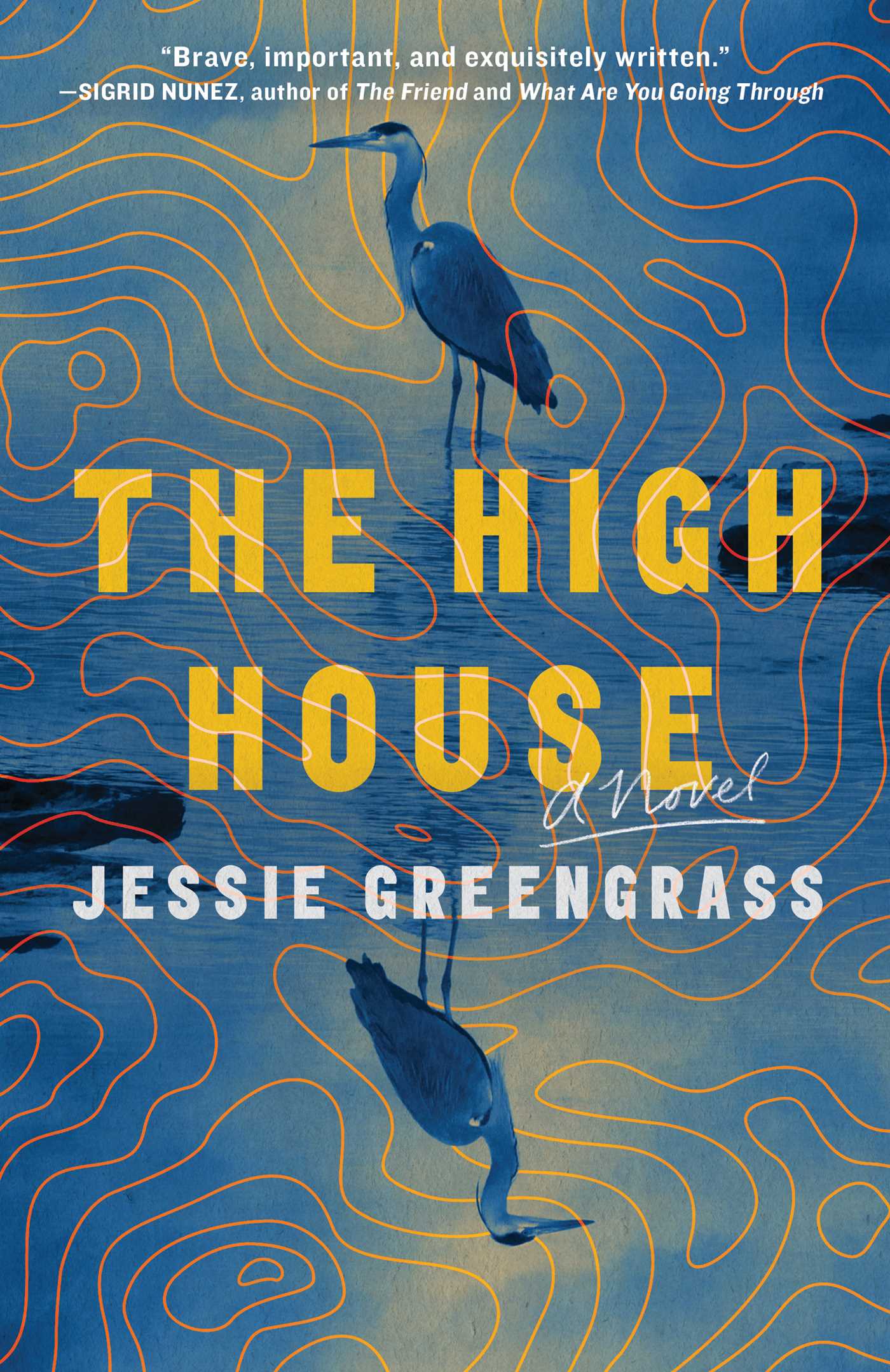
I haven’t really been in the mood for dystopian literature since March of 2020, preferring a bit more escapism in my reading. But the cover of this book featuring that gorgeous egret really drew me in when I was browsing NetGalley. And I thought that maybe a book about a dystopia brought on just by climate change would be different enough to still work for me. Plus I had my fingers crossed it would involve birds after featuring one so strongly on the cover. What I found was a book about trials different enough from our own that it gave me distance and yet with meaningful moments that took my breath away with their relevance. It was like eating a very delicious chocolate cake and then sometimes getting mouthfuls that are even more delicious because they have surprising ooey gooey pockets of liquid chocolate.
“All I can think is that what’s different now is that no one can claim this is progress.”
(loc 1308)
The High House is a coastal summer home inherited by an environmental academic named Francesca. In spite of being coastal, it is, as the name implies, on high ground. She can see what’s coming, even though others won’t listen to her. So, while she keeps trying to bring about change to prevent it, she also secretly sets up the high house for her stepdaughter Caro and her son Pauly (who is 14 years younger than Caro). She also hires on the local elderly groundskeeper who is very wise in the old ways, Grandy, and by extension his university-aged granddaughter, Sally. I thought the book was going to be mostly set in the now of these folks living together after the flooding. But really it was largely these characters looking backward at the years just before the event, and through the event. How they came to be the way they are now. Sally, Caro, and Pauly all take turns narrating.
It’s difficult to explain how beautiful this book is without spoiling it. It’s no like the ending is a surprise or a twist but rather it takes reading the book in its entirely to get what the book is saying. And what it is saying is just simply gorgeous. In a sad way. I suppose what I can say is that this book depicts complex grief without ever really saying that’s what it’s doing. And it’s exquisite.
And the birds. Pauly loves birds, and it’s his knowledge and genuine love of them that lets everyone else know a bit of what they’re talking about when they talk about the birds. The heron on the cover is a bit of a flaw in cover design, because the birds that are actually important to the story are a pair of egrets. is They have a very important role that, again, was devastatingly exquisite. (We don’t see any harm come to the birds, and it’s a bit up in the air if any does).
This was a gorgeous book that I found comforting the way a sad movie can sometimes be. I stayed up far too late to finish it, because I just simply couldn’t look away. If you love nature and question what can remain for humans after large changes, pick this one up and let yourself get swept away.
5 out of 5 stars
Length: 272 pages – average but on the shorter side
Source: NetGalley
Buy It (Amazon or Bookshop.org)
If you found this review helpful, please consider tipping me on ko-fi, checking out my digital items available in my ko-fi shop, buying one of my publications, or using one of my referral/coupon codes. Thank you for your support!
Book Review: The Maid by Nita Prose
Summary:
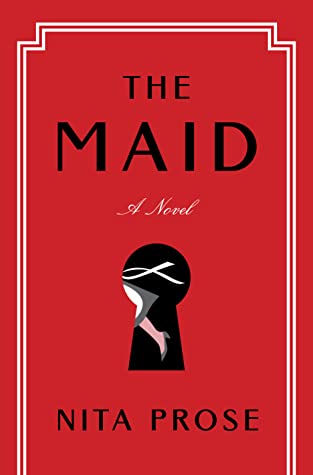
Twenty-five-year old Molly Gray struggles with social skills and misinterprets the intentions of others. Her gran used to interpret the world for her, codifying it into simple rules that Molly could live by. But since Gran died a few months ago, Molly has had to navigate life’s complexities all by herself. No matter—she throws herself with gusto into her work as a hotel maid. Her love of cleaning and proper etiquette, make her an ideal fit for the job. She delights in donning her crisp uniform each morning, stocking her cart with miniature soaps and bottles, and returning guest rooms at the Regency Grand Hotel to a state of perfection.
But Molly’s orderly life is turned on its head the day she enters the suite of the infamous and wealthy Charles Black, only to find it in a state of disarray and Mr. Black himself very dead in his bed. Before she knows what’s happening, Molly’s unusual demeanor has the police targeting her as their lead suspect. She quickly finds herself caught in a web of deception, one she has no idea how to untangle. Fortunately for Molly, friends she never knew she had unite with her in a search for clues to what really happened to Mr. Black—but will they be able to find the real killer before it’s too late?
Review:
This book has a nice overall message. That we need to band together in kindness with those who are different. But the story itself left me feeling lukewarm.
Molly’s difference is never named although neurodivergence and Autism are certainly hinted at. To me, her voice and behavior simply didn’t read as authentic. Neurodivergence is of course a wide spectrum so it might read authentic to others. But it felt to me like someone guessing at neurodivergence. It just rang false.
It is unclear if the author Nita Prose is herself neurodivergent. She has never said so in any interviews, and the book is not marketed that way. In one interview, she says explicitly that Molly was inspired by her work with special needs high school students.
Before I was an editor, I worked for a time teaching high school kids with special needs….I witnessed how cruelly they were sometimes treated by so-called “normal people.” But what I also saw were kids who responded with incredible resilience and human dignity in the face of prejudice. In some ways, I think Molly is a tribute to those kids that I taught so many years ago.
source
This does not read to me as an author who self-identifies as neurodiverse, so this is not an own voices perspective. Nor, I think it’s fair to say, is it from someone with in-depth knowledge about it. Teaching such students “for a time” is not the same thing as, for example, being a life-long special needs teacher or having a loved one living in your home with a special need. In my opinion, this lack of intimate knowledge comes through in how Molly comes across.
The mystery itself wasn’t all that mysterious. I must admit I didn’t guess the killer but that was only because the narrator withheld information from the reader until the last chapter. Not my favorite method in a mystery book. I always feel duped and end up disliking the main character for withholding. So while I was motivated to find out who did it and to see Molly free, I was annoyed at the end. I can generally forgive this in a mystery, though, if my experience with the mystery itself was pleasurable up to that point.
The problem for me in this book wasn’t the set-up or the mystery. It was that every character in the book rubbed me the wrong way – including the ones I was supposed to like. Literally everyone. Even Molly’s “sweet old gran.” I just didn’t like anyone. Even if I mentally wanted everything to work out from a sense of common decency, I couldn’t root for anyone because I didn’t like anyone. The dialogue (everyone’s) especially rubbed me the wrong way. I’m not sure why; it just did.
So, I liked the idea of this. It was different. It just wasn’t for me. Maybe it will be for you.
3 out of 5 stars
Length: 280 pages – average but on the shorter side
Source: NetGalley
Buy It (Amazon or Bookshop.org)
If you found this review helpful, please consider tipping me on ko-fi, checking out my digital items available in my ko-fi shop, buying one of my publications, or using one of my referral/coupon codes. Thank you for your support!
Book Review: The Arctic Curry Club by Dani Redd

Summary:
Soon after upending her life to accompany her boyfriend Ryan to the Arctic, Maya realises it’s not all Northern Lights and husky sleigh rides. Instead, she’s facing sub-zero temperatures, 24-hour darkness, crippling anxiety – and a distant boyfriend as a result.
In her loneliest moment, Maya opens her late mother’s recipe book and cooks Indian food for the first time. Through this, her confidence unexpectedly grows – she makes friends, secures a job as a chef, and life in the Arctic no longer freezes her with fear.
But there’s a cost: the aromatic cuisine rekindles memories of her enigmatic mother and her childhood in Bangalore. Can Maya face the past and forge a future for herself in this new town? After all, there’s now high demand for a Curry Club in the Arctic, and just one person with the know-how to run it…
Review:
Fun destinations, delicious descriptions of homemade Indian cuisine, and a plot that you think is going to mainly be about a boyfriend but then isn’t. This book was a real treat!
Maya starts the book out as one of those women who has lost her own identity and just kind of follows her boyfriend around in his life. Not great! But it soon becomes apparent that she’s struggling like this due to mental illness (anxiety) and childhood trauma. When challenges begin to arise, Maya surprises by rising to them, and in delightful ways. I was pleasantly surprised by the trajectory of the book. I started it out thinking I was going to be reading a romance and by the end I felt like I read a story about self-actualization. It kind of reminded me of Talia Hibbert only without the steamy scenes. Plus, Maya is biracial. She’s half Indian and half white British.
The handling of mental illness in this book is really adept. There is a perfect combination of sympathy but also the realization that, even with a mental illness, you have to self-advocate and push yourself. I especially appreciated that getting set up with a therapist on Zoom (due to being in the Arctic) was featured. But do take the trigger warning that some traumatic events are briefly described that feature some of the darker sides of mental illness. They are a necessary part of the story, but they are there.
The settings of the Arctic and India were both wonderfully written. I truly felt like I was in both places – the good and the bad! I loved the juxtaposition of the two as well. The descriptions of the food were divine, leaving me hungry. Finally, I found myself rooting for Maya as she found footing in her career.
Overall, this was a fun reading trip to two interesting locations, featuring lots of delicious sounding food, artful and realistic depictions of mental illness, and a gal who’s about herself, rather than changing for a guy.
4 out of 5 stars
Length: 400 pages – average but on the longer side
Source: NetGalley
Buy It (Amazon)
If you found this review helpful, please consider tipping me on ko-fi, checking out my digital items available in my ko-fi shop, buying one of my publications, or using one of my referral/coupon codes. Thank you for your support!
Book Review: We by Yevgeny Zamyatin
Summary:
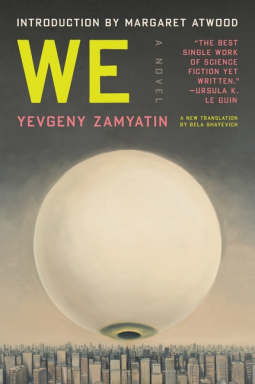
In a glass-enclosed city of perfectly straight lines, ruled over by an all-powerful “Benefactor,” the citizens of the totalitarian society of OneState are regulated by spies and secret police; wear identical clothing; and are distinguished only by a number assigned to them at birth. That is, until D-503, a mathematician who dreams in numbers, makes a discovery: he has an individual soul. He can feel things. He can fall in love. And, in doing so, he begins to dangerously veer from the norms of his society, becoming embroiled in a plot to destroy OneState and liberate the city.
Set in the twenty-sixth century AD, We was the forerunner of canonical works from George Orwell and Alduous Huxley, among others. It was suppressed for more than sixty years in Russia and remains a resounding cry for individual freedom, as well as a powerful, exciting, and vivid work of science fiction that still feels relevant today. Bela Shayevich’s bold new translation breathes new life into Yevgeny Zamyatin’s seminal work and refreshes it for our current era.
Review:
The history of this book is fascinating. Smuggled out of Soviet Russia and only ever published in translation in exile from Russia. Published before 1984 and Brave New World and said to have been at least some level of influence on both. So it’s absolutely an important read from the perspective of scifi history.
A what-if version of automation and industrialization. These successes have led to a society where humans no longer have mothers, fathers, or even real names. Instead they have numbers. D-503 is our narrator. He’s designing a rocket ship for the space program. He falls in with I-330, a woman working with a kind of back to nature resistance.
I’m not sure I liked either society depicted. It kind of reminded me of one of the societies depicted in The Time Machine that I didn’t like all that much either. But I was definitely moved and engaged and wanted to find out what happened. (The ending is bleak. I’m not sure why I hoped for anything else!)
One thing that made this a challenging read is that D-503 refers to I-330 as I. This made some sentences confusing since it’s also narrated in the first person from his point of view. It was not unusual for me to have to re-start a sentence after realizing it was actually about I-330 and not D-503 or vice versa. It’s unclear to me how much of this is a translation choice and how much of it is authentic to the book as originally written in Russian.
Another thing that rubbed me the wrong way is how the Black character is described. There’s a large, recurring focus on the size of his lips. On the one hand, the depiction of this character is very open-minded and equal. He and D-503 are both sort of married to the same woman, know it, and all consider themselves friends. But, on the other hand, the focus on his lips repeatedly was jarring. I’m again, not sure if this was in the original Russian or an awkward translation.
A creative world building element that I enjoyed is how this totalitarian regime keeps watch on its citizens. This was written before much technology, and so the citizens all live in glass homes. They have to get a special ticket to be able to pull the blinds. These are only issued for sanctioned sexual encounters. Thus to have private meetings, you must get tickets to have sexual relations with the person you want to meet with.
Recommended to those with an interest in the trajectory of scifi dystopias over time or with an interest in Russian literature.
3 out of 5 stars
Length: 256 pages – average but on the shorter side
Source: NetGalley
Buy It (Amazon or Bookshop.org)
If you found this review helpful, please consider tipping me on ko-fi, checking out my digital items available in my ko-fi shop, buying one of my publications, or using one of my referral/coupon codes. Thank you for your support!
Book Review: The Stolen Sisters by Louise Jensen

Summary:
Leah’s perfect marriage isn’t what it seems but the biggest lie of all is that she’s learned to live with what happened all those years ago. Marie drinks a bit too much to help her forget. And Carly has never forgiven herself for not keeping them safe.
Twenty years ago The Sinclair Sisters were taken. But what came after their return was far worse. Can a family ever recover, especially when not everyone is telling the truth…?
Review:
I really enjoyed this twist on the abducted children thriller trope. Instead of being told linearly from the moment of abduction forward, we meet the children as adults. We know they survived, but we also see what emotional and mental health impact being abducted had on them. Chapters alternate among characters and also among timelines . We see both the past and the present, and how they converge together at the 20th anniversary of their abduction.
In a way it may seem this twist removes all suspense – we know the sisters survived the abduction and were returned. But in fact it was still quite a suspenseful read. There’s still a lot of mystery. For example, we at first don’t know who did the abduction or why. We don’t know exactly what happened to the sisters when they were abducted and why that might have led to their current behaviors. And we also don’t know if Leah especially is correct to be anxious about something nefarious happening on the 20th anniversary or if it’s her PTSD and OCD tricking her.
I like how this book goes about exploring that what makes something traumatic isn’t necessarily the exact degree of physical trauma experienced but rather each individual’s own perception of the situation. Trauma is very personal, and what traumatizes some and not others is also personal. We see this very clearly in the sisters who had varying degrees of physical harm during the abduction, and yet their long-term trauma responses differed but not in direct proportion to the traumas they experienced. This is a very trauma-informed read.
The book also explores family and sisters. What makes us call someone a sister, and what makes us call someone family? Who gets to truly be our family and who doesn’t. What impact do those relationships have on us.
In general Leah’s OCD is well represented, although her magical number is a little low at 3. I understand why Leah’s number is 3 but a higher number is more common and obviously a higher magical number is more invasive in day to day life. Leah, for example, feels a compulsion to clean the floor 3 times. Cleaning the floor 10 times for a magical number of 10 is obviously more invasive in daily life. I also personally feel that she puts too much blame on herself for her OCD, and those around her let her. I’m fine with this happening but I’d like for it to be corrected by the end of the book. Instead she continues to blame herself for causing those around her to suffer from her OCD rather than understanding it’s not her fault.
Marie’s addiction is not explored as thoroughly as I would have liked but that’s my own personal preference. What is there is well-done. Carly’s feelings as the oldest who took on a lot of responsibility even at the age of 13 I found well-done.
Overall this is a creative exploration of the abducted children thriller trope that turns it on its head, following them as adults with flashbacks to childhood that still maintains suspense throughout. Recommended to those seeking a thriller more focused on the psychological than physical risks.
4 out of 5 stars
Length: 400 pages – average but on the longer side
Source: NetGalley
Buy It (Amazon or Bookshop.org)
If you found this review helpful, please consider tipping me on ko-fi, checking out my digital items available in my ko-fi shop, buying one of my publications, or using one of my referral/coupon codes. Thank you for your support!
Book Review: Nothing But Blackened Teeth by Cassandra Khaw
Summary:
A Heian-era mansion stands abandoned, its foundations resting on the bones of a bride and its walls packed with the remains of the girls sacrificed to keep her company.
It’s the perfect wedding venue for a group of thrill-seeking friends.
But a night of food, drinks, and games quickly spirals into a nightmare. For lurking in the shadows is the ghost bride with a black smile and a hungry heart.
And she gets lonely down there in the dirt.
Review:
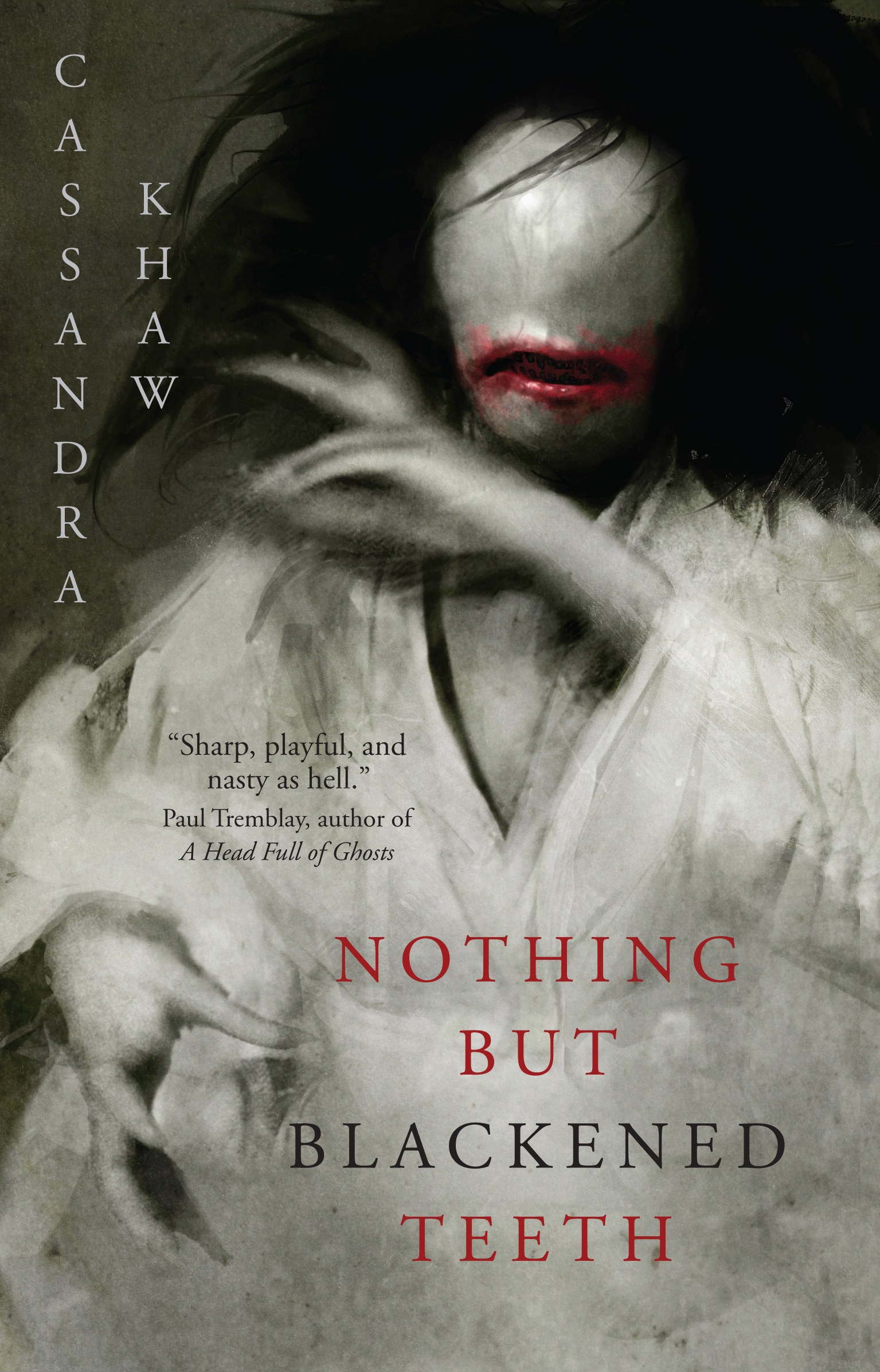
I thought this cover was deliciously creepy in a way that reminded me of The Ring, and I was ready for a quick spine-tingling thriller set in Japan. Unfortunately, for me, the cover was the only part of the book that elicited any real response from me.
Let’s start with the good. Representation is strong in this book. It’s a group of four racially diverse friends. The main character is bisexual, says the word, and isn’t demonized in the book. Since it’s common for thrillers and horror to demonize queer characters, this was nice. The writing is poetic, which is a bit unusual in horror. The idea of a bride being so into haunted houses that she wants to be married in a house where the haunting is a bride was also fun. So why didn’t it work for me?
For horror to work for me, I need to know enough about the characters to kind of care about what happens to them. This jumps so quickly into the haunted house moment with the friends that I just….never really cared about any of them. To be honest, I still kind of easily get them mixed up in my head. By the time we know any of their motivations, a lot of the thrills and gore have already happened but it’s too late for me to care about them. It wasn’t even that they were a collection of common horror tropes so I knew what was going on and could sort of care. (I’m thinking about the tropes used in Scream or The Cabin in the Woods). It seems to me that part of the goal was to subvert tropes but in order for that to work, I need to really know the characters for the tropes to be subverted and for me to still care about the characters. Tropes work because they fill in the blanks for us. The cheerleader may be ditzy but she really cares about her friends, so we know she’s really actually upset when she can’t find one of them. But if the trope has been subverted just enough that we know that the cheerleader doesn’t’ care about her friends but we also don’t know what she actually cares about then all understanding of what meaning and impact the plot has on her is lost.
Others who don’t need strong character development to get into the thrills of a horror will likely enjoy this story more than I did, particularly if the basic plot summary given above appeals to you.
2 out of 5 stars
Length: 128 pages – novella/short nonfiction
Source: NetGalley
Buy It (Amazon or Bookshop.org)
If you found this review helpful, please consider tipping me on ko-fi, checking out my digital items available in my ko-fi shop, buying one of my publications, or using one of my referral/coupon codes. Thank you for your support!
 Support my work with a tip or browse my shop for curated book club guides, how to guides, cross-stitch patterns, and more!


This work by Amanda Nevius is licensed under a Creative Commons Attribution-Noncommercial-No Derivative Works 3.0 United States License.
 Opinions of a Wolf