
Archive
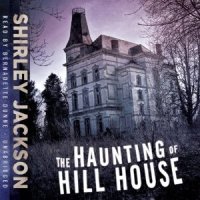
Book Review: The Haunting of Hill House by Shirley Jackson (Audiobook narrated by Bernadette Dunne)
 Summary:
Dr. Montague is a scholar of the occult, and he invites three other people to stay with him in Hill House, which is notorious for being haunted. There’s jovial Theodora, timid Eleanor, and the future heir of the house, Luke. What starts as a light-hearted adventure quickly turns sinister in this horror classic.
Review:
I actually started reading this audiobook way back in September for the Readers Imbibing Peril challenge. It’s only 7.5 hours long, so I thought it’d be a quick read. I think the fact that it wasn’t demonstrates quite well how not drawn into the story I was. This is a classic haunted house tale that perhaps might not work for the modern reader, depending on how much horror they generally imbibe.
This is going to be a quick review because I honestly don’t have too much to say about the book. Four people arrive at a house. Things appear normal, except one of them, Eleanor, clearly is a bit more emotionally unstable than the rest. She is, for instance, shocked that anyone is interested in her or asks her questions. She also has trouble with her own identity, such as knowing for sure what she likes to eat. Odd things start to happen in the house, and because Eleanor is odd, the others aren’t sure if it’s the house doing them or Eleanor herself. Eleanor becomes overly attached to Theodora. Drama ensues.
None of the house horror scenes really got to me, because frankly I’ve seen worse in plenty of other horror I read. I do love the genre. The parts that actually disturbed me were when the others in the household were inexplicably cruel to Eleanor. That dynamic of an odd woman randomly tossed in with strangers who proceed to be mean to her in a highschoolish way held my interest more than the house did. People and their cruelty are so much more frightening than a haunted house. I understand that the book is sort of leaving it up to the reader to wonder if the house or the people really drive Eleanor crazy, but frankly I think the ending removes all question on this point.
Similarly, there are definitely some undertones in the Theodora/Eleanor relationship that indicates they might possibly have had a fling early on and then Theodora abruptly distances herself from Eleanor when she gets too clingy. None of this is said outright, however it is heavily implied that Theodora’s roommate back home is her lover who she had a quarrel with, and she and Eleanor establish a close bond early on in the book. The problem is this all stays subtext and is never brought out in the open of the book. I get it that this book was published in 1959 so it probably had to stay subtext and was most likely shocking to a reader in the 50s. But to me, a modern reader, it felt like the book kept almost getting interesting and then backing off from it. The combination of the former issue and this one meant that I was left feeling unengaged and uninterested. Basically, I feel that the book didn’t go quite far enough to be shocking, horrifying, or titillating.
The audiobook narration by Bernadette Dunne was excellent as always, and the main reason I kept listening rather than just picking up a copy of the book and speed reading it. I love listening to her voice.
Overall, this classic was boundary pushing when it was first published but it might not come across that way to a modern reader. Readers who read a lot of modern horror might find this book a bit too tame for their tastes. Those interested in the early works of the genre will still enjoy the read, as will modern readers looking for horror lite. Readers looking for the rumored LGBTQIA+ content in this book will most likely be disappointed by the subtlety of it, although those interested in early representation in literature will still find it interesting.
If you found this review helpful, please consider tipping me on ko-fi, checking out my digital items available in my ko-fi shop, buying one of my publications, or using one of my referral/coupon codes. Thank you for your support!
3 out of 5 stars
Length: 182 pages – average but on the shorter side
Source: Audible

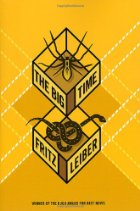
Book Review: The Big Time by Fritz Leiber (Series, #1)
 Summary:
It’s the Time War, and the Spiders and Snakes are battling each other up and down the timeline in an attempt to give time the ultimate outcome they each are hoping for. Nobody knows precisely who the spiders and snakes are, but they briefly resurrect humans and ask them if they want to participate in the war. Those who say yes become the soldiers, nurses, and the Entertainers who provide rest and relaxation for the soldiers in the waystation. One waystation is about to hit a ton of trouble when a package shows up and a soldier starts talking mutiny.
Review:
I’m a fan of time-travel as a scifi trope, and I liked the concept of a time war, so when I saw this sitting on my virtual ARC pile, I figured it would be a quick, appealing read. The book is less about time-travel, and more a type of scifi game of Clue, with everyone trapped in a waystation instead of a house trying to figure out who turned off the machine that connects them to the galaxy, rather than solve a murder.
The book takes place entirely within the waystation. The waystation exists outside of time to give the time soldiers a place to recuperate without the pressures of time travel. All but one of the soldiers are men, and most of the Entertainers are women. The one female soldier is from ancient Greece, the clear idea being that her era of women are the only ones tough enough to be soldiers. This definitely dated the book and led to some eye-rolling on my part. On the plus side, the book is narrated by a woman, and she is definitely one of the brains of the bunch. There thus is enough forward-thinking that the sexist distribution of time soldiers doesn’t ruin the book; it’s just irritating.
The crux of the book is the soldiers wondering who, exactly, is telling them what to do up and down the timeline and worrying that they are ruining time, not to mention the planet Earth they once knew. The soldiers are told they’re on the side of the good guys, yet the good guys are insisting that Russia must be stopped at all costs, even if that means the Germans winning WWII. Thus, the soldiers are awkwardly paired up with Nazis in the fight. It’s interesting to force the Allies to attempt to see Germans in a different light. However, the whole idea that Russia (and Communism) will ruin the world is just a bit dated. It’s easy to get past, though, since the dilemma of how to know if who you are following is making the right choices is a timeless one.
The attempted mutineer ends up trying his mutiny because he falls in love with one of the Entertainers.
I decided they were the kind that love makes brave, which it doesn’t do to me. It just gives me two people to worry about. (loc 10353)
The attempted mutiny against the cause is thus kind of simultaneously blamed on love and on the woman behind the man starting the drama. It’s true that love makes people do things they wouldn’t ordinarily do, but I do wish the characters were more even-handed in dealing out the blame for the mutiny to both halves of the couple. On the plus side, it is left unclear if the mutiny is a good or bad idea, so whether the idealistic couple in love are right or not is up to the reader to decide.
The final bit of the book dives into theories about time-travel, time, and evolution. It’s a bit of a heady side-swipe after the romping, Clue-like plot but it also shows how much of an impact the events of the book have on the narrator. At the beginning, the narrator states it was a life-changing sequence of events, and the wrap-up deftly shows how it impacted her.
Overall, this is a thought-provoking whodunit mystery set in an R&R waystation in a time-travel war. Some aspects of the book did not age particularly well, such as the hysterical fear of Communism and the lack of women soldiers, but the heart of the book is timeless. How do you know if those in charge are right or wrong, does love make you see things more or less clearly, and does evolution feel frightening and random when it’s happening. Recommended to scifi fans with an interest in a scifi take on a Clue-like story.
If you found this review helpful, please consider tipping me on ko-fi, checking out my digital items available in my ko-fi shop, buying one of my publications, or using one of my referral/coupon codes. Thank you for your support!
3 out of 5 stars
Length: 128 pages – novella
Source: NetGalley

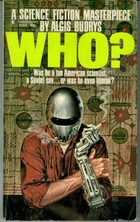
Book Review: Who? by Algis Budrys
 Summary:
In an alternate late 20th century, the Allies are still at a cold war with the Soviets. The Allies’ best scientist, Martino, is working on a secret project called K-88 when there is an explosion. The first rescuers to him are Soviet. The norm is for Allied prisoners to ultimately be returned across the line. But the Soviets claim that Martino’s skull and arm were badly damaged and return him with a metal, robotic head and arm. Is this man really Martino, or is he a Soviet plant?
Review:
I was excited to read this book because the idea of a transhumanist/cyborg American made that way by the Soviets has a James Bond like appeal. Unfortunately, it feels a bit more dated than I was anticipating, as well as compared to other older scifi, and doesn’t fully address some questions it raises.
Immediately, there are a couple of plot holes that aren’t addressed until close to the end of the book, which made it a bit frustrating to read. First, why did the Allies put their best scientist in a lab on the border with the Soviets? The answer to this, given at the end of the book, is pretty flimsy, and only works if you are willing to believe the Allies are very stupid. Second, it makes sense that they can’t verify Martino’s identity with his fingerprints, because the Soviets could have taken off his remaining arm and put it on someone else. However, why can’t they verify who he is with DNA? Presumably, he has some living relatives somewhere they could compare to. DNA was discovered in the 1860s (source) so to never even address why they don’t use it is a bit bizarre. The book mentions toward the end that Martino’s parents and uncle are dead, but you can conduct kinship tests using dead bodies. It still baffles me that the government in the book didn’t simply dig up Martino’s father and run a DNA test. Even if DNA testing wasn’t widely known of when the book was published, one would hope a scifi writer could see its future implications, imagine the applicability, and address the scenario. The fact that DNA wasn’t addressed at all, and Martino’s place near the Soviet border wasn’t satisfactorily addressed really removed a lot of the intensity and interest one should feel from the situation.
Another way Budrys showed a lack of imagination for the future is in the strict gender roles and lack of women in the military or the sciences in the future he has envisioned. Women are only seen in the book in strict 1950s gender roles. As wives and mothers and not once in the military or in the sciences. People in the sciences are referred to as the “men” not even leaving room for the idea of a woman in science. I know this is a symptom of the times, but I also know that more progressive and forward-thinking scifi was written in the same decade. It was a bit jarring to me to read a scifi that excluded women so much, when I’m so used to women being present, at least nominally, in scifi.
All of that said, the writing of individual scenes was quite lovely. Budrys evokes setting and tensity well. I particularly enjoyed the scene of Maybe-Martino running through the streets of New York City, which reminded me of an old noir film. Budrys also shows a good understanding of what it is like for people who are incredibly highly intelligent. He writes Martino at a young age as both brilliant in science but also dumb in interpersonal relations. The fact that he got this and demonstrated it in the 1950s is to be commended. There is also some solid commentary on the American education system and a desire for it to encourage more independent thought.
Look–these guys aren’t morons. They’re pretty damned bright, or they wouldn’t be here. But the only way they’ve ever been taught to learn something is to memorize it. If you throw a lot of new stuff at them in a hurry, they’ll still memorize it–but they haven’t got time to think. (loc 9163)
Overall, this is an interesting concept that wasn’t fully fleshed out nor the possible weaknesses fully addressed. It is definitely a scifi of its time, with its hyper-focus on the Soviets and the Cold War that could almost feel kitschy today. A short read with an interesting premise, albeit a lack of female scientists, soldiers, or government workers. Recommended to scifi fans who enjoy some old-fashioned red scare in their reads and don’t need the science to be perfect.
3 out of 5 stars
Source: Netgalley

2013’s 5 Star Reads!
Since 2011, I’ve been dedicating a separate post from my annual reading stats post to the 5 star reads of the year. I not only thoroughly enjoyed assembling the 5 star reads posts, but I also go back to them for reference periodically. It’s just useful and fun simultaneously! Plus it has the added bonus of giving an extra signal boost to the five star reads of the year.
With no further ado, presenting Opinions of a Wolf’s 5 Star Reads for 2013!
 The $100 Startup: Reinvent the Way You Make a Living, Do What You Love, and Create a New Future
By: Chris Guillebeau
Publication Date: 2012
Publisher: Crown Business
Genre: Nonfiction Lifestyle
Themes: independence, success, small businesses
Summary:
Guillebeau investigated what makes microbusinesses (small businesses typically run by one person) successful by conducting a multiyear study interviewing more than 100 successful microbusiness entrepreneurs. Here he presents his findings on what makes for a successful microbusiness and offers advice on how you can become a successful microbusiness entrepreneur too.
Current Thoughts:
I refer to things I learned in this book at least once a week. Guillebeau offers practical advice for the aspiring small business owner on everything from choosing an idea that will work to setting the right price to marketing. The things I’ve been able to try from the book so far have worked. This book shows what happens when a nonfiction book bases its advice on solid research.
 The Curse of the Wendigo
By: Rick Yancey
Publication Date: 2011
Publisher: Simon & Schuster Books for Young Readers
Genre: Horror, YA
Themes: love lost, the nature of good and evil
Summary:
Will Henry, 12 year old orphan and assistant to renowned Monstrumologist, Pellinore Warthrop, is shocked to find a refined woman on Warthrop’s doorstep. She is the wife of Warthrop’s best friend who has now gone missing in rural Canada while looking for the elusive wendigo (aka werewolf). Warthrop insists that there is no such thing as a wendigo, but he agrees to go looking for his missing friend anyway, even if he believes his mission was ridiculous and an affront to monstrumology’s reputation.
Current Thoughts:
What I remember when I think about this book is the beautiful language and the dual setting of the horror. Setting the book both in rural Canada and urban New York is part of what made it feel so unique to me. A horror that travels instead of being trapped in one setting isn’t seen as often. The book is beautiful and grotesque at the same time. A rare find.
 Man Plus
By: Frederik Pohl
Publication Date: 1976
Publisher: Orb Books
Genre: Scifi
Themes: transhumanism, artificial intelligence
Summary:
The first Earthling reworked into a Martian would be Roger Torraway. Martian instead of Earthling since everything on him had to be reworked in order to survive on Mars. His organic skin is stripped off and made plastic. His eyes are replaced by large, buglike red ones. He is given wings to gather solar power, not to fly. All of which is organized and run by his friend, the computer on his back. Who was this man? What was his life like? How did he survive the transformation to become more than human and help us successfully colonize Mars?
Current Thoughts:
This has a scifi plot that both explores an issue I’m interested in (transhumanism) and managed to surprise me at the end. It’s a short book that makes you think and has compelling three-dimensional characters. I’ll definitely be keeping this one and seeking out more of Pohl’s writing.
 A Queer and Pleasant Danger: The True Story of a Nice Jewish Boy Who Joins the Church of Scientology, and Leaves Twelve Years Later to Become the Lovely Lady She is Today
By: Kate Bornstein
Publication Date: 2012
Publisher: Beacon Press
Genre: Memoir, GLBTQ
Themes: religious abuse, trans rights, gender, Borderline Personality Disorder
Summary:
Kate Bornstein is a playwright, gender theorist, and queer activist. She chose to write a memoir as a way to reach out to her daughter, Jessica, who is still in the Church of Scientology, and thus, must not speak to her. Her memoir talks about growing up Jewish in the 1950s, feeling like a girl inside a boy’s body. It then talks about why and how she joined Scientology (still identifying as a man, Al), climbing Scientology’s ladder, marrying, fathering Jessica, and finally getting kicked out of Scientology and becoming disillusioned. From there the memoir explains to Jessica how and why Al decided to become Kate and talks about the person behind the queer theory, trying to explain who the incredibly unique parent she has truly is.
Current Thoughts:
This memoir is engaging right from the title and stunning in the level of honesty Bornstein displays. Bornstein eloquently presents the reality of being trans, entering a leaving an abusive religion, and the complexities of gender. An incredibly readable memoir that stays with you.
 Succubus Dreams
By: Richelle Mead
Publication Date: 2008
Publisher: Kensington
Genre: Urban Fantasy
Themes: the grayness of good versus evil
Summary:
Seattle’s succubus, Georgina Kincaid, has a lot on her hands between dating her human author boyfriend, Seth, (and not sleeping with him to protect his life energy), adjusting to her new managerial position at the bookstore, and her usual succubus requirement of stealing good men’s life energy by sleeping with them. So the last thing she needs is another new assignment from hell, but that’s what she’s getting. Seattle is getting a second succubus, a newbie she has to mentor. When she starts having dreams about having a normal, human life and waking up with her energy drained, it all turns into almost too much for one succubus to handle.
Current Thoughts:
This series glows in my mind as a favorite that I will return to again and again. This book is where I truly began to fall in love with it. The third entry shows that urban fantasy can be more than monster of the week. It does what genre does best. Ponder real life questions in an enjoyable wrapping.
 Succubus Revealed
By: Richelle Mead
Publication Date: 2011
Publisher: Kensington
Genre: Urban Fantasy
Themes: soul mates, forgiveness, personal growth
Summary:
Seattle’s succubus, Georgina Kincaid, is incredibly happy to be back together with her previously ex boyfriend, Seth Mortensen. But getting back together with him came at the price of hurting his once-fiancee and having to leave her previously loved position managing the bookstore. It’s all worth it to be with Seth, though. But then a transfer notice comes in, sending her to her dream job in Las Vegas. It’d be a dream come true, except Seth can’t come with her because his sister-in-law has cancer. Georgina starts to wonder just why so many elements seem to keep coming together to try to drive her and Seth apart.
Current Thoughts:
This an amazing series finale that reveals so many aspects of the overarching plot that I wanted to go back and re-read the whole series immediately just to look for more of the overarching plot that I was oblivious to the first time around. It’s a wrap-up that is satisfying without making everything too perfect for the characters. It has a lot to say about love and redemption. And it made me cry.
 Succubus Shadows
By: Richelle Mead
Publication Date: 2010
Publisher: Kensington
Genre: Urban Fantasy
Themes: facing your past
Summary:
Seattle’s succubus, Georgina Kincaid, cannot believe she has been roped into helping plan her ex-boyfriend’s wedding. It’s enough to make anyone depressed. But she can’t afford to be depressed, because every time she starts to feel down, a mysterious force tries to lure her away to what must be a dangerous place. Georgina is fed up with all of these mysterious attacks on Seattle. It just doesn’t make sense. What is making them target Seattle? And seem to be maybe targeting her?
Current Thoughts:
The penultimate book in this series isn’t afraid to go dark places with tough questions. It also addresses the issue in urban fantasy that a lot of people joke about: gee that’s sure a lot happening in this one town! Mead addresses this in a tongue-in-cheek manner that also ties into the overall plot. I was amazed at how well this series incorporates both all the things that make urban fantasy fun (demons! sex! supernatural battles!) and an overarching plot that tugs at the heart strings and makes some of the bizarre things that happen make sense.
 The Time Machine
By: H. G. Wells
Publication Date: 1895
Publisher: New American Library
Genre: Scifi, Classic
Themes: dystopia, time travel, evolution, class divides
Summary:
Nobody is quite sure whether to believe their eccentric scientist friend when he claims to have invented the ability to travel through time. But when he shows up late to a dinner party with a tale of traveling to the year 802,700 and meeting the human race, now divided into the child-like Eloi and the pale ape-like ground-dwelling Morlocks, they find themselves wanting to believe him.
Current Thoughts:
I’m so glad I added this scifi classic to my list of books I’ve read. I of course had heard of the general idea of the Morlocks and the Eloi, but reading about them for myself, I was easily able to see how this became a classic. It kept me on the edge of my seat, concerned for the scientist’s safety, even while exploring issues of inequitable class divides and pondering the future direction of the evolution of the human race.
 Will I Ever Be Good Enough?: Healing the Daughters of Narcissistic Mothers
By: Karyl McBride
Publication Date: 2008
Publisher: Free Press
Genre: Nonfiction Psych, Nonfiction Relationships
Themes: overcoming adversity, mother/daughter relationships, Narcissistic Personality Disorder, abuse
Summary:
A guidebook for adult women raised by a mother with Narcissistic Personality Disorder (NPD). Dr. McBride is a therapist with many years of experience treating daughters of NPD mothers and also with treating people with NPD. Additionally, she herself is the daughter of a woman with NPD. The book is divided into three sections to help the daughters of mothers with NPD to heal and take charge of their lives. The first section “Recognizing the Problem,” explains what maternal NPD looks like. The second section, “How Narcissistic Mothering Affects Your Entire Life,” explains the impact NPD mothers have on their daughters, both as children and as adults. The third section, “Ending the Legacy” is all about healing from the NPD mothering and breaking the cycle of Narcissism. Dr. McBride offers clinical examples from her practice as well as detailed, clearly explained exercises to aid with healing.
Current Thoughts:
This is one of the best books I’ve read for adult survivors of abusive childhoods. It works because it focuses narrowly on one type of relationship and one type of dysfunctional, abusive childhood to be overcome. McBride explains what happened to the adult survivor when they were a child, how that affects them now, and how to overcome it. She does this while neither excusing nor demonizing the mother’s behavior. A great book for anyone with an interest in how mothers with NPD affect their daughters.
Book Review: The Stars My Destination by Alfred Bester
 Summary:
In the future, men have discovered the ability to jaunte–to teleport from one location to the other. The only catch is that you can only teleport to a place you have previously been. This means that jauntes around the world are the domain of the wealthy who can make the journey first. In this future of teleportation and telepaths, the rich have become a hipster elite, showing off their wealth by using outmoded and and outdated methods of transportation like cars and trains.
Foyle is one of the working poor. A hand on a spaceship that has an accident, leaving him in a closet grasping to the last straws of oxygen. Another spaceship passes him by, after clearly seeing his flare, and he vows vengeance upon them if he ever escapes alive. Which he does. What follows is a tangle of intrigue across time and space.
Review:
I got this in a collection of 1950s American scifi classics from Netgalley (which I will review as a whole at a future date). I was surprised to discover that I already had this particular book on my wishlist tagged simply as a scifi classic. So I went in with an enthusiasm that was definitely well-met. This book is worth reading for the world-building alone, even if the main plot and point of the novel doesn’t particularly speak to you.
The world Bester built for this book is complex and unique. Many authors would have left the future building at the jaunting alone. These people can teleport (and some are telepaths), what more is needed? But Bester takes it out a step further. Giving jaunting a limitation allows him to further expand upon how the change impacts people and culture differently based upon their wealth. On the one hand, since jaunting is only possible if you’ve physically been to the place you want to go, it becomes a bastion of the elite who can afford to travel there first.
They would memorize jaunte stages in widening circles, limited as much by income as ability; for one thing was certain: you had to actually see a place to memorize it, which meant you first had to pay for the transportation to get you there. Even 3D photographs would not do the trick. The Grand Tour had taken on a new significance for the rich. (loc 2465)
On the other hand, the wealthy will show off that they don’t need to jaunte because they can afford outmoded means of transportation like cars and trains.
As men climbed the social ladder, they displayed their position by their refusal to jaunte. (loc 2595)
Jaunting impacts the world further with the wealthy building labyrinths so that people can’t easily jaunt within their estate and home (since you can’t jaunt someplace you can’t see). In contrast, the working poor jaunte everywhere they possibly can to save their precious time and energy. On top of all of this, there’s space travel and space colonization, complete with slavery to mine the outer planets. But even the working poor who aren’t officially slaves are still essentially slaves to the wealthy elite. It’s a nightmare of a future where a few big corporations, and thus a few families, own the majority of the wealth, power, and luxury, and are unafraid to stomp on the poor to get ever more.
It makes sense that a good plot for this world would be a poor working man out to get vengeance on the corporation that left him to die in space. But Foyle isn’t a good guy himself. At first, none of his quest for vengeance is noble or is about anything other than himself. Plus, Foyle is an animal of a man. The book clearly believes that this animal state is the fault of the corrupt imbalance of power in the world. The wealthy elite have made many of the working poor into nothing more than scrabbling animals who will take what they can get violently when they can and live based on the more baser urges. As Foyle gradually climbs the social ladder in his espionage, he slowly learns what it is to be human and develops a conscience. I’m not a fan of this idea that the poor are forced into an animal-like state by the elite. Living without luxury doesn’t make a person animal-like. A lack of moral education contributes more than anything, and that can occur at any level of wealth. Thus, although I appreciate the fact that this vengeance plot allows for us to see the entire world from the bottom up, I’m not a fan of how Foyle’s growth and change is presented.
Some readers may be bothered by the fact that Foyle early in the book rapes someone and then later earns redemption, including from the woman he raped. The rape is described as part of his animal state, and he has now risen above it. When the rape occurs in the book, it is off-screen and so subtle that I honestly missed it until later in the book when someone calls Foyle a rapist. I appreciate that Bester does not depict the actual rape, as that would have prevented my enjoyment of the book. I don’t like the idea of rape being something only done by someone in an “animal state” or the idea that it’s something a person can ever redeem themselves from. I don’t think that’s the case at all. However, this is a very minor plot point in an extremely long book. Most of my issues with it are tied into my issues with the plot overall. I was able to just roll my eyes and tell the characters that they are wrong. It’s not that hard to do when most of them are presented as evil or anti-heroes to begin with. But this plot point might bother some readers more than others.
Overall, the world building is so excellent and gets so much attention from Bester that it overshadows the more average vengeance plot with iffy morals. Readers who enjoy immersing themselves in various possible futures will revel in the uniqueness and richness of the future presented here. Those who believe firmly in punishment for crime as opposed to redemption may not be able to get past the plot to enjoy the setting. Recommended to scifi fans interested in a unique future setting.
4 out of 5 stars
Source: Netgalley

Book Review: Double Star by Robert A. Heinlein
 Summary:
When out-of-work actor Lorenzo Smythe is approached in a bar by a space pilot with a job offer, he agrees to at least go meet the man’s boss and discuss it. Quickly, however, Lorenzo finds himself being kidnapped into outer space and impersonating a missing important politician, John Joseph Bonforte, under slight duress. They must keep the public from knowing the politician has been kidnapped and successfully participate in a Martian adoption ceremony or face interplanetary war.
Review:
I was excited to pick up another Heinlein, and he definitely didn’t disappoint. Similar to The Moon Is a Harsh Mistress
In this version of the future, space exploration has led to the discovery of inhabited other planets and two distinctly different opinions on how to interact with those lifeforms. Either dominate in a manifest destiny style or come to mutual cultural understanding and trade. The politician Smythe must impersonate, Bonforte, is the leader of the latter faction. This novel could easily have turned preachy with such a premise, but Smythe himself isn’t too keen on being friends with the aliens. As an actor, he is committed to playing his role beautifully. As a person, he isn’t sure he agrees with Bonforte. This position allows Heinlein to explore both sides of the question, as well as the gray area in-between. No easy answers are presented, but slowly what is more just is revealed.
Juxtaposed with the political plot is the whole aspect of Smythe being an actor who believes fully in his craft as an artform. Smythe takes himself very seriously even when others do not. At first, others view him as full of himself, but slowly they come to respect him and his talents. Smythe’s large self-esteem may at first cause the reader to roll their eyes as well, but it gradually becomes apparent that having confidence in yourself and your abilities as a professional is not a bad thing.
I was a professional, retained to do a very difficult professional job, and professional men do not use the back stairs; they are treated with respect. (loc 1660)
Although characters at first seem two-dimensional, the main characters slowly become more fleshed out and well-rounded. Nothing and no one is quite as simple as it at first seems, and Smythe is a great example of that.
What really makes the book, though, is its unexpected wit. It’s not so much a laugh out loud book, but it’s very much a snort of amusement style of humor that takes the book from interesting to highly enjoyable.
My vocal cords lived their own life, wild and free. (location 40)
I was as angry as a leading woman with her name in small type. (location 1068)
The romance lacked creativity or sparkle. It is easy to spot the instant it comes up, but it doesn’t come across as natural or meant to be. It mostly feels like the woman transferring her affection for Bonforte onto Smythe. I found it a bit squicky that she fails to ever really see Smythe as Smythe, not even after falling in love with him. Thankfully, the romance is an incredibly minor part of the book. The book is also slightly dated by the overwhelming presence of paper and microfilm. We’re talking the spaceship has a library with print books and microfilm. In general even classic scifi tends to imagine a future with at least slightly different versions of books and information exchange. I found it a bit odd that Heinlein failed to do that.
The ending is not unexpected entirely but it is satisfying and with enough fun details to entertain. Of the various options for an ending to this story, the one Heinlein took is enjoyable and makes sense within the world he has created.
Overall, this is a fun piece of classic scifi that tosses together acting and politics in outer space with Martians who look like toadstools and a heavy sprinkling of wit. The romance leaves something to be desired, and the tech isn’t particularly predictive or imaginative, but these are minor aspects of the story. Recommended to fans of witty scifi who don’t mind a dash of political intrigue.
4 out of 5 stars
Length: 243 pages – average but on the shorter side
Source: NetGalley
Buy It (Amazon or Bookshop.org)
If you found this review helpful, please consider tipping me on ko-fi, checking out my digital items available in my ko-fi shop, buying one of my publications, or using one of my referral/coupon codes. Thank you for your support!
Book Review: I, Robot by Isaac Asimov (Series, #0.1) (Bottom of TBR Pile Challenge)
 Summary:
This collection of short stories tells the history of the invention and gradual improvement of robots. The robots in this future must follow the 3 Laws of Robotics:
- A robot may not injure a human being or, through inaction, allow a human being to come to harm.
- A robot must obey the orders given to it by human beings, except where such orders would conflict with the First Law.
- A robot must protect its own existence as long as such protection does not conflict with the First or Second Law.
But following these laws doesn’t always have quite the outcome the inventors and managers of robots intended.
Review:
I wasn’t aware I, Robot

One thing I like about the world Asimov sets up is that unlike many scifi books featuring AI, the people in Asimov’s world are highly, intensely cautious of robots. They’re very concerned about robots taking jobs, killing humans, and even robbing humans of their autonomy. It sets up a conflict from the beginning and frankly presents the humans as just a bit more intelligent than in some AI scifi universes.
I was under the impression from pop culture that in I, Robot they think they’re protected by the Laws of Robotics but something happens so that the robots aren’t programmed with them any longer. That’s not what happens at all. What happens is much more complex. How the robots interpret the Laws and how the Laws work end up being much more complex and less straight-forward than the humans originally imagined, so much so that they have to have a robopsychologist to help them interpret what’s going on with the robots. This is really quite brilliant and is one of my favorite aspects of the book.
Unfortunately, the book can read a bit sexist sometimes, in spite of having a female protagonist through quite a bit of the book. (The robopsychologist is a woman). The book was first published in 1950, though, so when you think about the time period, the sexism is pretty minor, especially compared to having a female worldwide expert on robopsychology. The main time sexism comes up is when the leader of Europe is a woman and says some self-deprecating things about difficulty leading because she’s a woman. Yes, there is older scifi that avoids sexism pretty much entirely, but I am able to give this instance a bit of a pass considering the other strong portrayal of a woman in a leadership role. But be aware that at least one cringe-inducing sexist conversation does occur.
Overall, this piece of classic scifi stands the test of time extraordinarily well. Its film adaptations do not do it proper service at all. Come to this book expecting a collection of short stories exploring robopsychology, not an action flick about killer robots. Recommended to scifi fans.
4 out of 5 stars
Source: Harvard Books
Book Review: The Time Machine by H. G. Wells (Bottom of TBR Pile Challenge)
Summary:
Nobody is quite sure whether to believe their eccentric scientist friend when he claims to have invented the ability to travel through time. But when he shows up late to a dinner party with a tale of traveling to the year 802,700 and meeting the human race, now divided into the child-like Eloi and the pale ape-like ground-dwelling Morlocks, they find themselves wanting to believe him.
Review:
I was always aware of this scifi classic but oddly had managed to never hear any spoilers. When I saw it available for free on the kindle, I decided I should download it for when a classic scifi mood struck me in the future. I’m glad I did because it was there and waiting for me when that mood did strike, and it was completely satisfying. Like when you eat a food you’ve been craving for days.
The structure and writing style are typical for the late 1800s. An unnamed narrator tells us of a strange person he met who then takes over the narration to tell us about an event that happened to him. In this case, that second narrator is the Time Traveler. The Time Traveler then expounds quite eloquently and philosophically on everything that has happened to him. I enjoy this storytelling method, because it gives space for the narrator of the strange tale to do this philosophical thinking. It makes sense to think about what you’ve learned when you’re talking about a past event. The events are exciting, but they don’t happen at such a break-neck speed that the reader doesn’t have time to think on what they might mean. After reading a lot of more modern dystopias, it was interesting to read a slower paced one. Both storytelling techniques work well, but it was definitely a nice change of pace for my reading personally.
The dystopia is really enjoyable. Instead of getting hung up on politics or climate change, the dystopia revolves entirely around evolution. The Morlock/Eloi split happened because of the ever-increasing gap between the haves (the future Eloi) and the have-nots (the future Morlocks). The Eloi are childlike in both stature and behavior. They are the ultimate end result for what happens when people have no responsibilities and everything done for them, which is clearly how Wells sees the then modern-day elite functioning. The Time Traveler talks about the ultimate evolutionary faults of a living that is too easy at multiple times.
Strength is the outcome of need; security sets a premium on feebleness. (page 30)
In contrast, the Morlocks live underground in old industrial tunnels. They are physically strong but have lost their humanity due to a lack of the finer things. They have no contact with the natural beauty of the world and so have turned into these ape-like, cannibalistic creatures. The Time Traveler expounds on this:
Even now, does not an East-end worker live in such artificial conditions as practically to be cut off from the natural surface of the earth? (page 50)
I really like that this dystopia is so well thought-out but simultaneously so simple and easy to understand.
The plot itself kept me on the edge of my seat and constantly surprised at what happened. Although it’s obvious the Time Traveler makes it back from his first voyage, there are other threats and dangers that are sufficient to keep the reader engaged. The ending actually surprised me as well.
This book has withstood the test of time extremely well. It has not yet saturated pop culture to the extent that the potential reader is unavoidably spoiled for the details of the plot or the ending. The dystopia is unique and interesting, in spite of the proliferation of dystopian literature since then. The philosophical thoughts of the Time Traveler are still applicable to modern society.
Overall, this is a piece of classic scifi that has aged very well. It simultaneously entertains and challenges the reader. In addition, it is a short read for a classic, more similar in length to modern fiction. It is the ideal read for both hard-core scifi fans and those interested in dipping their toe in classic scifi. Highly recommended!
5 out of 5 stars
Source: Amazon
Buy It
Note: the Kindle edition is free
Book Review: A Room with a View by E. M. Forster (Bottom of TBR Pile Challenge)
 Summary:
When Lucy Honeychurch goes to Italy, accompanied by her spinster aunt, she doesn’t want or expect much, except perhaps a room with a view. But she meets George Emerson and his father, two socialist atheists, and they put her world in a bit of a tizzy. That all gets left behind, though, leaving room for her to meet the man who will become her fiancee, Cecil. Back in England, her courtship is soon interrupted by the unexpected arrival into their little town of the Emersons.
Review:
I wanted to like this book. It sounded like an older progressive, feminist romance novel, and that’s something I can definitely get behind. The romance, though, turned my stomach, and all of the characters left me sour.
This is a slow-moving book. The scenes it sets are neither rich nor interesting. I expected to feel more enveloped in Italy, akin to how I felt when reading Adriana Trigiani, but this didn’t happen. It felt a bit like your cousin who isn’t very good at describing things is trying to tell you all about her vacation to Italy without the help of pictures. In a book where not very much happens for at least the first 2/3 of it, this is more important of a shortcoming than it might otherwise be.
I cannot name a single character in the book I enjoyed, although Lucy’s brother at least elicited a neutral feeling from me. They’re all about what you would expect from upper middle class British in the early 1900s. Lucy is dull and timid. Her aunt is mean and overly concerned about appearances. One suitor is is an upper-class prick, and the other is a supposed “bad boy,” although only in the sense that if this was a boarding school he might not tie his tie properly. It all was so predictable and dull. I was expecting a fiery heroine but instead I got Miss Plane Jane from down the road.
What really swayed me against the book, though, was one of the scenes we are clearly supposed to find very romantic, but which I found problematic at its most basic level.
Lucy was playing tennis with a bunch of people, and she winds up walking through the garden back toward the house with George. George knows she is engaged to Cecil, and Lucy has expressed to him a few times that she is not interested in pursuing a relationship with him. He grabs her, at which point the following happens:
“No–” she gasped, and, for the second time, was kissed by him. (page 174)
This is the second time, because the first kiss was a mutual one that happened in Italy many months prior. So what happens is that George grabs her without asking, knowing she is uninterested and engaged to another man, she tells him no, and he proceeds to kiss her anyway. This sexual assault is supposed to endear George to us!!! It is incredibly offensive, and I was so turned off I wanted to stop reading. I didn’t so I could write an honest review for you all, but honestly the entire rest of the book was soured for me because we are expected to root for Lucy to estrange herself from her friends and family to marry a man who clearly shows zero respect for her as a person, a man who has sexually assaulted her. How is that a romance? Putting forward stories like this as the desired norm, as a couple who are deeply in love and should be looked up to and aspired for, isn’t good for anyone reading these books. Relationships and romance should be based on mutual trust and respect. It’s ok for a person to make a mistake. We’re all human. But these mistakes should be acknowledged as mistakes and apologized for, never to be done again. Not held up as the romantic actions of a person in love.
This reads as a mid-range, late 1800s style British romance, in spite of being published in the early 1900s. I could see this being for someone else who enjoys that style more than I do, but I cannot in good faith recommend it when the romantic hero of the book sexually assaults the heroine, and we are supposed to root for him to win her heart.
2 out of 5 stars
Source: won from a book blog

Book Review: American Science Fiction: Four Classic Novels 1953-56
 Summary:
The Library of America collects together great pieces of American literature into themed books. This can be anything from an author, to writing on aviation, to the Harlem Renaissance, to transcendentalism. Clearly this is a collection of classic 1950s scifi, in particular covering the time period from 1953 to 1956. The books included in the collection, in order of publication date, are:
The Space Merchants
More Than Human
The Long Tomorrow
The Shrinking Man 
Review:
This is my second Library of America read, and I think I’m officially addicted. There’s something delightful about burying yourself in a topic or theme of American literature complete with useful notes that are not overwhelming but still give you enough background knowledge to come away with more than just the joy of reading the books but some understanding of the time period and genre. Since this collection gathers up books written by different authors, I will review the books individually but first I want to say that any Library of America book is always worth your time. Just be sure to choose a topic or author that interests you.
The Space Merchants
This was my favorite book in the collection by far. I’ve been telling anyone who will listen that it is basically Mad Men IN SPACE. What is not to love about that?! In addition to that, it can sometimes be difficult to be sucked in by older scifi because even if the theme or ideas it addresses was new in its time, I’m from a later time and have heard it a million times already. This book somehow manages to be unique in spite of all the books about a future awash in consumerism that I’ve read. I think what gives it the unique edge is the dual focus on advertising and the conservationist movement. Also the relationship between the main character and his doctor wife is progressive and refreshing. She is smart, her own person, has her own career and ideas, and she is still depicted in a positive light. Also the idea of a trial marriage is essentially the couple living together before getting married, which was surprising to see in something from the 1950s. It also manages to be witty while addressing hard-hitting issues. It’s the perfect scifi.
5 out of 5 stars
More Than Human
This book in contrast was dull and borderline offensive, repeatedly, throughout. Sturgeon utilizes lyrical prose to the extent that the plot suffers. He gets so caught up in making the language beautiful that the plot gets shoved to the side, and the reader is left wondering what, precisely, is going on. The book is divided into thirds, and the first third is the most confusing of all. Sturgeon repeatedly changes perspectives between different characters with no rhyme, reason, warning, or even signal. There’s not even handy squiggly lines letting you know you’re into a new section. This improves a bit in the final two sections of the book, but only a bit. The borderline offensiveness comes in with three of the characters. There are twin girls who can teleport, and beyond their teleportation skills their most identifiable characteristics are: 1) they never keep their clothes on and 2) they are black. They of course are referred to as “Negro” or “colored” throughout the book, which is better than the baby with Down’s Syndrome who is described as a “mongoloid,” and never even is given a name but is simply referred to as “Baby.” The crux of the idea–that people come together with different psychic abilities as the next step of evolution–is creative and interesting, but the execution is dull and drags.
3 out of 5 stars
The Long Tomorrow
It’s not an unheard of idea for a post-apocalyptic society to revert to less technology-laden ways of doing things, but the execution is certainly unique here. Many people are fascinated by Mennonite and Amish culture, and this takes that culture and adapts it to a scifi, post-nuclear future. It is definitely engaging. The plot is strong and consistent. I was particularly impressed with how Brackett shows the passage of time when nothing necessarily happens, such as when the main character spends a few months laying low and helping with the crops. Motivation is clear, and the setting is well-done. I was disappointed though with the very narrowly envisioned role for women. It makes sense that women would be put into traditional roles in the groups modeled after the Mennonites and the Amish, but even the most progressive group presented in the book still seems to think women can only cook and clean. It’s disheartening. The male main characters spend their time striving for knowledge and indeed the point of the book seems to be about the need humans have to acquire knowledge, but it also gives the impression that this should only be embraced in men. The one female character who shows any similar leanings is fairly quickly quashed back to the home. I found this extra disappointing since this is the only book in the collection written by a woman. The rest of the read is enjoyable and imaginative though.
4 out of 5 stars
The Shrinking Man
This book feels the most formulaic of the bunch, perhaps because this trope has made its way so solidly into scifi. Some person finds something about themselves slowly changing and they can’t do anything to stop it. Toss in the ant-sized person, and it struggles to find anything unique to say. I’m no expert, so perhaps this was the first book to have this kind of plot, but the fact remains that there’s nothing that makes this one stick out as special. In fact, as a child of the 90s, I found myself repeatedly thinking that Honey, I Shrunk the Kids

3 out of 5 stars
In Conclusion
This is an interesting collection of 1950s scifi that clearly shows what scientific advancements had people thinking and concerned, primarily nuclear war/weapons/power but also the newly highly commercialized culture, as well as possibilities in psychiatry. A couple of the books fall short of being truly entertaining in modern times, but they are still interesting to anyone who enjoys the history of scifi. Additionally, The Long Tomorrow
4 out of 5 stars
Source: NetGalley

 Support my work with a tip or browse my shop for curated book club guides, how to guides, cross-stitch patterns, and more!


This work by Amanda Nevius is licensed under a Creative Commons Attribution-Noncommercial-No Derivative Works 3.0 United States License.
 Opinions of a Wolf