
Archive
Book Review: Fever by Mary Beth Keane (Audiobook narrated by Candace Thaxton)
 Summary:
Have you ever heard of Typhoid Mary? The Irish-American cook in the early 1900s who was lambasted for spreading typhoid through her cooking. What many don’t know is that she was an asymptomatic carrier. This was the early ages of germ theory, and most didn’t realize you could pass on an illness without any symptoms. Captured and held against her will on North Brother Island, it’s easy to empathize with her plight. Until she’s released and begins cooking again.
Review:
I grew up hearing the cautionary tale of Typhoid Mary, who was mostly mentioned within hearing range in combination with an admonition to wash your hands. But some people (mainly other children) told tales of her purposefully infecting those she served. These sentences were spoken with a combination of fear and awe. On the one hand, how understandable at a time when worker’s rights were nearly completely absent and to be both a woman and Irish in America was not a good combination. On the other hand, how evil to poison people with such a heinous illness in their food. In any case, when this fictionalized account of Mary Mallon came up, I was immediately intrigued. Who was this woman anyway? It turns out, the mixture of awe and fear reflected in myself and other children was actually fairly accurate.
I’m going to speak first about the actual Mary Mallon and then about the writing of the book. If you’re looking for the perfect example of gray area and no easy answers mixed with unfair treatment based on gender and nation of origin, then hoo boy do you find one with Mary Mallon. The early 1900s was early germ theory, and honestly, when you think about it, germ theory sounds nuts if you don’t grow up with it. You can carry invisible creatures on your skin and in your saliva that can make other people but not yourself sick. Remember, people didn’t grow up knowing about germs. It was an entirely new theory. The status quo was don’t cook while you’re sick, and hygiene was abysmally low…basically everywhere. It’s easy to understand how Mary was accidentally spreading sickness and didn’t know it. It’s also easy to understand why she would have fought at being arrested (she did nothing malicious or wrong and was afraid of the police). Much as we may say now that she should have known enough to wash her hands frequently. Wellll, maybe not so much back then.
Public health officials said that they tried to reason with Mary, and she refused to stop cooking or believe that she was infecting others. This is why they quarantined her on North Brother Island. Some point to others (male, higher social status) who were found to be asymptomatic carriers who were not quarantined. True. But they also acknowledged the risk and agreed to stop doing whatever it was that was spreading the illness. Maybe Mary was more resistant because of the prejudice she was treated with from the beginning. Or maybe she really was too stubborn to be able to understand what a real risk she posed to others. Regardless, it is my opinion that no matter the extraneous social factors (being a laundress is more difficult than being a cook, people were overly harsh with her, etc…) Mary still knowingly cooked and infected people after she was released from North Brother Island. Yes, there were better ways public health officials could have handled the whole situation but that’s still an evil thing to do. So that’s the real story of Mary Mallon. Now, on to the fictional account (and here you’ll see why I bothered discussing the facts first).
At first Keane does a good job humanizing a person who has been extremely demonized in American pop culture. Time and effort is put into establishing Mary’s life and hopes. Effort is made into showing how she may not have noticed typhoid following her wherever she went. She emigrated from Ireland. She, to put it simply, saw a lot of shit. A lot of people got sick and died. That was just life. I also liked how the author showed the ways in which Mallon was contrarian to what was expected of women. She didn’t marry. She was opinionated and sometimes accused of not dressing femininely enough. But, unfortunately, that’s where my appreciation fo the author’s handling of Mallon ends.
The author found it necessary to give Mallon a live-in boyfriend with alcoholism who gets almost as much page time as herself. In a book that should be about Mary, he gets entirely too much time, and that hurts the plot. (There is seriously a whole section about him going to Minnesota that is entirely pointless). A lot of Mary’s decisions are blamed on this boyfriend. While I get it that shitty relationships can cause you to make shitty decisions, at a certain point accountability comes into play. No one held a gun to Mary’s head and made her cook or made her date this man (I couldn’t find any records to support this whole boyfriend with alcoholism, btw).
On a similar note, a lot of effort is made into blaming literally everyone but Mary for the situation. It’s society’s fault. It’s culture’s fault. It’s Dr. Soper’s fault. They should have rehabbed her with a new job that was more comparable to cooking than being a laundress. They should have had more empathy. Blah blah blah. Yes. In a perfect world they would have realized how backbreaking being a laundress is and trained her in something else. But, my god, in the early 1900s they released her and found her a job in another career field. That’s a lot for that time period! This is the early days of public health. The fact that anyone even considered finding her a new career is kind of amazing. And while I value and understand the impact society and culture and others have on the individual’s ability to make good and moral decisions, I still believe ultimately the individual is morally responsible. And at some point, Mary, with all of her knowledge of the fact that if she cooked there was a high probability someone would die, decided to go and cook anyway. And she didn’t cook just anywhere. She cooked at a maternity ward in a hospital. So the fact that the book spends a lot of time trying to remove all personal culpability from Mary bothered me a lot.
I’m still glad I read the book, but I sort of wish I’d just read the interesting articles and watched the PBS special about her instead. It would have taken less time and been just as factual.
If you found this review helpful, please consider tipping me on ko-fi, checking out my digital items available in my ko-fi shop, buying one of my publications, or using one of my referral/coupon codes. Thank you for your support!
Source: Audible
3 out of 5 stars
Length: 336 pages – average but on the longer side
Buy It (Amazon or Bookshop.org)
If you found this review helpful, please consider tipping me on ko-fi, checking out my digital items available in my ko-fi shop, buying one of my publications, or using one of my referral/coupon codes. Thank you for your support!
Book Review: It Ain’t Me, Babe by Tillie Cole (Series, #1)
 Summary:
River “Styx” Nash was born into the Hades Hangmen motorcycle club. He always knew he was set to inherit running it, in spite of his speech impediment, but he never expected to be running it at the young age of twenty-six. When a young woman shows up at their doorstep, bleeding and unconscious, he’s reminded of a girl he met at a fence in the woods when he was a boy….a girl who has haunted him ever since.
Salome grew up under Prophet David’s rule in the commune that’s the only home she’s ever known. When her sister dies, she finds the strength to run and somehow ends up in the arms of the man who was once a boy she met at the fence of the commune.
Review:
I’m being a bit charitable with my rating of this read because the juxtaposition of commune and motorcycle club (gang) is one I haven’t seen before, and I do think it’s interesting. Additionally, I do realize that these types of romances are basically fantasy so I try to cut them some leeway. That said, this book is not executed as well as it could have been for its genre. There are some jarring elements that take the reader out of the read, thus leading it to be less enjoyable.
First, it’s poorly edited. There are many clear mistakes such as saying things like “gotta to.” It reads like a first copy, not a final draft. Better editing would have really helped this book.
Second, you have to imagine that the reader who might pick up a romance featuring motorcycles might know a thing or two about them. While everything else surrounding the motorcycles can be pure fantasy, the motorcycles themselves should function like the real world (unless it’s scifi). Motorcycles, though, are treated in the book as basically cars with two wheels, and anyone who’s ridden one can tell you that’s not so, and a motorcycle gang definitely would know better than to treat them that way. One glaring instance of being unrealistic about bikes is when Salome first rides on one. The book sets it up that she has no idea what a motorcycle is. She’s never seen one before, she has zero idea how they work. In spite of this, the only riding instruction she’s given is to “hold on.” Even someone giving the most bare of instructions to a new passenger will tell them to follow the lead of the rider — to lean when they lean and not to counter-lean against the rider. This is basic safety and even a motorcycle gang would give those basic instructions because a passenger who is startled could easily cause the bike to crash and riders love their bikes. Similarly, in spite of Salome not knowing anything about motorcycles, she puts on the helmet with zero instructions. I have never seen anyone who’s never worn a motorcycle helmet before be able to put it on with zero instructions. The strap is complicated and almost always takes guidance. Additionally, we are to believe Salome is riding with someone who cares about her, yet he doesn’t check on her helmet at all. This is not something a rider who cares about his passenger would ever do.
The final thing I found jarring was descriptions of the abuse in the cult. I fully expected there to be cult abuse, but there are repeated flashbacks to the rape of 8 year olds whose legs are being held apart by bear traps. I personally find it extremely difficult to get into a romance that repeatedly flashes back to the graphic underage and violent rape of the main character. It made the book feel like it was at war with itself. Did it want to be a contemporary book about the horrors of cults or did it want to be a romance? You can be both, but that is a difficult book to write, and it’s important to either put all of the abuse in one area of the book (usually where the heroine informs the hero about it) or to make the abuse more minimal (ie maybe the heroine grew up in a cult that restricted her knowledge and movement but that didn’t rape her physically).
Ultimately, while I appreciate the interesting combination of main characters (leader of a motorcycle club and escapee from a cult), I found the execution to not live up to the unique premise. Primarily recommended to those interested in the fantasy of motorcycles with little personal knowledge of them. They will be more able to get fully into the fantasy.
If you found this review helpful, please consider tipping me on ko-fi, checking out my digital items available in my ko-fi shop, buying one of my publications, or using one of my referral/coupon codes. Thank you for your support!
3 out of 5 stars
Length: 466 pages – chunkster
Source: Library

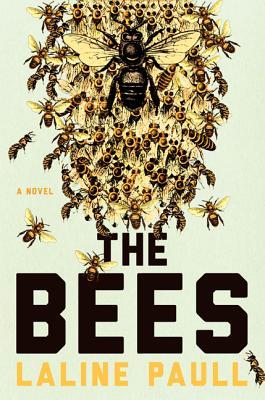
Book Review: The Bees by Laline Paull (Audiobook narrated by Orlagh Cassidy)
 Summary:
Born into the lowest class of her society, Flora 717 is a sanitation bee, only fit to clean her orchard hive. Living to accept, obey and serve, she is prepared to sacrifice everything for her beloved holy mother, the Queen. Yet Flora has talents that are not typical of her kin. And while mutant bees are usually instantly destroyed, Flora is reassigned to feed the newborns, before becoming a forager, collecting pollen on the wing. Then she finds her way into the Queen’s inner sanctum, where she discovers secrets both sublime and ominous. Enemies roam everywhere, from the fearsome fertility police to the high priestesses who jealously guard the Hive Mind. But Flora cannot help but break the most sacred law of all, and her instinct to serve is overshadowed by a desire, as overwhelming as it is forbidden.
Review:
I like books that mix scientific accuracy with a touch of personification of animals, or in this case, insects. I was expecting it to be weird, because it’s about insects, but oh boy was this book weird.
For some reason, I find the title to be hilarious. I just kept walking around saying to myself, “the bees, The Bees, THE BEES.” You may think that sounds ridiculous (and it does, and I am, indeed, a ridiculous person) but this book really closely matches that experience.
I applaud the author all the research she clearly must have done. I think it only makes logical sense that she invented a religion for the bees to follow that revolves around worshiping the queen. The horrifying dystopianesque rigid structure of bee life also makes sense based on what we scientifically know about them. All of that said, it was still deeply odd to read. Priestesses and chanting and drones and evil invading wasps. It struck me as a cartoon that took itself very very seriously. I would have preferred if it perhaps took itself a bit less seriously. Like (I’m aging myself here) SimAnt.


In any case, the book does take itself very seriously, most likely due to the very real and serious fact that bees are dying out, and reasons for this are reflected in the story, as the colony faces many challenges to staying alive. While I was able to take some of these threats quite seriously, like flowers not blooming at the right time, others were written in such a ridiculous way that I just couldn’t. For example, a giant evil cell phone tower that makes the bees lose their way when they’re out flying. It’s practically personified as a giant evil ominous entity, and I found myself laughing when I knew actually this is really a problem for bees. The book is basically caught in this uncanny valley that both prevented me from being moved by it and from finding it completely humorous. It’s a book that I think needed to sway a bit more in one direction or the other.
I was still at least 4 star enjoying it though until the end. I found the end just so deeply depressing and unnecessarily so (the point was made, no need to go so extreme) that I was left frustrated. I think, having read the ending, that perhaps the author didn’t realize that she was at times veering into ludicrous humor, and she maybe intended the whole book to be a Very Serious Read, when it simply was not.
Overall, then, if you’re a reader who is able to take some ludicrousness seriously, you will most likely enjoy the book more and get more emotional depth out of it than I did.
Now, if only there was a SimBees…..
If you found this review helpful, please consider tipping me on ko-fi, checking out my digital items available in my ko-fi shop, buying one of my publications, or using one of my referral/coupon codes. Thank you for your support!
3 out of 5 stars
Length: 340 pages – average but on the longer side
Source: Audible
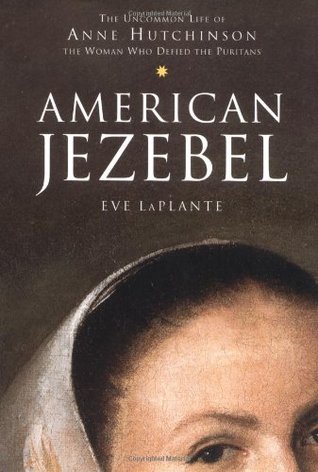
Book Review: American Jezebel: The Uncommon Life of Anne Hutchinson, the Woman Who Defied the Puritans by Eve LaPlante
 Summary:
Anne Hutchinson, a forty-six- year-old midwife who was pregnant with her sixteenth child, stood before forty male judges of the Massachusetts General Court, charged with heresy and sedition. In a time when women could not vote, hold public office, or teach outside the home, the charismatic Hutchinson wielded remarkable political power. Her unconventional ideas had attracted a following of prominent citizens eager for social reform. Hutchinson defended herself brilliantly, but the judges, faced with a perceived threat to public order, banished her for behaving in a manner “not comely for [her] sex.”
Review:
I love US History. I have a degree in it, and I particularly enjoy reading about women in US History. I remembered studying a bit about Anne Hutchinson in some of my coursework, so when I saw this book going more in-depth into her life in a used book basement, I picked it up. I ultimately was disappointed to find a book that somehow managed to make reading about a woman with such an interesting life boring.
Anne Hutchinson was what I like to think of as a quiet rebel. She did things like hide the birth of a grotesquely malformed stillborn so that the mother wouldn’t be judged by the community as somehow entangled with Satan or being punished by God. She led Bible studies/prayer meetings in her home, and these groups she led didn’t consist of just women. Men sought her out for advice and knowledge in these groups in a culture where women were only supposed to advise other women. Most fascinating to me was the dynamic between her and her husband. He clearly loved her and gave her basically the reins over their lives. He was known as a quiet person and happily stepped back and let her make the noise. When she was banished, instead of complaining, he just packed up and moved with her to Rhode Island. It’s not that I think that’s the ideal marriage but I do think it went directly against the gender norms of the time, and they were both brave for being true to themselves and what worked best for their own relationship.
However, the writing in this book somehow managed to take such an interesting woman and bore me to tears. I dreaded picking up this book. I eagerly anticipated when the author would quote primary texts because they were exponentially more interesting than her own. The other issue I had with the book was that the author is a descendant of Hutchinson and clearly lets this bias her own perception of Hutchinson the historic situation. On top of this, there’s a lot of talk about genealogy (far too much for my taste), and sections read like someone writing a family history for their own family, not for public consumption. I understand being interested in someone you are descended from, but who you are descended from doesn’t automatically make you a cooler person. People who are proud of themselves because of who they happen to be descended from infuriate me to no end. Do something worthy of being proud of yourself. Don’t rest on your ancestor’s laurels.
Overall, while the historic facts are accurate and Anne Hutchinson herself is an interesting historical figure who deserves to be talked about, the writing of this book is boring and it is colored by the author’s obsession with being descended from Hutchinson. Readers interested in Hutchinson should consider looking elsewhere, perhaps starting with Unafraid: A Life of Anne Hutchinson, which is available in its entirety thanks to Hathi Trust Digital Library.
If you found this review helpful, please consider tipping me on ko-fi, checking out my digital items available in my ko-fi shop, buying one of my publications, or using one of my referral/coupon codes. Thank you for your support!
3 out of 5 stars
Length: 312 pages – average but on the longer side
Source: Brookline Booksmith
Buy It (Amazon or Bookshop.org)
Counts For:
Bottom of TBR Pile Challenge
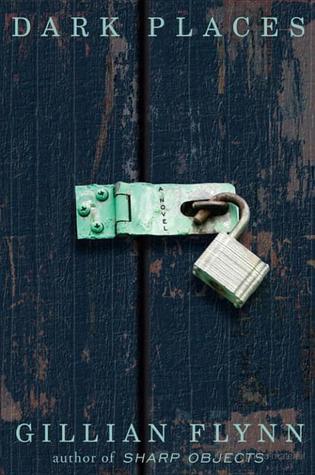
Book Review: Dark Places by Gillian Flynn (Audiobook narrated by Rebecca Lowman, Cassandra Campbell, Mark Deakins, and Robertson Dean)
 Summary:
Libby Day testified that her brother murdered her mother and sisters as part of a Satanic cult ritual when she was just 7 years old. Twenty-five years later, running out of money, she agrees to help a group known as The Kill Club investigate the murder. Their members disagree on how actually killed her mother and sisters, and with her connections they think she can help them crack the case. Libby is sure her brother Ben did it, but money is money, and it sure beats a regular job.
Review:
This is my third Gillian Flynn novel, and I must admit it was the one I liked least. I was actually suspicious it was a first novel, as it had that feel–a lot of what works in her other novels is present but it’s less well-executed. However, it actually was published after Sharp Objects (review), so who knows what happened here. Regardless, while I found the mystery intriguing and I definitely listened to the audiobook every chance I got, the plot is not as tightly told nor is the central mystery as believable as it is in her other works.
What worked the best for me was Libby, a childhood survivor of a gruesome murder, as some sort of modern day noiresque private investigator. A woman PI with a personal connection to the murders was just delicious to read. I’d love to see more of that in literature. I also liked seeing a thriller that included a queer person (her aunt is a lesbian) without that being used as a way of othering someone strange or being attached to a perpetrator. Her aunt is a bystander in every sense of the word. She is never a suspect, she provides Libby with a home environment after the murders, and her sexual orientation is just a part of who she is, not a plot point. I also liked the changing perspectives among Libby present, Libby past, her mother, and her brother. I thought it added to the mystery since seeing these other perspectives did not immediately reveal precisely what was going on. I also thought it made it harder to judge her mother than it might be if the reader hadn’t had her perspective.
However, this was the first time that I was both sure who the perpetrator was quite early in a Flynn novel and also that I was disappointed by who the murderer is. I thought there was nothing creative or exciting about it, and honestly it kind of bugged me a little bit. There is also one trope that shows up here that bothered me. It could be a bit spoilery (not too bad) so skip the next paragraph if you’re concerned about that.
*spoilers*
Libby at the end of the book ends up in a scenario that is very similar to the first murders that she survived. It’s basically a trauma survivor finding that all their fears were right by improbably having almost the same scenario happen a second time. I think it was supposed to be scary, but it just irritated me.
*end spoilers*
I also must say that I felt the whole Satanic scare thing was very dated. Yes, I get it that was a huge thing in the 80s and this is a story about murders that happened 25 years ago but something about it just made the whole book feel dated to me. I couldn’t get into it partly because I was certain that the book would ultimately reveal Satanism had nothing to do with it, since that’s just the way that plot point always goes. I suppose you could sum up most of my issues with this book as the plot was too predictable to be much fun.
Overall, if you’re a big Gillian Flynn fan and just want to experience some thrills, this book will provide some of them with the dash of strong female characters you’ve come to expect. However, do expect to be a bit disappointed by a more predictable plot and twist that isn’t all that twisty.
If you found this review helpful, please consider tipping me on ko-fi, checking out my digital items available in my ko-fi shop, buying one of my publications, or using one of my referral/coupon codes. Thank you for your support!
3 out of 5 stars
Length: 349 pages – average but on the longer side
Source: Audible
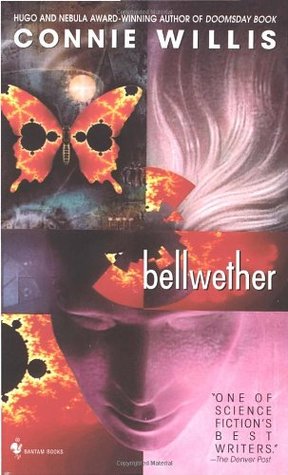
Book Review: Bellwether by Connie Willis
 Summary:
Sandra Foster studies fads and their meanings for the HiTek corporation. Bennet O’Reilly works with monkey group behavior and chaos theory for the same company. When the two are thrust together due to a misdelivered package and a run of seemingly bad luck, they find a joint project in a flock of sheep.
Review:
This was given to me eons ago because of how much I love To Say Nothing of the Dog (review) by Connie Willis. This book has a similar sense of humor that definitely kept me entertained but the plot and backstory that ties it all together didn’t hit quite the same loved it nerve with me.
I loved seeing a book set in the mountain range area of the country (Colorado to be precise). I feel like this doesn’t happen often enough in books. I also found there was a real nostalgia quality to the book because it was first published in 1996 and set in its own time-period, so the whole thing just screamed 90s nostalgia to me. This played in well to Sandra’s fad studies. It gave the book a good reason to notice and talk about the fads, and this held up well over time. What originally was a “oh look at this silly thing people are doing right now” became “hey remember when West Coast coffee was first a thing?” I also really appreciated that a social science was featured at the core of a scifi book. Not just that but a scientist of a science deemed more important and sciencey (chaos theory) ends up working with her and respecting her research and its methods. Super cool.
While I thought the research study was cool, I wasn’t as huge of a fan of the competition to receive the grant of a lifetime plot. I appreciated Sandra working to save her job, but the big grant loomed overhead from the very beginning like a deus ex machina. Sandra’s disdain for her coworkers wanting to ban smoking from the building as a fad really didn’t translate well over time. This wasn’t a fad; it was a public health policy, and it rubbed me wrong every time Sandra implied it was like the whole are eggs good or bad for you debate. Second-hand smoke is just bad for you, and unlike a coworker eating an egg, it can actually impact your health if you’re around it. I’m sure it was funnier in the 90s but it didn’t work so well now, and it honestly made me dislike Sandra a bit.
Overall, scifi fans looking for a humorous plot with a female lead, an unusual focus on the social sciences with a dash of 1990s nostalgia will enjoy this book.
If you found this review helpful, please consider tipping me on ko-fi, checking out my digital items available in my ko-fi shop, buying one of my publications, or using one of my referral/coupon codes. Thank you for your support!
4 out of 5 stars
Length: 248 pages – average but on the shorter side
Source: Gift
Counts For:
Bottom of TBR Pile Challenge
Book Review: Watership Down by Douglas Adams
 Summary:
When a rabbit low on the totem pole has a bad premonition, he and some friends run from their warren just before man intrudes wreaking havoc on their once-home. What follows is an adventure of evading predators and foes and looking for a new home.
Review:
Let me preface my review by saying that I know a lot of people either: A) love this book or B) find this book to be very traumatic. My experience was neither of these. The fact that this was not my experience does not negate yours. But neither does your love or traumatizing by this book mean that I felt the same way about it.
One of the risks of reading a book that is widely-known and loved (or remembered as traumatic) is that you have a pre-existing notion of just what that experience might mean for you. I came at this book with some trepidation and excitement because I absolutely love bunnies and I also love semi-realistic depictions of wild animals. Those that are accurate about scientific information but also personify them somewhat. I wound up being greatly disappointed because it gave me neither a world of bunnies to get lost in nor an experience of great trauma and drama. What I wanted was a highly emotional experience, and instead I got a bit of boredom and my main emotion being disappointment.
Let me start with what I think was well done. Adams clearly paid a lot of attention to the real science of how wild bunnies live and function, and I appreciated that. I also like the allusions to mythology. But there’s lots of reviews that talk about why they love this book, so let’s get down to why I didn’t.
1) I found it to be way too wordy.
I want cuteness and bunnies and plot not overly long descriptions of fields. This is a really thick book (my copy was 479 pages) and just…not that much actually happens. I don’t like to feel like a book is wasting my time, and I felt that a lot with this one. You could argue that it just felt long because I didn’t emotionally connect to it, but I think part of my lack of emotional connection was because of the lengthy descriptive passages.
2) I was expecting a great mythos of a story, and what I got was WWII with bunnies.
I love WWII. Do not get me wrong. I did an entire course for my History BA in just WWII. But I don’t think bunnies particularly pair well with WWII. A large overarching mythos? Sure. Basically the Battle of the Bulge with rabbits? Not so much. I don’t want my bunnies acting like British colonels and their optimistic soldiers, and I certainly don’t want an evil bunny who is basically Hitler coming into the story. (I mean…who makes the enemy another bunny who is basically Hitler? ? What? Why??)
3)It just isn’t all that tragic (sorry guys).
*spoiler warning*
I thought that basically the bunnies fight to survive all book and then all die at the end. Of the core group of rabbits, only ONE dies. There are many epic battles but just no true peril except for the warren that the rabbits leave at the beginning of the book. They are, true, pretty brutally killed by the farmer, but the problem is we never had a chance to get to know them, and we hear the story of the killing from someone who saw it. We don’t see it first-hand. It’s all very distanced and just not that tragic. This would obviously bother me less if I wasn’t expecting a tragedy from everyone saying how sad Watership Down is. But honestly to this day I don’t get why everyone is so sad. The rabbits get a new warren. They successfully find female bunnies and make more bunnies. One main character dies. That is it. I just. What. Why does this traumatize you people?
*end spoilers*
So, if you are a person who doesn’t mind WWII told through rabbits, quite long passages of description, and will welcome a tale lacking in great tragedies, you might have a better experience with the book than I did. Lord knows many people the world-over have loved it. But for those who come to it expecting to find a great tragedy or a fast-moving tale or warm and cuddly rabbits be warned that it’s not what you’ve heard about it.
If you found this review helpful, please consider tipping me on ko-fi, checking out my digital items available in my ko-fi shop, buying one of my publications, or using one of my referral/coupon codes. Thank you for your support!
3 out of 5 stars
Length: 479 pages – chunkster
Source: PaperBackSwap
Counts For:
Bottom of TBR Pile Challenge
Book Review and Giveaway: Black Magic & Mojitos by A.A. Chamberlynn (Series, #1)
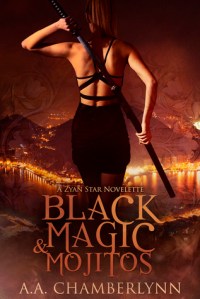 Summary:
Supernatural bounty hunter Zyan Star jets down to Rio right before Carnival to meet a potential new client. She’s taken by surprise when that new client just so happens to be Raoul Cabrera, the half demon half faery supernatural overlord of Brazil. He routinely rubs elbows with Lucifer, and Zyan isn’t too keen to work with him. She’s even less inclined to when she finds out he brought in a second bounty hunter, Donovan McGregor. But Raoul persuades her…by threatening her friends. So Zyan finds herself working with Donovan against a herd of Nightmares–horse spirits that torment people with visions of their worst fears before devouring their flesh.
Review:
This was one of my accepted indie ARCs for 2016 (see complete list here). I accepted it for the combination of Rio and evil horse spirits, and I started with reading it first because I was in the mood for some light-hearted urban fantasy. What I found was a novella that set up a world I was quite interested in but left me wanting more.
Zyan is mostly a typical urban fantasy heroine, but her two friends who came with her to Rio intrigued me. I got a Buffy and her friends vibe from the group, and I appreciated an urban fantasy heroine who’s comfortable relying on other people and being open about her friendships right from the get-go. The setting was bright, colorful, and well-described, and Rio isn’t something I’ve personally seen before in an urban fantasy. The Nightmares were everything the description promised to me and more. I found them both adorable and deliciously frightening. The plot twists in a way I wasn’t expecting and brings in a new character I was happy to see.
But this novella did leave me wanting more. It is a fine line between wanting more in a good way and being left with not enough to ever fully get into the story. This fell into the latter end of that. A novella doesn’t have room to set up a ton of backstory but the reader still needs to feel as if the smaller plot within the novella is fully told. While some of the scenes felt fully fleshed-out, others read more like initial outlines for a larger story. For about half of the novella, I felt the author needed to come back through and add some things in, in order for the reader to be able to get fully into the mini-episode of Zayn’s life being told. I also must admit that I wasn’t too keen on the vibe between Zayn and Donovan. I hesitate to call it a romance, as it reads more like a simple sexual attraction. It’s not that I’m against that in an urban fantasy, but it read as a bit forced and took away time in the short novel from the main plot I was more interested in.
Overall, readers looking for a short dip into an urban fantasy world or who just want to see the Nightmares in action will enjoy this read. Readers who are familiar with Zayn from other stories will probably enjoy it most of all, but it’s also a good way to get a taste of Zayn and see if you would like to read more. I know I would certainly like to read a full length book featuring Zayn and her friends.
If you found this review helpful, please consider tipping me on ko-fi, checking out my digital items available in my ko-fi shop, buying one of my publications, or using one of my referral/coupon codes. Thank you for your support!
3 out of 5 stars
Length: 46 pages – novella
Source: Kindle copy from author in exchange for my honest review
Giveaway!
Thanks to the generosity of the author, one lucky Opinions of a Wolf reader can win a copy of this ebook.
How to Enter:
- Leave a comment on this post stating an animal that haunts your dreams.
- Copy/paste the following and tweet it from your public twitter:Enter to win BLACK MAGIC & MOJITOS by @AAChamberlynn, hosted by @McNeilAuthor http://buff.ly/1Px0rYG #urbanfantasy #novella #fantasy
The blog comment gets you one entry. Each tweet gets you one entry. You may tweet once per day.
Who Can Enter: International
Contest Ends: April 18th at midnight
Disclaimer: The winner will have their book sent to them by the author. The blogger is not responsible for sending the book. Void where prohibited by law.
Book Review: The Last to Know by Melissa Hill
 Summary:
Eve has been patient with Liam. They’ve been together nine years and have two children but he has yet to marry her and gets defensive anytime the topic comes up. Her sister, Sam, has never liked Liam and has become suspicious about all his business trips outside of Ireland, particularly the ones to Australia.
On the other side of the world in Australia, Brook is dating an Irishman who’s frustratingly periodically unavailable, in spite of what she thinks are their strong feelings for each other. She tries to distract herself reading a new manuscript that’s been left for her, but the manuscript might be less about a book deal and more about making sure she’s not the last to know something….
Review:
If you have ever seen Futurama, you’ll be aware of the utterly campy and ridiculous robot soap opera named “All My Circuits.” It’s known within the world of Futurama in particular for its over-the-top plot twists and yet somehow still being something entertaining that you can’t stop watching. When I read a book that goes a bit off the rails, I refer to it as being very All My Circuits. That is this book. If you love campy soap opera plots and ridiculous situations and twists that make you audibly gasp, you’re going to love this book.
I was suspicious of at least one upcoming twist from the very beginning from the description and set-up alone. The narration alternates between Brook’s life and the manuscript that’s been submitted to her for a while. At a certain point, it moves to include some thoughts from the person (or people) who wrote the manuscript. Brook is likeable. Eve and Sam are likeable. They’re all three well-rounded women with very different goals in life and life situations. Any reader of chick lit will be able to relate to one of them. I think that’s really all that a potential reader who doesn’t want spoilers needs to know about the book. If you are intrigued and don’t want spoilers, go on and pick it up! Those interested in the delicious ridiculousness of the twists should read further.
*spoilers*
It completely seems in both the description and the beginning of the book that the twist is going to be that Brook’s boyfriend is Eve’s baby daddy, and Eve’s author sister Sam is revealing this as gently as possible to Brook via the manuscript. HOLD UP THOUGH. Partway through the book, you find out that Liam has a thing for Eve’s best friend who is in a relationship with Liam’s best friend. I can’t for the life of me remember these characters’ names, so I’m going to call them EBF (Eve’s Best Friend) and LBF (Liam’s Best Friend). EBF is considering leaving LBF but then she finds out she’s pregnant and decides to stay and have a family with him. They have a baby girl. Then Liam DIES IN A CAR ACCIDENT ALONG WITH BOTH OF EVE’S CHILDREN. At this point the reader is like hold the fucking phone, Brook’s boyfriend isn’t dead so wtf. Wtf is the connection with Brook?
Eve finds out about the feels between EBF and Liam and in her grief becomes convinced that EBF’s baby is actually fathered by Liam and not LBF. For some unearthly reason, LBF and EBF ask her to babysit while they go to a wedding, and when they get back she and the baby are gone. Eve decided in her grief that she deserved this baby, so she absconds to Australia. So Brook is EBF’s baby. And she was raised by Eve. If you’re wondering how they pulled this off, the explanation is that the manuscript has been taking place decades ago so it was easier to run off with a baby then. Especially around the world.
Guys, I gasped audibly when I figured out where this story was going. Seriously. whoa I just really did not see those plot twists coming! Really did not. I was irritated at myself for never figuring out that the Ireland in the manuscript was from decades ago and not present-day. (I did keep wondering why it was such a big deal for women not to be single moms and why no one seemed to have a cell phone but I brushed over it). I thought that Brook dating an Irish guy was a bit too cute for the red herring, but I’m willing to let it slide. I wasn’t looking for great literature here. I was looking for All My Circuits. And oh man did I get it!
*end spoilers*
Overall, if you’re looking for a light-hearted yet drama-llama read full of plot twists that just might make you gasp out loud, this is the read for you. A few plot devices are a bit convenient and might make the reader eye-roll but not enough to detract from the enjoyment.
If you found this review helpful, please consider tipping me on ko-fi, checking out my digital items available in my ko-fi shop, buying one of my publications, or using one of my referral/coupon codes. Thank you for your support!
4 out of 5 stars
Length: 392 pages – average but on the longer side
Source: Won in a giveaway
Book Review: Dreamsnake by Vonda N. McIntyre (Audiobook narrated by Anna Fields)
 Summary:
On a far future Earth destroyed by nuclear warfare, most people have reverted to tribal living on the desert. These people rely on roaming healers armed with three snakes whose venom help provide healing relief. Snake is on her first year of bringing roving healing, but when a misunderstanding ends in the death of her dreamsnake, she is determined not to return home to the healers until she finds a way to replace him. It is almost impossible to breed dreamsnakes, but maybe the city will be able to help. The city that keeps the tribes mostly locked out and communicates with the people who live in outer space.
Review:
This book made it onto my tbr for three reasons. It’s 1970s scifi by a woman author, known for being feminist, and is supposed to be able to change your mind about snakes. I was surprised to find it on Audible but elated, especially when I heard the sample of the narrator’s voice. She speaks at the perfect speed and tone for my listening taste. What I found, upon listening, was a book that brought everything I had been promised in a unique plot that I still find myself thinking about periodically. It is just so different, and different is good in my scifi.
You can’t talk about this book without talking about the snakes. I have a gut negative reaction to snakes; one that most likely was learned before I have memories, I’m sure. Both my husband and a close friend think snakes are super cute, so I was hoping this book might change my perception to at least be less negative. Interestingly, a key part of the plot revolves around a person minsinterpreting a snake as dangerous and reacting violently to it. Snakes are not seen as not dangerous, just that only certain snakes have truly dangerous venom, and people are encouraged to get immunized against this venom and to be cautious in areas where they might frighten a snake into striking. I came to care about Snake’s snakes and by the end of the book, where there is a scene that normally would have haunted my dreams (it involves someone in a pit full of snakes), I actually was able to react rationally to the situation and be more concerned about the evil of the person who threw the person in the pit and whether the person would be able to get out of the pit eventually than really be concerned about the snakes themselves. The book presents snakes much like other animals. They’re a living creature that can be dangerous or harmless or some mixture of both, and it’s about building your own knowledge so you know how to handle them more so than just being gut afraid of them. If that was all this book gave me, I would have been impressed, but it gave me so much more.
The plot leads through multiple different tribes and cultures, and all are imagined creatively and differently from each other. Cultural understanding is valued but only to the point where the culture is not actively harming innocents. As mentioned earlier, the whole book centers around a cultural misunderstading, and everyone on both sides of it takes responsibility for the situation. There’s a love interest for Snake who seeks to help her but she also helps herself (along with others). There’s a positive representation of adoption, as well as multiple sexualities and women and men both being responsible for birth control. Without giving anything away, the ultimate conclusion is about how changing your viewpoint can bring a solution, which is kind of the other side of the coin of the original cultural misunderstanding. It’s a smart book, largely about how different people interact and how humility and willingness to listen can move everyone forward.
Overall, this is a unique piece of scifi with an engaging plot that will change your mind about snakes. It left me wishing there was a sequel so I could revisit this world.
If you found this review helpful, please consider tipping me on ko-fi, checking out my digital items available in my ko-fi shop, buying one of my publications, or using one of my referral/coupon codes. Thank you for your support!
5 out of 5 stars
Length: 312 pages – average but on the longer side
Source: Audible

Trigger Warning:
Readers who are sensitive to discussions of rape of a child should be aware it is discussed as something that occurred in the past to a character, although not depicted, and the victim is ultimately empowered.
 Support my work with a tip or browse my shop for curated book club guides, how to guides, cross-stitch patterns, and more!


This work by Amanda Nevius is licensed under a Creative Commons Attribution-Noncommercial-No Derivative Works 3.0 United States License.
 Opinions of a Wolf