
Archive
Book Review: Maame by Jessica George

When Maddie’s mother returns from Ghana to London, she encourages her to take a break from caregiving for her father with Parkinson’s by moving out. She does, but things don’t go according to plan.
Summary:
It’s fair to say that Maddie’s life in London is far from rewarding. With a mother who spends most of her time in Ghana (yet still somehow manages to be overbearing), Maddie is the primary caretaker for her father, who suffers from advanced stage Parkinson’s. At work, her boss is a nightmare and Maddie is tired of always being the only Black person in every meeting.
When her mum returns from her latest trip to Ghana, Maddie leaps at the chance to get out of the family home and finally start living. A self-acknowledged late bloomer, she’s ready to experience some important “firsts”: She finds a flat share, says yes to after-work drinks, pushes for more recognition in her career, and throws herself into the bewildering world of internet dating. But it’s not long before tragedy strikes, forcing Maddie to face the true nature of her unconventional family, and the perils—and rewards—of putting her heart on the line.
Review:
I picked this book up because I heard it compared to Bridget Jones’s Diary (one of my all-time favorite reads). While I don’t think that comparison is fair, I did enjoy Maddie’s much more raw story.
The comparison seems to largely exist because Maddie is a woman in London navigating her life. But, unlike Bridget Jones, which is a romcom, this is a story largely about grief, mental health, and navigating work, dating, and roommates as a Black woman.
Be warned this is a slight spoiler but important to discussing this book. The tragedy is that Maddie’s father dies from Parkinson’s complications shortly after she moves out. The book largely explores grief, and how Maddie moves through it as a twenty-something who was the primary caregiver for her father for years. As someone who also lost my father in my twenties, I found the explorations of her grief to be raw and beautiful. I read this as an audiobook, so I can’t find the exact quote, but at one point someone says that we can’t ever really understand someone else’s grief even when we’ve been through it ourselves because it’s a unique experience for each person. How true that is.
The book also explores the specific struggles Maddie faces as a Black woman. Some of these it does directly, such as how Maddie feels as the only Black woman in her workplace. But others are seen just in passing. Maddie doesn’t linger on them (this is narrated in first person) but it’s still impactful to the reader. For example, Maddie moves in with two white roommates. One of them touches her hair when it’s half-done on wash day. The other roommate immediately scolds her and tells her to never touch a Black woman’s hair without asking. The first roommate pushes back that it’s ok because they’re roommates. Maddie doesn’t say anything, but we see how she then proceeds to finish her wash day in such a way that the reader knows she’s not enjoying it anymore like she was.
Something I wasn’t expecting in this book was the three sex scenes. They’re not written in a particularly spicy manner. But they are detailed. Closed door is a personal preference to me, and I think we could have still understood the emotional impact of the sex scenes without seeing them fully. I also think two of the three are clearly not written for reader enjoyment (because Maddie herself doesn’t enjoy them), so I’m not sure what benefit there is to having them there for the reader either. Some readers may feel that one of these scenes veers in SA, in spite of the fact that Maddie herself doesn’t feel that way. I’m happy to go into more details in the comments if a reader needs to know before reading.
One thing that surprised me in a good way in this book was how Maddie’s relationship with her mother evolves over the course of the book. I was honestly expecting the relationship to fall apart. Instead, they both work to better understand and relate to each other. That was very nice to see. I also like that her mother is religious, and Maddie never mocks her mother for this. Maddie herself goes to church sometimes, even when she struggles to know exactly how she feels about her faith. It’s not the focus of the book but it’s a part of who she is, and I like that the characters are allowed to have that in a mainstream book.
Overall, this is an emotional read featuring some heavy topics. While it’s not a twenty-something romcom, it is a realistic depiction of what life can be like in your twenties for many women around the world. Recommended for readers looking to get a bit deeper in their reading, as well as those looking for own voices representation. The audiobook format is particularly well narrated.
If you found this review helpful, please consider tipping me on ko-fi, checking out my digital items available in my ko-fi shop, buying one of my publications, using one of my referral/coupon codes, or signing up for my free microfiction monthly newsletter. Thank you for your support!
4 out of 5 stars
Length: 320 pages – average but on the longer side
Source: Library
Buy It (Amazon or Bookshop.org)
Book Review: Wanderlust by Elle Everhart

In this romcom that tackles hard topics, Dylan wins a trip around the world, the only catch is she has to go with a man she ghosted months ago.
Summary:
Feeling stuck at work and tired of London’s dreary weather, magazine writer Dylan Coughlan impulsively rings a radio station one day only to win a once-in-a-lifetime trip around the world. The catch? Her travel partner must be a contact randomly selected on her phone. And of course this stressful game of contact roulette lands on a number listed only as Jack the Posho, an uptight, unbearably posh guy she met on a night out and accidentally ghosted.
The two couldn’t be more different, and as the trip kicks off, Jack seems like he’d sooner fling himself into the sun than have a conversation with Dylan. But more is hinging on this trip than the chance to see the world. For the past two years, Dylan’s been relegated to writing quizzes (and only quizzes) at her lifestyle magazine after an article about her past abortion went viral—and not in the good way. If she’s able to make a series about their trip successful, her overbearing boss will give her a chance at a permanent column. Dylan’s willing to do anything to make the series a hit, even if it means embellishing her and Jack’s relationship to satisfy readers. But as the column’s popularity grows, so does the bond between Dylan and Jack, and Dylan is forced to consider if the one thing she thought she always wanted is worth the price she’ll have to pay to get there.
Review:
I picked this up off the library’s new book shelf because the romcom set-up sounded great. I was pleasantly surprised in chapter one to find that Dylan identifies as both queer and bisexual. Yay for more representation! But I actually ended up not liking Dylan particularly much by the end of the book.
Let’s start with the good. I found the romance sweet. It’s a classic grumpy/sunshine and organized/disorganized (Oscar and Felix for us olds out there). I liked how Dylan teased Jack for being posh and how he clearly didn’t mind the teasing. I was intrigued by why Jack was willing to drop everything to go on a trip around the world with someone who ghosted him who he also seemed to not like very much. And I was rooting for Dylan to find success blogging about her trip. The first destination was Australia, and it was definitely written the best. I could really visualize Australia, and I felt like we saw the characters spend an appropriate amount of time there.
In contrast, for a book about a trip around the world, a lot of the locations really breezed by. For example, India was less than a chapter. In South Africa we saw them at a dock. In New York we hear Jack excited about the Empire State Building but then don’t see the characters go there. It was a little bizarre for a book ostensibly about a trip around the world with a magazine writer. It was a let-down after the Australia chapters, especially.
The book deals with a couple of tough topics that might be a turn-off to some readers. Dylan wrote about her own abortion around the time Ireland was looking at its abortion policies. Her piece went viral, and she ended up being cyberbullied and doxxed. These topics aren’t mentioned in passing. They come up repeatedly in the book. Kind of heavy for a romcom. While the blurb I gave you talks about it, the blurb on the back of the print book I got from the library doesn’t mention it at all. It’s clear from looking at reviews that readers would have preferred knowing in advance, and I am glad the blurb was updated accordingly.
To me, Dylan started out likeable enough but became less likeable as the book progressed. The first glimmer I got of this was early on in Australia when Jack is nervous doing an activity, and she’s irritated at him because him looking and seeming anxious (while still doing the activity!) is impinging on her own enjoyment of the activity. This would be like saying your flight is ruined because a person in the seat next to you seems a little nervous during the flight but doesn’t talk about it and causes no issues. She has basically no empathy for Jack and is clearly self-centered. Which was jarring. As the book continues, it becomes increasingly clear that she acts without thinking. Ok sometimes people do that. But when it’s a recurring character trait that impacts other people (and hers does), that’s an issue. Especially for a character who’s almost 30. I also found how she spoke to her mother to be really terrible. She wasn’t trying to have a conversation with her mother (even though her mother was clearly trying to do so). She was giving her a speech without any interest in reconciliation. I don’t personally think her mother messed up enough to warrant that. And I didn’t like seeing it played up as some big empowering scene for Dylan. I thought it was quite sad, actually.
For readers wondering about the spice, this was an odd mix. The vast majority of the book is low spice/slow burn. Then there is one very spicy scene that takes up two chapters. (This scene also managed to make me like Dylan even less, and the score was already pretty low at that point). I found it jarring to go from all of the heat being from like a hand on the low of your back to a detailed spicy scene. I would have preferred a fade out and maybe some post-activities snuggling and pillow talk. It just fits the vibe of the rest of the book better.
Overall, the idea for the set-up for this romcom is stellar. Jack is a great leading man. But he’s set up with a leading lady who’s not particularly likeable, and the romcom is dragged down by some heavy topics.
If you found this review helpful, please consider tipping me on ko-fi, checking out my digital items available in my ko-fi shop, buying one of my publications, using one of my referral/coupon codes, or signing up for my free microfiction monthly newsletter. Thank you for your support!
3 out of 5 stars
Length: 368 pages – average but on the longer side
Source: Library
Buy It (Amazon or Bookshop.org)
Why I Love Bridget Jones’s Diary & A Review of the 25th Anniversary Edition

A Delightful Start
My first encounter with Bridget Jones’s Diary was the 2001 movie starring Renee Zellweger, Hugh Grant, and Colin Firth. I remember stumbling onto it on my dad’s satellite tv when I was in high school. I’d long loved epistolary novels, but especially anything diary based. (The Dear America series was an early obsession.) Even in high school, I loved New Year’s Resolutions, and the idea of reinventing and improving myself. So those two incredible opening scenes of the movie when Bridget goes to a diastrous New Year’s Day turkey curry buffet and then subsequently decides to reinvent herself with New Year’s Resolutions and a diary to keep herself accountable drew me in immediately. From that point on, rewatching the movie became a holiday season/January tradition for me.
What’s This Diary About Anyway?
For those of you who don’t know, Bridget Jones’s Diary is a romcom told through Bridget’s diary entries for one full year. She’s a woman in her early 30s living in London and working in publishing. She spends the year initially falling for her boss at work, Daniel Cleaver, and later for Mark Darcy, a human rights barrister her mother tried to set her up with. Other key plot elements include the hang outs, trials, and travails of her friends (both singletons and marrieds), her mother and father’s late in life marriage troubles, and her ongoing quest for self-improvement, including struggles with alcohol, cigarettes, instants (the lottery), and delightful asides like why it takes her 3 hours to get ready in the morning.
Discovering the Book
A few years later, I finally picked up the book, and I was blown away. How could a movie I loved so much be even better in book form?! I could scarcely believe it. The audiobook version as read by Imogen Church is my go-to when I’m having trouble sleeping or am under a lot of stress and need to just relax for a bit. Her reading of Bridget is simply perfection.
Why Do I Love Bridget So Much, Exactly?
1. how each entry starts
At the start of each diary entry are some things that Bridget tracks. What exactly she’s tracking changes throughout the book. The key items are her weight, calories consume, alcohol drunk, cigarettes smoked, and instants (lottery tickets) bought. But there are other trackings that pop in like number of smoothies consumed or number of times called 1471 (like American *69 only it tells you what number called you rather than ringing them back). I love data and statistics and tracking the mundane things in my life. The lists at the start of each entry make me laugh because they remind me of myself, and they provide a different type of insight into Bridget. I also love how she self-comments on each item, especially how she will say “v.g.” for “very good.” This is one of those pop cultureisms that has made it into my own daily life.
2. depiction of diet culture
Sometimes I hear people talking about Bridget Jones (especially those who’ve only seen the movie), and they complain specifically about Bridget’s obsession with her weight when she is, in fact, a healthy weight. To them I say, that’s the point! This book is an amazing take-down of 1990s diet culture. Bridget is a healthy weight. But she doesn’t think she is. And anytime she’s having problems, she thinks they might be magically solved if she was “no longer fat.” In fact, in diary entries when Bridget is feeling particularly down are when she is most likely to berate herself for her size.
There are two episodes in the book that really drive home the fact that this is a critique of diet culture. The first is that Bridget does get down to her goal weight. She goes to a party with her friends and is ecstatic for them to see her. But they express concern. They don’t think she looks well. Her friend Tom tells her she looked better before. She has a bit of a breakthrough and wonders if her calorie counting is unhealthy and stops tracking them for a while. But then something stressful happens and she begins again. The second episode is when the same friend Tom wonders about how many calories are in something, and Bridget recites the precise number off to him. He’s shocked she knows this then proceeds to quiz her on the number of calories in various things, all of which she knows off the top of her head. She asks doesn’t everyone know this? To which Tom emphatically tells her know. Bridget briefly wonders what other information she could have stored in her head if it wasn’t so busy with calories. Amazing! Just because Bridget never breaks free of her disordered eating doesn’t mean the book itself isn’t criticizing the culture that inflicted it upon her to begin with.
3. Bridget is gloriously imperfect
At the beginning of the book Bridget drinks too much alcohol and smokes cigarettes. She struggles to get to anything on-time. One could say her doing things is always a series of unfortunate calamities. None of this really changes by the end of the year. One could argue that she kind of fails at the majority of her New Year’s Resolutions. But the thing that does change is that Bridget has started to like the core of who she is, and that in turn has made it possible for her to open up to a kind man, instead of, as she would say, the fuckwits she’s been dating previously. She’s become a bit kinder to herself about the flaws that aren’t really flaws per se but just personality quirks (like her complete inability to do anything efficiently). But she’s also very willing to keep trying on the things she probably should still be improving on (like the number of cigarettes she smokes). She simply feels real.
4. it’s hysterically funny
Part of what makes the book funny is, due to its diary entry nature, not every single scene necessarily contributes to the main plot, although each one does help with character development. As such, we get some scenes that are just simply bananas hysterical that a book with a different structure might have left out. One of my favorites is when Bridget decides to study herself to see why it takes her so long to get out the door in the morning. We then get time-stamped entries of each activity she does. It’s gloriously inefficient (including imagining her taking the time to actually write all of this down when she’s already running late to work…but she does it anyway.) Even secondary characters are richly imagined, which I think is probably partially due to the fact that Helen Fielding based many of them on people in her real life (she discusses this in the special 25th anniversary edition). Everyone in Bridget’s world, even her over-the-top batshit mother, feels real. And that’s part of what makes it so funny. It’s easy to imagine all of this really happening.
Review of the 25th Anniversary Edition
For my birthday this year, my husband gifted me the 25th anniversary edition of Bridget Jones. It’s a beautiful hardcover with a foil embossing of Bridget’s famous granny panties on the cover. Even more exciting, it has over 100 pages of new and unpublished material from Helen Fielding.
The first section is “Life Before Bridget” which gives a selection of some of Helen’s journalism articles from before Bridget took off. (Bridget was originally a newspaper column before becoming a book). I loved seeing Helen’s development as a writer and especially the context she gave. My favorite was a restaurant review in which she explains she went with her two best friends who were the inspiration for Jude and Shazzer in the book. I could hear echoes of those two in the restaurant review and absolutely loved it.
The second section is “The Diary of Bridget Jones” in which she explains how the idea for Bridget came to be, and we get selections from some of the initial Bridget newspaper articles.
Next is “Bridget Becomes a Thing,” which includes her interview with Colin Firth in character as Bridget, comics from the time period that reference Bridget, and Helen’s reflections on how it felt to realize she had written a cultural touchstone.
The next section is “Bridget in the 21st Century,” which are Bridget diary entries from 2018 on that Helen wrote for a variety of reasons from inclusion in a feminism book to addressing Brexit to the whole…2020 thing.
There is also an Introduction and a Conclusion written in Helen’s voice but int he style of a Bridget diary entry.
I had to stop saying “I loved it” after the end of each section explanation. It was getting ridiculously repetitive. It’s so rare for me to get to know an author better and enjoy their work more as a result. In all honesty I usually try to avoid getting to know an author because I don’t want things ruined for me. This had the opposite effect on me. I could see being friends with Helen. She’s witty and down-to-earth. I especially liked one section where she talked about people asking her about why she wrote something so silly and why she didn’t write more serious things and how her response was her first book was very serious (set in a war zone or something, I don’t remember), and no one wanted to read it. But they did want to read this. And that’s just the sort of smart commentary that’s throughout the book too. Posh people can try to judge Bridget for how she is, but how she is is, in fact, at least partially a survival response to how the world is. She’s doing her best in a good-natured sort of way in a world that seems to constantly harshly critique her no matter what.
It’s probably obvious by now this is 5 out of 5 stars from me.
Buy the 25th Anniversary Edition (Amazon not available on Bookshop.org)
Buy the Audiobook Read by Imogen Church (Amazon not available on Bookshop.org)
Buy the Movie (Amazon or Bookshop.org)
Length: 464 pages (25th anniversary edition) – chunkster
310 pages (original content) – average but on the longer side
If you found this review helpful, please consider tipping me on ko-fi, checking out my digital items available in my ko-fi shop, buying one of my publications, or using one of my referral/coupon codes. Thank you for your support!
Book Review: Zero Days by Ruth Ware
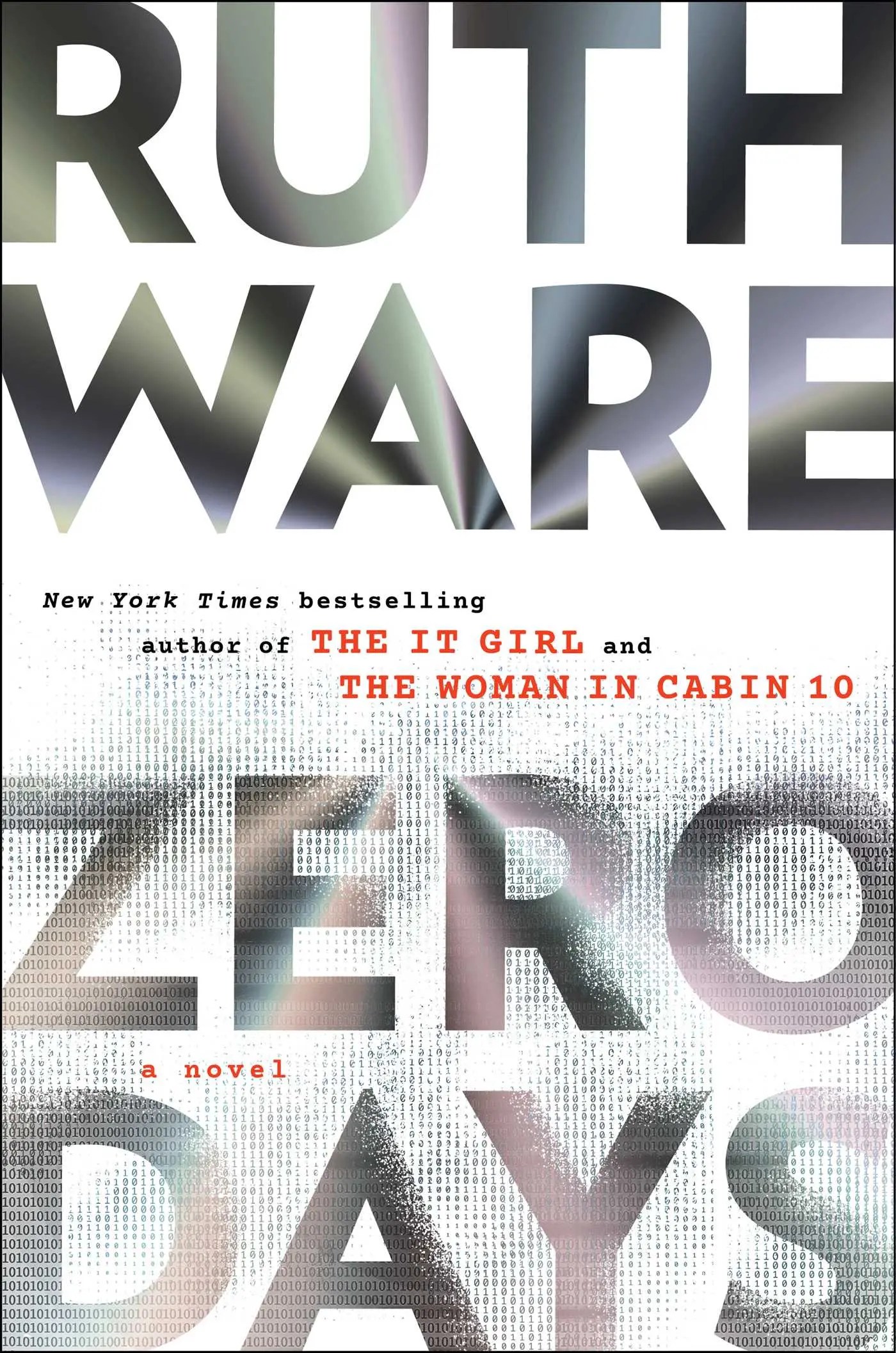
A new widow puts her professional penetration testing skills to work to discover who really killed her husband when she realizes she’s being framed for the crime.
Summary:
Hired by companies to break into buildings and hack security systems, Jack and her husband, Gabe, are the best penetration specialists in the business. But after a routine assignment goes horribly wrong, Jack arrives home to find her husband dead. To add to her horror, the police are closing in on their suspect—her.
Suddenly on the run and quickly running out of options, Jack must decide who she can trust as she circles closer to the real killer in this unputdownable and heart-pounding mystery.
Review:
Ruth Ware, often called the modern day Agatha Christie, drops a new thriller just in time for summer. This one features the fascinating world of penetration testers. What is a penetration tester, you ask? Someone companies hire to test their security. You may have heard of an “ethical hacker.” This is the same thing. Although, in the case of the book, the testing of security systems includes their physical systems. The title even alludes to a cybersecurity thing.
Jack, a talented reformed pickpocket, does the physical security testing, and Gabe, her husband, does the ethical hacking. The book opens with them working on a job, which provides delightful action sequences before the inciting incident of his murder. When she comes home and finds him dead, she gets sucked into a wave of grief that makes her oblivious to the warning signs she’s being framed. These are clear to the reader, and to her sister as well, which was a nice touch. Soon, Jack is on the run, with the dual goal of clearing her name and identifying her husband’s killer to bring him/them to justice.
The pacing of this thriller is solid. I was engrossed and wanted to find out what happened. Making Jack a penetration tester gives valid reasons for her skills at evading the police while also investigating the murder. She’s also easy to like and root for. The scenes of her evading the pervasive panopticon in London reminded me of a favorite book of mine, The Traveler (review). Those were among my favorite.
Two plot choices annoyed me. They’re spoilers, so consider yourself warned.
Gabe’s best friend kissing Jack felt out of character for both of them. I think it was supposed to be a clue to the reader not to trust him, but I already didn’t trust him. It was obvious from Jack saying that her sister didn’t use emojis like that on the phone that he set up for the two of them that this meant it was him on the phone. It was unnecessary and made it difficult for me to get over and like Jack again. I know sometimes grieving widows reach out in this way, and it’s not my place to judge, but it felt like a plot device more than a character choice. The other thing I disliked was that Jack is surprise pregnant at the end. Jack was suicidally depressed before she found out she was pregnant as she felt totally alone without her husband. (Even though her sister was very much involved the whole time, even getting arrested to help her.) In any case, the pregnancy being what it takes to snap Jack out of depression because now she has someone to live for really rubbed me the wrong way. Why couldn’t Jack have figured out that she should live and live well because that’s what we’re meant to do to the best of our abilities? Also, children don’t replace the spouse who passed away. That person is still gone. I get it that people feel like a legacy lives on in children, but to just snap out of suicidally depressed grief over a pregnancy doesn’t mean she properly processed her grief in any way, shape, or form. She’s now just living for the child in the way that she, apparently, was just living for Gabe before.
Overall, this is a fun, quick thriller perfect for a summer read.
If you found this review helpful, please consider tipping me on ko-fi, checking out my digital items available in my ko-fi shop, buying one of my publications, or using one of my referral/coupon codes. Thank you for your support!
4 out of 5 stars
Length: 368 pages – average but on the longer side
Source: NetGalley
Buy It (Amazon or Bookshop.org)
Book Review: Love on the Menu by Mimi Deb

A London romcom whose meet-cute is a get your life together list accidentally dropped in a take-out bag leading to notes being passed back and forth.
Summary:
Gia thrives on risks. Ben plays it safe.
She crossed continents to chase her London dream; he works the same job in the same restaurant, night after night.
Then fate steps in. When Gia’s takeout is delivered, her embarrassing list of New Year’s resolutions accidentally makes its way to Ben’s restaurant, stuck to the bottom of a delivery backpack.
With each delivery Gia orders, Ben slips in a note of his own and eagerly awaits her reply. One by one, these notes transform their lives in unexpected ways, and an unlikely love story is written.
Review:
The only thing I can say without spoilers was I loved the meet-cute idea but ultimately disliked both halves of the pairing. The rest of this review will contain spoilers.
I didn’t know when I requested this book that Ben, the love interest, is in long-term recovery (5 years plus) from alcohol. As a sober person myself, when I realized this about the love interest, I was ecstatic to see that representation. It’s what kept me hanging on after a shaky opening that I’ll talk about in a moment. But ultimately the representation left me disappointed. Plus I wound up not liking Ben. So let’s get into it.
First, the opening chapter. Gia gets drunk at a work event and accidentally kisses her boss while dancing. How, you ask? I’m still confused by it. She was doing the Single Ladies dance, they were dancing back-to-back, and when she jumped to turn 180 degrees, her lips landed on her boss’s. I do not think this would actually be possible to do without either bonking noses or hitting teeth together.
Now I need to explain a bit about the plot to talk about what didn’t work for me. So, after this, she convinces herself she’s about to lose her job and writes the get your life together list Ben ultimately finds. When she returns to work after the holidays, she becomes convinced that her boss is out to get her, thanks partially to her work-friend, Jay’s warnings. They are both immigrants. She immigrated from India, and he from China. He explains that the boss can’t legally fire her for such a thing in Britain but she can set her up to fail by giving her too much responsibility then a warning then a firing. When she does suddenly get more responsibility at work, she becomes convinced this is what is happening. Meanwhile she keeps ordering delivery from a local Indian takeaway that reminds her of home, plus she’s getting to exchange cute notes with one of the employees, Ben, through them. He coaches youth football on the weekends and has a large and loving family. Ben becomes enamored with Gia. Eventually they get a chance to meet when she needs a caterer for a big important work event.
Gia repeatedly drinks too much throughout the book. I was ok with this at first because I thought maybe she would have an ah-hah moment and cut back (or stop entirely). But she doesn’t. She thinks maybe she should. She puts it on her list. (Heartbreakingly the list at the ends says: “Don’t Drink. Drink less. Drink responsibly.”) But then she doesn’t actually do it. She even continues binging up through her marathon run. Her mother at one point in the last chapter says to her boss that Gia drinks too much. The boss agrees. And Gia blows it off. In the last chapter! There’s nothing I can root for with a person in long-term recovery getting together with someone with an active alcohol problem that’s bad enough that their family and boss have noticed and yet they won’t acknowledge it.
There is a giant reason I don’t think Ben is right for Gia either. Essentially, when Ben was in the throes of his addiction, he made some choices that led to an immigrant getting fired from his brother’s company. Instead of standing up for the guy and taking responsibility for what happened that night, Ben let him be fired and then took his job (only to quit it a few weeks later). Everyone makes mistakes, and I’m ok with a hero being imperfect. But later – five years later – when this comes up, he says, “Why didn’t he just get another job?” and “Why do you make looking for a job sound like a marathon?” This was a very heartless thing to say. It’s even more heartless given that Ben knows that Gia is also an immigrant whose ability to stay in London is tied to her employment which she at that moment feels is precarious. Ben never actually apologizes for this. He reads Gia a letter in which he talks about how wonderful she is, but he never apologizes for how flippantly he regarded the immigrant work situation.
These two people don’t belong together, and that is what left me feeling sour at the end. I don’t see a HEA or even a HFN but the first few seconds of a train wreck.
So, while the meet-cute was adorable, and I loved seeing diversity both in race and mental health in this book, I ultimately felt that the two leads did not belong together, although with some different plot directions, they could have been. Ben could have made a real apology and done something to try to make up for his lack of compassion for immigrants. Gia could have realized she had a problem with alcohol and taken Ben up on the offer to hook her up with a sponsor. If these two conditions were met, there could have been a very cute one year later they get together with a new meet-cute epilogue. But instead the book just swept the important issues under the rug with a Beyonce song at the end.
If you found this review helpful, please consider tipping me on ko-fi, checking out my digital items available in my ko-fi shop, buying one of my publications, or using one of my referral/coupon codes. Thank you for your support!
3 out of 5 stars
Length: 416 pages – average but on the longer side
Source: NetGalley
Buy It (Amazon or Bookshop.org)
Book Review: Reader, I Murdered Him by Betsy Cornwell
A YA romp told from the perspective of Mr. Rochester’s ward gives a new view of both Jane Eyre and London’s queer underground.

Summary:
Adéle grew up watching her mother dance in Le Moulin in Paris but soon found herself sent away to England with the man her mother said was her father. Mr. Rochester. Soon she meets her governess Jane Eyre and begins her own series of adventures.
Review:
If you have a love/hate relationship with Charlotte Bronte’s Jane Eyre, then this book is for you. If you love your YA with sapphic romance in period costumes, then get this book immediately.
The thing about Jane Eyre is…Mr. Rochester is terrible. Yet she’s still attracted to him. (This was beautifully summed up in the web comic Hark! A Vagrant). Shifting to Adéle’s perspective gives a whole new angle on just how deliciously insidious Mr. Rochester is. Adéle does not pull any punches when it comes to him. It’s downright cathartic for everyone who tears their hair out about Jane’s love for him.
There’s much more in this story than a shift of perspective on Jane Eyre though. Adéle is well-rounded, and we have entire chapters where Mr. Rochester and Jane aren’t mentioned at all or only in passing. My favorite part is when Adéle goes to a finishing school in London, because this is when the sapphic subtext becomes blatant. Adéle has the hots for more than one other teenage girl. (Both of whom are excellent choices, by the way). There’s cross-dressing! There’s scuttling around on the streets of London late at night in widow’s clothes! But also Adéle has feelings for Mr. Rochester’s nephew she’s been exchanging letters with since she first came to England. What to do. what to do. I loved seeing representation of a bisexual woman who leans more in a certain direction usually. I really like that even though she is capable of attraction to men that the sexist society fizzles it for her, making her a bisexual that leans toward women. What a fun twist on what we usually see in period pieces with fluid sexuality.
The book does start slow. The first chapter in Le Moulin was rough with overly flowery language and stirred up drama. But this drops out as Adéle ages and comes into her own. Perhaps some of this was meant to show how she is a little too idealistic in how she remembers her early years. I suspect the first chapter may have served better as flashbacks from her early time in England, rather than linear.
Please do take a moment to check out the content notes on StoryGraph. The ones listed as of the day I was writing this post are accurate.
Overall, this is a fun twist on Jane Eyre that gives agency to Mr. Rochester’s ward Adéle. Come for the twist, stay for the YA sapphic heart-throbbing.
If you found this review helpful, please consider tipping me on ko-fi, checking out my digital items available in my ko-fi shop, buying one of my publications, or using one of my referral/coupon codes. Thank you for your support!
4 out of 5 stars
Length: 288 pages – average but on the shorter side
Source: NetGalley
Buy It (Amazon or Bookshop.org)
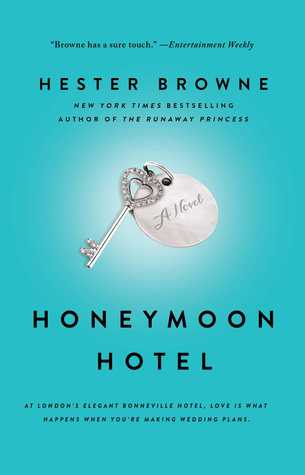
Book Review: Honeymoon Hotel by Hester Browne
 Summary:
The Bonneville Hotel is the best-kept secret in London: its elegant rooms and discreet wood-paneled cocktail lounge were the home-away-from-home for royalty and movie stars alike during the golden age of glamour. Recent years haven’t been kind, but thanks to events manager Rosie, it’s reclaiming some of its old cachet as a wish list wedding venue. While Rosie’s weddings are the ultimate in romance, Rosie herself isn’t; her focus is fixed firmly on the details, not on the dramas. She lives with a professionally furious food critic and works tirelessly toward that coveted promotion. But when the hotel owner appoints his eccentric son Joe to help run Rosie’s department, she’s suddenly butting heads with the free spirit whose predilection for the unconventional threatens to unravel her picture-perfect plans for the most elaborate—not to mention high-profile—wedding the hotel has ever seen, a wedding that could make or break not only the hotel’s reputation, but also Rosie’s career.
Review:
Although not every Browne book is a hit for me, they often are, and this one was incredible. One of the blurbs says it’s in the vein of The Wedding Planner. My comeback would be it’s everything I thought The Wedding Planner was going to be but even better. It’s a story that showcases a woman building her career while craving a relationship and ultimately getting the next level of her career and the relationship she’d been dreaming of.
I often find that in chick lit I have to be willing to give up on either seeing a woman with ambition or a woman desiring a traditional relationship. You often don’t get both. Both is what I want out of my comfort reading, and both is what you get here. Plus, both the career and the love interest are something you want to root for. Rosie isn’t a heartless workaholic but she’s also not someone who’s just working until she nails down the guy. She wants everything, and she keeps wanting everything even when the going gets tough. And the tough going is realistic, both in the romance and in the career. The realism kept things relatable even with things ultimately working out great for her in both ways in the end. And you know what? I like that things work out in both ways. I like that hope. We all can use some more hope in our lives.
In addition, the setting is just stunning. It’s a hotel that had its height in the Art Deco era, and all of the beauty and splendor of it is eloquently described. It was a place I wanted to keep coming back to because it just felt so divine, even with seeing the behind-the-scenes of the staff rooms and the stress of running the special events.
One other thing I must mention is that yet again Browne does a great job of presenting positive female friendships. There’s more than one woman to women relationship that Rosie has where both women help each other out. Women are shown as having differences of opinions and other difficulties to work through but ultimately being there for each other. It might not always work out that way in real life, but I really like seeing female friendships validated and other women not being demonized just to make a scene work.
Overall, this features everything I like in the best Browne books with the added dash of a setting that really suited me. The final scene was so pretty I had tears in my eyes on public transportation, and that’s really saying something. Highly recommended to lovers of quality chick lit.
If you found this review helpful, please consider tipping me on ko-fi, checking out my digital items available in my ko-fi shop, buying one of my publications, or using one of my referral/coupon codes. Thank you for your support!
5 out of 5 stars
Length: 464 pages – average but on the longer side
Source: Library
Book Review: The Undomestic Goddess by Sophie Kinsella
 Summary:
Workaholic attorney Samantha Sweeting has just done the unthinkable. She’s made a mistake so huge, it’ll wreck any chance of a partnership.
Going into utter meltdown, she walks out of her London office, gets on a train, and ends up in the middle of nowhere. Asking for directions at a big, beautiful house, she’s mistaken for an interviewee and finds herself being offered a job as housekeeper. Her employers have no idea they’ve hired a lawyer–and Samantha has no idea how to work the oven. She can’t sew on a button, bake a potato, or get the #@%# ironing board to open. How she takes a deep breath and begins to cope–and finds love–is a story as delicious as the bread she learns to bake.
But will her old life ever catch up with her? And if it does…will she want it back?
Review:
Long-time readers of this blog will know that I’m a Sophie Kinsella fan, so it should come as no surprise that I liked this book. But let me say I love love loved this book. It’s my favorite Kinsella book I’ve read so far. It was funny but also a beautiful love story and also great commentary on life and priorities. It gave me the warm fuzzies, you guys.
I think one of the things I like best about Kinsella books is how they present all of women’s life options as totally valid ones, even if the heroine herself doesn’t realize that at first. What matters most is the heroine doing what makes her happy, and often the drama comes from the heroine forcing herself to be something she’s not or align herself with life values she doesn’t have. In any case, this book walks a great line of neither demonizing career women nor women who stay at home. It also doesn’t present doing a high-powered, high-education track as better than doing a traditionally blue collar job like housekeeping or cooking. Yes, at first Samantha thinks one of them is better and looks down on the other, but ultimately she realizes the pluses and minuses of both types of jobs, and I really like seeing that in chick lit. A lot. I also really enjoyed seeing the struggle Samantha has between part of herself wanting the high-powered career and part wanting the quiet life at home. I think that’s a feeling many modern women can relate to.
The romance is also quite sweet. The early on playing between Samantha and her man and how that progresses made me feel like I was cozied up in a just the right temperature bath. But I also really liked that the book shows that compromise in a relationship is necessary. Both of them have to adjust their perceptions to fit the new reality of each other and both are willing to make compromises and meet in the middle.
Of course it’s also funny. What’s not funny about a lawyer trying to keep house when she doesn’t know anything about cleaning or cooking? At some point though the humor transitions into scenes that I can only describe as warm and glowing. That focus in on what really matters in life.
I was entertained. My life goals and ambitions were strengthened and validated. And I (maybe) (ok, definitely) cried happy-ever-after tears at the end of the book. I suppose if you’re a reader who doesn’t understand people who want to work a job they at least moderately enjoy and live life at a reasonable pace with lots of time with those they love then you might not enjoy this book. But I’d also say you need to read it and take a hard look at Samantha’s life before and after her lessons.
If you found this review helpful, please consider tipping me on ko-fi, checking out my digital items available in my ko-fi shop, buying one of my publications, or using one of my referral/coupon codes. Thank you for your support!
5 out of 5 stars
Length: 404 pages – average but on the longer side
Source: Library
Book Review: Addicted by S. A. Archer and S. Ravynheart (Series, #2)
 Summary:
If a human is touched once by a Sidhe, they become addicted….heroin addict level addicted. Since London’s Sidhe died, she now has to periodically put her private investigator for paranormal clientele job aside in order to seek out more Sidhe for a fix. This time, a bunch of young vampires say they know where she can have a changeling teleport her to an enslaved Sidhe….for a price.
Review:
Series of fast-paced novellas are becoming more popular in urban fantasy and paranormal romance. I know I enjoy them as a kind of single-serving of ice cream. Fun and delicious and able to get through in those 40 minutes your bread is in the oven or something. I read the first book in the Touched series, and since I enjoyed it, Archer, one of the authors, was kind enough to send along the next entry in exchange for my honest review. It was still fun, but not quite as well-written as the first.
The world of the paranormal in the UK and Ireland that Archer has created continues to be creative and engaging. While some of her paranormal creatures are typical (such as the vampires) others are more unique, like the changelings and fairies. For instance, having a changeling run the whole come party and suck the blood or touch a Sidhe thing was pretty unique! In other series, that would definitely be the sort of thing run by vampires.
Unfortunately, I didn’t find the characterizations as good this time around. London comes off as a bit flat, as do the vampires around her. Most distressing to me, though, as an American reader is her American character she put in. London meets a guy when doing a job for the changelings. She can tell he is American because, I kid you not, he is wearing a flannel shirt and a cowboy hat. Erm, ok. More annoying though is the fact that this American dude twice says, “shite.” Americans don’t say “shite,” except perhaps for some 20-something hipsters who are trying to be ironic. This 40-something mercenary is definitely not a hipster. He would say “shit.” If you are going to have a character from a country besides your own, you really need to fact-check how they speak, and especially how they swear. He’s not a major character, and I probably would have noticed it less if this was a book and not a novella. He was a lot more noticeable since he was present for most of the novella.
Overall, then, the world is interesting but the characters could use a bit of work. If you’re just looking for some light, quick urban fantasy to brighten up your day, though, it might be worth your 99 cents. Personally, though, I won’t be continuing on with the series.
3.5 out of 5 stars
Source: Kindle copy from author in exchange for my honest review

 (
(Book Review: A Long Way Down by Nick Hornby (Bottom of TBR Pile Challenge)
 Summary:
On New Year’s Eve, four incredibly different strangers accidentally meet on Topper’s House a popular local spot for suicides. Somehow running into each other leads to them taking the long way down that night instead of the quick one. What happens after is a continuance of their life stories that no one could have predicted.
Review:
I distinctly remember that this book made it into my tbr pile because of the suicide theme. What makes these four different people want to kill themselves, and what makes them not do it. Clearly this is a book about depression and suicidality. But it is not a depressing book. Not by far.
Without revealing too much, since the revelations are part of the fun of the read, I will just say that the four suicidal people span different generations, reasons, and nations of origin. Different levels of conservatism and liberalism. But what makes them come to understand each other is their universal depression and suicidal thoughts. This fact that someone out there gets them….well oftentimes that can help get a profoundly depressed or mentally unwell person over the hump. Feeling less alone.
Her past was in the past, but our past, I don’t know…Our past was still all over the place. We could see it every day when we woke up. (page 253)
In spite of this being a book about depressed people bonding over their depression, it doesn’t read as such. I was reading it on an airplane and found myself literally laughing out loud at sections. Because these people are brilliant. They have a great understanding of the world. Of art. Of relationships. Even of themselves.
I had that terrible feeling you get when you realize that you’re stuck with who you are, and there’s nothing you can do about it. (page 208)
That is, after all, frequently what depression can be all about. A profoundly clear understanding of how royally fucked up you are or your life is. What’s hard is seeing past that moment. The book is kind of a snapshot of the process of them learning to do that. And that’s what makes it so eloquent and poignant. Nothing is done melodramatically. Things are just presented as they are. Even down to the four being able to laugh together periodically (and make you laugh in the process). Depression isn’t just oh everything sucks nonstop. There are moments of laughter. It’s just that those moments are outweighed by the weight of the depression. Getting rid of that weight is a cleansing, uplifting process, and that’s how it feels to read this book. You bond and you laugh and you maybe even cry (if you have more susceptible tear ducts than this reader). And in the end you come to an understanding of that suicidal dark place without being abandoned in it.
Overall this book manages to eloquently present depression without being a depressing book. It is compelling to any reader who has ever struggled with a depressed period of life. Highly recommended to the depressed and the sympathetic. Both will be left feeling lighter and less alone.
4 out of 5 stars
Source: PaperBackSwap

Counts For:
 Support my work with a tip or browse my shop for curated book club guides, how to guides, cross-stitch patterns, and more!


This work by Amanda Nevius is licensed under a Creative Commons Attribution-Noncommercial-No Derivative Works 3.0 United States License.
 Opinions of a Wolf