
Archive
Book Review: Herculine by Grace Byron
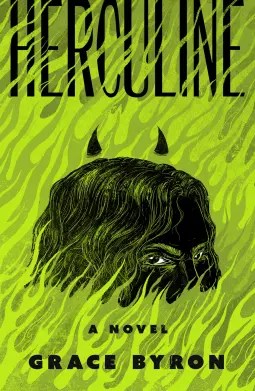
Summary:
Herculine’s narrator has demons. Sure, her life includes several hallmarks of the typical trans girl sob story—conversion therapy, a string of shitty low-paying jobs, and even shittier exes—but she also regularly debates sleep paralysis demons that turn to mist soon after she wakes and carries vials of holy oil in her purse. Nothing, though, prepares her for the new malevolent force stalking her through the streets of New York City, more powerful than any she’s ever encountered. Desperate to escape this ancient evil, she flees to rural Indiana, where her ex-girlfriend started an all-trans girl commune in the middle of the woods.
The secluded camp, named after 19th-century intersex memoirist Herculine Barbin, is a scrappy operation, but the shared sense of community among the girls is a welcome balm to the narrator’s growing isolation and paranoia. Still, something isn’t quite right at Herculine. Girls stop talking as soon as she enters the room, everyone seems to share a common secret, and the books lining the walls of the library harbor strange cryptograms. Soon what once looked like an escape becomes a trap all its own.
While trying to untangle the commune’s many mysteries, the narrator contends with disemboweled pigs, cultlike psychosexual rituals, and the horrors of communal breakfast. And before long, she discovers that her demons have followed her. And this time, they won’t be letting her go.
Review:
Just like any horror reader, I have my favorite settings, and a commune gone wrong is one of them. (Do communes ever go right? Certainly not in horror). But I also like unique takes and twists in my horror, so when I saw this was an own voices trans woman horror (or trans girl, as the characters say), I smashed the request button on NetGalley. I was preemptively thrilled when I received the download, but that just increased as I read the book.
A note on my perspective:
For new blog readers, hi, I’m a queer, progressive Christian who was raised fundamentalist evangelical in the rural US.
Demons in the book:
What immediately struck me about this book is that the narrator literally was put through conversion therapy as a teen and yet still has a functioning relationship with God. Unlike a lot of representation we see in literature, there isn’t this binary thinking that you must either be straight and Christian or a wounded queer kid who grew up to be an atheist scientist. The narrator is wounded (and nameless), yes, but she still finds comfort in her faith. And the demons are not good guys here to help her. Absolutely not! In fact, one aspect that I particularly enjoyed is that the demons latch on to both straight religious folks (her conversion therapist) and other trans folks (people at the commune). The demonic influence has nothing to do with gender identity or sexual orientation. That was absolutely delicious to me.
A wounded yet powerful character:
Our narrator is wounded by life and allowed to be. She struggles with dating and exes and her own history of conversion therapy and yet she is able to articulate just how human her experience really is.
I was not special in my grief. And strangely, I was not alone.
And yet. She makes so many powerful choices. Precisely because she holds onto that humanity. Because she knows she just is who she is. She’s a trans girl, as she would say. She’s from rural middle of the country. She’s having a really hard time making it in NYC.
Own voices trans representation
It’s impossible to read the narrator without seeing her as a full and complete character. Unlike other trans characters I’ve read, her being trans wasn’t something that was the constant center of attention, even with the trauma from conversion therapy. Her being herself was. And yet of course she also reflected on being trans, not just herself but being a part of the trans community.
Loving trans girls is hard, even when you are one. Loving us is like reaching into a waterfall and trying to pull.
My only complaint:
Like a lot of good rock songs that start of strong but don’t know how to end, Herculine doesn’t seem quite sure how to end. The ending fizzled for me compared to the rest of the book. But the progressive Christian in me loved the last word. Selah. It is a word that appears in the Psalms and Habakkuk. We aren’t quite sure what it means. That, in and of itself, is a beautiful way to end a book about the trans experience, I think. But also it’s often interpreted as a liturgical pause or a call to reflect. In the church I grew up in, I was taught to treat it like an exclamation akin to the “So say we all” in Battlestar Galactica. Like a “hear hear.” Any of these meanings make it a cool way to end. I just personally think the rest of the final chapters weren’t quite there compared to that.
Overall:
This is a unique read in both horror and trans main character books. For horror, everything about the characters make the commune gone wrong plot unique. For trans main characters, a main character who went through conversion therapy, remained living her trans identity, and has sorted out faith for herself in her own way is something that isn’t seen so often. (See my reviews of other books with trans characters). This book is worth picking up.
If you found this review helpful, please consider tipping me on ko-fi, checking out my digital items in my ko-fi shop, buying one of my publications, using one of my referral or coupon codes, or tuning into my podcast. Thank you for your support!
4 out of 5 stars
Length: 272 pages – average but on the shorter side
Source: NetGalley
Buy It (Amazon or Bookshop.org)
Book Review: Made You Up by Francesca Zappia
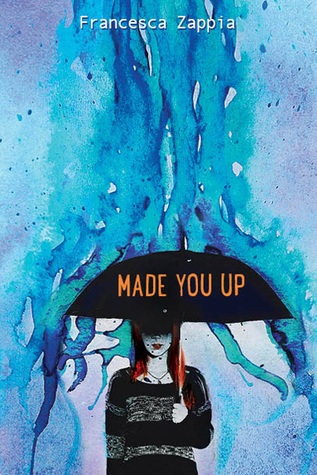 Summary:
Alex fights a daily battle to figure out the difference between reality and delusion. Armed with a take-no-prisoners attitude, her camera, a Magic 8-Ball, and her only ally (her little sister), Alex wages a war against her schizophrenia, determined to stay sane long enough to get into college. She’s pretty optimistic about her chances until classes begin, and she runs into Miles. Didn’t she imagine him? Before she knows it, Alex is making friends, going to parties, falling in love, and experiencing all the usual rites of passage for teenagers. But Alex is used to being crazy. She’s not prepared for normal.
Review:
A YA book featuring a main character with schizophrenia has a lot of potential — both to be great and to go awry. While Alex is always written with empathy, something I appreciated, I ultimately found other elements of the story to be too detracting for me to be able to wholeheartedly recommend it.
Alex, her battle with schizophrenia, and her parents’ attempts yet simulatneous inability to really deal with it fully, are all depicted well in this story. While I think the plot comes dangerously close to making Alex’s parents look like bad guys, ultimately enough other perspectives are shown that it does appear more like a mistake on their part, and a consequence of dealing with such a serious illness and situations for such a long time, rather than something truly mean-spirited or cruel. Alex has enough of a grip on reality to be relatable, while her struggles with aspects of her mental illness are heart-breakingly represented. So why so few stars?
First, while it may be part of her delusions, it’s never made clear if Miles’ grandfather was actually alive during WWII. Alex takes it as fact, and it’s not one that’s ever disputed the way others are. It’s a real stretch for someone Miles’s age to have a grandparent who was alive in WWII as anything other than a baby (and even then, that’s a stretch), particularly since this grandfather is through his maternal line, and women have less of a window in which to have children than men do. It may seem like a small issue, but it’s something that really bugged me. I’m ok with it if it’s ultimately part of one of Alex’s delusions but I do think that should be made clear somewhere in the book.
I also didn’t like the entire plot surrounding Miles’s mother. Essentially, his father falsely convinces the authorities that she’s crazy so that she’ll get locked up in a mental institution and not be able to leave her abusive marriage with her son. The fact that she’s been locked up for years and no one has noticed is just not something I believe could happen in this day and age. The initial mental health screening? Yes. A sane woman remaining in an institution for years against her will? No. It’s clearly established that this is a real thing that happens, not one of Alex’s delusions, and it just had me rolling my eyes.
The ending struck a sour note for me as well. Without giving anything away, Alex is presented as a strong young woman battling an equally strong illness and in the end she kind of just loses her gumption. While I think accepting help is good, the way she accepts it and the way she graduates from it both rubbed me the wrong way. I’m not sure about the message it’s sending to the YA audience.
So while I really appreciate the character of Alex and seeing schizophrenia represented to realistically and while the plot did keep me reading, enough sour notes were hit for me that I ultimately just found it to be an average read.
If you found this review helpful, please consider tipping me on ko-fi, checking out my digital items available in my ko-fi shop, buying one of my publications, or using one of my referral/coupon codes. Thank you for your support!
3 out of 5 stars
Length: 428 pages – average but on the longer side
Source: Library
Counts For: Mental Illness Advocacy Reading Challenge
Specific Illness –> Schizophrenia
 Support my work with a tip or browse my shop for curated book club guides, how to guides, cross-stitch patterns, and more!

This work by Amanda Nevius is licensed under a Creative Commons Attribution-Noncommercial-No Derivative Works 3.0 United States License.

