
Archive
Book Review: We Don’t Talk About Carol by Kristen L. Berry
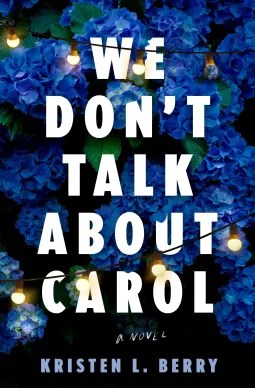
A psychological thriller about missing Black girls, fertility stress, and intergenerational trauma’s impact on mental health.
Summary:
In the wake of her grandmother’s passing, Sydney Singleton finds a hidden photograph of a little girl who looks more like Sydney than her own sister or mother. She soon discovers the mystery girl in the photograph is her aunt, Carol, who was one of six North Carolina Black girls to go missing in the 1960s. For the last several decades, not a soul has talked about Carol or what really happened to her. But now, with her grandmother gone and Sydney looking to start a family of her own, she is determined to unravel the truth behind her long-lost aunt’s disappearance, and the sinister silence that surrounds her.
Unfortunately, this is familiar territory for Sydney: Years earlier, while she worked the crime beat as a journalist, her obsession with the case of another missing girl led to a psychotic break. And now, in the suffocating grip of fertility treatments and a marriage that’s beginning to crumble, Sydney’s relentless pursuit for answers might just lead her down the same path of self-destruction. As she delves deeper into Carol’s fate, her own troubled past reemerges, clawing its way to the surface with a vengeance. The web of secrets and lies entangling her family leaves Sydney questioning everything—her fixation on the missing girls, her future as a mom, and her trust in those she knows and loves.
Review:
Psychological thrillers are a genre I love, but they have a real diversity problem, overwhelmingly featuring white women. When I saw this take on a psychological thriller by an own voices author centering Black women’s experiences, I was so excited to receive a review copy.
Sydney has a lot going on when we first meet her. Her grandmother has recently passed away, and she and her mother and sister are cleaning out her house. There are complex family dynamics at play that get slowly revealed as the book progresses. Sydney is also undergoing fertility treatments, which has put a strain on both her mental health and her marriage.
While in the process of cleaning out the house, she discovers an aunt she never knew existed who went missing in her teens. We learn that Sydney was once was an investigative journalist, a career she abandoned after a psychiatric break on a story. But she can’t let go of trying to find out what happened to her aunt. Especially when she discovers five other teen Black girls went missing at the same time, and no one ever truly looked that hard for them.
This is an incredible set-up. Berry places missing Black girls, who historically receive little media attention, into the exact narrative space normally occupied in pyschological thrillers by:
- marital infidelity
- blackmail
- mysterious inheritances
In most psychological thrillers, those are the inciting forces. Here, systemic neglect is. (For a similar critique of this issue but in a YA horror book, check out Burn Down, Rise Up by Vincent Tirado.)
This matters because the novel positions those missing Black girls not as a shocking anomaly, but as a painful, known reality within the community. That’s where representation truly matters. It places a real life issue ifront an dcenter, then builds the psychological thriller around it.
For context, the NAACP reports that Black US Americans make up 34% of all missing persons cases but only 12.85% of the population.
In spite of Sydney’s previous psychiatric break feeling a little over the top, it was heartwarming to see how kindly and normally her husband and medical team treat it. She’s not othered; she’s just encouraged to keep the stress down. (Which, as the main character of a psychological thriller, she obviously doesn’t do very well.) I also appreciate that the climax of the book doesn’t rely whatsoever on her mental health or illness.
Despite the blurb suggesting a struggling marriage, Sydney’s marriage is quite solid. She and her husband just have a couple of difficult conversations, which makes sense with everything they have going on. I liked having a healthy marriage represented in a psychological thriller. Similarly Sydney’s relationship with her sister and mother is one of seeking repair and not one of just walking away from each other. There’s a lot of relational health in this book.
I suspected early on where the story might be heading, but the details were definitely not something I had figured out. So it was sufficiently twisty to hold my interest. That said, the pacing was just a bit off for a thriller. Perhaps because it was so grounded in reality, it was more of a pace of up and down rather than a rapidly building just can’t put it down escalation.
As I strive to provide content notes, be aware that while it is not depicted on the page, a character hears and partially witnesses the rape and murder of two young girls (hearing banging from another floor and seeing a vehicle shaking.) For representation, the cast is predominantly Black, the main character has psychiatric issues as did her father, addiction is represented but without much hope for healing, and I do not recall much if any sexual orientation diversity. One historical character is presented as possibly being on the Autism spectrum though the overall arc is not particularly positive in terms of representation.
Overall, this is a welcome, diverse addition to the psychological thriller genre. Its focus on missing Black women and girls brings a refreshingly underrepresented plot to familiar genre territory. The pacing is a little up and down. You likely will be able to put it down and sleep for the night. But it still calls for completion to resolve the mystery.
Especially recommended for:
- Readers of psychological thrillers with social commentary
- Book clubs interested in discussions about systemic neglect
- Readers looking for mental health representation in suspense
- Those wanting stories centered on missing Black women and girls
If you found this review helpful, please consider tipping me on ko-fi, checking out my digital items in my ko-fi shop, buying one of my publications, using one of my referral or coupon codes, signing up for my free monthly newsletter, or tuning into my podcast. Thank you for your support!
4 out of 5 stars
Length: 336 pages – average but on the longer side
Source: NetGalley
Buy It (Amazon or Bookshop.org)
Book Review: Beautiful Ugly by Alice Feeney
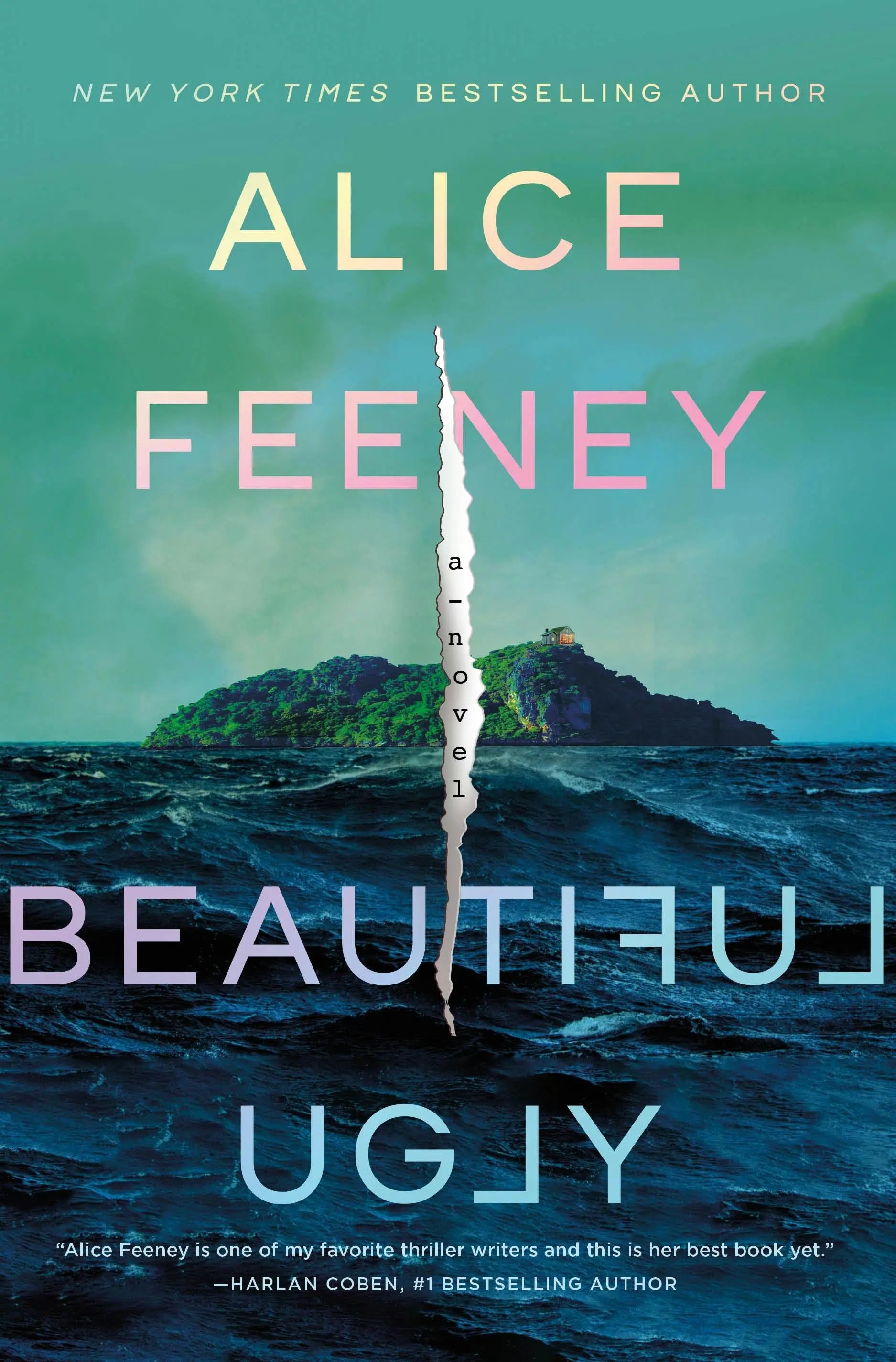
A psychological thriller about a grieving husband who sees his missing wife’s double on a remote Scottish island.
Summary:
Author Grady Green is having the worst best day of his life.
Grady calls his wife to share some exciting news as she is driving home. He hears Abby slam on the brakes, get out of the car, then nothing. When he eventually finds her car by the cliff edge the headlights are on, the driver door is open, her phone is still there. . . but his wife has disappeared.
A year later, Grady is still overcome with grief and desperate to know what happened to Abby. He can’t sleep, and he can’t write, so he travels to a tiny Scottish island to try to get his life back on track. Then he sees the impossible — a woman who looks exactly like his missing wife.
Wives think their husbands will change but they don’t.
Husbands think their wives won’t change but they do.
Review:
My memory told me I loved Alice Feeney’s thrillers—but after reading Beautiful Ugly and looking back at my past reviews, it turns out I only truly loved one (Rock Paper Scissors) and was lukewarm on another (Daisy Darker). With this latest being a miss, I probably won’t be rushing to pick up her next.
Right away, I was thrown a bit off course by the main character. When I reach for a thriller by a woman author, I typically expect a woman protagonist. Here, we follow Grady, a grieving husband and struggling novelist. We do get flashbacks to his wife before her disappearance, but Grady’s perspective never quite worked for me. I also rarely enjoy main characters who are writers—it often feels too navel-gazey (with the notable exception of Misery). That worked against Grady, too.
When Grady travels to a remote Scottish island—sent there by his agent-slash-his-wife’s-godmother—it should have been an atmospheric pivot. But while the setting is strange, it didn’t strike me as compelling. The book leans heavily on Grady’s alcoholism to make him an unreliable narrator, a device that can be effective (as in The Girl on the Train), but here felt more like a trope than an integral part of the story.
And unfortunately, it wasn’t just Grady. I didn’t connect with any of the characters—not the wife, the godmother, the ferrywoman, or the shopkeeper. That can still work if it’s a “love to hate them” type of book, but this wasn’t that. And when a book doesn’t give you characters to root for, you need a satisfying plot to carry the weight. Instead, I felt let down.
The book hinges on two major twists, and both left me feeling frustrated. One relies on the main character deliberately withholding information from the reader, which feels like a cheat—especially when we’re in his head for much of the book. The second twist is more straightforward, but felt over-the-top and unearned.
That said, there are a few bright spots. I appreciated the inclusion of a woman pastor and a same-sex couple among the tiny island’s population. The cast also includes a bit of racial and ethnic diversity. Also Grady’s dog is a breath of fresh air in every scene he’s in. However, the second twist somewhat undercut those thoughtful touches in a way that felt disappointing.
Content notes: CSA, death of children, infertility treatment, and murder.
Despite my frustrations, I’ll give the book credit for being readable and engaging. I wanted to know what happened, and I did enjoy the shifting points of view and timelines.
Overall, this is a thriller for readers who don’t mind a twist that plays unfairly with what the narrator reveals, and who enjoy mysterious settings and shifting perspectives—even if there’s no one to root for.
If you found this review helpful, please consider tipping me on ko-fi, checking out my digital items in my ko-fi shop, buying one of my publications, using one of my referral or coupon codes, signing up for my free microfiction monthly newsletter, or tuning into my podcast. Thank you for your support!
3 out of 5 stars
Length: 306 pages – average but on the longer side
Source: Library
Buy It (Amazon or Bookshop.org)
Book Review: A Cyclist’s Guide to Crime and Croissants by Ann Claire
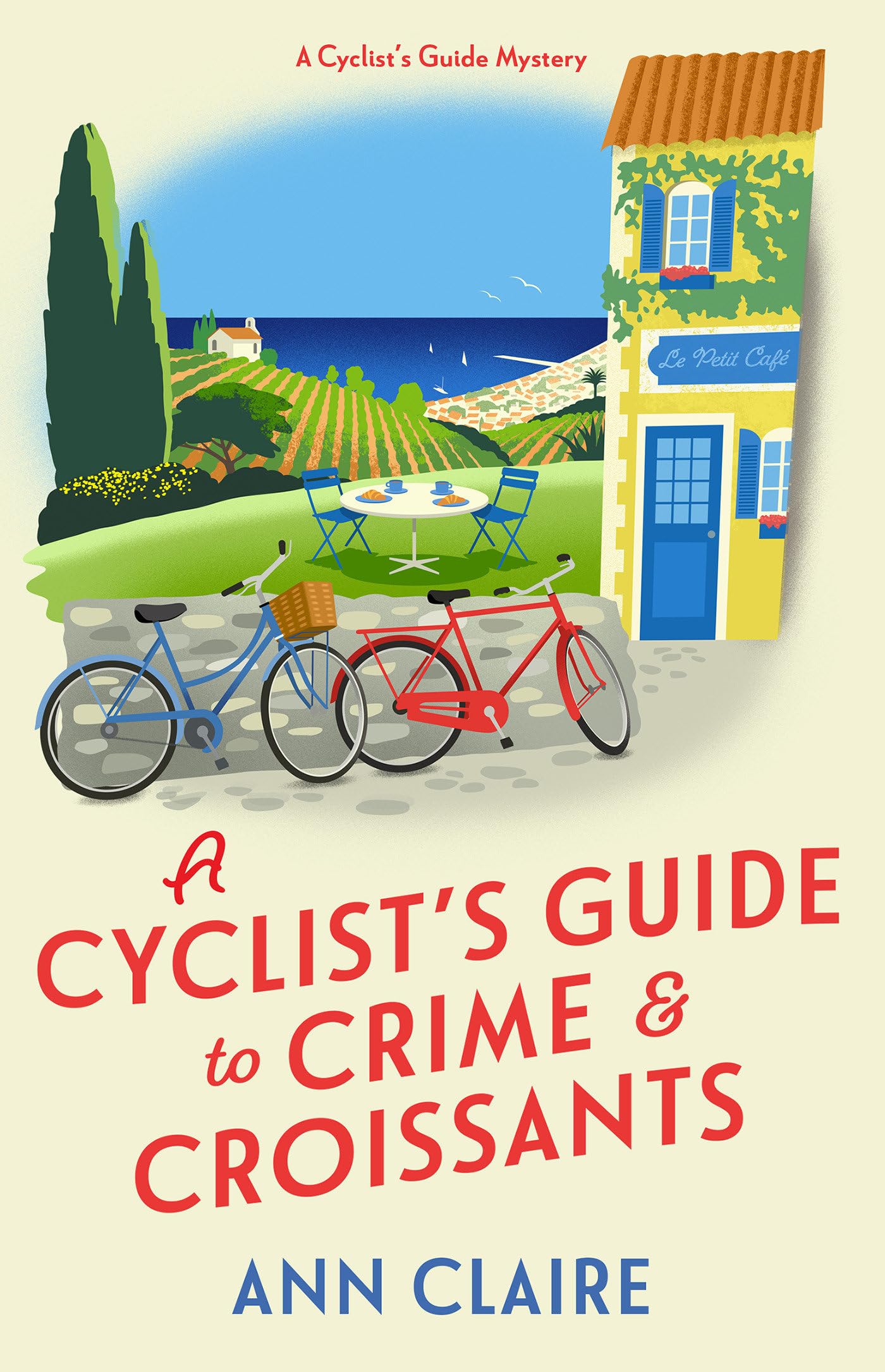
A charming cycling tour in the French countryside takes a deadly turn in this cozy mystery, perfect for fans of Emily in Paris—if Emily spoke French and solved murders between croissant breaks.
Summary:
Nine months ago, Sadie Greene shocked friends and family by ditching her sensible office job in the Chicago suburbs and buying a sight-unseen French bicycling tour company, Oui Cycle. Now she’s living the unconventional life of her dreams in the gorgeous village of Sans-Souci-sur-Mer. Sans souci means carefree, but Sadie feels enough pressure to burst a tire when hometown friends arrive for a tour, including her former boss, Dom Appleton. Sadie is determined to show them the wonders of France and cycling—and to prove she made the right move.
She hopes her meticulously planned nine-day itinerary will win them over, with its stunning seascapes, delicious wine tastings, hilltop villages, and, of course, frequent stops for croissants. When Dom drags his heels on fun, Sadie vows he’ll enjoy if it kills her. That is, until Dom ends up dead. The tragedy was no accident. Someone went out of their way to bring a permanent end to Dom’s vacation.
As more crimes—and murder—roll in, suspicions hover over Oui Cycle. To save her dream business, help her friends, and bring justice, Sadie launches her own investigation. However, mysteries mount with every turn. On an uphill battle for clues, can Sadie come to terms with her painful past while spinning closer to the truth—or will a twisted killer put the brakes on her for good?
Review:
If you’re looking for escapist literature, this cozy mystery delivers. A delightful, trope-perfect entry in the genre, it checks all the essential boxes—a murder that happens off-page? Check. A love interest suspicious of the FMC? Check. A dream career and a picturesque setting? Triple check.
One of the challenges of cozy mysteries is giving the main character an aspirational life without making them unlikable. Sadie, however, is wonderfully relatable. Her backstory is both heartwarming and tragic, making her move to France feel earned rather than enviable. She originally planned to start a bicycle tour business someday with her best friend—until tragedy struck, and her friend was killed in a hit-and-run. This loss becomes the catalyst for Sadie’s life-changing decision, and she makes it happen through a mix of financial prudence (as a former accountant) and a seller who values passion over profit. It’s a compelling, well-crafted setup.
The week of the fateful tour, Sadie’s not-quite-family but family-like friends arrive from the U.S., ostensibly to take her tour—but really, to check up on her. This dynamic adds a layer of personal drama, making the tour more than just a random mix of clients (though there are those, including a sharp-eyed reviewer). The result? Plenty of tension before the mystery even begins.
The French countryside and cuisine are absolutely lovely to read about, and you don’t have to be a cycling enthusiast to enjoy the journey. That said, I personally loved the cycling details, from the Is an e-bike cheating? debate to the hardcore Tour de France trainees Sadie encounters along the way. (If you love cycling too, check out the Bikes in Space anthology I have a short story in.)
Unlike in some cozies, the first murder (yes, first) feels eerily realistic. While I enjoy a good poisoned pie moment, this crime—especially as a cyclist—felt alarmingly plausible, adding genuine weight to the investigation.
One thing I often struggle with in cozies is the detective as a love interest—I tend to find detectives off-putting. However, this one worked for me, largely because his investigative approach felt fresh and culturally distinct. It helped maintain the escapist feel rather than making it feel like a procedural.
Speaking of characters, despite the large cast, I never once lost track of who was who. Each character felt distinct without veering into caricature. That said, the diversity felt a bit Eurocentric—the most notable examples being a Ukrainian refugee and an ex-convict. While I enjoyed both characters, I would have liked to see a bit more variety in representation given the size of the cast.
Halfway through, I was convinced I had solved the mystery. I was wrong. And once the reveal came, I could see exactly where I had been misled—not in a frustrating way, but in a deeply satisfying one.
This is a fun, immersive cozy mystery with a likeable main character, a realistic first murder, and plenty of French countryside charm. Recommended for cozy mystery fans who love an escapist read with a side of cycling, crime, and croissants.
If you found this review helpful, please consider tipping me on ko-fi, checking out my digital items available in my ko-fi shop, buying one of my publications, using one of my referral/coupon codes, or signing up for my free microfiction monthly newsletter. Thank you for your support!
4 out of 5 stars
Length: 346 pages – average but on the longer side
Source: Library
Buy It (Amazon or Bookshop.org)
Book Review: A Restless Truth by Freya Marske (Series, #2)

A murder mystery on an ocean liner cruising from the US to the UK in the early 1900s being solved by two women – one of whom is a magician. Both of whom are into each other. Things get spicy…and dangerous.
Summary:
When Maud voyages from the US to the UK on RMS Lyric, she finds a dead body, a disrespectful parrot, and a beautiful stranger in Violet Debenham, who is everything—a magician, an actress, a scandal—Maud has been trained to fear and has learned to desire. Surrounded by the open sea and a ship full of loathsome, aristocratic suspects, they must solve a murder and untangle a conspiracy that began generations before them.
Review:
I’m not sure how I ended up with an advanced copy of the second book in The Last Binding series – when I hadn’t read the first. I’m assuming either I requested it, not realizing it was a second book or it was sent to me based on my reading history with the assumption it didn’t matter. The series aspect is less “the story happens in a row” and more “everyone featured is living in these alternate history version of the early 1900s plus magic.” Apparently the first book in the series features a m/m pairing (Amazon, Bookshop.org), whereas this one stars a f/f pair.
I didn’t struggle too much to figure out what’s going on. The author does refrain from explaining much for the first chapter or two. But that’s because the book starts essentially in media res – with the murder happening. After that has occurred we slow down for a minute, and there’s a refresher of the rules of the universe. It didn’t take me too long to catch up and get into it.
One thing that did surprise me was the spice level of this romance. I was expecting very light spice with most encounters occurring off-screen after a fade to dark. That is not the case. Things get very explicit. Let’s put it this way….at least one of the scenes would have had to have been cut to manage to squeak in an R rating for explicitness. There are three scenes total, and each takes up a whole chapter. To me, this much spice feels like erotica jammed into a romance. I prefer the two separately.
The pairing here is grumpy/cheery. Violet is the grumpy, and I adored her. I liked Maud too, but Violet was someone I could see a whole book’s perspective on. Perhaps I’m biased since Violet is bisexual and the quintessential theater geek. I just really enjoyed her. But Maud is nice enough too. I liked their pairing well enough.
The mystery is substantial enough to hold up a plot. I enjoyed the animals and sneaking around the boat. I did think a bit more attention could have been paid to the class and race issues that sort of came up and got a bit glossed over. I don’t expect preaching in a book but it might have been interesting to at least have Maud and Violet see the second or third class areas of the ship on one of their many attempts to outrun their pursuers. (Somehow they always seemed to end up in the cargo hold instead). Maud talks with disdain of her parents only giving charity when others can see it, but Maud herself doesn’t seem to do much giving either. Violet, at least, offers to become the patron of an all-Black opera. (The real history of Black opera.)
Overall, I liked getting to know Violet, and it was an interesting world to visit. But the spice level was far too hot for what I personally prefer in romance, sliding more into an erotica category in my opinion. It also seems to me that the first book may have been quite different from this one, so readers of the first should come in aware of these differences.
If you found this review helpful, please consider tipping me on ko-fi, checking out my digital items available in my ko-fi shop, buying one of my publications, or using one of my referral/coupon codes. Thank you for your support!
3 out of 5 stars
Length: 388 pages – average but on the longer side
Source: NetGalley
Buy It (Amazon or Bookshop.org)
Book Review: The It Girl by Ruth Ware

Summary:
April Clarke-Cliveden was the first person Hannah Jones met at Oxford.
Vivacious, bright, occasionally vicious, and the ultimate It girl, she quickly pulled Hannah into her dazzling orbit. Together, they developed a group of devoted and inseparable friends—Will, Hugh, Ryan, and Emily—during their first term. By the end of the second, April was dead.
Now, a decade later, Hannah and Will are expecting their first child, and the man convicted of killing April, former Oxford porter John Neville, has died in prison. Relieved to have finally put the past behind her, Hannah’s world is rocked when a young journalist comes knocking and presents new evidence that Neville may have been innocent. As Hannah reconnects with old friends and delves deeper into the mystery of April’s death, she realizes that the friends she thought she knew all have something to hide…
Review:
I’ve read about half of Ruth Ware’s books and enjoyed them all, so I was excited and surprised when the publisher approved me for a review copy of her newest book on NetGalley. Most of her other books I’ve read part of the thrill is the characters’ tie to a place – like a ski chalet or weekend hen do rental. This one, though, the thrills come from everyone’s tie to an event that happened a decade ago – the death of April Clarke-Cliveden.
To me, the most important part of a thriller is that at least one of the twists (preferably the last one) both surprises me but also strikes me as fair. In other words, that it’s not only a twist because the writer withheld something from the reader that other characters we closely follow know. The twist must also not have been immediately possible for the main character to figure out. This book definitely ticks that criterion. Although, I thought I’d guessed the twist about 18% of the way into the book, I was definitely wrong. I hadn’t guessed the twist even moments before it happened. And I didn’t feel cheated because the twist did make sense. So if a surprising twist that makes sense if what you’re after, this read is for you.
Now, I will say, I nearly wore my eyes out rolling them at the main character Hannah. She just struck me as quite emotionally/psychologically weak and easily influenced. I don’t need to love a main character to enjoy a read, though, so I wasn’t bothered. Something about Hannah that some readers may enjoy, partially because it’s unusual in a thriller, is that she’s about six months pregnant for the meat of the story. I’ve never been pregnant myself, so I can’t say how necessarily realistic the portrayal is, but it did make for some different and interesting scenes.
The only thing that does bother me, which is why this is four stars, is I just do not understand why Hannah ever considered April her “best friend” or why she’s still so enamored with her years later. From the first moment we meet her when Hannah does on move-in day at Oxford, I was like…man this girl is the WORST. Did I know people like her in college? Sure. Did I befriend them? No. Am I aware of someone who had a roommate like her? Yes. Did she befriend her? No, they just hung out in separate groups and lived their separate lives. But I will say, Hannah is characterized as weak and easily swayed, so, in a way, it makes sense she’s friends with her. But I never felt sympathy for Hannah about any of it.
Overall, this was a fun thriller. For me it took a little bit to pick up speed, but once it did, I was definitely motivated to find out the final twist.
If you found this review helpful, please consider tipping me on ko-fi, checking out my digital items available in my ko-fi shop, buying one of my publications, or using one of my referral/coupon codes. Thank you for your support!
4 out of 5 stars
Length: 432 pages – average but on the longer side
Source: NetGalley
Buy It (Amazon or Bookshop.org)
Book Review: Three to Get Lei’d by Jill Marie Landis (Series, #3)
 Summary:
A jigger of tranquility is all Em Johnson wants, but now that her beloved Tiki Goddess Bar has been chosen as the location for Trouble in Paradise, TV’s hot new reality show, life is anything but tranquil. When a member of the camera crew is found dead in her kitchen-stabbed to death with Chef Kimo’s sashimi knife-the scene on the sleepy North Shore of Kauai goes from eccentrically crazy to downright dangerous. Suspects lurk behind every paper drink umbrella.
Review:
This book brought back all the strengths from the first book with the added delight of everyone at the Tiki Goddess Bar being featured on a reality tv show. As a (not-so-secret) lover of reality tv for the over-the-top ridiculousness and a lover of cozies for their delightful tongue-in-cheek puns and ability to not take themselves too seriously, the marriage of the two in this book was sheer delight.
A couple of scenes in particular struck me as the type of mad-cap tom-foolery seen in older 1920s romps, only with the added twist of reality tv cameras following the moves. I honestly would love to see a “The Office” style take on this series…a fake reality tv show version of the Tiki Godess Bar. That’d be a hoot! Anyway, one scene I really enjoyed involves the Hula Maidens in hula costume sneaking around on a golf course. Delightful.
I also like that the plot, although a bit predictable, weaves in a few different elements of various characters’ lives and stories. Em’s life moves forward, as does her uncle’s. Nothing is stagnant, just because murder is happening. I also thought grief and concern for loved ones’ safety were depicted well and realistically without slowing the plot down or removing the joy from the narrative.
All-in-all, a fun entry in the series that left me eager for the next one….and hoping the reality show will be back!
If you found this review helpful, please consider tipping me on ko-fi, checking out my digital items available in my ko-fi shop, buying one of my publications, or using one of my referral/coupon codes. Thank you for your support!
4 out of 5 stars
Length: 248 pages – average but on the shorter side
Source: Gift
Previous Books in Series:
Mai Tai One On, review
Two to Mango, review
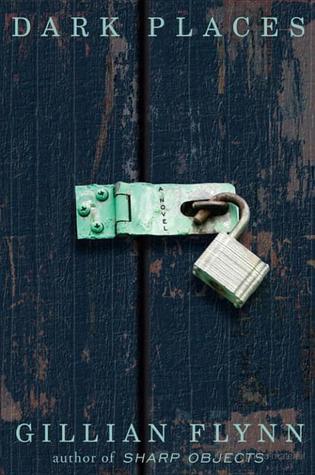
Book Review: Dark Places by Gillian Flynn (Audiobook narrated by Rebecca Lowman, Cassandra Campbell, Mark Deakins, and Robertson Dean)
 Summary:
Libby Day testified that her brother murdered her mother and sisters as part of a Satanic cult ritual when she was just 7 years old. Twenty-five years later, running out of money, she agrees to help a group known as The Kill Club investigate the murder. Their members disagree on how actually killed her mother and sisters, and with her connections they think she can help them crack the case. Libby is sure her brother Ben did it, but money is money, and it sure beats a regular job.
Review:
This is my third Gillian Flynn novel, and I must admit it was the one I liked least. I was actually suspicious it was a first novel, as it had that feel–a lot of what works in her other novels is present but it’s less well-executed. However, it actually was published after Sharp Objects (review), so who knows what happened here. Regardless, while I found the mystery intriguing and I definitely listened to the audiobook every chance I got, the plot is not as tightly told nor is the central mystery as believable as it is in her other works.
What worked the best for me was Libby, a childhood survivor of a gruesome murder, as some sort of modern day noiresque private investigator. A woman PI with a personal connection to the murders was just delicious to read. I’d love to see more of that in literature. I also liked seeing a thriller that included a queer person (her aunt is a lesbian) without that being used as a way of othering someone strange or being attached to a perpetrator. Her aunt is a bystander in every sense of the word. She is never a suspect, she provides Libby with a home environment after the murders, and her sexual orientation is just a part of who she is, not a plot point. I also liked the changing perspectives among Libby present, Libby past, her mother, and her brother. I thought it added to the mystery since seeing these other perspectives did not immediately reveal precisely what was going on. I also thought it made it harder to judge her mother than it might be if the reader hadn’t had her perspective.
However, this was the first time that I was both sure who the perpetrator was quite early in a Flynn novel and also that I was disappointed by who the murderer is. I thought there was nothing creative or exciting about it, and honestly it kind of bugged me a little bit. There is also one trope that shows up here that bothered me. It could be a bit spoilery (not too bad) so skip the next paragraph if you’re concerned about that.
*spoilers*
Libby at the end of the book ends up in a scenario that is very similar to the first murders that she survived. It’s basically a trauma survivor finding that all their fears were right by improbably having almost the same scenario happen a second time. I think it was supposed to be scary, but it just irritated me.
*end spoilers*
I also must say that I felt the whole Satanic scare thing was very dated. Yes, I get it that was a huge thing in the 80s and this is a story about murders that happened 25 years ago but something about it just made the whole book feel dated to me. I couldn’t get into it partly because I was certain that the book would ultimately reveal Satanism had nothing to do with it, since that’s just the way that plot point always goes. I suppose you could sum up most of my issues with this book as the plot was too predictable to be much fun.
Overall, if you’re a big Gillian Flynn fan and just want to experience some thrills, this book will provide some of them with the dash of strong female characters you’ve come to expect. However, do expect to be a bit disappointed by a more predictable plot and twist that isn’t all that twisty.
If you found this review helpful, please consider tipping me on ko-fi, checking out my digital items available in my ko-fi shop, buying one of my publications, or using one of my referral/coupon codes. Thank you for your support!
3 out of 5 stars
Length: 349 pages – average but on the longer side
Source: Audible
Book Review: Fables, Vol. 1: Legends in Exile by Bill Willingham et al. (Series, #1) (Graphic Novel)
 Summary:
All the characters from the fairy tales we know actually lived in that folklore world but were forced out into exile in modern-day New York thanks to an enemy known only as The Adversary. Snow White, right-hand to the ruler of Fabletown, seeks to keep everyone in line. But that gets more difficult when her own sister, Rose Red, is murdered. A reformed Big Bad Wolf, now their sheriff, promises to help her track down his killer.
Review:
Being a long-time fan of The 10th Kingdom, a story about the characters of folklore existing in a parallel universe to our own that some modern-day Americans accidentally visit, I was intrigued by this idea of a similar story in reverse. Instead of being engaging and a fun escape, though, my experience with it is best summed-up as meh. It’s a cool idea that is saddled to a ho-hum plot and flat characters, thereby rendering it a mediocre read.
The basic idea is some unseen Adversary has driven the fairy tale folk out of their land and into exile in our own. In our land, they’ve all agreed to give everyone a clean slate to start over. So far so good. From here though things go from interesting and semi-unique to basically a noir plot we’ve all read before wrapped up in 2-dimensional fairy tale characters. Big Bad Wolf is the hard-boiled detective. Snow White is his lady assistant. A noir version of a fairy tale could have been good, but instead the flattest elements of both genres are mashed together, rather than the best of each. What you end up with is a wolf without his fangs or a hard-boiled detective without his cigarettes and womanizing ways. The grit is just removed leaving an overly-sanitized world.
I do enjoy a mystery plot but I also expect them to keep me guessing. I knew the solution long before the end, and I’m guessing most other readers would too.
The art is mostly good, although the depiction of the talking pig gave me goosebumps in a bad way. He doesn’t really fit in to the feel of the rest of the art. However, the art is colorful and easy to follow, and made reading the story go quickly.
Overall, if a reader loves fairy tales and graphic novels and likes the idea of seeing fairy tale characters in modern-day New York, they will probably enjoy this book. Readers looking for an in-depth exploration of a fairy tale character or to see them more well-rounded in a non-fairy tale setting will be disappointed. Similarly, readers looking for a tough mystery to solve will want to look elsewhere.
If you found this review helpful, please consider tipping me on ko-fi, checking out my digital items available in my ko-fi shop, buying one of my publications, or using one of my referral/coupon codes. Thank you for your support!
3 out of 5 stars
Length: 128 pages – novella
Source: I remember I bought it at a comic book store, but I don’t remember which one.

Counts For:

Book Review: Gone Girl by Gillian Flynn
 Summary:
On Nick and Amy Dunne’s fifth wedding anniversary, Nick comes home from working at the bar he co-owns with his sister to find his wife gone. The door is wide open, furniture is overturned, and the police say there is evidence that blood was cleaned up from the floor of the kitchen. Eyes slowly start to turn toward Nick as the cause of her disappearance, while Nick slowly starts to wonder just how well he really knows his wife.
Review:
I’d been wanting to read this since it first came out, but when the previews for the movie came out, I knew I also wanted to see the movie, and I just had to read the book first. Because one should always read the book first. A friend head me talking about it and offered to loan me her copy, and I flew through the book in just a couple of days. Even though I had guessed whodunit before I even started to read it, I was still swept up in a heart-racing read.
There have been many reviews of Gone Girl, so I am going to try to focus my review in on why I personally loved it, and also address a couple of the controversies about the book. Any spoilers will be marked and covered toward the end of the review. Please note that this review is entirely about the book and does not address the movie at all.
The tone of the book sucked me in from the beginning. How the book alternates between Nick’s current life and Amy’s diary of the early years of their relationship clearly showed that the relationship started out strong and fell apart, and I wanted to see how something so romantic could have gone so awry. Amy’s diary entries simultaneously sound feminine and realistic. She swears to the same extent that my friends and I do, and I loved seeing that in romantic, feminine diary entries. Nick’s portions, in contrast, perfectly demonstrated the measured response to a disappearance that could easily happen if a relationship was on the rocks a bit at the time. Nick’s reactions felt very realistic to me, and I appreciated it.
Even though I predicted the whodunit, I still found the end of the book to be thrilling, as exactly how it happened was not something I was able to predict.
If you don’t want any spoilers and just want to know why you should read the book, let me just say that anyone who has been in a long-term relationship will find the complex relationship between Nick and Amy frightening and chilling and will be left giving their partner side-eye periodically throughout the book. If you like the idea of a book that makes you freaked out at the thought of how truly awry a relationship can go, then you will enjoy this thriller.
On to the spoilers.
*spoilers*
This book has been accused of misogyny for three reasons. Nick’s internal dialogue, the character of Amy, and the fact that Amy falsely accuses an ex-boyfriend of rape. I did not find this book to be misogynistic at all, and I will now address each of these points.
Nick clearly struggles with how he relates to women due to the fact that his dad is a misogynistic bastard. It is realistic for a good person to struggle with bad internal dialogue due to hearing such dialogue from a parent. This is a very real thing that happens, and that people go to therapy for. The very fact that Nick fights against this internal dialogue shows that he knows that it’s wrong and is trying to win out over it. Just because one character has misogynistic internal dialogue does not make an entire book misogynistic nor does it make that character misogynistic. It just makes the book realistic. In fact, I find the fact that Nick ultimately defeats his internal misogynistic dialogue by realizing that it’s ok to hate women who are actually horrible but not all women to be really progressive. Some women are horrible people. Nick learns to turn his internal “women are bitches” dialogue into “Amy is a bitch,” and I think that’s awesome. Now, this point is related to the next point, the character of Amy.
There is at least one strain of feminism that thinks that it’s anti-woman to ever portray any women as bad or evil. There is also the strain of feminism that just says men and women are equal and should be treated equally. I am a member of the latter portion. It is equally harmful to never want to admit to women’s capability for evil as it is to say all women are bad or all women are childlike or etc… There are bad women in the world. There are evil women in the world. Women are not automatically nurturing, women are not automatically good at mothering, women are not automatically goddesses. Women are capable of the entire spectrum of evil to good, just like men are. It is unrealistic to act like women are incapable of evil, when we in fact are. This is why I find the portrayal of Amy as a narcissistic sociopath to be awesome. Because there are women just like her out there in the world. I was continually reminded of one I have known personally while I was reading the depiction of Amy. The patriarchy hurts men and women, and one way that it does so is with the assumption that women are incapable of evil. Nick and Amy’s other victims are unable to get people to believe them about Amy because Amy is able to externally project the virginal good girl image that the patriarchy expects of her. They don’t expect her to be evil. She appears to be a card-carrying, patriarchy-approved cool girl, therefore she is not evil and Nick and the others are delusional. It’s an eloquent depiction of how the patriarchy can hurt men, and I think that a lot of people are misinterpreting that a misogynistic slant.
Finally, the false rape accusation. Yes, it is extremely unlikely to happen. (An analysis in 2010 of 10 years of rape allegations found that 5.9% were able to proven to be false and 35.3% were proven to be true. The remaining 58.8% fell into a gray area of not being proven either way. Source) However, this means that false allegations of rape do indeed happen. 5.9% is not zero, and this isn’t even taking into account the gray cases that couldn’t be proven either way. Just because we have a problem with rape in this country and with rape culture does not mean that every accusation of rape is actually true. Just as not all men are rapists, not all women are truth-tellers. And let’s not forget that men can be raped, and women can be falsely accused of rape as well. Amy’s false rape accusation also fits well within her character development. As a teenager, she falsely accused a friend of stalking her. Then she accuses this man she dated in her 20s of raping her. Then she frames her husband for her murder. It’s a clear downward spiral, and the false rape accusation, complete with faking restraint marks on her arm, is a realistic warm-up to her insane attempt at framing her husband for her own murder. It fits within the character. It is not a malicious, useless, throwaway plot point. It fits who Amy is, and real life statistics support that it could indeed happen.
All of these aspects of Amy and Nick and Amy’s relationship are part of what made me love the book. I am tired in thrillers of so often seeing only men as the sociopathic evil. I have known women to be sociopaths in real life and in the news, and I like seeing that represented in a thriller. I also appreciate the fact that Nick is by no stretch of the imagination an innocent golden boy. He has some nasty internal thoughts, and he was cheating on Amy. And yet I was still able to feel sympathy for the cheating bastard because he gets so twisted up in Amy’s web. It takes some really talented writing to get me to sympathize with a cheater at all, so well done, Gillian Flynn.
Finally, some people really don’t like the end of the book. They wanted Amy to get caught or someone to die or something. I thought the ending of the book was the most chilling of all. Nick is unable to find out a way to escape Amy, so he rationalizes out their relationship to himself (she makes me try harder to be a better person or face her wrath), and ultimately chooses to stay in the incredibly abusive relationship for the sake of their child when he finds out she was pregnant. It is realistic that Nick is concerned that if he divorces her he won’t be able to prove anything, she may falsely accuse him of things, and he won’t end up able to see his child. This is something people on both ends of divorced worry about, and Nick has proof that Amy is unafraid to fake major crimes just to get even with him. It is so much more chilling to think of Nick being trapped in this toxic relationship, justifying it to himself along the way, in an attempt to protect their child. Bone. Chilling. Because it could, can, and does happen.
Overall, the book is an excellent depiction of how the patriarchy hurts men as well as women, depicts a chilling female sociopath, and manages to be thrilling even if you are able to predict the twist.
*end spoilers*
Recommended to thriller fans looking for something different but don’t be surprised if you end up giving your significant other funny looks or asking them reassurance seeking questions for a few days.
If you found this review helpful, please consider tipping me on ko-fi, checking out my digital items available in my ko-fi shop, buying one of my publications, or using one of my referral/coupon codes. Thank you for your support!
5 out of 5 stars
Length: 415 pages – average but on the longer side
Source: Borrowed

Counts For:

Book Review: One Death at a Time by Thomas M. Hewlett (Series, #1)
 Summary:
Jack Strayhorn is a private eye and a member of Alcoholic’s Anonymous. Only, he’s not an alcoholic, he’s one of the vampires who meet in a secret vampire group that exists under the umbrella of AA to learn how to control their urges and feed on humans without killing them. He’s just returned to LA, his death site that he hasn’t been back to since he had to run in 1948 after becoming a vampire. When his current missing person case shows up dead next to a Fae politician, Jack gets dragged into a mixed-up underworld of Faes, werewolves, drugs, and a group of vampires determined to rule the world.
Review:
This is one of the twelve indie books I accepted to be reviewed on my blog in 2014 (complete list). I was immediately intrigued by the summary, due to its delightful urban fantasy/paranormal take on AA. The book delivers exactly what it promises, spiced with a noir writing style.
Jack Strayhorn is the perfect paranormal version of the noir-style hardboiled detective. He’s got a biting, snarky wit, a handsome presence, a sharp mind, and is a bit distant and mysterious. It’s just in this case he’s distant and mysterious because he’s a vampire. Making the private eye a vampire makes his character unique in noir, and, similarly, making the vampire a private eye with his focus primarily on crime solving and not paranormal politics gives the urban fantasy vampire a unique twist. Jack is presented as a complex character, one who we could not possibly get to know fully in just the first entry in the series. It’s easy to see how he will manage to carry the proposed 12 entries in the series.
Supporting Jack is a wide range of characters who accurately portray the diversity in a large town like LA, as well as the diversity one expects in a paranormal world. The characters are multiple races and classes. Whereas some urban fantasy books slowly reveal the presence of more and more paranormal races throughout the series, this book starts out with quite a few, and that is a nice change of pace. Most urban fantasy readers expect there to be more than just vampires, and the book meets the urban fantasy reader where they’re at. Even though the book has a large cast, the secondary characters never blend together. They are easily remembered, and the diversity probably helps with that.
I like the idea of vampires having an AA-like group, but I’m still not sure how I feel about this group existing as some secret under the umbrella of AA itself. The book even goes so far as to say the the founder of AA was a vampire himself, and used the human illness of alcoholism as a cover for the vampire group. I like and appreciate vampirism as a disease that some people just mysteriously have at birth as an analogy for alcoholism, but I feel that having it present in the same group as the real life AA groups dampens the realness of actual AA, weakening the analogy instead of strengthening it. I’ve seen books before have paranormal people get together in AA-style groups (zombies anonymous springs to mind), and in real life AA has spinoffs such as Narcotics Anonymous and Overeaters Anonymous. Prior to reading the book I thought maybe something might be added by having the vampires be a secret organization under AA, but after reading the book, I don’t think it did. I think the analogy would have been stronger if vampires spotted the similarities of their genetic vampirism with alcoholism and formed a “vampires anonymous” group, inspired by AA. Something about vampires creating AA themselves as a cover hits a bit of a sour note and weakens the analogy.
The plot is complex, with just enough twists and surprises. There were parts of the ending that I was unable to predict. The plot contained within the book was wrapped up sufficiently, and the overarching plot intending to cover the whole series was well-established and filled me with the desire to keep reading. Unfortunately, the second book isn’t out yet, so I will just have to wait!
Overall, this is a delightful mix of urban fantasy and noir and is a strong first entry for a new series. Some readers might dislike the paranormal take on Alcoholic’s Anonymous found within the book, but it is secondary to the mystery/noir plot and easy to gloss over if necessary. Recommended to urban fantasy readers looking to venture into noir or vice versa, as well as anyone who enjoys both urban fantasy and noir.
If you found this review helpful, please consider tipping me on ko-fi, checking out my digital items available in my ko-fi shop, buying one of my publications, or using one of my referral/coupon codes. Thank you for your support!
4 out of 5 stars
Length: 216 pages – average but on the shorter side
Source: kindle copy from author in exchange for my honest review

 Support my work with a tip or browse my shop for curated book club guides, how to guides, cross-stitch patterns, and more!


This work by Amanda Nevius is licensed under a Creative Commons Attribution-Noncommercial-No Derivative Works 3.0 United States License.
 Opinions of a Wolf