
Archive
March 2018 Book Review – Steel Drivin’ Man: John Henry, the Untold Story of an American Legend (#nonfiction)

For more shots, check out my bookstagram
Hello my lovely readers! Notice how that says book review and not books reviews? Well that’s because I somehow managed to only finish one book in the entire month of March. :-O
I know the reason for this. It’s because my print book I was reading was a real chunkster. So while I read religiously throughout the month, I just didn’t quite finish the print book within the month of March. But I’m actually ok with this book getting to take center stage, because it’s a cool one.
John Henry is an American folk song that I thought was famous until I was reading this book and had to keep explaining it to people. (I couldn’t find the version I grew up listening to on YouTube but here it is on Spotify – John Henry as sung by Wee Sing on the album America). Essentially the lyrics tell the story of John Henry, a black man who worked on the railroad and beat the steam drill at going through a mountain but died doing so. There are many different versions of the lyrics, but this is the closest to the version I grew up listening to. What’s the point of singing this song to and with children? Well, that depends on who you ask and what version you sang. The gospel version focuses on John Henry’s rewards in Heaven. The blues version focuses on the unfairness of the job and the fear (warranted or not) of machines replacing blue collar labor.
(I did find it comforting that the book indicates that this is an extremely popular folk song in the United States – with the librarians at the Library of Congress telling the author it’s the most researched folk song in the US.)
In Steel Drivin Man, Scott Reynolds Nelson seeks to find the origins of this folk tale and see if there was a real man behind it. Fascinatingly, he successfully found who most likely was the real John Henry. Perhaps not surprisingly, John Henry was a free black man who in the immediately post Civil War era (Reconstruction) Virgina was arrested on what may have been fair charges of shoplifting (no one can really say if a crime actually occurred or not) that was then escalated to a higher charge (most likely falsely). In spite of the North attempts at forcing the South to treat black men and women equally to white, some districts in the South pulled off the Jim Crow laws, which led to unequal punishment for equal crimes, which meant John Henry got put away in prison for a very long time for a very small crime. Unfortunately for him, this was about the time that people got it into their heads that they could use prison labor in the form of chain gangs much like they used to use slave labor. John Henry was sent out to work on the railroad and died there, as working on the railroad was essentially a death sentence.
Some prisoners escaped, and some were killed by guards for what the railroad labeled “mutiny,” but the remainder entered tunnels where tiny bits of microscopic rock floated in the air, entered their lungs, and over a period of six months to three years, strangled them. These prisoners died gasping for air. (location 34%)
I for one after reading that passage couldn’t help but think of Eric Garner and was saddened by how little some things have changed.
Many American folk songs, including this one, were actually originally work songs. I learned through this book that rock and roll refers to these work songs, as the two man crew who drilled had one man to shake the stake and another to hit it, which was called rocking and rolling. Songs were sung to a particular beat both to pass the time and to help ensure no one’s fingers got smashed.
The original blues version of John Henry as opposed to praising his work ethic actually was memorializing his strength and the unfair situation. His status as a prisoner wasn’t so much rewritten as not mentioned (because it didn’t matter), and his strength of character was symbolized by being a man of large stature, even though the real John Henry was actually quite short (under 5’4″). The gospel version focuses more on his strong Protestant work ethic and the rewards he’ll see in Heaven.
The author speaks some about the song and the groups that attached themselves to it over time. I found it interesting that Communist groups in America liked it because of its demonstration of an unfair use of labor. Also interesting was that he found that schools in historically black neighborhoods would devote entire music classes to the song and its history. He also traces John Henry in everything from comic books to Disney shows. I admit that I found the beginning of the book about the real John Henry and the early versions of the song to be the most interesting.
I would have given this book 5 stars but the ending let me down, particularly when the author postulates what message John Henry’s bones might tell us, and I thought that message was very far off the mark, speaking about working less when in fact John Henry was mistreated due to racism, not out of any workaholicism of his own!
Overall, though, I’m not sad this was the only book I read in the month of March. I learned so much, and I really did enjoy it.
(4 out of 5 stars, buy it)
(source: Amazon)
(Length: 224 pages – average but on the shorter side)
My total for the month of March 2018:
- 1 book
- 0 fiction; 1 nonfiction
- 0 female authors; 1 male author
- 1 ebooks; 0 print books; 0 audiobooks
If you found this review helpful, please consider tipping me on ko-fi, checking out my digital items available in my ko-fi shop, buying one of my publications, or using one of my referral/coupon codes. Thank you for your support!
February 2018 Book Reviews – The Lakota Way (#nonfiction), The Empty Room (#alcoholism), Before We Were Yours (#historic), The Gravity Between Us (#newadult), The Nonborn King (#fantasy)

Some breakfast reading at my in-laws’ in Michigan. For more shots check out my bookstagram
Hello my lovely readers! I’m a bit behind in my book reviews (as usual) because life just keeps happening. But I’ve still been finding time to read (obviously). Looking back on it, I’m kind of amazed I got so much reading done in February seeing as I had the flu and also took a trip to Michigan to see my in-laws and had a very busy work month. (When I’m busy at work I often find myself too brain tired to do much reading). But obviously I did get a lot of reading done! Let’s take a look at what I read.
The Lakota Way: Stories and Lessons for Living by Joseph M. Marshall III was a gift from my husband when we were first dating. I had been trying to read it mindfully and slowly a chapter at a time but clearly I kept forgetting about it instead. This happens to me when I read digital books sometimes. So I decided this month to just pick it up and finish it off. The author of this nonfiction is a member of the Lakota nation, and here he shares the wisdom of his people for us all to benefit from. I am honored and humbled by the fact that he chooses to do so when so much was wrested away from the Lakota by colonization. Reading this book was like sitting down with a wise older uncle who tells stories that may seem disconnected at first but ultimately all revolve around a theme (like love). The stories are also connected with the history of the Lakota people (before and during colonization). I found the entire collection to be moving, and I would recommend it to anyone with an interest in the Native Peoples of the Americas.
(4 out of 5 stars, buy it)
(Source: gift)
Next, I tore through my first 5 star read of the year – The Empty Room by Lauren B. Davis. This is a fictional telling of one day in the life of a woman with alcoholism. Davis is in recovery herself, and her first-hand experience is obvious here. I tore through this in just one day. It’s the most realistic depiction of alcoholism in women I’ve seen. Gritty and dark yet compassionate and hopeful.
She was always 5 minutes away from being the person she wanted to be.
(location 14%)Alcohol, the man said, had first given him wings then taken away the sky.
(location 55%)
Just writing about it now makes me want to pick it up and read it again. If you’ve ever struggled with alcohol yourself or struggled to understand someone who does, give this read a chance.
(5 out of 5 stars, buy it)
(Source: Amazon)
Throughout the month I was working on my audiobook – Before We Were Yours by Lisa Wingate. I call this a historic fiction but really it’s one of those dual setting books with a narrator both in the present and in the past. If you’ve been on book blogs at all in the past year you’ve heard of it. This book looks at a dark history of adoption in the United States, with children being snatched from their families under the guise of the law in the name of eugenics (in this case, the idea that beautiful children are better raised by the rich). I very much appreciate the importance of this history being presented and how well-researched it is, but I must admit that both of the main characters rubbed me the wrong way, which wasn’t something I was able to get past.
(3 out of 5 stars, buy it)
(Source: Audible)
Next I picked up The Gravity Between Us by Kristen Zimmer. This book was at the disadvantage of being my first read after having my soul touched by The Empty Room. I often find that after a read that touching I struggle to enjoy my next read, so keep that in mind when considering my thoughts. This new adult romance looks at two best friends who fall in love with each other but struggle to admit it to each other. Complicating factors include they’re both women, in their late teens, and have just moved to LA. Oh and one is a break-out movie star. It’s a great premise but the execution didn’t work for me. Alternating chapters between the two main character’s perspectives took a lot of the tension out and sometimes left me confused about who was feeling what and who was talking. I also felt like both Kendall and Payton really mistreated their friends around them (a straight guy and a bisexual gal who help them keep the relationship under wraps) and while people make mistakes they never really apologize for this or make up for it to them.
(3 out of 5 stars, buy it)
(Source: Amazon)
Finally I wrapped up the month by finishing my print read of the month: The Nonborn King by Julian May. This is the last in a fantasy trilogy with four disparate plots that ultimately come together in the end of course. I wasn’t into half of them, so that made it a bit of a slog. I also had read the previous two books in audiobook format with multiple narrators, and I wonder how much of my feeling of this being a slog was that it wasn’t being performed at me. I hadn’t realized how much the performance enhanced the books. I still very much enjoy the world of The Pliocene Exile but the direction it went here was puzzling.
(3 out of 5 stars, buy it)
(Source: PaperBackSwap I think?)
It looks like the month started strong then went mediocre. Since I got the flu at the end of the month, I wonder how much of that vibe was just a bad flu mood? Hard to say! Regardless, I know I’ll be readingThe Empty Room again.
My total for the month of February 2018:
- 5 books
- 4 fiction; 1 nonfiction
- 4 female authors; 1 male author
- 3 ebooks; 1 print book; 1 audiobook
If you found this helpful, please consider tipping me on ko-fi, checking out my digital items available in my ko-fi shop, buying one of my publications, or using one of my referral/coupon codes. Thank you for your support!
January 2018 Reads – #fantasy, #scifi, #nonfiction, #mystery
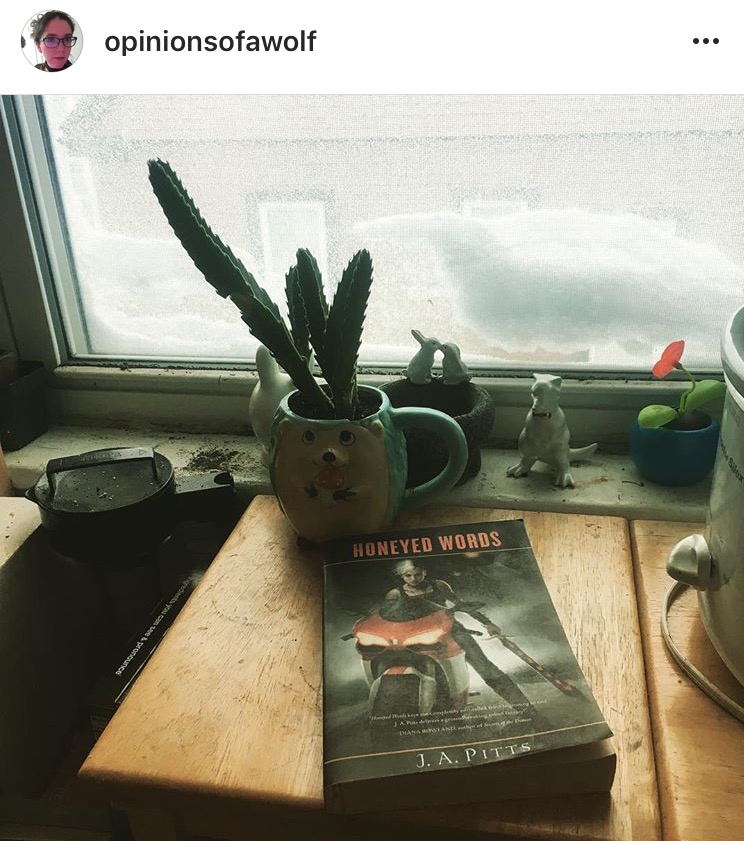
For more shots check out my bookstagram
Happy New Year everyone! I started my new year off with a reading bang reading a total of 6 books. I can’t say I’m too terribly surprised as the weather has been pretty…gross in New England. I’m not anti going outside in the cold but even I struggle to enjoy it when it’s so cold you’re at risk of frostbite if you’re out for more than 30 minutes. (It’s dangerously easy for me to tip over into that range with my commute using public transit). Anyway, nothing feels cozier than reading inside while it’s awful outside. While I had a range of reads this month, overall I read a lot of fantasy.
I started off the month with Honeyed Words by J. A. Pitts. My husband picked it up for me at a used bookstore in the $1 pile based on the cover and the fact that it was an urban fantasy starring a queer woman. That man knows me. Unfortunately, it turns out it was the second book in the series, and unlike a lot of urban fantasy, not enough was explained for me to be able to follow along very well. Sarah, the main character, is a blacksmith who also has a magical sword and fights dragons who run the world but usually appear as people? It was very confusing but I did enjoy the different (for urban fantasy) main character.
(3 out of 5 stars, buy it)
(source: gift)
Next I read the audiobook version of Connie Willis’s new scifi Crosstalk. This is about a near future with a surgical procedure to let partners feel each other’s feelings but when Briddey has it she finds herself able to hear the thoughts of the company weirdo and nothing from her boyfriend. I loved Willis’s To Say Nothing of the Dog but I was disappointed in this one. The plot was predictable in most ways. I didn’t actually like either of the main characters. The female main character in particular was disappointing…very little intelligence or self-starting. I did really like the little niece but I felt the adults who were supposed to be the heroes pushed her around far too much and refused to listen to her. Let’s put it this way: if this was my first Connie Willis read, I wouldn’t be seeking out more. So thank goodness I found To Say Nothing of the Dog first, or I’d have missed it.
(3 out of 5 stars, buy it)
(source: Audible)
I picked up a print book next, which I originally acquired from an indie publisher thanks to hearing good things about its YA fantasy with LGBTQ content – Valhalla by Ari Bach. Set in a near future where corporations run everything, a teenage girl finds herself with the opportunity to get vengeance for her parents’ death but only if she legally dies and lives with a group who work to keep the world in order. This was a weird book. I really had trouble getting past the ability to resurrect a person in their entirety so long as you have their brain in-tact, and I also found the politics odd and the plot ridiculous. It was readable and action-packed but I did a lot of eye-rolling. I won’t be continuing with the series.
(3 out of 5 stars, buy it)
(source: PaperBackSwap)
Our trip in December to the Grand Canyon reminded me of a book I’d bought a while ago on the history of the US National Forest Service (not to be confused with the National Park Service) – The Big Burn: Teddy Roosevelt and the Fire that Saved America by Timothy Egan. I already knew a bit about the history the NPS and NFS thanks to my time in service in Americorps. While I enjoyed everything I learned in the book, it is confusingly organized and repetitive. It needed more editing. For instance, I thought I was reading a book about a fire but a large part of the book was about literally everything about the Forest Service surrounding the fire. While that was informative, it wasn’t what I thought I was getting. Similarly there were passages of the parts of the book about the actual fire that really dragged–how many times do I really need to read about what the burned corpse of a horse looks like? So while I did learn a lot, which I appreciate, I do feel like it could have been better organized and streamlined.
(3 out of 5 stars, buy it)
(source: Amazon)
One of my reading goals is to read two print books a month, so I picked up a second after finishing Valhalla. I have a bookshelf of all my print books and I use random.org to randomly generate a number to select one. So my next read wound up being The Shadow Year by Hannah Richell a British mystery told in dual time-lines, one being modern day with a woman recovering from a horrific miscarriage and the other being in the 80s with five college friends sharing a cottage and trying to go off-grid basically. The women in the modern day dealing with her grief is given this same cottage, and the mystery is how the two timelines will intertwine. While the ending did surprise me, everything leading up to it was boring and predictable and led to me skimming a lot. I’m glad I read to the end because I found the twist interesting but the experience leading up to it wasn’t fun for me per se. I also think that consequences weren’t explored enough.
(3 out of 5 stars, buy it)
(source: PaperBackSwap)
I finished up my month by finally picking up the third book in a series I started ages ago – the Riders of the Apocalypse series by Jackie Morse Kessler. This YA fantasy series explores the four hoursemen of the apocalypse as beings who have to get replaced occasionally by new humans who take on the role and in this series each is being replaced by a teenager. Famine was replaced by a teenager with anorexia in the first book, and War by a teenager who self-injures in the second. The third horseman is Pestilence, and I wondered what mental illness would go with this. I thought maybe Factitious Disorder (previously known as Munchausen Syndrome) but it turns out the main character in Loss is a victim of bullying and a partial caretaker for his grandfather with Alzheimer’s. I wanted to like this so much but I just didn’t. I didn’t identify with the main character at all, and I also felt like the representation of sickness and health was overly simplistic (with a weird huge focus on the bubonic plague). Nothing felt as fully fleshed out as I would have liked it to have been, and I don’t think relating bullying to Pestilence works the way anorexia to Famine or self-injury to War did.
(3 out of 5 stars, buy it)
(source: Amazon)
Hm, turns out in spite of all the reading this was a bit of a mediocre month! Here’s hoping something strikes my fancy more in February.
My total for the month of January 2018:
- 6 books
- 5 fiction; 1 nonfiction
- 4 female authors; 2 male authors
- 3 ebooks; 2 print books; 1 audiobook
If you found this helpful, please consider tipping me on ko-fi, checking out my digital items available in my ko-fi shop, buying one of my publications, or using one of my referral/coupon codes. Thank you for your support!
September 2017 Reads – #fantasy, #nonfiction, #chicklit

For more shots check out my bookstagram
The end of September was our second wedding anniversary, and I feel like you can see my romantic mood reflected in the last two books of the month. I started out the month, though, with a fantasy and a nonfiction.
The fantasy was Kushiel’s Chosen Jacqueline Carey, the sequel to Kushiel’s Dart that I read in May. In this entry the main character is now a noblewoman instead of a bondservant but she still ends up sucked into the schemings and plottings of the those who would change the course of nations. While I overall enjoyed this entry in the series I felt that the length and action weren’t as well-balanced as in the first book. There was too little plot for the sheer length of the book.
(3 out of 5 stars, buy it)
(source: purchased)
I’ve always been interested in learning more about how to manage money so I picked up a copy of the nonfiction Rich Dad, Poor Dad by Robert T. Kiyosaki. This book seeks to compare and contrast the advice given by a rich mentor and a poor mentor and take the best of each world. While the initial concept is good what is lacking in the book is an ability to understand others and other life situations. There’s not one way that will work for everyone but the book presents the idea that everyone can achieve wealth in exactly the same way. And in all honesty the way presented, while it has some good ideas (such as to ensure you’re investing in assets rather than liabilities) it also relies a lot on other people not managing their money well (for instance in the case of being a lender to someone else or owning property and renting it out to others). While I’m not saying how the author achieved his money is wrong per se I will say that it’s not a way I personally would be comfortable running my own affairs from an ethical perspective. I would also say the book doesn’t necessarily age well. It reflects an ideal property investment market which we do not have currently. I did take away a few good tips from it though, such as the understanding what’s really an asset and what’s a liability tip mentioned before, so it wasn’t a total loss of time to read.
(2 out of 5 stars, buy it)
(source: library)
Next I decided it was high time I read the book one of my favorite chick lit movies is based on–Bridget Jones’s Diary by Helen Fielding. The basic plot of this is a 30-something in London keeps a diary for a year documenting both her attempts at self-improvement and her romantic exploits. I found Mark Darcy to be far more likable in the book than in the movie, and I understood Bridget’s attraction to him better. (In fact, reading the book version of him made me like him better in the movie version too. I was able to see the subtleties going on in the acting I’d missed before). I thought the plot with Bridget’s mother was much more well thought-out and a situation that made me have more empathy for Bridget than in the movie. I also liked how it’s very clear in the book that Bridget is obsessed with her weight but is actually a healthy weight and her friends will actually say something to her when she gets too thin. There was just something touching about her neuroticness in the book. As I said in my short initial review on GoodReads: v. good.
(4 out of 5 stars, buy it)
(source: purchased)
I rounded out the month with the Liane Moriarty chick lit from Australia – What Alice Forgot. Interestingly, this made it onto my wishlist long before the Big Little Lies miniseries hullabaloo. I just thought the plot sounded interesting. I didn’t even realize it was the same author until I had to wait in line for the book at the library. I decided to stick with starting with the book I was initially interested in, and I’m glad I did. It was such a hoot. Alice is 29, married/madly in love and pregnant with her first child. Then she wakes up and discovers she’s 39 and in the middle of a divorce. (Of course she has amnesia, she hasn’t actually time-traveled). What happened to make her marriage fall apart? It’s a giant mystery for her to solve. I really enjoyed this book. If you’re someone who really believes in marriage then the mystery of what happened to Alice’s really sucks you in. There’s also quite a bit in there about how you change over the course of your 30s and which of these changes are good or bad. I will say the ending was a bit meh to me. It felt kind of rushed and epiloguey and I’m just not sure how I feel about it in the long-run. It didn’t ruin my enjoyment of the experience of the read, though.
(4 out of 5 stars, buy it)
(source: library)
My total for the month of September 2017:
- 4 books
- 3 fiction; 1 nonfiction
- 3 female authors; 1 male author
- 3 ebooks; 1 print book; 0 audiobooks
If you found this helpful, please consider tipping me on ko-fi, checking out my digital items available in my ko-fi shop, buying one of my publications, or using one of my referral/coupon codes. Thank you for your support!
August 2017 Reads – #nonfiction, #scifi, #thriller

For more shots check out my bookstagram
August saw me picking back up some nonfiction (yay!) as well as a thriller and a scifi.
The first nonfiction actually wasn’t on purpose. I logged onto my library’s website and they have a collection of “rarely available” which basically means there’s currently a copy available which is unusual because this book is usually checked out. I checked out the nonfiction Marie Kondo’s The Life-Changing Magic of Tidying Up for amusement but guys…it actually has affected my life. I think of myself as being a pretty organized person but something about her method helped me take it to the next level. I reviewed this read in haiku format here.
(4 out of 5 stars, buy it)
(source: library)
Next I saw a book had come out by one an author I like – John Twelve Hawks. It’s the scifi Spark. This follows the agent in a secret special services section of a multinational corporation who also just so happens to have Cotard’s Syndrome – he believes he is dead. The themes are similar to those of author of Twelve Hawks’s works (beware of The Man, no matter who is currently in control) but the focus is on one main character instead of many/the whole world.
(4 out of 5 stars, buy it)
(source: library)
Throughout the month I read a thriller in audiobook format called Don’t Close Your Eyes by Holly Seddon. This book follows twin sisters who haven’t spoken in years. One lives as a shut-in and the other has been kicked out by her husband and denied access to her young daughter. My enjoyment of this book was hurt by the audio recording. The two sisters were read by two different performers and while one was excellent the other was very stale and boring to listen to. It kept me from getting too wrapped up in the story. That said, I thought the thriller had some unnecessary red herrings, took a bit too long to get where it was going, and I honestly thought the ending was too kind to a particular villain.
(3 out of 5 stars, buy it)
(source: Audible)
I finished up the month with In the Realm of Hungry Ghosts: Close Encounters with Addiction by Gabor Mate. In this work, Dr. Mate examines addiction in the context of his longtime work with the addicts living in Vancouver’s notorious Downtown Eastside. The perspective of someone working so closely with victims of addiction is an important one to have. Dr. Mate sees the realities day in and day out. He’s also honest about how sometimes he is able to feel compassion and how other times he gets frustrated. Woven in with his recollections of particular patients are discussions of the science of addiction and Dr. Mate’s own take on it. I did feel that Dr. Mate sometimes got a bit too wrapped up in himself. I found his attempts to compare his music cd buying issues with drug and alcohol addiction to be a bit ill-tasting in my mouth and revisited too often. I also felt it muddied the waters of the people whose stories he was telling and the science he was presenting. The academic in me also wondered how he went about getting permission to include certain people in the book (for instance, those who have passed away). However, regardless this was an important read for anyone interested in the current addiction crisis.
(4 out of 5 stars, buy it)
(source: library)
My total for the month of August 2017:
- 5 books
- 2 fiction; 2 nonfiction
- 2 female authors; 2 male authors
- 3 ebooks; 0 print books; 1 audiobook
If you found this helpful, please consider tipping me on ko-fi, checking out my digital items available in my ko-fi shop, buying one of my publications, or using one of my referral/coupon codes. Thank you for your support!
A trio of #nonfiction Reviewed in #Haiku

We All Wore Stars: Memories of Anne Frank from Her Classmates
By: Theo Coster
Summary:
Theo Coster was one of 28 Jewish Dutch students segregated into their own classroom by the Nazis. Another one of these students was Anne Frank. Theo gathers stories from other surviving students and himself both of their experiences of the Holocaust and their memories of Anne.
Haiku Review:
All together yet
Each experience unique
Grounding reminder.
4 out of 5 stars
Source: Gift
Buy It
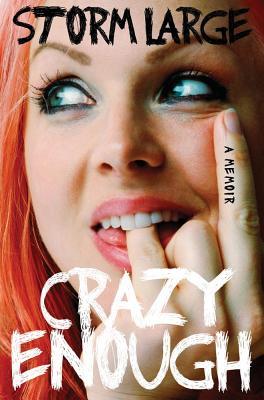
Crazy Enough: A Memoir
By: Storm Large
Summary:
Storm knew growing up her mother was crazy so it was pretty scary when a doctor responded to her inquiry if she was crazy like her mother that she wasn’t yet but was going to be. Follow Storm through her journey of multiple diagnoses and a search to be more than just crazy.
Haiku Review:
A one-woman show
Reflects in the narrative
Left with some questions
3 out of 5 stars
Source: Publisher
Buy It

The Life-Changing Magic of Tidying Up: The Japanese Art of Decluttering and Organizing
By: Marie Kondo
Summary:
Japanese cleaning consultant vows she’s never had a client relapse after following her sort everything once by category not by room and then organize it method. You may have heard jokes in social media about her sorting method being based on “does this spark joy?”
Haiku Review:
Some good tips mixed with
Animism but take it
With a grain of salt
4 out of 5 stars
Source: Library
Buy It
If you found this helpful, please consider tipping me on ko-fi, checking out my digital items available in my ko-fi shop, buying one of my publications, or using one of my referral/coupon codes. Thank you for your support!
Book Review: Nothing to Envy: Ordinary Lives in North Korea by Barbara Demick
 Summary:
Award-winning journalist Barbara Demick follows the lives of six North Korean citizens over fifteen years–a chaotic period that saw the death of Kim Il-sung, the rise to power of his son Kim Jong-il, and a devastating famine that killed one-fifth of the population. Demick brings to life what it means to be living under the most repressive totalitarian regime today–an Orwellian world that is by choice not connected to the Internet, where displays of affection are punished, informants are rewarded, and an offhand remark can send a person to the gulag for life. Demick takes us deep inside the country, beyond the reach of government censors, and through meticulous and sensitive reporting, we see her subjects fall in love, raise families, nurture ambitions, and struggle for survival. One by one, we witness their profound, life-altering disillusionment with the government and their realization that, rather than providing them with lives of abundance, their country has betrayed them.
Review:
One thing the official blurb doesn’t mention is that all 6 of the North Korean escapees Demick interviewed were from the same town of Chongjin. This allowed for her to get multiple perspectives of life in the same town over the course of the 1980s and 1990s. I think this is key because it allowed her to, through their eyes, get a well-rounded sense of what life in Chongjin was like in those decades.
Since I had just read The Girl with Seven Names (review), the extent of the brainwashing North Korean citizens go through their entire lives and how difficult it is to escape (physically and mentally) were not revelatory to me. However, I do think this information is presented quite well by Demick, and there is added value in getting it from 6 different voices, instead of the one in the memoir I started out with.
What struck me the most as new information in this book was actually the famine in North Korea. I hadn’t heard of it, and every single person interviewed by Demick was touched by it. Some more than others. One of the people interviewed was a homeless child during the famine whose growth was permanently stunted by his starvation. For those wondering, the famine was the result of North Korea’s various trade agreements falling through after the fall of the USSR. Humanitarian agencies did send aid, but the North Korean officials intercepted it and either took it or sold it on the black market. Demick speaks at length how this incredibly long-lasting famine impacted not just people’s bodies but their psyche and can lead them to do things they normally wouldn’t for survival.
Her indifference was an acquired survival skill. In order to get through the 1990s alive, one had to suppress any impulse to share food. To avoid going insane, one had to learn to stop caring. (location 2109)
I already knew of the horrible gulags (prison camps) in North Korea but some of the people Demick interviewed had actually been in some of the less severe ones. They spoke of familial bribery and overcrowding as ways they got out. The crimes they commited to be sent to these concentration camp style prison camps, by the way, were things like smuggling goods and escaping to China. One new fact I learned about these prison camps that will haunt me for a while is this:
North Koreans have multiple words for prison in much the same way the Inuit do for snow. (location 2740)
Demick goes more in-depth into what happens to the North Koreans who do manage to escape to South Korea. How well do they acclimate? What are their lives like? She speaks about how many of them are struggling to save money to pay to have human smugglers help sneak their remaining family members out of North Korea. The most heartbreaking of these stories is the mother who escaped to China and had to leave her two children behind with their father who was still loyal to North Korea. Her children are grown now, and she’s still trying to get in contact with them to help them escape. In addition to the difficulties of trying to save remaining family members there’s the fact that capitalism is new to the North Korean escapees, and that South Korea really has a different culture at this point. There’s a lot of struggles to adapt to both that Demick does a good job demonstrating by letting her interviewees speak for themselves.
Demick did a wonderful job interviewing and assembling the stories of these 6 refugees. She both lets their stories speak for themselves and interjects at appropriate times with astute analysis. Recommended to those with an interest in North Korea who want some narrative story with critical analysis.
If you found this review helpful, please consider tipping me on ko-fi, checking out my digital items available in my ko-fi shop, buying one of my publications, or using one of my referral/coupon codes. Thank you for your support!
4 out of 5 stars
Length: 316 pages – average but on the longer side
Source: Library
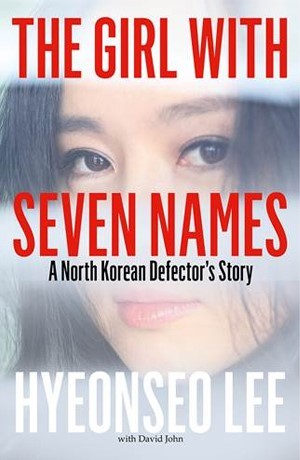
Book Review: The Girl with Seven Names: A North Korean Defector’s Story by Hyeonseo Lee
 Summary:
An extraordinary insight into life under one of the world’s most ruthless and secretive dictatorships – and the story of one woman’s terrifying struggle to avoid capture/repatriation and guide her family to freedom.
As a child growing up in North Korea, Hyeonseo Lee was one of millions trapped by a secretive and brutal totalitarian regime. Her home on the border with China gave her some exposure to the world beyond the confines of the Hermit Kingdom and, as the famine of the 1990s struck, she began to wonder, question and to realize that she had been brainwashed her entire life. Given the repression, poverty and starvation she witnessed surely her country could not be, as she had been told “the best on the planet”?
Aged seventeen, she decided to escape North Korea. She could not have imagined that it would be twelve years before she was reunited with her family.
She could not return, since rumors of her escape were spreading, and she and her family could incur the punishments of the government authorities – involving imprisonment, torture, and possible public execution. Hyeonseo instead remained in China and rapidly learned Chinese in an effort to adapt and survive. Twelve years and two lifetimes later, she would return to the North Korean border in a daring mission to spirit her mother and brother to South Korea, on one of the most arduous, costly and dangerous journeys imaginable.
Review:
I’ll never forget the first time I learned about North Korea’s terrifying dictatorship. I was discussing the horror of the concentration camps with someone as a young teen, and a person nearby said, “You know those still exist. North Korea calls them gulags.” I looked it up, and one of the first things I found was a child’s drawings of life inside. I later found out that we only have stories from the least bad of the gulags. The worst tier no one has escaped from to tell us what happens inside them. It’s really horrifying. Last fall, I decided it was time I learned more about North Korea, so I went looking and this book spoke to me as a place to start. I like first-hand accounts, it’s from the perspective of an ordinary citizen, and I liked the title. I got more than I had bargained for. While this memoir would be good regardless of the writing style because Hyeonseo’s life is just that interesting, her writing is articulate and insightful.
Hyeonseo does a wonderful job writing realistically and yet with empathy about herself as a child who had been fully fooled by the North Korean government. It can sometimes be difficult to understand how people can believe x, y, z but this book makes it easy to understand how it can happen and amazing that anyone manages to start doubting such an all-encompassing worldview.
One of the more surprising parts of the book to me was that at first Hyeonseo just wanted to see China. She had no intention of leaving North Korea forever. It’s just once she got out and visiting relatives in China she dragged her feet about going back until it was too dangerous for her to go back. (She would have been captured upon return and put in a prison camp for daring to leave at all). She now was in China with a totally different life path than she’d initially imagined. What was originally a vacation was now most likely a lifetime of being a fugitive. I think this part of the book is where Hyeonseo’s practicality and iron will first shine through:
Now that I was to stay indefinitely in China, I had to learn Mandarin. And I had the best teacher – necessity. You can study a language for years at school, but nothing helps you succeed like need, and mine was clear, and urgent. (location 1781)
I learned so much in this book beyond the horrors of what happens in North Korea. Like that China has an extradition agreement with North Korea which means that if any refugees are caught in China they are brought back to North Korea to face certain imprisonment and possibly death. I can’t imagine what it would be like to escape a dictatorship into the neighboring country and know at any moment you could be seized and sent back.
I also learned that South Korea has declared any North Koreans who make it to their land to be South Koreans and actually provide a lot of repatriation assistance but that the divide is growing between North and South Korean cultures the longer the divide is up, and some are concerned about how the two can ever be reunified once the North Koreans are freed from the dictatorship.
Hyeonseo provides a lot of insightful commentary about living under a dictatorship, human nature, brainwashing, and more. My favorite though was this:
There is no dividing line between cruel leaders and oppressed citizens. The Kims rule by making everyone complicit in a brutal system, implicating all, from the highest to the lowest, blurring morals so that no one is blameless. (location 2368)
The only other thing I wish to say is that everyone should read this book.
If you found this review helpful, please consider tipping me on ko-fi, checking out my digital items available in my ko-fi shop, buying one of my publications, or using one of my referral/coupon codes. Thank you for your support!
4 out of 5 stars
Length: 304 pages – average but on the longer side
Source: Library
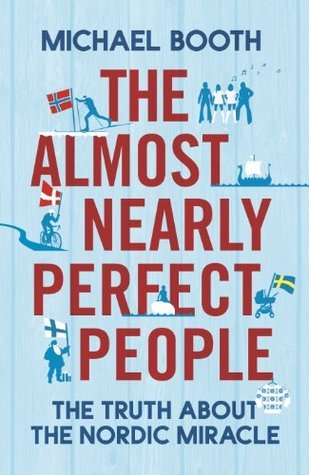
Book Review: The Almost Nearly Perfect People: Behind the Myth of the Scandinavian Utopia by Michael Booth
 Summary:
Michael Booth has lived among the Scandinavians, on and off, for over ten years, perplexed by their many strange paradoxes and character traits and equally bemused by the unquestioning enthusiasm for all things Nordic that has engulfed the rest of the world, whether it be for their food, television, social systems or chunky knitwear.
In this timely book he leaves his adopted home of Denmark and embarks on a journey through all five of the Nordic countries to discover who these curious tribes are, the secrets of their success and, most intriguing of all, what they think of each other. Along the way a more nuanced, often darker picture emerges of a region plagued by taboos, characterised by suffocating parochialism and populated by extremists of various shades.
They may very well be almost nearly perfect, but it isn’t easy being Scandinavian
Review:
I could easily sum this book up in one sentence: No society is perfect. But that wouldn’t tell you too much about the actual book as a whole, so let’s get down to it.
Booth is a British man who married a Scandinavian woman and thus has lived Denmark on and off for years. He was surprised and confused by the sudden obsession with Scandinavian “happiness,” so he set out to write a book about what Scandinavia is really like. The book is divided into five sections, one for each Scandinavian country. In each section he explores the culture, economy, history, and politics of each nation. Booth writes in a very tongue-in-cheek way. Don’t read this expecting a dry read.
I’m a pretty pragmatic person, so I didn’t come into it thinking of Scandinavian countries as the utopia the news would often have us believe. I was hoping to have a clearer understanding the differences among them (beyond Iceland, which always stands out). My biggest understanding after reading it is that: Sweden makes the pop stars, Norway is kind of like Scandinavia’s American South, Denmark borders Germany, and Finland is rather cross about being the protecting line between Scandinavia and Russia. Frankly, though, they’re all still kind of mixed up in my brain. I think the nuance of the differences among them are probably like how I as a New Englander understand the difference between all the New England states but ask an outsider, and they’ll just lump us all together. Some things you can only learn by living there.
The book mostly confirmed a few things I suspected about the Scandinavian socialist utopias. There’s high taxes and a lot of people don’t work that much. Here’s a few interesting quotes on both of those topics.
- More than 754,000 Danes aged between fifteen and sixty-four—over 20 percent of the working population—do no work whatsoever and are supported by generous unemployment or disability benefits. (location 305)
- Danes are allowed to decide the fate of one-third of the money they earn. Put it yet another way: in Denmark, even if you work in the private sector, you work for the state up until at least Thursday morning. (location 951)
- Perhaps the most troubling aspect of Norway’s social structure is the fact that about a third of all Norwegians of working age do nothing at all. (location 3055)
I know that sounds fine to some people, but there’s nothing that gets a New England woman riled up quite like the idea of slews of the population not working. (Just look up “Protestant work ethic” if you’re confused).
As someone who works in education, I was interested in the much talked about education systems of these countries. I primarily learned that there’s nothing that special about them except the fact that teaching is a profession that is held in high regard in these countries. In Finland, it can be more difficult to get into teaching school than law or medicine (location 4239). But Booth didn’t go as much into the educational system as I would have liked.
I also learned that “Lapps” is now considered a racist term for the Native population. They should instead be called “Sami” (location 2819). Sweden has the highest per capita rate of rape in Europe (location 5872), and Sweden while being a huge proponent of peace is also the world’s eighth largest arms exporter (location 5411).
What I found most interesting in the book was the discussion of how various surveys and studies decided the Scandinavians are the happiest. If you’re at all interested in flawed survey design, definitely check that out. It’s toward the beginning of the book. Booth’s theory is that it’s not so much that Scandinavians are happier it’s just that they don’t set their expectations very high so they can’t be disappointed. I was amused at the idea that it’s a culture that’s naturally mindful, regardless of what else is going on.
The book ends with a lot of discussion of politics that I honestly found to be dull, compared to the sharp wit and social observations and dissection in the beginning of the book. It almost felt like two books smashed into one, and I really only enjoyed the first one.
Recommended, nonetheless, to readers interested in a better understanding of the Scandinavian countries. Provided they have a sense of humor of course.
If you found this review helpful, please consider tipping me on ko-fi, checking out my digital items available in my ko-fi shop, buying one of my publications, or using one of my referral/coupon codes. Thank you for your support!
3 out of 5 stars
Length: 416 pages – average but on the longer side
Source: Library
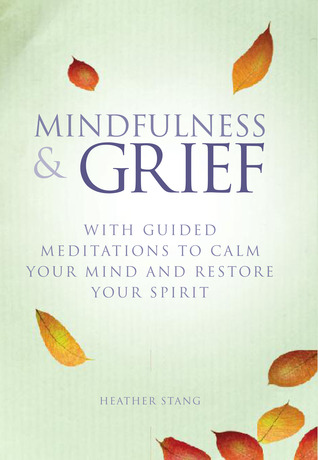
Book Review: Mindfulness and Grief: With Guided Meditations to Calm Your Mind and Restore Your Spirit by Heather Stang
 Summary:
Mindfulness & Grief is an eight-week guide using meditation, yoga, journaling and expressive arts, plus inspirational stories, to help you reduce suffering and emerge transformed on the other side of loss.
Review:
Most of my readers know that I lost my father suddenly and unexpectedly last November (my eulogy). I reached out for books to help me, as I have my whole life. I reviewed the first one I read here. The first book I reached out to was a more raw experience, and I think that’s reflected in that review. For the second book, I was particularly seeking something to guide me so I didn’t become stuck in any one feeling or place. I’m not religious, but I do consider myself to be both science-minded and spiritual, and I know mindfulness holds a lot of esteem in psychology. So when I saw this book offering basically an 8 week course in mindfulness specifically for grief, I thought it’d be a good match.
It’s obvious that it took me much longer than 8 weeks to complete the book. I think putting 8 weeks on there is a bit unrealistic. I often found at the end of the week in question that I wasn’t yet ready to move on to the next phase or that I hadn’t had time to do the activities in the book yet. I think the book often fails to consider how busy the person who is also grieving might be. There is much more going on in your life than the grief and so it must be compartmentalized and dealt with only periodically. That said, I did find the phases to be appropriate and in the right order, and once I gave myself permission to do them at whatever pace I deemed appropriate, I found working through them helpful.
Each chapter talks about where you might be emotionally at this point and offers stories from others who’ve gone through the grief process to help you feel less alone. Each chapter ends with some activities to do. Some of them are guided meditations, others are prompted journaling and still others are activity suggestions such as specific types of yoga or walking. I found the journaling prompts to be the most helpful. They were straight-forward and often pushed me to encounter an uncomfortable feeling I was trying to avoid in my grief and work through it.
The book said that the guided meditations could be accompanied by recordings on the partner website but at the time I was trying to do them I could not find them. It’s not easy to do a guided meditation that you must repeatedly open your eyes and read. I suppose I could have made my own recordings based on what the book said but my energy level was low at the time (due to the grief) and I instead tried to use them with the book, which wasn’t particularly helpful. I think this book could work really well if it came with a digital download of the meditations and maybe even some guided yoga sessions. There were a few written out yoga sessions as well, which I always find difficult to follow.
In spite of the shortcomings, I still found this book helpful in my grief. It wasn’t exactly the program to follow that I was expecting but it did provide timely journaling prompts and stories from others that helped me feel comforted.
If you found this review helpful, please consider tipping me on ko-fi, checking out my digital items available in my ko-fi shop, buying one of my publications, or using one of my referral/coupon codes. Thank you for your support!
4 out of 5 stars
Length: 144 pages – short nonfiction
Source: Amazon
 Support my work with a tip or browse my shop for curated book club guides, how to guides, cross-stitch patterns, and more!


This work by Amanda Nevius is licensed under a Creative Commons Attribution-Noncommercial-No Derivative Works 3.0 United States License.
 Opinions of a Wolf