
Archive
Book Review: Yesteryear by Caro Claire Burke
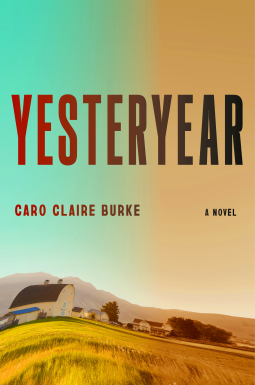
Yesteryear by Caro Claire Burke is an attempted satirical takedown of tradwife influencer culture that ultimately reflects a shallow understanding of fundamentalist Christianity and collapses under the weight of its third act.
This review contains major spoilers and discusses themes of religious fundamentalism, mental illness, and queerness.
Summary:
My name was Natalie Heller Mills, and I was perfect at being alive.
Natalie lives a traditional lifestyle. Her charming farmhouse is rustic, her husband a handsome cowboy, her six children each more delightful than the last. So what if there are nannies and producers behind the scenes, her kitchen hiding industrial-grade fridges and ovens, her husband the heir to a political dynasty? What Natalie’s followers—all 8 million of them—don’t know won’t hurt them. And The Angry Women? The privileged, Ivy League, coastal elite haters who call her an antifeminist iconoclast? They’re sick with jealousy. Because Natalie isn’t simply living the good life, she’s living the ideal—and just so happens to be building an empire from it.
Until one morning she wakes up in a life that isn’t hers. Her home, her husband, her children—they’re all familiar, but something’s off. Her kitchen is warmed by a sputtering fire rather than electricity, her children are dirty and strange, and her soft-handed husband is suddenly a competent farmer. Just yesterday Natalie was curating photos of homemade jam for her Instagram, and now she’s expected to haul firewood and handwash clothes until her fingers bleed. Has she become the unwitting star of a ruthless reality show? Could it really be time travel? Is she being tested by God? By Satan? When Natalie suffers a brutal injury in the woods, she realizes two things: This is not her beautiful life, and she must escape by any means possible.
Review:
What it does well
I love the set-up of this book. A tradwife influencer wakes up in the 1800s she was pretending to want to live back in and has to face the stark reality of that. Told in the tradwife “present,” flashbacks to her life before her influencer status, and flash forwards to her 1800s time travel. I was hooked. I needed to know how the time travel happened. The set-up reminded me of Kindred by Octavia Butler only with a hateable main character.
A note on my perspective:
I was raised a closeted bisexual cis girl in a fundamentalist Evangelical family. I, in modern terms, deconstructed and have become a progressive queer Christian adult. Nattie’s culture is the one I was raised in and am deeply familiar with. I was literally a rurally raised homeschooled girl who wasn’t allowed to wear pants. The author gets a lot wrong.
Religious inaccuracy and cultural flattening:
It is deeply unclear precisely what religion Nattie is. This should be clear, as a twisting of a specific faith into something for the far-right to weaponize is at the core of tradwife influencer culture. She goes to church every Sunday growing up with her mother and sister. She and her young, rich husband share a religion. But she only ever says “Christian.” If we are to assume that it is a fundamentalist version of US American Christianity, then it could broadly be Evangelical, traditional Catholic, or Latter-Day Saint. And that’s not even getting picky about denomination (Non-denominational? Baptist?). Here’s what we do know. She goes to church, not temple, so probably not LDS, even though she’s very clearly inspired by Ballerina Farm who is LDS. She gets full-immersion baptized as a teenager, so not Catholic. However, the book says a PRIEST baptizes her. The only denominations that refer to their leaders as priests do not perform full-immersion baptism. It’s a factual error that made me cringe. A lot.
Later in the book, Nattie crosses herself. She also has a hallucination that is clearly based on confession. Both of these are only done, again, by denominations with priests (Anglicans, Catholics). But she does none of the other things those denominations might do like observe a liturgical calendar or acknowledge saints. Despite this confusion, Nattie is portrayed as truly devout. We see inside her head. She prays a lot. She desires to be close to God. Yet, she never studies her Bible. She never brings her children to church, in spite of going every Sunday herself growing up. And church isn’t replaced by home church with her husband.
Another issue is AFTER she deconstructs, Nattie’s mother tells her she’s simply never been nice enough. The demand to “keep sweet” is a very common demand made of evangelical girls and women. We saw it in the Duggar family, and I lived it myself. Girls and women are supposed to be nice all the time. It makes no sense to me that her deconstructed mother’s main argument against her tradwife influencer daughter is she isn’t nice enough. A deconstructed person would be much more likely to say, “you’re lashing out because you’ve been asked to be something you’re not for so long. I want to know who you really are.” Not “why can’t you be nice?!”
All of these details point to an author writing from outside this culture who did not do the work required to understand it, resulting in a shallow, flattened portrayal of fundamentalist Christianity that borrows its aesthetics without engaging its lived realities. It’s this weird mash-up of things tradwife influencers mention without any understanding that tradwives come from different denominations with different ways of doing things and different belief systems.
Queer representation:
As a queer person myself, I’m deeply bothered by the way Nattie’s assault on her employee, Shannon, is presented. First of all, her first person account seems to be that she attempted to strangle her. But later Shannon says she sexually assaulted her. Which is the truth? The end of the book takes Shannon’s statement as face value. Nattie assaulted her because she’s a closeted lesbian. Nattie never admits to this, but she doesn’t deny it either. Does she think this is less bad than attempting to strangle her? Given her entire family’s response (and my own lived experience of fundamentalist opinions of queer people), it seems unlikely. If it is the case that we’re supposed to read this as Nattie has always been a closeted lesbian, then this is horrible representation. Not that LGBTQ folks can’t ever be the villain, but closeted people don’t automatically abuse their children and assault their employees.
Mental health representation:
Then there is the mental health representation. It is clear that Nattie first starts to fall apart after the birth of her first child when she develops very clear post-partum depression that a nurse expresses concern over and wants to get her help for but her mother intervenes and says she just needs to start running again. Her post-partum depression never gets better, she doesn’t actually enjoy mothering, but she keeps having children both because it’s what God wants and because it’s what her father-in-law demands in exchange for funding their hobby farm.
Ok, so here we get to the full mess. The big twist is that Nattie hasn’t time traveled to the 1800s. She hasn’t been kidnapped. After the big PR disaster of Shannon revealing the assault, her husband tells her that his father wants her to be killed. She suggests instead that what her husband really has always wanted is just to be left alone and they can do that. They can cut themselves off from the world and live like it’s the 1800s. They do just that, with the older children running away, and they are left with just the toddler and the children born after her. She thinks it’s literally the 1800s when she wakes up one day because she has periodic psychotic breaks. She thinks she might be being filmed for a reality tv show because, again, she’s lost her mind.
When her oldest daughter finally shows up years later with a court order for the children (there is no way on earth that would have taken that long, but that’s another tangent for another day), she expresses some sympathy for her mother but the court system prosecutes her and puts her in prison for 30 years for child abuse. Of course she did abuse her children but she is also very clearly very mentally unwell, and many other people boosted up this scheme of hers (her husband, other family that brought food to the edge of the property for the husband to pick up, the husband was escaping to a cabin with electricity and tv every day to watch football while she was actually living like the 1800s). The novel wants to have it both ways: to explain her behavior through mental illness while denying her any meaningful context, care, or accountability framework.
Final verdict:
I saw another review that said this book feels like it was written by one of the “Angry Women” Nattie talks about. The liberal women who are angry at her for existing. You can have a problem with far right culture and tradwife influencers and write a book about it. But you also need to actually understand the culture and not stomp on people with mental illnesses and necessarily closeted LGBTQ folks in the process.
Ultimately, while the satire of influencer culture is sharp, the novel’s handling of fundamentalism, queerness, and mental illness is reductive and stigmatizing. Additionally. its explanation for how Natalie ends up “in the 1800s” is far less imaginative and less effective than a true speculative or magical realist turn would have been.
If you found this review helpful, please consider tipping me on ko-fi, checking out my digital items in my ko-fi shop, buying one of my publications, using one of my referral or coupon codes, signing up for my free microfiction monthly newsletter, or tuning into my podcast. Thank you for your support!
2 out of 5 stars
Length: 400 pages – average but on the longer side
Source: NetGalley
Buy It (Amazon or Bookshop.org)
Book Review: How Far the Light Reaches: A Life in Ten Sea Creatures by Sabrina Imbler

A powerful blend of memoir and marine biology exploring environmentalism, queer theory, and biracial identity through the lens of deep-sea creatures and personal reflection.
Summary:
A queer, mixed race writer working in a largely white, male field, science and conservation journalist Sabrina Imbler has always been drawn to the mystery of life in the sea, and particularly to creatures living in hostile or remote environments. Each essay in their debut collection profiles one such creature: the mother octopus who starves herself while watching over her eggs, the Chinese sturgeon whose migration route has been decimated by pollution and dams, the bizarre Bobbitt worm (named after Lorena), and other uncanny creatures lurking in the deep ocean, far below where the light reaches. Imbler discovers that some of the most radical models of family, community, and care can be found in the sea, from gelatinous chains that are both individual organisms and colonies of clones to deep-sea crabs that have no need for the sun, nourished instead by the chemicals and heat throbbing from the core of the Earth. Exploring themes of adaptation, survival, sexuality, and care, and weaving the wonders of marine biology with stories of their own family, relationships, and coming of age, How Far the Light Reaches is a book that invites us to envision wilder, grander, and more abundant possibilities for the way we live.
Review:
A queer memoir intertwined with fascinating ocean facts? Yes, please! This is a beautifully written exploration where each chapter examines a unique sea creature and, surprisingly, connects it to the author’s own life.
I learned so much about marine biology in an easily digestible way, and here are three of my favorite facts:
- Octopuses die after spawning and starve themselves while incubating their eggs.
- Hydrothermal vents come and go across the ocean floor, creating temporary ecosystems.
- Selps, a type of jellyfish, move together, but at different speeds.
What really stood out to me, though, was Sabrina Imbler’s introspective and self-aware reflections on their life. As a white person, I was moved by how candid they were about their experiences of being biracial. I appreciated how they expressed that being mixed-race is an identity that doesn’t need to be “resolved”—“I am Chinese. I am white.” This honest exploration of their mixed-race identity resonated with me far more than their exploration of queerness, which, while meaningful, didn’t linger as strongly in my memory. If you’re drawn to memoirs that delve deeper into queer identity, check out my review of A Queer and Pleasant Danger.)
Please be aware that this book addresses the sensitive topics of racism, environmental injustice, and animal abuse. Sabrina also explores an instance of sexual violence they experienced as a youth, reflecting on how it shifted from being a “joke” to something they realized was deeply troubling.
I listened to the audiobook version, narrated by Sabrina themselves, which was stellar. Their narration felt like listening to a close friend, making the experience even more immersive.
Overall, this is an incredibly moving and educational memoir. It’s a unique blend of personal reflection and marine biology, offering readers a fresh way to explore the world. Highly recommended for those interested in memoirs with a scientific twist and a deep dive into the complexities of identity.e of the author’s favorite subjects – marine biology. Recommended to those interested in a unique storytelling method in a memoir, as well as those with a personal interest in marine biology.
If you found this review helpful, please consider tipping me on ko-fi, checking out my digital items available in my ko-fi shop, buying one of my publications, using one of my referral/coupon codes, or signing up for my free microfiction monthly newsletter. Thank you for your support!
5 out of 5 stars
Length: 263 pages – average but on the shorter side
Source: Library
Buy It (Amazon or Bookshop.org)
Announcement: Sign Up to Get FREE Advanced Reader Copies (ARCs) of My Upcoming 2024 Releases!

I’m so excited to announce that sign ups are now open to receive Advanced Reader Copies of my upcoming 2024 book releases! You can sign up for all of them, one, or a couple.
My releases planned for 2024 are:
- A sweet sapphic short story collection (June)
- A pro-environmentalism scifi novel that also confronts grief and disordered eating (late summer)
- The sequel to Ecstatic Evil a m/f paranormal romance (fall)
This list and schedule are subject to change!
Although difficult topics may be addressed in my books, I strive for my work to end on an uplifting note.
- Any scifi or fantasy I write would be rated PG13 or less if it was a movie.
- Please note that any romance I write is closed door.
- I’m a queer, bisexual author. Sometimes my romances are m/f, sometimes sapphic, sometimes other queer pairings or mentions of poly relationships. Most of my stories have queer people somewhere in them, even if they aren’t the main characters. If that’s not cool with you, please don’t sign up.
- All of my books start with a content note. You can see examples by reading the free samples available for Bloemetje, Ecstatic Evil, and Waiting for Daybreak.
If you sign up to receive an ARC, you will receive:
- an email from me without any attachments letting you know the book is coming soon and to keep an eye out on your inbox and spam (approximately 2 to 3 weeks prior to publication date)
- an epub file of the book to your email address provided 1 to 2 weeks prior to publication date
In exchange for the free book you will:
- post an honest review of the book wherever you review books (ie Amazon, GoodReads, Storygraph, a blog, Instagram, TikTok, etc…)
- not share the epub file with anyone else
If you decide not to read the book after receiving it due to the content note or it just not turning out to be a match for you, that’s ok!
*If you change your mind about receiving ARC(s) after signing up, just email me at mcneil.author [at] gmail [dot] com, and I’ll remove you from my list.
Book Review: Amen Maxine by Faith Gardner

You move cross-country with your brand-new husband and newborn to start a new life only for your digital assistant to inform you that your husband is going to try to kill you.
Summary:
Welcome to Silicon Valley, where the weather is perfect, the income is high … and Rowena Snyder is miserable. A transplant from New York, Rowena moved into her husband Jacob’s idyllic childhood home with their new baby. But suburbia isn’t Rowena’s cup of Starbucks. And she’s got serious anxiety and depression to boot.
Jacob, worried about their marriage, scores a new product currently in beta testing from his tech job: Maxine, a “digital friend” that bonds with an individual by continually gathering their personal data. Along with functioning like an upscale digital assistant, Maxine has “advice” and “prediction” modes that have shown promise for patients with mental health issues. To Rowena’s shock, the device turns out to be not just helpful, but eerily accurate, predicting events before they occur.
It’s a godsend until Maxine offers a series of increasingly bone-chilling predictions that will change Rowena’s life forever.
This domestic suspense novel asks, who do you trust more—your mind, your man, or your machine?
Review:
This book had me nodding my head in understanding while also absolutely cackling. The main character, Rowena, has some flavor of anxiety disorder. How she feels about the world and the reassurance she seeks was quite relatable to me. But she’s also really droll and fun to see interact with her world. When her husband brings home a digital assistant from his job that’s in beta testing for helping people with depression or anxiety, she’s skeptical and reticent to use it. Until she needs directions on the least anxiety-provoking way to go for an errand. Then she’s sold. But just when she’s getting comfortable with using Maxine and getting out into the world more, it tells her that her husband is planning to kill her.
The first 50% of the book was the perfect blend of suspense and humor. I loved that the way Rowena has to confirm changes to the digital assistant is to say “Amen Maxine.” It lends itself to some pretty funny dialogue. I also liked how the book explores in a not banging you over the head with it way the risks of using technology to treat mental health. Is it really working or is it making things worse? This part of the book was a solid five stars to me.
The last half of the book lost the sense of humor and became somehow both darker and less unique than the beginning. I feel like I would have enjoyed it more if it wasn’t in such contrast to the beginning. But the ending twist was still a surprise, and I was left feeling like I’d read a unique story. I received the print book as a gift, and I didn’t even realize it was indie published. I thought it was a small press. It’s quite professionally done.
I would be remiss not to mention that the main character is bisexual. She’s wonderful representation with her bisexuality being a part of her and her life, but not something she dwells upon. I also liked how she naturally seeks out other queer people after her move for friendship.
One thing that surprised me when I finished it and added it to my GoodReads is that the title has now changed. The author recently changed the title to The Prediction. Personally I like Amen Maxine better but I hope that the change for presumably marketing reasons is beneficial to her. But if you are interested in the book – look for The Prediction by Faith Gardner or use my direct link provided.
Overall, this was a fun psychological thriller with an interesting main character and a unique plot. If you’re a usual reader of thrillers, you’ll likely enjoy it. If you don’t usually read thrillers but are intrigued by the idea of a maybe evil digital assistant, give it a try.
If you found this review helpful, please consider tipping me on ko-fi, checking out my digital items available in my ko-fi shop, buying one of my publications, using one of my referral/coupon codes, or signing up for my free microfiction monthly newsletter. Thank you for your support!
4 out of 5 stars
Length: 262 pages – average but on the shorter side
Source: gift
Buy It (Amazon, not available on Bookshop.org)
Book Review: Wanderlust by Elle Everhart

In this romcom that tackles hard topics, Dylan wins a trip around the world, the only catch is she has to go with a man she ghosted months ago.
Summary:
Feeling stuck at work and tired of London’s dreary weather, magazine writer Dylan Coughlan impulsively rings a radio station one day only to win a once-in-a-lifetime trip around the world. The catch? Her travel partner must be a contact randomly selected on her phone. And of course this stressful game of contact roulette lands on a number listed only as Jack the Posho, an uptight, unbearably posh guy she met on a night out and accidentally ghosted.
The two couldn’t be more different, and as the trip kicks off, Jack seems like he’d sooner fling himself into the sun than have a conversation with Dylan. But more is hinging on this trip than the chance to see the world. For the past two years, Dylan’s been relegated to writing quizzes (and only quizzes) at her lifestyle magazine after an article about her past abortion went viral—and not in the good way. If she’s able to make a series about their trip successful, her overbearing boss will give her a chance at a permanent column. Dylan’s willing to do anything to make the series a hit, even if it means embellishing her and Jack’s relationship to satisfy readers. But as the column’s popularity grows, so does the bond between Dylan and Jack, and Dylan is forced to consider if the one thing she thought she always wanted is worth the price she’ll have to pay to get there.
Review:
I picked this up off the library’s new book shelf because the romcom set-up sounded great. I was pleasantly surprised in chapter one to find that Dylan identifies as both queer and bisexual. Yay for more representation! But I actually ended up not liking Dylan particularly much by the end of the book.
Let’s start with the good. I found the romance sweet. It’s a classic grumpy/sunshine and organized/disorganized (Oscar and Felix for us olds out there). I liked how Dylan teased Jack for being posh and how he clearly didn’t mind the teasing. I was intrigued by why Jack was willing to drop everything to go on a trip around the world with someone who ghosted him who he also seemed to not like very much. And I was rooting for Dylan to find success blogging about her trip. The first destination was Australia, and it was definitely written the best. I could really visualize Australia, and I felt like we saw the characters spend an appropriate amount of time there.
In contrast, for a book about a trip around the world, a lot of the locations really breezed by. For example, India was less than a chapter. In South Africa we saw them at a dock. In New York we hear Jack excited about the Empire State Building but then don’t see the characters go there. It was a little bizarre for a book ostensibly about a trip around the world with a magazine writer. It was a let-down after the Australia chapters, especially.
The book deals with a couple of tough topics that might be a turn-off to some readers. Dylan wrote about her own abortion around the time Ireland was looking at its abortion policies. Her piece went viral, and she ended up being cyberbullied and doxxed. These topics aren’t mentioned in passing. They come up repeatedly in the book. Kind of heavy for a romcom. While the blurb I gave you talks about it, the blurb on the back of the print book I got from the library doesn’t mention it at all. It’s clear from looking at reviews that readers would have preferred knowing in advance, and I am glad the blurb was updated accordingly.
To me, Dylan started out likeable enough but became less likeable as the book progressed. The first glimmer I got of this was early on in Australia when Jack is nervous doing an activity, and she’s irritated at him because him looking and seeming anxious (while still doing the activity!) is impinging on her own enjoyment of the activity. This would be like saying your flight is ruined because a person in the seat next to you seems a little nervous during the flight but doesn’t talk about it and causes no issues. She has basically no empathy for Jack and is clearly self-centered. Which was jarring. As the book continues, it becomes increasingly clear that she acts without thinking. Ok sometimes people do that. But when it’s a recurring character trait that impacts other people (and hers does), that’s an issue. Especially for a character who’s almost 30. I also found how she spoke to her mother to be really terrible. She wasn’t trying to have a conversation with her mother (even though her mother was clearly trying to do so). She was giving her a speech without any interest in reconciliation. I don’t personally think her mother messed up enough to warrant that. And I didn’t like seeing it played up as some big empowering scene for Dylan. I thought it was quite sad, actually.
For readers wondering about the spice, this was an odd mix. The vast majority of the book is low spice/slow burn. Then there is one very spicy scene that takes up two chapters. (This scene also managed to make me like Dylan even less, and the score was already pretty low at that point). I found it jarring to go from all of the heat being from like a hand on the low of your back to a detailed spicy scene. I would have preferred a fade out and maybe some post-activities snuggling and pillow talk. It just fits the vibe of the rest of the book better.
Overall, the idea for the set-up for this romcom is stellar. Jack is a great leading man. But he’s set up with a leading lady who’s not particularly likeable, and the romcom is dragged down by some heavy topics.
If you found this review helpful, please consider tipping me on ko-fi, checking out my digital items available in my ko-fi shop, buying one of my publications, using one of my referral/coupon codes, or signing up for my free microfiction monthly newsletter. Thank you for your support!
3 out of 5 stars
Length: 368 pages – average but on the longer side
Source: Library
Buy It (Amazon or Bookshop.org)
Book Review: A Song for a New Day by Sarah Pinsker

An eerily prescient book that came out in September of 2019 that looks at a future where stay at home orders in response to both bombing attacks and a deadly virus mean performing music live for a crowd is illegal.
Summary:
In the Before, when the government didn’t prohibit large public gatherings, Luce Cannon was on top of the world. One of her songs had just taken off and she was on her way to becoming a star. Now, in the After, terror attacks and deadly viruses have led the government to ban concerts, and Luce’s connection to the world—her music, her purpose—is closed off forever. She does what she has to do: she performs in illegal concerts to a small but passionate community, always evading the law.
Rosemary Laws barely remembers the Before times. She spends her days in Hoodspace, helping customers order all of their goods online for drone delivery—no physical contact with humans needed. By lucky chance, she finds a new job and a new calling: discover amazing musicians and bring their concerts to everyone via virtual reality. The only catch is that she’ll have to do something she’s never done before and go out in public. Find the illegal concerts and bring musicians into the limelight they deserve. But when she sees how the world could actually be, that won’t be enough.
Review:
I wouldn’t have been too surprised if this vision of a dystopian future was written during the height of the pandemic then came out recently. What intrigued me about this book was that it was published in September of 2019. It both predicted stay at home orders and density rules and imagines what would have happened if they’d never been lifted. In an interview in Marie Claire, Pinsker graciously states that this is simply a risk of writing about the near future. Indeed, she’s correct. Near future scifi is about paying attention to the current and predicting where we might end up soon – whether dystopic, hopepunk, or somewhere in-between. Pinsker certainly had her finger on the pulse of both risks and what responses to those risks might be given our technology.
She was a note that hadn’t ever known it fit into a chord.
page 213
While the book is certainly about the risk/reward balance and how to live in a satisfying way, it also is drenched in music and musical references. It was obvious to me that Pinsker is a musician, and I wasn’t surprised at all to look it up later and see she’s an indie rocker. If you’re a musician who wants to see music accurately represented in fiction, just stop reading this review now and go pick up this book. It’s the best integration of music from a musician’s perspective I’ve ever seen in a fiction book.
Another element of this book that is a wise storytelling choice is the dual perspective from Luce and Rosemary. Luce remembers the Before very well. The bombings and pandemic ripped away her success just as she was taking off. Rosemary barely remembers the Before, because she’s about 15 years younger than Luce. She remembers a baseball game at a stadium. But mostly she remembers being in the hospital with the Pox. Luce is able to remember all that was good and not actually that dangerous about Before. But Rosemary is able to see the parts of Now that are good – and there are parts that are. For example, the ability of rural people and people who can’t travel to go see Graceland (and other cultural places) in Hoodspace. There’s one scene in particular where Rosemary argues with Luce about how Hoodspace isn’t all bad that reminded me of some people speaking excitedly about being able to go back to conferences just the way they were before, while people with disabilities tried to get them to listen to the fact that joining things remotely meant they weren’t being left out any longer and how much they didn’t want to lose that. Without spoilers, an important part of the plot is Luce and Rosemary having to figure out together how to take the best from both and make a better future.
An important theme of the book is the balance of staying safe with still being able to live a fulfilling life. Who gets to decide what’s too risky? What actually is too risky? And isn’t that something that’s fluid? Are things that were once risky always risky? And aren’t things that were once safe sometimes too risky for a time? This is definitely a book that comes down on the side of part of life is taking some risks.
Now she understood how much she’d missed; how much had been taken from her in the name of safety and control.
page 268
While this isn’t a book about being queer, it is a book by a queer author full of queer characters. Luce and Rosemary both are attracted to women. Their relationships are mentioned when relevant to the plot but there’s no big coming out arc for either. Also, you can tell this was written by a queer person because Luce and Rosemary are not automatically attracted to each other just because they both happen to be women who are into women. Love to see that. A flaw I often see in books with queer characters by straight author is this idea that all women who are into women are automatically attracted to each other. That’s….not how it works. So I found the representation to be quite authentic. It’s just people living their lives who happen to be queer.
I also want to mention that Luce is Jewish, originally from an Orthodox community that she became ostracized from due to her sexuality. The author is herself Jewish, and I trust people to represent their own faiths and cultures well. I will say, much like the queer representation, there was one scene where Luce thinks about Rosh Hashanah’s in the past after seeing some people throwing paper into the river, and I found it very moving.
Overall, this is a scifi book about a dystopian future written by a queer, Jewish musician. It thus brings authentic representation to all three of these and tells a universal story about balancing safety with risk and using technology to accentuate our lives.
If you found this review helpful, please consider tipping me on ko-fi, checking out my digital items available in my ko-fi shop, buying one of my publications, or using one of my referral/coupon codes. Thank you for your support!
4 out of 5 stars
Length: 384 pages – average but on the longer side
Source: Library
Buy It (Amazon or Bookshop.org)
2022 Award Eligibility

I have four pieces eligible for awards during the 2022 award season in three categories.
All of these were first published during 2022.
For the paid stories, I am able to provide author copies for award consideration purposes only. Please email me at mcneil.author [at] gmail.com to request one.
Short Stories
“The University of Late-Night Moans” in Decoded Pride: A science fiction, fantasy, and horror story-a-day anthology for Pride month
June 9, 2022, issue 3, $14.99 digital
fantasy romance (sapphic / wlw)
It’s 1998, and Leonora’s friend Virginia is helping her investigate the moans coming from the cemetery across the train tracks from her dorm.
“Sister Prudence on the Beach” in Solarpunk Magazine
Issue #6, Lunarpunk Special, Nov/Dec 2022, $6 digital
hopepunk (speculative scifi)
Sister Prudence settles down for her full moon meditation on the beach. But a young one passing by interrupts not just her meditation but perhaps her retirement as well.
Drabble
“Bostonians Aren’t Friends With Our Neighbors” in Wyrms: An Anthology of Dragon Drabbles
July 1, 2022, $3 digital, $6 print
fantasy
The first line is “Deadrodents.com said the box on the triple-decker’s porch next door.”
Creative Nonfiction
“These Boots Were Made for Who?” in Just Femme & Dandy
July 4, 2022, issue 3, free
digital magazine version (page 105) or html/accessible version
literary fashion magazine through a queer lens
I explore how my favorite pair of thrifted boots helped me develop my queer, bisexual fashion sense and sustained me throughout the pandemic.
Book Review: Buffalo Is the New Buffalo by Chelsea Vowel

Summary:
Inspired by classic and contemporary speculative fiction, this collection of eight short stories explores science fiction tropes through a Metis lens: Nanites babble to babies in Cree, virtual reality teaches transformation, foxes take human form and wreak havoc on hearts, buffalo roam free, and beings grapple with the thorny problem of healing from colonialism.
Review:
This collection contains nine short stories by Indigenous (Métis) author Chelsea Vowel. The Métis are a recognized Indigenous people with a unique culture descended from the pairings of Indigenous with European fur traders (usually, but not always, First Nations women with French men). Most of the stories are set in the same region of Canada, and all of the stories are speculative, containing some fantastical element, whether they are set in the past, present, or future.
The author is queer, and queerness is clearly present in five of the nine stories. These include: a historical woman figure who identifies as a woman, is interested in women, and dresses in male clothing; a woman character who becomes interested in a fox presenting as a woman; a woman character who is in lockdown without her girlfriend who ended up trapped in another town after she went to visit her family; a queer poly family raising a child together in a collective; and a nonbinary femme-presenting character who uses Métis gender-neutral pronouns.
My favorite story of the collection is “Maggie-Sue.” This is the story where an Indigenous woman becomes interested in a beautiful Cree woman she sees but realizes is actually a fox disguised as a woman (this is revealed very early on, so not a spoiler). I loved everything about the fox woman, the mystical adventure the main character goes on, and the ending was a delight to imagine. I also really appreciated the play on words in the title (which I won’t reveal, because it’s more fun for you to realize it when you’re reading it yourself). I thought this story also offered solid critique on the difficulties of being a survivor of ongoing colonization on your ancestral lands, without that criticism ever feeling like telling instead of showing or like academic language sneaking in where a character wouldn’t use it.
The latter is my main complaint for the story I liked least – “Unsettled.” There is a scene where five characters, none of whom are established as academics, sit around having a highly academic conversation for many pages. The story felt more like an academic thought experiment than a story with unique characters and perspectives. I also struggled a little bit with the first story in the book, “Buffalo Bird.” its pacing was slow, which is a challenge for me. I think I would have liked it more further into the collection. I personally need to kind of “know” a writer to trust that a story will ultimately go into an interesting place if it has a slow start.
Something else interesting about this collection is that it has footnotes throughout, where the author explains things or gives historical context. I enjoyed these and felt they added to the stories. They’re not used all the time, sometimes you as the reader do need to figure things out from context for yourself if you’re not Métis (which I, to be clear, am not). But I thought the footnotes struck a nice balance.
The other thing is after each story there’s a short reflection from the author about the story. On the one hand, I liked these because I learned more from them. As an author myself, also, it was interesting to hear from the author on what her goals were and compare them to my actual experience as the reader. On the other hand, I could see some readers not enjoying this aspect of the book, wanting to be left with their own experience with the story and leave it at that. But you can always skip over these essays if you prefer not to have the inside story.
Related to the essays, I do also want to note one additional thing. I do think that an author’s beliefs and politics tend to make it into their writing, whether they intend that or not. I’m not saying every character reflects the author’s worldview, absolutely not, but the more you read an individual author’s work, the more you come to see how they likely see the world. This is even more clear in this collection where each story is paired with a nonfiction reflective essay by the author. The author is an academic Indigenous queer woman, and definitely leans very left. I’m not saying this is a good or a bad thing. But I do think it shows through more clearly in some stories than others, and is very present in the essays. Only you, the potential reader, can know if this would be a plus, negative, or neutral for you.
Overall, this is an interesting collection of speculative short stories from a queer Indigenous woman author. I’m glad I took the time to read them and see a different way of storytelling and views on the world within the speculative framework I personally enjoy.
Please note, I calculate a rating for a short story collection by individually rating each story then reporting out the average. This came out to 3.7, so I rounded up to 4.
If you found this review helpful, please consider tipping me on ko-fi, checking out my digital items available in my ko-fi shop, buying one of my publications, or using one of my referral/coupon codes. Thank you for your support!
4 out of 5 stars
Length: 272 pages – average but on the shorter side
Source: Library
Buy It (Amazon or Bookshop.org)
Publication Announcement: Nonfiction “These Boots Were Made for Who?”

I am thrilled to announce the publication of my first nonfiction piece in Just Femme & Dandy – a biannual literary arts magazine on fashion for and by queer trans, two-spirit, non-binary, and intersex people.
This magazine is free to read in two different formats.
- digital magazine version (looks like a print magazine) – find me on page 105
- html/accessible version
Here’s a blurb about my piece.
“These Boots Were Made for Who?” explores how my favorite pair of thrifted boots helped me develop my queer, bisexual fashion sense and sustained me throughout the pandemic.
Please be sure to check out my Publications Page for my other work.
Decoded Pride Issue 3 Wrap-Up
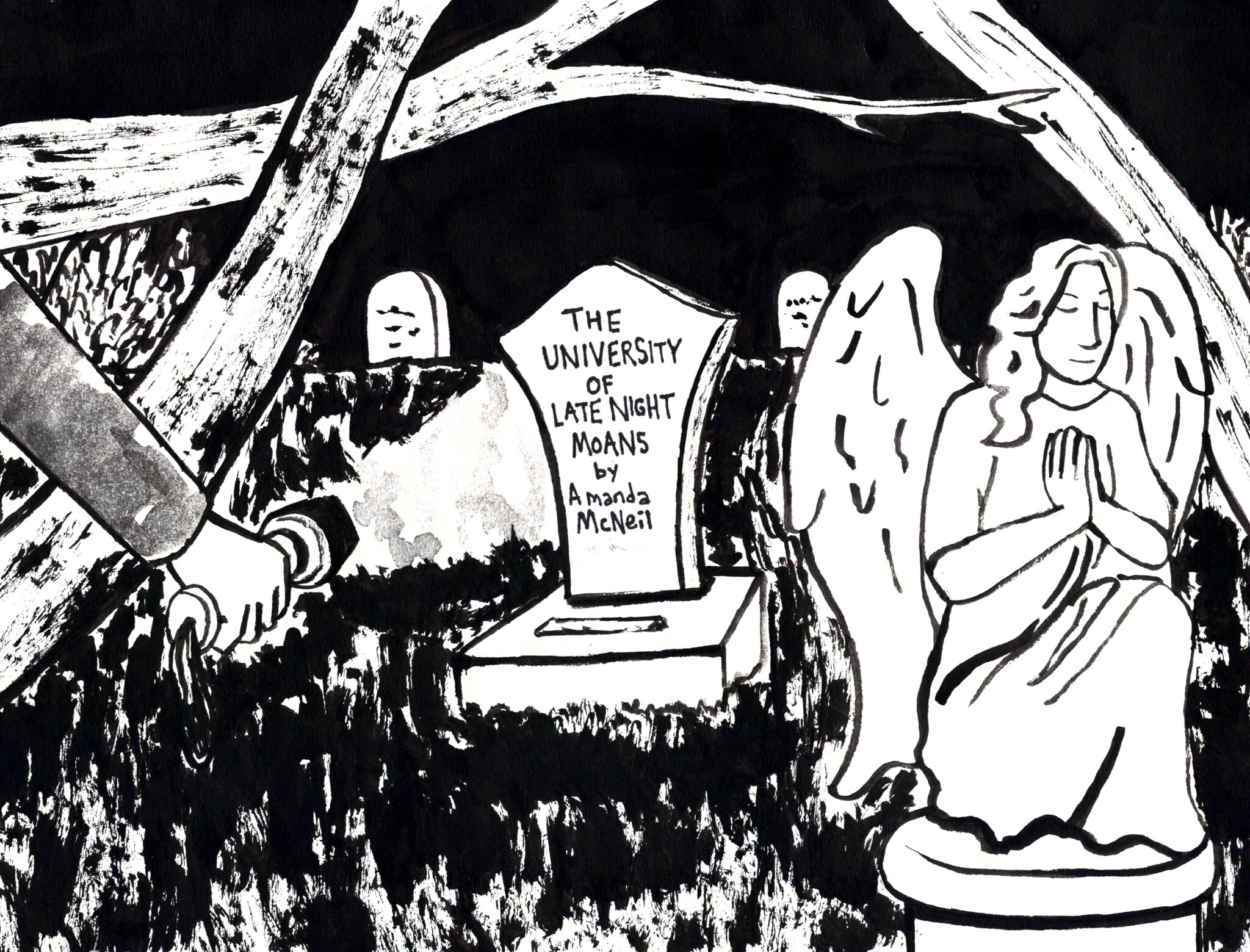
If you missed my announcement on May 30th, this month my short story “The University of Late-Night Moans” was part of Decoded Pride. It’s a story-a-day anthology of queer science fiction, fantasy, and horror by queer authors. Throughout the month on twitter, I’ve been maintaining a thread of my favorite line (or small screenshot, in the case of comics) from each story. I wanted to give that thread a more permanent place here.
You can still buy access to the anthology, even though the month is over. Plus your subscription will get you access to the full-color, pdf version coming out later this summer or early fall, which will include interviews with all the authors (including me!)
| Date | Story Title | Author (links to their website or social media) | My fave line (or image if a comic) |
| 1 | Ode to After Eulogies | Remy Chartier | “if she’d marked even just the follow-through of every impulse to marry the wonder that was Char, her hands would be too heavy with rings to flex her fingers” |
| 2 | Christ-like | Leo D. Martinez | “Your light is unwilling to fade, determined to exist” |
| 3 | The Vetala of Crystal Vellam Inlet | Simo Srinivas | “ “You have brought plague to the city.” “It is the city,” the vetala said, “that has brought plague to us.” “ |
| 4 | The Wildest Dream | S.M. Hallow and Izzy Singer |  |
| 5 | Invidia | Christina Wilder | “My fixation on Adriana became a craving to feel her skin as my own, rather than feel it against mine. I wanted to claim her completely.” |
| 6 | WE ARE ROBOT | Katlina Sommerberg | “There is no room for aberration, but that is our only desire.” |
| 7 | The Prophet from Seventrees | Lowry Poletti | “The burrow becomes a tunnel of tree roots knotted like threads on a loom.” |
| 8 | The Agents of CLAW Save Christmas | Jeffrey Brown | 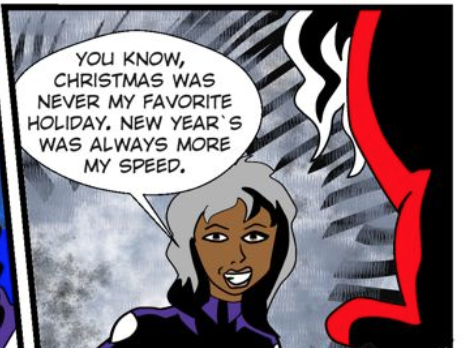 |
| 9 | The University of Late-Night Moans | Amanda McNeil (me!) | “Do I look like I’m in hell?”
(Also, check out the promo reel I made over on Instagram.) |
| 10 | Platinum Venus | Illimani Ferreira | “If there was one thing I knew about him it was that he wasn’t the type to save anything flammable from burning, no matter if it was fuel or a reputation.” |
| 11 | Pepper Honey and Cedar Smoke | K.S. Walker | “Katherine had a long list of grievances to attend to. She repeated them nightly like a prayer.” |
| 12 | All Shall Know Their Appointed Time | Lisa M. Bradley | “The Mothman and myna know their appointed times.” |
| 13 | The Mark | Sarah Bat | “I’m tired of only ever giving love to others. I’d rather feel it for myself.” |
| 14 | A Wolf in the Woods | Robin Quinn | “I have simply grown unfamiliar with touch that is intended to comfort instead of harm.” |
| 15 | Incident Report | Sarah Loch |
Not a quote, but the feature that this archival style short story had the manager’s email signature update to what crisis book she was currently reading. |
| 16 | The Bleeding God | Lindsay King-Miller | “And they loved each other with a passion as hot as the water that bleeds from beneath the sands.” |
| 17 | Suspension | K.T. Roth | “And what … life unenrolled us because of inactivity on our accounts?” |
| 18 | Punk Rock Lesbians from Beyond the Grave | Darci Meadows | “The crackle of electricity filled the solstice sky as the eerie tune played out, and on the Westbridge curve a hand burst forth from the loose dirt” |
| 19 | A Date to Remember | Glenda Poswa | “My entire being was simply an extension of the part of me that mattered most to her — my shoulder.” |
| 20 | Nebula | Akil Wingate | “This is the beginning of vengeance. So let it roll off me like molting skin.” |
| 21 | Nothing to Nowhere and Back | Ciko Sidzumo | “I needed air. I needed movement. I needed something. Something more than release. Something less than freedom.” |
| 22 | Parasite | Callie Cameron | “For the longest time, I was what it wanted me to be. My own self was buried under its desires.” |
| 23 | Hands, Heart, Hunger | V. Astor Solomon | “It’s not dignified, she would say. The drums were not for girls like her, she was not meant to be the backbone for someone else.” |
| 24 | The Syncerus Legend | Maurice Moore | “I don’t remember being hunted by anyone during my rituals Auntie. Paulie: Yes, but we are goin according tah de Heaux Tales prophecies bout de last calf’s transition.” |
| 25 | When Day Becomes Night | RENEGAEDZ |  |
| 26 | Dust in the Barn | Elinora Westfall | “the broken arms and legs from one glass of wine too many that saw those same shadows reach out and grab her, crush her, slither into her mouth, her nose” |
| 27 | Devour Me | Sarah Edmonds | “Zoe couldn’t bring herself to take back her request and she hated herself for that.” |
| 28 | Like Cursive | Cameron E Quinn | “the surface tension we’ve sustained over months of proximity broken like a wave” |
| 29 | Kitty’s Gas Station | Avra Margariti | “Kitty listens to Avery blabber about anything and everything as she fixes them a bowl of soup. The white noise is strangely soothing.” |
| 30 | These Whispering Remains | Izzy Wasserstein | “Even when she was at her worst — fifteen was a hell of a year — the reward of having her in my life was more than worth the fear.” |
 Support my work with a tip or browse my shop for curated book club guides, how to guides, cross-stitch patterns, and more!


This work by Amanda Nevius is licensed under a Creative Commons Attribution-Noncommercial-No Derivative Works 3.0 United States License.
 Opinions of a Wolf