
Archive
Book Review: Yesteryear by Caro Claire Burke
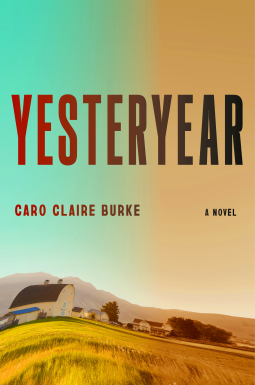
Yesteryear by Caro Claire Burke is an attempted satirical takedown of tradwife influencer culture that ultimately reflects a shallow understanding of fundamentalist Christianity and collapses under the weight of its third act.
This review contains major spoilers and discusses themes of religious fundamentalism, mental illness, and queerness.
Summary:
My name was Natalie Heller Mills, and I was perfect at being alive.
Natalie lives a traditional lifestyle. Her charming farmhouse is rustic, her husband a handsome cowboy, her six children each more delightful than the last. So what if there are nannies and producers behind the scenes, her kitchen hiding industrial-grade fridges and ovens, her husband the heir to a political dynasty? What Natalie’s followers—all 8 million of them—don’t know won’t hurt them. And The Angry Women? The privileged, Ivy League, coastal elite haters who call her an antifeminist iconoclast? They’re sick with jealousy. Because Natalie isn’t simply living the good life, she’s living the ideal—and just so happens to be building an empire from it.
Until one morning she wakes up in a life that isn’t hers. Her home, her husband, her children—they’re all familiar, but something’s off. Her kitchen is warmed by a sputtering fire rather than electricity, her children are dirty and strange, and her soft-handed husband is suddenly a competent farmer. Just yesterday Natalie was curating photos of homemade jam for her Instagram, and now she’s expected to haul firewood and handwash clothes until her fingers bleed. Has she become the unwitting star of a ruthless reality show? Could it really be time travel? Is she being tested by God? By Satan? When Natalie suffers a brutal injury in the woods, she realizes two things: This is not her beautiful life, and she must escape by any means possible.
Review:
What it does well
I love the set-up of this book. A tradwife influencer wakes up in the 1800s she was pretending to want to live back in and has to face the stark reality of that. Told in the tradwife “present,” flashbacks to her life before her influencer status, and flash forwards to her 1800s time travel. I was hooked. I needed to know how the time travel happened. The set-up reminded me of Kindred by Octavia Butler only with a hateable main character.
A note on my perspective:
I was raised a closeted bisexual cis girl in a fundamentalist Evangelical family. I, in modern terms, deconstructed and have become a progressive queer Christian adult. Nattie’s culture is the one I was raised in and am deeply familiar with. I was literally a rurally raised homeschooled girl who wasn’t allowed to wear pants. The author gets a lot wrong.
Religious inaccuracy and cultural flattening:
It is deeply unclear precisely what religion Nattie is. This should be clear, as a twisting of a specific faith into something for the far-right to weaponize is at the core of tradwife influencer culture. She goes to church every Sunday growing up with her mother and sister. She and her young, rich husband share a religion. But she only ever says “Christian.” If we are to assume that it is a fundamentalist version of US American Christianity, then it could broadly be Evangelical, traditional Catholic, or Latter-Day Saint. And that’s not even getting picky about denomination (Non-denominational? Baptist?). Here’s what we do know. She goes to church, not temple, so probably not LDS, even though she’s very clearly inspired by Ballerina Farm who is LDS. She gets full-immersion baptized as a teenager, so not Catholic. However, the book says a PRIEST baptizes her. The only denominations that refer to their leaders as priests do not perform full-immersion baptism. It’s a factual error that made me cringe. A lot.
Later in the book, Nattie crosses herself. She also has a hallucination that is clearly based on confession. Both of these are only done, again, by denominations with priests (Anglicans, Catholics). But she does none of the other things those denominations might do like observe a liturgical calendar or acknowledge saints. Despite this confusion, Nattie is portrayed as truly devout. We see inside her head. She prays a lot. She desires to be close to God. Yet, she never studies her Bible. She never brings her children to church, in spite of going every Sunday herself growing up. And church isn’t replaced by home church with her husband.
Another issue is AFTER she deconstructs, Nattie’s mother tells her she’s simply never been nice enough. The demand to “keep sweet” is a very common demand made of evangelical girls and women. We saw it in the Duggar family, and I lived it myself. Girls and women are supposed to be nice all the time. It makes no sense to me that her deconstructed mother’s main argument against her tradwife influencer daughter is she isn’t nice enough. A deconstructed person would be much more likely to say, “you’re lashing out because you’ve been asked to be something you’re not for so long. I want to know who you really are.” Not “why can’t you be nice?!”
All of these details point to an author writing from outside this culture who did not do the work required to understand it, resulting in a shallow, flattened portrayal of fundamentalist Christianity that borrows its aesthetics without engaging its lived realities. It’s this weird mash-up of things tradwife influencers mention without any understanding that tradwives come from different denominations with different ways of doing things and different belief systems.
Queer representation:
As a queer person myself, I’m deeply bothered by the way Nattie’s assault on her employee, Shannon, is presented. First of all, her first person account seems to be that she attempted to strangle her. But later Shannon says she sexually assaulted her. Which is the truth? The end of the book takes Shannon’s statement as face value. Nattie assaulted her because she’s a closeted lesbian. Nattie never admits to this, but she doesn’t deny it either. Does she think this is less bad than attempting to strangle her? Given her entire family’s response (and my own lived experience of fundamentalist opinions of queer people), it seems unlikely. If it is the case that we’re supposed to read this as Nattie has always been a closeted lesbian, then this is horrible representation. Not that LGBTQ folks can’t ever be the villain, but closeted people don’t automatically abuse their children and assault their employees.
Mental health representation:
Then there is the mental health representation. It is clear that Nattie first starts to fall apart after the birth of her first child when she develops very clear post-partum depression that a nurse expresses concern over and wants to get her help for but her mother intervenes and says she just needs to start running again. Her post-partum depression never gets better, she doesn’t actually enjoy mothering, but she keeps having children both because it’s what God wants and because it’s what her father-in-law demands in exchange for funding their hobby farm.
Ok, so here we get to the full mess. The big twist is that Nattie hasn’t time traveled to the 1800s. She hasn’t been kidnapped. After the big PR disaster of Shannon revealing the assault, her husband tells her that his father wants her to be killed. She suggests instead that what her husband really has always wanted is just to be left alone and they can do that. They can cut themselves off from the world and live like it’s the 1800s. They do just that, with the older children running away, and they are left with just the toddler and the children born after her. She thinks it’s literally the 1800s when she wakes up one day because she has periodic psychotic breaks. She thinks she might be being filmed for a reality tv show because, again, she’s lost her mind.
When her oldest daughter finally shows up years later with a court order for the children (there is no way on earth that would have taken that long, but that’s another tangent for another day), she expresses some sympathy for her mother but the court system prosecutes her and puts her in prison for 30 years for child abuse. Of course she did abuse her children but she is also very clearly very mentally unwell, and many other people boosted up this scheme of hers (her husband, other family that brought food to the edge of the property for the husband to pick up, the husband was escaping to a cabin with electricity and tv every day to watch football while she was actually living like the 1800s). The novel wants to have it both ways: to explain her behavior through mental illness while denying her any meaningful context, care, or accountability framework.
Final verdict:
I saw another review that said this book feels like it was written by one of the “Angry Women” Nattie talks about. The liberal women who are angry at her for existing. You can have a problem with far right culture and tradwife influencers and write a book about it. But you also need to actually understand the culture and not stomp on people with mental illnesses and necessarily closeted LGBTQ folks in the process.
Ultimately, while the satire of influencer culture is sharp, the novel’s handling of fundamentalism, queerness, and mental illness is reductive and stigmatizing. Additionally. its explanation for how Natalie ends up “in the 1800s” is far less imaginative and less effective than a true speculative or magical realist turn would have been.
If you found this review helpful, please consider tipping me on ko-fi, checking out my digital items in my ko-fi shop, buying one of my publications, using one of my referral or coupon codes, signing up for my free microfiction monthly newsletter, or tuning into my podcast. Thank you for your support!
2 out of 5 stars
Length: 400 pages – average but on the longer side
Source: NetGalley
Buy It (Amazon or Bookshop.org)
Book Review: The Years of Rice and Salt by Kim Stanley Robinson
 Summary:
Imagine a world where the Black Death of the 14th century wiped out the majority of the European population, rather than one-third of it. This is the world Robinson imagines, one where Buddhism and Islam rise as the two major religions of the world (with no religion a close third). See the history of the world through the eyes of two souls who keep reincarnating in different cultures, struggling to better both themselves and their world that could easily have been ours.
Review:
I originally picked this book up because I have long held a fascination with the various religions of the world (I was actually a Religious Studies minor in undergrad). The “what if” at the center of the book seemed like a great starting place to me. Indeed, what if most of the followers of currently largest faith (Christianity, source) had died off? What things would change and what would have stayed the same? Robinson chooses to tell this tale through reincarnating souls, which sometimes gives us a lot of access to these changes but other times leaves the reader feeling like they got just a passing breath of a culture and a century.
I didn’t realize going into this that Robinson had chosen to tell this story through the eyes of the same souls reincarnating over and over again. It’s an interesting choice that I am uncertain about as it lends a sort of “this much we know” to the spiritual side of the story. We, the readers, know that the souls of people in this world definitely exist, they go to the bardo to await judgment and reincarnation. The bardo they go to appears to reflect whatever faith they had (Muslims have their own, Buddhists have their own, etc…) The idea is also put out there that each of the faiths is a different path to the same end (enlightenment). Much as I may personally believe this idea, I’m not sure how I feel about this particular story being so mythology heavy. The History BA in me very much wanted to see a more analytical power-structure play-out, which we do get some of, but not as much as we get of the how to better our souls question. I suppose what I am trying to say is that, although I was anticipating a book that was scholarly with a dash of spiritual, what I got instead was the reverse. That’s not a bad thing, and I still enjoyed it, but it definitely wasn’t what I was expecting, and I do wonder how the story may have played out differently if Robinson wasn’t so tied to the same souls over and over again.
One aspect of the same souls reincarnating that niggled at me a bit was that throughout history, no matter where they were born (or what gender or species), their names always started with the same letters. So a character whose first name in the first incarnation started with the letter K always had a name that started with the letter K. It got so I could predict who was who and, to a certain extent, how they would act in each incarnation. On the one hand, it was a cool idea, although highly unlikely someone’s name would start with the same letter throughout time and cultures and languages. On the other hand, it distracted me from the more interesting story of the different world developing with the rise of different cultures than actually appeared in our own history.
Similarly, I think there is far too much story and richness in this idea and timeline to limit it to one book. There were multiple incarnations that I really wanted to know more of. I wanted to know the whole story of these lives and this place. Instead, the reader gets a quick glimpse into one time in their lives, and then we are left jumping ahead to the bardo to find out how they died and oh here comes the next incarnation. Perhaps the point was to make the reader feel as if each life is only a blink, but the scholar in me was left wanting to know so much more about every area and life the book briefly visited. It was like getting only a small morsel of each chocolate in a box of delicious chocolates, instead of getting to savor them all over a long period of time.
All of this said, let me now discuss the parts of the book I really enjoyed (and would have liked to have seen more of). My favorite is how Robinson reimagined the Americas. The same essential problem of real history still exists for the Native Americans even with the change of the Christians mostly dying off. Mainly, they lacked easily sourced heavy metals to make higher-tech weapons and they were susceptible to all of the germs European explorers brought with them. (I learned about this in my classes in US History for my BA, but my professors told me this whole idea is also presented in the book Guns, Germs, and Steel
Robinson does a much better job painting Islam and Buddhism with a nuanced brush. Since their cultures dominate the book, this means most of the book is much more gray area, rather than presenting everything as black and white. One element that demonstrates this, is how Robinson handles Islam and women. All sides of the arguments about Islam and women are presented here. There are incarnations of the souls that are Muslim women who argue strongly that the men are misinterpreting the Quran, what Mohammed said, etc… There are of course other incarnations that say no, the extreme fundamentalism is the right interpretation. Through showing Islam through many different lenses in a world that is different from our own, Robinson demonstrates how religion is so incredibly open to interpretation, and good and bad people can shape it to their own agendas. One passage that I think demonstrates how well Robinson walks this line is a conversation some characters have about the women wearing the veil or not:
The veil has a kind of power, in certain situations. All such signs stand for other things; they are sentences spoken in matter. The hijab can say to strangers, ‘I am Islamic and in solidarity with my men, against you and all the world.’ To Islamic men it can say, ‘I will play this foolish game, this fantasy of yours, but only if in return you do everything I tell you to.’ For some men this trade, this capitulation to love, is a kind of release from the craziness of being a man. So the veil can be like putting on a magician queen’s cape…. Or it can be like putting on a slave’s collar, certainly. (page 592)
If this passage appeals to you in how it presents the various nuances and gray areas of religion and culture, then a lot of this book will appeal to you.
One final issue with the book I will note that may turn off some readers is that out of all the many incarnations, only two are in Native American bodies (and then, they are both Native Americans in North America. South America is completely left out for incarnations, although incarnations visit there). Similarly, there are no incarnations to Australia, New Zealand, Central America, or any island nation anywhere (Caribbean, Pacific Islands, United Kingdom, Iceland). There is only one incarnation where one of the souls is in an African, and that African is a slave on a Chinese slave ship who then goes to China (we thus spend very little time in Africa, just at the beginning on the slave ship). One character in an incarnation mentions that in the past she went to Africa but the reader does not see her time there. I definitely think that it’s a weakness that so many areas of the world are left out. For instance, I have zero idea what happened in Australia now that it clearly was never a penal colony of the UK (since the UK never existed). Similarly, it seems Africa would be very different with all the changes in global power, and yet the only passing mention we get of modern Africa in the later incarnations is that one of the characters visits there to fight against Female Genital Mutliation (FGM). If so much else changed, why not in Africa?
I know it may seem like I listed out a lot of issues, but it is a very long book that tackles a huge task. My review is almost as if I was reviewing an entire series in one fell swoop. Each individual part had issues, as did some of the overarching ideas, but I mostly really did enjoy reading it. It’s a fascinating thought experiment that wasn’t as well executed as it could have been, but parts of it were brilliant. I also enjoyed the feminist themes throughout. Men and women are both just souls, reincarnating into a woman is not a punishment. In fact, neither gender nor race is a punishment for previous incarnations, just species. Similarly, the more a society advances the more equal their genders and races are. There is a lot of thought given to what it means to be a woman in various areas of the world, which could easily have been passed over or not handled well.
Overall, this is a book that tackles a huge philosophical question in a fantastical way. It is a large task that probably would have been better suited to a series to fully flesh-out the world, the lives, and the nuances in both. Readers interested in spiritual questions with a tendency to view all religions as different paths to the same enlightenment and a curiosity about how the world might be different with different religions in the lead will be most suited to the book. Readers interested in a more thorough exploration of an alternate history will most likely be disappointed by the reincarnation aspect and the brief time spent in each time period and culture.
If you found this review helpful, please consider tipping me on ko-fi, checking out my digital items available in my ko-fi shop, buying one of my publications, or using one of my referral/coupon codes. Thank you for your support!
4 out of 5 stars
Length: 763 pages – chunkster
Source: PaperBackSwap

Counts For:
Bottom of TBR Pile Challenge
and

Book Review: The Diabolist by Layton Green (Series, #3)
 Summary:
Dominic Gray, ex-government worker, ex-military, and once professional jiu-jitsu fighter, is seeing a lull in his work as assistant to Professor Viktor Radek on private detective cases involving religious mysteries and the occult. He’s set up shop in New York City, teaching jiu-jitsu to inner-city youth. But when a high-ranking Satanist is murdered in front of his entire congregation by a mysterious figure who sets him on fire at a distance and then disappears himself, Dominic is quickly pulled into a new case with Viktor. High-ranking Satanists worldwide keep dying in the same, or similar, mysterious ways, and the odd thing is, it’s not the Christians doing it.
Review:
I’ve enjoyed this series from the very beginning. The combination of religious studies, private detectives, and international intrigue suck me in every time. This latest entry in the series does not fail to deliver, bringing once again the perfect combination of religious philosophy, mystery, and private detective intrigue.
This entry brings us back to the more mystical origins of the series. Rather than biomedicine as in the second book, what’s involved here is ancient occultism and what may or may not be magic tricks. I was happy to see this occult mysticism represented in the developed world this time, pointing out that it’s not just surviving in developing countries in modern times. The actual religion of Satanism is well explained and given room for both good-hearted followers and evil fanatics, just as may be seen in every religion. Green keeps an even hand when writing about religion, even when writing about Satanism, and that’s to be commended. A drop of mysticism is provided, and it’s left up to the reader to decide if it was science or magic ultimately responsible for the mysterious occurrences, which is ideal for this type of book.
The entwining of Viktor’s backstory with the mystery was well-done, and it was certainly time for the reader to learn more about Viktor. Unfortunately, I must say that Viktor’s backstory made me dislike him more than I had previously, but it certainly also helps form him into a more well-rounded character. There’s a delightful femme fatale, enshrouded in both beauty and mystery. Her ending, however, did feel a bit abrupt. Dominic goes very quickly from one opinion of her to another, and not enough known, factual information is provided for the reader to keep up with this. On the other hand, the ending was surprising and also made logical sense, and it also put the main characters in a frightful level of mortal danger. Exactly the kind of ending one looks for in this type of book.
Overall, the third entry in the series continues to deliver the private detective exploration of moral and mystical gray areas. Those who enjoyed the first entry in the series more than the second will be happy to see the return to the mysticism found in the first book. Those who enjoyed the science of the second will be glad to see the science of magic covered extensively in this entry. Recommended to fans of the series to pick it up as soon as possible.
If you found this review helpful, please consider tipping me on ko-fi, checking out my digital items available in my ko-fi shop, buying one of my publications, or using one of my referral/coupon codes. Thank you for your support!
4 out of 5 stars
Length: 375 pages – average but on the longer side
Source: Netgalley

Previous Books in Series:
The Summoner
The Egyptian
Book Review: Tower of Glass by Robert Silverberg (Audiobook narrated by Stefan Rudnicki)
 Summary:
Simeon Krug, creator of androids, has a new vision. Earth is receiving a transmission from deep space, and he’s determined to answer it. He’s building a tower in the Arctic tundra, a tall tower that reminds many of the Tower of Babel. With this tower he will send a return transmission to whoever is sending the message to Earth. He also has his androids building a spaceship, to be entirely manned by androids, to try to reach those sending the transmission. However, the androids he designed that now outnumber and serve humans have other things on their minds. They want to be recognized as equal to humans, their brothers of the womb. While some seek this politically, others seek it spiritually, worshiping their creator Krug.
Review:
Robert Silverberg wrote one of my all-time favorite books (The World Inside
I loved the idea of this book, and I love books about ai/androids/robots. I thus was horrified when within the first chapter we discover that the “androids” are, in fact, clones. They’re not machines at all. They are genetically engineered humans, created in vats, and whose genetic code is changed enough to give them plasticine skin so that humans can tell themselves apart from them. I like the concept of GMO humans vs non-GMO humans. I like the idea of the vat versus the womb. I cannot, however, tolerate the fact that everyone calls these folks androids. That is not what an android is! (Merriam-Webster definition of android). It really put a sour note on the whole book for me, and the misnomer is never explained. Did Krug just call them androids to make people think of them as robots when they actually aren’t? If that’s the case, he himself would not think of them as androids. But he does. He calls them machines. What scientist would genetically manipulate humans and then call the outcome machines? It just makes no sense, and in a scifi book, it’s something I can’t look past.
The plot is a bit of a bait-and-switch. The reader thinks it’s going to be about the tower, the possible aliens, etc… In fact this is the backdrop to the story of the “androids” fighting to have their humanity recognized. I liked that the book was ultimately not the Tower of Babel retelling I originally thought it was going to be, but potential readers might want to know that the “androids” and their fight for human rights are actually the focus of the book.
Readers should also be ready to have every minute detail of the “android” religion worshiping Krug outlined for them. While that type of scifi book definitely has its audience, it might be different from the one expecting the tower story. The one aspect of the telling of the “android” religion that I found incredibly annoying was how they recite their DNA strands as prayer. Think of it as like a Catholic person saying the rosary. Only instead of words, it’s series like “AAA-ABA-ACA-CCC-BBB-AAA,” and it goes on for a very long time. Perhaps this is less annoying to read in print than to hear in an audiobook, but going on for such long stretches of time each time an “android” prays seems unnecessary.
The characters are all fairly well-rounded. There is Krug, his son, a high-ranking “android,” Krug’s son’s “android” mistress, a couple of “android” politicians, and more. There are enough characters to support the complex plot, and it’s fairly easy to get to know all of them. The “androids” are also given the same amount of characterization as the humans.
The audiobook narrator was somewhere between pleasant and unpleasant to listen to. He has a very deep voice that doesn’t fluctuate much for various characters or narration. It works really well for Krug but not so great for the female characters. If the narrator’s female voices were better and if he emoted more for emotional scenes, his narration would be more enjoyable. Between this fact and the reading of the DNA mentioned earlier, I definitely recommend picking up the print over the audiobook version.
Overall, the book presents an interesting world of GMO humans worshiping their creator and seeking freedom while he is entirely focused on the project of communicating with the stars. The misuse of the term “android” throughout the book will likely bother most scifi readers. Some readers may find some aspects of the “android” religion a bit dull. Recommended to scifi readers more interested in the presentation of future religions than in contacting deep space or hard science.
If you found this review helpful, please consider tipping me on ko-fi, checking out my digital items available in my ko-fi shop, buying one of my publications, or using one of my referral/coupon codes. Thank you for your support!
3 out of 5 stars
Length: 208 pages – average but on the shorter side
Source: Audible

Book Review: A Thousand Lives: The Untold Story of Hope, Deception, and Survival at Jonestown by Julia Scheeres (Audiobook narrated by Robin Miles)
 Summary:
On November 18, 1978, 918 people, mostly Americans, died on a commune named Jonestown and on a nearby airstrip in Guyana. The world came to know this event as that time that crazy cult committed mass suicide by drinking poisoned Kool-Aid. However, that belief is full of inaccuracies. Scheeres traces the origins of Jonestown, starting with its leader, Jim Jones, and his Christian church in Indiana, tracing its development into the People’s Temple in California, and then into Jonestown in Guyana. Multiple members’ life stories are traced as well, including information from their family members who, perplexed, watched their families give everything over to Jones.
Review:
I have a fascination with cults and groupthink. In spite of not being born until the 1980s, I definitely was always vaguely aware of this cult that committed suicide in the 70s, always commentated on with great disdain. I had previously read Julia Scheeres’ memoir, Jesus Land
Scheeres possesses a great talent at presenting people and events as they are with understanding for common humanity but also disdain for atrocious acts. Scheeres excels at never turning a person into a monster, but rather exposing monstrous acts and asking how things became so messed up that something like that could happen. Scheeres clearly did painstaking research for this book, reading through the FBI’s extensive archives on the People’s Temple and Jim Jones, interviewing survivors, and interviewing family members of the deceased, not to mention reading members’ journals. The facts are presented in an engaging, storytelling, slightly non-linear way, which works excellently at drawing the reader in. The book starts on the boat to Guyana, then flashes back to the origins of Jim Jones. The members of People’s Temple are carefully presented as the well-rounded people they truly were with hopes and dreams and who made some mistakes. They are not ever presented as just a bunch of crazies. Even Jones is allowed a time as a preacher passionate for social justice before he turned into the control freak, whose paranoid delusions were exacerbated by drug addiction. Scheeres takes an event that it is far too easy to put the stamp of crazy on, and humanizes it, drawing out the gray areas. And this is all done while telling an engaging, well-written, factual story.
There are an incredible number of facts in this book, and the reader learns them while hardly even realizing it, since this work of nonfiction is so readable. Among the things I never knew, I found out that the People’s Temple originally was a Christian church that was heavily socialist and then slowly turned into its own religion as Jones pulled away from the Bible, eventually declaring himself god. When Jones was in California, he was heavily involved in politics, sponsoring people such as Harvey Milk for office, and breaking voting laws by sending his church en masse to vote in districts they didn’t live in. Jones enacted weekly corporate punishment of individual members in front of all the other members. He was bisexual, having sex with both male and female members of the People’s Temple. He became obsessed with the idea of suicide to make a statement and routinely badgered the higher members of the People’s Temple into accepting suicide if he ordered it. He even tricked them multiple times into thinking that he had given them poisoned drinks, just to see who would obey and drink it. The members came to Jonestown in Guyana expecting a utopia, since Jones had lied to them, and instead got a struggling farm on the brink of disaster, being run by a man increasingly paranoid and delusional and ever more addicted to drugs. Once members were in Jonestown, they were not allowed to leave. And many wanted to. Last, but most important, the mass suicide was not a mass suicide. It was a murder-suicide. Some of the members committed suicide willingly, but others, including over 300 children, were force-fed or injected with the poison. Those who drank it drank it mixed with Flavor-Aid, a generic knock-off brand of Kool-Aid. It astounds me how much the facts of these events from as recent as 1978 are now misremembered in the collective consciousness, especially considering the fact that documentation such as the Jonestown death tape are available for free in the public archive.
Overall, this book takes a misremembered event in recent history and exposes the facts in an incredibly readable work of nonfiction. Scheeres presents the people who died in Jonestown with empathy and understanding, seeking to tell their whole life story, rather than one moment. A fascinating look at a horrible event, and a moving reminder to never give too much power or faith to one person, and how very easy it is for groupthink to take over. Highly recommended.
5 out of 5 stars
Source: Audible

Publication Announcement: Short Story in Crack the Spine Literary Magazine
Hello my lovely readers!
Just a quick post to let you all know that my literary short story “Closest Thing to Heaven” published today in issue 40 of Crack the Spine literary magazine.
Here’s the blurb:
Mama’s sleeping, and it’s super-hot out, so Brother says he’ll take me to the swimmin holler.
I do hope you all will check it out!
Book Review: To a Mountain in Tibet by Colin Thubron (Audiobook narrated by Steven Crossley)
 Summary:
After the death of his mother, who also was his last living family member, Colin set out on a journey to the mountain of Kailas in Tibet. The mountain is holy to both Hindus and Buddhists and is closely associated with the process of dying and crossing over. Through his eyes we see the people of Tibet and his emotional journey.
Review:
I am not sure if words can describe what an epic miss this book was for me. The combination of British western eyes othering Tibetans, an entire chapter dedicated to his father’s big game hunting, a surprising lack of emotional processing of death, and the *shudders* British accented narrator imitating Indian and Tibetan accents…..oh god. It was painful.
I see nothing wrong with a Western person traveling and appreciating something revered in another culture. If it is done right, it can be a beautiful thing. A lesson in how we are all different and yet the same. Yet through Colin’s eyes I felt as if I was very uncomfortably inhabiting the shoes of a colonizing douchebag. Perhaps part of it was the narration style of Crossley, but it felt as if Colin was judging and caricaturing all of the Tibetans and Indians he met. There was so little empathy from someone supposedly on this journey to deal with death of loved ones. You’d expect more from him. I could accept this perspective more if either Colin learned over the course of the trip or this was an older memoir, but neither is true! This is a recent memoir, and Colin is the exact same self-centered prick he was when he went in.
Similarly, Colin when he is not othering the Tibetans and Indians is either reminiscing joyfully on his father’s exploits as a big game hunter and basically colonizing douche in India or giving us a history lesson in Hinduism and Buddhism. Ok? But he’s not an expert in these religions and also that was not the point of the book? A few explanations here and there, sure, but if I wanted to learn about Buddhism or Hinduism, I sure wouldn’t be getting it from a travel memoir from an old British dude. I’m just saying.
Overall, this is an incredibly odd book. It is a book out of time that feels as if it should have been written by an understandably backward gentleman traveler in the early 1900s, not by a modern man. I honestly cannot recommend it to anyone.
2 out of 5 stars
Source: Audible

Bloggers’ Alliance of Non-fiction Devotees (BAND): August Discussion: How Did You Get Into Non-fiction?
Hi guys! It’s hard to believe a month has gone by already since our very first non-fiction discussion in July. This month Amy is hosting, and she asks us how did we get into non-fiction?
I actually found myself baffled by this question. Um, I don’t remember not reading non-fiction? I was raised very religious, although I’m now agnostic, as most of you know. Anyway, because my parents were religious, I was encouraged (strongly) to read my Bible every day. That combined with the kid versions of the Bible were probably my earliest forays into what is technically considered non-fiction. *coughs, coughs*
My earliest memories of non-fiction reading that wasn’t connected to religion is a toss-up between cats, airplanes, and westward expansion. I was fascinated with all three, although cats probably won. I had an ongoing campaign from when I could speak until the age of seven to get a cat when my parents finally caved. I used to wreak havoc in the non-fiction section of the library taking out every single book on whatever topic fascinated me at the moment.
My love of non-fiction definitely played into my first choice of major in undergrad–History with a focus on US History. These classes consisted almost entirely of reading primary documents, and I loved it. I was also finally surrounded by other people my age who felt the same excitement at reading non-fiction as I did. So you see, I never really “got into” non-fiction. I was born that way. Haha.
Check out the non-fiction books I’ve reviewed and discussed since the July discussion:
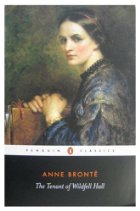
Book Review: The Tenant of Wildfell Hall By Anne Bronte
 Summary:
Cited as the feminist antithesis to her contemporary Austen’s romantic 19th century ramblings, Anne Bronte’s best-known novel presents the much more dire image of the very real risk of marriage in a time where the wife loses all her human rights to her husband. Gilbert Markham becomes infatuated with the widow Helen Graham who has moved into his neighborhood with her son, but rumors soon start to spark up around her. When he confronts her about her conduct, she shows him her diary. There he learns her travails and sufferings at the hands of her still very much alive husband.
Review:
I came to this book with high expectations. I heard of it simply as the one of the earlier feminist novels written in response to such works as Austen’s. I felt this opened the door to many possibilities, but perhaps I was thinking about this with too much of a 21st century brain. What held The Tenant of Wildfell Hall back was the relentless presentation of Helen as the picture of Christian piety. Given the fact that Helen behaves quite willfully and controversially for the time period by leaving her husband’s home to live separately from him, this was probably quite necessary for Bronte’s contemporaries to find Helen a sympathetic character. For me though her severeness sometimes had me siding with her tyrant of a husband in my mind. He calls her cold and calculating. Well all she ever talks about is living piously now to be joyous in heaven after death. I would find that cold and calculating as well.
This book does hold value for the modern feminist though if we re-position ourselves to look at it through the lens of how society at the time has messed up both Helen and her husband, Arthur. Society tells Helen that it is her job as a woman to be the pious one. Although single men may go cavorting about she must sit respectably at home or go out to supervised dances. Men may behave however they desire as long as they settle down after marriage. This belief leads Helen to make her foolish, egotistical mistake of thinking that marrying Arthur is alright for she can change him after they are married. To a certain extent Arthur makes the same mistake. He has been told the ideal wife is a highly pious one, so he marries Helen thinking she will save him when, in fact, they are the most mis-matched couple ever.
Arthur enjoys cavorting, playing cards, and drinking. Helen refuses to do these things out of piety and nags Arthur not to do them. They both come to realize they are mis-matched, but in their society divorce is a painful embarrassment to both parties. Helen doesn’t even consider it for Christian reasons; Arthur in order to save face. This leads to their gradual loss of caring for each other, although Arthur’s comes much faster and more brutally when he carries out an affair with the wife of a visiting friend.
Arthur no longer wants Helen, but she is his wife and he would be a laughing-stock if he couldn’t control her, so he starts abusing her emotionally–repeatedly telling her it disgusts him to see her pale skin, for instance. He also carries out the afore-mentioned affairs with her full knowledge and at first forbids her from having any of her own. I am not condoning Arthur’s ill-treatment of Helen. He made the situation far more worse than society alone would have had them make it. He could, for instance, have allowed them to set up separate households, which was sometimes done. He at least could have shown her the respect she deserved as a human being, but instead he came to view her almost as a hated prison guard. This would not have been the case if they could have parted ways amicably.
I must admit what struck me far more than the restrictive society was Helen’s restrictive religion. She almost constantly lives only thinking of her reward after death in Heaven. She possesses nearly no joy for her beliefs require that she squander her life away serving a man who hates her. The only reason she even leaves him for a time, relieving some of her pain, is because she believes her duty to raise a pious son outweighs her duty as a wife, so she is justified to remove her son from the soul-risking influence of his father. Helen’s faith seems to bring her no joy, but instead demand she behave as a judging marble statue.
Although The Tenant of Wildfell Hall is not an obvious feminist manifesto, it as an excellent rendition of the oppression of 19th century society on both men and women. Reading of their struggles and realizing as a 21st century observer that there is essentially no way out for either of them beautifully demonstrates how far we’ve come. Bronte’s writing style is complex enough that what could be a bit of a boring, straight-forward tale remains interesting throughout. She changes perspectives a few times via diaries and letters. She does suffer from the 19th century literature trap of overly extensive descriptions of settings, but these are easily skimmed. An excellent example of 19th century literature, I wish Bronte’s realistic work was assigned more often in literature classes than Austen’s fluffy, unrealistic drivel.
3.5 out of 5 stars
Source: Library

 Support my work with a tip or browse my shop for curated book club guides, how to guides, cross-stitch patterns, and more!


This work by Amanda Nevius is licensed under a Creative Commons Attribution-Noncommercial-No Derivative Works 3.0 United States License.
 Opinions of a Wolf