
Archive
Book Review: Honeymoon Hotel by Hester Browne
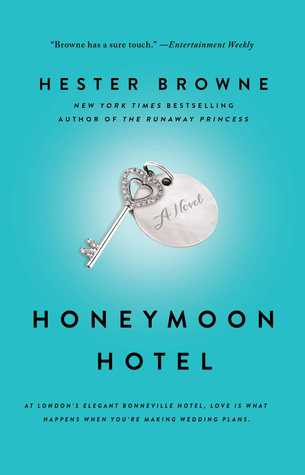 Summary:
The Bonneville Hotel is the best-kept secret in London: its elegant rooms and discreet wood-paneled cocktail lounge were the home-away-from-home for royalty and movie stars alike during the golden age of glamour. Recent years haven’t been kind, but thanks to events manager Rosie, it’s reclaiming some of its old cachet as a wish list wedding venue. While Rosie’s weddings are the ultimate in romance, Rosie herself isn’t; her focus is fixed firmly on the details, not on the dramas. She lives with a professionally furious food critic and works tirelessly toward that coveted promotion. But when the hotel owner appoints his eccentric son Joe to help run Rosie’s department, she’s suddenly butting heads with the free spirit whose predilection for the unconventional threatens to unravel her picture-perfect plans for the most elaborate—not to mention high-profile—wedding the hotel has ever seen, a wedding that could make or break not only the hotel’s reputation, but also Rosie’s career.
Review:
Although not every Browne book is a hit for me, they often are, and this one was incredible. One of the blurbs says it’s in the vein of The Wedding Planner. My comeback would be it’s everything I thought The Wedding Planner was going to be but even better. It’s a story that showcases a woman building her career while craving a relationship and ultimately getting the next level of her career and the relationship she’d been dreaming of.
I often find that in chick lit I have to be willing to give up on either seeing a woman with ambition or a woman desiring a traditional relationship. You often don’t get both. Both is what I want out of my comfort reading, and both is what you get here. Plus, both the career and the love interest are something you want to root for. Rosie isn’t a heartless workaholic but she’s also not someone who’s just working until she nails down the guy. She wants everything, and she keeps wanting everything even when the going gets tough. And the tough going is realistic, both in the romance and in the career. The realism kept things relatable even with things ultimately working out great for her in both ways in the end. And you know what? I like that things work out in both ways. I like that hope. We all can use some more hope in our lives.
In addition, the setting is just stunning. It’s a hotel that had its height in the Art Deco era, and all of the beauty and splendor of it is eloquently described. It was a place I wanted to keep coming back to because it just felt so divine, even with seeing the behind-the-scenes of the staff rooms and the stress of running the special events.
One other thing I must mention is that yet again Browne does a great job of presenting positive female friendships. There’s more than one woman to women relationship that Rosie has where both women help each other out. Women are shown as having differences of opinions and other difficulties to work through but ultimately being there for each other. It might not always work out that way in real life, but I really like seeing female friendships validated and other women not being demonized just to make a scene work.
Overall, this features everything I like in the best Browne books with the added dash of a setting that really suited me. The final scene was so pretty I had tears in my eyes on public transportation, and that’s really saying something. Highly recommended to lovers of quality chick lit.
If you found this review helpful, please consider tipping me on ko-fi, checking out my digital items available in my ko-fi shop, buying one of my publications, or using one of my referral/coupon codes. Thank you for your support!
5 out of 5 stars
Length: 464 pages – average but on the longer side
Source: Library
A Trio of Disappointing Reads Reviewed in Haiku

A feature for the disappointing reads: I spent enough time reading them. The reviews shouldn’t waste more time. See all haiku reviews here.

Winter’s Bone
By: Daniel Woodrell
Summary:
The sheriff’s deputy at the front door brings hard news to Ree Dolly. Her father has skipped bail on charges that he ran a crystal meth lab, and the Dollys will lose their house if he doesn’t show up for his next court date. Ree knows she has to bring her father back, dead or alive.
Haiku Review:
How could a book with
Meth and gangs and a strong lead
Be very boring?
2 out of 5 stars
Source: Library
Buy It

Little Lady Agency
By: Hester Browne
Summary:
Melissa Romney-Jones can bake a perfect sponge cake, type her little heart out, and plan a party blindfolded. But none of that has helped her get far in life or in love. When she gets fired — again — she decides to market her impeccable social skills to single men. To avoid embarrassing her father, a Member of Parliament, Melissa dons a blond wig and becomes “Honey,” a no-nonsense bombshell who helps clueless bachelors shop, entertain, and navigate social minefields.
Haiku Review:
Everything that makes
Browne’s other books good is just
Missing. Try again.
3 out of 5 stars
Source: Library
Buy It
Martian Time-Slip
By: Philip K. Dick
Summary:
On the arid colony of Mars the only thing more precious than water may be a ten-year-old schizophrenic boy named Manfred Steiner. For although the UN has slated “anomalous” children for deportation and destruction, other people–especially Supreme Goodmember Arnie Kott of the Water Worker’s union–suspect that Manfred’s disorder may be a window into the future.
Haiku Review:
Using the n-word
For Martians. Fear of mental
Illness. Doesn’t age well.
2 out of 5 stars
Source: Audible
Buy It
Book Review: Meternity by Meghann Foye
 Summary:
Like everyone in New York media, editor Liz Buckley runs on cupcakes, caffeine and cocktails. But at thirty-one, she’s plateaued at Paddy Cakes, a glossy baby magazine that flogs thousand-dollar strollers to entitled, hypercompetitive spawn-havers.
Liz has spent years working a gazillion hours a week picking up the slack for coworkers with kids, and she’s tired of it. So one day when her stress-related nausea is mistaken for morning sickness by her bosses—boom! Liz is promoted to the mommy track. She decides to run with it and plans to use her paid time off to figure out her life: work, love and otherwise. It’ll be her “meternity” leave.
By day, Liz rocks a foam-rubber belly under fab maternity outfits. By night, she dumps the bump for karaoke nights and boozy dinners out. But how long can she keep up her charade…and hide it from the guy who might just be The One?
As her “due date” approaches, Liz is exhausted—and exhilarated—by the ruse, the guilt and the feelings brought on by a totally fictional belly-tenant…about happiness, success, family and the nature of love.
Review:
This book is more controversial than it probably should be. It’s a silly chick lit book in the vein of Shopaholic (if you haven’t read that series, the main character is addicted to shopping and does a lot of terrible things in a funny way). But it is a book that involves parenting, pregnancy, and women in the workplace, which are hot button issues for a lot of people. So I can see how it wound up being controversial. I do think most people are taking it too seriously though.
For the first solid half of the book I was fairly certain a lot of people were misunderstanding satire for seriousness. While some of Liz’s complaints about her particular workplace are valid (she has all the worked shoved off on her, repeatedly staying until midnight, while the other team members who are parents leave early; the expectation and pressure on women in their 30s to naturally want to have a baby, etc…) the way she reacts to these particular situations is childlike and pretty terrible. That said, a lot of chick lit has a tradition of the main character reacting in an over-the-top way no one in real life would ever do. It’s where the humor come from. From “what if” followed by utter ridiculousness. That said, halfway through the book I became less certain it’s satire and wondering more and more whether the author really looks at the world in this black-and-white way. If the author does actually think this way, it’s a sign of immaturity but one I’m able to laugh at. Not all readers might feel that way.
That said, I do think the author tried to provide a nod to women who feel differently. One of Liz’s good friends is having difficulty getting pregnant, and she supportively goes with her to a fertility doctor. There’s a character who is a working mother who calls Liz out by pointing out how very little time she actually gets to see her daughter and that she works just as hard as Liz then goes home and works more. (It’s true that this character is probably the only parent in the company who does, but the fact remains that she exists and calls Liz out). There is another character who is a parent who bemoans the pressure on women to return to the perfect body immediately after pregnancy, and Liz sympathizes with her. I do think by the end of the book Liz learns to have more empathy for women who’ve made different life choices from herself and sees it’s not all sunshine and roses onthe other side of the fence.
With regards to the writing, I didn’t like either of the love interests, and I did actually like (flawed) Liz enough that I was rooting for her to not end up with either of them. I will also say that I predicted the ending far far in advance but I’m also not sure how else the book could have ended and still lived up to the chick lit happy ever after mandate.
Overall, if you want a retake on Shopaholic featuring fake pregnancy rather than addiction to shopping, albeit one that doesn’t quite live up to Shopaholic, you’ll enjoy this book. You just need to be able to not take the subject matter too seriously.
If you found this review helpful, please consider tipping me on ko-fi, checking out my digital items available in my ko-fi shop, buying one of my publications, or using one of my referral/coupon codes. Thank you for your support!
3 out of 5 stars
Length: 368 pages – average but on the longer side
Source: Library
Buy It
Book Review: The Girl from the Well (Series, #1)
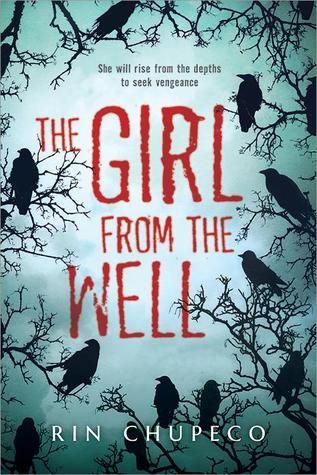 Summary:
A dead girl walks the streets.
She hunts murderers. Child killers, much like the man who threw her body down a well three hundred years ago.
And when a strange boy bearing stranger tattoos moves into the neighborhood so, she discovers, does something else. And soon both will be drawn into the world of eerie doll rituals and dark Shinto exorcisms that will take them from American suburbia to the remote valleys and shrines of Aomori, Japan.
Because the boy has a terrifying secret – one that would just killto get out.
Review:
The official pitch on this one is that it’s Dexter meets The Grudge but what I heard about it was it’s another version of the Japanese myth that The Ring is based on. (After reading it, I can tell you that this is true). I was absolutely batshit terrified of The Ring when I first watched it. I must admit that I read this description and expected the book to me meh compared to the movie based on the same myth. This low expectation is what kept the book from being a disappointing read for me.
I found the writing to be overwrought and trying too hard for the actual genre and plot. Like when the small town seamstress thinks she’s a haute couture fashion designer. For instance:
His mind tastes like sour wine, a dram of sake left out in the dark for too long. (location 63)
Bear in mind that this passage is about a ghost girl who murders child killers/rapists. It’s a pretty passage; it just doesn’t fit.
As far as the plot goes, while I really liked the ghost, the tattooed boy’s plot rubbed me the wrong way. His mother is deemed mentally ill, partially for trying to kill him and tattooing him when he was a child. We later find out that rather than being mentally ill she was battling literal evil spirits, one in particular who wanted to go out and wreak havoc on the world. To try to bind the spirit, she decides to sacrifice her own child to the evil spirit by using him as an anchor, basically, to bind him. So after a bunch of the book basically saying hey the kid should forgive his mother because she’s ill we find out she did this act. I feel like the book wants me to think it’s heroic, but I thought it was sick. The way I felt the book wanted me to feel and the way I actually felt about the situation made me uncomfortable with the rest of the book and struggling with who to root for. Others may feel less conflicted than me over this part of the plot.
Overall, it’s a unique plot that other readers may enjoy more than myself.
If you found this review helpful, please consider tipping me on ko-fi, checking out my digital items available in my ko-fi shop, buying one of my publications, or using one of my referral/coupon codes. Thank you for your support!
3 out of 5 stars
Length: 267 pages – average but on the shorter side
Source: Library
Book Review and Giveaway: The Fair & Foul by Allie Potts (Series, #1)
 Summary:
Juliane has a supercomputer for a brain and she isn’t afraid to use it. Perhaps she should be.
Juliane Faris is a brilliant programmer determined to change the world through scientific and technical advancement. Blinded by ambition, she will do whatever it takes to secure her legacy including agreeing to participate in an experimental procedure. The procedure grants her unprecedented knowledge and cellular control over her body but threatens everything she holds dear including her sanity. When others undergo the same modifications it becomes apparent that not everyone can afford the price that this technology demands.
Review:
This is my final accepted ARC of 2016 (well, there was one more, but the author never sent me the book). I thought what better last review of 2016 than a review and giveaway of my final 2016 ARC. I picked this up right before going on vacation, and I found it to be the perfect vacation read. Tightly paced with an interesting plot and memorable characters I found it easy to remember and relaxing to come back to between vacation activities.
This is scifi of the type where scientists do a thing and it turns out that thing might not be so great after all (but we’re not sure yet). I really enjoy this type of scifi but it’s often hard to find one where the main character (the main scientist) is a woman. I knew from the plot summary that a woman was supposed to be the main character but I admit to being concerned that she would wind up overshadowed by a secondary male character. These fears were unfounded, as Juliane (Dr. Faris) stayed at the center of the story at all times. It truly was her tale at all times.
Now, Juliane is flawed, but that’s as it should be. Just because a female scientist is successful doesn’t mean she’s perfect, and it fits within the genre for the main character to have deep-seated flaws. I appreciate how well-rounded Juliane was, even though I often disliked her as a person. There is an awareness of the times she is unlikeable, as well, as seen through secondary characters’ eyes and sometimes even her own self-awareness. This reassured me that they were intentional flaws and not being held up as something to strive for.
The plot was fun, putting a fiction twist on real scientific research. It takes time for some things to develop but this is well-handled with the story being split into three parts divided by time. For instance, one section detailing a scientific discovery then another 5 years later looking at its impact. The plot was well planned and managed to surprise me a few times without venturing into the realm of the ridiculous.
The only things holding me back from a 4 star rating were the dialogue and a few editing issues. The dialogue was primarily unrealistic and stiff. I do work in academia and know how scientists and researchers speak, and the way they do in this book is too stilted and formal. There were also some editing issues throughout the book, such as: using the wrong homonym, spelling errors, and words that were probably from a previous draft that no longer belonged in the sentence in the new draft. Neither of these slowed down my reading or ruined my enjoyment of the book but they did knock it down a bit. The book has a lot of good bones, and both of these are issues that could be easily addressed in the sequel, which I intend to read (I need to know what happens to Juliane!)
Overall, if you’re a scifi reader looking for fast-paced tale of scientists inventing something that could be more dangerous than they realize and would love to see that story told with a woman at the center, you should pick this book up.
If you found this review helpful, please consider tipping me on ko-fi, checking out my digital items available in my ko-fi shop, buying one of my publications, or using one of my referral/coupon codes. Thank you for your support!
3 out of 5 stars
Length: 320 pages – average but on the longer side
Source: Kindle copy from author in exchange for honest review
Giveaway!
This giveaway is now over. Congrats to our winner!
There were 2 entries, one via blog comment and one via twitter, both by the same person, so she is our winner. Congrats to Katie of Doing Dewey!
Thanks to the generosity of the author, one lucky Opinions of a Wolf reader can win a copy of this ebook.
How to Enter:
- Leave a comment on this post stating what type of scifi story you’d like to see more women characters in.
- Copy/paste the following and tweet it from your public twitter. Retweets do not count:
Enter to win THE FAIR & FOUL by @alliepottswrites, hosted by @McNeilAuthor http://buff.ly/2htJ2XG #scifi #womenauthors #giveaway - Repost the Instagram giveaway announcement and tag my Instagram.
- Tag one of your friends on the Instagram giveaway announcement.
Each options gets you one entry. Multiple tweets/Instagram posts do not count as multiple entries.
Who Can Enter: International
Contest Ends: January 5th at midnight
Disclaimer: The winner will have their book sent to them by the author. The blogger is not responsible for sending the book. Void where prohibited by law.
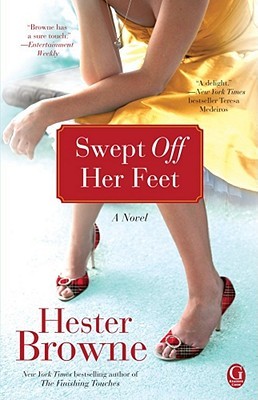
Book Review: Swept off Her Feet by Hester Browne
 Summary:
Evie Nicholson is in love . . . with the past. An antiques appraiser in a London shop, Evie spins fanciful attachments to Victorian picture frames, French champagne glasses, satin evening gloves, and tattered teddy bears—regardless of their monetary value.
As a favor to friends of Fraser’s family, Evie jumps at the chance to appraise a Scottish castle full of artifacts and heirlooms. What could be more thrilling than roaming the halls of Kettlesheer and uncovering the McAndrews’ family treasures—and dusty secrets?
But crossing paths with moody heir Robert McAndrew has Evie assessing what she wants the most . . . and at an upcoming candlelight gala, a traditional dance will set her heart reeling.
Review:
I thought what better Christmas gift to give my readers than a review of a 5 star read! This is one of those books that was so exactly what I look for in the genre that there’s very little to say beyond well done. But I’ll try.
In chick lit I look for a few things. Romance I can root for (no rooting for a marriage to break up, for instance), a smart sense of humor, a realistic setting with a touch of magic, no hating on women in general or other women in particular, and writing that makes me feel as if I am there. This book hits all of those marks.
I was worried at first that I’d be getting a squicky story of Evie trying to steal her sister’s boyfriend, but that’s not what happens at all. Evie’s crush on her sister’s boyfriend is indicative of her tendency to crush on men she knows she can’t have, and it being her sister’s boyfriend is what it takes for her to realize that’s what’s happening. It was the thing that worried me the most but ended up working out the best.
The book is full of wit and smart humor that made me feel like I was relaxing in a warm tub with gentle music. It’s the kind of wit that made me at ease and entertained.
I love the fact that the plot revolves around a woman going somewhere for her career, and romance coming out of that. Evie has her own life, and a significant amount of the plot is actually about her career.
Another part of the plot is the Scottish reel that is danced at the special ball the family that owns the castle hosts. I was expecting to find reading the passages about the dancing to be either glossed over too much or boring, but in fact those passages were so well-written that I actually went and looked up the specific reels on YouTube because I felt like I just had to see them. I was pleasantly surprised to find that they looked precisely like I’d imagined them based on the author’s descriptions. It was the icing on the cake of the book.
Overall, if you’re looking for a modern chick lit whose plot revolves around far more than the romance and that features well-rounded women helping each other out rather than tearing each other down, I highly recommend this read. Maybe it’s something to pick up if Santa gave you a gift card that’s burning a hole in your pocket.
If you found this review helpful, please consider tipping me on ko-fi, checking out my digital items available in my ko-fi shop, buying one of my publications, or using one of my referral/coupon codes. Thank you for your support!
5 out of 5 stars
Length: 330 pages – average but on the longer side
Source: Library
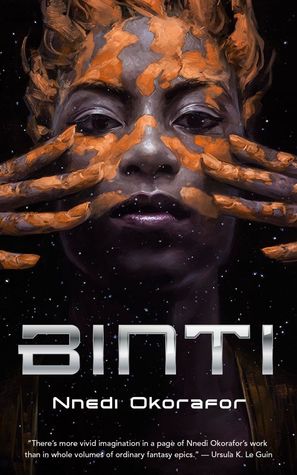
Book Review: Binti by Nnedi Okorafor (Series, #1)
 Summary:
Her name is Binti, and she is the first of the Himba people ever to be offered a place at Oomza University, the finest institution of higher learning in the galaxy. But to accept the offer will mean giving up her place in her family to travel between the stars among strangers who do not share her ways or respect her customs.
Knowledge comes at a cost, one that Binti is willing to pay, but her journey will not be easy. The world she seeks to enter has long warred with the Meduse, an alien race that has become the stuff of nightmares. Oomza University has wronged the Meduse, and Binti’s stellar travel will bring her within their deadly reach.
If Binti hopes to survive the legacy of a war not of her making, she will need both the gifts of her people and the wisdom enshrined within the University, itself – but first she has to make it there, alive.
Review:
A scifi novella I heard about in the context of bringing some much-needed new energy to the genre. It’s not that there’s never been scifi starring a black woman, but there hasn’t been a lot of it. What I found most intriguing about the novella, though, was the main character seeking to pursue her scientific interests without losing her ties to her culture. I think this is a struggle that many first-generation college students feel, and I liked seeing it represented so eloquently in literature.
The young black woman going to university isn’t devoid of her own character and culture. The characterization isn’t just like every other scifi main character ever whose skin just happens to be darker. No, Binti is much more than her skin tone. She’s a whole backstory of a tribal culture that is simultaneously rich in scientific knowledge. (A great concept, beautifully executed). Being the first to leave is scary, and she clings to what she knows of home while also being unafraid to reach out and learn new things.
Without spoiling things, her culture and her diversity ends up being a key factor that aids in the war with the Meduse in a creative way that had me smiling. So there’s a lot to like about the novella.
I didn’t 100% love it, though. Much as I got a good sense of Binti, I didn’t get a good one of the secondary characters around her. This made it so that when the bad things start happening later in the novella, it was hard to care about them. Obviously novellas are limited by length, but I do think the secondary characters could have been more fleshed out like Binti to make the action scenes have the emotional impact on the reader that they do on her.
All in all, though, as a woman with curly hair that has been called “tentacle-like” I loved having a scifi read with tentacle-like hair playing such a central role. I’m excited to read the next entry in the series.
If you found this review helpful, please consider tipping me on ko-fi, checking out my digital items available in my ko-fi shop, buying one of my publications, or using one of my referral/coupon codes. Thank you for your support!
4 out of 5 stars
Length: 96 pages – novella
Source: Library
Book Review: Mermaid in Chelsea Creek by Michelle Tea (Series, #1)
 Summary:
Everyone in the broken-down town of Chelsea, Massachussetts, has a story too worn to repeat—from the girls who play the pass-out game just to feel like they’re somewhere else, to the packs of aimless teenage boys, to the old women from far away who left everything behind. But there’s one story they all still tell: the oldest and saddest but most hopeful story, the one about the girl who will be able to take their twisted world and straighten it out. The girl who will bring the magic.
Could Sophie Swankowski be that girl? With her tangled hair and grubby clothes, her weird habits and her visions of a filthy, swearing mermaid who comes to her when she’s unconscious, Sophie could be the one to uncover the power flowing beneath Chelsea’s potholed streets and sludge-filled rivers, and the one to fight the evil that flows there, too. Sophie might discover her destiny, and maybe even in time to save them all.
Review:
I feel like if you’re a queer person in New England, you’ve heard of this book. A magical realism read featuring queer characters and a diverse cast set not in Boston but in the nearby town of Chelsea (although they do go to Revere Beach, part of Boston, at one point). Its art is gorgeous, and I’ve spotted print versions of it in every single local bookstore. The locals are proud of this book, that’s for sure. With everything I’d heard and the pictures I’d seen when flipping through print copies, I was expecting something a bit different from what I got. Maybe more queer content? Maybe magical rules based in the here rather than in the “old world”? Regardless, I enjoyed it. It just wasn’t what I was expecting.
First, let’s talk about my favorite thing which was how much the author evokes the reality of the place of run-down New England towns in spite (or because of?) the magical content. My skin prickled when I read about Sophie and her best friend going to Revere Beach in the summer. It was just so damn accurate. I had a similar sensation when she talked about the feeling of being in a town that was once booming and now is struggling. There’s no doubt about it, the New England towns that were once booming from manufacturing and are now struggling simply feel dirty, and the author really evokes that. (I should know; I grew up in one). Oddly enough, this magical realism book brings out the feeling of small town struggling New England life more than a lot of realistic fiction I’ve read. If you want to know what it feels like to grow up in one of those towns, read this book.
Second, there’s the magical content. I was expecting something steeped in the local as well, but instead the magic was based entirely in countries parents and grandparents emigrated from. There’s nothing bad about that, it just wasn’t what I was expecting from a book so steeped in place. I also must admit that I found the whole vibe of “magic can only come from other places” to be a bit disappointing. America may be a young nation, but we have our own magic. I’d have liked to have seen a mix of both, rather than the magic be exlusively the domain of immigration.
Third, there’s the queer content. I think I was expecting it to take a more central role, particularly since this is ya (and was talked about a lot in the LGBTQ book reading community) but actually I found it to be more like how the local PCP just so happens to be Asian-American. It’s a thing some people just happen to be and not much is made of that. That’s not a bad thing, again, it just wasn’t what I was expecting.
Overall, this is a fun read steeped in local flavor that I recommend to anyone seeking a fantastical twist on struggling New England town life. That said, the second book in the series promises a journey to Europe, and personally what I liked best about this book was the local flavor, so I don’t think I’ll be continuing along.
If you found this review helpful, please consider tipping me on ko-fi, checking out my digital items available in my ko-fi shop, buying one of my publications, or using one of my referral/coupon codes. Thank you for your support!
4 out of 5 stars
Length: 331 pages – average but on the longer side
Source: Library
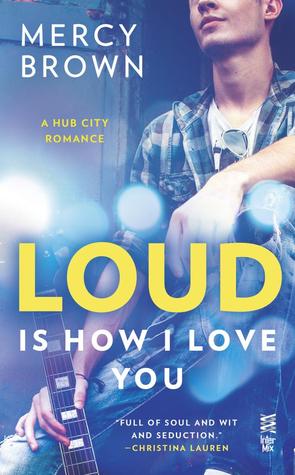
Book Review: Loud is How I Love You by Mercy Brown (Series, #1)
 Summary:
Twenty-one-year-old front girl Emmylou knows that getting her band noticed in the ‘90s indie rock scene will be no easy task. She definitely knows better than to break the number one rule of the band: Don’t sleep with your bandmates! But after she ends up having the best sex of her life with her guitarist, Travis, she finds following that rule is a lot harder than it sounds.
When the band gets the gig of their dreams, making it big seems just within reach. But Emmy’s inability to keep her hands off Travis threatens everything they’ve worked for. Can Emmy find a way to break the rules and not blow the chance of a lifetime?
Review:
It took me a moment to get past the fact that 90s now count as historic fiction. *pours one out for the 90s* But then again Fresh Off the Boat is set entirely in the 90s, much like That 70s Show, so it appears the time has come. I was not a “new adult” (refers to those post high school but pre having your shit together) in the 90s (I was solidly a kid coveting a tamagotchi) but I vaguely knew about all the fads the older kids were into like….flannel and grunge. This book oozes that, and the characters get to have the problems that arise from not having a cell phone or YouTube to promo your band. That was fun.
For those who don’t know, New Adult means to expect more sex. And oh man. The sex scenes in this book. There are a lot of them. They are explicit. I like that sort of thing, and even though I rolled my eyes occasionally at some of their more interesting bedroom pursuits (like “tattooing” with permanent marker), I still thought they were hot, well-written, within character, and, most importantly, made sense within the plot.
What I think could make people love or hate this book is the main character, Emmy. She narrates it in the first person and she is, well, she’s a 21-year-old. She makes problems where there shouldn’t be any problems. She gets all up in her head. She thinks in black and white. She is, basically, young and acts and talks like a young person. Yeah, sometimes it’s infuriating to see her fucking her own life up, but that’s realistic, especially for a character who’s supposed to be a passionate artistic type in a band. I was able to appreciate her for who she is and have faith that she’d grow and get past her issues, but I do think that not everyone would be able to see past that and enjoy it in the same way.
The series will follow other people involved in the indie rock scene, and so we’ve already met them in this book as secondary characters. I’m excited to see what hot shenanigans they get up to and hear a new voice’s take on everything going on for the various bands.
Recommended to those who want to take a visit to the 90s through the eyes of a passionate new adult.
If you found this review helpful, please consider tipping me on ko-fi, checking out my digital items available in my ko-fi shop, buying one of my publications, or using one of my referral/coupon codes. Thank you for your support!
4 out of 5 stars
Length: 227 pages – average but on the shorter side
Source: Library
Book Review: The Almost Nearly Perfect People: Behind the Myth of the Scandinavian Utopia by Michael Booth
 Summary:
Michael Booth has lived among the Scandinavians, on and off, for over ten years, perplexed by their many strange paradoxes and character traits and equally bemused by the unquestioning enthusiasm for all things Nordic that has engulfed the rest of the world, whether it be for their food, television, social systems or chunky knitwear.
In this timely book he leaves his adopted home of Denmark and embarks on a journey through all five of the Nordic countries to discover who these curious tribes are, the secrets of their success and, most intriguing of all, what they think of each other. Along the way a more nuanced, often darker picture emerges of a region plagued by taboos, characterised by suffocating parochialism and populated by extremists of various shades.
They may very well be almost nearly perfect, but it isn’t easy being Scandinavian
Review:
I could easily sum this book up in one sentence: No society is perfect. But that wouldn’t tell you too much about the actual book as a whole, so let’s get down to it.
Booth is a British man who married a Scandinavian woman and thus has lived Denmark on and off for years. He was surprised and confused by the sudden obsession with Scandinavian “happiness,” so he set out to write a book about what Scandinavia is really like. The book is divided into five sections, one for each Scandinavian country. In each section he explores the culture, economy, history, and politics of each nation. Booth writes in a very tongue-in-cheek way. Don’t read this expecting a dry read.
I’m a pretty pragmatic person, so I didn’t come into it thinking of Scandinavian countries as the utopia the news would often have us believe. I was hoping to have a clearer understanding the differences among them (beyond Iceland, which always stands out). My biggest understanding after reading it is that: Sweden makes the pop stars, Norway is kind of like Scandinavia’s American South, Denmark borders Germany, and Finland is rather cross about being the protecting line between Scandinavia and Russia. Frankly, though, they’re all still kind of mixed up in my brain. I think the nuance of the differences among them are probably like how I as a New Englander understand the difference between all the New England states but ask an outsider, and they’ll just lump us all together. Some things you can only learn by living there.
The book mostly confirmed a few things I suspected about the Scandinavian socialist utopias. There’s high taxes and a lot of people don’t work that much. Here’s a few interesting quotes on both of those topics.
- More than 754,000 Danes aged between fifteen and sixty-four—over 20 percent of the working population—do no work whatsoever and are supported by generous unemployment or disability benefits. (location 305)
- Danes are allowed to decide the fate of one-third of the money they earn. Put it yet another way: in Denmark, even if you work in the private sector, you work for the state up until at least Thursday morning. (location 951)
- Perhaps the most troubling aspect of Norway’s social structure is the fact that about a third of all Norwegians of working age do nothing at all. (location 3055)
I know that sounds fine to some people, but there’s nothing that gets a New England woman riled up quite like the idea of slews of the population not working. (Just look up “Protestant work ethic” if you’re confused).
As someone who works in education, I was interested in the much talked about education systems of these countries. I primarily learned that there’s nothing that special about them except the fact that teaching is a profession that is held in high regard in these countries. In Finland, it can be more difficult to get into teaching school than law or medicine (location 4239). But Booth didn’t go as much into the educational system as I would have liked.
I also learned that “Lapps” is now considered a racist term for the Native population. They should instead be called “Sami” (location 2819). Sweden has the highest per capita rate of rape in Europe (location 5872), and Sweden while being a huge proponent of peace is also the world’s eighth largest arms exporter (location 5411).
What I found most interesting in the book was the discussion of how various surveys and studies decided the Scandinavians are the happiest. If you’re at all interested in flawed survey design, definitely check that out. It’s toward the beginning of the book. Booth’s theory is that it’s not so much that Scandinavians are happier it’s just that they don’t set their expectations very high so they can’t be disappointed. I was amused at the idea that it’s a culture that’s naturally mindful, regardless of what else is going on.
The book ends with a lot of discussion of politics that I honestly found to be dull, compared to the sharp wit and social observations and dissection in the beginning of the book. It almost felt like two books smashed into one, and I really only enjoyed the first one.
Recommended, nonetheless, to readers interested in a better understanding of the Scandinavian countries. Provided they have a sense of humor of course.
If you found this review helpful, please consider tipping me on ko-fi, checking out my digital items available in my ko-fi shop, buying one of my publications, or using one of my referral/coupon codes. Thank you for your support!
3 out of 5 stars
Length: 416 pages – average but on the longer side
Source: Library
 Support my work with a tip or browse my shop for curated book club guides, how to guides, cross-stitch patterns, and more!


This work by Amanda Nevius is licensed under a Creative Commons Attribution-Noncommercial-No Derivative Works 3.0 United States License.
 Opinions of a Wolf