
Archive
Book Review: Zero Days by Ruth Ware
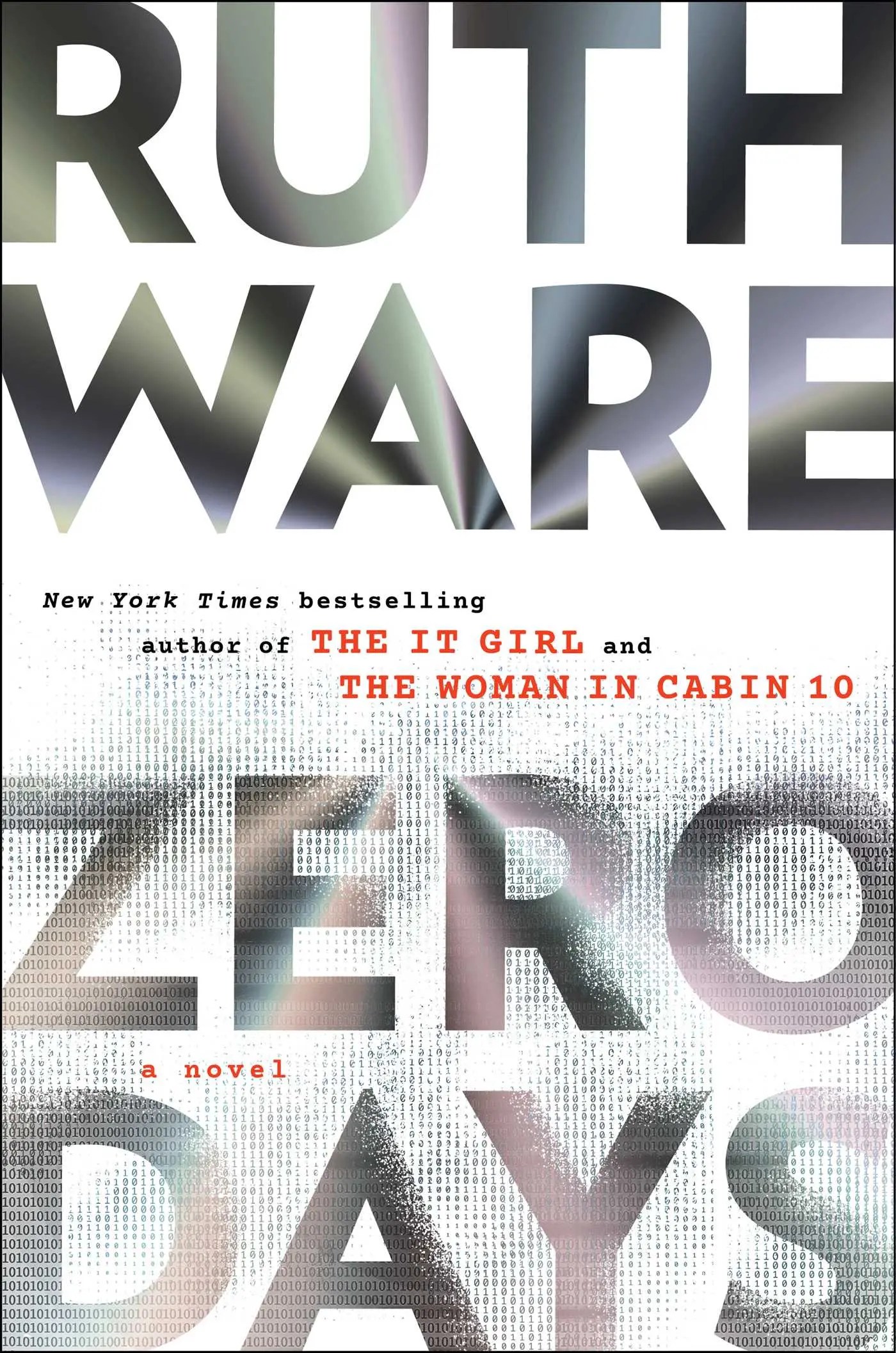
A new widow puts her professional penetration testing skills to work to discover who really killed her husband when she realizes she’s being framed for the crime.
Summary:
Hired by companies to break into buildings and hack security systems, Jack and her husband, Gabe, are the best penetration specialists in the business. But after a routine assignment goes horribly wrong, Jack arrives home to find her husband dead. To add to her horror, the police are closing in on their suspect—her.
Suddenly on the run and quickly running out of options, Jack must decide who she can trust as she circles closer to the real killer in this unputdownable and heart-pounding mystery.
Review:
Ruth Ware, often called the modern day Agatha Christie, drops a new thriller just in time for summer. This one features the fascinating world of penetration testers. What is a penetration tester, you ask? Someone companies hire to test their security. You may have heard of an “ethical hacker.” This is the same thing. Although, in the case of the book, the testing of security systems includes their physical systems. The title even alludes to a cybersecurity thing.
Jack, a talented reformed pickpocket, does the physical security testing, and Gabe, her husband, does the ethical hacking. The book opens with them working on a job, which provides delightful action sequences before the inciting incident of his murder. When she comes home and finds him dead, she gets sucked into a wave of grief that makes her oblivious to the warning signs she’s being framed. These are clear to the reader, and to her sister as well, which was a nice touch. Soon, Jack is on the run, with the dual goal of clearing her name and identifying her husband’s killer to bring him/them to justice.
The pacing of this thriller is solid. I was engrossed and wanted to find out what happened. Making Jack a penetration tester gives valid reasons for her skills at evading the police while also investigating the murder. She’s also easy to like and root for. The scenes of her evading the pervasive panopticon in London reminded me of a favorite book of mine, The Traveler (review). Those were among my favorite.
Two plot choices annoyed me. They’re spoilers, so consider yourself warned.
Gabe’s best friend kissing Jack felt out of character for both of them. I think it was supposed to be a clue to the reader not to trust him, but I already didn’t trust him. It was obvious from Jack saying that her sister didn’t use emojis like that on the phone that he set up for the two of them that this meant it was him on the phone. It was unnecessary and made it difficult for me to get over and like Jack again. I know sometimes grieving widows reach out in this way, and it’s not my place to judge, but it felt like a plot device more than a character choice. The other thing I disliked was that Jack is surprise pregnant at the end. Jack was suicidally depressed before she found out she was pregnant as she felt totally alone without her husband. (Even though her sister was very much involved the whole time, even getting arrested to help her.) In any case, the pregnancy being what it takes to snap Jack out of depression because now she has someone to live for really rubbed me the wrong way. Why couldn’t Jack have figured out that she should live and live well because that’s what we’re meant to do to the best of our abilities? Also, children don’t replace the spouse who passed away. That person is still gone. I get it that people feel like a legacy lives on in children, but to just snap out of suicidally depressed grief over a pregnancy doesn’t mean she properly processed her grief in any way, shape, or form. She’s now just living for the child in the way that she, apparently, was just living for Gabe before.
Overall, this is a fun, quick thriller perfect for a summer read.
If you found this review helpful, please consider tipping me on ko-fi, checking out my digital items available in my ko-fi shop, buying one of my publications, or using one of my referral/coupon codes. Thank you for your support!
4 out of 5 stars
Length: 368 pages – average but on the longer side
Source: NetGalley
Buy It (Amazon or Bookshop.org)
Book Review: Killing Me by Michelle Gagnon
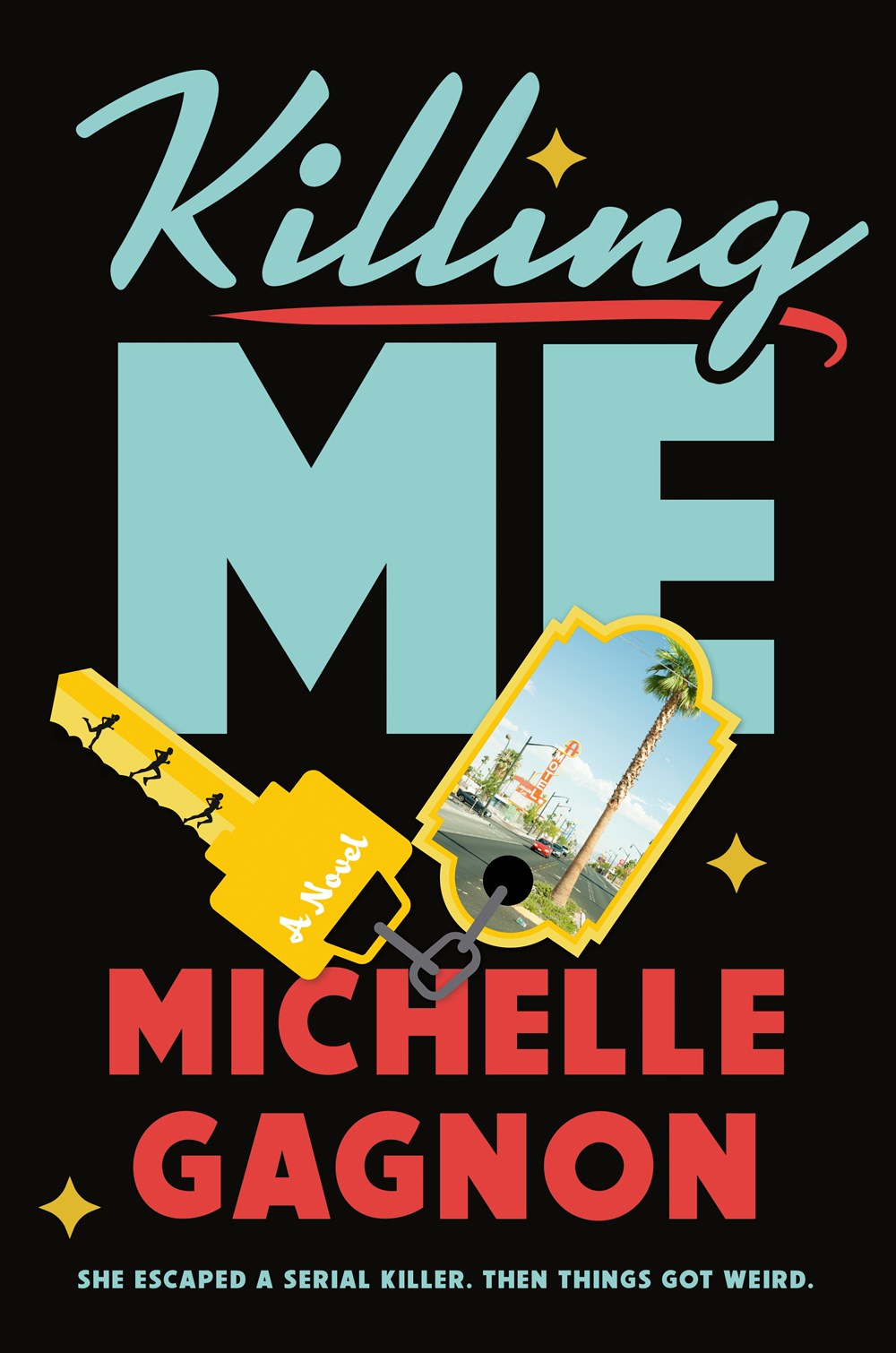
A laugh out loud thriller about women out-smarting a serial killer.
Summary:
Amber Jamison cannot believe she’s about to become the latest victim of a serial killer-she’s savvy and street smart, so when she gets pushed into, of all things, a white windowless van, she’s more angry than afraid. Things get even weirder when she’s miraculously saved by a mysterious woman…who promptly disappears. Who was she? And why is she hunting serial killers?
Review:
When I saw this on NetGalley, I was intrigued by the Final Girls-esque vibe – the women who would be the killer’s victims turning on him. I was skeptical I would find it humorous because, honestly, my funny bone is a little particular. But I actually found myself chortling on page one.
If you’re the type of person with an internal dialogue of self-deprecating humor about bizarre situations you find yourself in, then you’ll probably enjoy the sense of humor in this book. Regardless, you’ll be able to tell quickly if it’s for you or not, because the humor comes so quickly in the book, and that style is what’s present throughout the rest.
This is primarily told in the first person from Amber’s perspective, and she’s dry, acerbic, self-deprecating, but also whip-smart. (There are a few third person chapters that let us see things Amber doesn’t know about.) Amber is simultaneously problematic (she’s a con artist) and easy to root for. She’s richly three-dimensional. The main secondary characters are also rich and well-imagined. It would have been so easy to see a caricature of a sex worker, seedy motel owner, an Evangelical roommate, etc… yet they all are allowed to be more than what they might seem to be at first.
The Las Vegas setting rang very true to me. It depicted both the tourist bits and the seedier local areas quite well. I especially loved the run-down yet beloved film noir stylized motel as compared to the one recently made over to appeal to Gen Z and Millennials. That had me chortling.
I also really appreciated that this is a book whose main character is a lesbian but the plot has absolutely nothing to do with her being a lesbian. You could have almost the exact same book with a heterosexual main character. It’s just Amber so happens to like women. I like having this type of representation. It doesn’t always have to be about the difficulties of coming out or a romance to feature queer people.
The mystery itself was decent. The plot was certainly unique compared to other thrillers I’ve read, and I did not guess the ending. There was one twist that annoyed me only because it was solely a twist because Amber held something back from the reader. But I was willing to forgive it because she sort of breaks the fourth wall and acknowledges that she did it…which was funny.
I hope there’s a sequel, because I think there’s a lot left to explore with Amber, and she has a very interesting set-up at the end of the book.
Overall, I really recommend this to thriller lovers looking for something different. The humor and the plot really deliver.
If you found this review helpful, please consider tipping me on ko-fi, checking out my digital items available in my ko-fi shop, buying one of my publications, or using one of my referral/coupon codes. Thank you for your support!
4 out of 5 stars
Length: 336 pages – average but on the longer side
Source: NetGalley
Buy It (Amazon or Bookshop.org)
Book Review: Hani and Ishu’s Guide to Fake Dating by Adiba Jaigirdar

In this Bangladeshi-Irish YA romance, Hani needs to convince her two best friends that she’s really bisexual. She lies and tells them she’s dating academically focused and acerbic Ishu who agrees to fake date in exchange for help being elected Head Girl.
Summary:
Everyone likes Humaira “Hani” Khan—she’s easy going and one of the most popular girls at school. But when she comes out to her friends as bisexual, they invalidate her identity, saying she can’t be bi if she’s only dated guys. Panicked, Hani blurts out that she’s in a relationship…with a girl her friends absolutely hate—Ishita “Ishu” Dey. Ishu is the complete opposite of Hani. She’s an academic overachiever who hopes that becoming head girl will set her on the right track for college. But Ishita agrees to help Hani, if Hani will help her become more popular so that she stands a chance of being elected head girl.
Despite their mutually beneficial pact, they start developing real feelings for each other. But relationships are complicated, and some people will do anything to stop two Bengali girls from achieving happily ever after.
Review:
I have a soft spot for Irish literature, and when I heard about this book by a Bangladeshi-Irish queer Muslim author with a bisexual main character, it landed on my tbr list very quickly. This was a quick read with an easy to follow story and a sweet, very low spice romance.
I enjoyed Hani and Ishu each separately as character. They take turns narrating in the first person, and I never lost track of who was speaking. This book uses the grumpy/sweet trope quite well. Ishu is only grumpy because she’s focused and willing to speak her mind. Hani quickly sees through that. Hani and Ishu’s cultures are intertwined beautifully in the book. I like it when a book doesn’t feel the need to stop and explain cultural things to the reader. It’s on us to look it up if we want to, and that’s when I really learn things. (Like when Hani makes Ishu porota for breakfast. I looked that up right away. Yum!)
As a bisexual person, I appreciated how the story highlights the specific issues for Hani in coming out as bisexual. It’s clear that her friends would have fairly rapidly accepted her as a lesbian, but they view bisexual as being either confused or attention-seeking. They also don’t believe her because they’ve never seen her date a girl. This is a very realistic depiction of biphobia. Hani is quite confident about who she is and what labels she chooses. In contrast, Ishu is uninterested in labels, although she’s definitely attracted to Hani. It’s not clear if she’s only ever been interested in girls or more or if it’s just that Hani is the first person she’s ever been interested in. But that doesn’t matter to Ishu, and it doesn’t matter to Hani either.
When this book first came out, it was praised for depicting a queer Muslim character. (This article goes into depth about representation for South Asian queer women and interviews the author as well.) There is a perception that you cannot be both queer and Muslim. Both Muslims and non-Muslims hold this viewpoint. Yet people like Jaigirdar are both and depicting this in her books is important to Jaigirdar. Thus, we see Hani engaging with her faith. She goes to the Mosque. She reads the Quran. She eats halal. There is also a perception among many non-Muslims that if someone is serious about Islam and a woman then they will wear the hijab. But it is possible for someone to be devoutly engaging with her faith and also not wearing hijab. The author depicts this in Hani, as well as how she must struggle against the perception that she must not be a “serious” Muslim because she doesn’t wear hijab.
So this book covers a lot of seriously important representation well, and the romance is sweet and believable. What didn’t work for me was the secondary characters. Whereas Hani and Ishu felt well-rounded and interesting, everyone else felt flat and two-dimensional. There also were some kind of big issues that Hani and Ishu seemed to just gloss over. Now, they’re teenagers, so maybe that’s realistic. But Ishu having to hide the relationship from her parents long-term was concerning to me. Also, we never see the characters talk about being in an interfaith relationship. We do hear that Ishu appreciates Hani’s devotion to her faith as part of her. But Ishu is atheist, and we never really hear Hani’s thoughts on that.
Overall, this was a fun read with a lot of important representation. Recommended to readers who enjoy the fake dating and/or grumpy/sweet tropes.
If you found this review helpful, please consider tipping me on ko-fi, checking out my digital items available in my ko-fi shop, buying one of my publications, or using one of my referral/coupon codes. Thank you for your support!
3 out of 5 stars
Length: 352 pages – average but on the longer side
Source: Library
Buy It (Amazon or Bookshop.org)
Get the Reading Group / Book Club Discussion Guide
A beautifully graphic designed 2 page PDF that contains: 1 icebreaker, 9 discussion questions arranged from least to most challenging, 1 wrap-up question, and 3 read-a-like book suggestions
View a list of all my Discussion Guides.
Book Review: In the Lives of Puppets by T.J. Klune
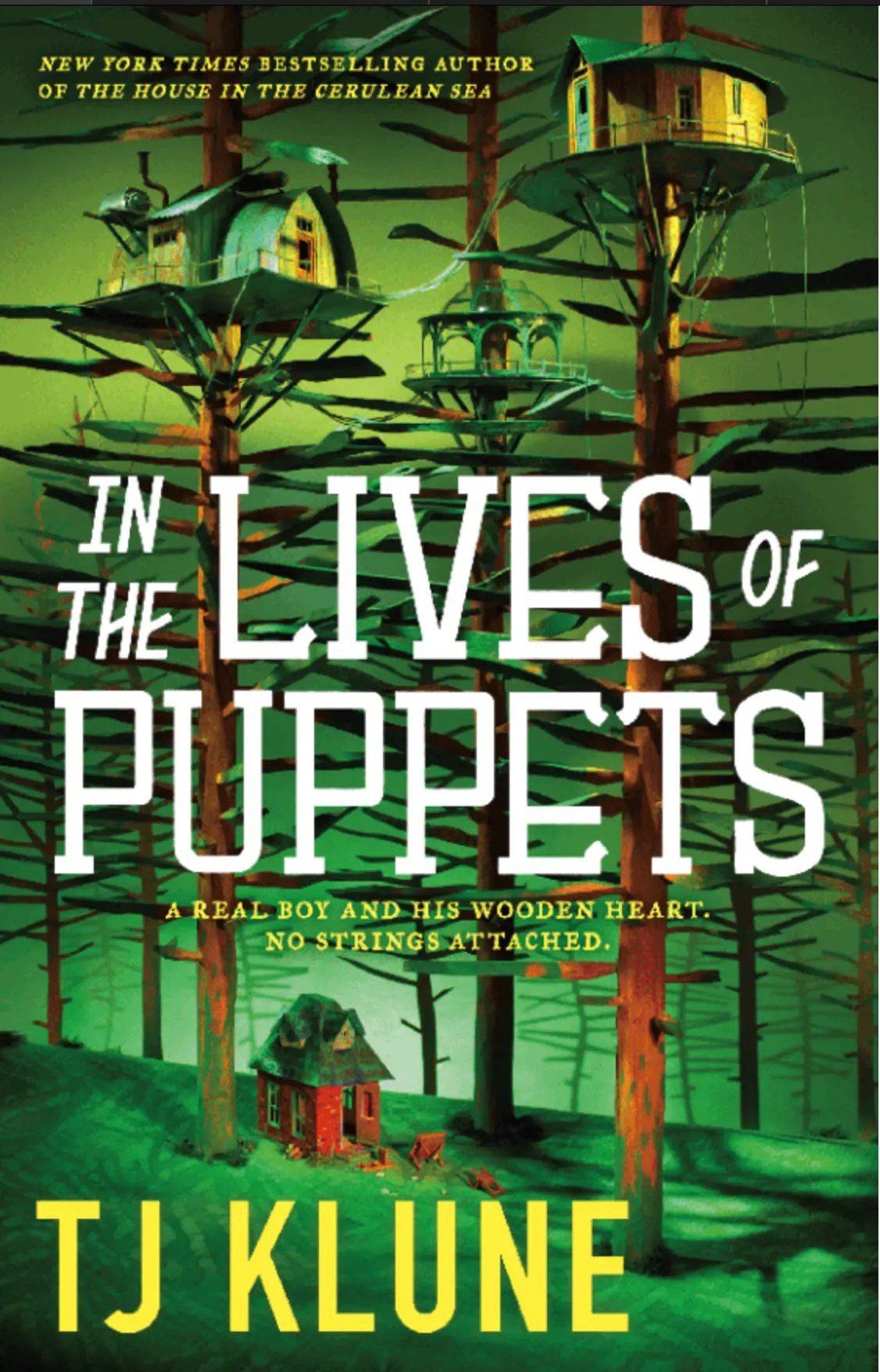
A science fantasy reimagining of Pinocchio where Pinocchio is a “real boy” surrounded by robots (puppets) with a m/m (or, rather, male, male robot) romance added in.
Summary:
In a strange little home built into the branches of a grove of trees, live three robots–fatherly inventor android Giovanni Lawson, a pleasantly sadistic nurse machine, and a small vacuum desperate for love and attention. Victor Lawson, a human, lives there too. They’re a family, hidden and safe.
The day Vic salvages and repairs an unfamiliar android labelled “HAP,” he learns of a shared dark past between Hap and Gio-a past spent hunting humans.
When Hap unwittingly alerts robots from Gio’s former life to their whereabouts, the family is no longer hidden and safe. Gio is captured and taken back to his old laboratory in the City of Electric Dreams. So together, the rest of Vic’s assembled family must journey across an unforgiving and otherworldly country to rescue Gio from decommission, or worse, reprogramming.
Along the way to save Gio, amid conflicted feelings of betrayal and affection for Hap, Vic must decide for himself: Can he accept love with strings attached?
Review:
This is a loving and detailed send-up to Pinocchio. I hadn’t seen the movie in years, and it still stirred up memories for me. When I went to look up the original book version’s plot to compare to this retelling, I found even more details I hadn’t realized or remembered. It’s obvious the author loves Pinocchio, and if you do too, I’m expecting you’ll likely love this retelling. For me, the problem is, I was so excited about a new T.J. Klune book that I sort of…forgot I don’t like Pinocchio. (“Don’t like” is a gentle remembrance. In fact, the movie absolutely terrified me as a child.) Even so, I found myself able to appreciate this loving rendition of the story.
I absolutely adored the character of Rambo – the tiny robot vacuum who’s clearly supposed to be a later generation of roombas. As always, I liked the narrative style the author uses – it reads as sing-songy in my head and feels like someone telling me a fairy tale, which is perfect for this book. I liked the wide variety of robots inhabiting the world, and I really enjoyed the robot substitute for the traveling circus character. I also appreciated that this isn’t an exact retelling of Pinocchio. The story is sometimes restrained, with simple allusions to the original. For example, Victor is never turned into a donkey, but he does stay the night in a hotel like room that is decorated with donkeys at about the right point in the story.
I appreciated the flipping of Pinocchio (Victor in this telling) as being human with his father being a “puppet” (a robot). But I felt like the ending really lets that inversion down, not taking it to its full and complete conclusion. I think there’s supposed to be humor in this book, but it wasn’t funny to me. You will know within the first few chapters if it’s tickling your funny bone or not.
I also found myself unable to root for anyone in this book, save for the small, innocent Rambo. Everyone else has something so wrong with them that it soured me to like them. The one I can talk about without spoilers, as the episode happens in the first chapter, is Nurse Ratched. She is a robot companion of Victor’s who was designed to nurse humans. She’s described as sociopathic, in a way that I think is supposed to read as comedic. As in, she acts like she enjoys inflicting pain but doesn’t really. Yet in the first chapter she chases down a squirrel (off-screen) and kills it by rolling over it again and again. I almost stopped reading the book, I was so horrified. But it was an advanced copy, so I decided to give it another chance. She never does anything like this ever again, but it is actually not uncommon for characters in this book to have something they have done in the past that is truly horrific that is brushed off as their programming. I’m all for plots where characters have to overcome their own tendency toward being bad, and redemption and forgiveness are both very important. But I need for that not to be the plot for almost every single character. It, at the very least, is distressing to read about.
The romance did not move me, which was surprising given what strong feelings I had for the couple in The House in the Cerulean Sea! I also have complicated feelings about how the book depicts what freedom means, how robots pursue freedom, the offerings of the “freedom fighter” character, etc… This, in fact, is a reflection of how I feel the overarching messages tended to get muddled. The only message that I felt was clear and consistent was “be brave!” but no clear reason as to why was ever given. To borrow from an American fairy tale – the overarching story needed a heart. I think, perhaps, the romance was supposed to be the heart, but it didn’t work as one for me.
This is also an incredibly sad book. It’s not uplifting in the slightest. There’s nothing wrong with sad books, but it is a departure from the author’s other books, and so I think the warning is warranted.
Overall, this is an imaginative and loving retelling of Pinocchio that should appeal to fans of that fairy tale. Readers should be aware that the darkness of the original story remains in this retelling.
If you found this review helpful, please consider tipping me on ko-fi, checking out my digital items available in my ko-fi shop, buying one of my publications, or using one of my referral/coupon codes. Thank you for your support!
3 out of 5 stars
Length: 432 pages – average but on the longer side
Source: NetGalley
Buy It (Amazon or Bookshop.org)
Book Review: Love on the Menu by Mimi Deb

A London romcom whose meet-cute is a get your life together list accidentally dropped in a take-out bag leading to notes being passed back and forth.
Summary:
Gia thrives on risks. Ben plays it safe.
She crossed continents to chase her London dream; he works the same job in the same restaurant, night after night.
Then fate steps in. When Gia’s takeout is delivered, her embarrassing list of New Year’s resolutions accidentally makes its way to Ben’s restaurant, stuck to the bottom of a delivery backpack.
With each delivery Gia orders, Ben slips in a note of his own and eagerly awaits her reply. One by one, these notes transform their lives in unexpected ways, and an unlikely love story is written.
Review:
The only thing I can say without spoilers was I loved the meet-cute idea but ultimately disliked both halves of the pairing. The rest of this review will contain spoilers.
I didn’t know when I requested this book that Ben, the love interest, is in long-term recovery (5 years plus) from alcohol. As a sober person myself, when I realized this about the love interest, I was ecstatic to see that representation. It’s what kept me hanging on after a shaky opening that I’ll talk about in a moment. But ultimately the representation left me disappointed. Plus I wound up not liking Ben. So let’s get into it.
First, the opening chapter. Gia gets drunk at a work event and accidentally kisses her boss while dancing. How, you ask? I’m still confused by it. She was doing the Single Ladies dance, they were dancing back-to-back, and when she jumped to turn 180 degrees, her lips landed on her boss’s. I do not think this would actually be possible to do without either bonking noses or hitting teeth together.
Now I need to explain a bit about the plot to talk about what didn’t work for me. So, after this, she convinces herself she’s about to lose her job and writes the get your life together list Ben ultimately finds. When she returns to work after the holidays, she becomes convinced that her boss is out to get her, thanks partially to her work-friend, Jay’s warnings. They are both immigrants. She immigrated from India, and he from China. He explains that the boss can’t legally fire her for such a thing in Britain but she can set her up to fail by giving her too much responsibility then a warning then a firing. When she does suddenly get more responsibility at work, she becomes convinced this is what is happening. Meanwhile she keeps ordering delivery from a local Indian takeaway that reminds her of home, plus she’s getting to exchange cute notes with one of the employees, Ben, through them. He coaches youth football on the weekends and has a large and loving family. Ben becomes enamored with Gia. Eventually they get a chance to meet when she needs a caterer for a big important work event.
Gia repeatedly drinks too much throughout the book. I was ok with this at first because I thought maybe she would have an ah-hah moment and cut back (or stop entirely). But she doesn’t. She thinks maybe she should. She puts it on her list. (Heartbreakingly the list at the ends says: “Don’t Drink. Drink less. Drink responsibly.”) But then she doesn’t actually do it. She even continues binging up through her marathon run. Her mother at one point in the last chapter says to her boss that Gia drinks too much. The boss agrees. And Gia blows it off. In the last chapter! There’s nothing I can root for with a person in long-term recovery getting together with someone with an active alcohol problem that’s bad enough that their family and boss have noticed and yet they won’t acknowledge it.
There is a giant reason I don’t think Ben is right for Gia either. Essentially, when Ben was in the throes of his addiction, he made some choices that led to an immigrant getting fired from his brother’s company. Instead of standing up for the guy and taking responsibility for what happened that night, Ben let him be fired and then took his job (only to quit it a few weeks later). Everyone makes mistakes, and I’m ok with a hero being imperfect. But later – five years later – when this comes up, he says, “Why didn’t he just get another job?” and “Why do you make looking for a job sound like a marathon?” This was a very heartless thing to say. It’s even more heartless given that Ben knows that Gia is also an immigrant whose ability to stay in London is tied to her employment which she at that moment feels is precarious. Ben never actually apologizes for this. He reads Gia a letter in which he talks about how wonderful she is, but he never apologizes for how flippantly he regarded the immigrant work situation.
These two people don’t belong together, and that is what left me feeling sour at the end. I don’t see a HEA or even a HFN but the first few seconds of a train wreck.
So, while the meet-cute was adorable, and I loved seeing diversity both in race and mental health in this book, I ultimately felt that the two leads did not belong together, although with some different plot directions, they could have been. Ben could have made a real apology and done something to try to make up for his lack of compassion for immigrants. Gia could have realized she had a problem with alcohol and taken Ben up on the offer to hook her up with a sponsor. If these two conditions were met, there could have been a very cute one year later they get together with a new meet-cute epilogue. But instead the book just swept the important issues under the rug with a Beyonce song at the end.
If you found this review helpful, please consider tipping me on ko-fi, checking out my digital items available in my ko-fi shop, buying one of my publications, or using one of my referral/coupon codes. Thank you for your support!
3 out of 5 stars
Length: 416 pages – average but on the longer side
Source: NetGalley
Buy It (Amazon or Bookshop.org)
Book Review: Last Train to Memphis: The Rise of Elvis Presley by Peter Guralnick

Considered by many to be book one of the quintessential Elvis biography duology.
Summary:
Based on hundreds of interviews and nearly a decade of research, it traces the evolution not just of the man but of the music and of the culture he left utterly transformed, creating a completely fresh portrait of Elvis and his world.
This volume tracks the first twenty-four years of Elvis’ life, covering his childhood, the stunning first recordings at Sun Records (“That’s All Right,” “Mystery Train”), and the early RCA hits (“Heartbreak Hotel,” “Hound Dog,” “Don’t Be Cruel”). These were the years of his improbable self-invention and unprecedented triumphs, when it seemed that everything that Elvis tried succeeded wildly. There was scarcely a cloud in sight through this period until, in 1958, he was drafted into the army and his mother died shortly thereafter. The book closes on that somber and poignant note.
Review:
If you know you’d be into an in-depth Elvis biography, I can tell you that this one is widely acknowledged as the best starting place for its depth of research and attempt to present a neutral viewpoint – neither one of a fan nor one of a naysayer. It’s out to find the middle-ground, and the the truth does often lie somewhere in the middle.
If you think you wouldn’t be into an Elvis biography, there’s more to this book than Elvis. It’s also the story of the American music industry in the 1950s. I learned so much about how music was made and marketed at that time, and how rock n roll changed it. It wasn’t just about the sound but about how the music was actually sold. For example, I didn’t realize how at the tie going on near-constant tour to small music venues was considered the best way to market yourself. The chapters about how Elvis’s manager, the Colonel, got him onto television and how television really started to change the music industry were fascinating. It was like an echo of TikTok in some ways. I also really enjoyed learning about Sun Records – the small, independent label that gave both Elvis and Johnny Cash their starts.
I’d previously heard a lot of the very bad things about the Colonel. It made me wonder how Elvis fell for using him as his manager to begin with. This book really brought to light the why. The Colonel may have taken a much larger percent (25%) than was usual (10%), but he also had a great business mind and really got things done. It was the Colonel who got Elvis on television and in the movies. I’d always thought the Colonel pushed Elvis into the movies but this book showed from its extensive interviews that Elvis himself was quite interested in being like James Dean. The relationship, at least at the beginning, was a lot more give and take than I’d thought. Another example is that it’s clear from the interviews that Elvis was ok with letting the Colonel be “the bad guy.” He didn’t protest or get in the way when the Colonel did something that those around him thought was squidgy. In fact, it seems like he was kind of ok with letting the Colonel be the scapegoat.
I knew from previously reading The Gospel Side of Elvis that Elvis loved gospel music and considered it his first music love. I hadn’t realized, though, how almost indifferent he felt about the music he did play. He was professional about it, but he didn’t love it the way he loved gospel. From my understanding of the book he seemed to pursue the music he thought would be the most likely to lead to success, not the one he was passionate about. It always makes me a little sad to hear of someone making a choice based on potential success than passion, although I do understand why people do that. How different things would have been if he’d pursued gospel though, huh?
This book was a little slow-going for me because I kept stopping to listen to the songs mentioned or watch the television appearances as they came up. I think that enhanced the book, and if you have the chance to read the digital book with the audio/video enhancements, I would.
Overall, this book delivers what it promises – an in-depth look at Elvis based on extensive research and interviews. But it also goes further, illuminating America’s music scene in the 1950s, and how it changed, putting us on the trajectory to the modern music scene.
If you found this review helpful, please consider tipping me on ko-fi, checking out my digital items available in my ko-fi shop, buying one of my publications, or using one of my referral/coupon codes. Thank you for your support!
4 out of 5 stars
Length: 560 pages – chunkster
Source: Library
Buy It (Amazon or Bookshop.org)
Book Review: Appalachian Zen by Steve Kanji Ruhl

A memoir written throughout one man’s life looking back on his childhood in the Appalachian region of Pennsylvania and following his journey to becoming a Zen Buddhist minister in Massachusetts.
Summary:
Edgy, lyrical, and lovingly rendered, this book recounts how a kid from a Pennsylvania mill-town trailer park grew up—surrounded by backwoods farms and amid grief, violence, and passionate yearning—to become something a Buddhist minister teaching Zen. Throughout the book, Ruhl engages Buddhist themes of awakening and the death of the self by confronting the lives and deaths, including two by suicide, of his loved ones. This provocative memoir tells how it feels to practice Zen, and to move toward a life of hard-won forgiveness, healing, and freedom.
Review:
As a woman who grew up in the hills of Vermont, I’ve felt an affinity for other hill folk throughout my life, but especially ones who struggled with the local culture and left looking for something else. The title of this book drew me in instantly when I saw it on my library’s new book shelf, and I brought it home after quickly verifying it was, indeed, about both Appalachia and Zen Buddhism.
I’ve read a lot of memoirs and a lot of Buddhist books in my day. But I’ve never read a book that’s both. I’ve also never read a memoir that was written over decades. That’s something that fascinated me about this memoir – Ruhl actually wrote large section of it while he was living through those moments. Of course, some parts, like looking back on his childhood, were written in retrospect, but others were written in the moment. Thus, Ruhl’s own voice and perspective changes over the course of the memoir in ways I found fascinating. Perhaps the most noticeable to me was how he moved from exoticizing Japan a bit when he first visited to beautifully articulating why that needs to be avoided as an American Zen practitioner later in the book.
Ruhl beautifully articulates what it feels like to grow up rural white poor, how that culture is beautiful and painful simultaneously, and, similarly, how it is both a relief and an ache to leave and live elsewhere. I thought this book would pair nicely with reading Limbo: Blue Collar Roots, White Collar Dreams (review). As part of his training, Ruhl went back to Pennsylvania to bring Zen to these hills. I was so excited about this part of the book because I find the idea of Buddhist ministry to the rural parts of the US like where I grew up so fascinating. But unfortunately the book had very little to say about it. That disappointed me. I wanted to know more about how he felt going back, what it was like to be back as a forming Zen minister, and how people in the area responded to Zen. It seemed to me that he was quite motivated to go back and do this work and then after his training he, instead, returned to Massachusetts. I realize that even memoirists get to hold parts of themselves and their journey private. But in a book called Appalachian Zen, I felt like it wasn’t unreasonable of me as a reader to expect more clarity about what happened here. Even if something simple and straightforward was said like…I realized that type of ministry wasn’t for me.
In contrast the author is exquisitely honest when discussing the suicides of two women he loved dearly – his sister and a close friend (former girlfriend). This part of the book moved me so much, I could only read it a few pages at a time. The author reveals the full spectrum of grief, including guilt, and even includes some excerpts from his ex-girlfriend’s journals, which she mailed to him just before she committed suicide. This is one of the most raw and honest accountings of being bereaved for someone lost in that way. But do be aware the methods of suicide are described (although not in graphic detail).
Ruhl describes participating in trainings with both the Zen Peacemakers, and the Zen Mountain Monastery, along with some other organizations. His trainings with the Zen Peacemakers included taking on being unhoused for a few days and traveling to Dachau to confront the Holocaust. His time with the Zen Mountain Monastery seems to have been more traditionally Zen. You can read more about Ruhl’s current work on his website.
Overall, this is a unique and emotional memoir written throughout the author’s life. The reader should be prepared for some areas to be explored more in-depth than others and open to aspects of Zen Buddhist thought being incorporated throughout.
If you found this review helpful, please consider tipping me on ko-fi, checking out my digital items available in my ko-fi shop, buying one of my publications, or using one of my referral/coupon codes. Thank you for your support!
4 out of 5 stars
Length: 356 pages – average but on the longer side
Source: Library
Buy It (Amazon or Bookshop.org)
Book Review: The Saga of the Bloody Benders by Rick Geary

A true crime graphic novel telling of a family of serial killers in the 1870s.
Summary:
Out on a deserted stretch of Kansas road linking newly forming towns, a mysterious family stakes a claim and builds an inn for weary visitors. Soon, reports multiply of disappearances around that area. Generally, those who disappear have plenty of cash on them. A delicious tale of a gruesome family fronted by a beguiling lass who led their victims on…
Review:
I first heard about the Bloody Benders in an American Indians in Children’s Literature blog post about what Laura Ingalls Wilder left out of the Little House books. Essentially, Laura said she left out some aspects of her childhood because she didn’t think they belonged in a book written for children,…one of which is how Pa probably participated in mob justice against the Benders. American Indians in Children’s Literature does a great job breaking down how problematic it is that depicting white serial killers in her books wasn’t ok but depicting the horrifying treatment of Indigenous peoples was. In any case, I got curious about the Bloody Benders, and the internet said this was one of the better books written about the topic, so I picked it up from my public library.
The artwork is nice. I particularly enjoyed this depicted of the Bender family’s one-room grocery and inn to demonstrate how they pulled off the serial killings.
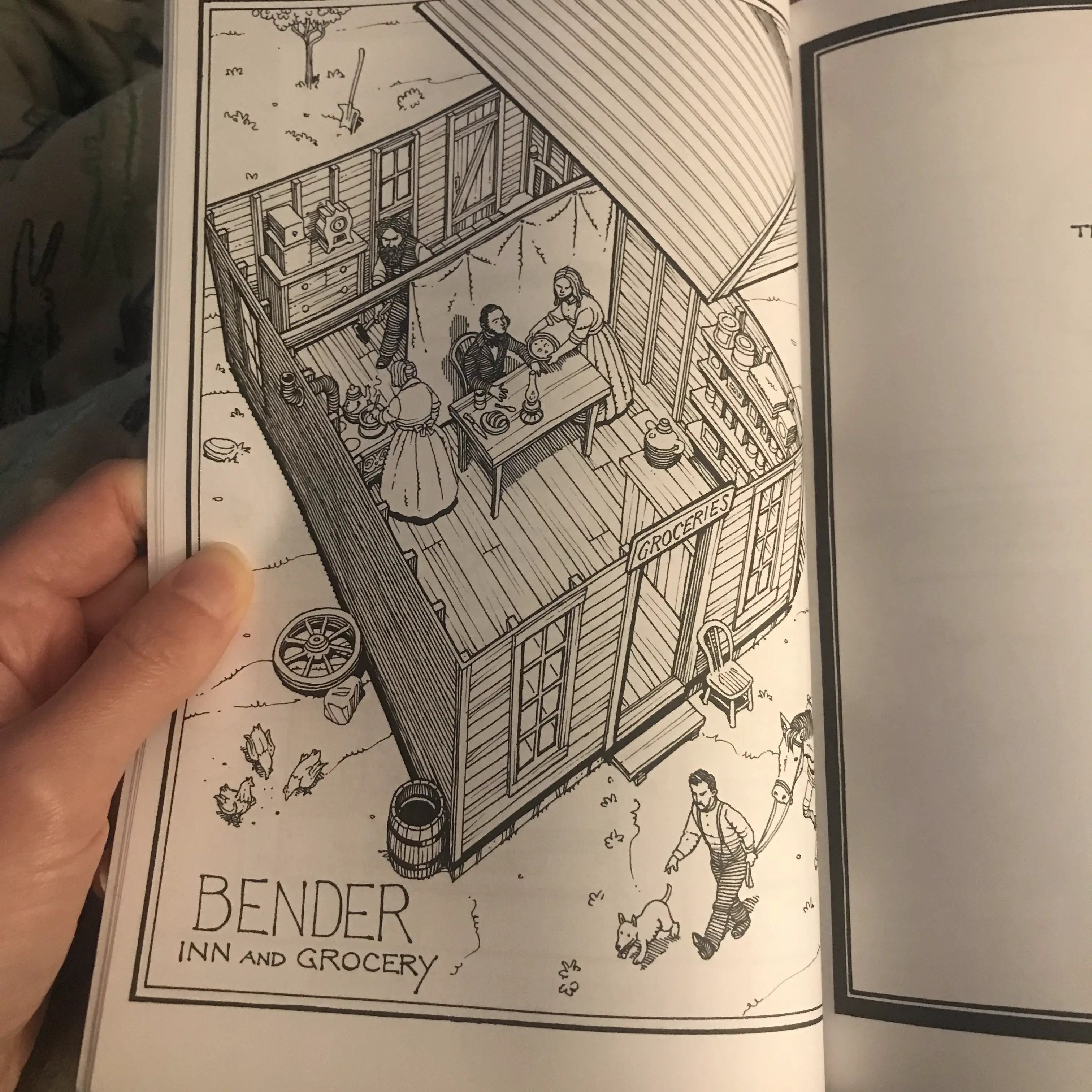
The content is factual and is careful to steer clear of using quotes in the panels when we don’t actually know what anyone said.
What made me dislike the book, though, was how it treated both Indigenous peoples and women. I understand that sometimes in historic nonfiction if a quote is being used or documents from the time period that it will use offensive language. However, this book used offensive language in parts that were narration written by the modern day author. It was published in 2007, and I truly feel someone on this book team should have been more thoughtful. A near-victim of the Benders was a Catholic missionary to the Osage people. Instead of saying it this way, though, the book says he, “dedicated his life to converting the savages.” This is the use of both a dehumanizing term and a glossing over of how missionary work was used as a weapon against Indigenous peoples in the Americas. This is a book about serial killers – I think whoever is reading it should be able to handle at least a footnote illuminating the complexities of this person’s missionary work.
With regards to the treatment of women, this is mostly in regards to how Kate Bender is discussed in the book. She is one of the four Bloody Benders, so I certainly don’t expect her to be discussed kindly, however while most of the book strives to stick closely to the truth as far as we know it, there is one part of the book that breaks down how folks determined the Benders pulled off their killings, based on the layout of the room, the trap door found, and reports of survivors. Most of this sticks to the facts, but then it gets to the part where Kate feeds the person sitting down at the guest table and says, “Does Kate also offer sexual favors as part of the package? No certain answer will ever be known.” What an unnecessarily and misogynistic supposition. Nothing that we know about Kate from survivors and those who knew her suggests she was promiscuous at all. In fact, earlier in the book it mentions she entertained suitors who ran errands for her but the suitors were never successful with her. Later when the book discusses possible endings for the various Benders that the rumor mills supposed, one proposed for Kate is as “a whore in Montana.” I trust that this was a true rumor, but it could have very easily said prostitute or sex worker.
True crime writing has the opportunity to analyze a crime and the society that surrounded it through a current lens. It can highlight both the good and the bad of that society and look at how this crime managed to occur, and, in the case of some crimes, go unstopped for so long. This book doesn’t do that, making it a beautifully illustrated reporting of what happened, lacking any analytical meat.
If you found this review helpful, please consider tipping me on ko-fi, checking out my digital items available in my ko-fi shop, buying one of my publications, or using one of my referral/coupon codes. Thank you for your support!
2 out of 5 stars
Length: 76 pages – short nonfiction
Source: Library
Buy It (Amazon or Bookshop.org)
Book Review: The Sentence by Louise Erdrich
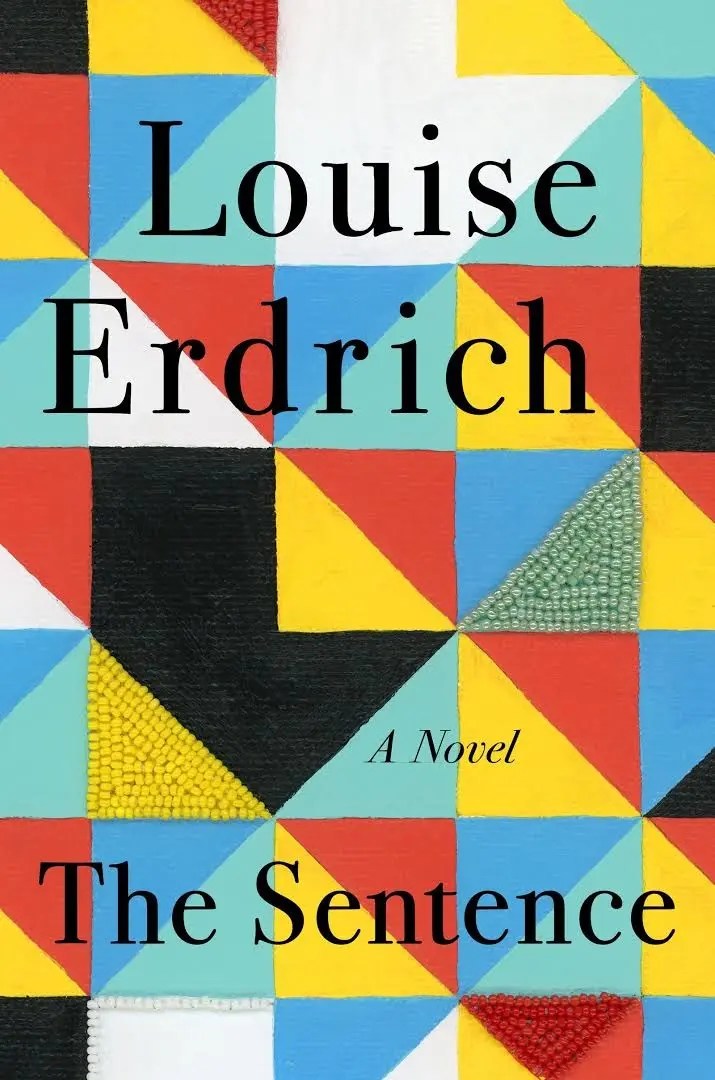
A previously incarcerated Indigenous woman loves her job at an independent bookstore focused on Indigenous literature right up until the store’s most annoying customer dies and begins haunting it.
Summary:
A small independent bookstore in Minneapolis is haunted from November 2019 to November 2020 by the store’s most annoying customer. Flora dies on All Souls’ Day, but she simply won’t leave the store. Tookie, who has landed a job selling books after years of incarceration that she survived by reading with murderous attention, must solve the mystery of this haunting while at the same time trying to understand all that occurs in Minneapolis during a year of grief, astonishment, isolation, and furious reckoning.
Review:
It’s a good thing I didn’t see that this book is magical realism or I wouldn’t have picked it up. You see, I had a serious misunderstanding of what magical realism is and thought I didn’t like it. In fact, I like it very much. I only wish I had first been introduced to it by the excellent explanation from Master Class originally. I’m excited that this book has helped me see past the magical realism label.
The thing that I love structurally about this book is how the title has so many different meanings. There’s the sentence that Tookie serves for her crime. There’s the sentence found within the book that Flora is reading when she dies. And there’s many other sentences throughout the book. I love when one title has many meanings.
The book starts with Tookie thinking back briefly on her incarceration and what landed her there. Part of what made the beginning so readable was how Tookie told this story. It was like speaking with a friend about a piece of their past. Raw and real but quick and to the point. It got me invested in the book right away. Then we jump to Tookie’s present, working in the bookstore, and the haunting, and this is utterly engaging right away as well. Tookie is flawed but so relatable. I think most readers will find her to be this way because she’s such a huge reader herself.
I also found her relatable because she’s in long-term recovery. I like how she sometimes thinks about how she was but it’s not like any single bad day gives her an urge she has to fight. A lot of times in literature and movies only early sobriety is shown, and the fact is, the experience in long-term recovery is different. I was so glad to see that in Tookie, and to see her breaking the multi-generational disease. But I also appreciated the very realistic depiction of her being concerned about talking about the haunting with her husband, Pollux, for fear he would think she had relapsed. I also should mention that both Tookie and her niece are bisexual. Their sexual fluidity is never judged or questioned. It’s just a part of who they are, which I really appreciated.
The book centers around a difficult question that it doesn’t provide answers for. Flora is a “wannabe Indian.” She’s a white woman who claims Indigenous heritage based on one photo she says is of a great-grandparent. The Indigenous community is dubious but doesn’t want to tell her she can’t belong. She spends much of her life working for the betterment of Indigenous people, including even taking in an unhoused teenager and caring for her so much that when she’s grown she refers to her as mother. So everyone has complex feelings about her. There are also some scenes that show white people behaving in offensive ways and smoothly depict how hard it is for Indigenous people to deal with these aggressions on a regular basis. One that really stuck in my mind was the white woman who shows up at the Indigenous bookstore and talks about her grandmother reassembling Indigenous bones she found on her land and winning a blue ribbon for it. She doesn’t understand why this is offensive to the Indigenous people she’s speaking with. To me the examples like this throughout the book demonstrate two types of white people who are hurtful to Indigenous people. The book is never preachy with these scenes. They come across as very realistic depictions of, unfortunately, regular interactions between Indigenous people and white people. If you yourself aren’t sure why these two types of interactions are hurtful, then I think this book would show you.
I wasn’t sure how I would feel reading a fictional book set during the first year of the pandemic. Overall, even though Tookie’s experiences and mine were different from each other (she was much older than me and had an essential worker, public facing job), I still found it realistic and relatable. The book never dwelled too much on any individual aspect of the pandemic but had scenes that were necessary reminders of how things were in the early days, like when Tookie goes to the grocery store to stock up just in case and ends up buying the best she can from what’s left, such as a tube of cookie dough. Similarly, Minneapolis was where George Floyd was killed and followed by the protests that spread throughout the country in 2020, and so this had to be a part of the book. At the start of the book it’s established that Tookie’s husband, Pollux, is who actually arrested her. By the time she was out of prison, he had left the tribal police force. But her household still must deal with the complex situation of having a previously incarcerated person and an ex-cop in the same household during this tumultuous time. There’s also the nice addition of Pollux’s niece, Hetta, living with them and, as a young person, being more involved in the protests. This thoughtful characterization allowed for multiple perspectives on the protests. For example, while there is support, there is also sadness and concern about the small businesses being impacted.
In spite of all that comes in the middle, the last part of the book deals mainly with Tookie’s relationship with Pollux and Tookie dealing with Flora’s ghost. This provides closure even while the reader knows the difficulties didn’t end in November 2020. In many ways I found this to be a story about relationships and reconciliation.
Overall, this is a strong piece of contemporary magical realism. If you’re ready to read a book featuring the pandemic while not being about the pandemic itself, this is a great place to begin.
If you found this review helpful, please consider tipping me on ko-fi, checking out my digital items available in my ko-fi shop, buying one of my publications, or using one of my referral/coupon codes. Thank you for your support!
4 out of 5 stars
Length: 387 pages – average but on the longer side
Source: Library
Buy It (Amazon or Bookshop.org)
Get the Reading Group / Book Club Discussion Guide
A beautifully graphic designed 2 page PDF that contains: 1 icebreaker, 9 discussion questions arranged from least to most challenging, 1 wrap-up question, and 3 read-a-like book suggestions
View a list of all my Discussion Guides.
Book Review: Long Story Short: 100 Classic Books in 3 Panels by Lisa Brown
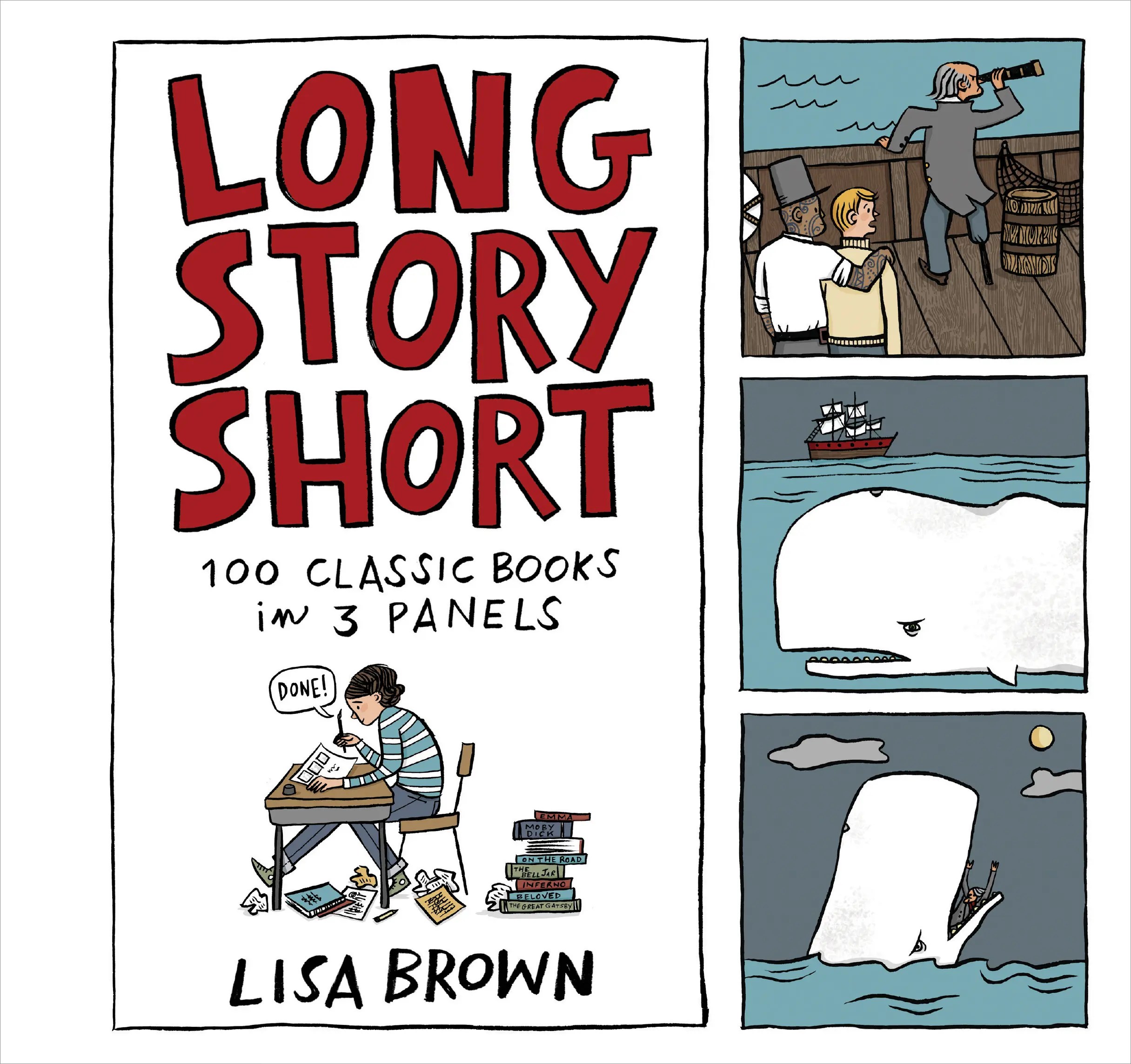
For English literature lovers who want to explain why they loved…or hated…a classic in one comic.
Summary:
100 pithy and skewering three-panel literary summaries, from curriculum classics like Don Quixote, Lord of the Flies, and Jane Eyre to modern favorites like Beloved, The Brief Wondrous Life of Oscar Wao, and Atonement, conveniently organized by subjects including “Love,” “Sex,” “Death,” and “Female Trouble.”
Review:
I became interested in this book because the amazing website American Indians in Children’s Literature described the comic about Little House on the Prairie but when I checked out the link I found the comic gone and a prompt about the book. In fairness, it had been more than 12 years since that article was published so I’m not too surprised Lisa Brown got a book deal in the meantime. It came in quite quickly for me from the library, and I read it in less than 30 minutes.
Rather than being organized by time period, the classics are organized by topic like “Love” and “Death.” This is also an inclusive definition of classics including ancient literature like Beowulf to modern pieces like The Fault in Our Stars. I like her illustration style. It’s colorful and engaging. You can see examples of actual panels from the book on her website. (It doesn’t include the Little House one but it does include one of my other favorites from the book – Edgar Allan Poe.)
You might think this is a way to Sparknotes your way through 100 books. This is not the case. The comics that were the funniest and most meaningful were the ones for books I had read. The ones for pieces I hadn’t fell kind of flat for me. This is actually sort of like a collection of inside jokes from one reader to another, and in order for the inside joke to make sense, you have to have read the book in question. That said, a couple of the comics for books I had read fell flat for me because I felt like they missed the point of the book. For example, I felt like the comic summary of Their Eyes Were Watching God was a very poor summary of an absolutely amazing book. So my experience of the comics was kind of all over the place.
Overall, this is an interesting collection of short comics drawn in an engaging manner. Recommended to big readers who want a couple of inside joke style chuckles. It could also make a good gift to a big reader you know.
If you found this review helpful, please consider tipping me on ko-fi, checking out my digital items available in my ko-fi shop, buying one of my publications, or using one of my referral/coupon codes. Thank you for your support!
3 out of 5 stars
Length: 80 pages – novella
Source: Library
Buy It (Amazon or Bookshop.org)
 Support my work with a tip or browse my shop for curated book club guides, how to guides, cross-stitch patterns, and more!


This work by Amanda Nevius is licensed under a Creative Commons Attribution-Noncommercial-No Derivative Works 3.0 United States License.
 Opinions of a Wolf