
Archive
Book Review: Can’t Spell Treason Without Tea by Rebecca Thorne

A sapphic (wlw) cozy fantasy where a woman commits treason by running away from her lifelong job as the Queen’s private guard to start a remote tea shop with her girlfriend.
Summary:
After an assassin takes Reyna hostage, she decides she’s thoroughly done risking her life for a self-centered queen. Her girlfriend Kianthe, the most important mage in all of the land, seizes the chance to flee responsibility. Together, they settle in Tawney, a town nestled in the icy tundra of dragon country, and open the shop of their dreams.
What follows is a cozy tale of mishaps, mysteries, and a murderous queen throwing the realm’s biggest temper tantrum. In a story brimming with hurt/comfort and quiet fireside conversations, these two women will discover just what they mean to each other… and the world.
Review:
This might be the first time I’ve ever impulse read a book on my kindle’s “recommended for you” list. I was precisely in the mood for something lighthearted and escapist, and none of my library books or currently owned ebooks fit that bill. When I saw this title, I laughed. Then I read the description and, delighted to see it was a cozy fantasy, decided to give it a whirl. (What exactly is cozy fantasy? It’s a newly defined genre, but I like the devoted Reddit subgroup’s definition. The Kenosha Public Library is a little more specific in their definition.)
I mostly expected a plot about opening a tea shop in a fantastical land with dragons. That was really one of three plots. The other two involve Reyna’s treason and Kianthe’s role as the most powerful mage. It was a little more high stakes than I was expecting. People’s lives are at stake at quite a few points. It didn’t particularly stress me out, but I guess I was expecting something more along the lines of – oh no we’re out of honey and can’t get anymore for a month because the dragons are blocking supply chains – sort of thing. That said, even though it wasn’t quite what I was expecting, it was still a relaxing, escapist read to me.
I like the main couple. They have a sweet dynamic with things to overcome. Mainly that Reyna was raised to a role of servitude to those born to power, and Kianthe was born to power. Reyna has to come to understand her worth, and Kianthe does amazingly supporting her through that. I also loved the dragons and griffons. There are two nonbinary secondary characters, both of whom use they/them pronouns. Although the word isn’t used, it’s strongly hinted at that a secondary character who is a woman married to a man is bisexual.
Kianthe is a woman of color, although I personally was left confused by what exactly her skin tone is. It is described as “the color of drying clay” (page 42). I checked on Writing With Color’s skin tone guide, and they do suggest clay as a reference. From the picture on their page, I think it’s supposed to denote reddish-brown. For me, though, when I was reading, I thought of gray clay. Writing With Color does state that creative descriptions can be confusing to the reader and suggests using additional descriptives to help. I don’t think drying brings much clarity to the sentence. Who’s really stood around watching clay dry? They also suggest to consider the associations that come up with a word. Clay is malleable, and I think Kianthe is anything but. Similarly, while Reyna’s hair is described many times as the typical shimmery blonde, I’m still not sure what Kianthe’s looked like due to a lack of description.
The tea shop itself ends up being a giant room full of plants that Kianthe keeps magically alive in the cold climate. I loved that aspect of it. The tea itself is largely inspired by our own world’s tea, and the goodies are essentially the same as here as well. The only exception being bagels with “creamed cheese.” The bagels are treated as kind of exotic and that confused me. Why are bagels exotic and not the scones? Why is cream cheese spelled differently and not bagels? One other thing that bugged me so much I ran an Instagram poll about it is that the tea shop owners make tea incorrectly. They add tea bags to cups of hot water. While this is totally fine in one’s own home when using a microwave and in a hurry, the proper way to make tea is by pouring the hot water over the leaves. Only one respondent in my entire poll said they do it the other way around, and they messaged me to tell me they do it that way because they have to microwave their water. This is a nice tea shop, and Reyna and Kianthe don’t make tea correctly! It hurt my escapism a bit. I wanted scenes of making various types of tea in the various different ways required. I wanted a matcha whisk and special timers for different steep times and different pots for black tea and green tea and herbal tisanes. I wanted Kianthe and Reyna to offer to make special mixes for customers based on something about them like this one tea shop in Portland, Maine did for me once. Essentially, I wanted less book time spent on the stakes and more on the tea. Bonus points if there was a fantastical tea with some wild steep requirements like, I don’t know, you have to add a molted scale from a dragon.
Overall, this is a different fantasy read featuring a w/w couple at the lead. It’s a fun universe to visit and was escapist for me. Recommended to readers looking for a quick, light read who don’t mind some stakes in their cozy.
If you found this review helpful, please consider tipping me on ko-fi, checking out my digital items available in my ko-fi shop, buying one of my publications, or using one of my referral/coupon codes. Thank you for your support!
4 out of 5 stars
Length: 339 pages – average but on the longer side
Source: Kindle Unlimited
Buy It (Amazon or Bookshop.org)
Book Review: Maybe in Another Life by Taylor Jenkins Reid

Revisit the land of Sliding Doors in this exploration of two different paths one life can take due to one decision.
Summary:
At the age of twenty-nine, Hannah Martin still has no idea what she wants to do with her life. She has lived in six different cities and held countless meaningless jobs since graduating college. On the heels of leaving yet another city, Hannah moves back to her hometown of Los Angeles and takes up residence in her best friend Gabby’s guestroom. Shortly after getting back to town, Hannah goes out to a bar one night with Gabby and meets up with her high school boyfriend, Ethan.
Just after midnight, Gabby asks Hannah if she’s ready to go. A moment later, Ethan offers to give her a ride later if she wants to stay. Hannah hesitates. What happens if she leaves with Gabby? What happens if she leaves with Ethan?
In concurrent storylines, Hannah lives out the effects of each decision.
Review:
I consider the 1998 movie Sliding Doors to be a cult classic. Whether or not you agree, the term “a sliding doors moment” has entered the lexicon, meaning a moment in a character’s life where their seemingly innocuous decision has far-reaching impact on how their life plays out. I had been curious to read a Taylor Jenkins Reid book. The mention of her name stirs up controversy. Some folks love her work. Others find it problematic. I wanted to read one for myself to see. I thought it would be the most fair to read the one that appealed to me the most, and that was this one.
I found it to be an enjoyable piece of contemporary chick lit. To be fair, it’s hard for a book with a sliding doors moment to turn me off. I just love the idea so much. Evidence of this fact is how much time this book spends in a location I dislike, the fact that I didn’t like either of the potential love interests, and that health sciences careers are featured prominently…which is something I prefer not to visit in my leisure reading. But I still gave it four stars. Because I just love the sliding doors moment so much. So for me it was an enjoyable read. But after the fact, I did get to thinking about the things I didn’t like, and it left me kind of scratching my head as to why I enjoyed it so much. Beyond the fact it was simply just really lighthearted, which I needed at the moment.
A non-controversial issue I had with it is that I don’t think the sliding doors moment is really in the spirit of a sliding doors moment. In the movie that gave us the phrase, it’s literally simply whether or not Gwyneth Paltrow’s character catches a subway train or has to wait for the next one. Whether the doors slide closed in her face or not. In this one, it’s whether or not the main character stays at a bar with her high school ex-boyfriend after not seeing him for years and moving back to town. That just simply feels like a life-defining moment in a way that catching or missing a subway train (that usually come a few minutes apart) does not.
To address some of the criticism about how Taylor Jenkins Reid, a white woman writer, handles race. I want to be crystal clear – I’m a white woman author too. So this is not a critique from a BIPOC voice. I can see what the author is trying to do. She’s trying to be inclusive and accurately reflect the diverse world of LA. But I can also see why how she depicts race rubs some people the wrong way – and this isn’t one of the books where the main character is a woman of color. Hannah is white. So I can see how it would be more of an issue in one of those books. The biggest issue in this book to me is that characters are default white unless Taylor Jenkins Reid describes them as not white. (Andrea J. Johnson discusses this in point 3 of her very insightful post from the perspective of a Black woman author on writing race.) She does mention Hannah is white, but every other character defaults to white unless described otherwise. Hannah’s best friend is Black, and there is a cringe moment where Hannah asks her in a flashback if her new college friend is a closer friend because she’s Black too. On the one hand, I appreciate flawed characters. On the other hand, I’m not sure why that scene was even included. It was part of introducing how Hannah and Gabby are best friends but Hannah is white and Gabby is Black and it’s no big deal. Interracial friendships are great and belong in literature! But how it was handled in this book definitely made me cringe.
A related moment that made me cringe, is when Hannah and Gabby lay in a bed together and just wish they weren’t straight so they could just simplify their lives and remove all men and just be together tee-hee! As a bisexual, queer woman this makes me see red. It’s not an endearing moment. It’s not cute. I absolutely loathe it when straight women do things like this. Because, as someone who is capable of being attracted to many genders, what keeps a friendship from progressing to a romantic relationship isn’t at all simply what body parts someone has. With my really good friends whose sexual orientations line up with mine, what kept us from becoming romantic partners was far more nuanced than that. At its simplest, it’s that romantic love and friend love are not the same thing, and I’m not in romantic love with them. (I am in romantic love with my spouse.) I have to admit, I didn’t read The Seven Husbands of Evelyn Hugo because it has a bisexual main character, and I knew Taylor Jenkins Reid is straight, and I just was not in the mood for dealing with questionable representation. Having read this book and this moment, I think I made the right choice for me.
I was also left confused about what the book’s message is about fate. Without spoilers, there are three hugely impactful aspects of a person’s life – whether or not they partner, if they do with whom, and what their career is. Some of these are the same in both lives and some of them are not. What is this saying about fate, then? I found the mixed message puzzling, especially when Gabby’s life seemed nearly identical in both storylines.
Overall, while I found this to be a fluffy and very readable book, in retrospect I’m left wondering how I managed to enjoy it so much. There are cringey moments in it, and even the sliding doors moment itself is a bit too big to really count. From what I’ve seen in this book, I can see why there’s controversy. I think I’ll be getting my fluffy reads from other sources in the future. Recommended if you’re a sliding doors moment enthusiast who really wants to have consumed all the media out there with such a moment.
If you found this review helpful, please consider tipping me on ko-fi, checking out my digital items available in my ko-fi shop, buying one of my publications, or using one of my referral/coupon codes. Thank you for your support!
3 out of 5 stars
Length: 342 pages – average but on the longer side
Source: Library
Buy It (Amazon or Bookshop.org)
Book Review: The Foundling by Ann Leary

It’s 1927, and eighteen-year-old Mary Engle thinks she’s found her way to independence and success when she starts working as a secretary for a woman doctor at a remote institute for mentally disabled women. But not everything is as it appears to be at Nettleton State.
Summary:
It’s 1927 and eighteen-year-old Mary Engle is hired to work as a secretary at a remote but scenic institution for mentally disabled women called the Nettleton State Village for Feebleminded Women of Childbearing Age. She’s immediately in awe of her employer—brilliant, genteel Dr. Agnes Vogel.
Dr. Vogel had been the only woman in her class in medical school. As a young psychiatrist she was an outspoken crusader for women’s suffrage. Now, at age forty, Dr. Vogel runs one of the largest and most self-sufficient public asylums for women in the country. Mary deeply admires how dedicated the doctor is to the poor and vulnerable women under her care.
Soon after she’s hired, Mary learns that a girl from her childhood orphanage is one of the inmates. Mary remembers Lillian as a beautiful free spirit with a sometimes-tempestuous side. Could she be mentally disabled? When Lillian begs Mary to help her escape, alleging the asylum is not what it seems, Mary is faced with a terrible choice. Should she trust her troubled friend with whom she shares a dark childhood secret? Mary’s decision triggers a hair-raising sequence of events with life-altering consequences for all.
Review:
I read Ann Leary’s contemporary fiction The Good House last winter (review) and was excited to read her new one and further intrigued to see it was a piece of historic fiction. In spite of being very different from that piece of contemporary fiction, this book lived up to it quite well with richly imagined settings, complex and flawed characters, and an honest depiction of alcohol.
The author discovered this aspect of history – the forced institutionalization of women deemed “feebleminded” in the 1920s for the express eugenics purpose of preventing them from having children – while researching her own family genealogy. (Please be aware that “feebleminded” is a pejorative in modern times. In the 1920s, it was a term used clinically to classify patients.) Her grandmother worked briefly as a secretary at such an institution. The author was made curious by the name of the institution and thus the research that led to this novel was borne. Read more about her perspective on the research process, connection to her family, and the history of this treatment of women.
One of my favorite aspects of Leary’s writing is the characters. She’s not afraid to let them be flawed. In this case, the flaws are partially a reflection of the flaws of the times and partially innate to the characters themselves. No one in this book is perfect, and yet you find yourself rooting for them anyway. It can be difficult from a modern perspective to understand why Mary’s initial reaction to the asylum is positive. Or why she doesn’t trust or believe Lillian right away. But this book does an eloquent job of showing why that is, for personal and societal reasons, and letting Mary grow and change on her own.
Another strength is in making the horrific problems clear without dwelling on them in a gratuitous way. By the end of the book, the reader knows exactly what’s wrong as the asylum, but it remained straight-forward and succinct about it. I dislike it when historical books about difficult issues have scenes that feel like they could have come from a Saw movie. This book avoids that well.
The book also highlights the very serious issues for interracial couples. But there is an interfaith couple for whom the same attention isn’t paid. It felt a bit pie in the sky to not directly address the issues facing a Jewish/Catholic couple in the 1920s. Especially when the Catholic half of the couple is serious enough about her faith that she attends weekly Mass and worries about when she can have Confession. This is a level of seriousness about her faith that made me question how she seemed to not worry at all about the issues facing her in an interfaith relationship. Given the attentive detail given to the interracial couple, it felt even more like a weakness.
I was interested as to how the author would handle alcohol in this 1920s historic piece given The Good House is largely about a woman struggling with alcoholism. Alcohol is not the focus of the book, but it is featured in ways that are realistic to the 1920s. In other words, while Prohibition is still in existence during the book, alcohol is pervasive in society. The downfalls of alcohol are well depicted, again, without being too gratuitous.
Overall, this is a well-researched and crafted piece of historic fiction that covers difficult ground with grace. Recommended to fans of historic fiction. But keep in mind the romance is a subplot in this one.
If you found this review helpful, please consider tipping me on ko-fi, checking out my digital items available in my ko-fi shop, buying one of my publications, or using one of my referral/coupon codes. Thank you for your support!
4 out of 5 stars
Length: 336 pages – average but on the longer side
Source: Library
Buy It (Amazon or Bookshop.org)
Book Review: Through Forests of Every Color: Awakening with Koans by Joan Sutherland

Learn about Zen Buddhist koans – both their history and how to use them in your practice – in this approachable introduction from a nearly lifelong Zen practitioner.
Summary:
Renowned Zen teacher Joan Sutherland reimagines the koan tradition with allegiance to the root spirit of the koans and to their profound potential for vivifying, subverting, and sanctifying our lives. Her decades of practicing with koans and of translating them from classical Chinese imbues this text with a warm familiarity, an ease still suffused with awe.
Interlinked essays on “koans as art,” “keeping company with koans,” and “walking the koan way” intersperse with beautifully translated renditions of dozens of traditional Zen koans. Sutherland also shares innovative koans culled from Western literature, as well as teachings on how to create idiosyncratic koans or turning words from the circumstances of one’s own life.
Review:
I came into this book with some trepidation. My previous experiences with koans were frustrating, and not in a way that I felt lent itself to enlightenment. I hoped this introductory guide to koans would hep me to engage with them better. This book certainly met that goal. I now have a desire to work with koans in my own practice. Although, I won’t be jumping right into The Gateless Gate. I plan to pick up another book that moves slowly and with guidance.
Indeed, learning the history of how koans have traditionally been engaged with helped me. You wouldn’t enter koan study alone but rather with a teacher who helps you learn how to engage with them. The author does not feel this can be entirely replicated with books and encourages finding a teacher. I will carry on with books for now as finding a teacher seems an insurmountable task at the moment to me. Sutherland also discusses how traditionally there was a “right” answer to koans but in modern times there’s more consideration for alternative interpretations – as long as they hold meaning to the practitioner. So you might not make a student wrestle with a koan until they come upon “the” answer but rather until they come upon an answer that leads them further down the path toward enlightenment.
Sutherland also discusses the reputation of Zen for being rude. She points out how in the culture rudeness was basically unheard of. So the point wasn’t the rudeness. The point was startling the student out of their cultural expectations. She suggests that other methods might be best depending upon the culture you’re currently working in. This was a real “aha” moment for me. Startling as the goal is something I can understand as being an impetus to break out of your current mindset.
I also appreciated coming to understand that the goal isn’t to solve a koan immediately. Rather, the goal is to live with the koan, day in and day out. In this way your own life helps you understand the koan, and the koan helps you understand your own life. This reminded me of how I was encouraged to engage with Scripture as a child. To memorize a verse and consider it for a full week or a month to see what else may be revealed.
One thing that disappointed me in this book was the discussion of writing your own koans was sparse. It was the aspect I was looking forward to the most. In all honesty, I can’t remember any part of the book directly discussing it. I don’t believe the blurb would mention it if it wasn’t there, though, so I’m assuming it’s very fleeting. I was expecting an entire chapter, perhaps with suggested exercises.
I want to leave you with my favorite koan from the book.
Someone asked Yunmen, “What is reaching the light?
loc 185
Yunmen replied, “Forget the light, First give me the reaching.”
Overall, this is a nice introduction to koans, both how to use them in practice and their history. Recommended to anyone looking to learn more about koan.
If you found this review helpful, please consider tipping me on ko-fi, checking out my digital items available in my ko-fi shop, buying one of my publications, or using one of my referral/coupon codes. Thank you for your support!
4 out of 5 stars
Length: 192 pages – average but on the shorter side
Source: NetGalley
Buy It (Amazon or Bookshop.org)
Book Review: The Trauma of Caste: A Dalit Feminist Meditation on Survivorship, Healing, and Abolition by Thenmozhi Soundararajan

Indian people are born into a specific, unchangeable caste. People of the lowest caste – Dalits – suffer discrimination and injustice. Here a Dalit feminist Buddhist author explores how Dalits can survive and heal from this trauma and allies can work toward justice.
Summary:
“Dalit” is the name that we chose for ourselves when Brahminism declared us “untouchable.” Dalit means broken. Broken by suffering. Broken by caste: the world’s oldest, longest-running dominator system…yet although “Dalit” means broken, it also means resilient.
Despite its ban more than 70 years ago, caste is thriving. Every 15 minutes, a crime is perpetrated against a Dalit person. The average age of death for Dalit women is just 39. And the wreckages of caste are replicated here in the U.S., too—erupting online with rape and death threats, showing up at work, and forcing countless Dalits to live in fear of being outed.
Dalit American activist Thenmozhi Soundararajan puts forth a call to awaken and act, not just for readers in South Asia, but all around the world. She ties Dalit oppression to fights for liberation among Black, Indigenous, Latinx, femme, and Queer communities, examining caste from a feminist, abolitionist, and Dalit Buddhist perspective—and laying bare the grief, trauma, rage, and stolen futures enacted by Brahminical social structures on the caste-oppressed.
Review:
I read and enjoyed Radical Dharma. It is a Black Buddhist exploration of systemic racial injustice against Black folks. It also uses Buddhist thought to progress toward liberation. The publisher recommended this book to readers of Radical Dharma, and I could tell from the title alone the parallels. Indian society oppresses Dalit peoples in very similar ways to how US American society oppresses Black folks. For example, they were both the source of enslaved labor in the 1800s. The author, a Dalit American woman, offers a very personal exploration of what it is to be a part of the Dalit diaspora. She also explores how her Buddhist belief system helps her navigate her trauma and advocate for societal change.
The author divides the book into four sections she calls mediations – The Existence of Caste, The Source of Caste, From Wounds to Liberation, and The End of Caste. There are also two appendixes that I found so meaningful I think they’re better thought of as part of the main book. The first explores Dalit social justice activists throughout time like B.R. Ambedkar and Phoolan Devi. The second is healing meditations for those truamatized by caste.
If you have ever heard of an “untouchable” caste this book makes it clear that this is not the name that members of this caste chooses for themselves. Many choose the name “Dalit” instead. Some choose other names, but Dalit is the most common.
Dalit means broken. Broken by suffering. Broken by caste.
loc 268
Another way of referring to those traumatized by caste is casteoppressed.
There is some controversy on exactly where caste came from. The author makes it clear she believes it came from the traditional faith of Hinduism. Caste was then weaponized by British colonizers to further divide those they colonized and make it easier to maintain dominance over them. However, the author acknowledges some people believe otherwise. I myself am not a scholar in this area. But however it began, caste is intermingled with Hinduism and Indian society across the diaspora. A person born into a lower caste is told they deserve to be at the lowest level of society because of sins they committed in a past life. That all of their suffering is their own fault, and they don’t deserve to rise out of it. The message also is that those in higher castes deserve to be there. Any suffering they put on those of lower castes is simply what those of the lower caste “deserve.” If you are at all familiar with the history of racism in the US, then it is immediately quite clear how damaging these societal beliefs are. It is also clear why they need to be overcome.
The pain and suffering for Dalit peoples is not of the past – it is now. The author offers sobering statistics (with references). They include:
- 54% of Dalit children are undernourished (loc 500)
- 83 of every 1,000 Dalit children die before their first birthday (loc 500)
- more than 67% of Dalit women have experienced sexual violence (loc 509)
- the average age of death for a Dalit woman is 39 (loc 509)
- 45% of Dalits do not know how to read and write (loc 3327)
- 48% of villages deny Dalits access to water (loc 3330)
The author explores how we can all begin to fight for freedom, justice, and equality. She talks about how important it is for oppressed people to be able to begin to imagine being free as the first step. She also speaks to allies about being aware that a move toward equality might feel like discomfort to us. She also speaks about the importance of supporting the experiences of the oppressed. Being cautious and mindful in our words and deeds is a message we all can benefit from.
An area that could have been improved on is where the author speaks about other religions in India and Dalit participation in them. While the section on Islam is well-written, making it clear how caste is not a part of Islam but can end up being enacted upon Dalit Muslims anyway, the same clarity is not brought to the section on Christianity. It makes it sound like social justice is a focus of only specifically Dalit led Christian sects. The section ignores other sects that follow similar mores and even the Bible verse Galatians 3:28 “…ye are all one in Christ Jesus.” Similarly, Judaism is skipped over, but Dalit Jewish people do exist. I wished these had been explored more. I appreciate that the author is careful to encourage and support Dalits in whatever faith they choose – including remaining Hindu. But I would have liked either a more even-handed representation of other faiths or a purely Buddhist perspective.
I empathize very much with the author’s concerns about modern-day genocides. It is absolutely correct that society at large is not taking these atrocities seriously the way we should. But the author mentions that we went to war in WWII over the Holocaust. That’s inaccurate. Nations went to war to protect their own nations. While the Holocaust was taken seriously after the fact, it’s not why nations went to war. Indeed, most nations turned away Jewish refugees at the time. What we are seeing with the general ignoring of current genocidal atrocities is sadly a repeat of how nations reacted in the past. We haven’t learned what we should have from the horrors of the Holocaust.
Overall, this is an eye-opening book about caste-based oppression throughout the South Asian diaspora. It offers healing for the casteoppressed and asks us all to become allies in the work to liberate these people. It is a meaningful introduction to this liberating labor for both casteoppressed people and allies.
If you found this review helpful, please consider tipping me on ko-fi, checking out my digital items available in my ko-fi shop, buying one of my publications, or using one of my referral/coupon codes. Thank you for your support!
4 out of 5 stars
Length: 256 pages – average but on the shorter side
Source: NetGalley
Buy It (Amazon or Bookshop.org)
Book Review: The Golden Couple by Greer Hendricks and Sarah Pekkanen

Avery may have lost her professional therapist license, but her career is much better as a consultant who isn’t held to any of the pesky rules like “don’t tell a client what to do” and “don’t spy on clients.” At least until a couple going through what seems to be a classic case of infidelity walks through her door…
Summary:
Wealthy Washington suburbanites Marissa and Matthew Bishop seem to have it all—until Marissa is unfaithful. She wants to repair things for the sake of their eight-year-old son and because she loves her husband. Enter Avery Chambers.
Avery is a therapist who lost her professional license. Still, it doesn’t stop her from counseling those in crisis, though they have to adhere to her 10 sessions full of unorthodox methods. And the Bishops are desperate.
When they glide through Avery’s door and Marissa reveals her infidelity, all three are set on a collision course. Because the biggest secrets in the room are still hidden, and it’s no longer simply a marriage that’s in danger.
Review:
I was on the waitlist for the digital copy of this forever at the library but then I stumbled upon it on the physical “Lucky Day” shelf. At my library, a few limited copies of popular books become “Lucky Day” books, They can’t be put on hold, and they only check out for two weeks. The theory is you “get lucky” by coming across them on the “Lucky Day” shelf. This just tells you how popular a Hendricks/Pekkanen thriller is.
I didn’t read the summary before reading the book. I’m such a fan, I knew I wanted to read it regardless of what it was about. Personally, I’m usually not about a book that shows much empathy at all for infidelity. Although it certainly is an expected trope in thrillers, I personally am less ok with it when presented as something to overcome together in a marriage.. While I’m still not on Marissa’s side – I feel like this is a case of two terrible people with a sweet kid – I loved Avery. She held the book together for me.
The story is told in chapters alternating between Avery and Marissa. Interestingly, Avery is first person point of view, and Marissa is third person. This helped because Marissa isn’t super likeable so the distance was good. It also helped keep some secrets hidden. There’s also a fun subplot involving someone coming after Avery for doing an honorable thing. So while some readers might feel she overstepped with her clients in the situation that led to her losing her license, she’s redeemed by this other subplot.
There are just enough twists. I had my suspicions about just what the something extra going on with the married couple was, but I didn’t figure out the final twist until just before it happened. So there were enough clues but also sufficient red herrings to make it enjoyable.
While this wasn’t my favorite Hendricks/Pekkanen read (that honor goes to The Wife Between Us, review, which I found to be incredibly imaginative), it was still a fun thriller that I was motivated to get to the end of. Other readers more able to relate to Marissa might find it more immersive than I did.
If you found this review helpful, please consider tipping me on ko-fi, checking out my digital items available in my ko-fi shop, buying one of my publications, or using one of my referral/coupon codes. Thank you for your support!
4 out of 5 stars
Length: 329 pages – average but on the longer side
Source: Library
Buy It (Amazon or Bookshop.org)
Book Review: A Restless Truth by Freya Marske (Series, #2)

A murder mystery on an ocean liner cruising from the US to the UK in the early 1900s being solved by two women – one of whom is a magician. Both of whom are into each other. Things get spicy…and dangerous.
Summary:
When Maud voyages from the US to the UK on RMS Lyric, she finds a dead body, a disrespectful parrot, and a beautiful stranger in Violet Debenham, who is everything—a magician, an actress, a scandal—Maud has been trained to fear and has learned to desire. Surrounded by the open sea and a ship full of loathsome, aristocratic suspects, they must solve a murder and untangle a conspiracy that began generations before them.
Review:
I’m not sure how I ended up with an advanced copy of the second book in The Last Binding series – when I hadn’t read the first. I’m assuming either I requested it, not realizing it was a second book or it was sent to me based on my reading history with the assumption it didn’t matter. The series aspect is less “the story happens in a row” and more “everyone featured is living in these alternate history version of the early 1900s plus magic.” Apparently the first book in the series features a m/m pairing (Amazon, Bookshop.org), whereas this one stars a f/f pair.
I didn’t struggle too much to figure out what’s going on. The author does refrain from explaining much for the first chapter or two. But that’s because the book starts essentially in media res – with the murder happening. After that has occurred we slow down for a minute, and there’s a refresher of the rules of the universe. It didn’t take me too long to catch up and get into it.
One thing that did surprise me was the spice level of this romance. I was expecting very light spice with most encounters occurring off-screen after a fade to dark. That is not the case. Things get very explicit. Let’s put it this way….at least one of the scenes would have had to have been cut to manage to squeak in an R rating for explicitness. There are three scenes total, and each takes up a whole chapter. To me, this much spice feels like erotica jammed into a romance. I prefer the two separately.
The pairing here is grumpy/cheery. Violet is the grumpy, and I adored her. I liked Maud too, but Violet was someone I could see a whole book’s perspective on. Perhaps I’m biased since Violet is bisexual and the quintessential theater geek. I just really enjoyed her. But Maud is nice enough too. I liked their pairing well enough.
The mystery is substantial enough to hold up a plot. I enjoyed the animals and sneaking around the boat. I did think a bit more attention could have been paid to the class and race issues that sort of came up and got a bit glossed over. I don’t expect preaching in a book but it might have been interesting to at least have Maud and Violet see the second or third class areas of the ship on one of their many attempts to outrun their pursuers. (Somehow they always seemed to end up in the cargo hold instead). Maud talks with disdain of her parents only giving charity when others can see it, but Maud herself doesn’t seem to do much giving either. Violet, at least, offers to become the patron of an all-Black opera. (The real history of Black opera.)
Overall, I liked getting to know Violet, and it was an interesting world to visit. But the spice level was far too hot for what I personally prefer in romance, sliding more into an erotica category in my opinion. It also seems to me that the first book may have been quite different from this one, so readers of the first should come in aware of these differences.
If you found this review helpful, please consider tipping me on ko-fi, checking out my digital items available in my ko-fi shop, buying one of my publications, or using one of my referral/coupon codes. Thank you for your support!
3 out of 5 stars
Length: 388 pages – average but on the longer side
Source: NetGalley
Buy It (Amazon or Bookshop.org)
Book Review: Patricia Wants to Cuddle by Samantha Allen
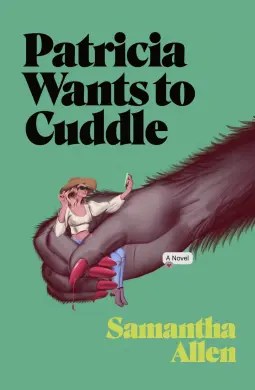
A reality tv dating show is filming its final four – including a closeted bisexual – on an island in the Pacific Northwest, but things take a fantastical horrifying turn the night before the penultimate decision day.
Summary:
This season’s Catch is a slightly sleazy bachelor who helped fund Glamstapix, which explains why so many of the final four women are Glamstapix stars. There’s Vanessa a car model, Amanda the daughter of two lesbian moms with a fashion Glamsta, Lilah-Mae a Dallas-based Christian influencer, and Renee a Black woman nominated by her coworkers who’s pretty over being the token woman of color on the show. No one is thrilled with the rural Otters Island location in the Pacific Northwest but everyone is motivated to make it to the final two in Palm Springs. Things get heated while they film the final interactions before the Catch chooses who will come with him to Palm Springs but things take a horrifying and fantastical turn when the cameras turn off for the night.
Review:
I did not receive the blurb I gave you above. The blurb I got combined with the title led me to believe that this was going to be a reality tv dating show where one of the women contestants was into another one of the women contestants who then gets abducted by a King-Kong like female creature she has to rescue her from. I still love this idea. But this isn’t what actually happens in the book. At all. It’s not a romance. It’s a funny reality tv show book that takes a horrifying turn in the last third.
I repeat. There is no romance in this book. Unless you count old love letters between an elderly B&B owner and her now dead wife. (Not a spoiler, she’s dead from the beginning). Renee is a closeted bisexual who does have feelings for Amanda (or at least the hots for her) but those feelings are not the focus of the book. The title of the book is misleading because Patricia, the giant ape-like monster, absolutely is not out to cuddle anyone. It’s not some weird cross-species ill-fated romance like King-Kong. Patricia is out to murder. And she murders a lot of people gruesomely. If you don’t like descriptions of a monster tearing people apart, then you won’t like the direction this book goes in. Sorry if you consider that a spoiler but I think it’s essential given how the book is being marketed and how the first two-thirds of the book reads to warn you about the dark, horrific ending before you get there.
Speaking of the first two-thirds of the book, that’s what made me give it three stars. I loved the insider look at the overlap of reality tv and influencer culture. I enjoyed Renee’s scathing observations about it all. I appreciated that there was some understanding and empathy for the influencers, especially that it actually is hard work to get the glamor shots and constantly promote every aspect of your day. It’s a fun, light-hearted read. I was wondering why it was taking so long to introduce Patricia. But then when Patricia came in I understood. The last third was basically a rapid slasher, not a search and romantic rescue. So it didn’t need much room.
The following paragraph is a spoiler filled analysis of the ending. Highlight to read.
Renee is the only one that Patricia doesn’t attack. The book seems to make the point that Patricia doesn’t attack her because Renee doesn’t treat her like a monster, and Renee doesn’t do that because she herself is queer. There’s this queer woman death cult that surrounds Patricia and protects her as well, even killing people to keep her existence a secret. To me this read as that monstrous groups only act monstrously (or seem monstrous) because of how you react to them. This might have worked but Patricia literally immediately tears people limb from limb. It’s not a kind act that’s misinterpreted. She hasn’t gently carried someone away in a kidnapping because she’s lonely. She concusses Amanda when she kidnaps her and then later tears her head off when she dares to try to run out of the cave. She scales the tower Lilah-Mae and Vanessa are on and immediately tackles Vanessa unprovoked. If this is an allegory, it’s a bad one, because Patricia is, in fact, acting like a monster. I think the allegory could have worked if there were real misunderstandings involved instead of the actual gore that occurred.
Overall, this felt like two different works mashed together. The first was a funny and empathic analysis of influencer and reality tv culture. The second was a gore-filled horror slash-fest that would work as a short story. The former is more my taste, but I respect the quality of the latter. The way the two are put together, though, might struggle to find its audience. So if you like a slow burn horror led by reality tv satire, give this one a try.
If you found this review helpful, please consider tipping me on ko-fi, checking out my digital items available in my ko-fi shop, buying one of my publications, or using one of my referral/coupon codes. Thank you for your support!
3 out of 5 stars
Length: 256 pages – average but on the shorter side
Source: Library
Buy It (Amazon or Bookshop.org)
Book Review: Lavender House by Lev A.C. Rosen
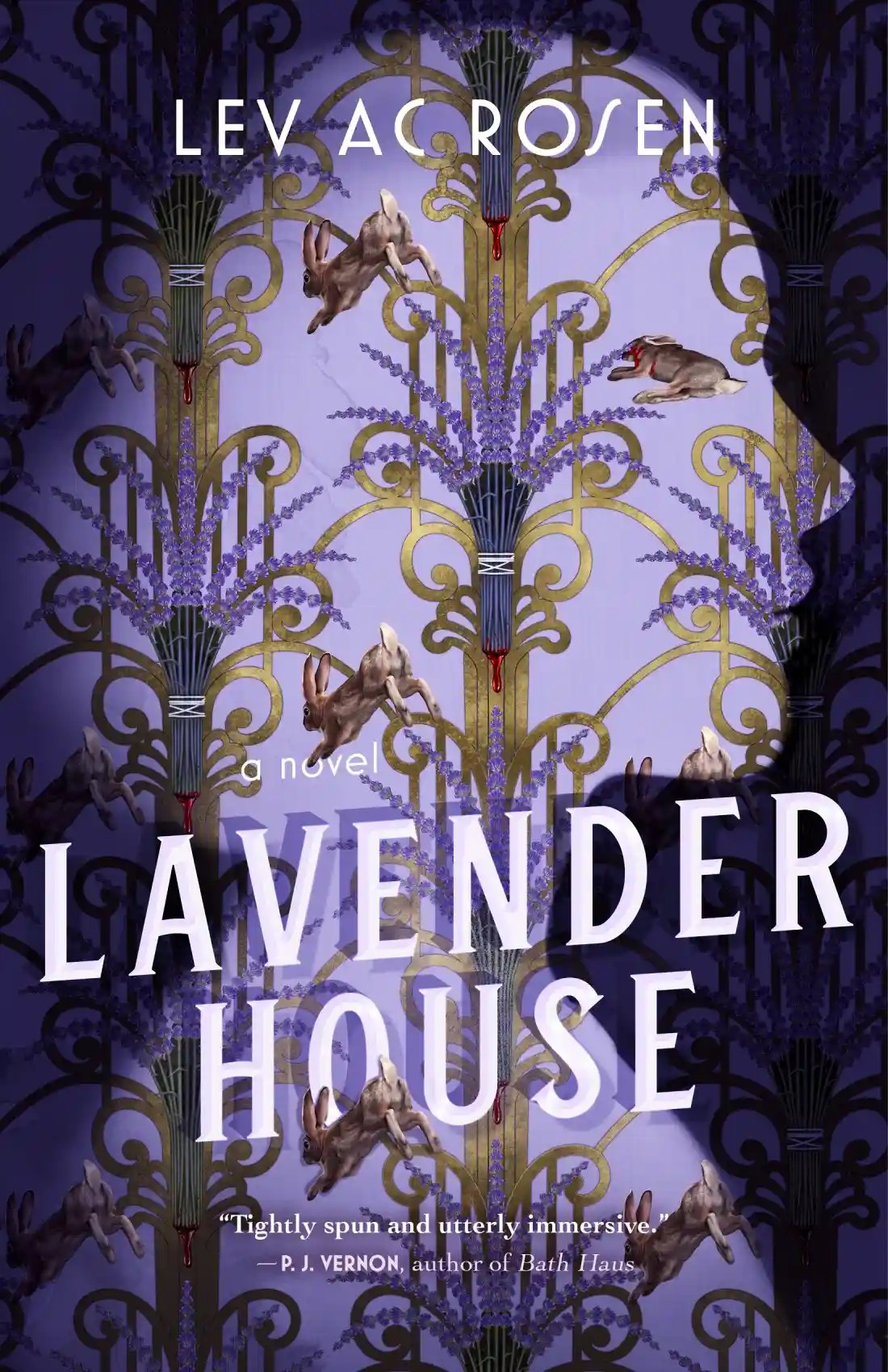
A 1952 noir-esque mystery — but everyone from the detective to the murder victim to most of the suspects themselves are part of the queer community.
Summary:
Andy was just fired from the San Francisco police department after he was found in a compromising situation in a gay bar’s bathroom. He’s having one last night of drinks before throwing himself into the bay when a woman shows up asking him to investigate the murder of Irene Lamontaine – the matriarch of the Lamontaine soap company. She wants Andy to do the job because it turns out Irene was a lesbian, and almost everyone in her home is queer. A secret they have to keep if they want to remain an empire.
Review:
All I noticed in the blurb I saw was that this was a queer Knives Out. I somehow missed the historical part. I loved Knives Out but I wasn’t prepared for the amount of period appropriate homophobic content in this one.
This book is authentic to its time period. It doesn’t gloss over homophobia whatsoever. We witness one brutal gay bashing (literal gay bashing) and two other characters reference their own beatings. This is a world of bribes and secrecy from society such that even the happy characters can never be fully happy. Be prepared for the realistic depiction as you go into it.
The family Lamontaine consists of Irene and her partner Pearl. They have a son Henry. I can’t remember whose biological son he is. He has a partner named Cliff. He’s legally married to a woman named Margo who has her own partner Elsie, who is bisexual and runs a queer bar. Margo’s straight mother Alice begrudgingly lives with them. They have a butleresque character who is also gay, as well as another sapphic couple who run the kitchen and garden. They all get to be themselves inside the Lamontaine house but never outside of it. Irene was found dead in the perfume library. The family and coroner rule it a fall, all with the exception of Pearl who suspects foul play. She found out about the recently outed cop and figured he could be their private investigator without risk of outing them all. The characters feel like a lot but are actually easy to keep track of.
I appreciate that there was a bisexual character. I wished that there was more diversity. There was one Filipino bar tender and a rival soap company run by a Jewish family. With all the rampant homophobia being depicted, I was honestly shocked that racism didn’t come up. It would certainly have been period appropriate to, for example, even allude to issues like redlining or racist responses to the Korean War. If one was completely unaware of history coming into this book, one could have left it thinking the only issue of tolerance and acceptance in the 1950s was sexuality. (For a queer book that does explore racism in San Francisco in the 1950s, check out Malinda Lo’s Last Night at the Telegraph Club).
Please also note that there is a scene where some rabbits are killed. I don’t think this is a spoiler as it’s alluded to on the cover. I wouldn’t have asked for the book at all on NetGalley if I’d been able to see the full cover as it’s rendered now, because I have a personal love for rabbits so that was distressing to me. One of the characters is depicted as having a drinking problem that they are told to snap out of. This is never followed up on in a way that implies the drinking problem is fine now. This isn’t how a drinking problem works. I found this to be a flawed and misleading depiction of alcoholism that was used as a plot device.
The mystery itself was kind of ho-hum. I suspected who did it from the get-go and was proven correct. The solution seemed….more than a bit obvious to me, honestly. If you’re curious, take a guess in the comments, and I’ll respond with if you’re right. Ultimately though for me I wanted this book to swing more fully into one direction or the other. Either to go full period piece and get into all the nitty gritty or move it into the present and just make it fun.
Overall, if a simply mystery set in the 1950s with a mostly queer cast facing an intolerant society appeals to you, then you should give this one a go.
If you found this review helpful, please consider tipping me on ko-fi, checking out my digital items available in my ko-fi shop, buying one of my publications, or using one of my referral/coupon codes. Thank you for your support!
3 out of 5 stars
Length: 274 pages – average but on the shorter side
Source: NetGalley
Buy It (Amazon or Bookshop.org)
Book Review: Reader, I Murdered Him by Betsy Cornwell
A YA romp told from the perspective of Mr. Rochester’s ward gives a new view of both Jane Eyre and London’s queer underground.

Summary:
Adéle grew up watching her mother dance in Le Moulin in Paris but soon found herself sent away to England with the man her mother said was her father. Mr. Rochester. Soon she meets her governess Jane Eyre and begins her own series of adventures.
Review:
If you have a love/hate relationship with Charlotte Bronte’s Jane Eyre, then this book is for you. If you love your YA with sapphic romance in period costumes, then get this book immediately.
The thing about Jane Eyre is…Mr. Rochester is terrible. Yet she’s still attracted to him. (This was beautifully summed up in the web comic Hark! A Vagrant). Shifting to Adéle’s perspective gives a whole new angle on just how deliciously insidious Mr. Rochester is. Adéle does not pull any punches when it comes to him. It’s downright cathartic for everyone who tears their hair out about Jane’s love for him.
There’s much more in this story than a shift of perspective on Jane Eyre though. Adéle is well-rounded, and we have entire chapters where Mr. Rochester and Jane aren’t mentioned at all or only in passing. My favorite part is when Adéle goes to a finishing school in London, because this is when the sapphic subtext becomes blatant. Adéle has the hots for more than one other teenage girl. (Both of whom are excellent choices, by the way). There’s cross-dressing! There’s scuttling around on the streets of London late at night in widow’s clothes! But also Adéle has feelings for Mr. Rochester’s nephew she’s been exchanging letters with since she first came to England. What to do. what to do. I loved seeing representation of a bisexual woman who leans more in a certain direction usually. I really like that even though she is capable of attraction to men that the sexist society fizzles it for her, making her a bisexual that leans toward women. What a fun twist on what we usually see in period pieces with fluid sexuality.
The book does start slow. The first chapter in Le Moulin was rough with overly flowery language and stirred up drama. But this drops out as Adéle ages and comes into her own. Perhaps some of this was meant to show how she is a little too idealistic in how she remembers her early years. I suspect the first chapter may have served better as flashbacks from her early time in England, rather than linear.
Please do take a moment to check out the content notes on StoryGraph. The ones listed as of the day I was writing this post are accurate.
Overall, this is a fun twist on Jane Eyre that gives agency to Mr. Rochester’s ward Adéle. Come for the twist, stay for the YA sapphic heart-throbbing.
If you found this review helpful, please consider tipping me on ko-fi, checking out my digital items available in my ko-fi shop, buying one of my publications, or using one of my referral/coupon codes. Thank you for your support!
4 out of 5 stars
Length: 288 pages – average but on the shorter side
Source: NetGalley
Buy It (Amazon or Bookshop.org)
 Support my work with a tip or browse my shop for curated book club guides, how to guides, cross-stitch patterns, and more!


This work by Amanda Nevius is licensed under a Creative Commons Attribution-Noncommercial-No Derivative Works 3.0 United States License.
 Opinions of a Wolf