
Archive
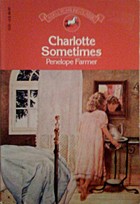
Book Review: Charlotte Sometimes by Penelope Farmer (Series, #3) (Bottom of TBR Pile Challenge)
 Summary:
When Charlotte goes away to boarding school for the first time, she’s very excited to get the bed with the particularly pretty wheels right next to the window. When she wakes up, though, the view from the window looks different, and people are calling her Clare! She discovers she’s traveled back in time to the same bed in the same boarding school, but during World War I. The next morning, though, she wakes up in the present again as Charlotte. This pattern continues, meaning both she and Clare are Charlotte….sometimes.
Review:
I picked this book up because I have an affinity for both boarding school books and time-travel books. This looked like the best of both worlds to me. A fun middle grade book that introduces to the reader to two different past time periods–the late 1960s of Charlotte’s present and the nineteen-teens of Clare’s present.
This book is the third in a series, but it is completely possible to read it as a standalone. No mention is made of the events in the first book, and the second book is actually about what Charlotte’s little sister does while she’s away at boarding school.
The concept is intriguing, because instead of time-travel happening once and landing the person stuck in the past (or future), Charlotte keeps switching, spending every other day in the 60s and every other day in the teens. (I get a migraine when the barometric pressure changes….I can only imagine how I’d feel if I time travelled! Do you think I could bring my green lamp therapy with me?)
In addition to the usual issues time-travel books bring up, such as what stays the same and what is actually different throughout time, it also brings up the key question of identity. What makes Charlotte Charlotte? Is she still Charlotte when she’s being called Clare? Why does hardly anyone notice that Clare has changed? Or Charlotte for that matter? The book thus addresses identity issues that middle grade readers might be going through, but in a subtle way through the time-travel trope.
Were you some particular person only because people recognized you as that? (page 66)
The time-travel itself is left as a fantastical mystery, rather than being given a scientific explanation. There’s something magical about the bed that only makes Charlotte and Clare switch places, but no one else. This works without an explanation because the young girls being subjected to the time-travel just accept it without explanation. This is their reality, and it doesn’t matter why it’s happening, they just have to deal with it. Some readers, though, might struggle with the fact that the time-travel itself is never explained.
The one thing that disappointed me about the book, and that I think would have made it a classic and a five star read, is that the book only explores what happens to Charlotte when the girls switch places. Clare, her experiences, and her perspective are only heard about through third parties. The book, while in third person, is entirely Charlotte’s perspective. Clare, a reserved, proper girl from the nineteen-teens must have been shocked by both the technology and the mores of the 1960s she suddenly found herself in. So much more could have been explored by telling both Charlotte’s and Clare’s story. The book misses an opportunity by only focusing on the modern day girl going back in time. The girl being thrust into the future, a future where she finds out Britain wins the war, and there is suddenly no food rationing or flu epidemic, that is such a cool story in and of itself, and Farmer just never ventures out to tell it.
Interestingly, the British band The Cure released a song called “Charlotte Sometimes” that they admitted was pulled directly from this book. Not just the title, but song lyrics are pulled from the first couple of lines of the book. Even the music video features scenes from the book. It seems to be quite a mystery who the actress was who played Charlotte in the video. She wasn’t credited, and there’s a lot of posts on the internet with people speculating about who she might be. In any case, Penelope Farmer was…not amused by the whole thing. But back to the book.
Overall, this is a book that sets up a fantastical world of time-travel within a boarding school. It utilizes the switching of two girls with each other in time to explore questions of identity in a way that surely will appeal to many middle grade readers. The book does not fully explore the story the way it possibly should have, but the young reader will probably enjoy filling in those gaps themselves. Recommended to all fans of boarding school, time-travel, or historic fiction set during World War I’s homefront.
If you found this review helpful, please consider tipping me on ko-fi, checking out my digital items available in my ko-fi shop, buying one of my publications, or using one of my referral/coupon codes. Thank you for your support!
4 out of 5 stars
Length: 174 pages – average but on the shorter side
Source: Better World Books

Previous Books In Series:
The Summer Birds
Emma in Winter


Edit note: Thanks to Vicky for pointing out it was published in 1969.
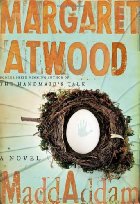
Book Review: MaddAddam by Margaret Atwood (Series, #3) (Audiobook narrated by Bernadette Dunne, Bob Walter, and Robbie Daymond)
 Summary:
The world has been mostly wiped out by a virus released by Crake, who thinks he’s helping save the earth with a cleansing flood. The survivors who are left are some of the scientists who worked with him, some people who were following a crunchy granola earth-centric cult known as God’s Gardeners, and Painballers–dangerous drug addicts who survived a gladiator-style fighting ring. There’s also the Crakers. Genetically engineered by Crake and the scientists, they’re a new version of humans who are herbivorous and naturally poly. They also are only attracted to sex when the women are in heat and visibly blue, thus preventing sexual violence amongst themselves. The God’s Gardeners, scientists, and Crakers comes together to try to survive in this world and defend themselves from the painballers. Toby, a God’s Gardener, ends up leading and educating the Crakers. She also rediscovers Zeb, the God’s Gardener leader’s brother who she previously had a crush on. Zeb tells her the story of how his brother, Adam, came to be mad.
Review:
I was under the impression that this was supposed to be a set of two companion novels, not a trilogy. So when this book was released, I was surprised and excited. The prior two books left the reader hanging, not knowing what really happened after the flood, and I was eager to find out what did happen. I wish this book had lived up to the creativity and excitement of the second one, The Year of the Flood
At first it appears the sole narrator of the book will be Toby, the woman from The Year of the Flood
Toby’s character progression from a strong, creative, firecracker of a woman to someone who second-guesses herself, bemoans her inability to properly defend people, and moons after a man obsessively was rather jarring and disappointing. I’m all for Toby having a love life, and I think her having one as an older woman is something we don’t see enough in literature. But I don’t feel like her excessive pining and worrying over it was totally within character. Similarly, she seems to lose all ability to trust in herself and her capability in defending herself and others in bizarre situations. The one thing that did feel within her character was her taking the Crakers under her wing. These flaws in the characterization of Toby are kind of a big deal since she’s the only female narrator out of three narrators, and since she was such an amazing main character in The Year of the Flood. She deserves to have more of the story and more presence of personality than she gets.
That said, Zeb’s backstory is interesting and lends a lot of light to some of the mysteries from the previous two books. In some ways they were the best parts of the book, since we get to revisit the incredible pre-flood world Atwood created.
In comparison, the post-flood world is dull and lacks creativity. It’s essentially a bunch of survivors living in a jungle with some genetically engineered humans. The only extra or special thing added into this basic formula is the Crakers, and they are not that engaging or interesting. They’re mostly just a little creepy and off-putting.
The main conflict of the plot is rather predictable, although the ending is a bit of a surprise. The end of Toby’s story moved me the most, and that’s not a surprise since she is by far my favorite character in the series. The end of the book makes it clear that this is really more about the Crakers and the basis of their society, which I think explains my lukewarm feelings about the book.
The audiobook narrators all did a lovely job emoting the various characters they played. The choice of having a male narrator speak for Zeb’s story even though Zeb isn’t actually speaking was a bit odd, though.
Overall, those who enjoyed The Year of the Flood
3 out of 5 stars
Source: Audible

Previous Books in Series:
Oryx and Crake
The Year of the Flood
Book Review: Alien in the Family by Gini Koch (Series, #3)
 Summary:
Kitty loves being engaged to Martini, her super-sexy alien fiancee from Alpha Centaurion. But she’s not super into the whole wedding planning thing. The issue gets pushed to the forefront, though, when Martini’s estranged extended family on AC announces their intent to visit and determine the worthiness of the marriage. It seems Martini is actually royalty. Meanwhile, some new aliens crop up, and they just so happen to be Amazonian terrorists. It’s an awful lot for the Super-Being Exterminator team to handle.
Review:
This is a hard review to write, because I *loved* the first two books in the series but this one left such a sour taste in my mouth, I won’t be continuing on.
The overarching plot is good. Yes, it’s a bit ridiculous that Martini is royalty, but anyone who’s read the first two books in the series should expect and embrace the ridiculousness at this point. The added twists from the AC homeworld make the wedding plot more interesting and unique. Every wedding is unique in its own way, but this gives Kitty and Martini’s wedding a decidedly paranormal romance flair. I didn’t find the Amazonian terrorist plot particularly necessary but it was well-done and kept the action moving.
The writing continues to be tongue-in-cheek dirty wit.
I hated having to be someplace on time, it took away so many potential orgasms. (page 40)
But the relationship between Martini and Kitty gave me reason to pause this time around. They continue to have excellent chemistry, which is fun to see. But there are two glaring issues in the relationship. Martini is overly jealous, in a cartoonish, immature way. He doesn’t get jealous in a way that is sexy. For instance, he doesn’t see men looking at Kitty and hold her hand to show they’re together. He actually growls. And yells. And clearly doesn’t trust Kitty. Of course, that lack of trust could be justified since Kitty repeatedly wonders if she’s choosing to marry the right man. Not just that, she thinks about whether she should marry any myriad of her guy friends and ex-lovers. Plus, she continues to flirt with just about anyone, in spite of Martini telling her it makes him uncomfortable. These are issues that should have been worked out prior to an engagement, and they don’t bode well for a future marriage. I wouldn’t mind the issues, but the couple are presented as the ideal couple. They aren’t presented as a couple who has some issues to add some realistic drama to the story. This is paranormal romance. The main romantic couple *should* be a bit idealized, but they aren’t.
A much, MUCH bigger issue to me though is how rape is handled in the book. This comes up in two different scenes. There is a scene where Kitty is fighting some bad guys and accidentally ends up in a room with a football team visiting Vegas. Half of the team makes a very overt attempt to gang rape her, but the other half of the team (plus an alien pet Kitty picks up early in the book) puts a stop to it. Then later the leader of the rapey half of the team comes to help fight the bad guys and apologizes, and Kitty recommends that they be added to the secret forces. She shrugs off the rape attempt as everyone makes mistakes and they apologized and essentially recommends they get hired to her company. I’m ok with a heroine narrowly escaping a rape attempt, as that could happen. I’m not ok with the heroine then shrugging it off, accepting an apology, basically saying that a rape attempt is just a mistake, and trying to help the career of the attempted rapist. What. The. Hell?!
In the second scene, Kitty is hanging out with her friend, Chuckie. Chuckie is, at this point in time, her boss. He’s also her almost life-long friend, she’s had sex with him in the past, he’s asked her to marry him before, and she’s periodically wondered throughout this book if maybe she should be marrying him instead of Martini. At the end of their conversation, they’re getting ready to go, and this happens:
He [Chuckie] took my [Kitty’s] shoulders and turned me around. “God, it’s as bad from the back. Really, go put on some clothes.”
“I don’t have a wrap, okay?”
“Find one. Before I rape you.” He gave me a gentle push toward the bedroom.
“Fine, fine.” (page 434)
So, Kitty’s friend: A) judges her clothing and deems it immodest B) orders her to change her outfit C) casually jokes about raping her D) victim blames rape victims with his comment implying clothing causes rape. And of course Kitty just takes this all in stride and doesn’t see anything at all inappropriate about what Chuckie says.
There is just far too much casual boys-will-be-boys acceptance of rape and rape culture in this book that supposedly features a strong female lead and *romance*. And a wedding! Paranormal romance fans deserve better. Men deserve to be treated as not mindless animals who will tackle anything in a sexy dress. Women deserve better than to be blamed for rapists’ behavior. Toss in the relationship issues between Martini and Kitty, while the relationship is treated by the book an ideal one, and no amount of sexy humor, wedding dresses, and aliens could save it for me. I’m very disappointed in the turn this series took. If you’re interested in the series, I would recommend reading the first two and stopping there.
2 out of 5 stars
Source: Amazon

Previous Books in Series:
Touched by an Alien
Alien Tango
Book Review: Mulliner Nights by P.G. Wodehouse (Series, #3) (Bottom of the TBR Pile Challenge)
 Summary:
Mr. Mulliner has a wide variety of eclectic relatives, and he’s more than happy to tell snippets of their life stories over a pint at the local pub. From a freewheeling artist brought into line by a judgmental cat to a timid fellow who accidentally subscribes to a correspondence course on how to get a backbone to a private detective with such a disturbing smile that criminals readily confess their hijinks keep the patrons of Angler’s Rest in stitches.
Review:
This made it onto my tbr pile thanks to a visit to Harvard Books’ used books and remainders cellar. This was in the remainders pile, and three things drew me to it. 1) It was under $5, 2) The cover has a cat drunk on whiskey on it, 3) I had just read Love Among the Chickens
Don’t worry about this being the third in a series. The only connection among the short stories is the main characters are all a Mulliner (or married to one). It was completely unnecessary to have read the first two books in the series to get into this collection, although I intend now to read all of the Mulliner books. I really appreciated how Wodehouse sets up a structure to hold his short story collection together in one unit. Although they are all self-contained tales, their being together in one collection actually makes sense. They have more in common than just the author. They are literally a family of stories. This helped it hold my interest in a way that many short story collections can’t.
This collection consists of 9 short stories, most of which have some sort of love element. One person wants to be with (or marry) another and must overcome some sort of obstacle (usually caused by British upper-class culture) in order to be with them. Hilarity ensues. My favorite of these was “The Story of Webster,” the cover’s drunk cat. In this a freewheeling artist has his religious uncle drop his cat off with him while he goes on assignment to Africa. The judgmental, sullen cat soon starts to reign in the young artist, much to his and his girlfriend’s chagrin. Everything about this, from the early 20th century fashion and dialogue to the witty commentary on cats and culture works perfectly, particularly for this cat-lover. The story that I thought worked least-well, and unfortunately wraps up the book, is “Gala Night.” A pastor Mulliner accidentally helps a young couple who enjoys dancing to acquire the young woman’s parents’ approval of their union. I didn’t like the religious Mulliner. He just wasn’t funny to me. Similarly the catalyst of a mysterious mood enhancing drink just lacked the creativity found in the other stories. Fortunately, most of the stories fell much closer to the hilarity of the whiskey drinking cat. However, a couple did fall a bit flat for me, which is why while I greatly enjoyed the book, I wouldn’t say I was totally in love with it.
Overall, this is a wonderfully witty collection of short stories held together by an elderly Mulliner who enjoys telling (possibly tall) tales about his family over a pint in the local pub. If you enjoy a dry wit and slapstick humor to top off a cute love story, this collection is for you.
4 out of 5 stars
Source: Harvard Books

Previous Books in Series:
Meet Mr. Mulliner
Mr. Mulliner Speaking


Book Review: The Isle of Blood by Rick Yancey (Audiobook narrated by Steven Boyer) (Series, #3)
 Summary:
Will Henry states that this is a story that Dr. Warthrop did not want told…and proceeds to tell it anyway. When a British man shows up with a package being delivered under duress, Dr. Warthrop is ecstatic to realize it is the nest of the Magnificum–the holy grail of monstrumology. Dr. Warthrop decides to leave Will Henry in New York while he pursues this beast. But when his monstrumologist companion returns claiming that Warthrop is dead, Will Henry and two fellow monstrumologists travel to Europe to track him–or his body–down.
Review:
Not as engaging or thought-provoking as the first two books in the series, I can only hope that this third entry is suffering from the common penultimate book malady where the book which must set everything up for the finale of the series can sometimes drag.
There are two problems in this entry that make it fail to be as engaging or thrilling as the first two books. First, Will Henry is left behind in New York for a significant portion of the novel. We are thus left with a whiny teenager bemoaning Warthrop’s choice to be responsible for once and keep him out of danger. We also are left with very little action for far too large a portion of the book. The second issue is perhaps a bit of a spoiler but suffice to say that the monster is disappointing and its disappointment is easily predicted. If we had a lot of action with a disappointing monster, that’s still engaging. If we had less excitement with a surprising, phenomenal monster, that’s still thrilling. The combination of the two, though, prevents this thriller from being as thrilling and engaging as it should be.
Of course there are other elements that still worked, which is why I kept reading it. Yancey’s writing is, as ever, beautiful to read (or listen to) and contains much depth.
“So many times we express our fear as anger…, and now I think I wasn’t angry at all, but afraid. Terribly, terribly afraid.”
The settings are unique, and the characters are strong and leap off of the pages. Will Henry becomes more fully fleshed-out in this entry as we start to see his descent into a love affair with monstrumology. We also get to see Warthrop at what he himself perceives of as his lowest point. It’s a dark bit of characterization but it works very well for the story Yancey is telling.
Overall, I was a bit disappointed, purely because the first two entries in the series were so phenomenal. The third book is still a very good book. Fans might be a bit disappointed, depending on how attached they are to the unique thriller aspect of the series, but the characters and writing still make this well worth the time. Fans will remain in eager anticipation of the final entry in the series.
4 out of 5 stars
Source: Audible

Previous Books in Series
The Monstrumologist
The Curse of the Wendigo
Book Review: I Don’t Want to Kill You by Dan Wells (Audiobook narrated by Kirby Heyborne) (Series, #3)
 Summary:
Teenaged John Cleaver had his sociopathy under control but when his town was plagued with two different demons, he had to let it loose a bit to fight them. He invited the demon Nobody to come face off with him, but he and those around him are left wondering if Nobody is real or if John’s sociopathy has just gone out of control. Meanwhile the teenage girls of the town are committing suicide left and right, and John can’t help but wonder why he’s ever tried to save anybody.
Review:
This is one of only a few YA series that I’ve enjoyed reading. The paranormal/youth aspect are almost like a Dexter lite, which is enjoyable. I must say, though, that I was disappointed by the ultimate ending to the series. However, since I write up series review posts every time I finish a series, I’ll leave my analysis of the series as a whole to that post, which will be coming up next. For right now, let’s look at the final book on its own merit.
The plot this time around was disappointingly full of obvious red herrings. I knew within the first chapter where Nobody was hiding, and it was kind of ridiculous that talented, intelligent John was missing it. Similarly, I found the serial killer who John identified as who he could end up being if he made the wrong choices to be a bit heavy-handed. John was already well aware of the risks of his sociopathy from the very first book. It felt a bit unnecessary to make this such a strong plot point. It came across as preachy, which is something that this series had avoided so far. Similarly, John goes to see a priest at one point in his investigations, and his conversations with him felt a bit too heavy-handed, almost like the (known religious) Wells was preaching at the readers through the priest. Authors are allowed their opinions and perspectives, but preachiness is never good writing. Perspective and opinion should be shown eloquently through the plot and characters.
Speaking of characterization, John was still strongly written, but his mother and sister were another story. They felt less like they were doing what was logical and more like they were doing what needed to be done to move the plot forward. On the other hand, I really enjoyed John’s new girlfriend. She was well-rounded and realistic. Plus she was fit while being curvy, which I think is a great thing to see in a book.
In spite of the slightly obvious plot, I still was engaged to get to the end. Even though I knew whether or not there was a demon and who the killer was, I still deeply wanted to see how John would handle it. The audiobook narrator, Kirby Heyborne, helped with this momentum. His narration was just the right amount of tension while still remaining in a teenager’s voice. Be warned, though, that there is some yelling in the book, so the volume does spike considerably at a few points in the narration. You may want to keep the volume a bit lower than usual to accommodate this.
Unfortunately, where the plot ultimately ended up was deeply disappointing to me. It was not at all a satisfying ending, and from a mental illness advocacy perspective, I actually found it distressing. Whereas John’s sociopathy previously was handled with a lot of scientific understanding, I found the ending of this book to be completely out of touch with real sociopathy. While it wasn’t offensive per se, it drastically oversimplifies sociopathy, both its treatment and its causes, which is just as bad as demonizing it. I will address this issue more fully in the series review, but suffice to say that I found the ending to this book’s individual mystery and the series as a whole to be disappointing, particularly given the potential of the book.
Overall, then, this is an average book that wraps up an above average series. If you are someone who is fine with stopping things partway through, I’d recommend just stopping with the previous book in the series, Mr. Monster. But if you are interested in the overall perspective, this book is still an engaging read that doesn’t drag. It just might disappoint you.
3.5 out of 5 stars
Source: Audible

Previous Books in Series
I Am Not A Serial Killer
Mr. Monster
Counts For:

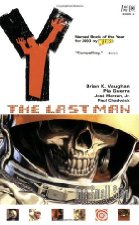
Book Review: Y: The Last Man: One Small Step by Brian K. Vaughan (Series, #3) (Graphic Novel)
 Summary:
Our trio of the doctor, Yorick, and 355 have resumed their attempt to reach the west coast, but get side-tracked when they stumble across the Russian woman looking for the spacemen. Upon learning of the imminent arrival of the astronauts, they decide to join her in journeying to the landing location, which just happens to be nearby. Meantime, the Israeli soldiers, unbeknownst to them, are hot on their tails.
Review:
Many different plot lines collide in this entry in the post-apocalyptic series. We finally find out why the Israelis are following Yorick and meet the astronauts. We get to know the Russian lady, as well as a couple of new scientists at the secret government location.
Most interesting in this book is Yorick’s growth as a character. Although he, to a certain extent, has that slacker mentality that can be so difficult to change, it appears an apocalypse just might succeed in doing so. He takes more assertive action and starts to doubt maintaining his loyalty to his girlfriend/fiancee on the other side of a world full of just women. In a way the story feels like a coming of age one. Yorick going from a boy to a man. Which is kind of hilarious given the setting, but it also works.
The Israeli soldiers storyline question a lot of gender norms thinking. I watched a lot of war movies in my childhood, and here we have soldiers doing basically the exact same thing, only they’re women. Just seeing that impacts gender norm preconceptions of the reader.
Finally, we have the astronauts who have developed an interesting relationship in their extended time away from earth. Their presence and the surprises they bring are the final kick that makes this the best entry in the series so far.
The art continues to be colorful and easy to decipher, plus the last chapter is a bit of a meta romp featuring primarily Yorick’s monkey that ends the book on a light note, but also moves the plot forward in a key way.
Overall, this is a well-drawn, creatively plotted entry in the series that manages to amuse and cause thought-provoking responses simultaneously. Readers of the series will be instantly begging for more.
5 out of 5 stars
Source: Public Library

Previous Books in Series
Y: The Last Man: Unmanned
Y: The Last Man: Cycles
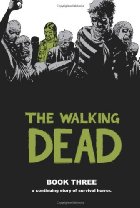
Book Review: The Walking Dead, Book Three by Robert Kirkman (Series, #3) (Graphic Novel)
 Summary:
The rag-tag band of survivors have adjusted to living in the prison. One day they spot a helicopter go down in flames. Rick, Michonne, and Glenn head out to check on it and end up finding another group of survivors whose leader is known as The Governor. Unfortunately for them, not everyone has maintained their humanity amid the walking dead.
Review:
This entry in the series puts the graphic in graphic novel. We’re talking mutilation, torture, and rape. Also the usual murders and zombies. It is not a book for those disturbed by those things or who find them gratuitous. However, for those of us who love violence all up in our literature, it’s a squee-inducing violence fest. Although you may not want to read it in public just in case someone glances over your shoulder during the rape and/or torture scenes.
The addition of another group of survivors where everything is not hunky dory and evil has arisen was exactly what this series needed. It shows the very dark possibilities that the group we’ve been following have thus far managed to avoid. It puts things like Tyreese and Rick’s fight in the previous book into perspective. Woodbury and The Governor also demonstrate how key Rick has been to the group’s survival and maintenance of a healthy community. All it takes is one bad apple wanting the power for a bad culture to spring up. It’s a good lesson that’s taught here in a subtle way.
I thought long and hard about how I feel about Michonne’s rape. At first I was angry about it with reactions ranging from, “she’s so strong; it doesn’t make sense” to “oh sure, rape the only black woman *eye-roll*.” But the more I thought about it I realized I was being unfair. In a world gone to hell and full of evil rape is going to happen. Rape happens every day now let alone in a post-apocalyptic world, and Kirkman manages to show it in a graphic novel in a way that is respectful to the victim, which I am sure was not easy to do. The concept of what is happening is clear, but at the same time, the drawings focus in on the victim’s emotions and reactions. Similarly, Michonne is the logical choice because she is the most adventurous of the women. She does not stay at home with the kids while the men run out and do things. She’s a strong woman, yes, but being strong doesn’t stop bad things from happening to you. That said, if you are a person who finds rape scene triggering, you should definitely skip this entry in the series and get someone to sum it up for you.
Overall, this is a strong entry that keeps the series fresh and introduces more drama into the post-apocalyptic world. Fans of the first two books will not be disappointed by this one. Highly recommended.
4 out of 5 stars
Source: Public Library

Previous Books in Series:
The Walking Dead, Book One
The Walking Dead, Book Two
Book Review: Buddha Volume Three Devadatta by Osamu Tezuka (Series, #3) (Graphic Novel)
 Summary:
Siddhartha is now a young monk pursuing knowledge and education. He runs into a one-eyed monk who attempts to educate him on the concept of ordeals–essentially punishments for the body designed to help attain enlightenment. The childhood of Devadatta is also depicted. He is bullied and becomes a killer at a young age, thrown out to the wolves who then raise him. Thus his hatred of humanity is explored.
Review:
I am consistently finding this series to be decidedly meh, yet I persist in reading it. I think the art is a large piece of why. It’s almost immediately relaxing to look at, so much so that it doesn’t really matter too much to me what the story is that’s going along with it.
I was intrigued to see a “raised by wolves” myth in another culture. It’s interesting that instead of turning Devadatta into a great warrior, though, it makes him hate humans. A great section is where the wolf mother tells Devadatta that humans are the only animals who kill when they are not hungry. The kindness of and lessons to be learned from the animal world is a persistent theme throughout the series that I enjoy.
Siddhartha’s journey here though does not read at all the way I read it in Siddhartha in college. I appreciate that we’re seeing how no one seems to have answers that ring true for him. For instance, he does not agree with choosing physical punishment purely to suffer an ordeal for no apparent reason. It’s interesting to see his nature depicted as one that just happens to be able to sniff out falseness. It’s a different perspective on the Buddha that I value seeing.
It is odd though for a graphic novel series on an important topic like the Buddha’s life to feel as if it is best read by those already educated on the Buddha. I assumed it would read like an easy introduction, but instead it is so subtle and leaves out so many key details that it is actually best read by those already well educated on Buddhism and the Buddha’s life.
3 out of 5 stars
Source: Public Library

Previous Books in Series:
Buddha, Volume 1: Kapilavastu
Buddha, Volume 2: The Four Encounters
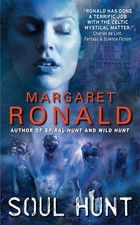
Book Review: Soul Hunt by Margaret Ronald (Series, #3)
 Summary:
Native Bostonian Evie Scolan is an adept bicycle courier and has her first real relationship in a while. Of course, her life isn’t quite that simple. First, she’s The Hound with an uncannily adept sense of smell that helps her find things. Plus her boyfriend is a werewolf. Then there’s the whole try to keep the magical Undercurrent in Boston under control so her beloved city doesn’t fall apart thing. Not to mention the death sentence given to her by yet another sector of the Undercurrent giving her only until Midwinter to pull everything together. Plus the Sox are sucking this season.
Review:
Yet again, I accidentally picked up a book that is partway through a series. I’ve noticed this is a lot easier to do when it’s an ebook than a print book, because the print book tends to have a giant “3” or something on the binding, whereas the ebook gives you zero clue that this is part of a series. Work on that, publishers. Due to this fact, I spent the solid first half of the book trying to figure out what the heck was going on in Evie’s world. Unlike paranormal romance that tends to offer up a quick recap of the important details, it would appear that urban fantasy isn’t so keen on that. Well, that and Ronald’s world she has created is incredibly complex and hard to understand fully part-way into a series.
That aside, however, how is it for an urban fantasy novel? Well, the fantasy element is strong and intensely connected to elements of urban living from good and bad neighborhoods to trolley tracks to old, abandoned buildings, to secret tunnels and ghosts. This has it all if you’re after some seriously steeped fantasy.
Further, as a Bostonian myself, I can tell you that Ronald gets the local slang and layout of the neighborhoods right. Personally, I think she’s a bit heavy-handed with the Red Sox love demonstrated by Evie. I don’t really think Evie would be thinking about the Sox season sucking when she’s currently facing death, but maybe I’m just not enough of a fanatic myself. Hah.
I think, perhaps, that why I couldn’t get into this partway through the way I could other series I started in the middle is that I don’t like Evie, and the mythos of the Undercurrent is way more confusing than it should be. I can’t think of very much that’s appealing or redeeming about Evie as a character, which is problematic when she’s the heroine. Similarly, she’s not beautifully broken or anything. She reads as just…..average. The fact that this is the case when she also has this weird supernatural nose is saying something. Make Evie evil! Make Evie kick-ass! Just don’t make her so dull that I have zero doubt that I wouldn’t give her a second glance if I happened to see her on the streets of Boston.
Similarly, the mythos of the Undercurrent seems to change to suit the author’s needs. Maybe I was missing plot twists from missing the earlier books, but it all just seems so much more complex than it needs to be. Plus, what exactly makes Evie repeatedly go up against demigods when her only supernatural talent is the nose thing? It just doesn’t make sense to me. That and the whole part dog thing is just….ew.
I came into this wanting to love it, as I do with any book set in my home of Boston. The fact is though, too much turned me off from it. It is a fairly well-written urban fantasy, though, and a nice change from the typical southern setting we see. I’d recommend it to urban fantasy fans looking for a change of scenery who don’t mind a rather ordinary heroine who’s basically part dog.
3 out of 5 stars
Source: Amazon

Previous Books in Series:
Spiral Hunt
Wild Hunt


 Support my work with a tip or browse my shop for curated book club guides, how to guides, cross-stitch patterns, and more!


This work by Amanda Nevius is licensed under a Creative Commons Attribution-Noncommercial-No Derivative Works 3.0 United States License.
 Opinions of a Wolf