
Archive
Book Review: A Bánh Mì for Two by Trinity Nguyen
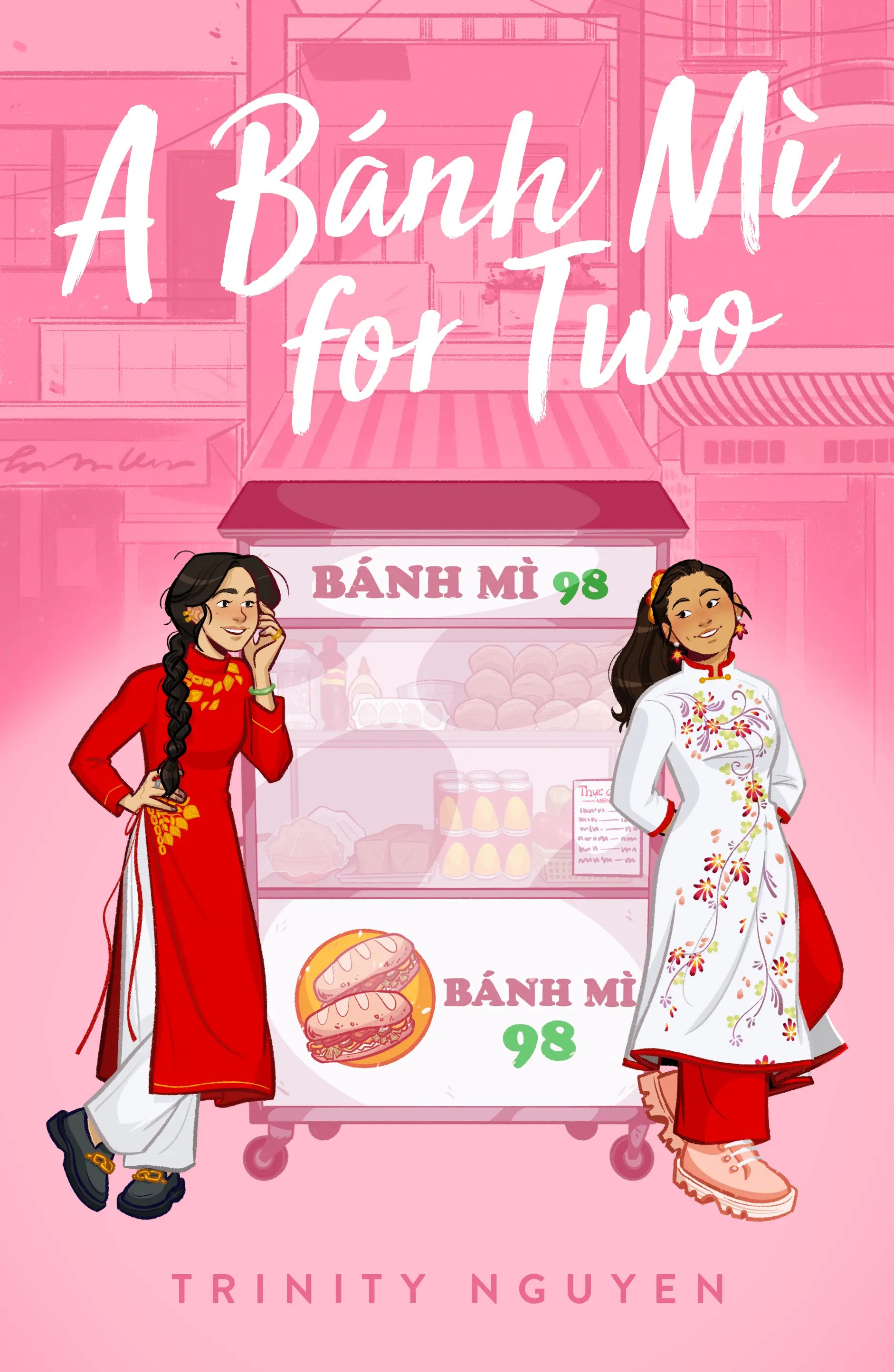
A sweet, closed-door sapphic romance set in Sài Gòn, where two foodie 18-year-olds fall for each other while uncovering family secrets and rekindling a love of food writing.
Summary:
In Sài Gòn, Lan is always trying to be the perfect daughter, dependable and willing to care for her widowed mother and their bánh mì stall. Her secret passion, however, is A Bánh Mì for Two, the food blog she started with her father but has stopped updating since his passing.
Meanwhile, Vietnamese American Vivi Huynh, has never been to Việt Nam. Her parents rarely talk about the homeland that clearly haunts them. So Vivi secretly goes to Vietnam for a study abroad program her freshman year of college. She’s determined to figure out why her parents left, and to try everything she’s seen on her favorite food blog, A Bánh Mì for Two.
When Vivi and Lan meet in Sài Gòn, they strike a deal. Lan will show Vivi around the city, helping her piece together her mother’s story through crumbling photographs and old memories. Vivi will help Lan start writing again so she can enter a food blogging contest. And slowly, as they explore the city and their pasts, Vivi and Lan fall in love.
Review:
I love a sweet, closed-door sapphic romance (see my review of Hani and Ishu’s Guide to Fake Dating), so when I heard about A Bánh Mì for Two, it was an easy add to my wishlist. The focus on food blogging and Vietnamese street food—both eating it and running a street food cart—was just the icing on the cake. This story strikes a delicate yet exquisite balance between lighthearted sweetness and the very real multigenerational trauma caused by the Vietnam War (referred to in Vietnam as The War Against the Americans to Save the Nation).
Told in alternating first-person perspectives between Lan and Vivi, the book avoids the common pitfall of muddled voices. While both characters are kind and thoughtful, they each have distinct ways of seeing the world, which keeps their narration clear and engaging. The romance is a sweet, slow burn, beginning with Vivi’s admiration of Lan’s food blog and blossoming into real-world chemistry after a chance encounter in Sài Gòn.
I especially appreciated the queer representation. There’s no on-page angst about being queer. Vivi does talk briefly with her friend Cindy (a Mexican American character) about how coming out can be complicated with conservative parents, but by the time the story begins, both girls’ families are accepting. It was also refreshing to see Vivi clearly identify as bisexual—representation that could’ve been easily overlooked since her only relationship in the book is with Lan. It’s affirming and intentional, which I loved.
The food descriptions are vivid but never overdone. They strike just the right balance between informing the reader (especially for dishes that might be unfamiliar) and keeping the flow natural. (I’ve eaten many a bánh mì in my life, and still found the food writing delightful!) I also really appreciated that this is a story about two 18-year-olds, and college isn’t presented as the only post–high school option. Lan’s mom encourages her to pursue school if she wants to, but also supports her jumping right into a career—a rare and welcome take in YA-adjacent fiction.
Vivi’s experience as a Vietnamese American studying abroad in Vietnam adds a beautiful emotional layer. She’s not a tourist—she’s searching for a kind of homecoming. She’s exploring why her mother kept so many details about Vietnam and their family a secret. This process is a powerful lens for the reader to learn about the war’s impact on Vietnamese families without the book ever feeling preachy. The historical context emerges naturally—through conversations, shared meals, and street encounters. It’s excellent writing.
The romantic progression between Lan and Vivi is tender and believable. One of my favorite parts was the motorbike rides around Sài Gòn—evocative, cinematic, and intimate. Even the third-act conflict felt justified. It wasn’t a contrived misunderstanding but a believable clash of cultural differences and personal pain. No one is villainized, and the resolution feels earned.
That said, a few elements pulled me out of the story. For example, Vivi’s study abroad program is mentioned as her reason for being in Vietnam, but we never actually see her attend class or study. This absence feels like a missed opportunity—readers might expect the study abroad setting to include some academic context. Similarly, while the book opens with several references to Vivi lying to her mom about her location—including photoshopping photos—the tension fades away later in the book. I found it a bit hard to believe that her mom wouldn’t catch on sooner.
The book is richly diverse, featuring Vietnamese and Vietnamese American characters, a Mexican American side character, and a sapphic romance at the center. Lan’s mother has a chronic illness, and her father passed away young from a stroke. The book also explores difficult family dynamics, grief, and healing across generations.
Overall, this is a fun, sweet sapphic romance featuring the beloved tropes of slow burn and study abroad, while offering thoughtful reflections on Vietnamese culture, family history, and the legacy of war. It’s beautifully steeped in food, healing, and love. Recommended for anyone looking for a sweet, queer romance with emotional depth, cross-cultural exploration, and heartwarming food moments.
If you found this review helpful, please consider tipping me on ko-fi, checking out my digital items in my ko-fi shop, buying one of my publications, using one of my referral or coupon codes, signing up for my free microfiction monthly newsletter, or tuning into my podcast. Thank you for your support!
4 out of 5 stars
Length: 224 pages – average but on the shorter side
Source: Library
Buy It (Amazon or Bookshop.org)
Book Review: Sula by Toni Morrison

A lyrical and haunting novel about two Black women whose lifelong friendship is tested by betrayal, love, and the weight of their small-town community’s judgment.
Summary:
Sula and Nel are two young black girls: clever and poor. They grow up together sharing their secrets, dreams and happiness. Then Sula breaks free from their small-town community in the uplands of Ohio to roam the cities of America. When she returns ten years later much has changed. Including Nel, who now has a husband and three children. The friendship between the two women becomes strained and the whole town grows wary as Sula continues in her wayward, vagabond and uncompromising ways.
Review:
This was my second Toni Morrison novel—the first being The Bluest Eye, which I read back in college. Morrison’s prose is deeply lyrical, which makes her books swift reads on the surface, even when they delve into painful and challenging themes. Sula is no exception.
Each chapter is titled with the year it takes place in, but only covers a brief vignette from that year. Despite spanning several decades, this is a short novel, structurally and in page count. Though the title suggests a singular character focus, Sula is as much about a place—the Bottom, a Black neighborhood in a Southern state situated on the hillside, land the white residents had no interest in. The reason for its ironic name is revealed in the first chapter through a racist tale, setting the tone for the book’s critique of systemic racism.
Indeed, one of the novel’s most striking accomplishments is how clearly it shows that systemic racism ruins lives, whether characters comply with social expectations or resist them. For me, Nel represents compliance while Sula represents defiance—yet neither of them leads a life free from pain. Every person in their orbit suffers in some way, and that suffering is deeply entangled with the racist systems surrounding them.
The edition I read included an introduction in which Morrison writes: “Female freedom always means sexual freedom, even when—especially when—it is seen through the prism of economic freedom.” While I respect Morrison’s craft, I don’t personally agree with this framing. Throughout the book, the freest female characters are also the most sexually unrestrained, choosing partners without regard to consequences. For me, this reflects the central tensions I’ve often felt when reading Morrison’s work: I recognize the literary prowess but don’t agree with this belief. As someone who values intentionality in relationships and ethical sexuality, I believe there is freedom in discernment. My personal worldview differs from Morrison’s here, and I think that’s worth naming—especially since this quote helped me finally articulate why I sometimes feel at odds with what I’m “supposed” to take away from her narratives.
Of course, I also acknowledge that I am not Morrison’s intended audience. She has stated clearly that she writes for Black people—and I am a white woman. I honor that intention, while also appreciating the beauty, lyricism, and cultural specificity of this novel. Morrison evokes a place, a time, and a community with precision and poetry, showing rather than telling how racial injustice permeates generations.
For readers in recovery, or those who love someone with substance use disorder or alcohol use disorder, be advised that this book contains a disturbing scene involving the violent death of a character who struggles with addiction. A mother sets her son on fire, intentionally killing him because of his drug use. It’s a horrific and deeply stigmatizing portrayal. While I understand that literature doesn’t require characters to always make the “right” choices, scenes like this can be deeply harmful and may reinforce stigma around addiction. To anyone reading this who is struggling: You don’t deserve to die. You are not disposable. You can recover. We do recover. I acknowledge that the story is set in a time when resources for addiction recovery were nearly nonexistent, especially for a Black man. But violence is never the answer, and stories like this can perpetuate dangerous beliefs about addiction and worth.
With regards to diversity, the book explores colorism in the Black community, as well as racism faced by Black folks coming from immigrant white communities. It has multiple characters who fought in World War I who struggle with mental health afterwards. It also has a character who uses a wheelchair and is missing a limb. There is not any LGBTQIA+ representation that I noticed.
This is a novel that quietly devastates, not through high drama, but through its unflinching portrayal of how systemic racism, personal grief, and societal expectations shape lives over time. It’s beautifully written, deeply character-driven, and emotionally complex. Whether or not you’re part of Morrison’s intended audience, Sula is a compelling and powerful read. If you’re in recovery or close to someone who is, approach with care due to the painful and stigmatizing depiction of addiction. For those looking for fiction that treats mental health and recovery with care, check out my novel Waiting for Daybreak.
If you found this review helpful, please consider tipping me on ko-fi, checking out my digital items in my ko-fi shop, buying one of my publications, using one of my referral or coupon codes, signing up for my free microfiction monthly newsletter, or tuning into my podcast. Thank you for your support!
3 out of 5 stars
Length: 174 pages – average but on the shorter side
Source: Library
Buy It (Amazon or Bookshop.org)
Get the Book Club Discussion Guide
A beautifully graphic designed 2 page PDF that contains: 1 icebreaker, 9 discussion questions arranged from least to most challenging, 1 wrap-up question, and 3 read-a-like book suggestions
View a list of all my Book Club Guides.
Book Review: Pink Slime by Fernanda Trías translated by Heather Cleary
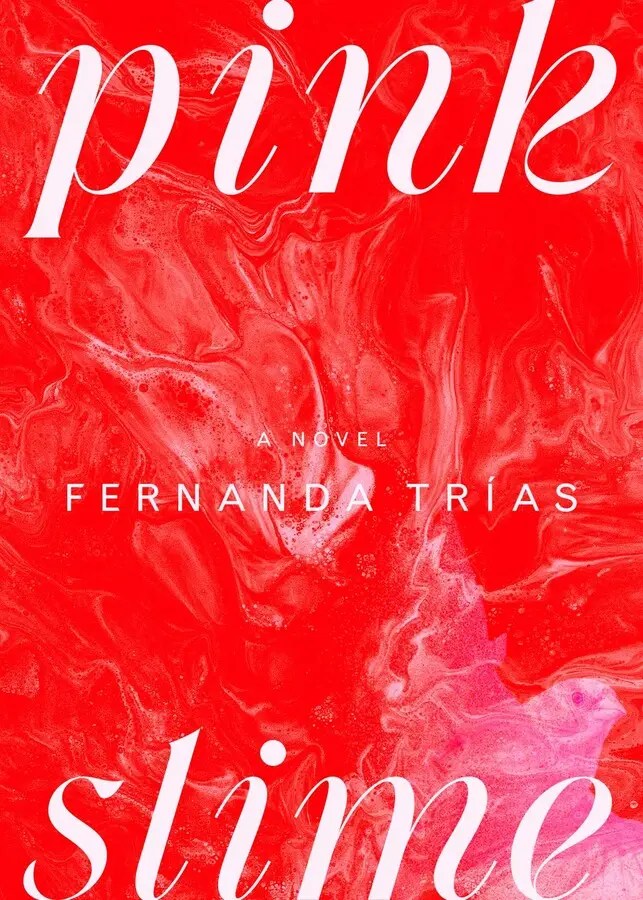
A quiet dystopian novel from a Uruguayan author about a woman navigating love, caregiving, and survival as a mysterious plague and environmental collapse unravel the world around her.
Summary:
In a city ravaged by a mysterious plague, a woman tries to understand why her world is falling apart. An algae bloom has poisoned the previously pristine air that blows in from the sea. Inland, a secretive corporation churns out the only food anyone can afford—a revolting pink paste, made of an unknown substance. In the short, desperate breaks between deadly windstorms, our narrator stubbornly tends to her few remaining with her difficult but vulnerable mother; with the ex-husband for whom she still harbors feelings; with the boy she nannies, whose parents sent him away even as terrible threats loomed. Yet as conditions outside deteriorate further, her commitment to remaining in place only grows—even if staying means being left behind.
Review:
You might be asking, “What possessed you to pick up a book about a plague, Amanda? Haven’t you seen enough of that in the last five years?” Fair question. When I saw Pink Slime on NetGalley, the description there led me to believe the focus wasn’t so much on the plague, but rather on the pink slime—something in the vein of Soylent Green. If you’re not familiar, the horror in Soylent Green centers on a disturbing twist about what people are unknowingly consuming. That’s the kind of dystopian horror I could be in the mood for.
Alas, Pink Slime isn’t really about the pink slime at all. It’s more about environmental collapse and the slow unraveling of society due to a strange, algae-driven plague.
I appreciated the way the main character’s life is quiet but emotionally complex. She still feels responsible for her recently ex-husband, who’s now in a clinic suffering from a chronic form of the plague that usually kills its victims. She visits him, possibly because she still loves him, at least a little. Her mother lives nearby in the same unnamed coastal South American city and demands occasional visits. And most pressingly, she periodically cares for a young boy with Prader-Willi Syndrome, whose wealthy parents provide food allotments but largely leave him in her care.
Her relationships with all three are emotionally layered—she provides meals, bathes, and protects them, yet often feels completely alone. It’s a quiet reminder of how caregiving can be both deeply intimate and deeply isolating. (If you’re interested in another take on post-apocalyptic isolation—this time with zombies—check out my own novel, Waiting for Daybreak, where a woman navigates survival and mental health in the midst of a very different kind of plague.)
I also found the plague itself intriguing. While the government claims it’s contagious, most cases appear to stem from exposure to toxic algae blooms, blown in by ocean winds. Residents are alerted by alarms to rush indoors and seal their windows. This unique concept allowed me to read the story from a dystopian distance rather than sending me back into pandemic fatigue.
That said, the novel’s language and structure make it a challenging read. Each chapter begins with a poem. The prose is often flowery and nonlinear, with frequent shifts in time and tense. While this might feel beautifully disorienting for some, for me it made the already slow, quiet apocalypse feel even slower. I suspect the translation was a difficult task. Though well-crafted, I imagine this book reads more naturally in its original Spanish. And while I’d love to do a comparison, my Spanish isn’t up to the task—so I’ll have to leave it to bilingual readers to weigh in. Readers more familiar with Uruguayan culture or more comfortable with poetic, nonlinear narratives may connect more deeply with the text than I did.
Diversity in the book is limited. No characters’ races are clearly described, and there are no overt LGBTQIA+ identities represented. The child with Prader-Willi Syndrome adds some disability representation, which I found compelling. It’s rare to see this condition, in which children lack a full signal and thus feel hungry all the time, represented in fiction. The narrator clearly loves and cares for the child, even while grappling with the challenges of caregiving. Readers should be aware, however, that some descriptions veer into fatphobic or ableist territory. Still, the overall portrayal felt realistic in terms of how society often responds to visible disabilities.
Overall, this is a quiet dystopian novel that offers a unique perspective on care, collapse, and isolation. It’s a challenging read on multiple levels: structurally, linguistically, and emotionally. But for readers curious about contemporary Latin American literature, especially from Uruguay, it offers insight into a distinct literary voice. Just don’t go into it expecting Soylent Green.
If you found this review helpful, please consider tipping me on ko-fi, checking out my digital items in my ko-fi shop, buying one of my publications, using one of my referral or coupon codes, signing up for my free microfiction monthly newsletter, or tuning into my podcast. Thank you for your support!
3 out of 5 stars
Length: 240 pages – average but on the shorter side
Source: NetGalley
Buy It (Amazon or Bookshop.org)
Book Review: Undrowned: Black Feminist Lessons from Marine Mammals by Alexis Pauline Gumbs

A poetic and powerful collection of life lessons drawn from marine mammals, rooted in Black feminist thought and visionary activism.
Summary:
A book-length meditation for social movements and our whole species based on the subversive and transformative guidance of marine mammals. Our aquatic cousins are queer, fierce, protective of each other, complex, shaped by conflict, and struggling to survive the extractive and militarized conditions our species has imposed on the ocean. Gumbs employs a brilliant mix of poetic sensibility and naturalist observation to show what they might teach us, producing not a specific agenda but an unfolding space for wondering and questioning. From the relationship between the endangered North Atlantic Right Whale and Gumbs’s Shinnecock and enslaved ancestors to the ways echolocation changes our understandings of “vision” and visionary action, this is a masterful use of metaphor and natural models in the service of social justice.
Review:
I read this as research for my upcoming sci-fi novel centered on feminism, environmental justice, and the ocean. (If you’re interested in similar themes, check out my space fantasy about decolonization.) With that frame, how could I not pick this up? A thoughtful mix of marine biology, Black feminist reflection, social justice commentary, and daily spiritual practice, this book made for the perfect before-bed read—soothing yet deeply stirring.
Each chapter is framed around a self-care principle, such as breathe, be vulnerable, or honor your boundaries. But layered themes emerge across the book. The ones that resonated most with me were love, resilience, capitalism, and the complexities of visibility and invisibility.
So there you are, reading a fact about the deep ocean—how scientists keep discovering life thriving even deeper than previously thought. You’re solidly in your analytical brain. And then, out of nowhere, Gumbs offers a breathtaking meditation on love:
“We act on the knowledge that everything could change and yet if I was choosing I would choose you again.”
Sometimes, the connections between marine life and human struggle are made more explicitly. The chapter on how capitalism entwined whaling and slavery shocked me—I couldn’t believe I hadn’t been taught that before. Another chapter explores how narwhal tusks were sold as “unicorn horns,” and how enforced marginality and profit have always been linked.
I especially appreciated how Gumbs pairs the stories of animals we rarely see—deep sea creatures, endangered whales—with those we’re forced to see in captivity. Think SeaWorld and “marketable captives for capitalism.” These stories mirror how, as humans under capitalism, we’re harmed both by being seen and not being seen. We’re told we must look a certain way to be worthy of attention, while that very attention can also endanger us.
It might sound like a heavy read, but it isn’t. Because it’s not just a litany of what’s wrong. Each chapter centers around resilience-building, for ourselves and our communities. Just as marine mammals rely on the stabilizing force of dorsal fins, Gumbs encourages us to build our own internal structures for surviving—and thriving—in a deeply extractive world.
“When we tap into the part of us that is not for sale, so unmarketable that the capitalists say it don’t exist, but it do. It is you. It is all of us. I love you.”
As you can probably tell from the quotes, the book’s tone is warm, conversational, and poetic. It’s fact-based, with insights from scientists and naturalists, but feels more like talking to a passionate friend over coffee than reading an academic text. It’s not a hard read in terms of accessibility—but it will challenge you to think deeply about who you are, how you live, and how you might live differently.
Overall, this is a gentle yet transformative book—easy to read, but it lingers long after the final page. Recommended for anyone interested in environmental justice, resilience under capitalism, or simply learning from the wisdom of marine mammals.
If you found this review helpful, you might also enjoy my podcast, where I explore big ideas in books, storytelling, and craft. You can also support my work by tipping me on ko-fi, browsing my digital items available in my ko-fi shop, buying one of my publications, using one of my referral/coupon codes, or signing up for my free microfiction monthly newsletter. Thank you for supporting independent creators!
4 out of 5 stars
Length: 174 pages – average but on the shorter side
Source: Library
Buy It (Amazon or Bookshop.org)
Book Review: The Dragon from Chicago: The Untold Story of an American Reporter in Nazi Germany by Pamela D. Toler

Discover the untold story of Sigrid Schultz, the fearless American journalist who exposed the rise of Nazi Germany—at a time when women were underrepresented in jouranlism.
Summary:
Schultz was the Chicago Tribune ‘s Berlin bureau chief and primary foreign correspondent for Central Europe from 1925 to January 1941, and one of the first reporters—male or female—to warn American readers of the growing dangers of Nazism.
Drawing on extensive archival research, Pamela D. Toler unearths the largely forgotten story of Schultz’s years spent courageously reporting the news from Berlin, from the revolts of 1919 through Nazi atrocities and air raids over Berlin in 1941. At a time when women reporters rarely wrote front page stories, Schultz pulled back the curtain on how the Nazis misreported the news to their own people, and how they attempted to control the foreign press through bribery and threats.
Review:
This wasn’t on my TBR or wishlist, but when I saw the cover and subtitle at the library, I had to pick it up. I love a troublemaking woman journalist trope—and this was that trope in real life, plus WWII! This nonfiction history book delivers, and in a reader-friendly way.
Despite its depth, this book reads almost as easily as fiction. The author takes care not to put words in the mouths of historical figures—every direct quote comes from letters, interviews, or official documents—yet the scenes are vivid and easy to follow. Each phase of Sigrid Schultz’s life gets just the right amount of attention, from her childhood in Chicago, to her teen years in Europe, to her time as a pioneering journalist. There’s even a well-developed chapter about her post-journalism years in Connecticut, which many historical biographies tend to gloss over.
When I review historical nonfiction, I like to share a few standout insights without giving away everything—so here’s what stuck with me the most.
Sigrid’s sense of identity was deeply American—despite living abroad from age 8 onward. She was so committed to her citizenship that she turned down a full-ride scholarship for singing because accepting it would have required her to renounce her U.S. citizenship.
Her personal life was shaped by loss. Sigrid lost her fiancé in WWI and her second great love to illness in the 1930s. It’s a stark reminder of how much death and grief defined the early 20th century. She didn’t choose to be an independent woman supporting herself and her mother—it was a necessity.
The 1916–1917 German food crisis led to absurd propaganda. Wartime shortages meant that Germans were forced to survive almost entirely on rutabagas. The government tried to spin it, dubbing them “Prussian Pineapples” and publishing recipes for rutabaga soups, casseroles, cakes, bread, coffee, and even beer (yes, rutabaga beer). (📖 page 17).
Although Sigrid’s reporting on the Nazis’ rise to power was the most gripping part of the book—especially during the 1936 Berlin Olympics, when the world was watching—what lingered with me was the story of her later years.
After WWII, Sigrid lost out on professional opportunities because she opposed the Allied occupation of Germany, believing that “any army of occupation is apt to be fascist in its tendencies”—regardless of the occupier’s intent. While I support people having strong ethical stances, her unwavering focus on this issue contributed to a series of choices that prevented her from adapting to the postwar world.
She struggled to transition from journalism to writing for magazines and books, finding it difficult to adjust her style. While the world moved on to focus on the Red Scare, she remained laser-focused on the rise of fascism, convinced it would resurface again. Her stubbornness and focus were, in many ways, her strengths—she even fought off eminent domain in Connecticut, keeping her home from being turned into a parking lot until her death. But they were also a hindrance. It’s real food for thought: when should we adapt, and when should we hold our ground? The balance between the two can shape an entire life.
The book primarily touches on diversity through Sigrid’s observations of the Jewish persecution during the rise of the Nazi regime. Unlike figures such as Corrie ten Boom or Oskar Schindler, she wasn’t someone routinely saving Jewish lives—but she did take small, meaningful actions when possible. One notable example: she convinced a friend to “buy” a Jewish man’s library, allowing him to falsely appear financially stable enough to get a green card—effectively saving his life.
She was also among the first reporters at the liberation of concentration camps and covered the Dachau war crimes trials. The book also explores the possibility that her mother was secretly Jewish, though it remains uncertain.
That said, the book is overwhelmingly told through a white woman’s lens, with little focus on wider global perspectives beyond Sigrid’s own.
Overall, this is an engaging, accessible read, written for popular audiences rather than academic historians. It offers fresh insights into WWII journalism, even for those already familiar with the era, and provides a fascinating look at a pioneering woman in media history. Recommended for readers interested in WWII, investigative journalism, and women’s history. For a more lighthearted take on trailblazing women in journalism, check out Eighty Days, the story of investigative journalist Nellie Bly’s race around the world.
If you found this review helpful, you might also enjoy my podcast, where I explore big ideas in books, storytelling, and craft. You can also support my work by tipping me on ko-fi, browsing my digital items available in my ko-fi shop, buying one of my publications, using one of my referral/coupon codes, or signing up for my free microfiction monthly newsletter. Thank you for supporting independent creators!
4 out of 5 stars
Length: 288 pages – average but on the shorter side
Source: Library
Buy It (Amazon or Bookshop.org)
 Support my work with a tip or browse my shop for curated book club guides, how to guides, cross-stitch patterns, and more!


This work by Amanda Nevius is licensed under a Creative Commons Attribution-Noncommercial-No Derivative Works 3.0 United States License.
 Opinions of a Wolf