
Archive
Book Review: Beautiful Ugly by Alice Feeney
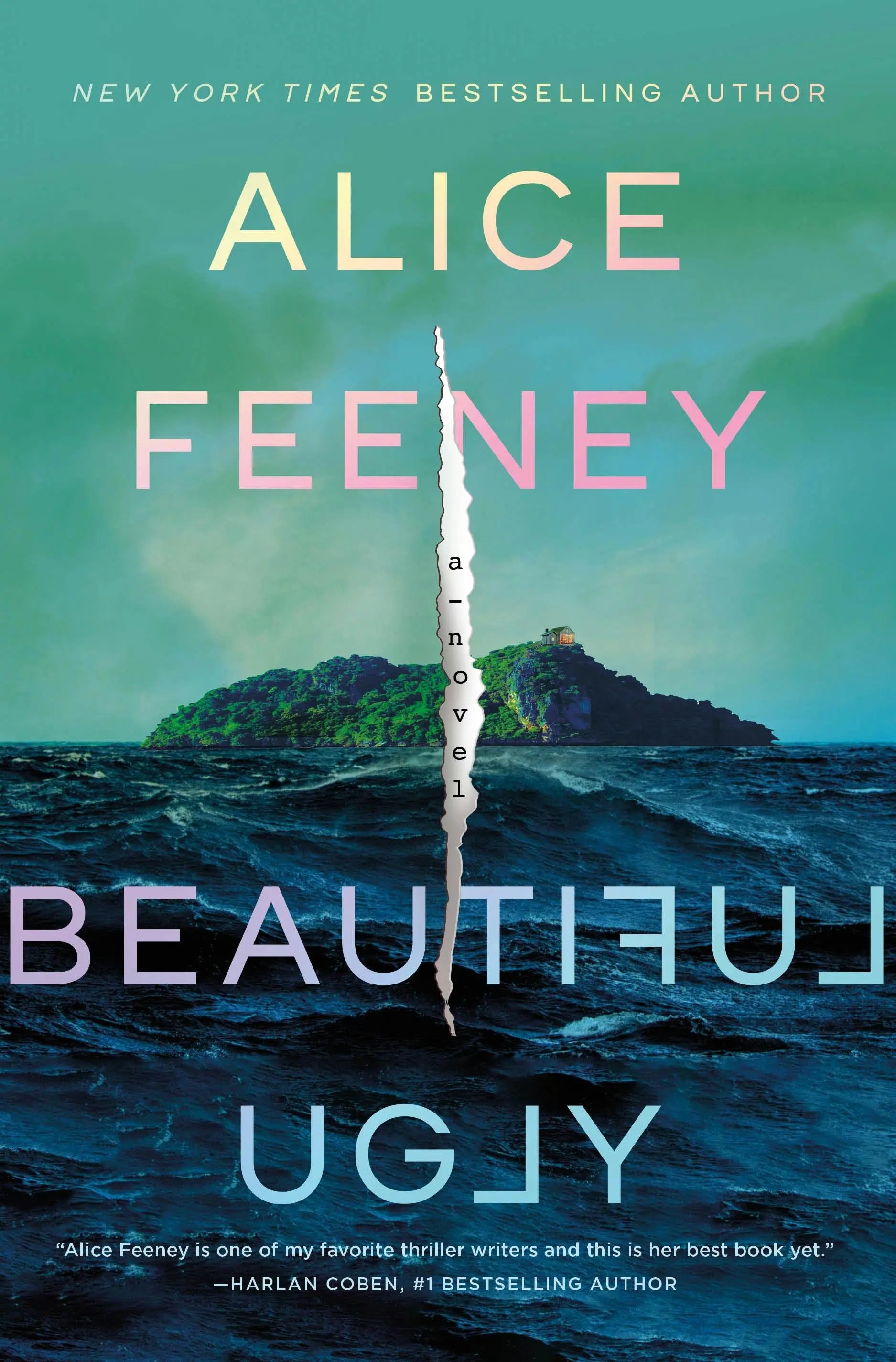
A psychological thriller about a grieving husband who sees his missing wife’s double on a remote Scottish island.
Summary:
Author Grady Green is having the worst best day of his life.
Grady calls his wife to share some exciting news as she is driving home. He hears Abby slam on the brakes, get out of the car, then nothing. When he eventually finds her car by the cliff edge the headlights are on, the driver door is open, her phone is still there. . . but his wife has disappeared.
A year later, Grady is still overcome with grief and desperate to know what happened to Abby. He can’t sleep, and he can’t write, so he travels to a tiny Scottish island to try to get his life back on track. Then he sees the impossible — a woman who looks exactly like his missing wife.
Wives think their husbands will change but they don’t.
Husbands think their wives won’t change but they do.
Review:
My memory told me I loved Alice Feeney’s thrillers—but after reading Beautiful Ugly and looking back at my past reviews, it turns out I only truly loved one (Rock Paper Scissors) and was lukewarm on another (Daisy Darker). With this latest being a miss, I probably won’t be rushing to pick up her next.
Right away, I was thrown a bit off course by the main character. When I reach for a thriller by a woman author, I typically expect a woman protagonist. Here, we follow Grady, a grieving husband and struggling novelist. We do get flashbacks to his wife before her disappearance, but Grady’s perspective never quite worked for me. I also rarely enjoy main characters who are writers—it often feels too navel-gazey (with the notable exception of Misery). That worked against Grady, too.
When Grady travels to a remote Scottish island—sent there by his agent-slash-his-wife’s-godmother—it should have been an atmospheric pivot. But while the setting is strange, it didn’t strike me as compelling. The book leans heavily on Grady’s alcoholism to make him an unreliable narrator, a device that can be effective (as in The Girl on the Train), but here felt more like a trope than an integral part of the story.
And unfortunately, it wasn’t just Grady. I didn’t connect with any of the characters—not the wife, the godmother, the ferrywoman, or the shopkeeper. That can still work if it’s a “love to hate them” type of book, but this wasn’t that. And when a book doesn’t give you characters to root for, you need a satisfying plot to carry the weight. Instead, I felt let down.
The book hinges on two major twists, and both left me feeling frustrated. One relies on the main character deliberately withholding information from the reader, which feels like a cheat—especially when we’re in his head for much of the book. The second twist is more straightforward, but felt over-the-top and unearned.
That said, there are a few bright spots. I appreciated the inclusion of a woman pastor and a same-sex couple among the tiny island’s population. The cast also includes a bit of racial and ethnic diversity. Also Grady’s dog is a breath of fresh air in every scene he’s in. However, the second twist somewhat undercut those thoughtful touches in a way that felt disappointing.
Content notes: CSA, death of children, infertility treatment, and murder.
Despite my frustrations, I’ll give the book credit for being readable and engaging. I wanted to know what happened, and I did enjoy the shifting points of view and timelines.
Overall, this is a thriller for readers who don’t mind a twist that plays unfairly with what the narrator reveals, and who enjoy mysterious settings and shifting perspectives—even if there’s no one to root for.
If you found this review helpful, please consider tipping me on ko-fi, checking out my digital items in my ko-fi shop, buying one of my publications, using one of my referral or coupon codes, signing up for my free microfiction monthly newsletter, or tuning into my podcast. Thank you for your support!
3 out of 5 stars
Length: 306 pages – average but on the longer side
Source: Library
Buy It (Amazon or Bookshop.org)
Stories That Heal: 5 Books for Mental Health Awareness Month
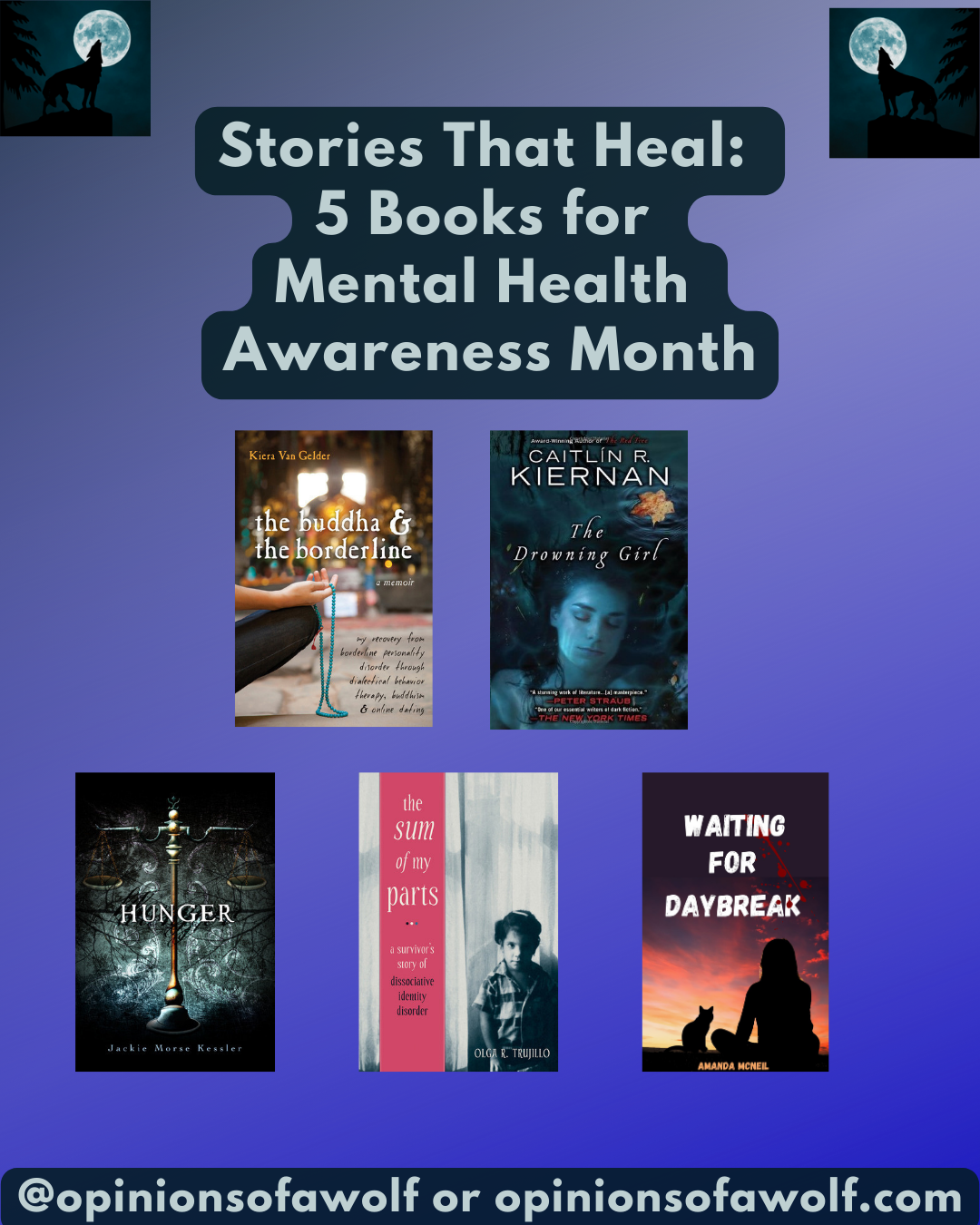
May is Mental Health Awareness Month—an annual observance founded by Mental Health America in 1949 to highlight the importance of mental wellbeing, educate the public, reduce stigma, and promote support for those affected by mental health conditions.
As someone who believes in the power of books to change lives, I thought this was the perfect time to share a mental health–focused reading list. Whether you frequently read books centered on mental health or are exploring this space for the first time, I hope you’ll find something here that resonates. This list includes a mix of fiction and nonfiction across genres—something for every reader.
The Buddha and the Borderline: My Recovery from Borderline Personality Disorder through Dialectical Behavior Therapy, Buddhism, and Online Dating by Kiera Van Gelder
(Amazon, Bookshop.org)
memoir
In this candid memoir set largely in Boston, Kiera Van Gelder traces her journey through Borderline Personality Disorder—from self-harm and addiction to healing through Dialectical Behavior Therapy and Buddhism. It’s an honest, hopeful account of finding stability and meaning after years of chaos.
(Read full review)
The Drowning Girl by Caitlin R. Kiernan
(Amazon, Bookshop.org)
literary fantasy, LGBTQIA+
In this haunting literary mystery, India Morgan Phelps—Imp to her friends—tries to untangle what really happened the summer she met Eva Canning. Was Eva a mermaid? A werewolf? Or is Imp’s memory altered by her schizophrenia? Told in lyrical, first-person prose, The Drowning Girl explores mental illness, identity, and unreliable memory, with nuanced queer representation and a mystery that unfolds entirely from within.
(Read full review)
Hunger by Jackie Morse Kessler
(Amazon, not available on Bookshop.org)
fantasy, YA
In this early 2010s YA standout, Hunger blends biting fantasy with raw realism to explore anorexia through a supernatural lens. When teen Lisabeth Lewis is visited by Death and becomes Famine—one of the Four Horsemen of the Apocalypse—she’s forced to confront the eating disorder that controls her life. With Buffy the Vampire Slayer-style humor and emotional honesty, this novel offers a powerful, metaphor-rich take on the inner voice of anorexia and the path to healing.
(Read full review)
The Sum of My Parts: A Survivor’s Story of Dissociative Identity Disorder by Olga Trujillo, JD
(Amazon, Bookshop.org)
memoir
In this powerful memoir, Olga Trujillo—once a successful attorney in D.C.—recounts their journey through the diagnosis, treatment, and recovery process of Dissociative Identity Disorder. As long-repressed memories of childhood abuse begin to surface, Olga works to integrate their parts and reclaim their life. With compassion, clarity, and survivor-centered care, this memoir offers both insight and hope to anyone seeking to understand trauma, dissociation, or the long path to healing.
(Read full review)
(Note: At the time I wrote my original review, Trujillo had not yet come out as nonbinary, so older references use previous pronouns.)
Waiting for Daybreak by Amanda McNeil
(Amazon, Bookshop.org)
zombie horror
In my own novel, Waiting for Daybreak, a young woman with Borderline Personality Disorder unexpectedly finds sobriety from alcoholism and strength when a zombie outbreak turns Boston upside down. Frieda has spent years battling emotional chaos and isolation—but when a mysterious virus brings society to a halt, she discovers survival suits her better than daily life ever did. As she sets out to save her sick cat, her solitary routine shatters, and she’s forced to reengage with a world that no longer plays by the rules. A character-driven post-apocalypse, Waiting for Daybreak explores mental illness, addiction recovery, and the fragile resilience that can grow in even the bleakest moments.
(See what readers are saying)
I hope you’ve found something here that speaks to you. If you have a favorite book that explores mental health—fiction or nonfiction—I’d love to hear about it in the comments!
Book Review: Sula by Toni Morrison

A lyrical and haunting novel about two Black women whose lifelong friendship is tested by betrayal, love, and the weight of their small-town community’s judgment.
Summary:
Sula and Nel are two young black girls: clever and poor. They grow up together sharing their secrets, dreams and happiness. Then Sula breaks free from their small-town community in the uplands of Ohio to roam the cities of America. When she returns ten years later much has changed. Including Nel, who now has a husband and three children. The friendship between the two women becomes strained and the whole town grows wary as Sula continues in her wayward, vagabond and uncompromising ways.
Review:
This was my second Toni Morrison novel—the first being The Bluest Eye, which I read back in college. Morrison’s prose is deeply lyrical, which makes her books swift reads on the surface, even when they delve into painful and challenging themes. Sula is no exception.
Each chapter is titled with the year it takes place in, but only covers a brief vignette from that year. Despite spanning several decades, this is a short novel, structurally and in page count. Though the title suggests a singular character focus, Sula is as much about a place—the Bottom, a Black neighborhood in a Southern state situated on the hillside, land the white residents had no interest in. The reason for its ironic name is revealed in the first chapter through a racist tale, setting the tone for the book’s critique of systemic racism.
Indeed, one of the novel’s most striking accomplishments is how clearly it shows that systemic racism ruins lives, whether characters comply with social expectations or resist them. For me, Nel represents compliance while Sula represents defiance—yet neither of them leads a life free from pain. Every person in their orbit suffers in some way, and that suffering is deeply entangled with the racist systems surrounding them.
The edition I read included an introduction in which Morrison writes: “Female freedom always means sexual freedom, even when—especially when—it is seen through the prism of economic freedom.” While I respect Morrison’s craft, I don’t personally agree with this framing. Throughout the book, the freest female characters are also the most sexually unrestrained, choosing partners without regard to consequences. For me, this reflects the central tensions I’ve often felt when reading Morrison’s work: I recognize the literary prowess but don’t agree with this belief. As someone who values intentionality in relationships and ethical sexuality, I believe there is freedom in discernment. My personal worldview differs from Morrison’s here, and I think that’s worth naming—especially since this quote helped me finally articulate why I sometimes feel at odds with what I’m “supposed” to take away from her narratives.
Of course, I also acknowledge that I am not Morrison’s intended audience. She has stated clearly that she writes for Black people—and I am a white woman. I honor that intention, while also appreciating the beauty, lyricism, and cultural specificity of this novel. Morrison evokes a place, a time, and a community with precision and poetry, showing rather than telling how racial injustice permeates generations.
For readers in recovery, or those who love someone with substance use disorder or alcohol use disorder, be advised that this book contains a disturbing scene involving the violent death of a character who struggles with addiction. A mother sets her son on fire, intentionally killing him because of his drug use. It’s a horrific and deeply stigmatizing portrayal. While I understand that literature doesn’t require characters to always make the “right” choices, scenes like this can be deeply harmful and may reinforce stigma around addiction. To anyone reading this who is struggling: You don’t deserve to die. You are not disposable. You can recover. We do recover. I acknowledge that the story is set in a time when resources for addiction recovery were nearly nonexistent, especially for a Black man. But violence is never the answer, and stories like this can perpetuate dangerous beliefs about addiction and worth.
With regards to diversity, the book explores colorism in the Black community, as well as racism faced by Black folks coming from immigrant white communities. It has multiple characters who fought in World War I who struggle with mental health afterwards. It also has a character who uses a wheelchair and is missing a limb. There is not any LGBTQIA+ representation that I noticed.
This is a novel that quietly devastates, not through high drama, but through its unflinching portrayal of how systemic racism, personal grief, and societal expectations shape lives over time. It’s beautifully written, deeply character-driven, and emotionally complex. Whether or not you’re part of Morrison’s intended audience, Sula is a compelling and powerful read. If you’re in recovery or close to someone who is, approach with care due to the painful and stigmatizing depiction of addiction. For those looking for fiction that treats mental health and recovery with care, check out my novel Waiting for Daybreak.
If you found this review helpful, please consider tipping me on ko-fi, checking out my digital items in my ko-fi shop, buying one of my publications, using one of my referral or coupon codes, signing up for my free microfiction monthly newsletter, or tuning into my podcast. Thank you for your support!
3 out of 5 stars
Length: 174 pages – average but on the shorter side
Source: Library
Buy It (Amazon or Bookshop.org)
Get the Book Club Discussion Guide
A beautifully graphic designed 2 page PDF that contains: 1 icebreaker, 9 discussion questions arranged from least to most challenging, 1 wrap-up question, and 3 read-a-like book suggestions
View a list of all my Book Club Guides.
Publication Announcement: Scifi: “The Crooked Tree of Algrüsti”
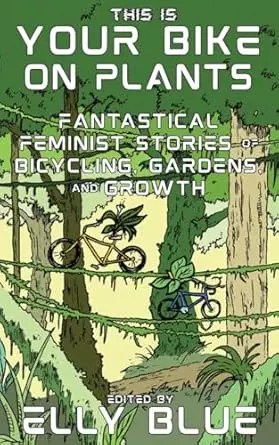
I’m thrilled to announce the publication of my scifi short story “The Crooked Tree of Algrüsti” in the anthology This Is Your Bike on Plants: Fantastical Feminist Stories of Bicycling, Gardens, and Growth—edited by Elly Blue and published by Microcosm Press. You can grab a copy on Amazon, directly from the publisher, or at many other bookstores.
About the collection:
The revolution will be green, growing, and non-motorized.
When you plant the seeds of bicycle revolution, you never know what the future will grow. These 12 stories form a splendid garden of potential futures, from the speculative to the surreal—all powered by bicycles, grounded in feminism, and blossoming with creativity.
In these pages you’ll find activist trees, magical flowers, feminist fairy tales, climate parables, photosynthesizing human-bicycle cyborgs, revolutionary elves, dazzling space gardens, green witchcraft, and more to delight your imagination. Lovers of cli-fi, solarpunk, hopepunk, and feminist bicycle science fiction will all find something to love here. You’ll never see the streets, or plants, around you the same way again.
About my story:
Celosia moved to the frigid planet of Algrüsti to escape the omnipresence of plants and their sentient relatives, the Morts. But when her new friend unexpectedly leaves the planet, Celosia is left in charge of an unanticipated botanical garden—and must confront her past in the process.
My story touches on themes of friendship, grief, addiction, and recovery—all with a love for plants and music.
I’m so proud to be part of this collection, and I hope you’ll check it out! Please also visit my Publications Page for more of my work.
Thank you so much for your support!
Book Review: Dead Weight: Essays on Hunger and Harm by Emmeline Clein

A woman in eating disorder recovery explores the world of eating disorders and treatment in the west through a pop culture lens.
Summary:
Emmeline Clein tells the story of her own disordered eating alongside, and through, other women from history, pop culture and the girls she’s known and loved. Tracing the medical and cultural history of anorexia, bulimia, binge eating disorder, and orthorexia, Clein investigates the economic conditions underpinning our eating disorder epidemic, and illuminates the ways racism and today’s feminism have been complicit in propping up the thin ideal. While examining Goop, Simone Weil, pro-anorexia blogs, and the flawed logic of our current treatment methods, Clein grapples with the myriad ways disordered eating has affected her own friendships and romantic relationships.
Review:
This collection of essays consisting of research intertwined with memoir was an engaging read. I particularly liked how Clein approached talking about the negative aspects of Big Pharma in a historical context. That wasn’t something I was expecting in this book, and it was well done. Expect to learn about how amphetamines were marketed as a weight loss drug post WWII because the manufacturers needed a new market now that soldiers were no longer using them to stay awake. Or about how it was Big Pharma who advocated for the labeling of obesity as a disease in the early 2000s (so insurance would pay for drugs to “treat” it.) Or about how the company that originally marketed amphetamines for ADHD was fined for “inappropriate marketing.” (For more about the impact of big pharma on our everyday lives, see my review of Drugs for Life.)
Another thing I appreciated as a person in recovery from addiction was how Clein analyzed addiction and eating disorders as systemic, rather than personal, issues.
The addiction model still requires that we understand ourselves as addicts, rather than see our culture, our food systems, and drug and diet companies as conspiring to encourage addictive patterns. When we believe we are sinners and criminals who deserve to be punished because we are out of control, we don’t demand change to any of the underlying structures that are actually out of our control, controlled by corporations. In it current iteration, the addiction model still makes us blame ourselves and then retrofit our stories into some fictional hero’s journey of abstinence and discipline over the compulsion to consume–stories rooted in the very values at the heart of anorexia and its hold on so many minds.
There were a few things that I did not like about the book, though.
First, her take on the intersection of Irritable Bowel Syndrome (IBS) and eating disorders is woefully short-sighted and lacking empathy for not only those with IBS but other chronic illnesses that the medical industry offers little to nothing for. (Strange for a book that takes down big pharma so aggressively.) Clein presents the opinion that IBs is essentially always second to developing an eating disorder. That IBS symptoms are the body’s natural response to being starved or facing binges. But EDs can be and are triggered by IBS. The fact is, for many people, an ED develops in response to suffering from IBS.
Second, her choice to exclude men from a book about ED is troubling. The overall thesis seems to be that a minuscule number of men have EDs so it’s not worth talking about. In fact, approximately 1/3 of those known to have an ED are men, and there is concern that EDs in men are underreported. Even if it was the case that very few men have EDs (which again, it is not), leaving them out of the book hurts the overall arguments about EDs.
Third, Clein does not talk at all about the interplay between EDs and OCD. This is a more glaring lapse given how much space is given to discussing depression, anxiety, and EDs.
Fourth, while drinking is mentioned repeatedly, drunkorexia is not discussed at all, nor is alcoholism, something which, again, often comes hand-in-hand with EDs and is even seen in vignettes in the book but not addressed.
Fifth, there is a chapter about religion and ED. It completely ignores all other faiths except Judaism, Protestantism, and Catholicism. Clein does not understand Protestantism enough to discuss it in the ways that she does. Every time she brings up Protestantism, it’s clear she doesn’t have a high level understanding of it. She basically makes comments about Protestantism being all about asceticism and self-denial and then moves on. Unlike Catholicism, she does not limit her comments about Protestantism to only the chapter when she’s discussing religion explicitly either. It trickles in throughout the book. (She does also discuss Judaism throughout the book, but she is Jewish, and her faith comes up in the memoir portions, which makes sense.)
As you can perhaps tell from both the featured quote and how long this review is, this is a long and dense book. It seems to have attempted to do something very large when perhaps it might have been better served with a narrower focus and more memoir.
Overall, this book features important information on the intertwining of Big Pharma and eating disorders in the west but it does fall short of an inclusive portrait of eating disorders in the west.
If you found this review helpful, please consider tipping me on ko-fi, checking out my digital items available in my ko-fi shop, buying one of my publications, using one of my referral/coupon codes, or signing up for my free microfiction monthly newsletter. Thank you for your support!
3 out of 5 stars
Length: 288 pages – average but on the shorter side
Source: Library
Buy It (Amazon or Bookshop.org)
Book Review: The Stranger Upstairs by Lisa M. Matlin
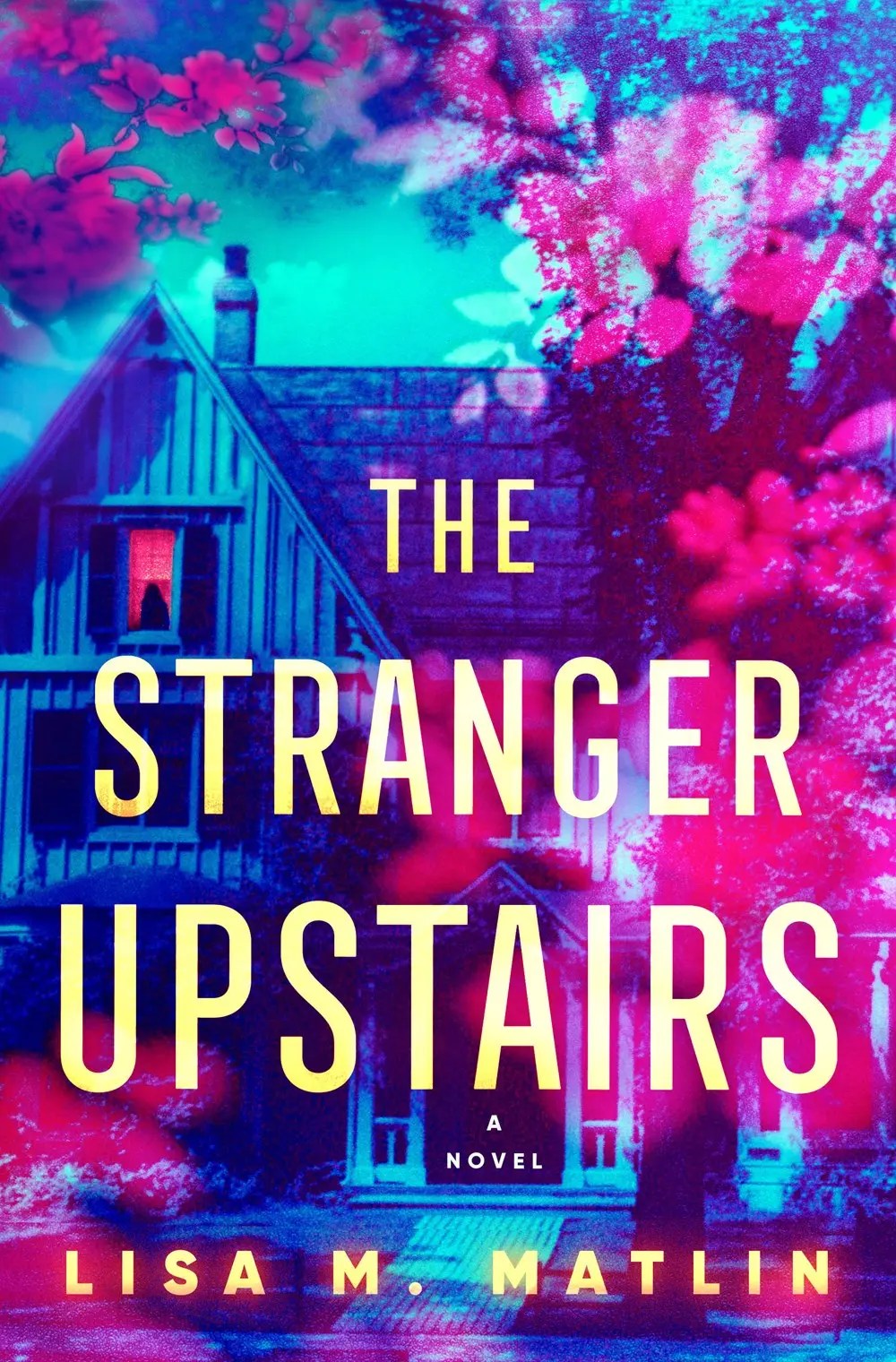
Sarah Slade’s a self-help influencer who’s trying to make content out of her attempt to flip the infamous Black Wood murder house. But of course not everything goes to plan.
Summary:
Sarah Slade is starting over. As the new owner of the infamous Black Wood House—the scene of a grisly murder-suicide—she’s determined that the fixer-upper will help reach a new audience on her successful lifestyle blog, and distract her from her failing marriage.
But as Sarah paints over the house’s horrifying past, she knows better than anyone that a new façade can’t conceal every secret. Then the builders start acting erratically and experiencing bizarre accidents—and Sarah knows there’s only so long she can continue to sleep in the bedroom with the bloodstained floor and suffer the mysterious footsteps she hears from the attic.
When menacing notes start appearing everywhere, Sarah becomes convinced that someone or something is out to kill her—her husband, her neighbors, maybe even the house itself. The more she remodels Black Wood House, the angrier it seems to become.
With every passing moment, Sarah’s life spirals further out of control—and with it, her sense of reality. Though she desperately clings to the lies she’s crafted to conceal her own secrets, Sarah Slade must wonder . . . was it all worth it? Or will this house be her final unraveling?
Review:
I have a weak spot for psychological thrillers by women Australian authors so when I saw a new author on the scene, I hit that request button over on NetGalley. This was a breath of something different in that genre, and I really enjoyed it.
What stood out to me was how the setting was in the more rural part of Australia. That means the scene setting includes more Australian wildlife and trees. Also this main character was neither a mother nor pregnant nor trying to become pregnant. Her focus is her social media career.
I liked how the book used the starting point of Sarah trying to keep her moment in the sun going. She had an article she wrote for a website take off and managed to spin that into a self-help book deal that did well. But now she’s struggling to write her second book and keep the interest up on her. She decides to feed two birds with one scone. She’ll fulfill a dream of hers to live in a town that she normally could never afford. She’ll also spin it as something to keep interest in her social media account while she struggles to write her second book.
The mystery of is the house evil or not is accompanied by some mystery about Sarah herself. The is the house evil or not mystery really kept me guessing right up until the end, and the twist surprised me. I didn’t so much enjoy the mystery about Sarah for a couple of reasons. First, it’s solely mysterious due to information being withheld from the reader that the main character knows. I think the book would have just as thrilling (perhaps even more so) if we had known what Sarah knew earlier. Second, it leans heavily on psychological issues. I don’t know enough about the specific issue being used to know if it was represented accurately. But I am a little concerned it might have been overly dramatized for the sake of the plot.
The main character drinks too much and is also presented in the narrative as having an alcohol problem. But this plot point gets dropped at the end and not resolved.
Readers sensitive to plots involving animals in pain should be aware that a pet becomes sick for mystery reasons partway through the book. The pet does survive, however.
Overall, this was a different plot in the women’s Australian psychological thriller genre. Recommended to fans of the genre looking for some variety or those who have yet to try it out for whom the maybe evil house plot appeals.
If you found this review helpful, please consider tipping me on ko-fi, checking out my digital items available in my ko-fi shop, buying one of my publications, using one of my referral/coupon codes, or signing up for my free microfiction monthly newsletter. Thank you for your support!
4 out of 5 stars
Length: 288 pages – average but on the shorter side
Source: NetGalley
Buy It (Amazon or Bookshop.org)
Book Review: Love on the Menu by Mimi Deb

A London romcom whose meet-cute is a get your life together list accidentally dropped in a take-out bag leading to notes being passed back and forth.
Summary:
Gia thrives on risks. Ben plays it safe.
She crossed continents to chase her London dream; he works the same job in the same restaurant, night after night.
Then fate steps in. When Gia’s takeout is delivered, her embarrassing list of New Year’s resolutions accidentally makes its way to Ben’s restaurant, stuck to the bottom of a delivery backpack.
With each delivery Gia orders, Ben slips in a note of his own and eagerly awaits her reply. One by one, these notes transform their lives in unexpected ways, and an unlikely love story is written.
Review:
The only thing I can say without spoilers was I loved the meet-cute idea but ultimately disliked both halves of the pairing. The rest of this review will contain spoilers.
I didn’t know when I requested this book that Ben, the love interest, is in long-term recovery (5 years plus) from alcohol. As a sober person myself, when I realized this about the love interest, I was ecstatic to see that representation. It’s what kept me hanging on after a shaky opening that I’ll talk about in a moment. But ultimately the representation left me disappointed. Plus I wound up not liking Ben. So let’s get into it.
First, the opening chapter. Gia gets drunk at a work event and accidentally kisses her boss while dancing. How, you ask? I’m still confused by it. She was doing the Single Ladies dance, they were dancing back-to-back, and when she jumped to turn 180 degrees, her lips landed on her boss’s. I do not think this would actually be possible to do without either bonking noses or hitting teeth together.
Now I need to explain a bit about the plot to talk about what didn’t work for me. So, after this, she convinces herself she’s about to lose her job and writes the get your life together list Ben ultimately finds. When she returns to work after the holidays, she becomes convinced that her boss is out to get her, thanks partially to her work-friend, Jay’s warnings. They are both immigrants. She immigrated from India, and he from China. He explains that the boss can’t legally fire her for such a thing in Britain but she can set her up to fail by giving her too much responsibility then a warning then a firing. When she does suddenly get more responsibility at work, she becomes convinced this is what is happening. Meanwhile she keeps ordering delivery from a local Indian takeaway that reminds her of home, plus she’s getting to exchange cute notes with one of the employees, Ben, through them. He coaches youth football on the weekends and has a large and loving family. Ben becomes enamored with Gia. Eventually they get a chance to meet when she needs a caterer for a big important work event.
Gia repeatedly drinks too much throughout the book. I was ok with this at first because I thought maybe she would have an ah-hah moment and cut back (or stop entirely). But she doesn’t. She thinks maybe she should. She puts it on her list. (Heartbreakingly the list at the ends says: “Don’t Drink. Drink less. Drink responsibly.”) But then she doesn’t actually do it. She even continues binging up through her marathon run. Her mother at one point in the last chapter says to her boss that Gia drinks too much. The boss agrees. And Gia blows it off. In the last chapter! There’s nothing I can root for with a person in long-term recovery getting together with someone with an active alcohol problem that’s bad enough that their family and boss have noticed and yet they won’t acknowledge it.
There is a giant reason I don’t think Ben is right for Gia either. Essentially, when Ben was in the throes of his addiction, he made some choices that led to an immigrant getting fired from his brother’s company. Instead of standing up for the guy and taking responsibility for what happened that night, Ben let him be fired and then took his job (only to quit it a few weeks later). Everyone makes mistakes, and I’m ok with a hero being imperfect. But later – five years later – when this comes up, he says, “Why didn’t he just get another job?” and “Why do you make looking for a job sound like a marathon?” This was a very heartless thing to say. It’s even more heartless given that Ben knows that Gia is also an immigrant whose ability to stay in London is tied to her employment which she at that moment feels is precarious. Ben never actually apologizes for this. He reads Gia a letter in which he talks about how wonderful she is, but he never apologizes for how flippantly he regarded the immigrant work situation.
These two people don’t belong together, and that is what left me feeling sour at the end. I don’t see a HEA or even a HFN but the first few seconds of a train wreck.
So, while the meet-cute was adorable, and I loved seeing diversity both in race and mental health in this book, I ultimately felt that the two leads did not belong together, although with some different plot directions, they could have been. Ben could have made a real apology and done something to try to make up for his lack of compassion for immigrants. Gia could have realized she had a problem with alcohol and taken Ben up on the offer to hook her up with a sponsor. If these two conditions were met, there could have been a very cute one year later they get together with a new meet-cute epilogue. But instead the book just swept the important issues under the rug with a Beyonce song at the end.
If you found this review helpful, please consider tipping me on ko-fi, checking out my digital items available in my ko-fi shop, buying one of my publications, or using one of my referral/coupon codes. Thank you for your support!
3 out of 5 stars
Length: 416 pages – average but on the longer side
Source: NetGalley
Buy It (Amazon or Bookshop.org)
Book Review: Never Ever Getting Back Together by Sophie Gonzales

If you’ve ever wished that two of the women – any two of the women – on a reality tv dating show would just get with each other instead of pining over the questionable man they’re supposedly there for, this one is for you.
Summary:
It’s been two years since Maya’s ex-boyfriend cheated on her, and she still can’t escape him: his sister married the crown prince of a minor European country and he captured hearts as her charming younger brother. If the world only knew the real Jordy, the manipulative liar who broke Maya’s heart.
Skye Kaplan was always cautious with her heart until Jordy said all the right things and earned her trust. Now his face is all over the media and Skye is still wondering why he stopped calling.
When Maya and Skye are invited to star on the reality dating show Second-Chance Romance, they’re whisked away to a beautiful mansion—along with four more of Jordy’s exes— to compete for his affections while the whole world watches. Skye wonders if she and Jordy can recapture the spark she knows they had, but Maya has other plans: exposing Jordy and getting revenge. As they navigate the competition, Skye and Maya discover that their real happily ever after is nothing they could have scripted.
Review:
I’m revealing my age here, but in high school I definitely watched the very first season of The Bachelor (and a few of the following ones). I wasn’t yet out to myself, but even so found myself wondering why the women were such better catches than the man. Apparently, long after I stopped watching, in 2016 two of the women contestants got together with each other. But this happens far less frequently than one might imagine. In any case, when I saw the plot description for this book, let me tell you, I smashed the request button on NetGalley without paying too much attention beyond – two women on a reality tv dating show get together.
Beyond the reality tv show wrapping, this uses the enemies to lovers romance trope. I’ve historically avoided this trope because I had a hard time conceptualizing how I could root for someone to get together with someone they start off disliking strongly. This book showed me otherwise, though. Although it starts in Maya’s perspective in just a couple of chapters it shifts to Skye’s so it becomes easy to see how these two women have come to dislike each other based on a bad misunderstanding. So there’s not actually something enemy-worthy about either of them. That said, both of them are flawed (as are well all) but with the enemies to lovers they start out only seeing the flaws then start to see what’s great about each other. It makes for a really realistic depiction of a healthy relationship at the end, because it’s not all rose-colored glasses. Also, I really like how they move from enemies to women supporting women to women loving each other.
This book is also hysterically funny. I legitimately laughed out loud multiple times while reading it. Representation is decent. Two of the secondary characters are people of color, and one is gay. Both Skye and Maya are bisexual. Because Jordy hid his two-timing ways easily since his family moved all over the world, his exes are also international. Chalonne is funnily contrived in much the way Genovia from The Princess Diaries was. (Incidentally, this got me to wondering if European writers set books in fake countries in the Americas the way we seem to make up fake European monarchies. It seems like most of them that do exist are more of an alternate history where either fascism takes over or the colonies never won independence sort.)
There were three things I wasn’t so keen on in the book that held me back from five stars. First, I just didn’t feel like these characters were 18. They read as more like just out of college than just out of high school to me. It was easy for me to give that a pass, though, because I just headcanoned them older. Related to my mistaken belief that they were older when I started reading it, in the first scene, Maya is at a bar and not drinking. Oh nice! I thought. Representation of sobriety in a romance. But no. She was just under the drinking age in the US. As soon as she gets to Chalonne, where the drinking age is 18, she starts drinking. A lot. Just not wine because she thinks it’s icky. So that was disappointing to me. I also wish that the scene where she has too many vodka jello shots was more realistic. Binge drinking for people assigned female at birth is 4 drinks in one sitting. She has way more than that. She should have been very sick as opposed to having a mild hangover that passed by lunchish. I refuse to believe this reality tv show would have gone light on the vodka when we all know they like for contestants to get drunk. To be clear, while I personally would like to see more romances depicting sober people, I understand it’s realistic to show people drinking. But if we’re going to show them drinking and drinking too much in one night is a plot point, let’s be realistic about how much is too much for a person in a body assigned female at birth. Last, while I get it that Jordy needs to be the bad guy, he’s such a bad guy that I struggled to understand how all these nice women fell for him at all to begin with. I understand from Maya’s perspective he’s gross for valid non-physical reasons (the cheating, the lying, etc…) but we do have the chance to see Skye’s perspective as well, and it’s not clear to me from hers what she sees in him either. Maybe even if just in one of the first scenes where Jordy takes his shirt off Maya found herself attracted to him in spite of knowing his douchey ways, that would have helped me to understand. But she even seems to be turned off by his looks. It left me scratching my head a bit.
Overall, this book was a breath of fresh air, featuring two women bisexual leads who fall for each other surrounded by a very humorous reality tv setting. While some of that setting was a bit difficult to believe, the enemies to lovers plot was so enjoyable that it was easy enough to just focus on them.
If you found this review helpful, please consider tipping me on ko-fi, checking out my digital items available in my ko-fi shop, buying one of my publications, or using one of my referral/coupon codes. Thank you for your support!
4 out of 5 stars
Length: 384 pages – average but on the longer side
Source: NetGalley
Buy It (Amazon or Bookshop.org)
Book Review: Daisy Darker by Alice Feeney
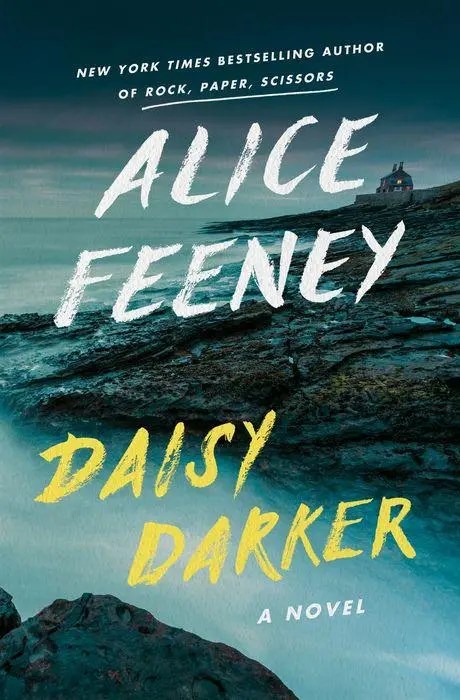
When Daisy and her family go to her grandmother’s island home for her 80th birthday, they’re surprised when the family members start dropping dead, one an hour. Who has it in for the Darker family?
Summary:
After years of avoiding each other, Daisy Darker’s entire family is assembling for Nana’s 80th birthday party in Nana’s crumbling gothic house on a tiny tidal island. Finally back together one last time, when the tide comes in, they will be cut off from the rest of the world for eight hours.
The family arrives, each of them harboring secrets. Then at the stroke of midnight, as a storm rages, Nana is found dead. And an hour later, the next family member follows…
Trapped on an island where someone is killing them one by one, the Darkers must reckon with their present mystery as well as their past secrets, before the tide comes in and all is revealed.
Review:
*This review is going to contain many spoilers for the twists in Daisy Darker. If you do not wish to be spoiled, please click away!*
This book is a send-up to the Agatha Christie classic And Then There Were None without the ties to the hideously racist children’s counting rhyme and minstrel song (note that link reveals the original racist language used in Agatha Christie’s). The similarities are clear: people are invited to an island where they then start dying off one by one. But if you are familiar with that book then one of the big plot twists in this one will not be a plot twist to you – the majority of the people invited to this island are responsible either for murder or for covering it up. Rather than using a pre-existing nursery rhyme, this book uses a brand-new poem written in the style of a nursery rhyme to predict the deaths of the characters. Another similarity includes the use of a red herring to deflect suspicion from the real person (or in this case, people) orchestrating the deaths. A big difference here, though, is that this a family drama. It’s not seemingly disconnected strangers. They are a family with…problems.
This is what I thought the twist was going to be: it was Conor’s dad who had faked his own death previously to get away from the Darker family. So I really wasn’t expecting the simultaneous reveal of Trixie holding the smoking gun while telling Aunt Daisy that she’s a ghost. I felt like I’d been Sixth Sensed all over again. Then the backstory of how Daisy was killed is revealed, and I realized…this book is And Then There Were None crossed with The Sixth Sense crossed with I Know What You Did Last Summer.
I’ve been wrestling with why I felt, as I said in my immediate quick GoodReads review, bamboozled by this book. I went back and checked a few key scenes to make sure it was possible for Daisy to have been a ghostly presence. For example: the reading of the will. But she inherited something! I thought. No, Nana just mentioned donating to some of Daisy’s favorite charities. So, in all the scenes I thought of, it was possible for Daisy to be a ghost. This was well done narratively. So why did I feel so bamboozled? I think for me it came down to this: this is told in the first-person from Daisy’s perspective, and it all hangs on her not remembering she’s a ghost. (This is a lot like The Sixth Sense). We’re supposed to believe she doesn’t remember she’s a ghost because the level of trauma from how she died is too hard to bare so she blocks it out, and she’s always been isolated so it’s not strange to her that people don’t talk to her or notice her. Ok, fine, but where does she live? She thinks she’s an adult who pops over to take care of Trixie routinely when she’s not volunteering in an elder care facility. Where is she when she’s not with Trixie? Does she just drop off the face of the planet? Wouldn’t she realize she never goes home? That she has nowhere to call home whatsoever?
The other thing is that the character of Conor I feel acts incredibly out of character for who he’s been presented to be the night of the I Know What You Did Last Summer incident. He has been shown to be a kind boy who is madly in love with Rose. But he sleeps with Lily then convinces everyone to throw Daisy into the ocean to save his future. Whereas Rose going along with what everyone else suggested without protesting too much and Lily being fine with it made sense to me because they both bullied their little sister, Conor being the instigator did not. For me, I needed more evidence of the fact he would be capable of such a thing from the very many home movies the crew watched over the course of the night. He was in them, but there was no sign of this selfish, mean, self-preservation streak whatsoever. In fact, the only time he sort of lied was when he didn’t want to admit to Nancy that he got beat up at school because he got into a fistfight trying to defend Lily’s honor. (This also further demonstrates how strange it is that he slept with Lily that same night.)
My other issue is that I get the vibe we’re supposed to like Nana, but I don’t. In fact, I think she has far more culpability than the narrative wants us to feel. She’s the matriarch of this atrocious family. She absolutely favored one of the Darker girls over the others. I think we’re supposed to think that’s fair and justified since Nancy favored Rose and Lily over Daisy but that’s not how it works. Two wrongs don’t make a right. Favoring one child over others creates a hateful environment for them all. The bullying of Daisy from Rose and Lily, and Daisy’s secret attacks back at them could have been worked on if any one adult stepped in and tried to do so. Nana knew what was going on and didn’t do anything about it. She just allowed Daisy to get her revenge. I do get it that part of the point of the book is this is a terrible family but I also think we’re supposed to see Nana in a positive light. But the terribleness must have started somewhere. Similarly, even though I felt sympathy for Daisy in flashbacks, in the moment (when I thought she was a grown-up and not a ghost), she seemed overwrought, dramatic, and annoyed me. I’m also confused about what she thinks she did wrong to Conor that warrants her needing to apologize.
Overall, I found this book to be a good thriller. I think it could have moved into great thriller territory with characters acting more within character (or better explained out of character behavior) and a ghost who knows she’s a ghost. In all honesty, I could have really gotten behind a story where Daisy shows up on Halloween night when the space between worlds is thin and watches as her family starts to drop dead while discovering her niece can speak to her. I don’t think the extra twist of finding out she’s a ghost was actually necessary.
If you found this review helpful, please consider tipping me on ko-fi, checking out my digital items available in my ko-fi shop, buying one of my publications, or using one of my referral/coupon codes. Thank you for your support!
3 out of 5 stars
Length: 352 pages – average but on the longer side
Source: Library
Buy It (Amazon or Bookshop.org)
Book Review: The Foundling by Ann Leary

It’s 1927, and eighteen-year-old Mary Engle thinks she’s found her way to independence and success when she starts working as a secretary for a woman doctor at a remote institute for mentally disabled women. But not everything is as it appears to be at Nettleton State.
Summary:
It’s 1927 and eighteen-year-old Mary Engle is hired to work as a secretary at a remote but scenic institution for mentally disabled women called the Nettleton State Village for Feebleminded Women of Childbearing Age. She’s immediately in awe of her employer—brilliant, genteel Dr. Agnes Vogel.
Dr. Vogel had been the only woman in her class in medical school. As a young psychiatrist she was an outspoken crusader for women’s suffrage. Now, at age forty, Dr. Vogel runs one of the largest and most self-sufficient public asylums for women in the country. Mary deeply admires how dedicated the doctor is to the poor and vulnerable women under her care.
Soon after she’s hired, Mary learns that a girl from her childhood orphanage is one of the inmates. Mary remembers Lillian as a beautiful free spirit with a sometimes-tempestuous side. Could she be mentally disabled? When Lillian begs Mary to help her escape, alleging the asylum is not what it seems, Mary is faced with a terrible choice. Should she trust her troubled friend with whom she shares a dark childhood secret? Mary’s decision triggers a hair-raising sequence of events with life-altering consequences for all.
Review:
I read Ann Leary’s contemporary fiction The Good House last winter (review) and was excited to read her new one and further intrigued to see it was a piece of historic fiction. In spite of being very different from that piece of contemporary fiction, this book lived up to it quite well with richly imagined settings, complex and flawed characters, and an honest depiction of alcohol.
The author discovered this aspect of history – the forced institutionalization of women deemed “feebleminded” in the 1920s for the express eugenics purpose of preventing them from having children – while researching her own family genealogy. (Please be aware that “feebleminded” is a pejorative in modern times. In the 1920s, it was a term used clinically to classify patients.) Her grandmother worked briefly as a secretary at such an institution. The author was made curious by the name of the institution and thus the research that led to this novel was borne. Read more about her perspective on the research process, connection to her family, and the history of this treatment of women.
One of my favorite aspects of Leary’s writing is the characters. She’s not afraid to let them be flawed. In this case, the flaws are partially a reflection of the flaws of the times and partially innate to the characters themselves. No one in this book is perfect, and yet you find yourself rooting for them anyway. It can be difficult from a modern perspective to understand why Mary’s initial reaction to the asylum is positive. Or why she doesn’t trust or believe Lillian right away. But this book does an eloquent job of showing why that is, for personal and societal reasons, and letting Mary grow and change on her own.
Another strength is in making the horrific problems clear without dwelling on them in a gratuitous way. By the end of the book, the reader knows exactly what’s wrong as the asylum, but it remained straight-forward and succinct about it. I dislike it when historical books about difficult issues have scenes that feel like they could have come from a Saw movie. This book avoids that well.
The book also highlights the very serious issues for interracial couples. But there is an interfaith couple for whom the same attention isn’t paid. It felt a bit pie in the sky to not directly address the issues facing a Jewish/Catholic couple in the 1920s. Especially when the Catholic half of the couple is serious enough about her faith that she attends weekly Mass and worries about when she can have Confession. This is a level of seriousness about her faith that made me question how she seemed to not worry at all about the issues facing her in an interfaith relationship. Given the attentive detail given to the interracial couple, it felt even more like a weakness.
I was interested as to how the author would handle alcohol in this 1920s historic piece given The Good House is largely about a woman struggling with alcoholism. Alcohol is not the focus of the book, but it is featured in ways that are realistic to the 1920s. In other words, while Prohibition is still in existence during the book, alcohol is pervasive in society. The downfalls of alcohol are well depicted, again, without being too gratuitous.
Overall, this is a well-researched and crafted piece of historic fiction that covers difficult ground with grace. Recommended to fans of historic fiction. But keep in mind the romance is a subplot in this one.
If you found this review helpful, please consider tipping me on ko-fi, checking out my digital items available in my ko-fi shop, buying one of my publications, or using one of my referral/coupon codes. Thank you for your support!
4 out of 5 stars
Length: 336 pages – average but on the longer side
Source: Library
Buy It (Amazon or Bookshop.org)
 Support my work with a tip or browse my shop for curated book club guides, how to guides, cross-stitch patterns, and more!


This work by Amanda Nevius is licensed under a Creative Commons Attribution-Noncommercial-No Derivative Works 3.0 United States License.
 Opinions of a Wolf