
Archive
Book Review: How Far the Light Reaches: A Life in Ten Sea Creatures by Sabrina Imbler

A powerful blend of memoir and marine biology exploring environmentalism, queer theory, and biracial identity through the lens of deep-sea creatures and personal reflection.
Summary:
A queer, mixed race writer working in a largely white, male field, science and conservation journalist Sabrina Imbler has always been drawn to the mystery of life in the sea, and particularly to creatures living in hostile or remote environments. Each essay in their debut collection profiles one such creature: the mother octopus who starves herself while watching over her eggs, the Chinese sturgeon whose migration route has been decimated by pollution and dams, the bizarre Bobbitt worm (named after Lorena), and other uncanny creatures lurking in the deep ocean, far below where the light reaches. Imbler discovers that some of the most radical models of family, community, and care can be found in the sea, from gelatinous chains that are both individual organisms and colonies of clones to deep-sea crabs that have no need for the sun, nourished instead by the chemicals and heat throbbing from the core of the Earth. Exploring themes of adaptation, survival, sexuality, and care, and weaving the wonders of marine biology with stories of their own family, relationships, and coming of age, How Far the Light Reaches is a book that invites us to envision wilder, grander, and more abundant possibilities for the way we live.
Review:
A queer memoir intertwined with fascinating ocean facts? Yes, please! This is a beautifully written exploration where each chapter examines a unique sea creature and, surprisingly, connects it to the author’s own life.
I learned so much about marine biology in an easily digestible way, and here are three of my favorite facts:
- Octopuses die after spawning and starve themselves while incubating their eggs.
- Hydrothermal vents come and go across the ocean floor, creating temporary ecosystems.
- Selps, a type of jellyfish, move together, but at different speeds.
What really stood out to me, though, was Sabrina Imbler’s introspective and self-aware reflections on their life. As a white person, I was moved by how candid they were about their experiences of being biracial. I appreciated how they expressed that being mixed-race is an identity that doesn’t need to be “resolved”—“I am Chinese. I am white.” This honest exploration of their mixed-race identity resonated with me far more than their exploration of queerness, which, while meaningful, didn’t linger as strongly in my memory. If you’re drawn to memoirs that delve deeper into queer identity, check out my review of A Queer and Pleasant Danger.)
Please be aware that this book addresses the sensitive topics of racism, environmental injustice, and animal abuse. Sabrina also explores an instance of sexual violence they experienced as a youth, reflecting on how it shifted from being a “joke” to something they realized was deeply troubling.
I listened to the audiobook version, narrated by Sabrina themselves, which was stellar. Their narration felt like listening to a close friend, making the experience even more immersive.
Overall, this is an incredibly moving and educational memoir. It’s a unique blend of personal reflection and marine biology, offering readers a fresh way to explore the world. Highly recommended for those interested in memoirs with a scientific twist and a deep dive into the complexities of identity.e of the author’s favorite subjects – marine biology. Recommended to those interested in a unique storytelling method in a memoir, as well as those with a personal interest in marine biology.
If you found this review helpful, please consider tipping me on ko-fi, checking out my digital items available in my ko-fi shop, buying one of my publications, using one of my referral/coupon codes, or signing up for my free microfiction monthly newsletter. Thank you for your support!
5 out of 5 stars
Length: 263 pages – average but on the shorter side
Source: Library
Buy It (Amazon or Bookshop.org)
Book Review: Darling Girls by Sally Hepworth

When bones are discovered beneath their childhood home, three adult, Australian foster sisters are forced to confront their past as key witnesses—or prime suspects—in a dark family secret.
Summary:
For as long as they can remember, Jessica, Norah, and Alicia have been told how lucky they are. As young girls they were rescued from family tragedies and raised by a loving foster mother, Miss Fairchild, on an idyllic farming estate and given an elusive second chance at a happy family life.
But their childhood wasn’t the fairy tale everyone thinks it was. Miss Fairchild had rules. Miss Fairchild could be unpredictable. And Miss Fairchild was never, ever to be crossed. In a moment of desperation, the three broke away from Miss Fairchild and thought they were free. Even though they never saw her again, she was always somewhere in the shadows of their minds. When a body is discovered under the home they grew up in, the foster sisters find themselves thrust into the spotlight as key witnesses. Or are they prime suspects?
Review:
I’ve read most of Sally Hepworth’s books and enjoyed them, so I was excited to receive a review copy of her newest release.
The story features three narrators, each alternating between the present and their childhood. While that could be confusing, it’s actually well-executed, with the shifts between timelines feeling seamless. The timing of these shifts works well, never feeling contrived for the sake of holding back secrets for a twist.
And those twists? They’re big, and one in particular made me gasp out loud. While they were surprising, they made perfect sense, leaving me thinking, “I should have seen that coming.” That said, I did feel a bit frustrated by the final twist. I’m starting to tire of a specific depiction of women that seems to be a recurring theme in psychological thrillers, and this book doesn’t escape that trope.
In terms of representation, there’s a lack of racial or ethnic diversity. However, the book does feature one bisexual sister pursuing a relationship with a woman, and one sister dealing with substance use issues, while another has anger management struggles. I found the portrayal of foster care and the foster system is both realistic and sensitive, and especially appreciated learning that Hepworth conducted research with adults raised in the foster system. As someone who works in addiction and recovery, I found the representation of substance use disorder to be authentic and tasteful.
Overall, this is a gripping psychological thriller set in Australia, with enough twists and intriguing characters to keep you turning the pages. While readers may not relate to all of the characters, the juicy plot is sure to keep them engaged. Recommended for fans of psychological thrillers.
If you found this review helpful, please consider tipping me on ko-fi, checking out my digital items available in my ko-fi shop, buying one of my publications, using one of my referral/coupon codes, or signing up for my free microfiction monthly newsletter. Thank you for your support!
4 out of 5 stars
Length: 359 pages – average but on the longer side
Source: NetGalley
Buy It (Amazon or Bookshop.org)
Book Review: A Botanical Daughter by Noah Medlock
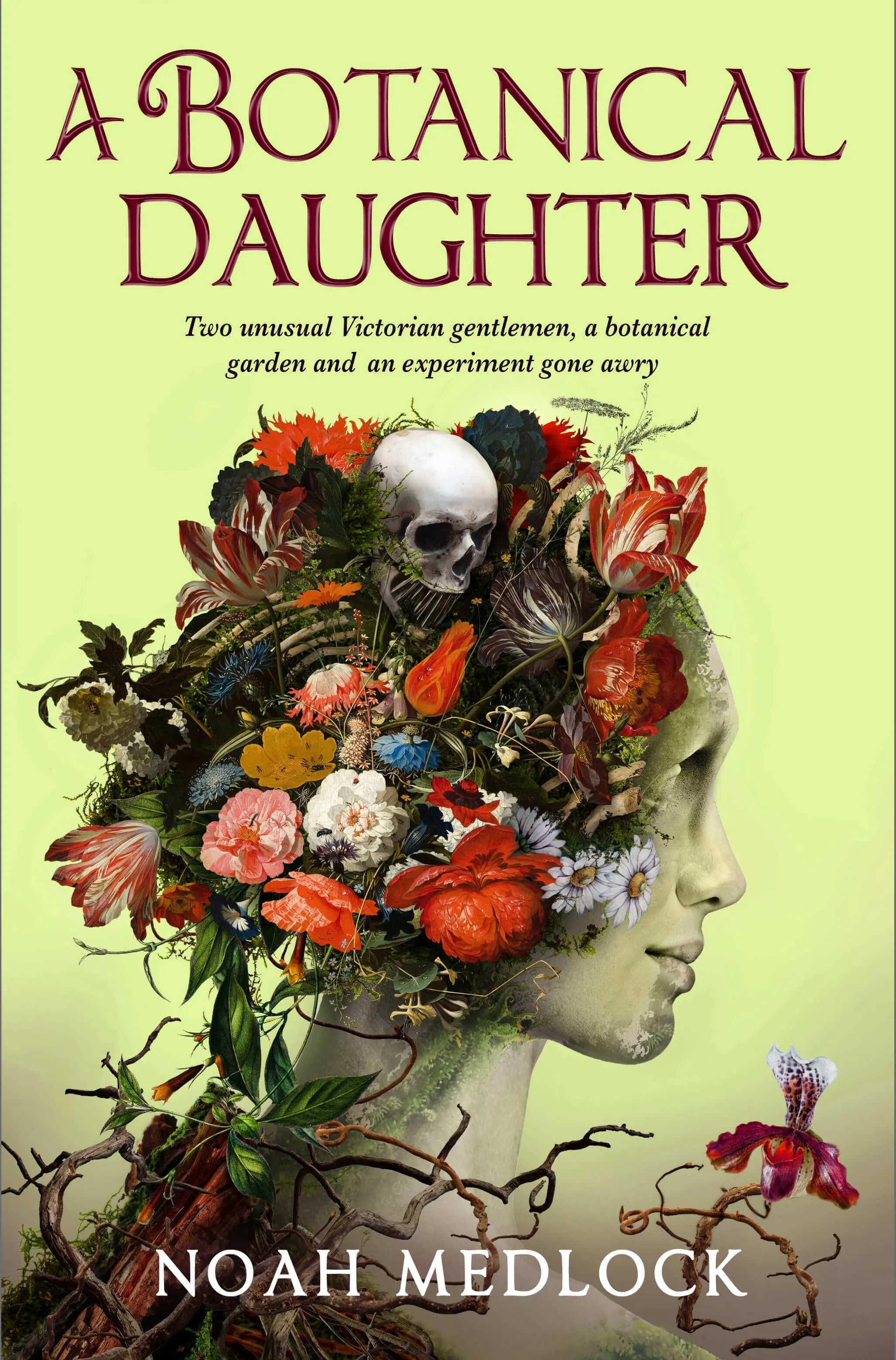
Imagine Frankenstein’s monster as a woman made of plants, with two gay dads and a woman love interest.
Summary:
It is an unusual thing, to live in a botanical garden. But Simon and Gregor are an unusual pair of gentlemen. Hidden away in their glass sanctuary from the disapproving tattle of Victorian London, they are free to follow their own interests without interference. For Simon, this means long hours in the dark basement workshop, working his taxidermical art. Gregor’s business is exotic plants – lucrative, but harmless enough. Until his latest acquisition, a strange fungus which shows signs of intellect beyond any plant he’s seen, inspires him to attempt a masterwork: true intelligent life from plant matter.
Driven by the glory he’ll earn from the Royal Horticultural Society for such an achievement, Gregor ignores the flaws in his plan: that intelligence cannot be controlled; that plants cannot be reasoned with; and that the only way his plant-beast will flourish is if he uses a recently deceased corpse for the substrate.
The experiment – or Chloe, as she is named – outstrips even Gregor’s expectations, entangling their strange household. But as Gregor’s experiment flourishes, he wilts under the cost of keeping it hidden from jealous eyes. The mycelium grows apace in this sultry greenhouse. But who is cultivating whom?
Review:
I absolutely loved the concept behind this retelling. It offers a biopunk take on Frankenstein with a blend of Victorian elements that’s both intriguing and thought-provoking.
As a gardener (and botanical garden member), I found the descriptions of the greenhouse and botanical garden both realistic and captivating. It was charming to see the couple living inside the greenhouse—who hasn’t daydreamed about that as a gardener? The contrast between the m/m and w/w relationships was also a standout, especially since neither would have been accepted in the historical time period.
However, the writing style didn’t suit my tastes. It was much too flowery (pun intended!) for what I typically enjoy reading. In fairness, I’m not particularly fond of Victorian literature, which this retelling modernizes while maintaining that tone. I struggled to connect with the two main characters and never quite understood their motivations. Though I’m a queer person and this is queer literature, I found myself disagreeing with the book’s overarching themes—it’s okay for queer people to have differing perspectives, and this is where I do.
Diversity is limited to sexuality. There is no diversity of race, ethnicity, or ability.
There are several violent scenes, including on-screen blood splatter, which is fairly graphic. There’s also a lengthy, explicit description of the w/w relationship, which was too intense for my taste, so I skimmed that section.
Overall, this is a unique take on Frankenstein with queer characters and a botanical twist. If you’re intrigued by the premise, I recommend reading the first few pages to see if the writing style resonates with you. Just be aware of the graphic violence and intimate chapter.
If you found this review helpful, please consider tipping me on ko-fi, checking out my digital items available in my ko-fi shop, buying one of my publications, using one of my referral/coupon codes, or signing up for my free microfiction monthly newsletter. Thank you for your support!
3 out of 5 stars
Length: 384 pages – average but on the longer side
Source: NetGalley
Buy It (Amazon or Bookshop.org)
Book Review: Welcome to Forever by Nathan Tavares
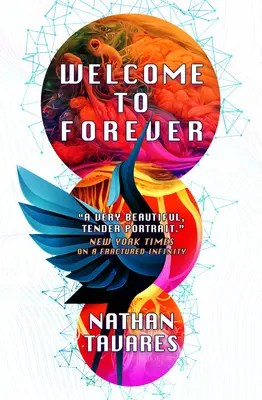
Two men trapped in looping artificial realities, always find each other—maybe even save the world.
Summary:
Fox is a memory editor – one of the best – gifted with the skill to create real life in the digital world. When he wakes up in Field of Reeds Center for Memory Reconstruction with no idea how he got there, the therapists tell him he was a victim in a terrorist bombing by Khadija Banks, the pioneer of memory editing technology turned revolutionary. A bombing which shredded the memory archives of all its victims, including his husband Gabe.
Thrust into reconstructions of his memories exploded from the fragments that survived the blast, Fox tries to rebuild his life, his marriage and himself. But he quickly realises his world is changing, unreliable, and echoing around itself over and over.
As he unearths endless cycles of meeting Gabe, falling in love and breaking up, Fox digs deep into his past, his time in the refugee nation of Aaru, and the exact nature of his relationship with Khadija. Because, in a world tearing itself apart to forget all its sadness, saving the man he loves might be the key to saving us all.
Review:
This book is one to read if you’re after gorgeous writing. The prose is immersive, with sentences that invite you to sink into them and reflect.
The character of Fox is rich in complexity. Each chapter peels back another layer of his personality, revealing depth and nuance. However, Gabe doesn’t receive the same level of development. While this is understandable—since we spend far more time in Fox’s mind than we do with Gabe in the present—it still makes their dynamic feel uneven.
Each chapter and memory journey felt like its own vignette. I found myself struggling with the overarching story, as so much time was spent on each memory that, by the end, I found myself asking, “What was the set-up again?” The book’s pacing, which focuses heavily on memory, made it hard for me to connect with the main plot.
At first, I felt the ending was spot on, but then the “Coda Excisions”—a chapter after the final one—left me confused. For me, it diminished the emotional impact of the conclusion.
Diversity is a standout feature of this book. The primary relationship is m/m, and there’s a secondary wlw relationship. All three of the main characters are people of color, and one speaks with a stutter, adding further nuance to the representation.
In terms of content:
- There’s some swearing.
- Intimacy is handled artistically—focused more on emotions than explicit details.
- One character experiences childhood exploitation, and it’s treated with the appropriate weight and sensitivity.
- Both main characters are orphaned.
- There are a few intense scenes: a bomb threat, a natural disaster resembling a hurricane, and a workplace shooting.
Overall, if you’re less concerned with plot structure and more interested in the emotional journey and immersive writing, this book may resonate with you. I recommend reading the first few chapters to see if the style suits you, and then deciding whether to continue.
If you found this review helpful, please consider tipping me on ko-fi, checking out my digital items available in my ko-fi shop, buying one of my publications, using one of my referral/coupon codes, or signing up for my free microfiction monthly newsletter. Thank you for your support!
3 out of 5 stars
Length: 435 pages – average but on the longer side
Source: NetGalley
Buy It (Amazon or Bookshop.org)
Book Review: One Perfect Couple by Ruth Ware

A scientist and her boyfriend join a tropical reality tv show, only to find themselves battling for survival as the deserted island game turns deadly.
Summary:
Lyla is in a bit of a rut. Her post-doctoral research has fizzled out, she’s pretty sure they won’t extend her contract, and things with her boyfriend, Nico, an aspiring actor, aren’t going great. When the opportunity arises for Nico to join the cast of a new reality TV show, The Perfect Couple, she decides to try out with him. A whirlwind audition process later, Lyla find herself whisked off to a tropical paradise with Nico, boating through the Indian Ocean towards Ever After Island, where the two of them will compete against four other couples—Bayer and Angel, Dan and Santana, Joel and Romi, and Conor and Zana—in order to win a cash prize.
But not long after they arrive on the deserted island, things start to go wrong. After the first challenge leaves everyone rattled and angry, an overnight storm takes matters from bad to worse. Cut off from the mainland by miles of ocean, deprived of their phones, and unable to contact the crew that brought them there, the group must band together for survival. As tensions run high and fresh water runs low, Lyla finds that this game show is all too real—and the stakes are life or death.
Review:
I’m already a big fan of Ruth Ware’s, but when I heard her 2024 release was a locked-room mystery set in a reality tv show on a tropical island, I was sold. (Technically, I put it on my wishlist, and it was sold to my siblings-in-law who got it for me as a gift.) This did not disappoint.
Last year’s release featured a woman in a stereotypically male job, and so does this one. It was quite fun to see a postdoctoral researcher in a psychological thriller, let alone a woman doing it. I loved the play on gender roles of Lyla being the brain of the couple and her boyfriend being the beauty. How Lyla agrees to be on the show is believable also. There’s a nice variety of characters, both the couples cast for the show, and the folks working on it. You can tell that Ware did her homework with regards to how reality tv is run behind-the-scenes. It comes across as real, right down to what should be making the contestants suspicious.
My favorite representation in this book was the secondary character with Type 1 Diabetes. Again, this is very realistic. (Ware acknowledges advisors/sensitivity readers she had for Type 1 Diabetes in the afterword.) The impact of her illness on her predicament is realistic. But she’s also simply herself. She’s not some inspirational heroine nor is she someone with no agency simply to be saved.
The mystery is solid. I definitely didn’t guess at the final twist before it happened. All the twists felt reasonable and realistic, especially within the world of reality tv. I wish that we’d had a bit more closure at the end.
Overall, this novel is recommended for fans of psychological thrillers. It offers a unique blend of reality TV drama, relationship dynamics, and environmental challenges.
If you found this review helpful, please consider tipping me on ko-fi, checking out my digital items available in my ko-fi shop, buying one of my publications, using one of my referral/coupon codes, or signing up for my free microfiction monthly newsletter. Thank you for your support!
4 out of 5 stars
Length: 385 pages – average but on the longer side
Source: Gift
Buy It (Amazon or Bookshop.org)
Book Review: Wildwood Chronicles Trilogy by Colin Meloy

When crows steal Prue’s little brother, she and her friend Curtis find that the Impassable Wilderness bordering Portland, Oregon, isn’t quite so Impassable after all.
Summary:
Prue and her friend Curtis uncover a secret world in the midst of violent upheaval—a world full of warring creatures, peaceable mystics, and powerful figures with the darkest intentions. And what begins as a rescue mission becomes something much greater as the two friends find themselves entwined in a struggle for the very freedom of this wilderness. A wilderness the locals call Wildwood.
Review:
A middle grade fantasy trilogy by the lead singer of my favorite band, The Decemberists. Gorgeously illustrated by his wife, Carson Ellis. If you’ve ever read The Chronicles of Narnia, this is like that except replace the Christianity with environmentalism and new age spirituality.
My favorite part of this trilogy was the various talking birds. All the animals in the Impassable Wilderness can talk, but Meloy’s love of birds really comes through. (As a fan of his songs, this didn’t surprise me at all.) The dapper outfits all the animals wear are also just too cute. It’s a trilogy with maps, and I do always love a good map to go with a story. I appreciate very much that the hero of the story is a girl with Curtis playing the sidekick.
There are really two enemies in the plot. A civil war style conflict inside the Impassable Wilderness, and the looming threat of capitalism from outside the Impassable Wilderness. I liked the idea of the latter more than the former, but the execution felt a bit too silly to me. For example, the big bad capitalists are all named the Titans of Industry (capitalized like that). One of them uses child labor in the form of orphans collected directly from Portland. It felt quite Victorian for something where the rest of the world outside of the Impassable Wilderness is quite modern.
The books are incredibly long, hitting chunkster length even for adult books. Each is over 500 pages (the last clocking in at 580.) I certainly read some long books when I was a kid, so I don’t begrudge them that per se. I do think it’s a tough sell when even the first book is super long. Regardless, I don’t think that the length is justified by the plot. While the first book is just about paced right, the latter two are not. There’s a lot of pages spent on not a lot going on. The middle book especially suffers horribly from middle book syndrome.
I liked the world, the Impassable Wilderness residents, and the illustrations. I felt the plot lacked depth, and the pacing was too slow for my taste, especially for such long books. I also found the ending to be a let-down.
Overall, this could be a good match for a reader who has a hankering for a through a secret door fantasy. Especially for the reader who loves talking animals and doesn’t mind a slower pace.
If you found this review helpful, please consider tipping me on ko-fi, checking out my digital items available in my ko-fi shop, buying one of my publications, using one of my referral/coupon codes, or signing up for my free microfiction monthly newsletter. Thank you for your support!
3 out of 5 stars
Books in Series:
Wildwood, 4 stars, length 541 pages – chunkster
Under Wildwood, 3 stars, length 559 pages – chunkster
Wildwood Imperium, 3 stars, length 580 pages – chunkster
Source: Gift
Buy It (Amazon or Bookshop.org)
Book Review: Slacks and Calluses: Our Summer in a Bomber Factory by Constance Bowman Reid & Clara Marie Allen

Explore the world of women working on airplane factory lines in this memoir with hand-drawn illustrations from 1944.
Summary:
In 1943 two spirited young teachers decided to do their part for the war effort by spending their summer vacation working the swing shift on a B-24 production line at a San Diego bomber plant. Welding torches and climbing into bomb bays, they learned to use tools that they had never seen before, live with aluminum shavings in their hair, and get along with supervisors and coworkers from all walks of life.
They also learned that wearing their factory slacks on the street caused men to treat them in a way for which their “dignified schoolteacher-hood” hadn’t prepared them. At times charming, hilarious, and incredibly perceptive, Slacks and Calluses brings into focus an overlooked part of the war effort, one that forever changed the way the women were viewed in America.
Review:
I knew the instant I flipped this book open it would be a new favorite. Two teacher friends set out to help the war effort in WWII in their summer off and document it. Constance was a writer, and Clara Marie (fondly called C.M. in the book) was an artist. The book maintains an upbeat tone throughout, in spite of being written prior to the authors having any knowledge of how the war would turn out.
This is an easy read. It feels like chatting with a friend about their unique summer. It starts off with a brief description of their friends’ reactions to their plan for their summer. It then goes through the process of signing up and their first day on the line. Subsequent chapters talk about specific issues. For example, the time the factory tried to make all the women employees fully cover their hair. Or what it was like to commute in pants. C and C.M. were surprised to find how differently they were treated in public in pants.
The characters are memorable, even with the authors doing due diligence to anonymize real people. In From the foremen to women colleagues to men colleagues to the folks they encounter on their commute. Everyone feels real. Some are of course more well-rounded than others. (The foremen or “Red Buttons” are particularly flat.) But this simply adds to the realness of the memoir. Isn’t that how we all encounter people in our lives? With some developing into full-fledged members of our lives and others staying two-dimensional background characters.
The illustrations are utterly charming and are throughout the book.

The authors reflect on things like the fact that while they will be returning to school in the fall, others will be working on factory lines throughout their life. They also consider the impact the war is having on gender roles in society, although not in academic language. They simply discuss things like how more women are wearing pants and how men treat them when they do. In general, though, the women try to keep the tone light.
Overall, this is a compelling primary document in memoir form of the women on the factory lines in WWII. It’s interesting they had the foresight to realize this was an important moment in history. Immediately writing the book and finding a publisher. They were published in 1944. Their factory work was just the year before in 1943. An easy gift for any WWII aficionado. Also, check out my other reviews of books dealing with WWII.
If you found this review helpful, please consider tipping me on ko-fi, checking out my digital items available in my ko-fi shop, buying one of my publications, using one of my referral/coupon codes, or signing up for my free microfiction monthly newsletter. Thank you for your support!
5 out of 5 stars
Length: 200 pages – average but on the shorter side
Source: Gift
Buy It (Amazon or Bookshop.org)
Book Review: My Husband by Maud Ventura

The view of one week in a French woman’s marriage gradually demonstrates the obsession she displays for her husband.
Summary:
At forty years old, she has an enviable life: a successful career, stunning looks, a beautiful house in the suburbs, two healthy children, and most importantly, an ideal husband. After fifteen years together, she is still besotted with him. But she’s never quite sure that her passion is reciprocated. After all, would a truly infatuated man ever let go of his wife’s hand when they’re sitting on the couch together?
Determined to keep their relationship perfect, she meticulously prepares for every encounter they have, always taking care to make her actions seem effortless. She watches him attentively, charting every mistake and punishing him accordingly to help him improve. And she tests him–setting traps to make sure that he still loves her just as much as he did when they first met.
Until one day she realizes she may have gone too far . . .
Review:
This was listed as a “readers also enjoyed” book for Rouge by Mona Awad. The title drew me in right away, and the description had me intrigued. From the first chapter, I was drawn in by the narrator.
It is immediately apparent that not all is right with either the marriage or the wife narrator. She acts like she is young in love. In other words, she’s obsessed with him. She’s uncertain about his love for her. In spite of the fact that they’ve been together many years and have two children together. It’s exhausting just reading about how she overthinks every little move he makes. This also begs the question. Is she really in love with him? Or is it an obsession?
As time progresses, the reader becomes increasingly uncomfortable with the narrator’s behavior and starts to worry about the husband. This all comes to a head at the end of the book. The twist didn’t shock me per se. I suspected it might be where it was going. Unlike some readers, though, I wasn’t disappointed by it. I felt it made for a richer overall picture of the marriage. This review sums up the issues others have with the ending. (Be warned it does disclose the twist.)
This is a book in translation. It was originally written in French. It also won France’s First Novel Prize in 2021. While I don’t know much about translation, I thought that the translator, Emma Ramadan, did a phenomenal job. The narrator of the book is a translator herself and teaches English in a high school. There are a few passages all about the differences between French and English. I can only imagine what a challenge that was when you can’t deliver the original lines in French! It still worked, though, and I was able to get the narrator’s point.
In spite of this book being relatively short, it did take me a while to read. It wasn’t quite as engaging or forward-moving as a thriller typically is for me. That could be down to it being translated. It could have something to do with the scenes of infidelity. (Not a spoiler, this happens early.) I don’t enjoy reading about infidelity. It can sometimes even make me put a book down entirely. In this case, it slowed me down a bit.
Overall, this is a different thriller. A mix of an analysis of a relationship with what one might expect from a psychological thriller. It is decidedly French. The translation hold up well. Recommended to those with an interest in different psychological thrillers and/or in modern French literature.
If you found this review helpful, please consider tipping me on ko-fi, checking out my digital items available in my ko-fi shop, buying one of my publications, using one of my referral/coupon codes, or signing up for my free microfiction monthly newsletter. Thank you for your support!
4 out of 5 stars
Length: 272 pages – average but on the shorter side
Source: Library
Buy It (Amazon or Bookshop.org)
Book Review: Prisoners of the Castle: An Epic Story of Survival and Escape from Colditz, the Nazis’ Fortress Prison by Ben Macintyre

The true story of the Allied Prisoners of War in Colditz, a German fortress turned into a prison.
Summary:
During World War II, the German army used the towering Colditz Castle to hold the most defiant Allied prisoners. For four years, these prisoners of the castle tested its walls and its guards with ingenious escape attempts that would become legend.
Review:
This is a rare combination for historic nonfiction. Well-researched and engagingly written. As easy to read as a well-paced thriller. Yet chock-full of fascinating facts.
The book is organized into sub-sections chronologically by year. Each year then has however many chapters it needs to tell the story. This made it quite easy to keep track of what was going on. There are two insets of wonderful photographs, clearly labeled. This allows the reader to easily put a face to the name of the person being discussed at various points.
Here are just a few of my favorite things that I learned in reading this book.
- An Indian officer was a prisoner at Colditz – and Indian soldiers were prisoners of war in general. Indians fought in WWII on the British side. The Germans tried to get them to come over to their side by appealing to the desire to be free of British rule. This appeal worked for some but not for others.
- A real person inspired the character Q from James Bond. He was responsible for some very creative methods of getting supplies through to the Allied POWs. (For a read about spies in WWII, check out this other book review.)
- The demographic with the most successful escape attempts were the French.
- It’s not so much that officers had a duty to escape as that the Germans would treat them with the courtesy “due an officer” so it was safer for them to attempt escape than for enlisted soldiers to do so.
- The British had a fighter ace who was a double amputee. He was missing part of both legs. He was an excellent flyer but, by all accounts, a real jerk to other people.
- Class structure existed within POW camps. Officers were sent to Colditz with enlisted men who acted as their servants. These men were called orderlies. These men even had their escape attempts denied to continue serving the officers. In one case, a man was given the chance to go home with German consent, but his officer blocked it, insisting he couldn’t go home until the officer did.
My one complaint about the book is this. There were some POWs who the Germans called “Prominente.” They were men with prestigious ties in the West. (For example: a relative of Winston Churchill.) The Germans oversaw them much more closely as they thought they might be valuable as a bargaining ticket. When the Allies were approaching Colditz, these Prominente were sent deeper into German territory, along with their orderlies. Given how attentive to detail this book is, I found it jarring that the two Maori orderlies who accompanied the Prominente were left nameless in the book. (They were Ben McLean and Reginald Mitai.) There were also no details provided on if they escaped the war with their lives. This in spite of the book providing a very detailed run-down at the end of what happened to most of the named prisoners and Germans in the book.
Overall, this is a well-written and enjoyable read on a specific area of WWII. Anyone with an interest in the experience of Allied prisoners in WWII will enjoy this one.
If you found this review helpful, please consider tipping me on ko-fi, checking out my digital items available in my ko-fi shop, buying one of my publications, using one of my referral/coupon codes, or signing up for my free microfiction monthly newsletter. Thank you for your support!
4 out of 5 stars
Length: 368 pages – average but on the longer side
Source: Library
Buy It (Amazon or Bookshop.org)
Book Review: Dead Weight: Essays on Hunger and Harm by Emmeline Clein

A woman in eating disorder recovery explores the world of eating disorders and treatment in the west through a pop culture lens.
Summary:
Emmeline Clein tells the story of her own disordered eating alongside, and through, other women from history, pop culture and the girls she’s known and loved. Tracing the medical and cultural history of anorexia, bulimia, binge eating disorder, and orthorexia, Clein investigates the economic conditions underpinning our eating disorder epidemic, and illuminates the ways racism and today’s feminism have been complicit in propping up the thin ideal. While examining Goop, Simone Weil, pro-anorexia blogs, and the flawed logic of our current treatment methods, Clein grapples with the myriad ways disordered eating has affected her own friendships and romantic relationships.
Review:
This collection of essays consisting of research intertwined with memoir was an engaging read. I particularly liked how Clein approached talking about the negative aspects of Big Pharma in a historical context. That wasn’t something I was expecting in this book, and it was well done. Expect to learn about how amphetamines were marketed as a weight loss drug post WWII because the manufacturers needed a new market now that soldiers were no longer using them to stay awake. Or about how it was Big Pharma who advocated for the labeling of obesity as a disease in the early 2000s (so insurance would pay for drugs to “treat” it.) Or about how the company that originally marketed amphetamines for ADHD was fined for “inappropriate marketing.” (For more about the impact of big pharma on our everyday lives, see my review of Drugs for Life.)
Another thing I appreciated as a person in recovery from addiction was how Clein analyzed addiction and eating disorders as systemic, rather than personal, issues.
The addiction model still requires that we understand ourselves as addicts, rather than see our culture, our food systems, and drug and diet companies as conspiring to encourage addictive patterns. When we believe we are sinners and criminals who deserve to be punished because we are out of control, we don’t demand change to any of the underlying structures that are actually out of our control, controlled by corporations. In it current iteration, the addiction model still makes us blame ourselves and then retrofit our stories into some fictional hero’s journey of abstinence and discipline over the compulsion to consume–stories rooted in the very values at the heart of anorexia and its hold on so many minds.
There were a few things that I did not like about the book, though.
First, her take on the intersection of Irritable Bowel Syndrome (IBS) and eating disorders is woefully short-sighted and lacking empathy for not only those with IBS but other chronic illnesses that the medical industry offers little to nothing for. (Strange for a book that takes down big pharma so aggressively.) Clein presents the opinion that IBs is essentially always second to developing an eating disorder. That IBS symptoms are the body’s natural response to being starved or facing binges. But EDs can be and are triggered by IBS. The fact is, for many people, an ED develops in response to suffering from IBS.
Second, her choice to exclude men from a book about ED is troubling. The overall thesis seems to be that a minuscule number of men have EDs so it’s not worth talking about. In fact, approximately 1/3 of those known to have an ED are men, and there is concern that EDs in men are underreported. Even if it was the case that very few men have EDs (which again, it is not), leaving them out of the book hurts the overall arguments about EDs.
Third, Clein does not talk at all about the interplay between EDs and OCD. This is a more glaring lapse given how much space is given to discussing depression, anxiety, and EDs.
Fourth, while drinking is mentioned repeatedly, drunkorexia is not discussed at all, nor is alcoholism, something which, again, often comes hand-in-hand with EDs and is even seen in vignettes in the book but not addressed.
Fifth, there is a chapter about religion and ED. It completely ignores all other faiths except Judaism, Protestantism, and Catholicism. Clein does not understand Protestantism enough to discuss it in the ways that she does. Every time she brings up Protestantism, it’s clear she doesn’t have a high level understanding of it. She basically makes comments about Protestantism being all about asceticism and self-denial and then moves on. Unlike Catholicism, she does not limit her comments about Protestantism to only the chapter when she’s discussing religion explicitly either. It trickles in throughout the book. (She does also discuss Judaism throughout the book, but she is Jewish, and her faith comes up in the memoir portions, which makes sense.)
As you can perhaps tell from both the featured quote and how long this review is, this is a long and dense book. It seems to have attempted to do something very large when perhaps it might have been better served with a narrower focus and more memoir.
Overall, this book features important information on the intertwining of Big Pharma and eating disorders in the west but it does fall short of an inclusive portrait of eating disorders in the west.
If you found this review helpful, please consider tipping me on ko-fi, checking out my digital items available in my ko-fi shop, buying one of my publications, using one of my referral/coupon codes, or signing up for my free microfiction monthly newsletter. Thank you for your support!
3 out of 5 stars
Length: 288 pages – average but on the shorter side
Source: Library
Buy It (Amazon or Bookshop.org)
 Support my work with a tip or browse my shop for curated book club guides, how to guides, cross-stitch patterns, and more!


This work by Amanda Nevius is licensed under a Creative Commons Attribution-Noncommercial-No Derivative Works 3.0 United States License.
 Opinions of a Wolf