
Archive
Book Review: Pink Slime by Fernanda Trías translated by Heather Cleary
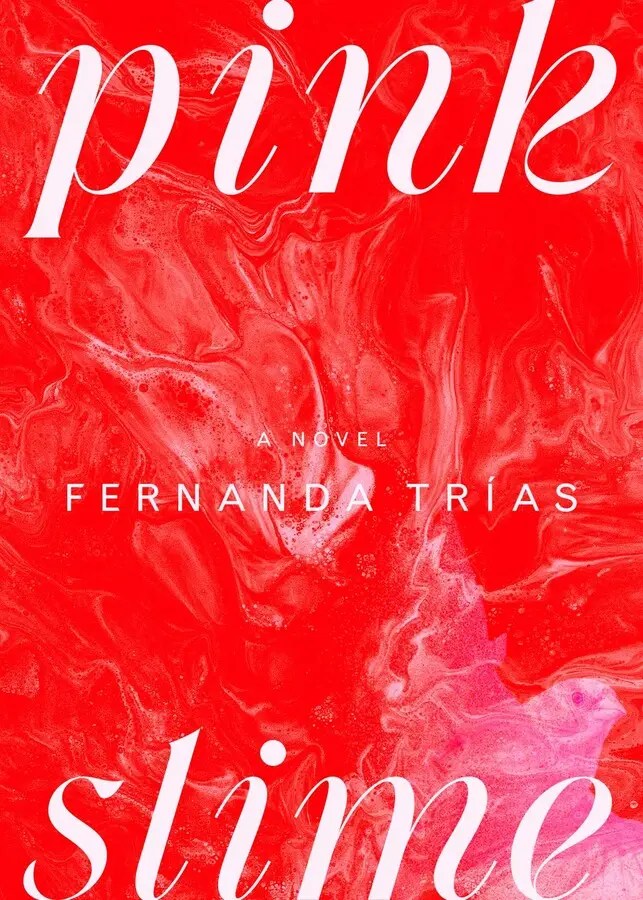
A quiet dystopian novel from a Uruguayan author about a woman navigating love, caregiving, and survival as a mysterious plague and environmental collapse unravel the world around her.
Summary:
In a city ravaged by a mysterious plague, a woman tries to understand why her world is falling apart. An algae bloom has poisoned the previously pristine air that blows in from the sea. Inland, a secretive corporation churns out the only food anyone can afford—a revolting pink paste, made of an unknown substance. In the short, desperate breaks between deadly windstorms, our narrator stubbornly tends to her few remaining with her difficult but vulnerable mother; with the ex-husband for whom she still harbors feelings; with the boy she nannies, whose parents sent him away even as terrible threats loomed. Yet as conditions outside deteriorate further, her commitment to remaining in place only grows—even if staying means being left behind.
Review:
You might be asking, “What possessed you to pick up a book about a plague, Amanda? Haven’t you seen enough of that in the last five years?” Fair question. When I saw Pink Slime on NetGalley, the description there led me to believe the focus wasn’t so much on the plague, but rather on the pink slime—something in the vein of Soylent Green. If you’re not familiar, the horror in Soylent Green centers on a disturbing twist about what people are unknowingly consuming. That’s the kind of dystopian horror I could be in the mood for.
Alas, Pink Slime isn’t really about the pink slime at all. It’s more about environmental collapse and the slow unraveling of society due to a strange, algae-driven plague.
I appreciated the way the main character’s life is quiet but emotionally complex. She still feels responsible for her recently ex-husband, who’s now in a clinic suffering from a chronic form of the plague that usually kills its victims. She visits him, possibly because she still loves him, at least a little. Her mother lives nearby in the same unnamed coastal South American city and demands occasional visits. And most pressingly, she periodically cares for a young boy with Prader-Willi Syndrome, whose wealthy parents provide food allotments but largely leave him in her care.
Her relationships with all three are emotionally layered—she provides meals, bathes, and protects them, yet often feels completely alone. It’s a quiet reminder of how caregiving can be both deeply intimate and deeply isolating. (If you’re interested in another take on post-apocalyptic isolation—this time with zombies—check out my own novel, Waiting for Daybreak, where a woman navigates survival and mental health in the midst of a very different kind of plague.)
I also found the plague itself intriguing. While the government claims it’s contagious, most cases appear to stem from exposure to toxic algae blooms, blown in by ocean winds. Residents are alerted by alarms to rush indoors and seal their windows. This unique concept allowed me to read the story from a dystopian distance rather than sending me back into pandemic fatigue.
That said, the novel’s language and structure make it a challenging read. Each chapter begins with a poem. The prose is often flowery and nonlinear, with frequent shifts in time and tense. While this might feel beautifully disorienting for some, for me it made the already slow, quiet apocalypse feel even slower. I suspect the translation was a difficult task. Though well-crafted, I imagine this book reads more naturally in its original Spanish. And while I’d love to do a comparison, my Spanish isn’t up to the task—so I’ll have to leave it to bilingual readers to weigh in. Readers more familiar with Uruguayan culture or more comfortable with poetic, nonlinear narratives may connect more deeply with the text than I did.
Diversity in the book is limited. No characters’ races are clearly described, and there are no overt LGBTQIA+ identities represented. The child with Prader-Willi Syndrome adds some disability representation, which I found compelling. It’s rare to see this condition, in which children lack a full signal and thus feel hungry all the time, represented in fiction. The narrator clearly loves and cares for the child, even while grappling with the challenges of caregiving. Readers should be aware, however, that some descriptions veer into fatphobic or ableist territory. Still, the overall portrayal felt realistic in terms of how society often responds to visible disabilities.
Overall, this is a quiet dystopian novel that offers a unique perspective on care, collapse, and isolation. It’s a challenging read on multiple levels: structurally, linguistically, and emotionally. But for readers curious about contemporary Latin American literature, especially from Uruguay, it offers insight into a distinct literary voice. Just don’t go into it expecting Soylent Green.
If you found this review helpful, please consider tipping me on ko-fi, checking out my digital items in my ko-fi shop, buying one of my publications, using one of my referral or coupon codes, signing up for my free microfiction monthly newsletter, or tuning into my podcast. Thank you for your support!
3 out of 5 stars
Length: 240 pages – average but on the shorter side
Source: NetGalley
Buy It (Amazon or Bookshop.org)
Book Review: Witchcraft for Wayward Girls by Grady Hendrix
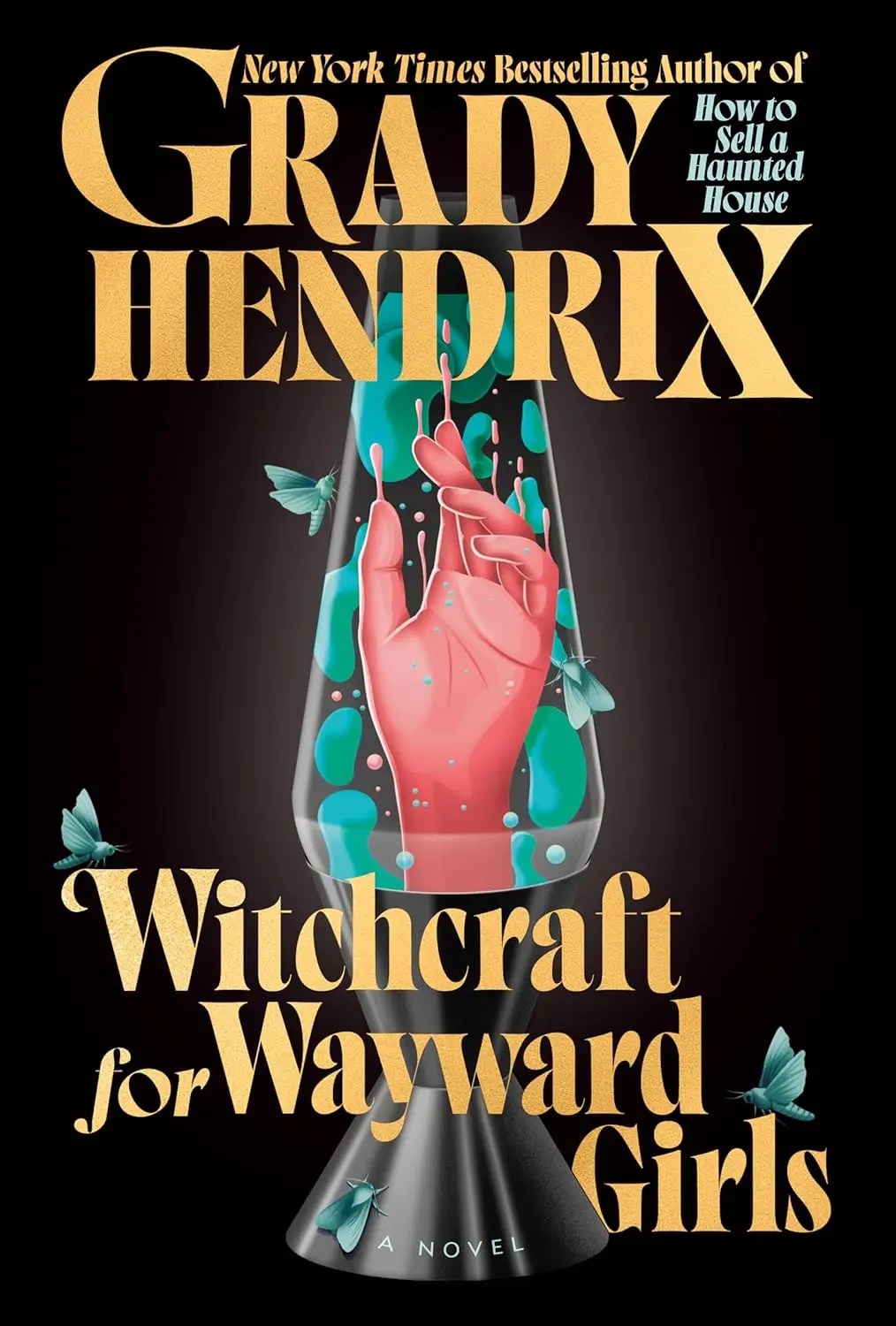
A chilling blend of historical fiction and supernatural horror, this novel explores what happens when pregnant teenage girls—hidden away in a 1970s home for wayward girls—discover the dark power of witchcraft.
Summary:
They call them wayward girls. Loose girls. Girls who grew up too fast. And they’re sent to the Wellwood Home in St. Augustine, Florida, where unwed mothers are hidden by their families to have their babies in secret, give them up for adoption, and most important of all, to forget any of it ever happened.
Fifteen-year-old Fern arrives at the home in the sweltering summer of 1970, pregnant, terrified and alone. Under the watchful eye of the stern Miss Wellwood, she meets a dozen other girls in the same predicament. There’s Rose, a hippie who insists she’s going to find a way to keep her baby and escape to a commune. And Zinnia, a budding musician who knows she’s going to go home and marry her baby’s father. And Holly, a wisp of a girl, barely fourteen, mute and pregnant by no-one-knows-who.
Everything the girls eat, every moment of their waking day, and everything they’re allowed to talk about is strictly controlled by adults who claim they know what’s best for them. Then Fern meets a librarian who gives her an occult book about witchcraft, and power is in the hands of the girls for the first time in their lives. But power can destroy as easily as it creates, and it’s never given freely. There’s always a price to be paid…and it’s usually paid in blood.
Review:
I had previously read Grady Hendrix’s My Best Friend’s Exorcism and remembered liking it more than I actually did. When I revisited my review, I realized I had enjoyed the concept far more than the execution—and unfortunately, that’s exactly how I feel about this book as well.
One thing I didn’t realize before picking this up is that Hendrix is a male author. I read My Best Friend’s Exorcism digitally, so it wasn’t until I saw the author photo on my library copy that it became obvious. Now, that’s not to say men can’t or shouldn’t write about women’s issues—but in my experience, if a book is expressly about women’s experiences (such as pregnancy and abortion), I tend to dislike it when it’s written by a man. Hendrix acknowledges this in a note, explaining that his inspiration came from a family member’s experience as a wayward girl, and I appreciate the personal connection as well as the research he put in. That said, I still struggled with the execution. In retrospect, this also explains issues I had with My Best Friend’s Exorcism—especially the queer-baiting between the two best friends. The way their relationship was written didn’t quite reflect how best girlfriends interact. I now wonder if Hendrix was inserting subtext without realizing it. But I digress—back to this book.
This is a long book, and it takes quite a while before the supernatural horror elements appear. When they do, they feel sporadic—as if the book can’t quite decide whether it wants to be historical fiction or horror. According to the author’s note, an earlier version was pure historical fiction, and it shows. The witchcraft elements feel both tacked-on and underwhelming, lacking the impact they seem to be aiming for. The spellcasting scenes, in particular, drag on too long—the book repeatedly emphasizes how rituals are tedious, repetitive, and boring, and then actually makes the reader sit through them in full dialogue.
The novel also struggles with whether the witches are heroes or villains. At first, they seem to empower the girls in a feminist, girl-power way, but later, they’re positioned as the main threat. I can see the poetic logic in showing that these girls had no real options, but at the same time, a novel like this needs a stronger thematic core—a sense of hope, justice, or at least a clear vision for a better future. On the plus side, I never knew what would happen next or how it would wrap up. Even when I felt frustrated, I kept reading simply because I needed to know how it all ended.
While the book does include a Black teen girl at the home, the handling of race and racism felt superficial at best. The only acknowledgment of racism in 1970s Florida is a scene where the home’s director initially wants to separate the Black girl from the others, only for a hippie character to protest and swap rooms with her. That’s it. This felt wildly unrealistic for the time period.
Beyond this, there are three other Black characters: the cook, the maid (her sister), and a driver. While these are historically accurate roles, the cook is a blatant magical negro trope, complete with a sassy personality and a role that exists entirely to serve and clean up after the white girls. I cringed. A lot. The white characters take advantage of her kindness without any acknowledgment of how their actions impact her life. I also disliked how Black characters’ skin tones were described.
Readers should be aware that this book includes:
- Graphic descriptions of self-injury related to spellcasting.
- Traumatic childbirth.
- Forced institutionalization & adoption.
- Emotional abuse.
- Mentions of CSA & child abuse (off-page).
- A spellcasting scene with explicit Christian blasphemy. (Expected for witches, but I do think it could have achieved the same effect without spelling out the blasphemy.)
Ultimately, this is historical fiction with horror elements rather than a true horror novel. It would have benefited from stronger thematic direction and a more nuanced approach to diversity, avoiding the Magical Negro trope. The book understands that these wayward homes were a problem, but it doesn’t seem to take a stance on what should have been done differently. It sends mixed messages about abortion, single teen motherhood, and autonomy—leaving it feeling murky rather than impactful. Recommended for readers who enjoy historical fiction with a touch of horror—and who don’t mind waiting for the horror to arrive. For those interested in the real history behind these homes, The Girls Who Went Away is a must-read.
If you found this review helpful, please consider tipping me on ko-fi, checking out my digital items available in my ko-fi shop, buying one of my publications, using one of my referral/coupon codes, or signing up for my free microfiction monthly newsletter. Thank you for your support!
3 out of 5 stars
Length: 482 pages – chunkster
Source: Library
Buy It (Amazon or Bookshop.org)
Book Review: A Sunny Place for Shady People by Mariana Enríquez, translated by Megan McDowell

A chilling yet deeply human collection of short stories where ghosts, goblins, and the macabre collide with everyday life—showcasing a rising star in Argentinian literature.
Summary:
Welcome to Argentina and the fascinating, frightening, fantastical imagination of Mariana Enriquez. In twelve spellbinding new stories, Enriquez writes about ordinary people, especially women, whose lives turn inside out when they encounter terror, the surreal, and the supernatural. A neighborhood nuisanced by ghosts, a family whose faces melt away, a faded hotel haunted by a girl who dissolved in the water tank on the roof, a riverbank populated by birds that used to be women—these and other tales illuminate the shadows of contemporary life, where the line between good and evil no longer exists.
Lyrical and hypnotic, heart-stopping and deeply moving, Enriquez’s stories never fail to enthrall, entertain, and leave us shaken. Translated by the award-winning Megan McDowell, A Sunny Place for Shady People showcases Enriquez’s unique blend of the literary and the horrific, and underscores why Kazuo Ishiguro, winner of the Nobel Prize for Literature, calls her “the most exciting discovery I’ve made in fiction for some time.”
Review:
This diabolical collection of 12 horror stories, each with at least a touch of the supernatural, blends the speculative with the deeply human. While steeped in Argentinian culture, the themes—grief, fear, injustice—resonate universally.
My favorite stories in this collection explore women’s suffering and resilience. “Metamorphosis” follows a woman undergoing a hysterectomy as she confronts medical misogyny, while “Different Colors Made of Tears” examines the far-reaching impact of domestic violence, even on those who haven’t experienced it firsthand. Other stories explore moral dilemmas, like the tension between wanting to help others while maintaining personal safety, or the existential fear of cancer.
The speculative elements vary in intensity—some stories lean fully into the fantastical, while others offer just a whisper of the supernatural. In “Different Colors Made of Tears,” a vintage clothing shop buys dresses from an elderly man—only to later discover that rumor has it he was abusive to his ex-wife. When women try on the dresses, they see horrific injuries appear on their own bodies, disappearing once the garments are removed. In contrast, “Metamorphosis” unfolds primarily as a starkly realistic medical narrative, with the speculative twist emerging only at the end, when a woman considers an unconventional body modification procedure to reclaim part of her lost uterus.
At times, I found the endings too abrupt. While this can work, in this case, I frequently felt like I was just settling in when the narrative was yanked away too soon. One small nitpick: a story features a character’s uncle who emigrated from Argentina to Vermont, where he became wealthy working for Boeing. Having grown up in Vermont and now working in the nonprofit sector here, I found this detail unrealistic. Vermont has exactly four Boeing employees—it’s just not a company with a presence in the state. A medical center, insurance company, or even Ben & Jerry’s would have been a more believable employer.
While most of the horror is not overly explicit, some stories do push boundaries. On-page content includes death, murder, torture, addiction, medical trauma, and the killing of a cat, while mentions of rape and confinement in tight spaces also appear. The collection is largely set in Argentina, with one story taking place in the U.S. To my understanding, all the characters appear to be white Argentines. Some disabilities, such as endometriosis, are explored, and one story features a gay couple. (Information on the current state of LGBTQIA+ rights in Argentina.) Another follows a woman reflecting on her codependent relationship with a partner struggling with Substance Use Disorder and being unhoused.
Overall, this is a dark, thought-provoking collection that blends psychological and supernatural horror with a sharp social lens. It tackles unsettling themes in ways that are both intimate and chilling. Recommended for readers who enjoy horror that lingers long after the final page.
If you found this review helpful, please consider tipping me on ko-fi, checking out my digital items available in my ko-fi shop, buying one of my publications, using one of my referral/coupon codes, or signing up for my free microfiction monthly newsletter. Thank you for your support!
4 out of 5 stars
Length: 257 pages – average but on the shorter side
Source: Library
Buy It (Amazon or Bookshop.org)
Get the Book Club Discussion Guide
A beautifully graphic designed 2 page PDF that contains: 1 icebreaker, 9 discussion questions arranged from least to most challenging, 1 wrap-up question, and 3 read-a-like book suggestions
View a list of all my Book Club Guides.
Book Review: A Botanical Daughter by Noah Medlock
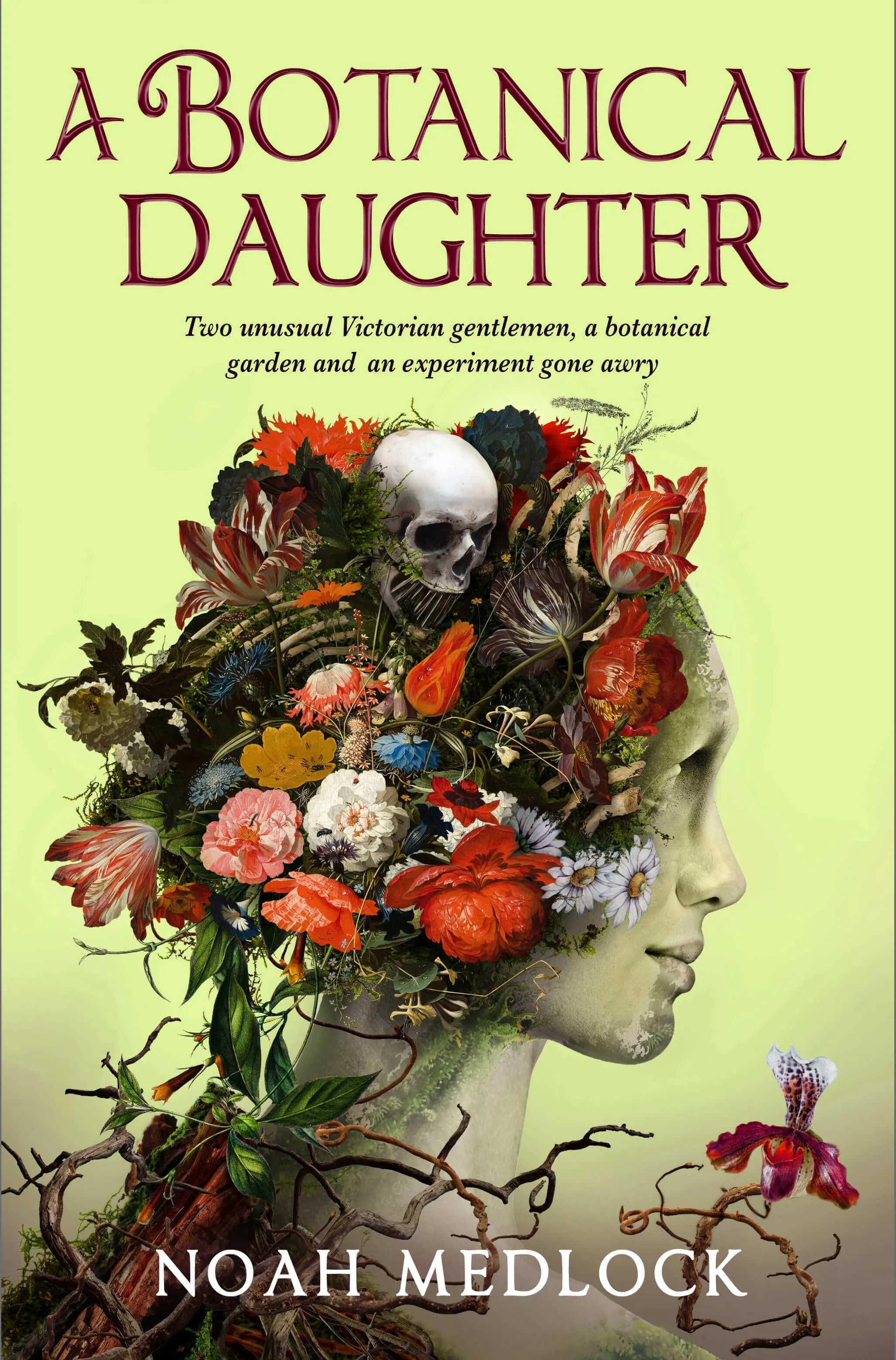
Imagine Frankenstein’s monster as a woman made of plants, with two gay dads and a woman love interest.
Summary:
It is an unusual thing, to live in a botanical garden. But Simon and Gregor are an unusual pair of gentlemen. Hidden away in their glass sanctuary from the disapproving tattle of Victorian London, they are free to follow their own interests without interference. For Simon, this means long hours in the dark basement workshop, working his taxidermical art. Gregor’s business is exotic plants – lucrative, but harmless enough. Until his latest acquisition, a strange fungus which shows signs of intellect beyond any plant he’s seen, inspires him to attempt a masterwork: true intelligent life from plant matter.
Driven by the glory he’ll earn from the Royal Horticultural Society for such an achievement, Gregor ignores the flaws in his plan: that intelligence cannot be controlled; that plants cannot be reasoned with; and that the only way his plant-beast will flourish is if he uses a recently deceased corpse for the substrate.
The experiment – or Chloe, as she is named – outstrips even Gregor’s expectations, entangling their strange household. But as Gregor’s experiment flourishes, he wilts under the cost of keeping it hidden from jealous eyes. The mycelium grows apace in this sultry greenhouse. But who is cultivating whom?
Review:
I absolutely loved the concept behind this retelling. It offers a biopunk take on Frankenstein with a blend of Victorian elements that’s both intriguing and thought-provoking.
As a gardener (and botanical garden member), I found the descriptions of the greenhouse and botanical garden both realistic and captivating. It was charming to see the couple living inside the greenhouse—who hasn’t daydreamed about that as a gardener? The contrast between the m/m and w/w relationships was also a standout, especially since neither would have been accepted in the historical time period.
However, the writing style didn’t suit my tastes. It was much too flowery (pun intended!) for what I typically enjoy reading. In fairness, I’m not particularly fond of Victorian literature, which this retelling modernizes while maintaining that tone. I struggled to connect with the two main characters and never quite understood their motivations. Though I’m a queer person and this is queer literature, I found myself disagreeing with the book’s overarching themes—it’s okay for queer people to have differing perspectives, and this is where I do.
Diversity is limited to sexuality. There is no diversity of race, ethnicity, or ability.
There are several violent scenes, including on-screen blood splatter, which is fairly graphic. There’s also a lengthy, explicit description of the w/w relationship, which was too intense for my taste, so I skimmed that section.
Overall, this is a unique take on Frankenstein with queer characters and a botanical twist. If you’re intrigued by the premise, I recommend reading the first few pages to see if the writing style resonates with you. Just be aware of the graphic violence and intimate chapter.
If you found this review helpful, please consider tipping me on ko-fi, checking out my digital items available in my ko-fi shop, buying one of my publications, using one of my referral/coupon codes, or signing up for my free microfiction monthly newsletter. Thank you for your support!
3 out of 5 stars
Length: 384 pages – average but on the longer side
Source: NetGalley
Buy It (Amazon or Bookshop.org)
Book Review: Rouge by Mona Awad

When Belle’s semi-estranged mother dies falling off a cliff in California, she comes from Montreal for the funeral and soon finds herself sucked into the same “spa” her mother was frequenting before her death.
Summary:
For as long as she can remember, Belle has been insidiously obsessed with her skin and skincare videos. When her estranged mother Noelle mysteriously dies, Belle finds herself back in Southern California, dealing with her mother’s considerable debts and grappling with lingering questions about her death. The stakes escalate when a strange woman in red appears at the funeral, offering a tantalizing clue about her mother’s demise, followed by a cryptic video about a transformative spa experience. With the help of a pair of red shoes, Belle is lured into the barbed embrace of La Maison de Méduse, the same lavish, culty spa to which her mother was devoted. There, Belle discovers the frightening secret behind her (and her mother’s) obsession with the mirror—and the great shimmering depths (and demons) that lurk on the other side of the glass.
Review:
Imagine a woman gets pulled into the world of Eyes Wide Shut, only there’s a lot less clarity about what exactly is going on.
The first 10% of the book and the last 25% had me very interested. The middle felt a little repetitive and slow. On the plus side, this book put me to sleep so easily. I can’t remember the last time I fell asleep so quickly when reading. Maybe not a huge positive to say about a horror book, but something about the language and the setting lulled me right to sleep. I only started to be able to make progress when I began to skim. I think the lengthy descriptions of the skin care routine just wasn’t particularly interesting to me as someone who simply doesn’t do skincare.
The main character is half Egyptian, half white. Her Egyptian father died so she lives with her white mother. A lot of the book is about the conflicts that arise for her as a woman of color with a white mother. I liked how the book illuminated the mistakes Belle’s mother made as a white woman raising an Egyptian daughter while also showing how she still loved her daughter and was trying. It’s a delicate balance to strike, and it was well done. She is also bisexual. This is established by her dating two siblings, which wasn’t my favorite way of revealing that. It’s a little too close to the bisexual as cheater trope.
What exactly was going on at the spa and how it ties back to Belle’s childhood remains a little confusing to me, even after reading the ending. I think I understand it. But I suppose what confuses me the most (minor spoiler) is how this society could target people from the other side of the continent many years in advance, and what made them target those specific people. That was a bit fuzzy to me. (Read more about what others thought about the confusing bits here. Be warned – there’s a lot of spoilers in that link!) I also agree with others who say the romance subplot wasn’t needed. I would have been quite happy with full focus on Belle and her mother.
I really enjoyed the way the sentences were put together, even if I thought the story overall could have been tightened. The story itself is interesting, although definitely drawing inspiration from others that I felt were creepier and with a more straight-forward big bad.
Recommended to those willing to dive into scenes of a character’s skin-care routine and atmospherically vague reveals that let you choose what you think happened. I am certain these readers are out there, and I hope they find this book. It feels almost like a love letter to that audience.
If you found this review helpful, please consider tipping me on ko-fi, checking out my digital items available in my ko-fi shop, buying one of my publications, using one of my referral/coupon codes, or signing up for my free microfiction monthly newsletter. Thank you for your support!
3 out of 5 stars
Length: 384 pages – average but on the longer side
Source: Library
Buy It (Amazon or Bookshop.org)
Book Review: The Ballad of Black Tom by Victor LaValle

Tommy is a hustler just taking care of himself and his dad in 1920s Harlem when an old white man invites him to play at his private shindig in his home.
Summary:
Charles Thomas Tester hustles to put food on the table, keep the roof over his father’s head, from Harlem to Flushing Meadows to Red Hook. He knows what magic a suit can cast, the invisibility a guitar case can provide, and the curse written on his skin that attracts the eye of wealthy white folks and their cops. But when he delivers an occult tome to a reclusive sorceress in the heart of Queens, Tom opens a door to a deeper realm of magic, and earns the attention of things best left sleeping.
A storm that might swallow the world is building in Brooklyn. Will Black Tom live to see it break?
Review:
The Lovecraft universe is a fascinating example of an author creating a world that then becomes the playground for a lot of other people’s imaginations. Legally! Beyond a story being technically set in a Lovecraft universe with Lovecraft characters, though, there’s an entire genre of speculative horror that sprung out of it called cosmic horror. Think Eldritch Gods. Secret societies. Tentacles.
I love cosmic horror. (I even have published a cosmic horror short story.) The thing is, though, most cosmic horror fans have a complex relationship with the genre because of Lovecraft’s blatant racism and xenophobia. So a lot of modern authors, fans of the universe itself but not the person, are writing their own cosmic horror stories that turn Lovecraft’s racism and xenophobia on its head. Enter The Ballad of Black Tom.
The author of this novella is a Black man who decided to take one of Lovecraft’s most xenophobic short stories (“The Horror at Red Hook“) and reapproach it from the perspective of a minor secondary character – Black Tom. Tommy lives in 1920s Harlem with a dad who’s a talented musician while he himself is not. He is, however, able to convince white folks outside of Harlem that he’s a talented musician and so he goes there to hustle them. He also has a variety of other side hustles including procuring magical items for people.
The first thing that struck me about this book was how it put a minoritized Lovecraft character front and center. I also noticed how Tommy doesn’t go by the name “Black Tom.” That comes later and, even when it does, Tommy is claiming the name from a place of power.
Part of the terror that Lovecraft’s characters often feel is that of potentially losing their place of privilege. Tommy is living in a blatantly racist society where he can’t even take a train too far out of his neighborhood without someone questioning or harassing him. Instead, what he has to lose is his community in Harlem. Something it takes him a while to figure out. Some of what tears that away from him is the cosmic horror. But some of that is the day-to-day horror of being Black man in 1920s Harlem. (Warning for police brutality in this book).
This novella hits all the notes a reader might want in a cosmic horror – existential dread, elder gods, a little blood, cult rituals. But it does it without the cringe-inducing racist asides. I found it easier to empathize with Tommy than I had with a main character in a cosmic horror in a while. Of course he wants the elder gods to come tear things up. Of course he does. What I wasn’t expecting was the note of…what have I done?…at the end or that I would agree with that too.
I will say, I didn’t enjoy was when the perspective shifted to that of the police officer. I would have preferred remaining in Tommy’s perspective throughout. There was also a hint that a song Tommy’s dad taught him would come back up in a meaningful way, and it didn’t. Perhaps I missed it.
Overall, this is a wonderful entry into the Lovecraft universe that gives voice to a character Lovecraft had maligned, written from an own voices perspective.
If you found this review helpful, please consider tipping me on ko-fi, checking out my digital items available in my ko-fi shop, buying one of my publications, using one of my referral/coupon codes, or signing up for my free microfiction monthly newsletter. Thank you for your support!
4 out of 5 stars
Length: 149 pages – novella
Source: Library
Buy It (Amazon or Bookshop.org)
Get the Book Club Discussion Guide
A beautifully graphic designed 2 page PDF that contains: 1 icebreaker, 9 discussion questions arranged from least to most challenging, 1 wrap-up question, and 3 read-a-like book suggestions
View a list of all my Book Club Guides.
Book Review: The Haunting of Alejandra by V. Castro

Alejandra, deep in the throes of postpartum depression, starts to see the specter of the Mexican folk demon La Llorona.
Summary:
Alejandra no longer knows who she is. To her husband, she is a wife, and to her children, a mother. To her own adoptive mother, she is a daughter. But they cannot see who Alejandra has become: a woman struggling with a darkness that threatens to consume her.
Nor can they see what Alejandra sees. In times of despair, a ghostly vision appears to her, the apparition of a crying woman in a ragged white gown.
When Alejandra visits a therapist, she begins exploring her family’s history, starting with the biological mother she never knew. As she goes deeper into the lives of the women in her family, she learns that heartbreak and tragedy are not the only things she has in common with her ancestors.
Because the crying woman was with them, too. She is La Llorona, the vengeful and murderous mother of Mexican legend. And she will not leave until Alejandra follows her mother, her grandmother, and all the women who came before her into the darkness.
But Alejandra has inherited more than just pain. She has inherited the strength and the courage of her foremothers—and she will have to summon everything they have given her to banish La Llorona forever.
Review:
The concept for this book is super original. A family with a genetic predisposition to postpartum depression is also haunted by an interdimensional being who takes advantage of that among the first-born daughters. It tackles both intergenerational trauma (especially of the colonized) and postpartum depression through a speculative lens. This speculative horror book also shows the main character going on a healing journey.
I particularly appreciated that the postpartum depression wasn’t a mere symptom of the haunting. Alejandra has postpartum depression. The being essentially targets the negative things Alejandra’s brain is already telling her. An example from the very beginning of the book is Alejandra is crying in the shower because she is so sad, and the being shows up and starts suggesting her family would be better off without her. An idea Alejandra has probably already had, but now she’s hearing it from this being that she thinks only she can see. This strategy becomes clearer when we see the flashbacks to Alejandra’s ancestors. The being also sometimes takes advantage of physical ailments but it primarily targets mental ones. I appreciated how this meant the story still took the reality of postpartum depression seriously while also tackling the issue of the multi-generational haunting. The story is told both in the present and through extended flashback chapters to previous generations.
The main character is Chicana married to a white man. In the flashbacks to the previous generations we see the racism her grandmother endured in the 1950s, and we also learn some about Mexican history (both recent and in immediate colonization by the Spanish) through two ancestors further back. The main character is bisexual, and there is a significantly important trans side character in a historic time period flashback. I particularly appreciated seeing a trans person represented in a historical time period.
The writing was at times a little clunky, especially towards the end. It just felt like I was reading a book, as opposed to getting lost in it, and it felt like different characters sounded the same. Again, this wasn’t throughout the book but limited to occasional scenes especially toward the end of the book. I also found it an odd choice to inform the reader the present-day was 2020 and then never acknowledge any of the 2020 issues. (For example, expected the mother with postpartum depression to end up dealing with distance learning for her two school-age children. But nothing ever came up.) Everything else could have stayed the same and been in 2019, so I’m not sure why it wasn’t 2019. I also felt that the husband character was treated in a two-dimensional way, as was the marriage. Marriage is very complex and yet complexity was only allowed to the postpartum depression and not the marriage. While I enjoyed this read, I did prefer the author’s previous book, The Queen of the Cicadas / La Reina de las Chicarras (review). One reason that is also evident in the title, was that book had more Spanish in it, which let me practice my Spanish more.
Overall this is a really unique read that explores postpartum depression and intergenerational trauma through a speculative lens. It’s a plot that will keep you guessing and intrigued.
If you found this review helpful, please consider tipping me on ko-fi, checking out my digital items available in my ko-fi shop, buying one of my publications, using one of my referral/coupon codes, or signing up for my free microfiction monthly newsletter. Thank you for your support!
4 out of 5 stars
Length: 272 pages – average but on the shorter side
Source: NetGalley
Buy It (Amazon or Bookshop.org)
Publication Announcement: Comedy Horror: “Polar Bear Plunge”

I am thrilled to announce the publication of my comedic horror short story “Polar Bear Plunge” in issue #11 Fall Equinox 2023 themed This One’s for the Weirdos of The Last Girls Club. The Last Girls Club is an indie feminist horror ‘zine.
There are a lot of different definitions of feminist horror. The one I like best is, as opposed to abusing women in a voyeuristic way, feminist horror speaks to a unique terror that is connected to the ‘female’ existence. (The MarySue) In my short story, the uniquely terrifying female existence that’s being explored is a mother outsourcing her own identity into her daughter, and what that does to the daughter.
Here’s a blurb about my piece:
It was the first night of Julie’s sixth summer in a row at Camp Piney Hills. But it also would be her last. Enjoy this exploration of mother/daughter issues mixed with a send-up to campy 1980s slasher movies.
If you do purchase the issue, my story starts on page 28.
Please be sure to check out my Publications Page for my other work.
Thank you as always for your support!
Book Review: The Exorcist by William Peter Blatty

The book that came before the classic horror movie featuring a little girl who may or may not be possessed by a demon and the priest struggling with his faith called upon to help her.
Summary:
Actress and divorced mother Chris MacNeil starts to experience ‘difficulties’ with her usually sweet-natured eleven-year-old daughter Regan. The child becomes afflicted by spasms, convulsions and unsettling amnesiac episodes; these abruptly worsen into violent fits of appalling foul-mouthed curses, accompanied by physical mutation. Medical science is baffled by Regan’s plight and, in her increasing despair, Chris turns to troubled priest and psychiatrist Damien Karras, who immediately recognises something profoundly malevolent in Regan’s distorted fetures and speech. On Karras’s recommendation, the Church summons Father Merrin, a specialist in the exorcism of demons . . .
Review:
I’d seen the classic horror movie and, while I thought certain shots were gorgeous and the soundtrack was beautiful, I felt rather ho-hum about the story overall. Imagine my surprise when I found the book version simultaneously thrilling and intellectually engaging. A difference even more interesting since Blatty wrote both. (It’s more common for a different author to write the screenplay adaptation of a book.)
From the beginning of the book, there are three story threads. First there’s Chris, the divorced, wealthy, actress mother who is an atheist and her daughter who starts acting funny. Second, there’s Father Karras, a psychiatrist and a priest who is having a crisis of faith. Third, there are recent desecrations in a local church that a detective is investigating. These three threads merge by the end of the book. But their separate developments kept me simultaneously intellectually engaged and thrilled.
While there absolutely is the thrilling aspect of what is wrong with Regan and can she be healed/saved from it, I was drawn in by the exploration of faith. How it presents in different people, even those we assume must have a very strong faith or none at all. What it means to have faith. How having faith impacts people. How evil forces can use someone’s doubts and misunderstandings against them. (This part of the book reminded me of a more subtle version of The Screwtape Letters.)
I really felt both for Father Karras and for Regan. For the former, I understood how adult life had slowly worn down his youthful faith. How it was easier for him to believe in things when he was young than it was now in middle-age. And I also felt for Regan, whose mother left her completely unequipped to protect herself against forces of darkness. The fact that her mother forbid the nanny to mention God to her but also simultaneously allowed her to play with a Ouija board. If she’s so atheist as to not want a child to even know the concept of God, shouldn’t she also ban all religious items, including ones used for witchcraft, from her home? I don’t view this as a writing flaw but rather an accurate assessment of how often atheism attacks the concept of God but not of other supernatural forces. Indeed, I think demonstrating this was probably a part of the point.
The book does a good job of leaving it up to the reader to decide if Regan was actually possessed by a demon or having a psychosomatic experience in response to the trauma from her parents’ divorce. I’m sure you can tell from my review that I fall on the she was possessed side. You can see from the book how much more traumatic the 1970s viewed divorce for children than we do now. The 1970s brought no-fault divorce, and so the divorce rate went up, but there was still social stigma. So even though for the modern reader a simple, relatively amicable divorce with a bit of an absent father is nowhere near enough trauma for a child to have a psychotic break, for the audience in the 1970s with the stigma still fresh, it was. And the scientific side of why they think this might be is well-explained. It’s just to me it’s very clear this is a demon.
My experience of the book being about faith matches what Blatty said in interviews in his life. It’s interesting how that has been overshadowed by the cultural experience of the movie as a horror classic. Perhaps the book can be both. Indeed, theological horror is a genre.
The reason it’s not a full five stars for me is I felt like the last third of the book wasn’t as strong as the first two-thirds.
Let me leave you with my favorite quote from the book.
I think the demon’s target is not the possessed; it is us … the observers … every person in this house. And I think—I think the point is to make us despair; to reject our own humanity, Damien: to see ourselves as ultimately bestial, vile and putrescent; without dignity; ugly; unworthy. And there lies the heart of it, perhaps: in unworthiness. For I think belief in God is not a matter of reason at all; I think it finally is a matter of love: of accepting the possibility that God could ever love us.
page 345
Overall, this is a complex book of theological horror. It keeps the plot moving forward with multiple threads and compelling scenes while also taking the time to contemplate big questions about faith. Well worth the read, even if you have seen the movie, as it is a different experience altogether.
If you found this review helpful, please consider tipping me on ko-fi, checking out my digital items available in my ko-fi shop, buying one of my publications, using one of my referral/coupon codes, or signing up for my free microfiction monthly newsletter. Thank you for your support!
4 out of 5 stars
Length: 403 pages – average but on the longer side
Source: Library
Buy It (Amazon or Bookshop.org)
Get the Book Club Discussion Guide
A beautifully graphic designed 2 page PDF that contains: 1 icebreaker, 9 discussion questions arranged from least to most challenging, 1 wrap-up question, and 3 read-a-like book suggestions
View a list of all my Book Club Guides.
Book Review: Patricia Wants to Cuddle by Samantha Allen
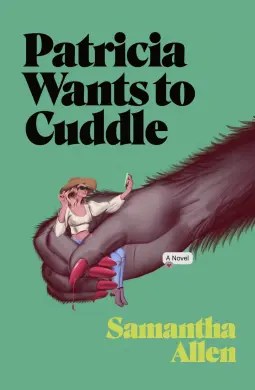
A reality tv dating show is filming its final four – including a closeted bisexual – on an island in the Pacific Northwest, but things take a fantastical horrifying turn the night before the penultimate decision day.
Summary:
This season’s Catch is a slightly sleazy bachelor who helped fund Glamstapix, which explains why so many of the final four women are Glamstapix stars. There’s Vanessa a car model, Amanda the daughter of two lesbian moms with a fashion Glamsta, Lilah-Mae a Dallas-based Christian influencer, and Renee a Black woman nominated by her coworkers who’s pretty over being the token woman of color on the show. No one is thrilled with the rural Otters Island location in the Pacific Northwest but everyone is motivated to make it to the final two in Palm Springs. Things get heated while they film the final interactions before the Catch chooses who will come with him to Palm Springs but things take a horrifying and fantastical turn when the cameras turn off for the night.
Review:
I did not receive the blurb I gave you above. The blurb I got combined with the title led me to believe that this was going to be a reality tv dating show where one of the women contestants was into another one of the women contestants who then gets abducted by a King-Kong like female creature she has to rescue her from. I still love this idea. But this isn’t what actually happens in the book. At all. It’s not a romance. It’s a funny reality tv show book that takes a horrifying turn in the last third.
I repeat. There is no romance in this book. Unless you count old love letters between an elderly B&B owner and her now dead wife. (Not a spoiler, she’s dead from the beginning). Renee is a closeted bisexual who does have feelings for Amanda (or at least the hots for her) but those feelings are not the focus of the book. The title of the book is misleading because Patricia, the giant ape-like monster, absolutely is not out to cuddle anyone. It’s not some weird cross-species ill-fated romance like King-Kong. Patricia is out to murder. And she murders a lot of people gruesomely. If you don’t like descriptions of a monster tearing people apart, then you won’t like the direction this book goes in. Sorry if you consider that a spoiler but I think it’s essential given how the book is being marketed and how the first two-thirds of the book reads to warn you about the dark, horrific ending before you get there.
Speaking of the first two-thirds of the book, that’s what made me give it three stars. I loved the insider look at the overlap of reality tv and influencer culture. I enjoyed Renee’s scathing observations about it all. I appreciated that there was some understanding and empathy for the influencers, especially that it actually is hard work to get the glamor shots and constantly promote every aspect of your day. It’s a fun, light-hearted read. I was wondering why it was taking so long to introduce Patricia. But then when Patricia came in I understood. The last third was basically a rapid slasher, not a search and romantic rescue. So it didn’t need much room.
The following paragraph is a spoiler filled analysis of the ending. Highlight to read.
Renee is the only one that Patricia doesn’t attack. The book seems to make the point that Patricia doesn’t attack her because Renee doesn’t treat her like a monster, and Renee doesn’t do that because she herself is queer. There’s this queer woman death cult that surrounds Patricia and protects her as well, even killing people to keep her existence a secret. To me this read as that monstrous groups only act monstrously (or seem monstrous) because of how you react to them. This might have worked but Patricia literally immediately tears people limb from limb. It’s not a kind act that’s misinterpreted. She hasn’t gently carried someone away in a kidnapping because she’s lonely. She concusses Amanda when she kidnaps her and then later tears her head off when she dares to try to run out of the cave. She scales the tower Lilah-Mae and Vanessa are on and immediately tackles Vanessa unprovoked. If this is an allegory, it’s a bad one, because Patricia is, in fact, acting like a monster. I think the allegory could have worked if there were real misunderstandings involved instead of the actual gore that occurred.
Overall, this felt like two different works mashed together. The first was a funny and empathic analysis of influencer and reality tv culture. The second was a gore-filled horror slash-fest that would work as a short story. The former is more my taste, but I respect the quality of the latter. The way the two are put together, though, might struggle to find its audience. So if you like a slow burn horror led by reality tv satire, give this one a try.
If you found this review helpful, please consider tipping me on ko-fi, checking out my digital items available in my ko-fi shop, buying one of my publications, or using one of my referral/coupon codes. Thank you for your support!
3 out of 5 stars
Length: 256 pages – average but on the shorter side
Source: Library
Buy It (Amazon or Bookshop.org)
 Support my work with a tip or browse my shop for curated book club guides, how to guides, cross-stitch patterns, and more!


This work by Amanda Nevius is licensed under a Creative Commons Attribution-Noncommercial-No Derivative Works 3.0 United States License.
 Opinions of a Wolf