
Archive
Book Review: Wanderlust by Elle Everhart

In this romcom that tackles hard topics, Dylan wins a trip around the world, the only catch is she has to go with a man she ghosted months ago.
Summary:
Feeling stuck at work and tired of London’s dreary weather, magazine writer Dylan Coughlan impulsively rings a radio station one day only to win a once-in-a-lifetime trip around the world. The catch? Her travel partner must be a contact randomly selected on her phone. And of course this stressful game of contact roulette lands on a number listed only as Jack the Posho, an uptight, unbearably posh guy she met on a night out and accidentally ghosted.
The two couldn’t be more different, and as the trip kicks off, Jack seems like he’d sooner fling himself into the sun than have a conversation with Dylan. But more is hinging on this trip than the chance to see the world. For the past two years, Dylan’s been relegated to writing quizzes (and only quizzes) at her lifestyle magazine after an article about her past abortion went viral—and not in the good way. If she’s able to make a series about their trip successful, her overbearing boss will give her a chance at a permanent column. Dylan’s willing to do anything to make the series a hit, even if it means embellishing her and Jack’s relationship to satisfy readers. But as the column’s popularity grows, so does the bond between Dylan and Jack, and Dylan is forced to consider if the one thing she thought she always wanted is worth the price she’ll have to pay to get there.
Review:
I picked this up off the library’s new book shelf because the romcom set-up sounded great. I was pleasantly surprised in chapter one to find that Dylan identifies as both queer and bisexual. Yay for more representation! But I actually ended up not liking Dylan particularly much by the end of the book.
Let’s start with the good. I found the romance sweet. It’s a classic grumpy/sunshine and organized/disorganized (Oscar and Felix for us olds out there). I liked how Dylan teased Jack for being posh and how he clearly didn’t mind the teasing. I was intrigued by why Jack was willing to drop everything to go on a trip around the world with someone who ghosted him who he also seemed to not like very much. And I was rooting for Dylan to find success blogging about her trip. The first destination was Australia, and it was definitely written the best. I could really visualize Australia, and I felt like we saw the characters spend an appropriate amount of time there.
In contrast, for a book about a trip around the world, a lot of the locations really breezed by. For example, India was less than a chapter. In South Africa we saw them at a dock. In New York we hear Jack excited about the Empire State Building but then don’t see the characters go there. It was a little bizarre for a book ostensibly about a trip around the world with a magazine writer. It was a let-down after the Australia chapters, especially.
The book deals with a couple of tough topics that might be a turn-off to some readers. Dylan wrote about her own abortion around the time Ireland was looking at its abortion policies. Her piece went viral, and she ended up being cyberbullied and doxxed. These topics aren’t mentioned in passing. They come up repeatedly in the book. Kind of heavy for a romcom. While the blurb I gave you talks about it, the blurb on the back of the print book I got from the library doesn’t mention it at all. It’s clear from looking at reviews that readers would have preferred knowing in advance, and I am glad the blurb was updated accordingly.
To me, Dylan started out likeable enough but became less likeable as the book progressed. The first glimmer I got of this was early on in Australia when Jack is nervous doing an activity, and she’s irritated at him because him looking and seeming anxious (while still doing the activity!) is impinging on her own enjoyment of the activity. This would be like saying your flight is ruined because a person in the seat next to you seems a little nervous during the flight but doesn’t talk about it and causes no issues. She has basically no empathy for Jack and is clearly self-centered. Which was jarring. As the book continues, it becomes increasingly clear that she acts without thinking. Ok sometimes people do that. But when it’s a recurring character trait that impacts other people (and hers does), that’s an issue. Especially for a character who’s almost 30. I also found how she spoke to her mother to be really terrible. She wasn’t trying to have a conversation with her mother (even though her mother was clearly trying to do so). She was giving her a speech without any interest in reconciliation. I don’t personally think her mother messed up enough to warrant that. And I didn’t like seeing it played up as some big empowering scene for Dylan. I thought it was quite sad, actually.
For readers wondering about the spice, this was an odd mix. The vast majority of the book is low spice/slow burn. Then there is one very spicy scene that takes up two chapters. (This scene also managed to make me like Dylan even less, and the score was already pretty low at that point). I found it jarring to go from all of the heat being from like a hand on the low of your back to a detailed spicy scene. I would have preferred a fade out and maybe some post-activities snuggling and pillow talk. It just fits the vibe of the rest of the book better.
Overall, the idea for the set-up for this romcom is stellar. Jack is a great leading man. But he’s set up with a leading lady who’s not particularly likeable, and the romcom is dragged down by some heavy topics.
If you found this review helpful, please consider tipping me on ko-fi, checking out my digital items available in my ko-fi shop, buying one of my publications, using one of my referral/coupon codes, or signing up for my free microfiction monthly newsletter. Thank you for your support!
3 out of 5 stars
Length: 368 pages – average but on the longer side
Source: Library
Buy It (Amazon or Bookshop.org)
Book Review: Pixels of You by Ananth Hirsh, Yuko Ota, J.R. Doyle

Two interns, one human and one AI, dislike each other so naturally they’re forced to work together on a new project.
Summary:
In a near future, augmentation and AI changed everything and nothing. Indira is a human girl who has been cybernetically augmented after a tragic accident, and Fawn is one of the first human-presenting AI. They have the same internship at a gallery, but neither thinks much of the other’s photography. But after a huge public blowout, their mentor gives them an ultimatum. Work together on a project or leave her gallery forever. Grudgingly, the two begin to collaborate, and what comes out of it is astounding and revealing for both of them.
Review:
This forced proximity sapphic romance idea featuring a human and an AI is such a good one. The near-future world it is set in is fascinating. But both the relationship and the world weren’t explored enough for me.
AI in art is a really big issue right now. While it is also beginning to show up in written art, it has become a large issue much more quickly in graphic arts. So I was of course intrigued by a graphic novel exploring AI in a near future where a human artist is an intern side-by-side with an AI artist. But the book doesn’t really dig into the nitty gritty of whether what the AI produces can count as art or not. Even though the summary says that human-presenting AI like Fawn is new, no one seems particularly taken aback by Fawn. The most controversy she faces is other AI being jealous of her human-like skin. Given that Fawn is a photographer using solely her AI eye, there is a huge opportunity for exploration of what makes art, art. Yet this isn’t really explored at all. Similarly, Indira has a robotic eye to replace one she lost in an accident. It causes her chronic pain, but how having a robotic eye impacts her art as a photographer also isn’t really explored.
While I easily believed the forced proximity romance plot of Fawn and Indira if they were both human, I struggled to believe its rapidity given that Fawn is AI and Indira’s own background to her accident. (Which is a spoiler, but suffice to say one would imagine it would predispose her to negative feelings about AI.) I’m not saying these feelings couldn’t be overcome and the romance couldn’t happen, but it needed more time to develop. With regards to the spice of the romance, there’s some kissing and nothing more explicit than that.
The art in this graphic novel is beautiful. It has nice contrast that makes it easy to follow and suits the storyline.
Overall this is a pretty read and a fun world to visit, although it may leave you wishing for more.
If you found this review helpful, please consider tipping me on ko-fi, checking out my digital items available in my ko-fi shop, buying one of my publications, or using one of my referral/coupon codes. Thank you for your support!
3 out of 5 stars
Length: 172 pages – average but on the shorter side
Source: Library
Buy It (Amazon or Bookshop.org)
Book Review: Killing Me by Michelle Gagnon
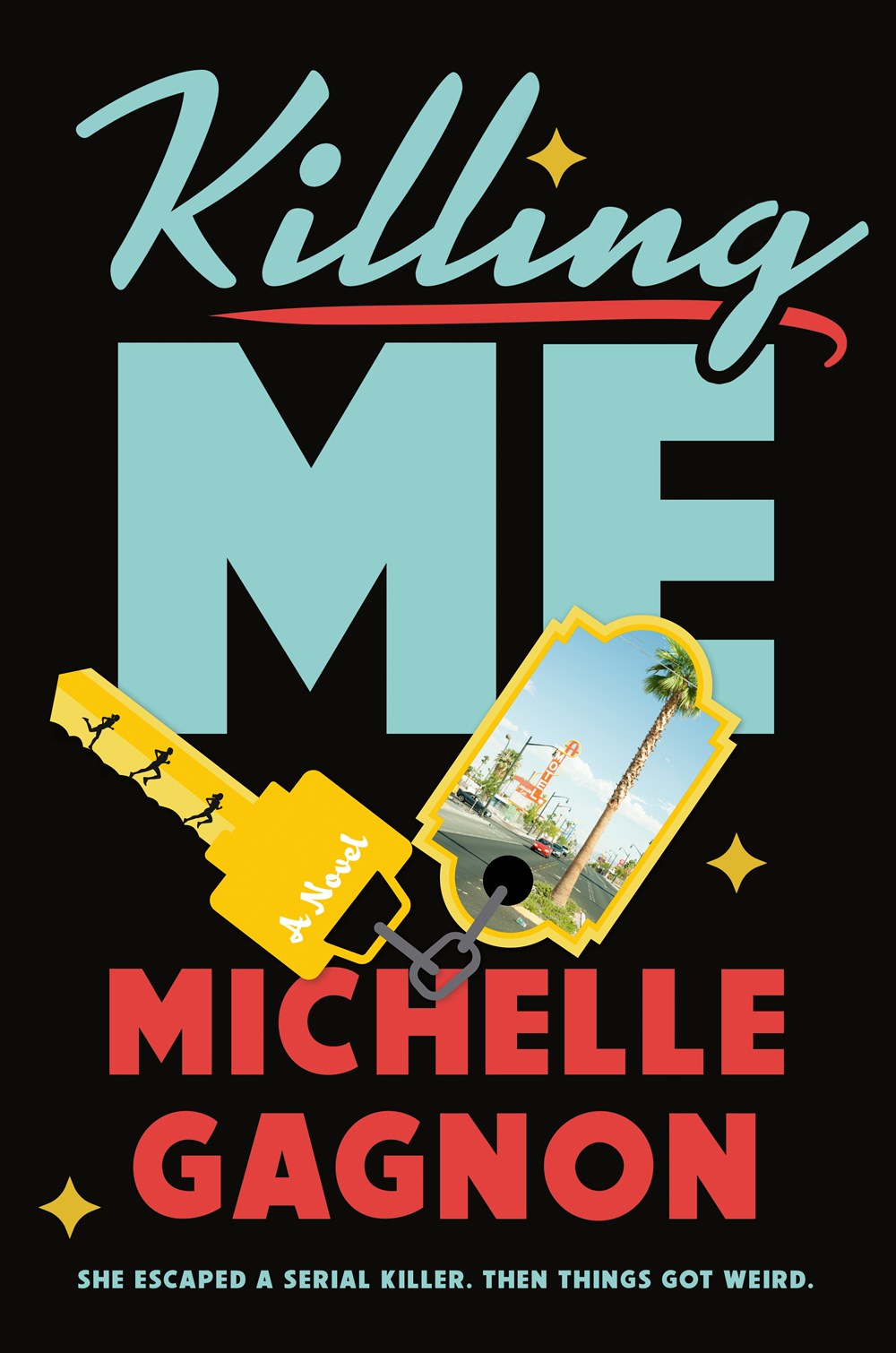
A laugh out loud thriller about women out-smarting a serial killer.
Summary:
Amber Jamison cannot believe she’s about to become the latest victim of a serial killer-she’s savvy and street smart, so when she gets pushed into, of all things, a white windowless van, she’s more angry than afraid. Things get even weirder when she’s miraculously saved by a mysterious woman…who promptly disappears. Who was she? And why is she hunting serial killers?
Review:
When I saw this on NetGalley, I was intrigued by the Final Girls-esque vibe – the women who would be the killer’s victims turning on him. I was skeptical I would find it humorous because, honestly, my funny bone is a little particular. But I actually found myself chortling on page one.
If you’re the type of person with an internal dialogue of self-deprecating humor about bizarre situations you find yourself in, then you’ll probably enjoy the sense of humor in this book. Regardless, you’ll be able to tell quickly if it’s for you or not, because the humor comes so quickly in the book, and that style is what’s present throughout the rest.
This is primarily told in the first person from Amber’s perspective, and she’s dry, acerbic, self-deprecating, but also whip-smart. (There are a few third person chapters that let us see things Amber doesn’t know about.) Amber is simultaneously problematic (she’s a con artist) and easy to root for. She’s richly three-dimensional. The main secondary characters are also rich and well-imagined. It would have been so easy to see a caricature of a sex worker, seedy motel owner, an Evangelical roommate, etc… yet they all are allowed to be more than what they might seem to be at first.
The Las Vegas setting rang very true to me. It depicted both the tourist bits and the seedier local areas quite well. I especially loved the run-down yet beloved film noir stylized motel as compared to the one recently made over to appeal to Gen Z and Millennials. That had me chortling.
I also really appreciated that this is a book whose main character is a lesbian but the plot has absolutely nothing to do with her being a lesbian. You could have almost the exact same book with a heterosexual main character. It’s just Amber so happens to like women. I like having this type of representation. It doesn’t always have to be about the difficulties of coming out or a romance to feature queer people.
The mystery itself was decent. The plot was certainly unique compared to other thrillers I’ve read, and I did not guess the ending. There was one twist that annoyed me only because it was solely a twist because Amber held something back from the reader. But I was willing to forgive it because she sort of breaks the fourth wall and acknowledges that she did it…which was funny.
I hope there’s a sequel, because I think there’s a lot left to explore with Amber, and she has a very interesting set-up at the end of the book.
Overall, I really recommend this to thriller lovers looking for something different. The humor and the plot really deliver.
If you found this review helpful, please consider tipping me on ko-fi, checking out my digital items available in my ko-fi shop, buying one of my publications, or using one of my referral/coupon codes. Thank you for your support!
4 out of 5 stars
Length: 336 pages – average but on the longer side
Source: NetGalley
Buy It (Amazon or Bookshop.org)
Book Review: Hani and Ishu’s Guide to Fake Dating by Adiba Jaigirdar

In this Bangladeshi-Irish YA romance, Hani needs to convince her two best friends that she’s really bisexual. She lies and tells them she’s dating academically focused and acerbic Ishu who agrees to fake date in exchange for help being elected Head Girl.
Summary:
Everyone likes Humaira “Hani” Khan—she’s easy going and one of the most popular girls at school. But when she comes out to her friends as bisexual, they invalidate her identity, saying she can’t be bi if she’s only dated guys. Panicked, Hani blurts out that she’s in a relationship…with a girl her friends absolutely hate—Ishita “Ishu” Dey. Ishu is the complete opposite of Hani. She’s an academic overachiever who hopes that becoming head girl will set her on the right track for college. But Ishita agrees to help Hani, if Hani will help her become more popular so that she stands a chance of being elected head girl.
Despite their mutually beneficial pact, they start developing real feelings for each other. But relationships are complicated, and some people will do anything to stop two Bengali girls from achieving happily ever after.
Review:
I have a soft spot for Irish literature, and when I heard about this book by a Bangladeshi-Irish queer Muslim author with a bisexual main character, it landed on my tbr list very quickly. This was a quick read with an easy to follow story and a sweet, very low spice romance.
I enjoyed Hani and Ishu each separately as character. They take turns narrating in the first person, and I never lost track of who was speaking. This book uses the grumpy/sweet trope quite well. Ishu is only grumpy because she’s focused and willing to speak her mind. Hani quickly sees through that. Hani and Ishu’s cultures are intertwined beautifully in the book. I like it when a book doesn’t feel the need to stop and explain cultural things to the reader. It’s on us to look it up if we want to, and that’s when I really learn things. (Like when Hani makes Ishu porota for breakfast. I looked that up right away. Yum!)
As a bisexual person, I appreciated how the story highlights the specific issues for Hani in coming out as bisexual. It’s clear that her friends would have fairly rapidly accepted her as a lesbian, but they view bisexual as being either confused or attention-seeking. They also don’t believe her because they’ve never seen her date a girl. This is a very realistic depiction of biphobia. Hani is quite confident about who she is and what labels she chooses. In contrast, Ishu is uninterested in labels, although she’s definitely attracted to Hani. It’s not clear if she’s only ever been interested in girls or more or if it’s just that Hani is the first person she’s ever been interested in. But that doesn’t matter to Ishu, and it doesn’t matter to Hani either.
When this book first came out, it was praised for depicting a queer Muslim character. (This article goes into depth about representation for South Asian queer women and interviews the author as well.) There is a perception that you cannot be both queer and Muslim. Both Muslims and non-Muslims hold this viewpoint. Yet people like Jaigirdar are both and depicting this in her books is important to Jaigirdar. Thus, we see Hani engaging with her faith. She goes to the Mosque. She reads the Quran. She eats halal. There is also a perception among many non-Muslims that if someone is serious about Islam and a woman then they will wear the hijab. But it is possible for someone to be devoutly engaging with her faith and also not wearing hijab. The author depicts this in Hani, as well as how she must struggle against the perception that she must not be a “serious” Muslim because she doesn’t wear hijab.
So this book covers a lot of seriously important representation well, and the romance is sweet and believable. What didn’t work for me was the secondary characters. Whereas Hani and Ishu felt well-rounded and interesting, everyone else felt flat and two-dimensional. There also were some kind of big issues that Hani and Ishu seemed to just gloss over. Now, they’re teenagers, so maybe that’s realistic. But Ishu having to hide the relationship from her parents long-term was concerning to me. Also, we never see the characters talk about being in an interfaith relationship. We do hear that Ishu appreciates Hani’s devotion to her faith as part of her. But Ishu is atheist, and we never really hear Hani’s thoughts on that.
Overall, this was a fun read with a lot of important representation. Recommended to readers who enjoy the fake dating and/or grumpy/sweet tropes.
If you found this review helpful, please consider tipping me on ko-fi, checking out my digital items available in my ko-fi shop, buying one of my publications, or using one of my referral/coupon codes. Thank you for your support!
3 out of 5 stars
Length: 352 pages – average but on the longer side
Source: Library
Buy It (Amazon or Bookshop.org)
Get the Reading Group / Book Club Discussion Guide
A beautifully graphic designed 2 page PDF that contains: 1 icebreaker, 9 discussion questions arranged from least to most challenging, 1 wrap-up question, and 3 read-a-like book suggestions
View a list of all my Discussion Guides.
Book Review: In the Lives of Puppets by T.J. Klune
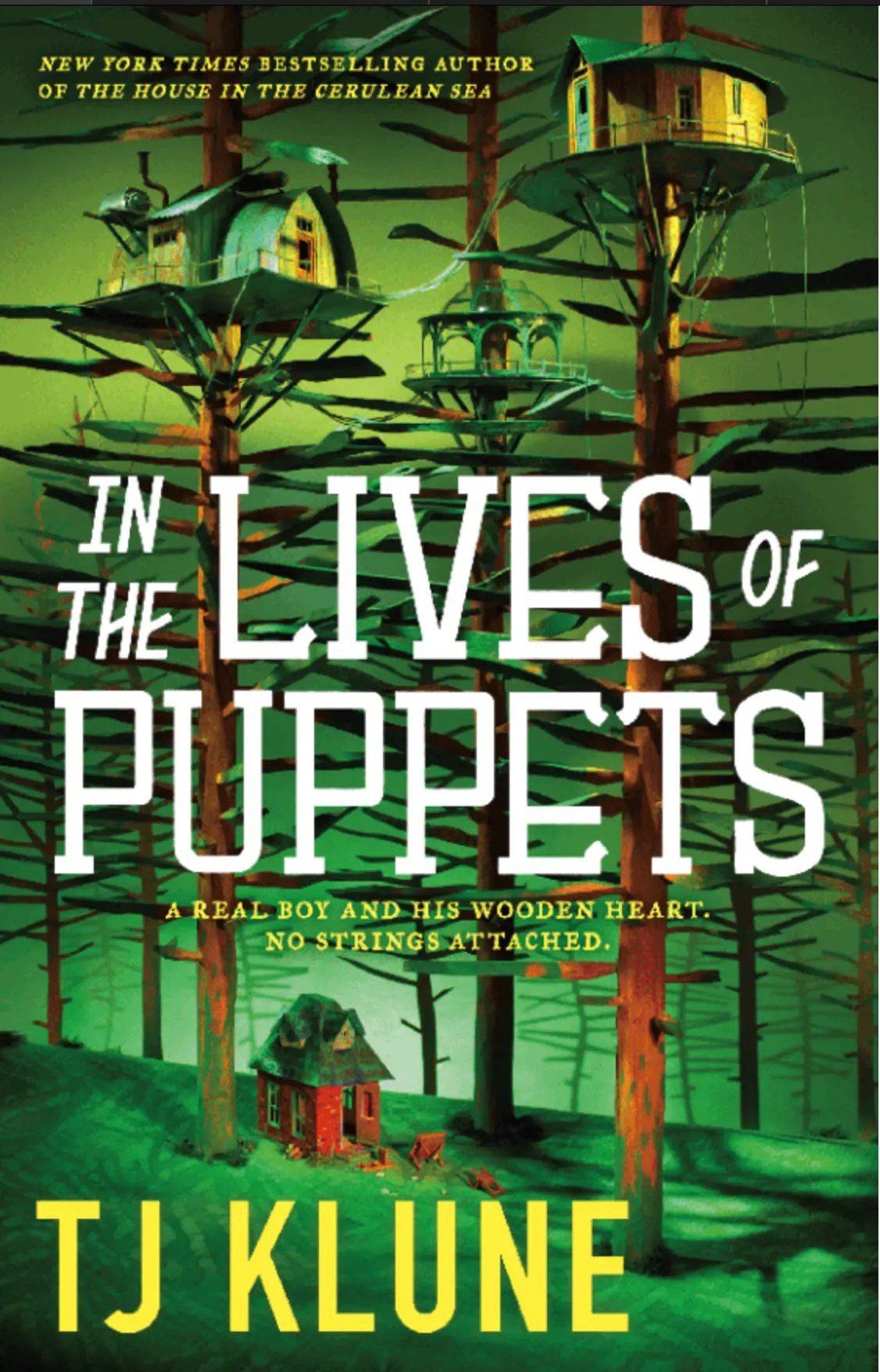
A science fantasy reimagining of Pinocchio where Pinocchio is a “real boy” surrounded by robots (puppets) with a m/m (or, rather, male, male robot) romance added in.
Summary:
In a strange little home built into the branches of a grove of trees, live three robots–fatherly inventor android Giovanni Lawson, a pleasantly sadistic nurse machine, and a small vacuum desperate for love and attention. Victor Lawson, a human, lives there too. They’re a family, hidden and safe.
The day Vic salvages and repairs an unfamiliar android labelled “HAP,” he learns of a shared dark past between Hap and Gio-a past spent hunting humans.
When Hap unwittingly alerts robots from Gio’s former life to their whereabouts, the family is no longer hidden and safe. Gio is captured and taken back to his old laboratory in the City of Electric Dreams. So together, the rest of Vic’s assembled family must journey across an unforgiving and otherworldly country to rescue Gio from decommission, or worse, reprogramming.
Along the way to save Gio, amid conflicted feelings of betrayal and affection for Hap, Vic must decide for himself: Can he accept love with strings attached?
Review:
This is a loving and detailed send-up to Pinocchio. I hadn’t seen the movie in years, and it still stirred up memories for me. When I went to look up the original book version’s plot to compare to this retelling, I found even more details I hadn’t realized or remembered. It’s obvious the author loves Pinocchio, and if you do too, I’m expecting you’ll likely love this retelling. For me, the problem is, I was so excited about a new T.J. Klune book that I sort of…forgot I don’t like Pinocchio. (“Don’t like” is a gentle remembrance. In fact, the movie absolutely terrified me as a child.) Even so, I found myself able to appreciate this loving rendition of the story.
I absolutely adored the character of Rambo – the tiny robot vacuum who’s clearly supposed to be a later generation of roombas. As always, I liked the narrative style the author uses – it reads as sing-songy in my head and feels like someone telling me a fairy tale, which is perfect for this book. I liked the wide variety of robots inhabiting the world, and I really enjoyed the robot substitute for the traveling circus character. I also appreciated that this isn’t an exact retelling of Pinocchio. The story is sometimes restrained, with simple allusions to the original. For example, Victor is never turned into a donkey, but he does stay the night in a hotel like room that is decorated with donkeys at about the right point in the story.
I appreciated the flipping of Pinocchio (Victor in this telling) as being human with his father being a “puppet” (a robot). But I felt like the ending really lets that inversion down, not taking it to its full and complete conclusion. I think there’s supposed to be humor in this book, but it wasn’t funny to me. You will know within the first few chapters if it’s tickling your funny bone or not.
I also found myself unable to root for anyone in this book, save for the small, innocent Rambo. Everyone else has something so wrong with them that it soured me to like them. The one I can talk about without spoilers, as the episode happens in the first chapter, is Nurse Ratched. She is a robot companion of Victor’s who was designed to nurse humans. She’s described as sociopathic, in a way that I think is supposed to read as comedic. As in, she acts like she enjoys inflicting pain but doesn’t really. Yet in the first chapter she chases down a squirrel (off-screen) and kills it by rolling over it again and again. I almost stopped reading the book, I was so horrified. But it was an advanced copy, so I decided to give it another chance. She never does anything like this ever again, but it is actually not uncommon for characters in this book to have something they have done in the past that is truly horrific that is brushed off as their programming. I’m all for plots where characters have to overcome their own tendency toward being bad, and redemption and forgiveness are both very important. But I need for that not to be the plot for almost every single character. It, at the very least, is distressing to read about.
The romance did not move me, which was surprising given what strong feelings I had for the couple in The House in the Cerulean Sea! I also have complicated feelings about how the book depicts what freedom means, how robots pursue freedom, the offerings of the “freedom fighter” character, etc… This, in fact, is a reflection of how I feel the overarching messages tended to get muddled. The only message that I felt was clear and consistent was “be brave!” but no clear reason as to why was ever given. To borrow from an American fairy tale – the overarching story needed a heart. I think, perhaps, the romance was supposed to be the heart, but it didn’t work as one for me.
This is also an incredibly sad book. It’s not uplifting in the slightest. There’s nothing wrong with sad books, but it is a departure from the author’s other books, and so I think the warning is warranted.
Overall, this is an imaginative and loving retelling of Pinocchio that should appeal to fans of that fairy tale. Readers should be aware that the darkness of the original story remains in this retelling.
If you found this review helpful, please consider tipping me on ko-fi, checking out my digital items available in my ko-fi shop, buying one of my publications, or using one of my referral/coupon codes. Thank you for your support!
3 out of 5 stars
Length: 432 pages – average but on the longer side
Source: NetGalley
Buy It (Amazon or Bookshop.org)
Publication Announcement: Novelette – Bloemetje: a speculative retelling of Hans Christian Andersen’s Thumbelina fairy tale

I am thrilled to announce the publication of my new novelette Bloemetje: a speculative retelling of Hans Christian Andersen’s Thumbelina fairy tale!!!
One miniature girl leads her human and fairy people to decolonize Venus in this speculative, queer-inclusive reimagining of Thumbelina.
A Dutch company known as The Bedrijf commences colonizing Venus via the construction of a dome filled with plants that convert its natural air into something breathable by humans. Since all workers are granted permission to bear a child, a woman and her spouse join the crew. But the woman soon discovers she is plagued with infertility. When her spouse illegally brings home a tulip from the garden, they discover a miniature baby inside who they name Bloemetje – little bloom. As the baby grows in mere days into a teenager, pushing her boundaries, she illuminates the true horrors of colonization and leads them all on a journey to decolonize.
This retelling takes the original Thumbelina’s focus on marriage and flips it on its head, granting the miniature girl a strong voice of her own and questioning her removal from the fairy world. Exploring themes of childlessness, adoption, being childfree by choice, colonization, decolonization, negative impacts of capitalism, and what LGBTQIA+ inclusive societies can look like, this novelette comes in 17 bite-sized episodes perfect for reading in the small snippets of time available to modern individuals and families.
Early readers called this “transporting” and “intriguing.” The “journey is beautiful,” and the ending is “deeply satisfying.” “A great escape read that also made me think, and it’s both quick and engrossing.”
*A portion of proceeds will be donated to the Massachusetts Center for Native American Awareness, a Native American-led 501(c)(3) nonprofit.
The ebook is available for pre-order now and will be delivered on May 18th. If you want to sneak in a little earlier, you can order the paperback or hardcover versions and get them delivered at your usual Amazon shipping speed.
If you would like to read a sneak peek of the first episode (chapter), sign up for my newsletter. I will be sending that sneak peek out on Monday, May 15th.
Pre-orders really matter for books, so please do consider pre-ordering if you know you want to purchase a copy. I also sincerely appreciate you passing the link on to anyone you know who might be interested in the book. Word of mouth is vital for indie authors.
Thank you for your support!
Book Review: The Sentence by Louise Erdrich
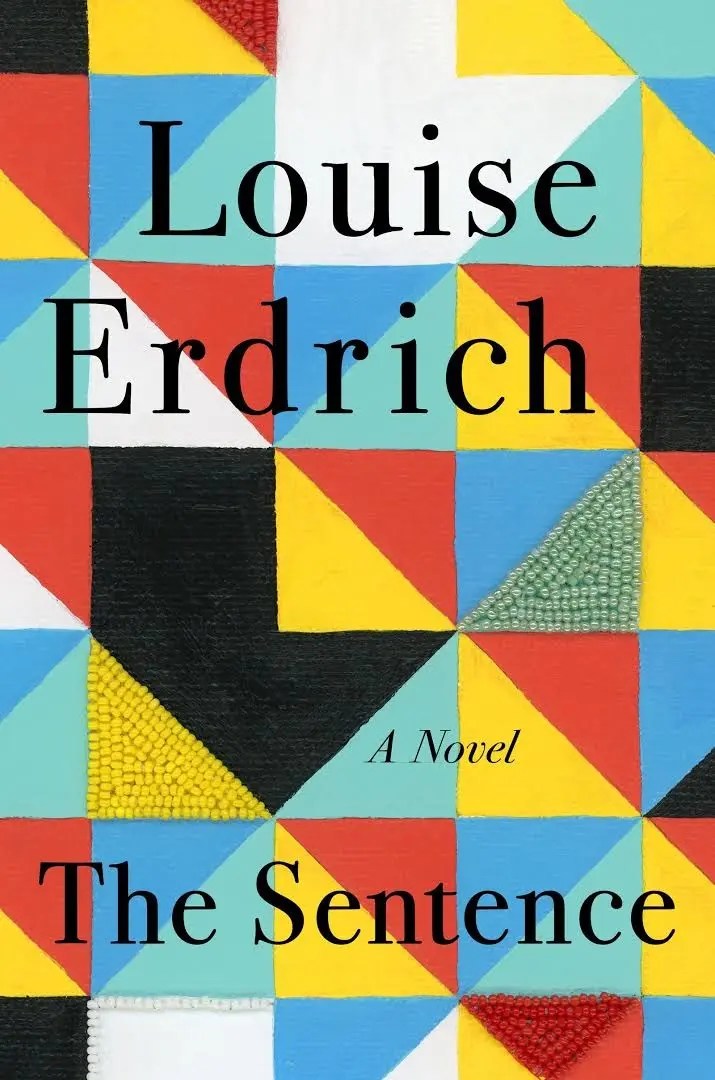
A previously incarcerated Indigenous woman loves her job at an independent bookstore focused on Indigenous literature right up until the store’s most annoying customer dies and begins haunting it.
Summary:
A small independent bookstore in Minneapolis is haunted from November 2019 to November 2020 by the store’s most annoying customer. Flora dies on All Souls’ Day, but she simply won’t leave the store. Tookie, who has landed a job selling books after years of incarceration that she survived by reading with murderous attention, must solve the mystery of this haunting while at the same time trying to understand all that occurs in Minneapolis during a year of grief, astonishment, isolation, and furious reckoning.
Review:
It’s a good thing I didn’t see that this book is magical realism or I wouldn’t have picked it up. You see, I had a serious misunderstanding of what magical realism is and thought I didn’t like it. In fact, I like it very much. I only wish I had first been introduced to it by the excellent explanation from Master Class originally. I’m excited that this book has helped me see past the magical realism label.
The thing that I love structurally about this book is how the title has so many different meanings. There’s the sentence that Tookie serves for her crime. There’s the sentence found within the book that Flora is reading when she dies. And there’s many other sentences throughout the book. I love when one title has many meanings.
The book starts with Tookie thinking back briefly on her incarceration and what landed her there. Part of what made the beginning so readable was how Tookie told this story. It was like speaking with a friend about a piece of their past. Raw and real but quick and to the point. It got me invested in the book right away. Then we jump to Tookie’s present, working in the bookstore, and the haunting, and this is utterly engaging right away as well. Tookie is flawed but so relatable. I think most readers will find her to be this way because she’s such a huge reader herself.
I also found her relatable because she’s in long-term recovery. I like how she sometimes thinks about how she was but it’s not like any single bad day gives her an urge she has to fight. A lot of times in literature and movies only early sobriety is shown, and the fact is, the experience in long-term recovery is different. I was so glad to see that in Tookie, and to see her breaking the multi-generational disease. But I also appreciated the very realistic depiction of her being concerned about talking about the haunting with her husband, Pollux, for fear he would think she had relapsed. I also should mention that both Tookie and her niece are bisexual. Their sexual fluidity is never judged or questioned. It’s just a part of who they are, which I really appreciated.
The book centers around a difficult question that it doesn’t provide answers for. Flora is a “wannabe Indian.” She’s a white woman who claims Indigenous heritage based on one photo she says is of a great-grandparent. The Indigenous community is dubious but doesn’t want to tell her she can’t belong. She spends much of her life working for the betterment of Indigenous people, including even taking in an unhoused teenager and caring for her so much that when she’s grown she refers to her as mother. So everyone has complex feelings about her. There are also some scenes that show white people behaving in offensive ways and smoothly depict how hard it is for Indigenous people to deal with these aggressions on a regular basis. One that really stuck in my mind was the white woman who shows up at the Indigenous bookstore and talks about her grandmother reassembling Indigenous bones she found on her land and winning a blue ribbon for it. She doesn’t understand why this is offensive to the Indigenous people she’s speaking with. To me the examples like this throughout the book demonstrate two types of white people who are hurtful to Indigenous people. The book is never preachy with these scenes. They come across as very realistic depictions of, unfortunately, regular interactions between Indigenous people and white people. If you yourself aren’t sure why these two types of interactions are hurtful, then I think this book would show you.
I wasn’t sure how I would feel reading a fictional book set during the first year of the pandemic. Overall, even though Tookie’s experiences and mine were different from each other (she was much older than me and had an essential worker, public facing job), I still found it realistic and relatable. The book never dwelled too much on any individual aspect of the pandemic but had scenes that were necessary reminders of how things were in the early days, like when Tookie goes to the grocery store to stock up just in case and ends up buying the best she can from what’s left, such as a tube of cookie dough. Similarly, Minneapolis was where George Floyd was killed and followed by the protests that spread throughout the country in 2020, and so this had to be a part of the book. At the start of the book it’s established that Tookie’s husband, Pollux, is who actually arrested her. By the time she was out of prison, he had left the tribal police force. But her household still must deal with the complex situation of having a previously incarcerated person and an ex-cop in the same household during this tumultuous time. There’s also the nice addition of Pollux’s niece, Hetta, living with them and, as a young person, being more involved in the protests. This thoughtful characterization allowed for multiple perspectives on the protests. For example, while there is support, there is also sadness and concern about the small businesses being impacted.
In spite of all that comes in the middle, the last part of the book deals mainly with Tookie’s relationship with Pollux and Tookie dealing with Flora’s ghost. This provides closure even while the reader knows the difficulties didn’t end in November 2020. In many ways I found this to be a story about relationships and reconciliation.
Overall, this is a strong piece of contemporary magical realism. If you’re ready to read a book featuring the pandemic while not being about the pandemic itself, this is a great place to begin.
If you found this review helpful, please consider tipping me on ko-fi, checking out my digital items available in my ko-fi shop, buying one of my publications, or using one of my referral/coupon codes. Thank you for your support!
4 out of 5 stars
Length: 387 pages – average but on the longer side
Source: Library
Buy It (Amazon or Bookshop.org)
Get the Reading Group / Book Club Discussion Guide
A beautifully graphic designed 2 page PDF that contains: 1 icebreaker, 9 discussion questions arranged from least to most challenging, 1 wrap-up question, and 3 read-a-like book suggestions
View a list of all my Discussion Guides.
Book Review: Never Ever Getting Back Together by Sophie Gonzales

If you’ve ever wished that two of the women – any two of the women – on a reality tv dating show would just get with each other instead of pining over the questionable man they’re supposedly there for, this one is for you.
Summary:
It’s been two years since Maya’s ex-boyfriend cheated on her, and she still can’t escape him: his sister married the crown prince of a minor European country and he captured hearts as her charming younger brother. If the world only knew the real Jordy, the manipulative liar who broke Maya’s heart.
Skye Kaplan was always cautious with her heart until Jordy said all the right things and earned her trust. Now his face is all over the media and Skye is still wondering why he stopped calling.
When Maya and Skye are invited to star on the reality dating show Second-Chance Romance, they’re whisked away to a beautiful mansion—along with four more of Jordy’s exes— to compete for his affections while the whole world watches. Skye wonders if she and Jordy can recapture the spark she knows they had, but Maya has other plans: exposing Jordy and getting revenge. As they navigate the competition, Skye and Maya discover that their real happily ever after is nothing they could have scripted.
Review:
I’m revealing my age here, but in high school I definitely watched the very first season of The Bachelor (and a few of the following ones). I wasn’t yet out to myself, but even so found myself wondering why the women were such better catches than the man. Apparently, long after I stopped watching, in 2016 two of the women contestants got together with each other. But this happens far less frequently than one might imagine. In any case, when I saw the plot description for this book, let me tell you, I smashed the request button on NetGalley without paying too much attention beyond – two women on a reality tv dating show get together.
Beyond the reality tv show wrapping, this uses the enemies to lovers romance trope. I’ve historically avoided this trope because I had a hard time conceptualizing how I could root for someone to get together with someone they start off disliking strongly. This book showed me otherwise, though. Although it starts in Maya’s perspective in just a couple of chapters it shifts to Skye’s so it becomes easy to see how these two women have come to dislike each other based on a bad misunderstanding. So there’s not actually something enemy-worthy about either of them. That said, both of them are flawed (as are well all) but with the enemies to lovers they start out only seeing the flaws then start to see what’s great about each other. It makes for a really realistic depiction of a healthy relationship at the end, because it’s not all rose-colored glasses. Also, I really like how they move from enemies to women supporting women to women loving each other.
This book is also hysterically funny. I legitimately laughed out loud multiple times while reading it. Representation is decent. Two of the secondary characters are people of color, and one is gay. Both Skye and Maya are bisexual. Because Jordy hid his two-timing ways easily since his family moved all over the world, his exes are also international. Chalonne is funnily contrived in much the way Genovia from The Princess Diaries was. (Incidentally, this got me to wondering if European writers set books in fake countries in the Americas the way we seem to make up fake European monarchies. It seems like most of them that do exist are more of an alternate history where either fascism takes over or the colonies never won independence sort.)
There were three things I wasn’t so keen on in the book that held me back from five stars. First, I just didn’t feel like these characters were 18. They read as more like just out of college than just out of high school to me. It was easy for me to give that a pass, though, because I just headcanoned them older. Related to my mistaken belief that they were older when I started reading it, in the first scene, Maya is at a bar and not drinking. Oh nice! I thought. Representation of sobriety in a romance. But no. She was just under the drinking age in the US. As soon as she gets to Chalonne, where the drinking age is 18, she starts drinking. A lot. Just not wine because she thinks it’s icky. So that was disappointing to me. I also wish that the scene where she has too many vodka jello shots was more realistic. Binge drinking for people assigned female at birth is 4 drinks in one sitting. She has way more than that. She should have been very sick as opposed to having a mild hangover that passed by lunchish. I refuse to believe this reality tv show would have gone light on the vodka when we all know they like for contestants to get drunk. To be clear, while I personally would like to see more romances depicting sober people, I understand it’s realistic to show people drinking. But if we’re going to show them drinking and drinking too much in one night is a plot point, let’s be realistic about how much is too much for a person in a body assigned female at birth. Last, while I get it that Jordy needs to be the bad guy, he’s such a bad guy that I struggled to understand how all these nice women fell for him at all to begin with. I understand from Maya’s perspective he’s gross for valid non-physical reasons (the cheating, the lying, etc…) but we do have the chance to see Skye’s perspective as well, and it’s not clear to me from hers what she sees in him either. Maybe even if just in one of the first scenes where Jordy takes his shirt off Maya found herself attracted to him in spite of knowing his douchey ways, that would have helped me to understand. But she even seems to be turned off by his looks. It left me scratching my head a bit.
Overall, this book was a breath of fresh air, featuring two women bisexual leads who fall for each other surrounded by a very humorous reality tv setting. While some of that setting was a bit difficult to believe, the enemies to lovers plot was so enjoyable that it was easy enough to just focus on them.
If you found this review helpful, please consider tipping me on ko-fi, checking out my digital items available in my ko-fi shop, buying one of my publications, or using one of my referral/coupon codes. Thank you for your support!
4 out of 5 stars
Length: 384 pages – average but on the longer side
Source: NetGalley
Buy It (Amazon or Bookshop.org)
Book Review: Broke the Bread, Spilled the Tea by Mitchell Kesller

A bisexual, Christian man explores how he came to a queer-affirming version of his faith.
Summary:
The Christian Church has long been one of the most influential institutions in society. Self-proclaimed as God’s representatives on earth, it is ironic to see how a faith of love and inclusion has been the source of wars, genocides, slavery, and oppression throughout the ages. In an era of misinformation and blind faith, maybe it’s time to take a closer look at the Bible and “judge by the fruits” of what is real and what is not. Broke the Bread, Spilled the Tea aims to explore one of Christianity’s most marginalized groups and breaks down exactly what the Bible says about queerness through a contextual, historical, and lexicological lens. Bridging the gap between identity and faith is possible when we conclude that perhaps the God preached on the Sunday pulpits isn’t the fullness of who He actually is.
From an author deep in the trenches,
I’ve broken the bread,
it’s time to spill the tea.
Review:
There’s a big divide in the various sects of Christianity about what to say and do about us queer people. Some say simply being queer is an abomination. Some say it’s ok to be queer but you must not act on it. And some are affirming churches – that say being queer is how God made us, and He loves us just the way we are. Catholicism’s response to queerness is a mixture of tradition, catechism, and what the Pope says. (It has tended to come down on it’s ok to be queer as long as you’re celibate.) Protestant sects, in contrast, make their decisions based on interpretations of the Bible. Mitchell was raised Protestant, and this is a Protestant exploration of queerness. Thus, it is largely rooted in interpretations of the Bible and focuses a large part on the clobber passages. These are 6 (or 7, depending on who you ask) passages in the Bible that non-affirming interpretations view as condemning queerness, whereas affirming churches view as not doing that. I tried to find a neutral explanation of the clobber passages but could not. So here is one from a non-affirming viewpoint. Here is one from an affirming viewpoint.
Kesller starts the book with a memoir chapter, explaining who he is, his upbringing, and how he came to his affirming viewpoint (without the fine details – those are covered later in the book). I found it particularly interesting that his perspective is of a bisexual person. I know as a bisexual person myself that often people find it difficult to understand why I couldn’t just let go of my queer identity and pass. Kesller does a great job of articulating why that wasn’t possible for him, and I found it quite relatable. Another interesting aspect of his perspective is that he immigrated to the US from Brazil as a child, so his childhood church experience wasn’t the pasty-white version of Evangelicalism you usually see on the news. In general, Kesller has a humble, relatable tone throughout the book. He’s not preachy. He’s just trying to share his own journey of how he personally came to understand the Bible and Christianity generally and the clobber passages specifically.
After the memoir section, the chapters explore the ancient church, how we got the Bible, and how God is represented in the Bible. Only then does Kesller go into the clobber passages. I like that he gives context to this exploration. Too often people dive right into Bible verses with no surrounding context whatsoever. I appreciate how Kesller tries to focus on the big picture of who Jesus is, what his message was, and what that means for Christians. I think some of his points on the clobber passages are stronger than others – and that’s coming from an affirming person. This is to say….I think some of the apologetics need some work. But that’s not really a critique because this is his own personal journey, not an apologetics book. There are other books out there if that’s what you’re looking for. (Clobber the Passages or UnClobber spring to mind.)
Interestingly, I think the greatest strength of this book is in calling out modern day Protestant churches for falling into Pharisee like behavior – being focused on religiosity rather than living lives of radical caring. The two quotes that I think really demonstrate this are these:
More often than not, we see Jesus living out a ministry of relationships rather than one of religiousness.
loc 299
The Church often tries to eliminate a symptom without treating the underlying cause.
loc 1829
I also think this book could be really useful in trying to help build a bridge between a non-affirming family member and an affirming one. It answers the question of “how can you both be happily queer and a Christian” in a gentle manner.
Overall, I appreciate Kesller’s bravery in writing this book and being so open about his own life and faith journey.
If you found this review helpful, please consider tipping me on ko-fi, checking out my digital items available in my ko-fi shop, buying one of my publications, or using one of my referral/coupon codes. Thank you for your support!
4 out of 5 stars
Length: 157 pages – average but on the shorter side
Source: NetGalley
Buy It (Amazon or Bookshop.org)
Book Review: A Song for a New Day by Sarah Pinsker

An eerily prescient book that came out in September of 2019 that looks at a future where stay at home orders in response to both bombing attacks and a deadly virus mean performing music live for a crowd is illegal.
Summary:
In the Before, when the government didn’t prohibit large public gatherings, Luce Cannon was on top of the world. One of her songs had just taken off and she was on her way to becoming a star. Now, in the After, terror attacks and deadly viruses have led the government to ban concerts, and Luce’s connection to the world—her music, her purpose—is closed off forever. She does what she has to do: she performs in illegal concerts to a small but passionate community, always evading the law.
Rosemary Laws barely remembers the Before times. She spends her days in Hoodspace, helping customers order all of their goods online for drone delivery—no physical contact with humans needed. By lucky chance, she finds a new job and a new calling: discover amazing musicians and bring their concerts to everyone via virtual reality. The only catch is that she’ll have to do something she’s never done before and go out in public. Find the illegal concerts and bring musicians into the limelight they deserve. But when she sees how the world could actually be, that won’t be enough.
Review:
I wouldn’t have been too surprised if this vision of a dystopian future was written during the height of the pandemic then came out recently. What intrigued me about this book was that it was published in September of 2019. It both predicted stay at home orders and density rules and imagines what would have happened if they’d never been lifted. In an interview in Marie Claire, Pinsker graciously states that this is simply a risk of writing about the near future. Indeed, she’s correct. Near future scifi is about paying attention to the current and predicting where we might end up soon – whether dystopic, hopepunk, or somewhere in-between. Pinsker certainly had her finger on the pulse of both risks and what responses to those risks might be given our technology.
She was a note that hadn’t ever known it fit into a chord.
page 213
While the book is certainly about the risk/reward balance and how to live in a satisfying way, it also is drenched in music and musical references. It was obvious to me that Pinsker is a musician, and I wasn’t surprised at all to look it up later and see she’s an indie rocker. If you’re a musician who wants to see music accurately represented in fiction, just stop reading this review now and go pick up this book. It’s the best integration of music from a musician’s perspective I’ve ever seen in a fiction book.
Another element of this book that is a wise storytelling choice is the dual perspective from Luce and Rosemary. Luce remembers the Before very well. The bombings and pandemic ripped away her success just as she was taking off. Rosemary barely remembers the Before, because she’s about 15 years younger than Luce. She remembers a baseball game at a stadium. But mostly she remembers being in the hospital with the Pox. Luce is able to remember all that was good and not actually that dangerous about Before. But Rosemary is able to see the parts of Now that are good – and there are parts that are. For example, the ability of rural people and people who can’t travel to go see Graceland (and other cultural places) in Hoodspace. There’s one scene in particular where Rosemary argues with Luce about how Hoodspace isn’t all bad that reminded me of some people speaking excitedly about being able to go back to conferences just the way they were before, while people with disabilities tried to get them to listen to the fact that joining things remotely meant they weren’t being left out any longer and how much they didn’t want to lose that. Without spoilers, an important part of the plot is Luce and Rosemary having to figure out together how to take the best from both and make a better future.
An important theme of the book is the balance of staying safe with still being able to live a fulfilling life. Who gets to decide what’s too risky? What actually is too risky? And isn’t that something that’s fluid? Are things that were once risky always risky? And aren’t things that were once safe sometimes too risky for a time? This is definitely a book that comes down on the side of part of life is taking some risks.
Now she understood how much she’d missed; how much had been taken from her in the name of safety and control.
page 268
While this isn’t a book about being queer, it is a book by a queer author full of queer characters. Luce and Rosemary both are attracted to women. Their relationships are mentioned when relevant to the plot but there’s no big coming out arc for either. Also, you can tell this was written by a queer person because Luce and Rosemary are not automatically attracted to each other just because they both happen to be women who are into women. Love to see that. A flaw I often see in books with queer characters by straight author is this idea that all women who are into women are automatically attracted to each other. That’s….not how it works. So I found the representation to be quite authentic. It’s just people living their lives who happen to be queer.
I also want to mention that Luce is Jewish, originally from an Orthodox community that she became ostracized from due to her sexuality. The author is herself Jewish, and I trust people to represent their own faiths and cultures well. I will say, much like the queer representation, there was one scene where Luce thinks about Rosh Hashanah’s in the past after seeing some people throwing paper into the river, and I found it very moving.
Overall, this is a scifi book about a dystopian future written by a queer, Jewish musician. It thus brings authentic representation to all three of these and tells a universal story about balancing safety with risk and using technology to accentuate our lives.
If you found this review helpful, please consider tipping me on ko-fi, checking out my digital items available in my ko-fi shop, buying one of my publications, or using one of my referral/coupon codes. Thank you for your support!
4 out of 5 stars
Length: 384 pages – average but on the longer side
Source: Library
Buy It (Amazon or Bookshop.org)
 Support my work with a tip or browse my shop for curated book club guides, how to guides, cross-stitch patterns, and more!


This work by Amanda Nevius is licensed under a Creative Commons Attribution-Noncommercial-No Derivative Works 3.0 United States License.
 Opinions of a Wolf