
Archive
Book Review: Gone by Bryan Alaspa
 Summary:
A newly formed company’s owners decide that what the small group of employees need is a bonding camping trip. Bear isn’t a fan of camping, but he agrees to go along anyway. When the site is more rural than he was anticipating, he starts to question his decision. When they wake up the first morning and find one member of the party missing, he’s sure he made a mistake coming camping. On each successive morning, another camper is gone. Who is taking them and why?
Review:
I picked this up, along with seven other books, during Smashwords’ 2012 Summer/Winter Sale. I’ve always enjoyed the classic horror trope of we-all-go-to-the-woods-and-shit-gets-real, so I was intrigued to see what Alaspa did with it. There’s enough different in the plot to keep you reading, in spite of some awkward sentence-level writing.
People disappearing from their tents and leaving their clothes behind, one per night, is a nice subtle change to what one generally sees in the everyone in the woods story. Usually people get eaten by zombies or axe murdered or something obvious. A simple disappearance was different enough that I was genuinely curious as to what was causing these odd disappearances. Added into this are the methods used by whoever is doing the abducting to keep the campers in their campsite. They try to paddle away but the currents mysteriously change. They try to walk away through the woods but the trees attack them, etc… These methods worked within the context of the supernatural seeming disappearances. I also liked that their supernatural experimenters make it impossible for them to get hurt, so they are forced to wait their turn. It all felt a bit like a subtly done allegory for animals in a slaughterhouse, and it kept me reading and engaged.
The only element of the plot that didn’t work for me is that the first person to disappear from the group is also the only person of color in the group. Having the Latino guy be the first one to disappear is so stereotypical and B-movie that I actually cringed. Let poor Carlos be at least the second one to disappear. Or, heck, make him be one of the last ones standing. Getting to play with the regular tropes of whatever genre you write in is one of the benefits of indie writing, so use that to your advantage.
Unfortunately, some of the writing style on the sentence level isn’t up to the same level as the intricate plot. There is quite a bit of telling instead of showing. Not enough trusting the reader to get it. There are some awkward and puzzling sentences in the book as well:
The ground was wet and my hands were damp when I put my hands on it. (loc 616)
The hand turned into fingers and slammed the lids of my eyes closed. (loc 2809)
Additionally, I started counting the number of errors that were clearly not typos, and I got over 30. I fully expect some errors to get through, they tend to even in traditionally published works, but I find anything over 5 to 10 to be excessive and feel more like a first draft than a fully done, ready to publish work.
On the other hand, there are portions of the sentence-level writing that are eloquent and beautiful to read. Particularly, any instance where characters are having sex is quite well-written, and I would be interested to read work from Alaspa focused more on romance or erotica.
When she touched the part of me that was hard and eager I nearly exploded. (loc 1828)
Overall, this book contains a strong horror/thriller plot that will keep the reader engaged in spite of some awkward sentence-level writing and a few too many textual errors. I recommend it to horror readers who are intrigued by the plot and don’t mind these short-comings.
3 out of 5 stars
Source: Smashwords

Book Review: The Shining by Stephen King (Series, #1) (Audiobook narrated by Campbell Scott)
 Summary:
Jack Torrance, a writer and schoolteacher, almost let his temper and alcoholism destroy himself and his family. But he’s joined AA and is determined to get his life, family, and career back on track. When he hears through a friend about a hotel in rural Colorado need of a winter caretaker, it seems like the perfect solution. Spend time in seclusion working on his new play and provide for his family simultaneously. But what Jack doesn’t know is that The Overlook Hotel has a sinister past, and his son, Danny, has a shine. Psychic abilities that make him very attractive to the sinister forces of the hotel.
Review:
The new release of Doctor Sleep

The characterization is the strongest here that I’ve seen in the King books I’ve read so far. All the characters are three-dimensional, but the Torrance family in particular are well-explored. Jack and Wendy (his wife) read so much like real people, because while both make some horrible mistakes, neither are truly bad. Neither had a good childhood or much help to overcome it, and both want so badly to have a good family and a good life but no clear idea on how to do so. Danny, a five-year-old, is handled well as well. He speaks appropriately for his age, not too advanced or childish. The use of a third person narrator helps the reader get to know Danny and his psychic abilities at a deeper level than his five-year-old vocabulary would otherwise allow for. This level of character development is true to a certain extent for the rest of the characters as well and is handled with true finesse.
The plot starts out strong and frightening on a true-to-life visceral level. The Torrance home life is not good, and that’s putting it lightly. Wendy feels she has nowhere to be but with her husband, due to her only relative being her abusive mother. Jack is terrified of turning into his father, who abused his wife and children, and yet he has broken Danny’s arm while drunk. And in the midst of this is Danny, a child with special needs. This was where I was the most engrossed in the story. Before the hotel is even a real factor.
The Overlook is the supernatural element of the story that is supposed to kick it up a notch into horror territory. It is never made entirely clear exactly what is up with the hotel but we do know: 1) there is a sinister force at work here 2) that sinister force is out to have people kill others or commit suicide and join their haunting party 3) for some reason, people with a shine are more attractive to this sinister force as someone to have on board 4) the sinister force extorts whatever weaknesses are present in the people in the hotel to get what it wants. So the sinister force very much wants Danny to be dead, as well as his father and mother, although they are sort of more like side dishes to the whole thing. The sinister force figures out the family dynamics and extorts them by kicking Jack’s anger and Wendy’s mistrust up a notch. It also gets Danny to wander off where he’s not supposed to go. But things don’t really get going until the sinister force possesses Jack. I get why this might freak some people out. The sinister force gets the people to do something they normally would never do. However, personally I found the parts where Jack’s own real shortcomings cause him to do something sinister, like breaking Danny’s arm, to be so much more frightening. Jack’s regret over his actions and fear of himself are much more frightening because what if you did something like that? Whereas a sinister force is easier to distance oneself from mentally. It’s gory and thrilling but it’s not terror-inducing evil. Perhaps if the things Jack does at the hotel were just things inside himself that the hotel allows to come out, it would still be truly terrorizing. But it is clearly established in the book that the sinister things Jack does in the hotel are due to his being possessed by the hotel. They are not him. This removes a certain amount of the terror from the book.
The audiobook narrator, Campbell Scott, did a good job bringing a unique voice to each character. His pacing and reading of the book was spot-on. However, the production quality of the reading didn’t match his acting. The entire recording was too quiet. I had to crank my headphones up all the way, and I still had trouble hearing the book when walking around the city, which is not normally a problem for me. In contrast, whenever Jack yells, it blew out my eardrums. Some better sound balance was definitely needed.
Overall, this is a thrilling read that begins with a terrifying focus on overcoming flaws and bad dynamics from the family you were raised in then switches to a less frightening focus on a sinister force within a hotel. It thus ends up being a thrilling read but not a terror-inducing one. Those seeking a thrilling tale with well-rounded main characters being threatened by the supernatural in the form of ghosts and/or possession will certainly enjoy it. Those who are less frightened by the supernatural might enjoy it less. I recommend picking up the print or ebook over the audiobook, due to sound quality.
4 out of 5 stars
Source: Audible
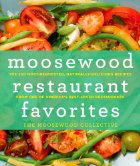
Cookbook Review: Moosewood Restaurant Favorites: The 250 Most-Requested, Naturally Delicious Recipes from One of America’s Best-Loved Restaurants by Moosewood Collective
 Summary:
Moosewood Restaurant is a famous vegetarian restaurant in Ithaca, New York, founded in the 1970s. According to their website, they have published twelve cookbooks prior to this one. This cookbook aims to collect together the recipes that have proven themselves to be the most popular in their restaurant over the last 40 years.
Review:
Moosewood is pretty famous in the vegetarian crowd. It’s a name most vegetarians have heard, and I know some vegetarian who have even eaten at the restaurant. I’d always been curious about their cookbooks, so I was excited to see the newest one available on Netgalley. Given the fame, I was expecting something inspiring and special. Instead I found a rather ho-hum collection of decidedly average pescetarian recipes.
Moosewood claims everywhere (including on the main page of their website) that they are a vegetarian restaurant. But they aren’t. They are pescetarian. There is an entire fish section in the book. Calling yourself vegetarian when you’re not is misleading and wrong. (If you would like to read further on why it’s offensive for pescetarians to call themselves vegetarians, check out this post). I’m kind of shocked there isn’t more of an outcry in the veg community about this.
The rest of the cookbook (that is actually vegetarian) consists of: appetizers; dips and spreads; soups; sandwiches; burgers; main dish salads; curries and stews; beans; frittatas and pies; casseroles; stuffed vegetables; wraps, rolls, and strudels; tofu; pasta; side salads; sides; side grains; salad dressings; condiments and salsas; sauces and gravies; desserts; baking pan sizes and equivalents; and guide to ingredients and basic cooking. It’s a huge, long cookbook. But out of all these recipes, I only found eight I wanted to try. Usually I want to try at least every other recipe in a cookbook. The recipes here that failed to spark my interest fell into one of three categories: 1) they were painfully obvious and overly simple 2) they were deeply unhealthy, swimming in cups of oil, heavy cream, and tons of eggs or 3) they weren’t vegetarian because they contained fish.
Some examples of the painfully obvious include quinoa with veggies, basic chili, thai vegetable curry, and black bean sweet potato burritos. You don’t need a cookbook from a famous restaurant to give you these recipes. I’d say otherwise if there was anything about their recipes that at least made them a variation of the norm, but I have seen the same thing over and over again in multiple recipes in cookbooks, blogs, and websites.
As for the unhealthy recipes, beyond the already mentioned high fat and an unnecessary quantity of eggs, there were things like the suggestion to top your corn on the cob with mayonnaise. Or the fact that most of their dressing recipes contained 1/4 to 3/4 cup of oil. The recipes routinely don’t take a well-rounded diet into consideration. Protein doesn’t get enough attention. For instance, a vegetarianized jambalaya recipe has zero protein in it. And perhaps it’s not unhealthy, but I found it very odd that a restaurant’s cookbook called for canned pumpkin for their pumpkin pie.
 On the plus side, the cookbook is well-organized and illustrated with beautiful pictures. Although, the recipes are written out in paragraph form. I generally prefer a numbered list. But this is a personal preference, and the recipes are easy enough to follow.
I have made one of the eight recipes I selected out as possibilities so far. I made the Winter Salad Plate (page 110). Since the recipe states it serves 8 as a side salad and my intention was to have it as a side salad with egg sandwiches with my partner and a friend, I halved the recipe. Also, since I didn’t have greens from my CSA that week, I replaced the greens with more root vegetables. The consensus was it was yummy, but the dressing needed a touch of bitterness like a vinegar and less oil. I don’t mind having to adapt a recipe a bit to get it just right but with a high-quality cookbook you don’t have to do that.
In spite of the shortcomings, the recipes do indeed work, and the cookbook is well organized and prettily illustrated. Recommended to pescetarians and omnivores who don’t cook a lot, so the recipes would be less familiar to them, who also don’t mind a high fat/oil and low protein content in their food. Also recommended to long-time fans of Moosewood.
3 out of 5 stars
Source: Netgalley

Book Review: The $100 Startup: Reinvent the Way You Make a Living, Do What You Love, and Create a New Future by Chris Guillebeau
 Summary:
Guillebeau investigated what makes microbusinesses (small businesses typically run by one person) successful by conducting a multiyear study interviewing more than 100 successful microbusiness entrepreneurs. Here he presents his findings on what makes for a successful microbusiness and offers advice on how you can become a successful microbusiness entrepreneur too.
Review:
I found this book in a list of top books for small businesses published in 2012. The title totally intrigued me, since starting up a business with very little funds is quite appealing. I’m so glad I picked it up. This is an awesome small business book. It’s written for entrepreneurs, not MBAs, and it’s easy to understand, concise, engaging, and memorable. Perhaps most importantly, the few tips and tricks I’ve tried out so far have actually worked.
The book is clearly organized with no-nonsense, easy-to-understand chapter titles like “Hustling: The Gentle Art of Self-Promotion” accompanied by memorable, informative illustrations. This organization extends to the content of the chapters. When possible, Guillebeau provides subcategories and lists, putting the information into smaller, more digestible chunks. His writing also captures this no-nonsense, straight-forward style.
Focus relentlessly on the point of convergence between what you love to do and what other people are willing to pay for. (loc 2406)
It’s pretty near impossible to misunderstand any of the points he makes. The chapters also provide graphs, illustrations, references, and guides to further aid you in following the steps laid out.
In spite of laying out steps and guidelines, Guillebeau successfully avoids promoting an unbelievable “one-size fits all” miracle model. He talks about what worked and didn’t work for the successful entrepreneurs he interviewed, but he also points out repeatedly that it’s important that the reader understand herself and her strengths and weaknesses and always remember she knows her potential business and personality the best.
People who know less about the business than me do not get to make decisions about it. (loc 3296)
This honesty that one-size does not fit all and the clarity with which Guillebeau presents his research grants the book a trustworthy, believable vibe. It instills faith in the reader and brings out her passion for her own ideas. Plus, the fact that this is based on real research and not just Guilleabeau’s own experiences means the tricks and tips are more likely to work. Nothing works perfectly every time, and the market is an unpredictable place, but having this research as a guide can help the reader avoid at least some of the hiccups, bumps, and pitfalls in starting and running a microbusiness.
Overall this is a well-organized, honest book clearly written for the entrepreneur, not an MBA. It is based on market research, not exclusively the author’s own experiences, and offers tips and advice, not a one-size fits all model. Anyone interested in starting their own small business or in what makes small businesses succeed should definitely give this book a read.
5 out of 5 stars
Source: Library
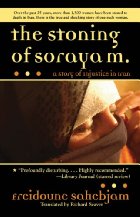
Book Review: The Stoning of Soraya M.: A Story of Injustice in Iran by Freidoune Sahebjam (Bottom of TBR Pile Challenge)
Summary:
Sahebjam, a French-Iranian journalist, was traveling through Iran in the 1980s when he had to stop in a small village. An elderly woman, Zahra, asked him for tea so she could tell him the story of what happened to her niece, Soraya, mere weeks before. Sahebjam grants narrative to her tale to get the story of injustice out.
Soraya was a typical rural Iranian woman. Married to a villager at a young age. Her husband, Ghorban-Ali, became less and less invested in his family and more and more likely to beat them. He also became increasingly interested in young women in the city. When a criminal posing as a mullah comes to town, Ghorban-Ali sees the perfect opportunity to be rid of his wife without any costs of divorce. He, the mullah, and an easily swayed widower friend corroborate to falsely accuse Soraya of adultery and sentence her to death by stoning.
Review:
Things can easily go awry when the powers of justice are held in the hands of a select few. A lot rests on whether or not those few are good people. This book tells that tale, and it tells it movingly, regardless of whether or not all the facts of the story are precisely correct. The biggest facts are accurate, and that is what matters.
Sahebjam is a French-Iranian journalist. He thus has both the perspective of insider and outsider, which is the ideal one for a story like this. He understands the people and the village but he also knows how to present and explain things to the non-Iranian reader. Sahebjam clearly and honestly states from the beginning that he got this tale from one eyewitness. Some might argue that this story thus isn’t researched well enough or thoroughly vetted. It is indeed one eyewitness account passed through an author (and for English speakers, a translator). But the core of the injustice is verifiable: the handling of adultery in Islam. Combine this with religion and state being one and the same, and it’s easy to see how if this story didn’t indeed already happen how it could easily come to be.
The first half of the book introduces us to Sahebjam, Zahra (the aunt), and Soraya, as well as the organization of the small town and the adultery laws as followed by fundamentalist Islam. Sahebjam does a good job introducing all the people and explaining the context of the injustice without overwhelming the reader with info dumping.
Essentially, in Islam, when it comes to adultery, the woman has to do all the proving.
When a man accuses his wife [of adultery], she has to prove her innocence [in Islam]. This is the law. On the other hand, if a woman makes an accusation against her husband, she has to produce proof. (location 1079)
If the woman is wealthy, she can pay off the mullah (think of it as paying a penance in Catholicism). But:
In most cases the woman [accused of adultery in Iran] is poor—which means she is a virtual slave to her husband. She has no rights, except for the meager right to remain silent. All the husband needs to win his case of infidelity is two eyewitnesses, who are generally friends and accomplices. As for the accused woman, she has to prove her innocence and that is impossible: no one will come to her aid; no one will bear witness on her behalf. (location 129)
Regardless of whether or not Soraya was a real person (and I do believe she was), these are problematic laws that leave the door wide open for abuse by a few corrupt people. This book demonstrates that danger eloquently.
Sahebjam clearly made a choice to make the tale flow better by giving it some narrative qualities. He inserts dialogue he clearly wasn’t there to hear, and he even talks about what was going on inside people’s heads. I didn’t like that he did the latter, especially. I understand dialogue can help make a nonfiction book flow a bit, and I’m ok with that. But claiming to know what was going on inside people’s minds turned me off the narrative a bit. It leaves the door open for criticism of a story that needs to be taken seriously, and I wish he had made other narrative choices.
At first, it is easy to be irritated by Soraya’s choice to remain silent when accused. She gives up so quickly, one wonder why she never advocates for herself. But in retrospect, it’s a clear, yet subtle, depiction of what can happen to a victim of abuse over time. Eventually their spirit is just beaten out of them. Soraya demonstrates what happens when abused people are left to deal with the abuse and abuser on their own.
Overall, this book highlights the inequality innate is Muslim adultery laws, as well as the dangers of leaving justice to the hands of a few. The narrative structure doesn’t precisely suit a nonfiction account of an event, but the bones at the core of the injustice are still verifiably true. Readers who prefer a dry, precise nonfiction might not be able to look past the narrative structure. Those who can will find a moving tale of how easy it is for injustice to take over a community.
4 out of 5 stars
Source: Amazon

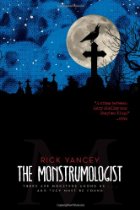
Series Review: The Monstrumologist Series by Rick Yancey
Introduction:
I post series reviews after completing reading an entire series of books. It gives me a chance to reflect on and analyze the series as a whole. These series reviews are designed to also be useful for people who: A) have read the series too and would like to read other thoughts on it or discuss it with others OR B) have not read the series yet but would like a full idea of what the series is like, including possible spoilers, prior to reading it themselves or buying it for another. Please be aware that series reviews necessarily contain some spoilers.
 Summary:
A nursing home contacts a researcher. An elderly man has passed away. He identified himself to them as Will Henry, but they can’t find any record of him or living relatives. He left behind four folios, telling what he claimed to be his life story. The first folio begins when his parents die in a fire, and he is left in the care of his father’s employer, Dr. Warthrop. In the 1800s. Over 100 years ago. And Dr. Warthrop is a Monstrumologist. He specializes in the study of aberrant biology, or monsters. And Will is now his apprentice. The first thing Dr. Warthrop tells Will is that Will Henry contracted a parasite from his father. Normally deadly, he is mysteriously a safe host. The parasite will make him abnormally long-living, and any contact that is too close will make him pass it along to another.
What follows over the course of the folios is the tale of the monsters Will Henry faced alongside and because of Dr. Warthrop. The anthropophagi–headless creatures with mouths in their stomachs. The wendigo–similar to a werewolf. The Typheus Magnificum–the Holy Grail of Monstrumology that may or may not exist. And finally the Titanoboa Cerrejonensis–a giant snake. There are these monsters, yes. But there are also the questionable choices and personalities of the various Monstrumologists, and the slowly unwinding monster inside a boy who has seen too much and been loved too little.
The question left for the researcher is how can Will Henry continue along an increasingly dark path when all signs indicate he eventually happily married his childhood sweetheart? And are these ramblings true or just the fairy tale of an elderly man?
Monsters and madness encircle Will Henry, Dr. Warthrop, the researcher, and the reader as the folios slowly reveal all.
 Review:
There is a lot going for this series that makes it unique and highly recommendable, particularly among its competitors in YA.
It’s horror based in the realms of science and the grotesque. Wanton blood and guts, serial killers, etc… won’t be found but it also doesn’t shy away from bits of the criminal underworld or real bodily danger. Will Henry loses a finger at one point. The monsters are real and frequently either eat people or turn people themselves into monsters. It combines to elicit horror in the reader in the tradition of Frankenstein. It’s perfect for readers who shy away from slashers or crime novels but still want a dash of terror.
In lieu of a romance, the relationship at the center of the series is between Will and his guardian, Dr. Warthrop. Yes, the series repeats the common YA trope of an orphan, thereby getting rid of the parents, but just because there are no parents doesn’t mean that there’s no guardian/young person conflict. In fact, I think that having the conflict be between Will and a, to him, incomprehensible older guardian allows for a more free exploration of the difficulties that can arise in this relationship. The fact that Dr. Warthrop is not his father means that Yancey is freer to quickly move into the mixed emotions and misunderstandings that can so easily happen in this type of relationship. Dr. Warthrop has many flaws as a guardian, but he does truly love and care for Will. Will at first feels lost and no connection with Dr. Warthrop, then he grows to love him in spite of his flaws, then he slowly starts to loathe him. Whether or not this loathing is warranted is left up to the reader to decide, and I do think that Yancey succeeds at making it a gray area that each reader will reach a different conclusion on. This relationship gets just as much, if not more, time as the monsters, and it’s one of the things that makes the series worth reading.
 Yancey isn’t afraid to not just use, but embrace poetic language and literary allusions. I was truly stunned at the beauty of the language when reading the first book, and that beauty continues throughout the series. It’s like reading an old, Gothic novel, setting the perfect tone for the world building. A YA reader who perhaps hadn’t previously experienced narration like this might after reading it be inclined to seek out similar writing, thus finding some classics. And even if they don’t, it’s a wonderful change of pace for YA.
Setting the story of Will and Dr. Warthrop in the context of the mystery of the modern elderly man, his folios, and the researcher looking into them lends an extra layer to the story that increases its complexity. The researcher is just as curious as the reader to find out more. He also provides some necessary historical facts and questions the veracity of some of Will Henry’s statements. Throughout the series, the researcher is wondering if this actually happened or if it’s all just the imaginings of an elderly man. The ultimate reveal still leaves this a bit of a mystery, letting the reader decide for themselves what they would prefer to be the answer.
The strength of the monsters varies throughout the series. Some are perfectly crafted, such as the anthropophagi. Others can be a bit less frightening or too predictable to be as engaging. This definitely lends to an uneven pace of suspense in the series and could be disappointing to a reader who is more invested in monsters than in the character development.
 The ending. The ending must be discussed. *spoiler warning* Will Henry in the last book has turned into a dark, lawless, desperate character. He has been changed by what he has seen. His childhood sweetheart, Lily Bates, finds him frightening and lacking in morals. He blames Dr. Warthrop for all of his issues. While Dr. Warthrop definitely is at fault for not treating Will Henry like an adult and keeping him in the loop for his schemes, Dr. Warthrop also never taught Will to be so cold, desperate, or that it’s ok to wantonly kill. Will ultimately goes on an opiate and sex binge in a prostitution house. Dr. Warthrop finds him and pulls him out, in an attempt to save him. It is then that Willl finds out that the parasites he is infected with will spread with sexual intercourse and kill his partner in a truly grotesque manner, eating them from the inside out. Will gives up on Dr. Warthrop and all relationships and proceeds to travel the world aimlessly. The researcher ultimately discovers that Will later runs into Lily with her new husband. It is then that he reveals that Lily’s husband’s name was Will Henry, and he stole it as a pseudonym for these stories. So he never married Lily. Was never happy. He is now nameless. It’s an incredibly dark ending that leaves the researcher, and the reader, reeling. It was honestly a bit too hopeless for me. It felt as if Yancey was saying Will got sucked down into the monsters in his soul and could find no escape. I prefer to have a bit more hope in the world than that, particularly after spending four books with a character and growing to care for them. *end spoilers*
While I can still appreciate what Yancey was doing and what he was going for–a truly dark book–I feel that any potential readers or gift givers should be aware that it starts dark, gets darker, and there is no light at the end of the tunnel.
There is also a bit of a dearth of female characters in the series. In the two middle books, we get brief exposures to Dr. Warthrop’s old sweetheart and Lily Bates. That’s pretty much it. I’m ok with that, since much of the time is devoted to Will Henry and Dr. Warthrop. I also understand that the time period in which it is set definitely would not have had a female monstrumologist. I think Yancey tries to make up for this by having Lily be determined to be the first female monstrumologist, but I also think he steps back from this plotline in the final book, which disappointed me a bit. Essentially, be aware that if you’re looking for a strong female presence in the plot of your series, look elsewhere.
Overall, this is a unique series that deserves to be in any YA collection. It address young adult/guardian relationships in the rich wrapping of Gothic style horror narrated with a beautiful poetic language. Its historical setting and focus on the boy and his guardian doesn’t lend itself to a strong female presence in the series, although the female characters that do exist are good ones. Its darkness increases throughout the series, so don’t come into this expecting a happy ending. I’m pleased I took the time to read the entire series, and could see reading it again. Recommended to both YA fans looking for something different and Gothic horror fans who don’t normally do YA.
4.5 out of 5 stars
Source: Gift, Audible, and Amazon
Books in Series:
The Monstrumologist
The Curse of the Wendigo
The Isle of Blood
The Final Descent
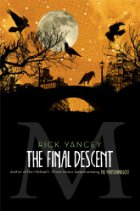
Book Review: The Final Descent by Rick Yancey (Series, #4)
Summary:
The man investigating the folios found with an elderly man who claimed to be over a hundred years old and named Will Henry has reached the final folio containing what this elderly man claimed to have been his life story. The final folio is discombobulated and poetic, and so the investigator arranges it for us to read following the style of Dante’s Inferno. And what a story it tells.
Will Henry is now a bitter, cold teenager still serving Dr. Warthrop. When a man shows up at the door claiming to have a previously thought extinct monstrous snake’s egg for sale, Will Henry takes the acquisition into his own hands. When they bring the egg to New York City for the annual meeting of Monstrumologists, Dr. Warthrop begins to question Will Henry’s loyalty, and Will Henry increasingly ignores all advice, going off on his own bloody ideas. What direction will Will Henry’s and Dr. Warthrop’s lives ultimately take?
Review:
There were hints throughout the Monstrumologist series that it was going to continually descend to a dark place. But I must admit I was slightly fooled by the idea put forth multiple times that Will Henry at least for part of his life is happily married. I thought there would be a glimmer of hope in the ending. Boy was I wrong. This is an incredibly dark book, and a series ending that surprised me. While still a strong read, it didn’t hold all the all-encompassing power and grotesque beauty I found in the first two entries in the series.
Yancey takes the poetic language found in the first three books and kicks it up a notch with the inclusion of the Dante-styled method for dividing the book into sections. Beyond that, the language itself becomes increasingly poetic. One line that is repeated a few times throughout the book is:
Time is a line. But we are circles. (page 4)
I found both the structure and the language interesting and gorgeous, and I really appreciate their inclusion in YA literature. I can imagine that many of the younger readers of the book might never have read Dante and seeing this structure in this book might spur them on to check it out. One thing that I’ve enjoyed throughout the series is that Yancey doesn’t shy away from challenging YA readers, and I’m glad to see that continued here.
The monster in this story is delightfully terrifying. An egg that hatches a snake that eats its prey from the inside out? There’s nothing not terrifying about that. Plus the monster is revealed early on, a nice change of pace from The Isle of Blood
The plot is quite complex, and yet also makes sense when various aspects of it are revealed. It also manages to still be fresh, even though The Curse of the Wendigo
The book spends a lot of time wondering both what makes a monster and if madness can be avoided or escaped. The first is a question addressed earlier in the series, and I think Yancey deals with it eloquently. The second takes quite a dark turn in this book, and I was left feeling empty, hopeless, and saddened.
Madness is a wholly human malady borne in a brain too evolved—or not quite evolved enough—to bear the awful burden of its own existence. (page 170)
It’s certainly valid to view madness as an inescapable pariah for some. I suppose I just have more hope for the world than that. That’s what left me disappointed with the ending. I wanted more hope. Other readers might be less bothered by the tragic end.
Overall, this is a strong final entry in the acclaimed Monstrumologist series. The poetic language is beefed up with a Dante style structure, and the plot is complex, following the ultimate impact on Will Henry of growing up as Dr. Warthrop’s apprentice in Monstrumology. Some readers may be disappointed or overly saddened by the ending lacking a glimmer of hope but others will enjoy its incredibly dark turn. Readers of the previous three books should not miss this one.
4 out of 5 stars
Source: Amazon
Previous Books in Series:
The Monstrumologist
The Curse of the Wendigo
The Isle of Blood
Book Review: Alien in the Family by Gini Koch (Series, #3)
 Summary:
Kitty loves being engaged to Martini, her super-sexy alien fiancee from Alpha Centaurion. But she’s not super into the whole wedding planning thing. The issue gets pushed to the forefront, though, when Martini’s estranged extended family on AC announces their intent to visit and determine the worthiness of the marriage. It seems Martini is actually royalty. Meanwhile, some new aliens crop up, and they just so happen to be Amazonian terrorists. It’s an awful lot for the Super-Being Exterminator team to handle.
Review:
This is a hard review to write, because I *loved* the first two books in the series but this one left such a sour taste in my mouth, I won’t be continuing on.
The overarching plot is good. Yes, it’s a bit ridiculous that Martini is royalty, but anyone who’s read the first two books in the series should expect and embrace the ridiculousness at this point. The added twists from the AC homeworld make the wedding plot more interesting and unique. Every wedding is unique in its own way, but this gives Kitty and Martini’s wedding a decidedly paranormal romance flair. I didn’t find the Amazonian terrorist plot particularly necessary but it was well-done and kept the action moving.
The writing continues to be tongue-in-cheek dirty wit.
I hated having to be someplace on time, it took away so many potential orgasms. (page 40)
But the relationship between Martini and Kitty gave me reason to pause this time around. They continue to have excellent chemistry, which is fun to see. But there are two glaring issues in the relationship. Martini is overly jealous, in a cartoonish, immature way. He doesn’t get jealous in a way that is sexy. For instance, he doesn’t see men looking at Kitty and hold her hand to show they’re together. He actually growls. And yells. And clearly doesn’t trust Kitty. Of course, that lack of trust could be justified since Kitty repeatedly wonders if she’s choosing to marry the right man. Not just that, she thinks about whether she should marry any myriad of her guy friends and ex-lovers. Plus, she continues to flirt with just about anyone, in spite of Martini telling her it makes him uncomfortable. These are issues that should have been worked out prior to an engagement, and they don’t bode well for a future marriage. I wouldn’t mind the issues, but the couple are presented as the ideal couple. They aren’t presented as a couple who has some issues to add some realistic drama to the story. This is paranormal romance. The main romantic couple *should* be a bit idealized, but they aren’t.
A much, MUCH bigger issue to me though is how rape is handled in the book. This comes up in two different scenes. There is a scene where Kitty is fighting some bad guys and accidentally ends up in a room with a football team visiting Vegas. Half of the team makes a very overt attempt to gang rape her, but the other half of the team (plus an alien pet Kitty picks up early in the book) puts a stop to it. Then later the leader of the rapey half of the team comes to help fight the bad guys and apologizes, and Kitty recommends that they be added to the secret forces. She shrugs off the rape attempt as everyone makes mistakes and they apologized and essentially recommends they get hired to her company. I’m ok with a heroine narrowly escaping a rape attempt, as that could happen. I’m not ok with the heroine then shrugging it off, accepting an apology, basically saying that a rape attempt is just a mistake, and trying to help the career of the attempted rapist. What. The. Hell?!
In the second scene, Kitty is hanging out with her friend, Chuckie. Chuckie is, at this point in time, her boss. He’s also her almost life-long friend, she’s had sex with him in the past, he’s asked her to marry him before, and she’s periodically wondered throughout this book if maybe she should be marrying him instead of Martini. At the end of their conversation, they’re getting ready to go, and this happens:
He [Chuckie] took my [Kitty’s] shoulders and turned me around. “God, it’s as bad from the back. Really, go put on some clothes.”
“I don’t have a wrap, okay?”
“Find one. Before I rape you.” He gave me a gentle push toward the bedroom.
“Fine, fine.” (page 434)
So, Kitty’s friend: A) judges her clothing and deems it immodest B) orders her to change her outfit C) casually jokes about raping her D) victim blames rape victims with his comment implying clothing causes rape. And of course Kitty just takes this all in stride and doesn’t see anything at all inappropriate about what Chuckie says.
There is just far too much casual boys-will-be-boys acceptance of rape and rape culture in this book that supposedly features a strong female lead and *romance*. And a wedding! Paranormal romance fans deserve better. Men deserve to be treated as not mindless animals who will tackle anything in a sexy dress. Women deserve better than to be blamed for rapists’ behavior. Toss in the relationship issues between Martini and Kitty, while the relationship is treated by the book an ideal one, and no amount of sexy humor, wedding dresses, and aliens could save it for me. I’m very disappointed in the turn this series took. If you’re interested in the series, I would recommend reading the first two and stopping there.
2 out of 5 stars
Source: Amazon

Previous Books in Series:
Touched by an Alien
Alien Tango
Book Review: I, Robot by Isaac Asimov (Series, #0.1) (Bottom of TBR Pile Challenge)
 Summary:
This collection of short stories tells the history of the invention and gradual improvement of robots. The robots in this future must follow the 3 Laws of Robotics:
- A robot may not injure a human being or, through inaction, allow a human being to come to harm.
- A robot must obey the orders given to it by human beings, except where such orders would conflict with the First Law.
- A robot must protect its own existence as long as such protection does not conflict with the First or Second Law.
But following these laws doesn’t always have quite the outcome the inventors and managers of robots intended.
Review:
I wasn’t aware I, Robot

One thing I like about the world Asimov sets up is that unlike many scifi books featuring AI, the people in Asimov’s world are highly, intensely cautious of robots. They’re very concerned about robots taking jobs, killing humans, and even robbing humans of their autonomy. It sets up a conflict from the beginning and frankly presents the humans as just a bit more intelligent than in some AI scifi universes.
I was under the impression from pop culture that in I, Robot they think they’re protected by the Laws of Robotics but something happens so that the robots aren’t programmed with them any longer. That’s not what happens at all. What happens is much more complex. How the robots interpret the Laws and how the Laws work end up being much more complex and less straight-forward than the humans originally imagined, so much so that they have to have a robopsychologist to help them interpret what’s going on with the robots. This is really quite brilliant and is one of my favorite aspects of the book.
Unfortunately, the book can read a bit sexist sometimes, in spite of having a female protagonist through quite a bit of the book. (The robopsychologist is a woman). The book was first published in 1950, though, so when you think about the time period, the sexism is pretty minor, especially compared to having a female worldwide expert on robopsychology. The main time sexism comes up is when the leader of Europe is a woman and says some self-deprecating things about difficulty leading because she’s a woman. Yes, there is older scifi that avoids sexism pretty much entirely, but I am able to give this instance a bit of a pass considering the other strong portrayal of a woman in a leadership role. But be aware that at least one cringe-inducing sexist conversation does occur.
Overall, this piece of classic scifi stands the test of time extraordinarily well. Its film adaptations do not do it proper service at all. Come to this book expecting a collection of short stories exploring robopsychology, not an action flick about killer robots. Recommended to scifi fans.
4 out of 5 stars
Source: Harvard Books
Book Review: Initiate by Tara Maya (Series, #1)
 Summary:
Dindi is about to undergo her people’s initiation test and ceremony that not only welcomes her to adulthood but also will determine whether or not she is a member of the Tavaedi. The Tavaedi are a mix of religious leader, healer, and warrior who cast magic spells by dancing. Since Dindi can see the pixies and other fae, she thinks she has a chance. But no one in her clan has ever successfully become a Tavaedi. Meanwhile, an exiled warrior, Kavio, is attempting to shed his old life and the haunting of his father’s wars and his mother’s powers. But he slowly discovers a deadly plot that brings him directly to Dindi’s initiation ceremony.
Review:
It takes something special for me to pick up either a YA or a fantasy book, and this one is both. But Jessica’s review over on The Bookworm Chronicles had me intrigued. A fantasy series based on Polynesian tales and traditions is unique in fantasy. Plus the idea of magic from dancing really appealed to the dancer in me (years of tap and jazz, also many lessons in ballroom, zumba, etc…). When I found out the first book in the series is free on the Kindle, I had to try it out, and I’m glad I did! I really enjoyed the book, and its presence highlights many of the strengths of indie publishing.
The world is richly imagined and well described. The tribes and clans have clearly defined and described cultures that vary from stable farming to warrior to cannibal. The structure of the societies make sense and are rich without being overly detailed. I particularly appreciated that this is a tribal culture fantasy without ever claiming to be the real or imagined history of any known to exist (or to have existed) tribe. It is inspired by Polynesian culture but it is still a fantasy, similar to how medieval fantasy is inspired by the real Middle Ages but never claims to be what happened. This lends itself to rich world building without ever venturing off into ridiculous “historical” fiction.
The plot slowly builds Dindi’s story and Kavio’s story, gradually bringing them together. This is good since Dindi is still young enough that she doesn’t see much of the intrigue going on around her. Dindi’s perspective shows us the day-to-day existence of people in this world, whereas Kavio shows us the higher-ranking intrigue. It didn’t bother me that Dindi starts out a bit innocent because it is clear she will grow in knowledge with time. Meanwhile, bringing in Kavio’s perspective helps establish the world for the reader. There were also enough smaller clashes and twists that I never felt that I knew precisely what was going to happen next.
Although the characters at first seem two-dimensional, they truly are not. Everyone is more than what immediately meets the eye, and I liked that this lesson occurs repeatedly. It’s a good thing to see in YA lit. Dindi is strong, kind, and talented, but she still has her flaws. She is good but she’s not perfect, which makes her a good main character. I also appreciate that what will clearly be a romance eventually between Kavio and Dindi starts out so slowly with longing glances from afar. It’s nice that Dindi and Kavio get a chance to be established as individuals prior to meeting each other, plus the slowly building romance is a nice change of pace for YA lit.
Sometimes the chapter transitions were a bit abrupt or left me a bit lost. With changing perspectives like this, it would be helpful if the chapter titles were a bit less artistic and gave a bit more setting. It’s nice that when perspective changes the cue of the character’s name is given, no matter where it happens, but a bit more than that would be nice at the chapter beginnings. Similarly in scene changes, the break is three pound signs. I think using a bunch of centered tildes or even a customized drawing, such as of pixies, would be nicer. At first when I saw these I thought there was some coding error in the ebook. There also are a few editing mistakes that should not have made it through the final edit, such as saying “suffercate” for suffocate (page 144). As an indie author myself, I know it is incredibly difficult to edit your own book, so I give a pass to minor typos and things like that. However, the entirely wrong word for what the author is trying to say should be fixed. There were few enough that I still enjoyed the book, but I hope that there are less in the future installments of the series.
Overall, this is a unique piece of YA fantasy set in a tribal world inspired by Polynesia. The romance is light and slow-building, and the focus is primarily on growing up and becoming an adult. A few minor formatting and editing issues detract from it being a perfect escape read, but it is still highly enjoyable. I intend to read more of the series, and I recommend it to fantasy and YA fans alike.
4 out of 5 stars
Source: Amazon
Buy It
Note: the Kindle edition is free

 Support my work with a tip or browse my shop for curated book club guides, how to guides, cross-stitch patterns, and more!


This work by Amanda Nevius is licensed under a Creative Commons Attribution-Noncommercial-No Derivative Works 3.0 United States License.
 Opinions of a Wolf