
Archive
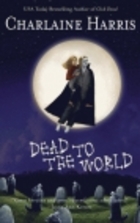
Book Review: Dead to the World by Charlaine Harris (Series, #4)
 Summary:
Just because Sookie has broken up with Bill doesn’t mean her relationship with the supernatural world is over–especially when she finds Eric naked and suffering from amnesia on the side of the road. When she discovers from Pam that a league of evil witches have their sights set on ruling Shreveport, she agrees to hide Eric while the vampires, werewolves, and Wiccans attempt to fend off the witches. To top it off, Sookie’s brother has gone missing, which may or may not be related to the near-war going on.
Review:
While the books in the series so far have been improving, Dead to the World is definitely a step back.
The individual plot lines aren’t so bad, but Harris doesn’t do a good job of keeping them integrated and flowing. The book reads as if it has too many sticks in the fire. Just too much happens in such a short book. The reader is left feeling a bit of whiplash from the rapidly changing storylines and situations.
I knew Sookie would have a rebound after Bill, but I’d hoped Harris would be more creative than having that rebound be Eric. Don’t get me wrong. I like Eric better than Bill, but I also enjoyed the tension between him and Sookie. I wish that had lasted longer. Similarly, I don’t think giving Eric amnesia was a wise character development choice. I’m pretty sure anyone with amnesia plopped into the supernatural world would be a cowering mess. That doesn’t tell us anything about who Eric is underneath his persona. Sookie’s interactions with him therefore felt so fake that I not only couldn’t take real interest in them, I was also a bit grossed out by the falseness of them. I didn’t expect Sookie’s rebound to be emotional, but I did expect it to be more real.
On the other hand, Sookie’s character development takes a nice turn. Without Bill in the picture, she may have expected the supernatural world to pretty much leave her alone. Instead she finds out they still depend on her. Through the various situations, she starts to become a more empowered version of herself, and I enjoyed seeing that.
The best part of the book by far is Jason’s plot-line. I can’t say much more or I’ll give away the secret, but suffice to say that I hope True Blood gets to this part of the story sooner rather than later.
While I’m irritated by some of the character development choices Harris has made, I am still enjoying the world she has created. I am hoping though that the series returns to the tight, witty writing found in Club Dead.
3 out of 5 stars
Source: Bought on Amazon

Previous Books in Series:
Dead Until Dark
Living Dead in Dallas
Club Dead
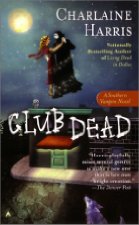
Book Review: Club Dead by Charlaine Harris (Series, #3)
 Summary:
Bill has been acting oddly distant with Sookie lately, so she isn’t exactly pleased when he announces he’s going to Seattle on a mission for the vampire queen of Louisiana. She soon finds out from Pam and Eric, though, that Bill lied to her. He’s actually been in Jackson, Mississippi with his one-time vampire lover, Lorena. He’s also been kidnapped. Something he’s been secretly up to has put them all in danger, so Sookie must put aside her anger for now and try to help the vampires free Bill and prevent a vampire war between the kingdoms of Mississippi and Louisiana. Along the way, Sookie gets to know a whole lot more about the werewolves–not to mention about Eric.
Review:
I have to hand it to Harris, I expected there to be trouble in paradise for Bill and Sookie, but I didn’t expect it this soon or this serious. Reading Club Dead made me realize this series isn’t about Sookie’s relationship with Bill, but about Sookie’s gradual entry into the supernatural world. Bill just kind of served as a door. I tend to be a bit of a romantic, but I’ve never really liked Bill nearly as much as the other supernatural guys, so let me just say–woohoo!
The plot is complex. There are multiple mysteries for Sookie to figure out on top of dealing with her emotions about Bill’s betrayal and her odd popularity among the supernatural guys. I enjoy the fact that she was never desired by human guys, but is among the the supernaturals. It’s akin to the awkward growing up girl finding her niche in her 20s. At first Sookie thought it was just Bill who has the major hots for her, but it turns out she’s a hot commodity with lots of the supernatural guys, but it isn’t just about her looks. They like Sookie for her personality. Something it seemed to me Bill never seemed to appreciate much.
Harris does a good job writing a unique werewolf world. Whereas the vampires are notoriously cold emotionally, the werewolves are hot-blooded. They’re passionate, strong, and animalistic. Harris has them mostly working blue collar jobs, but excelling at it. Sookie’s escort, Alcide, runs a highly profitable family general contracting business.
My only complaint is that Harris doesn’t seem to trust her readers to remember the rules of the world she’s created. We get told yet again that silver chains can hold a vampire down, shifters aren’t out yet, Sookie had a hard time in school, the Japanese created synthetic blood, etc… It’s annoying, and it makes it feel like Harris thinks she needs to dumb down the story for her readers. I understand a quick rehash at the beginning of the book to remind us where we left off, but as for everything else, I think the reader can be trusted to remember that silver chain nets are dangerous to vampires. Those parts are easily skimmed over though, and the res of the book makes up for it.
I originally was uncertain that Harris could keep Sookie Stackhouse’s world interesting for seven books. I envisioned repeated “Bill and Sookie solve yet another mystery” outings, but I am glad to say I was mistaken. As the books continue, more of the world is revealed, and Sookie’s life becomes more complicated. I’m looking forward to what she’s going to reveal next.
If you enjoy the gradual building of a world around a strong female character, you will enjoy the direction this series is headed.
4 out of 5 stars
Source: Bought on Amazon
Previous Books in Series:
Dead Until Dark
Living Dead in Dallas
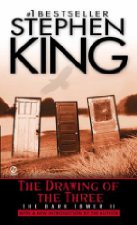
Book Review: The Drawing of the Three by Stephen King (Series, #2)
 Summary:
After finishing the first stage in a long series toward finding The Dark Tower, Roland knows he must now “draw the three.” He will recruit three people to assist him in his quest. Now past the desert and mountains, he has reached an ocean beach where dangerous creatures lurk. As he walks up this beach he gradually finds doors to other realities where his three assistants reside, completely unaware they are about to be drawn into a quest in another world.
Review:
The Drawing of the Three makes it abundantly clear that The Dark Tower series is all about plot and not about character development. The characters do things that work for the plot, but make zero sense from a character stand-point. I’m not talking about mistakes here. I know in the real world people do stupid things. It’s more akin to say a Nazi suddenly deciding he loves a Jew. (That doesn’t happen in the book, but similar things do). I personally find this jarring, but if you’re more of a plot person than a character person, it won’t bother you.
My other issue, and bare in mind that I’ve now read three Stephen King books, is that his writing tends to be misogynistic. Sometimes it’s subtle. An example in this book is when a pharmacist who hates his job is on the phone with a complaining female client. Instead of thinking that he hates these people who complain, he thinks that he hates all these bitches who complain. I, as someone who works with the public, am certain that he has had men and women complain, so why did King specify only women? It seems whenever there’s an opportunity for a character to slur against women, they do. I’m not saying no character should be misogynistic. That’d be like saying no character should ever be racist. I am saying that King shouldn’t take every opportunity to be misogynistic and run with it.
*spoiler warning*
An even better example of this is the only female character in this book, the second assistant, Odetta. She has Dissociative Identity Disorder. (King wrongfully calls this Schizophrenia, which is an entirely different illness). Stereotypically, one personality is “good,” and the other is “bad.” The good personality is grateful to the men for helping her. She is quiet, submissive, intelligent, and strong inside. Naturally one of the men instantaneously falls in love with her. *rolls eyes* The bad personality attempts to defend herself, is physically strong, and vehemently protects herself against suspected rape. She actually tells these men that she will kill them with her cunt. The only women I know who use that word are raging feminists attempting to reclaim the word, and that is not the context here. She is also described as an ugly hag. Granted later these two personalities merge into one, but the implications are there. Men love women who act appropriately feminine. If you behave in any unfeminine manner, you are an ugly hag they naturally want to kill.
*end spoiler*
In spite of that, though, I do still like King’s stories. I’m mostly willing to overlook the bouts of misogyny, because the man can certainly write plot-driven horror. The plot here is excellent. We have doors that lead into people’s brains, horrifying creatures called “lobstrosities,” drugs, shoot-outs, infections, murderers, and more. There is literally horror on almost every page. I couldn’t put it down.
If you like plot-driven horror and don’t mind overlooking character development weakness, then you will enjoy this entry into the Dark Tower series.
3 out of 5 stars
Source: Borrowed
Previous Books in Series:
The Gunslinger, review

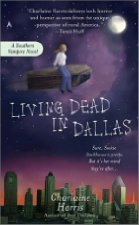
Book Review: Living Dead in Dallas By Charlaine Harris (Series, #2)
I generally lean a bit more toward stand-alone books and trilogies, but every once in a while I get caught up in a series. Currently, I’m caught up in two–Sookie Stackhouse Series and Dark Tower Series. Anyway, I decided I should warn you guys if a book is in the middle of a series by placing (series, #number) in the title. So be warned that means there will be spoilers for books preceding that book, but probably not for that book itself. Got it? Good! There are currently 9 books in the Sookie Stackhouse Series and 7 in the Dark Tower Series, so don’t despair! Stand-alones and trilogies will be back shortly. Now, on to the review!
 Summary:
Sookie discovers yet another murder in Bon Temps when she finds Merlotte’s cook, Lafayette, dead in the bar’s parking lot. She doesn’t have much time to even think about the murder, though, because Eric has called upon her to fulfill her duty to the vampires. She’s been hired by a vampire nest in Dallas to investigate the disappearance of one of their brothers. Sookie discovers there’s more to the supernatural world–and the natural one–than she ever bargained for.
Review:
Maybe it’s because I have yet to see the second season of True Blood and thus don’t have the awesomeness that is that tv show to compare to, but I found myself liking this entry into Sookie’s escapades far more than Dead Until Dark. The first book is much more about the murders than the supernatural world Sookie finds herself on the edge of. Here, she is forced to confront the fact that, yes, she is dating someone from an entirely different world than hers.
This key plot element is what drives the story in a two-pronged fashion. First, Sookie encounters far more supernatural beings than she has before–shapeshifters, werewolves, vampires, a maenad, and another telepath. The supernatural world is far bigger and more complex than she ever imagined. Vampires weren’t one lonely group separated from everyone. They’re a group in an underground world that is straddling both worlds and neither seems too happy about it. This makes the whole idea of vampires coming out of the coffin more interesting, because the other supernatural creatures have one thing in common with the humans: they aren’t happy with the vampires for coming out.
Second, Sookie finally has to deal with the fact that, much as she loves Bill, he has his faults just like anyone does. His just run a bit more shocking to her, because he is in fact a member of the undead. Bill tells her at one point that he hasn’t been human far longer than he was human, and he often forgets what it is like to feel human. There is definitely an element of Bill that is a monster, and Sookie sees that. Bill may be trying to control it, but it’s there. Sookie moves past the honeymoon phase of the relationship and has to decide if her and Bill really are a good match. If the pleasure of loving him is worth the difficulties and struggles.
All the strong features and weaknesses of Dead Until Dark are found here. The conversations are again, excellent. I particularly enjoyed when a werewolf calls Sookie “little milkbone.” On the other hand, the multiple storylines of many characters found in True Blood are again absent here. I think, however, as the series progresses, it will be easier to see this as Sookie’s story and True Blood as Bon Temps’ story, and Sookie is enough of a three-dimensional character to keep it interesting.
4 out of 5 stars
Source: Bought on Amazon

Previous Books in Series:
Dead Until Dark
Book Review: The Gunslinger By Stephen King
 Summary:
The first in King’s epic, Tolkien-like Dark Tower series, The Gunslinger introduces Roland who lives in a world similar to, yet different from our own. He is the last gunslinger, a kind of wild west type warrior. As he pursues the Man in Black across a desert in the first of many steps toward his goal of the Dark Tower, some elements of his dark past are revealed, as are some secrets of the many parallel, yet somehow linked, universes.
Review:
I admit it. I’m not normally a Stephen King fan, but after two people I know started devouring this series, I decided I had to know just what was so exciting.
I’m shocked to discover, I like a Stephen King book. I’m not so shocked to discover that this is an incredibly male book. Roland’s life centers around violence, guns, a quest, the women he beds, and taking care of a boy. It isn’t just the plot line that’s masculine though. The writing style is decidedly male. Roland is abrupt and to the point. Instead of talking about his heart fluttering, he gets hard-ons. Instead of his palms sweating with nerves, his balls retract up tightly against him. It’s gritty, dark, and male. And I liked it.
It reminds me a lot of watching old westerns with my father. This shouldn’t be surprising, since in the introduction King essentially says that he set out to write the American version of an epic in the style of Tolkien. What’s more American and epic than the wild west? Oh, I know, a parallel universe version of the wild west. With mutants.
It is a bit slow-moving at first. That’s not surprising, though, given that it’s the first in a series of seven. Think of it as the introduction chapter, only prolonged through two-thirds of the book. It’s not a boring introduction by any means; it just takes a while to get attached to the characters and thoroughly engrossed in the over-arching story. That’s ok though, because King provides plenty of nightmarish scenes in the mean-time to keep you reading.
I’ve always had a bit of a tendency to thoroughly enjoy more masculine stories just as much, if not more than more feminine stories. (I was the little girl who was excited to watch the war movie marathon on Veteran’s Day.) If you know that you enjoy this type of gritty story, definitely give The Gunslinger a shot. You won’t be disappointed.
4 out of 5 stars
Source: Borrowed

Book Review: Dead Until Dark By Charlaine Harris
Since I watched the first season of True Blood and loved it, I decided to read the book the first season is based on. This was an interesting reversal for me, since usually I’ve read a book then seen the tv show/movie that is made from it. Anyway, this review naturally contains comparisons between the two, so be warned there are spoilers for both Dead Until Dark and the first season of True Blood.
 Summary:
Sookie Stackhouse, a waitress in a bar in a small town in Louisiana, has been wanting to meet a vampire ever since they came out of the coffin a few years ago. She gets her chance when Bill Compton, a vampire who was made right after the Civil War, moves to her town of Bon Temps. Bill is in turn intrigued by Sookie, because she is different from other humans–she can read minds. They start dating, but it’s not always easy to date a vampire–especially when local women known to hook-up with them are being murdered by an unknown killer.
Review:
Charlaine Harris’s strength as a romance novelist is definitely witty conversations between our heroine and the various male characters in the books. They are witty and come across remarkably real considering the paranormalness of the plot. She also sets scenes well. I’ve never been to Louisiana, but I could just feel the humidity in the air as Sookie partook in various night adventures.
Something that bothered me when watching True Blood was I just couldn’t understand what Sookie found appealing in Bill. I find him dull, boring, and ugly. In the book, though, it is abundantly clear that what is so appealing about Bill is that Sookie can relax around him since she can’t read his mind. The amount she relaxes in scenes with just him is palpable. I therefore understand why she chooses to overlook his various faults.
The book is written in first-person, and I think this was an unfortunate choice. It limits our ability to see everything that is going on in Sookie’s world. Most notably missing is Jason’s storyline. In True Blood vampire blood is sold as a drug, V, and Jason becomes addicted to it. Thus, his odd behavior with Sookie is understandable. In the book though we only hear hints of V being used by anyone and certainly not by Jason. Jason is just a douchebag. This limits the levels of story in the book, and I missed the multiple storylines.
*spoiler warning*
The end of Dead Until Dark almost makes up for this though. In True Blood the murderer comes for Sookie, and she is saved by Bill and her boss, Sam. In the book though Sookie is left entirely on her own and saves herself. She finds the faces the murderer alone and defeats him. She finds her inner strength and just keeps fighting back. The murderer even says that the Stackhouse women were the only ones to fight back (he also killed her grandmother). They didn’t just lay back and let it happen. That’s what makes Sookie such a great romance heroine–she is strong and independent. She doesn’t need her relationship with Bill, but she does want it. This makes their romance much more fun.
*end spoiler*
Finally, if you’re a romance novel reader, you might be wondering about the quality of the sex scenes. Well, they do exist, and they are not corny. However, they also just aren’t that exciting. Harris keeps them short and to the point. No witty, fun double entendres are used, either, which is one of my personal favorite aspects of romance novels. This book isn’t one to read for the sex scenes; it’s one to read for the storyline.
If you could mash up the best parts of Dead Until Dark with the best parts of True Blood, you would have a truly amazing story. Unfortunately, both versions have flaws that hold them back from excellence. Dead Until Dark is worth reading if you enjoy paranormal romance. If you just want to read the books because you like True Blood for anything but the main Sookie storyline, though, don’t bother reading the books.
3.5 out of 5 stars
Sources: I bought Dead Until Dark and Netflixed True Blood.

Book Review: The Year of the Flood By Margaret Atwood
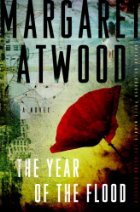 Summary:
Toby, a spa-worker, and Ren, an exotic dancer and prostitute, have both survived the waterless flood–a global pandemic that has killed almost all of humanity. They also both used to live with The Gardeners, a vegetarian cult that constantly warned of the impending apocalypse. A series of flashbacks tells how they survived the pandemic while the question of what to do now that the pandemic is mostly over looms large in their lives.
Review:
Margaret Atwood is one of my favorite authors. I love dystopian books, and she has an incredible talent for taking the current worries and news items and turning them into a near-future dystopia. Toby’s and Ren’s world prior to the waterless flood isn’t anything to be happy about. Slums dominate. Gangs run rampant. The world is now run by a giant evil corporation (which is somehow worse than a giant evil government? *shrugs*). It’s really the little things that makes this future world believable. Kids wear bracelets that have live mini jellyfish in them. Species have been spliced together to make new, more usable ones, such as the Mo’Hair–a sheep whose wool makes perfect fake hair for women. The people who don’t live in slums live in corporation-run compounds where everything they do is monitored. What makes this dystopia wonderful is how plausible it all seems.
Really, though, all of these dystopian features are just a back-drop for the real stories. Toby spends years hiding with The Gardeners and running because one man, Blanco, decided he owned her upon having slept with her. When Toby defied him, he vowed to kill her. He haunts her life for years on end. Similarly, Ren falls in love with a boy in highschool who breaks her heart yet somehow keeps coming back into her life and repeating the damage.
This is a book about mistakes. About how thinking we own the Earth and its creatures could cause our own demise. About how sleeping with the wrong man just once can haunt you for years. About how loving the wrong man can hurt you for years.
This is what I love about Atwood. She has such wonderful insight into what it is to be a woman. Insight into what haunts women’s dreams. When women talk about what scares them, it isn’t nuclear war–it’s the man in the dark alley who will grab her and rape her and never leave her alone. Toby’s Blanco is the embodiment of this fear. She sees him around every corner. She’s afraid to go visit a neighbor because he might find her on the street walking there. Setting this fear in an other world makes it easier for female readers to take a step back and really see the situation for what it is. Yes, he’s a strong, frightening man, but Toby let him disempower her by simply fearing him for years. This is what Atwood does well.
The pandemic, however, is not done so well. Too many questions are left. Where did the pandemic come from? Does it work quickly or slowly? Some characters seem to explode blood immediately upon infection, whereas others wander around with just a fever infecting others.
Similarly, the reader is left with no clear idea as to how long it has been since the pandemic started. On the one hand it seems like a month or two. On the other hand, the stockpiles of food The Gardeners made run out quite early, and that just doesn’t mesh given how much attention they gave to them prior to the pandemic.
I also found the end of the book extremely dissatisfying. It leaves the reader with way too many unanswered questions. In fact, it feels completely abrupt. Almost like Atwood was running out of time for her book deadline so just decided “ok, we’ll end there.” I know dystopian novels like to leave a few unanswered questions, but I don’t think it’s appropriate to leave this many unanswered.
The Year of the Flood sets up a believable dystopia that sucks the reader in and has her reconsidering all of her life perceptions. Unfortunately, the ending lets the reader down. I think it’s still worth the read, because it is enjoyable for the majority of the book, and I am still pondering issues it raised days later. If you’re into the environmental movement or women’s issues, you will enjoy this book–just don’t say I didn’t warn you when the ending leaves you throwing the book across the room. ;-)
4 out of 5 stars
Source: Library

Book Review: Leviathan By Scott Westerfeld
Thanks to my friend Margaret for lending me her ARC of Leviathan! I’ve enjoyed Scott Westerfeld’s other YA books, and my recent surge in curiosity about steampunk (due to love of the fashion) made me extra-curious about this new YA steampunk book.
 Summary:
World War I takes on a whole new look when the Allied powers function utilizing machine-like, genetically engineered animals, and the Axis powers use tanks that walk using steam power. In this alternate history reside Deryn and Alek. Deryn is a teenaged Scottish girl who pretends to be a boy so she can join the air service working aboard the Leviathan–an ecosystem that resembles a zeppelin. Alek as the son of the assassinated Austrian archduke must go into hiding in Switzerland, escaping with a few loyal servants and a walker–one of the walking tanks. Their worlds end up colliding, as worlds tend to do in a world war.
Review:
This book should come with a warning. “By YA we mean for middle schoolers younger than the characters, not late teens like Westerfeld’s other books.” Although this is technically YA, it reads like a children’s book. Some would say the lovely illustrations throughout made it feel that way, but I don’t think that’s the case. Some adult books are full of wonderful illustrations, yet we still know they are meant for adults. I really think it’s the storyline and the writing that came off so young this time. Maybe Westerfeld wanted to write younger, but his publisher should have notified his fans that this is a book meant for younger people.
Westerfeld does an excellent job of explaining the Darwinist world in a subtle way to the reader. I have difficulty even explaining the flying ecosystems to people, yet I understood them perfectly in the book. Similarly, I had no issue picturing the walkers, even though I couldn’t fathom why anyone would want to build such a thing. I also liked Deryn. She is a well-rounded character–with flaws, but still someone a young audience can look up to. Similarly, the most intelligent person on the airship is a woman, which is a feature I highly appreciated.
On the other hand, I found Alek to be a completely confusing and unsympathetic character. At first I thought he was about nine years old, then overnight he seems to be fifteen. Yes, I know his parents died, but I don’t think a fifteen year old would be playing with toy soldiers the night prior, regardless. Similarly, Alek repeatedly makes stupid decisions. I know characters sometimes make them, but he makes them so often that I just want to slap him upside the head. There is very little that is redeemable about Alek. By the time he makes a wise decision, I was so sick of him that it failed to raise my opinion of him at all.
Similarly, I’m bothered that all of the servants loyal to Alek are men. Why couldn’t a single woman be loyal to him? Deryn’s world consists of both powerful men and women, yet Alek’s is entirely male except for his low-born mother. I know this is early 20th century, but if you’re going alternate history, why not empower a few more women along the way?
Even though there is steam power and Victorian clothing in an alternate history, Leviathan didn’t feel very steampunky to me because, well, the setting is Victorian! Maybe I’m too into steampunk fashion, but I would have been far more impressed if all these things were true in an alternate history of the Vietnam War, for instance, or even World War II. I think World War I is just far too close to the actual Victorian age to truly feel like an alternate, steampunk world. I get enjoying books written in the Victorian era from a steampunk viewpoint, but current authors could be far more creative when utilizing this genre.
Finally, I have to say, I hate the ending! I know Westerfeld is a huge fan of writing trilogies, but this ending is far too abrupt. I was left going “what the hell?” instead of feeling pleasantly teased about the second book in the series.
Leviathan isn’t a bad book. It isn’t painful to read, and the storyline is enjoyable. It’s kind of like a mash-up of Jurassic Park, 20,000 Leagues Under the Sea, and your typical 21st century YA novel. Only minus all the blood, guts, and gore. Middle schoolers with a taste for the whacky will enjoy it. Older teens and adults should choose more sophisticated steampunk–perhaps even the classic 20,000 Leagues Under the Sea.
3 out of 5 stars
Source: Borrowed ARC from a friend

Book Review: Fourth Realm Trilogy By John Twelve Hawks


Summary:
John Twelve Hawks presents us with a near-future dystopia in the Fourth Realm Trilogy—The Traveler, The Dark River, and The Golden City. In this vision of the world Earth as we know it is actually just one of six realms of parallel universes. Travelers are the only ones who can move between these parallel universes. Saints with visions of heaven and hell and motivating, compassionate people such as Buddha are examples of past travelers. They seek to keep people aware of their “Light” aka soul. An evil organization called The Brotherhood has been seeking for generations to wipe out travelers, as they believe they cause dissent. Working against The Brotherhood are Harlequins–people raised from birth to defend travelers at all costs. The Brotherhood thought they had succeeded and have started building a panopticon–a virtual prison in which everyone is constantly under surveillance for “their own protection.” However, two brothers–Michael and Gabriel–are actually travelers. Michael sides with The Brotherhood in an effort to ensnare humanity, while Gabriel teams up with Maya, a Harlequin. The two brothers thus are pit against each other in an effort to enslave or save humanity.
Review:
The Fourth Realm Trilogy is decidedly a series with a message and an agenda. “John Twelve Hawks” is actually a pen-name, and the publisher claims that he does try to live off the grid out of a concern about loss of freedom via invasion of privacy with new technology. There is skepticism as to whether this is true or a marketing hype. Regardless, whoever the author is, his main concern is definitely loss of privacy to technology, and this is abundantly evident in the trilogy.
This is a plot-driven trilogy. It reads like an action film in the feel of The Matrix. Further it is exciting because the world the characters live in looks exactly like our own, right down to the surveillance cameras in London. The only difference is these parallel universes, which is a feature I enjoyed a lot. Dystopian novels are usually either completely bound in our world or take place in an entirely different one. This trilogy utilizes both approaches, and this kept it from feeling like an updated version of 1984.
There are many characters. Thankfully, they are distinct enough that keeping track of them is relatively easy, but sometimes Twelve Hawks does not pay enough attention to character development. Particularly toward the end of the trilogy, characters will suddenly make a decision or behave in a manner that comes out of nowhere and is completely out of character. These moments are jarring and distract from the plot.
The plot itself is a good, complex one. It takes place all over this world and journeys to every single realm. Two plot sequences I particularly enjoyed were one in an off-the-grid commune in the south-west US and another in Japan. Twelve Hawks must have travelled extensively, because the descriptions scream “I’ve been there. I know what it’s really like.” There was one plot hole in The Dark River that still bothers me. I think what probably happened is there’s an explanation for the action, but Twelve Hawks neglected to write it in. However, the ending makes up for the plot hole as I was unable to predict it. I absolutely love unpredictable endings that keep me page-turning right up until the end.
Another enjoyable element of the trilogy is the violence. It is chock-full of creative deaths, and even characters who don’t die get beat up a lot–in all realms. An example of the level of violence is a scene where three characters’ limbs are simultaneously wripped off in front of an audience. However, most of the violence is more of the ninja type, due to the presence of the sword and martial-arts trained Harlequins. Twelve Hawks’s strength is writing action sequences, so these are great fun to read.
A mark against the trilogy is periodic character speeches that are obviously Twelve Hawks voicing his opinion. This a typical short-coming of dystopian novels though. Authors with a dark vision of the future can’t seem to help proselytizing in an attempt to save it. I don’t hold this against the novels, but other readers might find it more annoying. There’s essentially one speech a book.
If you enjoy Quentin Tarantino movies or want a more grown-up, spiritual version of The Hunger Games, definitely give the Fourth Realm Trilogy a chance. I doubt you’ll be disappointed.
4 out of 5 stars
Source: Bought The Traveller, borrowed The Dark River and The Golden City from the library


Book Review: Setting Free the Bears By John Irving
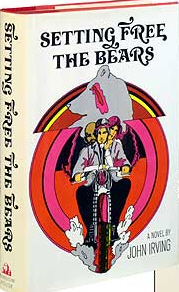 Summary:
John Irving is an American writer best-known for The World According to Garp and A Prayer for Owen Meany. Setting Free the Bears is his first novel and is set in Europe as opposed to New England. Hannes Gaff has failed his exam at university in Vienna. Distressed he goes to a motorcycle shop where he meets Siegfried Javotnik. Siggy convinces Gaff to buy a motorcycle together to adventure across Europe. Their adventure takes a side-turn though when Siggy becomes obsessed with letting loose the zoo animals in Vienna and Gaff becomes obsessed with a girl named Gallen.
Review:
Irving utilizes a storytelling technique I’ve always particularly enjoyed–a character finding a notebook and the character and reader reading that notebook together. Here Siggy’s voice is bookended by Gaff’s. I had a difficult time getting into the book and was frustrated with it at the end. It wasn’t until reflection that I realized I enjoyed Siggy’s story, but not Gaff’s.
Siggy is an excellent character. Through his notebook we see how his parents’ unconventional meeting and marriage as a result of uncontrollable war circumstances has made him the slightly crazy person he is today. Personally I think he is just misunderstood, which is why I had issues with Gaff worrying about going crazy like Siggy. Siggy isn’t crazy; he’s just unconventional.
Gaff, on the other hand, is not a well-rounded character. He is someone who I don’t understand and couldn’t relate to. Although his crush on Gallen is the catalyst for a key plot point, I actually felt that he had infinitely more feelings for Siggy. There’s nothing wrong with that, but it did make some plot points feel forced.
Overall, this is a typical 1960s generation book. Siggy and Gaff feel like the middle lost generation. Their parents were defined by the war, but they are defined by nothing. All that matters about their lives is their pre-histories–how their parents met and were impacted by the war. They are left meandering through history on a motorcycle attempting to figure out exactly how things turned out this way from the few clues the war-time people will let them have. Those who enjoy this theme of the 1960s will enjoy this book. Others who enjoy Irving’s writing style would be better off reading The World According to Garp.
3 out of 5 stars
Source: Library

 Support my work with a tip or browse my shop for curated book club guides, how to guides, cross-stitch patterns, and more!


This work by Amanda Nevius is licensed under a Creative Commons Attribution-Noncommercial-No Derivative Works 3.0 United States License.
 Opinions of a Wolf