
Archive
Book Review: Pink Slime by Fernanda Trías translated by Heather Cleary
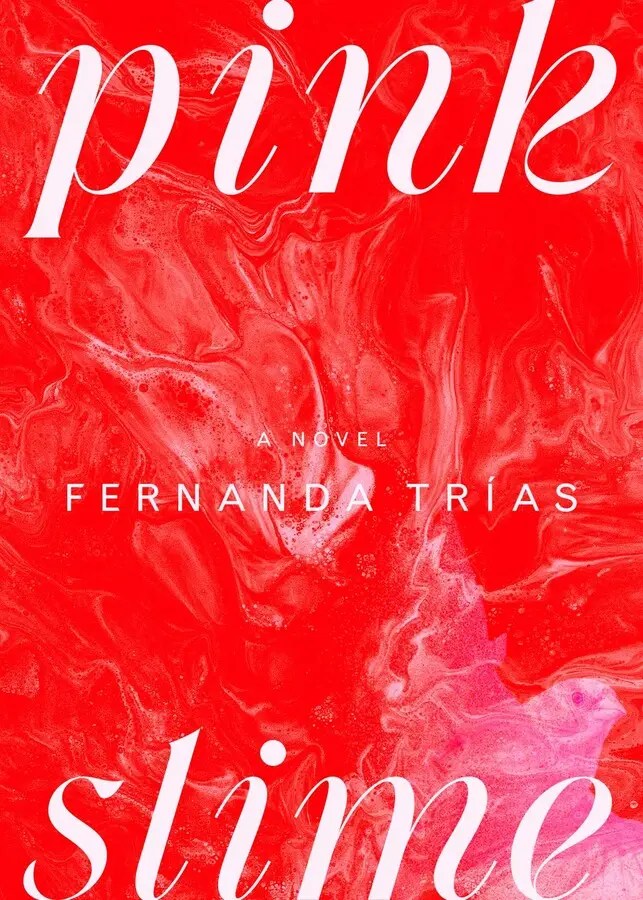
A quiet dystopian novel from a Uruguayan author about a woman navigating love, caregiving, and survival as a mysterious plague and environmental collapse unravel the world around her.
Summary:
In a city ravaged by a mysterious plague, a woman tries to understand why her world is falling apart. An algae bloom has poisoned the previously pristine air that blows in from the sea. Inland, a secretive corporation churns out the only food anyone can afford—a revolting pink paste, made of an unknown substance. In the short, desperate breaks between deadly windstorms, our narrator stubbornly tends to her few remaining with her difficult but vulnerable mother; with the ex-husband for whom she still harbors feelings; with the boy she nannies, whose parents sent him away even as terrible threats loomed. Yet as conditions outside deteriorate further, her commitment to remaining in place only grows—even if staying means being left behind.
Review:
You might be asking, “What possessed you to pick up a book about a plague, Amanda? Haven’t you seen enough of that in the last five years?” Fair question. When I saw Pink Slime on NetGalley, the description there led me to believe the focus wasn’t so much on the plague, but rather on the pink slime—something in the vein of Soylent Green. If you’re not familiar, the horror in Soylent Green centers on a disturbing twist about what people are unknowingly consuming. That’s the kind of dystopian horror I could be in the mood for.
Alas, Pink Slime isn’t really about the pink slime at all. It’s more about environmental collapse and the slow unraveling of society due to a strange, algae-driven plague.
I appreciated the way the main character’s life is quiet but emotionally complex. She still feels responsible for her recently ex-husband, who’s now in a clinic suffering from a chronic form of the plague that usually kills its victims. She visits him, possibly because she still loves him, at least a little. Her mother lives nearby in the same unnamed coastal South American city and demands occasional visits. And most pressingly, she periodically cares for a young boy with Prader-Willi Syndrome, whose wealthy parents provide food allotments but largely leave him in her care.
Her relationships with all three are emotionally layered—she provides meals, bathes, and protects them, yet often feels completely alone. It’s a quiet reminder of how caregiving can be both deeply intimate and deeply isolating. (If you’re interested in another take on post-apocalyptic isolation—this time with zombies—check out my own novel, Waiting for Daybreak, where a woman navigates survival and mental health in the midst of a very different kind of plague.)
I also found the plague itself intriguing. While the government claims it’s contagious, most cases appear to stem from exposure to toxic algae blooms, blown in by ocean winds. Residents are alerted by alarms to rush indoors and seal their windows. This unique concept allowed me to read the story from a dystopian distance rather than sending me back into pandemic fatigue.
That said, the novel’s language and structure make it a challenging read. Each chapter begins with a poem. The prose is often flowery and nonlinear, with frequent shifts in time and tense. While this might feel beautifully disorienting for some, for me it made the already slow, quiet apocalypse feel even slower. I suspect the translation was a difficult task. Though well-crafted, I imagine this book reads more naturally in its original Spanish. And while I’d love to do a comparison, my Spanish isn’t up to the task—so I’ll have to leave it to bilingual readers to weigh in. Readers more familiar with Uruguayan culture or more comfortable with poetic, nonlinear narratives may connect more deeply with the text than I did.
Diversity in the book is limited. No characters’ races are clearly described, and there are no overt LGBTQIA+ identities represented. The child with Prader-Willi Syndrome adds some disability representation, which I found compelling. It’s rare to see this condition, in which children lack a full signal and thus feel hungry all the time, represented in fiction. The narrator clearly loves and cares for the child, even while grappling with the challenges of caregiving. Readers should be aware, however, that some descriptions veer into fatphobic or ableist territory. Still, the overall portrayal felt realistic in terms of how society often responds to visible disabilities.
Overall, this is a quiet dystopian novel that offers a unique perspective on care, collapse, and isolation. It’s a challenging read on multiple levels: structurally, linguistically, and emotionally. But for readers curious about contemporary Latin American literature, especially from Uruguay, it offers insight into a distinct literary voice. Just don’t go into it expecting Soylent Green.
If you found this review helpful, please consider tipping me on ko-fi, checking out my digital items in my ko-fi shop, buying one of my publications, using one of my referral or coupon codes, signing up for my free microfiction monthly newsletter, or tuning into my podcast. Thank you for your support!
3 out of 5 stars
Length: 240 pages – average but on the shorter side
Source: NetGalley
Buy It (Amazon or Bookshop.org)
Book Review: She Who Knows by Nnedi Okorafor
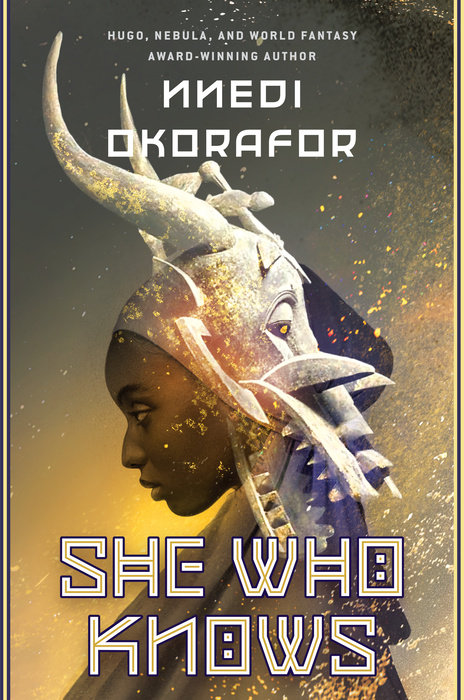
Blending science fiction and fantasy in a near future West African setting, this engaging prequel offers a compelling plot blended with a unique coming-of-age story in a quick read.
Summary:
Najeeba knows.
She has had The Call. But how can a 13-year-old girl have the Call? Only men and boys experience the annual call to the Salt Roads. What’s just happened to Najeeba has never happened in the history of her village. But it’s not a terrible thing, just strange. So when she leaves with her father and brothers to mine salt at the Dead Lake, there’s neither fanfare nor protest. For Najeeba, it’s a dream come true: travel by camel, open skies, and a chance to see a spectacular place she’s only heard about. However, there must have been something to the rule, because Najeeba’s presence on the road changes everything and her family will never be the same.
Review:
This short, powerful book packs quite a punch with its quickly established setting, a main character you can easily root for, and action scenes that will leave you breathless.
This is a perfect example of science fantasy (also called space fantasy), blending elements of both science fiction and fantasy seamlessly. The science fiction aspect is revealed through its post-apocalyptic future—something happened to reset the world. Paper books are rare and kept in a community building, and the salt fields that Najeeba’s people harvest from were created by a drying up of the water. The fantasy elements feel just as integrated, from the “Call” that Najeeba’s people receive when it’s time to go to the salt, to the supernatural powers some individuals can access. (For another science fantasy read, check out my retelling of Thumbelina set on Venus.)
Though part of a prequel series to Nnedi Okorafor’s Who Fears Death, you don’t need to have read that to enjoy this one. I hadn’t read it either, and I never felt lost or like I was missing crucial context. The initial conflict—Najeeba’s desire to do something that’s typically only for boys—is easy to grasp, and the world-building is subtle and effective. By the time the more unique and fantastical elements come into play, I was fully immersed in the world.
Set in a future version of West Africa, this features Black protagonists, with other characters who are Arab. While some of the abilities that develop in the story could be read as an allegory for developing a disability, none are explicitly represented.
The plot kept me hooked, and while I was satisfied with the ending, I found myself eager to explore more of this world. I’m excited to pick up the next book in the series when it’s available.
Overall, this is a quick, engaging read that brings science fantasy to a West African future setting. It’s a refreshing take on the near-future genre, offering a new perspective that I look forward to exploring further.
If you found this review helpful, please consider tipping me on ko-fi, checking out my digital items available in my ko-fi shop, buying one of my publications, using one of my referral/coupon codes, or signing up for my free microfiction monthly newsletter. Thank you for your support!
4 out of 5 stars
Length: 161 pages – average but on the shorter side
Source: Library
Buy It (Amazon or Bookshop.org)
Book Review: A Botanical Daughter by Noah Medlock
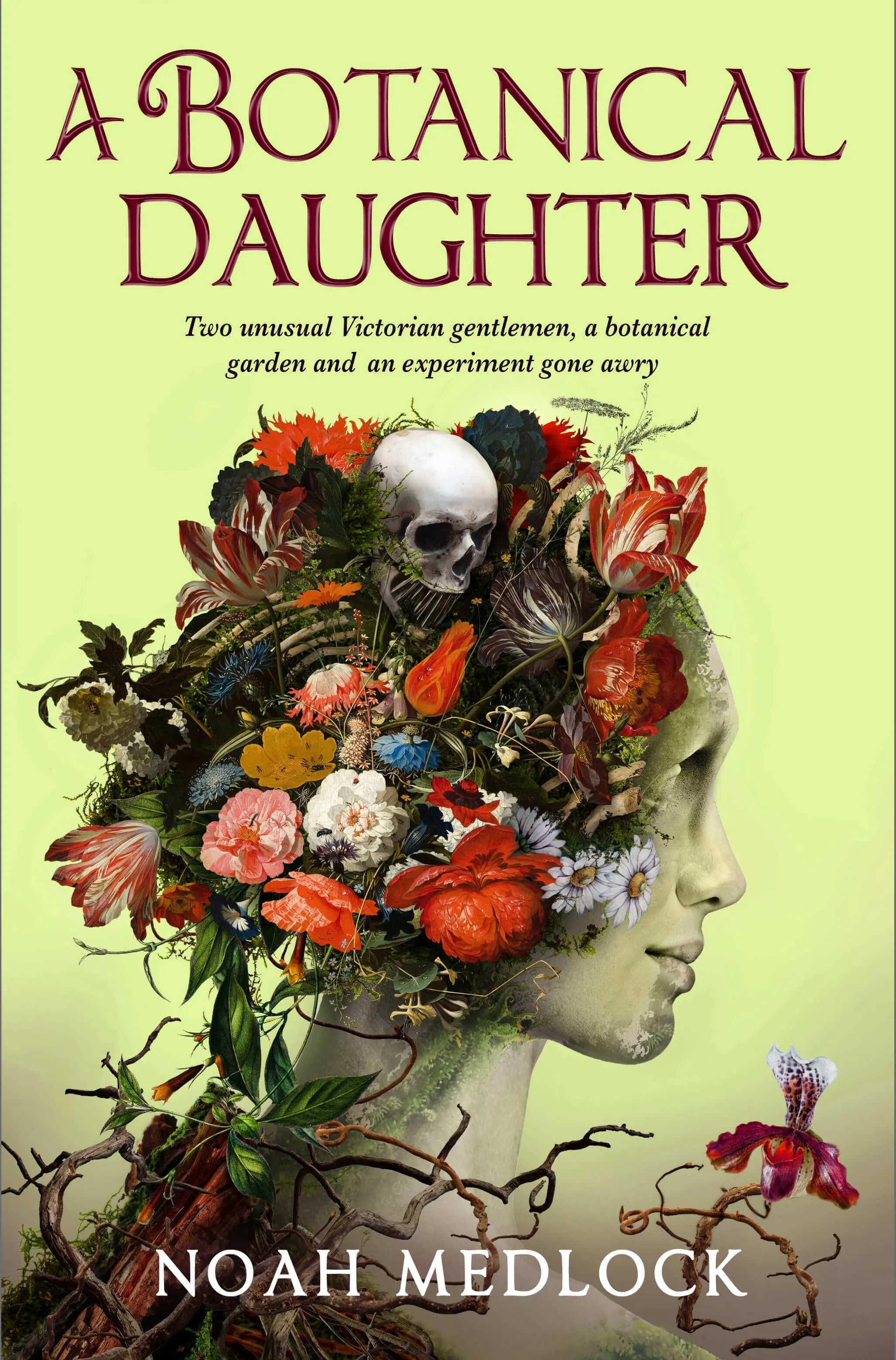
Imagine Frankenstein’s monster as a woman made of plants, with two gay dads and a woman love interest.
Summary:
It is an unusual thing, to live in a botanical garden. But Simon and Gregor are an unusual pair of gentlemen. Hidden away in their glass sanctuary from the disapproving tattle of Victorian London, they are free to follow their own interests without interference. For Simon, this means long hours in the dark basement workshop, working his taxidermical art. Gregor’s business is exotic plants – lucrative, but harmless enough. Until his latest acquisition, a strange fungus which shows signs of intellect beyond any plant he’s seen, inspires him to attempt a masterwork: true intelligent life from plant matter.
Driven by the glory he’ll earn from the Royal Horticultural Society for such an achievement, Gregor ignores the flaws in his plan: that intelligence cannot be controlled; that plants cannot be reasoned with; and that the only way his plant-beast will flourish is if he uses a recently deceased corpse for the substrate.
The experiment – or Chloe, as she is named – outstrips even Gregor’s expectations, entangling their strange household. But as Gregor’s experiment flourishes, he wilts under the cost of keeping it hidden from jealous eyes. The mycelium grows apace in this sultry greenhouse. But who is cultivating whom?
Review:
I absolutely loved the concept behind this retelling. It offers a biopunk take on Frankenstein with a blend of Victorian elements that’s both intriguing and thought-provoking.
As a gardener (and botanical garden member), I found the descriptions of the greenhouse and botanical garden both realistic and captivating. It was charming to see the couple living inside the greenhouse—who hasn’t daydreamed about that as a gardener? The contrast between the m/m and w/w relationships was also a standout, especially since neither would have been accepted in the historical time period.
However, the writing style didn’t suit my tastes. It was much too flowery (pun intended!) for what I typically enjoy reading. In fairness, I’m not particularly fond of Victorian literature, which this retelling modernizes while maintaining that tone. I struggled to connect with the two main characters and never quite understood their motivations. Though I’m a queer person and this is queer literature, I found myself disagreeing with the book’s overarching themes—it’s okay for queer people to have differing perspectives, and this is where I do.
Diversity is limited to sexuality. There is no diversity of race, ethnicity, or ability.
There are several violent scenes, including on-screen blood splatter, which is fairly graphic. There’s also a lengthy, explicit description of the w/w relationship, which was too intense for my taste, so I skimmed that section.
Overall, this is a unique take on Frankenstein with queer characters and a botanical twist. If you’re intrigued by the premise, I recommend reading the first few pages to see if the writing style resonates with you. Just be aware of the graphic violence and intimate chapter.
If you found this review helpful, please consider tipping me on ko-fi, checking out my digital items available in my ko-fi shop, buying one of my publications, using one of my referral/coupon codes, or signing up for my free microfiction monthly newsletter. Thank you for your support!
3 out of 5 stars
Length: 384 pages – average but on the longer side
Source: NetGalley
Buy It (Amazon or Bookshop.org)
Publication Announcement: Scifi: “The Crooked Tree of Algrüsti”
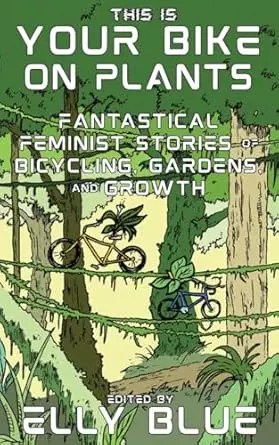
I’m thrilled to announce the publication of my scifi short story “The Crooked Tree of Algrüsti” in the anthology This Is Your Bike on Plants: Fantastical Feminist Stories of Bicycling, Gardens, and Growth—edited by Elly Blue and published by Microcosm Press. You can grab a copy on Amazon, directly from the publisher, or at many other bookstores.
About the collection:
The revolution will be green, growing, and non-motorized.
When you plant the seeds of bicycle revolution, you never know what the future will grow. These 12 stories form a splendid garden of potential futures, from the speculative to the surreal—all powered by bicycles, grounded in feminism, and blossoming with creativity.
In these pages you’ll find activist trees, magical flowers, feminist fairy tales, climate parables, photosynthesizing human-bicycle cyborgs, revolutionary elves, dazzling space gardens, green witchcraft, and more to delight your imagination. Lovers of cli-fi, solarpunk, hopepunk, and feminist bicycle science fiction will all find something to love here. You’ll never see the streets, or plants, around you the same way again.
About my story:
Celosia moved to the frigid planet of Algrüsti to escape the omnipresence of plants and their sentient relatives, the Morts. But when her new friend unexpectedly leaves the planet, Celosia is left in charge of an unanticipated botanical garden—and must confront her past in the process.
My story touches on themes of friendship, grief, addiction, and recovery—all with a love for plants and music.
I’m so proud to be part of this collection, and I hope you’ll check it out! Please also visit my Publications Page for more of my work.
Thank you so much for your support!
Book Review: Welcome to Forever by Nathan Tavares
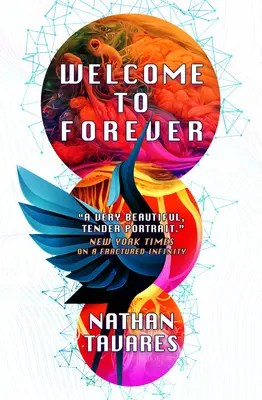
Two men trapped in looping artificial realities, always find each other—maybe even save the world.
Summary:
Fox is a memory editor – one of the best – gifted with the skill to create real life in the digital world. When he wakes up in Field of Reeds Center for Memory Reconstruction with no idea how he got there, the therapists tell him he was a victim in a terrorist bombing by Khadija Banks, the pioneer of memory editing technology turned revolutionary. A bombing which shredded the memory archives of all its victims, including his husband Gabe.
Thrust into reconstructions of his memories exploded from the fragments that survived the blast, Fox tries to rebuild his life, his marriage and himself. But he quickly realises his world is changing, unreliable, and echoing around itself over and over.
As he unearths endless cycles of meeting Gabe, falling in love and breaking up, Fox digs deep into his past, his time in the refugee nation of Aaru, and the exact nature of his relationship with Khadija. Because, in a world tearing itself apart to forget all its sadness, saving the man he loves might be the key to saving us all.
Review:
This book is one to read if you’re after gorgeous writing. The prose is immersive, with sentences that invite you to sink into them and reflect.
The character of Fox is rich in complexity. Each chapter peels back another layer of his personality, revealing depth and nuance. However, Gabe doesn’t receive the same level of development. While this is understandable—since we spend far more time in Fox’s mind than we do with Gabe in the present—it still makes their dynamic feel uneven.
Each chapter and memory journey felt like its own vignette. I found myself struggling with the overarching story, as so much time was spent on each memory that, by the end, I found myself asking, “What was the set-up again?” The book’s pacing, which focuses heavily on memory, made it hard for me to connect with the main plot.
At first, I felt the ending was spot on, but then the “Coda Excisions”—a chapter after the final one—left me confused. For me, it diminished the emotional impact of the conclusion.
Diversity is a standout feature of this book. The primary relationship is m/m, and there’s a secondary wlw relationship. All three of the main characters are people of color, and one speaks with a stutter, adding further nuance to the representation.
In terms of content:
- There’s some swearing.
- Intimacy is handled artistically—focused more on emotions than explicit details.
- One character experiences childhood exploitation, and it’s treated with the appropriate weight and sensitivity.
- Both main characters are orphaned.
- There are a few intense scenes: a bomb threat, a natural disaster resembling a hurricane, and a workplace shooting.
Overall, if you’re less concerned with plot structure and more interested in the emotional journey and immersive writing, this book may resonate with you. I recommend reading the first few chapters to see if the style suits you, and then deciding whether to continue.
If you found this review helpful, please consider tipping me on ko-fi, checking out my digital items available in my ko-fi shop, buying one of my publications, using one of my referral/coupon codes, or signing up for my free microfiction monthly newsletter. Thank you for your support!
3 out of 5 stars
Length: 435 pages – average but on the longer side
Source: NetGalley
Buy It (Amazon or Bookshop.org)
Book Review: Land of Milk and Honey by C Pam Zhang

An elderly woman recalls the time in her 20s as a young chef living through a worldwide food shortage.
Summary:
A smog has spread. Food crops are rapidly disappearing. A chef escapes her dying career in a dreary city to take a job at a decadent mountaintop colony seemingly free of the world’s troubles.
There, the sky is clear again. Rare ingredients abound. Her enigmatic employer and his visionary daughter have built a lush new life for the global elite, one that reawakens the chef to the pleasures of taste, touch, and her own body.
In this atmosphere of hidden wonders and cool, seductive violence, the chef’s boundaries undergo a thrilling erosion. Soon she is pushed to the center of a startling attempt to reshape the world far beyond the plate.
Review:
The central conflict in this book is that a young chef on the cusp of her career finds herself suddenly inhabiting a world full of food shortages thanks to smog. Day in, day out instead of cooking the food she wanted to, she’s having to find new ways to use the mung bean powder the government is providing. When an opportunity comes up for a high-paying job working as a chef at a wealthy newly formed, secretive nation-state with the promise of using traditional ingredients, she jumps at the chance. It’s a beautiful set-up for a book.
Another strength of this book is its depiction of Asian-American and Asian-European women. In a book with limited characters, one is Asian-American and one is Asian-European (biracial). These two women love each other and also face racism. One of them from her own father who is white. This book contains one of the most impactful depictions of the harm of exoticizing Asian women I’ve seen.
This is also a sapphic book. The main character has a relationship with another woman for part of the book. It’s not exactly a healthy relationship. It is not explicit. This isn’t a romance novel. It’s a scifi novel with a relationship in it.
What did not work for me was that the tense the story was told in removed all the tension. It’s told in first person past tense. It’s an elderly woman recalling her life, primarily during a great environmental crisis. But because she’s telling the story as an elderly woman, we know she survives everything. Right from the first page. It removed all tension for me.
Also, this is another book where quotation marks aren’t used. What is going on with this trend? It’s not for me. (This one uses italics for everything – whether it’s spoken or thought – making it difficult to understand certain scenes.)
Overall, this is an interesting set-up for a book exploring sustainability and what it is to exist as an Asian woman in a Western society. Recommended to those who are ok with a lack of tension in this type of read.
If you found this review helpful, please consider tipping me on ko-fi, checking out my digital items available in my ko-fi shop, buying one of my publications, using one of my referral/coupon codes, or signing up for my free microfiction monthly newsletter. Thank you for your support!
3 out of 5 stars
Length: 240 pages – average but on the shorter side
Source: Library
Buy It (Amazon or Bookshop.org)
Book Review: The Road to Roswell by Connie Willis

When a woman who doesn’t believe in aliens comes to Roswell for her college roommate’s UFO-themed wedding, she’s shocked to find herself abducted by an alien and driving all over the southwest at his tentacled bidding.
Summary:
When level-headed Francie arrives in Roswell, New Mexico, for her college roommate’s UFO-themed wedding—complete with a true-believer bridegroom—she can’t help but roll her eyes at all the wide-eyed talk of aliens, which obviously don’t exist. Imagine her surprise, then, when she is abducted by one.
Odder still, her abductor is far from what the popular media have led her to expect, with a body like a tumbleweed and a mass of lightning-fast tentacles. Nor is Francie the only victim of the alien’s abduction spree. Before long, he has acquired a charming con man named Wade, a sweet little old lady with a casino addiction, a retiree with a huge RV and a love for old Westerns, and a UFO-chasing nutjob who is thoroughly convinced the alien intends to probe them and/or take over the planet.
But the more Francie gets to know the alien, the more convinced she becomes that he’s not an invader. That he’s in trouble and she has to help him. Only she doesn’t know how—or even what the trouble is.
Part alien-abduction adventure, part road trip saga, part romantic comedy, The Road to Roswell is packed full of Men in Black, Elvis impersonators, tourist traps, rattlesnakes, chemtrails, and Close Encounters of the Third, Fourth, and Fifth kind. Can Francie, stuck in a neon green bridesmaid’s dress, save the world—and still make it back for the wedding?
Review:
Connie Willis’s To Say Nothing of the Dog is one of my favorite scifi/romance/comedy reads of all time (review). I’m also a huge fan of the American Southwest, so when I heard about this book, it went on my wishlist immediately. (Shout-out to my siblings-in-law for the birthday present). This was definitely a rollicking, feel-good read, which was just what I needed.
Francie is a fun main character. Jumping right into her being at the airport on her way to a wedding she wants to help her old college roommate see is probably a bad idea builds up the identification and empathy right away. Who among us hasn’t had a friend in a questionable relationship? She doesn’t believe the alien stuff of everyone else at Roswell, but she’s kind about it. (She doesn’t go around calling them names in her head).
When she is abducted by an alien who looks like a tumbleweed who can’t speak but can only force her to drive with his tentacles and gesturing seriously in the direction he wants to go, I was hooting. What a fun idea for an alien species Indy is! I also like how the crux of the issue between humans and Indy is the difficulty in communication. Unlike a lot of scifi, he doesn’t just show up with a translator. Communication is a big problem and leads to a lot of comedic situations (including the, ahem, abduction). I was particularly fond of how Indy keeps semi-accidentally adding more people to his collection of abductees due to miscommunication.
The American Southwest is lovingly depicted from the glorious sunsets to the shocking vast emptiness, not to mention the overwhelming situation that is Las Vegas (right on down to an Elvis impersonator). Dusted on top of these depictions are quotes from various westerns (including a lot from one of my favorites, Support Your Local Sheriff). Movie westerns and how they reflect (accurately and inaccurately) the American Southwest are cleverly added via a character who is obsessed with them.
So I loved the setting, the plot, Francie, and Indy. The humor wasn’t quite working for me in the way it has in other books of hers, though. It didn’t ever bother me it just didn’t tickle my funny bone. That didn’t matter, because the book was still feel-good for me. But it did keep it from rocketing up to new favorite territory. There is also one infuriating scene where Francie is trying to get in touch with other people without Indy hearing and she, bafflingly, calls and leaves voicemails rather than texting. I just cannot think of a single person Francie’s age I know who would ever default to calling and not texting in a regular situation, let alone one where you want to not be overheard. (I mean, you can even text 911 these days….) I understand for the point of the plot that calling needed to happen but then we needed a reason for it. Maybe Francie’s texts wouldn’t go through. Maybe she lost her smartphone in the airport and had to borrow her friend’s old flip-phone. Something. This is a minor quibble though in a book that was generally a delight.
Overall, this a feel-good scifi read with a dash of romance and a very lovable alien. Perfect for scifi lovers wanting an escapist read or romance readers wanting a no spice read with a dash of something different.
If you found this review helpful, please consider tipping me on ko-fi, checking out my digital items available in my ko-fi shop, buying one of my publications, or using one of my referral/coupon codes. Thank you for your support!
4 out of 5 stars
Length: 405 pages – average but on the longer side
Source: Gift
Buy It (Amazon or Bookshop.org)
Book Review: Pixels of You by Ananth Hirsh, Yuko Ota, J.R. Doyle

Two interns, one human and one AI, dislike each other so naturally they’re forced to work together on a new project.
Summary:
In a near future, augmentation and AI changed everything and nothing. Indira is a human girl who has been cybernetically augmented after a tragic accident, and Fawn is one of the first human-presenting AI. They have the same internship at a gallery, but neither thinks much of the other’s photography. But after a huge public blowout, their mentor gives them an ultimatum. Work together on a project or leave her gallery forever. Grudgingly, the two begin to collaborate, and what comes out of it is astounding and revealing for both of them.
Review:
This forced proximity sapphic romance idea featuring a human and an AI is such a good one. The near-future world it is set in is fascinating. But both the relationship and the world weren’t explored enough for me.
AI in art is a really big issue right now. While it is also beginning to show up in written art, it has become a large issue much more quickly in graphic arts. So I was of course intrigued by a graphic novel exploring AI in a near future where a human artist is an intern side-by-side with an AI artist. But the book doesn’t really dig into the nitty gritty of whether what the AI produces can count as art or not. Even though the summary says that human-presenting AI like Fawn is new, no one seems particularly taken aback by Fawn. The most controversy she faces is other AI being jealous of her human-like skin. Given that Fawn is a photographer using solely her AI eye, there is a huge opportunity for exploration of what makes art, art. Yet this isn’t really explored at all. Similarly, Indira has a robotic eye to replace one she lost in an accident. It causes her chronic pain, but how having a robotic eye impacts her art as a photographer also isn’t really explored.
While I easily believed the forced proximity romance plot of Fawn and Indira if they were both human, I struggled to believe its rapidity given that Fawn is AI and Indira’s own background to her accident. (Which is a spoiler, but suffice to say one would imagine it would predispose her to negative feelings about AI.) I’m not saying these feelings couldn’t be overcome and the romance couldn’t happen, but it needed more time to develop. With regards to the spice of the romance, there’s some kissing and nothing more explicit than that.
The art in this graphic novel is beautiful. It has nice contrast that makes it easy to follow and suits the storyline.
Overall this is a pretty read and a fun world to visit, although it may leave you wishing for more.
If you found this review helpful, please consider tipping me on ko-fi, checking out my digital items available in my ko-fi shop, buying one of my publications, or using one of my referral/coupon codes. Thank you for your support!
3 out of 5 stars
Length: 172 pages – average but on the shorter side
Source: Library
Buy It (Amazon or Bookshop.org)
Book Review: In the Lives of Puppets by T.J. Klune
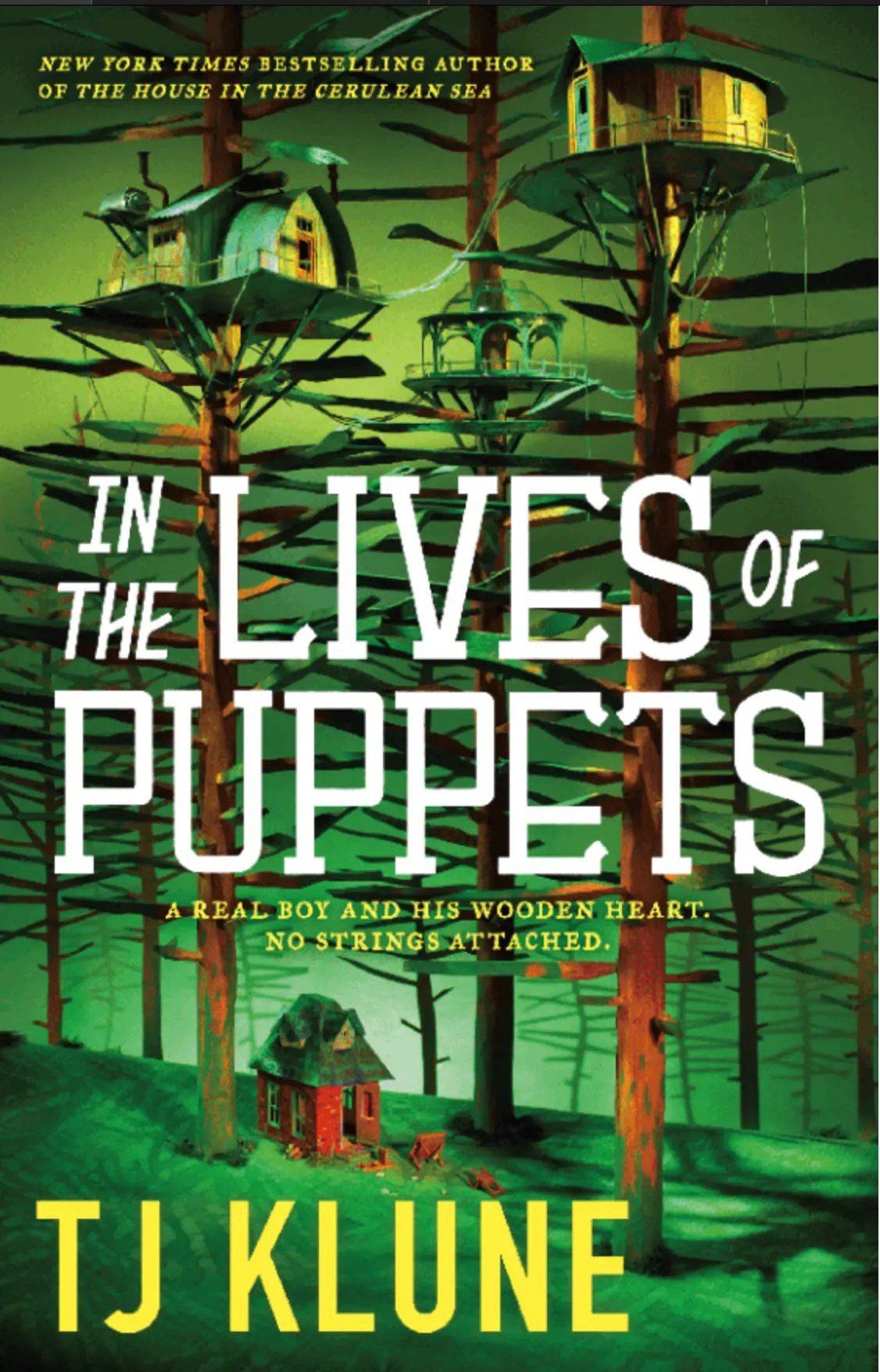
A science fantasy reimagining of Pinocchio where Pinocchio is a “real boy” surrounded by robots (puppets) with a m/m (or, rather, male, male robot) romance added in.
Summary:
In a strange little home built into the branches of a grove of trees, live three robots–fatherly inventor android Giovanni Lawson, a pleasantly sadistic nurse machine, and a small vacuum desperate for love and attention. Victor Lawson, a human, lives there too. They’re a family, hidden and safe.
The day Vic salvages and repairs an unfamiliar android labelled “HAP,” he learns of a shared dark past between Hap and Gio-a past spent hunting humans.
When Hap unwittingly alerts robots from Gio’s former life to their whereabouts, the family is no longer hidden and safe. Gio is captured and taken back to his old laboratory in the City of Electric Dreams. So together, the rest of Vic’s assembled family must journey across an unforgiving and otherworldly country to rescue Gio from decommission, or worse, reprogramming.
Along the way to save Gio, amid conflicted feelings of betrayal and affection for Hap, Vic must decide for himself: Can he accept love with strings attached?
Review:
This is a loving and detailed send-up to Pinocchio. I hadn’t seen the movie in years, and it still stirred up memories for me. When I went to look up the original book version’s plot to compare to this retelling, I found even more details I hadn’t realized or remembered. It’s obvious the author loves Pinocchio, and if you do too, I’m expecting you’ll likely love this retelling. For me, the problem is, I was so excited about a new T.J. Klune book that I sort of…forgot I don’t like Pinocchio. (“Don’t like” is a gentle remembrance. In fact, the movie absolutely terrified me as a child.) Even so, I found myself able to appreciate this loving rendition of the story.
I absolutely adored the character of Rambo – the tiny robot vacuum who’s clearly supposed to be a later generation of roombas. As always, I liked the narrative style the author uses – it reads as sing-songy in my head and feels like someone telling me a fairy tale, which is perfect for this book. I liked the wide variety of robots inhabiting the world, and I really enjoyed the robot substitute for the traveling circus character. I also appreciated that this isn’t an exact retelling of Pinocchio. The story is sometimes restrained, with simple allusions to the original. For example, Victor is never turned into a donkey, but he does stay the night in a hotel like room that is decorated with donkeys at about the right point in the story.
I appreciated the flipping of Pinocchio (Victor in this telling) as being human with his father being a “puppet” (a robot). But I felt like the ending really lets that inversion down, not taking it to its full and complete conclusion. I think there’s supposed to be humor in this book, but it wasn’t funny to me. You will know within the first few chapters if it’s tickling your funny bone or not.
I also found myself unable to root for anyone in this book, save for the small, innocent Rambo. Everyone else has something so wrong with them that it soured me to like them. The one I can talk about without spoilers, as the episode happens in the first chapter, is Nurse Ratched. She is a robot companion of Victor’s who was designed to nurse humans. She’s described as sociopathic, in a way that I think is supposed to read as comedic. As in, she acts like she enjoys inflicting pain but doesn’t really. Yet in the first chapter she chases down a squirrel (off-screen) and kills it by rolling over it again and again. I almost stopped reading the book, I was so horrified. But it was an advanced copy, so I decided to give it another chance. She never does anything like this ever again, but it is actually not uncommon for characters in this book to have something they have done in the past that is truly horrific that is brushed off as their programming. I’m all for plots where characters have to overcome their own tendency toward being bad, and redemption and forgiveness are both very important. But I need for that not to be the plot for almost every single character. It, at the very least, is distressing to read about.
The romance did not move me, which was surprising given what strong feelings I had for the couple in The House in the Cerulean Sea! I also have complicated feelings about how the book depicts what freedom means, how robots pursue freedom, the offerings of the “freedom fighter” character, etc… This, in fact, is a reflection of how I feel the overarching messages tended to get muddled. The only message that I felt was clear and consistent was “be brave!” but no clear reason as to why was ever given. To borrow from an American fairy tale – the overarching story needed a heart. I think, perhaps, the romance was supposed to be the heart, but it didn’t work as one for me.
This is also an incredibly sad book. It’s not uplifting in the slightest. There’s nothing wrong with sad books, but it is a departure from the author’s other books, and so I think the warning is warranted.
Overall, this is an imaginative and loving retelling of Pinocchio that should appeal to fans of that fairy tale. Readers should be aware that the darkness of the original story remains in this retelling.
If you found this review helpful, please consider tipping me on ko-fi, checking out my digital items available in my ko-fi shop, buying one of my publications, or using one of my referral/coupon codes. Thank you for your support!
3 out of 5 stars
Length: 432 pages – average but on the longer side
Source: NetGalley
Buy It (Amazon or Bookshop.org)
Publication Announcement: Space Fantasy: “Legends as Told by the Laborers of the Forest Solar System Logging Corp. – An Oral History Project”

I am thrilled to announce the publication of my space fantasy short story in Crow & Cross Keys literary journal.
This literary journal is 100% free, so please give it a click and a perusal!
Here’s a blurb about my piece.
Oral history interview with an anonymous retired logger (Interviewee #15) for the Forest Solar System Logging Corp. Interview conducted by Tess Dalgleish on stardate 99938 on Planet Minnesota. Topic of the interview is the legend of Paul Bunyan. This version includes Babe the Big Blue Ox.
Please be sure to check out my Publications Page for my other work.
 Support my work with a tip or browse my shop for curated book club guides, how to guides, cross-stitch patterns, and more!


This work by Amanda Nevius is licensed under a Creative Commons Attribution-Noncommercial-No Derivative Works 3.0 United States License.
 Opinions of a Wolf