
Archive
Book Review: Yesteryear by Caro Claire Burke
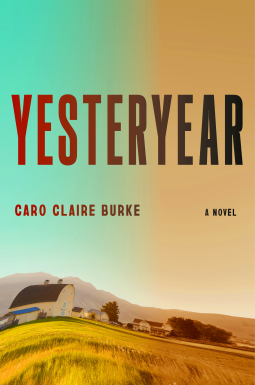
Yesteryear by Caro Claire Burke is an attempted satirical takedown of tradwife influencer culture that ultimately reflects a shallow understanding of fundamentalist Christianity and collapses under the weight of its third act.
This review contains major spoilers and discusses themes of religious fundamentalism, mental illness, and queerness.
Summary:
My name was Natalie Heller Mills, and I was perfect at being alive.
Natalie lives a traditional lifestyle. Her charming farmhouse is rustic, her husband a handsome cowboy, her six children each more delightful than the last. So what if there are nannies and producers behind the scenes, her kitchen hiding industrial-grade fridges and ovens, her husband the heir to a political dynasty? What Natalie’s followers—all 8 million of them—don’t know won’t hurt them. And The Angry Women? The privileged, Ivy League, coastal elite haters who call her an antifeminist iconoclast? They’re sick with jealousy. Because Natalie isn’t simply living the good life, she’s living the ideal—and just so happens to be building an empire from it.
Until one morning she wakes up in a life that isn’t hers. Her home, her husband, her children—they’re all familiar, but something’s off. Her kitchen is warmed by a sputtering fire rather than electricity, her children are dirty and strange, and her soft-handed husband is suddenly a competent farmer. Just yesterday Natalie was curating photos of homemade jam for her Instagram, and now she’s expected to haul firewood and handwash clothes until her fingers bleed. Has she become the unwitting star of a ruthless reality show? Could it really be time travel? Is she being tested by God? By Satan? When Natalie suffers a brutal injury in the woods, she realizes two things: This is not her beautiful life, and she must escape by any means possible.
Review:
What it does well
I love the set-up of this book. A tradwife influencer wakes up in the 1800s she was pretending to want to live back in and has to face the stark reality of that. Told in the tradwife “present,” flashbacks to her life before her influencer status, and flash forwards to her 1800s time travel. I was hooked. I needed to know how the time travel happened. The set-up reminded me of Kindred by Octavia Butler only with a hateable main character.
A note on my perspective:
I was raised a closeted bisexual cis girl in a fundamentalist Evangelical family. I, in modern terms, deconstructed and have become a progressive queer Christian adult. Nattie’s culture is the one I was raised in and am deeply familiar with. I was literally a rurally raised homeschooled girl who wasn’t allowed to wear pants. The author gets a lot wrong.
Religious inaccuracy and cultural flattening:
It is deeply unclear precisely what religion Nattie is. This should be clear, as a twisting of a specific faith into something for the far-right to weaponize is at the core of tradwife influencer culture. She goes to church every Sunday growing up with her mother and sister. She and her young, rich husband share a religion. But she only ever says “Christian.” If we are to assume that it is a fundamentalist version of US American Christianity, then it could broadly be Evangelical, traditional Catholic, or Latter-Day Saint. And that’s not even getting picky about denomination (Non-denominational? Baptist?). Here’s what we do know. She goes to church, not temple, so probably not LDS, even though she’s very clearly inspired by Ballerina Farm who is LDS. She gets full-immersion baptized as a teenager, so not Catholic. However, the book says a PRIEST baptizes her. The only denominations that refer to their leaders as priests do not perform full-immersion baptism. It’s a factual error that made me cringe. A lot.
Later in the book, Nattie crosses herself. She also has a hallucination that is clearly based on confession. Both of these are only done, again, by denominations with priests (Anglicans, Catholics). But she does none of the other things those denominations might do like observe a liturgical calendar or acknowledge saints. Despite this confusion, Nattie is portrayed as truly devout. We see inside her head. She prays a lot. She desires to be close to God. Yet, she never studies her Bible. She never brings her children to church, in spite of going every Sunday herself growing up. And church isn’t replaced by home church with her husband.
Another issue is AFTER she deconstructs, Nattie’s mother tells her she’s simply never been nice enough. The demand to “keep sweet” is a very common demand made of evangelical girls and women. We saw it in the Duggar family, and I lived it myself. Girls and women are supposed to be nice all the time. It makes no sense to me that her deconstructed mother’s main argument against her tradwife influencer daughter is she isn’t nice enough. A deconstructed person would be much more likely to say, “you’re lashing out because you’ve been asked to be something you’re not for so long. I want to know who you really are.” Not “why can’t you be nice?!”
All of these details point to an author writing from outside this culture who did not do the work required to understand it, resulting in a shallow, flattened portrayal of fundamentalist Christianity that borrows its aesthetics without engaging its lived realities. It’s this weird mash-up of things tradwife influencers mention without any understanding that tradwives come from different denominations with different ways of doing things and different belief systems.
Queer representation:
As a queer person myself, I’m deeply bothered by the way Nattie’s assault on her employee, Shannon, is presented. First of all, her first person account seems to be that she attempted to strangle her. But later Shannon says she sexually assaulted her. Which is the truth? The end of the book takes Shannon’s statement as face value. Nattie assaulted her because she’s a closeted lesbian. Nattie never admits to this, but she doesn’t deny it either. Does she think this is less bad than attempting to strangle her? Given her entire family’s response (and my own lived experience of fundamentalist opinions of queer people), it seems unlikely. If it is the case that we’re supposed to read this as Nattie has always been a closeted lesbian, then this is horrible representation. Not that LGBTQ folks can’t ever be the villain, but closeted people don’t automatically abuse their children and assault their employees.
Mental health representation:
Then there is the mental health representation. It is clear that Nattie first starts to fall apart after the birth of her first child when she develops very clear post-partum depression that a nurse expresses concern over and wants to get her help for but her mother intervenes and says she just needs to start running again. Her post-partum depression never gets better, she doesn’t actually enjoy mothering, but she keeps having children both because it’s what God wants and because it’s what her father-in-law demands in exchange for funding their hobby farm.
Ok, so here we get to the full mess. The big twist is that Nattie hasn’t time traveled to the 1800s. She hasn’t been kidnapped. After the big PR disaster of Shannon revealing the assault, her husband tells her that his father wants her to be killed. She suggests instead that what her husband really has always wanted is just to be left alone and they can do that. They can cut themselves off from the world and live like it’s the 1800s. They do just that, with the older children running away, and they are left with just the toddler and the children born after her. She thinks it’s literally the 1800s when she wakes up one day because she has periodic psychotic breaks. She thinks she might be being filmed for a reality tv show because, again, she’s lost her mind.
When her oldest daughter finally shows up years later with a court order for the children (there is no way on earth that would have taken that long, but that’s another tangent for another day), she expresses some sympathy for her mother but the court system prosecutes her and puts her in prison for 30 years for child abuse. Of course she did abuse her children but she is also very clearly very mentally unwell, and many other people boosted up this scheme of hers (her husband, other family that brought food to the edge of the property for the husband to pick up, the husband was escaping to a cabin with electricity and tv every day to watch football while she was actually living like the 1800s). The novel wants to have it both ways: to explain her behavior through mental illness while denying her any meaningful context, care, or accountability framework.
Final verdict:
I saw another review that said this book feels like it was written by one of the “Angry Women” Nattie talks about. The liberal women who are angry at her for existing. You can have a problem with far right culture and tradwife influencers and write a book about it. But you also need to actually understand the culture and not stomp on people with mental illnesses and necessarily closeted LGBTQ folks in the process.
Ultimately, while the satire of influencer culture is sharp, the novel’s handling of fundamentalism, queerness, and mental illness is reductive and stigmatizing. Additionally. its explanation for how Natalie ends up “in the 1800s” is far less imaginative and less effective than a true speculative or magical realist turn would have been.
If you found this review helpful, please consider tipping me on ko-fi, checking out my digital items in my ko-fi shop, buying one of my publications, using one of my referral or coupon codes, signing up for my free microfiction monthly newsletter, or tuning into my podcast. Thank you for your support!
2 out of 5 stars
Length: 400 pages – average but on the longer side
Source: NetGalley
Buy It (Amazon or Bookshop.org)
Book Review: We Don’t Talk About Carol by Kristen L. Berry
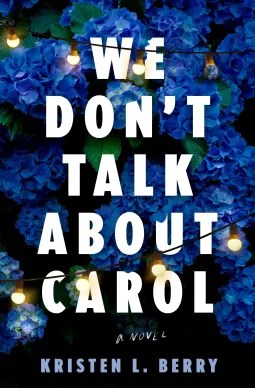
A psychological thriller about missing Black girls, fertility stress, and intergenerational trauma’s impact on mental health.
Summary:
In the wake of her grandmother’s passing, Sydney Singleton finds a hidden photograph of a little girl who looks more like Sydney than her own sister or mother. She soon discovers the mystery girl in the photograph is her aunt, Carol, who was one of six North Carolina Black girls to go missing in the 1960s. For the last several decades, not a soul has talked about Carol or what really happened to her. But now, with her grandmother gone and Sydney looking to start a family of her own, she is determined to unravel the truth behind her long-lost aunt’s disappearance, and the sinister silence that surrounds her.
Unfortunately, this is familiar territory for Sydney: Years earlier, while she worked the crime beat as a journalist, her obsession with the case of another missing girl led to a psychotic break. And now, in the suffocating grip of fertility treatments and a marriage that’s beginning to crumble, Sydney’s relentless pursuit for answers might just lead her down the same path of self-destruction. As she delves deeper into Carol’s fate, her own troubled past reemerges, clawing its way to the surface with a vengeance. The web of secrets and lies entangling her family leaves Sydney questioning everything—her fixation on the missing girls, her future as a mom, and her trust in those she knows and loves.
Review:
Psychological thrillers are a genre I love, but they have a real diversity problem, overwhelmingly featuring white women. When I saw this take on a psychological thriller by an own voices author centering Black women’s experiences, I was so excited to receive a review copy.
Sydney has a lot going on when we first meet her. Her grandmother has recently passed away, and she and her mother and sister are cleaning out her house. There are complex family dynamics at play that get slowly revealed as the book progresses. Sydney is also undergoing fertility treatments, which has put a strain on both her mental health and her marriage.
While in the process of cleaning out the house, she discovers an aunt she never knew existed who went missing in her teens. We learn that Sydney was once was an investigative journalist, a career she abandoned after a psychiatric break on a story. But she can’t let go of trying to find out what happened to her aunt. Especially when she discovers five other teen Black girls went missing at the same time, and no one ever truly looked that hard for them.
This is an incredible set-up. Berry places missing Black girls, who historically receive little media attention, into the exact narrative space normally occupied in pyschological thrillers by:
- marital infidelity
- blackmail
- mysterious inheritances
In most psychological thrillers, those are the inciting forces. Here, systemic neglect is. (For a similar critique of this issue but in a YA horror book, check out Burn Down, Rise Up by Vincent Tirado.)
This matters because the novel positions those missing Black girls not as a shocking anomaly, but as a painful, known reality within the community. That’s where representation truly matters. It places a real life issue ifront an dcenter, then builds the psychological thriller around it.
For context, the NAACP reports that Black US Americans make up 34% of all missing persons cases but only 12.85% of the population.
In spite of Sydney’s previous psychiatric break feeling a little over the top, it was heartwarming to see how kindly and normally her husband and medical team treat it. She’s not othered; she’s just encouraged to keep the stress down. (Which, as the main character of a psychological thriller, she obviously doesn’t do very well.) I also appreciate that the climax of the book doesn’t rely whatsoever on her mental health or illness.
Despite the blurb suggesting a struggling marriage, Sydney’s marriage is quite solid. She and her husband just have a couple of difficult conversations, which makes sense with everything they have going on. I liked having a healthy marriage represented in a psychological thriller. Similarly Sydney’s relationship with her sister and mother is one of seeking repair and not one of just walking away from each other. There’s a lot of relational health in this book.
I suspected early on where the story might be heading, but the details were definitely not something I had figured out. So it was sufficiently twisty to hold my interest. That said, the pacing was just a bit off for a thriller. Perhaps because it was so grounded in reality, it was more of a pace of up and down rather than a rapidly building just can’t put it down escalation.
As I strive to provide content notes, be aware that while it is not depicted on the page, a character hears and partially witnesses the rape and murder of two young girls (hearing banging from another floor and seeing a vehicle shaking.) For representation, the cast is predominantly Black, the main character has psychiatric issues as did her father, addiction is represented but without much hope for healing, and I do not recall much if any sexual orientation diversity. One historical character is presented as possibly being on the Autism spectrum though the overall arc is not particularly positive in terms of representation.
Overall, this is a welcome, diverse addition to the psychological thriller genre. Its focus on missing Black women and girls brings a refreshingly underrepresented plot to familiar genre territory. The pacing is a little up and down. You likely will be able to put it down and sleep for the night. But it still calls for completion to resolve the mystery.
Especially recommended for:
- Readers of psychological thrillers with social commentary
- Book clubs interested in discussions about systemic neglect
- Readers looking for mental health representation in suspense
- Those wanting stories centered on missing Black women and girls
If you found this review helpful, please consider tipping me on ko-fi, checking out my digital items in my ko-fi shop, buying one of my publications, using one of my referral or coupon codes, signing up for my free monthly newsletter, or tuning into my podcast. Thank you for your support!
4 out of 5 stars
Length: 336 pages – average but on the longer side
Source: NetGalley
Buy It (Amazon or Bookshop.org)
Book Review: The Death of Mrs. Westaway by Ruth Ware

A moody, character-driven thriller about survival, intuition, and the blurry line between opportunity and deception.
Summary:
On a day that begins like any other, Hal receives a mysterious letter bequeathing her a substantial inheritance. She realizes very quickly that the letter was sent to the wrong person—but also that the cold-reading skills she’s honed as a tarot card reader might help her claim the money.
Soon, Hal finds herself at the funeral of the deceased…where it dawns on her that there is something very, very wrong about this strange situation and the inheritance at the centre of it.
Review:
I’m a big fan of Ruth Ware. With this book, I’ve now read eight of hers (all but two—I’m currently reading her newest release), although I’ve only reviewed four on my blog. When I spotted one I hadn’t read yet at the library, I figured it would be the perfect way to scratch my summer thriller itch while waiting for her latest.
As I was reading, I wondered if it was one of her earlier books. Although the main character is quite young, the writing itself also felt like a newer author’s voice. It turns out this was her fourth book. My hunch was right! I liked it more than the other early ones I’ve read—though I enjoy all of her work.
The book does a good job of making Hal likeable and well-rounded. She doesn’t believe in the tarot, but she’s not out to scam people either. She’s just trying to survive, doing her best with what she inherited from her mother. Both the booth on the pier and the knowledge to read cards (and people). Her grief, youth, and trouble with a loan shark add a sense of urgency and vulnerability that draws you in.
It would be easy to write the Westaway family as wealthy caricatures, but each of them (with the possible exception of the housekeeper) is written with a mix of strength and flaws. Even the housekeeper gains complexity later in the book.
That said, the plot depends heavily on a coincidence: Hal’s mother and her cousin had the exact same name—Margarida Westaway. That’s a pretty specific and unusual name for two relatives to share, especially in an upper-class British family. A quick explanation or justification for that naming choice could have made the premise easier to accept.
I didn’t figure out every twist, but I had the gist pretty early on. Some elements felt like things Hal probably should’ve picked up on too. But of course, it’s easier to put things together when you’re not the one in danger. The twists were still fun, and the ending was satisfying, even if it wrapped up quickly.
I especially liked how the tarot was integrated. Hal doesn’t believe in it literally, but she respects it as something people find meaning in, and she does her best to be helpful. It also connects her to her mother—not through magic, but through memory. When she recalls how her mother approached readings, it offers a window into her grief and her past.
There’s no racial or ethnic diversity in this book. That’s a missed opportunity, especially among the secondary characters or romantic partners. One of the uncles is gay and has a bisexual partner, but the bisexual representation is frustrating. The partner cheats, and it’s presented as an even worse betrayal because it’s with a woman. Oof. Hal acknowledges she developed problem drinking habits after her mother died and by and large chooses no longer to imbibe. (There is one night when she does).
There’s no sex in the book. The violence is mild by thriller standards: one drawn-out survival fight, a few off-page murders, and a jump-scare involving a dead body.
About the twists…spoilers in this paragraph.
It was fairly easy to guess that some sort of mix-up had happened between Maud and Maggie—both nicknames for Margarida. I suspected from early on that the woman who died in the car crash wasn’t Hal’s biological mother. That twist didn’t surprise me. The others—the fate of Hal’s bio mom and her father’s identity—were partially predictable. I guessed the mother was murdered and suspected the father did it. I thought it was the grandfather, given how no one mentioned him and how angry the grandmother was about the pregnancy. So I was surprised to learn it was actually the youngest uncle, Abel. The book frames him as the golden child—the one least abused by the family matriarch, but perhaps the most like her. That worked, even if it felt a little like older sibling wish fulfillment. But this also means Hal is the child of two first cousins, and the book doesn’t address that at all. Hal doesn’t even seem fazed. I had to remind myself that cousin marriage is legal in the UK, although it’s illegal in most U.S. states. Still, I would’ve liked at least a moment of acknowledgment or emotional reaction to this knowledge.
Overall, this was a fun thriller that delivered chills and mystery without being too gory or scary. About half the twists were predictable, but the rest kept me guessing. Strong characters and the layered use of tarot added depth. It’s not a perfect read, and it lacks diversity, but it’s a solid summer pick for fans of slower-paced, atmospheric thrillers.
If you found this review helpful, please consider tipping me on ko-fi, checking out my digital items in my ko-fi shop, buying one of my publications, using one of my referral or coupon codes, signing up for my free microfiction monthly newsletter, or tuning into my podcast. Thank you for your support!
4 out of 5 stars
Length: 368 pages – average but on the longer side
Source: Library
Buy It (Amazon or Bookshop.org)
Book Review: Beautiful Ugly by Alice Feeney
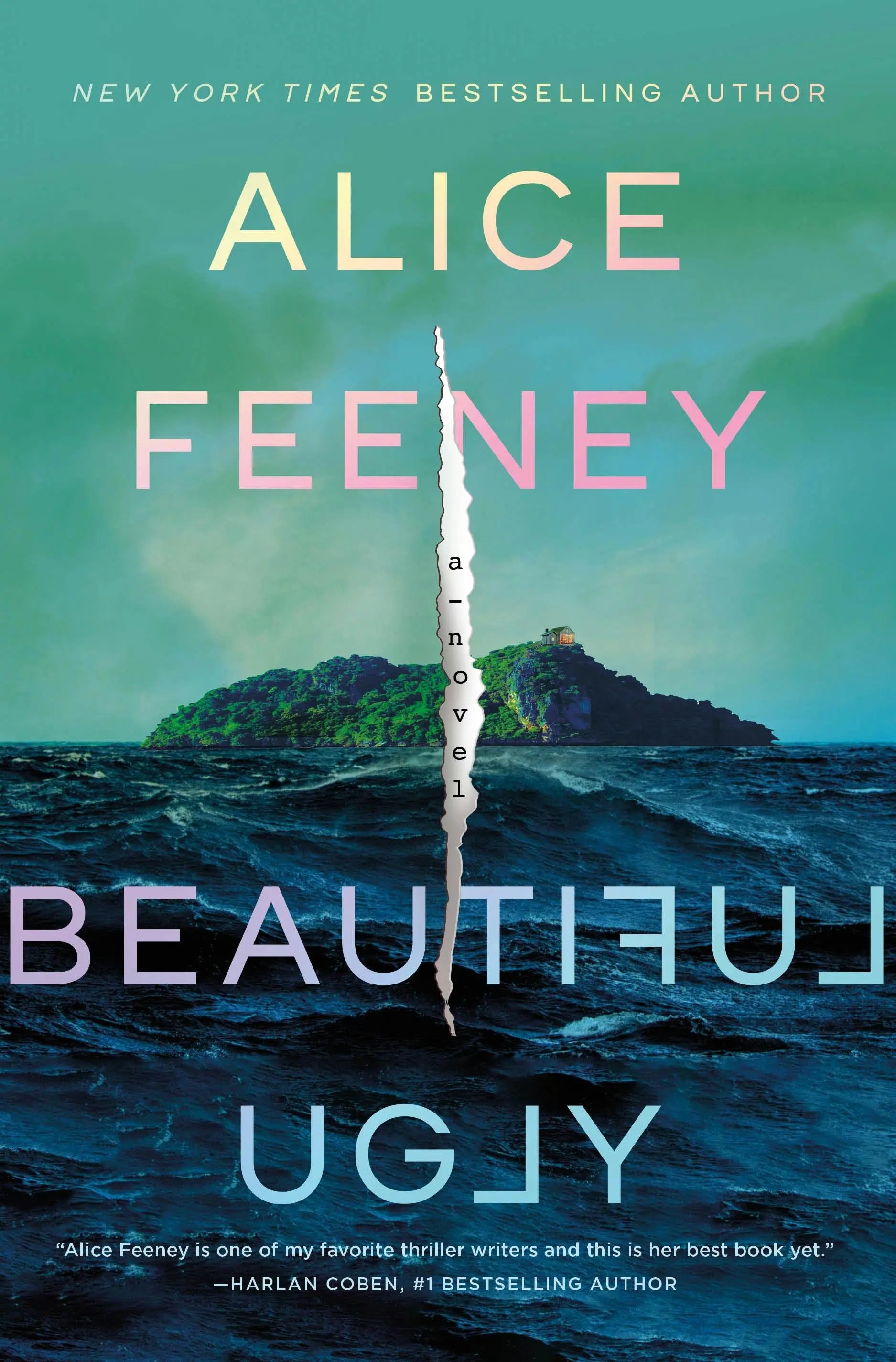
A psychological thriller about a grieving husband who sees his missing wife’s double on a remote Scottish island.
Summary:
Author Grady Green is having the worst best day of his life.
Grady calls his wife to share some exciting news as she is driving home. He hears Abby slam on the brakes, get out of the car, then nothing. When he eventually finds her car by the cliff edge the headlights are on, the driver door is open, her phone is still there. . . but his wife has disappeared.
A year later, Grady is still overcome with grief and desperate to know what happened to Abby. He can’t sleep, and he can’t write, so he travels to a tiny Scottish island to try to get his life back on track. Then he sees the impossible — a woman who looks exactly like his missing wife.
Wives think their husbands will change but they don’t.
Husbands think their wives won’t change but they do.
Review:
My memory told me I loved Alice Feeney’s thrillers—but after reading Beautiful Ugly and looking back at my past reviews, it turns out I only truly loved one (Rock Paper Scissors) and was lukewarm on another (Daisy Darker). With this latest being a miss, I probably won’t be rushing to pick up her next.
Right away, I was thrown a bit off course by the main character. When I reach for a thriller by a woman author, I typically expect a woman protagonist. Here, we follow Grady, a grieving husband and struggling novelist. We do get flashbacks to his wife before her disappearance, but Grady’s perspective never quite worked for me. I also rarely enjoy main characters who are writers—it often feels too navel-gazey (with the notable exception of Misery). That worked against Grady, too.
When Grady travels to a remote Scottish island—sent there by his agent-slash-his-wife’s-godmother—it should have been an atmospheric pivot. But while the setting is strange, it didn’t strike me as compelling. The book leans heavily on Grady’s alcoholism to make him an unreliable narrator, a device that can be effective (as in The Girl on the Train), but here felt more like a trope than an integral part of the story.
And unfortunately, it wasn’t just Grady. I didn’t connect with any of the characters—not the wife, the godmother, the ferrywoman, or the shopkeeper. That can still work if it’s a “love to hate them” type of book, but this wasn’t that. And when a book doesn’t give you characters to root for, you need a satisfying plot to carry the weight. Instead, I felt let down.
The book hinges on two major twists, and both left me feeling frustrated. One relies on the main character deliberately withholding information from the reader, which feels like a cheat—especially when we’re in his head for much of the book. The second twist is more straightforward, but felt over-the-top and unearned.
That said, there are a few bright spots. I appreciated the inclusion of a woman pastor and a same-sex couple among the tiny island’s population. The cast also includes a bit of racial and ethnic diversity. Also Grady’s dog is a breath of fresh air in every scene he’s in. However, the second twist somewhat undercut those thoughtful touches in a way that felt disappointing.
Content notes: CSA, death of children, infertility treatment, and murder.
Despite my frustrations, I’ll give the book credit for being readable and engaging. I wanted to know what happened, and I did enjoy the shifting points of view and timelines.
Overall, this is a thriller for readers who don’t mind a twist that plays unfairly with what the narrator reveals, and who enjoy mysterious settings and shifting perspectives—even if there’s no one to root for.
If you found this review helpful, please consider tipping me on ko-fi, checking out my digital items in my ko-fi shop, buying one of my publications, using one of my referral or coupon codes, signing up for my free microfiction monthly newsletter, or tuning into my podcast. Thank you for your support!
3 out of 5 stars
Length: 306 pages – average but on the longer side
Source: Library
Buy It (Amazon or Bookshop.org)
Book Review: A Cyclist’s Guide to Crime and Croissants by Ann Claire
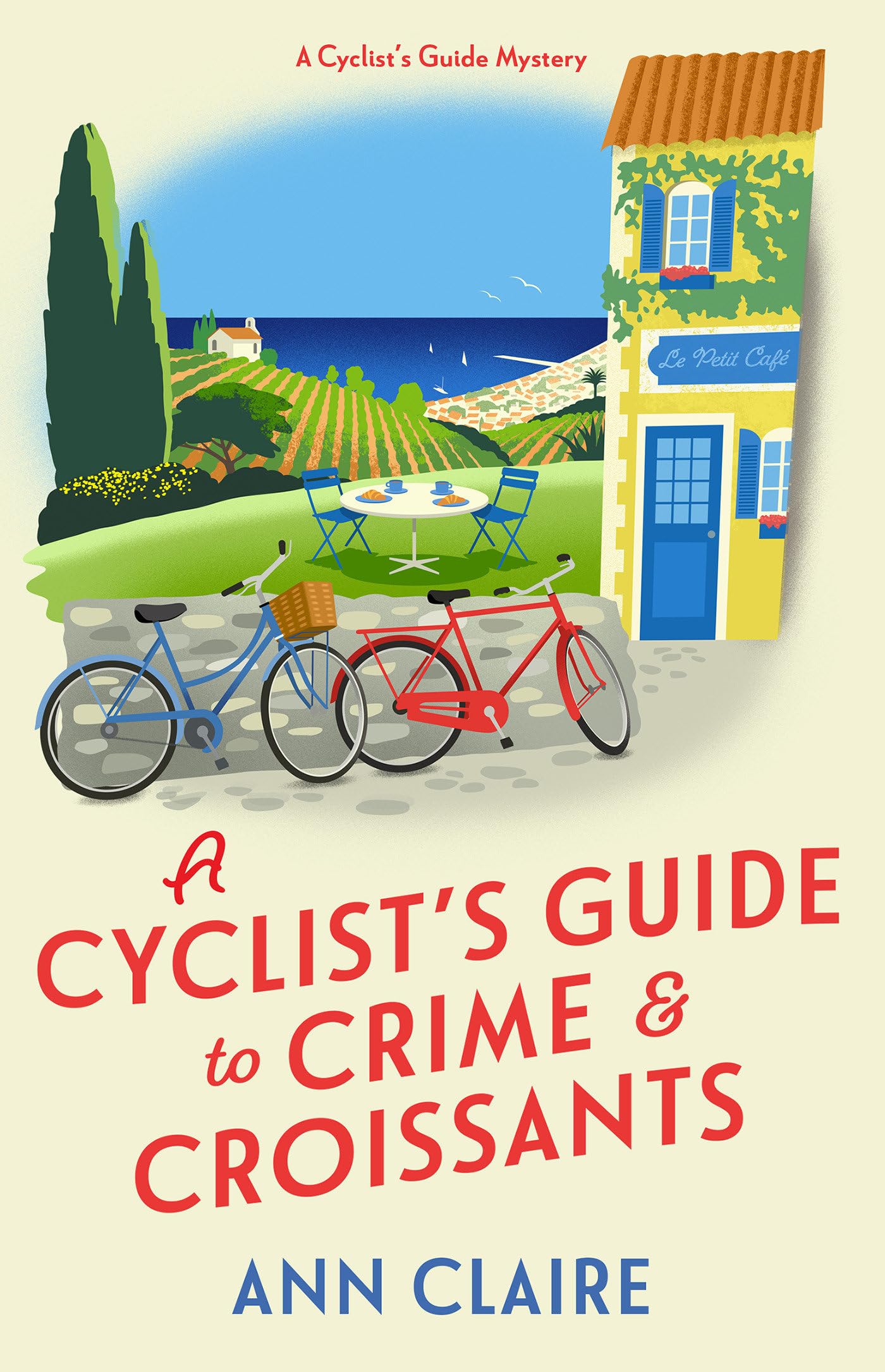
A charming cycling tour in the French countryside takes a deadly turn in this cozy mystery, perfect for fans of Emily in Paris—if Emily spoke French and solved murders between croissant breaks.
Summary:
Nine months ago, Sadie Greene shocked friends and family by ditching her sensible office job in the Chicago suburbs and buying a sight-unseen French bicycling tour company, Oui Cycle. Now she’s living the unconventional life of her dreams in the gorgeous village of Sans-Souci-sur-Mer. Sans souci means carefree, but Sadie feels enough pressure to burst a tire when hometown friends arrive for a tour, including her former boss, Dom Appleton. Sadie is determined to show them the wonders of France and cycling—and to prove she made the right move.
She hopes her meticulously planned nine-day itinerary will win them over, with its stunning seascapes, delicious wine tastings, hilltop villages, and, of course, frequent stops for croissants. When Dom drags his heels on fun, Sadie vows he’ll enjoy if it kills her. That is, until Dom ends up dead. The tragedy was no accident. Someone went out of their way to bring a permanent end to Dom’s vacation.
As more crimes—and murder—roll in, suspicions hover over Oui Cycle. To save her dream business, help her friends, and bring justice, Sadie launches her own investigation. However, mysteries mount with every turn. On an uphill battle for clues, can Sadie come to terms with her painful past while spinning closer to the truth—or will a twisted killer put the brakes on her for good?
Review:
If you’re looking for escapist literature, this cozy mystery delivers. A delightful, trope-perfect entry in the genre, it checks all the essential boxes—a murder that happens off-page? Check. A love interest suspicious of the FMC? Check. A dream career and a picturesque setting? Triple check.
One of the challenges of cozy mysteries is giving the main character an aspirational life without making them unlikable. Sadie, however, is wonderfully relatable. Her backstory is both heartwarming and tragic, making her move to France feel earned rather than enviable. She originally planned to start a bicycle tour business someday with her best friend—until tragedy struck, and her friend was killed in a hit-and-run. This loss becomes the catalyst for Sadie’s life-changing decision, and she makes it happen through a mix of financial prudence (as a former accountant) and a seller who values passion over profit. It’s a compelling, well-crafted setup.
The week of the fateful tour, Sadie’s not-quite-family but family-like friends arrive from the U.S., ostensibly to take her tour—but really, to check up on her. This dynamic adds a layer of personal drama, making the tour more than just a random mix of clients (though there are those, including a sharp-eyed reviewer). The result? Plenty of tension before the mystery even begins.
The French countryside and cuisine are absolutely lovely to read about, and you don’t have to be a cycling enthusiast to enjoy the journey. That said, I personally loved the cycling details, from the Is an e-bike cheating? debate to the hardcore Tour de France trainees Sadie encounters along the way. (If you love cycling too, check out the Bikes in Space anthology I have a short story in.)
Unlike in some cozies, the first murder (yes, first) feels eerily realistic. While I enjoy a good poisoned pie moment, this crime—especially as a cyclist—felt alarmingly plausible, adding genuine weight to the investigation.
One thing I often struggle with in cozies is the detective as a love interest—I tend to find detectives off-putting. However, this one worked for me, largely because his investigative approach felt fresh and culturally distinct. It helped maintain the escapist feel rather than making it feel like a procedural.
Speaking of characters, despite the large cast, I never once lost track of who was who. Each character felt distinct without veering into caricature. That said, the diversity felt a bit Eurocentric—the most notable examples being a Ukrainian refugee and an ex-convict. While I enjoyed both characters, I would have liked to see a bit more variety in representation given the size of the cast.
Halfway through, I was convinced I had solved the mystery. I was wrong. And once the reveal came, I could see exactly where I had been misled—not in a frustrating way, but in a deeply satisfying one.
This is a fun, immersive cozy mystery with a likeable main character, a realistic first murder, and plenty of French countryside charm. Recommended for cozy mystery fans who love an escapist read with a side of cycling, crime, and croissants.
If you found this review helpful, please consider tipping me on ko-fi, checking out my digital items available in my ko-fi shop, buying one of my publications, using one of my referral/coupon codes, or signing up for my free microfiction monthly newsletter. Thank you for your support!
4 out of 5 stars
Length: 346 pages – average but on the longer side
Source: Library
Buy It (Amazon or Bookshop.org)
Book Review: Model Home by Rivers Solomon

When Ezri’s parents die under mysterious circumstances, they return to their Texan childhood home—possibly haunted—in a gated community where their family is the only Black family.
Summary:
The three Maxwell siblings keep their distance from the lily-white gated enclave outside Dallas where they grew up. When their family moved there, they were the only Black family in the neighborhood. The neighbors acted nice enough, but right away bad things, scary things—the strange and the unexplainable—began to happen in their house. Maybe it was some cosmic trial, a demonic rite of passage into the upper-middle class. Whatever it was, the Maxwells, steered by their formidable mother, stayed put, unwilling to abandon their home, terrors and trauma be damned.
As adults, the siblings could finally get away from the horrors of home, leaving their parents all alone in the house. But when news of their parents’ death arrives, Ezri is forced to return to Texas with their sisters, Eve and Emanuelle, to reckon with their family’s past and present, and to find out what happened while they were away. It was not a “natural” death for their parents . . . but was it supernatural?
Review:
I’ve read most of Rivers Solomon’s books—they’re auto-reads for me at this point. I love their unique perspective and creative twists on speculative fiction. Solomon’s books always challenge me, so even though haunted house stories aren’t my favorite subgenre, I picked it up—and I’m glad I did. This turned out to be a queer psychological thriller that was hard to put down, keeping me up late reading.
The mystery starts early, with Ezri receiving texts from “mom,” but they suspect it’s the “other mother”—the ghost that haunted the family home in a gated community when they were children. It doesn’t take long before Ezri and discovers their parents dead in the backyard in what initially seems like a murder-suicide—but the siblings suspect it’s something far more complicated.
I appreciated how Solomon depicted the family dynamics under stress—three siblings thrown together for an unexpectedly long visit during a family tragedy. It’s the messy, real stuff of love and tension between people who care about each other but don’t always get along perfectly in a pressure cooker situation. The haunting also impacted each sibling differently, not just because of their age but due to the way their parents parented them, shaped by birth order.
I can’t discuss the most shocking part of the book without spoiling the twist. Suffice it to say, it was dark, gritty, and far less supernatural than anything else I’ve read by Solomon. That’s what made it so powerful—it felt so close to being like other psychological thrillers I’ve read but conveyed something profoundly different. It was deeply rooted in the Black experience in America, and it left me almost breathless.
Along with being a story about a Black family, Ezri is nonbinary, and both they and their child have diabetes. I really appreciated how Ezri’s gender identity was never an issue for their family—even when they were a child. This was refreshing and grounded in a sense of acceptance and love.
Please note that this book includes an explicit sex scene that is consensual. It also discusses predation on a minor and child sexual abuse (CSA).
Due to these sensitive topics, this was not a five-star read for me. While the book was beautifully written, I reserve five-star ratings for books I feel personally connected to. Books with such content usually don’t end up in my favorites category. (Grown by Tiffany D. Jackson was a big exception for me.)
Overall, this is a unique take on both the haunted house and psychological thriller genres. It offers a scathingly insightful analysis of being Black in America, while giving voice to a nonbinary sibling. Highly recommended for readers looking for a Black perspective on the haunted American house.
If you found this review helpful, please consider tipping me on ko-fi, checking out my digital items available in my ko-fi shop, buying one of my publications, using one of my referral/coupon codes, or signing up for my free microfiction monthly newsletter. Thank you for your support!
4 out of 5 stars
Length: 304 pages – average but on the longer side
Source: Library
Buy It (Amazon or Bookshop.org)
Book Review: Darling Girls by Sally Hepworth

When bones are discovered beneath their childhood home, three adult, Australian foster sisters are forced to confront their past as key witnesses—or prime suspects—in a dark family secret.
Summary:
For as long as they can remember, Jessica, Norah, and Alicia have been told how lucky they are. As young girls they were rescued from family tragedies and raised by a loving foster mother, Miss Fairchild, on an idyllic farming estate and given an elusive second chance at a happy family life.
But their childhood wasn’t the fairy tale everyone thinks it was. Miss Fairchild had rules. Miss Fairchild could be unpredictable. And Miss Fairchild was never, ever to be crossed. In a moment of desperation, the three broke away from Miss Fairchild and thought they were free. Even though they never saw her again, she was always somewhere in the shadows of their minds. When a body is discovered under the home they grew up in, the foster sisters find themselves thrust into the spotlight as key witnesses. Or are they prime suspects?
Review:
I’ve read most of Sally Hepworth’s books and enjoyed them, so I was excited to receive a review copy of her newest release.
The story features three narrators, each alternating between the present and their childhood. While that could be confusing, it’s actually well-executed, with the shifts between timelines feeling seamless. The timing of these shifts works well, never feeling contrived for the sake of holding back secrets for a twist.
And those twists? They’re big, and one in particular made me gasp out loud. While they were surprising, they made perfect sense, leaving me thinking, “I should have seen that coming.” That said, I did feel a bit frustrated by the final twist. I’m starting to tire of a specific depiction of women that seems to be a recurring theme in psychological thrillers, and this book doesn’t escape that trope.
In terms of representation, there’s a lack of racial or ethnic diversity. However, the book does feature one bisexual sister pursuing a relationship with a woman, and one sister dealing with substance use issues, while another has anger management struggles. I found the portrayal of foster care and the foster system is both realistic and sensitive, and especially appreciated learning that Hepworth conducted research with adults raised in the foster system. As someone who works in addiction and recovery, I found the representation of substance use disorder to be authentic and tasteful.
Overall, this is a gripping psychological thriller set in Australia, with enough twists and intriguing characters to keep you turning the pages. While readers may not relate to all of the characters, the juicy plot is sure to keep them engaged. Recommended for fans of psychological thrillers.
If you found this review helpful, please consider tipping me on ko-fi, checking out my digital items available in my ko-fi shop, buying one of my publications, using one of my referral/coupon codes, or signing up for my free microfiction monthly newsletter. Thank you for your support!
4 out of 5 stars
Length: 359 pages – average but on the longer side
Source: NetGalley
Buy It (Amazon or Bookshop.org)
Book Review: A Botanical Daughter by Noah Medlock
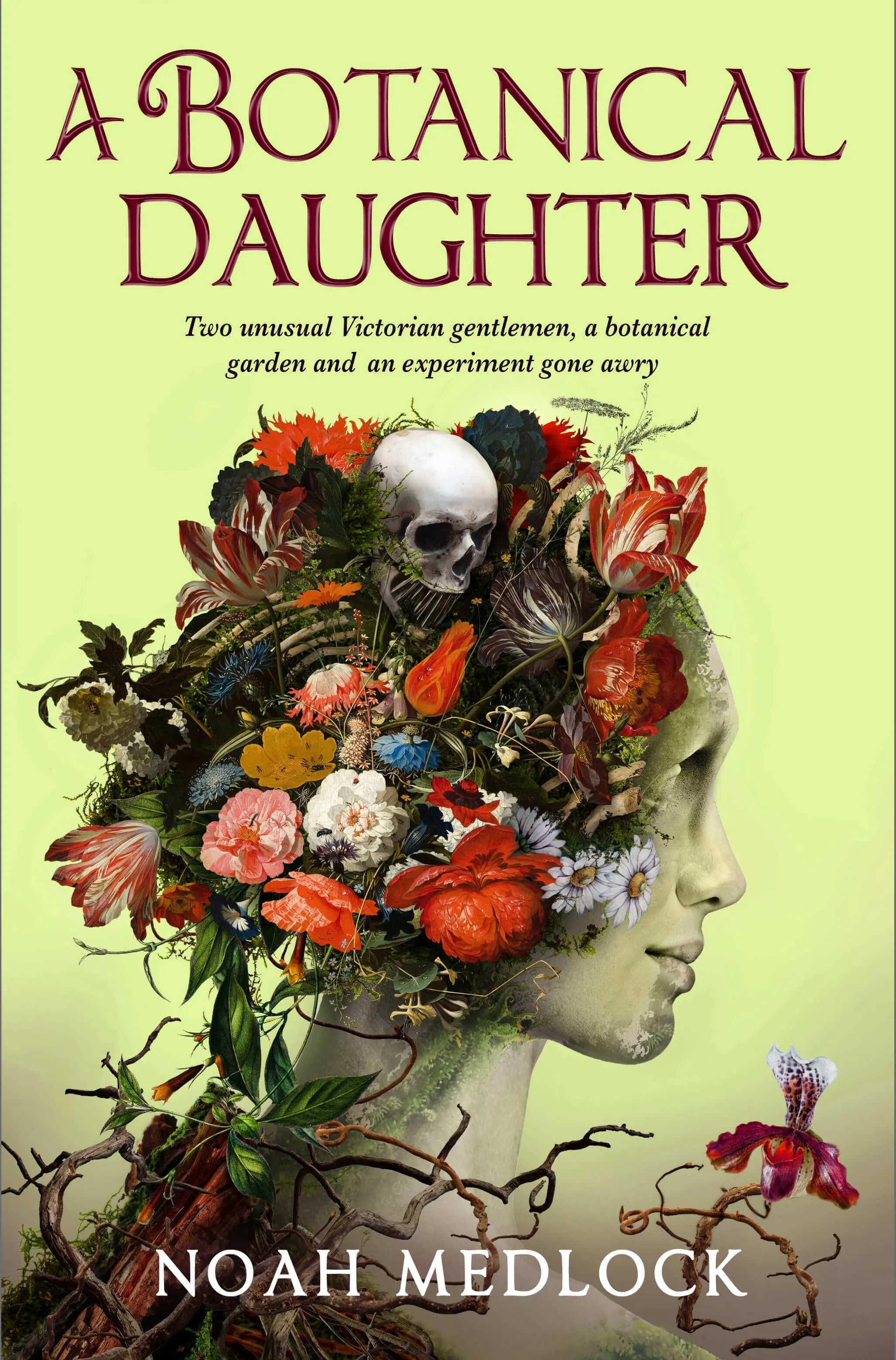
Imagine Frankenstein’s monster as a woman made of plants, with two gay dads and a woman love interest.
Summary:
It is an unusual thing, to live in a botanical garden. But Simon and Gregor are an unusual pair of gentlemen. Hidden away in their glass sanctuary from the disapproving tattle of Victorian London, they are free to follow their own interests without interference. For Simon, this means long hours in the dark basement workshop, working his taxidermical art. Gregor’s business is exotic plants – lucrative, but harmless enough. Until his latest acquisition, a strange fungus which shows signs of intellect beyond any plant he’s seen, inspires him to attempt a masterwork: true intelligent life from plant matter.
Driven by the glory he’ll earn from the Royal Horticultural Society for such an achievement, Gregor ignores the flaws in his plan: that intelligence cannot be controlled; that plants cannot be reasoned with; and that the only way his plant-beast will flourish is if he uses a recently deceased corpse for the substrate.
The experiment – or Chloe, as she is named – outstrips even Gregor’s expectations, entangling their strange household. But as Gregor’s experiment flourishes, he wilts under the cost of keeping it hidden from jealous eyes. The mycelium grows apace in this sultry greenhouse. But who is cultivating whom?
Review:
I absolutely loved the concept behind this retelling. It offers a biopunk take on Frankenstein with a blend of Victorian elements that’s both intriguing and thought-provoking.
As a gardener (and botanical garden member), I found the descriptions of the greenhouse and botanical garden both realistic and captivating. It was charming to see the couple living inside the greenhouse—who hasn’t daydreamed about that as a gardener? The contrast between the m/m and w/w relationships was also a standout, especially since neither would have been accepted in the historical time period.
However, the writing style didn’t suit my tastes. It was much too flowery (pun intended!) for what I typically enjoy reading. In fairness, I’m not particularly fond of Victorian literature, which this retelling modernizes while maintaining that tone. I struggled to connect with the two main characters and never quite understood their motivations. Though I’m a queer person and this is queer literature, I found myself disagreeing with the book’s overarching themes—it’s okay for queer people to have differing perspectives, and this is where I do.
Diversity is limited to sexuality. There is no diversity of race, ethnicity, or ability.
There are several violent scenes, including on-screen blood splatter, which is fairly graphic. There’s also a lengthy, explicit description of the w/w relationship, which was too intense for my taste, so I skimmed that section.
Overall, this is a unique take on Frankenstein with queer characters and a botanical twist. If you’re intrigued by the premise, I recommend reading the first few pages to see if the writing style resonates with you. Just be aware of the graphic violence and intimate chapter.
If you found this review helpful, please consider tipping me on ko-fi, checking out my digital items available in my ko-fi shop, buying one of my publications, using one of my referral/coupon codes, or signing up for my free microfiction monthly newsletter. Thank you for your support!
3 out of 5 stars
Length: 384 pages – average but on the longer side
Source: NetGalley
Buy It (Amazon or Bookshop.org)
Book Review: Welcome to Forever by Nathan Tavares
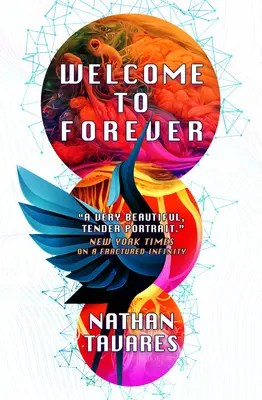
Two men trapped in looping artificial realities, always find each other—maybe even save the world.
Summary:
Fox is a memory editor – one of the best – gifted with the skill to create real life in the digital world. When he wakes up in Field of Reeds Center for Memory Reconstruction with no idea how he got there, the therapists tell him he was a victim in a terrorist bombing by Khadija Banks, the pioneer of memory editing technology turned revolutionary. A bombing which shredded the memory archives of all its victims, including his husband Gabe.
Thrust into reconstructions of his memories exploded from the fragments that survived the blast, Fox tries to rebuild his life, his marriage and himself. But he quickly realises his world is changing, unreliable, and echoing around itself over and over.
As he unearths endless cycles of meeting Gabe, falling in love and breaking up, Fox digs deep into his past, his time in the refugee nation of Aaru, and the exact nature of his relationship with Khadija. Because, in a world tearing itself apart to forget all its sadness, saving the man he loves might be the key to saving us all.
Review:
This book is one to read if you’re after gorgeous writing. The prose is immersive, with sentences that invite you to sink into them and reflect.
The character of Fox is rich in complexity. Each chapter peels back another layer of his personality, revealing depth and nuance. However, Gabe doesn’t receive the same level of development. While this is understandable—since we spend far more time in Fox’s mind than we do with Gabe in the present—it still makes their dynamic feel uneven.
Each chapter and memory journey felt like its own vignette. I found myself struggling with the overarching story, as so much time was spent on each memory that, by the end, I found myself asking, “What was the set-up again?” The book’s pacing, which focuses heavily on memory, made it hard for me to connect with the main plot.
At first, I felt the ending was spot on, but then the “Coda Excisions”—a chapter after the final one—left me confused. For me, it diminished the emotional impact of the conclusion.
Diversity is a standout feature of this book. The primary relationship is m/m, and there’s a secondary wlw relationship. All three of the main characters are people of color, and one speaks with a stutter, adding further nuance to the representation.
In terms of content:
- There’s some swearing.
- Intimacy is handled artistically—focused more on emotions than explicit details.
- One character experiences childhood exploitation, and it’s treated with the appropriate weight and sensitivity.
- Both main characters are orphaned.
- There are a few intense scenes: a bomb threat, a natural disaster resembling a hurricane, and a workplace shooting.
Overall, if you’re less concerned with plot structure and more interested in the emotional journey and immersive writing, this book may resonate with you. I recommend reading the first few chapters to see if the style suits you, and then deciding whether to continue.
If you found this review helpful, please consider tipping me on ko-fi, checking out my digital items available in my ko-fi shop, buying one of my publications, using one of my referral/coupon codes, or signing up for my free microfiction monthly newsletter. Thank you for your support!
3 out of 5 stars
Length: 435 pages – average but on the longer side
Source: NetGalley
Buy It (Amazon or Bookshop.org)
Book Review: One Perfect Couple by Ruth Ware

A scientist and her boyfriend join a tropical reality tv show, only to find themselves battling for survival as the deserted island game turns deadly.
Summary:
Lyla is in a bit of a rut. Her post-doctoral research has fizzled out, she’s pretty sure they won’t extend her contract, and things with her boyfriend, Nico, an aspiring actor, aren’t going great. When the opportunity arises for Nico to join the cast of a new reality TV show, The Perfect Couple, she decides to try out with him. A whirlwind audition process later, Lyla find herself whisked off to a tropical paradise with Nico, boating through the Indian Ocean towards Ever After Island, where the two of them will compete against four other couples—Bayer and Angel, Dan and Santana, Joel and Romi, and Conor and Zana—in order to win a cash prize.
But not long after they arrive on the deserted island, things start to go wrong. After the first challenge leaves everyone rattled and angry, an overnight storm takes matters from bad to worse. Cut off from the mainland by miles of ocean, deprived of their phones, and unable to contact the crew that brought them there, the group must band together for survival. As tensions run high and fresh water runs low, Lyla finds that this game show is all too real—and the stakes are life or death.
Review:
I’m already a big fan of Ruth Ware’s, but when I heard her 2024 release was a locked-room mystery set in a reality tv show on a tropical island, I was sold. (Technically, I put it on my wishlist, and it was sold to my siblings-in-law who got it for me as a gift.) This did not disappoint.
Last year’s release featured a woman in a stereotypically male job, and so does this one. It was quite fun to see a postdoctoral researcher in a psychological thriller, let alone a woman doing it. I loved the play on gender roles of Lyla being the brain of the couple and her boyfriend being the beauty. How Lyla agrees to be on the show is believable also. There’s a nice variety of characters, both the couples cast for the show, and the folks working on it. You can tell that Ware did her homework with regards to how reality tv is run behind-the-scenes. It comes across as real, right down to what should be making the contestants suspicious.
My favorite representation in this book was the secondary character with Type 1 Diabetes. Again, this is very realistic. (Ware acknowledges advisors/sensitivity readers she had for Type 1 Diabetes in the afterword.) The impact of her illness on her predicament is realistic. But she’s also simply herself. She’s not some inspirational heroine nor is she someone with no agency simply to be saved.
The mystery is solid. I definitely didn’t guess at the final twist before it happened. All the twists felt reasonable and realistic, especially within the world of reality tv. I wish that we’d had a bit more closure at the end.
Overall, this novel is recommended for fans of psychological thrillers. It offers a unique blend of reality TV drama, relationship dynamics, and environmental challenges.
If you found this review helpful, please consider tipping me on ko-fi, checking out my digital items available in my ko-fi shop, buying one of my publications, using one of my referral/coupon codes, or signing up for my free microfiction monthly newsletter. Thank you for your support!
4 out of 5 stars
Length: 385 pages – average but on the longer side
Source: Gift
Buy It (Amazon or Bookshop.org)
 Support my work with a tip or browse my shop for curated book club guides, how to guides, cross-stitch patterns, and more!


This work by Amanda Nevius is licensed under a Creative Commons Attribution-Noncommercial-No Derivative Works 3.0 United States License.
 Opinions of a Wolf