
Archive
Book Review: Witchcraft for Wayward Girls by Grady Hendrix
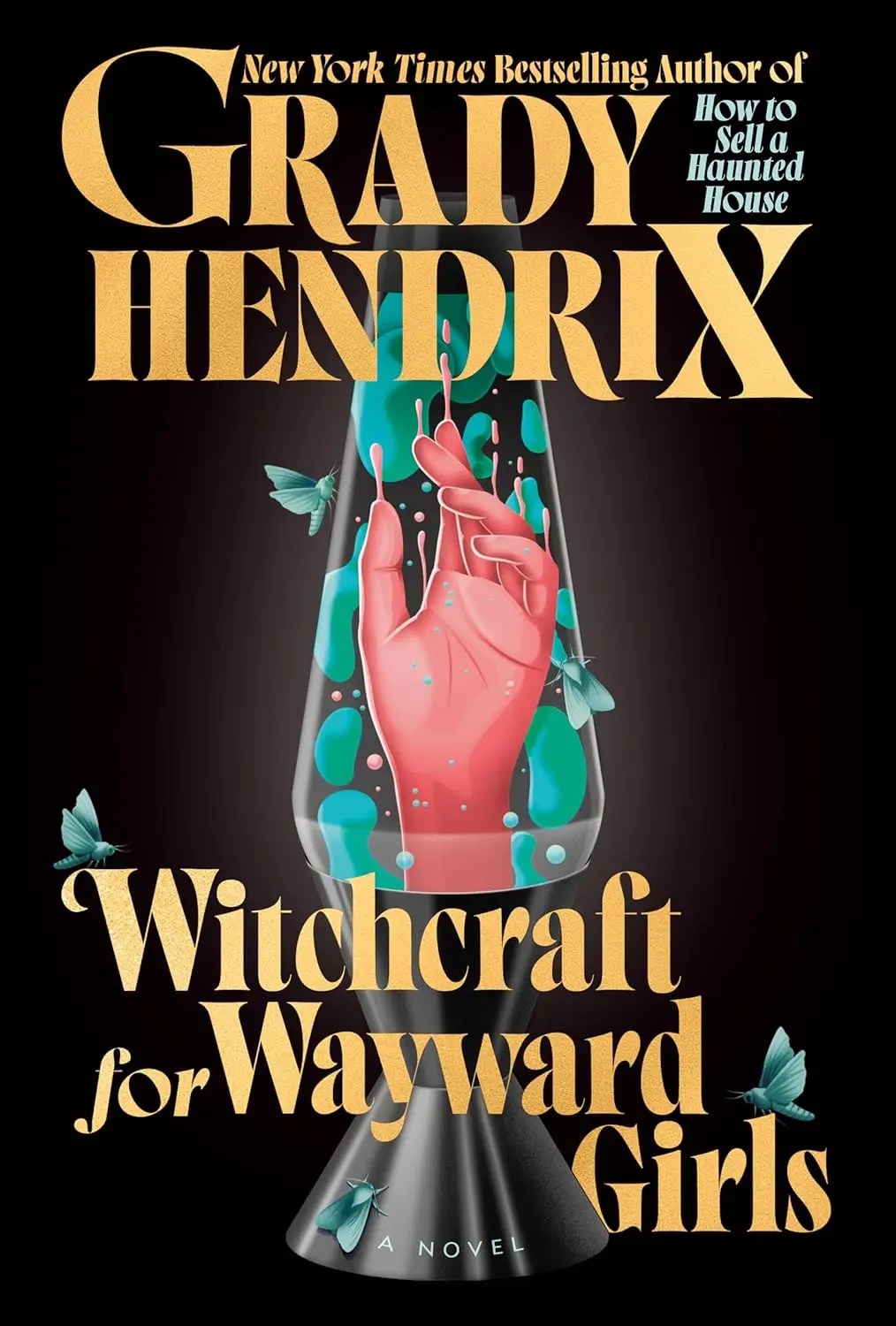
A chilling blend of historical fiction and supernatural horror, this novel explores what happens when pregnant teenage girls—hidden away in a 1970s home for wayward girls—discover the dark power of witchcraft.
Summary:
They call them wayward girls. Loose girls. Girls who grew up too fast. And they’re sent to the Wellwood Home in St. Augustine, Florida, where unwed mothers are hidden by their families to have their babies in secret, give them up for adoption, and most important of all, to forget any of it ever happened.
Fifteen-year-old Fern arrives at the home in the sweltering summer of 1970, pregnant, terrified and alone. Under the watchful eye of the stern Miss Wellwood, she meets a dozen other girls in the same predicament. There’s Rose, a hippie who insists she’s going to find a way to keep her baby and escape to a commune. And Zinnia, a budding musician who knows she’s going to go home and marry her baby’s father. And Holly, a wisp of a girl, barely fourteen, mute and pregnant by no-one-knows-who.
Everything the girls eat, every moment of their waking day, and everything they’re allowed to talk about is strictly controlled by adults who claim they know what’s best for them. Then Fern meets a librarian who gives her an occult book about witchcraft, and power is in the hands of the girls for the first time in their lives. But power can destroy as easily as it creates, and it’s never given freely. There’s always a price to be paid…and it’s usually paid in blood.
Review:
I had previously read Grady Hendrix’s My Best Friend’s Exorcism and remembered liking it more than I actually did. When I revisited my review, I realized I had enjoyed the concept far more than the execution—and unfortunately, that’s exactly how I feel about this book as well.
One thing I didn’t realize before picking this up is that Hendrix is a male author. I read My Best Friend’s Exorcism digitally, so it wasn’t until I saw the author photo on my library copy that it became obvious. Now, that’s not to say men can’t or shouldn’t write about women’s issues—but in my experience, if a book is expressly about women’s experiences (such as pregnancy and abortion), I tend to dislike it when it’s written by a man. Hendrix acknowledges this in a note, explaining that his inspiration came from a family member’s experience as a wayward girl, and I appreciate the personal connection as well as the research he put in. That said, I still struggled with the execution. In retrospect, this also explains issues I had with My Best Friend’s Exorcism—especially the queer-baiting between the two best friends. The way their relationship was written didn’t quite reflect how best girlfriends interact. I now wonder if Hendrix was inserting subtext without realizing it. But I digress—back to this book.
This is a long book, and it takes quite a while before the supernatural horror elements appear. When they do, they feel sporadic—as if the book can’t quite decide whether it wants to be historical fiction or horror. According to the author’s note, an earlier version was pure historical fiction, and it shows. The witchcraft elements feel both tacked-on and underwhelming, lacking the impact they seem to be aiming for. The spellcasting scenes, in particular, drag on too long—the book repeatedly emphasizes how rituals are tedious, repetitive, and boring, and then actually makes the reader sit through them in full dialogue.
The novel also struggles with whether the witches are heroes or villains. At first, they seem to empower the girls in a feminist, girl-power way, but later, they’re positioned as the main threat. I can see the poetic logic in showing that these girls had no real options, but at the same time, a novel like this needs a stronger thematic core—a sense of hope, justice, or at least a clear vision for a better future. On the plus side, I never knew what would happen next or how it would wrap up. Even when I felt frustrated, I kept reading simply because I needed to know how it all ended.
While the book does include a Black teen girl at the home, the handling of race and racism felt superficial at best. The only acknowledgment of racism in 1970s Florida is a scene where the home’s director initially wants to separate the Black girl from the others, only for a hippie character to protest and swap rooms with her. That’s it. This felt wildly unrealistic for the time period.
Beyond this, there are three other Black characters: the cook, the maid (her sister), and a driver. While these are historically accurate roles, the cook is a blatant magical negro trope, complete with a sassy personality and a role that exists entirely to serve and clean up after the white girls. I cringed. A lot. The white characters take advantage of her kindness without any acknowledgment of how their actions impact her life. I also disliked how Black characters’ skin tones were described.
Readers should be aware that this book includes:
- Graphic descriptions of self-injury related to spellcasting.
- Traumatic childbirth.
- Forced institutionalization & adoption.
- Emotional abuse.
- Mentions of CSA & child abuse (off-page).
- A spellcasting scene with explicit Christian blasphemy. (Expected for witches, but I do think it could have achieved the same effect without spelling out the blasphemy.)
Ultimately, this is historical fiction with horror elements rather than a true horror novel. It would have benefited from stronger thematic direction and a more nuanced approach to diversity, avoiding the Magical Negro trope. The book understands that these wayward homes were a problem, but it doesn’t seem to take a stance on what should have been done differently. It sends mixed messages about abortion, single teen motherhood, and autonomy—leaving it feeling murky rather than impactful. Recommended for readers who enjoy historical fiction with a touch of horror—and who don’t mind waiting for the horror to arrive. For those interested in the real history behind these homes, The Girls Who Went Away is a must-read.
If you found this review helpful, please consider tipping me on ko-fi, checking out my digital items available in my ko-fi shop, buying one of my publications, using one of my referral/coupon codes, or signing up for my free microfiction monthly newsletter. Thank you for your support!
3 out of 5 stars
Length: 482 pages – chunkster
Source: Library
Buy It (Amazon or Bookshop.org)
Book Review: The Villa by Rachel Hawkins

When Emily’s on-again off-again best friend (who also just so happens to be a power of positive thinking influencer) invites her to spend the summer at an Italian villa, she’s surprised to discover it’s the same villa famous for a murder in the 1970s.
Summary:
As kids, Emily and Chess were inseparable. But by their 30s, their bond has been strained by the demands of their adult lives. So when Chess suggests a girls trip to Italy, Emily jumps at the chance to reconnect with her best friend.
Villa Aestas in Orvieto is a high-end holiday home now, but in 1974, it was known as Villa Rosato, and rented for the summer by a notorious rock star, Noel Gordon. In an attempt to reignite his creative spark, Noel invites up-and-coming musician, Pierce Sheldon to join him, as well as Pierce’s girlfriend, Mari, and her stepsister, Lara. But he also sets in motion a chain of events that leads to Mari writing one of the greatest horror novels of all time, Lara composing a platinum album––and ends in Pierce’s brutal murder.
As Emily digs into the villa’s complicated history, she begins to think there might be more to the story of that fateful summer in 1974. That perhaps Pierce’s murder wasn’t just a tale of sex, drugs, and rock & roll gone wrong, but that something more sinister might have occurred––and that there might be clues hidden in the now-iconic works that Mari and Lara left behind.
Yet the closer that Emily gets to the truth, the more tension she feels developing between her and Chess. As secrets from the past come to light, equally dangerous betrayals from the present also emerge––and it begins to look like the villa will claim another victim before the summer ends.
Review:
Told in both the 1970s and the present, this thriller highlights the similarities and differences of fame and near-fame for women.
The present-day perspective is that of Emily, a moderately successful cozy author going through a nasty divorce. While she’s able to make a living entirely off her writing, her success pales in comparison to her sometimes best friend Chess. Chess has a positivity influencer brand that includes publishing power of positive thinking style books (think The Secret merged with Girl, Wash Your Face.) The 1970s perspective is that of Mari, the girlfriend of one of the musicians who stayed at the villa in the 1970s. Both she and her stepsister found fame after the murder. Mari in the form of a horror book. Her stepsister in the form of an insanely popular singer/songwriter album.
The book’s central premise is that the men in these women’s lives are holding them back from finding their own artistic expression, fame, and success. The question is, are the women’s reactions justified? Put another way, are the women using self-defense (of their art) to an appropriate level given the threat? Another secondary question is can two women ever really fully support each other’s art or is someone always getting the short end of the stick?
The book isn’t heavy-handed in exploring these questions. Indeed, I was primarily wrapped up in the two mysteries going on. The first being who committed the initial murder in the villa in the 1970s. The second being why has Emily been suffering from a mysterious medical condition and does Chess have ulterior motives to having invited her to the villa? That’s a lot of mystery for one quick thriller, and it works.
I was impressed at the amount of backstory and extra information the author had to consider in putting together the two timelines. We have snippets of Mari’s book, a horror best seller by a woman in the 1970s that rivaled The Shining (my review) in this imaginary version of the 1970s. There are excerpts from that book in this one that the author had to write in a completely different tone and manner than her own writing and in a way that would make sense for the 70s. There’s also snippets of Chess’s brand, basic characters and plot for Emily’s cozy series, an excerpt from a podcast episode about the murder, Mari’s writing about her summer at the villa, and lines from her stepsister’s songs from her most famous album. That’s a lot of different voices and moving parts to keep straight, and the author does a great job of that. I found myself wishing there was more found items in the book, like another podcast episode or something. That’s not a critique. I enjoyed it so much I wanted more.
There were two things that I didn’t love about the book. These are both spoilers, so consider yourself warned! First, Emily’s illness is repeatedly brushed off by doctors as in her head. This is very frustrating and relatable for anyone who’s dealt with a mystery illness. However, by the end of the book it’s revealed that the illness is indeed psychosomatic. Even talking to her husband on the phone makes Emily sick. So the stress of being with him has been making her ill. I found this to be a really disappointing depiction. Yes, chronic illness can improve when a stressor is removed. But that wasn’t the situation in this book. Emily was only sick because of being so stressed out about her marriage. Once that’s removed, she’s better. A disappointing perspective to see in the book. Second, Chess and Emily decide to kill Emily’s soon-to-be-ex-husband since he’s dragging Emily to court for partial rights to her cozy series and threatening to do that for anything else she writes, as well as is blackmailing Chess. That’s a fine twist that makes sense. The issue is, the book shows them inviting him to visit them in the villa and reveals that he drowned and that the local police ruled it an accidental drowning. But it doesn’t show us how Emily and Chess did it. Nor is it really believable that they would be cleared so quickly in the death given the nasty divorce proceedings Emily was current undergoing. She would obviously have been a serious suspect, not brushed off so easily as one. Unless they did something with the murder that made it impossible to suspect her at all. But, again, this isn’t shown in the book. It was a short book with very little time dedicated to this murder, and I think it would have benefited from that.
Overall, in spite of two plot points I either didn’t appreciate for chronic illness representation issues or felt didn’t make much plot sense, I still enjoyed the read. It was a unique merging of a period piece thriller and a modern thriller featuring an influencer and female friendship. Recommended to thriller readers looking for a book rich in female characters who also enjoy the arts and the 1970s.
If you found this review helpful, please consider tipping me on ko-fi, checking out my digital items available in my ko-fi shop, buying one of my publications, using one of my referral/coupon codes, or signing up for my free microfiction monthly newsletter. Thank you for your support!
4 out of 5 stars
Length: 279 pages – average but on the shorter side
Source: NetGalley
Buy It (Amazon or Bookshop.org)
Book Review: Jaws by Peter Benchley
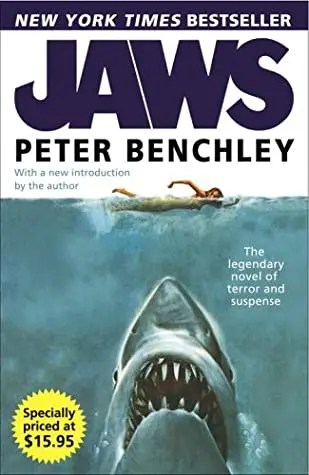
Get ready for shark week with this 1970s classic!
Summary:
A great white shark starts terrorizing a coastal town just as the money-making summer season begins. The classic, blockbuster thriller of man-eating terror that inspired the Steven Spielberg movie and made millions of beachgoers afraid to go into the water. Experience the thrill of helpless horror again—or for the first time!
Review:
As a New England girl born and raised, I can’t tell you how many times I’ve watched Jaws the movie. Everything about it is just so *chef’s kiss* perfectly small New England beach town. (The movie is set on Long Island, New York, but was filmed on Martha’s Vineyard, Massachusetts, and, let me tell you, everything about it reads New England to me.) Plus, my cat absolutely adores watching Jaws. She’s obsessed with that shark. With summer rolling around once again, I decided it was high time I read the book. The book is almost always better than the movie, right? Well, in this case, that almost really comes into play. (Spoilers ahead for both the movie and the book. If you haven’t seen this classic yet, please go watch it then come back to the book review.)
The book starts off strong with a close omniscient perspective of the shark getting ready to eat the drunk lady swimming in the ocean. The book could easily sway into anthropomorphizing territory, imagining the viciousness of the shark. But it consistently describes a creature whose instinct is to feed. What, exactly, made it come in to Amity and stick around is a mystery that is never solved. This first scene is one of the strongest in the book. But I have to admit I was hearing the absolutely classic movie soundtrack in my head while I was reading it, and we all know how essential that is at building suspense. So I’m not sure it’s safe to say I felt engaged purely because of the book.
But it didn’t take too long for the book to showcase itself as…worse than the movie. When we meet Sheriff Brody, he mentions a problem they had the previous summer where a Black gardener sexually assaulted six white women, none of whom would press charges. The only point of this from a narrative perspective is to demonstrate how the police department will keep things under wraps in order to protect the summer season. But it’s a hatefully racist way to establish this, narratively. Even if I charitably imagine that this is supposed to be pointing out the racial divide in Amity that is later even clearer in the book, there are better ways to do that than to play into this horribly racist myth of the serial Black assaulter of white women.
There are two other plot points in the book that weren’t in the movie at all. First, there’s that Brody’s wife cheats on him with Hooper because she feels some weird Feminine Mystique style ennui about her life as a housewife at a lower social class than she was before she got married. (We only see the sex in flashbacks she has about it and how strange and scary Hooper was). There is a large scene where she has lunch with Hooper first and talks about her sexual fantasies. Kind of slows down the pace of the suspense from the shark attacks.
The other additional plot point is that the mayor of the town is mixed up with the mafia because he had to take out a loan from a loan shark (har har) to pay his wife’s cancer treatment medical bills. (What on earth do other countries with nationalized health care do to justify characters taking out unwise loans? This is such a common plot device…but I digress.) The mafia wants the beaches to be kept open. This is a big motivator for why the mayor keeps insisting on it. But I don’t think this motivator is necessary. The economic pressure and need of a tourist town to keep their main tourist attraction open is more than enough motivation. Anyone who has any familiarity with a town that depends on seasonal tourism gets that. Spielberg was right to cut this from the movie. This also brings about a scene I found much more disturbing than any shark attack, which is that the mafia kills Brody’s son’s cat in front of his son, and then Brody takes the dead cat and throws it in the mayor’s face.
The final act where Quint, the old-time fisherman, takes Brody and Hooper out on his boat to hunt the shark is overall pretty good. There’s some nice tension between the three of them, and Quint really has to eat his words about the shark not being intelligent. It does not end with the 70s style bang of the movie. But I kind of liked the simplicity of the ending, leaving Brody to swim to shore and deal with the aftermath on his own without any reader audience.
I’ve seen some lists of the differences between the book and the movie with mistakes and inaccuracies on them, so I do want to clear up a couple of things. Brody is afraid of the water in the book. This is well-established; I’m not sure how people missed that. Mrs. Kintner does slap Brody in the book when she confronts him about the shark killing her son.
The version of the book I read also had an introduction by the author where we find out that he was, basically, a “summer person” himself – from a wealthy family and a legacy graduate of Harvard (his father also went to Harvard). His father was a novelist, and because of that connection, Benchley got an agent before he even had a book written. By Benchley’s own recollection, he sold the idea for Jaws and then they told him he needed to write the book, and the screenplay was sold before the book was even written. He took a first shot at the script, and Spielberg told him to throw out a lot of the stuff that I mentioned in my review as things I didn’t like. Moral of the story being privileged dude sold an admittedly solid idea based on the idea alone to someone else who directed it into it being a classic.
Overall, it was interesting to read the book behind the movie, but I also now have the perfect answer for the next time someone asks me, “When is the movie ever better than the book?”
If you found this review helpful, please consider tipping me on ko-fi, checking out my digital items available in my ko-fi shop, buying one of my publications, or using one of my referral/coupon codes. Thank you for your support!
3 out of 5 stars
Length: 320 pages – average but on the longer side
Source: Library
Buy It (Amazon or Bookshop.org)
Get the Book Club Discussion Guide
A beautifully graphic designed 2 page PDF that contains: 1 icebreaker, 9 discussion questions arranged from least to most challenging, 1 wrap-up question, and 3 read-a-like book suggestions
View a list of all my Book Club Guides.
Book Review: Burn Down, Rise Up by Vincent Tirado

Summary:
For over a year, the Bronx has been plagued by sudden disappearances that no one can explain. Sixteen-year-old Raquel does her best to ignore it. After all, the police only look for the white kids. But when her crush Charlize’s cousin goes missing, Raquel starts to pay attention—especially when her own mom comes down with a mysterious illness that seems linked to the disappearances. Raquel and Charlize team up to investigate, but they soon discover that everything is tied to a viral worldwide game called the Echo Game. If you play it wrong, it can trap you in an echo – a parallel universe based on one of the worst times your particular region has seen.
Review:
I love a horror based around a bunch of people doing something that tempts the supernatural into coming to get them, and then being surprised when it does. (And when I say “love” I mean I will literally throw you out of my house if you say Candyman at a mirror twice). When I saw there was a sapphic version of this trope coming out, you bet I smashed the request button on NetGalley so hard.
The first hurdle any horror like this has to get over is giving us a horrifying scene right off-the-bat that’s scary even though we don’t really know what’s going on. This book does a great job at that. Charlize’s cousin, Cisco, has been missing. He comes back from being missing “wrong” and accidentally gives “something” that’s clearly supernatural to Raquel’s mom, who’s a nurse. This beautifully sets up both Charlize and Raquel to be heavily invested in what exactly is going on in their neighborhood. They used to be close friends but now they’ve drifted to acquaintances, and Raquel has the hots for Charlize. It’s just the right set-up.
The next hurdle the book has to get over is why are the Black kids sneaking out at night to play this viral game tempting the supernatural at 3am? The book takes this head-on with the characters acknowledging doing such a thing doesn’t go with their culture. Charlize and Raquel are motivated to save their family members, but what about Cisco? We learn he befriended a bunch of white theater kids who asked him to come along and do it as part of some theater kids bonding activity. I have to say, as a once upon a time theater kid myself, this sort of thing rang as very true.
So is the horror scary? Yes, largely because it’s starting to reach out into the Bronx even among those who aren’t playing the Echo Game. But I will say, I didn’t think it was terrifyingly scary. If this was a movie, I could sleep after it. Unlike The Ring, which made me terrified of being in the same room with my own television for two weeks. So I’d say it’s moderate on the scary scale. It’s definitely kind of gory, and the peril is real.
The relationships are interesting, realistic, and Raquel has just the right amount of them. She has her best friend, his brother, Charlize, Cisco, her father, and her mother. The fact that she was living with her mother and has to move in with her bachelor pad father while her mother is ill was one of my favorite parts of the book. Her dad clearly loves her and they were absolutely part of each other’s lives before, but there’s a difference between the dad who loyally pays child support who you see a few times a month and the dad you live with. I appreciated how that difference was drawn out, acknowledging the awkwardness without blaming either of them. I also liked how her dad both brought out the Latinx aspect of the story, as well as giving her a direct connection to when the Bronx burned in the 1970s. (This time period, of course, is when the echo draws from).
The Charlize/Raquel situation was cute. I liked how Raquel’s best friend, Aaron, also likes Charlize, and he just wants Raquel to be honest with him about liking her as well. I was a little bit confused about why Raquel has some internalized homophobia making it hard for her to accept that she likes Charlize. It was unclear to me if this was coming from her family (who seemed very accepting) or if it was just worrying how her peers would react or what exactly. I think a richer development of that would have helped make the scenes where Raquel works on accepting herself more powerful.
Overall, this is a fun take on the viral game tempting the supernatural trope. The setting of the Bronx and the main character’s Afro-Latinx culture are both well developed. It’s a medium scary read that will certainly appeal to YA readers.
If you found this review helpful, please consider tipping me on ko-fi, checking out my digital items available in my ko-fi shop, buying one of my publications, or using one of my referral/coupon codes. Thank you for your support!
4 out of 5 stars
Length: 352 pages – average but on the longer side
Source: NetGalley
Buy It (Amazon or Bookshop.org)
Get the Reading Group / Book Club Discussion Guide
A beautifully graphic designed 2 page PDF that contains: 1 icebreaker, 9 discussion questions arranged from least to most challenging, 1 wrap-up question, and 3 read-a-like book suggestions
View a list of all my Discussion Guides.
Book Review: Rubyfruit Jungle by Rita Mae Brown

Summary:
This bawdy book originally published in 1973 tells the story of Molly Bolt, the adoptive daughter of a dirt-poor Southern couple who boldly forges her own path in America. With her startling beauty and crackling wit, Molly finds that women are drawn to her wherever she goes – and she refuses to apologize for loving them back.
Review:
I’ve been trying to read more queer classics and not solely limit myself to modern queer books. I stumbled upon this when looking for other books published around the same time as Tales of the City (review). While I absolutely appreciate how groundbreaking this was at the time, it didn’t work for me. I’ll have to give a couple of spoilers to be able to discuss why, so be forewarned!
Let’s start with what I did like. The prose calls out the racism of the north at a time when Jim Crow was still around in the south. Just because things may be better from a legal perspective doesn’t mean they actually are any less racist. This isn’t done in a preachy way. It comes about smoothly as Molly’s family moves from the hills of Pennsylvania to Florida. I really liked Molly’s dad, and the arc of her relationship with him. I loved how Molly’s first crush in middle school on another little girl named Leota is depicted. I appreciated how key moments in Molly’s life makes it clear she has to conform to succeed, and she refuses to do it. It hauntingly shows how minoritized people are kept down.
This is told in the first person, and Molly isn’t, to me, particularly likeable. I really wanted to like her. But I didn’t. She’s crass, abrasive, quite reactionary. She looks down on other people even while insisting she doesn’t. Ok, so for most of the book she’s a teenager or a young adult working her way through college. No one is perfect, and she has a lot stacked against her. But I would say she just becomes more full of herself as the novel progresses. I didn’t feel like she really learned anything. I suspect I’m supposed to think she did based on her final film school project, but it was hard for me to be moved by a film I didn’t see.
Something about Molly that particularly bothered me was an instance that really reminded me of some movies from the 70s I’ve seen, where a woman will say no to sex, but then the guy gets a little rough, gets her a little drunk, and later she basically says she’s grateful he took “advantage of her” because she really wanted it deep down (aka he raped her but she liked it). Well, Molly takes on the role of the aggressor in just such a situation in this book.I get it that this was a common trope at the time this book was written, and I’m imagining the goal was to show the same scene but with two women. But just because something was commonly shown in media at the time doesn’t make it right. I just can’t view Molly as a heroine when that’s how she engages with other women.
The other thing that’s problematic about Molly is that, since she’s adopted, she likes to say she doesn’t technically know her race. She bases this on having dark hair. At the end of the book she finds out she’s half…wait for it…French. She sees a photo of her father, and he’s French with dark hair. She never confronts herself about why she had this weird obsession with imagining herself as partially another minoritized race.
One more thing I feel I ought to mention is that Molly has a tendency to speak very negatively about butch presenting lesbians. It’s ok to not be into dating butches yourself. It’s even ok if you yourself find the butch/femme dynamic odd (although why you should care is beyond me). What bothers me, though, is how she describes butch women every single time she sees them. It’s downright insulting. You can be kind to other queer people you aren’t attracted to.
Again, I don’t expect characters to be perfect. Indeed, I think first person books with an imperfect main character are important for understanding other people’s perspective. But I do expect some growth and development over time. I felt throughout the book like Molly had no interest in self-improvement or reflection, and she never even has an epiphany that maybe she should.
Overall, why I understand why this book was groundbreaking, and it certainly had some memorable scenes, I felt the main character is unlikeable and doesn’t grow or change over time. I really liked her dad though. He was a morally flawed, complex character who I really felt could have held up his own fascinating book.
If you found this review helpful, please consider tipping me on ko-fi, checking out my digital items available in my ko-fi shop, buying one of my publications, or using one of my referral/coupon codes. Thank you for your support!
3 out of 5 stars
Length: 221 pages – average but on the shorter side
Source: Library
Buy It (Amazon or Bookshop.org)
Book Review: House of Zeor by Jacqueline Lichtenberg (Series, #1)
Summary:
In the distant future, humanity has split into two mutant forms: the life-energy producing Gen, and the vampiric, tentacled Sime. Most Simes treat Gens like animals to be consumed for food. Hugh Valleroy from the Gen Territories must infiltrate the Sime lands in order to locate his beloved Aisha. This means joining House Zeor, a Sime Householding led by Klyd, that believes in the necessary unification of the two peoples, and who have the ability to let the Sime feed without killing the Gen donors.
Review:
I do my best to read widely in scifi, which includes older scifi. I especially try to find older scifi by women authors. This book was first published in 1974, and, in addition to being older scifi by a woman, I heard it involved tentacles. I was intrigued, so I hunted down a copy. There are very few reviews online from modern reads. There are some nostalgic reviews about reading it many years ago. So, even though I didn’t like it, I thought it might be helpful to others to contribute a modern, non-nostalgic take.
The basic concept was interesting. There are predators who absolutely need something from the prey to function. It is made abundantly clear that eventually without consuming some Gen life force the Sime die. But the prey are sentient. What to do? Something else that was interesting was that the mutation doesn’t occur until puberty and, bizarrely, children in both Sime and Gen territory mutate into both forms. This means Gen parents turn on their Sime child (for fear of being eaten) and Sime parents….eat their Gen children. What a world! I wish this had been explored more deeply than it was.
A lot of the world building is touched on briefly but then not really explained or not explored deeply enough. Hugh has a “starred cross” he wears that his mother, who escaped Gen territory, gave him, telling him belief in it would protect him. But does it? It’s unclear. What is he believing in exactly? It’s never explored. Similarly, the “selyn” is mentioned a lot but never really defined. The Gens all speak English but the Simes speak “Simelan.” Is this true of the whole world? Just this area? What is Simelan anyway?
Let’s talk about the three things that made me bump this down from three stars to two. First, one of the heroes of the book, Klyd, displays clear homophobia. He and Hugh are an auction of Gens looking for Aisha. It’s established that most Simes view Klyd as a “pervert” because he doesn’t kill Gens but rather has a symbiotic companion relationship with them. Another Sime goes to bid and Klyd says that Sime is the true pervert because he sleeps with men as if they are women. He and all the other Simes show disgust at it, and our other hero doesn’t argue back against it. The existence of queer people is never touched upon again in the book, so this viewpoint remains unchallenged. I found this particularly upsetting as the companionship relationship has some really clear homoerotic undertones. In order to do a selyn exchange, the two people must hold each other’s forearms and then touch at a fifth touching point, the preferred one is lip to lip contact aka to kiss. It’s also common for companions to share a bed. But somehow this relationship isn’t a perversion but being queer is?
The second thing is how race and ethnicity are handled. At a couple of points, it’s established that at some point the races all mixed up together and we have many blended people now. That’s fine. But the main characters are all white coded. I mean, really white coded. In a way that wouldn’t make any sense if this was truly a future of completely mixed races. And when talking about it, Hugh, who is born in this “mixed race” world uses current terms to talk about what races he thinks various people are mixed with. Um, ok. If it’s all of them, why even wonder this? I also want to mention for my Asian diaspora readers that at one point a slur is used to describe someone of Asian descent.
The third thing is how the women in the book are handled. This frustrates me as this was written by a woman. You’ve already noticed the two main characters are men out to save a woman. There are really only three other female characters in the book. One is raped (off-screen). (Slight spoiler coming here). One dies in childbirth. I’d say Hugh’s mother is the only woman character who is well-rounded and interesting.
Overall, the initial world imagined is interesting, but how it is handled is not. Additionally, those looking for a thoughtful handling of the existence of queer people, race, and women won’t be getting it in this book.
2 out of 5 stars
Length: 224 pages – average but on the shorter side
Source: PaperBackSwap
Buy It (Amazon or Bookshop.org)
If you found this review helpful, please consider tipping me on ko-fi, checking out my digital items available in my ko-fi shop, buying one of my publications, or using one of my referral/coupon codes. Thank you for your support!
Book Review: Tales of the City by Armistead Maupin (Series, #1)

Summary:
San Francisco, 1976. A naïve young secretary, fresh out of Cleveland, tumbles headlong into a brave new world of laundromat Lotharios, pot-growing landladies, cut throat debutantes, and Jockey Shorts dance contests. The saga that ensues is manic, romantic, tawdry, touching, and outrageous
Review:
This was first published as a novel in 1978, although it was published prior to that as a serialized story in a San Francisco newspaper. It is considered a classic of LGBTQIA+ literature. The first tv show miniseries based upon it that premiered in 1994 had a same-sex kiss made history and was also protested (source). The Netflix reboot/update in 2019 brought fresh attention to it, and I thought it was high-time I read the classic.
It’s clear that some restraints were placed upon Maupin, either by the newspaper or simply the culture of the time. Our window into the queer world in San Francisco is given to us by Mary Ann Singleton – a single cis straight woman who comes from Cleveland for a visit and decides to stay. She’s invited into Barbary Lane and declared one of us, although why exactly she’s considered part of the found family is not resolved in the first book.
The book is definitely a product of the 1970s. 1970s fashion and freewheeling culture are everywhere. Lack of acceptance of queer people is a real threat and concern, and the AIDS crisis had not yet hit. It’s an interesting snapshot of a very particular point in time.
While characters are quite loose about who they will sleep with, there’s also a lack of diversity in the cast of main characters that’s jarring. Especially for a story set in a city that’s so diverse. Particularly noticeable to me was how the Asian-American characters are all peripheral, even with this being San Francisco. I don’t think this lack of diversity is a product of its time – there were other very forward-thinking works of fiction at the same time as this. This lack of diversity is something to keep in mind when approaching the book.
There are also two plot twists that revolve around race, and I don’t think either is handled with particular grace. The race of someone’s lover is identified by pointing to a yellow flower. This is obviously offensive. While it seems to me that the character who does this is someone we’re supposed to think badly of, on the other hand, it seemed to me that this was supposed to be a funny moment. And it definitely was not. In the other case, a character reveals that they believe that the only way to become a successful model is to be Black. It is unclear what the other character they are speaking to thinks of that. I think this instance may be intentionally leaving it up to the reader to decide what they think, but it’s also a strange plot point in a book that’s mostly about hookups and very little about careers.
This reminded me very much of other books and tv shows that have dramatic, gasp-inducing storylines with large casts of characters whose lives intertwine and overlap in mysterious ways. Think Jane the Virgin or Desperate Housewives just with fewer identical twins and less murder (so far…..) and more queer characters. If you like that type of storytelling, then you’ll likely find this hilarious and engaging. If you don’t, then you probably won’t.
I personally found it to be a rapid read with an engaging storyline and funny chapter titles. I wished it had been more forward-thinking and intersectional, but I also respect that the mere depiction of queer people in a soap opera like story was quite groundbreaking. I appreciate it for what it is, and it was a fun, quick read.
4 out of 5 stars
Length: 386 pages – average but on the longer side
Source: Library
Buy It (Amazon or Bookshop.org)
Get the Reading Group / Book Club Discussion Guide
A beautifully graphic designed 2 page PDF that contains: 1 icebreaker, 9 discussion questions arranged from least to most challenging, 1 wrap-up question, and 3 read-a-like book suggestions
View a list of all my Discussion Guides.
If you found this review helpful, please consider tipping me on ko-fi, checking out my digital items available in my ko-fi shop, buying one of my publications, or using one of my referral/coupon codes. Thank you for your support!
Book Review: The Continuous Katherine Mortenhoe by D.G. Compton
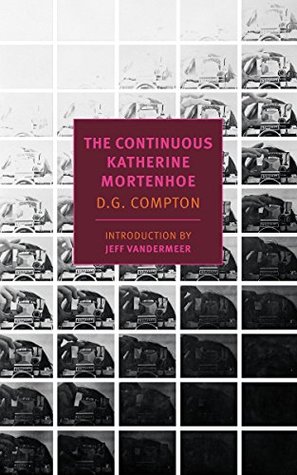
Summary:
Katherine Mortenhoe’s world looks very similar to our own, except that in this near future medical science has found the cure for death—or eliminated nearly every cause for it other than old age. So when Katherine is diagnosed with a terminal brain disease caused by an inability to process an ever-increasing volume of sensory input, she immediately becomes a celebrity to the “pain-starved public.” But Katherine will not agree to be the star of the reality TV show Human Destiny, her last days will not be recorded by any cameras. She doesn’t realize that from the moment of her diagnosis, she’s been watched, not only by television producers but by a new kind of reporter, one with no visible camera, who is always recording behind his never-blinking eye.
Review:
This book was first published in 1973 under the title The Unsleeping Eye. It was then published in the UK in 1974 under this title. It was made as a film in 1980 under the title Death Watch with the books published after that under that title. Then in 2016 it was republished as The Continuous Katherine Mortenhoe along with a new introduction by Jeff Vandermeer. All of which is to say, although you may see it listed as published in 2016, this is actually a 1970s vision of the future. This makes its take on reality tv all the more impressive to me.
The story is told in two perspectives from Katherine’s and from the reporter’s. They both live in the near future UK. Katherine is in her 40s on her second husband, childfree (there is no discussion of fertility issues or a desire for children), and works for Computabook’s romance department. Computabook appears to be essentially an AI largely writing Harlequin style romance novels. The consensus seems to be that she could write a great novel and is wasting her time at Computabook. She goes to the doctor quite a bit, which is presented as odd for a time when most illnesses are cured. The gentle opinion seems to be that she has a mental problem skewing toward perhaps hypochondria. But then she gets a terminal diagnosis. The reality tv show Human Destiny is so sure that they will get her to sign on to live out her last days filmed that they secretly film her receiving the diagnosis news, figuring they will get her permission via contract later.
The reporter has just consented to have tv cameras implanted in his eyes, allowing them to film without the presence of any cameras, only him. He cannot be in full darkness for a period of time after the surgery and takes pills to stay awake. He has an ex-wife and son. The ex-wife very much dislikes his work for the producer who does Human Destiny. She does not like this producer.
There are a lot of ex-spouses in this society because they do 5 year handfastings, essentially, and at that point they decide whether or not to recommit for another 5 years. It’s supposed to not be a big deal if folks don’t recommit, but it’s clear from both the reporter’s relationships and Katherine’s that it actually is to the folks involved. While not a focus of the book, I found this interesting.
The book then ultimately explores the ethics of why Katherine might or might not sign on for the show, whether or not the reality tv show is in and of itself ethical, and what the limits of cameras in a person’s eyes are to truly telling the truth. I would also say it explores the impact of your job on your life and your sense of fulfillment. Another theme is how different people’s lives look depending on how much they have “bought in” to the way of life depicted to them as the main choice by the government. There’s also a question of what’s a good death and who gets to choose what that means.
I most enjoyed the exploration of the alternative societies outside of the mainstream. I also found the depiction of near future reality tv very well-imagined. I am happy to report that there is no rape or sexual violence in this 1970s scifi book. There is an instance where it seems a possibility, but it does not ultimately happen. There is medical trauma and some minor violence seen in robberies.
This book ultimately left me pondering if it was trying to say something larger about the male gaze or if that was coincidental. Regardless, it left me thinking about women and our lives and how others view them. A valuable issue to ponder. Plus it was fun to explore this imagined future society.
4 out of 5 stars
Length: 264 pages – average but on the shorter side
Source: Purchased
Buy It (Amazon or Bookshop.org)
If you found this review helpful, please consider tipping me on ko-fi, checking out my digital items available in my ko-fi shop, buying one of my publications, or using one of my referral/coupon codes. Thank you for your support!
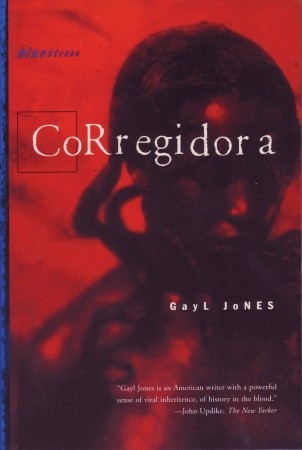
Book Review: Corregidora by Gayl Jones
Summary:
First published in 1975, this explores the adult life of Ursa Corregidora, a Black woman blues singer haunted by trauma – both intergenerational and the violent loss of her fertility. Her great-grandmother and grandmother both were enslaved by Corregidora – a Portuguese enslaver in Brazil. He raped both of them, meaning he was the father to all the Corregidora women until Ursa herself. Her female ancestors constantly told her the importance of keeping the truth of their suffering alive through telling the story down through the family. So what will happen to the story now that Ursa, an only child, can no longer have children of her own?
Review:
This made it to my to be read pile before the current surge in interest in the history of the blues, partially coming from the newly released movie The US vs. Billie Holiday. This book demonstrates how clearly the blues and the trauma inflicted on Black folks in the US are intertwined, with the blues granting an outlet for speaking on at least some of the suffering but also a source of Black joy.
I have seen some reviews talk about how this book is about Ursa’s anger. I strongly disagree. This book is about Ursa’s intergenerational and current trauma, but she is absolutely not, as the GoodReads summary states, “consumed by her hatred of the nineteenth-century slavemaster [Corregidora].” Ursa suffers from trauma and struggles to deal with this trauma, but she is not consumed by hatred. I dislike how this summary seems to place the blame for her suffering upon Ursa. Ursa is doing the best she can with a whole pile of trauma. She’s not perfect, but, in my opinion, this isn’t some cautionary tale about being consumed by hatred. It’s an eloquent depiction of the intergenerational trauma of slavery and racism.
It is so immediately understandable why Ursa’s whole world is rocked when she loses her fertility due to abuse at the hands of her husband. (This happens very early in the book and is not a spoiler). Not only does she have a drive to have children that many women have, but she also has the lifelong expectation that she will fight injustice and white supremacy by passing the true story of what happened to the women in her family down along to the next generation. How can she manage her life when it becomes impossible for her to fulfill that expectation?
This book is not just about fertility/infertility and intergenerational trauma but also about the blues. Why Ursa is so drawn to the blues and what she is willing to give up and fight for in order to continue to sing them. The balance of moving among these themes is handled very well.
There are also some difficult moments where we see that Ursa is homophobic. She has a female friend who engages in relationships with other women and Ursa is, at the very least, uncomfortable with this. However, I do not think the book is necessarily in agreement with Ursa. Time is spent discussing why two Black women might be empowered by loving each other. However, time is also dedicated to discussing how white women have also raped enslaved (and servant) Black women, and that memory is part of what makes Ursa so uncomfortable. It is not an easy topic, and there is also the additional layer that Ursa finds this out right after she’s lost her fertility and others are questioning whether she counts as a woman anymore due to this. I think this section is handled honestly but readers who are more sensitive to negative reactions to queerness should be aware of its presence in this book.
This book is an engaging, powerful, and in many ways, unexpected, read. While I think everyone could get something out of this, I specifically want to mention that if you’ve read the white women’s feminist classics of the 1960s and 1970s, you definitely need to pick this one up and diversify your perspective.
4 out of 5 stars
Length: 192 pages – average but on the shorter side
Source: Library
Buy It (Amazon or Bookshop.org)
If you found this review helpful, please consider tipping me on ko-fi, checking out my digital items available in my ko-fi shop, buying one of my publications, or using one of my referral/coupon codes. Thank you for your support!
Book Review: Burn Baby Burn by Meg Medina

Summary:
Set in New York City during the tumultuous year of 1977, this focuses on Nora, a Cuban-American 17-year-old in her final months of high school and the summer immediately after. Son of Sam is terrorizing the city, shooting young people at what seems to be random, there’s a heat wave, and a black-out. Nora needs to figure out what she’s going to do with her life after high school, but her younger brother, Hector, is becoming more uncontrollable, and she needs to help her mother with the rent. All she wants to do is go to the disco with the cute guy from work, but is that even safe with Son of Sam around?
Review:
I really enjoyed this one. The setting was great – all the fun of the 1970s with none of the exploitation or sexual violence often seen in the movies and books that came out of that era. That is not to say that there is no violence (domestic violence, drug abuse, drug paraphernalia, arson, homes threatened by fires, brief and not very descriptive animal abuse) are all present. But still, compared to the movies from that time period, the violence is minimal.
I also enjoyed that, while the events of 1977 definitely are present, there is no unrealistic connections between the main character and them. You know how sometimes a main character in a historic piece is written in as having done something pivotal or having some connection to a historic person. None of that here.
While I appreciated the presence of Stiller (a Black woman progressive downstairs neighbor), I would have liked any indication of the queer culture that was present in NYC, especially with some particularly interesting moments also occurring in the 1970s (like the start of Gaysweek or the NY ruling on trans* rights). Given how many characters are heavily involved in the women’s movement, it seems like it would have been fairly simple to have a bit of crossover or touchstone between these.
Another thing that I think could have taken this book up a notch for those less familiar with disco would be a song suggestion for each chapter or a Spotify playlist to go along with it. Whenever music features heavily in a historic book, I think this is a good idea.
If you’re looking to dive into a quick-paced YA featuring disco and the reassurance that bananas years do pass, I recommend picking this one up.
4 out of 5 stars
Length: 310 pages – average but on the longer side
Source: Library
Buy It (Amazon or Bookshop.org)
If you found this review helpful, please consider tipping me on ko-fi, checking out my digital items available in my ko-fi shop, buying one of my publications, or using one of my referral/coupon codes. Thank you for your support!
 Support my work with a tip or browse my shop for curated book club guides, how to guides, cross-stitch patterns, and more!


This work by Amanda Nevius is licensed under a Creative Commons Attribution-Noncommercial-No Derivative Works 3.0 United States License.
 Opinions of a Wolf