
Archive
Book Review: The Stars My Destination by Alfred Bester
 Summary:
In the future, men have discovered the ability to jaunte–to teleport from one location to the other. The only catch is that you can only teleport to a place you have previously been. This means that jauntes around the world are the domain of the wealthy who can make the journey first. In this future of teleportation and telepaths, the rich have become a hipster elite, showing off their wealth by using outmoded and and outdated methods of transportation like cars and trains.
Foyle is one of the working poor. A hand on a spaceship that has an accident, leaving him in a closet grasping to the last straws of oxygen. Another spaceship passes him by, after clearly seeing his flare, and he vows vengeance upon them if he ever escapes alive. Which he does. What follows is a tangle of intrigue across time and space.
Review:
I got this in a collection of 1950s American scifi classics from Netgalley (which I will review as a whole at a future date). I was surprised to discover that I already had this particular book on my wishlist tagged simply as a scifi classic. So I went in with an enthusiasm that was definitely well-met. This book is worth reading for the world-building alone, even if the main plot and point of the novel doesn’t particularly speak to you.
The world Bester built for this book is complex and unique. Many authors would have left the future building at the jaunting alone. These people can teleport (and some are telepaths), what more is needed? But Bester takes it out a step further. Giving jaunting a limitation allows him to further expand upon how the change impacts people and culture differently based upon their wealth. On the one hand, since jaunting is only possible if you’ve physically been to the place you want to go, it becomes a bastion of the elite who can afford to travel there first.
They would memorize jaunte stages in widening circles, limited as much by income as ability; for one thing was certain: you had to actually see a place to memorize it, which meant you first had to pay for the transportation to get you there. Even 3D photographs would not do the trick. The Grand Tour had taken on a new significance for the rich. (loc 2465)
On the other hand, the wealthy will show off that they don’t need to jaunte because they can afford outmoded means of transportation like cars and trains.
As men climbed the social ladder, they displayed their position by their refusal to jaunte. (loc 2595)
Jaunting impacts the world further with the wealthy building labyrinths so that people can’t easily jaunt within their estate and home (since you can’t jaunt someplace you can’t see). In contrast, the working poor jaunte everywhere they possibly can to save their precious time and energy. On top of all of this, there’s space travel and space colonization, complete with slavery to mine the outer planets. But even the working poor who aren’t officially slaves are still essentially slaves to the wealthy elite. It’s a nightmare of a future where a few big corporations, and thus a few families, own the majority of the wealth, power, and luxury, and are unafraid to stomp on the poor to get ever more.
It makes sense that a good plot for this world would be a poor working man out to get vengeance on the corporation that left him to die in space. But Foyle isn’t a good guy himself. At first, none of his quest for vengeance is noble or is about anything other than himself. Plus, Foyle is an animal of a man. The book clearly believes that this animal state is the fault of the corrupt imbalance of power in the world. The wealthy elite have made many of the working poor into nothing more than scrabbling animals who will take what they can get violently when they can and live based on the more baser urges. As Foyle gradually climbs the social ladder in his espionage, he slowly learns what it is to be human and develops a conscience. I’m not a fan of this idea that the poor are forced into an animal-like state by the elite. Living without luxury doesn’t make a person animal-like. A lack of moral education contributes more than anything, and that can occur at any level of wealth. Thus, although I appreciate the fact that this vengeance plot allows for us to see the entire world from the bottom up, I’m not a fan of how Foyle’s growth and change is presented.
Some readers may be bothered by the fact that Foyle early in the book rapes someone and then later earns redemption, including from the woman he raped. The rape is described as part of his animal state, and he has now risen above it. When the rape occurs in the book, it is off-screen and so subtle that I honestly missed it until later in the book when someone calls Foyle a rapist. I appreciate that Bester does not depict the actual rape, as that would have prevented my enjoyment of the book. I don’t like the idea of rape being something only done by someone in an “animal state” or the idea that it’s something a person can ever redeem themselves from. I don’t think that’s the case at all. However, this is a very minor plot point in an extremely long book. Most of my issues with it are tied into my issues with the plot overall. I was able to just roll my eyes and tell the characters that they are wrong. It’s not that hard to do when most of them are presented as evil or anti-heroes to begin with. But this plot point might bother some readers more than others.
Overall, the world building is so excellent and gets so much attention from Bester that it overshadows the more average vengeance plot with iffy morals. Readers who enjoy immersing themselves in various possible futures will revel in the uniqueness and richness of the future presented here. Those who believe firmly in punishment for crime as opposed to redemption may not be able to get past the plot to enjoy the setting. Recommended to scifi fans interested in a unique future setting.
4 out of 5 stars
Source: Netgalley

Book Review: Double Star by Robert A. Heinlein
 Summary:
When out-of-work actor Lorenzo Smythe is approached in a bar by a space pilot with a job offer, he agrees to at least go meet the man’s boss and discuss it. Quickly, however, Lorenzo finds himself being kidnapped into outer space and impersonating a missing important politician, John Joseph Bonforte, under slight duress. They must keep the public from knowing the politician has been kidnapped and successfully participate in a Martian adoption ceremony or face interplanetary war.
Review:
I was excited to pick up another Heinlein, and he definitely didn’t disappoint. Similar to The Moon Is a Harsh Mistress
In this version of the future, space exploration has led to the discovery of inhabited other planets and two distinctly different opinions on how to interact with those lifeforms. Either dominate in a manifest destiny style or come to mutual cultural understanding and trade. The politician Smythe must impersonate, Bonforte, is the leader of the latter faction. This novel could easily have turned preachy with such a premise, but Smythe himself isn’t too keen on being friends with the aliens. As an actor, he is committed to playing his role beautifully. As a person, he isn’t sure he agrees with Bonforte. This position allows Heinlein to explore both sides of the question, as well as the gray area in-between. No easy answers are presented, but slowly what is more just is revealed.
Juxtaposed with the political plot is the whole aspect of Smythe being an actor who believes fully in his craft as an artform. Smythe takes himself very seriously even when others do not. At first, others view him as full of himself, but slowly they come to respect him and his talents. Smythe’s large self-esteem may at first cause the reader to roll their eyes as well, but it gradually becomes apparent that having confidence in yourself and your abilities as a professional is not a bad thing.
I was a professional, retained to do a very difficult professional job, and professional men do not use the back stairs; they are treated with respect. (loc 1660)
Although characters at first seem two-dimensional, the main characters slowly become more fleshed out and well-rounded. Nothing and no one is quite as simple as it at first seems, and Smythe is a great example of that.
What really makes the book, though, is its unexpected wit. It’s not so much a laugh out loud book, but it’s very much a snort of amusement style of humor that takes the book from interesting to highly enjoyable.
My vocal cords lived their own life, wild and free. (location 40)
I was as angry as a leading woman with her name in small type. (location 1068)
The romance lacked creativity or sparkle. It is easy to spot the instant it comes up, but it doesn’t come across as natural or meant to be. It mostly feels like the woman transferring her affection for Bonforte onto Smythe. I found it a bit squicky that she fails to ever really see Smythe as Smythe, not even after falling in love with him. Thankfully, the romance is an incredibly minor part of the book. The book is also slightly dated by the overwhelming presence of paper and microfilm. We’re talking the spaceship has a library with print books and microfilm. In general even classic scifi tends to imagine a future with at least slightly different versions of books and information exchange. I found it a bit odd that Heinlein failed to do that.
The ending is not unexpected entirely but it is satisfying and with enough fun details to entertain. Of the various options for an ending to this story, the one Heinlein took is enjoyable and makes sense within the world he has created.
Overall, this is a fun piece of classic scifi that tosses together acting and politics in outer space with Martians who look like toadstools and a heavy sprinkling of wit. The romance leaves something to be desired, and the tech isn’t particularly predictive or imaginative, but these are minor aspects of the story. Recommended to fans of witty scifi who don’t mind a dash of political intrigue.
4 out of 5 stars
Length: 243 pages – average but on the shorter side
Source: NetGalley
Buy It (Amazon or Bookshop.org)
If you found this review helpful, please consider tipping me on ko-fi, checking out my digital items available in my ko-fi shop, buying one of my publications, or using one of my referral/coupon codes. Thank you for your support!
Book Review: Will I Ever Be Good Enough?: Healing the Daughters of Narcissistic Mothers by Karyl McBride
 Summary:
A guidebook for adult women raised by a mother with Narcissistic Personality Disorder (NPD). Dr. McBride is a therapist with many years of experience treating daughters of NPD mothers and also with treating people with NPD. Additionally, she herself is the daughter of a woman with NPD. The book is divided into three sections to help the daughters of mothers with NPD to heal and take charge of their lives. The first section “Recognizing the Problem,” explains what maternal NPD looks like. The second section, “How Narcissistic Mothering Affects Your Entire Life,” explains the impact NPD mothers have on their daughters, both as children and as adults. The third section, “Ending the Legacy” is all about healing from the NPD mothering and breaking the cycle of Narcissism. Dr. McBride offers clinical examples from her practice as well as detailed, clearly explained exercises to aid with healing.
Review:
It’s not easy to find a book addressing healing from abuse that manages to walk the fine line of understanding for all involved and absolute condemnation of the abusive actions and that simultaneously encourages agency and healing without making the survivor become stuck in a victim’s mentality. Dr. McBride strikes this balance eloquently.
The three sections of the book work perfectly for guiding the reader through understanding precisely what happened in her childhood, how it impacts her adulthood, and how to regain agency of herself and her life. NPD is not a mental illness that is well-understood or recognized. The first section thus must explain NPD and how NPD leads to abusive mothering without demonizing the mother suffering from NPD. It is incredibly difficult not to demonize people with NPD. People with NPD tend to be self-centered, manipulative, and resistant to treatment. McBride manages to simultaneously describe the person with NPD in a sympathetic light and condemn their behavior. This section also serves to provide an aha moment for the reader. It will immediately be clear if your mother has/had NPD or not, and if she does/did, it will shine a light on the daughter’s childhood, proving she is not crazy or ungrateful. Some of the signs of a mother with NPD include: the mother demanding praise for everything she’s ever done for the daughter, a lack of compassion or empathy for the daughter, approval for who the mother wants the daughter to be instead of who she is, the mother perceives of the daughter as a threat, the mother is jealous of the daughter for various reasons, the mother is overly critical or judgmental, the mother uses the daughter as a scapegoat for her bad feelings, the mother treats the daughter like a friend, no boundaries or privacy, the mother involves the daughter prematurely in the adult world, and more.
This section also explains why the book is only about daughters of mothers with NPD and not for her sons as well.
A mother, however, is her daughter’s primary role model for developing as an individual, lover, wife, mother, and friend, and aspects of maternal narcissism tend to damage daughters in particularly insidious ways. Because the mother-daughter dynamic is distinctive, the daughter of a narcissistic mother faces unique struggles that her brothers don’t share….A narcissistic mother sees her daughter, more than her son, as a reflection and extension of herself rather than as a separate person with her own identity. She puts pressure on her daughter to act and react to the world and her surroundings in the exact manner that Mom would, rather than in a way that feels right for the daughter. (6-7)
The next section looks at what impact being raised by a mother with NPD has on the daughter’s adult life. McBride factually explains where some of the daughter’s less healthy behaviors and thought processes may come from without falling into the trap many childhood healing books fall into of repeatedly directing negative energy toward the parent. Some of the issues that may be present in an adult daughter raised by a mother with NPD include: high-achieving or self-sabotaging or waffling between the two, difficulty understanding and processing feelings, inappropriate love relationships that are dependent or codependent or giving up on relationships entirely, fear of becoming a mother herself, unconsciously mimicking her mother’s parenting with her own children or doing the exact opposite of what her mother did.
The final section is all about the daughter healing, overcoming, and taking agency for herself. McBride encourages therapy, but also offers at-home tips and exercises for those who cannot afford it. An example of one of these is the “internal mother” exercise. This exercise involves many steps, but it essentially seeks to replace the internal negative messages the daughter has from her own mother with more positive messages that are the type the daughter wanted from her real mother. The daughter grieves the mother she never got to have and learns to parent herself. Much of the work in this section involves grieving the mother and childhood the daughter never got to have, accepting it for what it is, giving herself the encouragement and mothering she needs, learning to set boundaries, and the daughter coming to be in charge of her own life. The exercises are not simple and may seem a bit overwhelming to the reader at first, but they do serve to mimic the real therapy process, encouraging introspection, journaling, grieving, and behavioral changes.
One thing I really appreciate about McBride’s approach is how she handles the adult relationship between daughter and mother. She 100% encourages the daughter to make the choice that is right for her own emotional health and that simultaneously does not expect miracles from her mother. Since most people with NPD don’t receive successful treatment, McBride carefully admonishes the daughter to base her decision based on her mother’s proven behavior. She encourages setting clear boundaries, and individuating oneself from mother. But she also acknowledges that having a relationship at all with a mother with severe NPD might not be possible.
We have to acknowledge that a narcissistic mother may be too toxic to be around. In many situations, daughters have to make the choice to disconnect completely from their mothers because the toxicity damages their emotional well-being. While others around you may not understand it, this is a decision that you get to make for your own mental health. (184)
Refusing to give one-size-fits-all advice on the relationship between a narcissistic mother and her adult daughter is just one example of the many positives of this book. McBride offers insight, advice, and isn’t afraid to say what might be painful to hear. She has done an excellent job putting the therapy process into book format, as much as possible.
Overall, this book tackles an incredibly difficult topic in an even-handed, clear manner. Its focus on just daughters of mothers with NPD allows Dr. McBride to give targeted examples and advice to the reader. It never excuses the mother’s behavior, firmly condemning it, but still exhibits compassion for the mother suffering from NPD. Any woman who thinks she may have been raised by a woman with NPD should read this book and see if any of it rings true for her. Additionally recommended to anyone interested in how NPD impacts parenting and the next generation.
5 out of 5 stars
Source: Amazon

Counts For:

Book Review: Gone by Bryan Alaspa
 Summary:
A newly formed company’s owners decide that what the small group of employees need is a bonding camping trip. Bear isn’t a fan of camping, but he agrees to go along anyway. When the site is more rural than he was anticipating, he starts to question his decision. When they wake up the first morning and find one member of the party missing, he’s sure he made a mistake coming camping. On each successive morning, another camper is gone. Who is taking them and why?
Review:
I picked this up, along with seven other books, during Smashwords’ 2012 Summer/Winter Sale. I’ve always enjoyed the classic horror trope of we-all-go-to-the-woods-and-shit-gets-real, so I was intrigued to see what Alaspa did with it. There’s enough different in the plot to keep you reading, in spite of some awkward sentence-level writing.
People disappearing from their tents and leaving their clothes behind, one per night, is a nice subtle change to what one generally sees in the everyone in the woods story. Usually people get eaten by zombies or axe murdered or something obvious. A simple disappearance was different enough that I was genuinely curious as to what was causing these odd disappearances. Added into this are the methods used by whoever is doing the abducting to keep the campers in their campsite. They try to paddle away but the currents mysteriously change. They try to walk away through the woods but the trees attack them, etc… These methods worked within the context of the supernatural seeming disappearances. I also liked that their supernatural experimenters make it impossible for them to get hurt, so they are forced to wait their turn. It all felt a bit like a subtly done allegory for animals in a slaughterhouse, and it kept me reading and engaged.
The only element of the plot that didn’t work for me is that the first person to disappear from the group is also the only person of color in the group. Having the Latino guy be the first one to disappear is so stereotypical and B-movie that I actually cringed. Let poor Carlos be at least the second one to disappear. Or, heck, make him be one of the last ones standing. Getting to play with the regular tropes of whatever genre you write in is one of the benefits of indie writing, so use that to your advantage.
Unfortunately, some of the writing style on the sentence level isn’t up to the same level as the intricate plot. There is quite a bit of telling instead of showing. Not enough trusting the reader to get it. There are some awkward and puzzling sentences in the book as well:
The ground was wet and my hands were damp when I put my hands on it. (loc 616)
The hand turned into fingers and slammed the lids of my eyes closed. (loc 2809)
Additionally, I started counting the number of errors that were clearly not typos, and I got over 30. I fully expect some errors to get through, they tend to even in traditionally published works, but I find anything over 5 to 10 to be excessive and feel more like a first draft than a fully done, ready to publish work.
On the other hand, there are portions of the sentence-level writing that are eloquent and beautiful to read. Particularly, any instance where characters are having sex is quite well-written, and I would be interested to read work from Alaspa focused more on romance or erotica.
When she touched the part of me that was hard and eager I nearly exploded. (loc 1828)
Overall, this book contains a strong horror/thriller plot that will keep the reader engaged in spite of some awkward sentence-level writing and a few too many textual errors. I recommend it to horror readers who are intrigued by the plot and don’t mind these short-comings.
3 out of 5 stars
Source: Smashwords

Book Review: The Shining by Stephen King (Series, #1) (Audiobook narrated by Campbell Scott)
 Summary:
Jack Torrance, a writer and schoolteacher, almost let his temper and alcoholism destroy himself and his family. But he’s joined AA and is determined to get his life, family, and career back on track. When he hears through a friend about a hotel in rural Colorado need of a winter caretaker, it seems like the perfect solution. Spend time in seclusion working on his new play and provide for his family simultaneously. But what Jack doesn’t know is that The Overlook Hotel has a sinister past, and his son, Danny, has a shine. Psychic abilities that make him very attractive to the sinister forces of the hotel.
Review:
The new release of Doctor Sleep

The characterization is the strongest here that I’ve seen in the King books I’ve read so far. All the characters are three-dimensional, but the Torrance family in particular are well-explored. Jack and Wendy (his wife) read so much like real people, because while both make some horrible mistakes, neither are truly bad. Neither had a good childhood or much help to overcome it, and both want so badly to have a good family and a good life but no clear idea on how to do so. Danny, a five-year-old, is handled well as well. He speaks appropriately for his age, not too advanced or childish. The use of a third person narrator helps the reader get to know Danny and his psychic abilities at a deeper level than his five-year-old vocabulary would otherwise allow for. This level of character development is true to a certain extent for the rest of the characters as well and is handled with true finesse.
The plot starts out strong and frightening on a true-to-life visceral level. The Torrance home life is not good, and that’s putting it lightly. Wendy feels she has nowhere to be but with her husband, due to her only relative being her abusive mother. Jack is terrified of turning into his father, who abused his wife and children, and yet he has broken Danny’s arm while drunk. And in the midst of this is Danny, a child with special needs. This was where I was the most engrossed in the story. Before the hotel is even a real factor.
The Overlook is the supernatural element of the story that is supposed to kick it up a notch into horror territory. It is never made entirely clear exactly what is up with the hotel but we do know: 1) there is a sinister force at work here 2) that sinister force is out to have people kill others or commit suicide and join their haunting party 3) for some reason, people with a shine are more attractive to this sinister force as someone to have on board 4) the sinister force extorts whatever weaknesses are present in the people in the hotel to get what it wants. So the sinister force very much wants Danny to be dead, as well as his father and mother, although they are sort of more like side dishes to the whole thing. The sinister force figures out the family dynamics and extorts them by kicking Jack’s anger and Wendy’s mistrust up a notch. It also gets Danny to wander off where he’s not supposed to go. But things don’t really get going until the sinister force possesses Jack. I get why this might freak some people out. The sinister force gets the people to do something they normally would never do. However, personally I found the parts where Jack’s own real shortcomings cause him to do something sinister, like breaking Danny’s arm, to be so much more frightening. Jack’s regret over his actions and fear of himself are much more frightening because what if you did something like that? Whereas a sinister force is easier to distance oneself from mentally. It’s gory and thrilling but it’s not terror-inducing evil. Perhaps if the things Jack does at the hotel were just things inside himself that the hotel allows to come out, it would still be truly terrorizing. But it is clearly established in the book that the sinister things Jack does in the hotel are due to his being possessed by the hotel. They are not him. This removes a certain amount of the terror from the book.
The audiobook narrator, Campbell Scott, did a good job bringing a unique voice to each character. His pacing and reading of the book was spot-on. However, the production quality of the reading didn’t match his acting. The entire recording was too quiet. I had to crank my headphones up all the way, and I still had trouble hearing the book when walking around the city, which is not normally a problem for me. In contrast, whenever Jack yells, it blew out my eardrums. Some better sound balance was definitely needed.
Overall, this is a thrilling read that begins with a terrifying focus on overcoming flaws and bad dynamics from the family you were raised in then switches to a less frightening focus on a sinister force within a hotel. It thus ends up being a thrilling read but not a terror-inducing one. Those seeking a thrilling tale with well-rounded main characters being threatened by the supernatural in the form of ghosts and/or possession will certainly enjoy it. Those who are less frightened by the supernatural might enjoy it less. I recommend picking up the print or ebook over the audiobook, due to sound quality.
4 out of 5 stars
Source: Audible
Book Review: The $100 Startup: Reinvent the Way You Make a Living, Do What You Love, and Create a New Future by Chris Guillebeau
 Summary:
Guillebeau investigated what makes microbusinesses (small businesses typically run by one person) successful by conducting a multiyear study interviewing more than 100 successful microbusiness entrepreneurs. Here he presents his findings on what makes for a successful microbusiness and offers advice on how you can become a successful microbusiness entrepreneur too.
Review:
I found this book in a list of top books for small businesses published in 2012. The title totally intrigued me, since starting up a business with very little funds is quite appealing. I’m so glad I picked it up. This is an awesome small business book. It’s written for entrepreneurs, not MBAs, and it’s easy to understand, concise, engaging, and memorable. Perhaps most importantly, the few tips and tricks I’ve tried out so far have actually worked.
The book is clearly organized with no-nonsense, easy-to-understand chapter titles like “Hustling: The Gentle Art of Self-Promotion” accompanied by memorable, informative illustrations. This organization extends to the content of the chapters. When possible, Guillebeau provides subcategories and lists, putting the information into smaller, more digestible chunks. His writing also captures this no-nonsense, straight-forward style.
Focus relentlessly on the point of convergence between what you love to do and what other people are willing to pay for. (loc 2406)
It’s pretty near impossible to misunderstand any of the points he makes. The chapters also provide graphs, illustrations, references, and guides to further aid you in following the steps laid out.
In spite of laying out steps and guidelines, Guillebeau successfully avoids promoting an unbelievable “one-size fits all” miracle model. He talks about what worked and didn’t work for the successful entrepreneurs he interviewed, but he also points out repeatedly that it’s important that the reader understand herself and her strengths and weaknesses and always remember she knows her potential business and personality the best.
People who know less about the business than me do not get to make decisions about it. (loc 3296)
This honesty that one-size does not fit all and the clarity with which Guillebeau presents his research grants the book a trustworthy, believable vibe. It instills faith in the reader and brings out her passion for her own ideas. Plus, the fact that this is based on real research and not just Guilleabeau’s own experiences means the tricks and tips are more likely to work. Nothing works perfectly every time, and the market is an unpredictable place, but having this research as a guide can help the reader avoid at least some of the hiccups, bumps, and pitfalls in starting and running a microbusiness.
Overall this is a well-organized, honest book clearly written for the entrepreneur, not an MBA. It is based on market research, not exclusively the author’s own experiences, and offers tips and advice, not a one-size fits all model. Anyone interested in starting their own small business or in what makes small businesses succeed should definitely give this book a read.
5 out of 5 stars
Source: Library
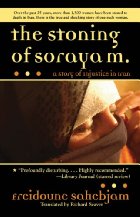
Book Review: The Stoning of Soraya M.: A Story of Injustice in Iran by Freidoune Sahebjam (Bottom of TBR Pile Challenge)
Summary:
Sahebjam, a French-Iranian journalist, was traveling through Iran in the 1980s when he had to stop in a small village. An elderly woman, Zahra, asked him for tea so she could tell him the story of what happened to her niece, Soraya, mere weeks before. Sahebjam grants narrative to her tale to get the story of injustice out.
Soraya was a typical rural Iranian woman. Married to a villager at a young age. Her husband, Ghorban-Ali, became less and less invested in his family and more and more likely to beat them. He also became increasingly interested in young women in the city. When a criminal posing as a mullah comes to town, Ghorban-Ali sees the perfect opportunity to be rid of his wife without any costs of divorce. He, the mullah, and an easily swayed widower friend corroborate to falsely accuse Soraya of adultery and sentence her to death by stoning.
Review:
Things can easily go awry when the powers of justice are held in the hands of a select few. A lot rests on whether or not those few are good people. This book tells that tale, and it tells it movingly, regardless of whether or not all the facts of the story are precisely correct. The biggest facts are accurate, and that is what matters.
Sahebjam is a French-Iranian journalist. He thus has both the perspective of insider and outsider, which is the ideal one for a story like this. He understands the people and the village but he also knows how to present and explain things to the non-Iranian reader. Sahebjam clearly and honestly states from the beginning that he got this tale from one eyewitness. Some might argue that this story thus isn’t researched well enough or thoroughly vetted. It is indeed one eyewitness account passed through an author (and for English speakers, a translator). But the core of the injustice is verifiable: the handling of adultery in Islam. Combine this with religion and state being one and the same, and it’s easy to see how if this story didn’t indeed already happen how it could easily come to be.
The first half of the book introduces us to Sahebjam, Zahra (the aunt), and Soraya, as well as the organization of the small town and the adultery laws as followed by fundamentalist Islam. Sahebjam does a good job introducing all the people and explaining the context of the injustice without overwhelming the reader with info dumping.
Essentially, in Islam, when it comes to adultery, the woman has to do all the proving.
When a man accuses his wife [of adultery], she has to prove her innocence [in Islam]. This is the law. On the other hand, if a woman makes an accusation against her husband, she has to produce proof. (location 1079)
If the woman is wealthy, she can pay off the mullah (think of it as paying a penance in Catholicism). But:
In most cases the woman [accused of adultery in Iran] is poor—which means she is a virtual slave to her husband. She has no rights, except for the meager right to remain silent. All the husband needs to win his case of infidelity is two eyewitnesses, who are generally friends and accomplices. As for the accused woman, she has to prove her innocence and that is impossible: no one will come to her aid; no one will bear witness on her behalf. (location 129)
Regardless of whether or not Soraya was a real person (and I do believe she was), these are problematic laws that leave the door wide open for abuse by a few corrupt people. This book demonstrates that danger eloquently.
Sahebjam clearly made a choice to make the tale flow better by giving it some narrative qualities. He inserts dialogue he clearly wasn’t there to hear, and he even talks about what was going on inside people’s heads. I didn’t like that he did the latter, especially. I understand dialogue can help make a nonfiction book flow a bit, and I’m ok with that. But claiming to know what was going on inside people’s minds turned me off the narrative a bit. It leaves the door open for criticism of a story that needs to be taken seriously, and I wish he had made other narrative choices.
At first, it is easy to be irritated by Soraya’s choice to remain silent when accused. She gives up so quickly, one wonder why she never advocates for herself. But in retrospect, it’s a clear, yet subtle, depiction of what can happen to a victim of abuse over time. Eventually their spirit is just beaten out of them. Soraya demonstrates what happens when abused people are left to deal with the abuse and abuser on their own.
Overall, this book highlights the inequality innate is Muslim adultery laws, as well as the dangers of leaving justice to the hands of a few. The narrative structure doesn’t precisely suit a nonfiction account of an event, but the bones at the core of the injustice are still verifiably true. Readers who prefer a dry, precise nonfiction might not be able to look past the narrative structure. Those who can will find a moving tale of how easy it is for injustice to take over a community.
4 out of 5 stars
Source: Amazon

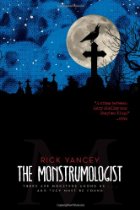
Series Review: The Monstrumologist Series by Rick Yancey
Introduction:
I post series reviews after completing reading an entire series of books. It gives me a chance to reflect on and analyze the series as a whole. These series reviews are designed to also be useful for people who: A) have read the series too and would like to read other thoughts on it or discuss it with others OR B) have not read the series yet but would like a full idea of what the series is like, including possible spoilers, prior to reading it themselves or buying it for another. Please be aware that series reviews necessarily contain some spoilers.
 Summary:
A nursing home contacts a researcher. An elderly man has passed away. He identified himself to them as Will Henry, but they can’t find any record of him or living relatives. He left behind four folios, telling what he claimed to be his life story. The first folio begins when his parents die in a fire, and he is left in the care of his father’s employer, Dr. Warthrop. In the 1800s. Over 100 years ago. And Dr. Warthrop is a Monstrumologist. He specializes in the study of aberrant biology, or monsters. And Will is now his apprentice. The first thing Dr. Warthrop tells Will is that Will Henry contracted a parasite from his father. Normally deadly, he is mysteriously a safe host. The parasite will make him abnormally long-living, and any contact that is too close will make him pass it along to another.
What follows over the course of the folios is the tale of the monsters Will Henry faced alongside and because of Dr. Warthrop. The anthropophagi–headless creatures with mouths in their stomachs. The wendigo–similar to a werewolf. The Typheus Magnificum–the Holy Grail of Monstrumology that may or may not exist. And finally the Titanoboa Cerrejonensis–a giant snake. There are these monsters, yes. But there are also the questionable choices and personalities of the various Monstrumologists, and the slowly unwinding monster inside a boy who has seen too much and been loved too little.
The question left for the researcher is how can Will Henry continue along an increasingly dark path when all signs indicate he eventually happily married his childhood sweetheart? And are these ramblings true or just the fairy tale of an elderly man?
Monsters and madness encircle Will Henry, Dr. Warthrop, the researcher, and the reader as the folios slowly reveal all.
 Review:
There is a lot going for this series that makes it unique and highly recommendable, particularly among its competitors in YA.
It’s horror based in the realms of science and the grotesque. Wanton blood and guts, serial killers, etc… won’t be found but it also doesn’t shy away from bits of the criminal underworld or real bodily danger. Will Henry loses a finger at one point. The monsters are real and frequently either eat people or turn people themselves into monsters. It combines to elicit horror in the reader in the tradition of Frankenstein. It’s perfect for readers who shy away from slashers or crime novels but still want a dash of terror.
In lieu of a romance, the relationship at the center of the series is between Will and his guardian, Dr. Warthrop. Yes, the series repeats the common YA trope of an orphan, thereby getting rid of the parents, but just because there are no parents doesn’t mean that there’s no guardian/young person conflict. In fact, I think that having the conflict be between Will and a, to him, incomprehensible older guardian allows for a more free exploration of the difficulties that can arise in this relationship. The fact that Dr. Warthrop is not his father means that Yancey is freer to quickly move into the mixed emotions and misunderstandings that can so easily happen in this type of relationship. Dr. Warthrop has many flaws as a guardian, but he does truly love and care for Will. Will at first feels lost and no connection with Dr. Warthrop, then he grows to love him in spite of his flaws, then he slowly starts to loathe him. Whether or not this loathing is warranted is left up to the reader to decide, and I do think that Yancey succeeds at making it a gray area that each reader will reach a different conclusion on. This relationship gets just as much, if not more, time as the monsters, and it’s one of the things that makes the series worth reading.
 Yancey isn’t afraid to not just use, but embrace poetic language and literary allusions. I was truly stunned at the beauty of the language when reading the first book, and that beauty continues throughout the series. It’s like reading an old, Gothic novel, setting the perfect tone for the world building. A YA reader who perhaps hadn’t previously experienced narration like this might after reading it be inclined to seek out similar writing, thus finding some classics. And even if they don’t, it’s a wonderful change of pace for YA.
Setting the story of Will and Dr. Warthrop in the context of the mystery of the modern elderly man, his folios, and the researcher looking into them lends an extra layer to the story that increases its complexity. The researcher is just as curious as the reader to find out more. He also provides some necessary historical facts and questions the veracity of some of Will Henry’s statements. Throughout the series, the researcher is wondering if this actually happened or if it’s all just the imaginings of an elderly man. The ultimate reveal still leaves this a bit of a mystery, letting the reader decide for themselves what they would prefer to be the answer.
The strength of the monsters varies throughout the series. Some are perfectly crafted, such as the anthropophagi. Others can be a bit less frightening or too predictable to be as engaging. This definitely lends to an uneven pace of suspense in the series and could be disappointing to a reader who is more invested in monsters than in the character development.
 The ending. The ending must be discussed. *spoiler warning* Will Henry in the last book has turned into a dark, lawless, desperate character. He has been changed by what he has seen. His childhood sweetheart, Lily Bates, finds him frightening and lacking in morals. He blames Dr. Warthrop for all of his issues. While Dr. Warthrop definitely is at fault for not treating Will Henry like an adult and keeping him in the loop for his schemes, Dr. Warthrop also never taught Will to be so cold, desperate, or that it’s ok to wantonly kill. Will ultimately goes on an opiate and sex binge in a prostitution house. Dr. Warthrop finds him and pulls him out, in an attempt to save him. It is then that Willl finds out that the parasites he is infected with will spread with sexual intercourse and kill his partner in a truly grotesque manner, eating them from the inside out. Will gives up on Dr. Warthrop and all relationships and proceeds to travel the world aimlessly. The researcher ultimately discovers that Will later runs into Lily with her new husband. It is then that he reveals that Lily’s husband’s name was Will Henry, and he stole it as a pseudonym for these stories. So he never married Lily. Was never happy. He is now nameless. It’s an incredibly dark ending that leaves the researcher, and the reader, reeling. It was honestly a bit too hopeless for me. It felt as if Yancey was saying Will got sucked down into the monsters in his soul and could find no escape. I prefer to have a bit more hope in the world than that, particularly after spending four books with a character and growing to care for them. *end spoilers*
While I can still appreciate what Yancey was doing and what he was going for–a truly dark book–I feel that any potential readers or gift givers should be aware that it starts dark, gets darker, and there is no light at the end of the tunnel.
There is also a bit of a dearth of female characters in the series. In the two middle books, we get brief exposures to Dr. Warthrop’s old sweetheart and Lily Bates. That’s pretty much it. I’m ok with that, since much of the time is devoted to Will Henry and Dr. Warthrop. I also understand that the time period in which it is set definitely would not have had a female monstrumologist. I think Yancey tries to make up for this by having Lily be determined to be the first female monstrumologist, but I also think he steps back from this plotline in the final book, which disappointed me a bit. Essentially, be aware that if you’re looking for a strong female presence in the plot of your series, look elsewhere.
Overall, this is a unique series that deserves to be in any YA collection. It address young adult/guardian relationships in the rich wrapping of Gothic style horror narrated with a beautiful poetic language. Its historical setting and focus on the boy and his guardian doesn’t lend itself to a strong female presence in the series, although the female characters that do exist are good ones. Its darkness increases throughout the series, so don’t come into this expecting a happy ending. I’m pleased I took the time to read the entire series, and could see reading it again. Recommended to both YA fans looking for something different and Gothic horror fans who don’t normally do YA.
4.5 out of 5 stars
Source: Gift, Audible, and Amazon
Books in Series:
The Monstrumologist
The Curse of the Wendigo
The Isle of Blood
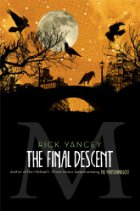
The Final Descent
Book Review: Alien in the Family by Gini Koch (Series, #3)
 Summary:
Kitty loves being engaged to Martini, her super-sexy alien fiancee from Alpha Centaurion. But she’s not super into the whole wedding planning thing. The issue gets pushed to the forefront, though, when Martini’s estranged extended family on AC announces their intent to visit and determine the worthiness of the marriage. It seems Martini is actually royalty. Meanwhile, some new aliens crop up, and they just so happen to be Amazonian terrorists. It’s an awful lot for the Super-Being Exterminator team to handle.
Review:
This is a hard review to write, because I *loved* the first two books in the series but this one left such a sour taste in my mouth, I won’t be continuing on.
The overarching plot is good. Yes, it’s a bit ridiculous that Martini is royalty, but anyone who’s read the first two books in the series should expect and embrace the ridiculousness at this point. The added twists from the AC homeworld make the wedding plot more interesting and unique. Every wedding is unique in its own way, but this gives Kitty and Martini’s wedding a decidedly paranormal romance flair. I didn’t find the Amazonian terrorist plot particularly necessary but it was well-done and kept the action moving.
The writing continues to be tongue-in-cheek dirty wit.
I hated having to be someplace on time, it took away so many potential orgasms. (page 40)
But the relationship between Martini and Kitty gave me reason to pause this time around. They continue to have excellent chemistry, which is fun to see. But there are two glaring issues in the relationship. Martini is overly jealous, in a cartoonish, immature way. He doesn’t get jealous in a way that is sexy. For instance, he doesn’t see men looking at Kitty and hold her hand to show they’re together. He actually growls. And yells. And clearly doesn’t trust Kitty. Of course, that lack of trust could be justified since Kitty repeatedly wonders if she’s choosing to marry the right man. Not just that, she thinks about whether she should marry any myriad of her guy friends and ex-lovers. Plus, she continues to flirt with just about anyone, in spite of Martini telling her it makes him uncomfortable. These are issues that should have been worked out prior to an engagement, and they don’t bode well for a future marriage. I wouldn’t mind the issues, but the couple are presented as the ideal couple. They aren’t presented as a couple who has some issues to add some realistic drama to the story. This is paranormal romance. The main romantic couple *should* be a bit idealized, but they aren’t.
A much, MUCH bigger issue to me though is how rape is handled in the book. This comes up in two different scenes. There is a scene where Kitty is fighting some bad guys and accidentally ends up in a room with a football team visiting Vegas. Half of the team makes a very overt attempt to gang rape her, but the other half of the team (plus an alien pet Kitty picks up early in the book) puts a stop to it. Then later the leader of the rapey half of the team comes to help fight the bad guys and apologizes, and Kitty recommends that they be added to the secret forces. She shrugs off the rape attempt as everyone makes mistakes and they apologized and essentially recommends they get hired to her company. I’m ok with a heroine narrowly escaping a rape attempt, as that could happen. I’m not ok with the heroine then shrugging it off, accepting an apology, basically saying that a rape attempt is just a mistake, and trying to help the career of the attempted rapist. What. The. Hell?!
In the second scene, Kitty is hanging out with her friend, Chuckie. Chuckie is, at this point in time, her boss. He’s also her almost life-long friend, she’s had sex with him in the past, he’s asked her to marry him before, and she’s periodically wondered throughout this book if maybe she should be marrying him instead of Martini. At the end of their conversation, they’re getting ready to go, and this happens:
He [Chuckie] took my [Kitty’s] shoulders and turned me around. “God, it’s as bad from the back. Really, go put on some clothes.”
“I don’t have a wrap, okay?”
“Find one. Before I rape you.” He gave me a gentle push toward the bedroom.
“Fine, fine.” (page 434)
So, Kitty’s friend: A) judges her clothing and deems it immodest B) orders her to change her outfit C) casually jokes about raping her D) victim blames rape victims with his comment implying clothing causes rape. And of course Kitty just takes this all in stride and doesn’t see anything at all inappropriate about what Chuckie says.
There is just far too much casual boys-will-be-boys acceptance of rape and rape culture in this book that supposedly features a strong female lead and *romance*. And a wedding! Paranormal romance fans deserve better. Men deserve to be treated as not mindless animals who will tackle anything in a sexy dress. Women deserve better than to be blamed for rapists’ behavior. Toss in the relationship issues between Martini and Kitty, while the relationship is treated by the book an ideal one, and no amount of sexy humor, wedding dresses, and aliens could save it for me. I’m very disappointed in the turn this series took. If you’re interested in the series, I would recommend reading the first two and stopping there.
2 out of 5 stars
Source: Amazon

Previous Books in Series:
Touched by an Alien
Alien Tango
Book Review: I, Robot by Isaac Asimov (Series, #0.1) (Bottom of TBR Pile Challenge)
 Summary:
This collection of short stories tells the history of the invention and gradual improvement of robots. The robots in this future must follow the 3 Laws of Robotics:
- A robot may not injure a human being or, through inaction, allow a human being to come to harm.
- A robot must obey the orders given to it by human beings, except where such orders would conflict with the First Law.
- A robot must protect its own existence as long as such protection does not conflict with the First or Second Law.
But following these laws doesn’t always have quite the outcome the inventors and managers of robots intended.
Review:
I wasn’t aware I, Robot

One thing I like about the world Asimov sets up is that unlike many scifi books featuring AI, the people in Asimov’s world are highly, intensely cautious of robots. They’re very concerned about robots taking jobs, killing humans, and even robbing humans of their autonomy. It sets up a conflict from the beginning and frankly presents the humans as just a bit more intelligent than in some AI scifi universes.
I was under the impression from pop culture that in I, Robot they think they’re protected by the Laws of Robotics but something happens so that the robots aren’t programmed with them any longer. That’s not what happens at all. What happens is much more complex. How the robots interpret the Laws and how the Laws work end up being much more complex and less straight-forward than the humans originally imagined, so much so that they have to have a robopsychologist to help them interpret what’s going on with the robots. This is really quite brilliant and is one of my favorite aspects of the book.
Unfortunately, the book can read a bit sexist sometimes, in spite of having a female protagonist through quite a bit of the book. (The robopsychologist is a woman). The book was first published in 1950, though, so when you think about the time period, the sexism is pretty minor, especially compared to having a female worldwide expert on robopsychology. The main time sexism comes up is when the leader of Europe is a woman and says some self-deprecating things about difficulty leading because she’s a woman. Yes, there is older scifi that avoids sexism pretty much entirely, but I am able to give this instance a bit of a pass considering the other strong portrayal of a woman in a leadership role. But be aware that at least one cringe-inducing sexist conversation does occur.
Overall, this piece of classic scifi stands the test of time extraordinarily well. Its film adaptations do not do it proper service at all. Come to this book expecting a collection of short stories exploring robopsychology, not an action flick about killer robots. Recommended to scifi fans.
4 out of 5 stars
Source: Harvard Books
 Support my work with a tip or browse my shop for curated book club guides, how to guides, cross-stitch patterns, and more!


This work by Amanda Nevius is licensed under a Creative Commons Attribution-Noncommercial-No Derivative Works 3.0 United States License.
 Opinions of a Wolf