
Archive
Book Review: They Never Learn by Layne Fargo

Summary:
Scarlett Clark is an exceptional English professor. But she’s even better at getting away with murder. Every year, she searches for the worst man at Gorman University and plots his well-deserved demise. But as she’s preparing for her biggest kill yet, the school starts probing into the growing body count on campus. Determined to keep her enemies close, Scarlett insinuates herself into the investigation and charms the woman in charge, Dr. Mina Pierce.
Meanwhile, Gorman student Carly Schiller is just trying to survive her freshman year – and her crush on her roommate, Allison. When Allison is sexually assaulted at a party, Carly becomes obsessed with making the attacker pay.
Review:
This felt like a woman-centered, queer Dexter, and I really enjoyed it.
The book seems straight-forward at first, but midway there is a plot twist that made me make the shocked Pikachu face. From there on, the plot just kept surprising me. In a good way. It’s not exactly what it seems it might be at first.
Although my own ethics don’t agree with revenge seeking, this is just the right mix of campy social commentary and revenge violence to work for me. I was able to view it as a cautionary tale of what could happen if we don’t start working to solve the academia culture that breeds violence against women. There are certain moments when the tide could have been turned if someone, anyone, had listened to the violated women. To me, this is what the takeaway from the book really is supposed to be.
For me, the queer content was delightful. There are multiple bisexual women characters. This means, instead of suffering from tokenism, bisexual characters get to come into full expressions of themselves. The word bisexual is used frequently in the book (or the short version bi). There are even multiple coming out stories present in the book.
I read this in audiobook format, and the narration of both voices was well done. It was easy to tell them apart but also not jarring to switch back and forth. I also thought both actresses did a solid job with accents.
A quick content warning that sexual assault, violence and murder are all described on-screen in this book.
Overall, the plot compelled and surprised me, and the characters were engaging with multiple different bisexual women present. A delightful addition to the thriller genre.
4 out of 5 stars
Length: 378 pages – average but on the longer side
Source: Audible
Buy It (Amazon or Bookshop.org)
If you found this review helpful, please consider tipping me on ko-fi, checking out my digital items available in my ko-fi shop, buying one of my publications, or using one of my referral/coupon codes. Thank you for your support!
Book Review: The Organ Thieves: The Shocking Story of the First Heart Transplant in the Segregated South by Chip Jones
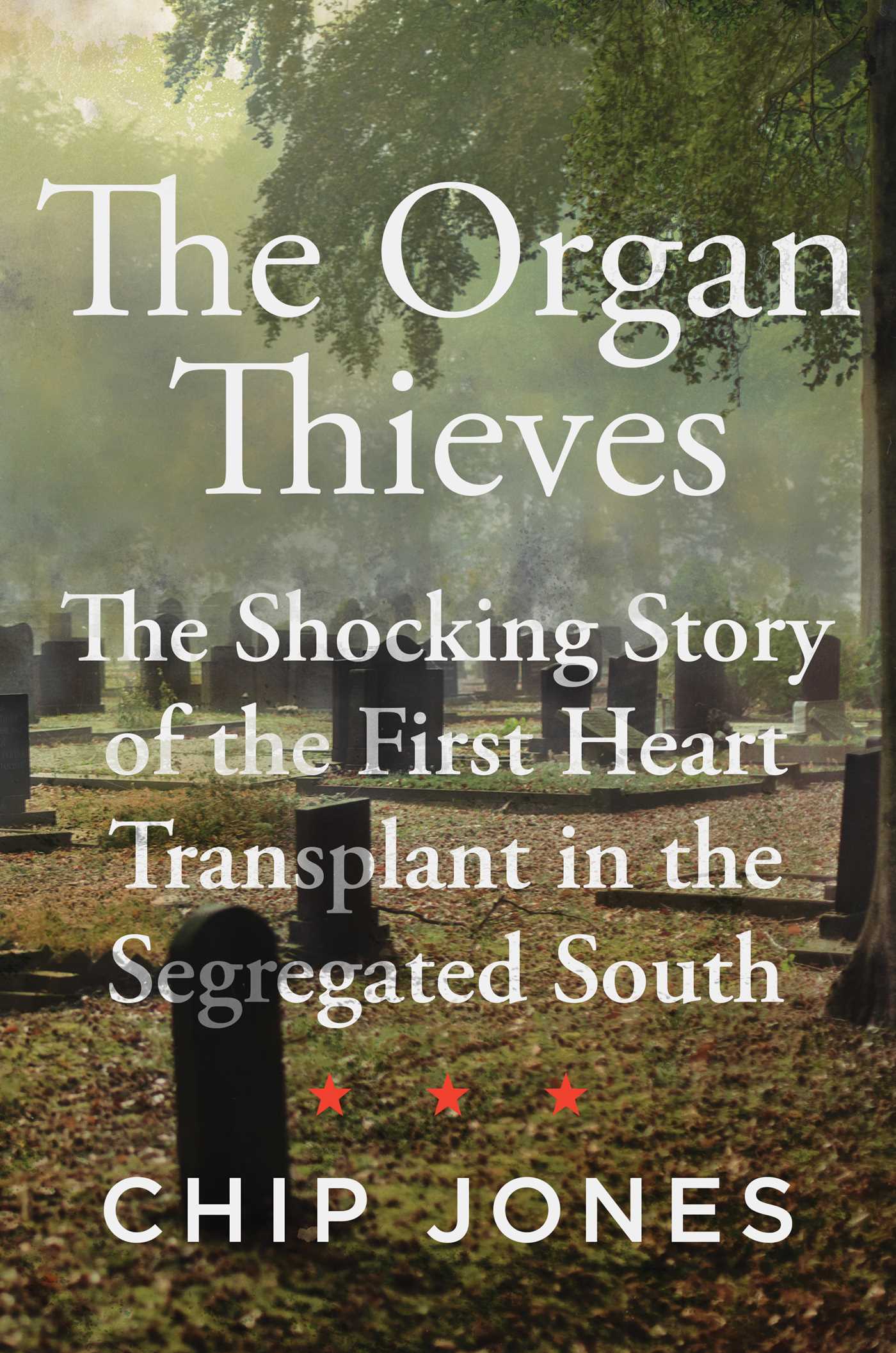
Summary:
In 1968, Bruce Tucker, a Black man, went into Virginia’s top research hospital, the Medical College of Virginia (now Virginia Commonwealth University) with a head injury, only to have his heart taken out of his body and put into the chest of a white businessman. Covering the inequalities innate in cadaver harvesting through the mismanagement of discovered human remains on university property in the 1990s, journalist Chip Jones explores how organ transplant in the US reveals systemic inequalities and racism, not just in health care, but in other related fields as well.
Review:
Organ transplant science is something that can feel like it’s been around forever, but in fact it’s really still a fairly new form of treatment. The first transplant of any organ was in 1954, and the first heart transplant was in 1967. The Civil Rights Act was in 1964, so at the time this treatment was emerging, segregated health care was still present in the US.
In “Part One: Roots,” a total of four chapters, the book first gives context to the inequities seen in organ donation and reception by looking at the topic of where student doctors get cadavers to practice dissection upon. Although currently there is a system in place for the ethical donation of remains for educational use, at the time there was no such system in place. Medical schools turned to grave-robbing – and they preferentially robbed from Black graveyards. Black families called these “night doctors.”
Parents even used the specter of “night doctors” to make their children stay in bed. “You’d better go to sleep,” they’d say, “or the student doctors will get you.”
(loc 3353)
This was also a time period where there was some debate about what counts as death. This is what “Part Two: The Race” dives into. Legally, until 1968, death was the full cessation of the working of all organs. In 1968, with advancing science, the theory of brain death was proposed. This was partially due to new health care technology that allowed for a machine to keep the organs operating. In tandem, the science of organ transplantation was emerging. The fresher the organ, the better the chances for the transplant to succeed. With the emerging theory of brain death meaning organs were operating but the patient might be able to be considered dead, and I’m sure you can see where this was going.
“Part Three: Reckoning” digs into the case of Bruce Tucker. He was a blue collar worker. He was hanging out with friends having a few drinks of alcohol on a stone wall. He fell and suffered head trauma. He was brought to the hospital alone. In spite of having his brother’s business card in his pocket, no one called his brother. Police officers were sent to his home to try to find family, but he didn’t live with his brother. At the same time, a white businessman was waiting for a heart transplant at the same hospital.
The early conversations among the surgeons had little to do about his chances for survival but rather concerned using him for another purpose. No one was discussing whether he might recover and be rehabilitated….Men like Tucker, arriving with alcohol on their breath and seemingly no one to claim them were often written off as ‘charity patients.’ They weren’t expected to pay their bills, with the hospital absorbing any expenses.
loc 2064
Jones notes that Tucker thus suffered from what can be termed a social death. Arriving at the hospital with alcohol on his breath meant that he was looked down upon by society, on top of how he was already perceived as a Black man in a Segregated southern hospital. Add to that the fact that the hospital decided he seemed to have no loved ones, and he was viewed as disposable.
Tucker did have loved ones, though, and when his body was sent to the funeral home, the caretaker notified his family that he arrived without a heart. This is when Tucker’s brother started to pursue answers and justice.
Part Four of the book – “Troubles, Trials, and Tribulations” – deals with the lawsuit that came about and how the court case was ruled. I wasn’t surprised, but was still severely disappointed to see how the hospital and doctors got away with it, and the Tucker family was left without justice. Notably to me is the quote from the prosecuting lawyer,
It doesn’t change the fact that when they took his heart from him he was not dead according to the law. So they broke the law and never would admit it, and that’s what bothered me more than anything else.
(loc 4397)
A clarifying note that the defense team used the argument of brain death, which was not the law at the time. The defense team also organized for as many transplant experts as possible to be in town at the time of the trial. They arranged for a transplant conference that just so happened to coincide with the scheduled trial. The conference was sponsored by Pfizer. The book notes just how much sway having transplant experts on the stand had on the judgment.
What stood out to me in reading this book is how societal inequalities and judgements can and do severely impact the quality of care that a patient might receive. I also was surprised to learn how recently brain death became the standard, and to read about the arguments on both sides of that debate. Brain death is not as clear-cut as I once thought it was.
The author does a good job of making history personal by focusing on Bruce Tucker and his family but also fleshing out with enough surrounding historical details that the complex situation made sense to read about. I do think his epilogue was unnecessary, where he details trying to speak with Bruce Tucker’s son, who did not want to speak to him. I feel that truly leaving Bruce Tucker’s son alone would have entailed simply a note that he did not wish to be interviewed and leaving it at that.
Overall, this is a fascinating and sad read about the history of organ transplants and brain death in the US. Recommended if these topics interest you.
4 out of 5 stars
Length: 400 pages – average but on the longer side
Source: NetGalley
Buy It (Amazon or Bookshop.org)
If you found this review helpful, please consider tipping me on ko-fi, checking out my digital items available in my ko-fi shop, buying one of my publications, or using one of my referral/coupon codes. Thank you for your support!
Book Review: One Last Stop by Casey McQuiston (Plus Reading Group / Book Club Discussion Guide)

Summary:
Twenty-four-year-old August has struggled to find her place in life. She’s now transferred to her third college, this time in Brooklyn, and she hopes it’ll stick. She finds a room in an apartment that comes with a delightful mix of found friends all also a part of the queer community, and they set her up with a job at the local diner. August thinks maybe it’s finally time to fit in and start to feel like she’s living a normal life, but then she meets a stunningly cute Chinese-American girl on the Q train. And meets here again. And again. Slowly she discovers that this girl might not be quite what she seems to be – in fact she’s a punk rock lesbian from the 1970s displaced out of time. Can August solve the case of how she got displaced and not lose her heart in the process?
Review:
I heard this described somewhere as a queer romance similar to the movie Kate & Leopold. That’s one of my favorite romantic comedies, so I was sold. I can definitely understand the comparison. They’re both set in New York and feature a love interest displaced out of their own time. While I love Kate & Leopold though, I have to admit I didn’t quite love this book.
Let’s start with what I liked. The main character, August, is bisexual and says it (more than once) with confidence. There is no biphobia expressed in this book by any of the characters she cares about. I also really appreciated seeing a bisexual main character who is a virgin and yet still declares this. An important moment of representation that one does not need to sleep with people to know one’s sexuality
August’s roommates and new friends are eclectic and fun while still feeling real. There is representation of gay and trans* folks especially. One of the roommates is Black (with Chinese adoptive parents), one is Greek-American, and one is Jewish. There’s a lot of diversity here. Part of what made them all feel real is that all of them had their own different families and issues. It wasn’t one queer story but many. I also really liked how real the local drag club felt, and I appreciated the representation of someone in recovery (the chef at the pancake restaurant).
I thought there was a lot of sizzle between August and the girl on the train – Biyu. Now at first she goes by Jane but over the course of the book she comes to ask to go by her birth name, Biyu, rather than her Americanized nickname. I want to be respectful of that. I also enjoyed the mystery of how she came to be on the train, and how August goes about solving it.
I felt pretty neutrally about the sex scenes. They were steamy without being explicit, but they weren’t anything particularly memorable for me. Some readers, I know, were turned off by the fact some of the sex happens on the train. That didn’t bother me because it makes sense for the characters. But be forewarned!
Now what I liked less. I don’t think the book handled racism and homophobia as directly or clearly as it should have. Biyu is from the 1970s and is a Chinese-American who is visibly lesbian. She literally had run-ins with the cops over wearing men’s clothes in her time period. But being jetted forward 40 years doesn’t solve the problems of homophobia and racism. I think the book acknowledges this by having Biyu have a run-in with someone who says something both racist and homophobic to her (the words are not said in the book and the incident appears off-screen). Yet August responds by saying, “most people aren’t like that anymore” (I can’t give an exact page number as this was a review copy but it occurs in Chapter 12). This does lead into a large fight between Biyu and August, which I think implies that August was wrong in what she said. However, I think August needed a bigger I was wrong moment, where she acknowledges that she did a very poor job of both being there for Biyu in that moment and of describing the complexity of how racism and homophobia are simultaneously different and yet not in modern times. I think readers also would have benefited from a nuanced discussion of how, for example, same-sex marriage is now legal and yet hate crimes against Asian-Americans and Pacific Islanders have increased dramatically in the last year, especially against Chinese-Americans (source). I think this book wanted to say something big and interesting about sexuality and queerness especially in the 1970s versus now, but in my opinion it falls short of accomplishing this.
Additionally, I know I was supposed to find the ending satisfying but it left me dissatisfied. I think for similar reasons – it’s a complex situation and the book doesn’t dig deep enough or hard enough into these complexities. Things are kept at the surface level. While it is a book in the spirit of a romcom, romcoms can say big and difficult things while not losing the romcom feel. Confessions of a Shopaholic springs to mind – it deals with the very serious issue of shopping addiction while still feeling like a very fun romcom.
Overall, this book is fun and lighthearted. It features a realistic bisexual lead and steamy, yet not explicit, f/f scenes. The queer found family is delightful. But it could have stood to have dug a bit deeper into the serious issues it brought up. They are important conversations to have that wouldn’t have messed up the lightheartedness of the romcom vibe.
4 out of 5 stars
Length: 422 pages – average but on the longer side
Source: NetGalley
Buy It (Amazon or Bookshop.org)
Get the Reading Group / Book Club Discussion Guide
A beautifully graphic designed 2 page PDF that contains: 1 icebreaker, 9 discussion questions arranged from least to most challenging, 1 wrap-up question, 3 read-a-like book suggestions
View a list of all my Discussion Guides.
If you found this review helpful, please consider tipping me on ko-fi, checking out my digital items available in my ko-fi shop, buying one of my publications, or using one of my referral/coupon codes. Thank you for your support!
Book Review: The Queen of the Cicadas / La Reina de las Chicharras by V. Castro

Summary:
You’ve heard of Bloody Mary and Candyman but have you heard of La Reina de las Chicharras? The legacy says she’s a Mexican farmworker named Milagros who was brutally murdered in 1950s Texas then given new supernatural life by the Aztec goddess of death, Mictecacíhuatl. In 2018, Belinda Alvarez arrives in Texas for a friend’s wedding on the farm that inspired the legacy of La Reina de las Chicharras. But is it just a legacy or is it real?
Review:
I’m a woman of a certain age. I know that shit isn’t always right.
Chapter 9
This struck me as a Latinx, female-led version of Candyman, only, over time, La Reina de las Chicharras comes to protect the downtrodden who call her.
Milagros’s life story that leads to her becoming La Reina is told in parallel with Belinda’s discovering her story and coming into her own realizations about Mictecacíhuatl. I really resonated with the Milagros chapters but struggled to relate to Belinda. She needed more depth and roundness to seem as real as Milagros. Some additional chapter breaks could also help with the jumping perspectives. In general, though, the dual perspectives worked and the uniqueness of the storyline kept me quite engaged to find out what would happen.
In addition to the strong Latinx content, the Indigenous history of Mexico is present. Milagros’s relationship especially to the Indigenous people who were brutally colonized is drawn clearly. There is also relatively significant queer content here. Milagros is a woman who loves women. There are two important gay male characters, and Belinda exhibits fluid sexuality, although she never gives a label to this.
Two things in this book were at ethical odds with me. First, Belinda is written as a woman in addiction who then never overcomes it (or even tries to) in spite of her character arc seeming to indicate that she has been transformed in a positive way. I’m ok with a realistic depiction that not everyone finds recovery, but it bothered me that it comes across as a positive transformation when she remains in addiction. It’s relatively clear that this is a bit of a vengeance fantasy. I understand the importance and role of having a place for anger at injustice to go. But my own spiritual beliefs uphold forgiveness over vengeance, so my world view differs.
If you like urban legend style horror and want to see women in the lead, then you will likely enjoy this read. Those offended or disturbed by the idea of the universe holding multiple gods and religions simultaneously should likely look elsewhere.
4 out of 5 stars
Length: 224 pages – average but on the shorter side
Source: NetGalley
Buy It (Amazon or Bookshop.org)
If you found this review helpful, please consider tipping me on ko-fi, checking out my digital items available in my ko-fi shop, buying one of my publications, or using one of my referral/coupon codes. Thank you for your support!
Book Review: The Good Sister by Sally Hepworth

Summary:
Fern and Rose are fraternal twins. Rose is smart, driven, and Fern’s protector. Fern doesn’t understand the world and so Rose has protected her, ever since they were small. For example, Fern didn’t understand that they spent every day in the library one year when they were little because they were homeless. Just one example of the many ways their mother failed them. In fact, Fern even became a librarian, she remembered that year so fondly. It’s a good thing she has Rose. When Rose struggles with infertility with her husband, Fern hatches a plan to repay Rose for being such a good sister. She’ll get pregnant and give the baby to her. But of course, not everything goes according to plan.
Review:
Sally Hepworth writes psychological thrillers starring casts of women in Australia. Sometimes they feature larger casts of women and other times it’s a couple of women pitted against each other. This is mostly the latter category.
I had my suspicions about the mystery early but thought that must not be it because it was so simplistic. I am sorry to report – it was indeed it. Some psychological thrillers lean a bit too heavily on the trope of – one person in this world is “crazy!” and did unpredictable “crazy!” things and there is no helping them because they are just so “crazy!” so let’s lock them up. I’m not a big fan of this trope for two reasons: 1) people are more complex than that 2) it’s a bit of a cheat to the reader because then things can happen that are unpredictable and make no sense. However, I get it that it’s a trope in psychological thrillers and am usually willing to give it a bit of a pass. In this case, however, the reader is told this character probably has Narcissistic Personality Disorder or Borderline Personality Disorder. There’s a character who has told their therapist all about them, and that therapist hypothesizes that this character might have one of these two illnesses. Everyone else in the book just accepts this and moves on. I am not saying people with these personality disorders never do bad things or hurt others, but the same can be said of all types of people. Plus, the character’s actions aren’t made out to be about them as a person but rather a symptom of their illness. It reminds me of how Schizophrenia used to be treated in literature. This character doesn’t even get the decency of having the state investigate their mental health or a clear diagnosis. It both unnecessarily maligns two of the most maligned types of mental illnesses and creates an entirely two-dimensional character.
Then there’s the representation of Autism. From the beginning, it’s clear that Fern is Autistic (I am not using person-first language as many in the Autistic community prefer claiming the word as a part of who they are, rather than as an illness), but she is depicted in such a stereotypical way that it hurt to read. For example, constantly bringing up how she doesn’t like to look people in the eyes and belaboring the point at random times when she might make eye contact. Her sensory episodes felt as if they were written by someone outside of her body rather than by her – problematic since it was written in the first person. The whole first half of the book has a lot of anti-Autistic sentiment, including wondering whether or not Fern could actually be capable of raising a baby. Are these reversed at the end of the book? Somewhat. But to me the damage is done by wondering about it in the first half.
So why am I still giving this book three stars? I have to admit that it was a page turner – I had to know what happened to Fern and the baby growing inside her. I couldn’t stop reading until I knew. The energy of must-find-out that is needed in a thriller was there, even if I was disappointed by the characterization, representation, and ultimately found the solution to be a bit flat.
3 out of 5 stars
Length: 320 pages – average but on the longer side
Source: NetGalley
Buy It (Amazon or Bookshop.org)
If you found this review helpful, please consider tipping me on ko-fi, checking out my digital items available in my ko-fi shop, buying one of my publications, or using one of my referral/coupon codes. Thank you for your support!
Book Review: Take a Hint, Dani Brown by Talia Hibbert (Series, #2)

Summary:
Danika Brown, PhD student, might have a workaholic problem with her all hours of the day research, writing, and teaching. But she certainly doesn’t have a romance problem, because she keeps her sexual relationships devoid of romance. Zafir, once pro rugby player, now security guard at the university and founder of a sports charity for kids that’s still getting off the ground, knows he has feelings for Dani. When there’s a fire alarm in the building and Dani doesn’t evacuate, he can’t help going back in for her and carrying her outside. Then the video goes viral as #DrRugbae, and his niece realizes this could be the solution for his charity. Dani is game to pretending to be a couple until the viral attention goes away. But somehow slowly the pretending feels less and less like pretend.
Review:
Listen, if you are looking for a romance novel with a bisexual leading lady who actually uses the word “bisexual” to describe herself AND says it to the hero AND it’s no big deal to him AND there’s no cheating betwixt them AND the happy ever after is monogamous then stop what you are doing and pick up this book. Right now. Because honey, that perfectly describes this book. I also want to note that, Dani isn’t an aromantic convinced into romance – she’s a romantic whose heart was shattered who’s pretending she’s not into romance to keep her heart safe.
Ok, so if you’re not a bisexual reader desperate for that type of representation in a romance novel, why might you be into this book? Well, it’s hilarious. Laugh out loud funny. Dani and Zaf are equally funny and complicated. Their misunderstandings make sense. They both apologize when necessary. The set-up as to why they are fake dating is for a good cause (his charity) not something inane like tricking extended family at a wedding. They’re an inter-racial (Black and Pakistani) and inter-faith (witch and Muslim) couple. But the problems they encounter don’t really have to do with any of that. It has entirely to do with learning how to speak with and open up to one another.
I also really liked the growing opportunities for both Dani and Zaf beyond their relationship. Dani needs to learn better work/life balance. No one judges her for wanting to be successful, but she starts to learn she needs to have some downtime too. Zaf needs to learn not to entirely ditch his past and be more honest about his own grief and mental health issues that led to him starting the charity to begin with.
Sex scenes exist in this romance novel, but they are not constant (ie, don’t expect one every chapter!) The ones that do exist are explicit without turning corny. Consent is always clear but not in a natural way, not an awkward way. The sex scenes are also, dare I say it, entertaining and sweet?
While I note this is a series, you don’t have to read all three Brown sister books or necessarily read them in order. Although I will note that if you read the second book, you’ll see who Chloe ends up with (the sister from the first book). While I think all three books are well-worth the read, I admit to Dani’s story being my favorite.
5 out of 5 stars
Length: 320 pages – average but on the longer side
Source: Library
Buy It (Amazon or Bookshop.org)
If you found this review helpful, please consider tipping me on ko-fi, checking out my digital items available in my ko-fi shop, buying one of my publications, or using one of my referral/coupon codes. Thank you for your support!
Book Review: The Conductors by Nicole Glover

Summary:
Hetty Rhodes was once enslaved, but she ran away with her sister, only her sister was caught while she escaped. She began returning south to try to free her sister, but with her repeated trips became a Conductor on the Underground Railroad, alongside a man named Benjy, using their magic to help others escape. Now the Civil War is over and she and Benjy, who is now her husband, have built a life for themselves in Philadelphia. He’s a blacksmith, she’s a seamstress, and they both solve crimes in their spare time that the white authorities can’t be bothered with. When one of their friends turns up dead in an alley, their investigation takes them throughout Black Philadelphia on a hunt for answers.
Review:
The premise of the worldbuilding for this book reminded me of Thieftaker (review), the first in the Thieftaker Chronicles, which I really enjoyed, only set in the 1800s rather than the 1700s and with a Black woman lead rather than a white man. I say this as I was excited and thought this was a good thing. I remember thinking at the time that I wished there were more alternate history fantasy books and I was excited when the next one I saw brought such diversity to the genre.
I liked the magic in this book. I thought it was a great analogy for colonizing culture versus Black and Indigenous culture. The colonizing culture (Sorcery) requires the use of tools (wands) but the wands make that magic very powerful. The Black and Indigenous cultures use Celestial magic, which doesn’t require tools (they draw sigils instead). It can become very powerful but takes more study and time to become so. Anyone with magic being able to pick up a wand and wreak some havoc with very little knowledge as an analogy for weapons like guns I thought was great.
The book also demonstrates the community the Black folks of Philadelphia built up, which included those who freed themselves by running away, those who were freed by the Civil War, and those who were born free. There is a male/male relationship included among Hetty’s friend group, as well as a woman who experienced infertility and adopted a baby.
What didn’t work for me was the order in which the plot was told. The book starts in post-Civil War Philadelphia with Hetty and Benjy (her husband) working together to solve cases, in much the same way they used to work together as Conductors on the Underground Railroad. How Hetty escaped, met Benjy, and how they worked together as Conductors was told through a series of broken up flashbacks throughout the book. For me, this didn’t work. I was much more heavily invested in the stories being told in the flashbacks than in the present mystery, largely because a lot of the present storytelling relied upon the relationship between Hetty and Benjy and, without the full flashbacks, I had no understanding of the relationship between Hetty and Benjy. I needed to know why they were, for example, married but just for propriety’s sake. I needed to know why they decided to work together as Conductors in the first place. What finally pushed them to get married? I was so confused and felt so much like I was dropped into the middle of a pre-existing world that I went and double-checked to make sure I hadn’t accidentally started with the second book in a series. Characters, even beyond Benjy and Hetty, kept talking about things that had recently happened in a way that felt like they had happened in a previous book. For example, the character who adopted a baby, the line about that felt like how the second book in a series will remind you of what happened in the first with that having been a key plot point in the first. I would say, in general, that for me, everything would have worked better if the first book in the series had been how Hetty and Benjy met and became Conductors together, maybe ending with them solving their first case as investigators after the War. Then this could have been the second book, perhaps with some additional flashbacks to inform us of some things from during the War.
I am sure that there are others that will read that paragraph and think “oh I like that vibe,” and that’s great. I hope this review helps this book find its audience. For me, though, I simply don’t like being dropped into the middle of the story.
3 out of 5 stars
Length: 384 pages – average but on the longer side
Source: NetGalley
Buy It (Amazon or Bookshop.org)
If you found this review helpful, please consider tipping me on ko-fi, checking out my digital items available in my ko-fi shop, buying one of my publications, or using one of my referral/coupon codes. Thank you for your support!
Book Review: These Witches Don’t Burn by Isabel Sterling (Series, #1)

Summary:
Hannah loves her life in Salem, Massachusetts – working at the Fly By Night Cauldron store selling witchy items while secretly being the real deal herself – an Elemental witch. She’s about to enter her senior year of high school and things are a bit complicated of course – there’s her ex-girlfriend, Veronica, and fellow Elemental to deal with and the fact that her best friend is a Reg (non-witch) and can’t know. But when an end of year party ends with a blood ritual, Hannah becomes convinced there’s a dangerous Blood Witch in town, and she wants to find her before it’s too late. Plus there’s the cute ballerina, Morgan, she’s trying to date.
Review:
If you’re looking for queer representation in your YA fantasy, this book is here for you. Hannah is a lesbian, her coworker at the Cauldron is a gay trans man (in his first year of college), and Morgan is bisexual. The queer characters aren’t perfect, and they do gently educate each other with people apologizing to each other and strengthening friendships. I love how realistic that is. It’s not a fantasy land of everyone just perfectly knowing exactly what the right thing is to say, but it is a world of mutual respect and trying to be there for each other and correct mistakes. Speaking as a bisexual woman, I found the representation of Morgan accurate and kind, which is more than I can say about a lot of bisexual representation in literature.
The plot is less gentle and feel-good than you might expect. There is more violence and even death than I was expecting based on the plot summary and the fact that it’s the first book in a series. If you’re thinking about this one, know that you will be getting a mixture of feel-good and real danger. This is also definitely a book that’s setting up the next book in the series. I immediately put the next book on hold in the library, and kind of wished I’d done it sooner so I could have read them one right after the other.
While there are witches who are Black and People of Color in the book, they all seem to come from outside of Salem. While it is true that Salem is 70.8% white and non-Hispanic (Data USA), I think even if one was using the argument that Salem is very white in real life, the lack of People of Color inside of Salem in the book isn’t accurate. I also think, personally, that we have a responsibility in literature but especially in YA where we’re trying to help youth feel seen and heard, to depict all types of diversity, not just diversity of the queer spectrum.
If you or someone you’re giving book recommendations to is looking for a YA book rich in fantasy and queer characters, this may be the right read. I would recommend being prepared to have a conversation about why greater diversity matters and ensure the reader is ok with some violence (not just of the magic kind). I’d also be prepared to just pick up both books right away as this one really leads right to the next one.
4 out of 5 stars
Length: 336 pages – average but on the longer side
Source: Library
Buy It (Amazon or Bookshop.org)
If you found this review helpful, please consider tipping me on ko-fi, checking out my digital items available in my ko-fi shop, buying one of my publications, or using one of my referral/coupon codes. Thank you for your support!
Book Review: Grown by Tiffany D. Jackson
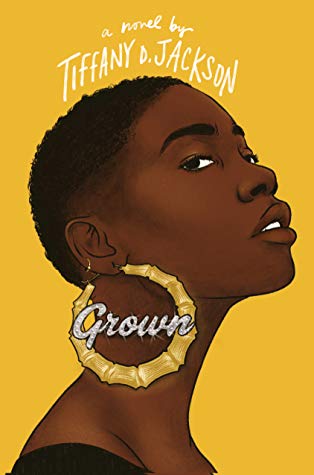
Summary:
17-year-old Enchanted Jones has been making it work at her new highschool in the suburbs where she’s the only Black girl. She has a good reputation on the swim team, and she takes care of her little siblings after school while her mom and dad work to afford their kids’ private schooling and their new house. But what Enchanted really wants to do is sing – an idea her parents aren’t too fond of. When she goes to a reality tv show audition, she meets R&B singer Korey Fields. He takes a shine to her, but that might not be the good thing she thinks it is.
Review:
I read this book in less than 24 hours because I simply could not stop thinking about Enchanted and needed to find out what happened in her world. This book both manages to be about important issues but also doesn’t feel like it’s an “issues” book. It’s Enchanted’s story, and that happens to involve today’s issues because today’s issues are real.
This book is about a lot of things, but many of the things it’s about come right back around to how society treats Black girls. How we treat them like they are grown up, when they are still children. This book beautifully depicts how truly adolescent Enchanted is – something that many of our adolescents are not allowed to be but Black girls especially. Enchanted is interested in boys and has feelings about them but she also loves Disney movie night with her little siblings. She has big dreams of stardom but she also just misses seeing her grandmother and swimming with her in the ocean. She has typical adolescent breakthrough moments of realizing what you saw and thought was beautiful as a child might actually be something else. This book asks us to believe girls, but to believe Black girls especially, because so many others will just look at them and say “oh they knew what they were doing, they were grown.”
The book is also about how wealthy abusers groom girls and take advantage of their wealth and power to separate girls from their families. The abuse depicted in this book is realistic and depicts emotional, sexual, and physical abuse and could be a trigger, so please do note that. That said, the author depicts just enough abuse for us to know what’s going on, but it never feels gratuitous or unnecessary.
While this is YA, it has important content for adults too, especially if you regularly come into contact with adolescents. Highly recommended.
5 out of 5 stars
Length: 384 pages – average but on the longer side
Source: Library
Buy It (Amazon or Bookshop.org)
If you found this review helpful, please consider tipping me on ko-fi, checking out my digital items available in my ko-fi shop, buying one of my publications, or using one of my referral/coupon codes. Thank you for your support!
Book Review: The Girl from Widow Hills by Megan Miranda
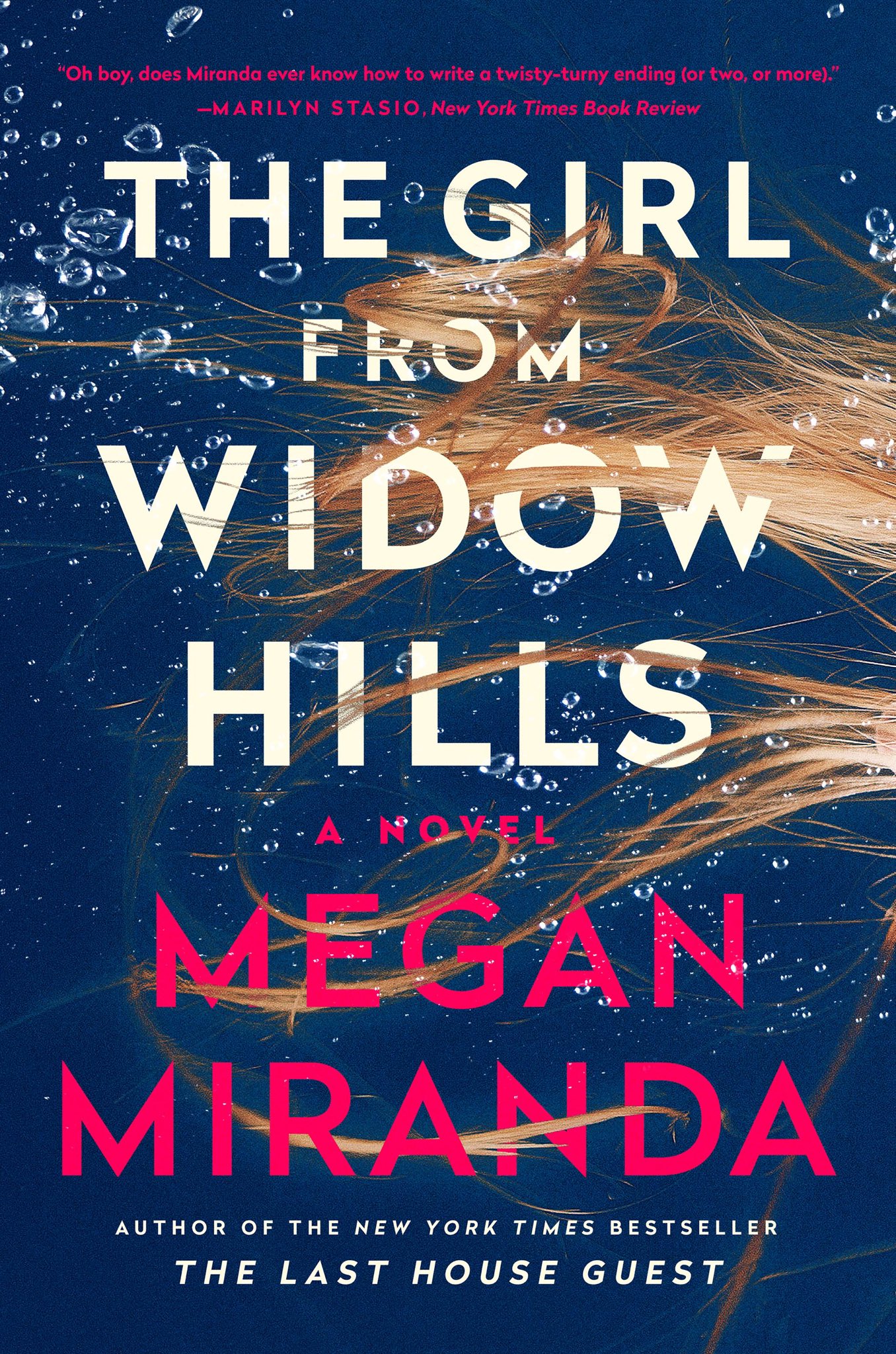
Summary:
Olivia just wants to live a quiet, simple life as an administrator at a new rural hospital in the American south. She changed her name to leave behind her childhood notoriety as the little girl who was swept away by flood water when she was sleepwalking and was found days later in a drainage pipe. But when she resumes sleepwalking again and literally stumbles over a dead body outside her home, her past starts to come back to haunt her.
Review:
Those of us who grew up in the 90s were consistently regaled with the stories of the little girl Jessica who fell down a well and underwent a dramatic televised rescue in the 80s. I feel like this must be inspired by that story but with a lot of “what-if” questions tossed in. (Jessica herself has lived a very quiet life since the hullaballoo).
Olivia (the woman formerly known as Arden) is likeable yet has realistic flaws. She’s a well-rounded, real character. I especially enjoyed how she decides (early in the book) to buy a home away from the cookie cutter housing built for the hospital workers. The elderly man who sold it to her is also her neighbor, and they have an adorable relationship where they mutually care for one another. Her relationships with her coworkers at the hospital are also a realistic depiction of how she’s sort of part of the club of health care workers but not exactly one, as a staff in administration.
But what about the plot? I really enjoy how right away Olivia is an unreliable narrator to herself through no fault of her own – her sleepwalking. It’s easy to understand why she’s loathe to admit to the circumstances of how she finds the body on her land, and she also has some intense and legitimate questions about how much she can trust herself.
I can’t say too much about why I like this book so much without giving the twists away. However, suffice to say I found the twists interesting. The plot before the twists makes sense with the twist but also didn’t point so directly to it that I guessed it. While the twists solve the mystery, they also leave us with a main character who is still herself – flawed and yet likeable.
Recommended to thriller fans who like a flawed main character and would enjoy an adult (fictional) take on a little girl whose rescue gripped America.
5 out of 5 stars
Length: 325 pages – average but on the longer side
Source: Library
Buy It (Amazon or Bookshop.org)
If you found this review helpful, please consider tipping me on ko-fi, checking out my digital items available in my ko-fi shop, buying one of my publications, or using one of my referral/coupon codes. Thank you for your support!
 Support my work with a tip or browse my shop for curated book club guides, how to guides, cross-stitch patterns, and more!


This work by Amanda Nevius is licensed under a Creative Commons Attribution-Noncommercial-No Derivative Works 3.0 United States License.
 Opinions of a Wolf