
Archive
Book Review: The Andromeda Strain by Michael Crichton
 Summary:
The US government is searching for new biological weapons by sending satellites into the edges of the atmosphere to collect bacteria strains that may exist there but not on earth. Due to concerns of contamination on reentry, an emergency team called Wildfire is created as a contingency plan. When a satellite crashes in the Arizona desert, grotesquely killing all but two residents of a small town, the team of scientists is put to the test in a race to protect humanity.
Review:
An up-front confession: Michael Crichton is one of my favorite authors. I love how realistic his science is, and he writes suspense quite well. I was therefore excited to read his first book. Unfortunately, Andromeda Strain did not live up to these expectations.
The suspense is killed right off the bat with the narration style. The story is told as if it is a report being written up by someone after the event. This means that we not only know that some of humanity survives this impending doom, but that society is still held together enough to want a report. If I’m sure that everything is going to turn out hunky dory in the end, I’m just not going to be all that concerned throughout the book. Similarly, the characters aren’t fleshed out as well as in later books. They are basically their careers. Here’s the bacteriologist. Here’s the professor. here’s the surgeon. They don’t come across as real, rounded people, so I completely failed to care about them at all. This isn’t good for suspense, because if I don’t care about the characters, I’m not going to worry about them too much.
Crichton’s ability to set a scene shines through well in this book, however. Wildfire’s underground station is vividly imagined, as is the scene at the small town in Arizona. It was simultaneously gruesome and exciting. Similarly, his ability to weave real science into a fake scenario is carried off flawlessly here. The glimmers of the writing that would later appear in Jurassic Park and Prey is clear.
Speaking of the science, Andromeda Strain doesn’t age well. An entire page is devoted to explaining binary like it’s this huge complicated thing, which it isn’t to anyone who grew up with computers. Indeed, a lot of the book is devoted to explaining the huge computer in Wildfire’s base. Unlike biological science, in which the basics stay the same, technology changes rapidly. I don’t think it’s a wise choice to focus on in a scientific thriller, unless you are projecting plausible possibilities in technology in the future. Or super awesome possible technology the government may already have. Crichton does this really well in Prey, which is all about nanotechnology. Science horror needs to take me into a world that is a bit more awesome than my own, not lamer. Thankfully, Crichton figured this out in his later books.
If you’re a Michael Crichton fan, The Andromeda Strain is worth the read to see where he started. If you’re new to him though, I’d recommend starting with some of his later books such as Jurassic Park or Prey.
2.5 out of 5 stars
Source: Bought at Violet’s Book Exchange

Friday Fun! (Grad School Returns)
Grad school is fully back in swing. While I still wish I could miraculously have the copious amount of time I had over winter break when I was just working full-time, instead of working full-time and attending grad school part-time, I don’t totally hate my classes this semester. Yet.
One of my classes is on being an academic librarian in science and technology. The professor is an adjunct, which means he works in the field and knows what he’s talking about. Miraculously, I have yet to loathe any of my fellow students in that class. In fact, I even like some of them. A couple of them were in my medical librarianship class last spring, and I enjoy hanging out with them while they smoke on our break. They don’t have this false sense of being superheroes a lot of students in the program do. They just want a good, stable career, like me.
My other class is an online one on academic libraries. I’ve found I learn more in online classes, not sure why. I pretty much can’t stand any of my fellow students in it, but that’s ok. It’s easy to just roll your eyes at the statements made when you’re not trapped in a classroom with them. I like the professor though, and the assignments seem like I’ll actually learn something from them.
I’ve reached the climax in the novella that I’m writing. I’m excited to get to edit it and send it off to a friend for critique. I seem to actually be following through on my, totally not officially made but thought about a lot, resolution to write my novellas/books more. I really feel like the time I’m spending working on improving my writing is well spent, which is a pretty darn good feel good pill. Maybe someday you guys will get to review my books! Lol.
Happy weekend!
Book Review: Mommie Dearest by Christina Crawford
 Summary:
In the early days of Hollywood, Joan Crawford became one of the first celebrities to adopt children. From the outside, it looked like her children had it all–presents, inherent fame, an apparently adoring mother. However, in Christina’s tell-all memoir, she reveals the truth behind the image. A mother obsessed with cleanliness and rigid rules. A mother who demanded her children worship her like her fans did in order to receive her love. A mother so desperate to cling to her days of fame that she attempted to beat down any glimmer of success in her children. A mother who Christina still desperately loved to the bitter end.
Review:
This memoir is a must read for anyone who thinks that having money and being a celebrity automatically makes for a good parent. Joan Crawford expected her four adopted children to be exactly what she wanted them to be instead of loving them for their uniqueness and human imperfections. Christina’s situation gradually worsens as she becomes older and starts to show glimmers of being her own person. The scenes of abuse in Christina’s childhood are the best written in the book. It is clear that she remembers them vividly and can still identify with the emotions that went through her as a child and young teenager.
*spoiler warning*
That said, Christina never manages to disentangle herself from her mother. In spite of everything her mother has done, Christina still attempts anything and everything to reconcile with her, apparently ignoring or forgetting the fact that she never did anything wrong to cause her mother’s behavior in the first place. Joan Crawford is a cruel, spiteful, evil person, and Christina naively continues to seek her love even in her 30s. This makes it more sad than most memoirs about abuse as it seems that Christina never truly overcame her abuser.
*end spoiler*
The writing, beyond the scenes of abuse, is sub-par. Christina has a tendency to ramble a bit in an uninteresting way. She also seems to not understand which parts of her life to skim over a bit. I mean, did we really need to know exactly when in a funeral her husband hands her a paper cup of water? No. Additionally, she obviously had a bad editor, as there are quite a few spelling and grammar mistakes, which is odd for a mass market paperback.
Overall, it’s worth a read if you’re into memoirs or the inside Hollywood scoop. All others should probably give it a pass though.
3 out of 5 stars
Source: Swaptree

Book Review: Viola in Reel Life by Adriana Trigiani
 Summary:
Viola loves her life in Brooklyn with her quirky filmmaker parents. Unfortunately, they need to go to Afghanistan to make a documentary and have dumped her in an Indiana boarding school for a year. Can Viola see past her homesickness and embrace what Prefect Academy has to offer or will she be Queen Snark for a year?
Review:
I came at this book simultaneously expecting to like it and not like it. I expected to like it, because when I was in the YA age group, I loved boarding school books, and I’ve read Trigiani’s Big Stone Gap trilogy and really liked her writing. On the other hand, reviews online stated they disliked it due to a negative portrayal of Indiana and what they felt was a lack of understanding of teenagers. Well, I liked Viola in Reel Life, and I would like to offer up rebuttals to both opinions.
First, the book is written from Viola’s perspective. She’s a fourteen year old who has spent her entire life in Brooklyn, and she didn’t want to go to boarding school. Her negative comments about Indiana are to be expected in this case. She’s a New Yorker in the country for the first time. Of course she’s going to think the fashion stinks. Of course she’s going to miss the noise of the city. Personally, I found Indiana and the folks in it to be portrayed in a positive light, because despite her anger and snark, they persist at comforting her homesickness and winning her over. She comes to like aspects of Indiana just as much as she likes aspects of Brooklyn. That is a key part of her growing up that is the main storyline. She has to learn to make home wherever she is and be independent. That point would not have come across strongly if she loved everything about Indiana from the moment she arrived.
Now to those who felt it was too young for teenagers, I think you’re starting to fall for the media’s portrayal of all teens as growing up very fast. They’re not all having sex, doing drugs, and drinking. I wasn’t that type of teen, and even teens who are can appreciate that not everyone is living a Gossip Girl life. It is a clean book, and I liked that because it left room for me to focus on Viola growing as a person. The kids are kind of innocent, and Viola acknowledges that she’s led a protected life so far. On the other hand, Viola and her friends have to deal with step-parents, new siblings, serious family illness, money problems, and more. Their problems are middle class type problems, but what’s wrong with that? Not everyone grows up abused or poor or filthy rich or debaucherous. The overall messages are excellent ones for teen girls to hear–be loyal to your friends, grow up and help your parents, don’t choose a boy over yourself, do your best and be gracious. Plus the storyline supporting these messages is fun and interesting to read.
My only complaint with the book is the minor sub-plot of a ghost. I don’t think it really fit in very well with the overall world and feel of the book. I would have much preferred that Viola find an old diary or something that made her come to understand Prefect Academy better. However, it wasn’t in the book enough to make me dislike the story.
Overall, it’s a fun read, and I recommend it if you enjoy YA lit or stories set in boarding schools.
4 out of 5 stars
Source: Won on Reading Sarah’s blog. Thanks!

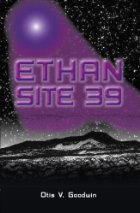
Book Review: Ethan: Site 39 by Otis V. Goodwin
 Summary:
In the near future Earth is destroyed by an asteroid. Luckily for humanity, a group of people had already departed for Alpha Centauri to colonize the two stars found there. After losing contact with the few survivors, the Centaurians believed Earth to be uninhabited. Five thousand years later, their descendants return to an Earth that has recovered from the chaos caused by the asteroid to begin the work of reinhabiting it. When Ethan, one of the colonists, stumbles upon a residence dug into a mesa made of granite, everything the Centaurians believe about what occurred on Earth in relation to the asteroid is challenged.
Review:
I really wanted this to be a good book. First I’m a big supporter of indie and self-publishing, as I often find the stories more creative and thought-provoking than those published by big publishing houses. (See my review of Vow of Silence for evidence of that). I also thought it was an intriguing scifi storyline. Unfortunately, Goodwin can’t write.
Oh, he can come up with a great idea for a story, but his writing is terrible. First, he tells us instead of showing us. For instance, he’ll say things like “Ethan was thinking how worried he was,” instead of, you know, letting us see Ethan’s worried thoughts. Whole parts of the story that would have been fun to read in addition to making the book longer he sums up by telling us about it in a couple of sentences, such as “They talked about their planned future together” instead of letting us read the conversation.
Not that I would have wanted to read the conversation anyway, because the dialogue is atrocious. Every character sounds like an automaton. They never use a contraction or a simile or anything really that makes a human sound human. Goodwin tries to explain this as language changing, but even when we flash back to see characters from the time of the asteroid, they speak in exactly the same robotic manner.
The book blurb says that Goodwin is retired from the military, and it frankly shows. In some ways, this is good. The military portions in the asteroid flashback are clearly written by someone who knows the military. However, mostly it’s just a rabid conservatism showing. We’re talking a world in which the small population of humans rebuilding all automatically fall in love with someone of the opposite gender and that love is automatically, wholeheartedly returned. It’s like the man never got past the fairy tales told to little girls to realize that that doesn’t happen perfectly for everybody in real life. Real life just doesn’t work out that perfectly for everyone. It makes all of the characters unbelievable, whereas having one true love situation would be believable.
Of course, there is no saving the wretched female characters. Goodwin seems to be only capable of writing the completely helpless sobbing woman or a woman who is essentially a dude with boobs. God forbid a woman be strong and feminine simultaneously.
I feel kind of bad saying all of this, because his overall storyline really is good and creative. It’s what kept me reading the book in spite of cringing and rolling my eyes. What Goodwin should have done is acquired a writing partner who could write his storyline on the sentence level well. Then he would have had a great book. Unfortunately, he didn’t do that.
2 out of 5 stars
Source: Free copy from book promotion agent via LibraryThing‘s EarlyReviewers Member Giveaway program.

Book Review: Battle Royale Ultimate Edition Volume 1 by Koushun Takami (Manga) (Series, #1)
A Note on Me and Graphic Novels:
This, believe it or not, was my first foray into the world of graphic novels. I was spurred into this new territory by my intense love of the movie Battle Royale. I know that there’s also a traditional book out there, but I’d heard the manga is what the author feels really fulfills his vision of the story. I received the first volume of the ultimate edition, which contains the first three mangas in the series, for Chrismukkah. I wasn’t sure if I’d enjoy reading a graphic novel. I tend to associate them with superheroes, and I’m not generally a fan of superhero stories (except Ironman. Robert Downey Jr., *swoon*). But this. This was a story I already knew I liked, so I came at the genre with a much more open mind than the once or twice I flipped through a superhero graphic novel. You guys, I absolutely love the feeling of reading a graphic novel. I could literally feel different parts of my brain working at it than that work when reading a regular book, playing videogames, writing, or watching a movie. It’s like a portion of my brain was like “Oh hai. You finally remembered I exist!” I love that I’m only reading dialogue, because I hate extensive descriptions in books. I love that the drawings are art that I actually enjoy looking at the fine details of. I love it that when I flip back to show scenes to other people, I notice things in the drawings I didn’t see the first time around. I’m officially a convert to the genre, but you still won’t see me reading about superheroes anytime soon.
 Summary:
In an alternate history of Japan, Japan comes under the rule of a totalitarian, isolationist government after WWII. The government rules through terror, and part of that terror is selecting, supposedly via lottery, one 9th grade class every year to compete in a televised game where it is kill or be killed. Shuuya never expected to win this lottery, but when his class goes on a field trip, upon arrival they discover that they are this year’s participants on an island location. They discover collars on their necks that will detonate if more than one is left alive at a certain point and also if they wander into the randomly assigned and changing forbidden zones. As the teens attempt to survive the game through various methods, flashbacks tell the story of the 9th grade class members.
Review:
I absolutely love this story. I love violent, gory stories, and there are creative deaths galore here. For instance, the weapons include a scythe, and that scythe gets used. In one particularly memorable scene, a girl desperately attempts to stuff a boy’s brains back into his skull. It’s freaking amazing. There’s also graphic sex, ranging from rape to love. I don’t like my books to pretend like sex doesn’t happen in the real world, because um, it does. The fact that sex can be wonderful and about emotions or horrible and about power is wonderfully depicted.
The manner of introducing these characters tossed together in a horrible situation then expanding on who they are via flashbacks is very reminiscent of Lost. Of course, here the characters knew each other, at least somewhat, before the game. The flashbacks fit in perfectly with the action of the game, and they reveal just enough about the characters without revealing too much. From a cooking class that solidified a friendship to crimes committed to lessons learned from an activist uncle, the flashbacks are endlessly fascinating.
Seeing these characters in what most certainly feels like a hopeless situation orchestrated by a powerful government far bigger than they are is truly powerful reading. It leaves the reader wondering not only what makes people do bad things, but also how to define what is good and bad given various situations. Is it actually good to team up and attempt to buck the system or will that just cause more pain in the end? Is suicide a bad thing when it’s kill yourself or kill others?
If you enjoy Lost, The Hunger Games, violence, psychology, or even just graphic novels, you will enjoy this book. I highly recommend it and can’t wait to read the next volume!
5 out of 5 stars
Source: Gift

Book Review: Wizard and Glass By Stephen King (Series, #4)
 Summary:
Roland and his ka-tet escape Blaine the Train, but they accidentally wind up off the path of the beam and in yet another alternate version of Jake, Eddie, and Susannah’s world. They start following an interstate, heading for a palace and hoping therein lies the solution for returning to the path of the beam. One night while traveling, Roland finally tells them what has been haunting him all this time with the story of the summer he was 14 years old and his first love.
Review:
As with The Waste Lands, this book reads like multiple books in one. I was expecting that, since The Waste Lands ended abruptly without solving the problem of Blaine the Train. This book takes care of that storyline, then jumps into a flashback that lasts almost the entire book then jumps back to the present and attempts to solve a big problem. It’s a lot for one book to handle, and it would have worked better if Lud and Blaine the Train were one book taking place after The Waste Lands but before Wizard and Glass. If after doing this, King had shortened the flashback, The Wizard and Glass would be an excellent book. Of course, he didn’t do it that way.
Now that I am this far into the series, I’m seeing that King, whether intentionally or not, is writing different bits of the series as different genres. This could be why it holds wide appeal–if someone doesn’t like the genre the story is currently being told in, it will change soon enough. The first book is mainly a travelogue. The second a horror story. The third is a mix of scifi with the time paradox and horror again with Lud and Blaine the Train. Here, we get partly fantasy with the current issues for Roland’s ka-tet, but mostly a medieval romance–the story of Roland and Susan.
That medieval romance starts out well. King sets up three dialects–High Speech, In-World Speech, and Mejis accent–very well. All three are easy to differentiate, and yet are easy to read. Roland’s world is a wonderful mix of the knights of Arthur and the fabeled American west. It’s fun to read, but only when something’s really happening. That’s the problem with the flashback. It feels too long, because very little happens in large portions of it. Roland, Cuthbert, and Alain must spend most of their summer in Mejis waiting, and instead of telling the reader “wow, they waited a long time,” King makes the reader wait too, and it’s fucking boring and annoying. I seriously wanted to give up, and right when I was about to, the action started again. Finally. The action makes excellent use of this mix of fantastical and wild west, but it really takes too long to come about.
As far as the characters go, I know I’m supposed to feel for Susan, but I honestly found her annoying and dull, which is problematic since she’s Roland’s first love. Also, after all this time of Roland stating how Eddie is almost as funny as Cuthbert, I was expecting Cuthbert to be, y’know, funny. He’s not. He acts like that boy in school who used to pull your braids and think it was funny. He’s just juvenile, not witty. On the other hand, the character of the witch Rhea is excellently done. She’s simultaneously disgusting and intriguing, and she’s one of the few who manages to out-wit Roland, partly because he underestimates her since she is an old, disgusting woman. If only Cuthbert and Alain had been so vividly drawn instead of wandering shells of people for Roland to talk at.
The book is a necessary read if you plan on finishing the series. It gives important insight into why Roland is the man he is today, not to mention explains how the ka-tet escapes Blain the Train and gets back on the path of the beam. I think this is the almost inevitable dull book in an overall good series. Just take my advice and skim over the dull part of Mejis until the action picks up again.
2.5 out of 5 stars
Source: Borrowed
Previous Books in Series:
The Gunslinger, review
The Drawing of the Three, review
The Waste Lands, review

Book Review: The Creation of Psychopharmacology By David Healy
 Summary:
A historical look at the emergence and development of psychopharmacology (psychiatric drugs) from the earliest time of psychiatry to the end of the 20th century. Particular attention is paid to the impact psychiatric societies, economic systems, cultures, and drug companies have had on psychopharmacology. Psychiatric drugs explored in-depth include chlorpromazine and SSRIs (Selective Serotonin Reuptake Inhibitors aka antidepressants).
Review:
I was quite excited to learn about the topic of this book, as psychopharmacology is one of the key aspects of psychiatric treatment. It is therefore unfortunate that the author, Healy, allows his own biases to get in the way of presenting factual information.
The first portion of the book that discusses asylums and the original drugs discovered by scientists to work on psychoses does present the facts in an unbiased manner. Unfortunately, Healy could not possibly write in a much more boring manner. I have never in my life read a text that is so stale, and I do read scientific nonfiction for work on a fairly steady basis, so this is not a bias of my own against scientific writing. The man just drones on and on.
The larger problem arises in the second half of the book when Healy arrives in the 20th century. Healy’s obvious anti-drug and anti-psychiatry bias emerges. He flat-out gets facts wrong and displays paranoia, ranging from the typical conspiracy theory that the mental health community is in league with the drug companies to the more extreme idea that depression shouldn’t be treated because then there would be no more art or spirituality. He also claims that personality disorders should not be treated, comparing such treatment to cosmetic surgery. This claim is offensive and harmful to people who wish to become higher functioning, happier individuals.
Healy goes on to offer predictions as to the direction psychology and psychiatry will take in the 21st century. Now that we are a decade in to that century, I can definitively tell you his predictions are wrong. He argues that an increasing number of drugs will be used to remove most individuality and that therapy will continue to fall by the wayside. In fact, the first decade of the 21st century saw a new movement toward CBT (Cognitive Behavioral Therapy) and DBT (Dialectical Behavioral Therapy), which are all about helping an individual change their harmful behaviors, thoughts, and tendencies purely through therapeutic techniques. Healy is attempting to fear-monger his readers into believing psychiatry and psychology wish to drug us all up, when in fact the mental health community wants to use what works best in each situation. Contrary to his claims, there are in fact biological bases for some mental health issues.
Although his facts are accurate in the earlier history of psychopharmacology, the second half of the book presents false facts and harmful ideas. Due to this fact, I cannot recommend this book. For an educated look at mental health and drugs, take a look at the DSMIV and the PDR.
1 out of 5 stars
Source: Library

Reading Goals for 2010
I don’t want to over-plan my reading for 2010, but I do want to give it a loose structure and maybe broaden my horizons a bit. I also want to be practical about my reading, for instance the fact that I rarely have time to go to the library (erm, the public one, not the one I work at 5 days a week). Anywho, with that in mind, my loosely-defined goals for 2010 are:
- Read the books I bought for undergrad classes but didn’t have time to read then. Seeing as how my two majors are topics I actually like (History and English and American Literature), I actually do want to read these old “assignments.” Expect to see a bit of ancient literature, Chekhov, and noir.
- Read a bit more nonfiction in areas I want to be more educated in, preferably science. Seeing as how I work in a medical library, this should be pretty easy to pull off cheaply.
- Utilize Swaptree to get rid of books I weeded from my collection at the end of the year and in turn get books I want to read. Since I’m doing an exact 1:1 exchange, this should keep my book collection on the smaller side.
- Courtesy of a challenge from @shaindelr over on Twitter who gasped about my not having read any poetry in 2009–read one book of poetry. However, I’m not making any promises that it won’t be of the ancient variety. ;-)
- Finally, watching Japanese movies got me pretty into the stories their culture has to offer. That along with seeing some graphic novels in friends’ houses made me want to give the genre an official shot, so I’ll be reading at least 3 graphic novels/manga in 2010. I’m super-excited to read my first Battle Royale, which I wanted to read after seeing and loving the movie.
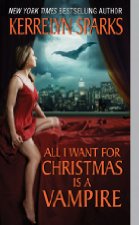
Book Review: All I Want For Christmas Is a Vampire By Kerrelyn Sparks (Series, #5)
 Summary:
Toni never meant to wind up working as a daytime security guard for vampires. She meant to be spending her December focusing on finishing up her masters degree so she and her best friend Sabrina would be one step closer to their dream of running a high-quality orphanage. But Sabrina was attacked and her claims that vampires orchestrated the attack has led to her uncle locking her up in a mental institution. Toni is determined to prove to Sabrina’s uncle that vampires are real, so she has gone undercover guarding the good vampires seeking some definitive way to prove their existence. Much as she wants to hate vampires, a certain Scottish highlander vamp named Ian has a way of making her feel very much alive.
Review:
Since I received this book as a present and there was no indication on the cover, I had no idea it’s the fifth book in the series until I was partway in and did a little bit of investigating. So, I haven’t read any of the other books in the series.
Of course, I don’t particularly think I would want to. The book starts out strongly. Toni is a character who it is easy to identify with. She’s a young adult with dreams and struggling with her self-esteem via a list of positive affirmations she says every morning. She is fiercely loyal and intelligent. Toni’s character does develop throughout the book, unfortunately not in a good way. Instead of realizing her own strength, she now has a whole new set of people–vampires and shape-shifters–to feel inferior to.
The vampire world that Sparks creates is simply not appealing. She sets up two groups of vampires–the good guys and the bad guys, or as the good vampires call them, the “Malcontents.” The Malcontents enjoy making others feel fear and pain and want to kill off all of the good vampires. The good vampires, no kidding, have their own priest and Mass. Yeah, you read that right, the vampires are Catholic. WTF?! That’s almost as bad as vampires that sparkle.
Additionally, the good vampires seem to have a thing for marrying mortals, and the leader of the good vampires has come up with a way to splice male vamps’ genetic material so that the mortal mother can give birth to a child who is half-vampire. Naturally these children have super-human abilities, such as levitating, but they also seem to be able to miraculously heal the sick. Reading these scenes gave me the same feeling as fingernails on chalkboard.
On the other hand, the romance portion of the plot is actually quite good. Toni’s and Ian’s witty banter reads realistically, and their sex scenes are fun.
If you’re just after the romance element and won’t mind the world Sparks has created, you’ll enjoy the book. All others should stick to Charlaine Harris and Nora Roberts.
2.5 out of 5 stars
Source: Gift from a friend
Previous Books in Series:
How to Marry a Millionaire Vampire
Vamps and the City
Be Still My Vampire Heart
The Undead Next Door

 Support my work with a tip or browse my shop for curated book club guides, how to guides, cross-stitch patterns, and more!


This work by Amanda Nevius is licensed under a Creative Commons Attribution-Noncommercial-No Derivative Works 3.0 United States License.
 Opinions of a Wolf