
Archive
Book Review: Maame by Jessica George

When Maddie’s mother returns from Ghana to London, she encourages her to take a break from caregiving for her father with Parkinson’s by moving out. She does, but things don’t go according to plan.
Summary:
It’s fair to say that Maddie’s life in London is far from rewarding. With a mother who spends most of her time in Ghana (yet still somehow manages to be overbearing), Maddie is the primary caretaker for her father, who suffers from advanced stage Parkinson’s. At work, her boss is a nightmare and Maddie is tired of always being the only Black person in every meeting.
When her mum returns from her latest trip to Ghana, Maddie leaps at the chance to get out of the family home and finally start living. A self-acknowledged late bloomer, she’s ready to experience some important “firsts”: She finds a flat share, says yes to after-work drinks, pushes for more recognition in her career, and throws herself into the bewildering world of internet dating. But it’s not long before tragedy strikes, forcing Maddie to face the true nature of her unconventional family, and the perils—and rewards—of putting her heart on the line.
Review:
I picked this book up because I heard it compared to Bridget Jones’s Diary (one of my all-time favorite reads). While I don’t think that comparison is fair, I did enjoy Maddie’s much more raw story.
The comparison seems to largely exist because Maddie is a woman in London navigating her life. But, unlike Bridget Jones, which is a romcom, this is a story largely about grief, mental health, and navigating work, dating, and roommates as a Black woman.
Be warned this is a slight spoiler but important to discussing this book. The tragedy is that Maddie’s father dies from Parkinson’s complications shortly after she moves out. The book largely explores grief, and how Maddie moves through it as a twenty-something who was the primary caregiver for her father for years. As someone who also lost my father in my twenties, I found the explorations of her grief to be raw and beautiful. I read this as an audiobook, so I can’t find the exact quote, but at one point someone says that we can’t ever really understand someone else’s grief even when we’ve been through it ourselves because it’s a unique experience for each person. How true that is.
The book also explores the specific struggles Maddie faces as a Black woman. Some of these it does directly, such as how Maddie feels as the only Black woman in her workplace. But others are seen just in passing. Maddie doesn’t linger on them (this is narrated in first person) but it’s still impactful to the reader. For example, Maddie moves in with two white roommates. One of them touches her hair when it’s half-done on wash day. The other roommate immediately scolds her and tells her to never touch a Black woman’s hair without asking. The first roommate pushes back that it’s ok because they’re roommates. Maddie doesn’t say anything, but we see how she then proceeds to finish her wash day in such a way that the reader knows she’s not enjoying it anymore like she was.
Something I wasn’t expecting in this book was the three sex scenes. They’re not written in a particularly spicy manner. But they are detailed. Closed door is a personal preference to me, and I think we could have still understood the emotional impact of the sex scenes without seeing them fully. I also think two of the three are clearly not written for reader enjoyment (because Maddie herself doesn’t enjoy them), so I’m not sure what benefit there is to having them there for the reader either. Some readers may feel that one of these scenes veers in SA, in spite of the fact that Maddie herself doesn’t feel that way. I’m happy to go into more details in the comments if a reader needs to know before reading.
One thing that surprised me in a good way in this book was how Maddie’s relationship with her mother evolves over the course of the book. I was honestly expecting the relationship to fall apart. Instead, they both work to better understand and relate to each other. That was very nice to see. I also like that her mother is religious, and Maddie never mocks her mother for this. Maddie herself goes to church sometimes, even when she struggles to know exactly how she feels about her faith. It’s not the focus of the book but it’s a part of who she is, and I like that the characters are allowed to have that in a mainstream book.
Overall, this is an emotional read featuring some heavy topics. While it’s not a twenty-something romcom, it is a realistic depiction of what life can be like in your twenties for many women around the world. Recommended for readers looking to get a bit deeper in their reading, as well as those looking for own voices representation. The audiobook format is particularly well narrated.
If you found this review helpful, please consider tipping me on ko-fi, checking out my digital items available in my ko-fi shop, buying one of my publications, using one of my referral/coupon codes, or signing up for my free microfiction monthly newsletter. Thank you for your support!
4 out of 5 stars
Length: 320 pages – average but on the longer side
Source: Library
Buy It (Amazon or Bookshop.org)
Book Review: The Villa by Rachel Hawkins

When Emily’s on-again off-again best friend (who also just so happens to be a power of positive thinking influencer) invites her to spend the summer at an Italian villa, she’s surprised to discover it’s the same villa famous for a murder in the 1970s.
Summary:
As kids, Emily and Chess were inseparable. But by their 30s, their bond has been strained by the demands of their adult lives. So when Chess suggests a girls trip to Italy, Emily jumps at the chance to reconnect with her best friend.
Villa Aestas in Orvieto is a high-end holiday home now, but in 1974, it was known as Villa Rosato, and rented for the summer by a notorious rock star, Noel Gordon. In an attempt to reignite his creative spark, Noel invites up-and-coming musician, Pierce Sheldon to join him, as well as Pierce’s girlfriend, Mari, and her stepsister, Lara. But he also sets in motion a chain of events that leads to Mari writing one of the greatest horror novels of all time, Lara composing a platinum album––and ends in Pierce’s brutal murder.
As Emily digs into the villa’s complicated history, she begins to think there might be more to the story of that fateful summer in 1974. That perhaps Pierce’s murder wasn’t just a tale of sex, drugs, and rock & roll gone wrong, but that something more sinister might have occurred––and that there might be clues hidden in the now-iconic works that Mari and Lara left behind.
Yet the closer that Emily gets to the truth, the more tension she feels developing between her and Chess. As secrets from the past come to light, equally dangerous betrayals from the present also emerge––and it begins to look like the villa will claim another victim before the summer ends.
Review:
Told in both the 1970s and the present, this thriller highlights the similarities and differences of fame and near-fame for women.
The present-day perspective is that of Emily, a moderately successful cozy author going through a nasty divorce. While she’s able to make a living entirely off her writing, her success pales in comparison to her sometimes best friend Chess. Chess has a positivity influencer brand that includes publishing power of positive thinking style books (think The Secret merged with Girl, Wash Your Face.) The 1970s perspective is that of Mari, the girlfriend of one of the musicians who stayed at the villa in the 1970s. Both she and her stepsister found fame after the murder. Mari in the form of a horror book. Her stepsister in the form of an insanely popular singer/songwriter album.
The book’s central premise is that the men in these women’s lives are holding them back from finding their own artistic expression, fame, and success. The question is, are the women’s reactions justified? Put another way, are the women using self-defense (of their art) to an appropriate level given the threat? Another secondary question is can two women ever really fully support each other’s art or is someone always getting the short end of the stick?
The book isn’t heavy-handed in exploring these questions. Indeed, I was primarily wrapped up in the two mysteries going on. The first being who committed the initial murder in the villa in the 1970s. The second being why has Emily been suffering from a mysterious medical condition and does Chess have ulterior motives to having invited her to the villa? That’s a lot of mystery for one quick thriller, and it works.
I was impressed at the amount of backstory and extra information the author had to consider in putting together the two timelines. We have snippets of Mari’s book, a horror best seller by a woman in the 1970s that rivaled The Shining (my review) in this imaginary version of the 1970s. There are excerpts from that book in this one that the author had to write in a completely different tone and manner than her own writing and in a way that would make sense for the 70s. There’s also snippets of Chess’s brand, basic characters and plot for Emily’s cozy series, an excerpt from a podcast episode about the murder, Mari’s writing about her summer at the villa, and lines from her stepsister’s songs from her most famous album. That’s a lot of different voices and moving parts to keep straight, and the author does a great job of that. I found myself wishing there was more found items in the book, like another podcast episode or something. That’s not a critique. I enjoyed it so much I wanted more.
There were two things that I didn’t love about the book. These are both spoilers, so consider yourself warned! First, Emily’s illness is repeatedly brushed off by doctors as in her head. This is very frustrating and relatable for anyone who’s dealt with a mystery illness. However, by the end of the book it’s revealed that the illness is indeed psychosomatic. Even talking to her husband on the phone makes Emily sick. So the stress of being with him has been making her ill. I found this to be a really disappointing depiction. Yes, chronic illness can improve when a stressor is removed. But that wasn’t the situation in this book. Emily was only sick because of being so stressed out about her marriage. Once that’s removed, she’s better. A disappointing perspective to see in the book. Second, Chess and Emily decide to kill Emily’s soon-to-be-ex-husband since he’s dragging Emily to court for partial rights to her cozy series and threatening to do that for anything else she writes, as well as is blackmailing Chess. That’s a fine twist that makes sense. The issue is, the book shows them inviting him to visit them in the villa and reveals that he drowned and that the local police ruled it an accidental drowning. But it doesn’t show us how Emily and Chess did it. Nor is it really believable that they would be cleared so quickly in the death given the nasty divorce proceedings Emily was current undergoing. She would obviously have been a serious suspect, not brushed off so easily as one. Unless they did something with the murder that made it impossible to suspect her at all. But, again, this isn’t shown in the book. It was a short book with very little time dedicated to this murder, and I think it would have benefited from that.
Overall, in spite of two plot points I either didn’t appreciate for chronic illness representation issues or felt didn’t make much plot sense, I still enjoyed the read. It was a unique merging of a period piece thriller and a modern thriller featuring an influencer and female friendship. Recommended to thriller readers looking for a book rich in female characters who also enjoy the arts and the 1970s.
If you found this review helpful, please consider tipping me on ko-fi, checking out my digital items available in my ko-fi shop, buying one of my publications, using one of my referral/coupon codes, or signing up for my free microfiction monthly newsletter. Thank you for your support!
4 out of 5 stars
Length: 279 pages – average but on the shorter side
Source: NetGalley
Buy It (Amazon or Bookshop.org)
5 Short LGBT Book Club Books

So, you want to bring an LGBTQIA+ book to your book club. But Pride month is already upon us, so it needs to be short! Or maybe reading an LGBTQIA+ book will be a bit of a stretch for your group so you want to entice them into it by promising a short read.
Never fear, your friendly queer and bisexual book blogger has your back with 5 books all under 300 pages. Plus, I have discussion guides available for each and every one of them.
Let’s take a look at them from shortest to longest.

On a Grey Thread by Elsa Gidlow
Coming in at just 73 pages, this is also in the public domain – meaning everyone in your book club can read it on Archive.org for free. (They can also get it on Amazon or Bookshop.org if they prefer.)
Published in 1923, this poetry collection was the first in North American history to openly express lesbian desire. Both personal and political, Gidlow’s poems express the poet’s complex feelings as a young woman whose political ideology and sexual identity ran counter to the traditional values of her time. Whether or not this will work for your book club depends on everyone’s feelings about poetry. But it’s a nice, quick read with historical value.
Get the Discussion Guide
A beautifully graphic designed 2 page PDF that contains: 1 icebreaker, 9 discussion questions arranged from least to most challenging, 1 wrap-up question, and 3 read-a-like book suggestions.
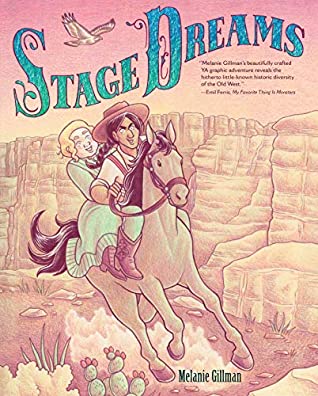
Stage Dreams by Melanie Gillman
While technically more pages than the poetry book with 104, this is a graphic novel, so it’s possible it’s actually an even quicker read. Get it on Amazon or Bookshop.org.
In this rollicking queer western adventure, acclaimed cartoonist Melanie Gillman (Stonewall Award Honor Book As the Crow Flies) puts readers in the saddle alongside Flor and Grace, a Latina outlaw and a trans runaway, as they team up to thwart a Confederate plot in the New Mexico Territory. When Flor—also known as the notorious Ghost Hawk—robs the stagecoach that Grace has used to escape her Georgia home, the first thing on her mind is ransom. But when the two get to talking about Flor’s plan to crash a Confederate gala and steal some crucial documents, Grace convinces Flor to let her join the heist.
Get the Discussion Guide
A beautifully graphic designed 2 page PDF that contains: 1 icebreaker, 9 discussion questions arranged from least to most challenging, 1 wrap-up question, and 3 read-a-like book suggestions.

Solo Dance by Lit Kotomi, translated by Arthur Reiji Morris
This 149 page read is more of a contemporary, literary selection, translated from its original Japanese. Get it on Amazon or Bookshop.org.
Cho Norie, twenty-seven and originally from Taiwan, is working an office job in Tokyo. While her colleagues worry about the economy, life-insurance policies, marriage, and children, she is forced to keep her unconventional life hidden—including her sexuality and the violent attack that prompted her move to Japan. There is also her unusual fascination with death: she knows from personal experience how devastating death can be, but for her it is also creative fuel. Solo Dance depicts the painful coming of age of a queer person in Taiwan and corporate Japan. This striking debut is an intimate and powerful account of a search for hope after trauma.
Get the Discussion Guide
A beautifully graphic designed 2 page PDF that contains: 1 icebreaker, 9 discussion questions arranged from least to most challenging, 1 wrap-up question, and 3 read-a-like book suggestions.

The Gilda Stories by Jewelle Gómez
If your book club likes the paranormal or urban fantasy genres, then this 252 page read should be right up their alley. Get it on Amazon or Bookshop.org.
A young Black girl escapes slavery in the 1850s United States. When she grows up, she is made into a vampire with her consent. We see her immortal life and her perspective of the US through an imagined 2050.
Get the Discussion Guide
A beautifully graphic designed 2 page PDF that contains: 1 icebreaker, 9 discussion questions arranged from least to most challenging, 1 wrap-up question, and 3 read-a-like book suggestions.

Coffee Will Make You Black by April Sinclair
At 256 pages, this will be a great fit for a book club that likes historic fiction set in the mid-20th century. Get it on Amazon or Bookshop.org.
Set on Chicago’s Southside in the mid-to-late 60s, following Jean “Stevie” Stevenson, a young Black woman growing up through the Civil Rights and Black Power movements. Stevie longs to fit in with the cool crowd. Fighting her mother every step of the way, she begins to experiment with talkin’ trash, “kicking butt,” and boys. With the assassination of Dr. King she gains a new political awareness, which makes her decide to wear her hair in a ‘fro instead of straightened, to refuse to use skin bleach, and to confront prejudice. She also finds herself questioning her sexuality. As readers follow Stevie’s at times harrowing, at times hilarious story, they will learn what it was like to be Black before Black was beautiful.
Get the Discussion Guide
A beautifully graphic designed 2 page PDF that contains: 1 icebreaker, 9 discussion questions arranged from least to most challenging, 1 wrap-up question, and 3 read-a-like book suggestions.
Bonus Suggestion:

Bloemetje: a speculative retelling of Hans Christian Andersen’s Thumbelina fairy tale by Amanda McNeil
Of course, I must also mention my own queer-inclusive retelling of Thumbelina, coming in at 121 pages. Available on Amazon.
A Dutch company known as The Bedrijf commences colonizing Venus via the construction of a dome filled with plants that convert its natural air into something breathable by humans. Since all workers are granted permission to bear a child, a woman and her spouse join the crew. But the woman soon discovers she is plagued with infertility. When her spouse illegally brings home a tulip from the garden, they discover a miniature baby inside who they name Bloemetje – little bloom. As the baby grows in mere days into a teenager, pushing her boundaries, she illuminates the true horrors of colonization and leads them all on a journey to decolonize.
If you’re interested in reading this for your book club, drop me a note at mcneil.author@gmail.com. I’d be happy to make a discussion guide and/or talk to your book club via Zoom or similar software.
Book Review: The Sentence by Louise Erdrich
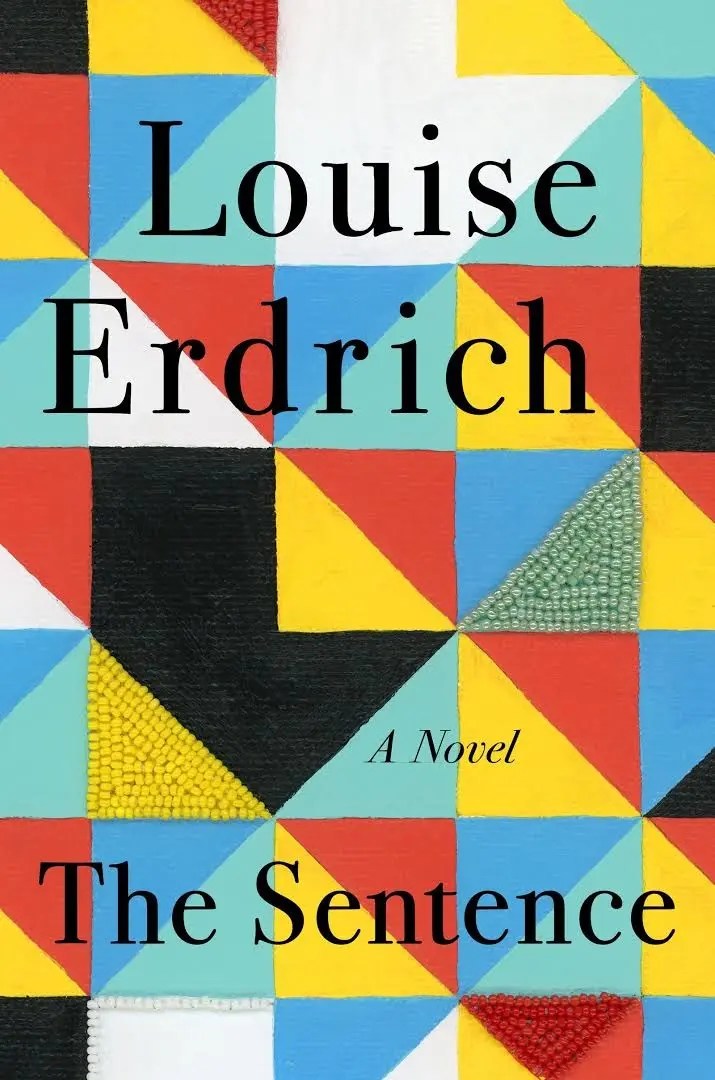
A previously incarcerated Indigenous woman loves her job at an independent bookstore focused on Indigenous literature right up until the store’s most annoying customer dies and begins haunting it.
Summary:
A small independent bookstore in Minneapolis is haunted from November 2019 to November 2020 by the store’s most annoying customer. Flora dies on All Souls’ Day, but she simply won’t leave the store. Tookie, who has landed a job selling books after years of incarceration that she survived by reading with murderous attention, must solve the mystery of this haunting while at the same time trying to understand all that occurs in Minneapolis during a year of grief, astonishment, isolation, and furious reckoning.
Review:
It’s a good thing I didn’t see that this book is magical realism or I wouldn’t have picked it up. You see, I had a serious misunderstanding of what magical realism is and thought I didn’t like it. In fact, I like it very much. I only wish I had first been introduced to it by the excellent explanation from Master Class originally. I’m excited that this book has helped me see past the magical realism label.
The thing that I love structurally about this book is how the title has so many different meanings. There’s the sentence that Tookie serves for her crime. There’s the sentence found within the book that Flora is reading when she dies. And there’s many other sentences throughout the book. I love when one title has many meanings.
The book starts with Tookie thinking back briefly on her incarceration and what landed her there. Part of what made the beginning so readable was how Tookie told this story. It was like speaking with a friend about a piece of their past. Raw and real but quick and to the point. It got me invested in the book right away. Then we jump to Tookie’s present, working in the bookstore, and the haunting, and this is utterly engaging right away as well. Tookie is flawed but so relatable. I think most readers will find her to be this way because she’s such a huge reader herself.
I also found her relatable because she’s in long-term recovery. I like how she sometimes thinks about how she was but it’s not like any single bad day gives her an urge she has to fight. A lot of times in literature and movies only early sobriety is shown, and the fact is, the experience in long-term recovery is different. I was so glad to see that in Tookie, and to see her breaking the multi-generational disease. But I also appreciated the very realistic depiction of her being concerned about talking about the haunting with her husband, Pollux, for fear he would think she had relapsed. I also should mention that both Tookie and her niece are bisexual. Their sexual fluidity is never judged or questioned. It’s just a part of who they are, which I really appreciated.
The book centers around a difficult question that it doesn’t provide answers for. Flora is a “wannabe Indian.” She’s a white woman who claims Indigenous heritage based on one photo she says is of a great-grandparent. The Indigenous community is dubious but doesn’t want to tell her she can’t belong. She spends much of her life working for the betterment of Indigenous people, including even taking in an unhoused teenager and caring for her so much that when she’s grown she refers to her as mother. So everyone has complex feelings about her. There are also some scenes that show white people behaving in offensive ways and smoothly depict how hard it is for Indigenous people to deal with these aggressions on a regular basis. One that really stuck in my mind was the white woman who shows up at the Indigenous bookstore and talks about her grandmother reassembling Indigenous bones she found on her land and winning a blue ribbon for it. She doesn’t understand why this is offensive to the Indigenous people she’s speaking with. To me the examples like this throughout the book demonstrate two types of white people who are hurtful to Indigenous people. The book is never preachy with these scenes. They come across as very realistic depictions of, unfortunately, regular interactions between Indigenous people and white people. If you yourself aren’t sure why these two types of interactions are hurtful, then I think this book would show you.
I wasn’t sure how I would feel reading a fictional book set during the first year of the pandemic. Overall, even though Tookie’s experiences and mine were different from each other (she was much older than me and had an essential worker, public facing job), I still found it realistic and relatable. The book never dwelled too much on any individual aspect of the pandemic but had scenes that were necessary reminders of how things were in the early days, like when Tookie goes to the grocery store to stock up just in case and ends up buying the best she can from what’s left, such as a tube of cookie dough. Similarly, Minneapolis was where George Floyd was killed and followed by the protests that spread throughout the country in 2020, and so this had to be a part of the book. At the start of the book it’s established that Tookie’s husband, Pollux, is who actually arrested her. By the time she was out of prison, he had left the tribal police force. But her household still must deal with the complex situation of having a previously incarcerated person and an ex-cop in the same household during this tumultuous time. There’s also the nice addition of Pollux’s niece, Hetta, living with them and, as a young person, being more involved in the protests. This thoughtful characterization allowed for multiple perspectives on the protests. For example, while there is support, there is also sadness and concern about the small businesses being impacted.
In spite of all that comes in the middle, the last part of the book deals mainly with Tookie’s relationship with Pollux and Tookie dealing with Flora’s ghost. This provides closure even while the reader knows the difficulties didn’t end in November 2020. In many ways I found this to be a story about relationships and reconciliation.
Overall, this is a strong piece of contemporary magical realism. If you’re ready to read a book featuring the pandemic while not being about the pandemic itself, this is a great place to begin.
If you found this review helpful, please consider tipping me on ko-fi, checking out my digital items available in my ko-fi shop, buying one of my publications, or using one of my referral/coupon codes. Thank you for your support!
4 out of 5 stars
Length: 387 pages – average but on the longer side
Source: Library
Buy It (Amazon or Bookshop.org)
Get the Reading Group / Book Club Discussion Guide
A beautifully graphic designed 2 page PDF that contains: 1 icebreaker, 9 discussion questions arranged from least to most challenging, 1 wrap-up question, and 3 read-a-like book suggestions
View a list of all my Discussion Guides.
Book Review: The Thorn Puller by Hiromi Itō

One of Japan’s most prominent women writers writes of a contemporary woman’s life split between caring for her much older British husband in California and her aging parents in Japan and her three daughters in both places.
Summary:
The first novel to appear in English by award-winning author Hiromi Ito explores the absurdities, complexities, and challenges experienced by a woman caring for her two families: her husband and daughters in California and her aging parents in Japan. As the narrator shuttles back and forth between these two starkly different cultures, she creates a powerful and entertaining narrative about what it means to live and die in a globalized society.
Ito has been described as a “shaman of poetry” because of her skill in allowing the voices of others to show through her. Here she enriches her semi-autobiographical novel by channeling myriad voices drawn from Japanese folklore, poetry, literature, and pop culture. The result is a generic chimera—part poetry, part prose, part epic—a unique, transnational, polyvocal mode of storytelling. One throughline is a series of memories associated with the Buddhist bodhisattva Jizo, who helps to remove the “thorns” of human suffering.
Review:
I picked this up from my library’s new books shelf, and for some reason I misunderstood and thought it was creative nonfiction. Since the main character shares the author’s first name, I stayed under this belief for quite some time, right up until the main character does something that shocked me. Then I investigated and realized it’s fiction heavily inspired by the author’s own life. I mention this to say that this reads like very modern creative nonfiction. It’s a mix of poetry, vignettes, and factual asides and doesn’t use quotation marks ever. Each chapter ends with a note of what works inspired that particular chapter. I was honestly impressed at this fictional creative nonfiction.
While each chapter vaguely goes in order of a year or two or Hiromi’s life, each also explores other parts of her life. And some weeks may be dropped in-between. The point isn’t a linear story but rather an exploration of how Hiromi deals with being in the sandwich generation with the added factor of her husband being at least 20 years older than her and so, he is aging more rapidly than she and requires more caregiving than he might otherwise. Hiromi thus deals with universal themes of caring for others while struggling to care for yourself. Of trying to give space to others to make their own decisions about their lives while worrying about them and wanting them to stick around.
Another major theme is Hiromi’s global life. She’s Japanese, living part-time in California, raising three daughters all of whom are American, one of whom is biracial (it’s unclear from the story if the older two daughters are biracial or not), living with a husband who is a British immigrant to the US who is also an older generation than her. There are so many cultural and generational differences for Hiromi to deal with. She struggles with Japanese perceptions of her husband, her husband’s perceptions of Japan, her own daughter’s difficulties to speak Japanese fluently, and more. What I found the most interesting was her husband’s misguided belief that because she was Japanese she wasn’t religious at all, only to become very angry at her when he finds out she took their daughter to visit a shrine. He thinks of this as religious. She thinks of it as simply a way of being. This thus explores the very interesting question of how much, if any, of spirituality is cultural?
Jizo and Jizo’s shrine are interwoven throughout the book. Hiromi feels a particular affinity for Jizo and so we see her memories of the shrine and also see her visiting the shrine in present time. Jizo is a Bodhisattva who is believed to help relieve suffering. Bodhisattva is a term used in two ways. It can mean anyone who is working in this life toward enlightenment. But it also can mean souls that have attained enlightenment but delays going to nirvana to help ease the suffering of others. This book takes up the latter definition, because the main character most strongly identifies with Pure Land Buddhism, which is a branch of Mahayana Buddhism that uses this definition of Bodhisattva. Although I have familiarity with Buddhism (as you can see in one of my short stories), I don’t think you have to in order to appreciate how Jizo is interwoven in the story. Hiromi is dealing with very difficult aspects of life, and when she’s struggling, she leans on a comfort from childhood – Jizo and his shrine. This is a very relatable emotional choice. It’s so relatable, in fact, that one cannot help but empathize with Hiromi when her husband struggles to understand why she feels an attachment to Jizo’s shrine when she’s dealing with her father’s aging and her mother’s slow death from a stroke. (Honestly, her husband is infuriating, even while you can see that he does indeed love Hiromi.)
As you can probably tell, this book does deal with difficult topics. Be aware that Hiromi’s mother’s stroke and its impact on her body is quite central to the story. Her father’s aging is depicted honestly, without any gentling of the more difficult aspects. Hiromi mentions in passing having had multiple miscarriages and abortions in the past. A character has a cancer scare that leads to a rather graphic scene of bleeding. Another character has a heart issue. Eating disorders are mentioned although not depicted graphically. Racism and xenophobia are both depicted on screen. Finally, and what was to me the most shocking, Hiromi engages in a violent act against her husband at one point. I thought all of these were dealt with in an even-handed and fair way except for how Hiromi treats her husband. That I felt was glossed over a bit too easily, especially for a character who believes suffering can come from a human killing spiders. Her lack of guilty feelings felt out of character to me.
Overall, this is an engaging read that merges creative nonfiction and fiction in fascinating ways and provides perspective on Japanese, American, and British cultures. For those less familiar with Japan, the translator offers an introduction to help understand what you might need to in order to enjoy the book fully. I also appreciate the translator’s note at the end that describes the translation process and how the author had some say in it.
If you found this review helpful, please consider tipping me on ko-fi, checking out my digital items available in my ko-fi shop, buying one of my publications, or using one of my referral/coupon codes. Thank you for your support!
4 out of 5 stars
Length: 300 pages – average but on the shorter side
Source: Library
Buy It (Amazon or Bookshop.org)
Book Review: In the Event of Love by Courtney Kae

Summary:
With her career as a Los Angeles event planner imploding after a tabloid blowup, Morgan Ross isn’t headed home for the holidays so much as in strategic retreat. Breathtaking mountain vistas, quirky townsfolk, and charming small businesses aside, her hometown of Fern Falls is built of one heartbreak on top of another . . .
Take her one-time best friend turned crush, Rachel Reed. The memory of their perfect, doomed first kiss is still fresh as new-fallen snow. Way fresher than the freezing mud Morgan ends up sprawled in on her very first day back, only to be hauled out via Rachel’s sexy new lumberjane muscles acquired from running her family tree farm.
When Morgan discovers that the Reeds’ struggling tree farm is the only thing standing between Fern Falls and corporate greed destroying the whole town’s livelihood, she decides she can put heartbreak aside to save the farm by planning her best fundraiser yet. She has all the inspiration for a spectacular event: delicious vanilla lattes, acoustic guitars under majestic pines, a cozy barn surrounded by brilliant stars. But she and Rachel will ABSOLUTELY NOT have a heartwarming holiday happy ending. That would be as unprofessional as it is unlikely. Right?
Review:
This is a thoroughly queer holiday romance for your holiday needs. It has the returning to my small town from the big city to try to save a small business trope. It also has the second chance love trope.
The two main characters in this sapphic romance are BOTH (!) bisexual (and say the word), which I don’t think I’ve ever seen before in a romance. There’s a secondary male character who I think is bisexual, although it’s possible he’s gay and has dated women in the past (no one ever says which). There’s another secondary gay character, and a trans woman of color. The owner of the business Morgan works for is a woman of color. A tertiary character is a woman of color married to a Jewish man. Chrismukkah happens briefly. There’s also a pine tree decorated for a mix of Hanukkah and Kwanzaa.
The sex scenes are steamy and on-screen (all f/f), and there were at least three? Maybe more? I lost count. There’s also one ahem, self-love scene, which I honestly skimmed over because that’s not something I’m personally into reading. I appreciate that it did move the plot forward and wasn’t pointless though. (The character essentially clears her head in this way and then is able to solve a problem she’s been puzzling over).
The one thing I didn’t like was how alcohol is handled in this book. Rachel (the love interest)’s dad has alcoholism. That’s absolutely fine to include. In fact, it’s generally something I’m happy to see. But the representation of this struck false. The main thing that really bothered me is how Rachel interacts with alcohol herself. The book establishes that she’s traumatized by her dad’s alcoholism. It tore the family apart in high school. He’s been in and out of rehab that her and her brother pay for. Her mom left the family after Rachel (the youngest) graduated high school. Rachel routinely drops by her dad’s apartment (that she and her brother pay for) to check for signs of alcohol. YET she STILL drinks regularly. Not occasionally. Regularly. Most people I know who’ve seen this much of the negative impacts of alcohol won’t even allow it in their homes, let alone go out drinking themselves regularly.
Plus, there’s the whole instigation event to Morgan coming back to Fern Falls. (I don’t consider this a spoiler because it happens in chapter one). She gets wasted out at a bar and accidentally kisses the fiancé of someone whose wedding she’s organizing. He’s “in disguise” because he has a hoody on, but we all know she’d have recognized him if she wasn’t drunk. Anyway, everyone knows about this because the news wrote it up. We know Rachel knows about it. She still goes for Morgan. No way. No adult child of an alcoholic would set themselves up like that. I overlooked it because it’s a cheesy romance, but this is not a realistic depiction of an adult child of an alcoholic who’s actively engaged in their recovery. Adult children of alcoholics tend to fall either into the camps of also alcoholics themselves or sober. Rachel falls into neither. I feel weird complaining about realism in a holiday romance novel, but this is real life for a lot of us, and I disliked it being used as a plot device poorly. Alcoholism is serious, and Rachel wouldn’t be casually getting drunk with some love interest who’s only home because she became a hashtag while doing something drunk. In fact, I think this was a missed opportunity for some real bonding. They could have been at a town event and both noticed they were drinking hot chocolate. Rachel reveals the stuff about her dad. Morgan reveals she’s decided to dial it way back with the alcohol after possibly losing her career on that night out. Instant believable bond. But no….they just share spiked drinks.
All of that said, I still gave it four stars because this is a fun holiday romance. It’s not supposed to be that serious! And the bisexual rep is so uncommon and needed. I just wish the alcoholism/adult children of alcoholics rep was just as well done.
If you found this review helpful, please consider tipping me on ko-fi, checking out my digital items available in my ko-fi shop, buying one of my publications, or using one of my referral/coupon codes. Thank you for your support!
4 out of 5 stars
Length: 320 pages – average but on the longer side
Source: NetGalley
Buy It (Amazon or Bookshop.org)
Get the Reading Group / Book Club Discussion Guide
A beautifully graphic designed 2 page PDF that contains: 1 icebreaker, 9 discussion questions arranged from least to most challenging, 1 wrap-up question, and 3 read-a-like book suggestions
View a list of all my Discussion Guides.
Book Review: The House Across the Lake by Riley Sager

Summary:
Casey Fletcher, a recently widowed actress trying to escape a streak of bad press, has retreated to the peace and quiet of her family’s lake house in Vermont. Armed with a pair of binoculars and several bottles of liquor, she passes the time watching Tom and Katherine Royce, the glamorous couple who live in the house across the lake. They make for good viewing—a tech innovator, Tom is rich; and a former model, Katherine is gorgeous.
One day on the lake, Casey saves Katherine from drowning, and the two strike up a budding friendship. But the more they get to know each other—and the longer Casey watches—it becomes clear that Katherine and Tom’s marriage is not as perfect and placid as it appears. When Katherine suddenly vanishes, Casey becomes consumed with finding out what happened to her. In the process, she uncovers eerie, darker truths that turn a tale of voyeurism and suspicion into a story of guilt, obsession and how looks can be very deceiving.
Review:
I have read every single Riley Sager book almost as soon as I could get my hands on them. I find them all enjoyable, although I enjoy some more than others. I particularly appreciate their twists on common horror movie tropes. So I was excited to have a new one available for my summer thriller season.
Unlike the other books, I’m not sure what horror movie trope this is playing with. (Is it playing with one at all?) Nothing stuck out to me, but it’s also not like I’ve watched every single horror movie on the planet. At the beginning of the book, that dialed down my enjoyment a bit, because in general I find Sager’s fictional commentary on these tropes to be snappy and witty. I missed it. What made up for it a bit to me was the setting at a lake in Vermont. I grew up in Vermont, and I really enjoyed the whole a bunch of too wealthy for their own good New Yorkers come to their vacation homes and cause trouble plot while the local Eli sighs heavily and tries to make sure no one drowns in the lake. Again.
That said, the beginning dragged a little bit for me. Setting up Casey’s backstory felt like it could’ve been a bit tighter, partially because it’s not the first alcoholic lonely woman main character in a thriller I’ve read, so I didn’t need it super spelled out. Maybe someone else would. I’m glad I persevered though because WOW did I not see those twists coming. That’s right. I said twists.
I found the ending satisfying. I appreciated how alcoholism was handled, although I will say, I didn’t find its handling particularly mind-blowing or moving. I’d say it was accurate but not earth-moving to me.
I would definitely recommend reading this because I found the twists unique and genuinely surprising and yet I was kicking myself for not figuring it out sooner. I feel like there were enough clues there that I could have figured it out. I just didn’t. And if you know what horror trope this is playing with, let me know in the comments!
If you found this review helpful, please consider checking out my digital items available in my ko-fi shop, buying one of my publications, using one of my referral/coupon codes, or tipping me on ko-fi. Thank you for your support!
4 out of 5 stars
Length: 368 pages – average but on the longer side
Source: library
Buy It (Amazon or Bookshop.org)
Book Review: Getting Clean with Stevie Green by Swan Huntley

Summary:
At thirty-seven, Stevie Green has had it with binge drinking and sleeping with strange men. She’s confused about her sexuality and her purpose in life. When her mother asks her to return to her hometown of La Jolla to help her move into a new house, she’s desperate enough to say yes. The move goes so well that Stevie decides to start her own decluttering business. She stops drinking. She hires her formerly estranged sister, Bonnie, to be her business partner. She rekindles a romance with her high school sweetheart, Brad. Things are better than ever—except for the complicated past that Stevie can’t seem to outrun.
Who was responsible for the high school scandal that caused her life to take a nosedive twenty years earlier? Why is she so secretive about the circumstances of her father’s death? Why are her feelings for her ex-best friend, Chris, so mystifying? If she’s done drinking, then why can’t she seem to declutter the mini wine bottles from her car?
Review:
I smashed the request button on NetGalley when I read this description. A mixture of quit lit (literature about addiction and recovery) and decluttering? Sign me up! And it did not disappoint. In fact, it surprised me with delightful queer content I wasn’t expecting.
It’s important to know that Stevie’s ex-best friend Chris is a woman. Chris also came out in high school as a lesbian around the time of the scandal that so traumatized Stevie. Stevie has also slept with women, although only the men are mentioned in the description. The only hang-ups about Stevie’s sexuality seen in her circle of family, friends, and even lovers, come from Stevie herself. This is a great example of how addiction can freeze someone’s self-awareness and self-acceptance. Stevie began drinking in high school, and it’s a trueism in recovery circles that you freeze at the age of development you were at when you began drinking until you stop. Then you can begin maturing again. So is it a bit frustrating that Stevie is 37 and kind of acting like a teenager? Yes. But is it realistic? Also yes.
When we meet Stevie she is newly sober and running her decluttering business. I loved the depiction of how Type A Stevie is about her days and routines. This is so accurate to early recovery. One of my favorite parts is how she starts every day by standing in a Wonder Woman pose and saying affirmations to herself repeatedly.
How had I become a woman who chanted affirmations to herself while doing this ridiculous pose? Because it was supposed to make me feel better. I would have done anything to feel better.
location 806
Early recovery really is this incredible moment of being willing to do anything to feel better, and this is wonderfully depicted here.
The scenes with Stevie decluttering with her clients also shine. I’m a fan of decluttering YouTube videos and tv shows, and these gave me the same thrill as watching those. I loved seeing the variety of types of clutter the clients had, their personalities, and how Stevie interacted with them. She also quickly ends up working with her sister, Bonnie, who is also going through it after her boyfriend of 15 years left her for a younger woman. Bonnie and Stevie have great sisterly chemistry, and her addition to the business helps keep the pace moving forward.
Ultimately, it’s only when Stevie fully faces both her past and her father’s death that she can really begin to heal and move on. I thought this requirement hit her in the right way and with the right force. The pacing of this book really was quite good. And while there’s always the concern when reading queer lit that there will be a tragic ending, don’t worry, readers, there’s a happy ever after for Stevie. This is truly a lighthearted queer romance that also tackles the serious topic of recovery. It was like eating a salted caramel ice cream – sweet with just the right amount of savory.
4 out of 5 stars
Length: 304 pages – average but on the longer side
Source: NetGalley
Buy It (Amazon or Bookshop.org)
Get the Reading Group / Book Club Discussion Guide
A beautifully graphic designed 2 page PDF that contains: 1 icebreaker, 9 discussion questions arranged from least to most challenging, 1 wrap-up question, and 3 read-a-like book suggestions
View a list of all my Discussion Guides.
If you found this review helpful, please consider tipping me on ko-fi, checking out my digital items available in my ko-fi shop, buying one of my publications, or using one of my referral/coupon codes. Thank you for your support!
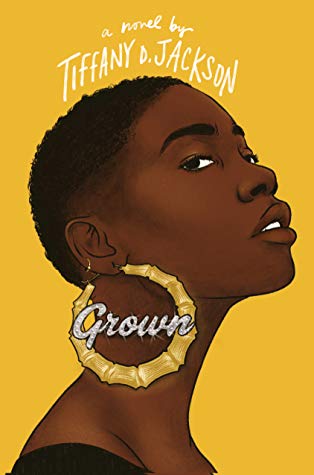
Book Review: Grown by Tiffany D. Jackson
Summary:
17-year-old Enchanted Jones has been making it work at her new highschool in the suburbs where she’s the only Black girl. She has a good reputation on the swim team, and she takes care of her little siblings after school while her mom and dad work to afford their kids’ private schooling and their new house. But what Enchanted really wants to do is sing – an idea her parents aren’t too fond of. When she goes to a reality tv show audition, she meets R&B singer Korey Fields. He takes a shine to her, but that might not be the good thing she thinks it is.
Review:
I read this book in less than 24 hours because I simply could not stop thinking about Enchanted and needed to find out what happened in her world. This book both manages to be about important issues but also doesn’t feel like it’s an “issues” book. It’s Enchanted’s story, and that happens to involve today’s issues because today’s issues are real.
This book is about a lot of things, but many of the things it’s about come right back around to how society treats Black girls. How we treat them like they are grown up, when they are still children. This book beautifully depicts how truly adolescent Enchanted is – something that many of our adolescents are not allowed to be but Black girls especially. Enchanted is interested in boys and has feelings about them but she also loves Disney movie night with her little siblings. She has big dreams of stardom but she also just misses seeing her grandmother and swimming with her in the ocean. She has typical adolescent breakthrough moments of realizing what you saw and thought was beautiful as a child might actually be something else. This book asks us to believe girls, but to believe Black girls especially, because so many others will just look at them and say “oh they knew what they were doing, they were grown.”
The book is also about how wealthy abusers groom girls and take advantage of their wealth and power to separate girls from their families. The abuse depicted in this book is realistic and depicts emotional, sexual, and physical abuse and could be a trigger, so please do note that. That said, the author depicts just enough abuse for us to know what’s going on, but it never feels gratuitous or unnecessary.
While this is YA, it has important content for adults too, especially if you regularly come into contact with adolescents. Highly recommended.
5 out of 5 stars
Length: 384 pages – average but on the longer side
Source: Library
Buy It (Amazon or Bookshop.org)
If you found this review helpful, please consider tipping me on ko-fi, checking out my digital items available in my ko-fi shop, buying one of my publications, or using one of my referral/coupon codes. Thank you for your support!
Book Review: Mambo in Chinatown by Jean Kwok (Audiobook narrated by Angela Lin)
 Summary:
Twenty-two-year-old Charlie Wong grew up in New York’s Chinatown, the older daughter of a Beijing ballerina and a noodle maker. Though an ABC (America-born Chinese), Charlie’s entire world has been limited to this small area. Now grown, she lives in the same tiny apartment with her widower father and her eleven-year-old sister, and works—miserably—as a dishwasher.
But when she lands a job as a receptionist at a ballroom dance studio, Charlie gains access to a world she hardly knew existed, and everything she once took to be certain turns upside down. Gradually, at the dance studio, awkward Charlie’s natural talents begin to emerge. With them, her perspective, expectations, and sense of self are transformed—something she must take great pains to hide from her father and his suspicion of all things Western. As Charlie blossoms, though, her sister becomes chronically ill. As Pa insists on treating his ailing child exclusively with Eastern practices to no avail, Charlie is forced to try to reconcile her two selves and her two worlds—Eastern and Western, old world and new—to rescue her little sister without sacrificing her newfound confidence and identity.
Review:
There is so much that is wonderful about this book. The incredibly depicted settings of both Chinatown and ballroom dancing. The finely nuanced and richly complicated relationships. The new adult struggles of finding and being true to yourself while still relating to your family of birth. You don’t have to be first-generation American to relate to Charlie’s struggles to reconcile her childhood world with the world she knows now. In some ways I found this to be a Chinese-American version of Dirty Dancing, and that’s a big complement since Dirty Dancing is one of my favorite movies. I also particularly enjoyed seeing a single father realistically deal with his two daughters. He sometimes does wonderfully and sometimes fails them, and their fights are realistic and full of honesty.
If you’re curious about the audiobook version, Angela Lin does an incredible job. Every single character has their own voice and her accents are full of nothing but realism and respect. It was like a well-produced radio program.The praise this book is getting is well-deserved, and if you want to immerse yourself in Chinatown, dance, and new adult issues, you don’t even need to read my review further. Just go get yourself a copy. But I do need to talk about what didn’t work for me.
*spoilers*
Charlie is dyslexic, and her father never allowed her school to officially diagnose and treat her, which led her to have poor grades and struggle with many typical entry level white collar jobs such as being an administrative assistant. Lisa in contrast is an excellent student who works after school at their uncle’s Traditional Chinese Medicine (TCM) clinic. Partway through the book, Lisa starts to have nightmares and wet the bed. She’s also been selected to apply for entry and scholarship to a highly selective private school, though, so Charlie thinks it’s probably related to that. I think the vast majority of readers will be able to quickly figure out that Lisa is being molested at the clinic. There are just way too many hints. Lisa doesn’t want to go to the clinic anymore after being good-natured about it. She starts getting jealous of Charlie whereas before she only wished for good things for her sister. And honestly bed wetting and nightmares are extremely typical symptoms of molestation.
But I don’t dislike this plot because of how obvious it was to me. I also fully acknowledge these terrible things can and do happen in otherwise average families, and I’m not against these stories being told. However, I do think it was a poor fit for the tone otherwise of the book. It felt like the idea was that there wouldn’t be enough conflict between Charlie and her family without this extra problem. Like Charlie wouldn’t have been at all worried about her sister or about leaving her family behind somehow without this other problem. I think that’s underestimating Charlie and underestimating how hard it can be to grow and change and become different from your family of origin. The rest of the book is so full of beauty and energy, whether it’s in Chinatown or in the ballroom dance rooms. Then this plot comes in and it just feels like it doesn’t belong. While I feel incredible empathy for people in Lisa’s situation, I came to resent her presence in the story because she felt kind of like olives being stuffed into a delicious lasagna. It’s not that olives are bad; it’s just that they don’t belong. I think that these were really two separate stories, and they should have been told separately.
*end spoilers*
In spite of these feelings about the dual plots, I still really enjoyed the read and would happily read another book by Kwok in the future. I also think this is a great example of a new adult read that’s mostly about the emotional experiences of your early 20s. Recommended to anyone looking to get immersed in Chinatown and ballroom.
If you found this review helpful, please consider tipping me on ko-fi, checking out my digital items available in my ko-fi shop, buying one of my publications, or using one of my referral/coupon codes. Thank you for your support!
4 out of 5 stars
Length: 384 pages – average but on the longer side
Source: Audible
 Support my work with a tip or browse my shop for curated book club guides, how to guides, cross-stitch patterns, and more!


This work by Amanda Nevius is licensed under a Creative Commons Attribution-Noncommercial-No Derivative Works 3.0 United States License.
 Opinions of a Wolf