
Archive
Book Review: The Keep by F. Paul Wilson (Series, #1) (Bottom of TBR Pile Challenge)
 Summary:
Captain Klaus Woermann isn’t a fan of the Nazis or the SS and doesn’t exactly keep this a secret. But he’s also a hero from the First World War, so the Nazi regime deals with him by sending he and a small troop to Romania to guard a pass the Russians could possibly use. They set up to guard the place in a building known as the keep. It should be a quiet assignment, but when the German soldiers start being killed one a night by having their throats ripped out, the SS is sent to investigate.
SS Major Kaempffer wishes to solve this mystery as soon as possible so he may start his new promotion of running the extermination camp for Romania. He is sure he can solve this mystery quickly.
Professor Cuza and his daughter Magda are Romanian Jews who have already been pushed out of their work in academia. They also just so happen to be the only experts on the keep. When the SS sends for them, they are sure it is the beginning of the end. But what is more evil? The mysterious entity killing the Germans or the Nazis?
Review:
It’s hard not to pick up a book that basically advertises itself as a vampire killing Nazis and the only ones who can stop the vampires are a Jewish professor and his daughter. I mean, really, what an idea! Most of the book executes this idea with intrigue and finesse, although the end leaves a bit to be desired.
The characterization of the Germans is handled well. They are a good mix of morally ethical people who are caught up in a regime following orders and see no way out (the army men) and evil men who enjoy inflicting pain upon others and are taking advantage of the regime to be governmentally sanctioned bullies, rapists, and murderers. Having both present keeps the book from simply demonizing all Germans and yet recognizes the evil of Nazism and those who used it to their advantage.
Similarly, Magda and her father Professor Cuza are well-rounded. Professor Cuza is a man of his time, using his daughter’s help academically but not giving her any credit for it. He also is in chronic pain and acts like it, rather than acting like a saint. Magda is torn between loyalty to her sickly father and desires to live out her own life as she so chooses. They are people with fully developed lives prior to the rise of the Nazis, and they are presented as just people, not saints.
In contrast, the man who arrives to fight the evil entity, Glaeken, is a bit of a two-dimensional deus ex machina, although he is a sexy deus ex machina. Very little is known of him or his motivations. He comes across as doing what is needed for the plot in the moment rather than as a fully developed person. The same could easily be said of the villagers who live near the keep.
The basic conflict of the plot is whether or not to side with the supernatural power that seems to be willing to work against the Nazis. Thus, what is worse? The manmade evil of the Nazis or a supernatural evil? Can you ever use a supernatural evil for good? It’s an interesting conflict right up until the end where a reveal is made that makes everything about the question far too simple. Up until that point it is quite thought-provoking, however.
The plot smoothly places all of these diverse people in the same space. The supernatural entity is frightening, as are the Nazis. These are all well-done.
One thing that was frustrating to me as a modern woman reader was the sheer number of times Magda is almost raped or threatened with rape, and how she only escapes from rape thanks to anything but herself. In one instance, the Nazi simply runs out of time because the train is about to move out. In another, she is saved by a man. In a third, she is saved by supernatural devices. While it is true that rape is a danger in war zones, it would be nice if this was not such a frequently used conflict/plot point for this character. Once would have been sufficient to get the point across. As it is, the situation starts to lose its power as a plot point.
The ending is a combination of a deus ex machina and a plot twist that is a bit unsatisfying. There also isn’t enough resolution, and it appears that the next books in the series do not pick up again with these same characters, so it is doubtful there is more resolution down the road. It is a disappointing ending that takes a turn that is nowhere near as powerful and interesting as the rest of the book.
Overall, this is an interesting fantastical take on a historic time period. The ending could possibly be disappointing and not resolve enough for the reader and some readers will be frustrated with the depiction of the sole female character. However, it is still a unique read that is recommended to historic fiction fans and WWII buffs that don’t mind having some supernatural aspects added to their history.
If you found this review helpful, please consider tipping me on ko-fi, checking out my digital items available in my ko-fi shop, buying one of my publications, or using one of my referral/coupon codes. Thank you for your support!
4 out of 5 stars
Length: 403 pages – average but on the longer side
Source: PaperBackSwap

Book Review: The Shade of the Moon by Susan Beth Pfeffer (Series, #4)
 Summary:
Jon Evans has spent the last two years living in an enclave as a slip — someone who received a VIP pass to get into an enclave that was originally intended for someone else. His stepmother and half brother live there as well, while his mother and older sister, Miranda, and her husband, Alex, live just outside of the enclave, working and serving it while living in filth. Jon isn’t like the rest of them. He can barely remember a time before the apocalypse of the moon being hit out of orbit. The enclave and its ways seem increasingly normal, even if he is haunted by the memories of what happened in the years between the apocalypse and the arrival at the enclave.
Review:
I was a bit startled to see that this book featured yet another new perspective, particularly after the return to Miranda’s diary in the third book. I was expecting a turn back to Alex, but instead we get Miranda’s little brother Jon’s perspective. I can understand the reasoning for this shift. Jon is the only young person from the original group living in the enclave. He is a bit of an antihero throughout most of the book, providing a unique look at the privileged elite in this post-apocalyptic society but one that could be alienating to some readers.
Whereas the first two books focused on the actual apocalypse and the third on the immediate aftermath, this book looks at the new society emerging from that wasteland, and it’s not good. It’s quite dystopian. Not everyone who enjoys apocalyptic and post-apocalyptic worlds also enjoy dystopian ones, so this is a bit of a risky move for a series, although it makes logical sense for the plot to progress this way. The dystopia that Pfeffer imagines is interesting. The elite have built up enclaves and use those who are not elite to work supporting them, basically killing themselves slowly mining coal and growing food while the elite stay safe and educated in the enclaves. It allows for a look at social class taken to the extreme while still seeming realistic within the world Pfeffer has created.
Jon also is a realistic character. He’s a bit spoiled rotten, after all, his brother, sister, and mother all routinely gave him extra food while they starved when the apocalypse first occurred. He’s the result of all the coddling they gave the youngest in an effort to keep him alive and healthiest. That said, some readers will be turned off by Jon. He’s unequivocally a jerk throughout at least half of the book before he eventually snaps out of it. While I personally enjoy a good antihero every now and then, not all readers will like visiting one, particularly after the more heroic presence of Miranda and Alex in the first two books.
There is one aspect of Jon’s character that really bothers me, and it has nothing to do with his snobbishness and antihero nature early on in the book.
*spoilers*
He lets on early on in the book that something bad happened to Alex’s sister Julie. He at one point misleads a female character to believe that he raped Julie to drive her away from him. This is done to protect her, and the reader is led to believe through this scene that Jon obviously didn’t rape Julie. Yet when we find out what actually happened, it’s not quite so crystal clear. Jon basically was making out with Julie and not stopping when she asked him to the first time. She then runs out into the storm and is killed in the tornado. Jon states that of course he would have stopped, he was just slow about it and reluctant because he didn’t think Julie’s protests were real. He thought she wanted him but wasn’t letting herself want him because of her religion. This is clearly many levels of fucked up. The reader is supposed to just believe Jon that he would have stopped because he says so? The reader is supposed to believe that Julie 100% over-reacted because Jon claims she did? It’s a squicky scene to read about, partially because it comes across as that the reader is supposed to absolve Jon from any guilt since he clearly didn’t rape Julie. He’s also upsetting because no one in the book treats this like the serious issue it is. Everyone just kind of shrugs and goes oh Julie over-reacted and goes on their merry way. Even if Jon really was about to stop when Julie ran out, he clearly needs to be spoken to about listening to your partner immediately, about seeking out enthusiastic consent, and about not victim blaming. Particularly given that this is a YA book and what an important issue this is, the way it’s glossed over left a really sour taste in my mouth.
*end spoilers*
I’m not against the presence of an antihero, including in a YA book, but I do think that Jon’s worse qualities could have been handled with a bit more deftness. His presence instead dances around the edges of certain issues, rather than drawing them out for examination within the context of a fun dystopia.
The plot gets a bit nuts, and one character in particularly has an ending that is rather anticlimactic. However, the plot does eventually move everyone into a new area of the dystopia that is quite fascinating and sets the series up well for another book that will hopefully be free of Jon’s perspective, if Pfeffer does decide to write one.
Overall, readers of the beginning of the series will enjoy seeing what ultimately happens to Miranda and Alex, although they may be frustrated to have to do it through Jon’s eyes. Jon is an antihero who may irritate some readers, and his presence brings up some issues that are then glossed over, rather than dealt with. Recommended to readers who really want to see more of Miranda and Alex who don’t mind spending some time with an antihero.
If you found this review helpful, please consider tipping me on ko-fi, checking out my digital items available in my ko-fi shop, buying one of my publications, or using one of my referral/coupon codes. Thank you for your support!
2 out of 5 stars
Length: 304 pages – average but on the longer side
Source: Library
Buy It (Amazon or Bookshop.org)
Previous Books in Series:
Life As We Knew It
The Dead and The Gone
This World We Live In
Book Review: Still Missing by Chevy Stevens
 Summary:
Annie O’Sullivan extremely forcefully declares in her first therapy session that she doesn’t want her therapist to talk back to her; she just wants her to listen. And so, through multiple sessions, she slowly finds a safe space to recount her horrible abduction from an open house she was running as an up-and-rising realtor, her year spent as the prisoner of her abductor, and of her struggles both to deal with her PTSD now that she’s free again and to deal with the investigation into her abduction.
Review:
I was intrigued by the concept of this book. Yes, it’s another abduction story, but wrapping it in the therapy sessions after she escapes was an idea I had not seen before. So when I saw this on sale for the kindle, I snatched it up. I’m glad I did, because this is a surprisingly edge-of-your-seat thriller.
Stevens deals with the potential issue of back-and-forth with the therapist by having Annie say in her first session that in order to feel safe talking about what happened to her, she needs the therapist to say very little back to her. It is acknowledged that the therapist says some things to Annie, but it appears that she waits to talk until the end of the session when Annie is done talking. What the therapist says isn’t recorded but Annie does sometimes respond to what she suggested in later sessions. This set-up has the potential to be clunky, but Stevens handled it quite eloquently. It always reads smoothly.
The plot itself starts out as a basic abducted/escaped one, with most of the thriller aspects of the first half of the book coming from slowly finding out everything that happened to Annie when she was abducted. The second half is where the plot really blew me away, though. The investigation into her kidnapping turns extremely exciting and terrifying. I don’t want to give too much away. Suffice to say that I wasn’t expecting most of the thrills to come from the investigation after the kidnapping and yet they did.
Annie is well-developed. Her PTSD is written with a deep understanding of it. For instance, she both needs human connection and is (understandably) terrified of it, so she pushes people away. Stevens shows Annie’s PTSD in every way, from how she talks to her therapist to how she behaves now to subtle comparisons to how she used to be before she was traumatized.
Other characters are well-rounded enough to seem like real people, including her abductor, yet it also never seems like Annie is describing them with more information than she would logically have.
I do want to take just a moment to let potential readers know that there are graphic, realistic descriptions of rape. Similarly, the end of the book may be triggering for some. I cannot say why without revealing what happens but suffice to say that if triggers are an issue for you in your recovery from trauma, you may want to wait until you are further along in your recovery and feel strong enough to handle potentially upsetting realistic descriptions of trauma.
Overall, this is a strong thriller with a creative story-telling structure. Those who enjoy abduction themed thrillers will find this one unique enough to keep them on the edge of their seat. Those with an interest in PTSD depicted in literature will find this one quite realistic and appreciate the inclusion of therapy sessions in the presentation.
If you found this review helpful, please consider tipping me on ko-fi, checking out my digital items available in my ko-fi shop, buying one of my publications, or using one of my referral/coupon codes. Thank you for your support!
5 out of 5 stars
Length: 411 pages – average but on the longer side
Source: Amazon

Counts For:


Book Review: The Walking Dead: The Fall of the Governor: Part One by Robert Kirkman and Jay Bonansinga (Series, #3) (Audiobook narrated by Fred Berman)
 Summary:
In the aftermath of her rebellion attempt against The Governor, Lilly Caul is starting to see him as a man who does what it takes to protect the citizens of Woodbury. So when strangers in riot gear and prison suits underneath show up at Woodbury, she believes The Governor that they’re out to get their supplies and that the woman, unprovoked, bit his ear. But not everyone believes The Governor, and The Governor starts to think he can use the doubters to his advantage.
Review:
This non-graphic novel series telling the backstory of the big bad villain of the graphic novel Walking Dead series started off incredibly strong but, unfortunately, each new entry in the series gets worse and worse. Instead of lending new light to the backstory of The Governor and Woodbury, this entry retells scenes readers of the graphic novel have already seen, simply from The Governor and other residents of Woodbury’s perspectives.
While I understand that some things readers of the graphic novel series already know may need to be briefly mentioned again for those who are only reading the print books, a sizable portion of this book features scenes already told once in the graphic novels. Many of these scenes were disturbing enough in the graphic novels, such as the scene in which Michonne is repeatedly raped and beaten by The Governor. Retelling them from the perspective of The Governor just felt unnecessary and was frankly difficult to listen to. It would have been better to have left out showing that scene again and instead showed the, well-told and well-done scene of The Governor after her rapes Michonne back in his apartment where he tries to rationalize his behavior. This lends new insight into the character without forcing the readers to, essentially, re-read.
The characterization of Lilly Caul continued to bother me. First she hates The Governor and leads a rebellion, then turns right around and becomes loyal to him? What? This makes zero sense and is never fleshed out enough to make sense. Similarly, how she handles one particular plot development feels like lazy, cliched writing of women, which bothered me.
Speaking of writing of women, while I understand that the third person narration is supposed to simultaneously be from an evil guy’s perspective, how the narrator talked about Michonne really bothered me. We are constantly reminded that she is black. She is never just “the woman” she is always “the black woman” or “the dark woman.” Her dreadlocks are mentioned constantly. Whereas white characters, Latino characters, and male characters are referred to once with descriptors about how they look, her looks are constantly described. I understand looks need to be described periodically, but this is far too heavy-handed and in such a way that it feels like the narrator feels it necessary to constantly remind the reader that she is “other” and “different from us.” Worse, she is also referred to as a “creature,” etc…, particularly during her rape scenes. I never felt Michonne was mishandled in the graphic novels. She’s a bad-ass woman who just happens to be black in the graphic novels. Here, though, the descriptions of her feel like they are exoticized, which feels entirely wrong for a book in which we mostly just see her being raped. She is depicted so animalistically, it made my stomach turn. Even when she is among her friends, the narrator feels it necessary to constantly refer to her otherness.
So what’s done well in this book? The scenes where we finally learn how the double-cross happens and see it plotted and carried out from the bad guys’ perspective is chilling and enlightening. It’s also really nice to get to actually see the scene where Michonne beats the crap out of The Governor. If other scenes had been left out, the characterization of Lilly Caul and descriptions of Michonne handled better, and the whole book tightened up (and probably part two included here), it could have been a strong book.
Overall, fans of the series will be disappointed by the repetition of scenes they’ve already seen and the overall shortness and lack of new information in this book. Some may be bothered both by how Michonne is presented in this book, far differently from how she is in the graphic novel series, as well as by seeing some of the rapes from The Governor’s perspective. Recommended to hard-core fans who feel they need to complete reading the companion series to the graphic novels.
If you found this review helpful, please consider tipping me on ko-fi, checking out my digital items available in my ko-fi shop, buying one of my publications, or using one of my referral/coupon codes. Thank you for your support!
2 out of 5 stars
Length: 256 pages – average but on the shorter side
Source: Audible

Previous Books in Series:
The Walking Dead: Rise of the Governor, review
The Walking Dead: The Road to Woodbury
Counts For:
Book Review: The Stars My Destination by Alfred Bester
 Summary:
In the future, men have discovered the ability to jaunte–to teleport from one location to the other. The only catch is that you can only teleport to a place you have previously been. This means that jauntes around the world are the domain of the wealthy who can make the journey first. In this future of teleportation and telepaths, the rich have become a hipster elite, showing off their wealth by using outmoded and and outdated methods of transportation like cars and trains.
Foyle is one of the working poor. A hand on a spaceship that has an accident, leaving him in a closet grasping to the last straws of oxygen. Another spaceship passes him by, after clearly seeing his flare, and he vows vengeance upon them if he ever escapes alive. Which he does. What follows is a tangle of intrigue across time and space.
Review:
I got this in a collection of 1950s American scifi classics from Netgalley (which I will review as a whole at a future date). I was surprised to discover that I already had this particular book on my wishlist tagged simply as a scifi classic. So I went in with an enthusiasm that was definitely well-met. This book is worth reading for the world-building alone, even if the main plot and point of the novel doesn’t particularly speak to you.
The world Bester built for this book is complex and unique. Many authors would have left the future building at the jaunting alone. These people can teleport (and some are telepaths), what more is needed? But Bester takes it out a step further. Giving jaunting a limitation allows him to further expand upon how the change impacts people and culture differently based upon their wealth. On the one hand, since jaunting is only possible if you’ve physically been to the place you want to go, it becomes a bastion of the elite who can afford to travel there first.
They would memorize jaunte stages in widening circles, limited as much by income as ability; for one thing was certain: you had to actually see a place to memorize it, which meant you first had to pay for the transportation to get you there. Even 3D photographs would not do the trick. The Grand Tour had taken on a new significance for the rich. (loc 2465)
On the other hand, the wealthy will show off that they don’t need to jaunte because they can afford outmoded means of transportation like cars and trains.
As men climbed the social ladder, they displayed their position by their refusal to jaunte. (loc 2595)
Jaunting impacts the world further with the wealthy building labyrinths so that people can’t easily jaunt within their estate and home (since you can’t jaunt someplace you can’t see). In contrast, the working poor jaunte everywhere they possibly can to save their precious time and energy. On top of all of this, there’s space travel and space colonization, complete with slavery to mine the outer planets. But even the working poor who aren’t officially slaves are still essentially slaves to the wealthy elite. It’s a nightmare of a future where a few big corporations, and thus a few families, own the majority of the wealth, power, and luxury, and are unafraid to stomp on the poor to get ever more.
It makes sense that a good plot for this world would be a poor working man out to get vengeance on the corporation that left him to die in space. But Foyle isn’t a good guy himself. At first, none of his quest for vengeance is noble or is about anything other than himself. Plus, Foyle is an animal of a man. The book clearly believes that this animal state is the fault of the corrupt imbalance of power in the world. The wealthy elite have made many of the working poor into nothing more than scrabbling animals who will take what they can get violently when they can and live based on the more baser urges. As Foyle gradually climbs the social ladder in his espionage, he slowly learns what it is to be human and develops a conscience. I’m not a fan of this idea that the poor are forced into an animal-like state by the elite. Living without luxury doesn’t make a person animal-like. A lack of moral education contributes more than anything, and that can occur at any level of wealth. Thus, although I appreciate the fact that this vengeance plot allows for us to see the entire world from the bottom up, I’m not a fan of how Foyle’s growth and change is presented.
Some readers may be bothered by the fact that Foyle early in the book rapes someone and then later earns redemption, including from the woman he raped. The rape is described as part of his animal state, and he has now risen above it. When the rape occurs in the book, it is off-screen and so subtle that I honestly missed it until later in the book when someone calls Foyle a rapist. I appreciate that Bester does not depict the actual rape, as that would have prevented my enjoyment of the book. I don’t like the idea of rape being something only done by someone in an “animal state” or the idea that it’s something a person can ever redeem themselves from. I don’t think that’s the case at all. However, this is a very minor plot point in an extremely long book. Most of my issues with it are tied into my issues with the plot overall. I was able to just roll my eyes and tell the characters that they are wrong. It’s not that hard to do when most of them are presented as evil or anti-heroes to begin with. But this plot point might bother some readers more than others.
Overall, the world building is so excellent and gets so much attention from Bester that it overshadows the more average vengeance plot with iffy morals. Readers who enjoy immersing themselves in various possible futures will revel in the uniqueness and richness of the future presented here. Those who believe firmly in punishment for crime as opposed to redemption may not be able to get past the plot to enjoy the setting. Recommended to scifi fans interested in a unique future setting.
4 out of 5 stars
Source: Netgalley

Book Review: Alien in the Family by Gini Koch (Series, #3)
 Summary:
Kitty loves being engaged to Martini, her super-sexy alien fiancee from Alpha Centaurion. But she’s not super into the whole wedding planning thing. The issue gets pushed to the forefront, though, when Martini’s estranged extended family on AC announces their intent to visit and determine the worthiness of the marriage. It seems Martini is actually royalty. Meanwhile, some new aliens crop up, and they just so happen to be Amazonian terrorists. It’s an awful lot for the Super-Being Exterminator team to handle.
Review:
This is a hard review to write, because I *loved* the first two books in the series but this one left such a sour taste in my mouth, I won’t be continuing on.
The overarching plot is good. Yes, it’s a bit ridiculous that Martini is royalty, but anyone who’s read the first two books in the series should expect and embrace the ridiculousness at this point. The added twists from the AC homeworld make the wedding plot more interesting and unique. Every wedding is unique in its own way, but this gives Kitty and Martini’s wedding a decidedly paranormal romance flair. I didn’t find the Amazonian terrorist plot particularly necessary but it was well-done and kept the action moving.
The writing continues to be tongue-in-cheek dirty wit.
I hated having to be someplace on time, it took away so many potential orgasms. (page 40)
But the relationship between Martini and Kitty gave me reason to pause this time around. They continue to have excellent chemistry, which is fun to see. But there are two glaring issues in the relationship. Martini is overly jealous, in a cartoonish, immature way. He doesn’t get jealous in a way that is sexy. For instance, he doesn’t see men looking at Kitty and hold her hand to show they’re together. He actually growls. And yells. And clearly doesn’t trust Kitty. Of course, that lack of trust could be justified since Kitty repeatedly wonders if she’s choosing to marry the right man. Not just that, she thinks about whether she should marry any myriad of her guy friends and ex-lovers. Plus, she continues to flirt with just about anyone, in spite of Martini telling her it makes him uncomfortable. These are issues that should have been worked out prior to an engagement, and they don’t bode well for a future marriage. I wouldn’t mind the issues, but the couple are presented as the ideal couple. They aren’t presented as a couple who has some issues to add some realistic drama to the story. This is paranormal romance. The main romantic couple *should* be a bit idealized, but they aren’t.
A much, MUCH bigger issue to me though is how rape is handled in the book. This comes up in two different scenes. There is a scene where Kitty is fighting some bad guys and accidentally ends up in a room with a football team visiting Vegas. Half of the team makes a very overt attempt to gang rape her, but the other half of the team (plus an alien pet Kitty picks up early in the book) puts a stop to it. Then later the leader of the rapey half of the team comes to help fight the bad guys and apologizes, and Kitty recommends that they be added to the secret forces. She shrugs off the rape attempt as everyone makes mistakes and they apologized and essentially recommends they get hired to her company. I’m ok with a heroine narrowly escaping a rape attempt, as that could happen. I’m not ok with the heroine then shrugging it off, accepting an apology, basically saying that a rape attempt is just a mistake, and trying to help the career of the attempted rapist. What. The. Hell?!
In the second scene, Kitty is hanging out with her friend, Chuckie. Chuckie is, at this point in time, her boss. He’s also her almost life-long friend, she’s had sex with him in the past, he’s asked her to marry him before, and she’s periodically wondered throughout this book if maybe she should be marrying him instead of Martini. At the end of their conversation, they’re getting ready to go, and this happens:
He [Chuckie] took my [Kitty’s] shoulders and turned me around. “God, it’s as bad from the back. Really, go put on some clothes.”
“I don’t have a wrap, okay?”
“Find one. Before I rape you.” He gave me a gentle push toward the bedroom.
“Fine, fine.” (page 434)
So, Kitty’s friend: A) judges her clothing and deems it immodest B) orders her to change her outfit C) casually jokes about raping her D) victim blames rape victims with his comment implying clothing causes rape. And of course Kitty just takes this all in stride and doesn’t see anything at all inappropriate about what Chuckie says.
There is just far too much casual boys-will-be-boys acceptance of rape and rape culture in this book that supposedly features a strong female lead and *romance*. And a wedding! Paranormal romance fans deserve better. Men deserve to be treated as not mindless animals who will tackle anything in a sexy dress. Women deserve better than to be blamed for rapists’ behavior. Toss in the relationship issues between Martini and Kitty, while the relationship is treated by the book an ideal one, and no amount of sexy humor, wedding dresses, and aliens could save it for me. I’m very disappointed in the turn this series took. If you’re interested in the series, I would recommend reading the first two and stopping there.
2 out of 5 stars
Source: Amazon

Previous Books in Series:
Touched by an Alien
Alien Tango
Book Review: Tracking the Tempest by Nicole Peeler (Series, #2) (Audiobook narrated by Kate Reinders)
 Summary:
Things have gotten interesting since Mainiac Jane True found out she’s half selkie. She discovered the whole world of supernatural beings, started training and honing her own powers with the help of a local goblin, and of course met and started dating the sexy vampire Ryu. After being caught up in the mystery that was a supernatural person killing halflings, Jane really just wants to focus in on power honing and Ryu. Particularly with Valentine’s Day approaching. But when she goes down to Boston for her first visit to his home, she ends up getting caught up in his current investigation. Going after a dangerous halfling who just escaped from an illegal lab.
Review:
I enjoyed the first entry in this series as a surprisingly humorous paranormal romance set in the unusual (for pnr) setting of Maine. So when I needed a new audiobook for a roadtrip and saw this lounging on audible, I snatched it up. I kind of regret that choice because not only did I enjoy this entry in the series less but I also apparently misremembered how well I liked the first book in the series. I only rated it as 3.5 stars but remembered enjoying it at at least 4. Hindsight is not always 20/20. Essentially, everything that kinda sorta rubbed me the wrong way in the first book got worse instead of better, and the things I liked became worse as well.
The humor takes a nosedive. Whereas the first book deftly handled a dry New England sense of humor, here things turn mean and inappropriate. Jane laughs at things she shouldn’t laugh at and invites the reader to as well, and it becomes deeply awkward. Like hanging out with a friend who thinks they’re funny but is in fact offensive.
I was excited to see what Peeler did with Boston, and I admit some things she handled well. She nailed the neighborhood of Allston, for instance, but she also put Ryu’s home in Bay Village. Ryu is supposed to be a wealthy vampire, but instead of putting him in Beacon Hill or a wealthy suburb like Cambridge or Newton, she puts him in a neighborhood that is actually a lower to middle class neighborhood that is slowly being gentrified. That’s not where a home like Ryu’s supposedly is would be located. This is a neighborhood that border the Massachusetts Turnpike (noisy big road, for non-Americans). It’s not the mecca of wealth that Peeler seems to think it is. A big mistake like that is rather jarring when she got details like how the exit of the T in Harvard Square is called the Pit, a bit of knowledge even some locals don’t have. On the other hand, she seems to think that the Boston Public Garden closes at night and has a big scene where Ryu takes Jane there on a romantic late-night date. Um. No. The Garden doesn’t close at night. It is, however, full of people trying to sell you drugs. Yes, yes, ideal for a romantic date. This unevenness in knowledge of Boston and its surrounding areas made reading the setting uncomfortable and awkward.
The issue of Ryu being an obvious jerk continues. It’s clear from the beginning of the book that a break-up is coming and Jane is being set up with another character. It’s kind of annoying for the book to be this predictable, but it is paranormal romance, and Jane does ultimately stand up for herself, so I was ultimately ok with this. In fact, the way Jane stands up for herself is handled so well that it saved the book from getting 2 stars instead of 3.
The last, and most important, thing that made the book deeply upsetting for me was the fact that Jane is not once but twice put into a situation where she is about to be raped. Rape comes up a lot in paranormal romance and frankly it bothers me. These are worlds in which women are powerful, talented, and often gifted with great gifts. So why must their confrontations so frequently devolve into threatened or real rape? I get it that rape is a very real thing in the real world, and I am completely fine with it existing as a plot point in horror, dystopian or post-apocalyptic scifi, and mysteries. Horror is supposed to push the boundaries of comfort. Dystopian and postapocalyptic scifi is frequently presenting humanity at its worst, and rape is one of the worst. Mystery needs a victim, and frequently murder victims are also raped. But in a battle between supernatural creatures in a book that is supposed to be a romance suddenly tossing in rape as a weapon doesn’t read right. It removes so much agency from the main female characters. Like, what, she’s always easily defeated because you can just threaten to shove your dick into her against her will and suddenly she will acquiesce to your viewpoint? It’s paranormal romance. Why can’t the paranormal world have fights where rape threats and attempted rapes aren’t a thing?
What really bothered me about the second scene this happened in with Jane is the level of victim blaming that happens as well. Jane has just successfully escaped from the first rape attempt. She saves herself. This is great, and she does it with a mixture of trickery and violence that is commendable. But then a man shows up and immediately takes over. He says he needs to protect her; he’s going to walk her out of this situation. Jane insists she needs to pee. She goes to pee, against his protests, and when she comes back out, he’s gone because another group of villains have him, and Jane starts to be attacked by a known violent rapist. She later blames herself for having to go pee, and no one argues with her that she has every right to pee when she needs to. So we have a powerful halfling who can’t go pee by herself because she might get attacked and raped? That is so incredibly victim blaming and putting all the responsibility for safety on the woman that I can’t even properly articulate how angry it makes me.
Kate Reinders, the narrator, mostly does a good job. She lands the complex voice of Jane quite well. The only negative I can say is that she mispronounces some New England words and city names. But her narration did make the book more enjoyable for me.
Combine these issues (aside from the audiobook narration which was fine) together with the fact that the plot is basically the previous book’s plot flipped in reverse (violent halfling killing supernatural people instead of supernatural person killing halfling), and I can safely say I won’t be continuing on in the series. The only thing that saves the book from a lower rating is the fact that Jane ultimately does stand up for herself. But for me it was too little too late. Not recommended. Unless you enjoy bad humor, awkward settings, and rape threats and victim blaming of the heroine.
3 out of 5 stars
Source: Audible

Previous Books in Series:
Tempest Rising
Book Review: Half of a Yellow Sun by Chimamanda Ngozi Adichie (Audiobook narrated by Robin Miles)
 Summary:
The Nigerian-Biafran War (or the Nigerian Civil War, as it is also known) is seen through the intertwining lives of four different people. The daughter of a wealthy Igbo couple, Kainene, with a fierce business sense. Her fraternal twin sister, who is also the beautiful one, Olanna, an academic in love with a revolutionary-minded man named Odenigbo. Kainene’s boyfriend then fiancee, the white English writer Richard. And Ugwu. Olanna’s houseboy who came to them from a rural village. Their lives are irreparably impacted, and in some cases destroyed, by the war for a cause they all believe in, but that the world largely ignores.
Review:
I originally intended this Nigerian book to be my final read for the Africa Reading Challenge 2012, but even though I started it in November, the audiobook took over three months to get through, so it ultimately missed counting for the challenge. I thought it was much longer than my usual audiobook fare, but a quick check of the listen length shows that it is 18 hours and 56 minutes long, which is only about 7 hours longer than my norm. So why did it take me so long to finish? Well, I just didn’t enjoy it that much.
I believe I was expecting something else from Adichie, since I had previously read her book Purple Hibiscus
As far as the plot goes, it was interesting but it was a bit confusing. Part of my confusion could have been because I listened to it, but from my understanding when I was listening, first there was an affair, then we jumped back to before the affair, then we jumped forward, then we jumped back to a different affair that came before the first affair. It was profoundly confusing. Particularly with a child referred to only as Baby (with no explanation about this for quite some time) who also randomly shows up and disappears. There was already so much going on with four different main characters and the war that this non-linear plot felt unnecessarily extraneous and confusing. However, it is possible that this plot is more clear when reading the print version, as opposed to the audio version.
The language of the writing itself is pretty, and I found periodic astute insights that I’ve come to expect and enjoy from Adichie. For instance,
Why do I love him? I don’t think love has a reason. I think love comes first, and the reasons come later.
Passages like these are what helped me enjoy the book to the extent that I did.
There is one plot point in the book that truly distressed me, so I feel I must discuss it. It is a spoiler though, so consider yourself spoiler warned for this paragraph. Throughout the book, the narration style is third person limited, which means that it is told in third person, but the reader knows what is going on in the main character’s head and is generally limited to that character’s perspective. The point of view is switched around among the four main characters, one of whom is Ugwu, the houseboy. We thus get to know him as the houseboy, he gradually grows up, and then later he is conscripted into the Biafran army. At this point, he participates in a gang rape on a waitress in a bar. I read a lot of gritty things. I routinely read books offering up the point of view of sociopaths or serial killers. I’m not averse to seeing the world through a bad person’s eyes, or through the eyes of a person who does bad things. But it has to be handled in the appropriate manner. I felt that there was entirely too much empathy toward Ugwu in the case of the gang rape. Adichie sets it up so that he walks in on his fellow soldiers gang raping this woman, and he says he doesn’t want to participate, they question his manhood, he admits in his head that he is turned on by the view of her pinned to the ground crying with her legs held apart having just been raped by a different soldier, and he participates. I think what disturbed me the most about this passage was how the narration makes it seem so ordinary. Like it’s something any man would do in that situation. Like it’s only natural he’d be turned on and get a hard-on from seeing a woman forcibly pinned to the ground so she can be gang raped by a bunch of men including himself. I think it’s awful to treat men like that. To act like they clearly are incapable of standing up for what’s right or that they’ll get a hard-on any time they see an orifice they can physically bang. Men are human beings and are entirely capable of thinking with more than their penis. Now, obviously there are men who rape, but there has got to be more going on there then I have a hard on and there’s a woman who I can stick it into. To treat rape that simply is a disservice to men and women’s humanity alike. Part of the reason why this reads this way is that we don’t know Ugwu well but we know him well enough to think that he’s an at least moderately decent young man. We don’t see a gradual downfall. No one holds a gun to his head or even implicitly threatens him with death if he doesn’t participate. It makes it seem like war makes men, even moderately good men, rape, as opposed to war simply providing more opportunities for rapists to rape. That is a perspective that I do not endorse, that I do not enjoy having sprung upon me in my literature, and that I found triggering as well. I was shocked to see it in a book by Adichie. Shocked and disappointed. It left me wishing I could scrub my brain of the book. Wishing for those hours of my life that I spent listening to it back.
Now, let me take a moment to speak about the narrator, Robin Miles. Miles is an astounding narrator. Her audiobook narration is truly voice acting. She is capable of a broad spectrum of accents, including Nigerian, British, and American, and slips in and out of them seamlessly. She easily creates a different voice for many different characters. I absolutely adored listening to her, in spite of not enjoying the book itself. Her performance of this book is easily a 5 star one.
Overall, though, the high quality narration simply could not make up for a story that failed to hit the mark with me on so many levels. It covers an important time period in Nigeria, and the highly important human rights issue of the genocide of the Igbo, but the style in which it does simply misses the mark for me. If this was all, I would still recommend the book to others who are more fond of a more impersonal, sweeping narration style. However, I also found the treatment of rape in the book to be simultaneously offensive and triggering. For this reason, I cannot recommend this book, although I do recommend the audiobook narrator, Robin Miles.
2 out of 5 stars
Source: Audible

Book Review: The Loving Dead by Amelia Beamer
 Summary:
When Kate saves her bellydancing instructor from a random assault in the parking lot then brings her home to a party at her house full of 20-somethings, she doesn’t expect much to come of it. But before she knows it, she finds herself inexplicably attracted to her…not to mention tying her up for some BDSM. That’s unexpected enough, but when Jamie and others turn pasty gray and start craving human flesh, Kate and her roommates find the world falling apart around them. Thanks to an STD-style zombie plague.
Review:
Zombie erotica is its own special kind of erotica, and this is not the first of its kind that I have read. Zombie erotica basically consists of….zombies and erotica. Also punny titles. The title is definitely the best part of this book. Everyone I said it to when they asked what I was reading totally cracked up. The basic concept is rather ordinary, and the execution, while it has a few laughs, is mostly ho-hum.
Making the zombie plague an STD is a logical leap. Many illnesses spread sexually, and often they spread before there are any visible symptoms. In fact it’s a great way to spread an illness because of the amount of *ahem* proximity between carrier and the previously healthy person combined with the fact that people almost always will be having sex. Toss in that the virus amps up attractiveness and/or promiscuity, and you’ve really got an epidemic. The problem, of course, is that at some point the carriers have to actually turn into zombies. Beamer handles this transition moderately well. It is eventually understood that the carriers are basically irresistible crack-cocaine to the nearby uninfected, so that even if they know this person is about to turn into a zombie, they will still hook up with them.
It’s unfortunate that such a creative zombie plague is wrapped in a mostly ho-hum storyline that only becomes interesting when it becomes borderline offensive. For the most part the story features two of the roommates in a household of 20-somethings approaching the zombie apocalypse getting separated early on, approaching the zombie apocalypse in their own way, then working to get reunited. Michael tries to pull the household together when Kate abandons ship pretending that nothing is happening to keep her “date” with an older man that is actually more of a sugar daddy appointment. Michael’s storyline is fairly straight-forward and believable, whereas Kate’s quickly goes off the rails. I also am not sure that I’m a fan of the whole writing her as a huge slut who winds up having to pay for her crimes whereas Michael is the golden guy thing. I don’t think Beamer intended it be read that way, but it certainly does not come across as sex positive.
The other part of the storyline that bothered me is that there is a rape. Now. I am not against rape as part of the plot in anything but erotica. It is a crime that happens and pretending like it doesn’t happen is bizarre. But rape in erotica is an entirely different ballgame. Erotica is all about turning on the reader, and I do not condone using a very real rape to turn a reader on. Clearly two consenting adults can agree to act out a scene of non-consent if they wish, but within the book, this is not a consenting scene of non-consent. There is no prior discussion, no safeword. The character is definitely raped. To me it is no different from tossing in a pedophilia scene. It is an awful, heinous crime, and it shouldn’t be running around turning people on. When a book’s entire point is to turn people on, it should definitely not be all up in my erotica.
All of that said, I must still admit that the book is well-written. It is engaging with a unique plot. I truly feel it is a book that each reader must decide upon for themselves, but I do hope that readers will come into it better informed than I was, knowing about the questionable sex positivity and the rape content.
2.5 out of 5 stars
Source: Amazon

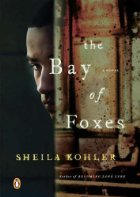
Book Review: The Bay of Foxes by Sheila Kohler
 Summary:
Dawit is a twenty year old Ethiopian refugee hiding out illegally in Paris and barely surviving. One day he runs into the elderly, famous French writer, M., in a cafe. Utterly charmed by him and how he reminds her of her long-lost lover she had growing up in Africa, she invites him to come live with her. But Dawit is unable to give M. what she wants, leading to dangerous conflict between them.
Review:
This starts out with an interesting chance meeting in a cafe but proceeds to meander through horror without much of a point.
Although in the third person, we only get Dawit’s perspective, and although he is a sympathetic character, he sometimes seems not entirely well-rounded. Through flashbacks we learn that he grew up as some sort of nobility (like a duke, as he explains to the Romans). His family is killed and imprisoned, and he is eventually helped to escape by an ex-lover and makes it to Paris. This is clearly a painful story, but something about Dawit in his current state keeps the reader from entirely empathizing with him. He was raised noble and privileged, including boarding schools and learning many languages, but he looks down his nose at the French bourgeois, who, let’s be honest, are basically the equivalent of nobility. He judges M. for spending all her money on him instead of sending it to Ethiopia to feed people, but he also accepts the lavish gifts and money himself. Admittedly, he sends some to his friends, but he just seems a bit hypocritical throughout the whole thing. He never really reflects on the toppling of the Emperor in Ethiopia or precisely how society should be ordered to be better. He just essentially says, “Oh, the Emperor wasn’t all that bad, crazy rebels, by the way, M., why aren’t you donating this money to charity instead of spending it on me? But I will tooootally take that cashmere scarf.” Ugh.
That said, Dawit is still more sympathetic than M., who besides being a stuck-up, lazy, self-centered hack also repeatedly rapes Dawit. Yeah. That happened. Quite a few times. And while I get the point that Kohler is making (evil old colonialists raping Ethiopians), well, I suppose I just don’t think it was a very clever allegory. I’d rather read about that actually happening.
In spite of being thoroughly disturbed and squicked out by everyone in the story, I kept reading because Kohler’s prose is so pretty, and I honestly couldn’t figure out how she’d manage to wrap everything up. What point was she going to make? Well, I got to the ending, and honestly the ending didn’t do it for me. I found it a bit convenient and simplistic after the rest of the novel, and it left me kind of wondering what the heck I just spent my time reading.
So, clearly this book rubbed me the wrong way, except for the fact that certain passages are beautifully written. Will it work for other readers? Maybe. Although the readers I know with a vested interest in the effects of colonialism would probably find the allegory as simplistic as I did.
2 out of 5 stars
Source: Netgalley
Counts For:
Specific country? Ethiopia. South African author.

 Support my work with a tip or browse my shop for curated book club guides, how to guides, cross-stitch patterns, and more!


This work by Amanda Nevius is licensed under a Creative Commons Attribution-Noncommercial-No Derivative Works 3.0 United States License.
 Opinions of a Wolf