
Archive
Book Review: Soul Surfer: A True Story of Faith, Family, and Fighting to Get Back on the Board by Bethany Hamilton

A powerful disability memoir about faith, resilience, and healing after a shark attack.
Summary:
They say Bethany Hamilton has saltwater in her veins. How else could one explain the passion that drives her to surf? How else could one explain that nothing—not even the loss of her arm—could come between her and the waves? That Halloween morning in Kauai, Hawaii, Bethany responded to the shark’s stealth attack with the calm of a girl with God on her side. Pushing pain and panic aside, she began to paddle with one arm, focusing on a single thought: “Get to the beach….” And when the first thing Bethany wanted to know after surgery was “When can I surf again?” it became clear that her spirit and determination were part of a greater story—a tale of courage and faith that this soft-spoken girl would come to share with the world.
Soul Surfer is a moving account of Bethany’s life as a young surfer, her recovery after the attack, the adjustments she’s made to her unique surfing style, her unprecedented bid for a top showing in the World Surfing Championships, and, most fundamentally, her belief in God. It is a story of girl power and spiritual grit that shows the body is no more essential to surfing—perhaps even less so—than the soul.
Review:
In many of the circles I’m in, “recovery” means recovery from addiction. But it can also mean recovery from trauma—and for many of us (studies suggest around 75%), those things are intertwined. That’s part of why memoirs about recovering from trauma resonate so deeply with me. I’m especially drawn to the ones that focus not on the traumatic event itself, but on the response to it—the healing, the resilience, the rebuilding. This is that kind of memoir.
I remember when the news broke in 2003: a teenage surfer in Hawaii had lost her arm to a shark attack. I was in high school myself, and even though I lived in Vermont (far from any waves), I immediately felt heartbroken for her, losing not just a limb, but the ability to pursue something she loved. Years later, when I learned Bethany was not only surfing again but competing professionally, I was stunned—and moved.
Bethany knows that readers will come to her story expecting to read about the shark attack, and she doesn’t shy away from it. But she also doesn’t sensationalize it. It’s described early in the book with striking clarity and calm. There’s no melodrama—just presence, perspective, and truth. It’s a credit to both her and her editorial team that this tone is preserved. Her calm focus in the water (“Get to the beach…”) is echoed in how she writes.
What carries Bethany through, more than anything, is her deep faith. She was a girl of faith before the attack, during recovery, and continues to lean on her faith throughout her life. Her story isn’t preachy, but it is grounded in that spiritual strength. Her family, too—supportive parents and brothers—play a major role, along with a strong friend group that surrounds her in the aftermath.
One of my favorite moments in the book is her description of working with a blind therapist during her recovery. That peer connection—being guided by someone who also lives with a disability—felt powerful and familiar. Coming from the world of recovery, I saw that moment as a type of peer support. Rather than being told how to heal by someone without shared experience, Bethany was supported by someone who understood. It’s a powerful reminder of why peer-based healing matters.
Bethany also takes care to honor Hawaiian culture. As a white surfer growing up in Hawaii, she shares what she’s learned about the Indigenous roots of surfing, respectfully credits Hawaiian words and traditions, and speaks with admiration about her Hawaiian coach. This kind of cultural awareness—especially in faith-based memoirs—is both rare and welcome.
Later in the memoir, she explores what it was like to become famous almost overnight. From media appearances to a Hollywood movie adaptation, Bethany shares the highs and lows with honesty—including awkward encounters with strangers and challenging public questions.
I listened to the audiobook, which includes a charming guitar riff at the end of each chapter—a small touch that added to the overall tone and kept me engaged.
Overall, this is an uplifting, engaging memoir of trauma, recovery, and spiritual grit. It doesn’t just tell the story of a shark attack. It tells how we can recover. If you’re interested in memoirs, faith-based stories of resilience, or narratives about disability and healing, this one’s worth the read.
If you found this review helpful, please consider tipping me on ko-fi, checking out my digital items in my ko-fi shop, buying one of my publications, using one of my referral or coupon codes, signing up for my free microfiction monthly newsletter, or tuning into my podcast. Thank you for your support!
4 out of 5 stars
Length: 222 pages – average but on the shorter side
Source: Library
Buy It (Amazon or Bookshop.org)
Book Review: Sula by Toni Morrison

A lyrical and haunting novel about two Black women whose lifelong friendship is tested by betrayal, love, and the weight of their small-town community’s judgment.
Summary:
Sula and Nel are two young black girls: clever and poor. They grow up together sharing their secrets, dreams and happiness. Then Sula breaks free from their small-town community in the uplands of Ohio to roam the cities of America. When she returns ten years later much has changed. Including Nel, who now has a husband and three children. The friendship between the two women becomes strained and the whole town grows wary as Sula continues in her wayward, vagabond and uncompromising ways.
Review:
This was my second Toni Morrison novel—the first being The Bluest Eye, which I read back in college. Morrison’s prose is deeply lyrical, which makes her books swift reads on the surface, even when they delve into painful and challenging themes. Sula is no exception.
Each chapter is titled with the year it takes place in, but only covers a brief vignette from that year. Despite spanning several decades, this is a short novel, structurally and in page count. Though the title suggests a singular character focus, Sula is as much about a place—the Bottom, a Black neighborhood in a Southern state situated on the hillside, land the white residents had no interest in. The reason for its ironic name is revealed in the first chapter through a racist tale, setting the tone for the book’s critique of systemic racism.
Indeed, one of the novel’s most striking accomplishments is how clearly it shows that systemic racism ruins lives, whether characters comply with social expectations or resist them. For me, Nel represents compliance while Sula represents defiance—yet neither of them leads a life free from pain. Every person in their orbit suffers in some way, and that suffering is deeply entangled with the racist systems surrounding them.
The edition I read included an introduction in which Morrison writes: “Female freedom always means sexual freedom, even when—especially when—it is seen through the prism of economic freedom.” While I respect Morrison’s craft, I don’t personally agree with this framing. Throughout the book, the freest female characters are also the most sexually unrestrained, choosing partners without regard to consequences. For me, this reflects the central tensions I’ve often felt when reading Morrison’s work: I recognize the literary prowess but don’t agree with this belief. As someone who values intentionality in relationships and ethical sexuality, I believe there is freedom in discernment. My personal worldview differs from Morrison’s here, and I think that’s worth naming—especially since this quote helped me finally articulate why I sometimes feel at odds with what I’m “supposed” to take away from her narratives.
Of course, I also acknowledge that I am not Morrison’s intended audience. She has stated clearly that she writes for Black people—and I am a white woman. I honor that intention, while also appreciating the beauty, lyricism, and cultural specificity of this novel. Morrison evokes a place, a time, and a community with precision and poetry, showing rather than telling how racial injustice permeates generations.
For readers in recovery, or those who love someone with substance use disorder or alcohol use disorder, be advised that this book contains a disturbing scene involving the violent death of a character who struggles with addiction. A mother sets her son on fire, intentionally killing him because of his drug use. It’s a horrific and deeply stigmatizing portrayal. While I understand that literature doesn’t require characters to always make the “right” choices, scenes like this can be deeply harmful and may reinforce stigma around addiction. To anyone reading this who is struggling: You don’t deserve to die. You are not disposable. You can recover. We do recover. I acknowledge that the story is set in a time when resources for addiction recovery were nearly nonexistent, especially for a Black man. But violence is never the answer, and stories like this can perpetuate dangerous beliefs about addiction and worth.
With regards to diversity, the book explores colorism in the Black community, as well as racism faced by Black folks coming from immigrant white communities. It has multiple characters who fought in World War I who struggle with mental health afterwards. It also has a character who uses a wheelchair and is missing a limb. There is not any LGBTQIA+ representation that I noticed.
This is a novel that quietly devastates, not through high drama, but through its unflinching portrayal of how systemic racism, personal grief, and societal expectations shape lives over time. It’s beautifully written, deeply character-driven, and emotionally complex. Whether or not you’re part of Morrison’s intended audience, Sula is a compelling and powerful read. If you’re in recovery or close to someone who is, approach with care due to the painful and stigmatizing depiction of addiction. For those looking for fiction that treats mental health and recovery with care, check out my novel Waiting for Daybreak.
If you found this review helpful, please consider tipping me on ko-fi, checking out my digital items in my ko-fi shop, buying one of my publications, using one of my referral or coupon codes, signing up for my free microfiction monthly newsletter, or tuning into my podcast. Thank you for your support!
3 out of 5 stars
Length: 174 pages – average but on the shorter side
Source: Library
Buy It (Amazon or Bookshop.org)
Get the Book Club Discussion Guide
A beautifully graphic designed 2 page PDF that contains: 1 icebreaker, 9 discussion questions arranged from least to most challenging, 1 wrap-up question, and 3 read-a-like book suggestions
View a list of all my Book Club Guides.
Book Review: Love on the Menu by Mimi Deb

A London romcom whose meet-cute is a get your life together list accidentally dropped in a take-out bag leading to notes being passed back and forth.
Summary:
Gia thrives on risks. Ben plays it safe.
She crossed continents to chase her London dream; he works the same job in the same restaurant, night after night.
Then fate steps in. When Gia’s takeout is delivered, her embarrassing list of New Year’s resolutions accidentally makes its way to Ben’s restaurant, stuck to the bottom of a delivery backpack.
With each delivery Gia orders, Ben slips in a note of his own and eagerly awaits her reply. One by one, these notes transform their lives in unexpected ways, and an unlikely love story is written.
Review:
The only thing I can say without spoilers was I loved the meet-cute idea but ultimately disliked both halves of the pairing. The rest of this review will contain spoilers.
I didn’t know when I requested this book that Ben, the love interest, is in long-term recovery (5 years plus) from alcohol. As a sober person myself, when I realized this about the love interest, I was ecstatic to see that representation. It’s what kept me hanging on after a shaky opening that I’ll talk about in a moment. But ultimately the representation left me disappointed. Plus I wound up not liking Ben. So let’s get into it.
First, the opening chapter. Gia gets drunk at a work event and accidentally kisses her boss while dancing. How, you ask? I’m still confused by it. She was doing the Single Ladies dance, they were dancing back-to-back, and when she jumped to turn 180 degrees, her lips landed on her boss’s. I do not think this would actually be possible to do without either bonking noses or hitting teeth together.
Now I need to explain a bit about the plot to talk about what didn’t work for me. So, after this, she convinces herself she’s about to lose her job and writes the get your life together list Ben ultimately finds. When she returns to work after the holidays, she becomes convinced that her boss is out to get her, thanks partially to her work-friend, Jay’s warnings. They are both immigrants. She immigrated from India, and he from China. He explains that the boss can’t legally fire her for such a thing in Britain but she can set her up to fail by giving her too much responsibility then a warning then a firing. When she does suddenly get more responsibility at work, she becomes convinced this is what is happening. Meanwhile she keeps ordering delivery from a local Indian takeaway that reminds her of home, plus she’s getting to exchange cute notes with one of the employees, Ben, through them. He coaches youth football on the weekends and has a large and loving family. Ben becomes enamored with Gia. Eventually they get a chance to meet when she needs a caterer for a big important work event.
Gia repeatedly drinks too much throughout the book. I was ok with this at first because I thought maybe she would have an ah-hah moment and cut back (or stop entirely). But she doesn’t. She thinks maybe she should. She puts it on her list. (Heartbreakingly the list at the ends says: “Don’t Drink. Drink less. Drink responsibly.”) But then she doesn’t actually do it. She even continues binging up through her marathon run. Her mother at one point in the last chapter says to her boss that Gia drinks too much. The boss agrees. And Gia blows it off. In the last chapter! There’s nothing I can root for with a person in long-term recovery getting together with someone with an active alcohol problem that’s bad enough that their family and boss have noticed and yet they won’t acknowledge it.
There is a giant reason I don’t think Ben is right for Gia either. Essentially, when Ben was in the throes of his addiction, he made some choices that led to an immigrant getting fired from his brother’s company. Instead of standing up for the guy and taking responsibility for what happened that night, Ben let him be fired and then took his job (only to quit it a few weeks later). Everyone makes mistakes, and I’m ok with a hero being imperfect. But later – five years later – when this comes up, he says, “Why didn’t he just get another job?” and “Why do you make looking for a job sound like a marathon?” This was a very heartless thing to say. It’s even more heartless given that Ben knows that Gia is also an immigrant whose ability to stay in London is tied to her employment which she at that moment feels is precarious. Ben never actually apologizes for this. He reads Gia a letter in which he talks about how wonderful she is, but he never apologizes for how flippantly he regarded the immigrant work situation.
These two people don’t belong together, and that is what left me feeling sour at the end. I don’t see a HEA or even a HFN but the first few seconds of a train wreck.
So, while the meet-cute was adorable, and I loved seeing diversity both in race and mental health in this book, I ultimately felt that the two leads did not belong together, although with some different plot directions, they could have been. Ben could have made a real apology and done something to try to make up for his lack of compassion for immigrants. Gia could have realized she had a problem with alcohol and taken Ben up on the offer to hook her up with a sponsor. If these two conditions were met, there could have been a very cute one year later they get together with a new meet-cute epilogue. But instead the book just swept the important issues under the rug with a Beyonce song at the end.
If you found this review helpful, please consider tipping me on ko-fi, checking out my digital items available in my ko-fi shop, buying one of my publications, or using one of my referral/coupon codes. Thank you for your support!
3 out of 5 stars
Length: 416 pages – average but on the longer side
Source: NetGalley
Buy It (Amazon or Bookshop.org)
Book Review: The Sentence by Louise Erdrich
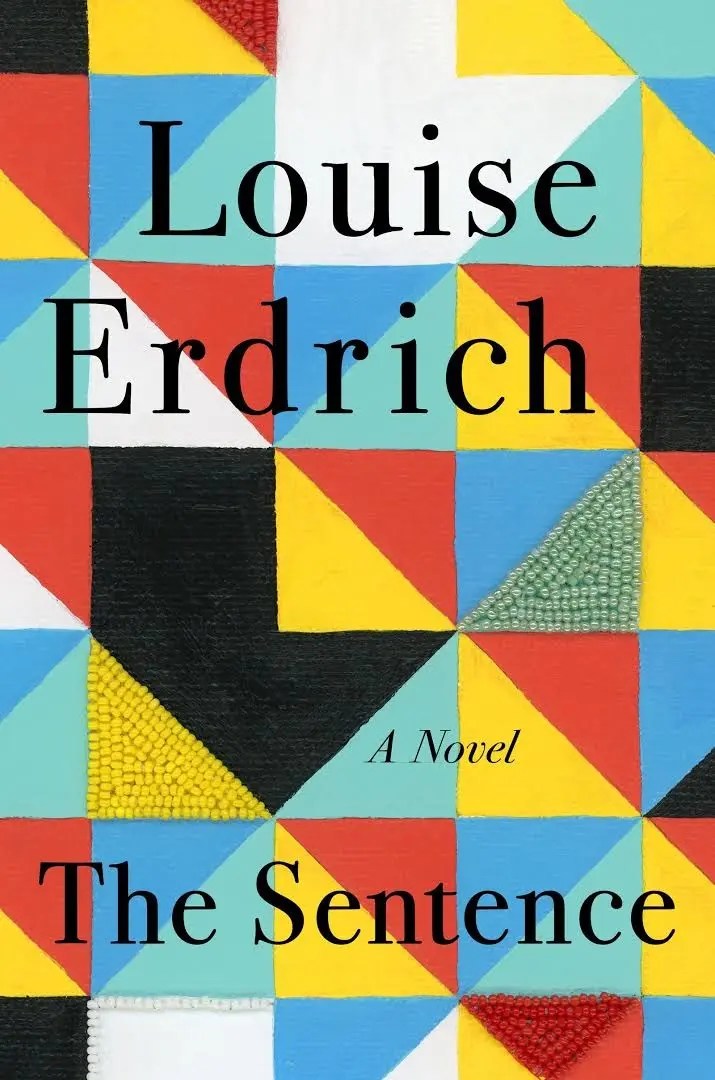
A previously incarcerated Indigenous woman loves her job at an independent bookstore focused on Indigenous literature right up until the store’s most annoying customer dies and begins haunting it.
Summary:
A small independent bookstore in Minneapolis is haunted from November 2019 to November 2020 by the store’s most annoying customer. Flora dies on All Souls’ Day, but she simply won’t leave the store. Tookie, who has landed a job selling books after years of incarceration that she survived by reading with murderous attention, must solve the mystery of this haunting while at the same time trying to understand all that occurs in Minneapolis during a year of grief, astonishment, isolation, and furious reckoning.
Review:
It’s a good thing I didn’t see that this book is magical realism or I wouldn’t have picked it up. You see, I had a serious misunderstanding of what magical realism is and thought I didn’t like it. In fact, I like it very much. I only wish I had first been introduced to it by the excellent explanation from Master Class originally. I’m excited that this book has helped me see past the magical realism label.
The thing that I love structurally about this book is how the title has so many different meanings. There’s the sentence that Tookie serves for her crime. There’s the sentence found within the book that Flora is reading when she dies. And there’s many other sentences throughout the book. I love when one title has many meanings.
The book starts with Tookie thinking back briefly on her incarceration and what landed her there. Part of what made the beginning so readable was how Tookie told this story. It was like speaking with a friend about a piece of their past. Raw and real but quick and to the point. It got me invested in the book right away. Then we jump to Tookie’s present, working in the bookstore, and the haunting, and this is utterly engaging right away as well. Tookie is flawed but so relatable. I think most readers will find her to be this way because she’s such a huge reader herself.
I also found her relatable because she’s in long-term recovery. I like how she sometimes thinks about how she was but it’s not like any single bad day gives her an urge she has to fight. A lot of times in literature and movies only early sobriety is shown, and the fact is, the experience in long-term recovery is different. I was so glad to see that in Tookie, and to see her breaking the multi-generational disease. But I also appreciated the very realistic depiction of her being concerned about talking about the haunting with her husband, Pollux, for fear he would think she had relapsed. I also should mention that both Tookie and her niece are bisexual. Their sexual fluidity is never judged or questioned. It’s just a part of who they are, which I really appreciated.
The book centers around a difficult question that it doesn’t provide answers for. Flora is a “wannabe Indian.” She’s a white woman who claims Indigenous heritage based on one photo she says is of a great-grandparent. The Indigenous community is dubious but doesn’t want to tell her she can’t belong. She spends much of her life working for the betterment of Indigenous people, including even taking in an unhoused teenager and caring for her so much that when she’s grown she refers to her as mother. So everyone has complex feelings about her. There are also some scenes that show white people behaving in offensive ways and smoothly depict how hard it is for Indigenous people to deal with these aggressions on a regular basis. One that really stuck in my mind was the white woman who shows up at the Indigenous bookstore and talks about her grandmother reassembling Indigenous bones she found on her land and winning a blue ribbon for it. She doesn’t understand why this is offensive to the Indigenous people she’s speaking with. To me the examples like this throughout the book demonstrate two types of white people who are hurtful to Indigenous people. The book is never preachy with these scenes. They come across as very realistic depictions of, unfortunately, regular interactions between Indigenous people and white people. If you yourself aren’t sure why these two types of interactions are hurtful, then I think this book would show you.
I wasn’t sure how I would feel reading a fictional book set during the first year of the pandemic. Overall, even though Tookie’s experiences and mine were different from each other (she was much older than me and had an essential worker, public facing job), I still found it realistic and relatable. The book never dwelled too much on any individual aspect of the pandemic but had scenes that were necessary reminders of how things were in the early days, like when Tookie goes to the grocery store to stock up just in case and ends up buying the best she can from what’s left, such as a tube of cookie dough. Similarly, Minneapolis was where George Floyd was killed and followed by the protests that spread throughout the country in 2020, and so this had to be a part of the book. At the start of the book it’s established that Tookie’s husband, Pollux, is who actually arrested her. By the time she was out of prison, he had left the tribal police force. But her household still must deal with the complex situation of having a previously incarcerated person and an ex-cop in the same household during this tumultuous time. There’s also the nice addition of Pollux’s niece, Hetta, living with them and, as a young person, being more involved in the protests. This thoughtful characterization allowed for multiple perspectives on the protests. For example, while there is support, there is also sadness and concern about the small businesses being impacted.
In spite of all that comes in the middle, the last part of the book deals mainly with Tookie’s relationship with Pollux and Tookie dealing with Flora’s ghost. This provides closure even while the reader knows the difficulties didn’t end in November 2020. In many ways I found this to be a story about relationships and reconciliation.
Overall, this is a strong piece of contemporary magical realism. If you’re ready to read a book featuring the pandemic while not being about the pandemic itself, this is a great place to begin.
If you found this review helpful, please consider tipping me on ko-fi, checking out my digital items available in my ko-fi shop, buying one of my publications, or using one of my referral/coupon codes. Thank you for your support!
4 out of 5 stars
Length: 387 pages – average but on the longer side
Source: Library
Buy It (Amazon or Bookshop.org)
Get the Reading Group / Book Club Discussion Guide
A beautifully graphic designed 2 page PDF that contains: 1 icebreaker, 9 discussion questions arranged from least to most challenging, 1 wrap-up question, and 3 read-a-like book suggestions
View a list of all my Discussion Guides.
Book Review: I’ll Be You by Janelle Brown

Summary:
Two identical twin sisters and former child actors have grown apart—until one disappears, and the other is forced to confront the secrets they’ve kept from each other.
Review:
I previously read Janelle Brown’s Pretty Things and really enjoyed its delightful thriller take on Instagram influencers. I was excited to see another of her books on NetGalley and even more excited to see it using a child star identical twins plot. I smashed that request button, let me tell you, and this did not disappoint. In fact, between the two sisters, it covered two of my other favorite plots – a person with addiction in recovery and a person falling for a cult.
Imagine if the Olsen twins were identical (they’re not) and had a falling out right after they stopped acting. That’s the basic set-up of this book. Sam continues to try to act and also continues to fall into a hole of addiction. Elli pursues a regular life, going to college, setting up a florist business, and marrying. We find this all out in flashbacks, as the book starts with a bang with Sam, who we quickly find out is just past a year in recovery, getting a phone call from her parents to come help take care of her niece. Elli brought her newly adopted toddler daughter to them to go on a quick spa retreat in Ojai, but is gone longer than expected. Sam is shocked by all of this because she and Elli haven’t spoken in over a year for ominous reasons we don’t know yet.
I loved this book. I was immediately enamored with Sam. What a tough situation to get plopped in your lap just over a year into recovery. She suspects something is amiss with Ellie, but Ellie has always been the stable one and Sam the untrustworthy addict, so her parents don’t take her concerns seriously. But we, the readers, quickly see that Sam is likely right. There’s something fishy going on. Why would Ellie and her husband suddenly separate right when they adopt after years of infertility? How likely is it that a woman who struggled with infertility for years would suddenly disappear to a retreat for more than a week, barely speaking to those caring for her long hoped-for daughter? Why won’t Sam and Elli’s mom and dad admit something is off? There’s a lot of delicious suspense immediately.
Most of the beginning of the book is from Sam’s perspective, but partway through we swap to Elli’s. I wasn’t sure how I’d feel about this, because I was so invested in Sam, but it worked. Eventually, we swap back to Sam’s toward the end. Sam’s characterization is just so strong and relatable to me, whereas Elli’s is a more difficult character for me to relate to. But the reason it worked is Sam needs to come to understand Elli and so, getting inside Elli’s head and perspective helped me see that, so that I started to root for Sam’s attempts to rebond with Elli in a way I hadn’t before.
The only reason this is getting four stars and not five from me is because of one scene where a secondary lesbian character is biphobic. It was hurtful to me to read that scene, and I just didn’t think it was necessary to the plot of the book. I’m ok with characters being imperfect when it serves needs of character and plot development, but the exact same plot device could have worked without the biphobia. (Essentially, this character exacts revenge on her ex-wife. While the revenge is spurred on by multiple things the ex-wife did, the tipping point is that she got together with a man after the divorce, and the character is extra upset because it’s a man and she’d “hid” being bisexual from her. Ick. We could have just….had something else be the tipping point. There are plenty of options. An example of biphobia I would have been ok with seeing would have been if Sam and Elli’s big fight was about one of them being bisexual and the other not being able to handle it. That’s important character development. This wasn’t.)
Overall, this was a fun, different read with a main character I really enjoyed and a different take on some common thriller plot devices. I recommend it, and I think I myself might go back and read more of Janelle Brown’s back catalog.
If you found this review helpful, please consider tipping me on ko-fi, checking out my digital items available in my ko-fi shop, buying one of my publications, or using one of my referral/coupon codes. Thank you for your support!
4 out of 5 stars
Length: 368 pages – average but on the longer side
Source: NetGalley
Buy It (Amazon or Bookshop.org)
Book Review: Getting Clean with Stevie Green by Swan Huntley

Summary:
At thirty-seven, Stevie Green has had it with binge drinking and sleeping with strange men. She’s confused about her sexuality and her purpose in life. When her mother asks her to return to her hometown of La Jolla to help her move into a new house, she’s desperate enough to say yes. The move goes so well that Stevie decides to start her own decluttering business. She stops drinking. She hires her formerly estranged sister, Bonnie, to be her business partner. She rekindles a romance with her high school sweetheart, Brad. Things are better than ever—except for the complicated past that Stevie can’t seem to outrun.
Who was responsible for the high school scandal that caused her life to take a nosedive twenty years earlier? Why is she so secretive about the circumstances of her father’s death? Why are her feelings for her ex-best friend, Chris, so mystifying? If she’s done drinking, then why can’t she seem to declutter the mini wine bottles from her car?
Review:
I smashed the request button on NetGalley when I read this description. A mixture of quit lit (literature about addiction and recovery) and decluttering? Sign me up! And it did not disappoint. In fact, it surprised me with delightful queer content I wasn’t expecting.
It’s important to know that Stevie’s ex-best friend Chris is a woman. Chris also came out in high school as a lesbian around the time of the scandal that so traumatized Stevie. Stevie has also slept with women, although only the men are mentioned in the description. The only hang-ups about Stevie’s sexuality seen in her circle of family, friends, and even lovers, come from Stevie herself. This is a great example of how addiction can freeze someone’s self-awareness and self-acceptance. Stevie began drinking in high school, and it’s a trueism in recovery circles that you freeze at the age of development you were at when you began drinking until you stop. Then you can begin maturing again. So is it a bit frustrating that Stevie is 37 and kind of acting like a teenager? Yes. But is it realistic? Also yes.
When we meet Stevie she is newly sober and running her decluttering business. I loved the depiction of how Type A Stevie is about her days and routines. This is so accurate to early recovery. One of my favorite parts is how she starts every day by standing in a Wonder Woman pose and saying affirmations to herself repeatedly.
How had I become a woman who chanted affirmations to herself while doing this ridiculous pose? Because it was supposed to make me feel better. I would have done anything to feel better.
location 806
Early recovery really is this incredible moment of being willing to do anything to feel better, and this is wonderfully depicted here.
The scenes with Stevie decluttering with her clients also shine. I’m a fan of decluttering YouTube videos and tv shows, and these gave me the same thrill as watching those. I loved seeing the variety of types of clutter the clients had, their personalities, and how Stevie interacted with them. She also quickly ends up working with her sister, Bonnie, who is also going through it after her boyfriend of 15 years left her for a younger woman. Bonnie and Stevie have great sisterly chemistry, and her addition to the business helps keep the pace moving forward.
Ultimately, it’s only when Stevie fully faces both her past and her father’s death that she can really begin to heal and move on. I thought this requirement hit her in the right way and with the right force. The pacing of this book really was quite good. And while there’s always the concern when reading queer lit that there will be a tragic ending, don’t worry, readers, there’s a happy ever after for Stevie. This is truly a lighthearted queer romance that also tackles the serious topic of recovery. It was like eating a salted caramel ice cream – sweet with just the right amount of savory.
4 out of 5 stars
Length: 304 pages – average but on the longer side
Source: NetGalley
Buy It (Amazon or Bookshop.org)
Get the Reading Group / Book Club Discussion Guide
A beautifully graphic designed 2 page PDF that contains: 1 icebreaker, 9 discussion questions arranged from least to most challenging, 1 wrap-up question, and 3 read-a-like book suggestions
View a list of all my Discussion Guides.
If you found this review helpful, please consider tipping me on ko-fi, checking out my digital items available in my ko-fi shop, buying one of my publications, or using one of my referral/coupon codes. Thank you for your support!
Publication Announcement: Monologue: “One Glass of Wine with Dinner”
I am thrilled to say that a monologue I wrote – “One Glass of Wine with Dinner” – was produced by De Frente Productions as part of their Monologue Marathon on December 5th with a lovely performance by Casey Marie Ecker.
View the monologue here for free.
Be sure to check out my Publications Page for my other work.
Liked my piece? Then….
If you found this review helpful, please consider tipping me on ko-fi, checking out my digital items available in my ko-fi shop, buying one of my publications, or using one of my referral/coupon codes. Thank you for your support!
Book Review: The Five: The Untold Lives of the Women Killed by Jack the Ripper by Hallie Rubenhold
First, a note….
If you’ve subscribed to this blog, bless you for still being around. I hadn’t posted since July 2018! I’ve still been actively discussing books but mostly on my Instagram where I’ve been enjoying the bookstagram community. However, I have missed having a more permanent, long-form place to talk about books. I wasn’t enjoying the monthly round-ups I was doing but I also simply cannot devote the time to blog post about every book I read. So I’ve decided to aim for reviewing one book a month – the book I found most meaningful to read in some way in the month prior. Maybe sometimes I’ll review more, maybe less, but no longer take this blog to be a record of every single book I read. Moving right along.
 Summary:
You’ve heard of Jack the Ripper – the serial killer who murdered five women in London in 1888. Most people know the name Jack the Ripper but what about the names of his victims? Here, meet the women whose lives were cut short by Jack the Ripper – Polly, Annie, Elizabeth, Catherine and Mary. Get to know their world, their personal struggles, and come to see them as people rather than simply victims.
Review:
I learned so much reading this book, and none of it was dry. It was entirely fascinating. I liked the structure very much – Rubenhold goes through the intricacies of the lives of each of the women in the order they were murdered. She also doesn’t just stop at the moment they died – she follows through with who identified the body, who grieved for them (and every single one had someone grieving for them).
A large misconception is that all five of the women murdered by Jack the Ripper were homeless prostitutes. Of course even if that were the case it wouldn’t make the murders less tragic. However, it is simply not true of these women. Four of the five were not prostitutes but rather were simply sleeping on the street because they were homeless. The fifth (Mary Jane) was a prostitute but had a home and was murdered in it.
I found it very interesting how different all of their lives began and yet how most of them ended up on the street regardless. In a way this is really the story of how society failed these women long before it failed to find their killer by allowing them to end up living on the streets to begin with.
I personally found Annie’s story to be the most meaningful, but I think everyone will connect with a different woman in a different way. Annie ended up on the street due to a failed battle with alcoholism. She had a loving family, had climbed up to the middle class, and even did a stint in rehab. But she still lost the battle with her addiction.
Interestingly, her sisters chose the sobriety movement and prospered from it. I found this to be a meaningful passage:
The complete rejection of alcohol resonated with those who found themselves balanced precariously on the edge of middle-class life. By eschewing drink, a hardworking man or woman could save money and build a better life for themself and their family. Annie’s sisters not only adhered to this creed but prospered by it financially. (27% location)
Although her sisters were able to give up the drink, Annie was not. Her brother also still drank alcohol at the time of her murder. Even though she was on the street, he would still see her sometimes and imbibe with her. After her murder, he left the UK for Texas and achieved sobriety.
This hit me hard:
What her murderer claimed on that night was simply all that remained of what drink had left behind. (33% location)
To me, Annie’s full life story was sorrowful, although some beauty did come out of it in that her brother’s life was saved by observing her downfall. I still reflect on her story sometimes. I hope through Rubenhold’s work, Annie’s unfortunate downfall will come to affect change in more people than solely Annie’s brother’s.
I’ve spoken at length about the woman’s story I found the most personally moving and meaningful, but there is also a story of an immigrant, a woman scorned by her husband, a prostitute and the man she loved, and a working class woman who worked in a tin factory and ran from an abusive husband. I am sure you will find one that connects with you and that you will find meaningful.
Those who are disturbed by the gruesome will be pleased to note that there are not gruesome details in this book. The focus is on the women’s lives, not their deaths.
If you found this review helpful, please consider tipping me on ko-fi, checking out my digital items available in my ko-fi shop, buying one of my publications, or using one of my referral/coupon codes. Thank you for your support!
5 out of 5 stars
Length: 336 pages – average but on the longer side
Source: Library
Wolfy’s Favorites – Episode 1
Hello my lovely readers!
I had a few things from the month of February that I wanted to tell you all about, but all of them were kind of short for their own posts. I got to thinking how a lot of bloggers have a favorites post they do once a month, and I thought that’s such a great idea! It’ll be a monthly feature that will showcase a range of things I’ve enjoyed in the last month.
We’ll start off with the two biggest things.

Screenshot of a quick video I took about a new book I received on PaperBackSwap. That little wolf is my periodic “Wolfy” representative for myself in videos or pics (although you *do* get to see the real life non-Wolfy me sometimes too!)
Snapchat (username: opinionsofawolf)
I finally got on the Snapchat train! After hearing so much about it, I just had to download the app and see what all the fuss is about. I have to admit, I love it. For those who don’t know, Snapchat lets you post photos or videos (and annotate on top of them) that last a maximum of 24 hours before they disappear. It’s very stream-of-consciousness, and I love having a new format to talk about books, writing, and life in. (And there are definitely some videos of my cat). If you have (or get) Snapchat, friend me! My username is opinionsofawolf.

Instagram collage of my reading location one weekend when I attended my friend’s wedding. The lower left is the wallpaper in the hotel room, the upper left is the view, and on the right is my kindle with the two mugs that were our wedding favors.
Instagram lets you easily manage multiple accounts. Finally!
I’ve had a personal Instagram account for years (sorry, you can’t have that username!), but I found trying to manage a personal and a professional/hobby one to be frustrating, because the app forced you to log out entirely of one account before logging into the next one. There was no simple tapping back and forth between accounts. Well, this month Instagram finally fixed that! So I get to join my fellow book bloggers in the virtual world of #bookstagram. Please do check it out for shots of reading locations, real time mini-reviews and pictures of books as I finish them, and quotes from books as I read them, among other things! Username: opinionsofawolf.
Next up, two smaller, but still exciting to me, things this month.
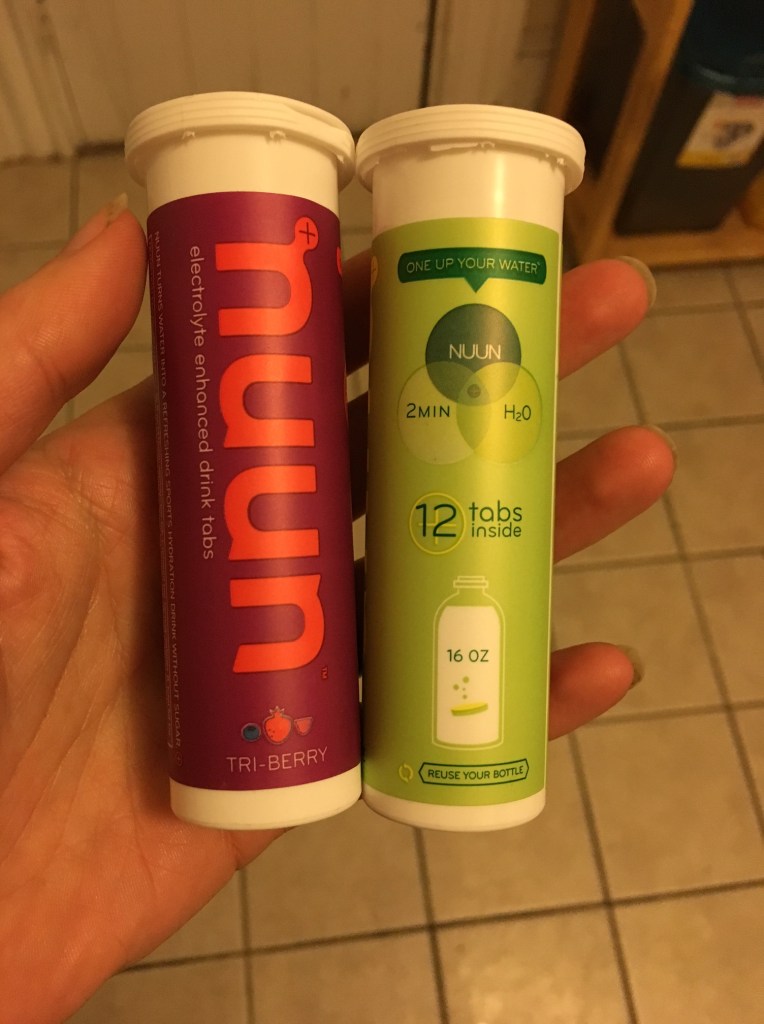
I actually have another book blogger to thank for this discovery. The awesome Running ‘N’ Reading posted a few times about the recovery drink Nuun. Replenishing electrolytes and rehydrating are very important after working out. It helps with muscle recovery and just general hydration. I’ve struggled because I’m not really a fan of Powerade and Gatorade, especially for the calorie content. (The ones with zero calories don’t taste good to me). I love coconut water, but it’s full of calories and expensive to buy. Nuun comes in tubes that each contain 12 tablets. You drop the tablet into water, and in two minutes it dissolves into a drink. Each tablet contains 8 calories. The tablets make it easy to order online and stockpile into your home, as well as convenient to take with you on longer fitness excursions. My husband and I are both pretty addicted to them now! And we’ve both noticed less DOMS (delayed-onset muscle soreness) after hard workout days. Our favorite flavors are lemon-lime and tri-berry.

Bunnies at HomeGoods!
I love bunnies, and this month HomeGoods stocked up their spring holdings. I was hard-pressed to select only a few items (I’ll find almost anything with a bunny on it adorable), but I did my best to stick to what we need. My husband and I each have our own bowl for mealtimes (they do not match) but mine was a bit small for meals like soup or stew. So I picked up one that is about the same size as his. We also had large plates and small plates but no medium-sized ones, so I picked up two of those. Finally, I can always use more kitchen towels, so I got a set of two with this cute bunny on them.
Finally, a book!

Blackout: Remembering the Things I Drank to Forget by Sarah Hepola
I want to wrap up these monthly favorites posts with a quick comment about my favorite read of the month. I devoured Blackout in a mere two days in audiobook format. I basically was searching for any task I could do as an excuse to listen to it. It’s that good. First five star read of the year! Review to come.
So that’s it for February. Be sure to tune in next month for episode 2 of Wolfy’s Favorites!
What were some of your favorite things in the month of February? Have you tried out any of the things I’ve mentioned? Tell us about your experience in the comments! (Especially feel free to let me know your Snapchat or Instagram usernames).
Book Review: Something Spectacular: The True Story of One Rockette’s Battle with Bulimia by Greta Gleissner (Audiobook narrated by Dina Pearlman)
 Summary:
Greta Gleissner finally achieved her lifelong dream of making a living just from her professional dancing. She landed the prestigious job of being a Rockette in the New York City show. She hoped that this newfound stability and prestige would cure her of her bulimia. What was there to binge and purge about when she was living her dream? But her eating disorder she’d had since a young age won’t just disappear because of her newfound success. Soon, her bulimia is putting her job–and her life–at risk.
Review:
I was immediately intrigued by the elements of this eating disorder memoir that make it different from the, sadly, so many others that exist. Greta’s eating disorder peaks in her 20s, not her teens. She was a Rockette, and she’s a lesbian. An eating disorder memoir about someone in their 20s in the dance industry who is also queer was very appealing to me. What I found was a memoir that gives insight to having an eating disorder, the impact of homophobia, and an inside look at the professional dance world told in a non-linear, honest, and engaging manner.
Greta tells her memoir in the framework of a play. There are scenes, acts, overtures, etc… This lets her address the story in a non-linear way that still makes sense. The overture, for instance, shows a dramatic moment when her eating disorder was at full tilt and destroying her life. Then she backs up to the few months before she became a Rockette. The time of auditioning then being a Rockette is interspersed with flashbacks to help us better understand her life. Finally, she enters an inpatient clinic, where we get flashbacks in the context of her therapy. It’s a creative storytelling technique that brings a freshness to her memoir.
Honesty without cruelty to herself or others is a key part of her narrative voice. Greta is straightforward, sometimes grotesquely so, about her bulimia and what it does to her. The eating disorder is not glamorized. Greta takes us down into the nitty-gritty of the illness. In fact, it’s the first bulimia memoir I’ve read that was so vivid and straightforward in its depictions of what the illness is and what it does. In some ways, it made me see bulimia as a bit of a mix between an addiction and body image issues. Greta was able to show both how something that was helping you cope can spiral out of control, as well as how poor self-esteem and body image led her to purging her food.
Greta also is unafraid to tell us about what goes on inside her own mind, and where she sees herself as having mistreated people in the past. I never doubted her honesty. Similarly, although Greta’s parents definitely did some things wrong in how they raised her, Greta strives to both acknowledge the wounds and accept her parents as flawed and wounded in their own ways. You can hear her recovery in how she talks about both them and her childhood. She has clearly done the work to heal past wounds.
The memoir honestly made me grateful the dancing I did as a child never went the professional route. It’s disturbing how pervasive body policing and addictions in general are in the dance world, at least as depicted by Greta. Similarly, it eloquently demonstrates how parents’ issues get passed down to the children, and sometimes even exacerbated. Greta’s mother was a non-professional dancer who was constantly dieting. Greta also loved dancing but her mother’s body image issues got passed down to her as well. Food was never just food in her household.
One shortcoming of the memoir is that Greta never fully addresses her internalized homophobia or how she ultimately overcomes it and marries her wife. The book stops rather abruptly when Greta is leaving the halfway house she lived in right after her time in the inpatient clinic. There is an epilogue where she briefly touches on the time after the halfway house, mentions relapse, and states that she ultimately overcame her internalized homophobia and met her now wife. However, for the duration of her time in the clinic and the halfway house, she herself admits she wasn’t yet ready to address her sexuality or deal with her internalized homophobia. It was clear to me reading the book that at least part of her self-hatred that led to her bulimia was due to her issues with her sexuality. Leaving out how she dealt with that and healed felt like leaving out a huge chunk of the story I was very interested in. Perhaps it’s just too painful of a topic for her to discuss, but it did feel as if the memoir gave glimpses and teasers of it, discussing how she would only make out with women when very drunk for instance, but then the issue is never fully addressed in the memoir.
Similarly, leaving out the time after the halfway house was disappointing. I wanted to see her finish overcoming and succeeding. I wanted to hear the honesty of her relapses that she admits she had and how she overcome that. I wanted to hear about her dating and meeting her wife and embracing her sexuality. Hearing about the growth and strength past the initial part in the clinic and halfway house is just as interesting and engaging as and more inspiring than her darker times. I wish she had told that part of the story too.
The audiobook narrator, Dina Pearlman, was a great choice for the memoir. Her voice reads as gritty feminine, which is perfect for the story. She also handles some of the asides and internal diatribes present in mental illness memoirs with great finesse.
Overall, this is a unique entry in the eating disorder memoir canon. It gives the nitty gritty details of bulimia from the perspective of a lesbian suffering from homophobia within the framework of the dance world. Those who might be triggered should be aware that specific height and weight numbers are given, as well as details on binge foods and purging episodes. It also, unfortunately, doesn’t fully address how the author healed from the wounds of homophobia. However, her voice as a queer person is definitely present in the memoir. Recommended to those with an interest in bulimia in adults, in the dance world, or among GLBTQ people.
4 out of 5 stars
Source: Audible

Counts For:

 Support my work with a tip or browse my shop for curated book club guides, how to guides, cross-stitch patterns, and more!


This work by Amanda Nevius is licensed under a Creative Commons Attribution-Noncommercial-No Derivative Works 3.0 United States License.
 Opinions of a Wolf