
Archive
Book Review: A Bánh Mì for Two by Trinity Nguyen
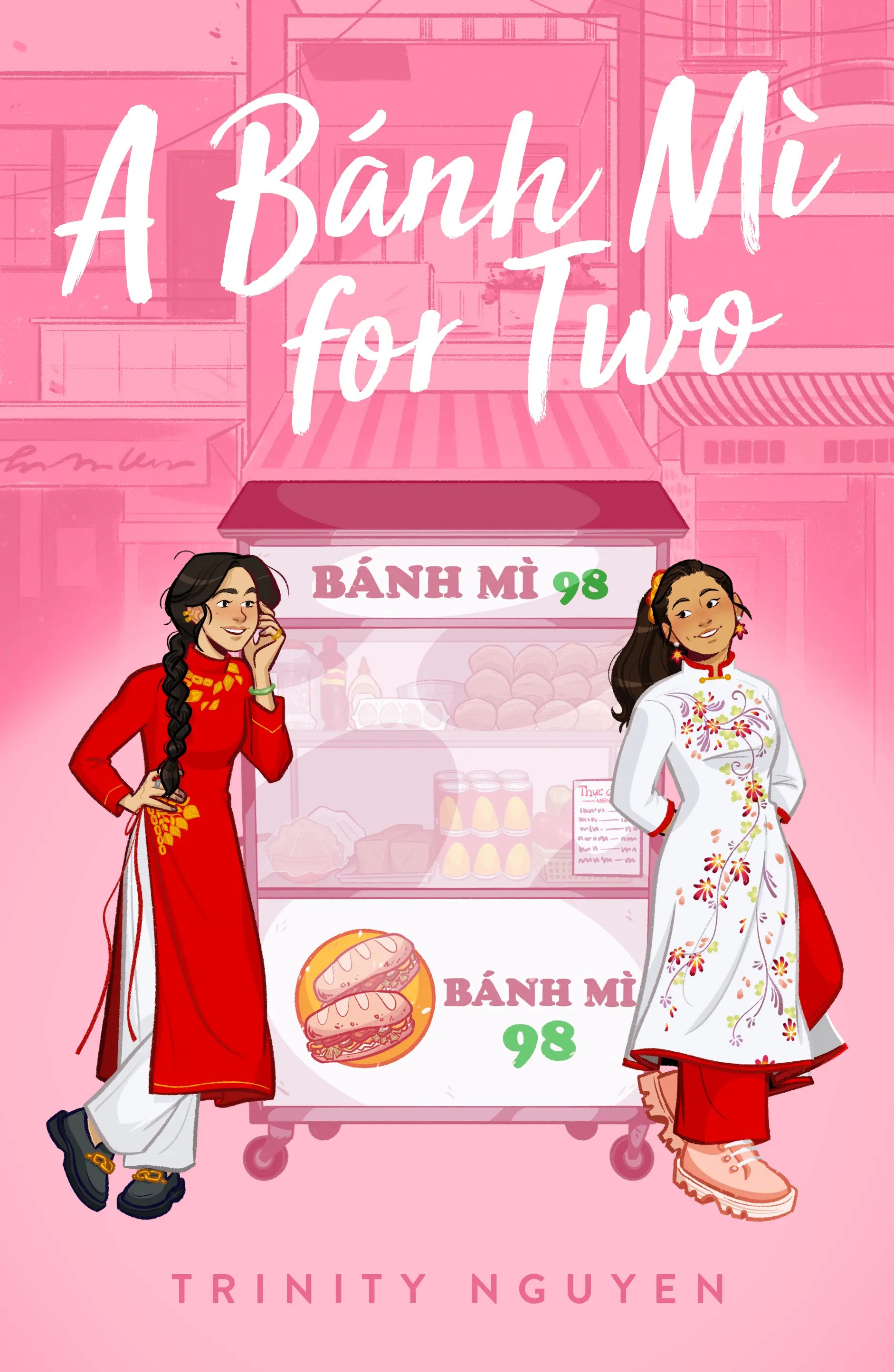
A sweet, closed-door sapphic romance set in Sài Gòn, where two foodie 18-year-olds fall for each other while uncovering family secrets and rekindling a love of food writing.
Summary:
In Sài Gòn, Lan is always trying to be the perfect daughter, dependable and willing to care for her widowed mother and their bánh mì stall. Her secret passion, however, is A Bánh Mì for Two, the food blog she started with her father but has stopped updating since his passing.
Meanwhile, Vietnamese American Vivi Huynh, has never been to Việt Nam. Her parents rarely talk about the homeland that clearly haunts them. So Vivi secretly goes to Vietnam for a study abroad program her freshman year of college. She’s determined to figure out why her parents left, and to try everything she’s seen on her favorite food blog, A Bánh Mì for Two.
When Vivi and Lan meet in Sài Gòn, they strike a deal. Lan will show Vivi around the city, helping her piece together her mother’s story through crumbling photographs and old memories. Vivi will help Lan start writing again so she can enter a food blogging contest. And slowly, as they explore the city and their pasts, Vivi and Lan fall in love.
Review:
I love a sweet, closed-door sapphic romance (see my review of Hani and Ishu’s Guide to Fake Dating), so when I heard about A Bánh Mì for Two, it was an easy add to my wishlist. The focus on food blogging and Vietnamese street food—both eating it and running a street food cart—was just the icing on the cake. This story strikes a delicate yet exquisite balance between lighthearted sweetness and the very real multigenerational trauma caused by the Vietnam War (referred to in Vietnam as The War Against the Americans to Save the Nation).
Told in alternating first-person perspectives between Lan and Vivi, the book avoids the common pitfall of muddled voices. While both characters are kind and thoughtful, they each have distinct ways of seeing the world, which keeps their narration clear and engaging. The romance is a sweet, slow burn, beginning with Vivi’s admiration of Lan’s food blog and blossoming into real-world chemistry after a chance encounter in Sài Gòn.
I especially appreciated the queer representation. There’s no on-page angst about being queer. Vivi does talk briefly with her friend Cindy (a Mexican American character) about how coming out can be complicated with conservative parents, but by the time the story begins, both girls’ families are accepting. It was also refreshing to see Vivi clearly identify as bisexual—representation that could’ve been easily overlooked since her only relationship in the book is with Lan. It’s affirming and intentional, which I loved.
The food descriptions are vivid but never overdone. They strike just the right balance between informing the reader (especially for dishes that might be unfamiliar) and keeping the flow natural. (I’ve eaten many a bánh mì in my life, and still found the food writing delightful!) I also really appreciated that this is a story about two 18-year-olds, and college isn’t presented as the only post–high school option. Lan’s mom encourages her to pursue school if she wants to, but also supports her jumping right into a career—a rare and welcome take in YA-adjacent fiction.
Vivi’s experience as a Vietnamese American studying abroad in Vietnam adds a beautiful emotional layer. She’s not a tourist—she’s searching for a kind of homecoming. She’s exploring why her mother kept so many details about Vietnam and their family a secret. This process is a powerful lens for the reader to learn about the war’s impact on Vietnamese families without the book ever feeling preachy. The historical context emerges naturally—through conversations, shared meals, and street encounters. It’s excellent writing.
The romantic progression between Lan and Vivi is tender and believable. One of my favorite parts was the motorbike rides around Sài Gòn—evocative, cinematic, and intimate. Even the third-act conflict felt justified. It wasn’t a contrived misunderstanding but a believable clash of cultural differences and personal pain. No one is villainized, and the resolution feels earned.
That said, a few elements pulled me out of the story. For example, Vivi’s study abroad program is mentioned as her reason for being in Vietnam, but we never actually see her attend class or study. This absence feels like a missed opportunity—readers might expect the study abroad setting to include some academic context. Similarly, while the book opens with several references to Vivi lying to her mom about her location—including photoshopping photos—the tension fades away later in the book. I found it a bit hard to believe that her mom wouldn’t catch on sooner.
The book is richly diverse, featuring Vietnamese and Vietnamese American characters, a Mexican American side character, and a sapphic romance at the center. Lan’s mother has a chronic illness, and her father passed away young from a stroke. The book also explores difficult family dynamics, grief, and healing across generations.
Overall, this is a fun, sweet sapphic romance featuring the beloved tropes of slow burn and study abroad, while offering thoughtful reflections on Vietnamese culture, family history, and the legacy of war. It’s beautifully steeped in food, healing, and love. Recommended for anyone looking for a sweet, queer romance with emotional depth, cross-cultural exploration, and heartwarming food moments.
If you found this review helpful, please consider tipping me on ko-fi, checking out my digital items in my ko-fi shop, buying one of my publications, using one of my referral or coupon codes, signing up for my free microfiction monthly newsletter, or tuning into my podcast. Thank you for your support!
4 out of 5 stars
Length: 224 pages – average but on the shorter side
Source: Library
Buy It (Amazon or Bookshop.org)
Book Review: Welcome to Forever by Nathan Tavares
Two men trapped in looping artificial realities, always find each other—maybe even save the world.
Summary:
Fox is a memory editor – one of the best – gifted with the skill to create real life in the digital world. When he wakes up in Field of Reeds Center for Memory Reconstruction with no idea how he got there, the therapists tell him he was a victim in a terrorist bombing by Khadija Banks, the pioneer of memory editing technology turned revolutionary. A bombing which shredded the memory archives of all its victims, including his husband Gabe.
Thrust into reconstructions of his memories exploded from the fragments that survived the blast, Fox tries to rebuild his life, his marriage and himself. But he quickly realises his world is changing, unreliable, and echoing around itself over and over.
As he unearths endless cycles of meeting Gabe, falling in love and breaking up, Fox digs deep into his past, his time in the refugee nation of Aaru, and the exact nature of his relationship with Khadija. Because, in a world tearing itself apart to forget all its sadness, saving the man he loves might be the key to saving us all.
Review:
This book is one to read if you’re after gorgeous writing. The prose is immersive, with sentences that invite you to sink into them and reflect.
The character of Fox is rich in complexity. Each chapter peels back another layer of his personality, revealing depth and nuance. However, Gabe doesn’t receive the same level of development. While this is understandable—since we spend far more time in Fox’s mind than we do with Gabe in the present—it still makes their dynamic feel uneven.
Each chapter and memory journey felt like its own vignette. I found myself struggling with the overarching story, as so much time was spent on each memory that, by the end, I found myself asking, “What was the set-up again?” The book’s pacing, which focuses heavily on memory, made it hard for me to connect with the main plot.
At first, I felt the ending was spot on, but then the “Coda Excisions”—a chapter after the final one—left me confused. For me, it diminished the emotional impact of the conclusion.
Diversity is a standout feature of this book. The primary relationship is m/m, and there’s a secondary wlw relationship. All three of the main characters are people of color, and one speaks with a stutter, adding further nuance to the representation.
In terms of content:
- There’s some swearing.
- Intimacy is handled artistically—focused more on emotions than explicit details.
- One character experiences childhood exploitation, and it’s treated with the appropriate weight and sensitivity.
- Both main characters are orphaned.
- There are a few intense scenes: a bomb threat, a natural disaster resembling a hurricane, and a workplace shooting.
Overall, if you’re less concerned with plot structure and more interested in the emotional journey and immersive writing, this book may resonate with you. I recommend reading the first few chapters to see if the style suits you, and then deciding whether to continue.
If you found this review helpful, please consider tipping me on ko-fi, checking out my digital items available in my ko-fi shop, buying one of my publications, using one of my referral/coupon codes, or signing up for my free microfiction monthly newsletter. Thank you for your support!
3 out of 5 stars
Length: 435 pages – average but on the longer side
Source: NetGalley
Buy It (Amazon or Bookshop.org)
Book Review: The Witch’s Lens by Luanne G. Smith
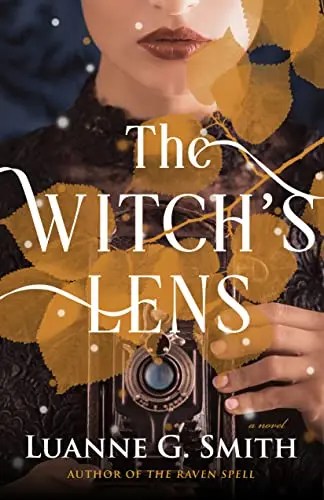
A witch finds herself recruited to WWI’s eastern front to fight a scourge of zombies.
Summary:
With her husband off fighting at World War I’s eastern front, Petra Kurková embraces her fleeting freedom, roaming the city at night with her camera. A born witch, she’s discovered that she can capture the souls of the dead on film. Her supernatural skills don’t go unnoticed by the enigmatic Josef Svoboda. He’s recruiting a team of sorcerers to infiltrate the front lines, where the bloodshed of combat has resurrected foul creatures. Petra’s unique abilities will be needed against the most dangerous enemies of all—those ever present, undead, and unseen.
Deep in the cursed Carpathian Mountains, the ragtag team meets with an emissary of an ancient organization founded to maintain balance between worlds. Photographing the escalating horrors is beyond anything Petra imagined. So are the secrets among her fellow witches. But Petra can’t turn back. Not before she discovers her husband’s fate and the myriad ways her magic is manifesting. To defeat an occult foe, Petra must release the power she’s been concealing for so long, or risk damning a war-torn world to ashes.
Review:
I came into this book expecting a lot of WWI with a dash of witches but it ended up being the other way around.
If it wasn’t for the book’s blurb mentioning WWI and one passing mention of the Archduke’s assassination, it would be possible to read this book and think the entire war was a fantasy. This becomes increasingly so as the book progresses. Perhaps I missed something but at first it sounds like the humans are fighting and unaware of any supernatural folks participating in the war pushing it one way or the other. Then later it seems like everyone knows about witches. So which is it?
The book starts slowly, showing Petra living on her own, lonely and bored, going out at night to take photos since she’s discovered the dead show up in them. I was intrigued by this and wondering why Petra can only see the dead in her photos, but the why is never revealed. The camera is useful to the plot but not in the way you would imagine from what we know it can do.
The zombies in the book are the fast type. (See more zombie recommendations from me.) They can move at superhuman speeds. An interesting unique take is that zombies can continue to exist among the living until they’re called upon by another power to act like a zombie. They’re basically Trojan horses among the soldiers.
There is some light romance in the book. Personally, it didn’t work for me because we see Petra starting to long for a man who isn’t her husband. That’s just not a plot point I personally enjoy. The romance is hinted at in the book. There is not even a kiss. I suspect it will get stronger in the sequel. Those who want to read for the romance should know this is a very slow burn.
If we ignore the confusing aspects of whether or not everyone in the world knows about the witches, the plot does escalate in a way that mostly make sense and things come to a head with quite a bit of action. But there is an element of “the chosen one,” which I find dull. Especially in a book about WWI. I wanted to see everyone coming together with unique strengths. Not one overpowered person.
Overall, this book wasn’t a match for me. I wanted a lot more WWI than was in it. Recommended to those interested in a witch’s war with a dash of light, slow-burn romance.
If you found this review helpful, please consider tipping me on ko-fi, checking out my digital items available in my ko-fi shop, buying one of my publications, using one of my referral/coupon codes, or signing up for my free microfiction monthly newsletter. Thank you for your support!
3 out of 5 stars
Length: 255 pages – average but on the shorter side
Source: Library
Buy It (Amazon or Bookshop.org)
Publication Announcement: Novella – Ecstatic Evil – Second Edition

I am thrilled to announce the publication of the second edition of my novella Ecstatic Evil. I published the first edition 11 years ago in 2011. I have completed major updates throughout the second edition, as well as added an author’s note and a content note. You can view both of the notes in their entirety by using the preview book feature on its Amazon page.
I have also added a paperback version for those readers who prefer to read in print. Both the electronic and paperback versions are available internationally.
Here is the updated blurb:
Tova Gallagher isn’t just your average, grumpy Bostonian. She also happens to be half-demon, and the demons have just issued a deadline for her all-important half-demon decision. She has just two weeks to choose whether to lean into her demon side by signing on with them wholeheartedly or never use her powers again under the tutelage of an assigned angel. But it’s hard to worry about the battle of good versus evil when she’s just met a sexy, sunshiny stranger on the edge of the Charles River.
Reviews of the first edition of this grumpy/sunshine paranormal romance call it a “quick, captivating read” with a romantic pairing that are “so sweet to each other.”
This newly expanded second edition includes edits throughout the book, as well as an author’s note and content note.
If this book was a movie, it would be rated PG13 for adult situations and sensuality.
The spiciness level is 2 or 3 chili peppers, depending upon which system you use. It is lightly spicy. There is foreplay and some clothes come off, but the camera pans away before more intimate moments.
There is no adult language. On-screen violence is minimal (shoving, gripping someone’s arm too tightly.) One supernatural being attacks another off-screen.
Today and tomorrow (November 9th-10th 2023, Pacific Time), the ebook is free for everyone. Please consider downloading your copy today!
If you previously purchased the first edition, note that Amazon does not send the second edition to your kindle. Please send me an email at mcneil.author@gmail.com letting me know you own the first edition and would like the second, and I will send you a copy.
If you are a book reviewer and would like a reviewer copy, please email me at mcneil.author@gmail.com with links to where you review books.
Please be sure to check out my Publications Page for my other work.
Book Review: Positively, Penelope by Pepper D. Basham

A grumpy/sunshine, no spice romance set in the theater world.
Summary:
Penelope Edgewood is practically positive in every way, so when, fresh out of college, she is awarded a paid internship to help save a century-old theater on the island of Skymar, she jumps at the chance. After all, a crumbling theater needs the special touch of someone who reveres all things vintage and adores the stage.
Unfortunately, not everything is as it seems at Darling House Theatre. Finances are in shambles, the local theater group is disenchanted, and the two brothers, Matt and Alec Gray, can’t seem to see eye-to-eye about how to run their theatrical business. So, of course, it’s the perfect place for Penelope to shine her own personal brand of sunshine.
With a little help from GK, the person emailing her encouragement along the way, she puts all her heart into helping the Grays save Darling House. But between Matt’s ever-present skepticism, Alec’s tendency to treat Penelope a little too much like the “princess” she thinks she wants to be (until someone actually started treating her that way), a grandfather who is stuck in his grief, and a mysterious person stealing Penelope’s marketing ideas, she’s not sure her optimism is enough to make a happily-ever-after of her own story, let alone The Darling House’s.
Between an adorable little girl, a matchmaker, a sea monster or two, and a copious amount of musical references, can Penelope draw enough confidence from her faith, her family, and her adoration of all things Julie Andrews, to find the thief and save the theater . . . without getting her heart broken in the process?
Review:
This book is presented as a Christian fiction romance told “mostly” in an epistolary style, but I found it to be neither of those things.
This is definitely a light-hearted, no spice romance. I found Penelope endearing, and her love interest just the appropriate amount of grumpy with a reason. As a musical theater geek myself, I absolutely loved all of the references to classic musicals and how the male main character alludes to Gene Kelly. I also like that while Penelope is a sunshine character, we get to see how she has to actively choose to be happy and optimistic. It’s not her natural default. She’s given a depth.
Now, I love epistolary books, and I didn’t notice that the book said only that it was “mostly” epistolary, so I was jarred the first time there was a non-epistolary scene. I was willing to give it a pass, though, since it was a phone call scene. In fact, I could see how a phone call scene might work in a modern epistolary novel. However, by about two-thirds of the way through the book, most of the writing was typical book – not epistolary. It wasn’t even phone call scenes. It was basically like any modern book that includes some text messages and such. I like both styles of writing for different reasons, but I found the mixing the total flip-flop from one to the other jarring to say the least.
I realize this book is from a Christian publishing house, but I think it’s a marketing flaw to market it as “Christian fiction.” The characters’ religious beliefs played almost no role in the book. They mention God a few times, and the characters mention having gone to church a couple of times, but no scenes are set in a church. They mention praying but never actually pray on-screen. Also, in spite of being Christians, they never mention Jesus or the Holy Spirit, and we never see them reading the Bible. The blurb says that her faith guides Penelope’s decisions, but I absolutely did not see that in the book. I found Hani and Ishu’s Guide to Fake Dating (review), published by a mainstream publishing house, to have more issues of religion and faith in it. One of the main characters is Muslim, and her faith impacts her relationships with her friends, we see her praying, we see her reading the Quran, we see her go to the mosque. All of which is to say, if you’re interested in the romance but turned off by the idea that it’s “Christian romance” – don’t be. On the other hand, if you’re interested in seeing faith represented in what you read, you won’t get that here.
This book is set on a fictional island colonized by the UK. The Indigenous people are mentioned in passing a couple of times (as “natives”), but we never actually meet one or see their culture. This is extra bizarre since The Darling House is a community-based theater. Why is it only celebrating the colonizer’s culture? There’s also a royal family that’s not tied to the UK anymore. There’s no exploration, even in passing, of the ethical issues in colonization or even a whiff of a suggestion of decolonization. I get wanting to set your romance in a fantasy land, but the way to do that is like the fake country of Genovia or the fake royalty in a fake country in Never Ever Getting Back Together (review). Why imagine additional colonization tragedies if you’re not going to explore them and broach the topic of decolonizing? The way the book is written, it’s clear none of the characters see any problems with colonizing or issues for the Indigenous peoples, and that’s not the sort of fantasy land I personally want to visit. This is also another example of how, in my opinion, this book is not really rooted in strong Christian theology, as social justice is a key Christian issue.
Overall, this is a lighthearted, no spice grumpy/sunshine romance. It focuses on the grumpy character’s heart warming up over time. The book itself makes some comparisons of the romance to The Sound of Music but the von Trapp’s resisted an invading fascist force whereas these characters celebrate a colonizing royalty.
If you found this review helpful, please consider tipping me on ko-fi, checking out my digital items available in my ko-fi shop, buying one of my publications, using one of my referral/coupon codes, or signing up for my free microfiction monthly newsletter. Thank you for your support!
3 out of 5 stars
Length: 416 pages – average but on the longer side
Source: Library
Buy It (Amazon or Bookshop.org)
Book Review: The Road to Roswell by Connie Willis

When a woman who doesn’t believe in aliens comes to Roswell for her college roommate’s UFO-themed wedding, she’s shocked to find herself abducted by an alien and driving all over the southwest at his tentacled bidding.
Summary:
When level-headed Francie arrives in Roswell, New Mexico, for her college roommate’s UFO-themed wedding—complete with a true-believer bridegroom—she can’t help but roll her eyes at all the wide-eyed talk of aliens, which obviously don’t exist. Imagine her surprise, then, when she is abducted by one.
Odder still, her abductor is far from what the popular media have led her to expect, with a body like a tumbleweed and a mass of lightning-fast tentacles. Nor is Francie the only victim of the alien’s abduction spree. Before long, he has acquired a charming con man named Wade, a sweet little old lady with a casino addiction, a retiree with a huge RV and a love for old Westerns, and a UFO-chasing nutjob who is thoroughly convinced the alien intends to probe them and/or take over the planet.
But the more Francie gets to know the alien, the more convinced she becomes that he’s not an invader. That he’s in trouble and she has to help him. Only she doesn’t know how—or even what the trouble is.
Part alien-abduction adventure, part road trip saga, part romantic comedy, The Road to Roswell is packed full of Men in Black, Elvis impersonators, tourist traps, rattlesnakes, chemtrails, and Close Encounters of the Third, Fourth, and Fifth kind. Can Francie, stuck in a neon green bridesmaid’s dress, save the world—and still make it back for the wedding?
Review:
Connie Willis’s To Say Nothing of the Dog is one of my favorite scifi/romance/comedy reads of all time (review). I’m also a huge fan of the American Southwest, so when I heard about this book, it went on my wishlist immediately. (Shout-out to my siblings-in-law for the birthday present). This was definitely a rollicking, feel-good read, which was just what I needed.
Francie is a fun main character. Jumping right into her being at the airport on her way to a wedding she wants to help her old college roommate see is probably a bad idea builds up the identification and empathy right away. Who among us hasn’t had a friend in a questionable relationship? She doesn’t believe the alien stuff of everyone else at Roswell, but she’s kind about it. (She doesn’t go around calling them names in her head).
When she is abducted by an alien who looks like a tumbleweed who can’t speak but can only force her to drive with his tentacles and gesturing seriously in the direction he wants to go, I was hooting. What a fun idea for an alien species Indy is! I also like how the crux of the issue between humans and Indy is the difficulty in communication. Unlike a lot of scifi, he doesn’t just show up with a translator. Communication is a big problem and leads to a lot of comedic situations (including the, ahem, abduction). I was particularly fond of how Indy keeps semi-accidentally adding more people to his collection of abductees due to miscommunication.
The American Southwest is lovingly depicted from the glorious sunsets to the shocking vast emptiness, not to mention the overwhelming situation that is Las Vegas (right on down to an Elvis impersonator). Dusted on top of these depictions are quotes from various westerns (including a lot from one of my favorites, Support Your Local Sheriff). Movie westerns and how they reflect (accurately and inaccurately) the American Southwest are cleverly added via a character who is obsessed with them.
So I loved the setting, the plot, Francie, and Indy. The humor wasn’t quite working for me in the way it has in other books of hers, though. It didn’t ever bother me it just didn’t tickle my funny bone. That didn’t matter, because the book was still feel-good for me. But it did keep it from rocketing up to new favorite territory. There is also one infuriating scene where Francie is trying to get in touch with other people without Indy hearing and she, bafflingly, calls and leaves voicemails rather than texting. I just cannot think of a single person Francie’s age I know who would ever default to calling and not texting in a regular situation, let alone one where you want to not be overheard. (I mean, you can even text 911 these days….) I understand for the point of the plot that calling needed to happen but then we needed a reason for it. Maybe Francie’s texts wouldn’t go through. Maybe she lost her smartphone in the airport and had to borrow her friend’s old flip-phone. Something. This is a minor quibble though in a book that was generally a delight.
Overall, this a feel-good scifi read with a dash of romance and a very lovable alien. Perfect for scifi lovers wanting an escapist read or romance readers wanting a no spice read with a dash of something different.
If you found this review helpful, please consider tipping me on ko-fi, checking out my digital items available in my ko-fi shop, buying one of my publications, or using one of my referral/coupon codes. Thank you for your support!
4 out of 5 stars
Length: 405 pages – average but on the longer side
Source: Gift
Buy It (Amazon or Bookshop.org)
Book Review: Pixels of You by Ananth Hirsh, Yuko Ota, J.R. Doyle

Two interns, one human and one AI, dislike each other so naturally they’re forced to work together on a new project.
Summary:
In a near future, augmentation and AI changed everything and nothing. Indira is a human girl who has been cybernetically augmented after a tragic accident, and Fawn is one of the first human-presenting AI. They have the same internship at a gallery, but neither thinks much of the other’s photography. But after a huge public blowout, their mentor gives them an ultimatum. Work together on a project or leave her gallery forever. Grudgingly, the two begin to collaborate, and what comes out of it is astounding and revealing for both of them.
Review:
This forced proximity sapphic romance idea featuring a human and an AI is such a good one. The near-future world it is set in is fascinating. But both the relationship and the world weren’t explored enough for me.
AI in art is a really big issue right now. While it is also beginning to show up in written art, it has become a large issue much more quickly in graphic arts. So I was of course intrigued by a graphic novel exploring AI in a near future where a human artist is an intern side-by-side with an AI artist. But the book doesn’t really dig into the nitty gritty of whether what the AI produces can count as art or not. Even though the summary says that human-presenting AI like Fawn is new, no one seems particularly taken aback by Fawn. The most controversy she faces is other AI being jealous of her human-like skin. Given that Fawn is a photographer using solely her AI eye, there is a huge opportunity for exploration of what makes art, art. Yet this isn’t really explored at all. Similarly, Indira has a robotic eye to replace one she lost in an accident. It causes her chronic pain, but how having a robotic eye impacts her art as a photographer also isn’t really explored.
While I easily believed the forced proximity romance plot of Fawn and Indira if they were both human, I struggled to believe its rapidity given that Fawn is AI and Indira’s own background to her accident. (Which is a spoiler, but suffice to say one would imagine it would predispose her to negative feelings about AI.) I’m not saying these feelings couldn’t be overcome and the romance couldn’t happen, but it needed more time to develop. With regards to the spice of the romance, there’s some kissing and nothing more explicit than that.
The art in this graphic novel is beautiful. It has nice contrast that makes it easy to follow and suits the storyline.
Overall this is a pretty read and a fun world to visit, although it may leave you wishing for more.
If you found this review helpful, please consider tipping me on ko-fi, checking out my digital items available in my ko-fi shop, buying one of my publications, or using one of my referral/coupon codes. Thank you for your support!
3 out of 5 stars
Length: 172 pages – average but on the shorter side
Source: Library
Buy It (Amazon or Bookshop.org)
Book Review: Love on the Menu by Mimi Deb

A London romcom whose meet-cute is a get your life together list accidentally dropped in a take-out bag leading to notes being passed back and forth.
Summary:
Gia thrives on risks. Ben plays it safe.
She crossed continents to chase her London dream; he works the same job in the same restaurant, night after night.
Then fate steps in. When Gia’s takeout is delivered, her embarrassing list of New Year’s resolutions accidentally makes its way to Ben’s restaurant, stuck to the bottom of a delivery backpack.
With each delivery Gia orders, Ben slips in a note of his own and eagerly awaits her reply. One by one, these notes transform their lives in unexpected ways, and an unlikely love story is written.
Review:
The only thing I can say without spoilers was I loved the meet-cute idea but ultimately disliked both halves of the pairing. The rest of this review will contain spoilers.
I didn’t know when I requested this book that Ben, the love interest, is in long-term recovery (5 years plus) from alcohol. As a sober person myself, when I realized this about the love interest, I was ecstatic to see that representation. It’s what kept me hanging on after a shaky opening that I’ll talk about in a moment. But ultimately the representation left me disappointed. Plus I wound up not liking Ben. So let’s get into it.
First, the opening chapter. Gia gets drunk at a work event and accidentally kisses her boss while dancing. How, you ask? I’m still confused by it. She was doing the Single Ladies dance, they were dancing back-to-back, and when she jumped to turn 180 degrees, her lips landed on her boss’s. I do not think this would actually be possible to do without either bonking noses or hitting teeth together.
Now I need to explain a bit about the plot to talk about what didn’t work for me. So, after this, she convinces herself she’s about to lose her job and writes the get your life together list Ben ultimately finds. When she returns to work after the holidays, she becomes convinced that her boss is out to get her, thanks partially to her work-friend, Jay’s warnings. They are both immigrants. She immigrated from India, and he from China. He explains that the boss can’t legally fire her for such a thing in Britain but she can set her up to fail by giving her too much responsibility then a warning then a firing. When she does suddenly get more responsibility at work, she becomes convinced this is what is happening. Meanwhile she keeps ordering delivery from a local Indian takeaway that reminds her of home, plus she’s getting to exchange cute notes with one of the employees, Ben, through them. He coaches youth football on the weekends and has a large and loving family. Ben becomes enamored with Gia. Eventually they get a chance to meet when she needs a caterer for a big important work event.
Gia repeatedly drinks too much throughout the book. I was ok with this at first because I thought maybe she would have an ah-hah moment and cut back (or stop entirely). But she doesn’t. She thinks maybe she should. She puts it on her list. (Heartbreakingly the list at the ends says: “Don’t Drink. Drink less. Drink responsibly.”) But then she doesn’t actually do it. She even continues binging up through her marathon run. Her mother at one point in the last chapter says to her boss that Gia drinks too much. The boss agrees. And Gia blows it off. In the last chapter! There’s nothing I can root for with a person in long-term recovery getting together with someone with an active alcohol problem that’s bad enough that their family and boss have noticed and yet they won’t acknowledge it.
There is a giant reason I don’t think Ben is right for Gia either. Essentially, when Ben was in the throes of his addiction, he made some choices that led to an immigrant getting fired from his brother’s company. Instead of standing up for the guy and taking responsibility for what happened that night, Ben let him be fired and then took his job (only to quit it a few weeks later). Everyone makes mistakes, and I’m ok with a hero being imperfect. But later – five years later – when this comes up, he says, “Why didn’t he just get another job?” and “Why do you make looking for a job sound like a marathon?” This was a very heartless thing to say. It’s even more heartless given that Ben knows that Gia is also an immigrant whose ability to stay in London is tied to her employment which she at that moment feels is precarious. Ben never actually apologizes for this. He reads Gia a letter in which he talks about how wonderful she is, but he never apologizes for how flippantly he regarded the immigrant work situation.
These two people don’t belong together, and that is what left me feeling sour at the end. I don’t see a HEA or even a HFN but the first few seconds of a train wreck.
So, while the meet-cute was adorable, and I loved seeing diversity both in race and mental health in this book, I ultimately felt that the two leads did not belong together, although with some different plot directions, they could have been. Ben could have made a real apology and done something to try to make up for his lack of compassion for immigrants. Gia could have realized she had a problem with alcohol and taken Ben up on the offer to hook her up with a sponsor. If these two conditions were met, there could have been a very cute one year later they get together with a new meet-cute epilogue. But instead the book just swept the important issues under the rug with a Beyonce song at the end.
If you found this review helpful, please consider tipping me on ko-fi, checking out my digital items available in my ko-fi shop, buying one of my publications, or using one of my referral/coupon codes. Thank you for your support!
3 out of 5 stars
Length: 416 pages – average but on the longer side
Source: NetGalley
Buy It (Amazon or Bookshop.org)
2022 Award Eligibility

I have four pieces eligible for awards during the 2022 award season in three categories.
All of these were first published during 2022.
For the paid stories, I am able to provide author copies for award consideration purposes only. Please email me at mcneil.author [at] gmail.com to request one.
Short Stories
“The University of Late-Night Moans” in Decoded Pride: A science fiction, fantasy, and horror story-a-day anthology for Pride month
June 9, 2022, issue 3, $14.99 digital
fantasy romance (sapphic / wlw)
It’s 1998, and Leonora’s friend Virginia is helping her investigate the moans coming from the cemetery across the train tracks from her dorm.
“Sister Prudence on the Beach” in Solarpunk Magazine
Issue #6, Lunarpunk Special, Nov/Dec 2022, $6 digital
hopepunk (speculative scifi)
Sister Prudence settles down for her full moon meditation on the beach. But a young one passing by interrupts not just her meditation but perhaps her retirement as well.
Drabble
“Bostonians Aren’t Friends With Our Neighbors” in Wyrms: An Anthology of Dragon Drabbles
July 1, 2022, $3 digital, $6 print
fantasy
The first line is “Deadrodents.com said the box on the triple-decker’s porch next door.”
Creative Nonfiction
“These Boots Were Made for Who?” in Just Femme & Dandy
July 4, 2022, issue 3, free
digital magazine version (page 105) or html/accessible version
literary fashion magazine through a queer lens
I explore how my favorite pair of thrifted boots helped me develop my queer, bisexual fashion sense and sustained me throughout the pandemic.
Book Review: In the Event of Love by Courtney Kae

Summary:
With her career as a Los Angeles event planner imploding after a tabloid blowup, Morgan Ross isn’t headed home for the holidays so much as in strategic retreat. Breathtaking mountain vistas, quirky townsfolk, and charming small businesses aside, her hometown of Fern Falls is built of one heartbreak on top of another . . .
Take her one-time best friend turned crush, Rachel Reed. The memory of their perfect, doomed first kiss is still fresh as new-fallen snow. Way fresher than the freezing mud Morgan ends up sprawled in on her very first day back, only to be hauled out via Rachel’s sexy new lumberjane muscles acquired from running her family tree farm.
When Morgan discovers that the Reeds’ struggling tree farm is the only thing standing between Fern Falls and corporate greed destroying the whole town’s livelihood, she decides she can put heartbreak aside to save the farm by planning her best fundraiser yet. She has all the inspiration for a spectacular event: delicious vanilla lattes, acoustic guitars under majestic pines, a cozy barn surrounded by brilliant stars. But she and Rachel will ABSOLUTELY NOT have a heartwarming holiday happy ending. That would be as unprofessional as it is unlikely. Right?
Review:
This is a thoroughly queer holiday romance for your holiday needs. It has the returning to my small town from the big city to try to save a small business trope. It also has the second chance love trope.
The two main characters in this sapphic romance are BOTH (!) bisexual (and say the word), which I don’t think I’ve ever seen before in a romance. There’s a secondary male character who I think is bisexual, although it’s possible he’s gay and has dated women in the past (no one ever says which). There’s another secondary gay character, and a trans woman of color. The owner of the business Morgan works for is a woman of color. A tertiary character is a woman of color married to a Jewish man. Chrismukkah happens briefly. There’s also a pine tree decorated for a mix of Hanukkah and Kwanzaa.
The sex scenes are steamy and on-screen (all f/f), and there were at least three? Maybe more? I lost count. There’s also one ahem, self-love scene, which I honestly skimmed over because that’s not something I’m personally into reading. I appreciate that it did move the plot forward and wasn’t pointless though. (The character essentially clears her head in this way and then is able to solve a problem she’s been puzzling over).
The one thing I didn’t like was how alcohol is handled in this book. Rachel (the love interest)’s dad has alcoholism. That’s absolutely fine to include. In fact, it’s generally something I’m happy to see. But the representation of this struck false. The main thing that really bothered me is how Rachel interacts with alcohol herself. The book establishes that she’s traumatized by her dad’s alcoholism. It tore the family apart in high school. He’s been in and out of rehab that her and her brother pay for. Her mom left the family after Rachel (the youngest) graduated high school. Rachel routinely drops by her dad’s apartment (that she and her brother pay for) to check for signs of alcohol. YET she STILL drinks regularly. Not occasionally. Regularly. Most people I know who’ve seen this much of the negative impacts of alcohol won’t even allow it in their homes, let alone go out drinking themselves regularly.
Plus, there’s the whole instigation event to Morgan coming back to Fern Falls. (I don’t consider this a spoiler because it happens in chapter one). She gets wasted out at a bar and accidentally kisses the fiancé of someone whose wedding she’s organizing. He’s “in disguise” because he has a hoody on, but we all know she’d have recognized him if she wasn’t drunk. Anyway, everyone knows about this because the news wrote it up. We know Rachel knows about it. She still goes for Morgan. No way. No adult child of an alcoholic would set themselves up like that. I overlooked it because it’s a cheesy romance, but this is not a realistic depiction of an adult child of an alcoholic who’s actively engaged in their recovery. Adult children of alcoholics tend to fall either into the camps of also alcoholics themselves or sober. Rachel falls into neither. I feel weird complaining about realism in a holiday romance novel, but this is real life for a lot of us, and I disliked it being used as a plot device poorly. Alcoholism is serious, and Rachel wouldn’t be casually getting drunk with some love interest who’s only home because she became a hashtag while doing something drunk. In fact, I think this was a missed opportunity for some real bonding. They could have been at a town event and both noticed they were drinking hot chocolate. Rachel reveals the stuff about her dad. Morgan reveals she’s decided to dial it way back with the alcohol after possibly losing her career on that night out. Instant believable bond. But no….they just share spiked drinks.
All of that said, I still gave it four stars because this is a fun holiday romance. It’s not supposed to be that serious! And the bisexual rep is so uncommon and needed. I just wish the alcoholism/adult children of alcoholics rep was just as well done.
If you found this review helpful, please consider tipping me on ko-fi, checking out my digital items available in my ko-fi shop, buying one of my publications, or using one of my referral/coupon codes. Thank you for your support!
4 out of 5 stars
Length: 320 pages – average but on the longer side
Source: NetGalley
Buy It (Amazon or Bookshop.org)
Get the Reading Group / Book Club Discussion Guide
A beautifully graphic designed 2 page PDF that contains: 1 icebreaker, 9 discussion questions arranged from least to most challenging, 1 wrap-up question, and 3 read-a-like book suggestions
View a list of all my Discussion Guides.
 Support my work with a tip or browse my shop for curated book club guides, how to guides, cross-stitch patterns, and more!


This work by Amanda Nevius is licensed under a Creative Commons Attribution-Noncommercial-No Derivative Works 3.0 United States License.
 Opinions of a Wolf