
Archive
Book Review: Solo Dance by Li Kotomi, translated by Arthur Reiji Morris

Summary:
Cho Norie, twenty-seven and originally from Taiwan, is working an office job in Tokyo. While her colleagues worry about the economy, life-insurance policies, marriage, and children, she is forced to keep her unconventional life hidden—including her sexuality and the violent attack that prompted her move to Japan. There is also her unusual fascination with death: she knows from personal experience how devastating death can be, but for her it is also creative fuel. Solo Dance depicts the painful coming of age of a queer person in Taiwan and corporate Japan. This striking debut is an intimate and powerful account of a search for hope after trauma.
Review:
This is a gut-wrenchingly beautiful read that I couldn’t put down.
The story starts with Cho in Japan. We learn what led to her emigration from Taiwan through a combination of flashbacks and her rereading her own college journal entries. Cho is a writer who has been obsessed with death from a young age. But she also went through a devastating trauma. The PTSD from that event destroyed her budding relationship with another young woman and haunts her to this day.
I think it’s important for anyone considering this book to know coming into it what the devastating trauma was. It’s central to the book and can be quite triggering for some. Cho was raped by a stranger who specifically targeted her due to her same-sex relationship. Although Cho does encounter kind and understanding people who validate how wounded she is from this experience, there are others who expect her to just get over it. Worse, some people blame her for it. She feels shame for what has happened to her. While this is realistic, it is painful to read about.
So this book is about many complex things. It’s about how Cho was obsessed with death from a young age. Why is that? Is it ok to feel that kind of emo way? It’s also about the systemic exclusion of queer and trans people. Cho also travels the world and sees how queerness and Pride and love exist in many countries. While she wants a sense of belonging, just what is the right way to belong is a question left for the reader. Ultimately, though, this is a book about trauma and healing from trauma. How trauma isolates a person, even when other people try, imperfectly, to reach out.
It’s easy as a queer westerner to get caught up in what queerness means in the west. It’s important to dive into what queerness means and looks like in other cultures in order to better grasp how we might create a community that’s more inclusive of all types of origins and experiences.
Although this novella is challenging, it’s also beautiful. If you feel ready to engage with the realistic trauma depicted in it, I encourage you to pick up a copy.
If you found this review helpful, please consider tipping me on ko-fi, checking out my digital items available in my ko-fi shop, buying one of my publications, or using one of my referral/coupon codes. Thank you for your support!
4 out of 5 stars
Length: 149 pages – novella
Source: NetGalley
Buy It (Amazon. This book is not available yet on Bookshop.org)
Get the Reading Group / Book Club Discussion Guide
A beautifully graphic designed 2 page PDF that contains: 1 icebreaker, 9 discussion questions arranged from least to most challenging, 1 wrap-up question, and 3 read-a-like book suggestions
View a list of all my Discussion Guides.
Book Review: Burn Down, Rise Up by Vincent Tirado

Summary:
For over a year, the Bronx has been plagued by sudden disappearances that no one can explain. Sixteen-year-old Raquel does her best to ignore it. After all, the police only look for the white kids. But when her crush Charlize’s cousin goes missing, Raquel starts to pay attention—especially when her own mom comes down with a mysterious illness that seems linked to the disappearances. Raquel and Charlize team up to investigate, but they soon discover that everything is tied to a viral worldwide game called the Echo Game. If you play it wrong, it can trap you in an echo – a parallel universe based on one of the worst times your particular region has seen.
Review:
I love a horror based around a bunch of people doing something that tempts the supernatural into coming to get them, and then being surprised when it does. (And when I say “love” I mean I will literally throw you out of my house if you say Candyman at a mirror twice). When I saw there was a sapphic version of this trope coming out, you bet I smashed the request button on NetGalley so hard.
The first hurdle any horror like this has to get over is giving us a horrifying scene right off-the-bat that’s scary even though we don’t really know what’s going on. This book does a great job at that. Charlize’s cousin, Cisco, has been missing. He comes back from being missing “wrong” and accidentally gives “something” that’s clearly supernatural to Raquel’s mom, who’s a nurse. This beautifully sets up both Charlize and Raquel to be heavily invested in what exactly is going on in their neighborhood. They used to be close friends but now they’ve drifted to acquaintances, and Raquel has the hots for Charlize. It’s just the right set-up.
The next hurdle the book has to get over is why are the Black kids sneaking out at night to play this viral game tempting the supernatural at 3am? The book takes this head-on with the characters acknowledging doing such a thing doesn’t go with their culture. Charlize and Raquel are motivated to save their family members, but what about Cisco? We learn he befriended a bunch of white theater kids who asked him to come along and do it as part of some theater kids bonding activity. I have to say, as a once upon a time theater kid myself, this sort of thing rang as very true.
So is the horror scary? Yes, largely because it’s starting to reach out into the Bronx even among those who aren’t playing the Echo Game. But I will say, I didn’t think it was terrifyingly scary. If this was a movie, I could sleep after it. Unlike The Ring, which made me terrified of being in the same room with my own television for two weeks. So I’d say it’s moderate on the scary scale. It’s definitely kind of gory, and the peril is real.
The relationships are interesting, realistic, and Raquel has just the right amount of them. She has her best friend, his brother, Charlize, Cisco, her father, and her mother. The fact that she was living with her mother and has to move in with her bachelor pad father while her mother is ill was one of my favorite parts of the book. Her dad clearly loves her and they were absolutely part of each other’s lives before, but there’s a difference between the dad who loyally pays child support who you see a few times a month and the dad you live with. I appreciated how that difference was drawn out, acknowledging the awkwardness without blaming either of them. I also liked how her dad both brought out the Latinx aspect of the story, as well as giving her a direct connection to when the Bronx burned in the 1970s. (This time period, of course, is when the echo draws from).
The Charlize/Raquel situation was cute. I liked how Raquel’s best friend, Aaron, also likes Charlize, and he just wants Raquel to be honest with him about liking her as well. I was a little bit confused about why Raquel has some internalized homophobia making it hard for her to accept that she likes Charlize. It was unclear to me if this was coming from her family (who seemed very accepting) or if it was just worrying how her peers would react or what exactly. I think a richer development of that would have helped make the scenes where Raquel works on accepting herself more powerful.
Overall, this is a fun take on the viral game tempting the supernatural trope. The setting of the Bronx and the main character’s Afro-Latinx culture are both well developed. It’s a medium scary read that will certainly appeal to YA readers.
If you found this review helpful, please consider tipping me on ko-fi, checking out my digital items available in my ko-fi shop, buying one of my publications, or using one of my referral/coupon codes. Thank you for your support!
4 out of 5 stars
Length: 352 pages – average but on the longer side
Source: NetGalley
Buy It (Amazon or Bookshop.org)
Get the Reading Group / Book Club Discussion Guide
A beautifully graphic designed 2 page PDF that contains: 1 icebreaker, 9 discussion questions arranged from least to most challenging, 1 wrap-up question, and 3 read-a-like book suggestions
View a list of all my Discussion Guides.
Publication Announcement: Short Story “The University of Late-Night Moans”
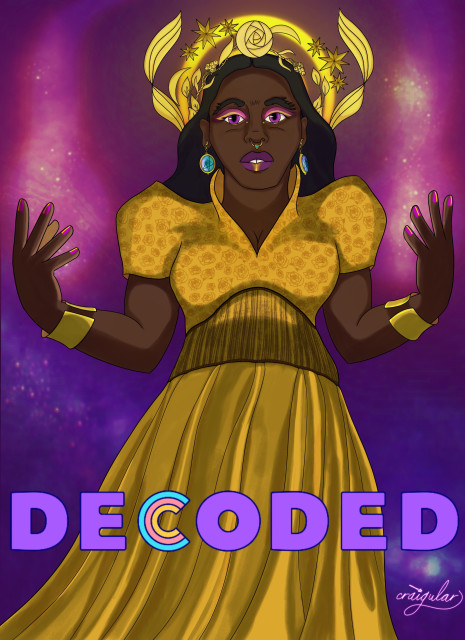
I am thrilled to announce that I have a short story coming up in issue 3 of Decoded Pride: A science fiction, fantasy, and horror story-a-day anthology for Pride month!
This is a really cool project. The editors worked hard to select and curate a collection of flash fiction, short stories, longer fiction, and comics by queer and trans authors with queer and trans themes to celebrate Pride month. Have you been frustrated with how corporate Pride has become? Are you a more introverted queer person? Then this is the ideal way to celebrate Pride this year!
The way it works is you pay the $14.99 subscription fee, and then you have access to the website where all the creative works drop each day. In the late summer or early fall, you’ll be sent a color PDF of all the stories plus interviews with all 30 authors (yes, including me!) You can subscribe at any point throughout the month and get retroactive access to the previous stories. After the month is over, you can still purchase the PDF. As a thank you for being one of my supporters, now through June 30th you can get $2 off your purchase with the discount code FrienzNFam at check-out.
My short story will published on Thursday, June 9th. It’s a sapphic fantasy romance. That means expect something supernatural. Expect women loving women. And I promise you a happy ever after. Also, expect some 90s nostalgia.
Here’s the blurb:
It’s 1998, and Leonora’s friend Virginia is helping her investigate the moans coming from the cemetery across the train tracks from her dorm.
Please be sure to check out my Publications Page for my other work.
6 Tips for Planning a Successful Balcony Garden

Balcony gardens both enhance your own living space and are good for the planet, since they feed the bees. To have a successful balcony garden, it’s important to plan it to fit the space you have. Here are some tips to help you end up with a lush balcony.
1. Know the sun exposure your balcony gets.
Exposure in this case refers to both the amount of sun it gets each day, and how windy it is. Just like yards, some balconies are shady. Others are partial sun or full sun. It’s important to look at your balcony on a sunny day about once an hour and see how much sun it gets. Be aware that some areas of your balcony may have different exposure than others. Consider the exposure in the areas you want to put your containers when selecting plants.
2. Identify wind solutions.
Even if the ground level of your home isn’t windy, it’s likely your balcony is. The further from the ground you are, the more windy it will be. Other factors like how close tall buildings are to your own can also impact the amount of wind.
Once you’ve established how windy your balcony is, consider which solutions to windiness you want to use. You have options.
- Select wind tolerant plants like zinnias.
- Erect wind barriers, such as screens attached to the railing.
- Install support structures for your plants, for example grow cages or trellises.
3. Select containers for your space.
Consider what type you will use. Rail hangers? Vertical planters? Planter boxes? It’s important to know what containers will fit in your space and how before you select your plants. Once you’ve determined the type of containers you’re using, measure the space to ensure you only buy what will fit.
Ideal balcony containers will both have internal water reservoirs and drainage. You want some excess water held onto for drier days at the roots of the plant. But it’s also important that any excess beyond that reservoir can drain. Otherwise it will simply sit on top of your container and potentially drown your plant or cause unsightly mold to grow.
4. Choose your plants.
Now that you know the sun exposure, windiness, and containers you will be using, it’s time to select your plants. Remember to consider your planting zone when making this selection. You can grow a plant from outside of your zone if you are willing to move select plants inside during certain parts of the year. For example, if you are in zone 7, you can have a banana tree on your balcony if you move it indoors in the cooler months.
There is value to growing both edible and decorative plants. Flowering decorative plants help attract more pollinators to a garden that is mostly edible plants. On the other hand, decorative edibles, such as chives or ornamental peppers, can add a dash of variety to both your garden and your meals.
Be aware that many types of plants have varieties already identified as being likely to succeed in containers. For example, the Paris Market Carrot grows to be short and fat instead of long and narrow, which makes it ideal for a container garden.
The world of perennials (plants that come back on their own each year) is not cut off to you in containers. Consider making about half your container garden perennials for ease of care. Chives are perennials and are actually easier to care for in a container than in a lawn garden. Raspberries and blueberries can also do very well in containers and come back perennially.
5. Buy the proper soil and toppers.
Research the best soil mixes for the types of plants you’ve selected. For example, a banana tree needs a different type of soil mix than a tomato plant. You can either buy pre-made mixes or the elements to mix them yourself.
Soil toppers help the balcony garden succeed. Mulch, such as coconut coir, serves two purposes. First, it prevents weeds, which can happen even on a balcony. Second, it helps the plants retain moisture. You might consider further topping the mulch with decorative rocks. Desert plants should skip the mulch and use only rocks or sand.
6. Plan for watering.
Just like lawn gardens, you will need to water your balcony container garden. Ideally you will do this in the early evening or morning. This both ensures the water is there when the plants need it during the heat of the day but also helps prevent the growth of fungi. Schedule it so you don’t forget.
The careful selections you’ve made so far in containers and soil should help minimize your watering. Keep in mind that larger containers also have a larger soil reservoir of water, and so you can water these less. If you have a variety of plants, try to place the plants with higher watering needs in the larger containers. This will help equalize your plants so you’re watering them all at a similar cadence.
A drip irrigation system is the ultimate easy way to water your balcony garden. But you do need access to an external water spigot for these to work. If you don’t have access to a water spigot from your balcony, don’t despair. There are other tools available to ease your watering efforts. You can buy and fill watering spikes or glass globes. You can also repurpose plastic and glass bottles to fill this same need.
If you found this post helpful, please consider tipping me on ko-fi, checking out my digital items available in my ko-fi shop, buying one of my publications, or using one of my referral/coupon codes. Thank you for your support!
Book Review: Good Eggs by Rebecca Hardiman

Summary:
When Kevin Gogarty’s irrepressible eighty-three-year-old mother, Millie, is caught shoplifting yet again, he has no choice but to hire a caretaker to keep an eye on her. Kevin, recently unemployed, is already at his wits’ end tending to a full house while his wife travels to exotic locales for work, leaving him solo with his sulky, misbehaved teenaged daughter, Aideen, whose troubles escalate when she befriends the campus rebel at her new boarding school.
Into the Gogarty fray steps Sylvia, Millie’s upbeat American home aide, who appears at first to be their saving grace—until she catapults the Gogarty clan into their greatest crisis yet.
Review:
This crossed my radar as a “feel good” read, and I do think it fits that bill, although I could see it potentially not being feel good to some readers.
This is told in third person from three different perspectives – Aideen, Millie, and Kevin. All three are flawed characters. Aideen is easily swayed by those around her, being drawn into other people’s shenanigans. She also has a hot temper and feels very overshadowed by her twin sister. This is even more easy to empathize with when one sees how Kevin treats her. (He really does treat her differently than the other three children).
Millie shoplifts. It isn’t treated by any of the characters in the book as kleptomania but rather as “attention seeking” behavior. She’s also very reticent to admit to needing help and very much doesn’t want to end up in an old folk’s home – something she’s convinced Kevin has planned for her. Overall, I find Millie very sympathetic.
Kevin is having a midlife crisis spurned on by his chosen career field changing so much that it feels to him as if it is vanishing. (His job certainly has). Do I have sympathy for him wondering how his life and career ended up like this? Yes. Do I have sympathy for him immediately pivoting to considering an affair while his wife is working hard at the only income in the family? No. Do I think he’s at the core of most of the family’s problems? Yes.
But that’s what I think works so well in the book. The problem isn’t that Kevin doesn’t have a job. The problem is that Kevin isn’t living up to his very important other familial roles. As a parent equally to all his children. As a loving spouse to his wife in the time she has outside of work. And as a child to his mother who’s lonely after his father’s death and very afraid of how old age is going to turn out for her now. He starts to develop an understanding of all of these women’s perspectives over the course of the book, but it’s subtle. And that’s what I like about it. The book is really just a – hey here’s a few months in this family’s life – picture. It just so happens that those few months change Kevin for the better, and thus change the whole family for the better too. Put another way, it’s a book about a house with a bad foundation and what happens everywhere else and then, oh look, how much better it is when the foundation is fixed.
So to me it was a feel good book. I do think some readers might be so bothered by Kevin’s mistakes and Millie’s trials that they lose the good overall vibes of the book. But if you’re ok with a flawed family then this is in general a feel good read.
If you found this review helpful, please consider tipping me on ko-fi, checking out my digital items available in my ko-fi shop, buying one of my publications, or using one of my referral/coupon codes. Thank you for your support!
4 out of 5 stars
Length: 336 pages – average but on the longer side
Source: Library
Buy It (Amazon or Bookshop.org)
Book Review: Rubyfruit Jungle by Rita Mae Brown

Summary:
This bawdy book originally published in 1973 tells the story of Molly Bolt, the adoptive daughter of a dirt-poor Southern couple who boldly forges her own path in America. With her startling beauty and crackling wit, Molly finds that women are drawn to her wherever she goes – and she refuses to apologize for loving them back.
Review:
I’ve been trying to read more queer classics and not solely limit myself to modern queer books. I stumbled upon this when looking for other books published around the same time as Tales of the City (review). While I absolutely appreciate how groundbreaking this was at the time, it didn’t work for me. I’ll have to give a couple of spoilers to be able to discuss why, so be forewarned!
Let’s start with what I did like. The prose calls out the racism of the north at a time when Jim Crow was still around in the south. Just because things may be better from a legal perspective doesn’t mean they actually are any less racist. This isn’t done in a preachy way. It comes about smoothly as Molly’s family moves from the hills of Pennsylvania to Florida. I really liked Molly’s dad, and the arc of her relationship with him. I loved how Molly’s first crush in middle school on another little girl named Leota is depicted. I appreciated how key moments in Molly’s life makes it clear she has to conform to succeed, and she refuses to do it. It hauntingly shows how minoritized people are kept down.
This is told in the first person, and Molly isn’t, to me, particularly likeable. I really wanted to like her. But I didn’t. She’s crass, abrasive, quite reactionary. She looks down on other people even while insisting she doesn’t. Ok, so for most of the book she’s a teenager or a young adult working her way through college. No one is perfect, and she has a lot stacked against her. But I would say she just becomes more full of herself as the novel progresses. I didn’t feel like she really learned anything. I suspect I’m supposed to think she did based on her final film school project, but it was hard for me to be moved by a film I didn’t see.
Something about Molly that particularly bothered me was an instance that really reminded me of some movies from the 70s I’ve seen, where a woman will say no to sex, but then the guy gets a little rough, gets her a little drunk, and later she basically says she’s grateful he took “advantage of her” because she really wanted it deep down (aka he raped her but she liked it). Well, Molly takes on the role of the aggressor in just such a situation in this book.I get it that this was a common trope at the time this book was written, and I’m imagining the goal was to show the same scene but with two women. But just because something was commonly shown in media at the time doesn’t make it right. I just can’t view Molly as a heroine when that’s how she engages with other women.
The other thing that’s problematic about Molly is that, since she’s adopted, she likes to say she doesn’t technically know her race. She bases this on having dark hair. At the end of the book she finds out she’s half…wait for it…French. She sees a photo of her father, and he’s French with dark hair. She never confronts herself about why she had this weird obsession with imagining herself as partially another minoritized race.
One more thing I feel I ought to mention is that Molly has a tendency to speak very negatively about butch presenting lesbians. It’s ok to not be into dating butches yourself. It’s even ok if you yourself find the butch/femme dynamic odd (although why you should care is beyond me). What bothers me, though, is how she describes butch women every single time she sees them. It’s downright insulting. You can be kind to other queer people you aren’t attracted to.
Again, I don’t expect characters to be perfect. Indeed, I think first person books with an imperfect main character are important for understanding other people’s perspective. But I do expect some growth and development over time. I felt throughout the book like Molly had no interest in self-improvement or reflection, and she never even has an epiphany that maybe she should.
Overall, why I understand why this book was groundbreaking, and it certainly had some memorable scenes, I felt the main character is unlikeable and doesn’t grow or change over time. I really liked her dad though. He was a morally flawed, complex character who I really felt could have held up his own fascinating book.
If you found this review helpful, please consider tipping me on ko-fi, checking out my digital items available in my ko-fi shop, buying one of my publications, or using one of my referral/coupon codes. Thank you for your support!
3 out of 5 stars
Length: 221 pages – average but on the shorter side
Source: Library
Buy It (Amazon or Bookshop.org)
Book Review: I’ll Be You by Janelle Brown

Summary:
Two identical twin sisters and former child actors have grown apart—until one disappears, and the other is forced to confront the secrets they’ve kept from each other.
Review:
I previously read Janelle Brown’s Pretty Things and really enjoyed its delightful thriller take on Instagram influencers. I was excited to see another of her books on NetGalley and even more excited to see it using a child star identical twins plot. I smashed that request button, let me tell you, and this did not disappoint. In fact, between the two sisters, it covered two of my other favorite plots – a person with addiction in recovery and a person falling for a cult.
Imagine if the Olsen twins were identical (they’re not) and had a falling out right after they stopped acting. That’s the basic set-up of this book. Sam continues to try to act and also continues to fall into a hole of addiction. Elli pursues a regular life, going to college, setting up a florist business, and marrying. We find this all out in flashbacks, as the book starts with a bang with Sam, who we quickly find out is just past a year in recovery, getting a phone call from her parents to come help take care of her niece. Elli brought her newly adopted toddler daughter to them to go on a quick spa retreat in Ojai, but is gone longer than expected. Sam is shocked by all of this because she and Elli haven’t spoken in over a year for ominous reasons we don’t know yet.
I loved this book. I was immediately enamored with Sam. What a tough situation to get plopped in your lap just over a year into recovery. She suspects something is amiss with Ellie, but Ellie has always been the stable one and Sam the untrustworthy addict, so her parents don’t take her concerns seriously. But we, the readers, quickly see that Sam is likely right. There’s something fishy going on. Why would Ellie and her husband suddenly separate right when they adopt after years of infertility? How likely is it that a woman who struggled with infertility for years would suddenly disappear to a retreat for more than a week, barely speaking to those caring for her long hoped-for daughter? Why won’t Sam and Elli’s mom and dad admit something is off? There’s a lot of delicious suspense immediately.
Most of the beginning of the book is from Sam’s perspective, but partway through we swap to Elli’s. I wasn’t sure how I’d feel about this, because I was so invested in Sam, but it worked. Eventually, we swap back to Sam’s toward the end. Sam’s characterization is just so strong and relatable to me, whereas Elli’s is a more difficult character for me to relate to. But the reason it worked is Sam needs to come to understand Elli and so, getting inside Elli’s head and perspective helped me see that, so that I started to root for Sam’s attempts to rebond with Elli in a way I hadn’t before.
The only reason this is getting four stars and not five from me is because of one scene where a secondary lesbian character is biphobic. It was hurtful to me to read that scene, and I just didn’t think it was necessary to the plot of the book. I’m ok with characters being imperfect when it serves needs of character and plot development, but the exact same plot device could have worked without the biphobia. (Essentially, this character exacts revenge on her ex-wife. While the revenge is spurred on by multiple things the ex-wife did, the tipping point is that she got together with a man after the divorce, and the character is extra upset because it’s a man and she’d “hid” being bisexual from her. Ick. We could have just….had something else be the tipping point. There are plenty of options. An example of biphobia I would have been ok with seeing would have been if Sam and Elli’s big fight was about one of them being bisexual and the other not being able to handle it. That’s important character development. This wasn’t.)
Overall, this was a fun, different read with a main character I really enjoyed and a different take on some common thriller plot devices. I recommend it, and I think I myself might go back and read more of Janelle Brown’s back catalog.
If you found this review helpful, please consider tipping me on ko-fi, checking out my digital items available in my ko-fi shop, buying one of my publications, or using one of my referral/coupon codes. Thank you for your support!
4 out of 5 stars
Length: 368 pages – average but on the longer side
Source: NetGalley
Buy It (Amazon or Bookshop.org)
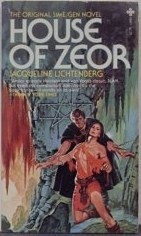
Book Review: House of Zeor by Jacqueline Lichtenberg (Series, #1)
Summary:
In the distant future, humanity has split into two mutant forms: the life-energy producing Gen, and the vampiric, tentacled Sime. Most Simes treat Gens like animals to be consumed for food. Hugh Valleroy from the Gen Territories must infiltrate the Sime lands in order to locate his beloved Aisha. This means joining House Zeor, a Sime Householding led by Klyd, that believes in the necessary unification of the two peoples, and who have the ability to let the Sime feed without killing the Gen donors.
Review:
I do my best to read widely in scifi, which includes older scifi. I especially try to find older scifi by women authors. This book was first published in 1974, and, in addition to being older scifi by a woman, I heard it involved tentacles. I was intrigued, so I hunted down a copy. There are very few reviews online from modern reads. There are some nostalgic reviews about reading it many years ago. So, even though I didn’t like it, I thought it might be helpful to others to contribute a modern, non-nostalgic take.
The basic concept was interesting. There are predators who absolutely need something from the prey to function. It is made abundantly clear that eventually without consuming some Gen life force the Sime die. But the prey are sentient. What to do? Something else that was interesting was that the mutation doesn’t occur until puberty and, bizarrely, children in both Sime and Gen territory mutate into both forms. This means Gen parents turn on their Sime child (for fear of being eaten) and Sime parents….eat their Gen children. What a world! I wish this had been explored more deeply than it was.
A lot of the world building is touched on briefly but then not really explained or not explored deeply enough. Hugh has a “starred cross” he wears that his mother, who escaped Gen territory, gave him, telling him belief in it would protect him. But does it? It’s unclear. What is he believing in exactly? It’s never explored. Similarly, the “selyn” is mentioned a lot but never really defined. The Gens all speak English but the Simes speak “Simelan.” Is this true of the whole world? Just this area? What is Simelan anyway?
Let’s talk about the three things that made me bump this down from three stars to two. First, one of the heroes of the book, Klyd, displays clear homophobia. He and Hugh are an auction of Gens looking for Aisha. It’s established that most Simes view Klyd as a “pervert” because he doesn’t kill Gens but rather has a symbiotic companion relationship with them. Another Sime goes to bid and Klyd says that Sime is the true pervert because he sleeps with men as if they are women. He and all the other Simes show disgust at it, and our other hero doesn’t argue back against it. The existence of queer people is never touched upon again in the book, so this viewpoint remains unchallenged. I found this particularly upsetting as the companionship relationship has some really clear homoerotic undertones. In order to do a selyn exchange, the two people must hold each other’s forearms and then touch at a fifth touching point, the preferred one is lip to lip contact aka to kiss. It’s also common for companions to share a bed. But somehow this relationship isn’t a perversion but being queer is?
The second thing is how race and ethnicity are handled. At a couple of points, it’s established that at some point the races all mixed up together and we have many blended people now. That’s fine. But the main characters are all white coded. I mean, really white coded. In a way that wouldn’t make any sense if this was truly a future of completely mixed races. And when talking about it, Hugh, who is born in this “mixed race” world uses current terms to talk about what races he thinks various people are mixed with. Um, ok. If it’s all of them, why even wonder this? I also want to mention for my Asian diaspora readers that at one point a slur is used to describe someone of Asian descent.
The third thing is how the women in the book are handled. This frustrates me as this was written by a woman. You’ve already noticed the two main characters are men out to save a woman. There are really only three other female characters in the book. One is raped (off-screen). (Slight spoiler coming here). One dies in childbirth. I’d say Hugh’s mother is the only woman character who is well-rounded and interesting.
Overall, the initial world imagined is interesting, but how it is handled is not. Additionally, those looking for a thoughtful handling of the existence of queer people, race, and women won’t be getting it in this book.
2 out of 5 stars
Length: 224 pages – average but on the shorter side
Source: PaperBackSwap
Buy It (Amazon or Bookshop.org)
If you found this review helpful, please consider tipping me on ko-fi, checking out my digital items available in my ko-fi shop, buying one of my publications, or using one of my referral/coupon codes. Thank you for your support!
Book Review: The Places That Scare You: A Guide to Fearlessness in Difficult Times by Pema Chödrön

Summary:
In this book, Pema provides the tools to deal with the problems and difficulties that life throws our way, so that we may let our circumstances soften us and make us kinder, rather than making us increasingly resentful and afraid. This wisdom is always available to us, she teaches, but we usually block it with habitual patterns rooted in fear. Beyond that fear lies a state of openheartedness and tenderness. This book teaches us how to awaken our basic goodness and connect with others, to accept ourselves and others complete with faults and imperfections, and to stay in the present moment by seeing through the strategies of ego that cause us to resist life as it is.
Review:
The majority of this book suggests that fearlessness can be accomplished via mindfulness and various types of meditation. This may be true. I’m certainly not an expert meditator. Although it is something I have been working at for many years. But it was disappointing to me how much of this book was essentially – meditate and be mindful, and you will become fearless. It’s not that it might not work; it’s that I wanted more.
Some of the more that I was wanting did come up a couple of places in the book. The first was in a story of a couple who live in a gated community. They eventually become so afraid of what is outside the gates, that they basically stop living. They get so caught up in the what if’s that they don’t live. I liked how this showed that walls can be of our own making, and being fearless is a daily practice. You don’t just suddenly wake up one day walled in, rather you build that wall gradually day by day. The older I get, the more I appreciate the value of one small step a day.
I also appreciated the introduction to the idea of training in the three difficulties. This was a new a concept to me. I’ll just post the quote, since I doubt I could explain it any clearer than it is in the book.
[It] gives us instruction on how to practice, how to interrupt our habitual reactions. The three difficulties are (1) acknowledging our neurosis as neurosis, (2) doing something different, and (3) aspiring to continue practicing this way.
29%
This reminded me of the wisdom of early sobriety. Becoming sober is largely about changing negative habits into good ones. We acknowledge what isn’t working, commit to do it differently, and practice doing that every day. I liked the idea of applying that to anything I wanted to be braver at. I also like that it has a name. The three difficulties.
If you are new to meditation, the instruction in the book is good. It’s largely focused on metta (loving-kindness) meditation and tonglen (taking and sending). Metta is one of the first types of meditation I learned, and it definitely helps me when I’m in a bad mood. I’m not personally sure that it makes me braver, though. Although, who knows, maybe I would have been much more fearful these last years without it.
Overall, this is an interesting book and a quick read. It was not what I was expecting, but also had its moments of value. Recommended more so to those who are new to meditation and mindfulness.
3 out of 5 stars
Length: 187 pages – average but on the shorter side
Source: Library
Buy It (Amazon or Bookshop.org)
If you found this review helpful, please consider tipping me on ko-fi, checking out my digital items available in my ko-fi shop, buying one of my publications, or using one of my referral/coupon codes. Thank you for your support!
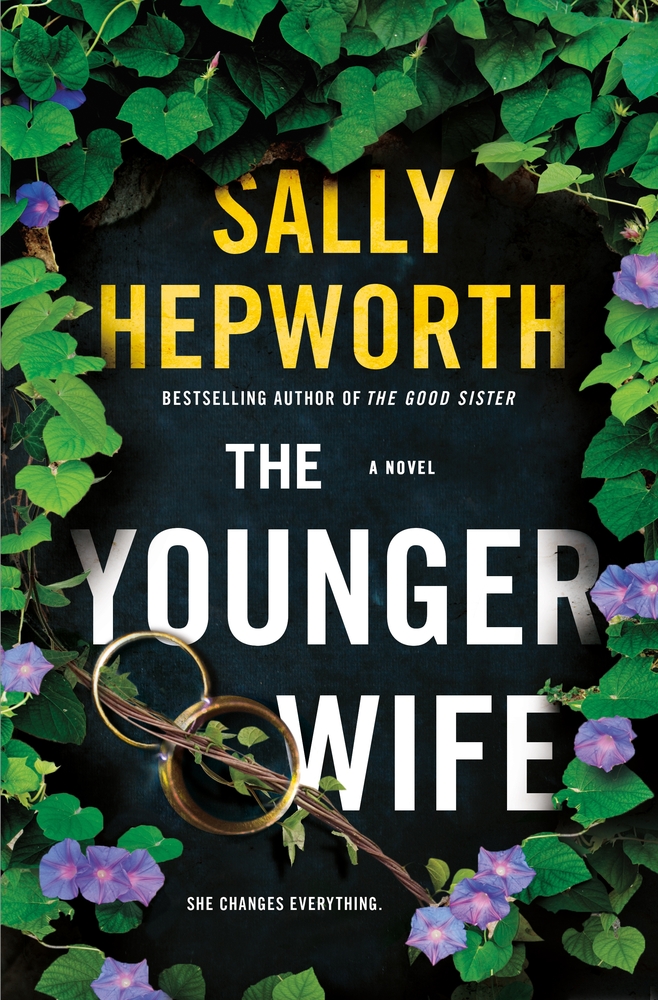
Book Review: The Younger Wife by Sally Hepworth
Summary:
Tully and Rachel Aston look upon their father’s fiancée, Heather, as nothing but an interloper. Heather is younger than both of them. Clearly, she’s after their heart surgeon father’s money. They understand why he might want to date, given that their mother is in a care home due to rapidly advancing early onset Alzheimer’s, but it feels disrespectful that he’s going to divorce her to marry another. Meanwhile, they’re each struggling with a secret. Plus, Heather has secrets of her own. Will getting to the truth unleash the most dangerous impulses in all of them?
Review:
I have a soft spot for Australian psychological thrillers. This is the fourth Sally Hepworth one I’ve read. It ranks near but not quite at the top among her works for me. (My favorite being The Mother-in-Law). It’s pretty obvious early on that Heather is not the big bad, so then the main mystery remains – who is? And of course, what is Rachel’s secret? And when will everyone find out Tully’s secret?
We find out almost immediately that Tully struggles with kleptomania and that Rachel used to date but suddenly abruptly stopped. So the main issues surrounding the two sisters is when will others find out about Tully’s uncontrollable shoplifting and what exactly made Rachel stop dating. I thought the former was handled better than the latter. Tully seeks out therapy and her problems don’t disappear overnight. Rachel meets a nice guy and with him is able to overcome her trauma. That frustrated me a bit. Especially since Rachel is set up as being so strong. One can be strong and also find help in therapy. Or even in a support group structure. It shouldn’t all be on the significant other to help someone heal. So it was a little bit hit and miss for me with the two sisters.
I thought the main mystery of what was actually going on in the weird triangle of the dad, Heather, and the mom was quite well done. I especially appreciated the handling of Alzheimer’s. I do think this book falls prey to the old idea of alcoholism – that one can only have an alcohol problem if one is at rock bottom. Beating a spouse or getting delirium tremens (the shakes) when going too long without it. There are definitely characters in this book who display problems with alcohol, but the narration brushes off the idea that they might have a problem.
The structure starts with a bang – at the wedding, someone is injured, and we don’t know who. The wedding is put on hold, the police are called. We then flash back to Heather meeting the daughters and build back up to the wedding. This is a multiple point of view book. Rachel, Tully, Heather, even the mother get a turn narrating.
This book confronts the problem looming for a lot of new contemporary fiction – do we or do we not acknowledge the pandemic? This strikes a gentle balance of what to do. The characters talk about not shaking hands anymore, one character had a big career setback due to lockdowns, and another character’s marriage is a bit impacted by the work-from-home situation. No major details are mentioned (for example, masks are never discussed, no deaths from the pandemic are mentioned). I envisioned it as happening in 2021 or early 2022. Post lockdowns but not far flung future. I thought it worked fairly well.
Without any spoilers, let’s discuss the kind of gray ending. While it seems to be open to interpretation, for me it demonstrated how even when an abuser is gone, the impacts of the abuse continue. It shows how the voice of the abuser can live on in the mind(s) of the abused. Gaslighting from beyond the grave, but not in a supernatural sense.
Overall, this was a fun read with a different enough plot to keep me engaged. It was a little bit of a mixed bag, which is what kept me from loving it. I put content warnings in for this book over on Storygraph if you’re interested in those. I did wish I’d had them myself.
4 out of 5 stars
Length: 352 pages – average but on the longer side
Source: NetGalley
Buy It (Amazon or Bookshop.org)
If you found this review helpful, please consider tipping me on ko-fi, checking out my digital items available in my ko-fi shop, buying one of my publications, or using one of my referral/coupon codes. Thank you for your support!
 Support my work with a tip or browse my shop for curated book club guides, how to guides, cross-stitch patterns, and more!


This work by Amanda Nevius is licensed under a Creative Commons Attribution-Noncommercial-No Derivative Works 3.0 United States License.
 Opinions of a Wolf