
Archive
Book Review: Haven by Emma Donoghue

Three monks struggle to survive on an inhospitable island off the Irish coast.
Summary:
In seventh-century Ireland, a scholar and priest called Artt has a dream telling him to leave the sinful world behind. Taking two monks—young Trian and old Cormac—he rows down the river Shannon in search of an isolated spot on which to found a monastery. Drifting out into the Atlantic, the three men find an impossibly steep, bare island inhabited by tens of thousands of birds, and claim it for God. In such a place, what will survival mean?
Review:
This is a quiet character study set on a windswept island with only one tree upon it but thousands of birds. (This is based upon a real place in Ireland.) It wrestles with how being with nature at a more intimate level than what is currently experienced by one’s peers can bring out great revelations about a person. Both good and bad. It demonstrates how a group with a leader can show great resolve through trials but also the weakness of unquestioned loyalty to a questionable leader. How do you know when it’s time to question the leader?
What I found particularly interesting was how the story itself shows the strange juxtaposition of this group going to nature but their leader not respecting nature simultaneously. While Cormac and Trian both have a respect for and understanding of nature due to their lives before they were monks, Artt as a scholar does not. He does things and asks the other monks to do things that strike them as odd. Two things in particular feel like wrongdoing to the other two monks although they struggle to articulate why. I found myself wishing that Cormac and Trian could find either Buddhism or a Christian sect that had a greater respect for nature (for example: Franciscans). They would surely have fit in better.
An example of something Artt asks along this line that isn’t particularly a spoiler. Trian, after they arrive on the island, eats some shellfish and brings some back for the others to eat. Artt tells them this food is unclean and forbidden. Trian’s thoughts later:
He wishes he still didn’t know it was forbidden; wishes he was innocent and could cram his belly with whatever dirty, delicious stuff he found.
page 161
Trian loves the birds and watching them. Artt is annoyed by the birds. He views their noisemaking as exacerbated by the devil to work against them and tells Trian that it’s not possible to pray with your eyes open. Trian internally resists this. He feels it is possible to pray with one’s eyes open. The reader is left seeing how much more spiritually Trian engages with God’s creation than Artt does. In fairness to Artt he does have a greater faith than the other two in God’s providing for them. When the other two might be willing to give up and take the boat to get supplies, Artt encourages them to wait and see what they can figure out on the island itself. He’s often correct that they hadn’t quite considered all options yet. One might say that Artt has a lot of faith in God’s creativity and perhaps too much suspicion of Satan’s creativity as well.
There is some queer content. I can’t describe what it is without spoilers. Highlight the next paragraph to see.
Trian is intersex. This is a critical plot point. Cormac and Artt are divided on how to handle Trian after finding out. I was pleased with the resolution and feel the ending is, overall, uplifting.
Overall, this is a quiet study of what happens when one person is given too much authority over other people’s spiritual development. It’s set in a gorgeous, richly imagined backdrop. I couldn’t stop thinking about it after I read it, which is why I rated it five stars.
If you found this review helpful, please consider tipping me on ko-fi, checking out my digital items available in my ko-fi shop, buying one of my publications, or using one of my referral/coupon codes. Thank you for your support!
5 out of 5 stars
Length: 272 pages – average but on the shorter side
Source: Library
Buy It (Amazon or Bookshop.org)
Book Review: A Restless Truth by Freya Marske (Series, #2)

A murder mystery on an ocean liner cruising from the US to the UK in the early 1900s being solved by two women – one of whom is a magician. Both of whom are into each other. Things get spicy…and dangerous.
Summary:
When Maud voyages from the US to the UK on RMS Lyric, she finds a dead body, a disrespectful parrot, and a beautiful stranger in Violet Debenham, who is everything—a magician, an actress, a scandal—Maud has been trained to fear and has learned to desire. Surrounded by the open sea and a ship full of loathsome, aristocratic suspects, they must solve a murder and untangle a conspiracy that began generations before them.
Review:
I’m not sure how I ended up with an advanced copy of the second book in The Last Binding series – when I hadn’t read the first. I’m assuming either I requested it, not realizing it was a second book or it was sent to me based on my reading history with the assumption it didn’t matter. The series aspect is less “the story happens in a row” and more “everyone featured is living in these alternate history version of the early 1900s plus magic.” Apparently the first book in the series features a m/m pairing (Amazon, Bookshop.org), whereas this one stars a f/f pair.
I didn’t struggle too much to figure out what’s going on. The author does refrain from explaining much for the first chapter or two. But that’s because the book starts essentially in media res – with the murder happening. After that has occurred we slow down for a minute, and there’s a refresher of the rules of the universe. It didn’t take me too long to catch up and get into it.
One thing that did surprise me was the spice level of this romance. I was expecting very light spice with most encounters occurring off-screen after a fade to dark. That is not the case. Things get very explicit. Let’s put it this way….at least one of the scenes would have had to have been cut to manage to squeak in an R rating for explicitness. There are three scenes total, and each takes up a whole chapter. To me, this much spice feels like erotica jammed into a romance. I prefer the two separately.
The pairing here is grumpy/cheery. Violet is the grumpy, and I adored her. I liked Maud too, but Violet was someone I could see a whole book’s perspective on. Perhaps I’m biased since Violet is bisexual and the quintessential theater geek. I just really enjoyed her. But Maud is nice enough too. I liked their pairing well enough.
The mystery is substantial enough to hold up a plot. I enjoyed the animals and sneaking around the boat. I did think a bit more attention could have been paid to the class and race issues that sort of came up and got a bit glossed over. I don’t expect preaching in a book but it might have been interesting to at least have Maud and Violet see the second or third class areas of the ship on one of their many attempts to outrun their pursuers. (Somehow they always seemed to end up in the cargo hold instead). Maud talks with disdain of her parents only giving charity when others can see it, but Maud herself doesn’t seem to do much giving either. Violet, at least, offers to become the patron of an all-Black opera. (The real history of Black opera.)
Overall, I liked getting to know Violet, and it was an interesting world to visit. But the spice level was far too hot for what I personally prefer in romance, sliding more into an erotica category in my opinion. It also seems to me that the first book may have been quite different from this one, so readers of the first should come in aware of these differences.
If you found this review helpful, please consider tipping me on ko-fi, checking out my digital items available in my ko-fi shop, buying one of my publications, or using one of my referral/coupon codes. Thank you for your support!
3 out of 5 stars
Length: 388 pages – average but on the longer side
Source: NetGalley
Buy It (Amazon or Bookshop.org)
2022 Award Eligibility

I have four pieces eligible for awards during the 2022 award season in three categories.
All of these were first published during 2022.
For the paid stories, I am able to provide author copies for award consideration purposes only. Please email me at mcneil.author [at] gmail.com to request one.
Short Stories
“The University of Late-Night Moans” in Decoded Pride: A science fiction, fantasy, and horror story-a-day anthology for Pride month
June 9, 2022, issue 3, $14.99 digital
fantasy romance (sapphic / wlw)
It’s 1998, and Leonora’s friend Virginia is helping her investigate the moans coming from the cemetery across the train tracks from her dorm.
“Sister Prudence on the Beach” in Solarpunk Magazine
Issue #6, Lunarpunk Special, Nov/Dec 2022, $6 digital
hopepunk (speculative scifi)
Sister Prudence settles down for her full moon meditation on the beach. But a young one passing by interrupts not just her meditation but perhaps her retirement as well.
Drabble
“Bostonians Aren’t Friends With Our Neighbors” in Wyrms: An Anthology of Dragon Drabbles
July 1, 2022, $3 digital, $6 print
fantasy
The first line is “Deadrodents.com said the box on the triple-decker’s porch next door.”
Creative Nonfiction
“These Boots Were Made for Who?” in Just Femme & Dandy
July 4, 2022, issue 3, free
digital magazine version (page 105) or html/accessible version
literary fashion magazine through a queer lens
I explore how my favorite pair of thrifted boots helped me develop my queer, bisexual fashion sense and sustained me throughout the pandemic.
Book Review: Patricia Wants to Cuddle by Samantha Allen
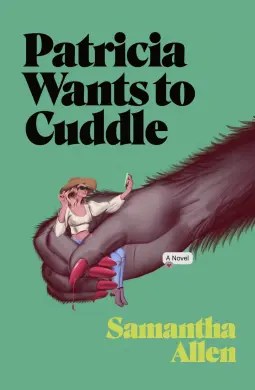
A reality tv dating show is filming its final four – including a closeted bisexual – on an island in the Pacific Northwest, but things take a fantastical horrifying turn the night before the penultimate decision day.
Summary:
This season’s Catch is a slightly sleazy bachelor who helped fund Glamstapix, which explains why so many of the final four women are Glamstapix stars. There’s Vanessa a car model, Amanda the daughter of two lesbian moms with a fashion Glamsta, Lilah-Mae a Dallas-based Christian influencer, and Renee a Black woman nominated by her coworkers who’s pretty over being the token woman of color on the show. No one is thrilled with the rural Otters Island location in the Pacific Northwest but everyone is motivated to make it to the final two in Palm Springs. Things get heated while they film the final interactions before the Catch chooses who will come with him to Palm Springs but things take a horrifying and fantastical turn when the cameras turn off for the night.
Review:
I did not receive the blurb I gave you above. The blurb I got combined with the title led me to believe that this was going to be a reality tv dating show where one of the women contestants was into another one of the women contestants who then gets abducted by a King-Kong like female creature she has to rescue her from. I still love this idea. But this isn’t what actually happens in the book. At all. It’s not a romance. It’s a funny reality tv show book that takes a horrifying turn in the last third.
I repeat. There is no romance in this book. Unless you count old love letters between an elderly B&B owner and her now dead wife. (Not a spoiler, she’s dead from the beginning). Renee is a closeted bisexual who does have feelings for Amanda (or at least the hots for her) but those feelings are not the focus of the book. The title of the book is misleading because Patricia, the giant ape-like monster, absolutely is not out to cuddle anyone. It’s not some weird cross-species ill-fated romance like King-Kong. Patricia is out to murder. And she murders a lot of people gruesomely. If you don’t like descriptions of a monster tearing people apart, then you won’t like the direction this book goes in. Sorry if you consider that a spoiler but I think it’s essential given how the book is being marketed and how the first two-thirds of the book reads to warn you about the dark, horrific ending before you get there.
Speaking of the first two-thirds of the book, that’s what made me give it three stars. I loved the insider look at the overlap of reality tv and influencer culture. I enjoyed Renee’s scathing observations about it all. I appreciated that there was some understanding and empathy for the influencers, especially that it actually is hard work to get the glamor shots and constantly promote every aspect of your day. It’s a fun, light-hearted read. I was wondering why it was taking so long to introduce Patricia. But then when Patricia came in I understood. The last third was basically a rapid slasher, not a search and romantic rescue. So it didn’t need much room.
The following paragraph is a spoiler filled analysis of the ending. Highlight to read.
Renee is the only one that Patricia doesn’t attack. The book seems to make the point that Patricia doesn’t attack her because Renee doesn’t treat her like a monster, and Renee doesn’t do that because she herself is queer. There’s this queer woman death cult that surrounds Patricia and protects her as well, even killing people to keep her existence a secret. To me this read as that monstrous groups only act monstrously (or seem monstrous) because of how you react to them. This might have worked but Patricia literally immediately tears people limb from limb. It’s not a kind act that’s misinterpreted. She hasn’t gently carried someone away in a kidnapping because she’s lonely. She concusses Amanda when she kidnaps her and then later tears her head off when she dares to try to run out of the cave. She scales the tower Lilah-Mae and Vanessa are on and immediately tackles Vanessa unprovoked. If this is an allegory, it’s a bad one, because Patricia is, in fact, acting like a monster. I think the allegory could have worked if there were real misunderstandings involved instead of the actual gore that occurred.
Overall, this felt like two different works mashed together. The first was a funny and empathic analysis of influencer and reality tv culture. The second was a gore-filled horror slash-fest that would work as a short story. The former is more my taste, but I respect the quality of the latter. The way the two are put together, though, might struggle to find its audience. So if you like a slow burn horror led by reality tv satire, give this one a try.
If you found this review helpful, please consider tipping me on ko-fi, checking out my digital items available in my ko-fi shop, buying one of my publications, or using one of my referral/coupon codes. Thank you for your support!
3 out of 5 stars
Length: 256 pages – average but on the shorter side
Source: Library
Buy It (Amazon or Bookshop.org)
Book Review: Lavender House by Lev A.C. Rosen
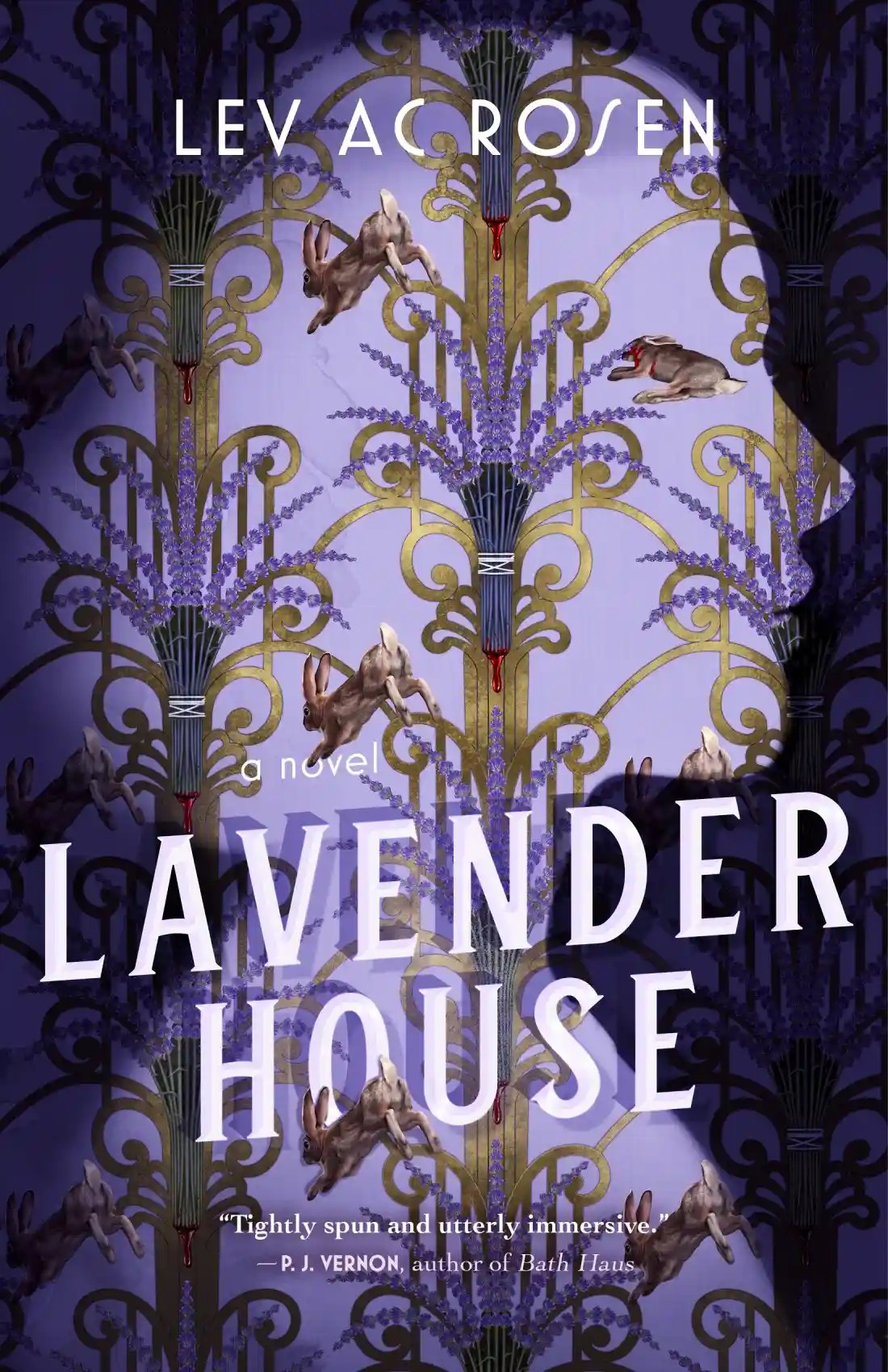
A 1952 noir-esque mystery — but everyone from the detective to the murder victim to most of the suspects themselves are part of the queer community.
Summary:
Andy was just fired from the San Francisco police department after he was found in a compromising situation in a gay bar’s bathroom. He’s having one last night of drinks before throwing himself into the bay when a woman shows up asking him to investigate the murder of Irene Lamontaine – the matriarch of the Lamontaine soap company. She wants Andy to do the job because it turns out Irene was a lesbian, and almost everyone in her home is queer. A secret they have to keep if they want to remain an empire.
Review:
All I noticed in the blurb I saw was that this was a queer Knives Out. I somehow missed the historical part. I loved Knives Out but I wasn’t prepared for the amount of period appropriate homophobic content in this one.
This book is authentic to its time period. It doesn’t gloss over homophobia whatsoever. We witness one brutal gay bashing (literal gay bashing) and two other characters reference their own beatings. This is a world of bribes and secrecy from society such that even the happy characters can never be fully happy. Be prepared for the realistic depiction as you go into it.
The family Lamontaine consists of Irene and her partner Pearl. They have a son Henry. I can’t remember whose biological son he is. He has a partner named Cliff. He’s legally married to a woman named Margo who has her own partner Elsie, who is bisexual and runs a queer bar. Margo’s straight mother Alice begrudgingly lives with them. They have a butleresque character who is also gay, as well as another sapphic couple who run the kitchen and garden. They all get to be themselves inside the Lamontaine house but never outside of it. Irene was found dead in the perfume library. The family and coroner rule it a fall, all with the exception of Pearl who suspects foul play. She found out about the recently outed cop and figured he could be their private investigator without risk of outing them all. The characters feel like a lot but are actually easy to keep track of.
I appreciate that there was a bisexual character. I wished that there was more diversity. There was one Filipino bar tender and a rival soap company run by a Jewish family. With all the rampant homophobia being depicted, I was honestly shocked that racism didn’t come up. It would certainly have been period appropriate to, for example, even allude to issues like redlining or racist responses to the Korean War. If one was completely unaware of history coming into this book, one could have left it thinking the only issue of tolerance and acceptance in the 1950s was sexuality. (For a queer book that does explore racism in San Francisco in the 1950s, check out Malinda Lo’s Last Night at the Telegraph Club).
Please also note that there is a scene where some rabbits are killed. I don’t think this is a spoiler as it’s alluded to on the cover. I wouldn’t have asked for the book at all on NetGalley if I’d been able to see the full cover as it’s rendered now, because I have a personal love for rabbits so that was distressing to me. One of the characters is depicted as having a drinking problem that they are told to snap out of. This is never followed up on in a way that implies the drinking problem is fine now. This isn’t how a drinking problem works. I found this to be a flawed and misleading depiction of alcoholism that was used as a plot device.
The mystery itself was kind of ho-hum. I suspected who did it from the get-go and was proven correct. The solution seemed….more than a bit obvious to me, honestly. If you’re curious, take a guess in the comments, and I’ll respond with if you’re right. Ultimately though for me I wanted this book to swing more fully into one direction or the other. Either to go full period piece and get into all the nitty gritty or move it into the present and just make it fun.
Overall, if a simply mystery set in the 1950s with a mostly queer cast facing an intolerant society appeals to you, then you should give this one a go.
If you found this review helpful, please consider tipping me on ko-fi, checking out my digital items available in my ko-fi shop, buying one of my publications, or using one of my referral/coupon codes. Thank you for your support!
3 out of 5 stars
Length: 274 pages – average but on the shorter side
Source: NetGalley
Buy It (Amazon or Bookshop.org)
Publication Announcement: Hopepunk “Sister Prudence on the Beach”

I am thrilled to announce the publication of my hopepunk short story in the special Lunarpunk edition of Solarpunk Magazine. What’s hopepunk? It’s speculative fiction that gives a glimpse of a hopeful future. The opposite of dystopia. Think Star Trek style. There’s still conflicts but society has improved. Hopepunk is also called solarpunk. Lunarpunk is on the introspective side of hopepunk.
This issue of the magazine costs $6 and includes 12 other pieces, including poetry and nonfiction.
Here’s a blurb about my piece.
Sister Prudence settles down for her full moon meditation on the beach. But a young one passing by interrupts not just her meditation but perhaps her retirement as well.
Please be sure to check out my Publications Page for my other work.
Book Review: Reader, I Murdered Him by Betsy Cornwell
A YA romp told from the perspective of Mr. Rochester’s ward gives a new view of both Jane Eyre and London’s queer underground.

Summary:
Adéle grew up watching her mother dance in Le Moulin in Paris but soon found herself sent away to England with the man her mother said was her father. Mr. Rochester. Soon she meets her governess Jane Eyre and begins her own series of adventures.
Review:
If you have a love/hate relationship with Charlotte Bronte’s Jane Eyre, then this book is for you. If you love your YA with sapphic romance in period costumes, then get this book immediately.
The thing about Jane Eyre is…Mr. Rochester is terrible. Yet she’s still attracted to him. (This was beautifully summed up in the web comic Hark! A Vagrant). Shifting to Adéle’s perspective gives a whole new angle on just how deliciously insidious Mr. Rochester is. Adéle does not pull any punches when it comes to him. It’s downright cathartic for everyone who tears their hair out about Jane’s love for him.
There’s much more in this story than a shift of perspective on Jane Eyre though. Adéle is well-rounded, and we have entire chapters where Mr. Rochester and Jane aren’t mentioned at all or only in passing. My favorite part is when Adéle goes to a finishing school in London, because this is when the sapphic subtext becomes blatant. Adéle has the hots for more than one other teenage girl. (Both of whom are excellent choices, by the way). There’s cross-dressing! There’s scuttling around on the streets of London late at night in widow’s clothes! But also Adéle has feelings for Mr. Rochester’s nephew she’s been exchanging letters with since she first came to England. What to do. what to do. I loved seeing representation of a bisexual woman who leans more in a certain direction usually. I really like that even though she is capable of attraction to men that the sexist society fizzles it for her, making her a bisexual that leans toward women. What a fun twist on what we usually see in period pieces with fluid sexuality.
The book does start slow. The first chapter in Le Moulin was rough with overly flowery language and stirred up drama. But this drops out as Adéle ages and comes into her own. Perhaps some of this was meant to show how she is a little too idealistic in how she remembers her early years. I suspect the first chapter may have served better as flashbacks from her early time in England, rather than linear.
Please do take a moment to check out the content notes on StoryGraph. The ones listed as of the day I was writing this post are accurate.
Overall, this is a fun twist on Jane Eyre that gives agency to Mr. Rochester’s ward Adéle. Come for the twist, stay for the YA sapphic heart-throbbing.
If you found this review helpful, please consider tipping me on ko-fi, checking out my digital items available in my ko-fi shop, buying one of my publications, or using one of my referral/coupon codes. Thank you for your support!
4 out of 5 stars
Length: 288 pages – average but on the shorter side
Source: NetGalley
Buy It (Amazon or Bookshop.org)
Book Review: The Gilda Stories by Jewelle Gómez

Summary:
A young Black girl escapes slavery in the 1850s United States. When she grows up, she is made into a vampire with her consent. We see her immortal life and her perspective of the US through an imagined 2050.
Review:
The author herself stated in a recent article that she wrote this because she wanted “to see a lesbian of color embark on the adventure of eternal life.” This was something that was hard to find in 1991 when it first came out, and is only a little easier to find even now. There’s more of a twist to this, though, than a Black lesbian vampire.
How vampires work in this story is perhaps the most unique take I’ve read. They usually glamor their sources of blood while they are asleep. They come into their dreams and see something they wish for and leave something behind to help. An example is one time a teenager is hoping to do well on a test, so Gilda clarifies some of his mathematics homework for him. They also don’t use their teeth to draw blood but rather make a slice with a fingernail and then heal the wound magically without a trace. Most fascinatingly, these vampires must always keep their “home earth” close to themselves, or they will lose their powers. They must take large pallets of dirt from their home and sew it into their blankets, clothes, and shoes. One complain I have is that it was unclear to me if this dirt was from where they grew up or from where they were turned. It seems sometimes it’s one and sometimes the other. They also are weakened by all water, not just holy water.
Each of the chapter is set in a different year and place in Gilda’s life. It reads almost like a series of interconnected short stories more than a novel. I was reticent to ever stop in he middle of a chapter. I felt compelled to read each in its entirety in one sitting. This blipping in and out of Gilda’s life helps give the reader a sense of the jarringness of immortality. We just get to know a human, and then they’re gone. But that’s how it is for Gilda too.
This is not an erotic book. Gilda’s maker and another vampire named Bird (who also helps make her) are a couple when we first meet them. Gilda repeatedly becomes infatuated with women, both human and vampire, throughout the book. But we only rarely see any sexual interactions. I’m including even kissing here. The book is less about the sexuality and more about the community formed by queer people, often necessarily in the shadows. The often unrequited yearning. Gilda also has a vampiric encounter with a man that some readers view as sexual. I didn’t read it that way myself. I viewed it as a purely vampiric encounter. But you might feel differently.
Gilda’s perspective as a Black woman is ever-present, as it should be. She is othered by white society even when they don’t sense her vampire nature because of her blackness. But she also finds belonging in a variety of Black communities ranging from rural activists to singing nightclubs. Gilda also later in the book is left wondering how humans can feel such atrocities as slavery are so far in the past when for her it was a blink of an eye. An artful way of getting the reader to question how much time and distance is really between us and our history.
Overall, this is a unique take on vampire lore that centers a Black lesbian. It delivers both fantastic historic fiction and Afrofuturism in the same read. An engaging read for lovers of either.
If you found this review helpful, please consider tipping me on ko-fi, checking out my digital items available in my ko-fi shop, buying one of my publications, or using one of my referral/coupon codes. Thank you for your support!
4 out of 5 stars
Length: 252 pages – average but on the shorter side
Source: Library
Buy It (Amazon or Bookshop.org)
Get the Reading Group / Book Club Discussion Guide
A beautifully graphic designed 2 page PDF that contains: 1 icebreaker, 9 discussion questions arranged from least to most challenging, 1 wrap-up question, and 3 read-a-like book suggestions
View a list of all my Discussion Guides.
Counts For:

Book Review: A Dowry of Blood by S.T. Gibson

Summary:
You saved my life when I was on the brink of death, and I became your vampire bride. But we’ve lived many centuries past those days in Romania. I think your way of loving might be more than I can bear.
Review:
I picked this up because I heard that in spite of the husband/wife part of the summary that there’s a significant sapphic subplot. I’m not sure I’d call it significant so much as being one of the three parts of the book.
It’s written as a letter from the vampire bride Constanta to her vampire husband. In the first part, we learn how Constanta became a vampire and her early years with him. In the second, he adds a second wife, Magdalena. But this is true polyamory in that everyone sleeps with everyone. In the third part, he adds a husband, Alexi. Again, everyone has sex with everyone, although this is not the amicable threesome (and sometimes twosomes in both combinations) it once was. It’s clear that while the sire is fine with Magdalena and Alexi sleeping together, he’s less ok with Constanta and Alexi.
But what is the plot of the book? It’s basically Constanta realizing over time just how cruel her husband is and trying to decide if she should try to escape. The most unique part of this was the second part where Magdalena and Constanta both feel an immediate attraction to each other and then proceed to form a romantic bond as their husband perpetually abandons them for his research. I don’t say this just because it’s sapphic but rather because I think polyamory as opposed to polygamy has less representation in literature. Not that either have a lot.
I want to be clear this is not erotica. If it wasn’t for all the vampire feeding blood, I’d say it could probably pull off a PG13 rating for the sexual content. A lot occurs off-screen or is only vaguely described. There’s really only one scene that I think might warrant an R rating for the sex. This in fact is not a story about sex but one about many centuries of abuse and how the persons being victimized finally break free. The thing is…I was here for romance. And I wouldn’t say that’s what this is.
The language is overwrought in a self-aware way. Constanta is old world. These are her words. She sounds like an 1800s teenager who takes everything far too seriously and has some hilarious turns of phrase. I’m sure some readers would read this as gorgeous as opposed to silly. When I say overwrought 1800s language, I’m sure you can tell how well that will work for you.
While the book engaged me enough to finish it, here wasn’t enough unique about it to make me rate it above average. I wanted more of what makes this vampire bride different and less of the usual tropes. But if you’re a person who loves Old Europe style vampires and wants a dash of f/f love and polyamory in there, then this will likely work quite well for you.
If you found this review helpful, please consider tipping me on ko-fi, checking out my digital items available in my ko-fi shop, buying one of my publications, or using one of my referral/coupon codes. Thank you for your support!
3 out of 5 stars
Length: 248 pages – average but on the shorter side
Source: Library
Buy It (Amazon or Bookshop.org)
Counts For:
Book Review: Station Eternity by Mur Lafferty

Summary:
Mallory is constantly embroiled in murder cases that only she has the insight to solve. But outside of a classic mystery novel, being surrounded by death makes you a suspect and a social pariah. So when she gets the opportunity to take refuge on a sentient space station, she takes it. Surely the murders will stop if her only company is aliens. But when the station agrees to allow additional human guests, humans and aliens alike begin to die…
Review:
A scifi mystery with creative imaginings of multiple alien species and a queer cast.
My favorite part of this book is the various alien species present on the space station. The Gneiss formed from rocks. They don’t ever really die but hibernate then come back in a new form. They can be pebbles, humanoids, or even shuttles. The Phantasmagore have a symbiont vine growing on their ankles that let them camouflage into their surroundings. The Sundry are a hivemind of bee-like creatures that are mysteriously divided into blue and grey factions. Most interesting is that all alien species evolved to have a symbiont. This is another species that merges with them for a mutually beneficial relationship. Only humans didn’t. Why they don’t have one is one of the mysteries of the book.
In spite of the fact that many of the characters are aliens, this still manages to be a diverse book. Multiple characters are Black, one is Korean-American, and the automatic translator uses human names from around the globe to substitute for alien names that humans couldn’t possibly pronounce. (For reasons like that they can’t vibrate to communicate like the Gneiss do).
The marketing I saw was Agatha Christie in space. The storytelling isn’t comparable. Agatha Christie novels are mostly one pov. Third person from the detective’s perspective. This book uses multiple povs. This annoyed me, because at many times, we the readers know things Mallory doesn’t. It removes a lot of the mystery. We end up just sitting there waiting for her to find out something we already know. And it’s not just switching pov in a seen. There are multiple flashback chapters where we go and see a character’s whole backstory. It’s important for an author to know all this detailed information, but not for the reader to. An example is one character who the military recruits to something. We have a whole chapter of flashback to the military recruiting her. Then later Mallory finds out. We didn’t need this chapter about the recruitment. We could have just seen Mallory find it out. More suspense and less dead time (pun intended) waiting for flashbacks to be over. While I liked the story itself, the style of telling it wasn’t for me.
The queer content is that Mallory is bisexual. Another character is a trans gay guy. Another minor character is gay. I appreciate that these identities are not a big deal and mentioned in passing like a character’s hair color. I was a little uncomfortable with one scene with the trans character, Phineas. His brother is trying to reassure him that they’re definitely related. For some reason, the way he reassures him of this is to say his deadname and explain why their father gave him that name. It just seemed like a completely unnecessary use of the deadname to me. (Could have just said…dad named you what he did because of X and that’s why he’s definitely your dad too). I don’t mind characters making mistakes. But it would have been nice to have established Phineas doesn’t mind hearing his deadname. Or to have his brother realize his mistake and apologize.
Recommended for mystery readers who like scifi and multiple povs.
If you found this review helpful, please consider tipping me on ko-fi, checking out my digital items available in my ko-fi shop, buying one of my publications, or using one of my referral/coupon codes. Thank you for your support!
3 out of 5 stars
Length: 336 pages – average but on the longer side
Source: NetGalley
Buy It (Amazon or Bookshop.org)
 Support my work with a tip or browse my shop for curated book club guides, how to guides, cross-stitch patterns, and more!


This work by Amanda Nevius is licensed under a Creative Commons Attribution-Noncommercial-No Derivative Works 3.0 United States License.
 Opinions of a Wolf