
Archive
Book Review: The Cuban Heiress by Chanel Cleeton

Two women aren’t exactly what they appear to be on a cruise from NYC to Cuba in 1936.
Summary:
In 1934, a luxury cruise becomes a fight for survival as two women’s pasts collide on a round-trip voyage from New York to Havana in New York Times bestselling author Chanel Cleeton’s page-turning new novel inspired by the true story of the SS Morro Castle.
New York heiress Catherine Dohan seemingly has it all. There’s only one problem. It’s a lie. As soon as the Morro Castle leaves port, Catherine’s past returns with a vengeance and threatens her life. Joining forces with a charismatic jewel thief, Catherine must discover who wants her dead—and why.
Elena Palacio is a dead woman. Or so everyone thinks. After a devastating betrayal left her penniless and on the run, Elena’s journey on the Morro Castle is her last hope. Steeped in secrecy and a burning desire for revenge, her return to Havana is a chance to right the wrong that has been done to her—and her prey is on the ship.
As danger swirls aboard the Morro Castle and their fates intertwine, Elena and Catherine must risk everything to see justice served once and for all.
Review:
A delightful and unique mystery set in 1936 against the backdrop of the actual SS Morro Castle whose last cruise ended in tragedy.
The mystery is told in alternating pov’s of Catherine and Elena. I liked both women, and so enjoyed both pov’s. Elena is Cuban, and Catherine (“Katie”) is Irish-American. We know right from the beginning that Catherine isn’t the heiress she’s pretending to be, and that the world thinks Elena is dead when she really isn’t. What we don’t know is precisely why. Catherine seems at first to be running some sort of scam, and she’s an engaging and likeable scam artist. Elena is more of the strong and silent type, and it at first seems like she might be working on something tied to smuggling from Cuba. But it is clear that whatever she is doing has some non-self-centered motivation. Both characters are well-done and each get their own romances, although Catherine’s is much more fleshed-out. (This is a closed door romance.)
The time period is reflected in the settings and dialogue without overshadowing the main mystery. The mystery itself is really only a mystery because key pieces of information are withheld from the reader. That’s my least favorite type of mystery, so I was a bit annoyed by that. Since the boat is only docked for one day in Havana, we don’t get to see much of Cuba, and I would have liked to have seen more. Perhaps in a flashback, since Elena is originally from Cuba.
Overall, this is an enjoyable historic mystery with a dash of romance in a luxury setting of a 1936 cruise ship that still manages to make both of its main characters relatable and likeable. Recommended for those who like historic mysteries and romance.
If you found this review helpful, please consider tipping me on ko-fi, checking out my digital items available in my ko-fi shop, buying one of my publications, using one of my referral/coupon codes, or signing up for my free microfiction monthly newsletter. Thank you for your support!
4 out of 5 stars
Length: 336 pages – average but on the longer side
Source: Library
Buy It (Amazon or Bookshop.org)
Book Review: Swamp Story by Dave Barry

One scheme to lure tourists to a failing Everglades store crosses paths with another one to pitch a reality tv show in this humorous mystery.
Summary:
Jesse Braddock is trapped in a tiny cabin deep in the Everglades with her infant daughter and her ex-boyfriend, a wannabe reality TV star who turned out to be a lot prettier on the outside than on the inside. Broke and desperate for a way out, Jesse stumbles across a long-lost treasure, which could solve all her problems—if she can figure out how to keep it. The problem is, some very bad men are also looking for the treasure, and they know Jesse has it.
Meanwhile, Ken Bortle of Bortle Brothers Bait and Beer has hatched a scheme to lure tourists to his failing store by making viral videos of the “Everglades Melon Monster.” The Monster is in fact an unemployed alcoholic newspaperman named Phil wearing a Dora the Explorer costume head. Incredibly, this plan actually works, inspiring a horde of TikTokers to swarm into the swamp in search of the monster at the same time villains are on the hunt for Jesse’s treasure. Amid this mayhem, a presidential hopeful arrives in the Everglades to start his campaign. Needless to say, it does not go as planned. In fact, nothing in this story goes as planned. This is, after all, Florida.
Review:
This was marketed to me as a humorous thriller, but humorous mystery is more accurate. There is absolutely a mystery – primarily who is going to get the gold – but I wouldn’t call it a thrilling, edge-of-seat read.
I love visiting Miami and the Everglades, and I’m happy to read books set there. The Everglades was particularly well described, as was Coral Gables, a posh neighborhood of Miami. I was interested in where the gold came from and who would ultimately get it. I also liked how many different characters end up merging together in one chaotic scene in the swamp. Building to that scene was a lot of plot work, and the author did it artfully without it ever feeling laborious to the reader.
There is a character who is in active alcohol addiction, and we essentially see his rock bottom followed by his willingness to seek recovery. The recovery he seeks is of the old school variety, but all pathways are valid. Unfortunately, his actual recovery is off-screen. (If you’d like to see on-screen recovery, check out my book, Waiting for Daybreak.) We do, however, get an epilogue to see where all the main characters end up, so we do actually get to see him living a sober life a little bit in the book, which I appreciated.
Something that stuck out to me when reading this book, though, was how few Latine characters there were. None showed up at all until about 40% of the way through the book, and then there was only one throughout the whole book. When I go to Miami, even my flight there from New England has Latine people on it. Latine people are everywhere in Miami, and a large part of what makes Miami feel the way it does is the presence of our Latin-American siblings. I love how there’s Spanish being spoken everywhere and various aspects of Cuban-American culture. Miami is 70.2% Hispanic or Latino (2020 data). So I was quite disappointed to have this book set in Miami and the Everglades with only one Latine character, and even that character was very minor.
With regards to the humor, I understand how other readers would find it funny. I could spot the scenes that other readers would find funny. But they just didn’t tickle my own personal funny bone. If you’re not sure if the humor will be a good match for you, read the first chapter. It’s a good representative of the humor throughout the book.
One other thing I must mention is part of the “thrills” of the book is that the sole female main character (who has a breastfeeding infant) is being followed by two ex-cons who are partially out to rape her. The majority of the danger she is under is of being raped by these two men. I personally prefer for the danger a character is facing in a thriller or a mystery to have nothing to do with sexual assault. While that may be the reality in the real world, I don’t get enjoyment out of that threat looming over the characters of any gender in my reads. (This post from Another Angry Woman does a great job of explaining why we don’t need the threat of sexual assault to understand a villain is bad.)
Overall, this is a zany and unique plot that depicts southern Florida’s natural settings quite well, although it misses the mark with depicting Florida’s human diversity. Readers should check out the first chapter to see if the humor is a match for them.
If you found this review helpful, please consider tipping me on ko-fi, checking out my digital items available in my ko-fi shop, buying one of my publications, using one of my referral/coupon codes, or signing up for my free microfiction monthly newsletter. Thank you for your support!
3 out of 5 stars
Length: 320 pages – average but on the longer side
Source: NetGalley
Buy It (Amazon or Bookshop.org)
Book Review: The Haunting of Alejandra by V. Castro

Alejandra, deep in the throes of postpartum depression, starts to see the specter of the Mexican folk demon La Llorona.
Summary:
Alejandra no longer knows who she is. To her husband, she is a wife, and to her children, a mother. To her own adoptive mother, she is a daughter. But they cannot see who Alejandra has become: a woman struggling with a darkness that threatens to consume her.
Nor can they see what Alejandra sees. In times of despair, a ghostly vision appears to her, the apparition of a crying woman in a ragged white gown.
When Alejandra visits a therapist, she begins exploring her family’s history, starting with the biological mother she never knew. As she goes deeper into the lives of the women in her family, she learns that heartbreak and tragedy are not the only things she has in common with her ancestors.
Because the crying woman was with them, too. She is La Llorona, the vengeful and murderous mother of Mexican legend. And she will not leave until Alejandra follows her mother, her grandmother, and all the women who came before her into the darkness.
But Alejandra has inherited more than just pain. She has inherited the strength and the courage of her foremothers—and she will have to summon everything they have given her to banish La Llorona forever.
Review:
The concept for this book is super original. A family with a genetic predisposition to postpartum depression is also haunted by an interdimensional being who takes advantage of that among the first-born daughters. It tackles both intergenerational trauma (especially of the colonized) and postpartum depression through a speculative lens. This speculative horror book also shows the main character going on a healing journey.
I particularly appreciated that the postpartum depression wasn’t a mere symptom of the haunting. Alejandra has postpartum depression. The being essentially targets the negative things Alejandra’s brain is already telling her. An example from the very beginning of the book is Alejandra is crying in the shower because she is so sad, and the being shows up and starts suggesting her family would be better off without her. An idea Alejandra has probably already had, but now she’s hearing it from this being that she thinks only she can see. This strategy becomes clearer when we see the flashbacks to Alejandra’s ancestors. The being also sometimes takes advantage of physical ailments but it primarily targets mental ones. I appreciated how this meant the story still took the reality of postpartum depression seriously while also tackling the issue of the multi-generational haunting. The story is told both in the present and through extended flashback chapters to previous generations.
The main character is Chicana married to a white man. In the flashbacks to the previous generations we see the racism her grandmother endured in the 1950s, and we also learn some about Mexican history (both recent and in immediate colonization by the Spanish) through two ancestors further back. The main character is bisexual, and there is a significantly important trans side character in a historic time period flashback. I particularly appreciated seeing a trans person represented in a historical time period.
The writing was at times a little clunky, especially towards the end. It just felt like I was reading a book, as opposed to getting lost in it, and it felt like different characters sounded the same. Again, this wasn’t throughout the book but limited to occasional scenes especially toward the end of the book. I also found it an odd choice to inform the reader the present-day was 2020 and then never acknowledge any of the 2020 issues. (For example, expected the mother with postpartum depression to end up dealing with distance learning for her two school-age children. But nothing ever came up.) Everything else could have stayed the same and been in 2019, so I’m not sure why it wasn’t 2019. I also felt that the husband character was treated in a two-dimensional way, as was the marriage. Marriage is very complex and yet complexity was only allowed to the postpartum depression and not the marriage. While I enjoyed this read, I did prefer the author’s previous book, The Queen of the Cicadas / La Reina de las Chicarras (review). One reason that is also evident in the title, was that book had more Spanish in it, which let me practice my Spanish more.
Overall this is a really unique read that explores postpartum depression and intergenerational trauma through a speculative lens. It’s a plot that will keep you guessing and intrigued.
If you found this review helpful, please consider tipping me on ko-fi, checking out my digital items available in my ko-fi shop, buying one of my publications, using one of my referral/coupon codes, or signing up for my free microfiction monthly newsletter. Thank you for your support!
4 out of 5 stars
Length: 272 pages – average but on the shorter side
Source: NetGalley
Buy It (Amazon or Bookshop.org)
Publication Announcement: Comedy Horror: “Polar Bear Plunge”

I am thrilled to announce the publication of my comedic horror short story “Polar Bear Plunge” in issue #11 Fall Equinox 2023 themed This One’s for the Weirdos of The Last Girls Club. The Last Girls Club is an indie feminist horror ‘zine.
There are a lot of different definitions of feminist horror. The one I like best is, as opposed to abusing women in a voyeuristic way, feminist horror speaks to a unique terror that is connected to the ‘female’ existence. (The MarySue) In my short story, the uniquely terrifying female existence that’s being explored is a mother outsourcing her own identity into her daughter, and what that does to the daughter.
Here’s a blurb about my piece:
It was the first night of Julie’s sixth summer in a row at Camp Piney Hills. But it also would be her last. Enjoy this exploration of mother/daughter issues mixed with a send-up to campy 1980s slasher movies.
If you do purchase the issue, my story starts on page 28.
Please be sure to check out my Publications Page for my other work.
Thank you as always for your support!
Book Review: The Villa by Rachel Hawkins

When Emily’s on-again off-again best friend (who also just so happens to be a power of positive thinking influencer) invites her to spend the summer at an Italian villa, she’s surprised to discover it’s the same villa famous for a murder in the 1970s.
Summary:
As kids, Emily and Chess were inseparable. But by their 30s, their bond has been strained by the demands of their adult lives. So when Chess suggests a girls trip to Italy, Emily jumps at the chance to reconnect with her best friend.
Villa Aestas in Orvieto is a high-end holiday home now, but in 1974, it was known as Villa Rosato, and rented for the summer by a notorious rock star, Noel Gordon. In an attempt to reignite his creative spark, Noel invites up-and-coming musician, Pierce Sheldon to join him, as well as Pierce’s girlfriend, Mari, and her stepsister, Lara. But he also sets in motion a chain of events that leads to Mari writing one of the greatest horror novels of all time, Lara composing a platinum album––and ends in Pierce’s brutal murder.
As Emily digs into the villa’s complicated history, she begins to think there might be more to the story of that fateful summer in 1974. That perhaps Pierce’s murder wasn’t just a tale of sex, drugs, and rock & roll gone wrong, but that something more sinister might have occurred––and that there might be clues hidden in the now-iconic works that Mari and Lara left behind.
Yet the closer that Emily gets to the truth, the more tension she feels developing between her and Chess. As secrets from the past come to light, equally dangerous betrayals from the present also emerge––and it begins to look like the villa will claim another victim before the summer ends.
Review:
Told in both the 1970s and the present, this thriller highlights the similarities and differences of fame and near-fame for women.
The present-day perspective is that of Emily, a moderately successful cozy author going through a nasty divorce. While she’s able to make a living entirely off her writing, her success pales in comparison to her sometimes best friend Chess. Chess has a positivity influencer brand that includes publishing power of positive thinking style books (think The Secret merged with Girl, Wash Your Face.) The 1970s perspective is that of Mari, the girlfriend of one of the musicians who stayed at the villa in the 1970s. Both she and her stepsister found fame after the murder. Mari in the form of a horror book. Her stepsister in the form of an insanely popular singer/songwriter album.
The book’s central premise is that the men in these women’s lives are holding them back from finding their own artistic expression, fame, and success. The question is, are the women’s reactions justified? Put another way, are the women using self-defense (of their art) to an appropriate level given the threat? Another secondary question is can two women ever really fully support each other’s art or is someone always getting the short end of the stick?
The book isn’t heavy-handed in exploring these questions. Indeed, I was primarily wrapped up in the two mysteries going on. The first being who committed the initial murder in the villa in the 1970s. The second being why has Emily been suffering from a mysterious medical condition and does Chess have ulterior motives to having invited her to the villa? That’s a lot of mystery for one quick thriller, and it works.
I was impressed at the amount of backstory and extra information the author had to consider in putting together the two timelines. We have snippets of Mari’s book, a horror best seller by a woman in the 1970s that rivaled The Shining (my review) in this imaginary version of the 1970s. There are excerpts from that book in this one that the author had to write in a completely different tone and manner than her own writing and in a way that would make sense for the 70s. There’s also snippets of Chess’s brand, basic characters and plot for Emily’s cozy series, an excerpt from a podcast episode about the murder, Mari’s writing about her summer at the villa, and lines from her stepsister’s songs from her most famous album. That’s a lot of different voices and moving parts to keep straight, and the author does a great job of that. I found myself wishing there was more found items in the book, like another podcast episode or something. That’s not a critique. I enjoyed it so much I wanted more.
There were two things that I didn’t love about the book. These are both spoilers, so consider yourself warned! First, Emily’s illness is repeatedly brushed off by doctors as in her head. This is very frustrating and relatable for anyone who’s dealt with a mystery illness. However, by the end of the book it’s revealed that the illness is indeed psychosomatic. Even talking to her husband on the phone makes Emily sick. So the stress of being with him has been making her ill. I found this to be a really disappointing depiction. Yes, chronic illness can improve when a stressor is removed. But that wasn’t the situation in this book. Emily was only sick because of being so stressed out about her marriage. Once that’s removed, she’s better. A disappointing perspective to see in the book. Second, Chess and Emily decide to kill Emily’s soon-to-be-ex-husband since he’s dragging Emily to court for partial rights to her cozy series and threatening to do that for anything else she writes, as well as is blackmailing Chess. That’s a fine twist that makes sense. The issue is, the book shows them inviting him to visit them in the villa and reveals that he drowned and that the local police ruled it an accidental drowning. But it doesn’t show us how Emily and Chess did it. Nor is it really believable that they would be cleared so quickly in the death given the nasty divorce proceedings Emily was current undergoing. She would obviously have been a serious suspect, not brushed off so easily as one. Unless they did something with the murder that made it impossible to suspect her at all. But, again, this isn’t shown in the book. It was a short book with very little time dedicated to this murder, and I think it would have benefited from that.
Overall, in spite of two plot points I either didn’t appreciate for chronic illness representation issues or felt didn’t make much plot sense, I still enjoyed the read. It was a unique merging of a period piece thriller and a modern thriller featuring an influencer and female friendship. Recommended to thriller readers looking for a book rich in female characters who also enjoy the arts and the 1970s.
If you found this review helpful, please consider tipping me on ko-fi, checking out my digital items available in my ko-fi shop, buying one of my publications, using one of my referral/coupon codes, or signing up for my free microfiction monthly newsletter. Thank you for your support!
4 out of 5 stars
Length: 279 pages – average but on the shorter side
Source: NetGalley
Buy It (Amazon or Bookshop.org)
Book Review: The Exorcist by William Peter Blatty

The book that came before the classic horror movie featuring a little girl who may or may not be possessed by a demon and the priest struggling with his faith called upon to help her.
Summary:
Actress and divorced mother Chris MacNeil starts to experience ‘difficulties’ with her usually sweet-natured eleven-year-old daughter Regan. The child becomes afflicted by spasms, convulsions and unsettling amnesiac episodes; these abruptly worsen into violent fits of appalling foul-mouthed curses, accompanied by physical mutation. Medical science is baffled by Regan’s plight and, in her increasing despair, Chris turns to troubled priest and psychiatrist Damien Karras, who immediately recognises something profoundly malevolent in Regan’s distorted fetures and speech. On Karras’s recommendation, the Church summons Father Merrin, a specialist in the exorcism of demons . . .
Review:
I’d seen the classic horror movie and, while I thought certain shots were gorgeous and the soundtrack was beautiful, I felt rather ho-hum about the story overall. Imagine my surprise when I found the book version simultaneously thrilling and intellectually engaging. A difference even more interesting since Blatty wrote both. (It’s more common for a different author to write the screenplay adaptation of a book.)
From the beginning of the book, there are three story threads. First there’s Chris, the divorced, wealthy, actress mother who is an atheist and her daughter who starts acting funny. Second, there’s Father Karras, a psychiatrist and a priest who is having a crisis of faith. Third, there are recent desecrations in a local church that a detective is investigating. These three threads merge by the end of the book. But their separate developments kept me simultaneously intellectually engaged and thrilled.
While there absolutely is the thrilling aspect of what is wrong with Regan and can she be healed/saved from it, I was drawn in by the exploration of faith. How it presents in different people, even those we assume must have a very strong faith or none at all. What it means to have faith. How having faith impacts people. How evil forces can use someone’s doubts and misunderstandings against them. (This part of the book reminded me of a more subtle version of The Screwtape Letters.)
I really felt both for Father Karras and for Regan. For the former, I understood how adult life had slowly worn down his youthful faith. How it was easier for him to believe in things when he was young than it was now in middle-age. And I also felt for Regan, whose mother left her completely unequipped to protect herself against forces of darkness. The fact that her mother forbid the nanny to mention God to her but also simultaneously allowed her to play with a Ouija board. If she’s so atheist as to not want a child to even know the concept of God, shouldn’t she also ban all religious items, including ones used for witchcraft, from her home? I don’t view this as a writing flaw but rather an accurate assessment of how often atheism attacks the concept of God but not of other supernatural forces. Indeed, I think demonstrating this was probably a part of the point.
The book does a good job of leaving it up to the reader to decide if Regan was actually possessed by a demon or having a psychosomatic experience in response to the trauma from her parents’ divorce. I’m sure you can tell from my review that I fall on the she was possessed side. You can see from the book how much more traumatic the 1970s viewed divorce for children than we do now. The 1970s brought no-fault divorce, and so the divorce rate went up, but there was still social stigma. So even though for the modern reader a simple, relatively amicable divorce with a bit of an absent father is nowhere near enough trauma for a child to have a psychotic break, for the audience in the 1970s with the stigma still fresh, it was. And the scientific side of why they think this might be is well-explained. It’s just to me it’s very clear this is a demon.
My experience of the book being about faith matches what Blatty said in interviews in his life. It’s interesting how that has been overshadowed by the cultural experience of the movie as a horror classic. Perhaps the book can be both. Indeed, theological horror is a genre.
The reason it’s not a full five stars for me is I felt like the last third of the book wasn’t as strong as the first two-thirds.
Let me leave you with my favorite quote from the book.
I think the demon’s target is not the possessed; it is us … the observers … every person in this house. And I think—I think the point is to make us despair; to reject our own humanity, Damien: to see ourselves as ultimately bestial, vile and putrescent; without dignity; ugly; unworthy. And there lies the heart of it, perhaps: in unworthiness. For I think belief in God is not a matter of reason at all; I think it finally is a matter of love: of accepting the possibility that God could ever love us.
page 345
Overall, this is a complex book of theological horror. It keeps the plot moving forward with multiple threads and compelling scenes while also taking the time to contemplate big questions about faith. Well worth the read, even if you have seen the movie, as it is a different experience altogether.
If you found this review helpful, please consider tipping me on ko-fi, checking out my digital items available in my ko-fi shop, buying one of my publications, using one of my referral/coupon codes, or signing up for my free microfiction monthly newsletter. Thank you for your support!
4 out of 5 stars
Length: 403 pages – average but on the longer side
Source: Library
Buy It (Amazon or Bookshop.org)
Get the Book Club Discussion Guide
A beautifully graphic designed 2 page PDF that contains: 1 icebreaker, 9 discussion questions arranged from least to most challenging, 1 wrap-up question, and 3 read-a-like book suggestions
View a list of all my Book Club Guides.
Book Review: Positively, Penelope by Pepper D. Basham

A grumpy/sunshine, no spice romance set in the theater world.
Summary:
Penelope Edgewood is practically positive in every way, so when, fresh out of college, she is awarded a paid internship to help save a century-old theater on the island of Skymar, she jumps at the chance. After all, a crumbling theater needs the special touch of someone who reveres all things vintage and adores the stage.
Unfortunately, not everything is as it seems at Darling House Theatre. Finances are in shambles, the local theater group is disenchanted, and the two brothers, Matt and Alec Gray, can’t seem to see eye-to-eye about how to run their theatrical business. So, of course, it’s the perfect place for Penelope to shine her own personal brand of sunshine.
With a little help from GK, the person emailing her encouragement along the way, she puts all her heart into helping the Grays save Darling House. But between Matt’s ever-present skepticism, Alec’s tendency to treat Penelope a little too much like the “princess” she thinks she wants to be (until someone actually started treating her that way), a grandfather who is stuck in his grief, and a mysterious person stealing Penelope’s marketing ideas, she’s not sure her optimism is enough to make a happily-ever-after of her own story, let alone The Darling House’s.
Between an adorable little girl, a matchmaker, a sea monster or two, and a copious amount of musical references, can Penelope draw enough confidence from her faith, her family, and her adoration of all things Julie Andrews, to find the thief and save the theater . . . without getting her heart broken in the process?
Review:
This book is presented as a Christian fiction romance told “mostly” in an epistolary style, but I found it to be neither of those things.
This is definitely a light-hearted, no spice romance. I found Penelope endearing, and her love interest just the appropriate amount of grumpy with a reason. As a musical theater geek myself, I absolutely loved all of the references to classic musicals and how the male main character alludes to Gene Kelly. I also like that while Penelope is a sunshine character, we get to see how she has to actively choose to be happy and optimistic. It’s not her natural default. She’s given a depth.
Now, I love epistolary books, and I didn’t notice that the book said only that it was “mostly” epistolary, so I was jarred the first time there was a non-epistolary scene. I was willing to give it a pass, though, since it was a phone call scene. In fact, I could see how a phone call scene might work in a modern epistolary novel. However, by about two-thirds of the way through the book, most of the writing was typical book – not epistolary. It wasn’t even phone call scenes. It was basically like any modern book that includes some text messages and such. I like both styles of writing for different reasons, but I found the mixing the total flip-flop from one to the other jarring to say the least.
I realize this book is from a Christian publishing house, but I think it’s a marketing flaw to market it as “Christian fiction.” The characters’ religious beliefs played almost no role in the book. They mention God a few times, and the characters mention having gone to church a couple of times, but no scenes are set in a church. They mention praying but never actually pray on-screen. Also, in spite of being Christians, they never mention Jesus or the Holy Spirit, and we never see them reading the Bible. The blurb says that her faith guides Penelope’s decisions, but I absolutely did not see that in the book. I found Hani and Ishu’s Guide to Fake Dating (review), published by a mainstream publishing house, to have more issues of religion and faith in it. One of the main characters is Muslim, and her faith impacts her relationships with her friends, we see her praying, we see her reading the Quran, we see her go to the mosque. All of which is to say, if you’re interested in the romance but turned off by the idea that it’s “Christian romance” – don’t be. On the other hand, if you’re interested in seeing faith represented in what you read, you won’t get that here.
This book is set on a fictional island colonized by the UK. The Indigenous people are mentioned in passing a couple of times (as “natives”), but we never actually meet one or see their culture. This is extra bizarre since The Darling House is a community-based theater. Why is it only celebrating the colonizer’s culture? There’s also a royal family that’s not tied to the UK anymore. There’s no exploration, even in passing, of the ethical issues in colonization or even a whiff of a suggestion of decolonization. I get wanting to set your romance in a fantasy land, but the way to do that is like the fake country of Genovia or the fake royalty in a fake country in Never Ever Getting Back Together (review). Why imagine additional colonization tragedies if you’re not going to explore them and broach the topic of decolonizing? The way the book is written, it’s clear none of the characters see any problems with colonizing or issues for the Indigenous peoples, and that’s not the sort of fantasy land I personally want to visit. This is also another example of how, in my opinion, this book is not really rooted in strong Christian theology, as social justice is a key Christian issue.
Overall, this is a lighthearted, no spice grumpy/sunshine romance. It focuses on the grumpy character’s heart warming up over time. The book itself makes some comparisons of the romance to The Sound of Music but the von Trapp’s resisted an invading fascist force whereas these characters celebrate a colonizing royalty.
If you found this review helpful, please consider tipping me on ko-fi, checking out my digital items available in my ko-fi shop, buying one of my publications, using one of my referral/coupon codes, or signing up for my free microfiction monthly newsletter. Thank you for your support!
3 out of 5 stars
Length: 416 pages – average but on the longer side
Source: Library
Buy It (Amazon or Bookshop.org)
Book Review: Wanderlust by Elle Everhart

In this romcom that tackles hard topics, Dylan wins a trip around the world, the only catch is she has to go with a man she ghosted months ago.
Summary:
Feeling stuck at work and tired of London’s dreary weather, magazine writer Dylan Coughlan impulsively rings a radio station one day only to win a once-in-a-lifetime trip around the world. The catch? Her travel partner must be a contact randomly selected on her phone. And of course this stressful game of contact roulette lands on a number listed only as Jack the Posho, an uptight, unbearably posh guy she met on a night out and accidentally ghosted.
The two couldn’t be more different, and as the trip kicks off, Jack seems like he’d sooner fling himself into the sun than have a conversation with Dylan. But more is hinging on this trip than the chance to see the world. For the past two years, Dylan’s been relegated to writing quizzes (and only quizzes) at her lifestyle magazine after an article about her past abortion went viral—and not in the good way. If she’s able to make a series about their trip successful, her overbearing boss will give her a chance at a permanent column. Dylan’s willing to do anything to make the series a hit, even if it means embellishing her and Jack’s relationship to satisfy readers. But as the column’s popularity grows, so does the bond between Dylan and Jack, and Dylan is forced to consider if the one thing she thought she always wanted is worth the price she’ll have to pay to get there.
Review:
I picked this up off the library’s new book shelf because the romcom set-up sounded great. I was pleasantly surprised in chapter one to find that Dylan identifies as both queer and bisexual. Yay for more representation! But I actually ended up not liking Dylan particularly much by the end of the book.
Let’s start with the good. I found the romance sweet. It’s a classic grumpy/sunshine and organized/disorganized (Oscar and Felix for us olds out there). I liked how Dylan teased Jack for being posh and how he clearly didn’t mind the teasing. I was intrigued by why Jack was willing to drop everything to go on a trip around the world with someone who ghosted him who he also seemed to not like very much. And I was rooting for Dylan to find success blogging about her trip. The first destination was Australia, and it was definitely written the best. I could really visualize Australia, and I felt like we saw the characters spend an appropriate amount of time there.
In contrast, for a book about a trip around the world, a lot of the locations really breezed by. For example, India was less than a chapter. In South Africa we saw them at a dock. In New York we hear Jack excited about the Empire State Building but then don’t see the characters go there. It was a little bizarre for a book ostensibly about a trip around the world with a magazine writer. It was a let-down after the Australia chapters, especially.
The book deals with a couple of tough topics that might be a turn-off to some readers. Dylan wrote about her own abortion around the time Ireland was looking at its abortion policies. Her piece went viral, and she ended up being cyberbullied and doxxed. These topics aren’t mentioned in passing. They come up repeatedly in the book. Kind of heavy for a romcom. While the blurb I gave you talks about it, the blurb on the back of the print book I got from the library doesn’t mention it at all. It’s clear from looking at reviews that readers would have preferred knowing in advance, and I am glad the blurb was updated accordingly.
To me, Dylan started out likeable enough but became less likeable as the book progressed. The first glimmer I got of this was early on in Australia when Jack is nervous doing an activity, and she’s irritated at him because him looking and seeming anxious (while still doing the activity!) is impinging on her own enjoyment of the activity. This would be like saying your flight is ruined because a person in the seat next to you seems a little nervous during the flight but doesn’t talk about it and causes no issues. She has basically no empathy for Jack and is clearly self-centered. Which was jarring. As the book continues, it becomes increasingly clear that she acts without thinking. Ok sometimes people do that. But when it’s a recurring character trait that impacts other people (and hers does), that’s an issue. Especially for a character who’s almost 30. I also found how she spoke to her mother to be really terrible. She wasn’t trying to have a conversation with her mother (even though her mother was clearly trying to do so). She was giving her a speech without any interest in reconciliation. I don’t personally think her mother messed up enough to warrant that. And I didn’t like seeing it played up as some big empowering scene for Dylan. I thought it was quite sad, actually.
For readers wondering about the spice, this was an odd mix. The vast majority of the book is low spice/slow burn. Then there is one very spicy scene that takes up two chapters. (This scene also managed to make me like Dylan even less, and the score was already pretty low at that point). I found it jarring to go from all of the heat being from like a hand on the low of your back to a detailed spicy scene. I would have preferred a fade out and maybe some post-activities snuggling and pillow talk. It just fits the vibe of the rest of the book better.
Overall, the idea for the set-up for this romcom is stellar. Jack is a great leading man. But he’s set up with a leading lady who’s not particularly likeable, and the romcom is dragged down by some heavy topics.
If you found this review helpful, please consider tipping me on ko-fi, checking out my digital items available in my ko-fi shop, buying one of my publications, using one of my referral/coupon codes, or signing up for my free microfiction monthly newsletter. Thank you for your support!
3 out of 5 stars
Length: 368 pages – average but on the longer side
Source: Library
Buy It (Amazon or Bookshop.org)
Book Review: The Woman in Cabin 10 by Ruth Ware
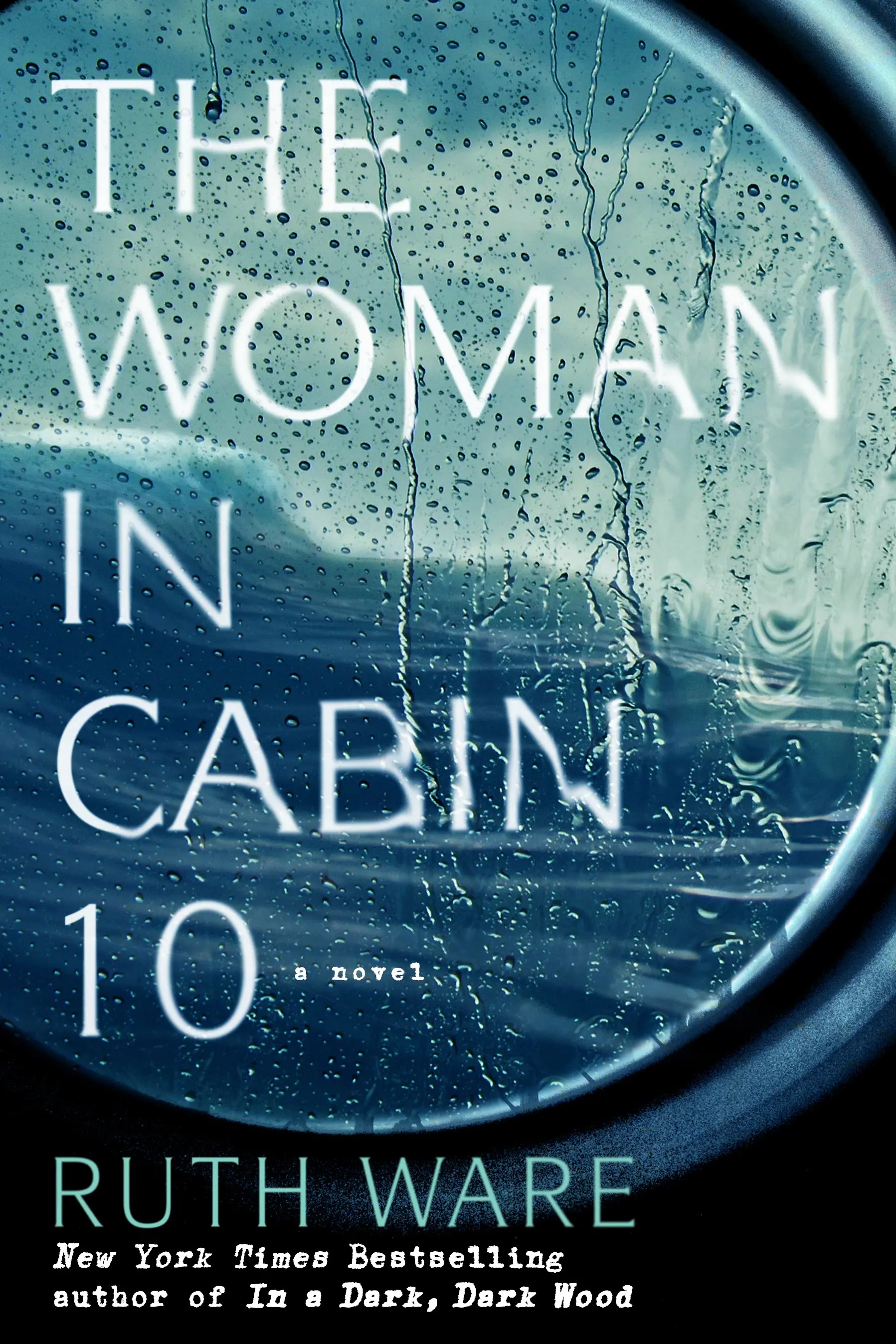
A travel journalist borrows a mascara from the woman in the cabin next-door to hers, but then the entire luxury cruise denies there ever was a woman staying there.
Summary:
Lo Blacklock, a journalist who writes for a travel magazine, has just been given the assignment of a lifetime: a week on a luxury cruise with only a handful of cabins. The sky is clear, the waters calm, and the veneered, select guests jovial as the exclusive cruise ship, the Aurora, begins her voyage in the picturesque North Sea. At first, Lo’s stay is nothing but pleasant: the cabins are plush, the dinner parties are sparkling, and the guests are elegant. But as the week wears on, frigid winds whip the deck, gray skies fall, and Lo witnesses what she can only describe as a dark and terrifying nightmare: a woman being thrown overboard. The problem? All passengers remain accounted for—and so, the ship sails on as if nothing has happened, despite Lo’s desperate attempts to convey that something (or someone) has gone terribly, terribly wrong…
Review:
This is my sixth Ruth Ware book (two reviewed on the blog), and I generally enjoy them quite a bit, but this one was my least liked so far. Just like all of her books, the plot is sound and deliciously twisty. But I absolutely could not stand the main character.
We first meet Lo when she’s going through a break-in in her flat (first chapter stuff, not a spoiler). I think this is both supposed to make the reader empathize with Lo and later serve as an explanation for why she over-identifies with the mysterious woman in Cabin 10. Lo’s response to the break-in besides the logical things like changing her locks, is to drink a lot of alcohol and then wander over to her boyfriend’s flat in the middle of the night when she thinks he’s out of town. Then when he startles her by arriving home to his own flat, she (half-asleep) knocks out one of his teeth with a lamp. Then after he tells her he gave up a job to stay in the same city as her, she gets mad at him and starts a fight with him. Within twelve hours of knocking out his tooth. Maybe I’m just a little bit sensitive to tooth loss since I’ve been dealing for months with replacing a tooth lost to trauma. But I’m not sure how I’m supposed to like this woman after this set-up. It gets even worse when we later find out she’s on anti-anxiety medication that’s not supposed to be mixed with alcohol. Like. This woman is bumbling around like a bumper car in a pottery shop. So while I was curious about the missing woman in cabin 10, and the twists in that part of the story kept me reading, I couldn’t have cared less if Lo lived or died. Which is definitely not how I was supposed to feel given what a very real threat her life later comes under.
I liked the setting of a small luxury cruise ship on the North Sea. I could really see the ship in my mind, and it felt very much like a locked room Agatha Christie style story with the limited number of guests and crew to suspect. Perhaps we were supposed to think that Lo might be wrong about there being a woman in cabin 10, but I was quite confident from the beginning and the title of the book that she was a reliable (albeit terrible) narrator. There is a very slow literal locked room about two-thirds of the way in. I almost gave up at that part, but I’m glad I persisted because the twists were unexpected, and the scenery for the final confrontations was spectacular.
Overall, if you either think the plot makes the annoying main character worthwhile or, perhaps, you find her less annoying than I do, this is a fun, quick thriller read.
If you found this review helpful, please consider tipping me on ko-fi, checking out my digital items available in my ko-fi shop, buying one of my publications, or using one of my referral/coupon codes. Thank you for your support!
3 out of 5 stars
Length: 340 pages – average but on the longer side
Source: Found in free pile
Buy It (Amazon or Bookshop.org)
Book Review: The Road to Roswell by Connie Willis

When a woman who doesn’t believe in aliens comes to Roswell for her college roommate’s UFO-themed wedding, she’s shocked to find herself abducted by an alien and driving all over the southwest at his tentacled bidding.
Summary:
When level-headed Francie arrives in Roswell, New Mexico, for her college roommate’s UFO-themed wedding—complete with a true-believer bridegroom—she can’t help but roll her eyes at all the wide-eyed talk of aliens, which obviously don’t exist. Imagine her surprise, then, when she is abducted by one.
Odder still, her abductor is far from what the popular media have led her to expect, with a body like a tumbleweed and a mass of lightning-fast tentacles. Nor is Francie the only victim of the alien’s abduction spree. Before long, he has acquired a charming con man named Wade, a sweet little old lady with a casino addiction, a retiree with a huge RV and a love for old Westerns, and a UFO-chasing nutjob who is thoroughly convinced the alien intends to probe them and/or take over the planet.
But the more Francie gets to know the alien, the more convinced she becomes that he’s not an invader. That he’s in trouble and she has to help him. Only she doesn’t know how—or even what the trouble is.
Part alien-abduction adventure, part road trip saga, part romantic comedy, The Road to Roswell is packed full of Men in Black, Elvis impersonators, tourist traps, rattlesnakes, chemtrails, and Close Encounters of the Third, Fourth, and Fifth kind. Can Francie, stuck in a neon green bridesmaid’s dress, save the world—and still make it back for the wedding?
Review:
Connie Willis’s To Say Nothing of the Dog is one of my favorite scifi/romance/comedy reads of all time (review). I’m also a huge fan of the American Southwest, so when I heard about this book, it went on my wishlist immediately. (Shout-out to my siblings-in-law for the birthday present). This was definitely a rollicking, feel-good read, which was just what I needed.
Francie is a fun main character. Jumping right into her being at the airport on her way to a wedding she wants to help her old college roommate see is probably a bad idea builds up the identification and empathy right away. Who among us hasn’t had a friend in a questionable relationship? She doesn’t believe the alien stuff of everyone else at Roswell, but she’s kind about it. (She doesn’t go around calling them names in her head).
When she is abducted by an alien who looks like a tumbleweed who can’t speak but can only force her to drive with his tentacles and gesturing seriously in the direction he wants to go, I was hooting. What a fun idea for an alien species Indy is! I also like how the crux of the issue between humans and Indy is the difficulty in communication. Unlike a lot of scifi, he doesn’t just show up with a translator. Communication is a big problem and leads to a lot of comedic situations (including the, ahem, abduction). I was particularly fond of how Indy keeps semi-accidentally adding more people to his collection of abductees due to miscommunication.
The American Southwest is lovingly depicted from the glorious sunsets to the shocking vast emptiness, not to mention the overwhelming situation that is Las Vegas (right on down to an Elvis impersonator). Dusted on top of these depictions are quotes from various westerns (including a lot from one of my favorites, Support Your Local Sheriff). Movie westerns and how they reflect (accurately and inaccurately) the American Southwest are cleverly added via a character who is obsessed with them.
So I loved the setting, the plot, Francie, and Indy. The humor wasn’t quite working for me in the way it has in other books of hers, though. It didn’t ever bother me it just didn’t tickle my funny bone. That didn’t matter, because the book was still feel-good for me. But it did keep it from rocketing up to new favorite territory. There is also one infuriating scene where Francie is trying to get in touch with other people without Indy hearing and she, bafflingly, calls and leaves voicemails rather than texting. I just cannot think of a single person Francie’s age I know who would ever default to calling and not texting in a regular situation, let alone one where you want to not be overheard. (I mean, you can even text 911 these days….) I understand for the point of the plot that calling needed to happen but then we needed a reason for it. Maybe Francie’s texts wouldn’t go through. Maybe she lost her smartphone in the airport and had to borrow her friend’s old flip-phone. Something. This is a minor quibble though in a book that was generally a delight.
Overall, this a feel-good scifi read with a dash of romance and a very lovable alien. Perfect for scifi lovers wanting an escapist read or romance readers wanting a no spice read with a dash of something different.
If you found this review helpful, please consider tipping me on ko-fi, checking out my digital items available in my ko-fi shop, buying one of my publications, or using one of my referral/coupon codes. Thank you for your support!
4 out of 5 stars
Length: 405 pages – average but on the longer side
Source: Gift
Buy It (Amazon or Bookshop.org)
 Support my work with a tip or browse my shop for curated book club guides, how to guides, cross-stitch patterns, and more!


This work by Amanda Nevius is licensed under a Creative Commons Attribution-Noncommercial-No Derivative Works 3.0 United States License.
 Opinions of a Wolf