
Archive
Book Review: Amen Maxine by Faith Gardner

You move cross-country with your brand-new husband and newborn to start a new life only for your digital assistant to inform you that your husband is going to try to kill you.
Summary:
Welcome to Silicon Valley, where the weather is perfect, the income is high … and Rowena Snyder is miserable. A transplant from New York, Rowena moved into her husband Jacob’s idyllic childhood home with their new baby. But suburbia isn’t Rowena’s cup of Starbucks. And she’s got serious anxiety and depression to boot.
Jacob, worried about their marriage, scores a new product currently in beta testing from his tech job: Maxine, a “digital friend” that bonds with an individual by continually gathering their personal data. Along with functioning like an upscale digital assistant, Maxine has “advice” and “prediction” modes that have shown promise for patients with mental health issues. To Rowena’s shock, the device turns out to be not just helpful, but eerily accurate, predicting events before they occur.
It’s a godsend until Maxine offers a series of increasingly bone-chilling predictions that will change Rowena’s life forever.
This domestic suspense novel asks, who do you trust more—your mind, your man, or your machine?
Review:
This book had me nodding my head in understanding while also absolutely cackling. The main character, Rowena, has some flavor of anxiety disorder. How she feels about the world and the reassurance she seeks was quite relatable to me. But she’s also really droll and fun to see interact with her world. When her husband brings home a digital assistant from his job that’s in beta testing for helping people with depression or anxiety, she’s skeptical and reticent to use it. Until she needs directions on the least anxiety-provoking way to go for an errand. Then she’s sold. But just when she’s getting comfortable with using Maxine and getting out into the world more, it tells her that her husband is planning to kill her.
The first 50% of the book was the perfect blend of suspense and humor. I loved that the way Rowena has to confirm changes to the digital assistant is to say “Amen Maxine.” It lends itself to some pretty funny dialogue. I also liked how the book explores in a not banging you over the head with it way the risks of using technology to treat mental health. Is it really working or is it making things worse? This part of the book was a solid five stars to me.
The last half of the book lost the sense of humor and became somehow both darker and less unique than the beginning. I feel like I would have enjoyed it more if it wasn’t in such contrast to the beginning. But the ending twist was still a surprise, and I was left feeling like I’d read a unique story. I received the print book as a gift, and I didn’t even realize it was indie published. I thought it was a small press. It’s quite professionally done.
I would be remiss not to mention that the main character is bisexual. She’s wonderful representation with her bisexuality being a part of her and her life, but not something she dwells upon. I also liked how she naturally seeks out other queer people after her move for friendship.
One thing that surprised me when I finished it and added it to my GoodReads is that the title has now changed. The author recently changed the title to The Prediction. Personally I like Amen Maxine better but I hope that the change for presumably marketing reasons is beneficial to her. But if you are interested in the book – look for The Prediction by Faith Gardner or use my direct link provided.
Overall, this was a fun psychological thriller with an interesting main character and a unique plot. If you’re a usual reader of thrillers, you’ll likely enjoy it. If you don’t usually read thrillers but are intrigued by the idea of a maybe evil digital assistant, give it a try.
If you found this review helpful, please consider tipping me on ko-fi, checking out my digital items available in my ko-fi shop, buying one of my publications, using one of my referral/coupon codes, or signing up for my free microfiction monthly newsletter. Thank you for your support!
4 out of 5 stars
Length: 262 pages – average but on the shorter side
Source: gift
Buy It (Amazon, not available on Bookshop.org)
Book Review: The Stranger Upstairs by Lisa M. Matlin
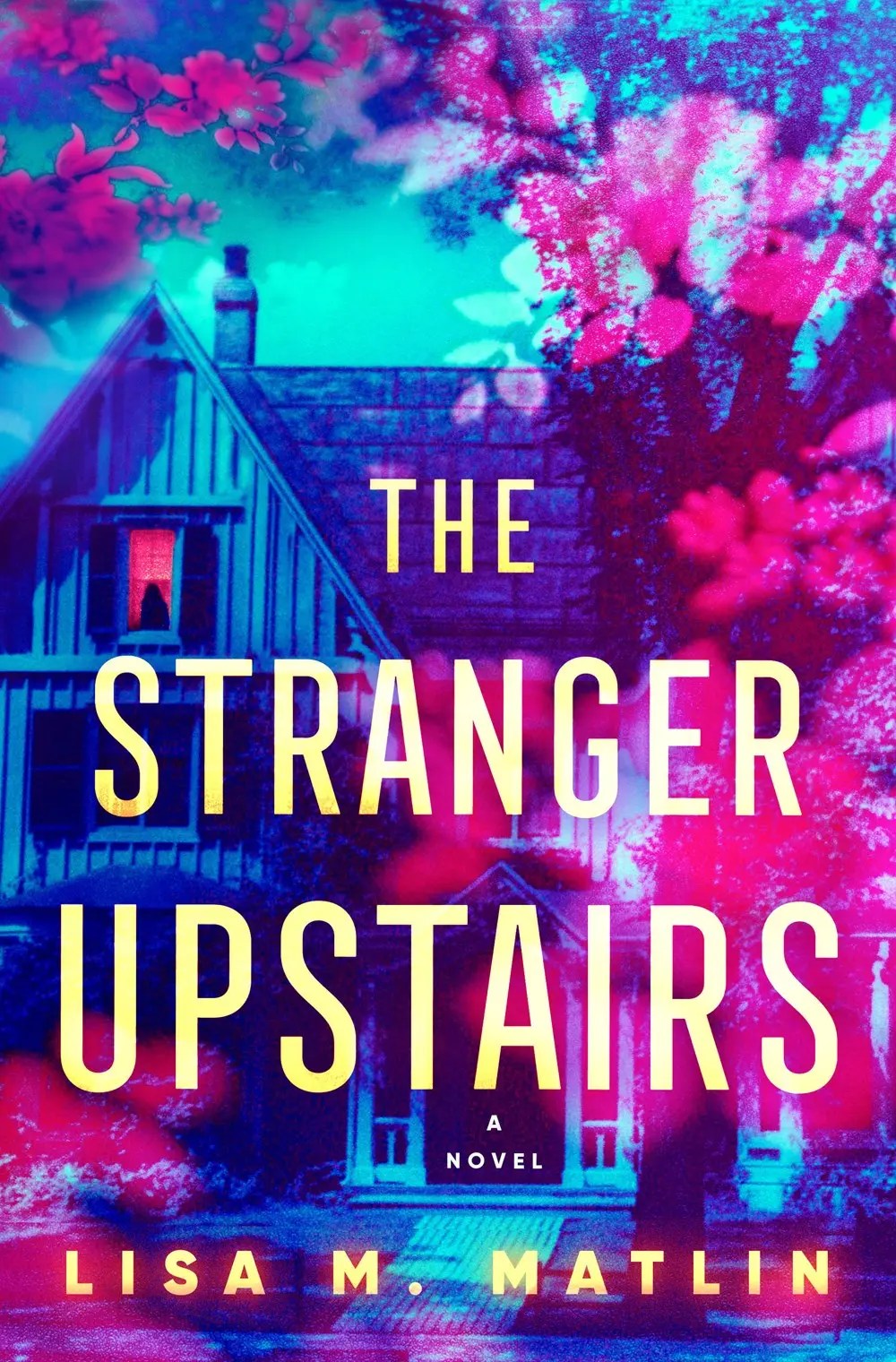
Sarah Slade’s a self-help influencer who’s trying to make content out of her attempt to flip the infamous Black Wood murder house. But of course not everything goes to plan.
Summary:
Sarah Slade is starting over. As the new owner of the infamous Black Wood House—the scene of a grisly murder-suicide—she’s determined that the fixer-upper will help reach a new audience on her successful lifestyle blog, and distract her from her failing marriage.
But as Sarah paints over the house’s horrifying past, she knows better than anyone that a new façade can’t conceal every secret. Then the builders start acting erratically and experiencing bizarre accidents—and Sarah knows there’s only so long she can continue to sleep in the bedroom with the bloodstained floor and suffer the mysterious footsteps she hears from the attic.
When menacing notes start appearing everywhere, Sarah becomes convinced that someone or something is out to kill her—her husband, her neighbors, maybe even the house itself. The more she remodels Black Wood House, the angrier it seems to become.
With every passing moment, Sarah’s life spirals further out of control—and with it, her sense of reality. Though she desperately clings to the lies she’s crafted to conceal her own secrets, Sarah Slade must wonder . . . was it all worth it? Or will this house be her final unraveling?
Review:
I have a weak spot for psychological thrillers by women Australian authors so when I saw a new author on the scene, I hit that request button over on NetGalley. This was a breath of something different in that genre, and I really enjoyed it.
What stood out to me was how the setting was in the more rural part of Australia. That means the scene setting includes more Australian wildlife and trees. Also this main character was neither a mother nor pregnant nor trying to become pregnant. Her focus is her social media career.
I liked how the book used the starting point of Sarah trying to keep her moment in the sun going. She had an article she wrote for a website take off and managed to spin that into a self-help book deal that did well. But now she’s struggling to write her second book and keep the interest up on her. She decides to feed two birds with one scone. She’ll fulfill a dream of hers to live in a town that she normally could never afford. She’ll also spin it as something to keep interest in her social media account while she struggles to write her second book.
The mystery of is the house evil or not is accompanied by some mystery about Sarah herself. The is the house evil or not mystery really kept me guessing right up until the end, and the twist surprised me. I didn’t so much enjoy the mystery about Sarah for a couple of reasons. First, it’s solely mysterious due to information being withheld from the reader that the main character knows. I think the book would have just as thrilling (perhaps even more so) if we had known what Sarah knew earlier. Second, it leans heavily on psychological issues. I don’t know enough about the specific issue being used to know if it was represented accurately. But I am a little concerned it might have been overly dramatized for the sake of the plot.
The main character drinks too much and is also presented in the narrative as having an alcohol problem. But this plot point gets dropped at the end and not resolved.
Readers sensitive to plots involving animals in pain should be aware that a pet becomes sick for mystery reasons partway through the book. The pet does survive, however.
Overall, this was a different plot in the women’s Australian psychological thriller genre. Recommended to fans of the genre looking for some variety or those who have yet to try it out for whom the maybe evil house plot appeals.
If you found this review helpful, please consider tipping me on ko-fi, checking out my digital items available in my ko-fi shop, buying one of my publications, using one of my referral/coupon codes, or signing up for my free microfiction monthly newsletter. Thank you for your support!
4 out of 5 stars
Length: 288 pages – average but on the shorter side
Source: NetGalley
Buy It (Amazon or Bookshop.org)
Book Review: The Woman in Me by Britney Spears

Two years after her conservatorship ended, pop star Britney Spears tells her story.
Summary:
In June 2021, the whole world was listening as Britney Spears spoke in open court. The impact of sharing her voice—her truth—was undeniable, and it changed the course of her life and the lives of countless others. The Woman in Me reveals for the first time her incredible journey—and the strength at the core of one of the greatest performers in pop music history.
Written with remarkable candor and humor, Spears’s groundbreaking book illuminates the enduring power of music and love—and the importance of a woman telling her own story, on her own terms, at last.
Review:
I think it’s important you know what sort of perspective you’re getting in my review. So let me be clear: I am a Britney Spears fan. From the moment I heard the first four notes of …Baby One More Time’s mp3 playing through the tinny speakers on my family’s pc when I was 13 years old, I was enamored – and I hadn’t even seen the music video yet! (And I didn’t for a while.) When I did finally start seeing Britney and not just hearing her, it got even better. Her fashion sense was, to me, spot on. I wanted nothing more than to wear those jeans and bare my midriff like her. (Although, I did not have the body confidence to do so.) Her eyeliner, her music videos, her sound.
Britney’s music was a perpetual backdrop to my rough teens and twenties. I laughed when Oops! I Did It Again mentioned the necklace in The Titanic. I got teary-eyed singing Lucky in my bedroom. I played I’m a Slave 4 U both because I liked it and because it drove my mother insane. I was terrified of snakes, and Britney DANCED with one while performing. I was a closeted bisexual, and when she kissed Madonna, I lost my mind. When she had kids, I was in college. I didn’t understand why she was so excited to be a mom, but I loved that she knew what she wanted so much. Blackout dropped my senior year, and I belted out Piece of Me on study breaks. I listened to Womanizer to make myself feel better when I was lonely in grad school Circus is still on my #GirlBoss playlist I listen to to help hype myself up when I’m doing something that feels scary in my various careers. (I’m on my second.)
When her conservatorship started, I didn’t understand what it meant. I thought she had trouble with her finances, and someone was helping her out. My husband took me to see her at her Vegas residency. I was so excited I threw up in our hotel room right before the show. I feel badly now knowing what she was going through (I did not know then), but I am here to tell you she still put on a phenomenal show for us fans in spite of all that.
When the #FreeBritney movement really started to take off, and I came to understand what a conservatorship actually meant, I joined in calling for her to be freed. I explained to anyone who would listen what was wrong with a conservatorship. And I believe this for anyone, not just for Britney. No one deserves to have their adult agency taken away, regardless of their mental abilities and/or mental health. Anything else is just ableist.
Anyway, that is who is reviewing this memoir for you. A fan who loves Britney for who she is.
The ghostwriters did a very good job of leaving Britney’s voice clearly in-tact throughout the book. It sounds like her. The story is told mostly chronologically from her childhood forward, although there is sometimes some jumping back and forth in some places. If you have read Britney’s Instagram captions, then you have some idea of the general tone of the book. But it has been edited so it is clearer than those. (And with less run-on sentences, and no emojis except in the Afterword.)
What stood out to me the most about the book was these things. First, Britney expresses that being put in the conservatorship caused her to regress sometimes. Essentially, treating her like a child made her act like a child. This is excellent insight, and a reason to not inflict conservatorships on people of any ability level. Everyone deserves to be treated with respect and like an adult. (I’d argue children deserve to be treated with more agency than they are, but that’s another topic for another blog post.) Second, Britney is of the opinion that what happened to her would never happen to a male pop star. How she was infantilized and not allowed space to be weird and creative was largely because she was a woman. Third, Britney feels part of why what happened to her did was because she tries so hard to be a “nice girl” that people end up walking all over her. She talks a bit about Madonna and how, “she demanded power, and so she got power.” (page 101) But that’s not part of Britney’s nature.
Fourth, Justin Timberlake broke up with her via text message then used the break-up to make her into the bad guy and spur on his solo career. Reminder to those who maybe weren’t around at that time – cell phones at that time didn’t let you write long messages. A break-up in a text message would have been necessarily character-limited. It makes it even worse. It seems that Britney was well and truly heart-broken and betrayed and society really piled on her on top of it. I didn’t realize that the paparazzi laws have changed since the early 2000s. I obviously wasn’t a celebrity but I remember how it was. You could see the paparazzi swarming celebrities constantly even in their own photos and videos. I used to wonder how they could stand it. (The answer is: a lot of them couldn’t.) The media was also incredibly cruel. I still have the internalized messages from just being a young woman at that time – and I wasn’t their target.
The magazines seemed to love nothing more than a photo they could run with the headline “Britney Spears got HUGE! Look, she’s not wearing makeup!” As if those two things were some kind of a sin–as if gaining weight was something unkind I’d done to them personally, a betrayal.”
The book makes it abundantly clear that the instigators of the conservatorship were her family. They swept in, claiming to be worried about her but actually wanting to control her. At the beginning of the book, she talks about her family history. How her father’s dad was abusive to him. This same grandfather also locked away her grandmother as “crazy” and left to rot there. The same thing her father tried to do to her. The intergenerational trauma gave me chills.
Ok, so why four stars instead of five? There were a few places where I wanted more. Not about any of her traumas. She has every right to only tell as much as she wants to tell. But some of the business stuff. I wanted to know more. I loved how she told us about what it was like to shoot her first music video and to dance with the snake at the awards show. I wanted more of that. What was it like to kiss Madonna? Why did she? (She says it was her idea, that they didn’t rehearse that way, but not much else.) I wish the ghost writers had nudged her a bit more to put more of those types of anecdotes in the book. Or when they came up to say more. (She says she threw a party with Natalie Portman but essentially nothing about what the party was like.) I wanted to know more about this part of Britney. Her successes, not just her traumas.
A question I was asked when I was seen reading the book was if I think Britney is really mentally unwell. My answer is this: this is a book written by a traumatized person. Britney was traumatized by her family, by the media, by various romantic partners, by the conservatorship. I don’t want to diagnose anyone. But I will say that trauma often leads to C-PTSD. And C-PTSD can often be misdiagnosed as other mental health conditions. So I hope people will keep these things in mind when looking at Britney and give her some grace. I do also think Britney is a simple, trusting person. Those type of people often end up being taken advantage of.
I’m assuming most fans have either already read the book or are (im)patiently waiting for their copy. If you’re on the fence, to you I say, this book is worth the read to explore intergenerational trauma and to dive down into late 90s/early 2000s culture. To be reminded (or learn) how misogynistic it was, even to women who were succeeding by its own rules.
If you found this review helpful, please consider tipping me on ko-fi, checking out my digital items available in my ko-fi shop, buying one of my publications, using one of my referral/coupon codes, or signing up for my free microfiction monthly newsletter. Thank you for your support!
4 out of 5 stars
Length: 288 pages – average but on the shorter side
Source: Library
Buy It (Amazon or Bookshop.org)
Book Review: The Haunting of Alejandra by V. Castro

Alejandra, deep in the throes of postpartum depression, starts to see the specter of the Mexican folk demon La Llorona.
Summary:
Alejandra no longer knows who she is. To her husband, she is a wife, and to her children, a mother. To her own adoptive mother, she is a daughter. But they cannot see who Alejandra has become: a woman struggling with a darkness that threatens to consume her.
Nor can they see what Alejandra sees. In times of despair, a ghostly vision appears to her, the apparition of a crying woman in a ragged white gown.
When Alejandra visits a therapist, she begins exploring her family’s history, starting with the biological mother she never knew. As she goes deeper into the lives of the women in her family, she learns that heartbreak and tragedy are not the only things she has in common with her ancestors.
Because the crying woman was with them, too. She is La Llorona, the vengeful and murderous mother of Mexican legend. And she will not leave until Alejandra follows her mother, her grandmother, and all the women who came before her into the darkness.
But Alejandra has inherited more than just pain. She has inherited the strength and the courage of her foremothers—and she will have to summon everything they have given her to banish La Llorona forever.
Review:
The concept for this book is super original. A family with a genetic predisposition to postpartum depression is also haunted by an interdimensional being who takes advantage of that among the first-born daughters. It tackles both intergenerational trauma (especially of the colonized) and postpartum depression through a speculative lens. This speculative horror book also shows the main character going on a healing journey.
I particularly appreciated that the postpartum depression wasn’t a mere symptom of the haunting. Alejandra has postpartum depression. The being essentially targets the negative things Alejandra’s brain is already telling her. An example from the very beginning of the book is Alejandra is crying in the shower because she is so sad, and the being shows up and starts suggesting her family would be better off without her. An idea Alejandra has probably already had, but now she’s hearing it from this being that she thinks only she can see. This strategy becomes clearer when we see the flashbacks to Alejandra’s ancestors. The being also sometimes takes advantage of physical ailments but it primarily targets mental ones. I appreciated how this meant the story still took the reality of postpartum depression seriously while also tackling the issue of the multi-generational haunting. The story is told both in the present and through extended flashback chapters to previous generations.
The main character is Chicana married to a white man. In the flashbacks to the previous generations we see the racism her grandmother endured in the 1950s, and we also learn some about Mexican history (both recent and in immediate colonization by the Spanish) through two ancestors further back. The main character is bisexual, and there is a significantly important trans side character in a historic time period flashback. I particularly appreciated seeing a trans person represented in a historical time period.
The writing was at times a little clunky, especially towards the end. It just felt like I was reading a book, as opposed to getting lost in it, and it felt like different characters sounded the same. Again, this wasn’t throughout the book but limited to occasional scenes especially toward the end of the book. I also found it an odd choice to inform the reader the present-day was 2020 and then never acknowledge any of the 2020 issues. (For example, expected the mother with postpartum depression to end up dealing with distance learning for her two school-age children. But nothing ever came up.) Everything else could have stayed the same and been in 2019, so I’m not sure why it wasn’t 2019. I also felt that the husband character was treated in a two-dimensional way, as was the marriage. Marriage is very complex and yet complexity was only allowed to the postpartum depression and not the marriage. While I enjoyed this read, I did prefer the author’s previous book, The Queen of the Cicadas / La Reina de las Chicarras (review). One reason that is also evident in the title, was that book had more Spanish in it, which let me practice my Spanish more.
Overall this is a really unique read that explores postpartum depression and intergenerational trauma through a speculative lens. It’s a plot that will keep you guessing and intrigued.
If you found this review helpful, please consider tipping me on ko-fi, checking out my digital items available in my ko-fi shop, buying one of my publications, using one of my referral/coupon codes, or signing up for my free microfiction monthly newsletter. Thank you for your support!
4 out of 5 stars
Length: 272 pages – average but on the shorter side
Source: NetGalley
Buy It (Amazon or Bookshop.org)
Book Review: The Villa by Rachel Hawkins

When Emily’s on-again off-again best friend (who also just so happens to be a power of positive thinking influencer) invites her to spend the summer at an Italian villa, she’s surprised to discover it’s the same villa famous for a murder in the 1970s.
Summary:
As kids, Emily and Chess were inseparable. But by their 30s, their bond has been strained by the demands of their adult lives. So when Chess suggests a girls trip to Italy, Emily jumps at the chance to reconnect with her best friend.
Villa Aestas in Orvieto is a high-end holiday home now, but in 1974, it was known as Villa Rosato, and rented for the summer by a notorious rock star, Noel Gordon. In an attempt to reignite his creative spark, Noel invites up-and-coming musician, Pierce Sheldon to join him, as well as Pierce’s girlfriend, Mari, and her stepsister, Lara. But he also sets in motion a chain of events that leads to Mari writing one of the greatest horror novels of all time, Lara composing a platinum album––and ends in Pierce’s brutal murder.
As Emily digs into the villa’s complicated history, she begins to think there might be more to the story of that fateful summer in 1974. That perhaps Pierce’s murder wasn’t just a tale of sex, drugs, and rock & roll gone wrong, but that something more sinister might have occurred––and that there might be clues hidden in the now-iconic works that Mari and Lara left behind.
Yet the closer that Emily gets to the truth, the more tension she feels developing between her and Chess. As secrets from the past come to light, equally dangerous betrayals from the present also emerge––and it begins to look like the villa will claim another victim before the summer ends.
Review:
Told in both the 1970s and the present, this thriller highlights the similarities and differences of fame and near-fame for women.
The present-day perspective is that of Emily, a moderately successful cozy author going through a nasty divorce. While she’s able to make a living entirely off her writing, her success pales in comparison to her sometimes best friend Chess. Chess has a positivity influencer brand that includes publishing power of positive thinking style books (think The Secret merged with Girl, Wash Your Face.) The 1970s perspective is that of Mari, the girlfriend of one of the musicians who stayed at the villa in the 1970s. Both she and her stepsister found fame after the murder. Mari in the form of a horror book. Her stepsister in the form of an insanely popular singer/songwriter album.
The book’s central premise is that the men in these women’s lives are holding them back from finding their own artistic expression, fame, and success. The question is, are the women’s reactions justified? Put another way, are the women using self-defense (of their art) to an appropriate level given the threat? Another secondary question is can two women ever really fully support each other’s art or is someone always getting the short end of the stick?
The book isn’t heavy-handed in exploring these questions. Indeed, I was primarily wrapped up in the two mysteries going on. The first being who committed the initial murder in the villa in the 1970s. The second being why has Emily been suffering from a mysterious medical condition and does Chess have ulterior motives to having invited her to the villa? That’s a lot of mystery for one quick thriller, and it works.
I was impressed at the amount of backstory and extra information the author had to consider in putting together the two timelines. We have snippets of Mari’s book, a horror best seller by a woman in the 1970s that rivaled The Shining (my review) in this imaginary version of the 1970s. There are excerpts from that book in this one that the author had to write in a completely different tone and manner than her own writing and in a way that would make sense for the 70s. There’s also snippets of Chess’s brand, basic characters and plot for Emily’s cozy series, an excerpt from a podcast episode about the murder, Mari’s writing about her summer at the villa, and lines from her stepsister’s songs from her most famous album. That’s a lot of different voices and moving parts to keep straight, and the author does a great job of that. I found myself wishing there was more found items in the book, like another podcast episode or something. That’s not a critique. I enjoyed it so much I wanted more.
There were two things that I didn’t love about the book. These are both spoilers, so consider yourself warned! First, Emily’s illness is repeatedly brushed off by doctors as in her head. This is very frustrating and relatable for anyone who’s dealt with a mystery illness. However, by the end of the book it’s revealed that the illness is indeed psychosomatic. Even talking to her husband on the phone makes Emily sick. So the stress of being with him has been making her ill. I found this to be a really disappointing depiction. Yes, chronic illness can improve when a stressor is removed. But that wasn’t the situation in this book. Emily was only sick because of being so stressed out about her marriage. Once that’s removed, she’s better. A disappointing perspective to see in the book. Second, Chess and Emily decide to kill Emily’s soon-to-be-ex-husband since he’s dragging Emily to court for partial rights to her cozy series and threatening to do that for anything else she writes, as well as is blackmailing Chess. That’s a fine twist that makes sense. The issue is, the book shows them inviting him to visit them in the villa and reveals that he drowned and that the local police ruled it an accidental drowning. But it doesn’t show us how Emily and Chess did it. Nor is it really believable that they would be cleared so quickly in the death given the nasty divorce proceedings Emily was current undergoing. She would obviously have been a serious suspect, not brushed off so easily as one. Unless they did something with the murder that made it impossible to suspect her at all. But, again, this isn’t shown in the book. It was a short book with very little time dedicated to this murder, and I think it would have benefited from that.
Overall, in spite of two plot points I either didn’t appreciate for chronic illness representation issues or felt didn’t make much plot sense, I still enjoyed the read. It was a unique merging of a period piece thriller and a modern thriller featuring an influencer and female friendship. Recommended to thriller readers looking for a book rich in female characters who also enjoy the arts and the 1970s.
If you found this review helpful, please consider tipping me on ko-fi, checking out my digital items available in my ko-fi shop, buying one of my publications, using one of my referral/coupon codes, or signing up for my free microfiction monthly newsletter. Thank you for your support!
4 out of 5 stars
Length: 279 pages – average but on the shorter side
Source: NetGalley
Buy It (Amazon or Bookshop.org)
Book Review: Pixels of You by Ananth Hirsh, Yuko Ota, J.R. Doyle

Two interns, one human and one AI, dislike each other so naturally they’re forced to work together on a new project.
Summary:
In a near future, augmentation and AI changed everything and nothing. Indira is a human girl who has been cybernetically augmented after a tragic accident, and Fawn is one of the first human-presenting AI. They have the same internship at a gallery, but neither thinks much of the other’s photography. But after a huge public blowout, their mentor gives them an ultimatum. Work together on a project or leave her gallery forever. Grudgingly, the two begin to collaborate, and what comes out of it is astounding and revealing for both of them.
Review:
This forced proximity sapphic romance idea featuring a human and an AI is such a good one. The near-future world it is set in is fascinating. But both the relationship and the world weren’t explored enough for me.
AI in art is a really big issue right now. While it is also beginning to show up in written art, it has become a large issue much more quickly in graphic arts. So I was of course intrigued by a graphic novel exploring AI in a near future where a human artist is an intern side-by-side with an AI artist. But the book doesn’t really dig into the nitty gritty of whether what the AI produces can count as art or not. Even though the summary says that human-presenting AI like Fawn is new, no one seems particularly taken aback by Fawn. The most controversy she faces is other AI being jealous of her human-like skin. Given that Fawn is a photographer using solely her AI eye, there is a huge opportunity for exploration of what makes art, art. Yet this isn’t really explored at all. Similarly, Indira has a robotic eye to replace one she lost in an accident. It causes her chronic pain, but how having a robotic eye impacts her art as a photographer also isn’t really explored.
While I easily believed the forced proximity romance plot of Fawn and Indira if they were both human, I struggled to believe its rapidity given that Fawn is AI and Indira’s own background to her accident. (Which is a spoiler, but suffice to say one would imagine it would predispose her to negative feelings about AI.) I’m not saying these feelings couldn’t be overcome and the romance couldn’t happen, but it needed more time to develop. With regards to the spice of the romance, there’s some kissing and nothing more explicit than that.
The art in this graphic novel is beautiful. It has nice contrast that makes it easy to follow and suits the storyline.
Overall this is a pretty read and a fun world to visit, although it may leave you wishing for more.
If you found this review helpful, please consider tipping me on ko-fi, checking out my digital items available in my ko-fi shop, buying one of my publications, or using one of my referral/coupon codes. Thank you for your support!
3 out of 5 stars
Length: 172 pages – average but on the shorter side
Source: Library
Buy It (Amazon or Bookshop.org)
Book Review: The Path to Peace: A Buddhist Guide to Cultivating Loving-Kindness by Ayya Khema
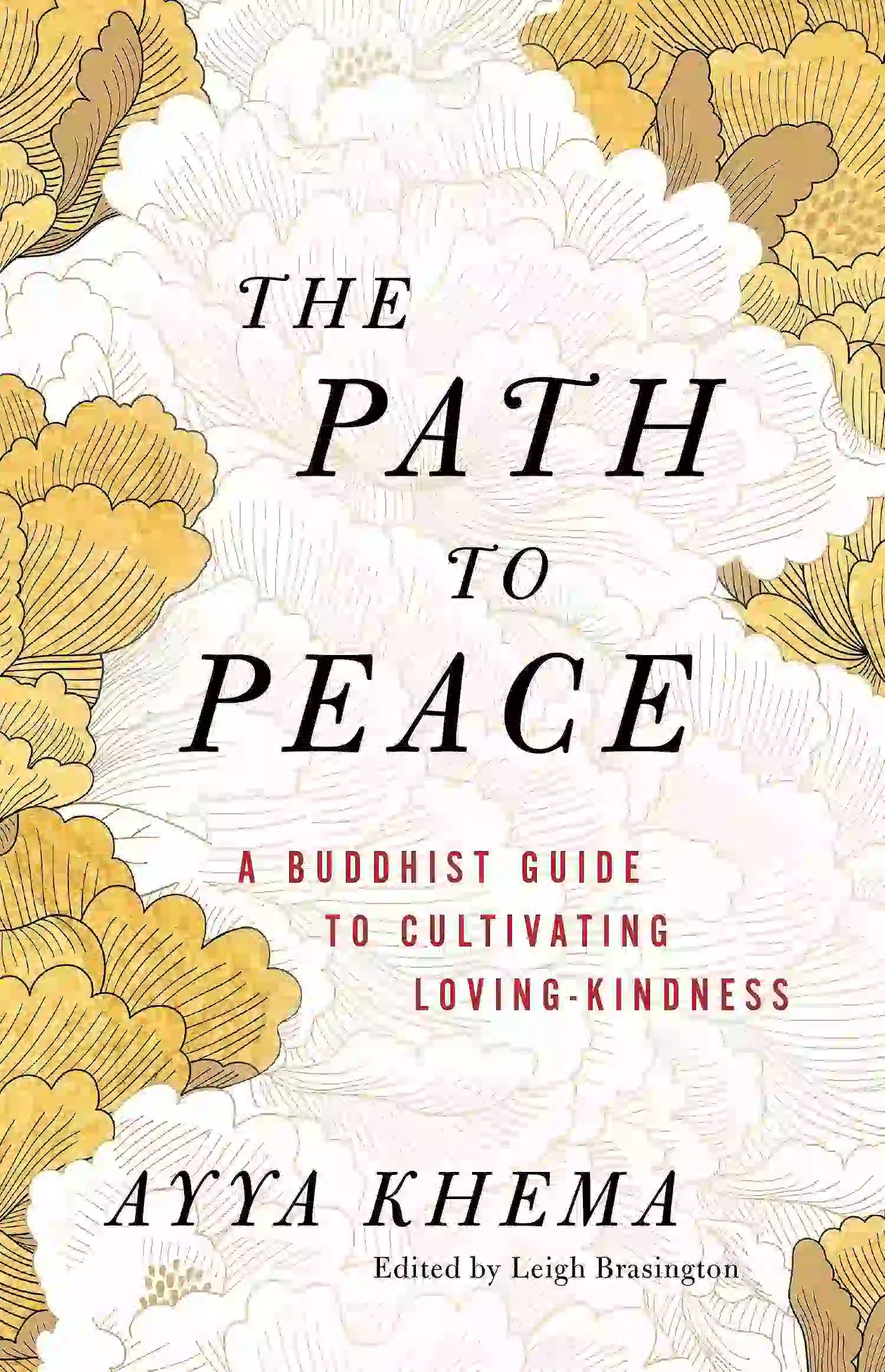
Learn about the Buddhist 15 Wholesome qualities and a collection of visualization-based loving-kindness meditations lovingly transcribed from talks given by Ayya Khema.
Summary:
Having escaped Nazi Germany in 1938, Ayya Khema has singularly profound perspective on creating peace, unconditional love, and compassion. She gently teaches that inner peace is not necessarily natural or innate. Instead, peace should be considered a skill that needs intentional practice—every day. Peace is the sum of many parts, namely the fifteen wholesome qualities the Buddha himself noted in the Metta Sutta, including usefulness, mildness, humility, contentment, receptivity, and others. In the first part of the book, Ayya Khema expertly guides us through each individual condition, using her trademark humor and personal narrative, to help each reader shape their own path to self-transformation. The second part of the book includes an eye-opening discussion of metta (loving-kindness) as both a morality and concentration practice, as well as ten meditation practices using visualizations.
Review:
Ayya Khema was an impactful Buddhist nun, who established a forest monastery in Australia, a training center for Sri Lankan nuns in Colombo, and a monastery and Buddhist center in Germany. Ayya Khema’s early life, escaping Nazi Germany with her Jewish family, could easily have led to bitterness. Instead she worked out of love to help others. While she wrote many books during her lifetime, this book was put together posthumously as transcripts from some of her talks.
The first part of the book is a transcript from a talk she gave on the Buddhist 15 Wholesome Qualities. I found this section to be ideal to read right before bed. Each Wholesome Quality was like reading a short devotion, and each section gave me something to think about as I fell asleep. Here is an example of the sort of discourse found in each section, from the section on the sixth Wholesome Quality – Mild:
Not looking after oneself, both mind and body is a lack of compassion, a lack of compassion for this person who is having all sorts of difficulties. And if we don’t look after ourselves, and aren’t mild towards ourselves, then it will be difficult to do this with others.
loc 324
This section also introduced to me to a new sutta I’d not heard of before – the Maha-Mangala sutta, which Ven. Khema states is popular in Asian Buddhist communities. Something I liked about how this speech is structured is while some content is there in its fullness, others are mentioned in passing, and if you’re interested you need to go look it up for yourself and study it. These aren’t talks for beginners – for instance, dukkha is never explained (it is the Buddhist term for suffering), but they helped me dive deeper into my studies in new ways.
The visualization-based loving-kindness meditations in the second part were interesting. I have seen some visualization-based loving-kindness meditations before, but I particularly liked “The Golden Light” and “Forgiveness” versions given here. This section is useful to both new and established meditators, as visualization is one of the more engaging forms of meditation for beginners, but also the different structure can introduce some variety to established meditators.
There were a few statements Ven. Khema made that I disagreed with, but that’s to be expected from any discourse. We don’t all agree on everything, that’s why it’s discourse. Nothing she said was something I found majorly disagreeable, just minor things like why people are shy, for example.
Overall, this was an interesting book of discourses from a well-respected Buddhist nun. The first part is perfect for bedtime reading, and the second part may be used either as an introduction to loving-kindness meditation or a way to introduce some variety to an already established practice.
If you found this review helpful, please consider tipping me on ko-fi, checking out my digital items available in my ko-fi shop, buying one of my publications, or using one of my referral/coupon codes. Thank you for your support!
4 out of 5 stars
Length: 173 pages – average but on the shorter side
Source: NetGalley
Buy It (Amazon or Bookshop.org)
Book Review: Pray for a Brave Heart by Helen MacInnes

A 1950s spy novel written by a woman that intermixes early Iron Curtain fears and post-WWII concerns about missing Nazi loot.
Summary:
It was 1953, and nothing could shake Bill Denning’s resolve to leave the army and return to the States. Nothing, except one of the largest diamond hauls ever – which, in the wrong hands, on the wrong side of the Iron Curtain, was a potentially lethal force. In a small village in the Swiss mountains, Denning discovered that there was not only a jewelry robbery at stake. In the ruthless world of espionage and international conspiracy his adversaries were the most unlikely people – and the most dangerous.
Review:
I picked this up antiquing with the cover you see here, and a blurb that revealed that a woman was being watched by a chinless man, and nothing else. I was expecting a romantic suspense based on those two but instead this is a spy novel. I had no idea Helen MacInnes is known as the “Queen of Spy Writers.”
The book uses third person omniscient narration style, which I hadn’t read in a while. It was interesting to see how the intrigue managed to remain when perspectives shifted to essentially everyone in the scene. How could this be so, I wondered in retrospect? Well, in spite of being omniscient, we never take the perspective of the bad guys. So we only ever take the perspective of the good guys, none of whom have everything figured out. While we go inside all of the good guys’ heads, the perspectives we take the most often are Bill Denning, his friend’s wife Paula, and her friend from school days Francesca.
The narrative device works to subtly other the Communist characters. If a character is a Communist, we never enter their head. We never see their perspective. Francesca is the sole character who shows some empathy toward those with viewpoints different from her own, and the narrative is certain to punish her for that and have her see the error of her ways. It’s an interesting example both of the Red Scare era and how writing styles can be used to reenforce viewpoints.
I felt this book was low on action. A lot of the scenes are characters talking in a room together trying to puzzle out what’s going on. The last few chapters really picked up on the action, and I wished the rest of the book was action-packed like that. There’s even a couple of scenes where characters stop to read poetry or discuss Latin. On the one hand, the literary aspect was nice. I found myself checking out a book of translated German poetry from the library. But, on the other hand, I wouldn’t call that an action packed scene.
The Swiss and Berlin settings are beautifully rendered. You really feel as if you are there. I also liked the insertion of German phrases without explanation for what they mean. In books where characters are bilingual or traveling this should really be done more often. It gives more of a sense of the travel. Plus the reader can look up the phrases if they really want to.
Overall, this is a decent spy novel, if a bit slow-paced. It’s a good view into the Red Scare era. Others suggest that if you are interested in Helen MacInnes’s writing to start with one of her WWII spy novels such as Above Suspicion or Assignment in Brittany.
If you found this review helpful, please consider tipping me on ko-fi, checking out my digital items available in my ko-fi shop, buying one of my publications, or using one of my referral/coupon codes. Thank you for your support!
3 out of 5 stars
Length: 284 pages – average but on the shorter side
Source: purchased
Buy It (Amazon or Bookshop.org)
Book Review: The Thorn Puller by Hiromi Itō

One of Japan’s most prominent women writers writes of a contemporary woman’s life split between caring for her much older British husband in California and her aging parents in Japan and her three daughters in both places.
Summary:
The first novel to appear in English by award-winning author Hiromi Ito explores the absurdities, complexities, and challenges experienced by a woman caring for her two families: her husband and daughters in California and her aging parents in Japan. As the narrator shuttles back and forth between these two starkly different cultures, she creates a powerful and entertaining narrative about what it means to live and die in a globalized society.
Ito has been described as a “shaman of poetry” because of her skill in allowing the voices of others to show through her. Here she enriches her semi-autobiographical novel by channeling myriad voices drawn from Japanese folklore, poetry, literature, and pop culture. The result is a generic chimera—part poetry, part prose, part epic—a unique, transnational, polyvocal mode of storytelling. One throughline is a series of memories associated with the Buddhist bodhisattva Jizo, who helps to remove the “thorns” of human suffering.
Review:
I picked this up from my library’s new books shelf, and for some reason I misunderstood and thought it was creative nonfiction. Since the main character shares the author’s first name, I stayed under this belief for quite some time, right up until the main character does something that shocked me. Then I investigated and realized it’s fiction heavily inspired by the author’s own life. I mention this to say that this reads like very modern creative nonfiction. It’s a mix of poetry, vignettes, and factual asides and doesn’t use quotation marks ever. Each chapter ends with a note of what works inspired that particular chapter. I was honestly impressed at this fictional creative nonfiction.
While each chapter vaguely goes in order of a year or two or Hiromi’s life, each also explores other parts of her life. And some weeks may be dropped in-between. The point isn’t a linear story but rather an exploration of how Hiromi deals with being in the sandwich generation with the added factor of her husband being at least 20 years older than her and so, he is aging more rapidly than she and requires more caregiving than he might otherwise. Hiromi thus deals with universal themes of caring for others while struggling to care for yourself. Of trying to give space to others to make their own decisions about their lives while worrying about them and wanting them to stick around.
Another major theme is Hiromi’s global life. She’s Japanese, living part-time in California, raising three daughters all of whom are American, one of whom is biracial (it’s unclear from the story if the older two daughters are biracial or not), living with a husband who is a British immigrant to the US who is also an older generation than her. There are so many cultural and generational differences for Hiromi to deal with. She struggles with Japanese perceptions of her husband, her husband’s perceptions of Japan, her own daughter’s difficulties to speak Japanese fluently, and more. What I found the most interesting was her husband’s misguided belief that because she was Japanese she wasn’t religious at all, only to become very angry at her when he finds out she took their daughter to visit a shrine. He thinks of this as religious. She thinks of it as simply a way of being. This thus explores the very interesting question of how much, if any, of spirituality is cultural?
Jizo and Jizo’s shrine are interwoven throughout the book. Hiromi feels a particular affinity for Jizo and so we see her memories of the shrine and also see her visiting the shrine in present time. Jizo is a Bodhisattva who is believed to help relieve suffering. Bodhisattva is a term used in two ways. It can mean anyone who is working in this life toward enlightenment. But it also can mean souls that have attained enlightenment but delays going to nirvana to help ease the suffering of others. This book takes up the latter definition, because the main character most strongly identifies with Pure Land Buddhism, which is a branch of Mahayana Buddhism that uses this definition of Bodhisattva. Although I have familiarity with Buddhism (as you can see in one of my short stories), I don’t think you have to in order to appreciate how Jizo is interwoven in the story. Hiromi is dealing with very difficult aspects of life, and when she’s struggling, she leans on a comfort from childhood – Jizo and his shrine. This is a very relatable emotional choice. It’s so relatable, in fact, that one cannot help but empathize with Hiromi when her husband struggles to understand why she feels an attachment to Jizo’s shrine when she’s dealing with her father’s aging and her mother’s slow death from a stroke. (Honestly, her husband is infuriating, even while you can see that he does indeed love Hiromi.)
As you can probably tell, this book does deal with difficult topics. Be aware that Hiromi’s mother’s stroke and its impact on her body is quite central to the story. Her father’s aging is depicted honestly, without any gentling of the more difficult aspects. Hiromi mentions in passing having had multiple miscarriages and abortions in the past. A character has a cancer scare that leads to a rather graphic scene of bleeding. Another character has a heart issue. Eating disorders are mentioned although not depicted graphically. Racism and xenophobia are both depicted on screen. Finally, and what was to me the most shocking, Hiromi engages in a violent act against her husband at one point. I thought all of these were dealt with in an even-handed and fair way except for how Hiromi treats her husband. That I felt was glossed over a bit too easily, especially for a character who believes suffering can come from a human killing spiders. Her lack of guilty feelings felt out of character to me.
Overall, this is an engaging read that merges creative nonfiction and fiction in fascinating ways and provides perspective on Japanese, American, and British cultures. For those less familiar with Japan, the translator offers an introduction to help understand what you might need to in order to enjoy the book fully. I also appreciate the translator’s note at the end that describes the translation process and how the author had some say in it.
If you found this review helpful, please consider tipping me on ko-fi, checking out my digital items available in my ko-fi shop, buying one of my publications, or using one of my referral/coupon codes. Thank you for your support!
4 out of 5 stars
Length: 300 pages – average but on the shorter side
Source: Library
Buy It (Amazon or Bookshop.org)
Book Review: Deep Work: Rules for Focused Success in a Distracted World by Cal Newport
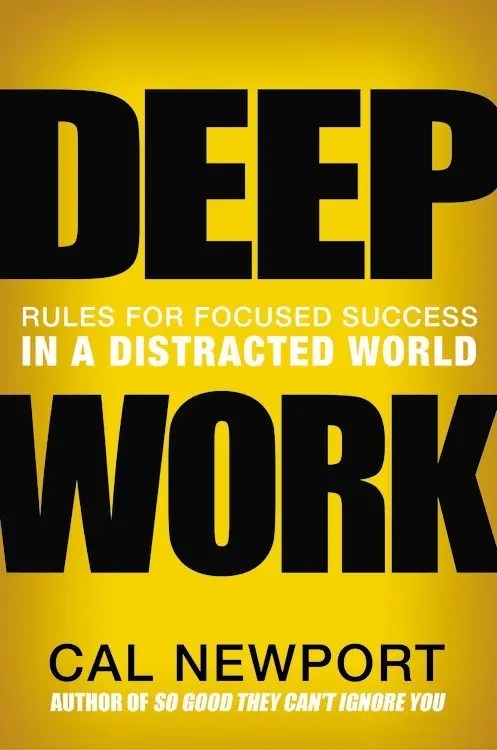
A computer science professor discusses why working distraction-free can set you apart and how he applied these techniques in his own career.
Summary:
Deep work is the ability to focus without distraction on a cognitively demanding task. Dividing this book into two parts, the author first makes the case that in almost any profession, cultivating a deep work ethic will produce massive benefits. He then presents a rigorous training regimen, presented as a series of four “rules,” for transforming your mind and habits to support this skill.
A mix of cultural criticism and actionable advice, Deep Work takes the reader on a journey through memorable stories-from Carl Jung building a stone tower in the woods to focus his mind, to a social media pioneer buying a round-trip business class ticket to Tokyo to write a book free from distraction in the air-and no-nonsense advice, such as the claim that most serious professionals should quit social media and that you should practice being bored.
Review:
A drive for traditional academic and corporate success tinges the majority of this book. But if you are able to see past it, there are some good facts and tips as well.
It’s easy to feel plagued by distraction in this world, no matter if your goals are traditional or nontraditional. Part of that is by design. Most of us at this point carry a smartphone, and they’re designed to be addictive. Even if your goal is to relax watching a movie with a loved one, you might find yourself reaching for your smartphone repeatedly throughout the movie instead of focusing on enjoying simply the movie and the moment with your loved one. Times of deep focus is what this book terms “deep work.”
A strength of this book is the discussion of the benefits of spending some time in a deep work (focus) state. It lets you master difficult things at a faster rate. It leads to greater satisfaction because when we’re unfocused we skew more toward pessimism rather than optimism. And, something I personally think should be talked about more, our worldview is based on what we pay attention to. So, we should be more mindful about what we are paying attention to. These are all good points and motivators to take the power back from addictive devices over our time. But then the author goes into a work-obsessed left field.
There is a palpable sense throughout this book that any negativity a worker may feel about their workplace is all down to the worker not focusing in the correct way. Even a simple mismatch between the worker and the work’s goals is somehow something the worker can just focus past in the author’s mind.
You don’t need a rarified job; you need instead a rarified approach to your work.
loc 1012
People deserve to do work that makes them feel good. And we are all blessed with different talents, skills, and gifts. A job might not suit one person but suit another. A job doesn’t need to be rarified to be satisfying. And a worker doesn’t need to be rarified to excel at their job. I might also question, why the pressure to excel? Why can’t we simply do our jobs well and complete the day satisfied?
Toward the end of the book, the author describes a year in which he really pushed himself as he was about to come up for tenure. He states that during this year he was “a deep work machine” (loc 2908). He literally thought about work in every spare moment – when going on walks, when raking leaves. He had at least one young child at home, and he still spent all this time engaged in deep thinking…about work. Why? Because he didn’t get an opportunity his colleagues did. He does at one point express that maybe he went a little too far, but he also discusses how much work success it brought him and seems generally pleased with the outcome. I find it interesting that he talks so much about bringing focus to his job but not about spending focused time with his child or wife, for example. In spite of the fact that the same techniques for focus he uses for work could be applied to many other aspects of our lives. But he only seems to see their use in climbing the academic crab bucket.
If we choose to see past the toxic application of focus in only career, what are the tips given in this book for developing focus? These are what stuck out to me. Schedule times of deep focus. When in your scheduled deep focus times, focus on things that are, to you, wildly important. Keep a tally of the deep focus time you have accomplished – not the tasks, but the time. Review this weekly to help yourself understand what’s interfering with your deep focus time and adapt. On the flip-side of scheduled focus times, schedule times for distraction. So, for example, pick a 30 minute window where you will browse Instagram, and that’s the only time you do it that day. To hone your skills, select a task you want to accomplish and set a timer for slightly less time to finish it than you think you will need. See if you can beat that time. This will help you focus more deeply and become faster over time.
Overall this book has some interesting explanations of why focus matters and tips on how to bring more focus into your life. But you will need to look past the lack of work/life balance present in many of the examples given, instead extracting solely what is best for your own focus goals in your own, well-balanced life.
If you found this review helpful, please consider tipping me on ko-fi, checking out my digital items available in my ko-fi shop, buying one of my publications, or using one of my referral/coupon codes. Thank you for your support!
3 out of 5 stars
Length: 296 pages – average but on the shorter side
Source: Library
Buy It (Amazon or Bookshop.org)
 Support my work with a tip or browse my shop for curated book club guides, how to guides, cross-stitch patterns, and more!


This work by Amanda Nevius is licensed under a Creative Commons Attribution-Noncommercial-No Derivative Works 3.0 United States License.
 Opinions of a Wolf